
Dale
From door to door
No posts found.
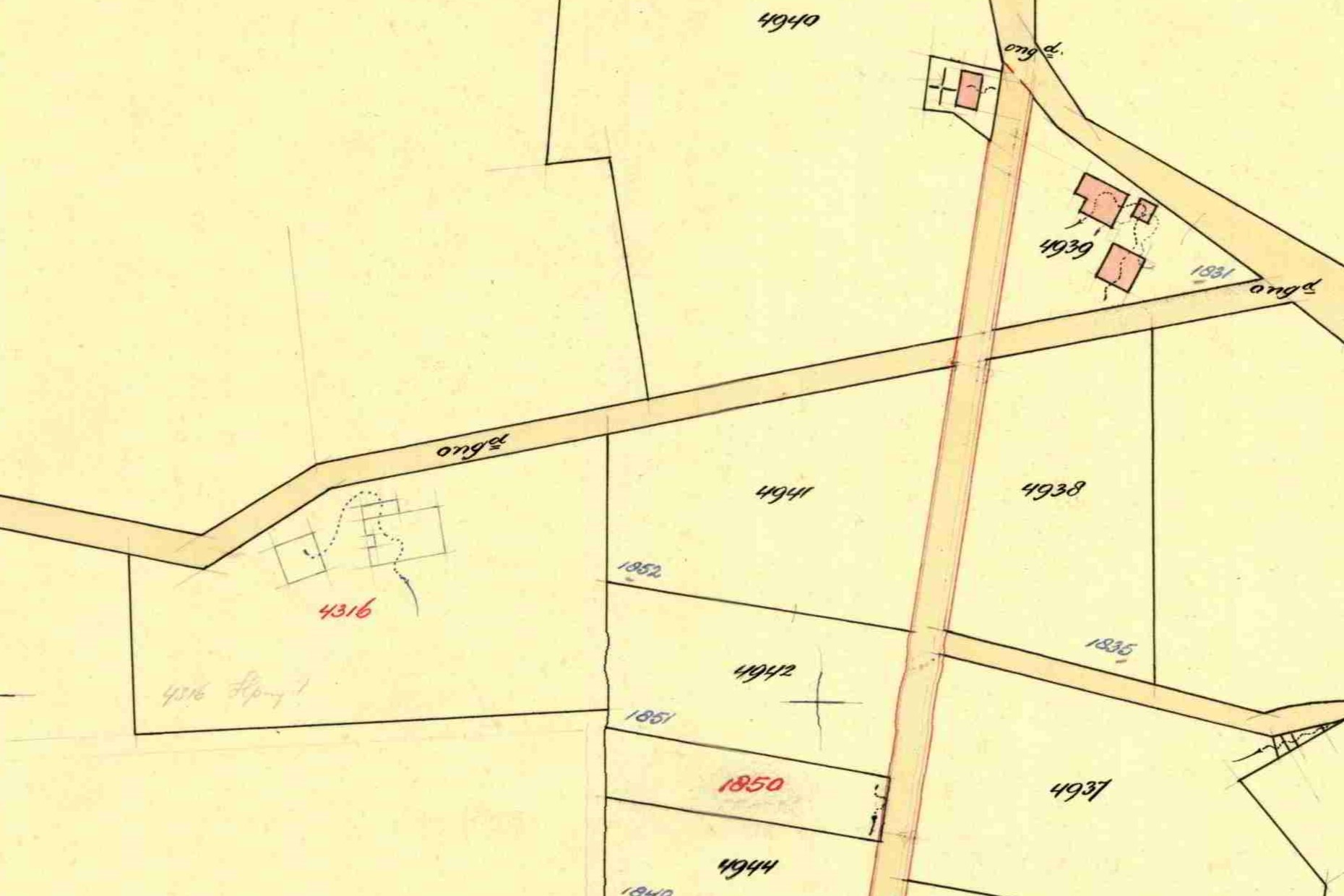
Pasopweg, Dale (no longer extant)
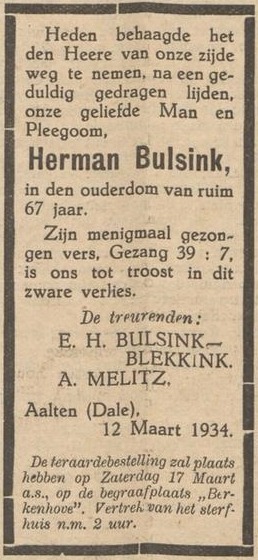
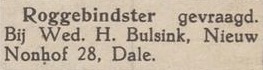
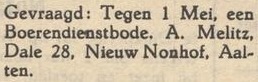
This farm was built around 1910 on the instructions of its first occupants, Herman Bulsink—originally from the Nonhof farm—and his wife Everdina Hendrina Blekkink. Their foster son, Adolf Melitz, later became the primary occupant.
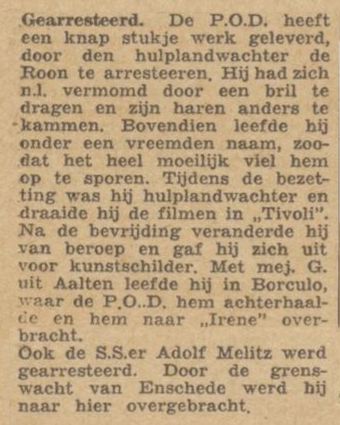
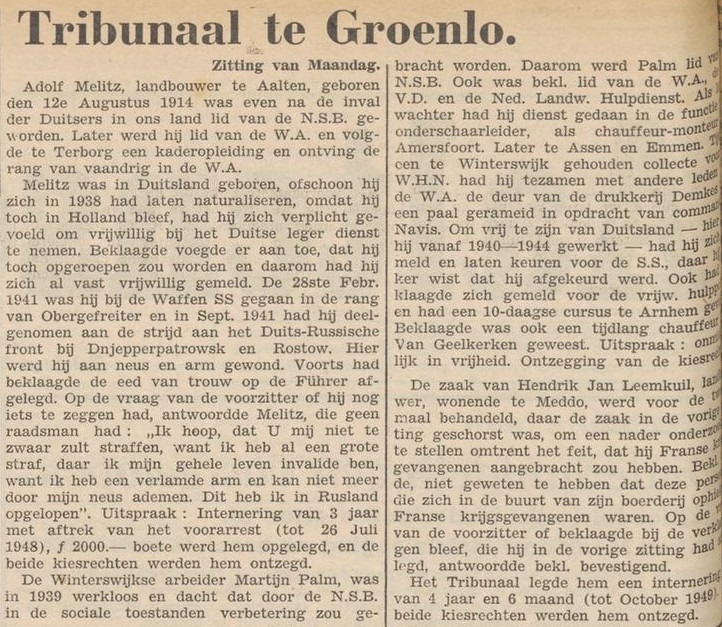
Melitz was German by birth, but became a naturalised Dutch citizen in 1938. Shortly after the German invasion, he joined the Dutch National Socialist Movement (NSB) and in 1941 enlisted in the Waffen SS, with the rank of Obergefreiter. In September of that year, he took part in fighting on the German–Russian front near Dnepropetrovsk and Rostov, where he sustained permanent injuries to his nose and arm.
In 1942, the farm was listed in the telephone directory as a ‘Regional Farm’ of the N.J.S. (Nationale Jeugdstorm, a youth movement). Reportedly, following the Liberation, the farm was set on fire by local people as an act of retaliation and was never rebuilt.
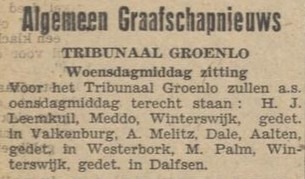
In 1947, Melitz was sentenced to three years’ imprisonment, a fine of 2,000 guilders, and disenfranchisement.
Overview is incomplete.
| Year | Plot | Owner | Description |
|---|---|---|---|
| 1915 | C-4316 | Herman Bulsink, farmer | 9.290 m² house, barn & pasture |
Following their marriage, the following moved into this newly built farm:
Herman Bulsink (Dale, 04-02-1867), coming from Nonhof
married on 04-05-1910 in Aalten to
Everdina Hendrina Blekkink (Woold, 01-05-1872)
Herman Bulsink (Dale, 04-02-1867)
Everdina Hendrina Blekkink (Woold, 01-05-1872)
Dale 36
Herman Bulsink (Dale, 04-02-1867)
Everdina Hendrina Blekkink (Woold, 01-05-1872)
Adolf Melitz (Alstaden (D), 12-08-1914), foster son
Dale 36 > 28

| Cadastral no. | unknown |
| Function | Farmhouse |
| Year of construction | c. 1910 |
| Destroyed | 1945 |
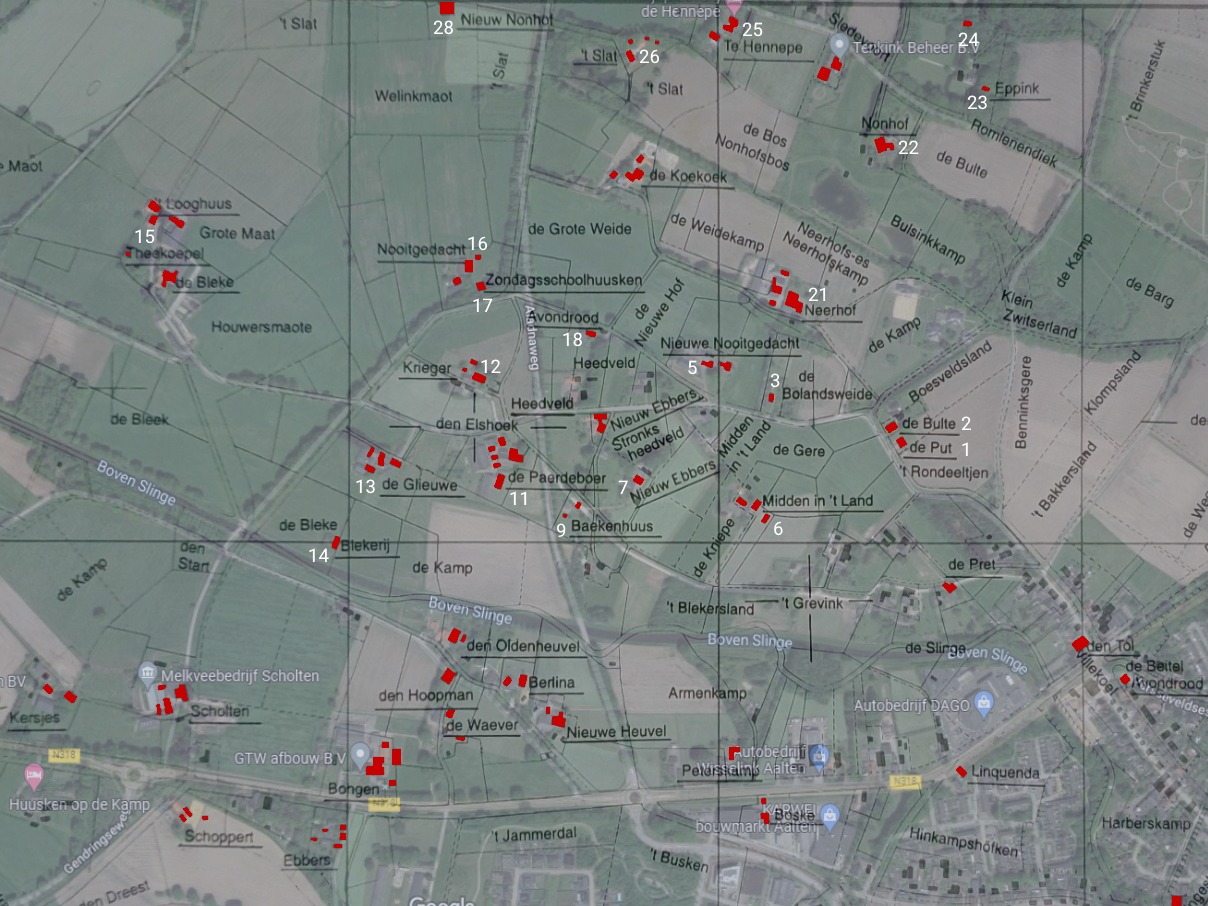
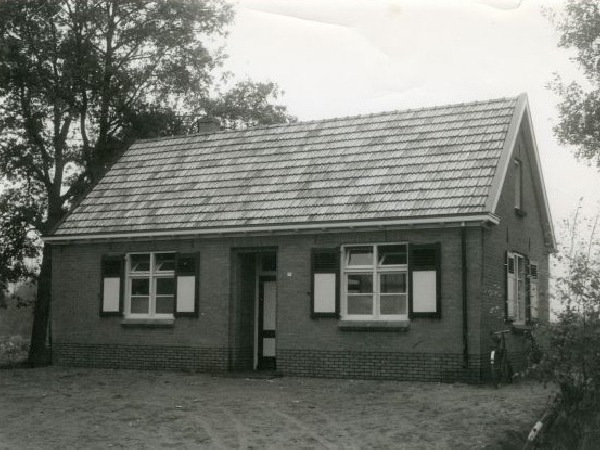
Aladnaweg 3, Dale
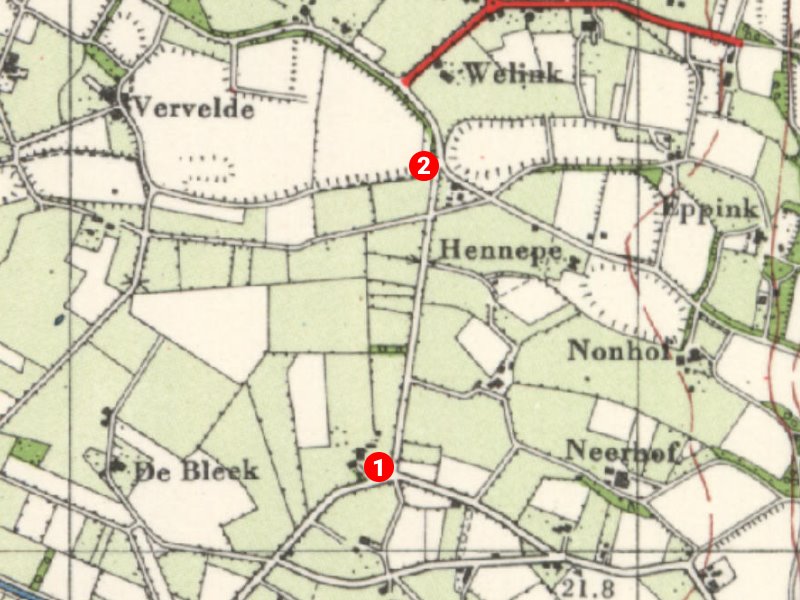
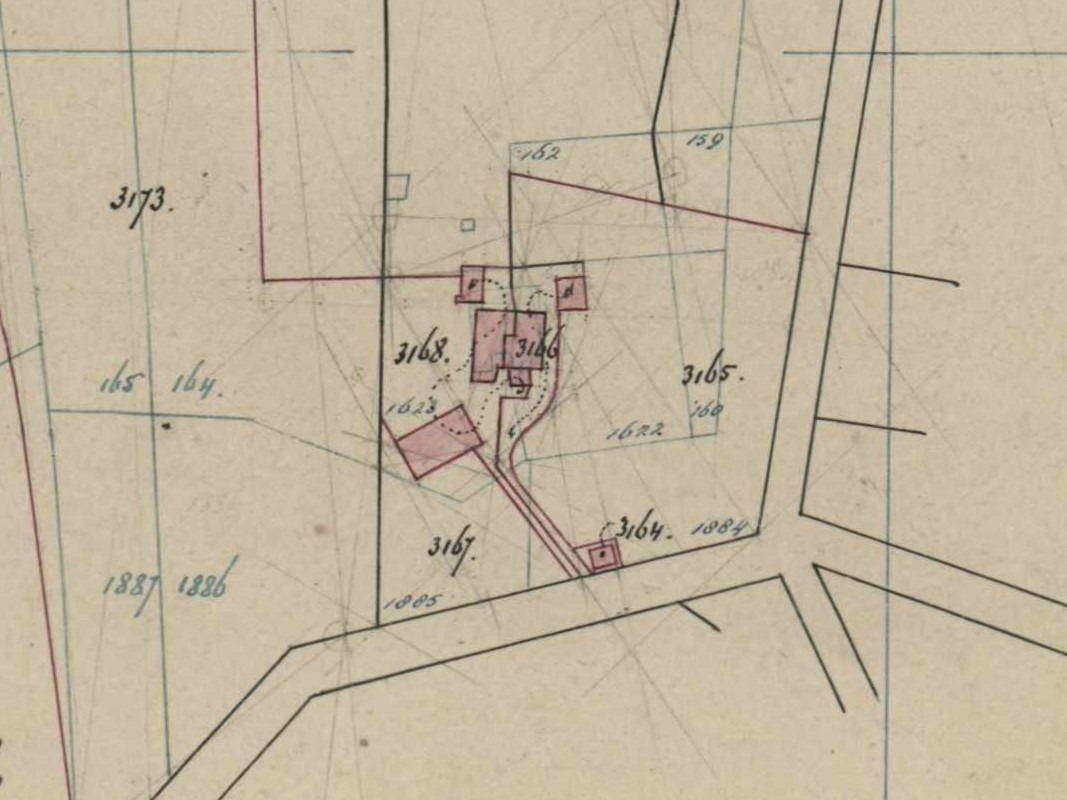
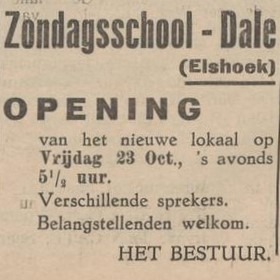
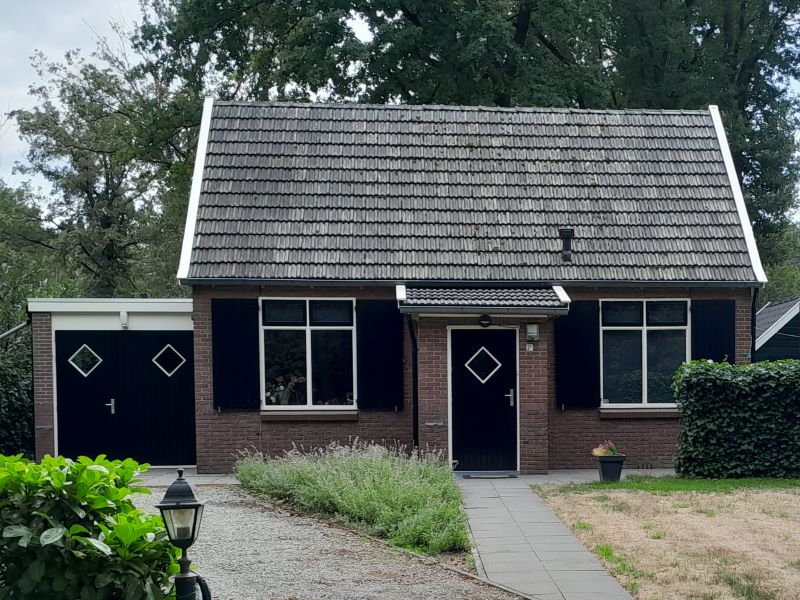
Approximately at the location where the community center ‘t Romienendal is situated today, on the current Aladnaweg, the Dale West (Elshoek) Sunday school used to stand.
The Dale Sunday school association was founded on 2 March 1928. The purpose of the association was the ‘establishment and maintenance of a Christian Sunday school’. There was also a Dale Oost Sunday school, located on the Walfortlaan.
The Sunday school building was put into use on 23 October 1936, replacing an older ‘Sunday school hut’ located approximately 500 meters further south on the Slatdijk. That older building was situated on the grounds of the ‘Nooitgedacht‘ farm, owned by Derk Willem Neerhof. They had been allowed to meet there for 60 years.
In 1986, the Sunday school on the Aladnaweg became too small and no longer met the requirements of the time. Previously, the Sunday school and youth clubs used the building, and occasional birthday parties were held there. Until then, the Sunday school association had managed and maintained the building, which was becoming increasingly difficult financially. Furthermore, there was a desire for more opportunities to establish and house other associations. Therefore, in December 1986, a new association for a Building for General Christian Interests in Dale was founded.
This association took over the old Sunday school building from the Sunday school association. They investigated various possibilities, but expanding the small building proved to be impossible. They changed course and the adjacent plot was purchased.
To finalize the financial side of the project, various fundraising activities were organized, such as a flea market, a vintage car show, and a collection among the members. The municipality of Aalten also provided a loan. With all of this and a great deal of help from member volunteers, the new building was realized. On 3 April 1991, ‘t Romienendal was officially opened.
Dale 34 > 17 (old location)
Sunday school hall
Dale 27/1 > Slatdijk 7 (new location)
Sunday school hall
| Cadastral no. | O-1090 |
| Function | Sunday school |
| Year of construction | 1936 |
| Demolition | ca. 1990 |
Walfortlaan 2a, Dale
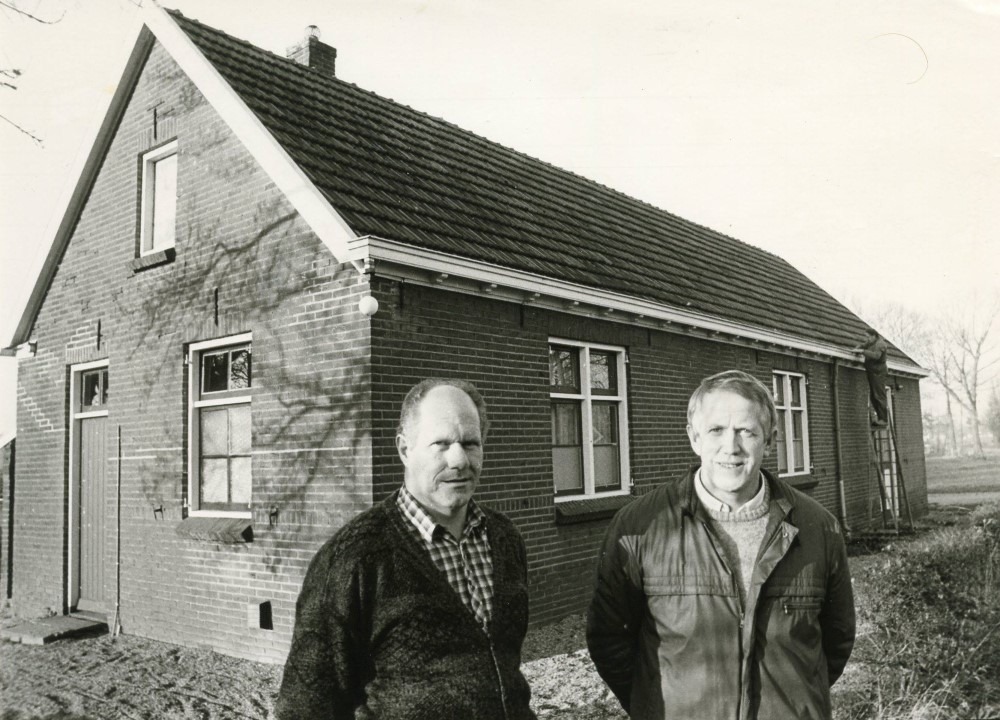
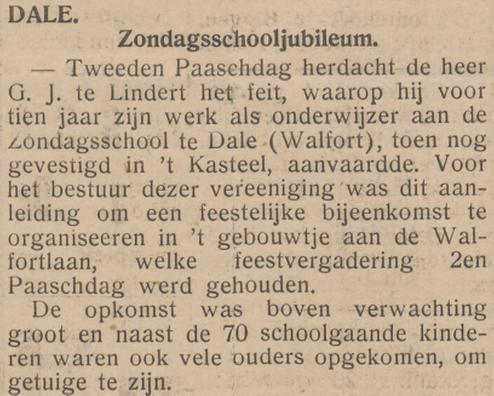
The “Walfort” Sunday school association in Dale was founded in November 1934, according to its statutes. This date marks the first board meeting; however, the earliest recorded members’ meeting dates back to 28 November 1930.
Blijkens een krantenbericht uit 1937 werd er voor de oprichting van dit gebouwtje zondagsschoolonderwijs gegeven in Havezathe ‘t Walfort.
Due to a lack of interest, Sunday school activities were ceased in 2000. The school building was sold in 2007. The association’s archive was donated to the Erfgoedcentrum Achterhoek en Liemers (Heritage Centre) in 2013.
Er was ook een zondagsschool Dale West, bij het huidige Romienendal aan de Aladnaweg.
Dale 151/1 > Walfortlaan 2
Sunday school hall
| Cadastral no. | P-161 |
| Function | Sunday school |
| Year of construction | 1935 |
| Listed | no |
Elshoekweg 6, Dale
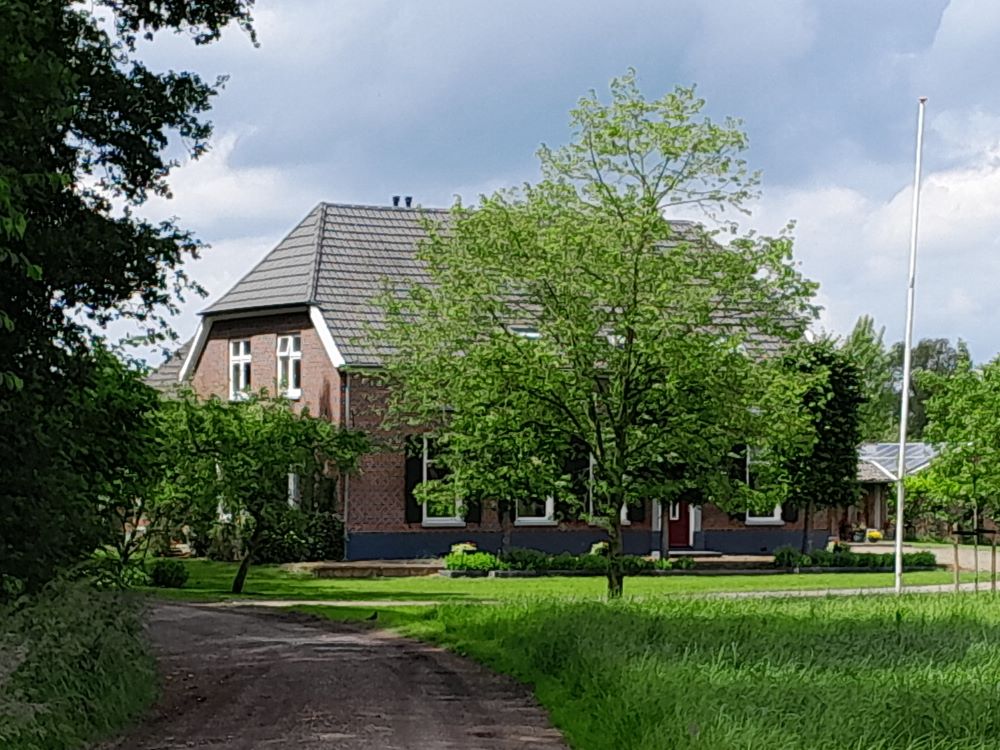
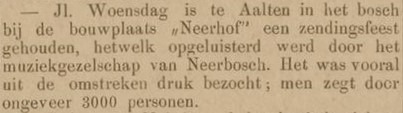
‘Neerhof’ is an ancient farmstead located in the rural district of Dale in Aalten. Many people who carry the surname Neerhof today—including descendants of emigrants in the US and Canada—can trace their roots back to this place. There is even a Facebook group they can join: I’m a Neerhof.
The last Neerhofs to live there left the farm in the second half of the 19th century. Since then, the farm has been occupied (primarily) by the Houwers family. The original farmhouse is gone; the current house was built in 1893.
Tijdens de Tweede Wereldoorlog herbergde de familie Houwers onderduikers. Eén van deze onderduikers, een Franse onderofficier uit de Pyreneeën, stuurde hen na de oorlog nog een brief.
Fun fact: There is a street in Canada named ‘Neerhof Lane’.
Tuesday, 6 February 1616: Statholder Joannes ter Woert, assessors Jan ten Berge, Henrick Menekinck, Peter Cloeck.
Margin note: Anno 1629, 19 January, Jenneken Neerhave declared this to be redeemed. Therefore, void.
Appeared Jan Filette and Enneken Huijsinck, spouses, who declared for themselves and their heirs that for a received and well-paid sum of money, they sold a yearly pension to Juerden ten Neerhave and Jenneken, spouses, and their heirs: three dalers (per daler calculated at thirty stuivers, per stuiver at fifteen placken). Payable annually on Candlemas, first due on Candlemas 1617. Pledging as security their estate Hoff ant Benninck Vehne, along with house and yard within Bredevoort, and all their movable and immovable goods, to recover the aforementioned yearly pension along with costs and damages by distraint according to land law. With the right reserved to redeem the pension annually by giving one quarter’s notice, and then on Candlemas (Purification of Mary), fourteen days before or after without delay, by paying the sum of fifty dalers of the aforementioned currency. This ceded and issued, and renounced by hand and word; guarantee, better written deed, and confirmation promised. All under penalty of distraint as prescribed, without exception or deceit.
Wednesday, 19 February 1617: Statholder Herman van Munster, assessors Johan Nachtegaell, Herman Steinrot, Peter Evertz.
Appeared Bernt Huijninck and Enneken Snijders, spouses, who declared for themselves and their heirs that for a well-paid sum of money, by right of perpetual and irrevocable inheritance, they have transferred and sold to Joerden ten Neerhave and Jenneken, spouses, and their heirs, a piece of land, of approximately three schepelsaet, on the Aelter Ess, situated with one side bordering land now belonging to the purchaser, Mechtelt Snijders, and with the other side bordering the common road, with one end bordering Peter Martens’ land, and the other end stretching to the Barlschen Heelwech, with its appurtenances and rights, free of all encumbrances. This inherited, ceded and issued, and renounced by hand, straw, and word; guarantee, better written deed, and hereditary confirmation promised according to land law, by hypothecation of their goods. Without exception or deceit.
Saturday, 10 January 1618: Drost and Judge Gosswin van Lawick, assessors Henrick Menekinck, Jan ten Berge.
Appeared Gerrit Gijsberts, gatekeeper in Bredevoort and Mechtelt Snijders, spouses, who declared for themselves and their heirs that for a well-paid sum of money, they transferred and sold by right of perpetual and irrevocable inheritance to Joerden ten Neerhave and Jenneken, spouses, and their heirs, a piece of arable land of approximately two moldersaet, called Snijders Stucke, on the Aelter Ess, bounded on one side by the Nonhaver Cruijss plot and on the other side by land belonging to the purchaser, with one end bordering Peter Marten’s land and the other end stretching to the Barlschen wech, with its appurtenances and rights, free of all encumbrances, reserving to the Hoff ten Ahave the tenth sheaf. This inherited, ceded and issued, and renounced by hand, straw, and word; guarantee, better written deed, and hereditary confirmation promised according to land law. Without exception or deceit.
Wednesday, 29 March 1620: Statholder Herman van Munster, assessors Herman Steinrotz, Lenardt van Elverfelt, Peter Evertss.
Appeared Peter Evertz and Margareta Mächtes, spouses, who declared for themselves and their heirs that for a well-paid sum of money, they transferred and sold by right of perpetual and irrevocable inheritance to Joerden ten Neerhave and Henricke ten Ruell Geesken, spouses, and their heirs, a piece of land previously purchased from the Marcke, with its ditches, embankments, and boundaries, situated in the parish of Aalten, district of Lintell, in the Aelter Hemell, with one end stretching to the Kortbeker Maet, with its appurtenances and rights, free of all encumbrances, reserving the lord’s taxes as may be assessed upon it. This inherited, ceded and issued, and renounced by hand, straw, and word; guarantee, better written deed, and hereditary confirmation promised according to land law, by pledging the sellers’ goods. Without exception or deceit.
Appeared Willem ten Brincke and Marrie, spouses, who declared for themselves and their heirs that for a well-paid sum of money, they transferred and sold by right of perpetual and irrevocable inheritance to Joerden ten Neerhave and Jenneken, spouses, and their heirs, a piece of land of approximately one Moldergeseijs on the Aelter Esch, bounded on one side by Ebbert Wever’s land and on the other side by Geerdte Lock’s land, in its borders and boundaries, with one end stretching to the Heelwech and the other end to Hoeneper Landt, with all its old and new appurtenances and rights, free of all encumbrances. This ceded and issued, and renounced by hand, straw, and word; guarantee, better written deed, and hereditary confirmation promised according to land law, under hypothecation of the sellers’ goods. Without objection or deceit.
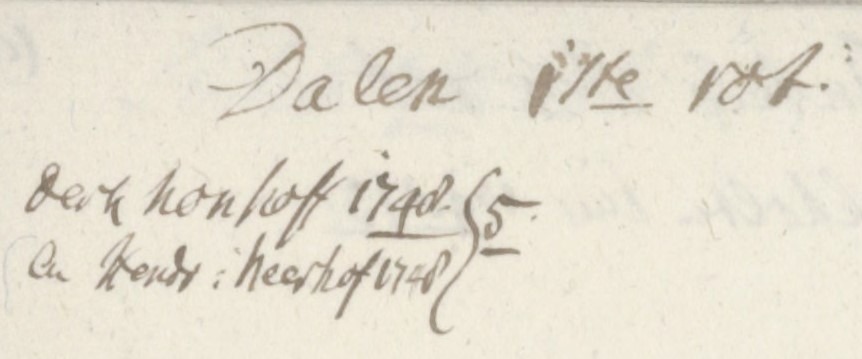
Neerhof, Geestelick. Huis, hof 3 sp. voor 8 dlr. 12 – 0 -.
Boulant 10 mdr. 3de gerf 11 sch. afg. blijft 68 – 4 -.
5 Mtr. gesaeis, Jorden Neerhof, hier gaet af 1½ sch. an Kerck, blijft 4 mdr. 2½ sch. 38 – 10 – 8.
An de Kerck te Aelten 2 dlr. 3 – 0 -.
Een stuck groen lants in Lintel gelegen van 3 voeder hoij gewass of 2 koeweidens 9 – 0 -.
Below is a fragment from this tax register mentioning Hendrik Neerhof and Janna Eppink, as well as their son Rosier Neerhof and his wife Beerndeken Beestman. They declared under oath that their assets amounted to 1800 and 700 guilders respectively and paid their taxes duly.
Immediately below it is noted that the couple Hindrik ter Beek and Lisebeth op den Heuvel lived ‘in Neerhofs Spikker’ (or ‘Spieker’). They possessed less than 500 guilders but evidently paid a voluntary contribution.
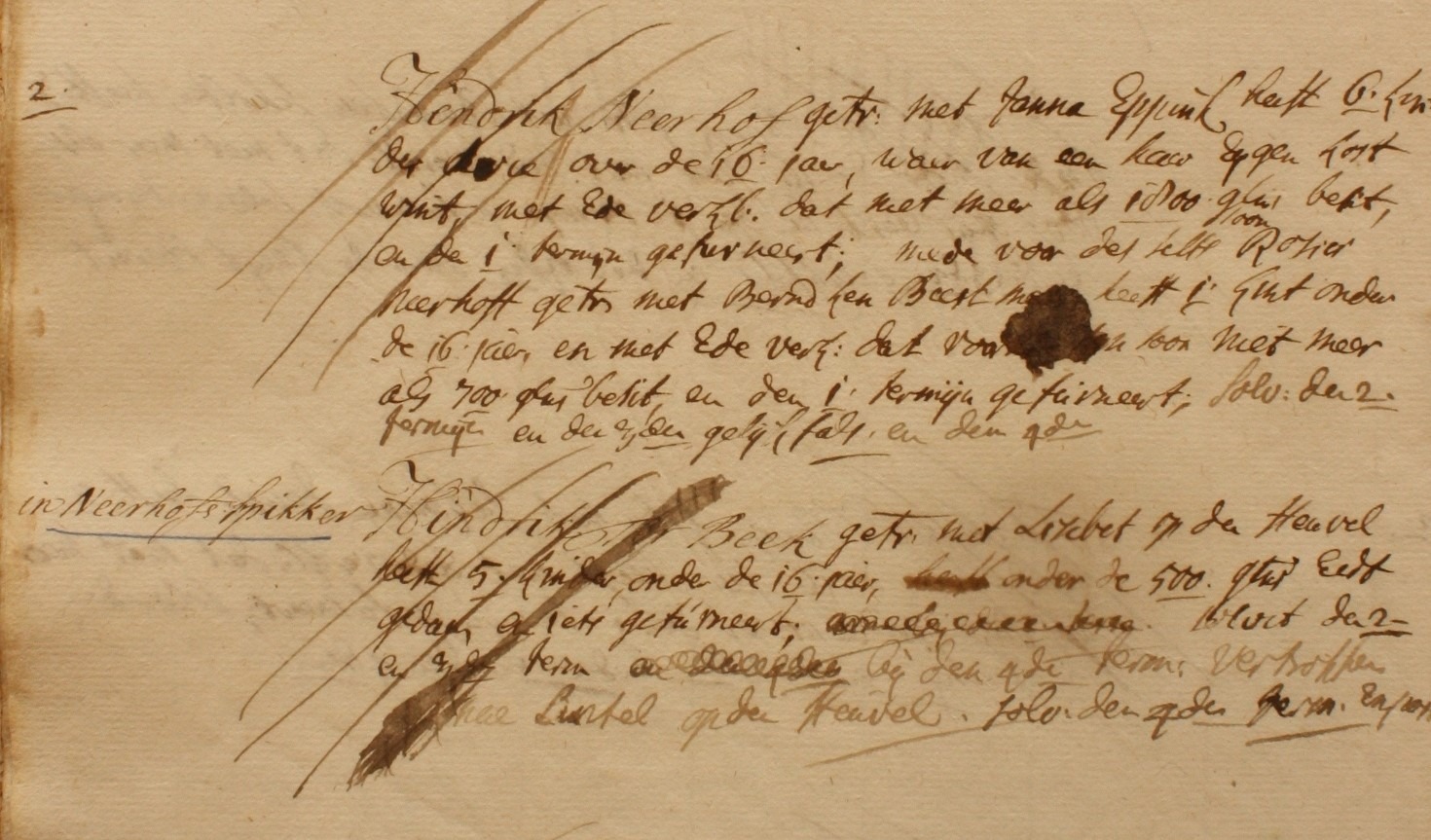
This overview is incomplete.
| Year | Plot | Owner | Description |
|---|---|---|---|
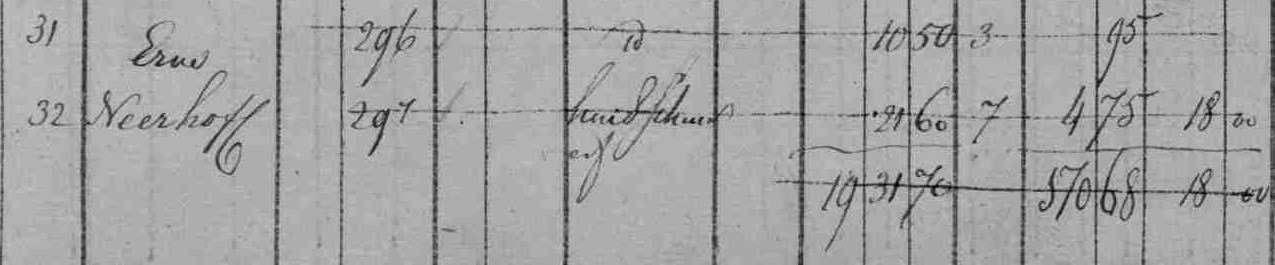
| 1832 | C-297 | Domains | 2.160 m² house, shed & yard |
| 1876 | C-297 | Arent Jan Houwers, farmer | 2.160 m² house, shed & yard |
J(oe/o/ue)rden ten Neerhave (Dale – Dale < 1664)
Jenneken (Cremer?) (Dale)
J(oe/o/ue)rden was a farmer at Neerhof in 1650 (Land Tax Register, original register).
Child:
Hendrik Neerhof (? – < 04-1697)
⚭ ca. 1654
Deve (Eva) te Gantvoort (? – > 03-1697), this was her second marriage
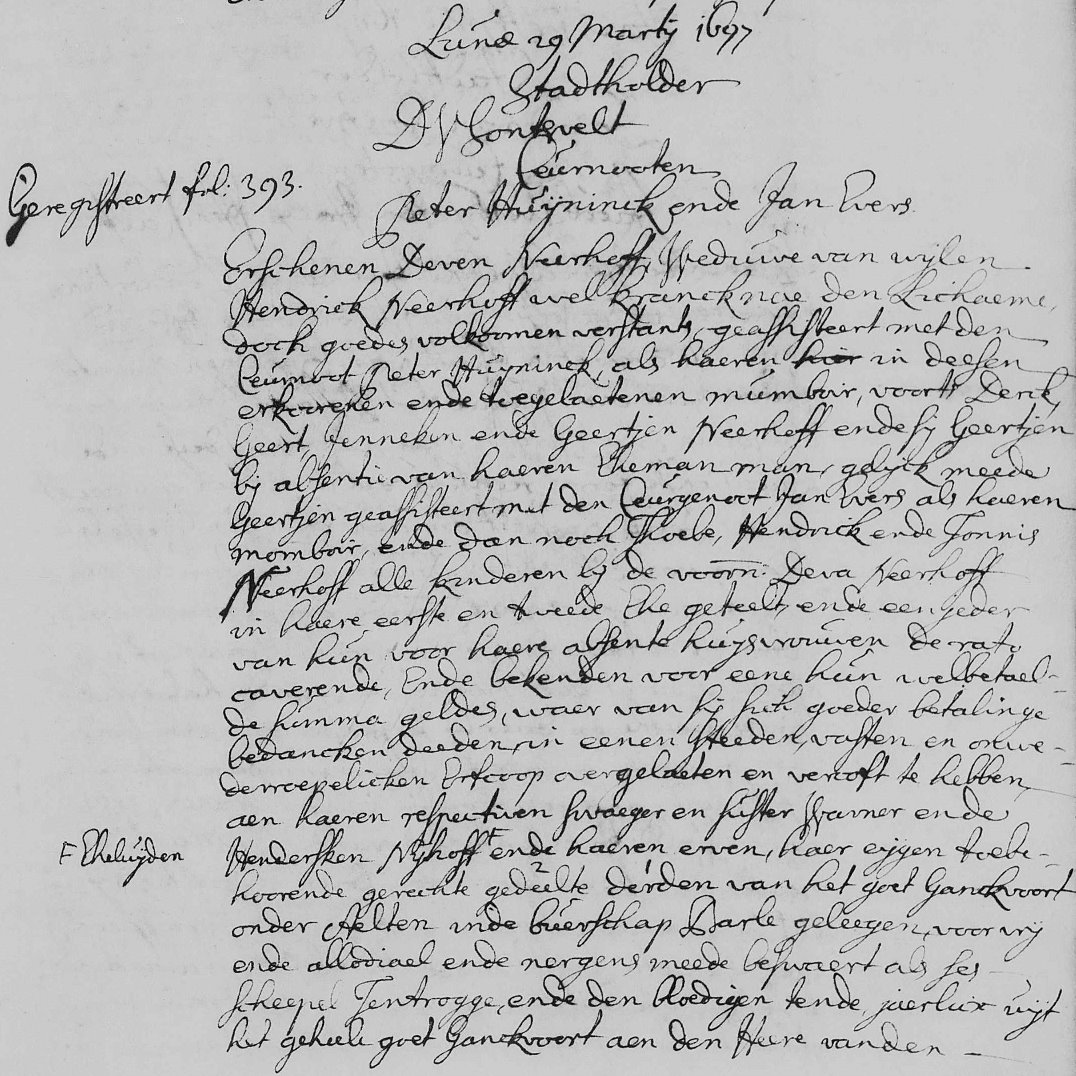
On 29 March 1697, Deven Neerhoff, widow of Hendrick Neerhoff, appeared before the statholder in Bredevoort with all her children “born of her first and second marriage”. The children, therefore, evidently came from two of the mother’s marriages. Who the first husband was, we do not know.
Voor zover bekend was Deve het enige kind van Thoebe te Hondorp genannt Gantvoort en Lotte te Welpshof. Deve was erfgenaam van het goed Gantvoort en haar kinderen dus ook. Het document beschrijft hoe Deve en zeven kinderen hun erfdeel in het goed Gantvoort verkopen aan het achtste kind en (half-)zuster Hendersken en haar man Wander Nijhof.
(Step)children:
Derck Neerhof (Bredevoort, bap. mei 1665)
⚭ 18-11-1694 Aalten
Wendele aan ’t Heeght (Aalten, bap. 02-12-1666)
Children:
Hendrik Neerhof (Aalten, bap. 27-11-1695 – Dale, 25-02-1763)
⚭ 23-05-1717 Aalten
Janna Eppink (Aalten, bap. 21-11-1697 – Dale, 16-01-1787)
Children:
Rosier Neerhof (Dale, 15-03-1719 – Aalten, 21-09-1783)
⚭ 30-09-1745 Aalten
Beerndeken Beestman (Haart, 22-11-1722 – Aalten, 21-05-1765), d.v. Jan te Beest en Willemke Stortelers
Children:
“Neerhof”
Derk Neerhof (Aalten, bap. 16-05-1751 – Aalten, 21-03-1839), farmer
⚭ 05-06-1785 Aalten
Jenneken Meijnen (Lichtenvoorde, bap. 28-03-1766 – Aalten, 18-04-1839)
Children:
Derk Willem Neerhof (Dale, 19-12-1802 – Dale, 18-04-1856), farmer
⚭ 12-09-1834, Aalten
Johanna ten Brinke (Miste, 23-08-1811 – Dale, 23-02-1857)
Children:
* Zij vertrekken (vermoedelijk in het voorjaar van 1868) naar Haart 19 (Lievers) en in 1869 naar Amerika. Tegelijkertijd verhuist het pasgetrouwde echtpaar Houwers van Lievers naar Neerhof.
Arent Jan Houwers (Dale, 28-04-1824 – Dale, 28-10-1880), farmer
⚭ 02-04-1868, Aalten
Grada Aleida Ormel (De Heurne, 13-10-1843 – Dale, 12-04-1875)
Arent Jan Houwers (Dale, 28-04-1824 – Dale, 28-10-1880), farmer
Grada Aleida Ormel (De Heurne, 13-10-1843 – Dale, 12-04-1875)
Arent Jan Houwers (Dale, 28-04-1824 – 28-10-1880), farmer
Children:
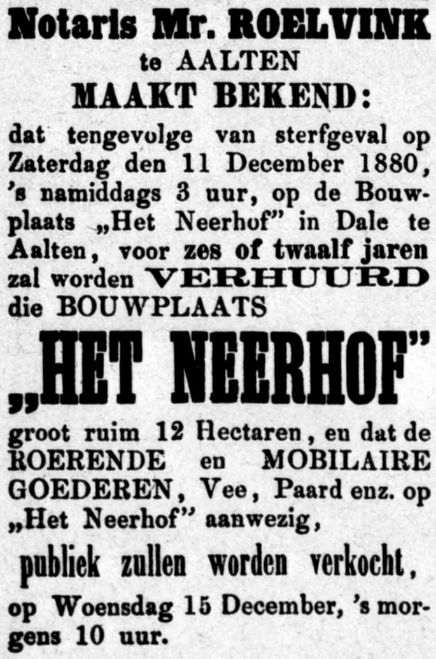
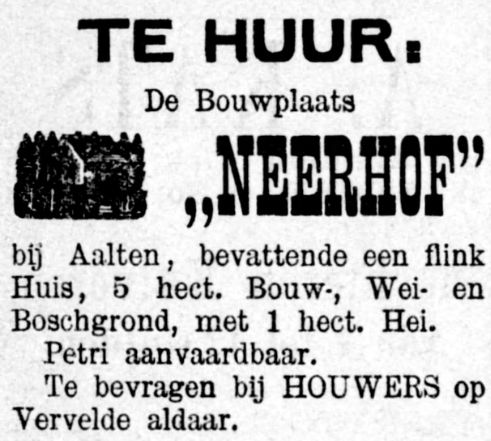
Following their father’s death, the three orphans were taken in by relatives on other farms (as noted below). ‘Bouwplaats Het Neerhof’ was to be let out for the time being:
Evert Scheffer (Rheden, 23-09-1839), clog maker
Hermina Hofs (Varsseveld, 12-06-1853)
Children:
Evert Scheffer (Rheden, 23-09-1839), clog maker
Hermina Hofs (Varsseveld, 12-06-1853)
Children:
Zij vertrekken in 1890 naar Dale 109 (Smees).
Jan Willem Westerveld hoofd (Dale, 26-11-1857), farmer
Grada Johanna te Hennepe vrouw (Heurne, 14-09-1864)
Child:
Jan Hendrik Wessel Houwers (Dale, 30-04-1872), farmer
⚭ 27-08-1897, Borculo
Geertruida Esselink (Borculo, 02-07-1871)
Children:
Jan Hendrik Wessel Houwers (Dale, 30-04-1872), farmer
(1) Geertruida Esselink (Borculo, 02-07-1871 – 06-12-1902)
Children:
Following Geertruida’s death, J.H.W. remarried on 27 June 1907 in Aalten to
(2) Johanna Geertruida te Bokkel (Dale, 08-10-1875)
Children:
Jan Hendrik Wessel Houwers (Dale, 30-04-1872), farmer
Johanna Geertruida te Bokkel (Dale, 08-10-1875)
Dale 15 > 21
Jan Hendrik Wessel Houwers (Dale, 30-04-1872)
Johanna Geertruida te Bokkel (Dale, 08-10-1875)
Children:
Dale 15 > 21
Jan Hendrik Wessel Houwers (Dale, 30-04-1872)
Johanna Geertruida te Bokkel (Dale, 08-10-1875)
Children:

“Neerhof”
Dale 21 > Elshoekweg 6
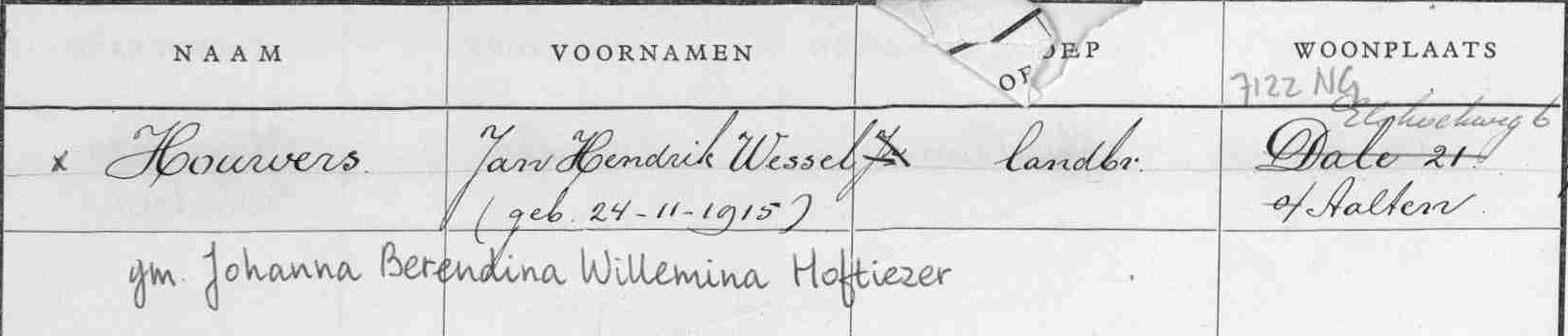
Jan Hendrik Wessel Houwers (Dale, 24-11-1915)
| Cadastral no. | L-1028 |
| Function | Farmhouse |
| Year of construction | 1893 |
| Listed | no |
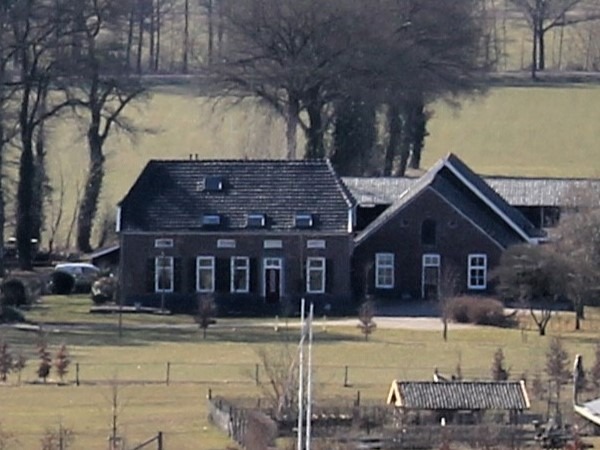
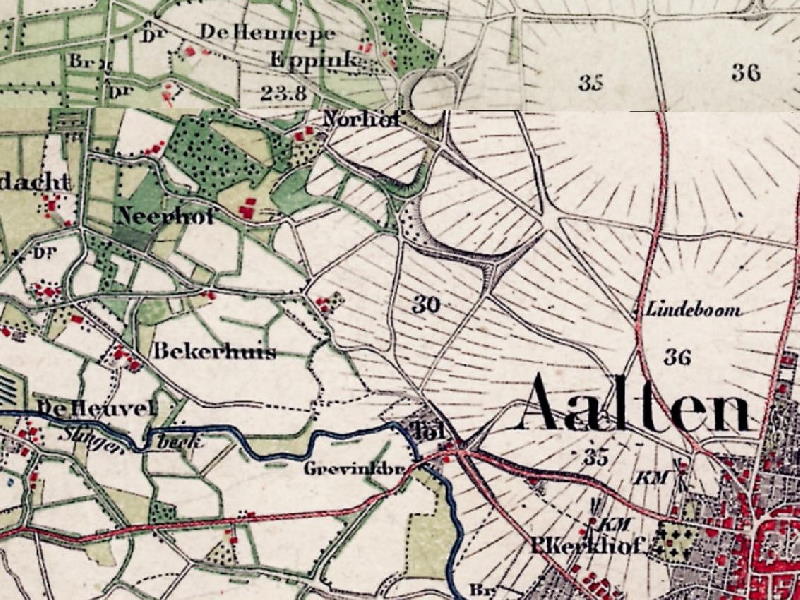
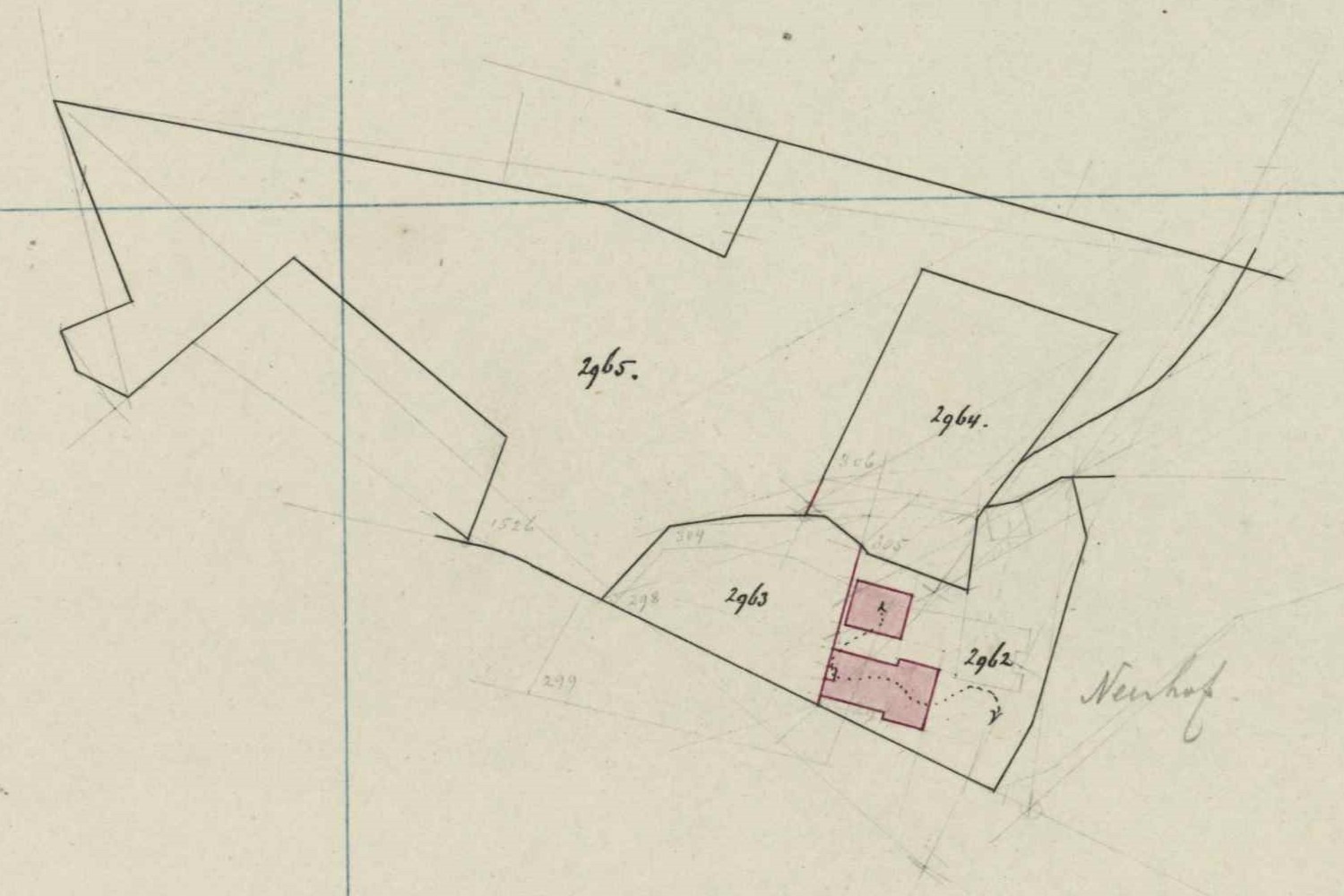
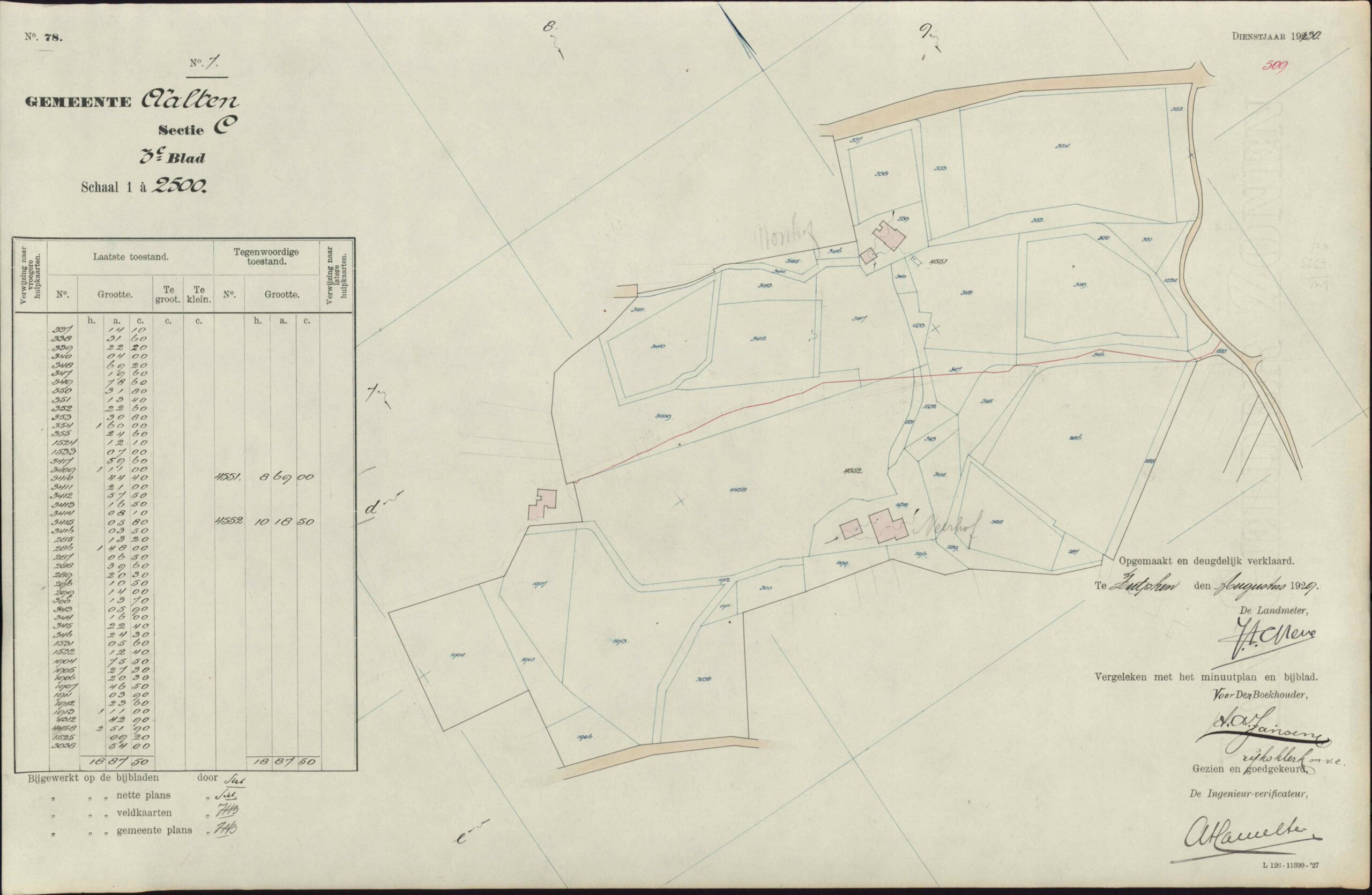
In the rural district of Dale, there was once the manorial estate known as Neerhof. Here is a piece of history about ‘t Neerhof that we found in a booklet:
“When the Saxons were subjugated by the Franks and Charlemagne became the landowner, he established Frankish landholdings where the ‘schout’ or ‘scholte’—the lord’s representative—would reside. They were responsible for collecting taxes, and the Saxon farmers became subservient to the lord’s ‘hof’ (court/estate).
In every district of Aalten, we find an old, distinguished estate, all of which strongly suggest that they share the aforementioned origin. In the past, all these farmsteads were surrounded by a moat. Each farmstead is situated on the edge of an ‘es’ (es-land) in such a way that the latter extends around it, virtually in the shape of a half-moon, so that the ‘Hof’ forms the centre. This indicates that the large-scale cultivation of the essen must have originated from the ‘Hof’ and was continued progressively further outwards.
De Aaltense Es is eigenlijk de es van de boerschap Dale (= laagte). Hij ligt binnen een halve cirkel met een straal van ongeveer twee kilometer om Havezathe de Pol, met deze als middelpunt.
Nu doet zich nog de merkwaardige omstandigheid voor, dat wij in Dale nog twee aan elkaar grenzende goederen vinden, ‘Nonhof’ en ‘Neerhof’ geheten. Beide hoeven liggen vrij ver van de Ahof ‘de Pol’ verwijderd, maar dit is duidelijk als we de ligging en uitgestrektheid van Dale in aanmerking nemen; deze hoeven konden rustig in het lager gelegen westen van Dale hun plaatsen innemen. Hier zouden ook ordebroeders en ordezusters hebben gewoond.
In the past, the Neerhof and Nonhof estates belonged to the St. Antonie vicarage, which was established in the Aalten Church. Later, they became domains of the sovereign.
According to some, the name is derived from ‘d’n Heerhof’, which merged into ‘de Neerhof’.
At the beginning of the 17th century, we also encounter the spelling ‘Neerhave’.
Elshoek/Grevink area, Dale
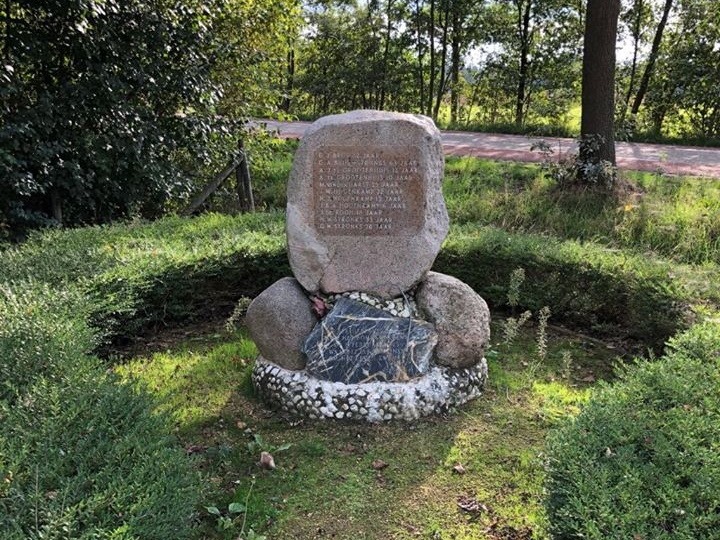
On 8 February 1945, a mistake bombing took place in the Aalten rural district of Dale, in which eleven people were killed. In memory of these victims, a monument was unveiled in 1988 on the corner of Aladnaweg and Grevinkweg.
Less than three months before the end of the war, on February 8, 1945, American B-26 Marauder bombers took off from their base in Cambrai in northern France. Their primary target was the area around Kleve, and if that was not possible, they had an alternative target at Groenlo. At Kleve it was too cloudy and so they flew on, but also in the Achterhoek the visibility was poor. Just after 11:00 a.m., they dropped 528 fragmentation bombs.
Two hours later, the aircraft returned safely to Cambrai. Their mission report stated: “Impossible to determine further damage or to locate pattern accurately due to 80% cloud cover”.
The deadly cargo ended up in the vicinity of the Elshoek and the Grevink in Dale, with terrible consequences. The hundreds of splinter bombs caused death and destruction. The shards flew horizontally across the ground and affected both people and animals. Everywhere lay dismembered horses, cows, sheep, chickens and geese. Some farms suffered direct hits.
All doctors, nurses and emergency services were sent to the crash site. In the mud and among the rubble, they provided first aid to the wounded. These were transported on stretchers and ladders to Huize Avondvrede on the Hogestraat. From there, the seriously injured were transferred to the emergency hospital in Harreveld.
The bombing eventually claimed eleven lives and left several people permanently disabled.
In the kitchen of the Neerhof family’s farm ‘t Olde Nooitgedacht , Joop de Roon from Rotterdam was found dead. At the Glieuwe farm, where the Hogenkamp family lived, daughter Anna and sons Herman and Jozef were killed. The Bekerhuis farm of the Te Grotenhuis family was completely destroyed. There were four victims here: the children Arie and Teun te Grotenhuis and the brothers Hendrik and Gerrit Stronks, who were in hiding there.
Mink van der Harst, from Scheveningen and in hiding with the Eppink family of farm ‘t Nooitgedacht, was fatally hit by shrapnel outside. Brus’ farm was also hit. Gerrit Brus died on the spot, and his wife Sientje Brus-Stronks died a few days later in the emergency hospital in Harreveld.
In addition, bombs also fell in the Haartsestraat. Clarel Smit, who had just left Van Lente’s house, was so injured in his feet and legs that he died four months later in the emergency hospital in Harreveld.
The monument in memory of the victims consists of four stones, from the remains of the house of the Te Grotenhuis family. Mr. Te Grotenhuis piled up these stones at the place in question after the bombing. For years, the stones functioned as an unofficial memorial. In 1988, at the insistence of the local population, they were recognized as an official monument.
The names of the victims are inscribed on the memorial stone: