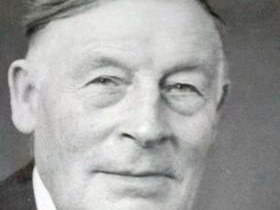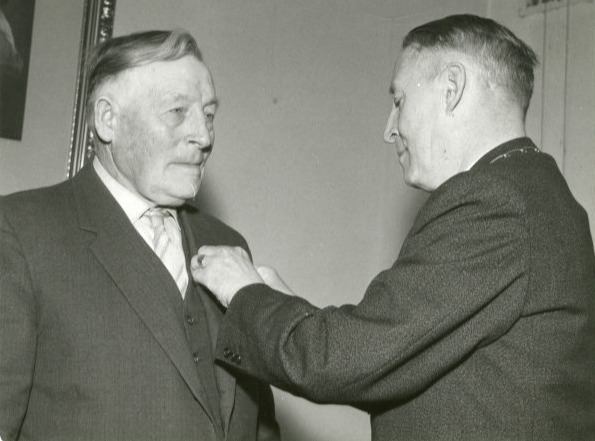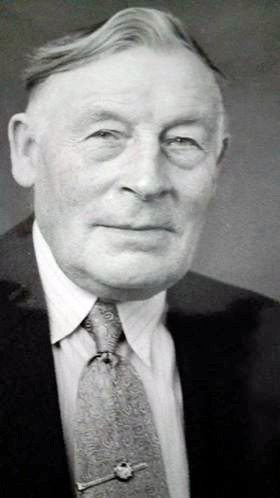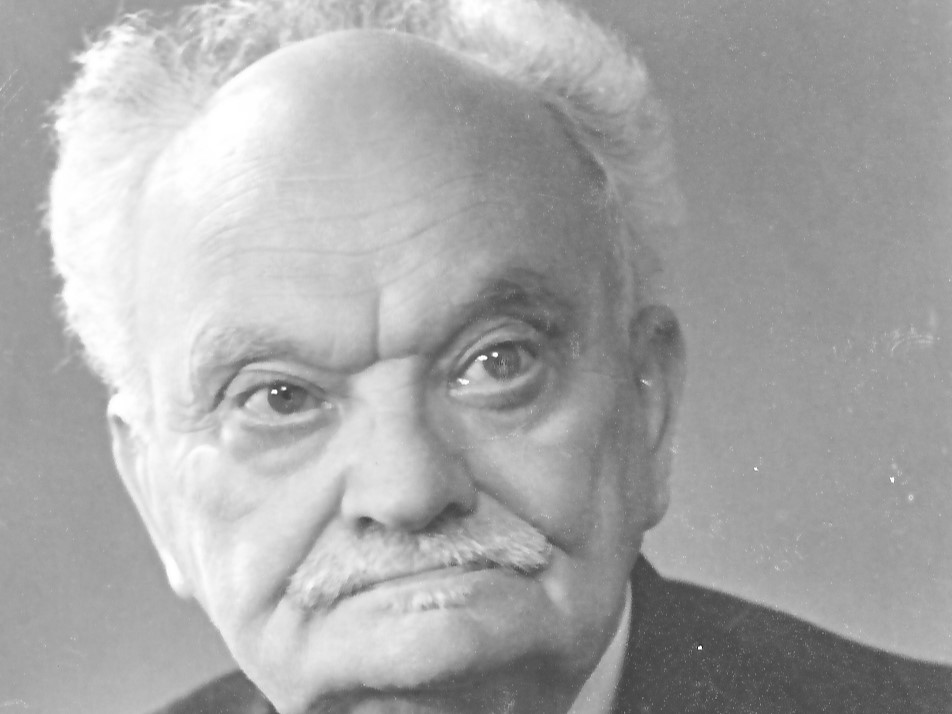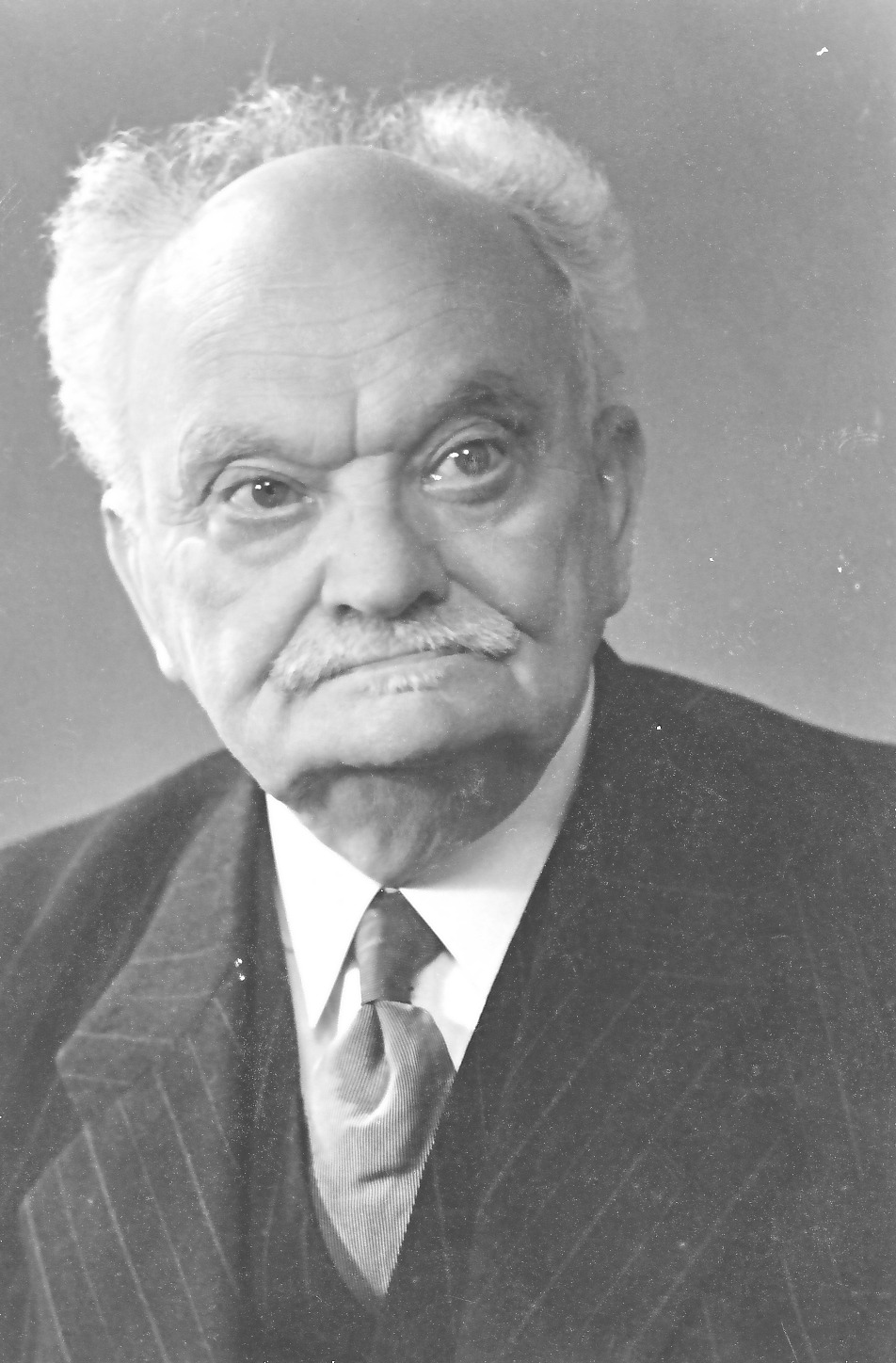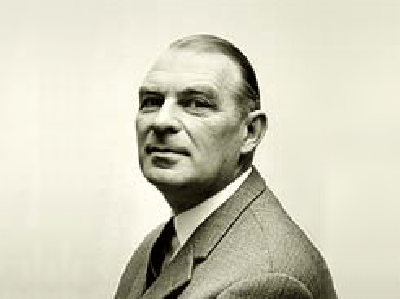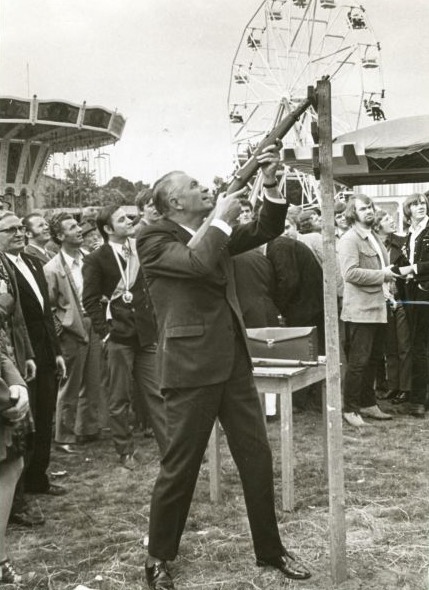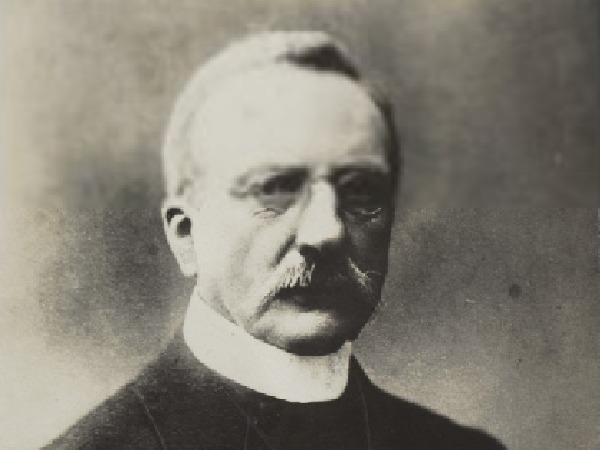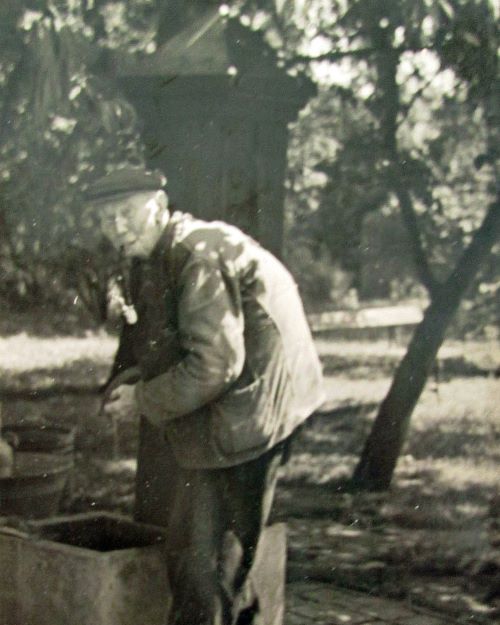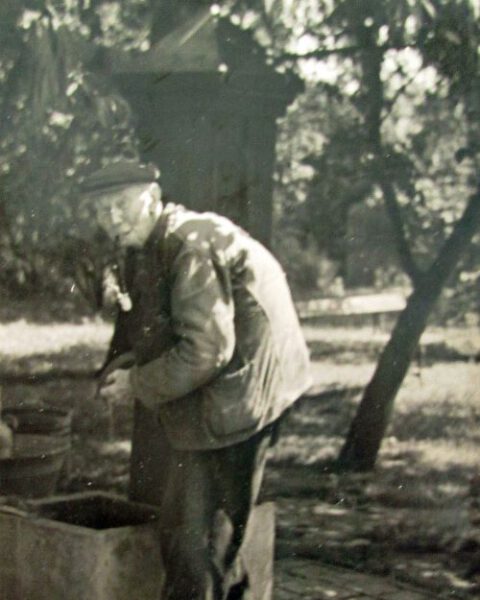
Christian trade union leader and anti-revolutionary politician.
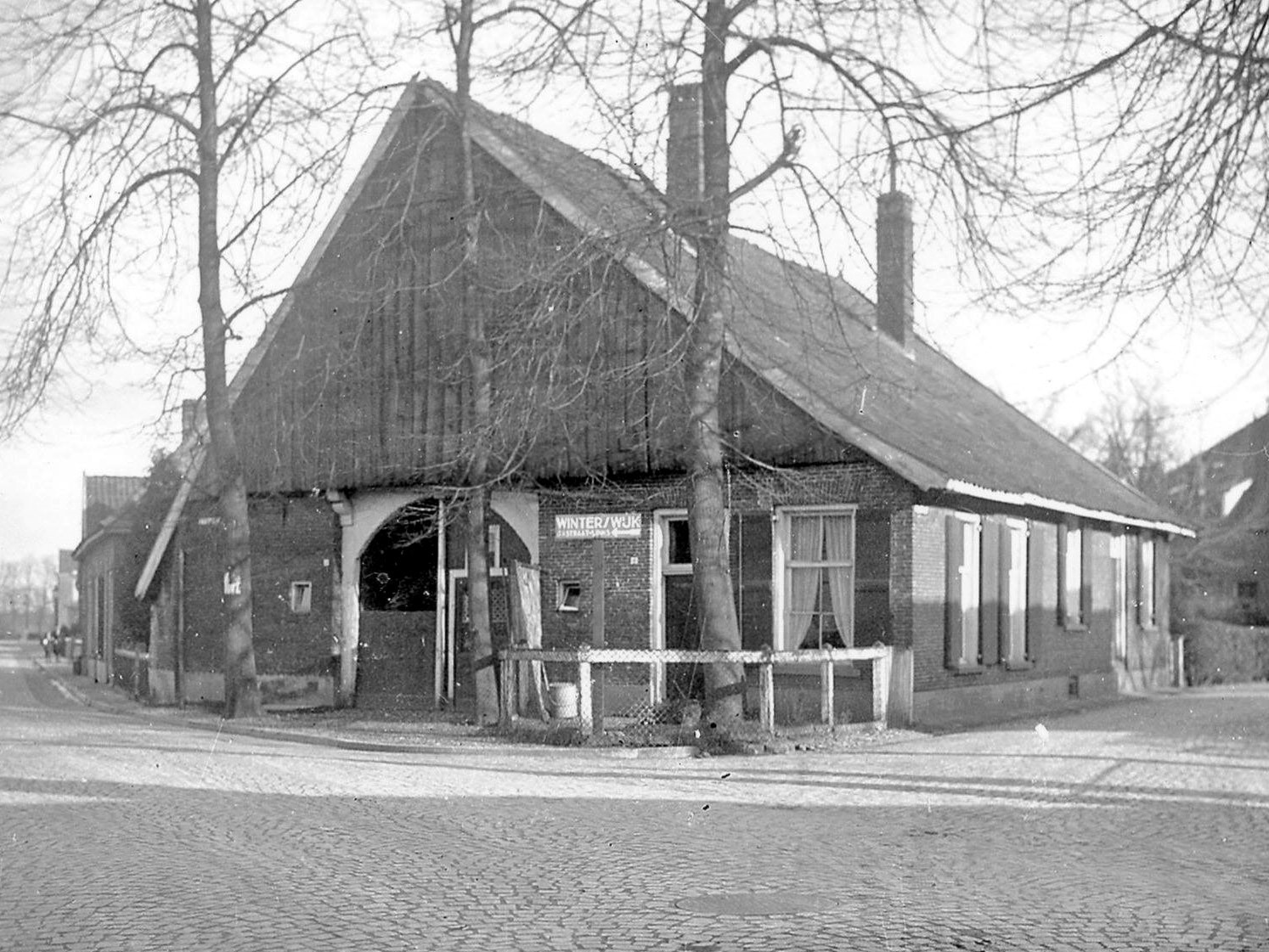
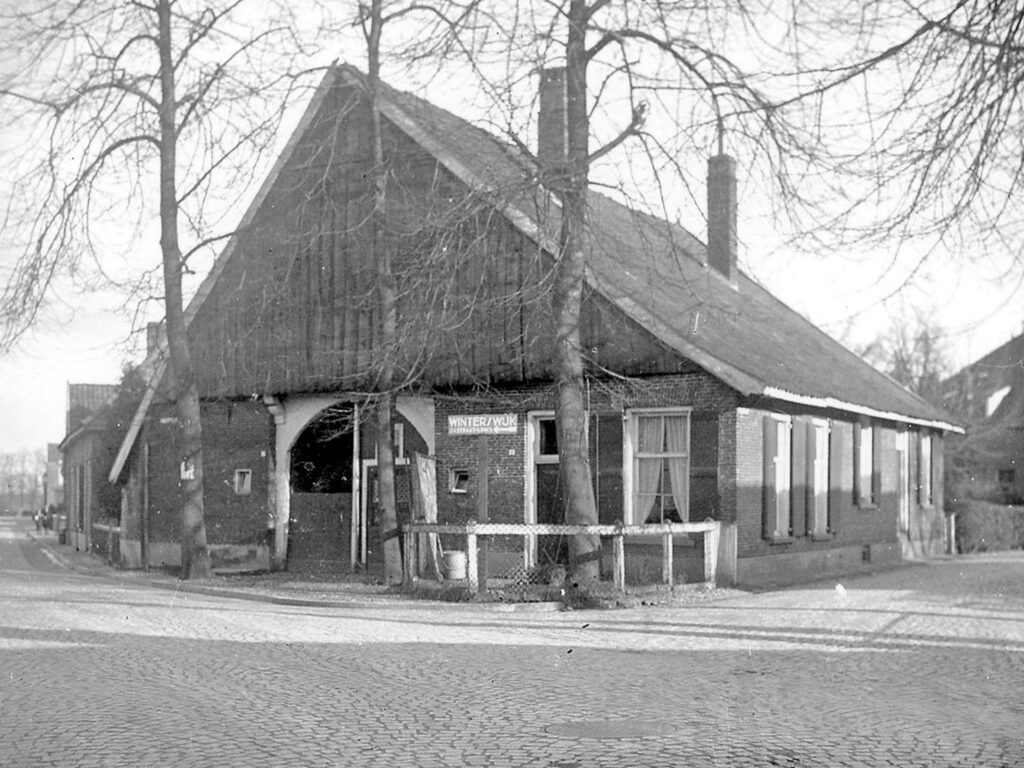
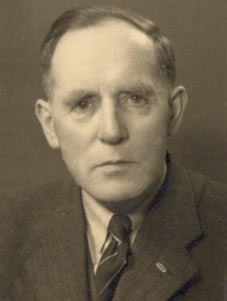
Antoon Stapelkamp was born on 27 February 1886 at house number 162 (Hogestraat 26) in Aalten and passed away on 19 January 1960 in Utrecht. He was the son of Gerrit Jan Stapelkamp, a factory worker and smallholder, and Hendrika te Sligte. On 12 June 1913, Antoon married Johanna Aleida Stronks, with whom he had five daughters and two sons.
Stapelkamp grew up in a strict Calvinist (gereformeerd) family with four children in Aalten. After completing his education at the Christian primary school, he had to start contributing to the family income at the age of twelve. He joined the Ten Dam and Manschot button and comb factory, which had been established in Aalten since 1872. His father already worked there, and a few years later, the company also employed his younger brother Herman.
Encouraged by their parents, both boys attended evening classes for further education. However, only the youngest managed to obtain diplomas and pursue a career in teaching. Antoon continued to make horn combs at Ten Dam and Manschot for more than twenty years.
At the age of fourteen, Stapelkamp witnessed a debate between the Enschede-based socialist J.F. Tijhof and H. Verveld, the chairman of the interdenominational Dutch Christian Textile Workers’ Union ‘Unitas’. Impressed by Verveld’s performance, he signed up as a youth member of the local branch that Verveld had founded in Aalten. However, this branch proved unsustainable.
Administrative Career
Membership of the Calvinist Young Men’s Association (Gereformeerde Jongelingsvereniging), the breeding ground for administrative talent within the orthodox Protestant community, was of great importance to Stapelkamp’s social and political development. Apart from serving as secretary and chairman of the Aalten branch, he was a board member of the Gelderland section of the Dutch Association of Young Men’s Societies on a Calvinist Foundation.
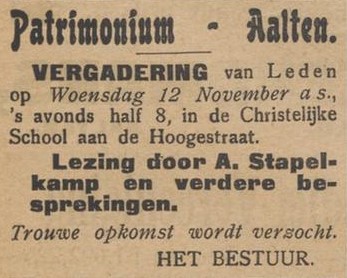
In the local branch of the workers’ association Patrimonium, his administrative qualities were quickly noticed, which led to his election as secretary in 1903. He declined, however, believing that at seventeen, he was too young and inexperienced. Eleven years later, he would accept this very position.
In 1914, Stapelkamp and a few friends from Patrimonium founded the Association of Christian Hornworkers, a local trade union that joined the CNV (National Federation of Christian Trade Unions) as an independent organisation on 1 March 1914. He took on the role of secretary himself. However, the trade union was too small to have a future, and the Hornworkers’ Union soon collapsed. Stapelkamp subsequently founded an Aalten branch of the Dutch Union of Christian Factory and Transport Workers (NBCFHT). Once again, he became the secretary.
After a period as an active member and executive of the NBCFHT, he became a member of the CNV executive board in 1931. The Stapelkamp family relocated to The Hague, where the federation had established a new headquarters. This marked the end of Stapelkamp’s nascent membership of the Anti-Revolutionary Party (ARP) in the Aalten municipal council.
CNV Chairman
In 1935, he was appointed chairman. He attempted to chart an independent course for the CNV and exert influence on government policy, which was heavily focused on austerity. Although he shared the general policy direction of the Colijn cabinets, he frequently disagreed with the specific measures introduced.
During the occupation years, Stapelkamp developed into a forceful chairman. Led by him, the CNV followed a course of evasive adaptation during the first year of the occupation, keeping contact with the occupying forces to an absolute minimum and rejecting structural reforms. In November 1940, Stapelkamp accepted an invitation from the Deutsche Arbeitsfront to go on a study tour to Germany. This decision would be held against him for a long time.
On 30 June 1941, Stapelkamp was arrested alongside approximately ninety other prominent anti-revolutionaries. Until December 1942, he was detained successively in the Schoorl, Buchenwald, Haaren, and St. Michielsgestel camps. After his release, Stapelkamp was a driving force behind the underground ‘Internal Contact Group’. He also restored relations with representatives of other employee and employer organisations.
Following World War II, Stapelkamp was reappointed chairman of the CNV, a position he held until his resignation in 1947. Furthermore, he served as:
- Member of the Senate of the States-General, from 20 November 1945 to 4 June 1946
- Alderman (for Social Affairs) of Utrecht, from November 1945 to 2 September 1946
- Member of the House of Representatives of the States-General, from 4 June 1946 to 3 July 1956
- Member of the Provincial Council of Utrecht, from 20 June 1946 to 4 July 1950
In early 1960, Stapelkamp fell ill with neglected diabetes. He died from subsequent complications.
Publications
Pseudonym: ‘Socius’.
- ‘Mag boycot onder de toelaatbare strijdmiddelen in den economischen strijd worden gerangschikt?’ in: Verslag van de veertiende algemeene vergadering van het Christelijk Nationaal Vakverbond (Utrecht 1929) 57-70;
- ‘De christelijke vakbeweging: vrucht van het verleden; eisch van het heden; levensvoorwaarde voor de toekomst’ (Utrecht 1945);
- ‘Dr. H. Colijn en het sociale leven’ in: Een groot vaderlander. Dr. H. Colijn herdacht door tijdgenooten (Leiden 1947);
- ‘Het sociale beleid van het kabinet-Drees’ (Den Haag z.j.);
- ‘Verantwoorde emigratie’ (Den Haag 1951);
- ‘De gemeenten en de werkgelegenheidspolitiek’ (Den Haag 1953);
- ‘De banier opnieuw geheven. Geschiedenis van het Christelijk Nationaal Vakverbond in Nederland in de jaren van de tweede wereldoorlog’ (met J. Schipper, Hoorn 1956).
Literature
- ‘Om te doen gedenken. Verslag van de buitengewone vergadering van het C.N.V. en van de receptie-samenkomst ter gelegenheid van het afscheid van K. Kruithof als voorzitter en het optreden van A. Stapelkamp als zoodanig’ (Utrecht 1935);
- ‘Onze nieuwe voorzitter’ in: De Gids, 31.10.1935;
- Verslag 22e algemene vergadering Christelijk Nationaal Vakverbond gehouden op donderdag 24 en vrijdag 25 juli 1947 (Hoorn 1947) 38-61;
- Trouw, 20.1.1960; J. Schipper, ‘In dankbare herinnering’ in: De Gids, 6.2.1960;
- ‘Stapelkamp ter nagedachtenis’ in: De Gids, 6.2.1960;
- 29e Jaarverslag CNV 1960-1961-1962 (Hoorn z.j.) 31-32.