Category: Monuments

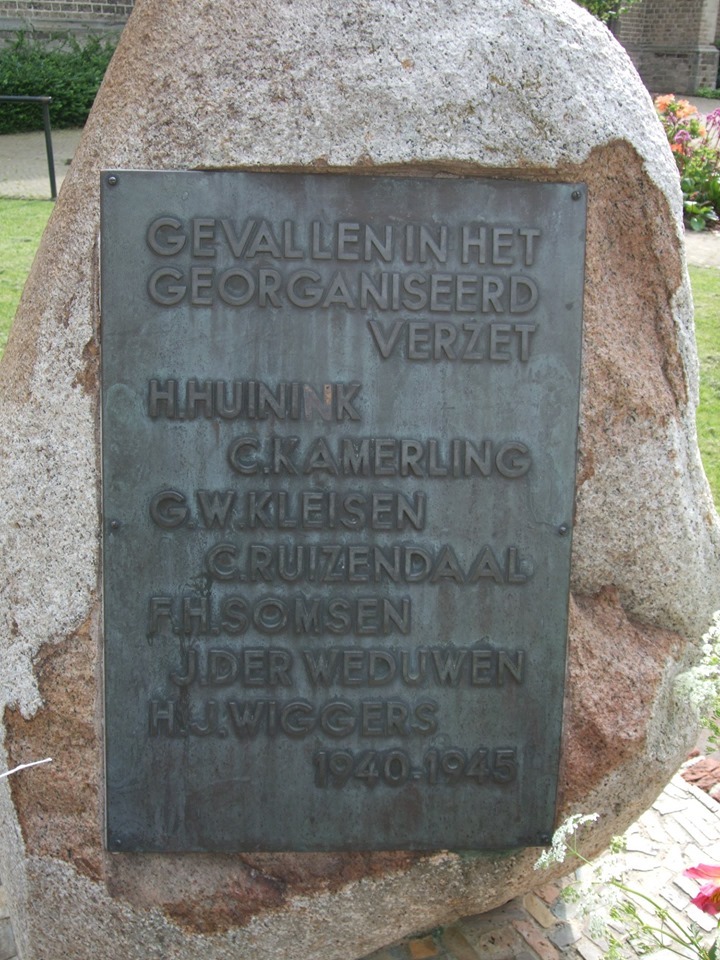
  • Fallen in the organized resistance

    Fallen in the organized resistance

    Köstersbulte, Aalten

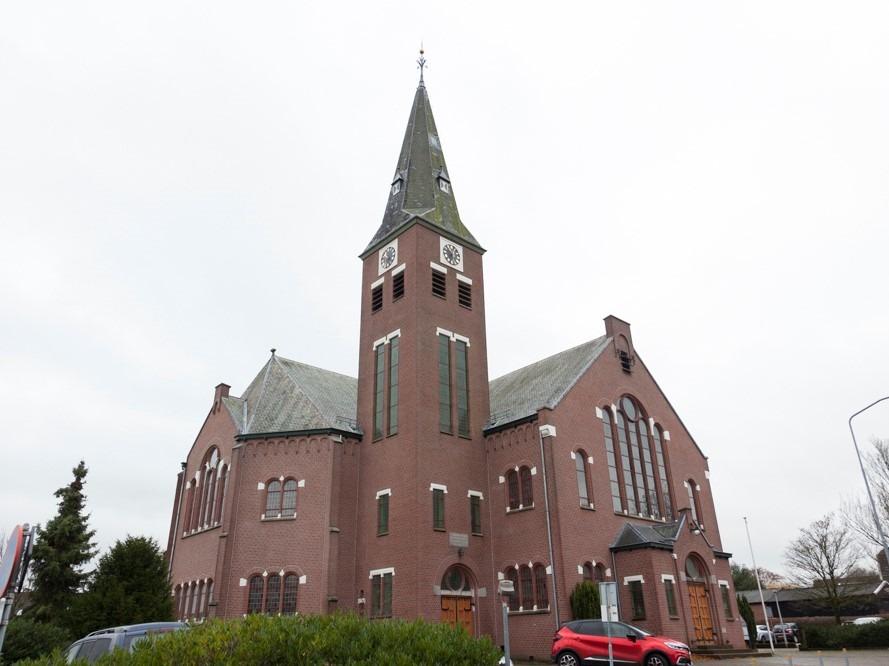
    On the lawn of the Old Helena Church on the Markt in Aalten is a special memorial stone. The bronze plaque on the stone mentions the names of seven resistance fighters within the organized resistance in Aalten.

    The resistance during the Second World War (1940-1945) only developed in the course of the war. As the measures of the German occupying forces became stricter, small groups arose that resisted the occupation, initially with limited resources. As the war progressed, more and more people got into trouble. The small resistance groups grew in strength due to the increase in the number of members, but also due to the networks that arose between the various resistance groups.

    Within the resistance, two main currents could be distinguished. The first group was the National Organization for Help to People in Hiding (LO). This group organized hiding places for Jews, for men who refused to work for the enemy in Germany, and for resistance fighters who had to go into hiding. The LO was dependent on sufficient ration coupons for the food supply to the people in hiding . The second group, the Knokploegen (KP), took care of that. This armed group carried out raids on distribution offices, tried to sabotage the enemy at vital points and in the last phase of the war prepared to assist the Allied troops in the liberation of the Netherlands.

    In the Achterhoek, especially in the region of Aalten, Lichtenvoorde and Winterswijk, the resistance was particularly active. Some of the resistance fighters lost their lives during the war. Those who survived the harsh time did not feel like heroes. Many testified to the fear they would carry with them for the rest of their lives. The courageous acts of the resistance are recorded in several books.

    The names of the fallen (click on the links for more information):
  • Grebbeberg Commemorative Column

    Grebbeberg Commemorative Column

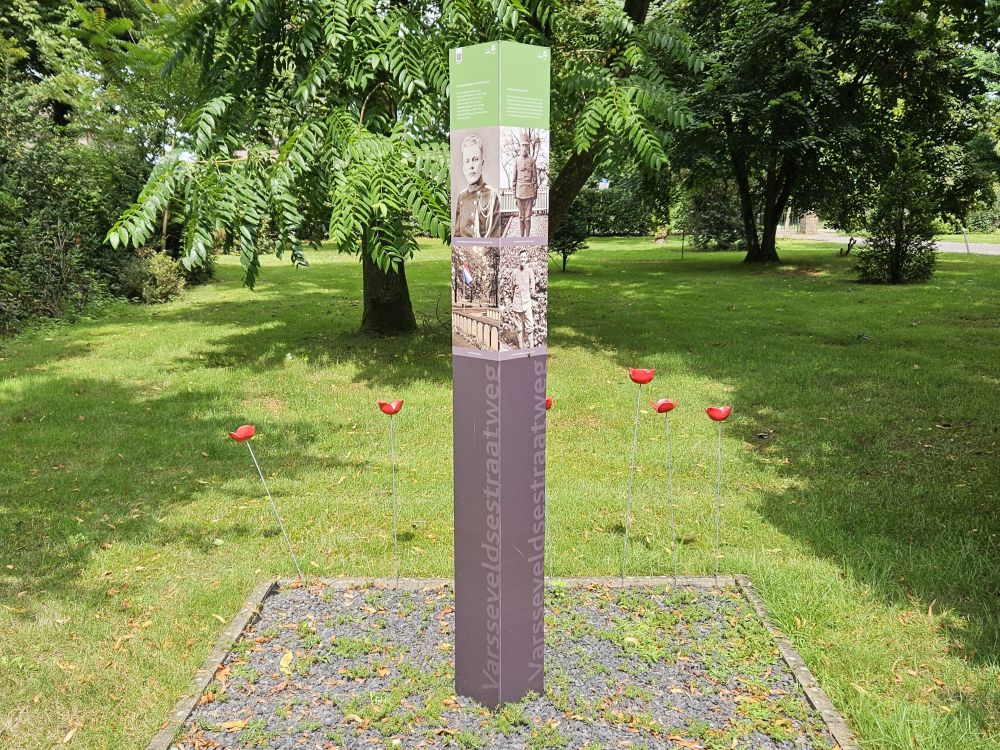
    In 2015, as part of the commemorations for 70 years of liberation, a commemorative column was placed at the Old General Cemetery in Aalten to honour all local soldiers who fought on and around the Grebbeberg in May 1940. Seven servicemen from Aalten lost their lives during the conflict. Their names and photographs have been immortalised on the column.

    The text on the column reads:

    Soldiers from Aalten in May 1940

    In the early morning of 10 May 1940, German troops invaded the neutral Netherlands. For our country, this marked the beginning of World War II. Mobilised Dutch soldiers took up positions in several lines of defence, including the Grebbe Line. Fierce fighting took place in the main resistance strip on and around the Grebbeberg near Rhenen.

    Most soldiers survived the battle and were able to return to Aalten, often after a brief period as prisoners of war. Seven families remained in a state of uncertainty for some time. Eventually, they received the tragic news that their sons would not be returning; they had fallen in battle. Their lives were devastated by this great loss. At this site, all Aalten soldiers who fought in May 1940 are remembered.

    Many residents of the Achterhoek, including a considerable number of young men from Aalten, were assigned to the 8th Infantry Regiment (8 R.I.). This unit played a vital role in the defence of the Grebbeberg. The poorly trained and equipped soldiers fought an unequal battle against an overwhelming enemy. Bravely, they attempted to hold their ground for as long as possible. The Germans, with awe, referred to the hill as ‘Der Teufelsberg’ (The Devil’s Mountain). Nevertheless, our country was forced to capitulate on 14 May 1940.

    Fallen for the Fatherland on 12 and 13 May 1940:

    More information: Nationaal Onderduikmuseum

  • Stolpersteine (stumbling stones)

    Stolpersteine (stumbling stones)

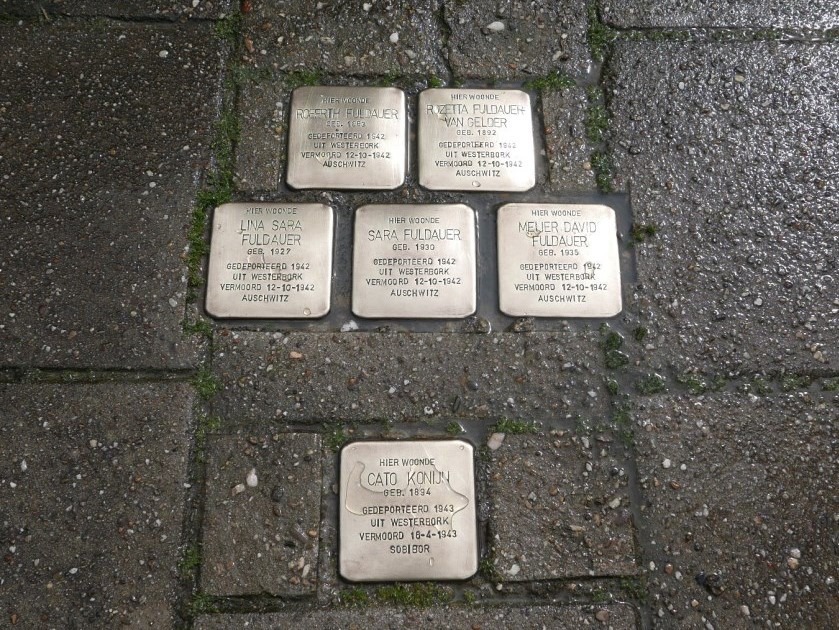
    In Aalten, 34 Stolpersteine (stumbling stones) are laid across twelve addresses. A Stolperstein is a memorial stone placed in the pavement in front of the house from which people were deported by the Nazis to extermination camps during World War II. When you see such a stone—usually unexpectedly—with the name of a victim, you are momentarily reminded of how millions became victims of systematic murder during that war.

    The stones have a surface area of 10 by 10 cm. A brass plate is affixed to the top, into which the name, year of birth, date of deportation, and the place and date of death are stamped. Each stone serves as a memorial to a single victim: a person who lived in that very spot and was deported from there, never to return.

    Originator

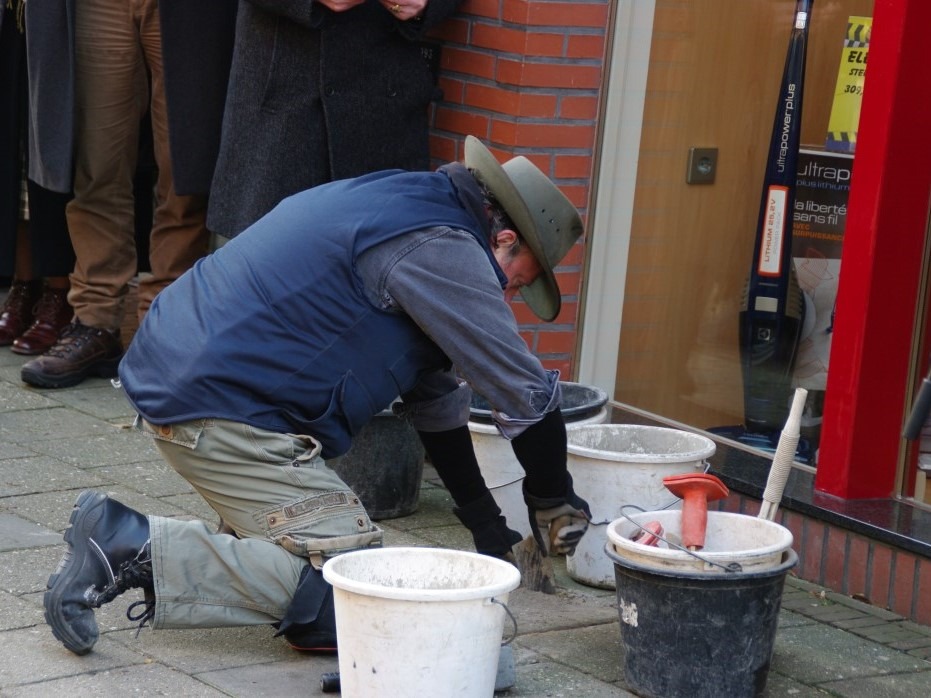
    The Stolpersteine project was conceived by the German artist Gunter Demnig. He deliberately kept the size of these ‘stones of offence’ small, requiring one to bow down to read the inscriptions.

    Demnig began laying the first Stolperstein in 1997 in the Berlin district of Kreuzberg. Today, Stolpersteine can be found in many countries. Gunter Demnig thus gives every victim their own individual monument. His motto is: “A person is only forgotten when his or her name is forgotten.”

    Initially, he made all the stones himself, as he felt mass production conflicted with the project’s ethos. However, forced by the project’s rapid growth, he is now assisted by an artist friend. He insists on personally laying the first stones in any given location. The remaining stones are now usually installed by municipal pavers.

    Stolpersteine in Aalten

    In Aalten, 34 Stolpersteine have been laid at the following addresses:

    • ’t Dal 1: Levi Salomon Schaap, Ella Schaap-Philips, Eliazar Hars Schaap, Frits Landau, Amalia Landau-Lorch
    • Dijkstraat 10a: Levie van Gelder, Jula van Gelder-Landau, Arnold van Gelder
    • Eerste Broekdijk 51: Roberth Fuldauer, Rozetta Fuldauer-van Gelder, Lina Sara Fuldauer, Sara Fuldauer, Meijer David Fuldauer, Cato Konijn
    • Grevinkweg 5: Sally Fuldauer, Regina Fuldauer-de Jong
    • Haartsestraat 64: Wijnand Andriesse
    • Hogestraat 3: Jacob ten Bosch en Jansje ten Bosch-Bouwman
    • Hogestraat 13: Moritz Cohen, Bernhard Cohen, Karoline Japhet-Eppstein
    • Hogestraat 55/1: Albert Lewy, Friederika Lewy-ten Bosch, Berta Mathilde Lewy
    • Hogestraat 94: Salomon Goedhart, Philippina Lea Goedhart-Rosenburg
    • Landstraat 41: Johannes der Weduwen
    • Lichtenvoordsestraatweg 17: Philip van Gelder, Elise van Gelder-Cohen, Jozef Backs
    • Stationsstraat 24: Abraham van Gelder, Reintjen van Gelder-de Jong
    • Vellegendijk 17: Hendrik Wiggers

    In one instance, the stone could not be placed in front of the victim’s residence because the building (Industriestraat 4) no longer exists, nor is there a pavement where it could be installed. Therefore, this stone was laid in front of the synagogue.

  • Airmen’s Monument IJzerlo

    Airmen’s Monument IJzerlo

    Huisstededijk, IJzerlo (just before the Keizersbeek bridge)

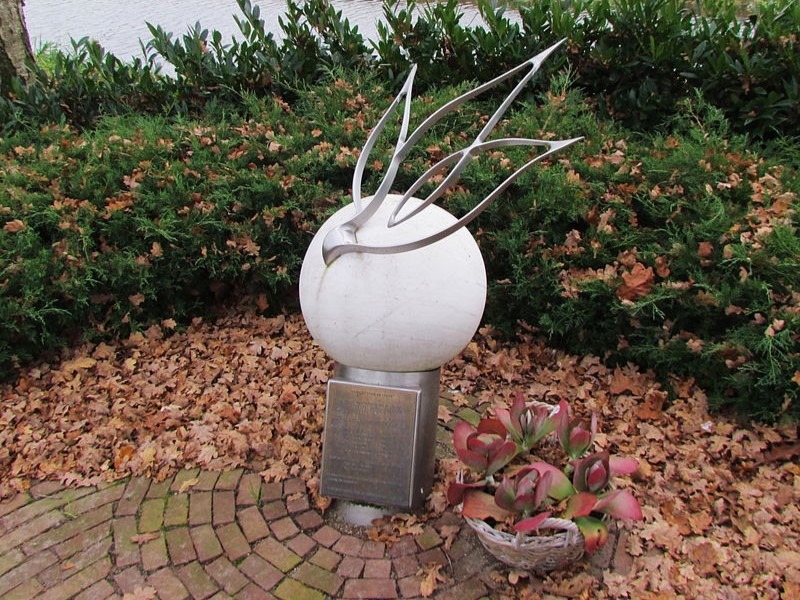
    The ‘Flying for Peace’ (Vliegen voor de Vrede) monument is a commemorative memorial located on Huisstededijk in the Aalten hamlet of IJzerlo. The monument was erected in memory of the crash of a British bomber during the Second World War, which came down in a nearby potato field on the night of 26 June 1943.

    On that particular night, over 400 British bombers flew over the Achterhoek on a mission to bomb the petrochemical industry in Gelsenkirchen. One of these aircraft, a Short Stirling BK767 of 214 Squadron, Royal Air Force, with seven crew members on board, had taken off just before midnight on 25 June.

    At approximately 01:20, the aircraft was set ablaze by night fighter pilot Oberleutnant Ludwig Meister, flying a Messerschmitt Bf 110 G-4 that had recently scrambled from Venlo airfield. The Stirling crashed into a potato field between the farms of the Van Lochem family on Huisstededijk and the Ter Horst family on Veldweg.

    Of the seven crew members, only two survived the crash. They were later captured near Hemden and spent the remainder of the war in German prisoner-of-war camps. The other five crew members perished and were buried following a brief ceremony on 29 June 1943 at Berkenhove Cemetery in Aalten.

    The following day, many Aalten residents flocked to the cemetery. On the middle grave, members of the underground resistance laid a wreath with ribbons bearing the text: “Gebroken vleugels, onsterfelijke roem” (Broken wings, immortal fame). By order of the occupying forces, these words had to be removed, but they live on through the monument today.

    The fallen crew members were:
    F/O B.H. Church , 21
    Sgt W. Th. Davis , 21
    Sgt F. Mills , 20
    Sgt W.H. Thompson , 21
    F/O J.F. Tritton , 28

    Survivors (taken prisoner):
    • F/O K.A. Nielson
    • Sgt E.G. Taylor

    The Monument

    In 2003, a monument was unveiled at the spot where one of the crew members’ bodies was found, near the cycle bridge over the stream on Huisstededijk. The creator, Wim Westerveld, gave it the name ‘Flying for Peace’ and designed an artwork containing multiple layers of symbolism.

    The monument consists of a white stone sphere topped with a metal sculpture that, from certain angles, represents a dove and, from others, flames. The sphere rests on a metal pipe angled into the ground, to which a plaque is attached. One of the two survivors, navigator Edwin Taylor (born 1922), was present at the unveiling of the monument.

    Significance

    The sculpture represents the Earth with a dove of peace on top, symbolising the desire for peace. However, from certain viewpoints, the dove transforms into flames, symbolising the tragic event of the crash and the fiery dedication of the crew to their mission. The flames also refer to the fire of the bomb load the aircraft was carrying. The broken wings on the monument are a symbol of the crew’s abruptly ended mission.

    The monument serves not only as a memorial to the crew of Stirling BK767 but also conveys a broader message. It acts as a warning against war and reminds us of the freedom we enjoy today. It calls upon us to cherish this freedom and to grant it to others as well.

  • War Memorial

    War Memorial

    Whemerstraat, Aalten

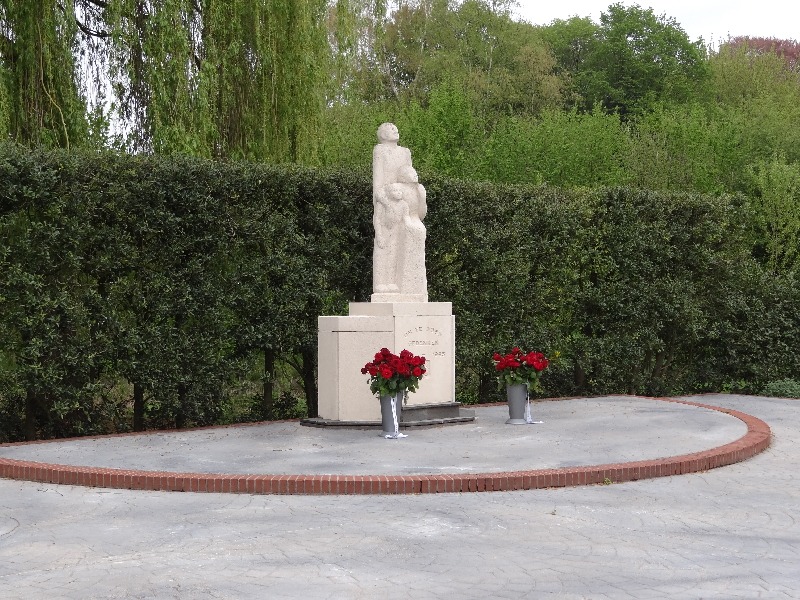
    The war memorial on the Wheme was erected in memory of all fellow citizens who died during the occupation years as a result of acts of war. The memorial also commemorates the liberation.

    The establishment of the memorial was an initiative of the Monument Foundation 1940-1945 committee. Immediately after the liberation, the population of Aalten felt the need to honour the war victims with a monument.

    The monument consists of a statue of a male figure with a woman and child. The sculpture of French limestone is placed on a terrace. The pedestal consists of masonry, concrete and natural stone. The memorial is 1 meter 31 high, 1 meter 43 wide and 90 centimeters deep.

    The monument was unveiled on 16 June 1956 by Hendrik Jan (Uncle Jan) Wikkerink, leader of the former resistance movement in Aalten.

    The text on the pedestal reads:

    OM TE DOEN
    GEDENKEN
    1940 1945

    (‘TO COMMEMORATE’)

    The group faces south from where the tribulation, but also the deliverance, came. Artist Bé Thoden van Velzen described the sculpture as follows: “… representing man, woman and child, as a symbol of the entire Dutch people, expectantly looking forward to liberation, unbowed and unweakened.”

    Features


    FunctionMonument
    Disclosure1956

    Sources


  • Memorial for People in Hiding

    Memorial for People in Hiding

    Stationsstraat, Aalten

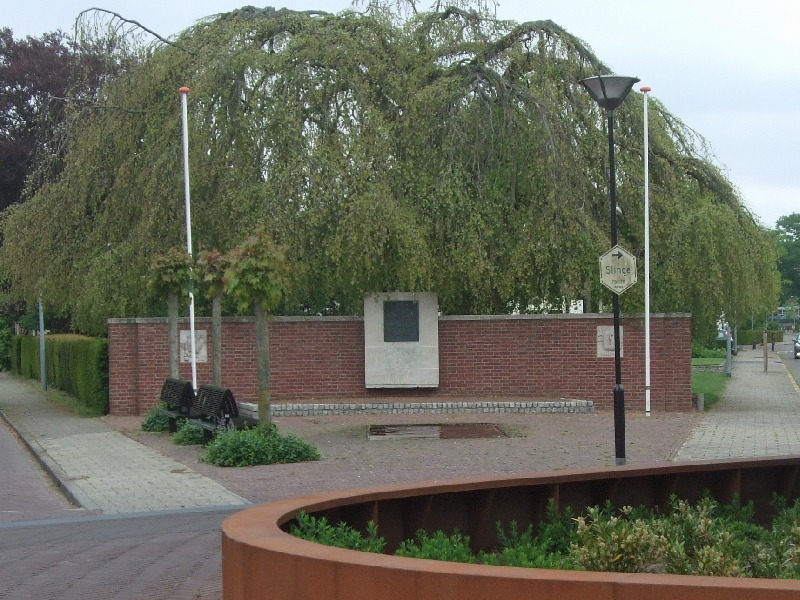
    The memorial for people in hiding (Onderduikersmonument) on Stationsstraat is an expression of gratitude from those who were once in hiding to the people of Aalten for their hospitality, and to the members of the Resistance who were the driving force behind finding accommodation for them.

    The monument consists of a brick memorial wall with a fountain. A bronze plaque and two sculpted fragments of natural stone are set into the memorial wall.

    The monument was unveiled on 4 October 1947 by Mrs D.G. Wikkerink-Eppink, the wife of Resistance leader Hendrik Jan (Ome Jan) Wikkerink.

    The text on the plaque reads (translated from Dutch):

    PRESENTED TO THE MUNICIPALITY OF AALTEN BY PERSONS IN HIDING
    WHO DURING THE YEARS OF OCCUPATION 1940-1945
    FOUND A SAFE HAVEN HERE.

    The sculpted fragments bear the text of Psalm 91:5 and 6.

    The text of the left fragment reads:

    THOU SHALT NOT BE AFRAID FOR THE TERROR BY NIGHT,
    NOR FOR THE ARROW THAT FLIETH BY DAY;
    NOR FOR THE PESTILENCE THAT WALKETH IN DARKNESS,
    NOR FOR THE DESTRUCTION THAT WASTETH AT NOONDAY.

    The text of the right fragment reads:

    FOR HE SHALL COVER THEE WITH HIS FEATHERS, AND
    UNDER HIS WINGS SHALT THOU TRUST.

    The sculpture on the left depicts three studded boots belonging to the barbarian horde, threatening to trample a young, sprouting fruit. This symbolises the overwhelming force and occupation, portraying the vulnerability of young life that continues to germinate despite the danger.
    The fragment on the right depicts a pelican with outspread wings, protecting its nest and young. The pelican is a Christian symbol of total self-sacrifice; according to legend, the bird feeds its young with its own blood. It symbolises the contribution of the resistance in the struggle against the occupier. The waning swastika in the background represents the transience of the threat.

    Sources


  • Commemorative Window in the Oosterkerk

    Commemorative Window in the Oosterkerk

    Gedenkraam Oosterkerk, Aalten

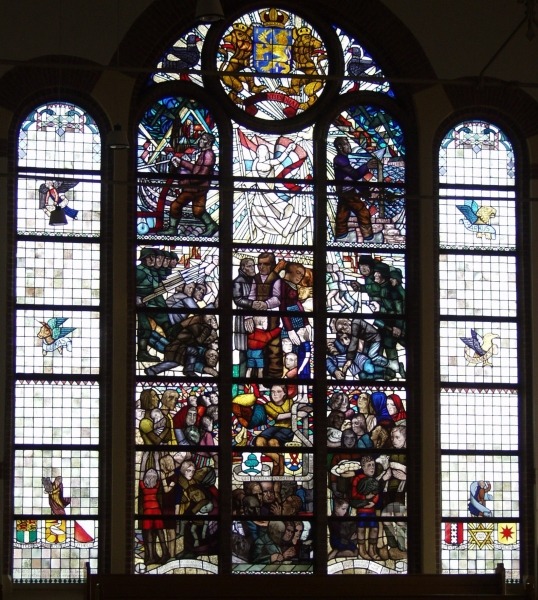
    The Oosterkerk in Aalten houses a monumental stained-glass window dating from 1946. The window was gifted by a committee from the Reformed Church of Rotterdam-Kralingen, on behalf of the churches and the Jewish community, as a token of thanks for the assistance provided by the people of Aalten during World War II to those in hiding (onderduikers), Jewish fellow citizens, the starving, and hundreds of children from Rotterdam.

    Thomas Delleman (1898–1977) served as a minister in Aalten from 1930 to 1938 before moving to Rotterdam-Kralingen. Following the Bombing of Rotterdam in May 1940, he took the initiative to arrange for children from his new parish to stay in Aalten for a holiday. During the war years, a total of approximately 800 children from Rotterdam were taken in by host families in Aalten.

    Delleman contributed in other ways as well. He ensured that young men wishing to evade the Arbeitseinsatz (forced labour) could go into hiding in Aalten. Furthermore, in 1943, around 500 evacuees from Scheveningen were accommodated in Aalten. During the ‘Hunger Winter’, trains carrying food regularly departed from Aalten for the west of the country.

    This dedication made a profound impression in Rotterdam and led to the formation of a committee after the liberation to thank the people of Aalten.

    Origin of the Commemorative Window

    Initially, the intention was to place the window in the Westerkerk, as more than forty young men had been arrested there during a roundup (razzia) in 1944. However, all the windows in the Oosterkerk had been shattered after a V1 rocket landed nearby in January 1945. Consequently, it was decided to install the window in the Oosterkerk instead.

    The window was designed by the Rotterdam artist Marius Richters (1878–1955) and executed by glazier Henri van Lamoen (1900–1949). With a height of eight metres and a width of over three metres, it is one of the largest stained-glass windows in the Achterhoek. Richters utilised bold colours and clear, almost narrative scenes that express both the threat of war and the warmth of the relief efforts.

    The window was installed in the front facade of the Oosterkerk and officially unveiled by Rev. Delleman on 13 July 1946. The ceremony was broadcast live on the radio by the NCRV.

    Design

    The window is over eight metres high and three metres wide, set within a trifora.

    • At the top: The coat of arms of the Netherlands with the motto “Je maintiendrai”. Below this is the Dutch Maiden, holding the flag in her right hand and a burning torch in her left. On either side stand a farmer and a bricklayer, referring to the post-war reconstruction.
    • Central: A farmer and his wife, symbolising the people of Aalten, surrounded by children and a person in hiding. From both sides, German soldiers with bayonets march into the scene.
    • Bottom left: Emaciated women and children pleading for help.
    • Bottom right: A group of people who have been helped, returning home supplied with foodstuffs.
    • Bottom centre: The coat of arms of Aalten featuring the linden tree and the coat of arms of the House of Orange, with a scroll reading: “Uit dankbaarheid voor hulp in oorlogstijd, soli Deo gloria” (In gratitude for help in wartime, to God alone the glory). Biblical texts are incorporated elsewhere in the window.

    In 1947, two side windows were added to either side of the main window. These feature the symbols of the four Evangelists, images of Moses and Isaiah, and at the bottom, the coats of arms of Rotterdam, Scheveningen, Utrecht, Amsterdam, Kralingen, and a Star of David.

    At the base of the side windows are lines of verse by Muus Jacobse (pseudonym of the poet Klaas Heeroma):

    Maar als ik leven mag tot de bevrijding
    en juichen op het overwinningsfeest,
    God, doe mij dan dit weten, wat voorbijging
    aan nood en leed is niet vergeefs geweest.

    (But if I may live until the liberation and rejoice at the victory feast, God, then let me know this: that the hardship and suffering which passed was not in vain.)

    Current Status

    The commemorative window can still be seen in the Oosterkerk. When the church was repurposed as a residential care location in 2021, it was formally agreed that the window would be preserved. This ensures the window remains not only an artwork of exceptional scale but also a lasting war monument and a tangible reminder of the aid and hospitality offered by Aalten during World War II.

  • Playing into death

    Playing into death

    Piepersweg, Aalten

    On the Piepersweg in the Aaltense Heurne there is a memorial in memory of a tragic accident that took place shortly after the liberation of Aalten. The monument was erected in memory of three young boys who died in the accident.

    On the afternoon of 4 April 1945, just a few days after the liberation, the boys Wim Schenk (8 years old), his brother Henk Schenk (6 years old) and their friend Wim Wisselink (5 years old) were playing outside.

    In a dry ditch along the Bocholtsestraatweg they found a projectile. Unaware of the danger, they threw it at each other. At one point, one of the boys threw the projectile against the wall of a nearby house, after which it exploded.

    The consequences were horrible. Wim Schenk died on the spot. His brother Henk and Wim Wisselink were seriously injured and were taken to a military emergency hospital in Barlo, where they died shortly after each other.

    Booklet and monument

    In 2011 a booklet about this dramatic event was published entitled ‘Spelend de dood in’, written by Louis Veldhuis.

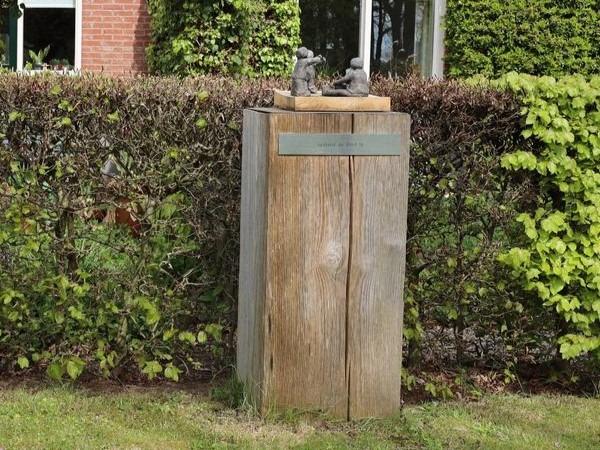
    Seventy years after the accident, in 2015, relatives of the Schenk family unveiled a monument at the site of the tragedy. It consists of a pedestal with images of the three boys and was designed by artist Ans Braamskamp.

  • Bombardment of Barlo

    Bombardment of Barlo

    Nijhofsweg 4, Barlo

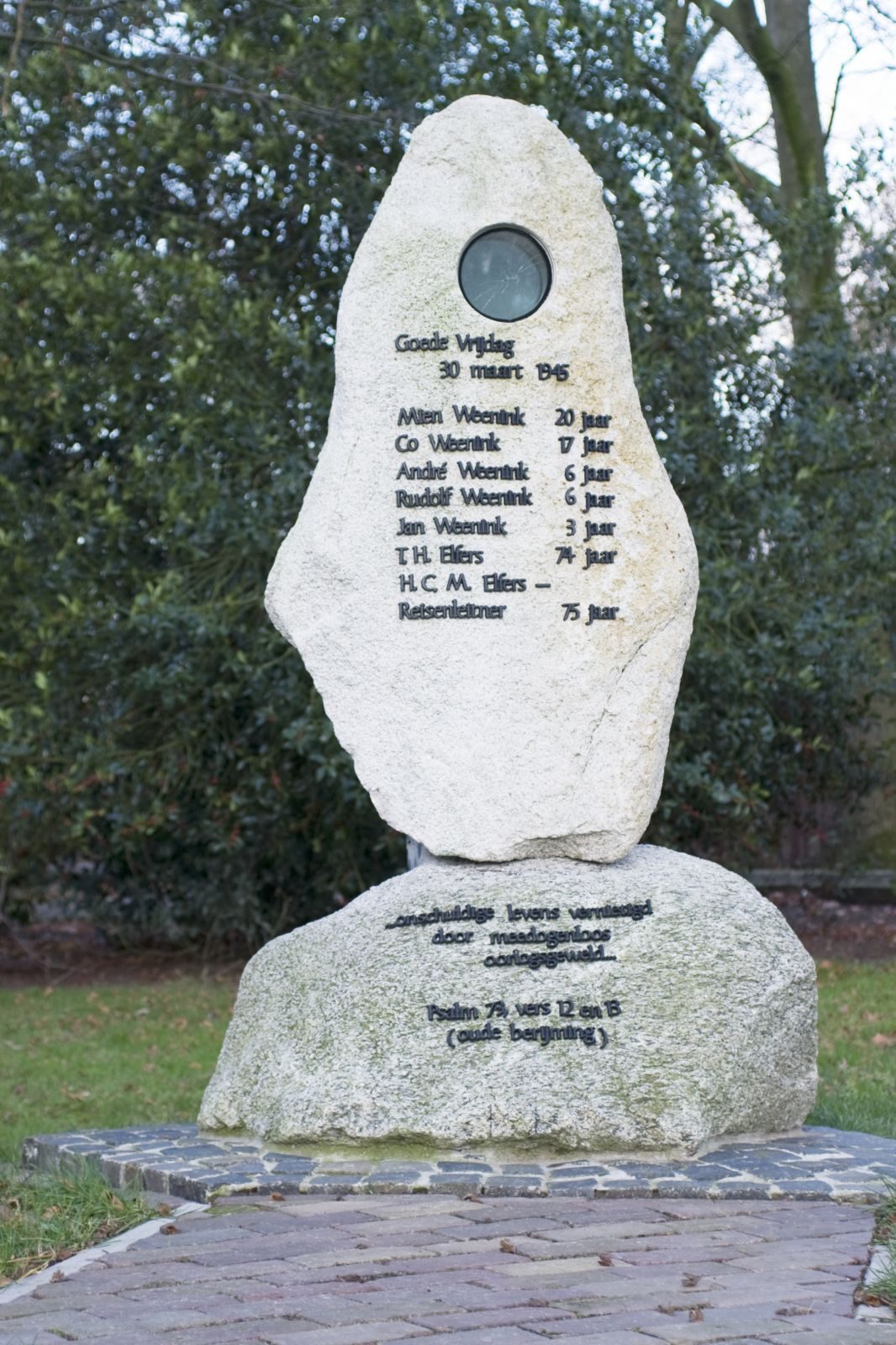
    On March 30, 1945, the Aalten rural district of Barlo was liberated by the Allies. During the relief of Barlo and the surrounding area, an air-raid shelter at the Nijhof farm was hit by an Allied bomb aimed at the retreating Germans.

    During the skirmishes between the warring parties, the seven children of the Weenink family, the Elfers couple who had fled from The Hague and the Nijhof couple and daughter Wanda hid in the shelter of the Nijhof farm, which was considered a reliable hiding place.

    Headmaster Weenink, who had fourteen children, lived next door to the school that had been taken over by German soldiers. When the alarm went off, he sent his children to the shelters outside the center of Barlo, because he thought it was too dangerous there. Seven children fled to the shelter at the Nijhof farm on the Nijhofsweg. The other children went to the shelter of farm ‘t Markerink. The shelter at Nijhof was not under, but next to the house. The house remained unscathed.

    The last bomb dropped from an Allied plane fell on the shelter. The people in it were buried under earth and tree trunks. The Nijhof family was just at the entrance of the cellar to see if the bombing had ended and was spared by this. But five of the seven children and the couple from The Hague died. The liberation of Barlo would become a day of mourning because of this tragedy.

    The seven victims were Thomas Elfers (74 yrs.), Helen Elfers-Reisenleitner (74 yrs.), André Weenink (6 yrs.), Co Weenink (17 yrs.), Jan Weenink (3 yrs.), Mien Weenink (20 yrs.) and Rudolf Weenink (6 yrs.).

    Monument

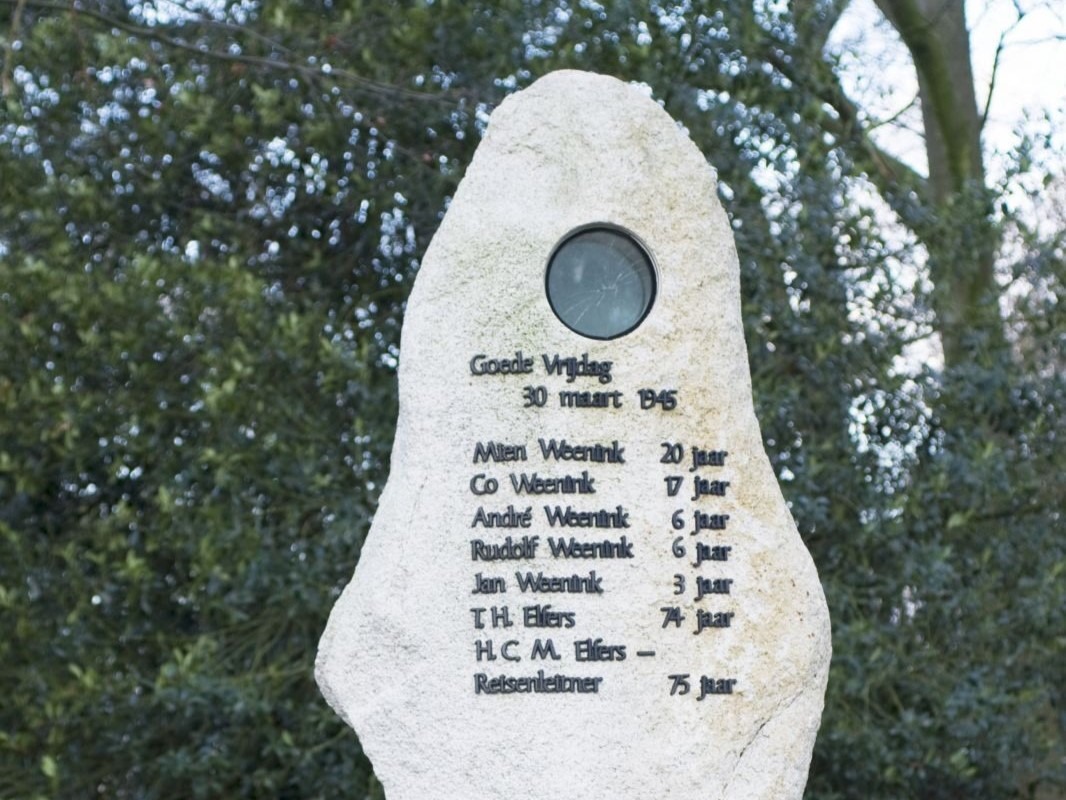
    On the initiative of the Dwars door Barlo Foundation and the relatives of the victims, a monument has been erected in memory. The monument was placed at the Nijhof farm and was unveiled on March 30, 2009. The monument consists of two boulders, one standing upright on top of the other. In the top stone is a round hole with a piece of broken glass in it, as a symbol of the irreparable damage. Below are the names and ages of the victims. On the bottom stone, which serves as a pedestal, is a quote from the Bible. An information board has also been placed at the monument.

    The text on the monument reads:

    ‘GOOD FRIDAY
    MARCH 30TH, 1945

    MIEN WEENINK 20 YEARS
    CO WEENINK 17 YEARS
    ANDRÉ WEENINK 6 YEARS
    RUDOLF WEENINK 6 YEARS
    JAN WEENINK 3 YEARS OLD
    T.H. ELFERS 74 YEARS
    H.C.M. ELFERS-REISENLEITNER 75 YEARS’.

    On the pedestal is the quote:

    ‘INNOCENT LIVES DESTROYED
    BY RELENTLESS
    WAR VIOLENCE

    PSALM 73, VERSES 12 AND 14
    (OLD RHYMING)’.

    The text on the information board reads:

    ‘MONUMENT IN MEMORY

    ON GOOD FRIDAY, MARCH 30, 1945, THE LAST BOMB FELL
    THIS PLACE WHERE AN AIR-RAID SHELTER ONCE STOOD. THIS WAS
    THE END OF THE SECOND WORLD WAR IN THE
    HAMLET OF BARLO. THE STRONG HIDING PLACE OF THE
    NIJHOF FAMILY TURNED OUT NOT TO BE ABLE TO WITHSTAND SUCH NOTHING
    RUTHLESS VIOLENCE OF WAR.

    THE NIJHOF COUPLE AND THEIR DAUGHTER SURVIVED THE
    WOOF; THE ELFERS COUPLE AND FIVE WEENINK CHILDREN
    DIED.

    THE FIELD BOULDERS SYMBOLIZE THE LEADEN AND MASSIVE
    SADNESS. THE HOLE WITH THE – BROKEN – GLASS IN ONE OF THE
    ERRATIC STONES SHOWS US A GLIMPSE OF A NEW
    FUTURE, ALTHOUGH IT WILL NEVER BE UNSCATHED.

    WE HOPE THAT THIS PLACE OF REMEMBRANCE WILL MAKE YOU QUIET
    STAND BY THE GREAT GIFT OF FREEDOM THAT WE
    NOW WE CAN LIVE. LET US BE CAREFUL WITH THAT
    AND TO WORK TO HELP OTHERS IN THIS WAY AS WELL.
    TO GIVE THE WORLD THAT FREEDOM.

    FOUNDATION DWARS DOOR BARLO.’

  • Bombardment Dale

    Bombardment Dale

    Elshoek/Grevink area, Dale

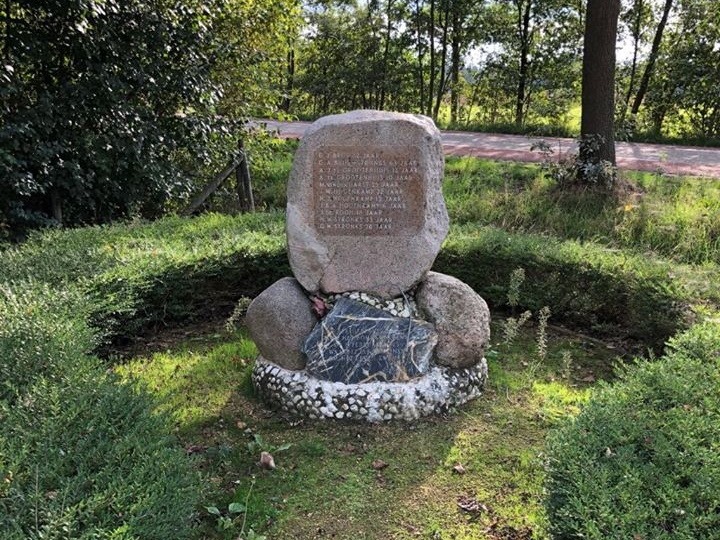
    On 8 February 1945, a mistake bombing took place in the Aalten rural district of Dale, in which eleven people were killed. In memory of these victims, a monument was unveiled in 1988 on the corner of Aladnaweg and Grevinkweg.

    Less than three months before the end of the war, on February 8, 1945, American B-26 Marauder bombers took off from their base in Cambrai in northern France. Their primary target was the area around Kleve, and if that was not possible, they had an alternative target at Groenlo. At Kleve it was too cloudy and so they flew on, but also in the Achterhoek the visibility was poor. Just after 11:00 a.m., they dropped 528 fragmentation bombs.

    Two hours later, the aircraft returned safely to Cambrai. Their mission report stated: “Impossible to determine further damage or to locate pattern accurately due to 80% cloud cover”.

    Death and destruction

    The deadly cargo ended up in the vicinity of the Elshoek and the Grevink in Dale, with terrible consequences. The hundreds of splinter bombs caused death and destruction. The shards flew horizontally across the ground and affected both people and animals. Everywhere lay dismembered horses, cows, sheep, chickens and geese. Some farms suffered direct hits.

    All doctors, nurses and emergency services were sent to the crash site. In the mud and among the rubble, they provided first aid to the wounded. These were transported on stretchers and ladders to Huize Avondvrede on the Hogestraat. From there, the seriously injured were transferred to the emergency hospital in Harreveld.

    The bombing eventually claimed eleven lives and left several people permanently disabled.

    Thes laughter offerings

    In the kitchen of the Neerhof family’s farm ‘t Olde Nooitgedacht , Joop de Roon from Rotterdam was found dead. At the Glieuwe farm, where the Hogenkamp family lived, daughter Anna and sons Herman and Jozef were killed. The Bekerhuis farm of the Te Grotenhuis family was completely destroyed. There were four victims here: the children Arie and Teun te Grotenhuis and the brothers Hendrik and Gerrit Stronks, who were in hiding there.

    Mink van der Harst, from Scheveningen and in hiding with the Eppink family of farm ‘t Nooitgedacht, was fatally hit by shrapnel outside. Brus’ farm was also hit. Gerrit Brus died on the spot, and his wife Sientje Brus-Stronks died a few days later in the emergency hospital in Harreveld.

    In addition, bombs also fell in the Haartsestraat. Clarel Smit, who had just left Van Lente’s house, was so injured in his feet and legs that he died four months later in the emergency hospital in Harreveld.

    The monument

    The monument in memory of the victims consists of four stones, from the remains of the house of the Te Grotenhuis family. Mr. Te Grotenhuis piled up these stones at the place in question after the bombing. For years, the stones functioned as an unofficial memorial. In 1988, at the insistence of the local population, they were recognized as an official monument.

    The names of the victims are inscribed on the memorial stone:

    • G.J. BRUS 62 YEARS OLD
    • G.A. BRUS-STRONKS 63 YEARS OLD
    • A.J. TE GROOTENHUIS 12 YEARS OLD
    • A. TE GROOTENHUIS 10 YEARS
    • M. VAN DER HARST 25 YEARS OLD
    • J.M. HOGENKAMP 22 YEARS OLD
    • H.J. HOGENKAMP 15 YEARS OLD
    • J.B.A. HOGENKAMP 6 YEARS OLD
    • J. DE ROON 18 YEARS OLD
    • H.W. STRONKS 33 YEARS OLD
    • G.W. STRONKS 26 YEARS OLD

    Sources


    • Aalten in wartime, J.G. ter Horst
    • If only I could see them again, the bombing of Dale 8 February 1945, H. de Beukelaer
    • On or under, Aalten, the land of the people in hiding and of illegality, G.W. Vaags
    • Interview with Karel Aversteeg (Louis Veldhuis and Gerrit Nijman)
    • National Committee 4 and 5 May
    • National Hiding Museum, Aalten
    • Speech by Mayor Stapelkamp, 8 February 2020
  • Monument to Leslie Pulfrey

    Monument to Leslie Pulfrey

    Gandvoortweg, Barlo

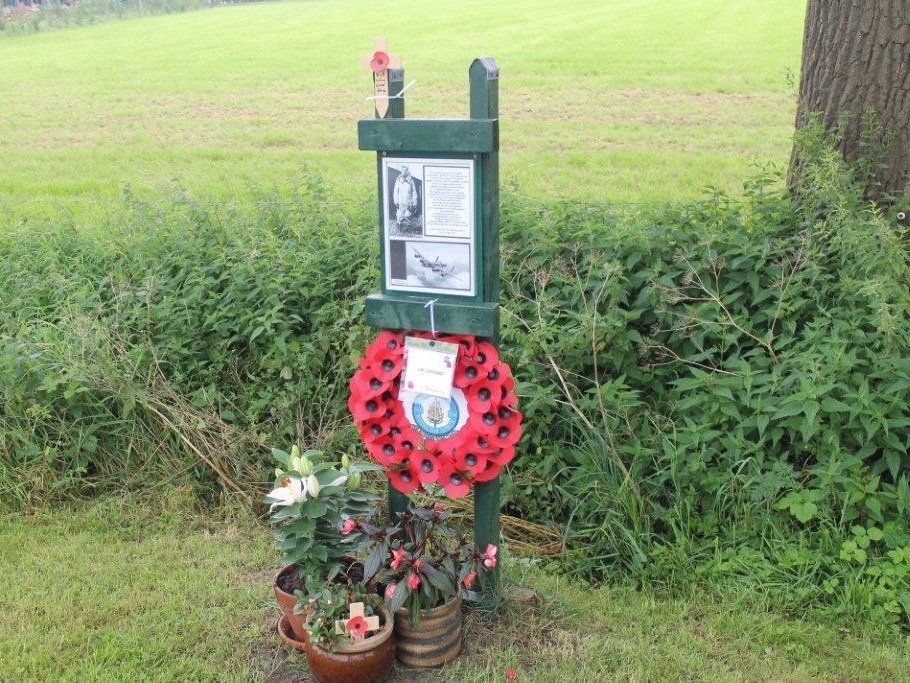
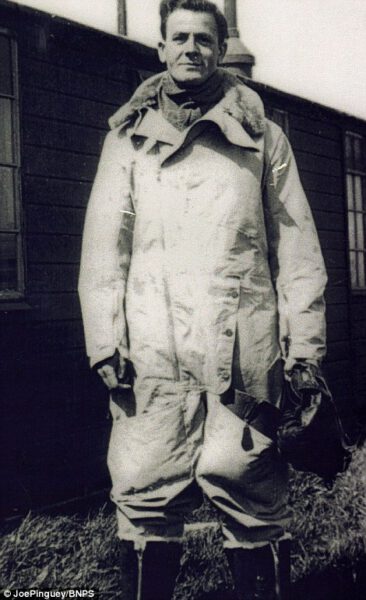
    On the Gandvoortweg in the rural district of Barlo in Aalten, there is a modest memorial, erected in memory of the British Flying Officer Leslie Pulfrey of the Royal Air Force (RAF). The memorial marks the meadow where Pulfrey was found dead in the early morning of June 17, 1944, after a failed jump from his burning Lancaster bomber.

    The mission

    On the evening of 16 June 1944, the four-engined Avro Lancaster bomber ME840, with Pulfrey as a crew member, took off from North Killingholme airfield in Lincolnshire, England. The mission was an attack on factories in Sterkrade, Germany, where, among other things, synthetic oil was produced for the German war industry.

    The plane, with seven crew members on board, completed its bombing raid and returned to England. On the way back, however, it was intercepted and attacked by the German night fighter pilot Joseph Nabrich. One of the fuel tanks in the wing caught fire almost immediately, leaving the aircraft irretrievably lost.

    The fatal leap

    On the pilot’s orders, the crew was ordered to abandon the aircraft. Leslie Pulfrey was the first to jump into the airspace above Barlo. But something went terribly wrong. Although the exact cause remains unclear, he was found dead in a meadow in the early morning of 17 June 1944 by farmer Johan van Eerden of the nearby farm Nieuw Kolstee (Smol).

    It is possible that Leslie came into contact with the plane during his jump or that his parachute did not open properly. From a distance, the place where he had landed was clearly visible; His body was still connected to his parachute, which was bulged by the wind. There was a large tear in the parachute and his head had become entangled in the cords. Leslie also missed one of his aviator boots, which he apparently lost after his jump. His name was mentioned on his identification plate.

    The crash

    The burning Lancaster eventually crashed in a meadow behind the ‘Oude Lieftinck’ farm on the Heelweg (now Twenteroute 5). All but one of the crew were killed. Flight engineer Roy Kay was thrown out of the plane by an explosion just before the crash. Miraculously, he was the only survivor to reach the ground in one piece. He escaped arrest and finally managed to return to England on 22 September 1944, with the help of pilot helpers.

    Leslie Pulfrey and his killed colleagues were transferred to Varsseveld, where they were buried.

    Tribute

    In June 2014, Leslie Pulfrey was honored with a ceremony, during which a so-called Fly-past took place. Four F-16s flew over the vicinity of the Gandvoortweg, and one of the aircraft took off straight up on the spot as a tribute. Thea Onnink has recorded her memories of this moment in this story, read by Herman Onnink.

  • Hunting Posts of ‘t Walfort Estate

    Hunting Posts of ‘t Walfort Estate

    Dale/Haart

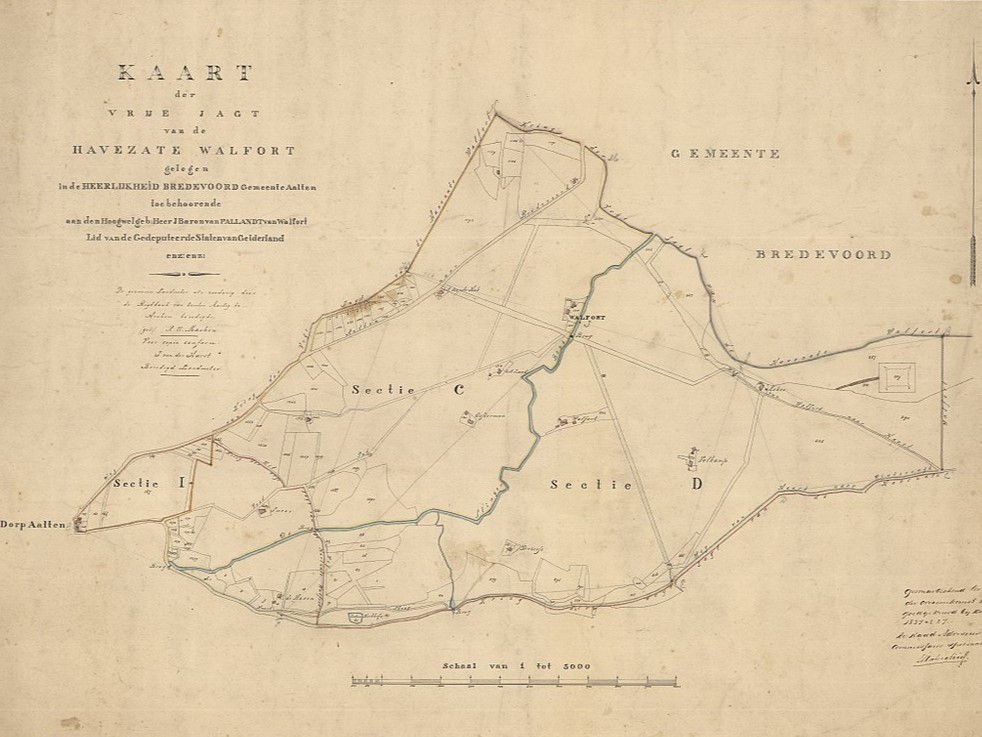
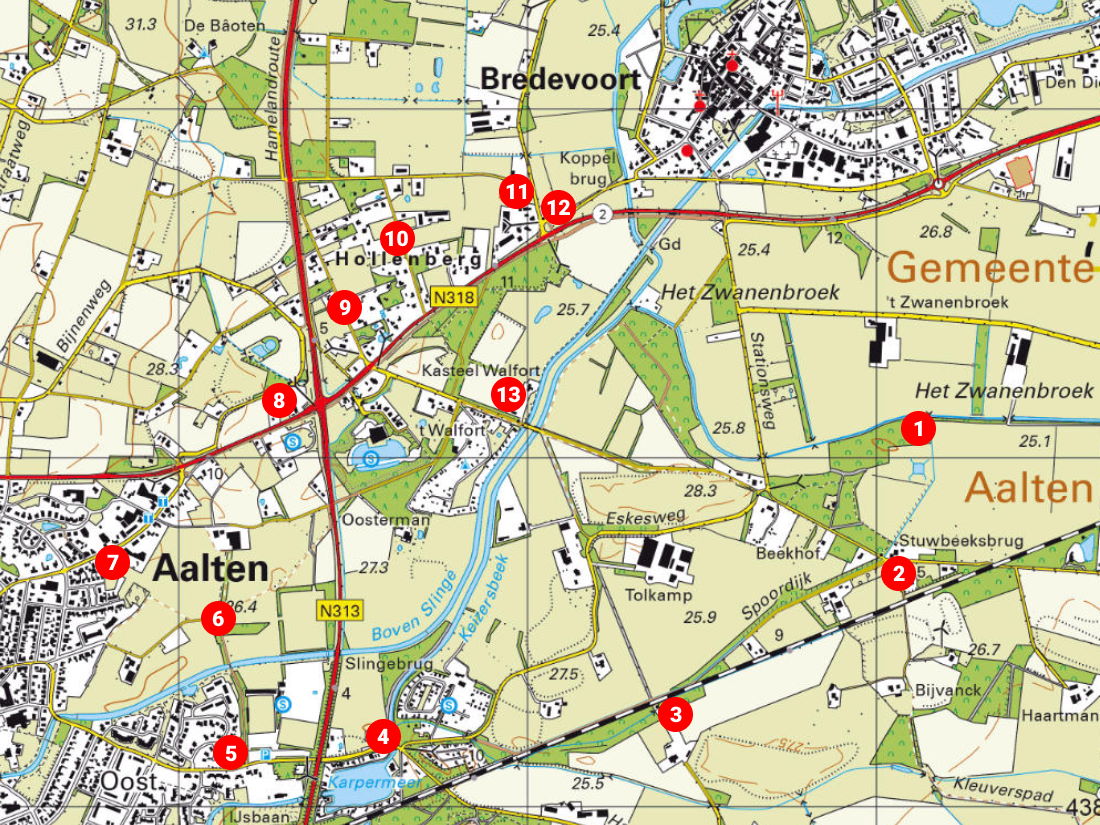
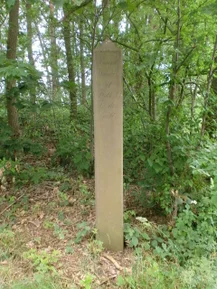
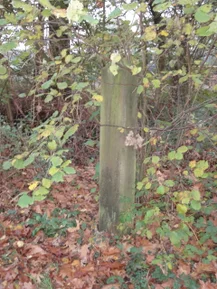
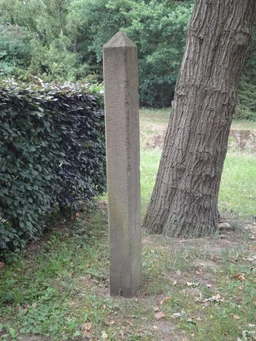
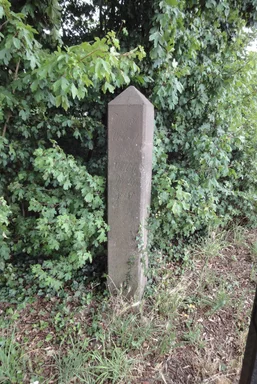
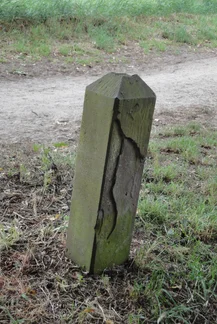
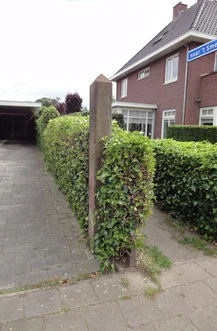
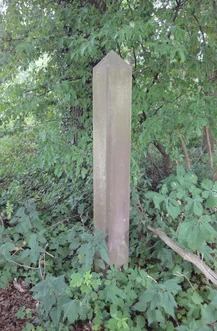
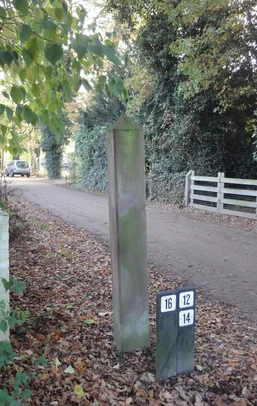
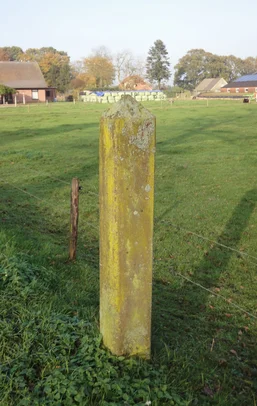
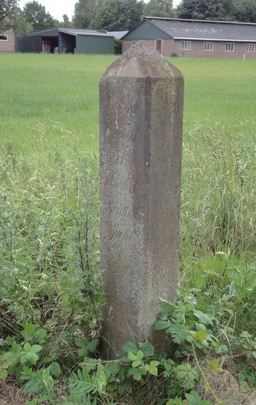
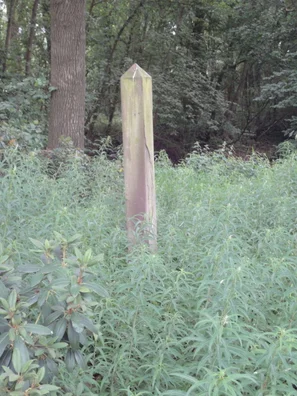
    The ‘t Walfort Estate lies between Aalten and Bredevoort. Historically, it was part of the ‘t Walfort Manor (Havezathe) and comprises woodlands, hedgerows, and wooded banks. The boundaries of the estate were marked by so-called hunting posts (jachtpalen). Today, 13 of these posts are still visible; one of them stands on the former driveway to the manor and is therefore not on the boundary of the hunting grounds. It is presumed that more posts originally surrounded ‘t Walfort.

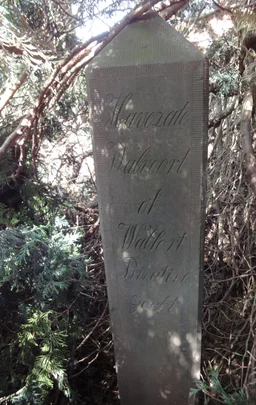
    According to the re-enacted Hunting Act of 1814, hunting grounds had to be demarcated with posts bearing the text “private hunt of” (private jagt van) followed by the owner’s name. These hunting posts marked the extent of his hunting territory.

    A description by the Gelders Genootschap mentions that the hunting posts were placed around 1837/1838 by the then owner, Baron Jan van Pallandt van Walfort (1776–1844). He lived in Arnhem on the Klarenbeek estate and also purchased Angerenstein and Rennenenk in Arnhem. He was also a member of the Provincial Executive (Gedeputeerde Staten) of Gelderland.

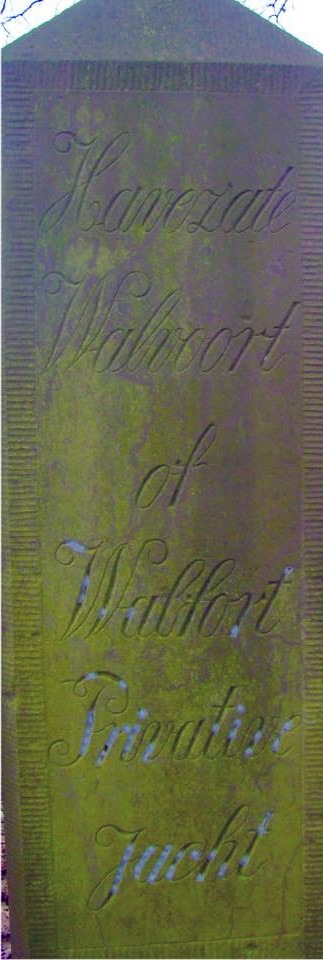
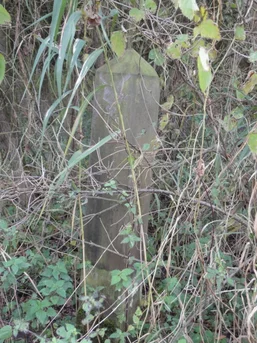
    The hunting posts are made of red sandstone, presumably sourced from quarries in the vicinity of the Weser or the Main rivers. Their total length is 2.5 to 3 metres. The posts are rectangular (approx. 25 x 20 cm) with chamfered corners. The top is a four-sided pyramid. In terms of finish, they are gefrijnd: horizontally ribbed. On one side, there is a rectangular, smoothly finished field containing the text: “Havezate Walvoort of Walfort Privative Jacht”. Several of the remaining posts are either damaged or have been shortened.

    The hunting posts have been designated as a municipal monument by the municipality of Aalten.2

    All hunting posts in a row

    The numbers of the photographs correspond with the numbers on the map above.

    1
    1
    2
    2
    3
    3
    4
    4
    5
    5
    6
    6
    7
    7
    8
    8
    9
    9
    10
    10
    11
    11
    12
    12
    13
    13