Category: Artist

  • Antoon Stapelkamp

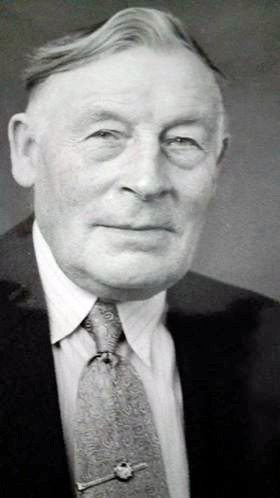
    Antoon Stapelkamp

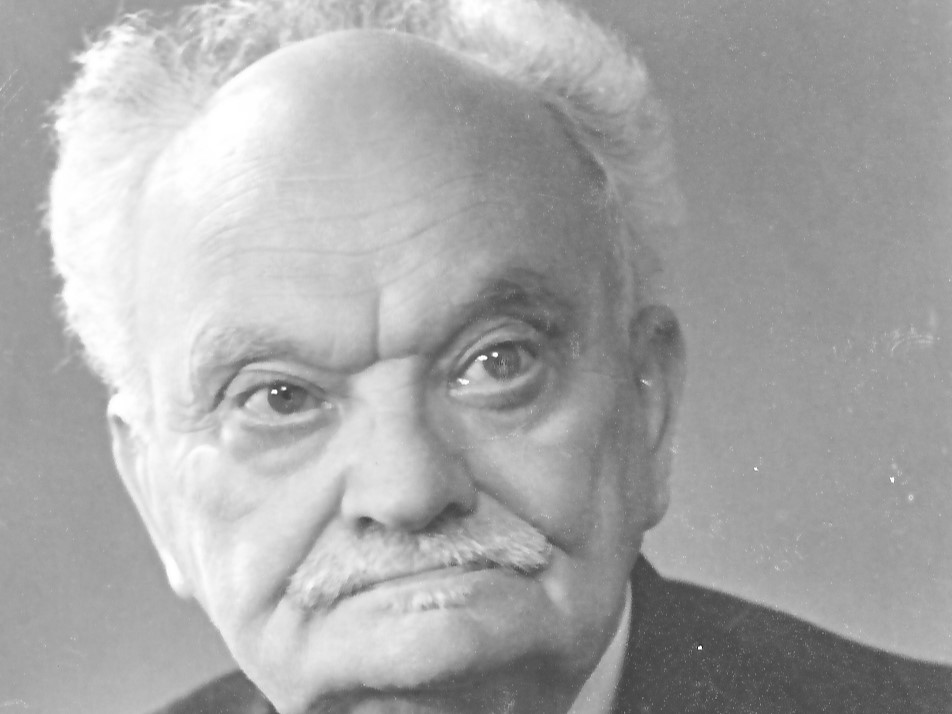
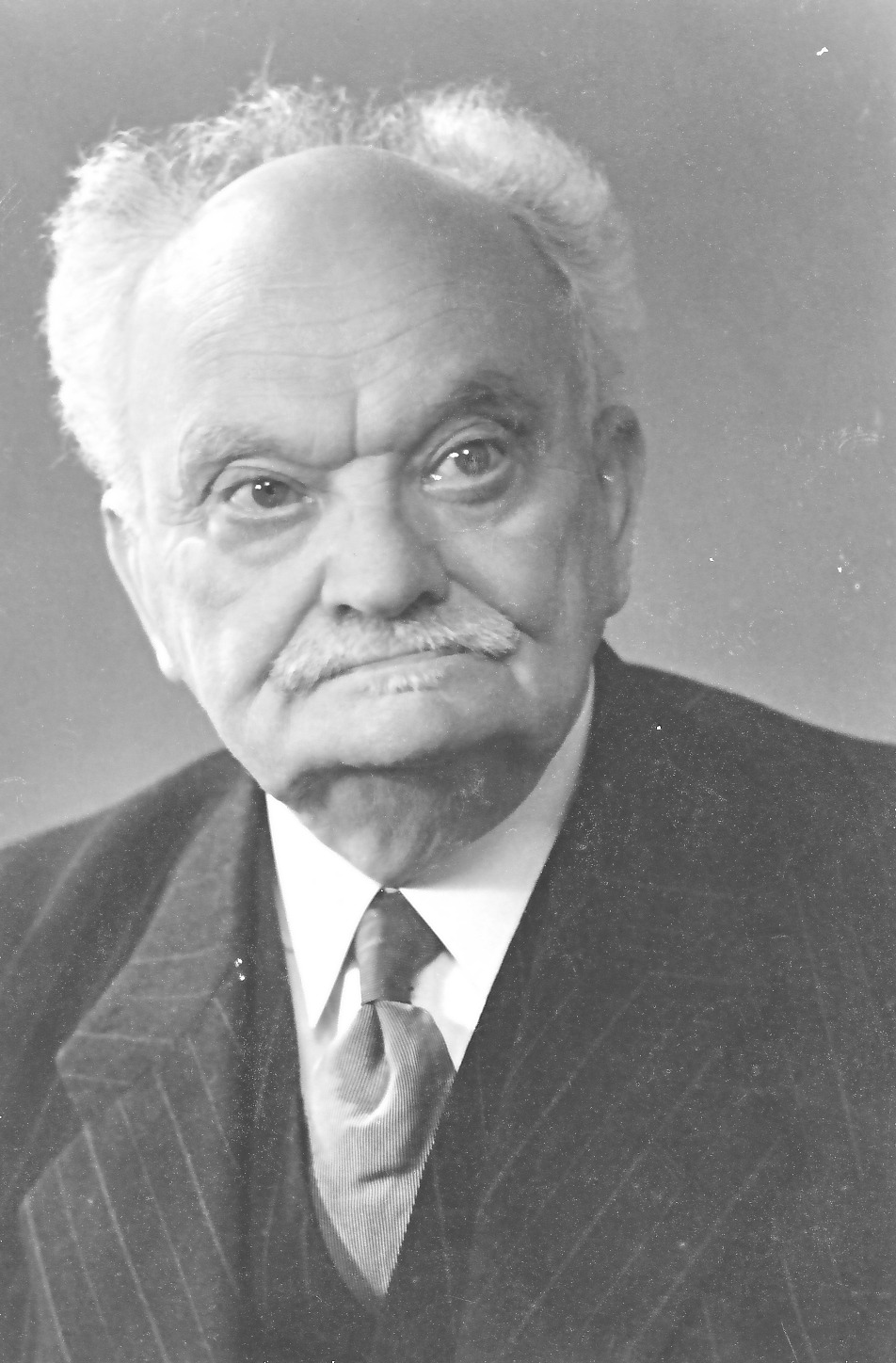
    Christian trade union leader and anti-revolutionary politician.

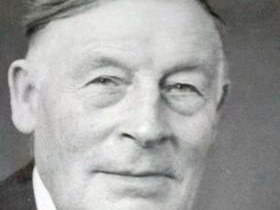
    Antoon Stapelkamp was born on 27 February 1886 at house number 162 (Hogestraat 26) in Aalten and passed away on 19 January 1960 in Utrecht. He was the son of Gerrit Jan Stapelkamp, a factory worker and smallholder, and Hendrika te Sligte. On 12 June 1913, Antoon married Johanna Aleida Stronks, with whom he had five daughters and two sons.

    Stapelkamp grew up in a strict Calvinist (gereformeerd) family with four children in Aalten. After completing his education at the Christian primary school, he had to start contributing to the family income at the age of twelve. He joined the Ten Dam and Manschot button and comb factory, which had been established in Aalten since 1872. His father already worked there, and a few years later, the company also employed his younger brother Herman.

    Encouraged by their parents, both boys attended evening classes for further education. However, only the youngest managed to obtain diplomas and pursue a career in teaching. Antoon continued to make horn combs at Ten Dam and Manschot for more than twenty years.

    At the age of fourteen, Stapelkamp witnessed a debate between the Enschede-based socialist J.F. Tijhof and H. Verveld, the chairman of the interdenominational Dutch Christian Textile Workers’ Union ‘Unitas’. Impressed by Verveld’s performance, he signed up as a youth member of the local branch that Verveld had founded in Aalten. However, this branch proved unsustainable.

    Administrative Career

    Membership of the Calvinist Young Men’s Association (Gereformeerde Jongelingsvereniging), the breeding ground for administrative talent within the orthodox Protestant community, was of great importance to Stapelkamp’s social and political development. Apart from serving as secretary and chairman of the Aalten branch, he was a board member of the Gelderland section of the Dutch Association of Young Men’s Societies on a Calvinist Foundation.

    In the local branch of the workers’ association Patrimonium, his administrative qualities were quickly noticed, which led to his election as secretary in 1903. He declined, however, believing that at seventeen, he was too young and inexperienced. Eleven years later, he would accept this very position.

    In 1914, Stapelkamp and a few friends from Patrimonium founded the Association of Christian Hornworkers, a local trade union that joined the CNV (National Federation of Christian Trade Unions) as an independent organisation on 1 March 1914. He took on the role of secretary himself. However, the trade union was too small to have a future, and the Hornworkers’ Union soon collapsed. Stapelkamp subsequently founded an Aalten branch of the Dutch Union of Christian Factory and Transport Workers (NBCFHT). Once again, he became the secretary.

    After a period as an active member and executive of the NBCFHT, he became a member of the CNV executive board in 1931. The Stapelkamp family relocated to The Hague, where the federation had established a new headquarters. This marked the end of Stapelkamp’s nascent membership of the Anti-Revolutionary Party (ARP) in the Aalten municipal council.
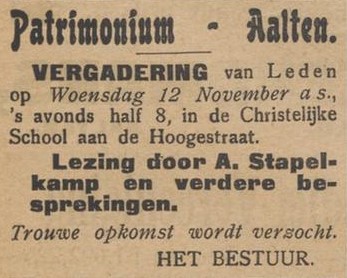
    CNV Chairman

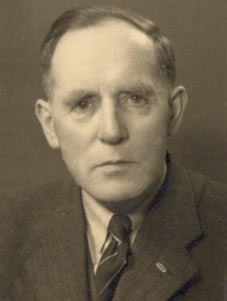
    In 1935, he was appointed chairman. He attempted to chart an independent course for the CNV and exert influence on government policy, which was heavily focused on austerity. Although he shared the general policy direction of the Colijn cabinets, he frequently disagreed with the specific measures introduced.

    During the occupation years, Stapelkamp developed into a forceful chairman. Led by him, the CNV followed a course of evasive adaptation during the first year of the occupation, keeping contact with the occupying forces to an absolute minimum and rejecting structural reforms. In November 1940, Stapelkamp accepted an invitation from the Deutsche Arbeitsfront to go on a study tour to Germany. This decision would be held against him for a long time.

    On 30 June 1941, Stapelkamp was arrested alongside approximately ninety other prominent anti-revolutionaries. Until December 1942, he was detained successively in the Schoorl, Buchenwald, Haaren, and St. Michielsgestel camps. After his release, Stapelkamp was a driving force behind the underground ‘Internal Contact Group’. He also restored relations with representatives of other employee and employer organisations.

    Following World War II, Stapelkamp was reappointed chairman of the CNV, a position he held until his resignation in 1947. Furthermore, he served as:

    • Member of the Senate of the States-General, from 20 November 1945 to 4 June 1946
    • Alderman (for Social Affairs) of Utrecht, from November 1945 to 2 September 1946
    • Member of the House of Representatives of the States-General, from 4 June 1946 to 3 July 1956
    • Member of the Provincial Council of Utrecht, from 20 June 1946 to 4 July 1950

    In early 1960, Stapelkamp fell ill with neglected diabetes. He died from subsequent complications.

    Publications


    Pseudonym: ‘Socius’.

    • ‘Mag boycot onder de toelaatbare strijdmiddelen in den economischen strijd worden gerangschikt?’ in: Verslag van de veertiende algemeene vergadering van het Christelijk Nationaal Vakverbond (Utrecht 1929) 57-70;
    • ‘De christelijke vakbeweging: vrucht van het verleden; eisch van het heden; levensvoorwaarde voor de toekomst’ (Utrecht 1945);
    • ‘Dr. H. Colijn en het sociale leven’ in: Een groot vaderlander. Dr. H. Colijn herdacht door tijdgenooten (Leiden 1947);
    • ‘Het sociale beleid van het kabinet-Drees’ (Den Haag z.j.);
    • ‘Verantwoorde emigratie’ (Den Haag 1951);
    • ‘De gemeenten en de werkgelegenheidspolitiek’ (Den Haag 1953);
    • ‘De banier opnieuw geheven. Geschiedenis van het Christelijk Nationaal Vakverbond in Nederland in de jaren van de tweede wereldoorlog’ (met J. Schipper, Hoorn 1956).

    Literature


    • ‘Om te doen gedenken. Verslag van de buitengewone vergadering van het C.N.V. en van de receptie-samenkomst ter gelegenheid van het afscheid van K. Kruithof als voorzitter en het optreden van A. Stapelkamp als zoodanig’ (Utrecht 1935);
    • ‘Onze nieuwe voorzitter’ in: De Gids, 31.10.1935;
    • Verslag 22e algemene vergadering Christelijk Nationaal Vakverbond gehouden op donderdag 24 en vrijdag 25 juli 1947 (Hoorn 1947) 38-61;
    • Trouw, 20.1.1960; J. Schipper, ‘In dankbare herinnering’ in: De Gids, 6.2.1960;
    • ‘Stapelkamp ter nagedachtenis’ in: De Gids, 6.2.1960;
    • 29e Jaarverslag CNV 1960-1961-1962 (Hoorn z.j.) 31-32.
  • The Misterpoort City Gate

    The Misterpoort City Gate

    Bredevoort

    De Misterpoort is een voormalige stadspoort in Bredevoort. De poort maakte deel uit van de vestingwerken van Bredevoort. Tegenwoordig herinnert een café-restaurant met deze naam nog aan de oude stadspoort, die haar naam weer dankt aan de weg naar buurtschap Miste. In een poortwachtersreglement uit 1726 werd de poort Munsterspoort genoemd.

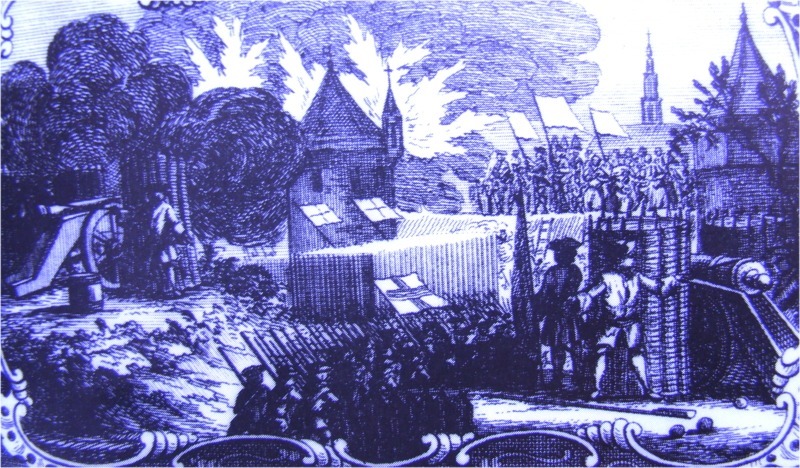
    Following the Siege of Bredevoort in 1606, work began in late March on the construction of fortifications designed by the urban planner Adriaen Anthonisz van Alcmaer. During this process, the medieval city walls and their gates disappeared. The town was equipped with bastions and ravelins, and the Misterpoort was replaced by a brick structure set within the rampart. The name ‘Misterpoort’, however, remained.

    In 1704 werden er nog verbeteringen aangebracht aan zowel de Misterpoort, als aan de tegenoverliggende Aalterpoort volgens de nieuwste inzichten van die tijd van Menno van Coehoorn.

    In 1727, two new counterscarps were constructed in front of both city gates, a project that took two years to complete. In 1755, the fortifications were decommissioned by the Council of State and transferred to the civil authorities. Some time later, in 1784, a government inspection of the fortifications revealed that citizens had excavated more than half of the ramparts down to ground level—with the exception of two bastions—and had demolished the gates and bridges. Plans were drawn up to restore the fortifications and add three lunettes, but these were never carried out.

    Archeology

    Excavations took place at the site in 1963 and 1979. In 1963, the State Service for Archaeological Heritage (ROB) was present and reported: “The foundation remnants were found to have been constructed using brick blind arches over the fill of a moat. On the inner side (the town side) of the moat, the remains of exceptionally heavy, vertically buried oak posts were found within the embankments.”

    During the 1979 excavations, a wall with a thickness of 1.70 metres, featuring transverse foundations, was discovered and quickly demolished. However, the remains were measured and photographed by the newly established local ADW Archaeological Working Group. These findings have raised more questions than answers, and it remains difficult to conclude which remnants date from which specific period.

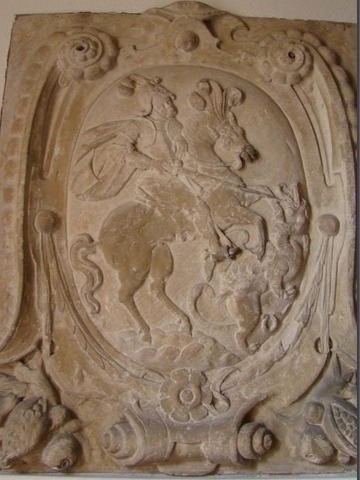
    Waarschijnlijk is het enige zichtbare overblijfsel van de stadspoort bewaard gebleven in de hal van de Sint-Georgiuskerk. Het betreft hier een gevelsteen met een afbeelding van het schutspatroon van Bredevoort, St. Joris en de draak.

    Features


    FunctionCity gate
    Year of constructionunknown
    Demolitionunknown

    Sources


  • The Aalterpoort City Gate

    The Aalterpoort City Gate

    Bredevoort

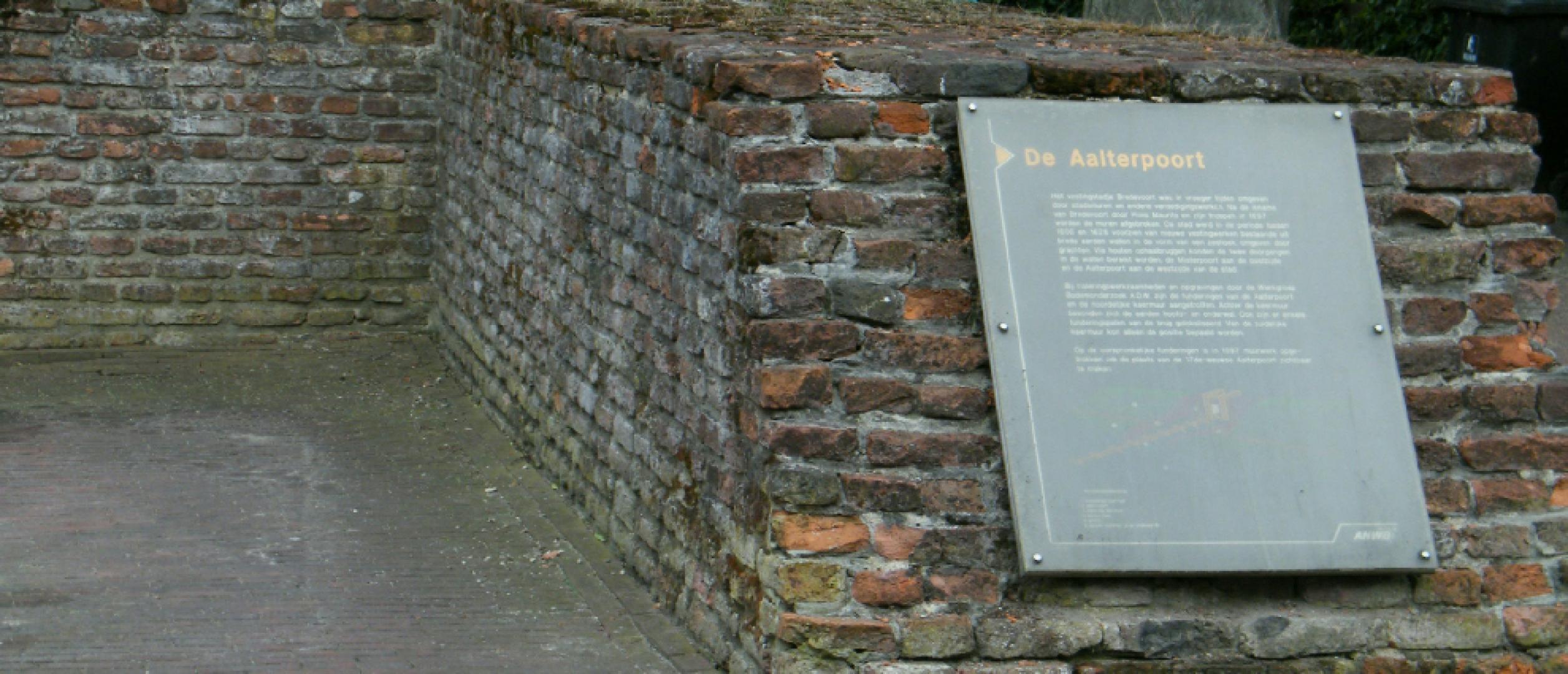
    The Aalterpoort was one of the two city gates of Bredevoort and formed part of the fortifications of Bredevoort. The gate was situated on the western side of the fortified town and marks the start of the Landstraat.

    It is unknown when the first gate was constructed at this site. Accounts from the year 1500 show that maintenance work was carried out on the gates that year. A map by Jacob van Deventer from 1560 depicts a heavy tower with a bulwark or barbacane in front of it. On siege maps (from 1597 onwards), the city gate is shown with a drawbridge. The gate is flanked by two towers topped with spires. A “half-moon” (halve maan) outwork is situated in front of this gate.

    Improvements ca. 1550

    It is known that Maarten van Rossum ordered improvements between 1545 and 1555. It is possible that the gatehouse was also renovated during this period. This medieval gate was demolished in 1606, shortly after the relief of the town by Frederick Henry. From that time onwards, Bredevoort was equipped with fortifications according to the latest insights of the era, which included a new gate. This was a brick-built gate set within the rampart. The half-moon was replaced by a larger ravelin.

    Demolition

    Following the introduction of the Fortifications Act (Vestingwet) in 1874, the gate was demolished by residents to save on maintenance costs. The bridge was replaced by a causeway.

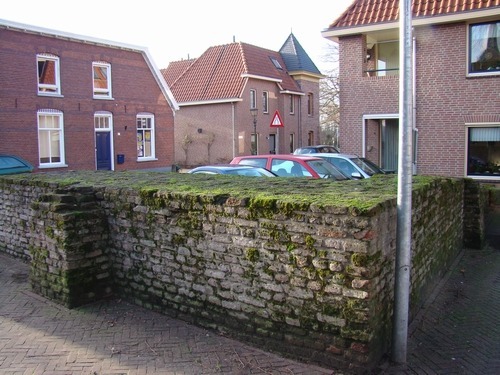
    Today, two residential buildings stand at this location, completed in 1998 on the site of the former city gate. A remnant of the original city gate was incorporated into the design.

    Features


    FunctionCity gate
    Year of constructionunknown
    Demolition19th century

    Sources


    • ‘Breevoort can ick vergeten niet’ (blz. 126), H.A. Hauer
    • ‘Bredevoort een Heerlijkheid’, Staring Instituut
    • Wikipedia
  • Bastion Stoltenborg

    Bastion Stoltenborg

    Bredevoort

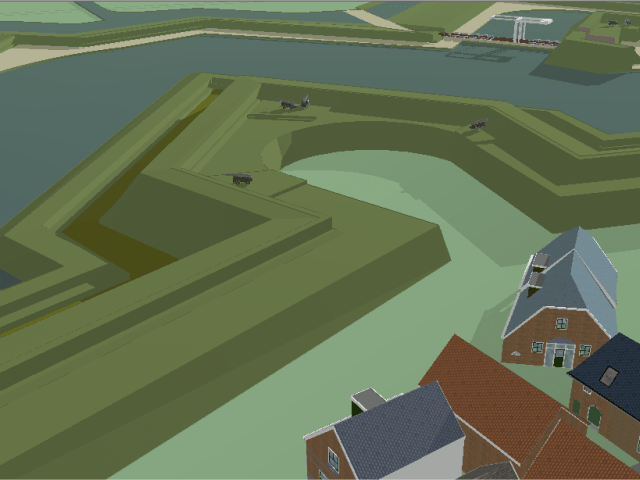
    Bastion Stoltenborg was one of the six bastions of Bredevoort. It was situated to the east of the town, at what is now the start of Pater Jan de Vriesstraat, and formed part of the Bredevoort fortifications.

    Behind the houses on the Ambthuiswal lay the eight-metre-high hollow bastion, equipped with three cavaliers (katten) in each corner. The terreplein was accessible from Hozenstraat and Ambthuiswal. The gorge (keel), or entrance to the bastion, was located just past the junction with Gasthuisstraat, directly in front of the town farm situated next to the Ambtshof.

    The name Stoltenborg is thought to be related to the German word ‘stolz’ (proud), perhaps referring to the proud ‘borg’ (stronghold) of Bredevoort.

    Reconstruction

    The image shows a reconstruction of Bastion Stoltenborg. It illustrates the bastion’s position relative to the houses that stand there today; the adjacent building is the town farm next to the Ambtshof, with Gasthuisstraat running in front of it. The reconstruction also shows the onderwal (lower rampart) situated in front of the bastion. The moat has since been filled in; the site is now occupied by ‘t Bastion school and the surrounding modern housing.

    Features


    FunctionBastion
    Year of constructionunknown
    Demolitionunknown

    Sources


  • Bastion Ossenkop

    Bastion Ossenkop

    Bredevoort

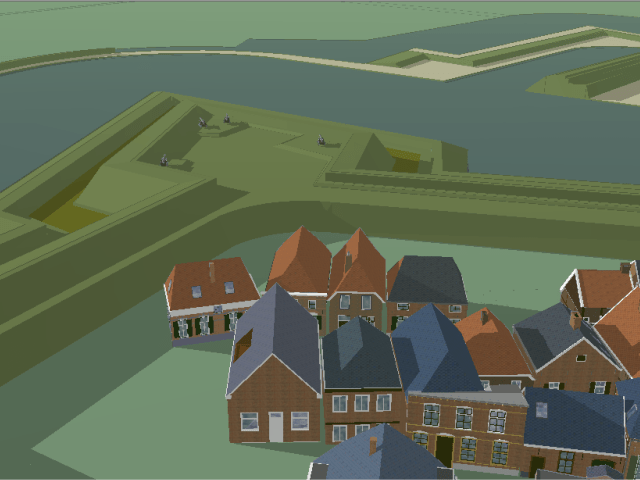
    Bastion Ossenkop (‘Ox Head’) was one of the six bastions of Bredevoort. It was situated to the south-west of the town, at what is now the start of Kerkstraat coming from Koppelstraat, and formed part of the Bredevoort fortifications.

    On the site behind St George’s Church lay the eight-metre-high ‘solid’ bastion, equipped with three cavaliers (katten) in each corner. The terreplein was accessible via ramps (oprillen), possibly from Koppelstraat and Kerkstraat.

    Reconstruction

    The image shows a reconstruction of Bastion Ossenkop. It illustrates its position relative to the houses that stand there today; St George’s Church now stands upon the curtain wall (courtine). The gorge (keel) of the bastion is now occupied by gardens, and the site of the bastion itself is currently the Ossenkop playground.

    The reconstruction also shows the lower rampart situated in front of the bastion. The moat has been filled in; this area is now the site of the school and the surrounding modern housing on Schoolstraat and Tramstraat. Nothing has been preserved to serve as a physical reminder of the former bastion.

    Features


    FunctionBastion
    Year of constructionunknown
    Demolitionunknown

    Sources


  • Bastion Vreesniet

    Bastion Vreesniet

    Bredevoort

    Bastion Vreesniet (‘Fear not’) was one of the six bastions of Bredevoort. It was situated to the west of the town, in the area now behind Prinsenstraat, and formed part of the Bredevoort fortifications. Its remains are protected as a national monument (rijksmonument).

    At this location, the outline of the bastion is still vaguely visible on the modern map of Bredevoort. It was once an eight-metre-high ‘hollow’ bastion, equipped with three cavaliers (katten) in each corner. The gorge (keel), or entrance to the bastion, was situated just past the junction of Landstraat and Kerkstraat; the alley behind these houses still exists today. The present-day town meadow once served as the bastion’s terreplein (the level space behind the ramparts).

    In 1782, the bulwark was granted under a long-term lease (erfpacht) to Bernard Andries Roelvink. During the 19th century, the fortifications were dismantled to make way for the gardens that are still there today. A small section of the onderwal (lower rampart) has been preserved, upon which the Roelvink family’s tea pavilion was built.

    Reconstruction

    The image shows a reconstruction of Bastion Vreesniet. It illustrates the bastion’s position relative to the houses that stand there today, with Sint Bernardus visible on the right. The lower rampart in front of the bastion is also shown. The terreplein is now the small meadow situated between the gardens and Kerkstraat.

    The moat in front of it is known today as the Grote Gracht (Large Moat). The section of the moat to the left of the ravelin is now known as the Kleine Gracht (Small Moat). The filled-in section of the moat and the glacis (sloping bank) that were once here are now occupied by the ‘De Halve Maan’ (Half Moon) allotments.

    Features


    FunctionBastion
    Year of constructionunknown
    Demolitionunknown

    Sources


  • Bastion Treurniet (Kruittoren)

    Bastion Treurniet (Kruittoren)

    Bredevoort

    Bastion Treurniet (‘Grieve Not’), or Kruittoren (Powder Tower) in common parlance, is a national monument (rijksmonument) and was one of the six bastions of Bredevoort. It is situated to the north of the town, on what is now the Kruittorenstraat opposite the community centre Ons Huis, and formed part of the Bredevoort fortifications.

    At this location, a rise in the landscape can still be seen today; this was the onderwal (lower rampart) of the bastion. Behind it lay an eight-metre-high hollow bastion, equipped with three cavaliers (katten) in each corner. A powder magazine (kruithuis) for the garrison stood upon the terreplein. The gorge (keel), or entrance to the bastion, was situated just past the junction of Kruittorenstraat and ’t Zand.

    The powder tower of Bredevoort Castle must also have stood at this site. The curtain wall (courtine) of the main rampart ran behind the houses towards Sint Bernardus. In 2010, an artwork was placed on the remnants of the lower rampart in the form of steel ribs that represent its original profile.

    Reconstruction

    The image shows a reconstruction of Bastion Treurniet. It illustrates the bastion’s position relative to the houses that stand there today. The lower rampart situated in front of the bastion is also visible. The section on the right is the part that remains today as a shapeless mound.

    The terreplein is now the small meadow on Kruittorenstraat. The powder magazine would once have stood on the spot now occupied by the Bredevoort Schittert building. The section of the moat shown in the reconstruction still exists today.

    Features


    FunctionBastion
    Year of constructionunknown
    Demolitionunknown

    Sources


  • Bastion Welgemoed

    Bastion Welgemoed

    Bredevoort

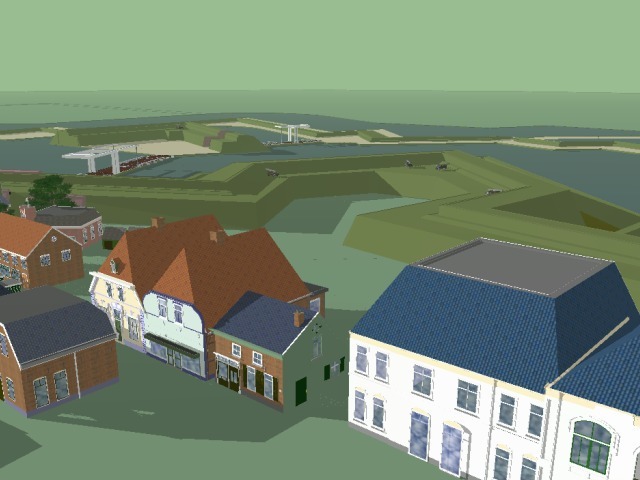
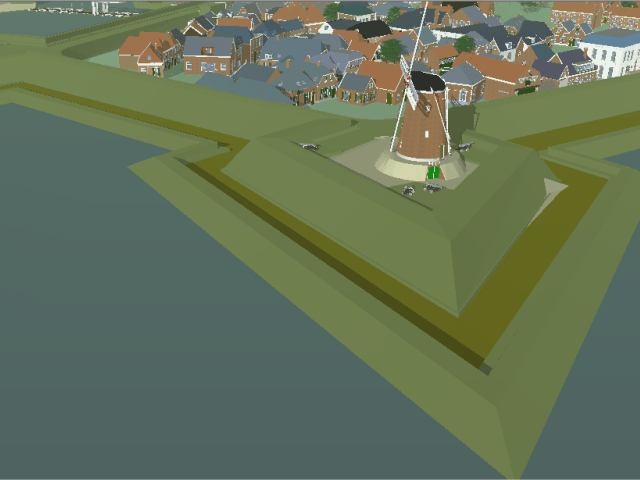
    Bastion Welgemoed (‘Stout-hearted’) is a former bastion located on the southern edge of the town of Bredevoort. It was part of the fortifications of Bredevoort. Because the Prins van Oranje windmill was built upon it, the bastion was spared from dismantling, making it Bredevoort’s only surviving bastion.

    The bastion is no longer easily recognisable. It was once eight metres high and equipped with three cavaliers (katten) plus a breastwork. Due to the excavation of the breastwork, the bastion now stands six metres high. The lower rampart has also been removed, and the surrounding moats have been filled in.

    Reconstruction

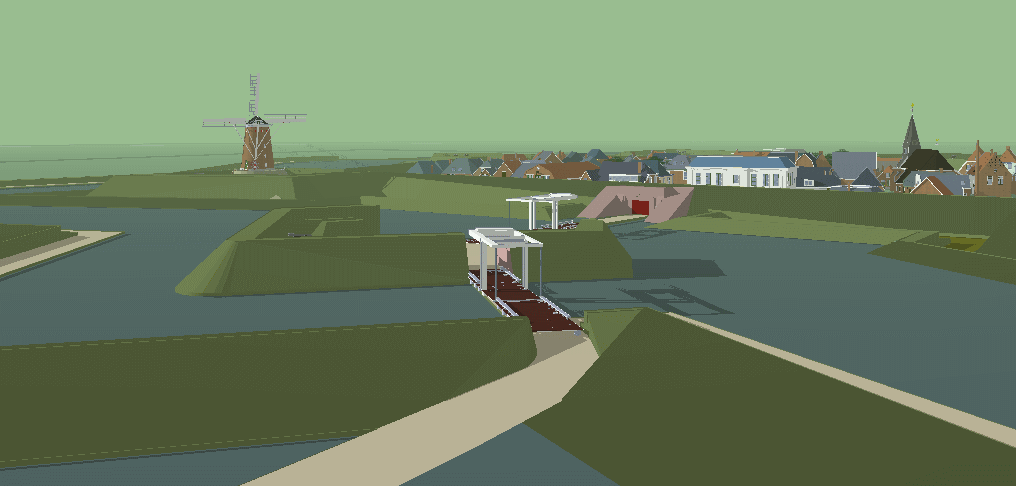
    The image shows a reconstruction of Bastion Welgemoed, illustrating its position relative to the houses that stand there today. The lower rampart situated in front of the bastion is also visible. The section on the right is the part that remains today as a shapeless mound. The curtain wall (courtine) on the left of the image has largely disappeared; only a rise near St George’s Church remains as a final vestige of the main rampart that once ran towards Bastion Ossenkop.

    Features


    FunctionBastion
    Year of constructionunknown

    Sources


  • Bastion Onversaegt (Izerman)

    Bastion Onversaegt (Izerman)

    Bredevoort

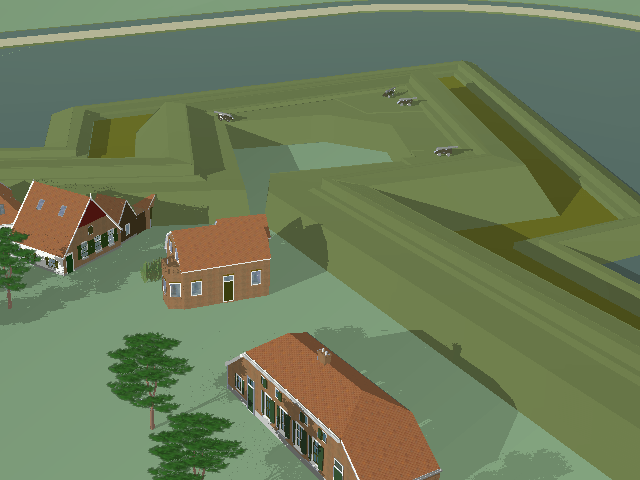
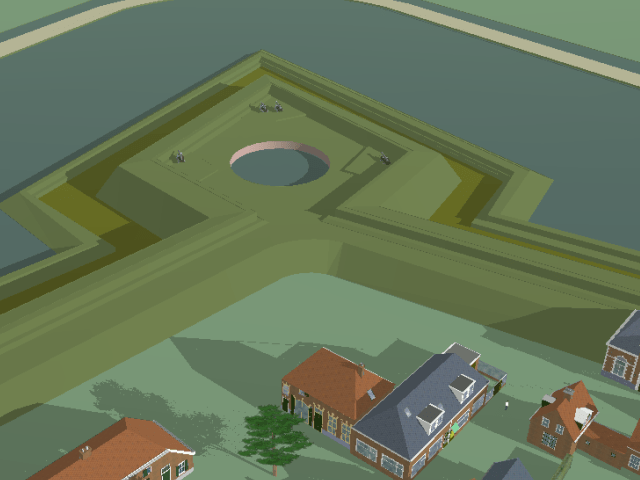
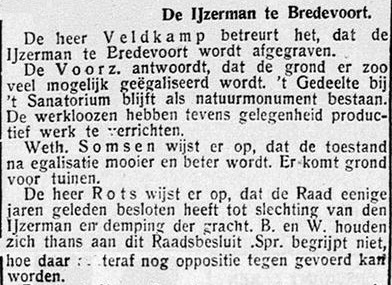
    Bastion Onversaegt (‘Undaunted’), popularly known as Izerman, was one of the six bastions of Bredevoort. It was situated to the north-east of the town, near the site of ’t Kleuterbastion school on Izermanstraat, and formed part of the Bredevoort fortifications. The bastion was excavated and levelled during the 1930s.

    On the grounds of ’t Kleuterbastion (nursery school) and the adjacent football pitch lay the eight-metre-high ‘solid’ bastion, equipped with three cavaliers (katten) in each corner. The terreplein was accessible via ramps (oprillen) from Hozenstraat, and possibly via ’t Zand.

    Reconstruction

    The image shows a reconstruction of Bastion Onversaegt. It illustrates the bastion’s position relative to the houses that stand there today, with the Breede Huus on the left and a corner of the Meestershuus on the right. Some maps suggest that this bastion was equipped with a water reservoir. This is not certain, however, as many houses in Bredevoort possessed their own wells.

    The tip of this bastion was located approximately on the centre circle of the football pitch. The flanking streets next to the Kleuterbastion run parallel to the original shape of the bastion. The position of the curtain wall (courtine) between the school and the Breede Huus is still clearly visible today by the line of the hedge. This curtain wall connected the bastion with the adjacent Bastion Treurniet. The outlines of the filled-in moat are still clearly visible on aerial photographs, and remnants of this singel (moat/canal) still exist today.

    Features


    FunctionBastion
    Year of constructionunknown
    Demolition1930

    Sources


  • Bernard Huinink

    Bernard Huinink

    Council Member and Alderman

    Bernard Huinink served as an alderman (wethouder) for the PvdA (Labour Party) in Aalten for many years. Consequently, his nickname was ‘Rooien Huunink’ (Red Huinink). The turbulent council meetings involving Willem te Gussinklo (alias ‘Piepkes Willem’) of the AR (Anti-Revolutionary Party) became legendary.

    Bernard Huinink was born on 11 February 1886 in Aalten (Hogestraat 64), the son of Herman Huinink and Janna Geertruid Obrink. On 8 February 1912, he married Grada Wilhelmina Schepers in Aalten. They settled in Ormelstraat.

    Huinink passed away on 5 June 1970 and was buried at Berkenhove Cemetery.

    Royal Distinction

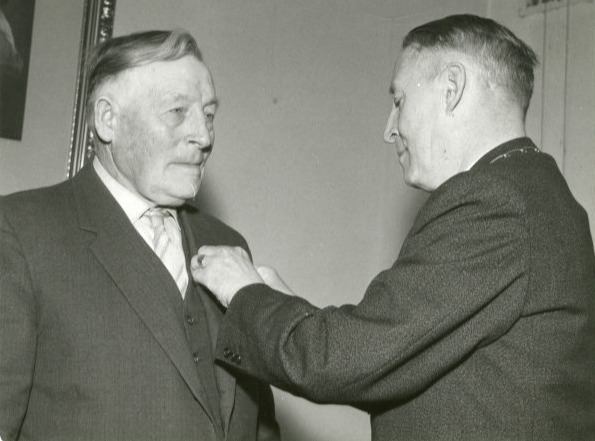
    In 1919, at the age of 33, Bernard Huinink took his seat on the Aalten municipal council. He would hold that seat for nearly 45 years, initially for the SDAP and later for the PvdA. In September 1959, he celebrated his 40th anniversary as a council member and received a Royal distinction. In 1964, Huinink, the ‘father of the council’ (nestor), stood down ‘on account of his advanced age’ (77). He was succeeded by his 37-year-old son, Jan Huinink, of Admiraal de Ruyterstraat 21, who was the manager of the local PTT office (postal and telecommunications).

    Bernard Huinink krijgt koninklijke onderscheiding opgespeld door burgemeester E.S. van Veen
    Bernard Huinink being invested with a Royal distinction by Mayor E.S. van Veen.

    Sources


  • Lindenhof

    Lindenhof

    Wilhelminastraat 25, Aalten

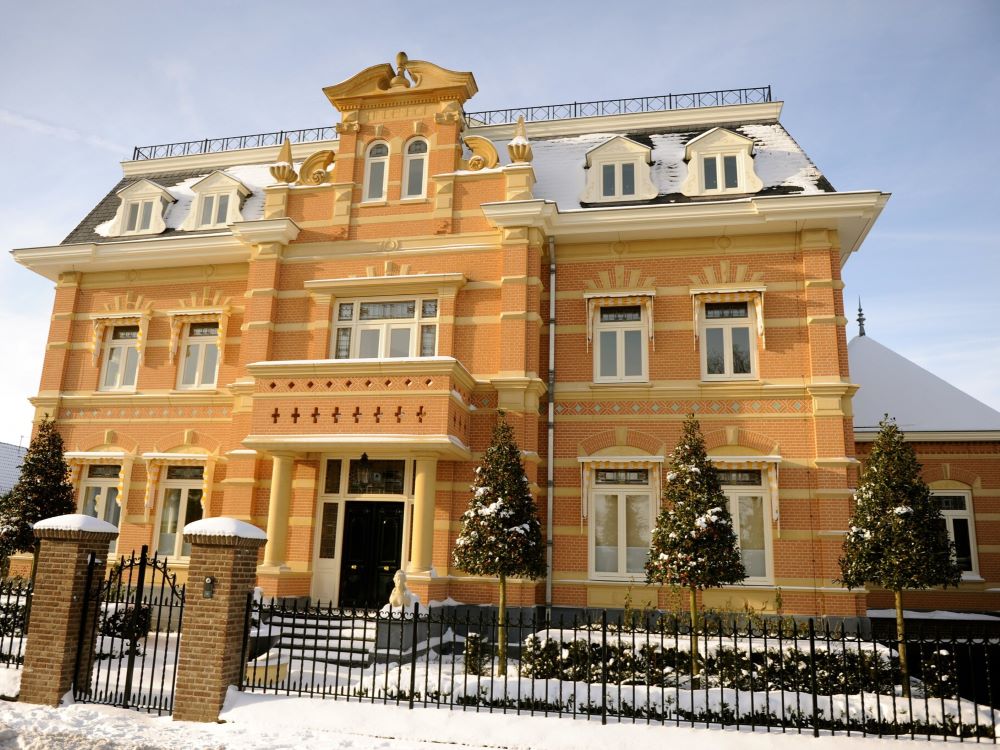
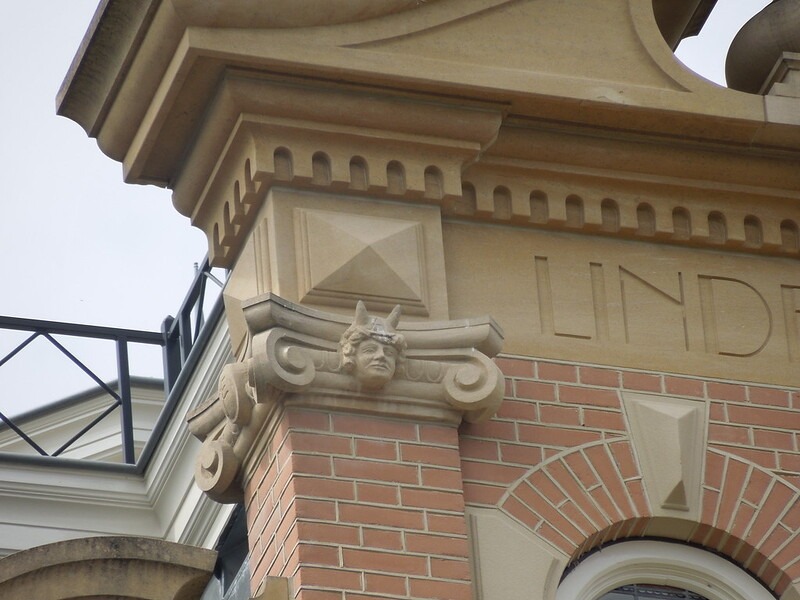
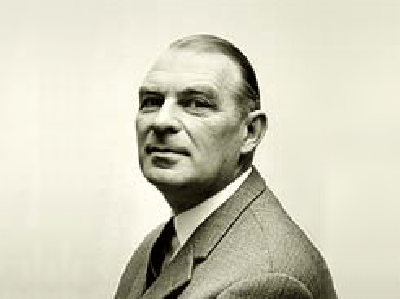
    This villa, designed in the nineteenth-century Neo-Renaissance style, was completed in 2012. Its architecture is inspired by the historic Aalten director’s villa, de Beukenhof. As a tribute to the ‘original’, the name Lindenhof adorns the facade of this mansion. The house was commissioned by living rock legend Angus Young, guitarist of AC/DC, and his wife, Ellen van Lochem, who is originally from Aalten.
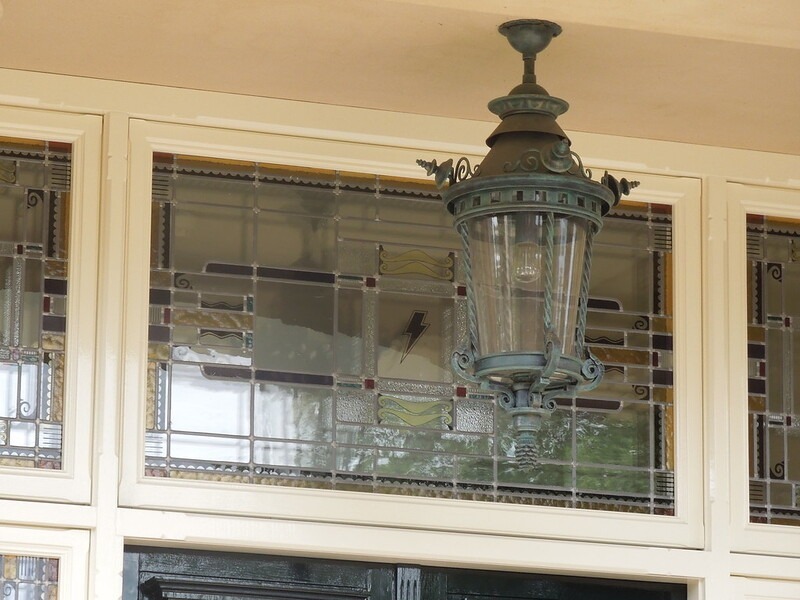
    The enormous house features three floors above ground and a recording studio for the musician underground. Several architectural jokes have been incorporated into the facade as subtle references to the master of the house. For instance, at the top of the facade, on both sides of the house name, there is a sculpted head featuring devil’s horns. Many fans immediately associate this with the cover of the 1979 album Highway To Hell. The stained-glass window above the front door incorporates a lightning bolt, taken directly from the band’s logo.

    Publicity

    Since the construction plans were announced, many articles about this house and its owners have been published online, in newspapers, and in magazines. In 2023, an article appeared in Nieuwe Revu which once again explained how Angus Young ended up in Aalten (link).

    Previously, the so-called Wijkgebouw (community centre) stood on this plot.

    Features


    Cadastral no.I-8086
    FunctionHouse
    Year of construction2012
    Listedno

    Sources


  • Old Aalten

    Old Aalten

    Voogd van Aalten (16e eeuw)

    Tijdens de tachtigjarige oorlog werd de Oostgelderse bevolking regelmatig geteisterd door rondtrekkende legers. Plundering, brandschatting en verkrachting dreef de boeren en dorpsbewoners tot wanhoop. Jan Holstein was destijds Voogd van Aalten en al stond hij vrij machteloos, hij sprong wel in de bres voor de Aaltense bevolking en deed zijn best om de plunderingen te laten stoppen.

    In 1588 waren er vredesonderhandelingen gaande tussen de hertog van Parma en koningin Elisabeth van Engeland, welke laatste ook de Staten daarin tracht te betrekken. Daarop doelend schreef Holstein aan Gotfried Gerardi, raadsman van de pandvrouwe van Anholt: “Ik hoop maar, dat de vurig gewenschte vrede tot stand kome; dan zouden deze arme schapen weer moed kunnen vatten. Ze ploegen meerendeels met koeien, die ze nog overhielden, het land en arbeiden als muilezels. Wij steken diep in de schulden en kunnen geen geld meer krijgen; ook mijn crediet is ten einde. Moge God ons nog voor den oogst uitkomst geven, opdat het koren veilig binnengehaald kan worden. Anders zou ik geen raad weten.

    G.H. Rots schreef in 1938 hoe Jan Holstein om het leven kwam:

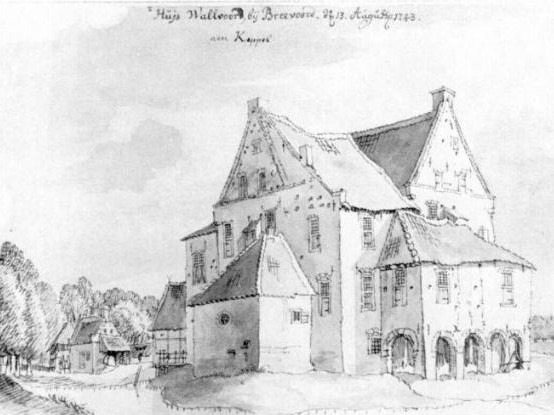
    “De Voogd van Aalten, Jan of Johan Holstein, die voor de Aaltensche bevolking herhaaldelijk in de bres sprong, is op een eigenaardige manier omgekomen. Wij lezen daarvan in “Het Oude Kerspel Winterswijk” dat op den 11en Juni 1589 ten huize van een zekeren Grevink op ‘t Walfort bij Aalten een doopfeest werd gehouden, waar ook de Voogd van Aalten aanwezig was, nog wel als peetoom der kleine. Ook waren aanwezig de Heeren van ‘t Walfort en Lintelo, (de heeren van Lintelo waren ook eigenaar van ‘t Walfort).

    De Voogd van Aalten had promotie gemaakt, hij was na het overlijden van ‘Hendrik van den Bungard’ Landschrijver geworden van de Heerlijkheid Bredevoort. Dit nu schijnt een doorn in het oog der heeren van Lintelo te zijn geweest, althans men begon daarover een twistgesprek, waarbij Holstein wel merkte dat de gebroeders van Lintelo geen gemakkelijke heeren waren.

    Holstein probeerde ongemerkt den feestdisch te verlaten en liet zich ongemerkt onder de tafel glijden. Hij kroop op handen en voeten naar de deur en maakte zich snel uit de voeten. Maar Diederik van Lintelo had dat in de gaten, liep Holstein na en wierp hem allerlei hatelijkheden naar het hoofd. De twist werd erger. Holstein beweerde dat de Pandvrouw het recht had Landschrijvers te benoemen en Diederik van Lintelo kende dat recht toe aan de Edelen in de Heerlijkheid. Het gevolg was dat er handtastelijkheden ontstonden, waarbij Diederik van Lintelo een korte degen trok en Holstein hiermede verwondde. De verwonding was zoo erg, dat de Voogd drie dagen later overleed.

    Deze zaak kwam voor het Bredevoortsch gerecht op 5 Augustus van dat jaar. De beklaagde was niet aanwezig. Hij was naar Bocholt gevlucht en hield zich daar schuil. Bij verstek werd hij ter dood veroordeeld en betaling van 1000 gulden boete aan de Pandvrouwe. En om nu dat geld te krijgen werd aan de pachters van Diederik van Lintelo medegedeeld, dat zij de pacht aan den rentmeester der Pandvrouwe moesten betalen zoolang tot de som der boete bijeen was.

    Die pachters waren ‘Ruwenhoeven’, Hendrik Penmenger, ‘Winkelhorstinck’, ‘Swijtinck’, ‘Lanckhof’, ‘den Herinck’ en ‘den Poll’. Door bemiddeling van eenige invloedrijke personen o.a. den Prior van Klooster Schaer, Johanna van Dort, Hendrik en Clara van Lintelo, werden pogingen aangewend voor gratie. Die gratie is verleend, maar de boete moest hij betalen.

    Als voogd van Aalten werd benoemd de voogd van Dinxperlo Herman Poelhuis. Het schijnt dat deze tijdelijk benoemd is geweest want in 1605 wordt als voogd van Aalten genoemd Lubbert Spaltman.”

    Bronnen


    • Het oude kerspel Winterswijk, door B. Stegeman, 1927 (Delpher)
    • ‘Uit Aalten’s verleden’, door G.H. Rots, Aaltensche Courant, 4 maart 1938 (Delpher)
  • Easter Bonfire

    Easter Bonfire

    An Easter bonfire is a type of bonfire lit during Easter in parts of Europe. For this purpose, wood is collected and placed in a large pile, which is sometimes dozens of meters high. As darkness falls, the entire stack is set ablaze.

    The spectacle often attracts many spectators and is usually a true community event. Originally, it was a Germanic festival dedicated to Ostara, the goddess of spring. After Christianization, the tradition was given a Christian interpretation.

    Easter Bonfire in Aalten

    G.H. Rots described the Aalten Easter bonfire tradition in 1937 as follows:

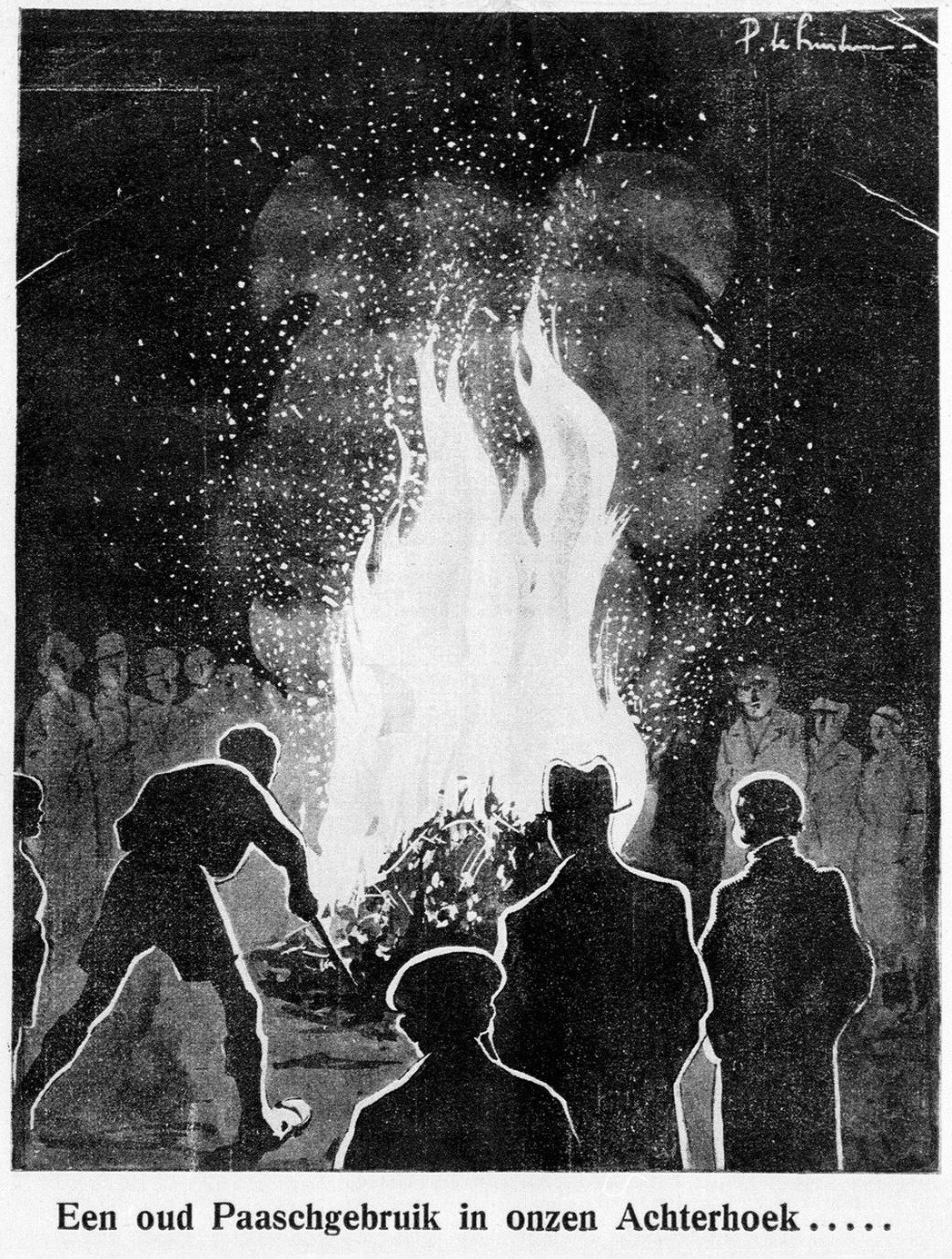
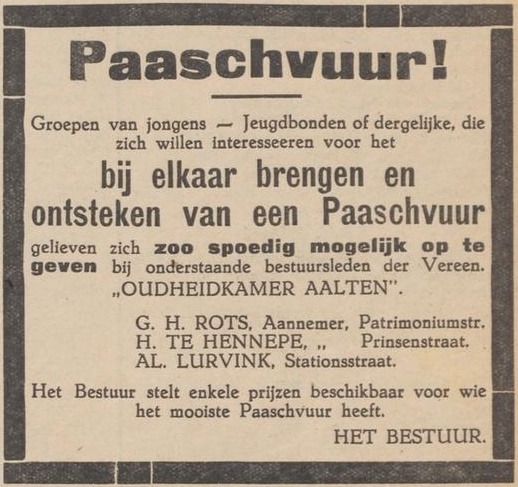
    “Every spring as Easter approached, the boys from a ‘rot‘ (= district/neighborhood) gathered to discuss plans for the ‘Easter fire.’ They appointed a board, in which the treasurer in particular played a significant role.

    They went from house to house to ask if people had anything left for the Easter fire. Those who had no wood usually offered a small contribution in hard cash, forming a ‘fund.’ The treasurer had to manage this fund, which could sometimes amount to thirty cents. It occasionally happened that the treasurer used the fund, or part of it, for his own purposes. Then there was trouble brewing. Sometimes heavy fighting broke out, and mutual quarrels were the order of the day.

    But the end of the story was always: there was an Easter fire. Every district had such a fire, and it was all about who had the largest one. It was not uncommon for one group of boys to head out late at night to hijack wood from another group and supplement their own supply with it.

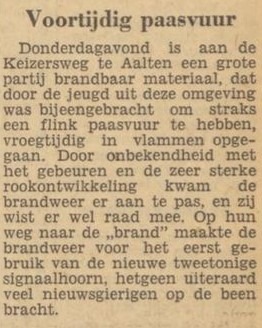
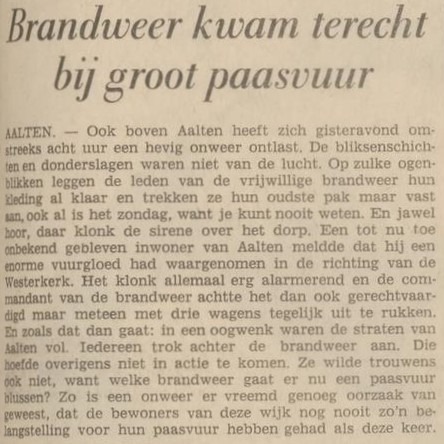
    The fire was lit on Easter Sunday. In the middle was a pole, above which a tar barrel was hung, causing the fire to flare up high. And so, one could see several fires burning around Aalten, a spectacle that had numerous onlookers.”

    Palm Sunday

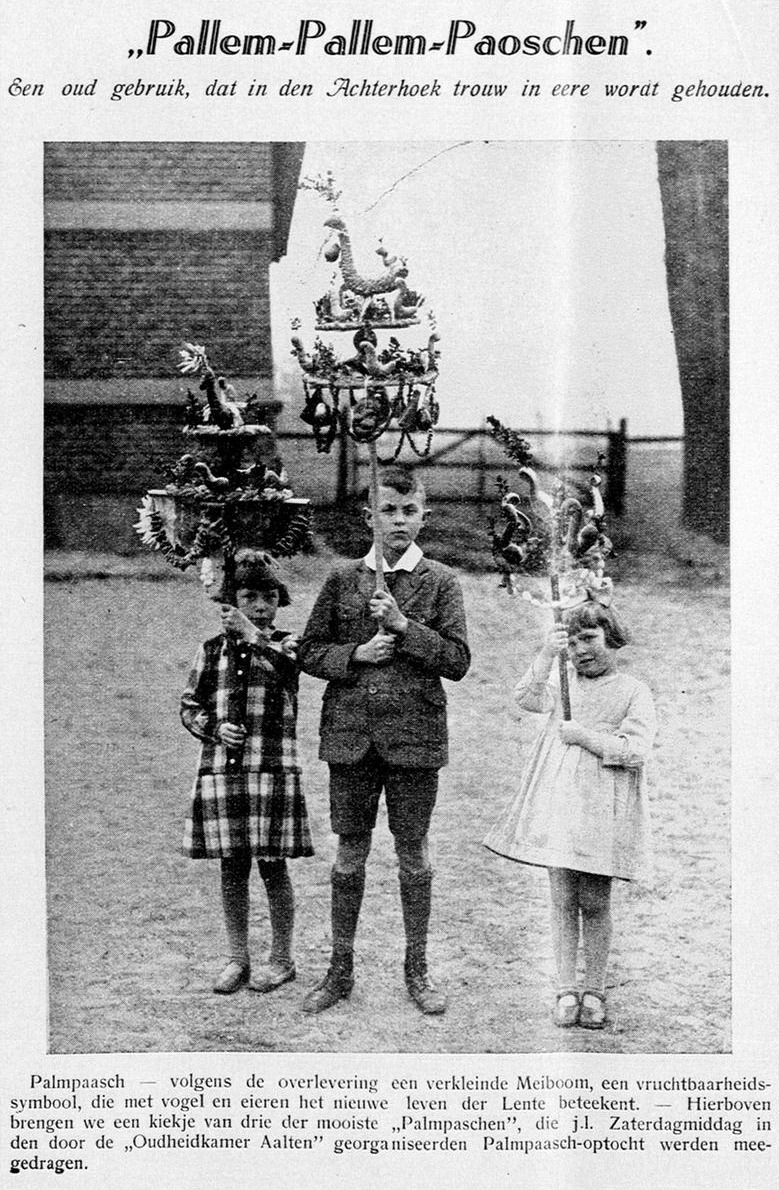
    “Egg throwing was still frequently done by small children in the morning. If they wanted them to be a beautiful brown color, they were boiled in chicory porridge. On Palm Sunday, one could see the children walking with beautifully decorated pine branches, so-called ‘palmpaschen,’ while the children sang Palm Sunday songs, including this one:

    Eikorij, eikorij,
    When it is one more Sunday, we get an Easter egg.
    One egg is no egg.
    Two eggs is an Easter egg.

    These types of songs were sometimes supplemented in other municipalities. These songs are mentioned in folkloric contributions regarding Easter customs.”

    Sources


    • Wikipedia
    • ‘From Aalten’s Past’, by G.H. Rots, Aaltensche Courant, 19 November 1937 (via Delpher)
  • ‘t Walfort Swimming Pool

    ‘t Walfort Swimming Pool

    Dennenoord 2, Aalten

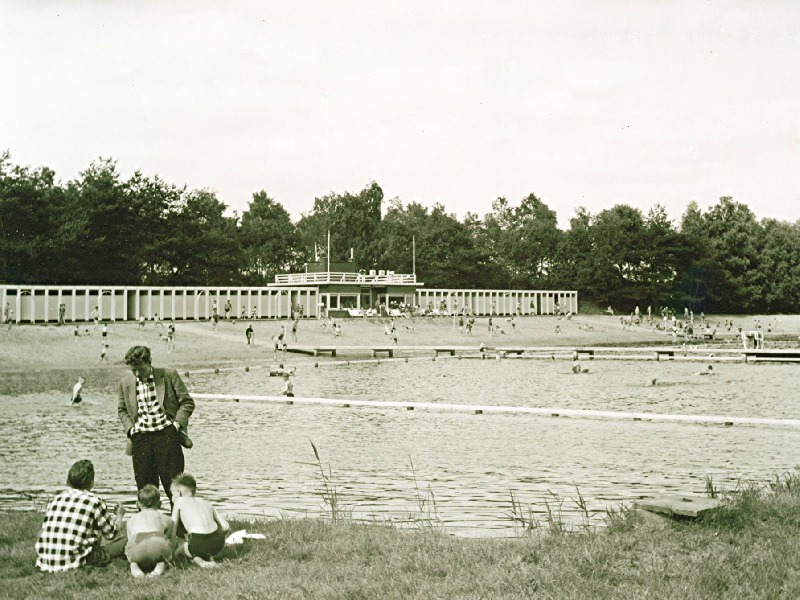
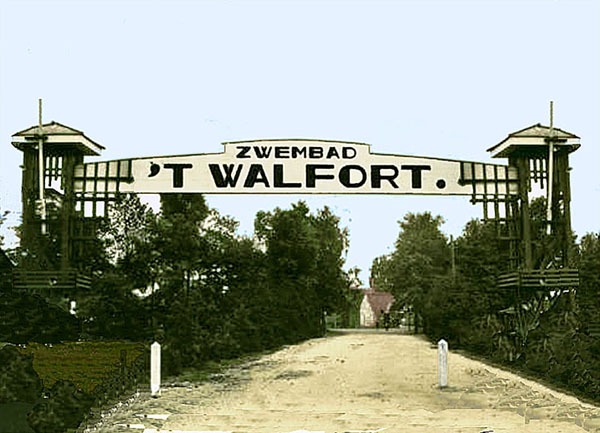
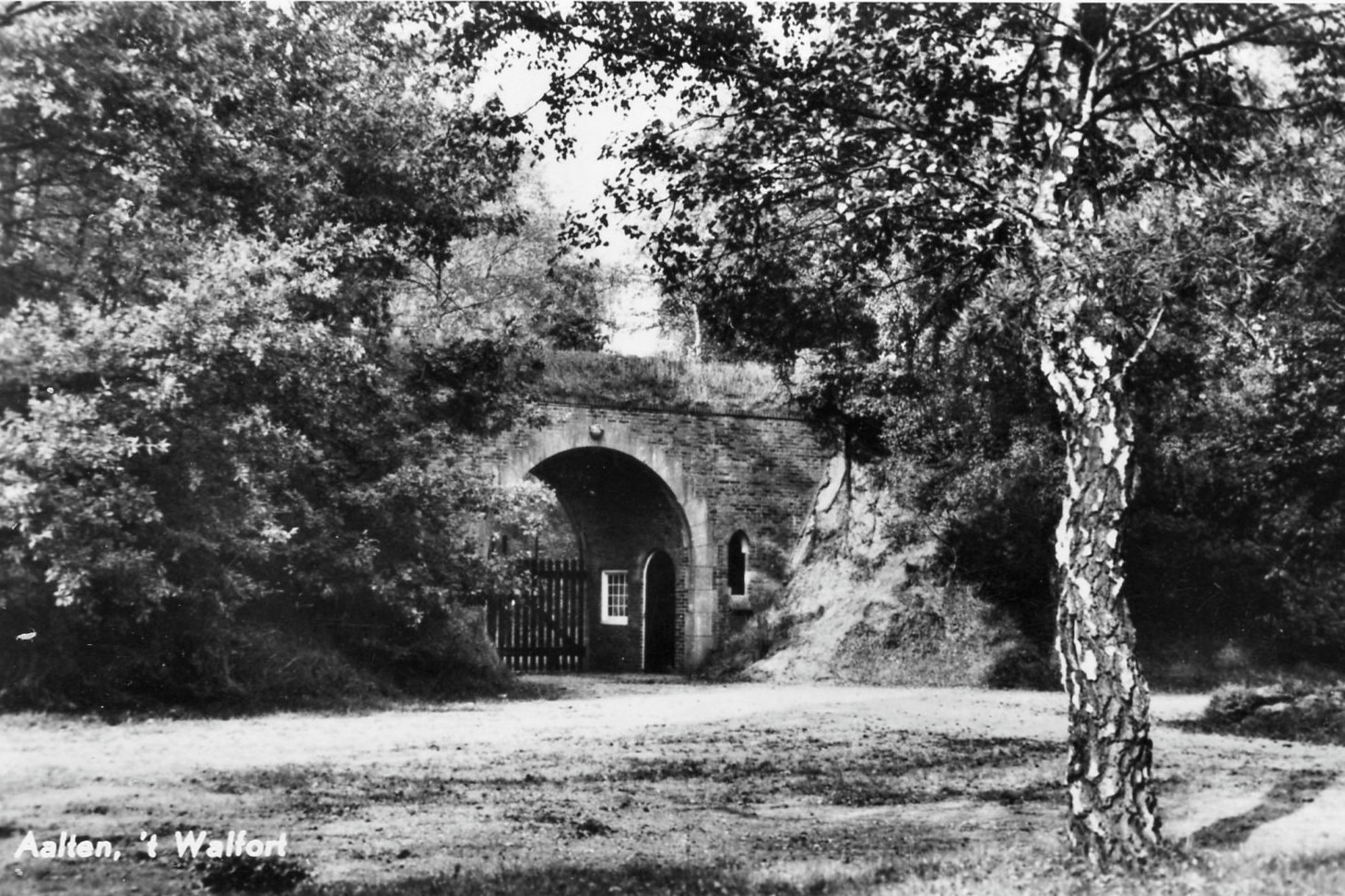
    ‘t Walfort Swimming Pool is located halfway between Aalten and Bredevoort and features an indoor pool and an outdoor pool with a sandy bottom (natural pool). The outdoor pool was constructed during the crisis years of the last century as a job creation project. The swimming pool was initially assigned the address Hessenweg 4.

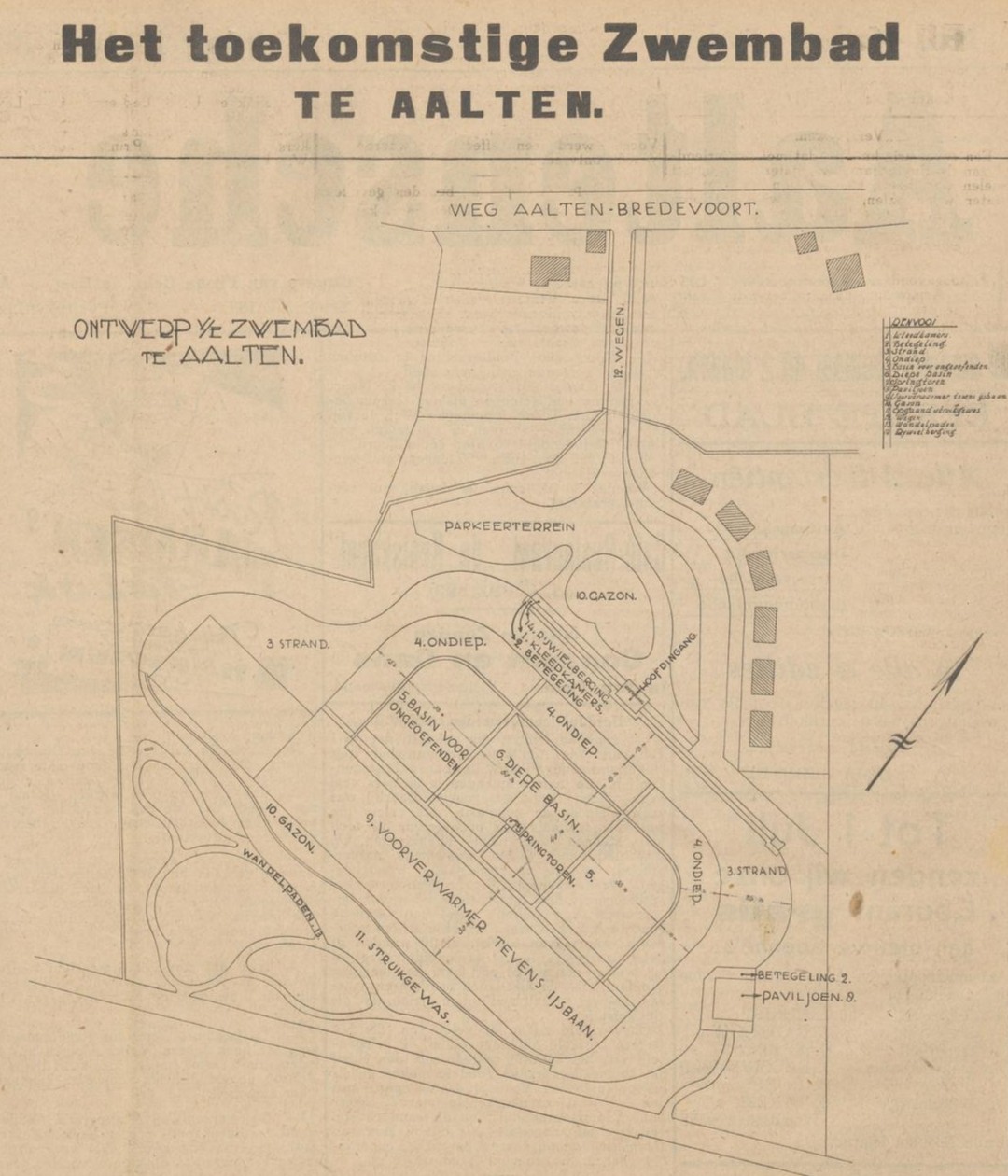
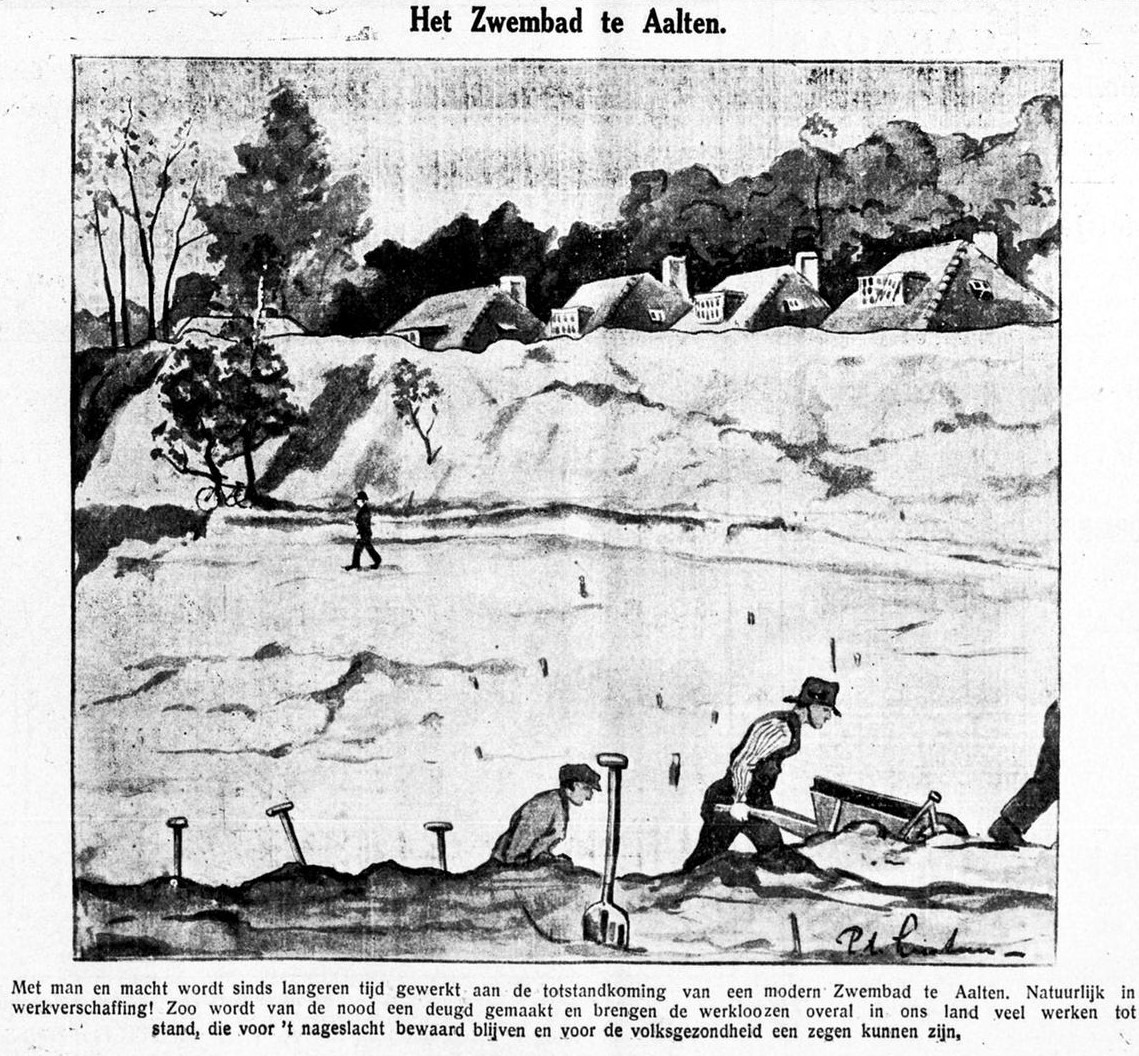
    On June 10, 1933, the Aalten municipal council decided “to create a large modern Swimming and Sunbathing Pool, with a long wide beach on the Dennenoord site”. Approximately one hectare of meadow was added to that site, bringing the total area to about 4.5 ha.

    Established

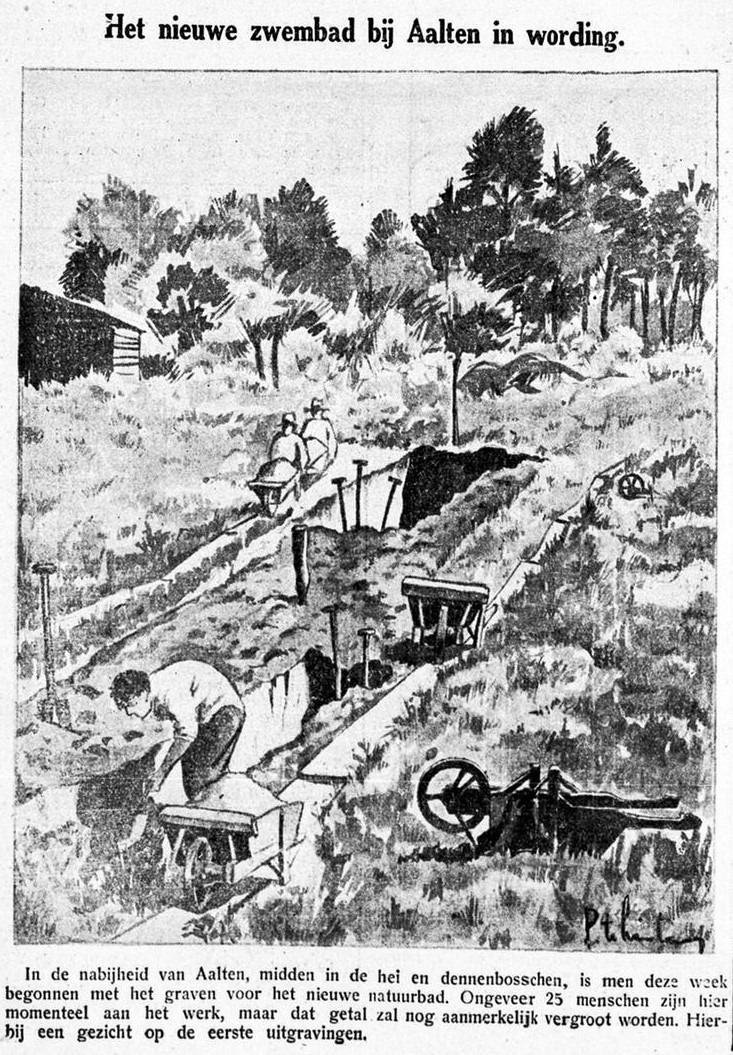
    On July 17, 1933, the first spade went into the ground. Approximately one hundred unemployed people participated in the creation of the natural pool. In total, they moved no less than 45,000 m³ of sand using only wheelbarrows. The sand from the pool was used to raise the embankment that surrounds the pool.

    The swimming pool was fed by spring water and constantly refreshed from three wells, which had been drilled to a depth of 15 meters. The excess water was diverted into a small ditch, which eventually flowed into the Slingebeek stream.

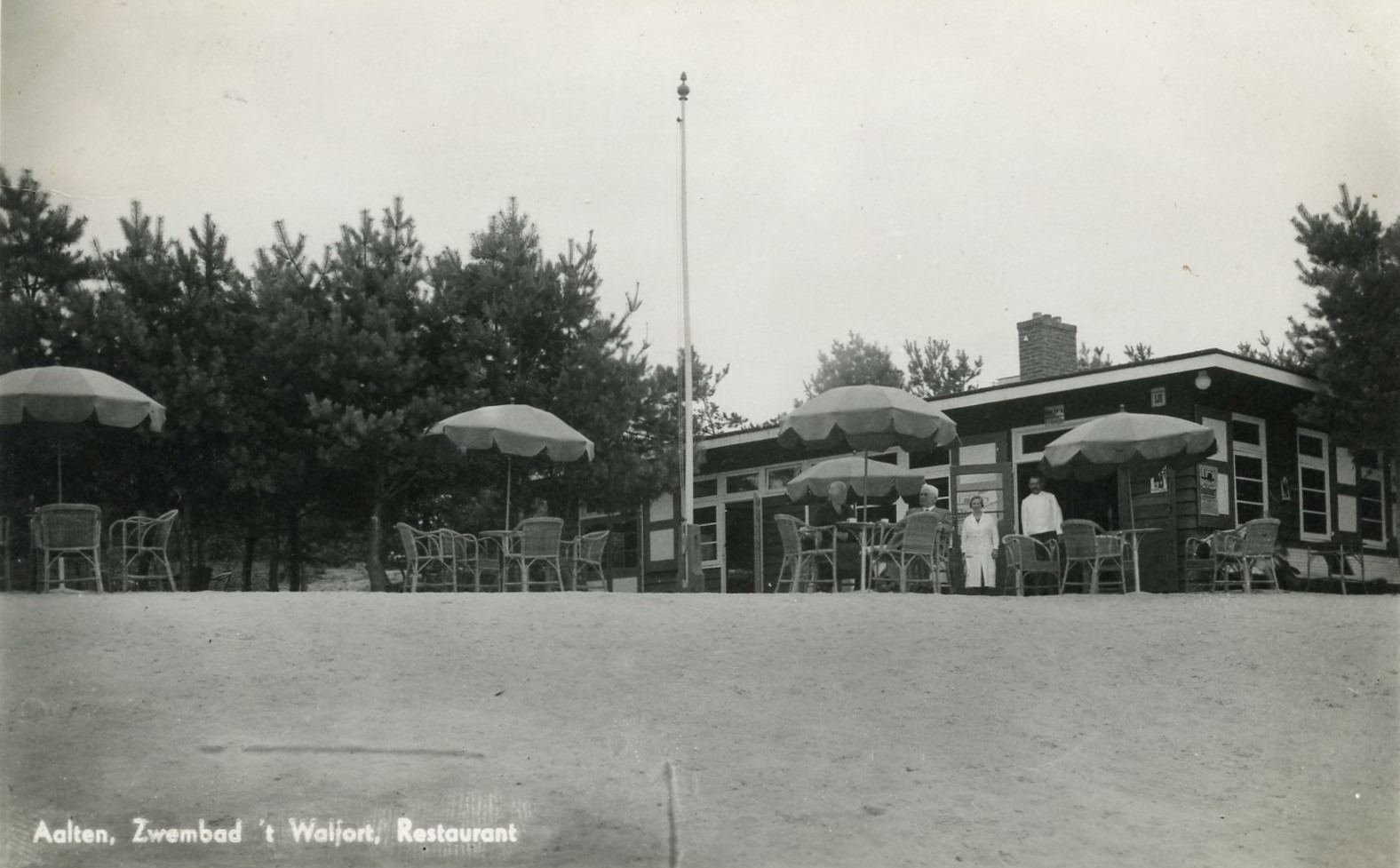
    There was a pavilion that served as a simple catering facility and also housed the necessary ‘machinery’. This wooden building had served elsewhere in the municipality until 1928 as housing for the Military Police. After these police troops were withdrawn, the municipality had moved this ‘barracks’ to Dennenoord, “where it could be used by those in need of rest to enjoy the pine air.”

    Opening

    The Graafschapbode of June 22, 1934, contained an extensive report of the opening. Here we read, among other things, the following:

    “Thus, the opening of the ‘t Walfort Swimming Pool in Aalten, located on the road between Aalten and Bredevoort, fringed by heavy trees, amidst a piece of old Achterhoek history, has now become a fact. It had been long awaited and the finishing took more time than originally expected. Now it lies there in its full glory, ready to receive thousands of visitors. At this opening, we may express our joy that this piece of work has now been put into use in such a way that we can give it our full cooperation and sympathy.”

    Among the many invited guests were “the Board of Mayor and Aldermen, the executors and contractors (J. de Nooij in Bennekom, who performed the ground drilling; De Vries, Harlingen sanitary works; Kroese, Enschedé: making the pulse wells; Van Lochem, Ten Have, and the other Aalten contractors and executors), Ir. Ratelband, Messrs. Tilbusscher and Rollman, the Mayors and Aldermen of Winterswijk, Wisch, Lichtenvoorde, Dinxperlo, Gendringen and Bocholt, the numbers 2 of the double lists for the board, the members of the Council, the heads of schools, Miss Ten Heuvel of the Christian Domestic Science School and Miss Vreeman, Head of the Nursery School, the Ministers, Priest, Leader of the Israelite Community, Chairman of the Christian Reformed Church, the Doctors, Veterinarians, Postmaster, National Tax Collector, Notary, Station Master, the boards of Aaltens Belang, Bredevoorts Belang and the Neighborhood Interests, the board of Floralia, the Chief Overseer and the Overseers of the Netherlands Heath Company, Dr. L.A. Veeger, Public Health Inspector in Nijmegen, Dr. Bloemendaal, Pharmaceutical Inspector in Velp, who performed the water testing also in connection with Weil’s disease, the National Inspector of Job Creation, the board of the Winterswijk Water Sports Association, the press, the Directors of the Municipal Utilities (Gas Factory, Slaughterhouse), the former Secretary, the former Aldermen Ten Dam and Obbink, the municipal police and the marechaussée, the board of the Dutch Swimming Federation and the boards of the gymnastics associations in Aalten and Bredevoort.”

    Speech by Mayor Monnik

    The official opening was performed by Mayor A.J.W. Monnik. In his opening speech, he said, among other things:

    “Thanks to the illustrious example of our sister municipality Winterswijk, the thought also arose here: ‘would it not be possible to establish a bathing and swimming facility on our own municipal grounds?’ The world crisis, which is felt so severely in the businesses in our municipality, required our municipal administration to repeatedly look for substantial, preferably useful work projects, in order to provide labor to the many unemployed who are so sensitively affected by the crisis.”

    “The local authority also has a duty to ensure the proper conduct of bathing life, so that no abuses can creep in. Under the guise of hygiene, immorality is unfortunately increasing in our country and leading to moral decay. Let us ensure that the healthy, pure, fresh air of life, given to us by God to serve Him and thus be happy, is not polluted into an atmosphere in which healthy living becomes a complete impossibility.”

    Subsequently, the chairman of the ‘t Walfort Bathing and Swimming Facility Foundation, Mr. M. Ackerman, also gave a speech in which he addressed the staff of the new swimming pool, among others:

    “Mr. Happel, we are pleased to welcome you as our pool manager. We also wish the other gentlemen and Miss Top that they may work pleasantly under their chief, Mr. Happel, for the prosperity of our beautiful facility.”

    “While the mayor cut the ribbon, the music association De Eendracht played two verses of the Wilhelmus. Then they proceeded through the main entrance and there the beautiful foundation lay in all its beauty before the eyes of the guests. Following this, a tour of the grounds was made under the guidance of Messrs. Tilbusscher and Rollman, Municipal Architect and Municipal Overseer. Afterwards, everyone gathered in the Pavilion, where refreshments were offered and where Ir. Ratelband gave an explanation of the technical part.

    At 7 o’clock this evening, all the unemployed who gave their strength to the realization through job creation have been invited with their wives. The mayor will give a speech, refreshments will also be offered to them, and then a tour of the grounds will also be made with them.”

    Mixed Swimming

    Mixed bathing was initially prohibited, meaning men and women each had their ‘own’ side. In 1946, a request from ‘Roman Catholic Youth and Class Organizations’ was discussed in the municipal council. The council decided, as a trial and after consultation with the swimming pool board, “that mixed swimming and staying on the beach in swimwear is permitted, provided that strict supervision is maintained and unconditional action is taken against any excesses”.

    Opening on Sundays

    Until 1958, ‘t Walfort swimming pool was closed on Sundays. A year earlier, a proposal to open the pool on hot Sundays had been voted down. A few weeks later, on a sweltering Sunday afternoon, hundreds of Aalten residents stormed the pool to swim en masse—contrary to the prevailing rules. In April 1958, the municipal council decided that the pool could be opened on summer Sundays from 2 to 4 o’clock.

    Indoor Pool

    In 1995, ‘t Walfort swimming pool was expanded with an indoor pool, consisting of a competition pool, recreational pool, instruction pool, and a toddler pool. The competition pool measures 25×12.5 meters and has five lanes.


    Owners

    This overview is incomplete.

    YearPlotOwnerDescription
    1852C-1540Jan Baron van Pallandt36,380 m² heath
    1860C-1540Hendrik Willem Oosterman, farmer36,380 m² heath
    1874C-1540Jan Willem Oosterman, farmer36,380 m² heath
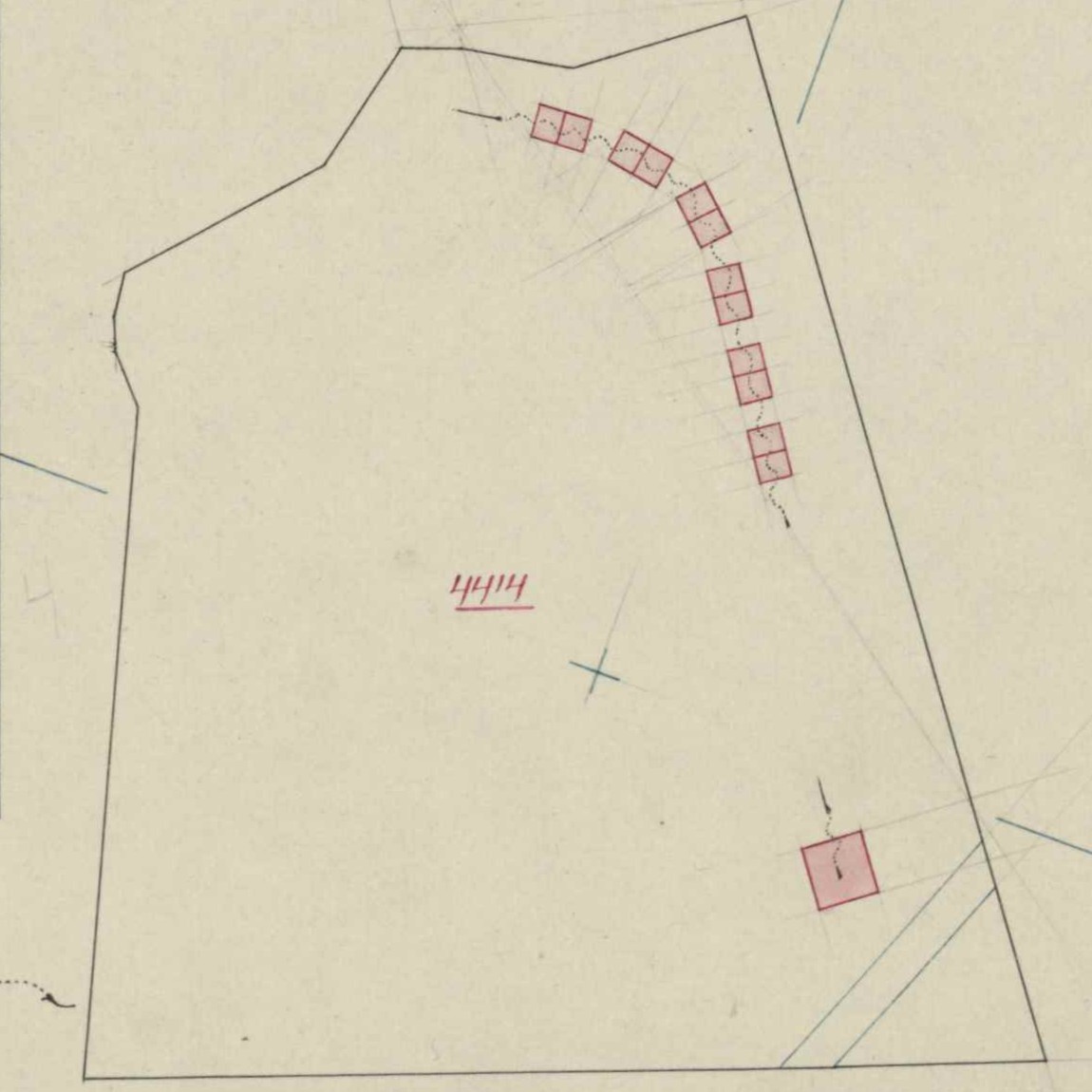
    1923C-4414The Municipality of Aalten38,190 m² heath & pines
    1937C-4625The Municipality of Aalten44,040 m² swimming pool & pavilion
    1968C-5237The Municipality of Aalten46,836 m² natural pool,
    pavilion, garage
    1985P-163The Municipality of Aalten8,570 m² house, forest,
    swimming pool, cultivated land

    Features


    Cadastral no.P-1343
    FunctionSwimming Pool
    Opening1934
    Listedno
  • Rev. Jan Derk Stegeman (1875-1970)

    Rev. Jan Derk Stegeman (1875-1970)

    NH predikant

    Jan Derk Stegeman werd op 26 juli 1875 geboren in Dedemsvaart, zoon van godsdienstonderwijzer Frederik Stegeman en Janna Harmina te Winkel. Hij bezocht het gemeentelijk gymnasium te Doetinchem en studeerde vervolgens eerst een jaar aan de Gemeentelijke Universiteit te Amsterdam en daarna nog enkele jaren aan de Rijksuniversiteit te Utrecht.

    Nadat Stegeman in mei 1899 door het provinciaal kerkbestuur van Friesland was toegelaten tot de evangeliebediening in de Nederlandse Hervormde Kerk werd hij op 3 september van datzelfde jaar door ds. J.C. van Hoeve, predikant te Schoonebeek, bevestigd als predikant van de hervormde gemeente van Nieuw Amsterdam.

    Aalten

    Op 24 augustus 1899 trouwde Jan Derk Stegeman in Den Haag met Hendrika van Dorp (Zoetermeer, 24-10-1873). Samen kregen zij zes kinderen. In 1913 kwam hij als predikant van de hervormde gemeente naar Aalten. Vanaf 1920 zette hij zich in voor de hervormde school, van 1920 tot 1946 als voorzitter van het bestuur. Hij woonde in de hervormde pastorie aan de Whemerstraat.

    Dominee Stegeman stond bekend als een zeer geestige en markante persoonlijkheid. De verstandhouding met zijn collega’s, die hem ‘de bisschop’ noemden, was zeer goed. In september 1929 vierde hij zijn 30-jarig, en in 1964 zijn 65-jarig ambtsjubileum, een jaar voordat hij 90 werd! In 1955 werd de hervormde school aan de Varsseveldsestraatweg naar hem vernoemd, de ‘Ds. Stegemanschool‘.

    Emeritaat

    Na zijn emeritaat bleef Stegeman op vele terreinen actief, bijvoorbeeld in de vorm van huisbezoek bij oudere mensen, drankbestrijding en ziekenverpleging. Ook vervulde hij tal van preekbeurten. Hij was vele jaren penningmeester van de classicale zendingsvereniging in de classis Zutphen, secretaris van het bestuur van de Julianaschool, bestuurslid van de Breukelaarschool en ook bestuurslid van de Aaltense afdeling van het Nederlands Bijbelgenootschap.

    Stegeman was bovendien een zeer actief lid van de redactie van weekblad ‘De Wachter’ en van zijn hand verschenen de boeken ‘Aan mijne gemeente’ (uitgeverij Gebr. De Boer, 1938) en ‘Van rijke dingen’ (uitgeverij De Graafschap, 1941).

    In 1958 erkende de regering de verdiensten van ds. Stegeman door hem te benoemen tot ridder in de orde van Oranje Nassau.

    Dominee Stegeman overleed op 21 februari 1970 op 94-jarige leeftijd en ligt begraven op begraafplaats Berkenhove.

  • Mayor Ruurd Faber

    Mayor Ruurd Faber

    Burgemeester (1971-1975)

    Ruurd Faber (Veenhuizen, 28-08-1912 – Assen, 07-07-1992) was een Nederlands politicus van de ARP. Hij werd geboren als zoon van Anne Faber (1875-1948; vanaf 1932 directeur van het eerste gesticht van de Rijkswerkinrichtingen te Veenhuizen) en Hermina Klein (1879-1973). Op 15-05-1941 trouwde hij in Assen met Aukje Fokje Wijngaard (Den Haag, 27-05-1918).

    In het begin van zijn loopbaan was Faber inspecteur van een levensverzekeringmaatschappij. Tijdens de Tweede Wereldoorlog was hij betrokken bij het verzet en daarop werd hij gearresteerd en opgesloten in het huis van bewaring in Assen. Na de bevrijding kwam hij vrij en vervolgens werd hij hoofd van de Politieke Opsporingsdienst (POD) te Assen. Na enige tijd werd Faber Officier-fiscaal bij de Asser Kamer van het Bijzonder Gerechtshof te Leeuwarden. Later is hij ook nog werkzaam geweest in een andere functies bij het ministerie van Justitie en het ministerie van Maatschappelijk Werk.

    In 1960 werd hij burgemeester van Ulrum en daarnaast was hij ook nog van 1962 tot 1963 waarnemend burgemeester van Leens. In 1965 werd Faber burgemeester van Dantumadeel. Daar genoot hij naam als “groot formaat maatschappelijk werker”.

    In 1971 volgde hij Hendrik Haverkamp op als burgemeester van Aalten en bekleedde deze functie tot 1975.

    In 1992 overleed Ruurd Faber op 79-jarige leeftijd.

    Faber werd als burgemeester van Aalten opgevolgd door Doeke Bekius.

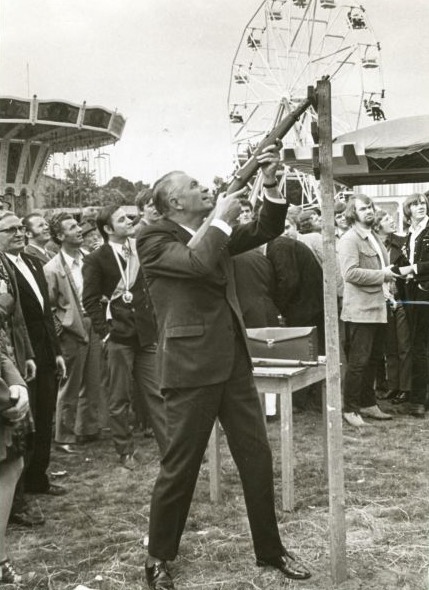
    Burgemeester Faber lost het eerste schot op het Schuttersfeest van 1971
    Burgemeester Faber lost het eerste schot op het Schuttersfeest van 1971

    Leestip


    ‘Van Maire Stumph tot Burgemeester Stapelkamp’, door Leo van der Linde

  • Willem te Gussinklo sr. (1852-1920)

    Willem te Gussinklo sr. (1852-1920)

    Pijpenfabrikant

    Willem te Gussinklo sr. (1852-1920) was één van de hoofdrolspelers in de geschiedenis van de hoornindustrie in Aalten. Hij maakte aanvankelijk Duitse pijpen en handvatten voor wandelstokken en paraplu’s. Later legde hij zich toe op de productie van knopen.

    Willem te Gussinklo werd geboren op 13 november 1852 op huisnummer 284 (Markt 3) in Aalten, zoon van winkelier Willem te Gussinklo en Josina Aleida Mierdink. Op 26 mei 1887 trouwde hij met Maria Jacoba Gangel (een zuster van dominee Gangel). Rond 1890 betrokken zij een statige villa aan de Willemstraat.

    Willem leerde het vak van hoorn bewerken van zijn zwager Gerrit Peters. Samen met Wessel Becking begon hij een pijpenfabriek. Echter, in 1884 scheidden hun wegen en gingen zij apart verder. Na de mislukte samenwerking met Becking maakte Willem te Gussinklo Duitse pijpen en handvatten voor wandelstokken en paraplu’s.

    Knopen

    In Duitsland en Engeland waren rond 1900 bedrijven ontstaan die uit hoorn knopen produceerden. Met dat voorbeeld voor ogen begon Willem in het jaar 1905 met het maken van hoornen knopen, een primeur voor Nederland. Al snel kwam zoon Willem te Gussinklo jr. (Piepkes Willem) in de firma, die zich ontwikkelde als innovatief ondernemer.

    De eerste fabriek van Te Gussinklo stond aan ‘t Dal in Aalten, de tegenwoordige Willemstraat.

    Willem te Gussinklo sr. overleed op 21 juni 1920 en ligt begraven op de Oude Begraafplaats aan de Varsseveldsestraatweg te Aalten.

    Willem te Gussinklo sr. (1852-1920)
    W. te Gussinklo - De Nederlander, 26-06-1920
    De Nederlander, 26 juni 1920

    Bronnen


  • Willem te Gussinklo Jr. (Piepkes Willem), approx. 1943

    Willem te Gussinklo Jr. (Piepkes Willem), approx. 1943

    Knopenfabrikant

    Willem te Gussinklo jr. (1888-1969), bijnaam ‘Piepkes Willem’, was één van de hoofdrolspelers in de geschiedenis van de hoornindustrie in Aalten. Hij was directeur van Dutch Button Works in Bredevoort.

    Willem te Gussinklo jr. werd geboren op 18 mei 1888 op huisnummer 239a in Aalten, dat is ongeveer waar tegenwoordig vakgarage JAWI zit. Hij was een zoon van pijpenfabrikant Willem te Gussinklo (sr.) en Maria Jacoba Gangel (een zuster van dominee Gangel). Op 7 juli 1914 trouwde Willem jr. in Zwolle (O) met Engelina Arriana van Houte.

    Hij was directeur van Dutch Button Works (DBW) in Bredevoort en hij woonde op Slingesteyn in Aalten.

    Willem te Gussinklo jr. overleed op 5 juni 1969 en ligt begraven op de Oude Begraafplaats aan de Varsseveldsestraatweg te Aalten.

    Willem te Gussinklo Jr. (Piepkes Willem), ca. 1943
    Willem te Gussinklo jr. ca. 1943

    Bronnen


  • Luutenshuus, Haartsestraat, Aalten

    Luutenshuus, Haartsestraat, Aalten

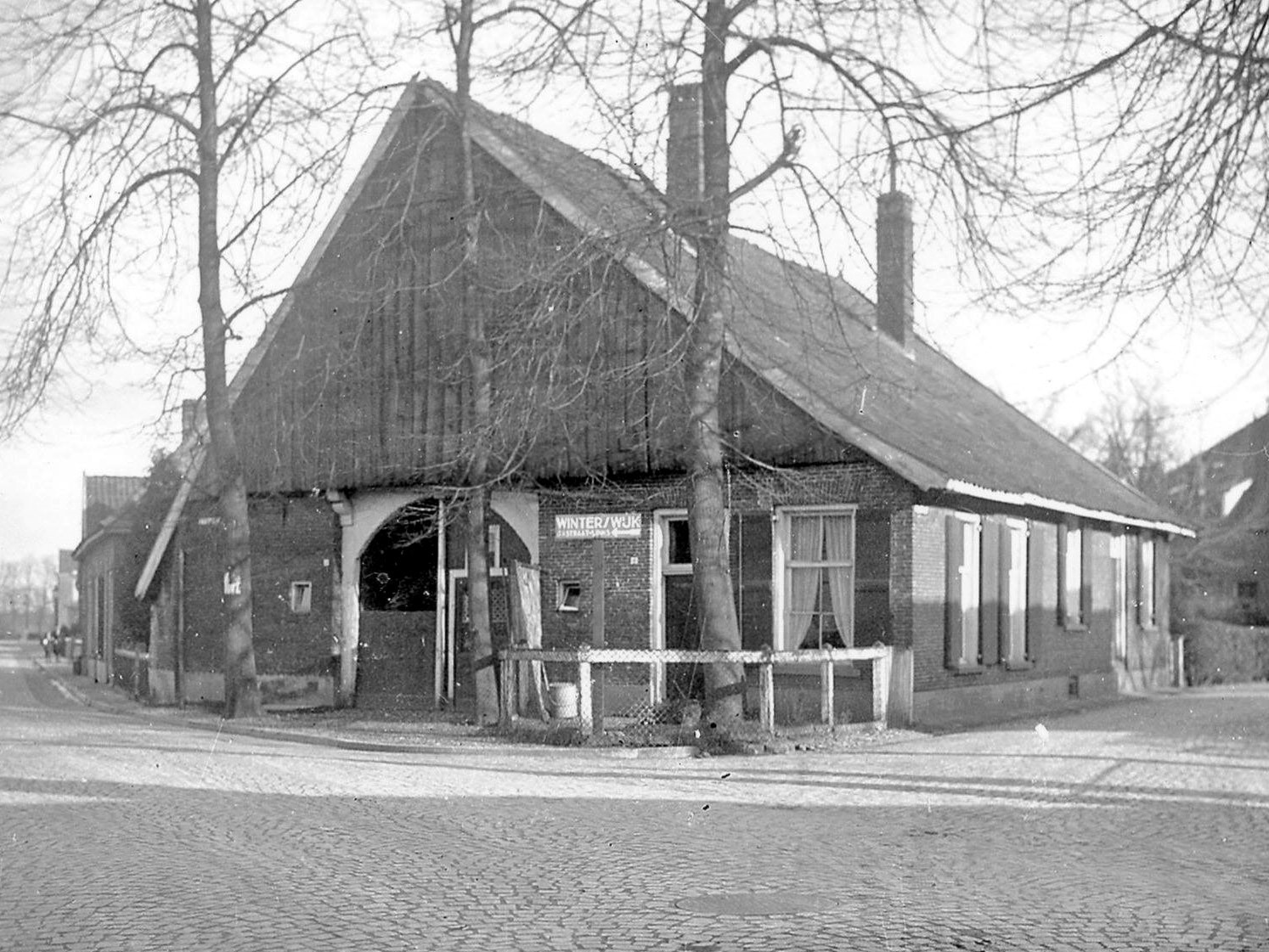
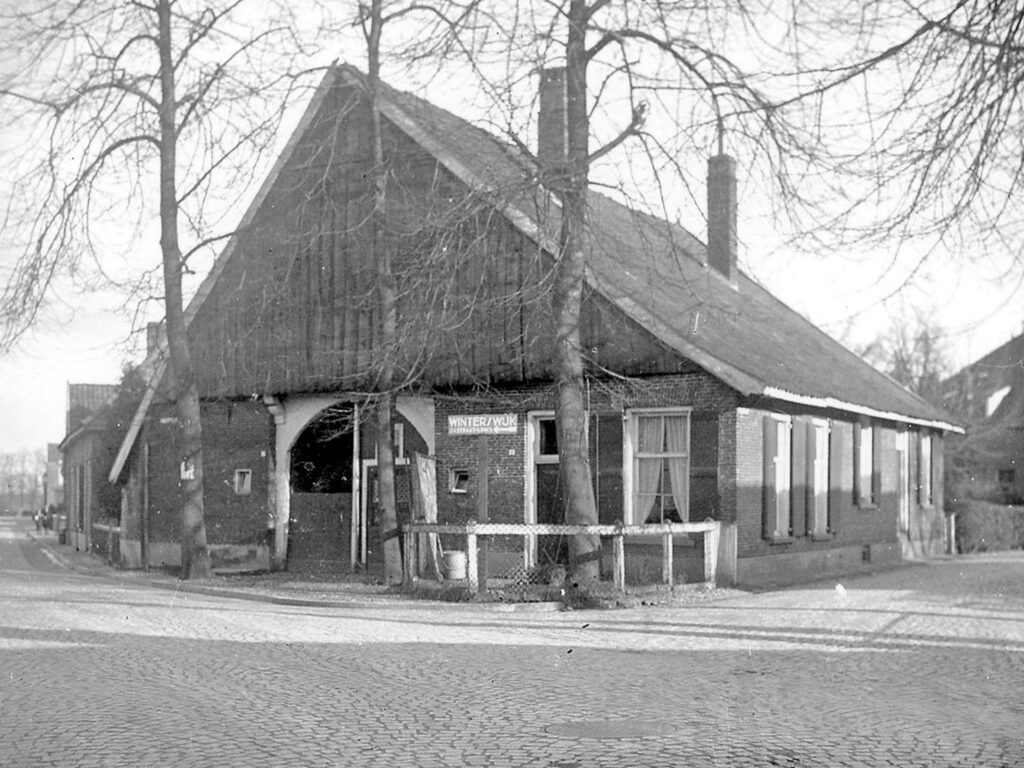
    Rond 1960 leefde er in Aalten een vrouwtje met de bijzondere bijnaam ‘Knonnepoetse’. Zij woonde in het Luutenshuus, een eeuwenoude boerderij op de hoek Polstraat/Haartsestraat die in 1962 is afgebroken om plaats te maken voor de doortrekking van de Polstraat.

    Op weg naar school daagden kinderen elkaar uit om daar op de ramen te kloppen. Er kwam dan een woedend oud vrouwtje naar buiten gestormd die half Duits sprak. Kinderen waren doodsbang voor haar.

    Guste Mina

    In de volksmond werd ze ook wel Guste Mina genoemd. Van oorsprong zou ze Poolse zijn en rond de oorlogsperiode uitgeweken naar Duitsland. Ze trouwde met een zekere Koskamp uit Aalten.

    Luutenshuus, Haartsestraat, Aalten
    Het ‘Luutenshuus’, in 1962 gesloopt

    Deze Koskamp was in de oorlog ‘fout’. Hij liep met een geweer om zijn nek rond door het dorp. Dit geweer noemde hij ‘seine Kanone’. Hij poetste zijn geweer dikwijls. Vaak zei hij dan: “Ik moet nog even mijn ‘Kanone’ poetsen”. Na zijn dood hield het vrouwtje er de bijnaam ‘Knonnepoetse’ aan over. De naam was dus oorspronkelijk toebedacht aan haar echtgenoot.

    Het echtpaar woonde aanvankelijk op de hoek van de Stationsstraat en de Admiraal de Ruyterstraat in Aalten, in de oude woning van Lurvink. Later is deze woning afgebroken en vestigde zich daar Nijman met zijn tankstation, later tankstation Veneman en tegenwoordig cafetaria ‘De Admiraal’. Het echtpaar Koskamp verhuisde vervolgens naar het Luutenshuus.

    Wie was zij?

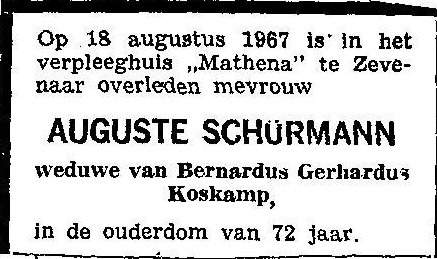
    Haar echte naam was Auguste Koskamp-Schürmann. Zij werd geboren in Sterkrade (D) en in 1919 te Aalten getrouwd met Bernardus Gerhardus Koskamp. Ze woonden omstreeks 1920 in het dorp Aalten op adres A211a, later omgenummerd naar B215a. Vermoedelijk werd dit adres later/tegenwoordig Hogestraat 60a.

    In het Adresboek der gemeente Aalten uit 1967 staat zij vermeld op het adres Polstraat 17a. Op 18 augustus in datzelfde jaar overleed Auguste in een verpleeghuis te Zevenaar. Zij werd begraven bij haar man op begraafplaats Berkenhove.

    ‘Knonnepoetse’ heeft geen gemakkelijk leven gehad; ze kon snel kwaad worden. De jeugd wist dit en maakte daar misbruik van. Pesten was iets dat in die tijd ook al voorkwam.

  • Wisselink Textiles

    Wisselink Textiles

    Eerste Broekdijk 85, Aalten (no longer extant)

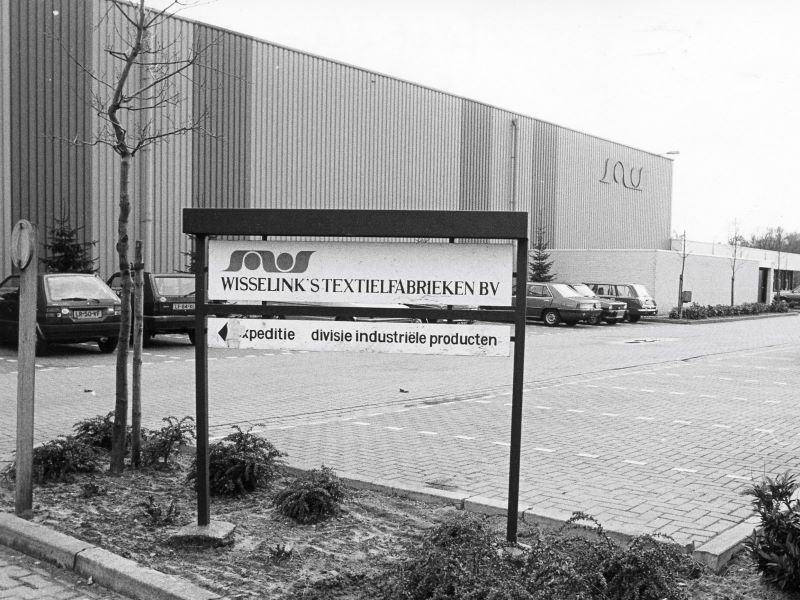
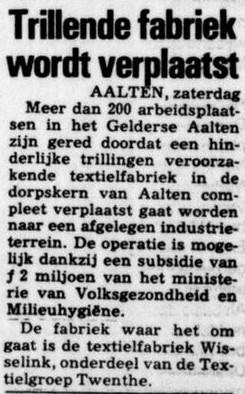
    The textile weaving mill Wisselink Textiles, formerly Gebr. Driessen, had been part of the Textielgroep Twente since 1960. They manufactured products such as technical textiles, tent canvases, and flag bunting. For years, the company was located on Dijkstraat, but its presence in the village centre caused excessive noise and vibration nuisance.

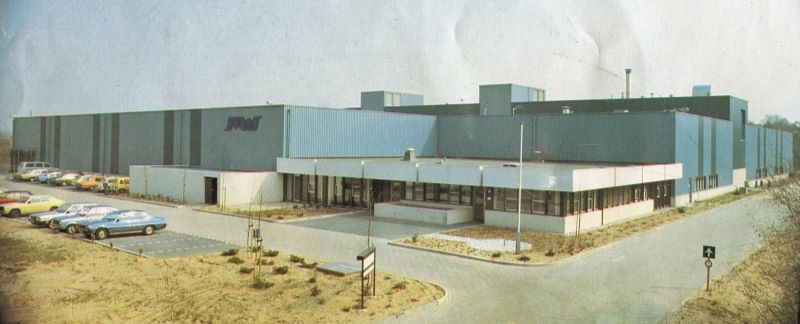
    Consequently, the factory relocated in 1981 to new premises on Eerste Broekdijk, within the ’t Broek industrial estate. Its sister company, Koala Tricotagefabriek, moved to Industriestraat. This relocation ensured the preservation of over 200 jobs.

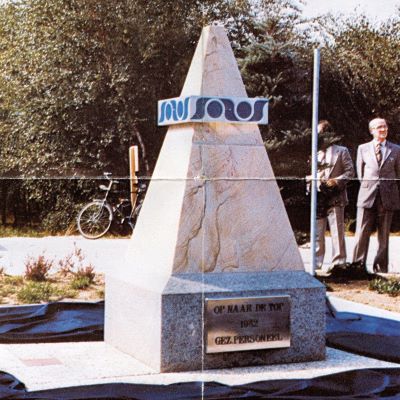
    The official opening of the new building was performed by the then Queen’s Commissioner for Gelderland, Mr Geertsema. The collective staff presented the company with a pyramid-shaped sculpture with a flattened top, inscribed: ‘OP NAAR DE TOP’ (Onwards to the Top). However, Wisselink never quite reached that summit.

    The Most Modern in Europe

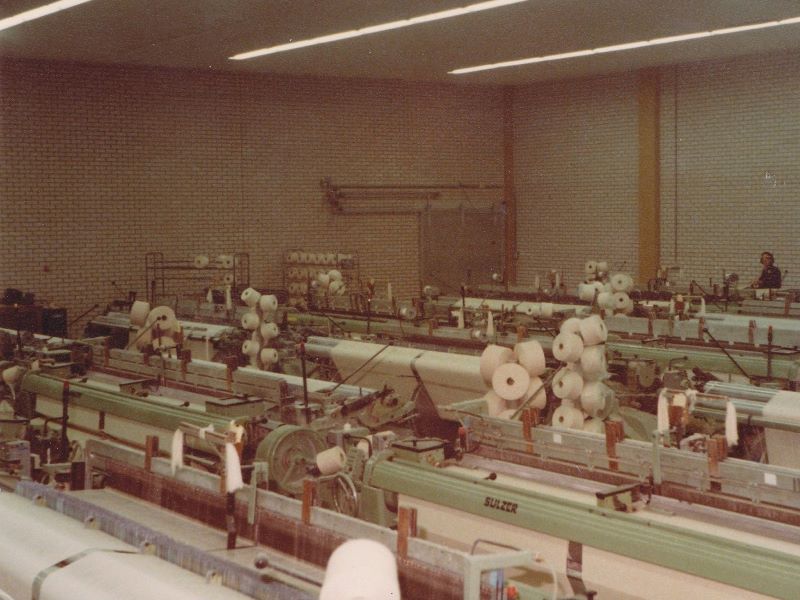
    At the time, the new weaving mill was by far the most modern in Europe. It initially housed 76 state-of-the-art Sulzer projectile weaving machines and 20 older Picanol looms. The directors were, in succession, Messrs Schukkink, Van der Gronden (interim), Defourney, and Brouwer.

    The company organised several staff parties a year. Highlights included sports days with sister companies from Enschede, Weerselo, Hengelo, and Bree (Belgium). The group’s centenary celebration at the Theaterhotel in Almelo was also a grand event. Wisselink had its own shooting club, ‘WIA’ (Wisselink Textiel Aalten), which was affiliated with the Aalten Shooting Association.

    Despite the festivities, the textile industry demanded hard work: shift work, dust, and noise… above all, a lot of noise!

    Takeover and Closure

    Eventually, Wisselink faced financial difficulties. By 1997, the workforce had dwindled to 93 people—significantly fewer than in previous years. Following several painful reorganisations, the curtain finally fell in 2002. The company was taken over by the German firm Setex. A year later, the entire production was moved to the headquarters in Dingden, Germany. On 31 March 2003, the Aalten factory closed, and the building on Eerste Broekdijk was left vacant.

    Some years after the closure, the premises were purchased by Kaemingk Season Decorations. The former production facility was repurposed as a warehouse. In 2015, the building was demolished and replaced by a new, larger warehouse built by Kaemingk.

    Invention

    On 16 August 1980, the Dutch newspaper De Telegraaf reported on a new invention by the Wisselink textile factory:

    ‘Schulp’ without buttons designed for soldiers

    In the future, soldiers can literally crawl into their shells (schulp). ‘Schulp’ is the name of the tent developed for the army by order of the Ministry of Defence. It is a two-person, single-roof tent for mobile use—quick to pitch and lightweight.

    The latter is thanks to a new type of tent canvas, KSOOI/Wetfold, an invention by the Wisselink textile factory in Aalten. It is a lightweight cotton fabric provided with a so-called multi-porous coating (MPC).

    Bivouacking becomes a lot easier because of it. The unique feature of this canvas is that it does not leak if touched during a rain shower or if it is folded and packed while soaking wet.

    Thanks to an ingenious tensioning system, only two pegs are needed to set up the shelter. What more could a soldier want during field exercises in harsh weather conditions?

    It is not just soldiers who can benefit from the tent designed by Mick Schmidt; a civilian version was also produced. It was awarded the 1986-’87 ANWB prize for the best tent design of the year.

    Perhaps the greatest advantage of the tent is that it does not consist of two halves. There is not a single button on it. The only thing that might cause an argument is which of the two has to carry the thing on their knapsack.

    Video

    In 1990, FilmAalten made film recordings inside the Wisselink textile weaving mill:

    Features


    Cadastral no.L-1207
    FunctionTextile factory
    Opening1981
    Sluiting2003

    Sources