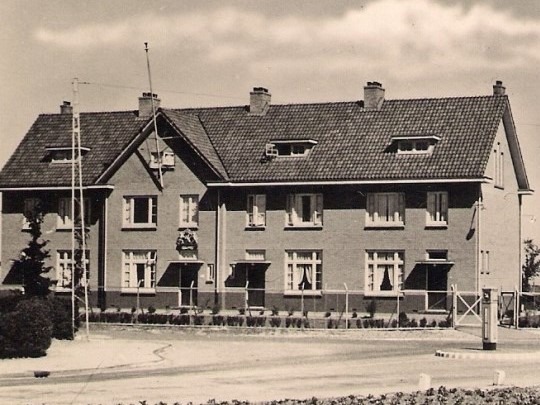
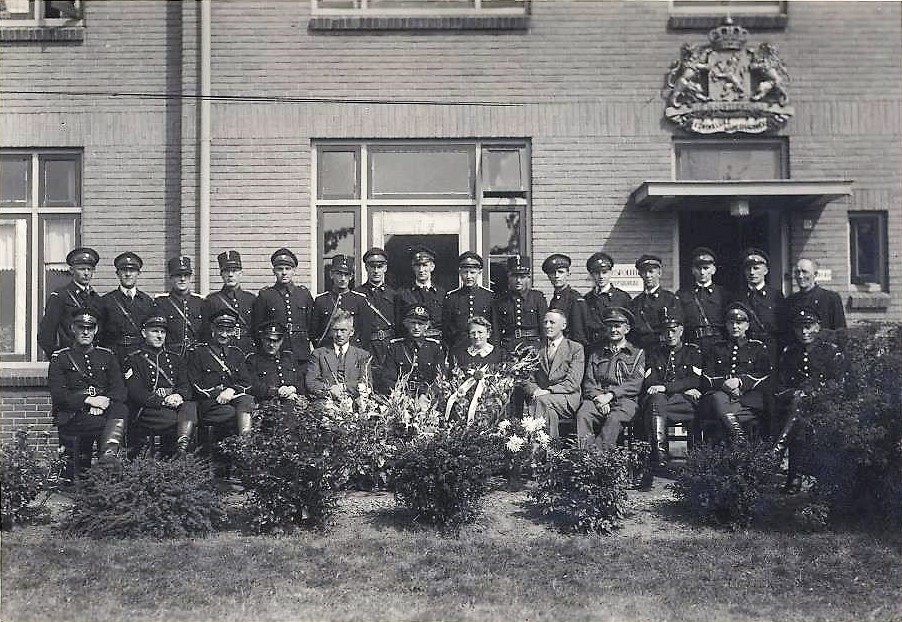
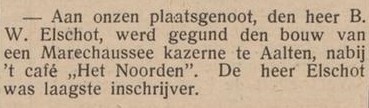
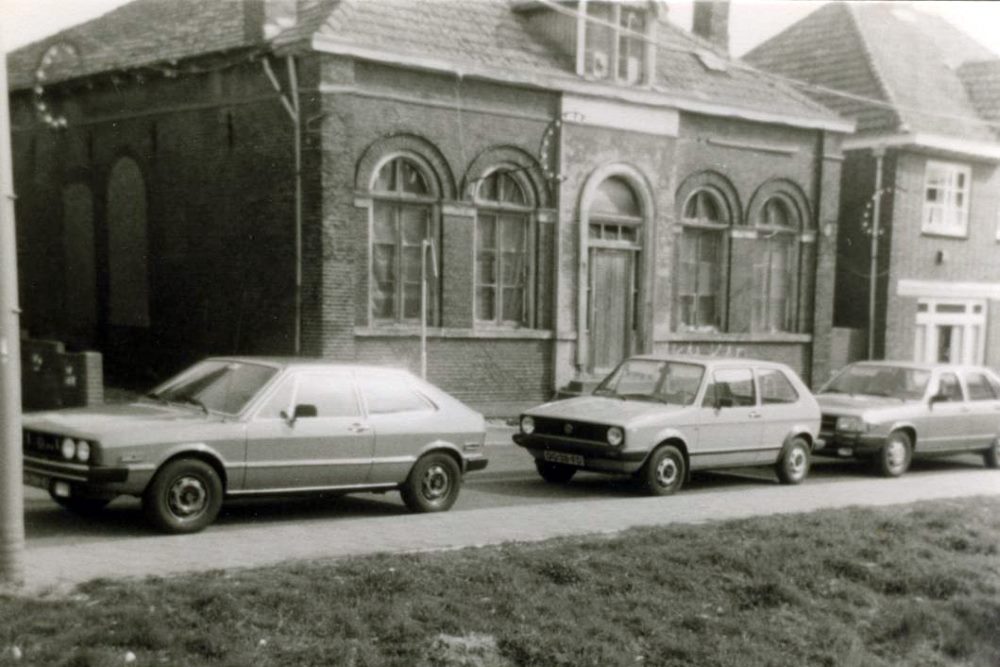
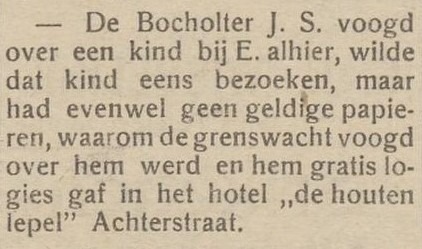
The Aalten Marechausseekazerne (Royal Military Constabulary barracks) was built around 1937. Previously, the constabulary had been stationed at the Heurne-Hemden border crossing. The premises contained three houses intended for the families of the constabulary and a service section, which was larger than the residential parts. There were also additional rooms for unmarried officers. These men were required to serve a certain number of years with the Marechaussee before they were permitted to marry, and therefore lived on-site.
The service section contained two holding cells, and all three houses were equipped with a ‘gas cellar’ to provide shelter in the event of a war involving gas attacks. During World War II, a V-1 flying bomb landed next to the barracks; however, given the sturdy construction typical of military objects, the building suffered virtually no damage.
World War II
When war broke out on 10 May 1940, Sergeant (wachtmeester) Sijbring—who was on night duty—warned the officers of the German advance. A number of them fled by bicycle via the Wolboom towards Bronkhorst, where they crossed the IJssel. From there, they could be deployed in the defence of the Netherlands.
If people were arrested during the war, they were taken either to the Town Hall, where the NSB (Dutch Nazi Party) was based, or to the Marechaussee barracks. A number of constabulary officers were still stationed there. On one occasion, the resistance leader ‘Ome Jan’ Wikkerink was arrested and brought to the barracks. The resistance quickly devised a plan to liberate him. They made an arrangement with the guard, the younger Officer Bruggeman, that they would give him a black eye and stun him with chloroform. In this manner, Ome Jan was freed. When the SD (German security service) arrived shortly after and found the guard with a black eye and barely conscious, they believed his story, and he avoided any repercussions.
Residences
The barracks were closed on 1 March 1968. Subsequently, the building was transferred to the Government Buildings Agency. In 1989, the houses were sold to the tenants and passed into private ownership.
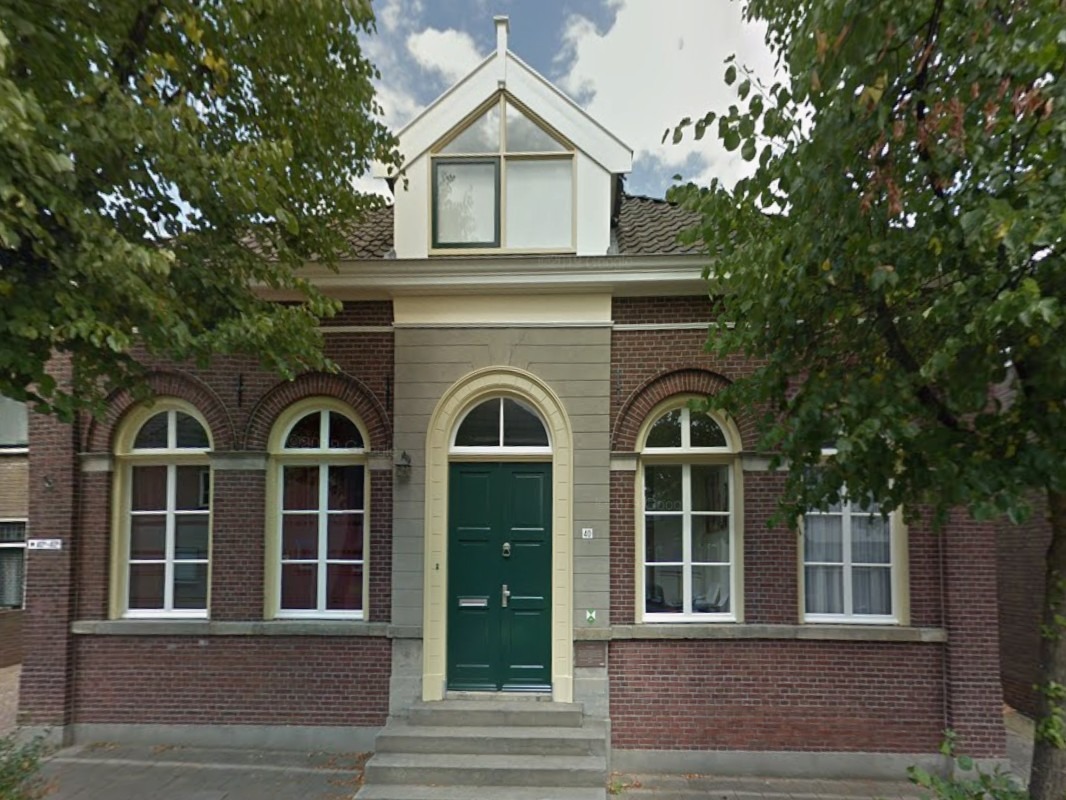
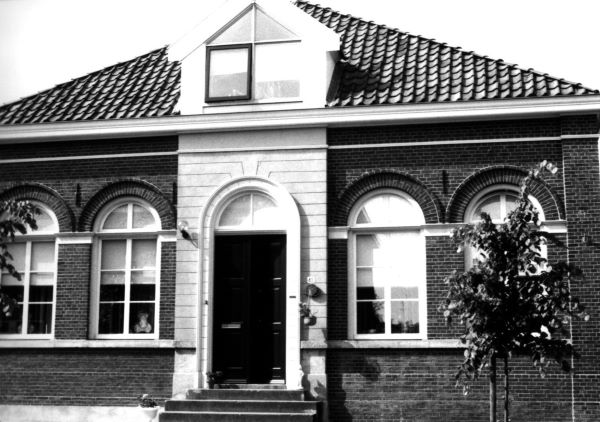
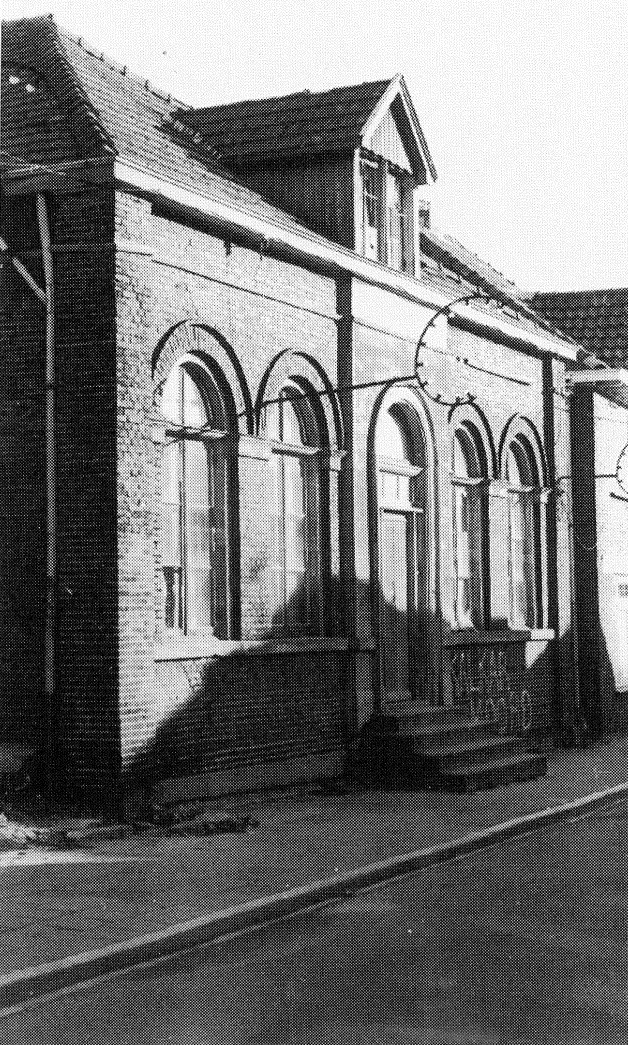
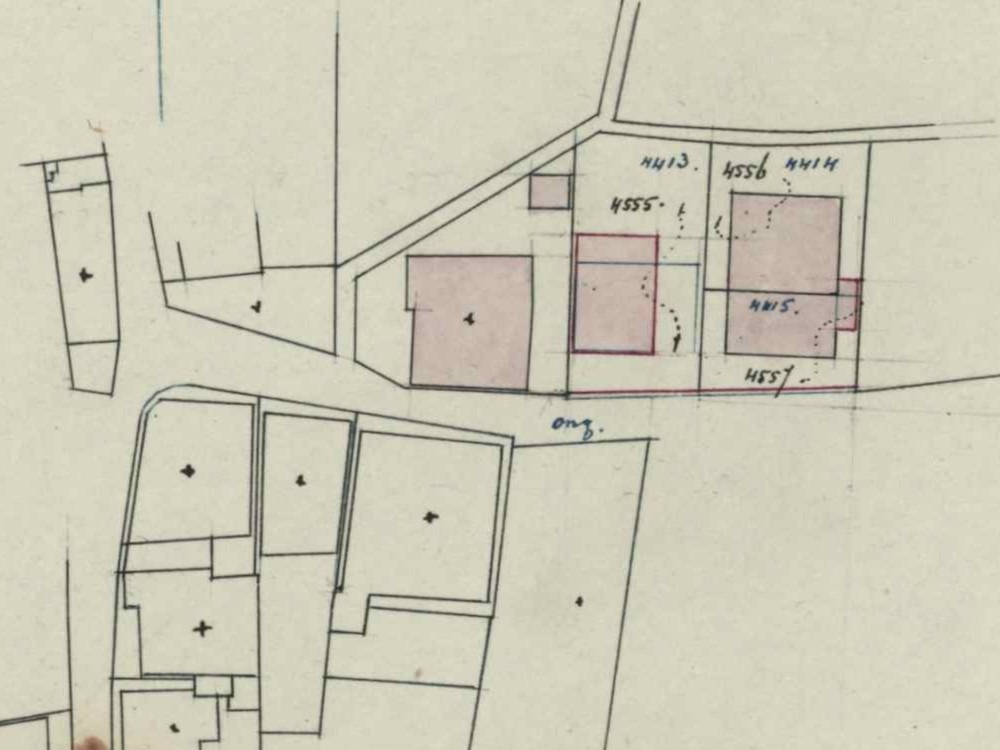
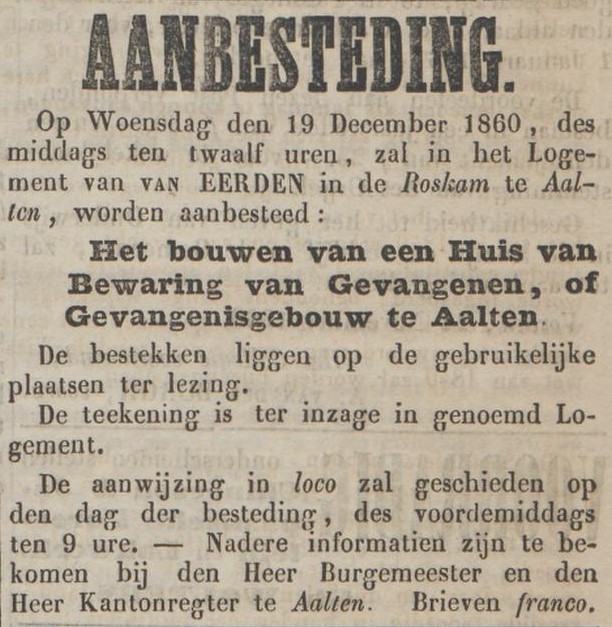
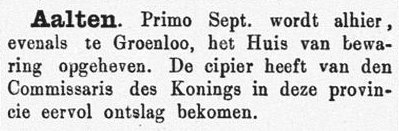
The former prison on Prinsenstraat in Aalten was built in 1861 in Neoclassical style as a cantonal house of detention, featuring six cells and a gaoler’s residence. In 1886, its cantonal status was revoked, but the building remained in use as a municipal prison until the Second World War. Today, the property is a private residence.
Een inventarislijst uit 1933 noemt nog ‘meubilair en overige goederen behorend tot de gevangenis in de Achterstraat’ (de oude naam van de Prinsenstraat). Vóór 1861 bevond het plaatselijke cachot zich aan de Landstraat.
In 1937, G.H. Rots described in a series of articles how things were handled in Aalten in earlier times. Regarding the old prison, he wrote:
“For cantonal court matters, one did not have to walk far. After all, the cantonal judge sat in our good village, and the cantonal court was held in the town hall. The prison in Aalten was also equipped for the detention of prisoners for longer than twenty-four hours. A gaoler was appointed for this purpose, and for many years Wessel te Brake held this post. To ensure the proper fulfillment of the feeding and care of the prisoners, he had to sign a contract and provide several sureties. As a matter of interest, we publish the transcript of this contract here:
Between the Board of Supervision of the house of detention in Aalten on the one hand, and Wessel te Brake, gaoler of the prisoners residing in Aalten, on the other, the following contract has been entered into today regarding the maintenance of the prisoners during the year 1862, at the price of fifty cents per prisoner per day.
Article One.
The Contractor undertakes to provide feeding and nursing for the prisoners in the aforementioned house, providing each of them daily with:
A. Four ounces of rye bread made of pure baked flour.
B. Three measures of warm drink consisting of one part fresh milk and four parts boiled water.
C. At midday, a nutritious midday meal at least in accordance with the dietary standards established for prisoners in general.
D. In the evening, two and a half ounces of well-baked rye bread as above and two and a half measures of warm drink, consisting of four parts boiled water and one part fresh milk with five wigtjes [units of weight] of coffee and the necessary chicory.
E. Further necessary drinking water.
Article Two.
The various food items must be of good quality and prepared as required, and shall always be subject to the approval of the Board of Supervision, by whose judgment the Contractor shall abide.
Article Three.
The Contractor shall also be required, in occurring cases, to provide sick prisoners with such food and drink as the medical practitioner shall prescribe, with the exception of medicines.
Article Four.
The Contractor shall be paid within two months after the submission of his three-monthly or annual declaration.
Article Five.
In the prescribed declaration and statements, he may charge for the day of arrival of the prisoners, but not for the day of departure. However, if the prisoners have already enjoyed the midday meal upon their arrival and stay only until the following day, so that only supper and breakfast are provided, or if they should depart again on the day of their arrival, so that only the midday meal is provided, only half a nursing day may be declared in such cases. For the maintenance of children temporarily confined with their parents, half the contract price may be charged for each full nursing day. Mention of this must be made in the Remarks column and the nominative statement.
Article Six.
The Contractor must always submit separate declarations and nominative statements for the maintenance costs of police prisoners, which are borne by the municipalities to which they belong. Should it be necessary in special cases to light or heat the prison, the Contractor must provide for this in such a manner as the Board of Supervision shall prescribe.
Article Seven.
The costs of stamps and registration of the contract, as well as the stamp duties of the mandates when these exceed ten guilders, shall be borne by the Contractor.
Article Eight.
Should any dispute arise concerning the correct understanding and execution of the foregoing provision, the same shall be judged and decided by the King’s Commissioner in the province, without appeal to any other authority.
After reading the above terms, the Contractor, Wessel te Brake, declares to have understood them all well, to follow them, and for the proper fulfillment of his commitment to provide as sureties Jan Wegchelaar, messenger, and Jan te Hoonte, constable, both residing in Aalten, who are also present here and declare that they are well aware of the obligations to be fulfilled by the Contractor, hold themselves jointly and severally liable with him for the execution thereof, and renounce all exceptions that might be raised by them as sureties. And the Contractor and his sureties have also signed this.
Done at Aalten, 10th Dec. 1861. 1861. The Board of Supervision of the house of detention in Aalten, (signed) F.W.J. IMMINK (President) (signed) L. ROELVINK, Secretary.
The Contractor and the sureties: (signed) W. TE BRAKE (signed) J. WEGCHELAAR (signed) J. TE HOONTE.
The document was registered in Groenlo. The costs for this were 20 cents plus 38 surtax, making 28 cents in total.”
Owners
Overview is incomplete.
Year
Plot
Owner
Description
1862
I-2633 I-2634
The Board of Supervision of the cantonal prison of Aalten
280 m² prison, yard 205 m² house, yard
1891
I-4414 I-4415
The Municipality of Aalten
269 m² house of detention & yard 185 m² house & yard
1893
I-4556 I-4557
The Municipality of Aalten
265 m² house of detention & yard 179 m² house & yard
1941
I-5611 I-4557
The Municipality of Aalten Antonius Johannes Veldhuis, merchant
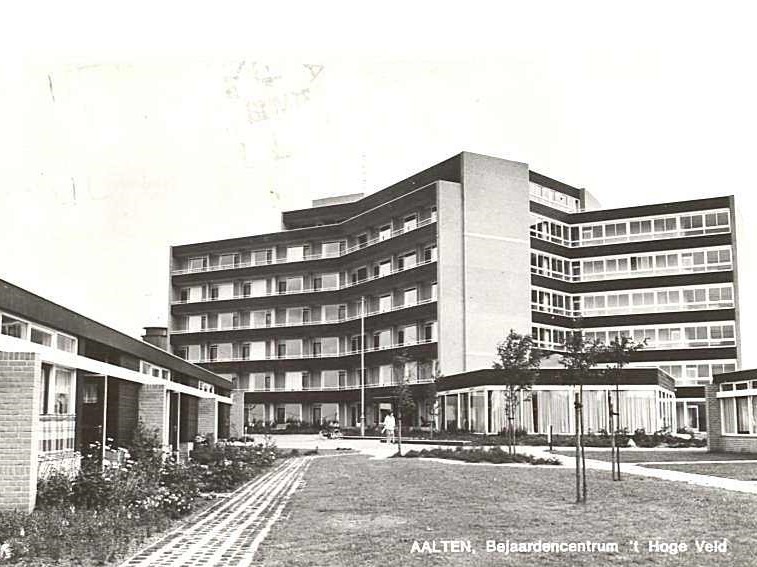
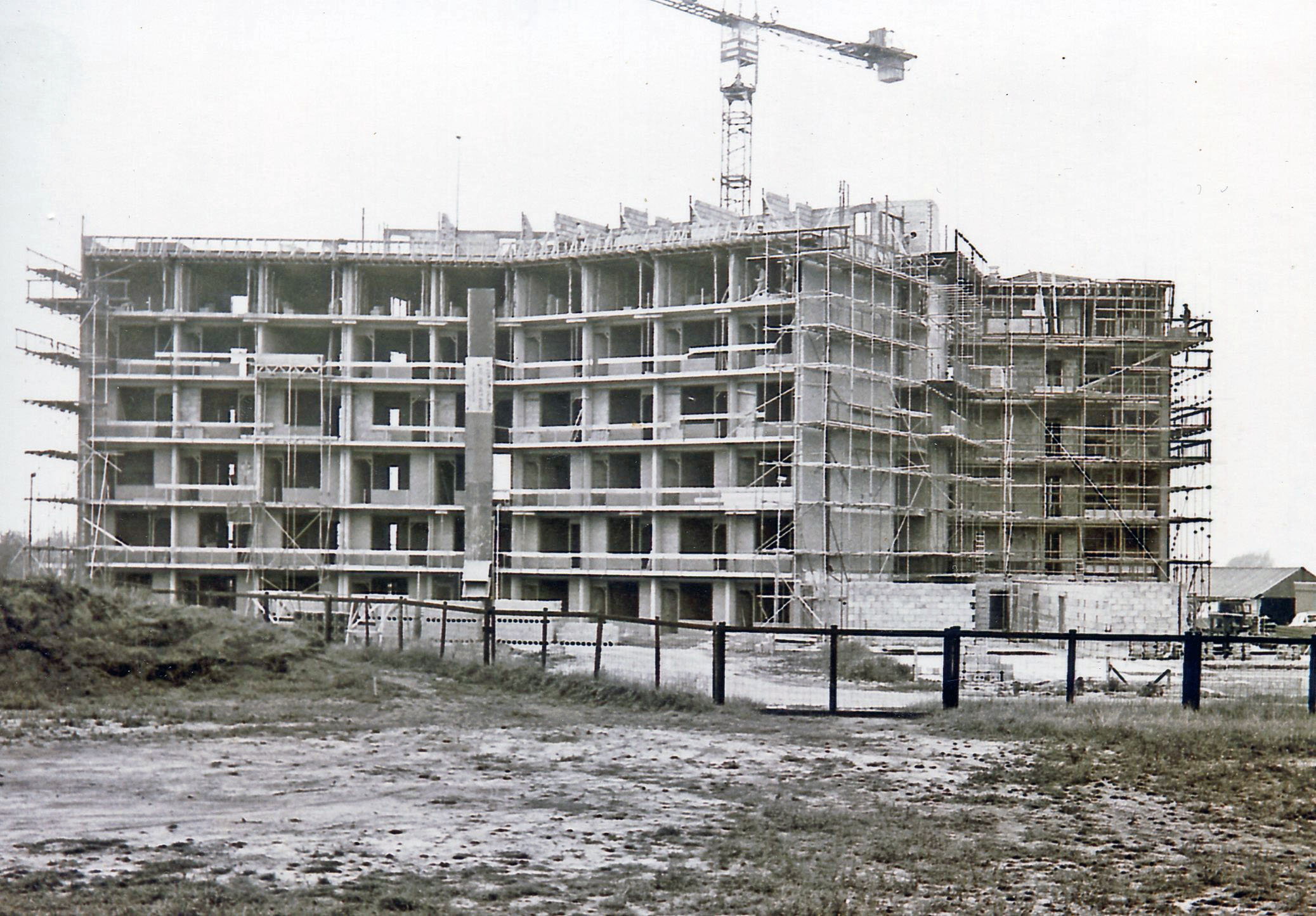
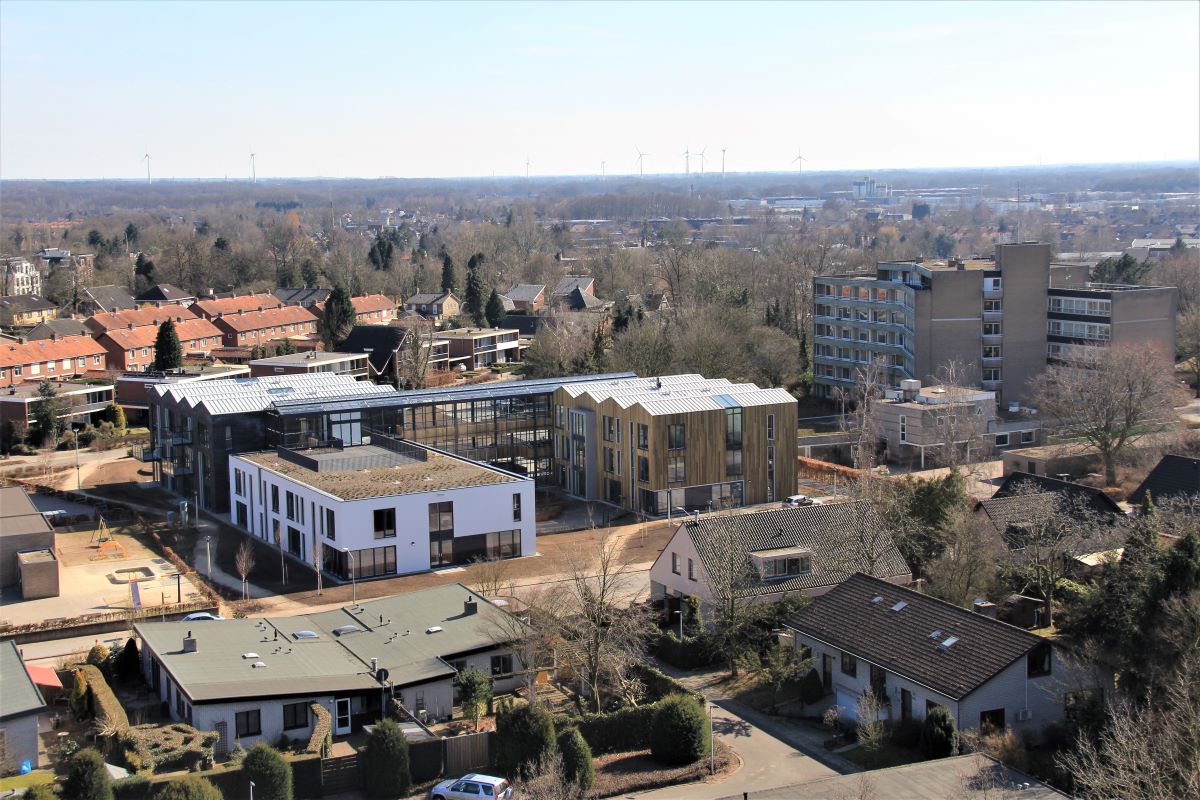
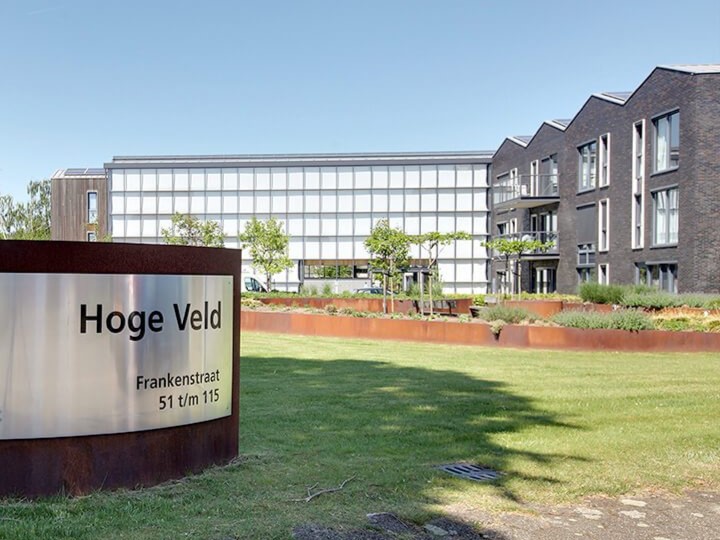
The ‘t Hoge Veld residential care center in Aalten opened in 1970 as the successor to the Avondvrede rest home on Hogestraat. The building accommodated dozens of elderly residents and was a recognizable nursing home in Aalten for decades. In 2018, the complex was demolished and replaced by new construction.
In 1967, the Reformed congregations of Aalten, Bredevoort, and Lichtenvoorde jointly established the Reformed Foundation for the Aalten Senior Center. This foundation was later renamed the ‘t Hoge Veld Senior Center Foundation. In 1970, the residents of the Avondvrede rest home on Hogestraat moved to the newly built ‘t Hoge Veld senior center in Aalten.
High-rise construction
The new building was a six-story structure. At the time, this was considered quite spectacular in Aalten, as there was hardly any high-rise construction in the village. The only tall buildings were the Landbouw silo and the water tower. From the top floor of ‘t Hoge Veld, one had a beautiful view over Aalten and the surrounding area.
During construction, some elderly residents remarked: “If they add a slide, we can go straight to the cemetery across the street after we die.” Later, the residents felt very positive about it. They enjoyed the view and the excellent care provided in this nursing home.
The main building contained 78 single rooms and 11 double rooms. Additionally, there were 12 sheltered housing units.
Demolition and new construction
In 2018, the apartment block and the sheltered housing units were demolished to make way for new (lower) residential care center buildings and luxury homes in a park-like setting.
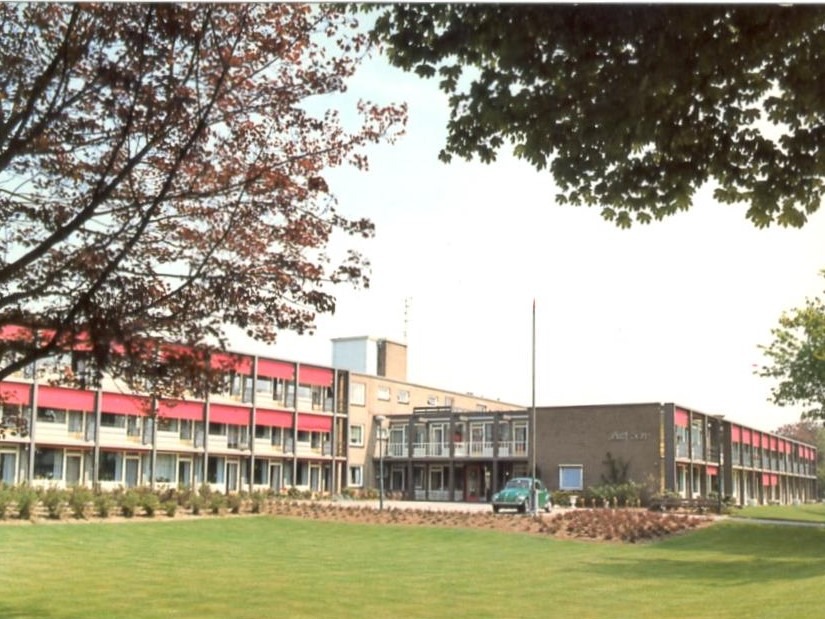
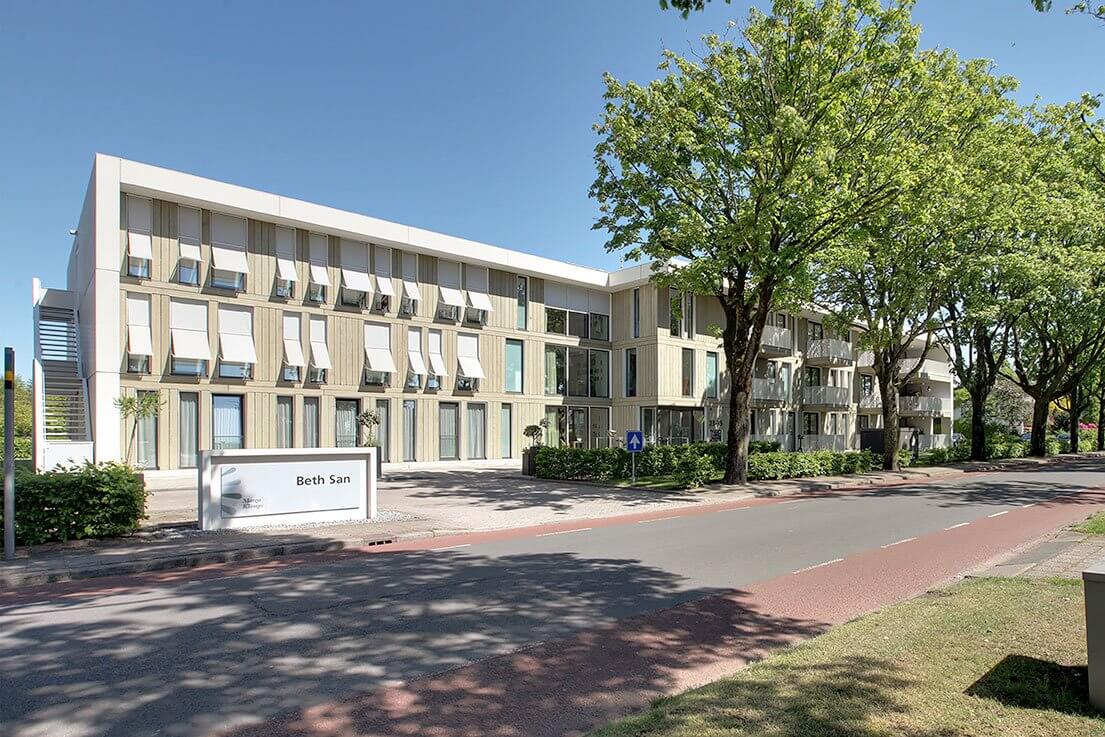
Beth San Residential Care Center on Ludgerstraat in Aalten was opened in 1960 as a ‘Reformed home for the elderly’. After fifty years, the complex no longer met the requirements of the time and the care center, along with the associated sheltered housing, was replaced by a new building. The opening of the new Beth San took place in 2013.
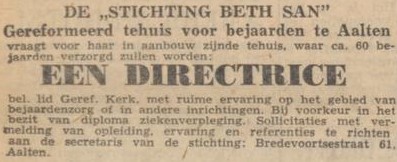
The initiative for Beth San came from the diaconate of the Reformed Church in Aalten. The name means ‘House of Rest’. In 1957, over 12,000 m² of land was purchased between Ludgerstraat and the section of Eligiusstraat that was yet to be constructed. The buildings were designed by architects Gjalt van der Zee (1901-1994) and Ir. Cornelis Veerling (1912-1997) from Bolsward.
The main building consisted of 63 single rooms, 4 double rooms, and 8 rooms for live-in staff. In addition, 12 sheltered housing units were built. The total investment amounted to over 1 million guilders.
At its opening in 1960, Beth San provided accommodation for more than seventy residents. The home was considered a modern facility for its time, featuring central heating and provisions for independent seniors in the sheltered housing units.
Renovation and New Construction
Five decades after its opening, the complex no longer met current standards. The complex was demolished and replaced by a new residential care center, which opened in 2013.
The new Beth San consists of two buildings with thirty apartments and five group homes for people with dementia. The group homes are small-scale in design and offer 24-hour care and support. Additionally, the center features a restaurant, an exercise garden, and spaces for activities and social gatherings, such as exercise classes for seniors (MBVO) and an internet café.
Next to Beth San, a residential building for independent seniors was erected, featuring thirteen apartments and an underground parking garage. This complex replaced the sheltered housing units that previously stood there.
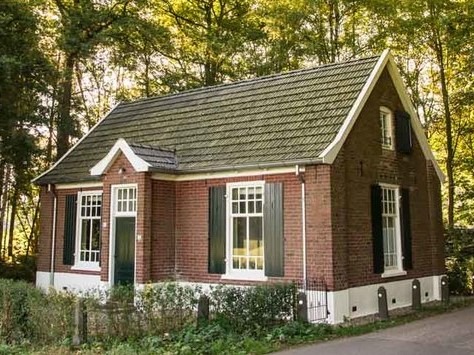
Former Sunday school dating from the early 20th century, restored and converted into a vacation rental.
In the nineteenth century, Rev. Breukelaar ensured that Sunday schools were established in Aalten. For children in the surrounding hamlets, Sunday school was held at someone’s home on a farm, so the children did not have to travel all the way to the village. Gradually, a need arose in these hamlets to build a local hall or zondagsschoolhuuske (Sunday school house). A total of nine small Sunday schools appeared, only a few of which have been preserved.
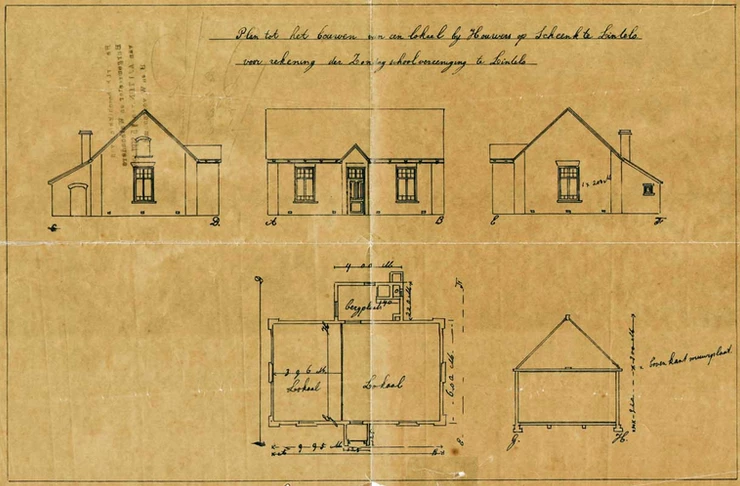
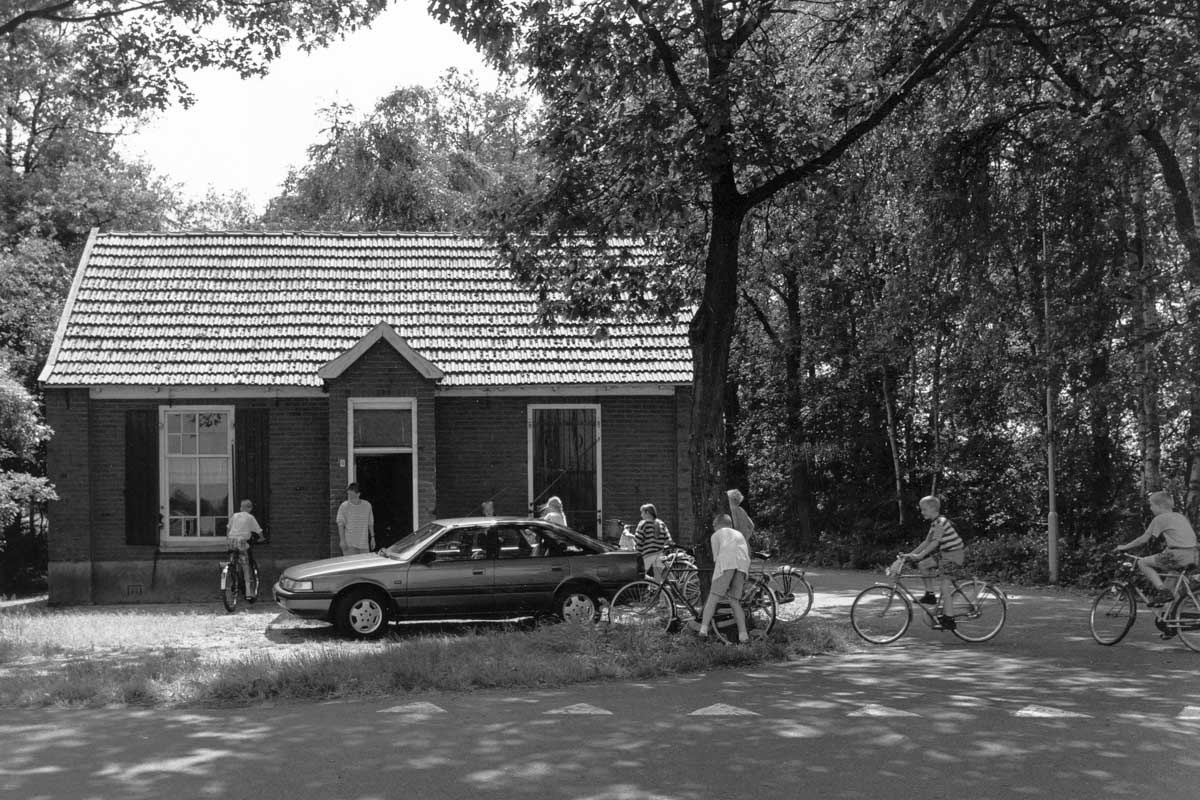
In the rural district of Lintelo, there were formerly two Sunday schools. In the centre of Lintelo, there was a small Sunday school on the Schooldijk, but this was demolished around 1950. The ‘Lintelo Veur’ Sunday school was built in 1924. Originally, the school had two rooms and was considerably more spacious than most Sunday schools in the municipality of Aalten.
Foundation
That the plans in Lintelo were serious was evidenced by the official publication in the Staatscourant (Government Gazette) regarding the establishment of the ‘Zondagschoolvereniging te Vóór Lintelo’ (Sunday School Association for Vóór Lintelo). At a meeting in May 1924, the 17 members present decided that a ‘hall’ should be built to be used as a Sunday school for children from Lintelo.
To build the hall, money and land were required. To raise funds, a collection was held in Lintelo as well as in the surrounding hamlets. Quotes were requested from various contractors. Initially, they considered a building with one large room measuring eight by five metres. Eventually, they decided the building should be larger—albeit more expensive—but, as the reasoning went, cheaper per square metre.
The building would have two rooms and a separate storage area. A second collection was held to raise additional funds. The necessary land was also found; for a symbolic amount, a small piece of land was acquired from the former Schenk farm, at the corner of the Veldweg and Sondernweg.
From 1925 onwards, the children came to ‘Lintelo Veur’ every Sunday. Each year at Easter, there was a larger children’s party. This continued until the war. During the war, the occupying forces confiscated the Sunday school for use as storage. The Sunday school was forced to be held on a farm again. Immediately after the war, the Sunday school was designated as emergency housing.
It took until the end of 1950 for the association to regain the building following a lawsuit. The building was refurbished and was ready just before Christmas. It was returned to use with a festive Christmas celebration. With this Christmas party, a new tradition was born that continued until the mid-90s: every child received a book annually during the Christmas party. A small notebook was kept to meticulously record which child had received which book and when.
Gradually, the number of children attending Sunday school declined. Over seventy years after the founding of the ‘Zondagschoolvereniging te Vóór Lintelo’, the decision was made to dissolve it at the end of 1995. The property was sold.
Listed
Five years later, in 2000, the Sunday school was placed on the municipal monument list because “it is a good example of a traditional school from the early 20th century. With its prominent location, it is of particular importance for the original character of the area. It is important for keeping the development of education in the municipality of Aalten in the twentieth century visible.”
The small building was subsequently used regularly for parties and as a rehearsal space for a band. However, the condition of the building gradually deteriorated.
Vacation rental
In 2008, the current owners began making plans. After consultation with the municipality, it turned out that a vacation rental was the most achievable scenario. However, the building was not insulated, and there was no upper floor. A thorough and sustainable approach was required. Work began in early 2012. Gradually, unexpected old elements reappeared, such as old doors with their characteristic green colour, the frames around the doors and windows, and the dark oak ceiling.
Today, the little school looks beautiful again and is available for overnight stays.
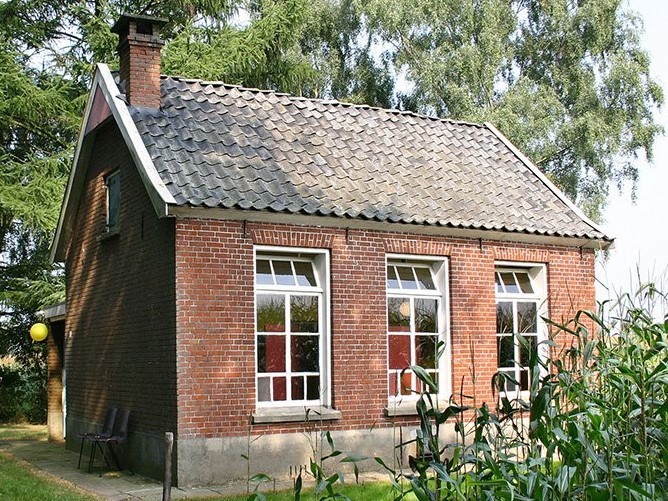
The small, single-classroom schoolhouse in the rural area between Aalten and the German border was built in 1924 on the initiative of the Reformed Church council.
This type of one- or two-classroom Sunday school building could be found in various hamlets throughout the Achterhoek region. In those days, the roads from these areas to the villages were often little more than simple cart tracks. Particularly in winter, these became nearly impassable dirt roads. Much of the land in this area had only recently been cleared for cultivation.
The plot of land on which the building stands was once part of a patch of forest (wasteland) that local farmers were in the process of reclaiming. An association of parents with school-age children purchased this piece of land and built the small schoolhouse using their own contributions.
In this Sunday school, a number of parents took turns telling stories from the Bible and teaching the children Christian songs. The number of children attending varied between 12 and 30. Rev. D. Breukelaar from Aalten and Rev. J. van Dijk from Doetinchem had a significant influence on this work.
Around 1925–1930, partly due to the emancipation movement, a girls’ association and a women’s association were founded. The girls’ association met there weekly, and the women’s association met once a month. At these meetings, the Bible was studied, but social topics were also discussed, such as the position of women in the church and in politics.
From 1945 until 1997, boys’ and girls’ clubs met here, discussing the Bible and/or themes relevant to young people. Both the Sunday school and the clubs operated under a Parents’ Association, which maintained the building. Due to various societal changes, all these associations eventually ceased to exist.
In 2005, the Geldersch Landschap & Kasteelen foundation received the Sunday schoolhouse as a donation from the Haart-Heurne Parents’ Association. In order to preserve the small building, a suitable new purpose was sought. Since 2009, it has been available for rent as a holiday home.
Hendrickje Stoffels or Hendrickje Jegers (Bredevoort, 1626 – Amsterdam, July 1663) was a domestic servant and art dealer. For a period, she was the official employer of the Dutch painter Rembrandt van Rijn. She was also Rembrandt’s romantic partner, the mother of one of his three daughters (all of whom were named Cornelia), and possibly one of his models.
Hendrickje Stoffels was born in Bredevoort in 1626 as the daughter of Stoffel Stoffelse and Mechteld Lamberts and grew up in the Muizenstraat. Her father was a sergeant under a captain from the Ploos van Amstel family. Stoffel was also a hunter for the castle at Bredevoort and was therefore also called Jeger. In common parlance, his children were called ‘Jegers’, but in official documents they were always referred to as ‘Stoffels’ (meaning son or daughter of Stoffel).
Hendrickje had one sister and three brothers: Martijne Jegers, Hermen, Berent, and Frerick. She may also have had a sister named Margriete.
Hendrickje’s father almost certainly passed away in July 1646, possibly as an unidentified victim of the gunpowder tower explosion in Bredevoort. It was likely due to this event that Hendrickje left for Amsterdam.
Rembrandt’s beloved
From that time on, Hendrickje entered service as a maid for the already famous painter Rembrandt van Rijn, in what is now the Rembrandt House on Jodenbreestraat in Amsterdam. On July 16, 1649, Hendrickje was back in Bredevoort; she is mentioned as a baptismal witness in the Bredevoort Baptismal Register. It is possible that Rembrandt made the journey to Bredevoort with her. This may be evidenced by several etchings by Rembrandt from 1649 and 1650, the locations of which are unknown.
Later, Hendrickje became Rembrandt’s partner, and in 1654 they had a daughter together, Cornelia. In 1658, she started an art shop together with Titus, Rembrandt’s son from his earlier marriage to Saskia van Uylenburgh, where they sold paintings, drawings, copper engravings, woodcuts, and curiosities.
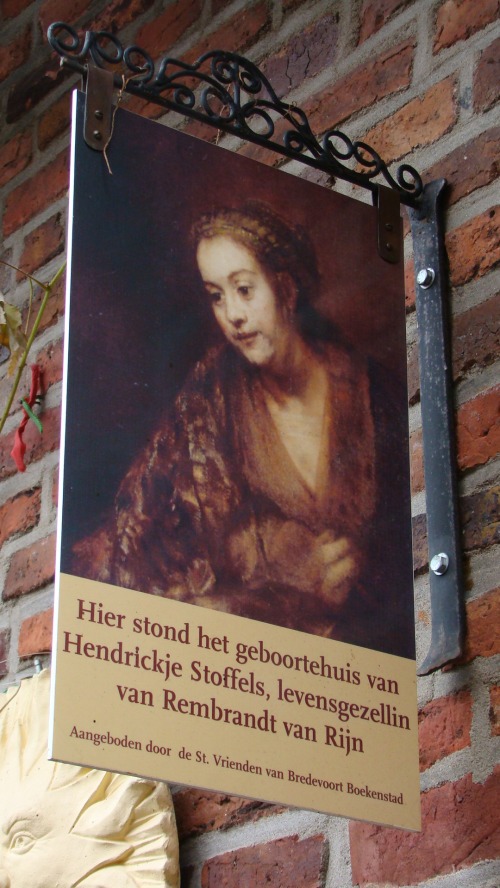
There are several paintings and prints by Rembrandt in which Hendrickje Stoffels is recognized. However, there is no single documented image of her. Furthermore, some experts believe that the portraits identified as Stoffels exhibit a wide variety of facial features. In any case, there are a number of works by Rembrandt from the period in which Stoffels lived with him that possibly depict the same woman.
In 1663, a plague epidemic struck Amsterdam. Hendrickje Stoffels was likely also fatally affected by this disease, as she died in July of that year. She was buried on July 24, 1663, in a rented grave in the Westerkerk in Amsterdam.
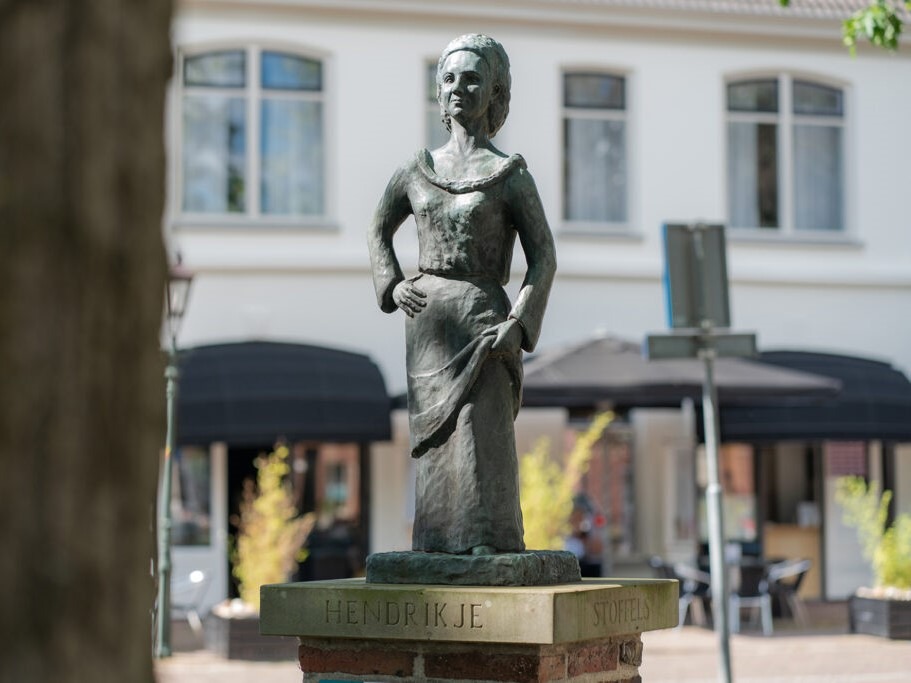
Statue Hendrickje Stoffels on ‘t ZandPlaque at the birthplace of Hendrickje Stoffels in Muizenstraat
Statue on ‘t Zand
On ‘t Zand in Bredevoort stands a statue of Hendrickje Stoffels, created by sculptor G.J.F. (Truus) Doodeheefver-Kremer. Before creating the statue on ‘t Zand, the artist conducted research, including at the Rijksmuseum, and chose to depict Hendrickje around the age of twenty, the period when she left Bredevoort for Amsterdam. The statue was unveiled on July 7, 1977.
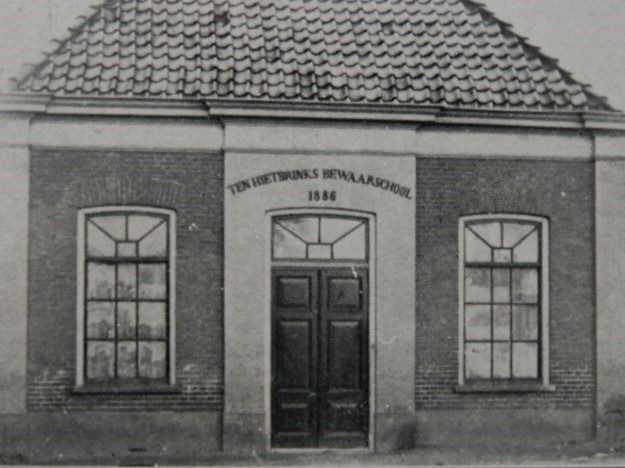
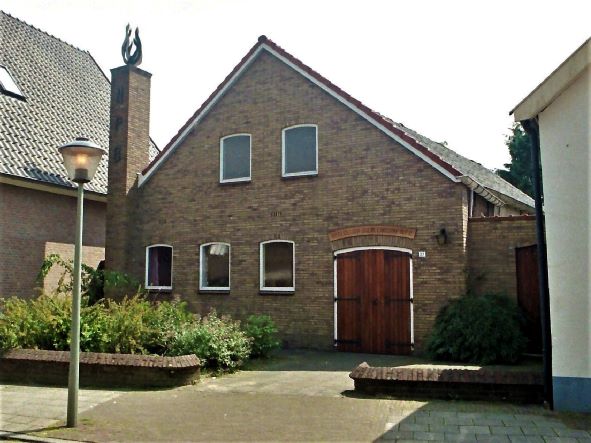
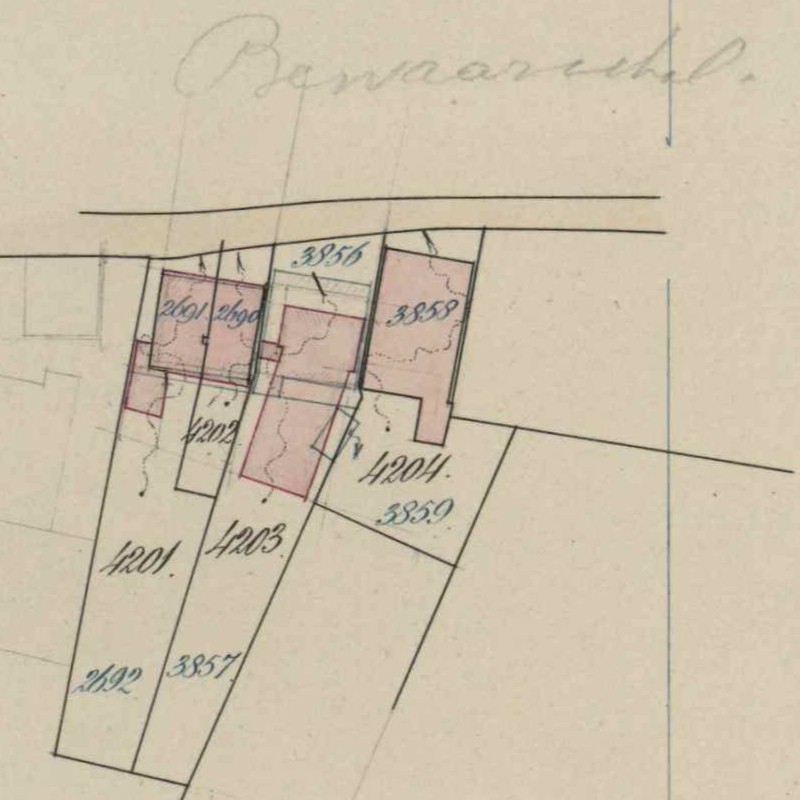
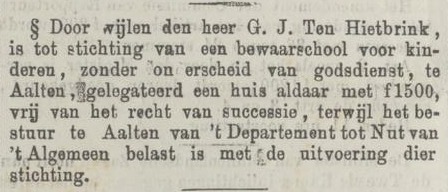
The Ten Hietbrink Bewaarschool was a nursery school in Prinsenstraat in Aalten. The school was named after the Ten Hietbrink family, who were closely involved in its inception and management. Later, the Nederlandse Protestantenbond (Dutch Association of Protestants) held its church services here. Today, the address houses the Euregional Historical Documentation Centre.
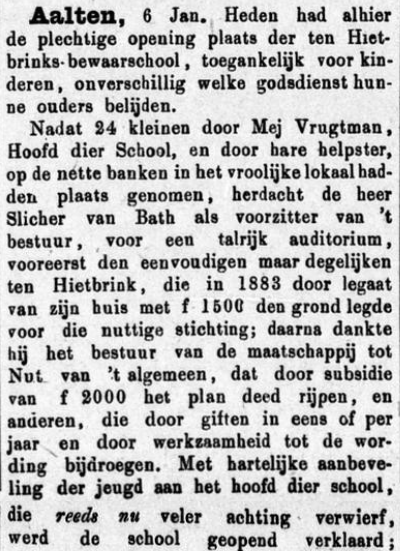
The nursery school was opened on 6 January 1887, at a time when the first forms of early childhood education were increasingly gaining ground in the Netherlands. Before then, children were often not admitted to primary school until they reached the age of six.
The little school possessed one large classroom with a wooden floor, a sandpit behind the building, and simple play materials, such as car tyres. Behind the school stood a shed which also formed part of the play area.
War Years
During the years of the German occupation (1940–1945), the measures taken against Jewish residents also affected the Ten Hietbrink Bewaarschool. Jewish children attended the school until 1941, but from 1 September 1941, they were compulsorily expelled, in line with the anti-Jewish decrees.
School Life
Memories from former pupils provide a picture of school life during the 1940s and 1950s:
The head of the school was Miss Stokreef; alongside her, Miss Annie is also mentioned.
Strict discipline prevailed, described by former pupils as “potty-discipline”.
In addition to learning and playing, school trips were also organised, for instance in 1946 to the Loohuisbos.
Owners
Overview is incomplete.
Year
Plot
Owner
Description
1832
I-1059 I-1060
Hermanus Hietbrink, labourer
148 m² house & yard 17 m² house
1882
I-3714
Gerrit Jan ten Hietbrink, merchant
185 m² house & yard
1888
I-4203
The Departmental Nursery School of the Departement tot Nut van ‘t Algemeen
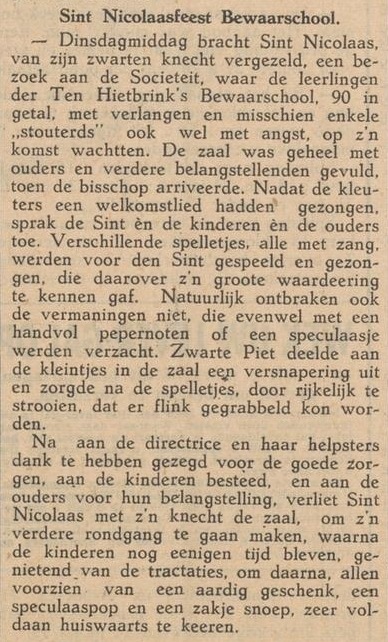
Building of the Dutch Association of Protestants, AaltenExcerpt from cadastral map, 1888 (plot I-4203)Arnhemsche Courant, 8 December 1883Graafschapbode, 8 January 1887Aaltensche Courant, 8 December 1939
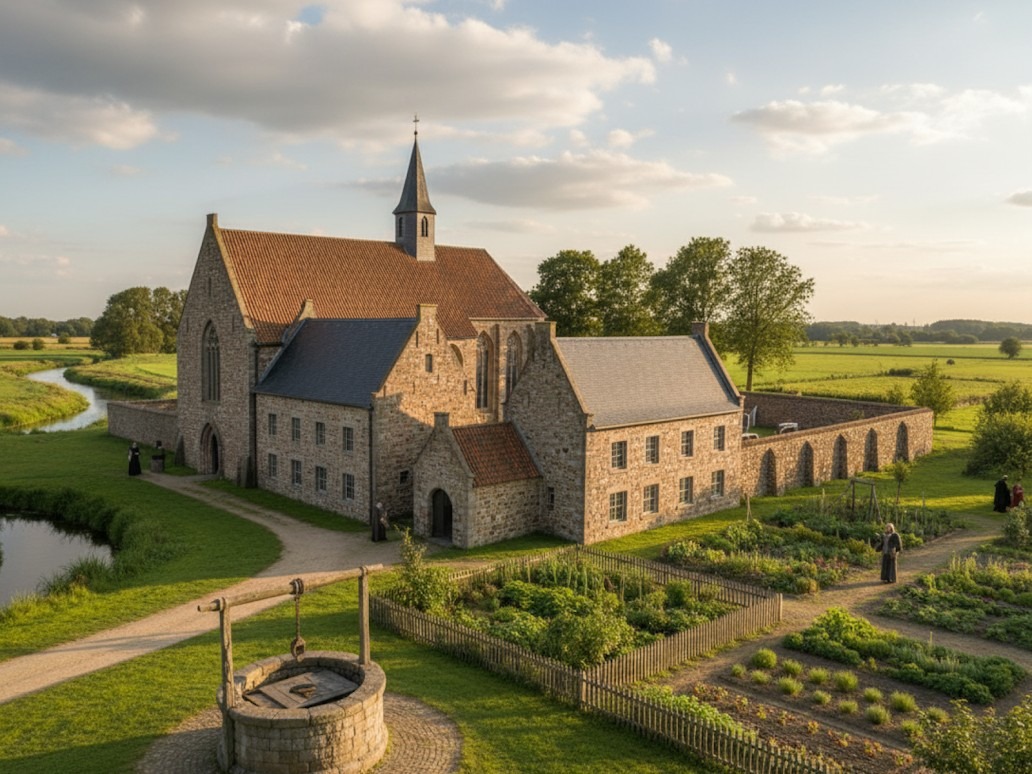
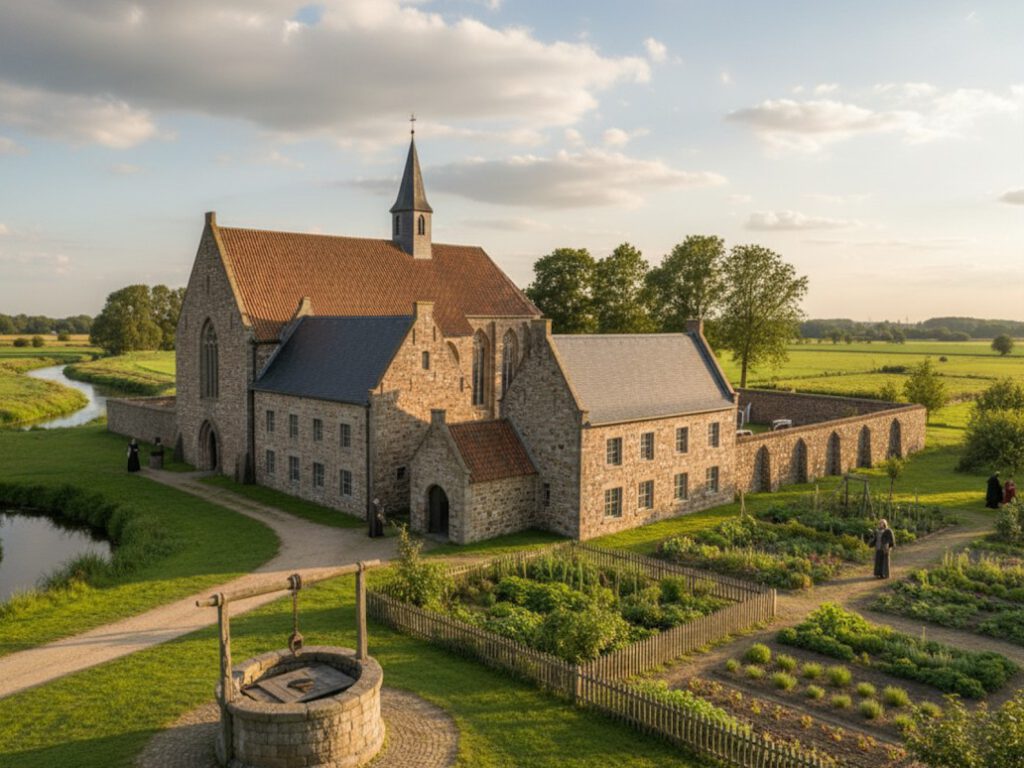
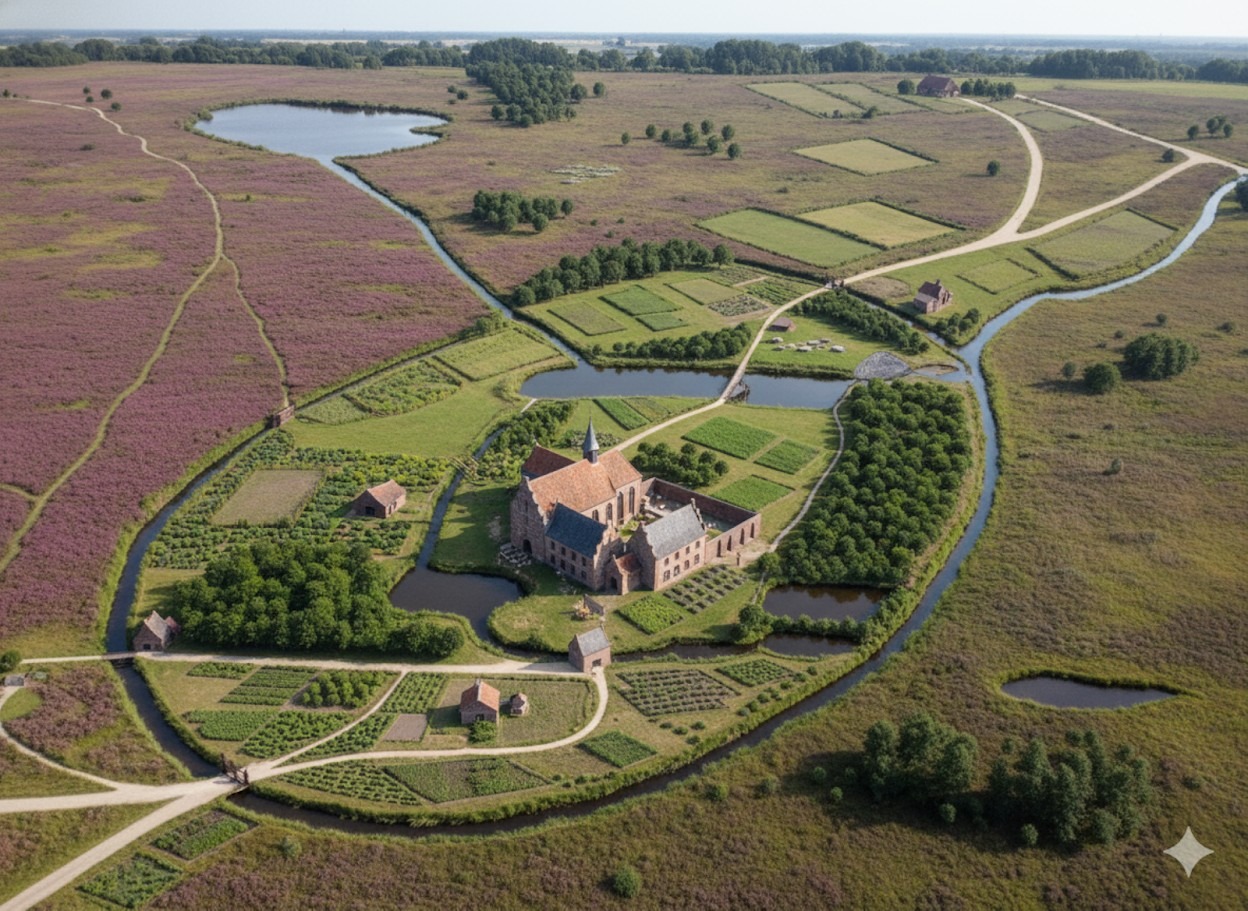
Illustration of Schaer Monastery near Bredevoort based on a reconstructed floor plan using historical sources and archaeological data, created with AI by Paul van Druten.
Schaer Monastery was a monastic house near Bredevoort, founded in 1429 and belonging to the order of the Modern Devotion. It was located in the hamlet of ’t Klooster, approximately two kilometres north of Bredevoort, on the left bank of the Schaarsbeek.
The pious nobleman Derck van Lintelo and Conraedt Slindewater, clerk to the Drost of Zutphen and originating from a prominent patrician family from the Hanseatic city, donated land and farms in 1429 to displaced monks from Windesheim, near Zwolle.
The Windesheimers belonged to the late-medieval movement of the Modern Devotion, which had emerged under the leadership of Geert Grote (1340–1384) in Deventer. From the IJssel cities, this reform movement spread across Western Europe and led to the founding of more than a hundred monasteries. The Modern Devotion strove for the renewal of church and society, forming a transition between the Middle Ages and the early modern period.
Foundation
The Windesheimers preferred to settle in remote locations. The donation of land near the Schaersvoorde—in the current hamlet of ’t Klooster—in 1429 fitted this preference well. It was a high-lying area on the edge of the vast Schaersheide, bordering the low-lying and marshy Bredevoortse Broek. Using the clay present just below the surface, the monks baked their own ‘kloostermoppen’ (monastic bricks).
The monastery, Domus Beatae Mariae in Nazareth (House of the Blessed Mary in Nazareth), rose shortly thereafter. It was popularly known as Schaer Monastery, named after the heath on which it was situated. The residents were soon actively involved in the care of young students and the improvement of the living conditions of the local population.
Prayer and work defined daily life for the Windesheimers. Through diligent labour, the monks managed to reclaim the immediate surroundings of the monastery. By 1500, it was a fertile, egg-shaped oasis in the wilderness, with Nazareth as its centre, surrounded by an outer moat.
In 1522, several improvements were made. The monastery’s clockwork and chiming bell were transferred to the Saint George’s Church in Bredevoort in 1596—where the bell still hangs today.
Legend and Gold Treasure
In 1597, when the army of Prince Maurice was on its way to Bredevoort, the last prior of Schaer Monastery fled. The remaining monks also found it safer to seek refuge elsewhere. Shortly thereafter, the abandoned monastery was destroyed by marauding soldiers.
Since then, the story has circulated that the fleeing monks hid a treasure in the ground—under the third holly bush behind the sheepfold. However, no one remembers exactly where that sheepfold once stood. According to legend, the treasure will one day be found again, indicated by ‘heavenly signs’: a strange light will appear in the sky until a black rooster crows.
On the night of 13 to 14 September 1943, an unusual light was indeed observed: a moonbow. There were many bombers in the air that night, meaning many people were awake to witness this rare phenomenon. Whether a black rooster also crowed that night is unknown.
Size
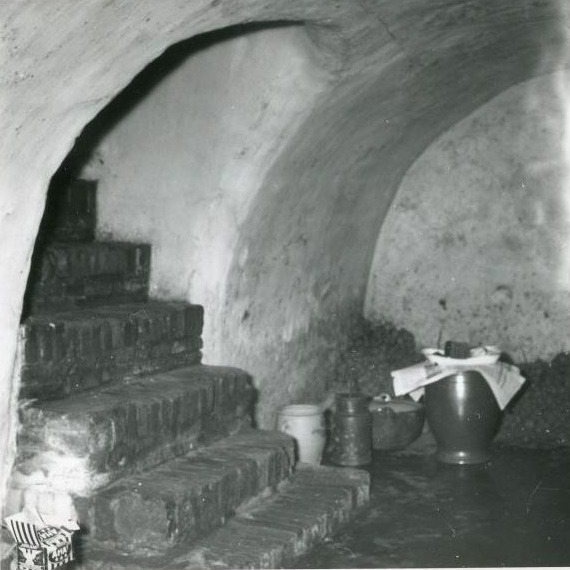
Field and archival research shows that Schaer Monastery was of modest size. The perimeter of the monastery grounds is easily traceable: field names are still recognisable, and remains can be found on a farmyard. At the beginning of the twentieth century, a crucifix and a skull were discovered during excavation work. Furthermore, the so-called Kloosterschans (Monastery Redoubt) is still located on the site. In 1978, the last above-ground wall remains were demolished, but a monastery cellar with a barrel vault still exists beneath the local farmhouse.
The oval monastery area—also called the corpus—covered approximately 118 hectares and showed a height difference of over ten metres from west to east. The monks made optimal use of the relief, the water, and the soil conditions. Seepage and rainwater, as well as water flowing from the high Schaerheide, moved just below the surface over impermeable clay layers towards the Bredevoortse Broek. The monks threw up a dyke straight through the area to dam the water and utilise it to power a corn and oil mill.
With a system of interconnected waterways and ponds, the monks kept their feet dry and prevented the water from flowing unused into the low marshlands. On the east side of the monastery complex, they created a remarkable piece of earthwork: the Eremus in Aquis—literally ‘the wilderness in the waters’—a hermitage on the edge of the marshy Bredevoortse Broek. The moats around this hermitage served as water storage.
Remains
After the destruction of the monastery in 1597, the lands became overgrown with heath and coppice. The monastic bricks from the complex were partly reused for the repair of fortifications and houses in Bredevoort. The monastery’s possessions were confiscated by the Duchy of Guelders. The Eremus in Aquis may have been used as a redoubt during military operations around Bredevoort in later years. In 1672, the west wing of the rectangular monastery complex was still standing.
With the seizure of the monastery area, the landscape took on a second historical layer: the planting of timber plantations. Guelders leased the lands for the production of oak wood. Around 1700, work began on the necessary drainage. Straight channels drained water quickly into the Schaarsbeek, and the same stream—once part of the outer moat—was straightened towards Bredevoort to supply the town’s moats with water. The waterways near the Eremus in Aquis silted up, and so-called rabatten (narrow raised beds) were laid out on the former monastery grounds to plant young oaks.
Due to several very harsh winters, the first plantings failed. Guelders then decided to sell the monastery area. The new owners continued the forestry following the same system of rabatten and drainage. The current 25-hectare Kloosterbos (Monastery Forest) still preserves the traces of the late-medieval water management system once laid out by the monks of Schaer.
Archives
Verpondingskohier (tax register), 1647
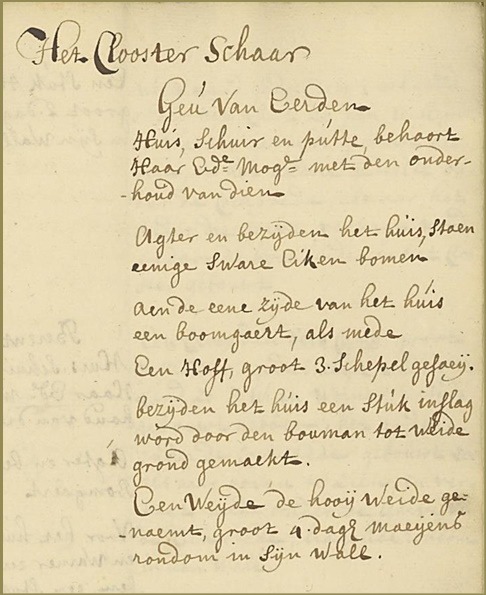
t’Clooster te Schaer en sijn becirck?, Geestl. 2 Huisen, met etlicke koolhoven, 3 sch. Boulant 27 mdr., 3de gerve 225 – 0 -. Inslagh en hoeijmate van 4 daghen meijens, slechten waterigen gront.
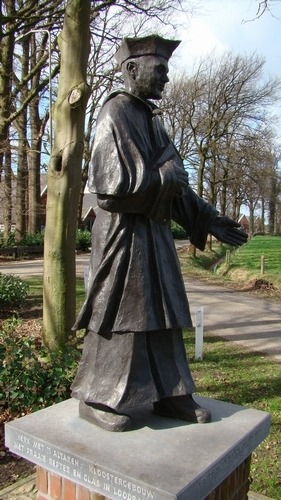
Illustration of Schaer Monastery near Bredevoort based on a reconstructed floor plan using historical sources and archaeological data, created with AI by Paul van Druten.Monk by sculptor Jan te Kulve. Canon of Schaer Monastery in the habit of his Order. [Source: tekulve.nl] Lease register of Schaer Monastery, 1786Cellar of the former Schaer Monastery
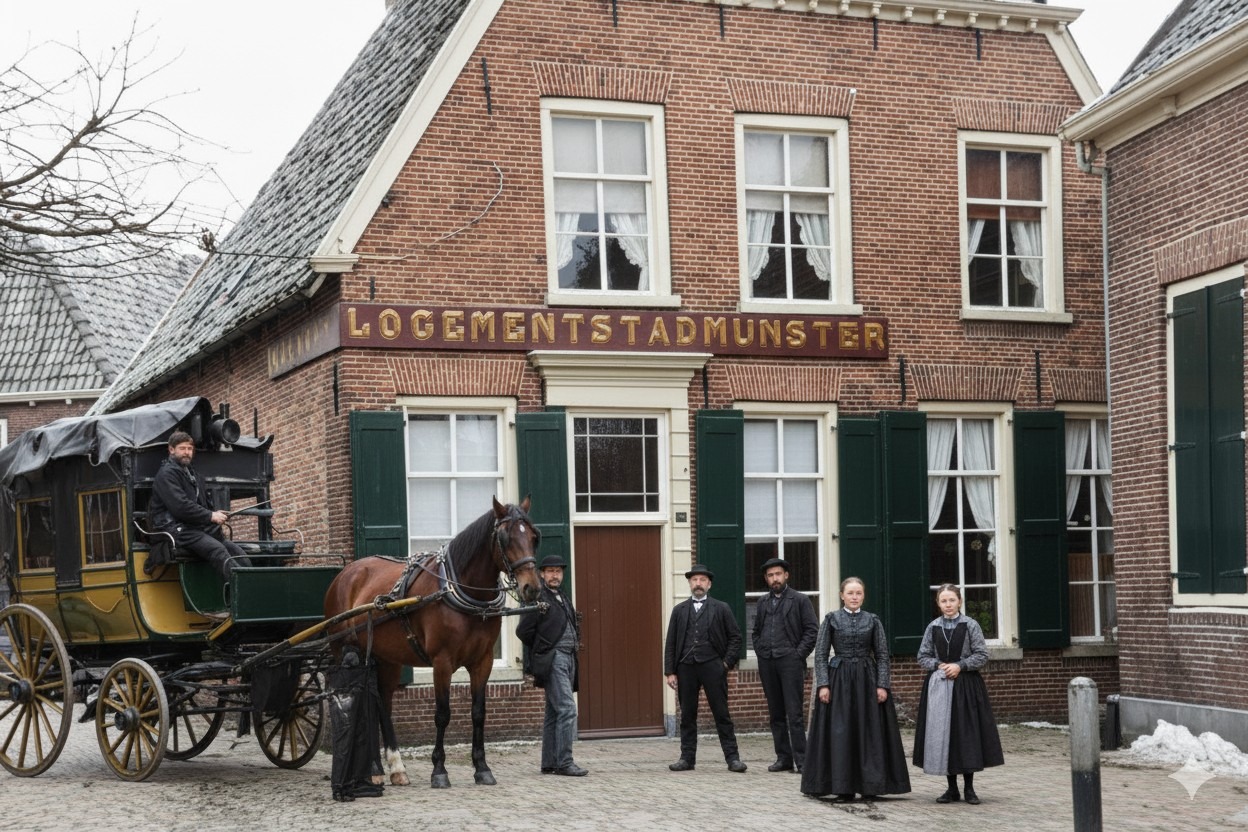
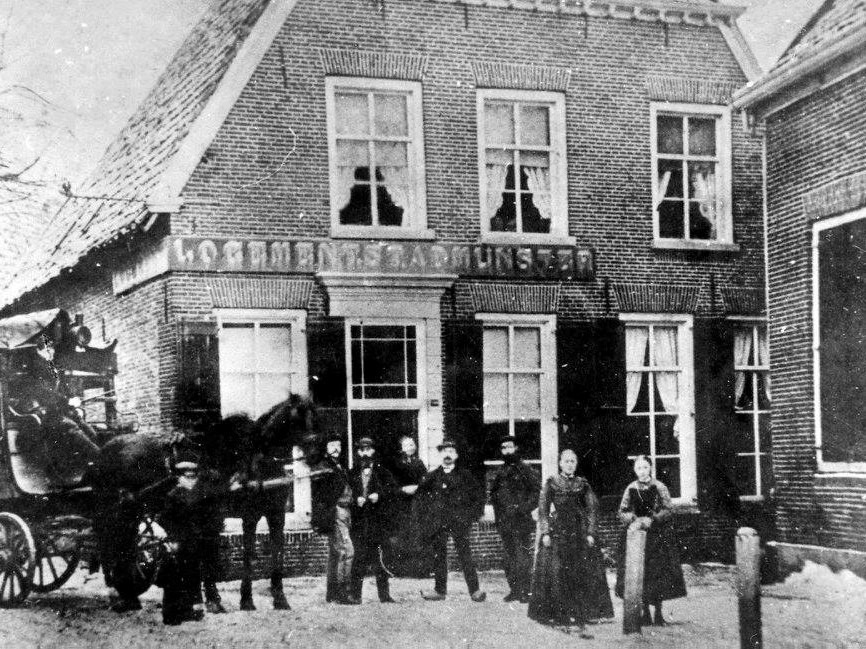
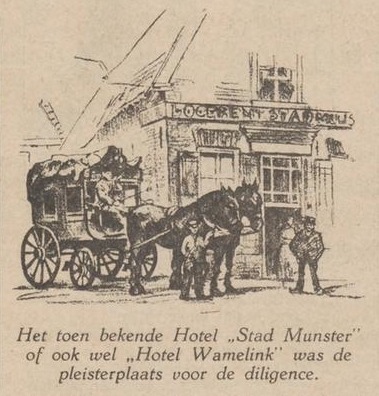
Stad Munster Lodging House in Peperstraat, Aalten (image AI-generated based on an old photograph).
Stad Munster Lodging House was once an important rest stop for travellers and mail coaches. It stood in Peperstraat, situated between the former post office and ‘De Postiljon’, opposite Stegers. Following the municipal reorganisation of 1816, it briefly served as a courthouse (Rechthuis). In 1873, the building was completely destroyed by fire and was never rebuilt.
A Coaching Inn for the Diligence
In previous centuries, when the mail coach—or diligence—was the official mode of transport, ‘Logement Stad Munster’ (also known as ‘Hotel Wamelink’) functioned as a coaching inn for the diligence and a place of rest for weary travellers. Those embarking on a long journey who could afford it would board at Hotel Wamelink, after which the journey continued, jolting and bumping towards its destination. Those with less to spend put on their ‘steffels’ (boots) and undertook the journey on foot; a walk to Arnhem or Zutphen was no rarity in those days. People had the time. Stad Munster welcomed travellers of all kinds, such as a manufacturer from Armentières in France, a merchant from Stadlohn, and a clerk on foot from Oosterwijk. Three English factory workers from Manchester, Ashton, and Oldham once stayed there for two months.
The Wamelink Family
In 1823, Johanna Maria Martha Mensinck was registered at this address as the lodging house keeper. She was the widow of Gerrit Jan Wamelink, who had passed away in 1822. Johanna died in 1854. Their son, Lambertus Hermanus Wamelink, continued the business. In 1852, at the age of 39, he had married Johanna Catharina Heming. After her death in 1854, he remarried Wilhelmina Louisa Hendrina Meijrink in 1856.
Fire
On 2 April 1873, a violent thunderstorm broke out over Aalten. Labourers in the fields fled into barns and garden sheds. Thunder rolled incessantly and lightning filled the sky. Suddenly, a loud crack was heard, and shortly thereafter, everyone could hear the tolling of the fire bell in the church tower above the sound of the rain. A lightning strike had hit the building next to the lodging house, which was occupied by Mr Van Eerden and the national tax collector, Mr Boudewijn.
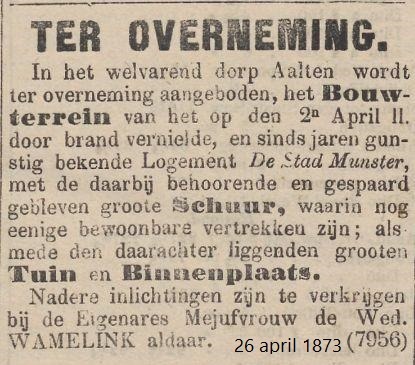
By the time the fire wardens arrived, both buildings were engulfed in flames. The fire engines could do little against such a blaze. The old lodging house—the pride of the Wamelinks, who had lived there since the beginning of the 18th century—burnt to the ground, as did the adjacent house on the corner of Kerkstraat. The lodging house was never rebuilt, and the site has remained an open passage between Peperstraat and Het Hoge Blik ever since.
Owners
This overview is incomplete.
Year
Plot
Owner
Description
1832
I-1152
widow of Gerrit Jan Wamelink
490 m² house, barn
1858
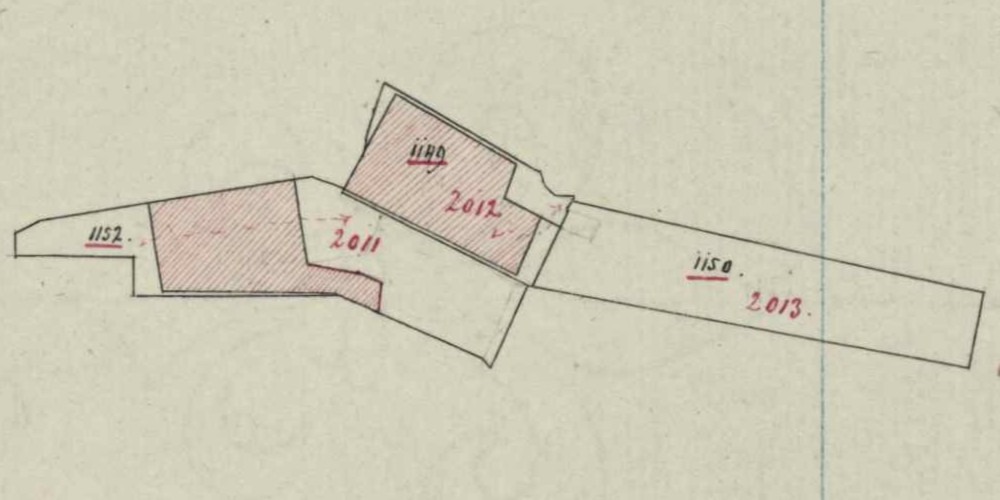
I-2011 I-2012
widow of Gerrit Jan Wamelink heirs of Lambertus Hermanus Wamelink
490 m² house, yard 260 m² barn, stabling
1863
I-2011 I-2012
Wilhelmina Louisa Hendrina Meijerink, lodging house keeper
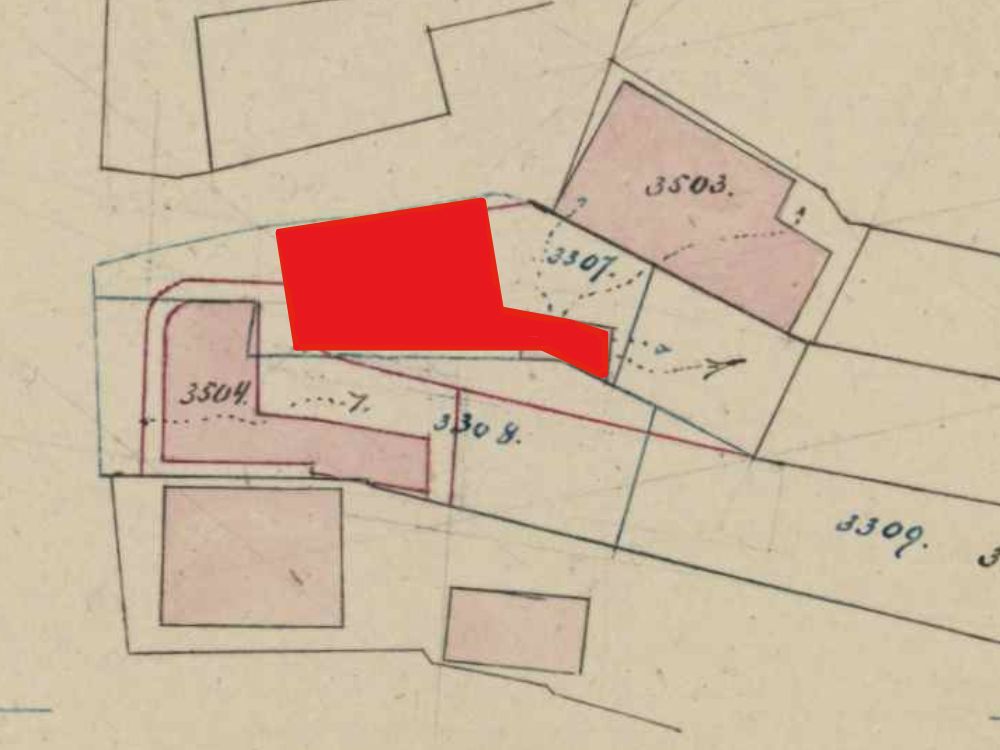
Fragment cadastral map, 1858 (plot I-2011)Contours of the former Stad Munster Lodging House, taken from a cadastral auxiliary map from 1858, projected onto a map from 1879.Illustration: Piet te LintumDe Tijd, 26 April 1873
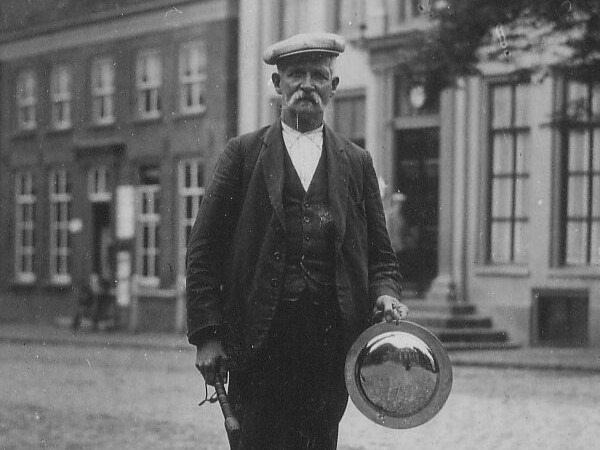
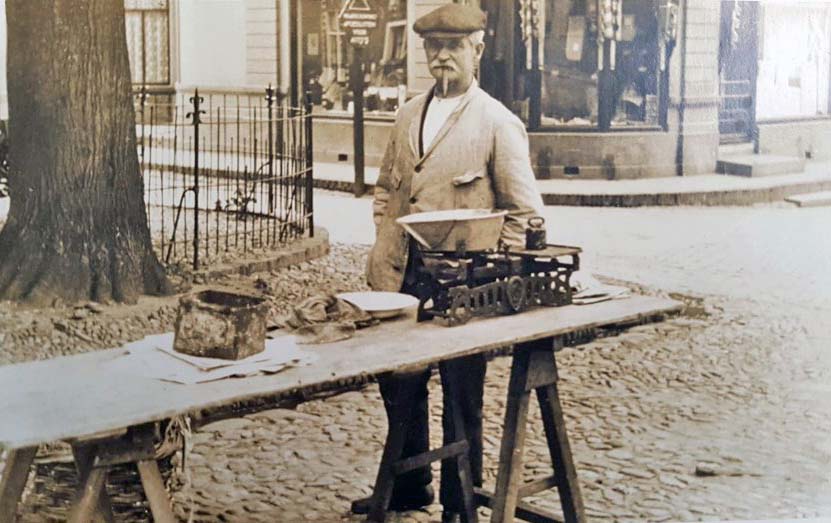
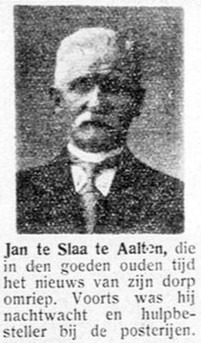
Town crier, better known as ‘Jan met de panne’ (Jan with the Pan)
Arent Jan te Slaa (known as Jan) was born on 22 March 1870 in Aalten, at house number 152 (Varsseveldsestraat 3), the son of Derk Hendrik te Slaa (a night watchman) and Janna Willemina te Brake. On 29 August 1895, he married Dina Geertruida Klein Hesselink (from IJzerlo, 13 September 1871) in Aalten. The couple went to live at Hofstraat 3. They had six children.
The latest news
In the 19th century, very few residents of Aalten could afford to have a newspaper at home. Those wealthy enough to do so could almost every evening count on neighbours dropping by to hear the latest news. This visit did not have to be for nothing, however: guests would usually leave a block of peat under their chair as a token of appreciation.
As was common in many places, upcoming auctions were announced outside the church on Sunday mornings following the service. Usually, the schoolmaster would do this, standing on a small bench or a large stone. For official announcements from the municipality, a large noticeboard stood on the Market Square (Markt) in Aalten. For many years, new public notices were heralded by the tolling of the church bell, but this practice was abolished in 1901.
Town crier
Meanwhile, the first town crier was already doing his rounds in the village. In 1868, this was D.H. te Slaa, who, together with B.H. Wieskamp, fulfilled the role of night watchman. That they also acted as criers is evident from a note by the Mayor and Aldermen (B&W) dated 19 February 1876, in which the gentlemen were reprimanded for not going far enough. Aalten was growing, but the criers’ routes were failing to expand alongside it.
When Te Slaa passed away in 1903, he was succeeded as night watchman by his son Jan. At the time, the role of crier was not yet an official appointment, although he did already act as such. Jan te Slaa did not receive this official appointment until 1 January 1915, “and this at an annual salary of 10 guilders”.
Jan met de Panne
Through his manner of performing his duties, he acquired an almost legendary fame. To capture the public’s attention, he would strike a copper basin vigorously several times with a wooden clapper; this basin earned him the nickname ‘Jan met de Panne’ (Jan with the Pan). When the local residents came outside to hear ‘what was on the pan’, he would proudly deliver his message standing up straight.
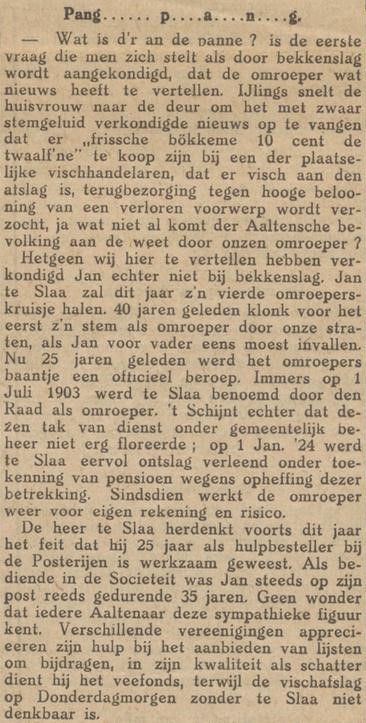
At regular intervals, he made his rounds through the village to cry out the joys and sorrows of Aalten. He also announced the sale of meat from emergency slaughterings, made public the notices of the notary, and much else besides. He even proclaimed retailers’ special offers, such as a local fishmonger selling twelve kippers for 10 cents. He was, in a sense, a walking edition of the local Aalten Vooruit newspaper.
In early 1918, the municipal council was requested to have the crier “proclaim the news of the day in the outlying districts as well”. Crier Te Slaa stated in response that for his meagre fee of 30 cents per proclamation, he could not venture into the outlying areas, “as Aalten continues to expand, and he would very gladly satisfy all who wish to hear, provided his fee is doubled”.
On 9 November 1924, the Mayor and Aldermen of Aalten decided to abolish the position of town crier. With the dismissal of Jan te Slaa—who “owing to the abolition of the post was granted an honourable discharge as crier in Aalten”—a striking figure vanished from the village streetscape, and a characteristic piece of village life was lost.
Following his discharge, Te Slaa did continue to cry on behalf of private individuals, and this practice—though carried on by his successors—continued until after World War II.
The original pan has been given an honoured place in the Nationaal Onderduikmuseum on the Market Square in Aalten. ‘De Panne’ is also the name of the museum’s biannual magazine, named after the illustrious town crier.
‘Jan met de panne’ on Markt square in AaltenAlso on Markt squareAaltensche Courant, 25 May 1928‘Those who left us in 1935.’ – De Graafschapbode, 30 December 1935
Death
Jan te Slaa passed away on 6 August 1935 and is buried at the Old Cemetery on Varsseveldsestraatweg in Aalten.
Following his death, the Aaltensche Courant wrote:
Jan te Slaa †
On Tuesday afternoon, Mr A.J. te Slaa passed away here at the age of 65. With the passing of Jan te Slaa, a well-known figure leaves our community. Older residents will surely still remember Jan as he walked through the village, armed with pan and clapper, crying out the news. To the question: “Jan, what is amiss with the pan?” he always gave a kindly reply.
He also rendered his services to our municipality for many years as a night watchman. At New Year, the inhabitants were offered a Zutphen Almanac for sale along with the best seasonal wishes; through the price one chose to pay for this, one could simultaneously express appreciation for the work of the night watchmen.
The scope of Te Slaa’s activities was highly varied. For instance, until a few years ago, the deceased also functioned as a gravedigger and was an auxiliary postal delivery man. His role as a fish auctioneer, dating from the years of wartime mobilisation, was later continued by him in the form of a fish stall at the Thursday morning market.
Various local societies availed themselves of his services as a messenger or debt collector, whilst at important celebrations, particularly at the Sociëteit club, Jan was always the most popular waiter. For many years, he held a position on the board of the Aalten Cattle Fund (Veefonds). Since his fall from a bicycle a few years ago, Jan was never quite his old self again, and thus a well-known Aalten resident has now departed from us.
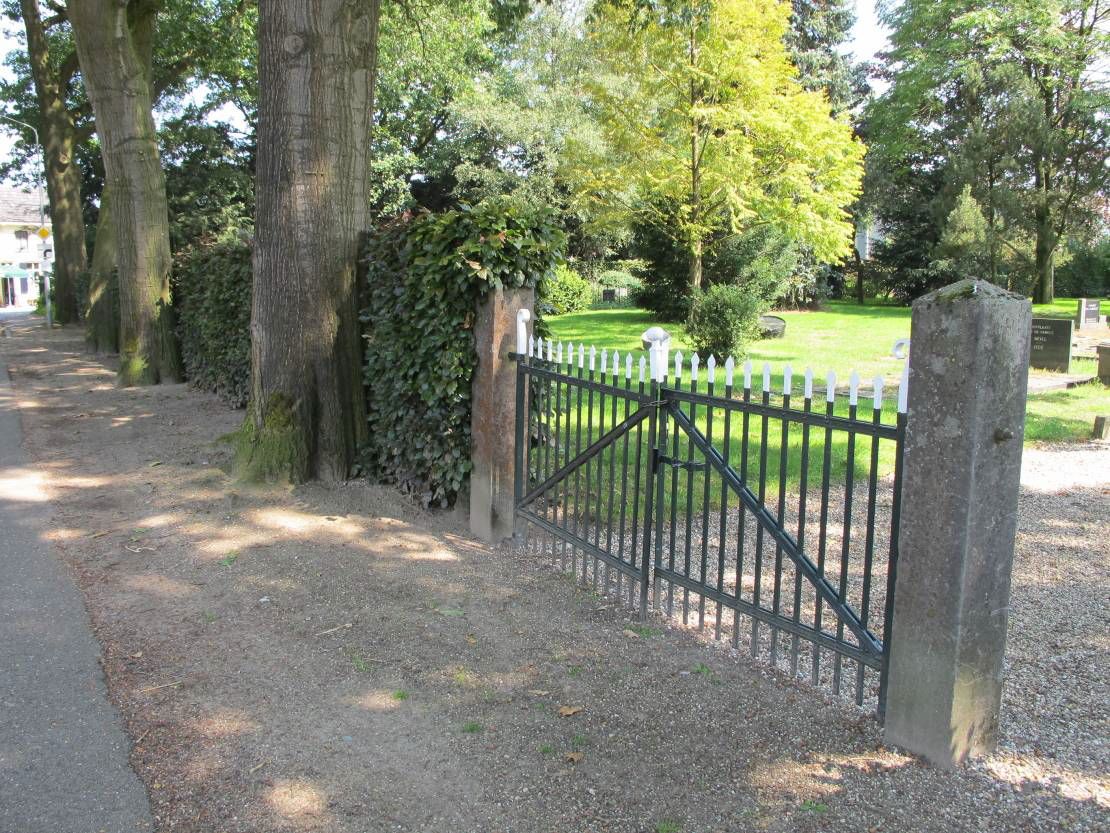
The Old Cemetery on Prins Mauritsstraat in Bredevoort was established around 1830, concurrently with the adjacent Jewish Cemetery. The site became available following the dismantling of the fortifications on the eastern side of the town.
The cemetery is characterised by an irregular floor plan, surrounded by beech hedges and tall trees. The oldest section is situated directly along Prins Mauritsstraat. In 1925, the southernmost strip was added to the cemetery. At the same time, a new entrance gate was installed, and a mortuary was built a few years later.
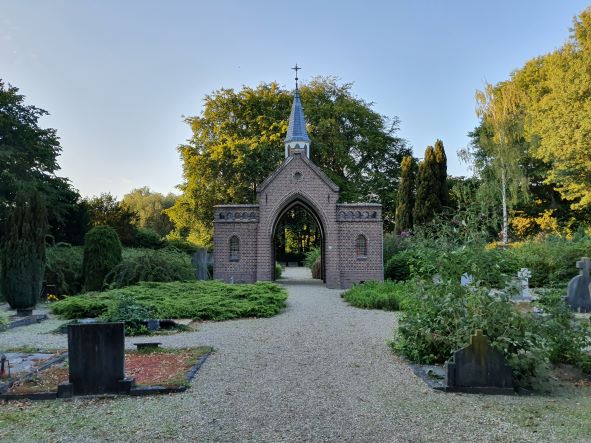
The Kloosterhof Cemetery on the Kloosterdijk in Bredevoort was laid out in 1862–1863 and originally served as a Roman Catholic cemetery.
The oldest, centrally located section features a symmetrical layout with a distinctive entrance gate, a mortuary that also functions as a workshop, and rows of graves facing a Calvary Cross at the rear of the site.
In the 1980s, the cemetery was extended with a general section. In 1989, a mortuary building was also erected, providing facilities for the deceased to lie in state, for families to pay their last respects, and for offering condolences.
In 2024, the Municipality of Aalten announced that part of the cemetery would be designated as a natural burial ground. This development aligns with modern wishes and needs regarding burial.
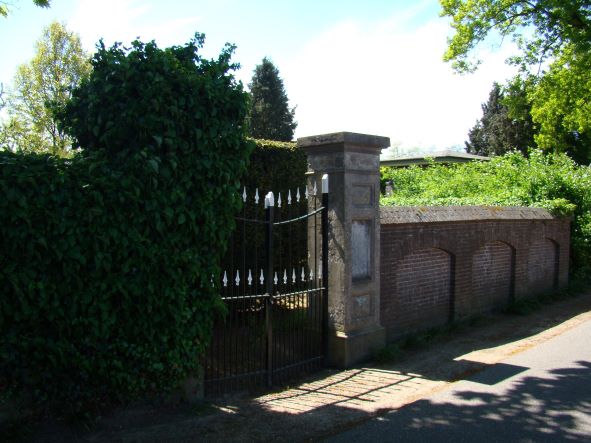
The Jewish Cemetery on Prins Mauritsstraat in Bredevoort was established around 1830, concurrently with the adjacent general cemetery. The site became available following the dismantling of the fortifications on the eastern side of the town.
The last Jews from Bredevoort to be interred at this cemetery were siblings Levi and Sara Sander. Both passed away in 1938, shortly after one another. The cemetery is not open to the public.
Two Jewish cemeteries
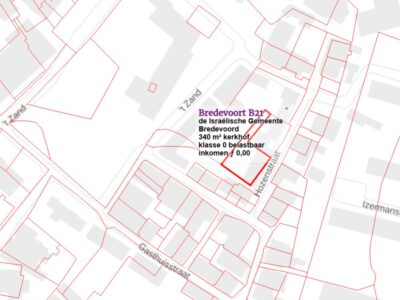
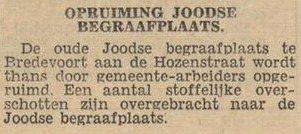
Bredevoort once had two Jewish cemeteries. The oldest was located on the former castle grounds behind Hozenstraat 5. In 1953, this site was sold to the municipality of Aalten for housing construction. The remains and tombstones were then transferred to the second cemetery on the Prins Mauritsstraat.
Location of the former Jewish cemetery on Hozenstraat
Maintenance and Restoration
Initially, the cemetery was maintained by the municipality. Since 2018, volunteers from the Bredevoorts Belang association have been responsible for mowing the grass and keeping the walls and the 12 gravestones free of climbing plants. In 2022, restoration work began to repair cracks in the walls, renew the pointing, and refurbish the gate.
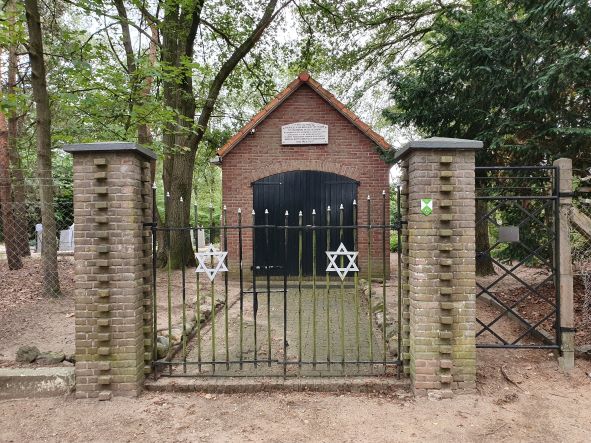
The Jewish cemetery of Aalten, located on Haartsestraat, has a rich history dating back to the beginning of the 19th century. Although the site officially became the property of the Jewish community in 1852, there are indications that the cemetery had been in use since approximately 1820.
The cemetery is situated in a wooded area and is enclosed by sturdy fencing. The older section consists of a low, densely wooded hill with scattered funerary monuments. To the east lies the newer section, which is characterized by an orthogonal layout.
There are approximately seventy gravestones on the grounds, varying in age and design. At the entrance on Haartsestraat stands a metaheerhuis (mortuary), a ritual building used for the purification of the deceased according to Jewish traditions.
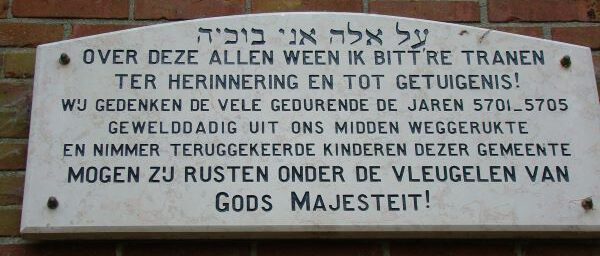
During World War II, the cemetery was damaged, but it was restored after the war. In memory of the Jewish children from the municipality who were deported and killed during the war, a plaque has been placed on the facade of the metaheerhuis.
At the beginning of the 20th century, the Old Cemetery on the Varsseveldsestraatweg became increasingly enclosed by the expanding development of the village of Aalten. This made the establishment of a new general cemetery necessary.
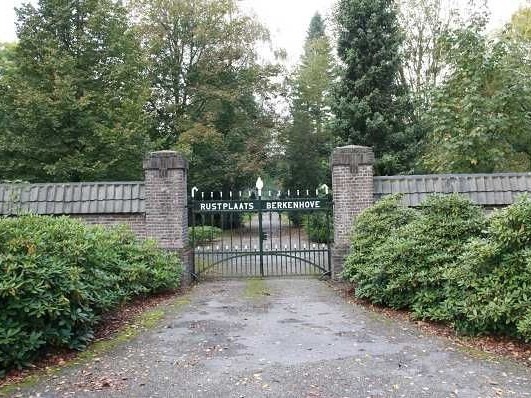
In 1920, the municipality purchased the Oosterman farm near ’t Walfort with the intention of creating a new general cemetery there. This plan ultimately did not proceed. Instead, a suitable site was found on the Romienendiek, where the ‘Berkenhove’ cemetery was brought into use in 1923.
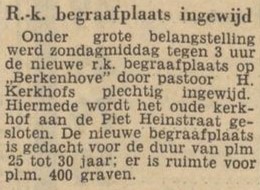
The original section of Berkenhove is enclosed between Romienendiek, Barloseweg, and Koningsweg. Over the years, the cemetery has been expanded regularly. In 1960, a Catholic section was added because the Roman Catholic cemetery on Piet Heinstraat had reached capacity. The new Roman Catholic cemetery was consecrated by Father Kerkhofs. The priest himself found his final resting place there in 1964.
The oldest part of Berkenhove features an orthogonal layout, with rows of graves along a central path, surrounded by a rich variety of trees and shrubs. The cemetery was later extended to the northern side of the Koningsweg.
Funeral Centre and Crematorium
Located at Berkenhove is a modern funeral centre and crematorium, managed by GUV. In 2015, a scattering field called ‘De Akker’ (The Field) was established adjacent to the cemetery, providing space for the scattering of ashes, urn graves, and a columbarium wall.
War Victims
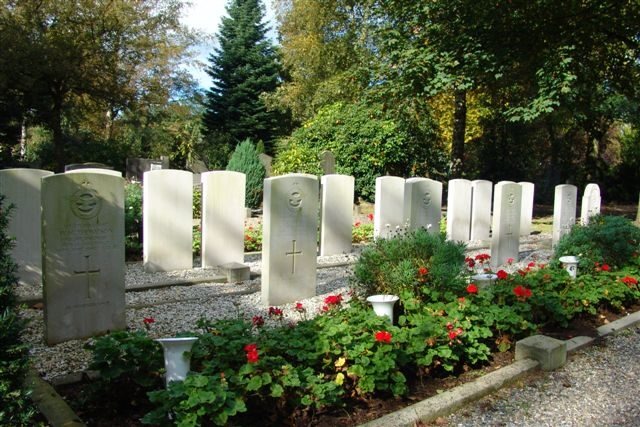
A lasting memorial to their sacrifice for our regained freedom are the 18 uniform headstones in this cemetery. These mark the graves of five British airmen who crashed in IJzerlo and 12 British soldiers from the ground forces who fell during the liberation of Aalten in April 1945. Alongside the graves of the British war victims lies the grave of resistance fighter Cornelis (Kees) Ruizendaal.
Furthermore, dozens of other graves of war victims can be found at Berkenhove. Many of these graves are marked as such.
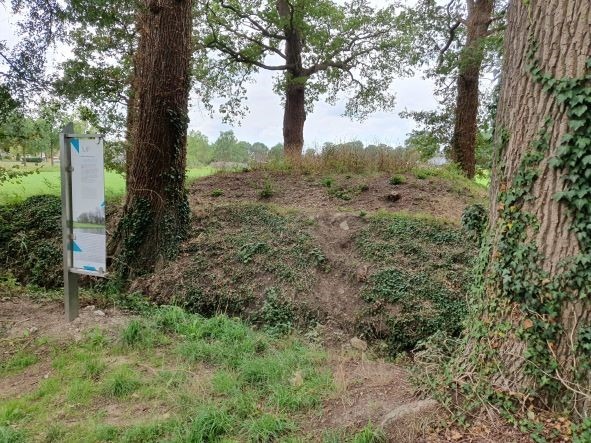
Located on the former ‘t Smees estate at the Nannielaantje is a unique burial mound. The estate was once owned by Christiaan Caspar Stumph and his wife Jeanne Lesturgeon. Stumph served as the first mayor of Aalten from 1811 to 1818. The municipal secretary’s office was also situated on the estate.
It was Stumph’s wish to find his final resting place here. He was frustrated by the poor conditions of burials within or near churches. In 1818, during the Romantic era, he arranged a ‘private outdoor cemetery’ for himself and his relatives.
His last will and testament read as follows:
“After my death, I wish and desire to be of no harm to my fellow man. As our national government remains backward in putting an end to burials inside churches and in churchyards within towns—as is done in France, Germany, Italy, and elsewhere—and in directing them to spacious burial grounds outside, I have (…) caused a site to be prepared in one of the Smees meadows, specifically the one adjacent to Smees Hoflanden. This small plot of land, my property, I will and desire to be respected and honoured as a sanctuary after my passing.”
Those Buried Here
On 28 July 1818, at 5 o’clock in the morning, son Abraham Antonij Stumph was buried at this outdoor cemetery. He was 34 years old and a notary by profession. He had drowned in the Slingebeek stream. Local legend suggested his death was linked to a broken heart. A year later, the 74-year-old Christiaan Caspar Stumph married 30-year-old Caatje Weversborg, the daughter of the tenant farmer at ‘t Smees. In January 1820, eight months after this marriage, Stumph himself was buried at ‘t Smees in accordance with his will.
Following them, several others were interred in this meadow location: friend and VOC (Dutch East India Company) captain Johan Christiaan Rost with his wife (a daughter of Stumph from Bredevoort), their young daughter, and two grandsons. The last known owner of the mound passed away in 1913. The Municipality of Aalten has arranged for the Stichting Vrijwillig Landschapsbeheer Achterhoek (Achterhoek Voluntary Landscape Management Foundation) to maintain the burial mound.
For an overview of the individuals buried in the mound, please visit Findagrave.
The Aaltensche Courant wrote on 1 June 1948:
The history of the old burial mound at the Nannielaantje in Aalten
Walking into the „Nannielaantje” from the Haartsestraat (known to older residents of Aalten as „Smeeslaantje”) and crossing the narrow bridge, one sees on the left, roughly opposite the „Aalten’s Belang” bench in the meadow, a square mound. It is overgrown with several heavy oaks and surrounded by ditches, which have gradually become almost level with the surrounding land.
Most residents of Aalten will not know what this square mound actually is, and few are aware that it is an old burial mound, let alone any further details.
Having happened upon the „Deed of Foundation” for this cemetery recently, it seemed interesting to share some information with readers, for the well-known „hump” in the Nannielaantje is indeed a burial ground.
A former mayor of Aalten, C. C. Stumph, strongly disagreed with the continued practice of burying people in and around churches. Consequently, he created his own burial place in the „Smees meadows”. In the „Deed of Foundation”, dated 2 May 1818, everything is precisely described. The maintenance of this cemetery was arranged and the compensation for it established.
Including the entire „Deed of Foundation” would require too much space. A few passages follow here:
„After my death, I wish and desire to be of no harm to my fellow man. However, as our National Government remains backward in—as in Germany, France, Italy, and elsewhere—ceasing burials within Churches and in Churchyards within towns and referring them to more spacious burial grounds outside: I have, so that my earthly remains may be entrusted to the Earth undisturbed! and my Bones may rest in Peace, already for several years, caused a Private Outdoor Cemetery to be prepared for myself in one of the Smees meadows, specifically the one against Smees Hoflanden.
This small plot of ground, my property, I will and desire that after my death, it shall be respected and honoured as a Sanctuary in a certain respect, by whomsoever, be it my Heir or Heirs, or legal successor! Declaring the same hereby as forever inalienable and untransferable.
And so that this Cemetery, in the order it currently is, or shall be at my passing, be continuously maintained annually in the future, I attach and bind to it (for and to settle the costs of that maintenance) that dagmat [day’s mowing] of land in which it is situated.
With the maintenance and upkeep after my death, the resident or residents of the dwelling house standing on Smees shall be and remain charged! who shall also for this purpose enjoy the annual proceeds of that dagmat of land or the (…), and the meadow on both sides along the ditches belonging to that dagmat and along the stream growing soft-wood timber, free of charge; also with the promise to be allowed to cut and use the grass on that Cemetery, and also of the ditches belonging thereto and to that dagmat, twice a year, however, sparing the
weeping willows or other shrubs or flowers thereon, these being an exception to the aforementioned soft-wood timber, and furthermore the right to allow two cows to graze in that meadow after the grass has been mown, in the aftermath or late grass, with the Beasts brought therein by or on behalf of the Owner of that meadow, also to be grazed free of charge.”
In the remainder of the document, the minister of the Reformed Church was charged with supervision. „The Minister or Ministers of the Reformed Congregation of Aalten at the time are invited and urgently requested to kindly take upon themselves the Supervisions! Granting for that purpose the faculty, in the event of no proper maintenance and supervision: without any consultation or notice, to entrust that maintenance with the attached enjoyment thereof to a more diligent and vigilant subject!”
After several further provisions, the deed ends as follows: „Thus disposed and drawn up this second of May 1818, following his signature, was signed: C. C. Stumph.” This Mayor Stumph, who passed away a few years later, is not the only person buried here.
Information regarding this was received from a relative who still possesses the old Bible and other family papers:
A sister of Mayor Stumph, Christina Petronella, born in 1786, was married to one Johan Christiaan Rost, born 15-12-1766. (This Rost originally came from Germany. He lived at „’t Smees”, which was later sold to Mr Slicher van Bath). They died in 1827 and 1835 respectively and were both buried at „’t Smees”.
The Rost-Stumph couple had 4 children:
Henriette Willemina Christina Theodora, born 21-6-1817 (she later married Dr Servaas van Leuven, the father of the late Dr Adriaan van Leuven).
Willemina Johanna, born 11-06-1819
Louisa Benjamina
Elisa Charlotte, born 13-03-1823
Two of these children, namely Willemina Johanna and Elisa Charlotte, died in 1835 and 1826 respectively and were both buried at „’t Smees”. Dr Servaas van Leuven had 10 children. He lived in the building on Bredevoortsestraat where the Volksslagerij (People’s Butchery) is now located. Of these 10 children, two died at a very young age and were also buried at „’t Smees”. These were:
Johannes Adrianes, born 23-03-1839 and died 06-04-1840
Karel, born 10-01-1861 and died 18-08-1862
These were therefore two brothers of Dr Adriaan van Leuven.
It is therefore known with certainty that 7 people are buried at the „’t Smees” cemetery. It is understood that there are plans to provide a fence for this old burial mound, which is now often used as a playground by the youth.
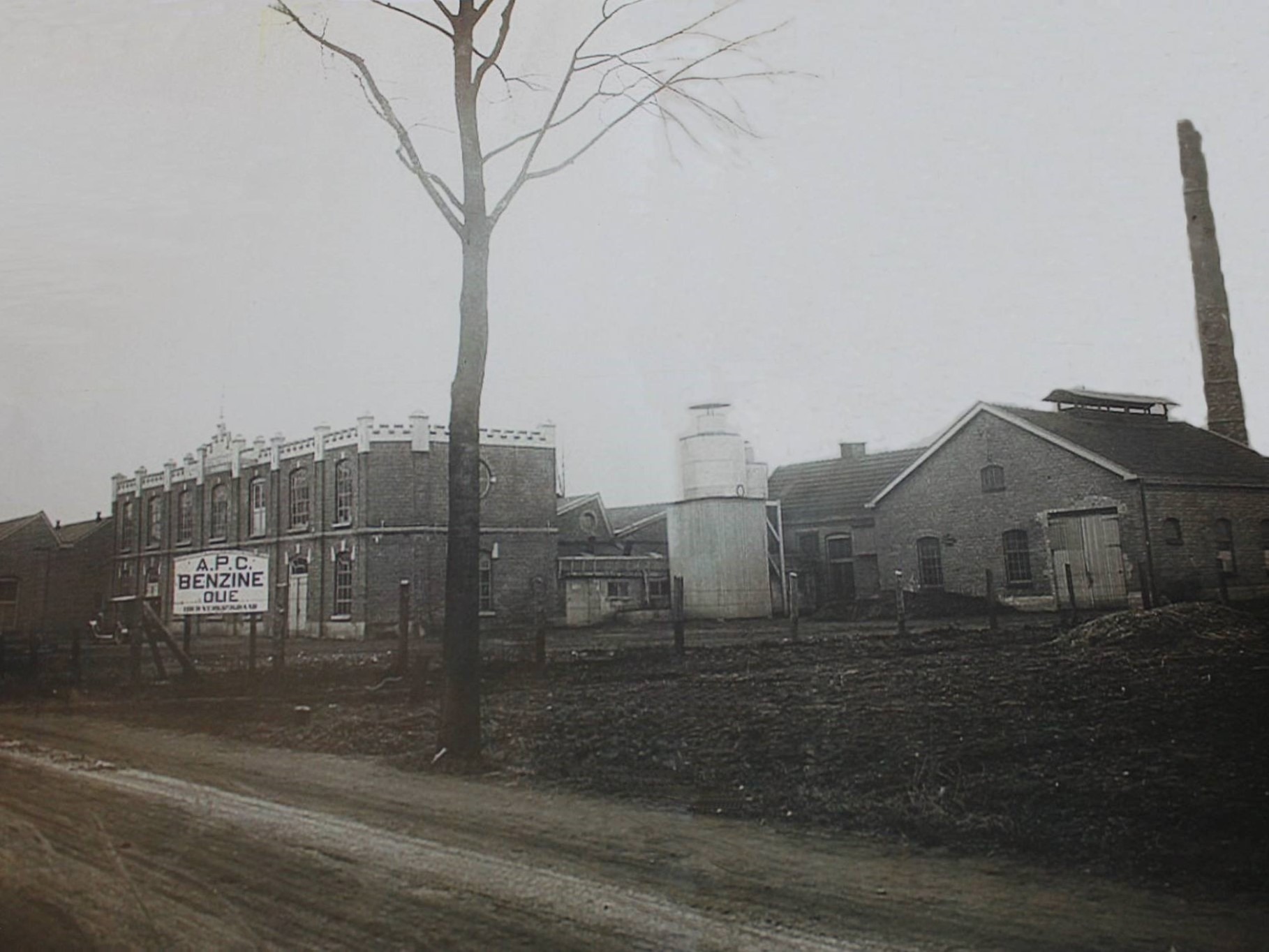
Bredevoortsestraatweg 109, Aalten (no longer extant)
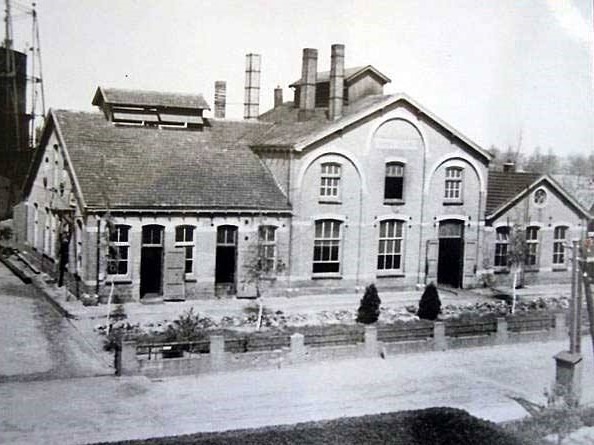
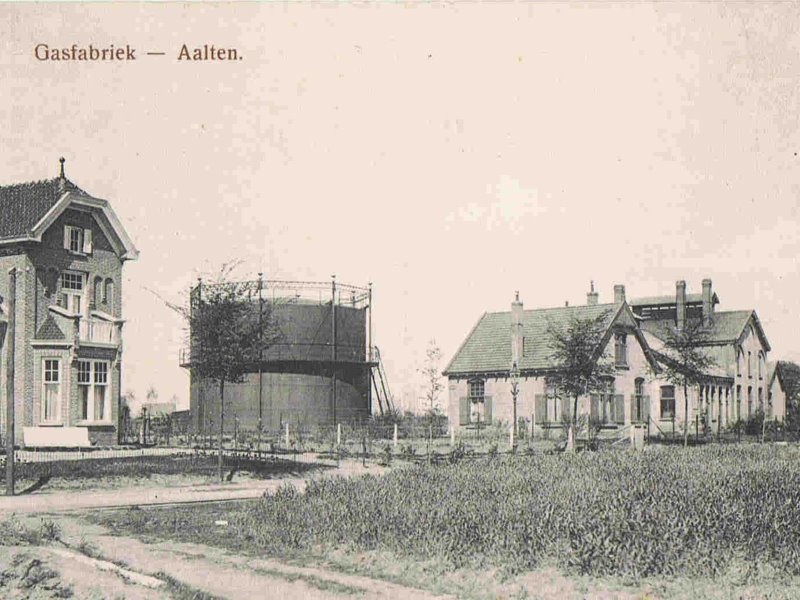
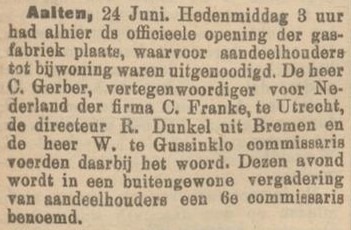
At the beginning of the twentieth century, there was a growing demand for modern energy supplies in the Netherlands. Until then, many households and businesses relied on oil and paraffin lamps for lighting, and on wood or coal for heating and cooking. Gas lighting was seen as a major advancement.
As in many other places, it was decided to build a gasworks in Aalten to provide households, businesses, and street lighting with gas. The arrival of the plant marked a significant step in the modernisation of local infrastructure, though it also brought its share of challenges.
The Production Process
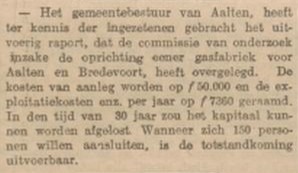
In 1905, the decision was made to build a ‘coal gas plant’ in Aalten. Two years later, in 1907, it was put into operation. The plant produced gas through the dry distillation of coal. This process involved heating coal in the absence of oxygen, releasing gas that could be captured for distribution.
The raw gas contained various impurities, such as tar, ammonia, and sulphur compounds. These were removed through condensation and chemical purification. The purified gas was then stored in a large gas holder (gasometer) and guided through a network of underground pipes to homes and businesses, where it was used for lighting, cooking, and heating.
Installation of the Gas Grid
The installation of the gas grid caused considerable disruption. Streets frequently had to be dug up to lay the pipes, leading to many complaints from residents.
Until the end of 1908, people complained about the poor state of the roads and the inconvenience caused by the works. Nevertheless, the use of gas quickly became popular, and the gasworks grew into an essential utility within the municipality.
In 1919, the municipality of Aalten took over the gasworks for a sum of ƒ 115,000, plus ƒ 29,602.87 for infrastructure such as piping and gas meters.
Gas Tokens
Until the 1950s, some households had a gas meter that operated with special gas tokens. This system, intended to prevent payment arrears, was also used in Winterswijk. The Aalten gas token was a zinc coin with a value of 10 cents. When the gas ran out, a new token had to be inserted into the meter.
With the arrival of the geyser (water heater), this system fell into disuse. The pilot light of these appliances had to burn continuously, which was not permitted in combination with a coin meter. Around 1955–1958, gas tokens disappeared completely, partly due to the introduction of the national natural gas grid.
The End of the Gasworks
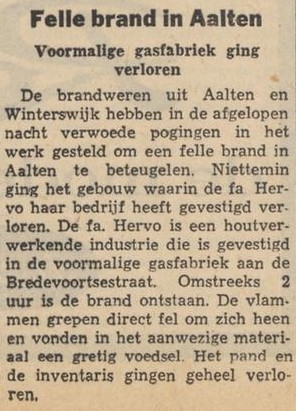
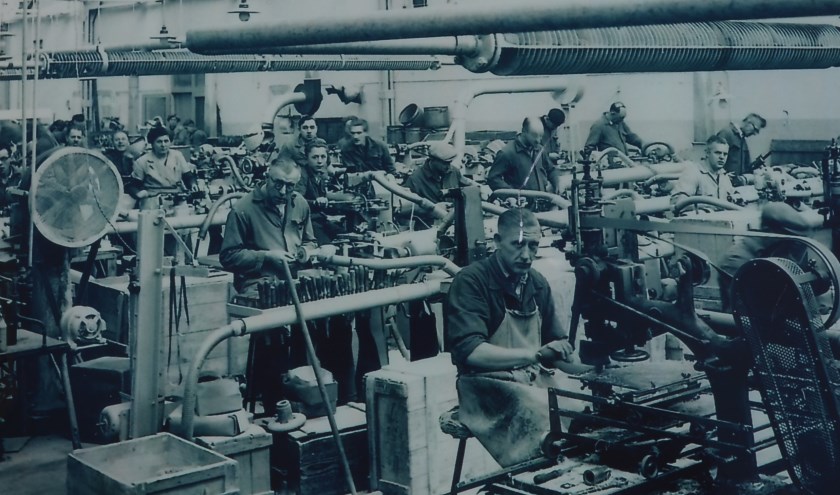
The discovery of the natural gas field in Slochteren marked the end of local gasworks, including the one in Aalten. The building subsequently served various temporary functions, such as a technical school and later a furniture factory (Fa. Hervo), until the premises were destroyed by fire in 1964.
After its closure, the soil was found to be severely contaminated with hazardous substances such as sulphur and cyanide. The remediation of the site was only fully completed decades later, in 2009.
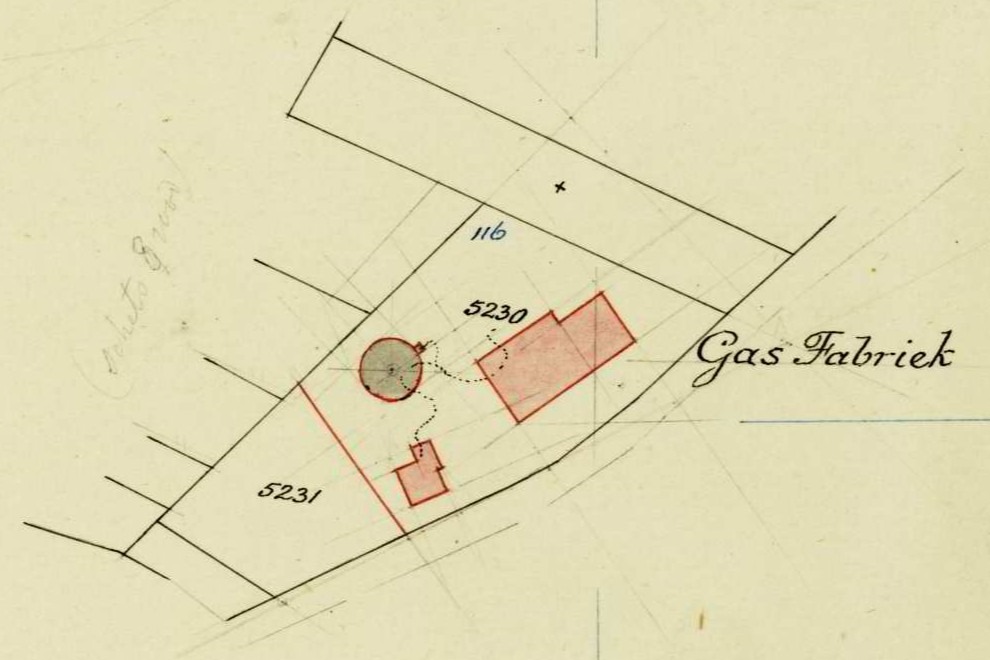
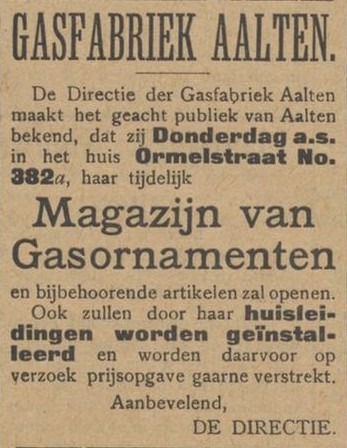
Aalten Gasworks with the gas holder in the centre, ca. 1920.Fragment cadastral map, 1908Het Vaderland, 16 August 1904Aaltensche Courant, 19 December 1906 (Ormelstraat 382a)Zutphensche Courant, 26 June 1907Nieuwe Winterswijksche Courant, 7 August 1964
Dutch Button Works was a button factory in Bredevoort that existed from 1884 until 1976. During its heyday, approximately 270 people were employed by the company; at the time of its closure, the workforce numbered about 44.
The Horn Industry
Several button industries already existed in the Netherlands during the 19th century. The oldest in this field was established in 1815, though it primarily produced fabric buttons, particularly linen ones. Around 1900, companies in Germany and England began producing buttons from horn. Following this example, Willem te Gussinklo began manufacturing horn buttons in 1905. This was a first for the Netherlands: the first factory for buffalo horn buttons. Soon, his son Willem te Gussinklo Jr. (known as “Piepkes Willem”) joined the firm, developing into an innovative entrepreneur.
Te Gussinklo’s first factory was located at ’t Dal in Aalten, today’s Willemstraat. Production was initially entirely manual, with buttons made one by one. Due to increasing demand, he purchased the old Van Eijck weaving mill in Bredevoort in 1924, where button production commenced.
At that time, Bredevoort still had its own railway station. Every so often, a wagonload of horns would arrive from India, destined for the Bredevoort button industry. As the years passed, manufacturing became increasingly mechanised. Using machines built by the company’s own technicians, the product was eventually manufactured partly or entirely automatically. Slices, known as rondelles (blanks), were sawn from the horn. For this, both the solid tips of the buffalo horn and the hollow sections were utilised.
Export
The export of buttons was of great importance. Trade was primarily focused on English-speaking countries—England, Ireland, and North America—where Dutch Button Works enjoyed a fine reputation. Until the 1920s, the buttons produced were exclusively intended for men’s suits. However, when demand fell during the crisis of the early 1930s, ladies’ buttons were put into production as compensation, almost simultaneously with the manufacture of bone buttons. Bone buttons were intended for undergarments. Besides buttons, the factory in Bredevoort also manufactured walking sticks—specifically, the knob or handle and the tip were crafted from horn.
A few years after the Ten Dam & Manschot comb factory in Aalten ceased operations, DBW also took up the production of combs. During World War II, the company shifted to processing domestic horn. Besides buttons, ashtrays and bird figurines were popular items. Stag horn was used to manufacture buttons for hunting jackets, and discs of stag horn were fashioned into small ashtrays or candle holders on rosewood bases.
Before the war, DBW also had branches in Germany: in Berlin and Bocholt. After 1945, the company experienced a peak period. The third generation, W.A. te Gussinklo, joined the management. Demand for buttons was high. Many home workers were occupied with sewing buttons onto cards. The horn buttons found their way to garment factories. Sales representatives would travel with a “model jacket” made of various pieces of fabric sewn together—a multicoloured patchwork. On each piece of fabric, the most suitable buttons for that specific material were sewn.
In 1959, the company celebrated its 75th anniversary. At that time, there were over a hundred employees, excluding home workers. Due to increasing automation, the company achieved high turnover with fewer staff. In the second half of the 1950s, horn was largely superseded by plastics. In 1963, the management of DBW, together with an English button factory, took over the largest button factory in Germany.
Decline
The company suffered a heavy blow in 1968 when the director, W.A. te Gussinklo, died at the age of 51, just six months before his father. He was succeeded by his wife, B.A. te Gussinklo-Zandbergen. When her son H.J. Gussinklo Ohmann completed his studies at the technical university in Eindhoven a year later, he also joined the management. By then, the production system was entirely focused on plastic buttons (polyester), which the company had started producing itself around 1960. In the long run, however, it proved extremely difficult to remain competitive. Despite great efforts to keep the company running, they were forced to close DBW in 1976.
The municipality of Aalten purchased the complex in 1977, and it was resold to the firms Van Wezel and Voltman-Riviera. Later, the Albert ten Bruin car dealership was located here for many years.
Repurposing
At a municipal information evening in July 2008, the Vereniging Bredevoorts Belang (Bredevoort Interest Association) made a plea for the preservation and restoration of this characteristic building. They stated: “This building is the only remaining, tangible, and visible intact industrial heritage that Bredevoort still possesses, providing residents with a link to its extensive textile history. The factory building, still in its original state, has a striking, beautiful facade featuring the typical elements of an industrial building built in the third quarter of the nineteenth century.” The non-monumental parts were demolished in 2019. The monumental building has since been repurposed to house apartments and a supermarket.
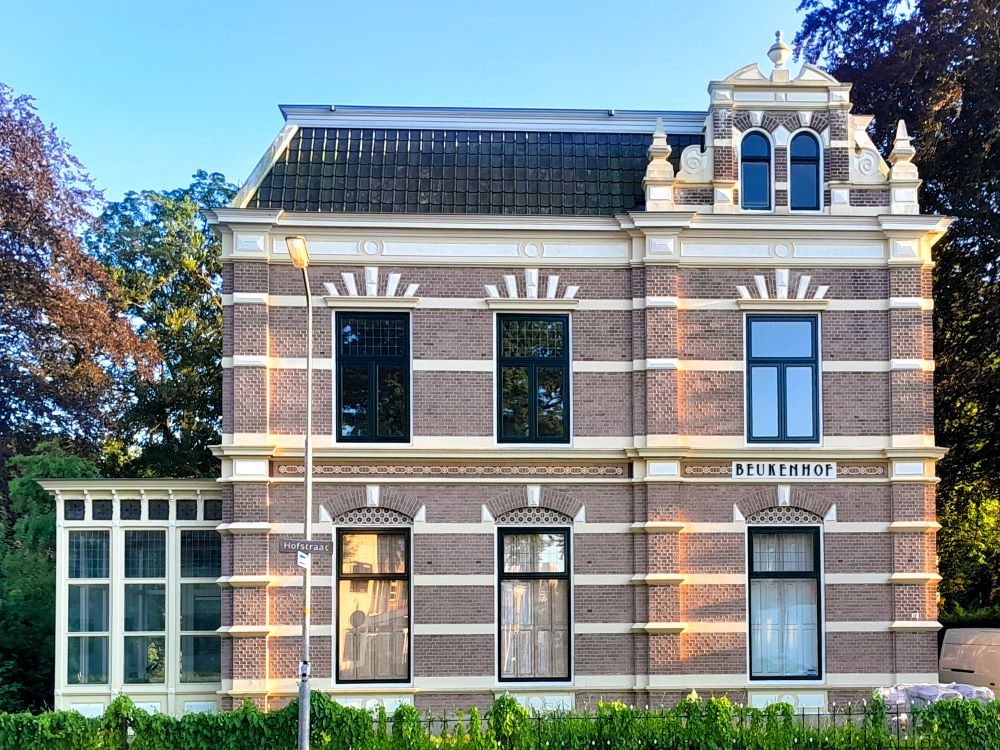
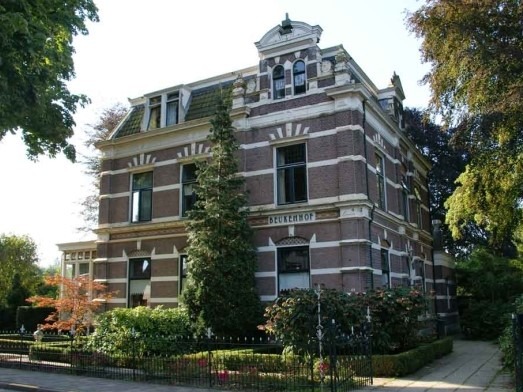
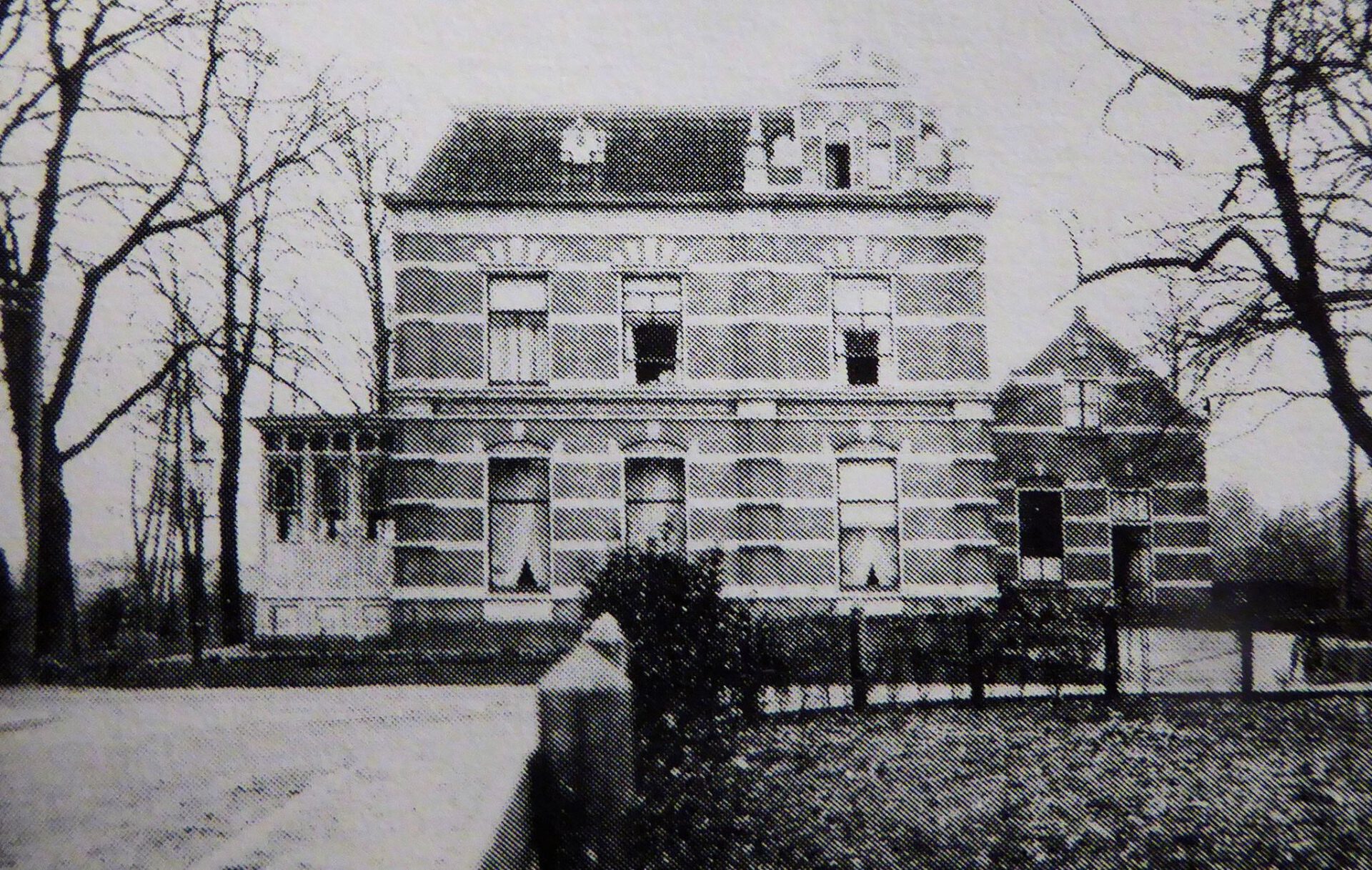
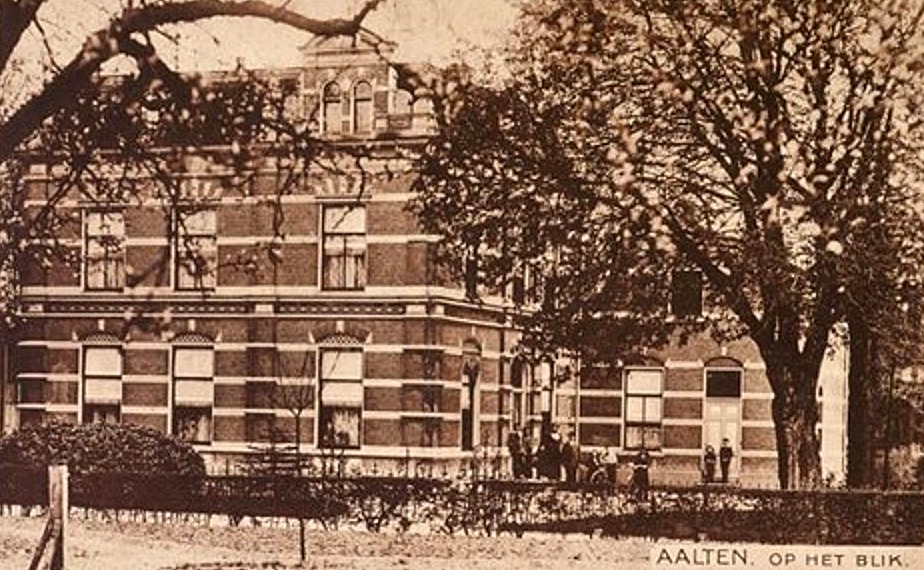
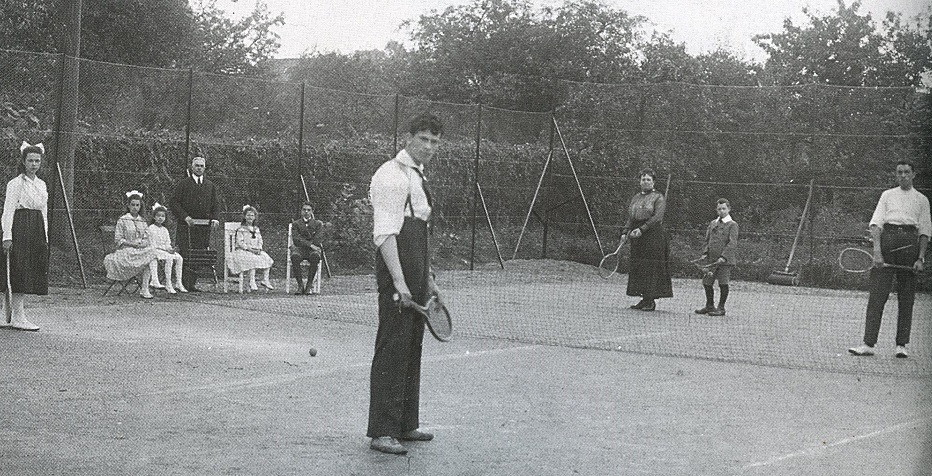
This director’s villa was built in 1893–1894 by textile manufacturer Herman Driessen, concurrently with the former steam weaving mill situated next door. In later years, the stately villa served as a foster home for Estinea for a long time. Behind the house once lay what was likely the first tennis court in Aalten.
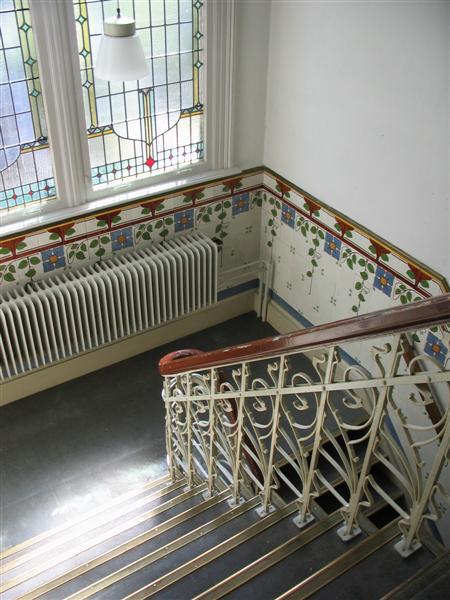
The villa is constructed in a Neo-Renaissance style and features 10 bedrooms across the first and second floors. It is a national monument and retains many monumental details, including a very fine staircase with original Art Nouveau-patterned tiles and various original stained-glass windows. This characteristic property is currently in private hands and is undergoing restoration.
In 2015, Jalf Flach wrote to Old Aalten:
“I recently rediscovered a text I wrote 25 years ago following an interview with Mrs Bella Driessen. In 1893, the Hofstraat was still called ‘Het Blik’, and in that year, a steam weaving mill and a house were erected there, which would be occupied by members of the Driessen family for the next 75 years. It was not until 1953 that the house was named ‘Beukenhof’ by one of its residents. But by then, the house already had an eventful history behind it.
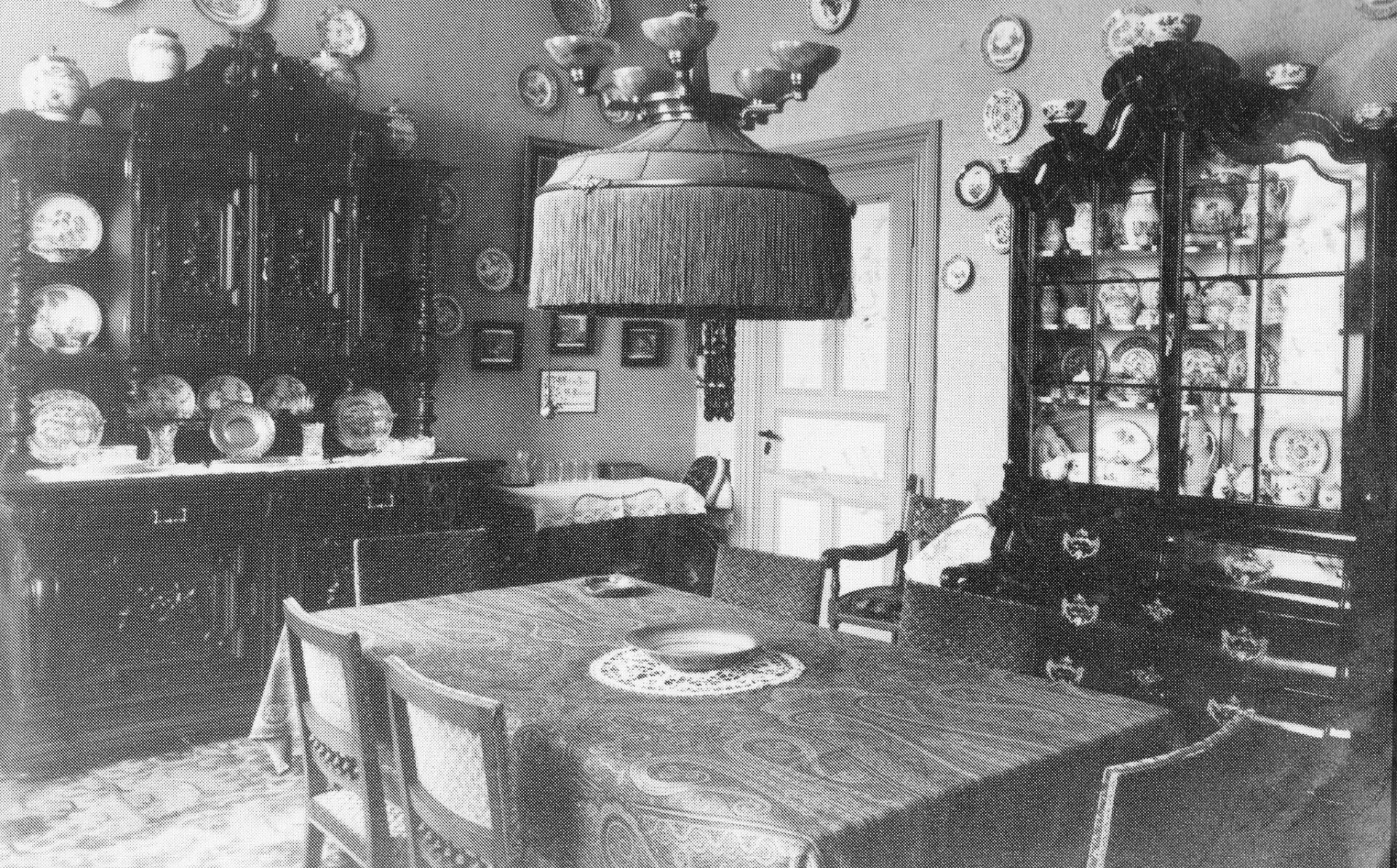
Bella Driessen lived in the house from her early childhood until 1969, when the factory closed and the house changed hands. That is a period of over 60 years. In those days, the Beukenhof was a true patrician residence, as is evident from the interior photograph she kindly lent me. In later years, she occupied the small house that had been built onto the main building, which, much to her sorrow, was demolished in 1976 when the house was converted into a foster home. That brought an end to what was colloquially and irreverently referred to as ‘Bella’s pimple’.
Mrs Driessen’s stories about the war years were fascinating. There were a couple of magnificent stained-glass windows in the stairwell. One depicted the weir on the Smees, and the other, the cathedral of Malmédy, from where her mother originated. After a German soldier had first shot through them because of a breach of blackout regulations, they were completely destroyed during a bombing raid on Aalten. For the remainder of the war, planks were nailed over them, and the residents, billeted German soldiers, and evacuees had to find their way in the dark.
After the war, simpler stained-glass windows were installed, which still adorn the staircase in an Art Nouveau style today and, together with the beautiful tiles and wrought-iron bannisters, give the building a unique character.”
Staircase (photo provided by Jalf Flach)Dining room (photo provided by Jalf Flach)1920. The Driessen family playing a game of tennis on what was likely the first tennis court in Aalten, behind the Beukenhof. (photo from “De Slinge(r)bal. 1946-1996. 50 years of Altec tennis club”)
Beheer toestemming
Deze website gebruikt cookies voor een optimale ervaring en analyse van bezoekgegevens. Ga je hiermee akkoord? Zonder toestemming werken sommige onderdelen van de site mogelijk minder goed.
Functioneel
Always active
De technische opslag of toegang is strikt noodzakelijk voor het legitieme doel het gebruik mogelijk te maken van een specifieke dienst waarom de abonnee of gebruiker uitdrukkelijk heeft gevraagd, of met als enig doel de uitvoering van de transmissie van een communicatie over een elektronisch communicatienetwerk.
Voorkeuren
De technische opslag of toegang is noodzakelijk voor het legitieme doel voorkeuren op te slaan die niet door de abonnee of gebruiker zijn aangevraagd.
Statistieken
De technische opslag of toegang die uitsluitend voor statistische doeleinden wordt gebruikt.De technische opslag of toegang die uitsluitend wordt gebruikt voor anonieme statistische doeleinden. Zonder dagvaarding, vrijwillige naleving door je Internet Service Provider, of aanvullende gegevens van een derde partij, kan informatie die alleen voor dit doel wordt opgeslagen of opgehaald gewoonlijk niet worden gebruikt om je te identificeren.
Marketing
De technische opslag of toegang is nodig om gebruikersprofielen op te stellen voor het verzenden van reclame, of om de gebruiker op een site of over verschillende sites te volgen voor soortgelijke marketingdoeleinden.