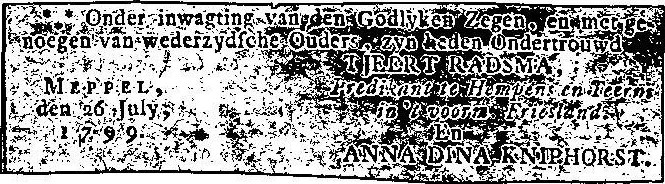
Tjeerd Radsma was born on 20 February 1772 in Harlingen, the son of Hermanus Radsma and Aafke Steffanij. He married Anna Dina Kniphorst on 11 August 1799 in Meppel. Following her death in 1805, Radsma remarried on 6 October 1808 in Leeuwarden to Doedtje Nieuwenhuis, who had previously been married to Heert Jans Kingma.
In 1812, Tjeerd Radsma was registered as a resident of Hempens, near Leeuwarden. He was the minister of Hempens and Teerns at the time. It is also noted that he had four children at that point. Three have been identified, all from his first marriage:
Johanna (Hempens, 1800 – Aalten, 1847)
Aafke (Hempens, 1801 – Aalten, 1824)
Anna Dina (Hempens, 1805 – Meppel, 1806)
To Aalten
In 1817, at the age of 45, Radsma moved to Aalten as a minister. Five years later, on 11 August 1822, he commemorated his 25th anniversary in the ministry. On this occasion, he delivered a sermon based on 2 Corinthians 5:9. The opening sentence of the sermon read: “Every individual’s life presents times and days that are more remarkable than others and to commemorate these – provided their multitude does not weaken the impression too much – can be very useful.”
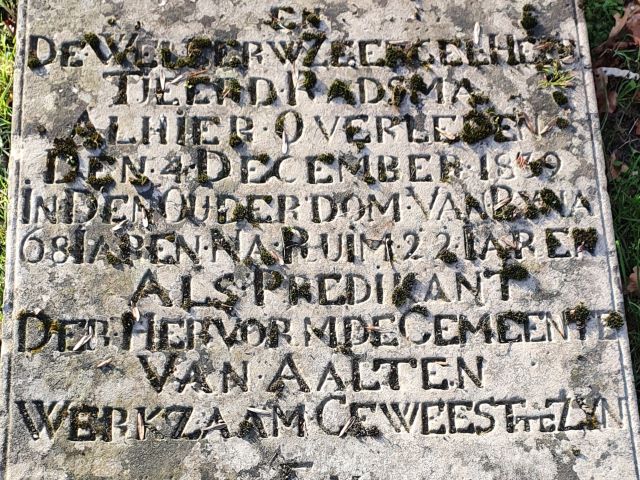
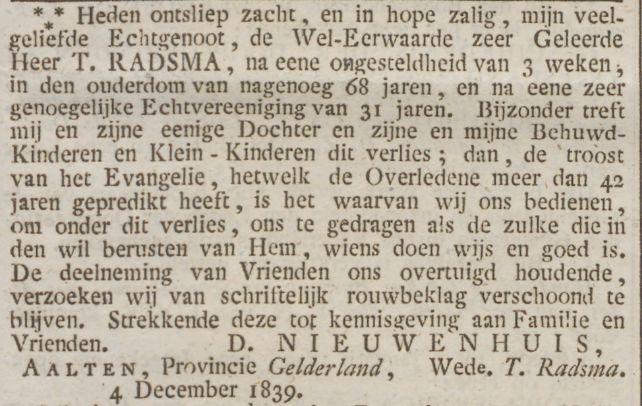
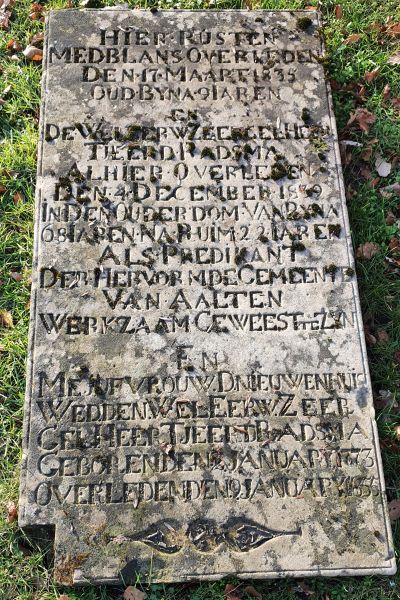
Tjeerd Radsma passed away on 4 December 1839 in Aalten, at the age of 67. He was buried in the Old Cemetery on the Varsseveldsestraatweg. His gravestone is one of the oldest remaining funerary monuments there. Also interred in the same grave are his widow, Doedtje, who died in 1855, and her granddaughter, Maria Elizabeth Dodina Bianka Lans, who died in 1835 at the age of eight. Maria’s mother was Janke Kingma, a daughter of Doedtje from her first marriage.
Banns of marriage for Tjeerd Radsma & Anna Dina Kniphorst, 1799Death of Rev. Tjeerd Radsma, 4 December 1839 Grave Tjeerd Radsma
Adriaan Schouten was born on 6 June 1864, in Raamsdonk. He studied at the Christian Gymnasium in Zetten and subsequently at the Vrije Universiteit, where he became a candidate in 1889. On 26 January 1890, he was ordained into office in Charlois by Rev. F.P.L.C. van Lingen, rector of the gymnasium in Zetten.
A few days earlier, on 22 January 1890, he had married Johanna Maria Schuurman in Raamsdonk. Together they would have no fewer than 13 children, eight boys and five girls. However, several of them passed away at a young age.
Appointment in Aalten
Reverend Schouten left Charlois in 1892 for Willemstad, before moving to Rozenburg in 1899. On 13 December 1903, he was inducted in Aalten as the successor to Rev. A. van Dijken. As a gifted preacher, he managed to build a strong following in Aalten. He also played a significant role within the church community and beyond.
The Schouten family lived in the parsonage of the Westerkerk on Hogestraat in Aalten. Adriaan’s wife Johanna Maria passed away in 1919, at the age of 52, due to the Spanish Flu. She was buried at the Old Cemetery in Aalten.
Rev. Adriaan Schouten, 1934
Retirement
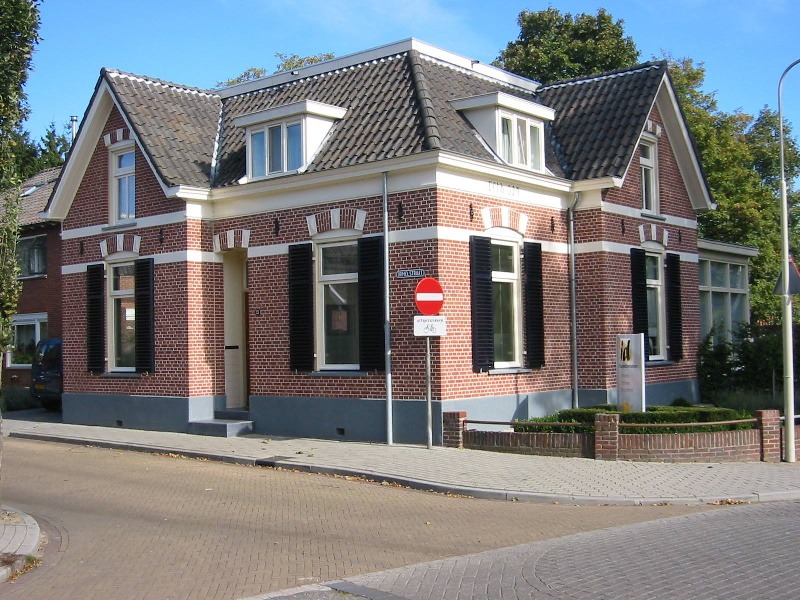
On 30 April 1930, after celebrating his forty-year jubilee in office, Reverend Schouten retired. He then moved to Ormelstraat 23, on the corner with Hofstraat.
As a minister emeritus, Schouten remained very active. For several years, he preached regularly in the small Reformed church in Dinxperlo. And when this congregation had sufficient resources to appoint its own minister, he had the pleasure of seeing his son Johannes Pieter Schouten become his successor there.
Schouten also frequently conducted services in the Reformed church in Halle. He did this with youthful enthusiasm and passion. In Halle, just as previously in Dinxperlo, he was affectionately called “our minister.”
Socially Involved
In his former congregation, the church of Aalten, Schouten always remained a faithful member of the church council. He never missed a meeting and was appointed as scriba (secretary), a role he fulfilled very meticulously. He also proved himself very useful as head of the church office. He performed all his duties with a vitality that belied his advanced age.
When a Reformed Men’s Association was founded in 1933, he was appointed chairman, and he performed this work with great cheerfulness. Furthermore, the “youthful elder” remained heart and soul interested in all kinds of association work, especially the activities of youth organisations. Schouten still regularly appeared as a speaker for them.
Beth San
He gave his house on Ormelstraat the name ‘Beth San’, which in Hebrew means House of Rest or House of Peace. Due to his commitment to elderly care in Aalten, the nursing home on Ludgerstraat was later also named Beth San. Since then, the house on Ormelstraat has been called ‘Klein Beth San’.
Adriaan Schouten later moved to Culemborg, where he passed away in 1954 at the age of 89. He was buried with his wife at the Old Cemetery on Varsseveldsestraatweg in Aalten.
Derk Breukelaar was born on 28 December 1814 in Varsseveld, the son of ‘chair turner’ Wessel Breukelaar and Grada Johanna te Rietstap. In 1847, he married Janna Hendrika Pennings (born in Aalten, 12 November 1825) in Aalten. Nine children were born from this marriage.
Following the foundation of the Christian Secession Congregation (Christelijke Afgescheidene Gemeente) in Aalten in July 1843, the young faith community sought to call a minister. On the advice of Reverend Brummelkamp, the young Derk Breukelaar from Varsseveld was invited. He accepted and moved to Ommen to study under Rev. A.C. van Raalte (1811–1876)—one of the first Secessionist ministers in the country.
Minister in Aalten
After completing his studies, Breukelaar was ordained on 24 September 1846 as the minister of the congregation in Aalten. This would remain his only parish; he served there for 44 years until his retirement in 1888. When Rev. Wildenbeest of Varsseveld passed away suddenly in 1852, that congregation extended a call to him. Initially, he accepted, but—realising he was then the only Secessionist minister in the Achterhoek region—he eventually declined and remained committed to the church in Aalten, though he also worked extensively in the surrounding areas.
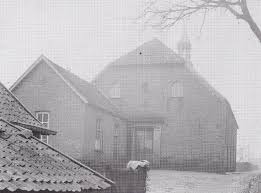
’t Grotenhuis
Breukelaar lived with his family in a small farmhouse called ’t Grotenhuis, located on present-day Hessenweg just outside the village. Here, he grew his own food to supplement his modest stipend of 225 guilders, which later rose to 600 guilders per year. Parishioners also contributed in kind by bringing food, such as meat and potatoes, to his home. Catechism classes were also held at ’t Grotenhuis, as there was no room for them in the church. During busy periods, such as the harvest, his wife took over the teaching of these classes.
Evangelism and Youth Work
Evangelism was very close to the minister’s heart. This was the reason Derk Breukelaar took the initiative to establish several Sunday schools, through which he reached not only the children but also their parents. For children in the outlying hamlets, Sunday school was held at someone’s farmhouse so that the children did not have to travel all the way to the village. Later, long after Breukelaar’s death, various Sunday school buildings would be erected in the rural districts surrounding Aalten.
In 1868, Breukelaar founded the Reformed Young Men’s Association „Uw Koninkrijk kome” (Thy Kingdom Come).
De Standaard, 14 January 1891
Difficult Years and Recognition
The late 1870s were not the easiest years for the minister. In 1876, his wife passed away, and a few years later, he became involved in the “School Struggle” (schoolstrijd) in Aalten as the chairman of the school board.
Nevertheless, Breukelaar received much appreciation. On his fortieth anniversary in office in 1886, his congregation presented him with a States Bible on a beautifully crafted wooden lectern. On the same joyous occasion, the classis (regional church council) presented him with an engraving depicting ‘Golgotha’. When he retired in 1888, his catechism pupils gave him a tea service and a cake set as a gift.
Death and Legacy
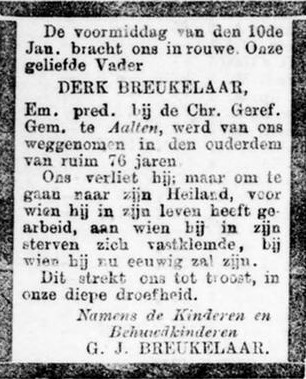
Reverend Breukelaar passed away on 10 January 1891 in Aalten at the age of 76. He was buried at the Old Cemetery on the Varsseveldsestraatweg. The church council honoured him with a funerary monument. The inscription on the gravestone, which is now barely legible, is noteworthy for its curious use of the church name ‘Christian Secession Congregation’ (instead of ‘Christian Reformed Congregation’).
Three of his sons followed in his footsteps and also became ministers: Gerrit Jan, Willem, and Johannes. The latter is regarded as the founder of Christian education in Aalten. In June 1918, Johannes himself opened the Breukelaar School on Piet Heinstraat, which was named after him.
Johannes Hendrik Frederik Gangel was born on 7 December 1839 in Appeltern, the son of Bernardus Gangel, a schoolteacher by profession, and Christina Leemhorst. He studied theology at Utrecht University. In 1879, Gangel was called as minister to the Dutch Reformed Church (Nederlands Hervormde Kerk) in Aalten.
He succeeded the liberal minister, the Reverend Klinkenberg. Relations between the two ministers of Aalten—the Reverend Gangel and his liberal colleague, the Reverend C.F.S. Pape—soon deteriorated. Because he was ill, Pape had appointed a substitute to conduct his catechism classes. However, church regulations granted that authority strictly to the church council (kerkenraad). The Reverend Gangel and the council would undoubtedly have preferred to appoint an orthodox substitute.
In Aalten, Gangel quickly became a beloved figure. He was deeply committed to his congregation and was known for preaching in a clear and inspiring manner. For his time, Gangel was a progressive minister who strove for renewal within the church. He was a proponent of modern biblical criticism and wanted the church to focus more on the daily lives of its believers. He was also a strong advocate for using standard Dutch in church services, rather than Latin or the regional dialects that were still being used in some congregations.
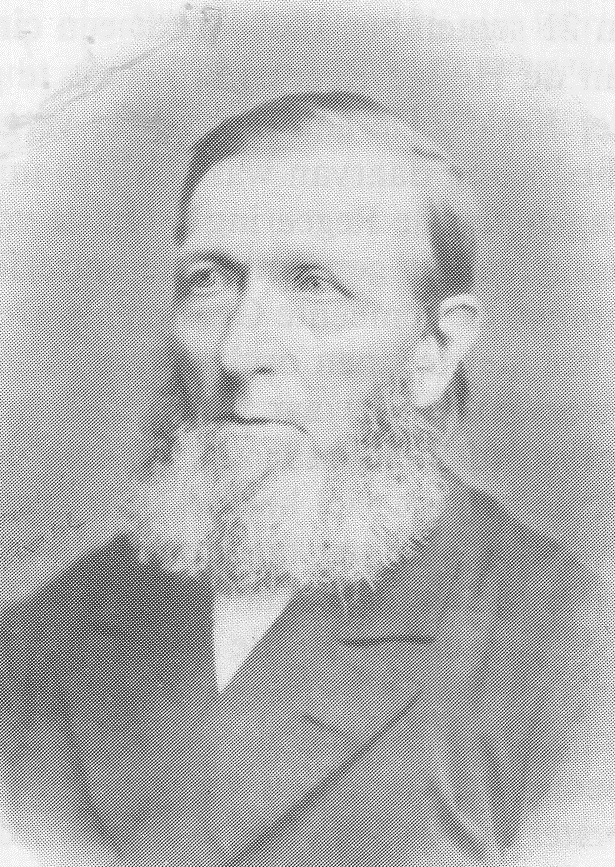
Rev. J.H.F. Gangel (1839–1908)
In Aalten, Gangel was highly active in community life. For instance, he founded both a choral society and an amateur dramatics society. He was also involved in education and worked hard towards the establishment of a Christian school.
Gangel’s activity extended well beyond the confines of the church community. He was involved in setting up a local health insurance fund (ziekenfonds) and establishing a local branch of the Society for Public Welfare (Maatschappij tot Nut van het Algemeen). Furthermore, he served as a member of the municipal council and held various other civic and public roles.
Although Gangel was a well-loved minister in Aalten, he faced several conflicts over the years. Initially, he found it difficult to adapt to the conservative and orthodox congregation of Aalten. Consequently, it took some time before he truly found his feet there.
The school dispute
A subsequent conflict arose when the Reverend Gangel (who, it must be said, was not always the most tactful of men) wished to allow a representative from the Unie School en Evangelie (School and Gospel Union) to give a lecture on the importance of Christian education in the Reformed church building. However, the church trustees (kerkvoogden) refused to grant permission. Over sixty members of the congregation, including the Reverend Pape, completely agreed with the trustees and made their views plain in writing. They stated they had heard of the Reverend Gangel’s plan “with indignation”, expressed their “full sympathy” for the trustees’ decision, and “highly condemned the conduct of the aforementioned minister”. Conversely, the Christian Reformed (or Seceded) Congregation (Christelijke Gereformeerde Gemeente) did grant permission to hold the lecture in their own church building. Notably, Gangel’s stance on Christian education ultimately led to a significant increase in pupil numbers at the local School met den Bijbel (School with the Bible) in Aalten.
However, the school board did not invite the Reformed members whenever board elections were held. The board wished to “keep its principles pure” and prevent too much Reformed influence from taking root. Naturally, the Reverend Gangel disagreed with this policy and protested with some passion. When they were barred from a second meeting as well, a fierce conflict erupted, both with the Reverend Breukelaar (the chairman of the school board) and with the Christian ‘Seceded’ Congregation, as the Christian Reformed members still called themselves. Headteacher Siebel also left his post to join the newly established Reformed primary school.
The Secession
Meanwhile, the struggle against theological liberalism and the power of central church hierarchies had come to a head in Reformed Amsterdam. The majority of the Amsterdam church council had been suspended by the denominational authorities, leading them to establish the Nederduitsche Gereformeerde Kerk on 16 December 1886. This movement was led primarily by figures including Dr A. Kuyper (1837–1920), who was himself one of the suspended elders.
In the Reformed congregation of Aalten, the atmosphere between the Reverend Gangel and his liberal colleague, the Reverend Van Oostrom-Soede, had also become toxic. Van Oostrom-Soede had stopped attending church council meetings for some time, and his wife refused to retract an accusation she had levelled at the Reverend Gangel (whom she had called “the vilest scoundrel in the world”). As a result, she was barred from taking Holy Communion. A succession of disputes between the two ministers only worsened the atmosphere. Naturally, the congregation noticed this rift, splitting into two opposing camps of supporters: the ‘Ganglians‘ and the ‘Soedians‘. The liberal newspapers reported on the ecclesiastical unrest in Aalten with great relish.
On 15 February 1887, the Aalten church council resolved to enter into Doleantie (secession) by withdrawing from the central Reformed church authorities. At that meeting, three council members stated that they felt “with grief compelled to step down from office”. The council then took the decisive step, formalising the resolution in an official council deed. Unlike the Reverend Gangel, the Reverend Van Oostrom-Soede informed the council that he would not be joining the Doleantie. The first Sunday following the secession passed quietly, and the Seceders (Dolerenden) were able to use the Reformed church building as usual.
A turbulent Sunday…
On Sunday 6 March 1887, however, events did not unfold so smoothly. The regional church classis had instructed a Reverend Bergsma to preach in the Reformed church of Aalten; however, the Reverend Gangel also intended to lead the service in that very same building. As soon as churchwarden G.J. Lammers opened the church doors, followers of both ministers rushed inside to capture the pulpit. “A burly Soedian [who, according to the Seceding church council, had been bribed by close friends of the Reverend Van Oostrom-Soede] occupied the elevated ministerial seat, while crowds positioned themselves on or near the stairs—shoving, thumping and scratching much like on the Amsterdam Stock Exchange,” one newspaper reported.
The Seceding church council recorded in its minutes: “Deplorable in this regard was the attitude of Mayor Hora Adema, who happened to pass by the church during the scuffle and did nothing to prevent it. Nor did he act when, called upon five minutes later by the churchwardens, he witnessed and heard the shouting and swearing near the pulpit, refusing to bring the crowd to reason, whereupon the churchwardens requested him to clear the church.”
The council decided not to hold a service the following Sunday because E. van Eerden, a supporter of the Reverend Van Oostrom-Soede, had threatened to shoot the Reverend Gangel dead the moment he stood in the pulpit.
Churchwarden G.J. Lammers (Photo: ‘Een kerk in de lens’)
The Reverend Gangel appeals to the authorities
While opponents of the Reverend Gangel gathered at the railway station with pockets full of stones—having caught wind that he would return that evening from a train journey to see the King’s Commissioner—the minister instead travelled on to The Hague, accompanied by Elder W. te Gussinklo. There, he sought an audience with the Minister of Justice, Baron Du Tour van Bellinchave.
When the Reverend Gangel failed to arrive on the evening train in Aalten, the disappointed prospective stone-throwers marched to the rectory in Hoekstraat, chanting: “Hop, hop, hop, hang Gangel and the Ganglians.” Eventually, the Reverend Gangel had to return home, but the Reverend Van Dorsen of Varsseveld warned him beforehand of the looming danger as a precaution.
The minister arrived in Aalten at half past one in the morning. Since no one was willing to drive him, he walked to the rectory, escorted by some seventy like-minded farmers from the Aalten hamlet of Lintelo, who were armed with sticks.
The following Sunday, the church remained closed. It was guarded by soldiers, as was the Reformed rectory. On the Saturday, fifteen hussars and forty infantrymen had arrived in Aalten to maintain public order. This, however, did not entirely prevent further disturbances. As a safety measure, the mayor ordered all pubs to close.
A temporary church
In the meantime, the church council had set to work building a wooden temporary church on Varsseveldsestraatweg (the ‘Plankenkerk‘ or Board Church). Architect Van de Wilk drew up the designs for what was described as a ‘lead-blue painted shack with an undeniably austere, seceding appearance’. A communion set and a baptismal font were purchased, and the building was opened for use on 1 May 1887. The sermon was based on 1 Kings 18 verse 21: “And Elijah came unto all the people, and said, How long halt ye between two opinions? if the Lord be God, follow him: but if Baal, then follow him. And the people answered him not a word.” Twenty-four young people made their confession of faith, and six children were baptised that afternoon.
To safeguard the congregation’s records, the Reverend Gangel transcribed the membership registers from 1816 up to the Doleantie, and also copied the council minutes starting from the meeting at which the secession was decided. This was done out of fear that a court might eventually order these books to be returned. This order was indeed issued in the summer of 1888. The court also ordered the Reformed rectory to be handed back. Consequently, a new rectory was built on Hogestraat in 1888 at a cost of 5,100 guilders.
Disagreement over church construction and more
A variety of disagreements and conflicts made life within the Seceded church less than pleasant during its early years. For instance, the Reverend Gangel was eager to replace the wooden Plankenkerk with a brick church. He proposed that this could be financed by renting out the pews in the new church, a common practice in many other parishes. In his view, this revenue would cover the interest and loan repayments. However, the churchwardens believed it would be better to hold “a voluntary annual subscription to meet the costs of public worship”. The Reverend Gangel feared this would take far too long, while the Plankenkerk remained highly uncomfortable: stiflingly hot in the summer and freezing cold in the winter. Friction persisted.
The Reverend Gangel also deemed it necessary for the elders to take on pastoral home visits. The elders, however, felt that spiritually caring for a congregation that had grown to 1,700 members would demand far too much of their time. The parish had been divided into four districts: Dale and Barlo, IJzerlo and Heurne, Aalten and Haart, and a district for Lintelo, each overseen by two elders.
The classis intervenes
Meanwhile, relations within the Seceded church council continued to sour. During a mid-week evening service on a Wednesday, Elder De Wijn caused an uproar by launching an “unprecedented public vilification”, presumably targeted at the minister. The Nieuwe Rotterdamsche Courant reported on the incident, and the regional classis was naturally made aware of the infighting. It dispatched a committee to Aalten, led by the Reverend J.C. van Schelven (1854–1904) of Dieren, to conduct an inquiry. It emerged that Elder Lammers was also on poor terms with the minister: “The unpleasantness that has arisen owes its origin to the Reverend Gangel’s driving desire to build a brick church in place of the wooden temporary church.” Elder Wijn further brought up the allegation that the Reverend Gangel had knowingly failed to visit a gravely ill member of the congregation.
Naturally, the Reverend Gangel did not remain silent, pointing out the vast amount of extra work he had been forced to undertake. He had been responsible for all the correspondence relating to the lawsuits following the Doleantie. Moreover, he was heavily burdened with work for the school, the Supplementary Fund (which paid the school fees for children of impoverished congregation members), the Young Men’s Association, and the Sunday schools, which had left him severely sleep-deprived.
The Reverend Van Schelven urged reconciliation. In the end, Gangel and Lammers made peace, but De Wijn wished to put the entire matter before the male voting members, though peace was eventually brokered with him too through the mediation of the Reverend P.C. Koster (1857–1929) of Velp. The Reverend Gangel began to find his working environment unbearable and wished to relocate to Velp, stating, “because quite apart from any reconciliation, my work here has been rendered impossible.” Nonetheless, he rescinded this decision in February 1889, noting that “after a heavy personal struggle, he had yielded to the pressure exerted upon him by so many members of the congregation.” Two council members visited him to express their delight at his decision. The others remained resolutely silent.
Sermon reading and minuting disputes
Another source of friction between the council and the minister concerned the practice of ‘sermon reading’ by elders when the minister was away. One day, Elder Lammers was on duty and was given a choice of several sermons handed to him by the Reverend Gangel. Refusing to comply, Lammers chose instead to “just speak a few words of his own”, adding in passing that he was entirely opposed to the practice of ‘sermon reading’. The minister had no choice but to state that if no sermon readers could be found, he would have to ensure that Sunday services were cancelled in his absence.
The drafting of council minutes also proved a divisive issue. Up to this point, the Reverend Gangel had always written the minutes himself, using them to record detailed accounts of all the arguments that took place within the council. This caused resentment among other council members. Consequently, Elder W. te Gussinklo was appointed as secretary (scriba). However, he eventually had to hand the role back to the minister, admitting that he had “deliberately omitted” certain matters from the record.
The Reverend J.H.F. Gangel (1839–1908) in his later years
The construction of the Westerkerk (1891)
In March 1891, during a meeting of the male voting members, the question was raised regarding the desire to build a brick church and thereby close the Plankenkerk. The vote revealed ninety-four in favour, thirty against, and twelve blank votes. The construction project went ahead. The site chosen was next to the new rectory on Hogestraat. As the full sum could not be raised immediately, a loan of 15,000 guilders was taken out. Construction progressed very rapidly, and the church was completed that same year. Congregation members went door-to-door to raise funds for a church bell. A memorial stone valued at 40 guilders was also commissioned; this was partly funded by the remaining balance from the bell collection (15 guilders), while the Reverend Gangel personally paid the remaining 25 guilders.
The church was dedicated on ‘a Wednesday in February 1892’. The church council of the Christian Reformed Congregation was also invited and attended. Meanwhile, the rental prices for the pews in the new church had been fixed. The most expensive seats cost 5 guilders, the ‘middle class’ seats were 3.50 guilders, and the cheapest cost 2 guilders. “To the poor and those of modest means, a 5-guilder seat was offered right in the middle of the church!”
The church featured a hexagonal pulpit resting on a central pillar. Initially, there was no gallery; this was added in later years. There was, however, an organ situated at the front of the church, which by 1898 had deteriorated to such an extent that a committee met to consider purchasing a new instrument. Although the church council—upon seeing the plans—did not deem it strictly necessary, they ultimately gave permission to raise 1,500 guilders, on the condition that impoverished members of the congregation would be spared during the collection.
A year of saving yielded the required funds. The church council decided that the organ would be installed ‘in a position where it blocks the least light’, which was directly above the pulpit—requiring the pulpit’s central pillar to be slightly shortened.
Church A and Church B (17 June 1892 to 1 January 1909)
The church building of Church A, viewed from the rear with the vestry
As previously indicated, the national ‘Union’ between the Christian Reformed Church and the Nederduitsche Reformed Churches—originating from the 1834 Secession and the 1886 Doleantie respectively—was finalised in 1892. From 17 June 1892, the two denominations merged to form The Reformed Churches in the Netherlands (De Gereformeerde Kerken in Nederland).
The synods had agreed that in towns where a local merger between the two churches could not be achieved immediately, both congregations would nonetheless take the name ‘Reformed Church‘. The older of the two—usually the Christian Reformed Congregation—would append an ‘A’ to its name, while the younger—usually the Nederduitsche Reformed Church—would append a ‘B’. Consequently, from 17 June 1892, two entirely independent Reformed churches existed in Aalten: the Reformed Church of Aalten A (the former Christian Reformed Congregation) and the Reformed Church of Aalten B (the Seceded/Dolerende church).
Merger talks put on ice
In Aalten, too, both churches were expected to enter into talks to achieve local unity. Joint council meetings were held from time to time. However, there was considerable opposition, particularly within Church A, to a full merger of the two congregations. The majority of Church A’s members were opposed to it, as well as to the holding of joint council meetings. Furthermore, Church A did not want elders from both churches conducting pastoral home visits together. It was decided to let the matter of the merger rest for the time being.
For the council of Church A, a key reason to proceed cautiously with the merger was the fear of a schism within their own ranks. What would the opponents of the merger do if both councils decided to unite? Examples of this could be seen elsewhere in the country. For instance, two Christian Reformed ministers had submitted a formal objection to the ‘Union’ at their synod and—when the merger went ahead regardless—had broke away to found the ‘Continued’ Christian Reformed Church.
Similarly, in the Frisian village of Suawoude, the church council and the congregation, led by their minister, the Reverend J.W. Draijer (1851–1894), had severed ties with the Reformed Churches in 1893 “to remain what we were, namely Christian Reformed”. A similar outcome was feared in Aalten, which undoubtedly slowed down the unification of the two churches
Eighteen months after the council of Church A had put the talks on ice, the council of Church B sent a letter asking whether Church A actually desired a merger of the two congregations at all. If so, what steps was the council taking to bring about unification? Or was the council perhaps afraid of a split within its own ranks? The council of Church A replied that while a majority of its council members were now in favour of a merger, this did not mean it could be implemented immediately. The council of Church A made no mention of the hostile attitude of many of its own congregation members…
The council of Church B found this disappointing. It decided to cancel the joint mid-week services—effectively the only activity they did together. In turn, the council of Church A found this disappointing.
The Reverend Gangel departs
The Reverend Gangel departed in 1895 to take up a position at the Reformed Church in Rijswijk (South Holland), having preached his farewell sermon to the congregation in Aalten on 28 April. The following year, he became a Reformed minister in Voorst, but in 1900 he left the Reformed Churches to return to the Dutch Reformed Church. He passed away on 27 July 1908 in Arnhem.
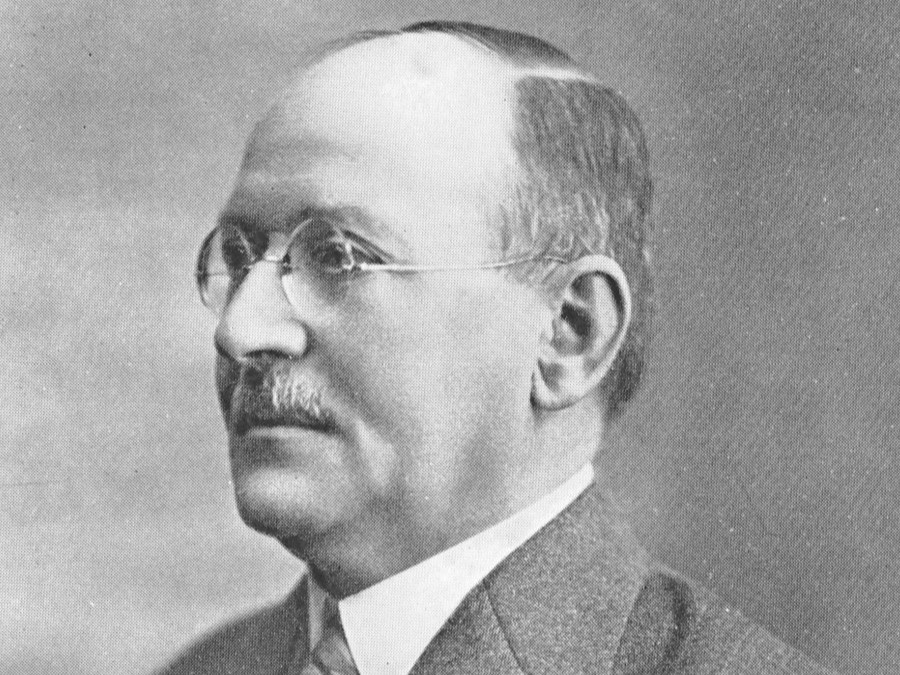
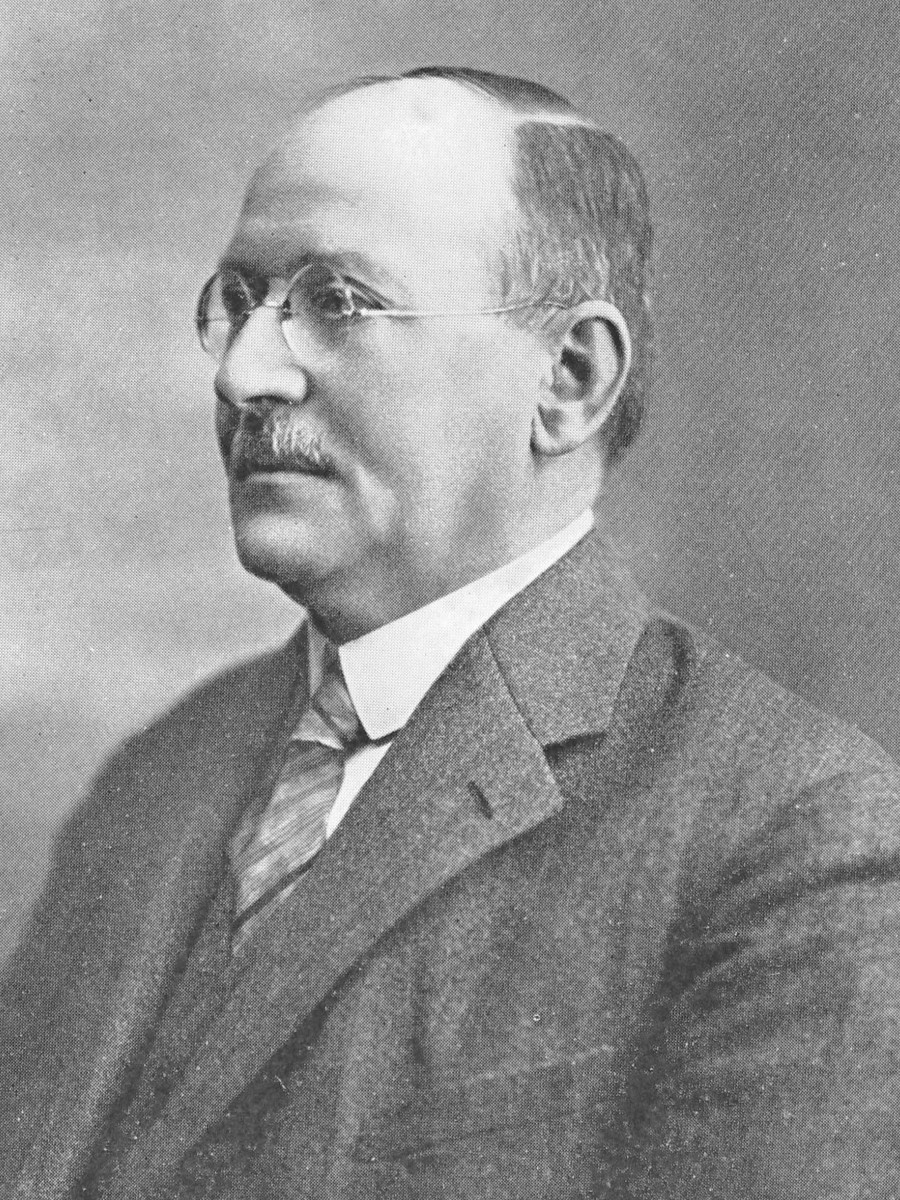
Herman Theodorus Obbink was born on 23 January 1869, at the Rikkert farm in the Aalten rural district of Heurne. He was a twin brother of Johan Obbink, who was, among other things, co-founder of the Dairy Factory and ‘de Landbouw’ in Aalten.
On 16 September 1889, Herman, aged 20, left for Doetinchem, and lived there on the Burg. van Nispenstraat (link). The Latin school (later State Gymnasium / Municipal Lyceum) was located there.
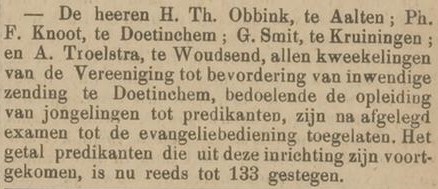
On 20 September 1892, he left Doetinchem for Utrecht, where he studied at Utrecht University. Subsequently, he served as a minister in Hoogersmilde, Kamperveen, Middelburg, and The Hague. On 2 December 1901, he obtained his doctorate in Utrecht with the thesis “The Holy War according to the Quran”.
On 20 April 1897, he married Jantine Gérardine ten Cate (1874–1949). The couple had three sons.
Professor
In 1910, he was appointed professor at the University of Amsterdam with the teaching assignment “General History of Religion and the History of the Israelite Religion”. His inaugural lecture was titled “The Significance of Egypt and Babylonia in the Ancient Religious World”.
In 1913, he was appointed Professor of Theology and History of Religion at Utrecht University. His inaugural lecture was titled “On Ancient Egyptian Conceptions regarding Death and Life”. The subjects of both lectures reflect his interest in the Egyptian and Babylonian-Assyrian world, which he always studied in connection with the Old Testament. At Utrecht University, he also gave language lectures in Assyrian and Ancient Egyptian.
Bible translator and court chaplain
In 1924, Obbink’s translation of the Old Testament was published. This was supplemented in 1927 with a translation of the New Testament by his colleague Annéus Marinus Brouwer (1875–1948). The translation, the “Utrecht translation“, is usually referred to as “Obbink and Brouwer”. He was rector of Utrecht University in 1928/1929. In 1939, he retired; his son Hendrik Willem Obbink succeeded him.
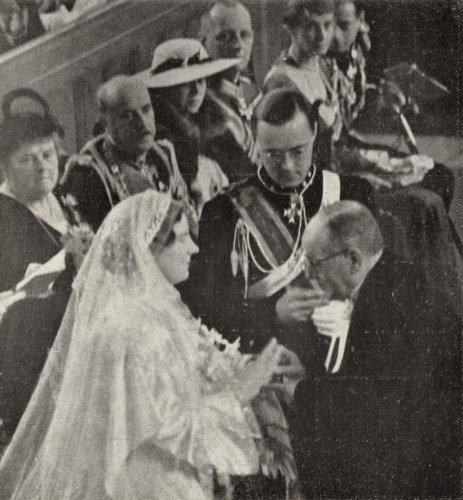
From 1929 to 1947, Obbink was a court chaplain. In that capacity, he officiated at the wedding of Queen Juliana and Prince Bernhard in 1937. He also baptized Princess Beatrix and led the funerals of Queen Emma and Prince Hendrik, the husband of Queen Wilhelmina (source).
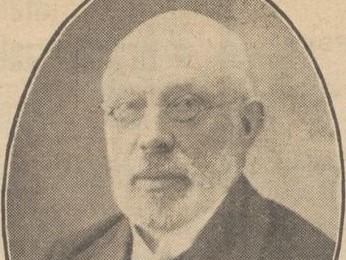
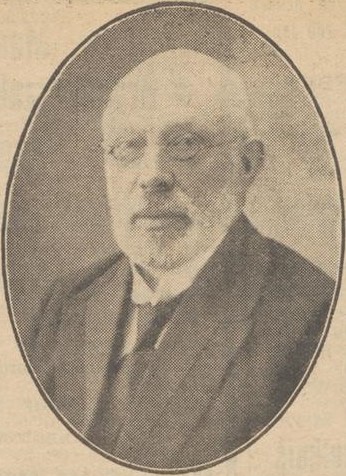
Nieuwe Vlaardingsche Courant, 18 November 1896Obbink officiates at the wedding of Juliana and Bernhard (1937)
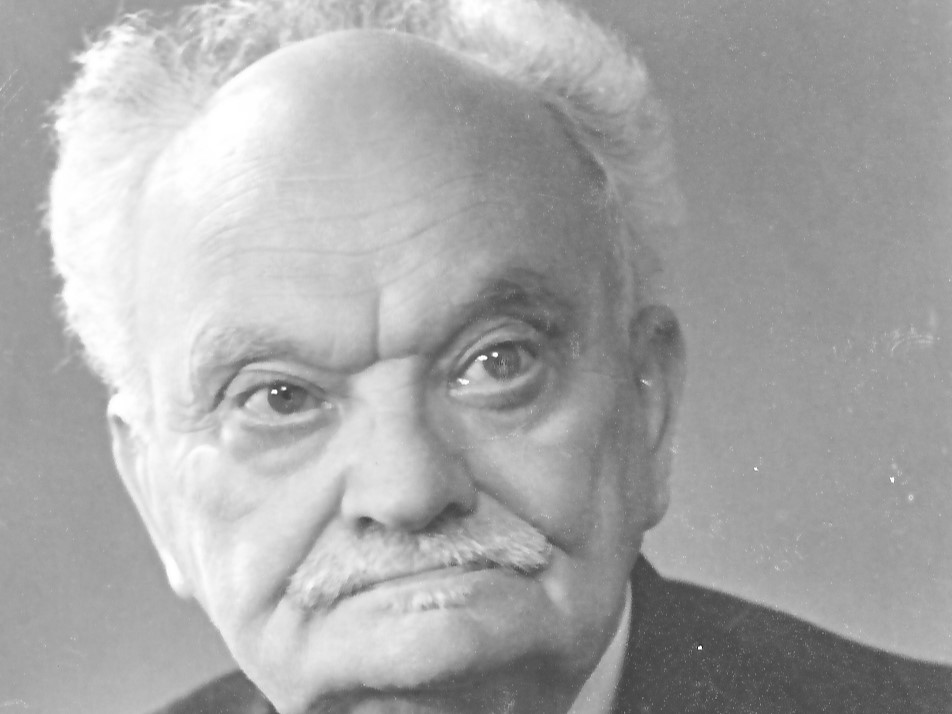
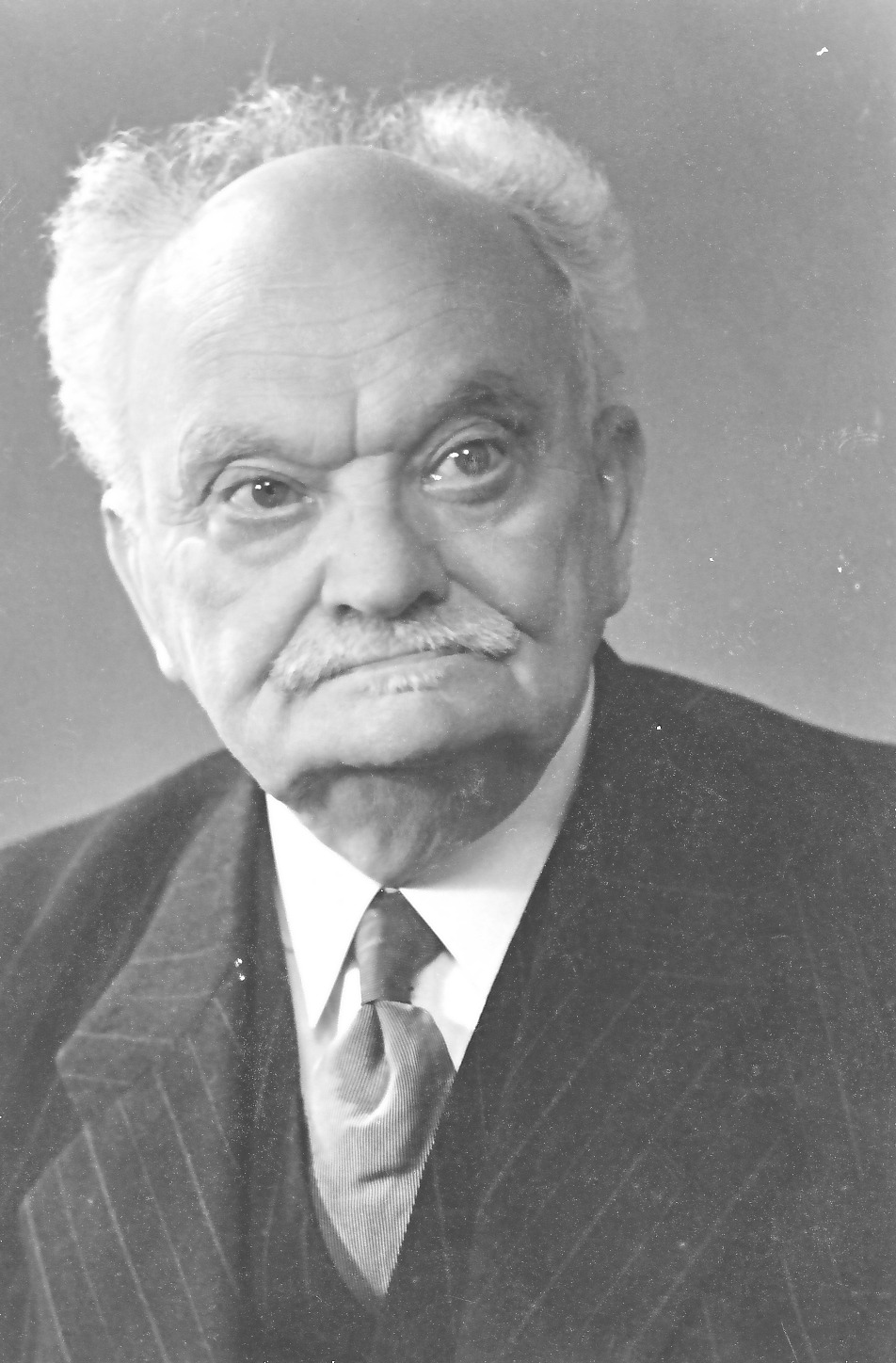
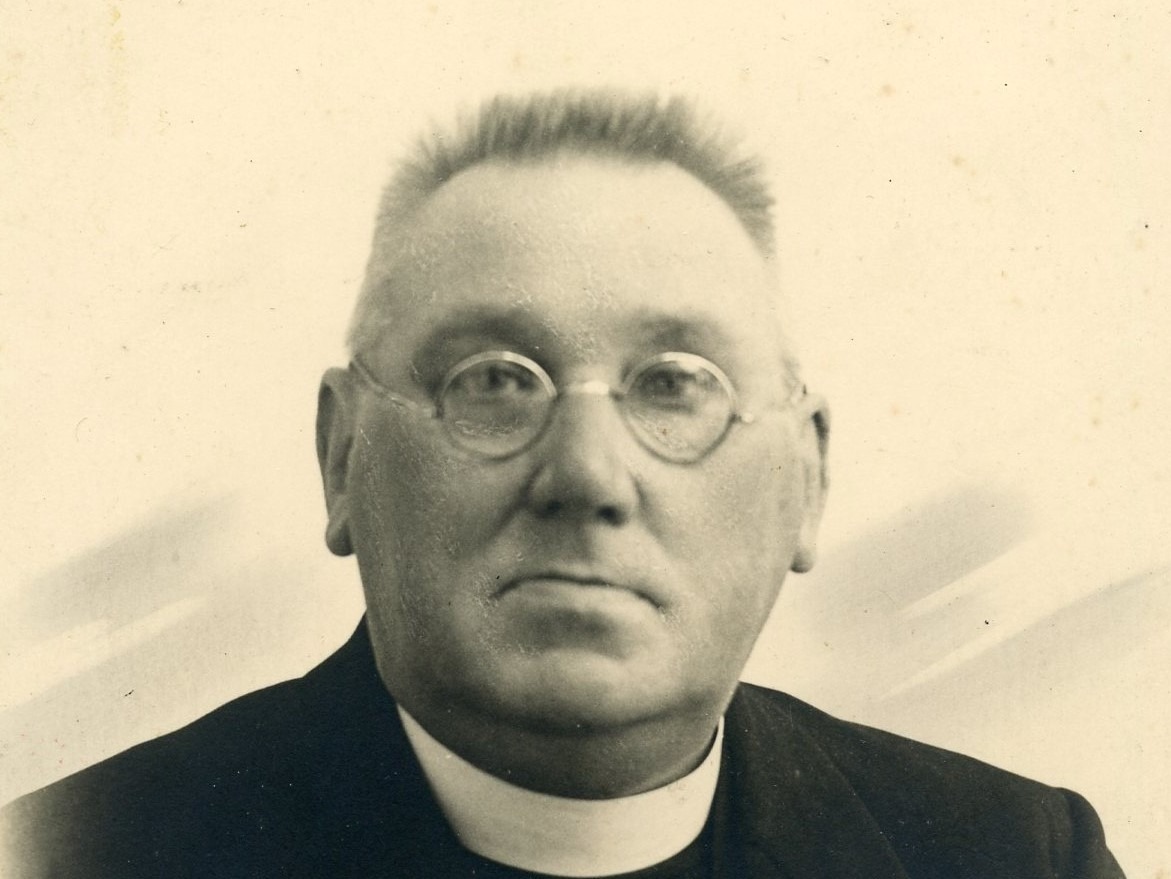
Jan Derk Stegeman was born on 26 July 1875 in Dedemsvaart, the son of religious education teacher Frederik Stegeman and Janna Harmina te Winkel. He attended the municipal gymnasium in Doetinchem and subsequently studied for a year at the Municipal University of Amsterdam, followed by several years at the University of Utrecht.
After Stegeman was admitted to the gospel ministry in the Dutch Reformed Church (Nederlandse Hervormde Kerk) by the provincial church board of Friesland in May 1899, he was ordained on 3 September of that same year as minister of the Reformed parish of Nieuw Amsterdam by the Reverend J.C. van Hoeve, minister in Schoonebeek.
Aalten
On 24 August 1899, Jan Derk Stegeman married Hendrika van Dorp (born in Zoetermeer, 24-10-1873) in The Hague. Together they had six children. In 1913, he moved to Aalten as a minister for the Reformed parish. From 1920 onwards, he dedicated himself to the Reformed school, serving as chairman of the board from 1920 to 1946. He lived in the Reformed rectory on Whemerstraat.
The Reverend Stegeman was known as a highly witty and striking personality. He enjoyed an excellent relationship with his colleagues, who affectionately nicknamed him ‘the bishop’. In September 1929, he celebrated his 30th anniversary in office, and in 1964 his 65th anniversary—just a year before he turned 90! In 1955, the Reformed school on Varsseveldsestraatweg was named after him: the ‘Ds. Stegemanschool‘.
Nieuwe Veendammer Courant, 14 January 1913
Retirement
Following his retirement (emeritaat), Stegeman remained active in many fields, including conducting pastoral visits to the elderly, supporting the temperance movement, and nursing the sick. He also frequently filled pulpits as a guest preacher. For many years, he was the treasurer of the classical missionary society within the Zutphen classis, secretary of the board of the Juliana School, a board member of the Breukelaar School, and a board member of the Aalten branch of the Netherlands Bible Society.
Furthermore, Stegeman was a highly active member of the editorial board of the weekly magazine De Wachter. He also authored the books Aan mijne gemeente (“To My Congregation”, published by Gebr. De Boer, 1938) and Van rijke dingen (“Of Rich Things”, published by De Graafschap, 1941).
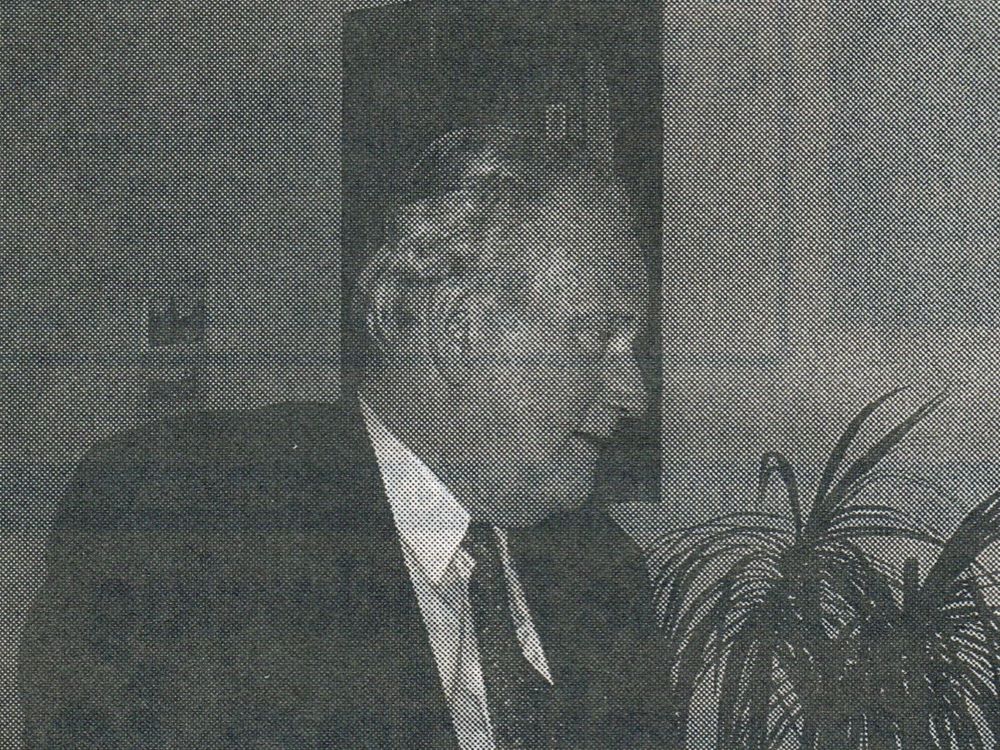
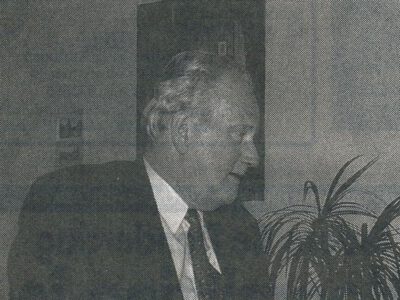
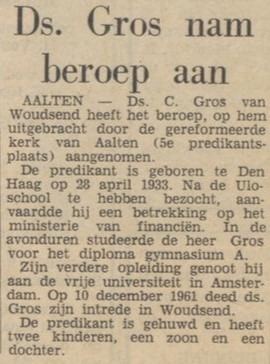
Cornelis (Cor) Gros was born on 28 April 1933, in The Hague, as the son of police officer Jacob Gros and Nieske Poortinga. After completing ULO secondary school, he began his career at the Ministry of Finance. In the evenings, he studied for his Gymnasium A diploma. He received his further education at the Vrije Universiteit Amsterdam. On 10 December 1961, Rev. Gros was inducted as a minister in Woudsend.
From 8 May 1966, Gros was associated with the Reformed Church of Aalten. He served here for 32 years until his retirement in 1998. At the end of April that year, he received a Royal decoration from Mayor Bouwers of Aalten.
In an interview with the regional weekly newspaper Achterhoek Nieuws, published on 22 April 1998, Gros shared his experiences: “I certainly had certain expectations. But what it truly means to be a minister, you only know once you are one. It can be disappointing. However, it can also, as in my case, be even more beautiful than you had expected.”
The fact that Gros became a minister is more or less thanks to the captivating way Cor Bruijn describes life on an island in the book Sil de Strandjutter. “As a boy of about ten, I read Sil de Strandjutter and I thought to myself: how do I get to such an island,” Gros said. “There were three possibilities: as a minister, as a doctor, or as a teacher. I knew quickly that it would be a minister.”
Dagblad Tubantia, 3 January 1966
In 1966, he moved with his family to Aalten, where he became the minister for the north-west district, a position he held throughout his career. “I am not a man who jumps through churches like a flea,” Gros explained. “And in Aalten, my family and I liked it so much that I didn’t want to leave. The people of Aalten are good people. I experience them as incredibly cordial. And they also know how to keep their distance, so I never felt like I was being lived by others.”
Gros enjoyed the interaction with the people in his district the most. “My life was dedicated to that,” he said. “I wanted to be there for them when they needed me and, in those situations, to be able to mean something to them in all modesty. Experience has shown that my presence was especially desired in sad situations. I tried to empathize with people, to listen a lot, and sometimes to speak. Pastoral care is for the most part listening. I have always done my work with satisfaction. The trust and gratitude that people gave me were incredibly great.”
Gros held numerous ecclesiastical positions at classical, provincial, and national levels. Among other roles, he was chairman of the Synod of Gelderland and of the Deputies for Spiritual Care Abroad. After his retirement, he was a board member of the local broadcaster De Lindeboom for many years, where he also presented several programs.
The last months of his life, Gros lived on Geurdenstraat in Aalten. He passed away on 21 August 2011, at the age of 78. The service of Word and prayer, preceding his funeral, took place in the Oosterkerk. Cor Gros was buried at Berkenhove cemetery.
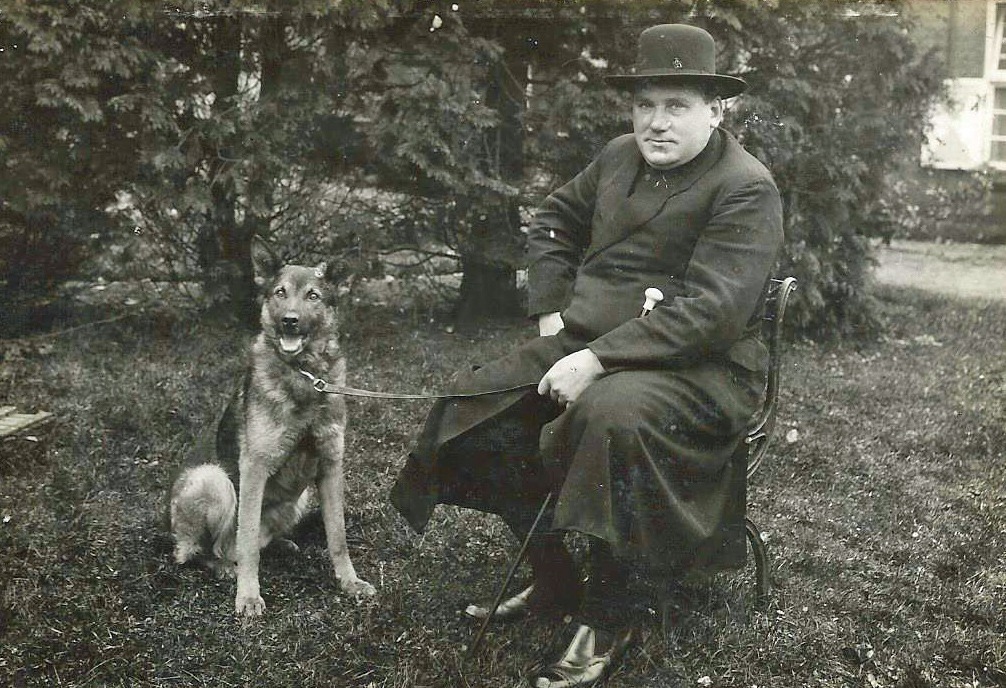
Pastor Christianus Franciscus Bonifatius van Rooijen (1876–1945) was a well-loved figure. He commanded great respect not only among his parishioners but also among the Jewish residents of Aalten. During his walks with his loyal German Shepherd, Frits, he would tip his hat and greet Jewish fellow citizens with a slight bow.
Bombing Raid
On the afternoon of Sunday, 28 January 1945, many people were gathered in the Roman Catholic Church for the Benediction (Lof). Suddenly, a number of ‘Jabos’ (Allied fighter-bombers) broke through the cloud cover and dropped their bomb load. On the Kemena, Admiraal de Ruijterstraat, and Stationsstraat, the damage was limited to property.
At the Roman Catholic Church, however, the consequences were more severe. One bomb fell in front of the church, and another struck the rectory. Panic ensued, and the blast pressure caused statues to fall from their niches and walls to collapse.
The churchgoers escaped unharmed, though they were covered in dust and many suffered bruises and abrasions. There was a massive bomb crater in front of the main entrance to the church. However, the bomb that had struck the rectory had more tragic consequences.
The pastor’s housekeeper, 57-year-old Johanna Maria Klein Rouweler, was severely injured and passed away a few days later in the emergency hospital in Harreveld. Pastor Van Rooijen also lost his life and was not discovered until hours later that night. His death touched the hearts of residents of all denominations, and his funeral at the Roman Catholic cemetery on Piet Heinstraat was attended by a great many people.
20th Anniversary of Priesthood
In 1936, Pastor Van Rooijen celebrated 20 years in the priesthood, and De Graafschapbode newspaper devoted an article to this anniversary:
“Tuesday, 8 December, will mark 20 years since the Reverend Pastor Van Rooijen was installed here as successor to Pastor Wubbels, who departed for Dalfsen. On this milestone in the pastoral life of Pastor Van Rooijen, we requested him to tell us a little about the past two decades. Although His Reverence did not consider 20 years an official milestone usually celebrated, he was kindly prepared to provide us with some information and to pose for our illustrator.
Pastor Van Rooijen was born on 13 February 1876 in Utrecht. After attending school there, he completed his studies at the Seminaries in Culemborg and Rijssenburg. His first post as curate was Oosterhout (Gelderland), a position he later exchanged for the Twente industrial centre of Enschede. From there, Curate Van Rooijen was installed as Parish Priest here on 8 December 1916.
Over the past 20 years, the jubilarian has experienced all the ups and downs—in recent years, especially many ‘downs’. He worked here alone until 23 August 1935. On that date, he received the assistance of Curate J. Snoeren.
When we speak of the ‘downs’, we know we have touched upon a subject very dear to His Reverence’s heart. It is well known, even among those of other faiths, that Pastor Van Rooijen personally does a great deal to alleviate the suffering of his parishioners, but also how indignant he often is when young people, who earn a decent wage, show so little willingness to contribute.
A well-known example is the daily provision of a free glass of milk to children at the Roman Catholic school who are in need. This milk distribution has been running for two years now and is undoubtedly of great benefit to the general health of the younger generation. The ‘Hulp in Nood’ (Help in Need) fund of the Roman Catholic Workers’ Association, to which members contribute a small weekly amount to assist one another in emergencies (childbirth, illness, etc.), is also an initiative of the jubilarian. In the previous financial year, 385 guilders were raised in this manner.
Pastor Van Rooijen was particularly satisfied with the house visits he and the curate have made over the past 14 days, with the twofold purpose of assessing the situation in various households and collecting donations for the provision of clothing, blankets, and, if possible, a Christmas gift for needy families. To date, these visits have already raised over 800 guilders—more than His Reverence had dared to hope. That this should be so successful precisely in this 20th year will undoubtedly bring the jubilarian great satisfaction.
We shall suffice by mentioning that in these 20 years, the Roman Catholic Church has received a hot-air heating system, and during this time, the fashion vocational school and various sports associations have flourished.”