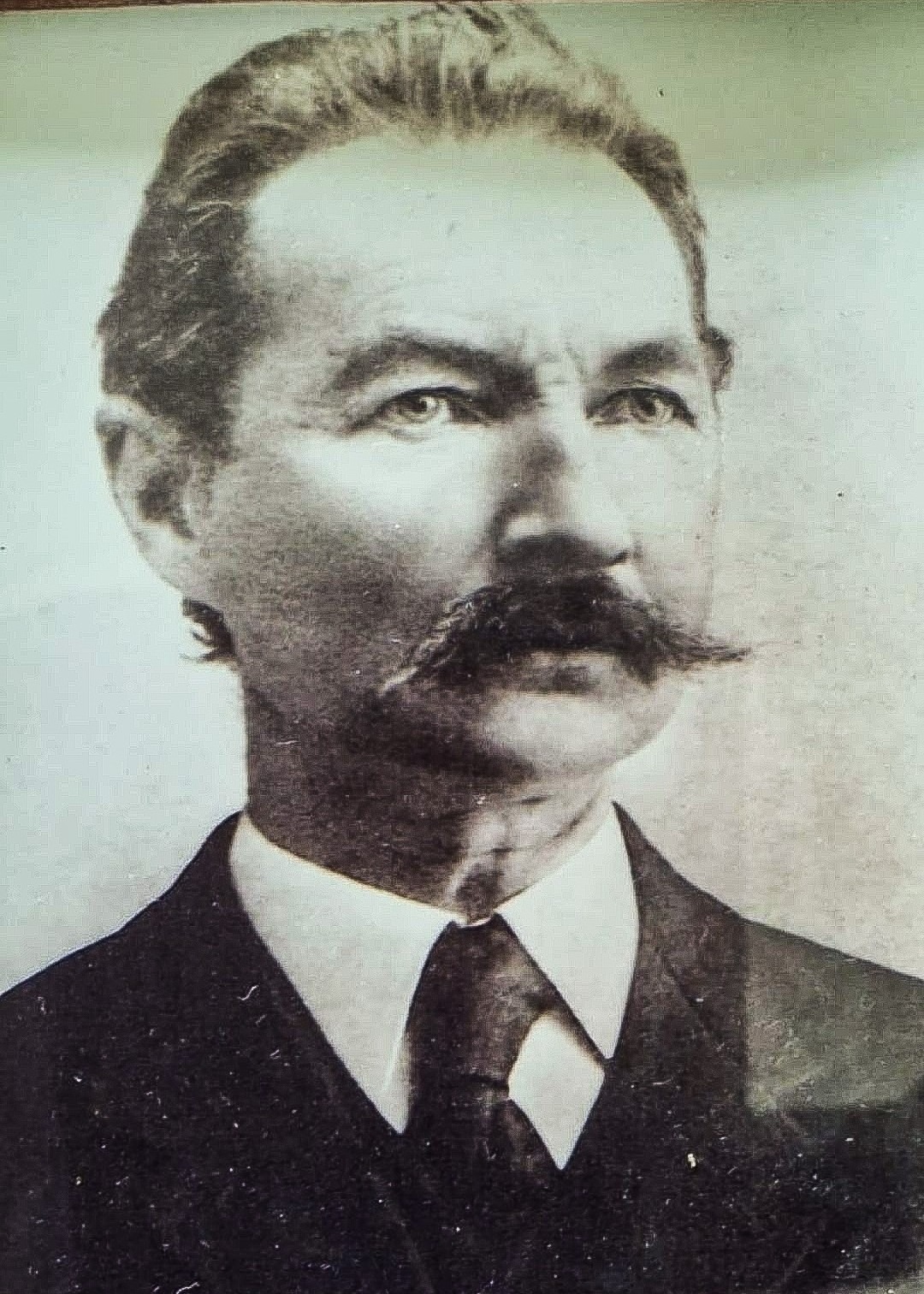
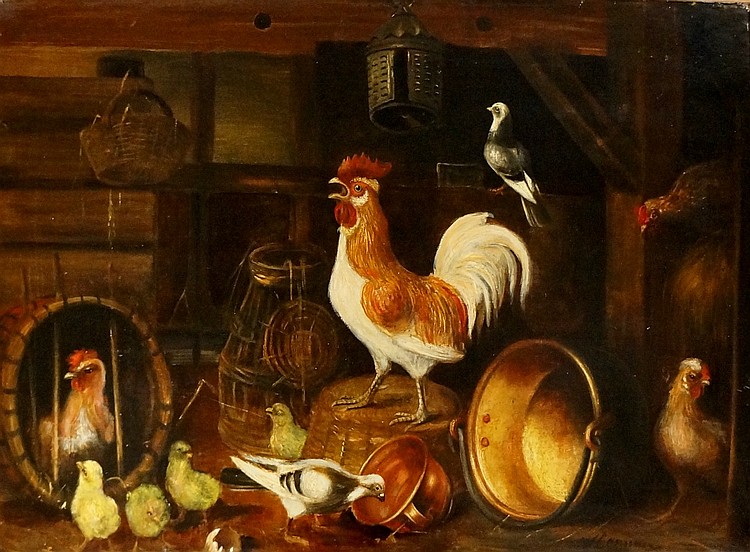
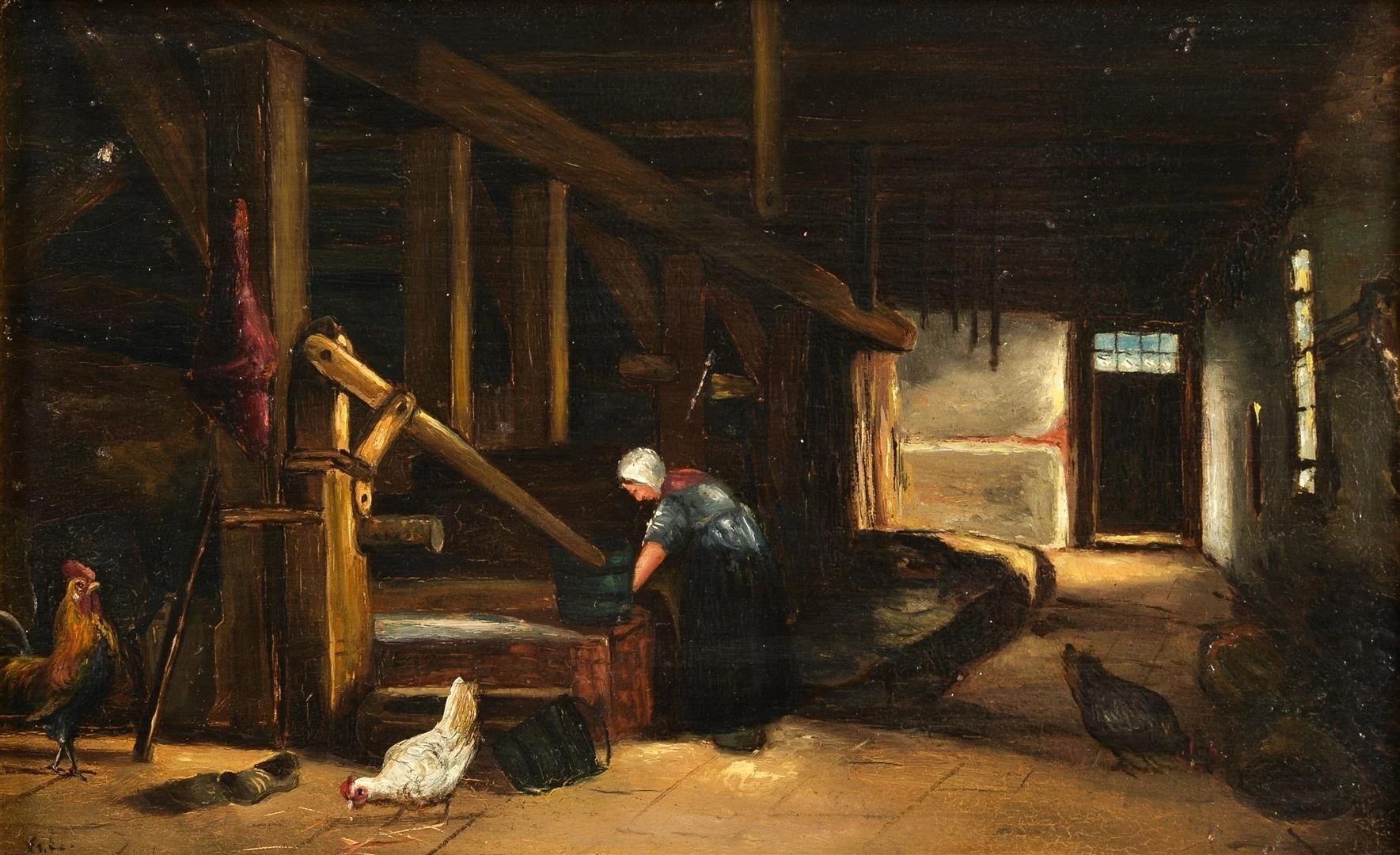
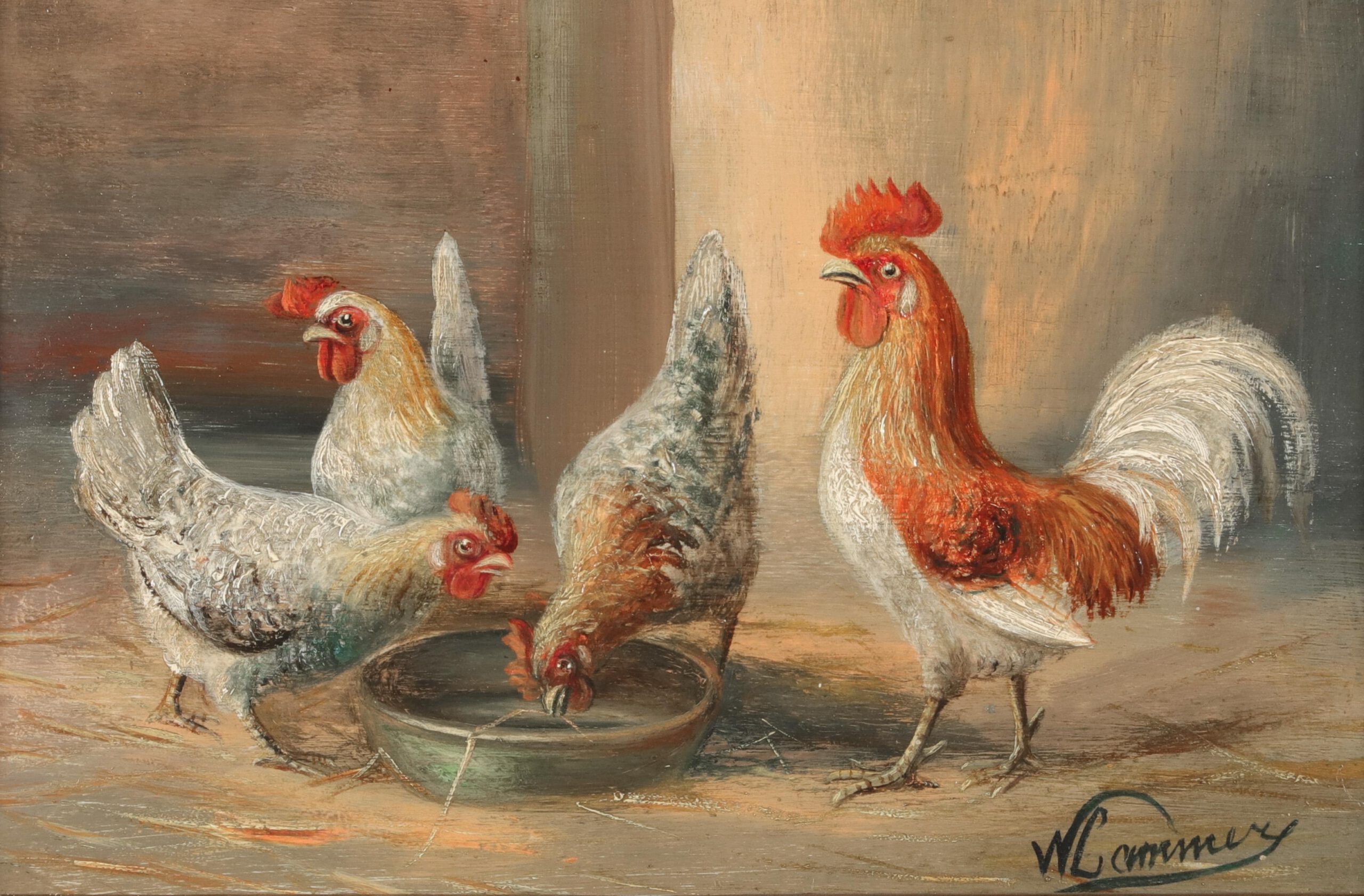
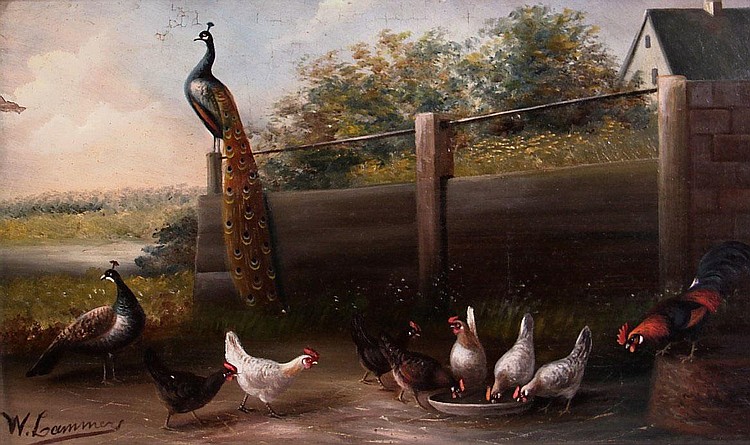
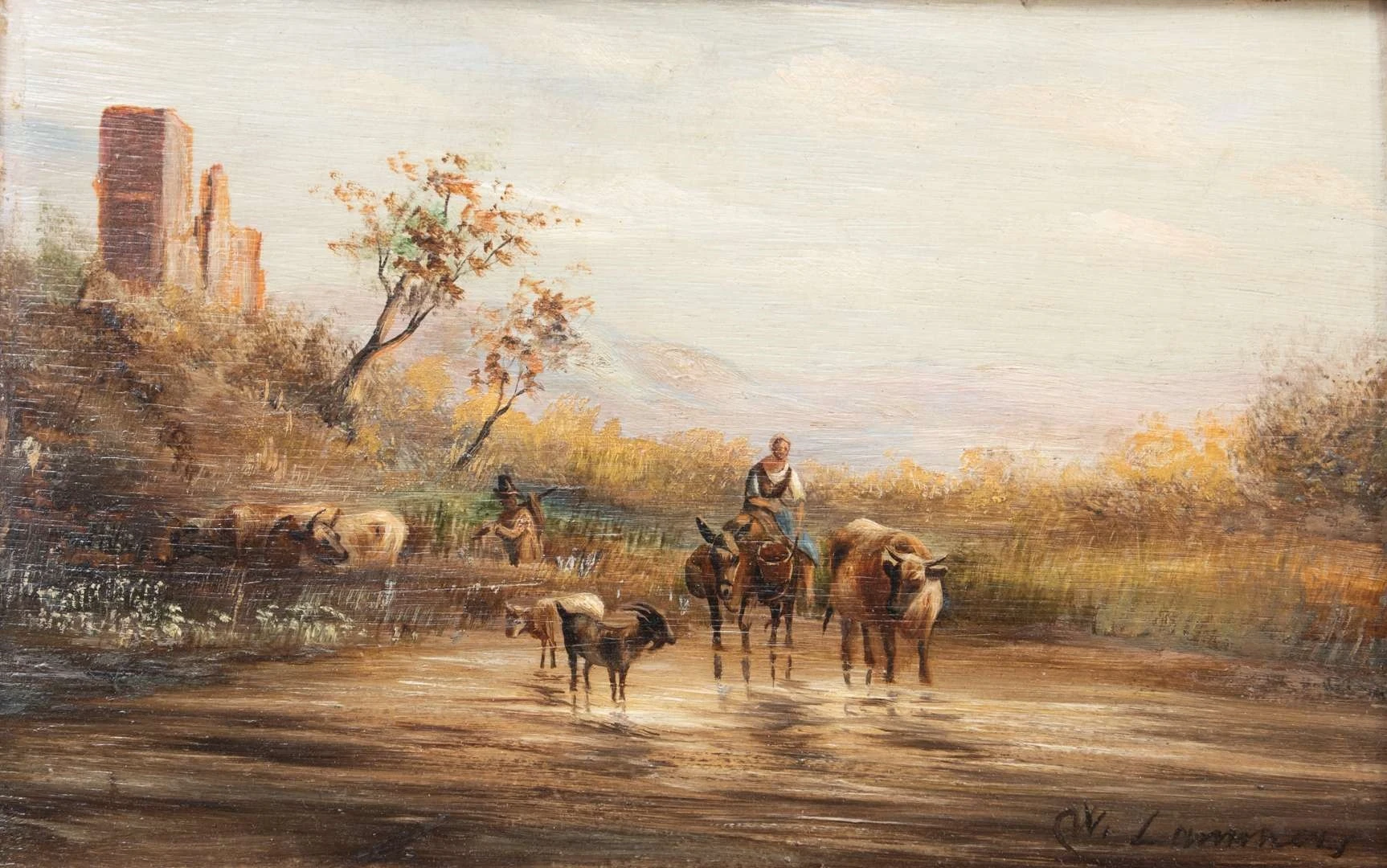
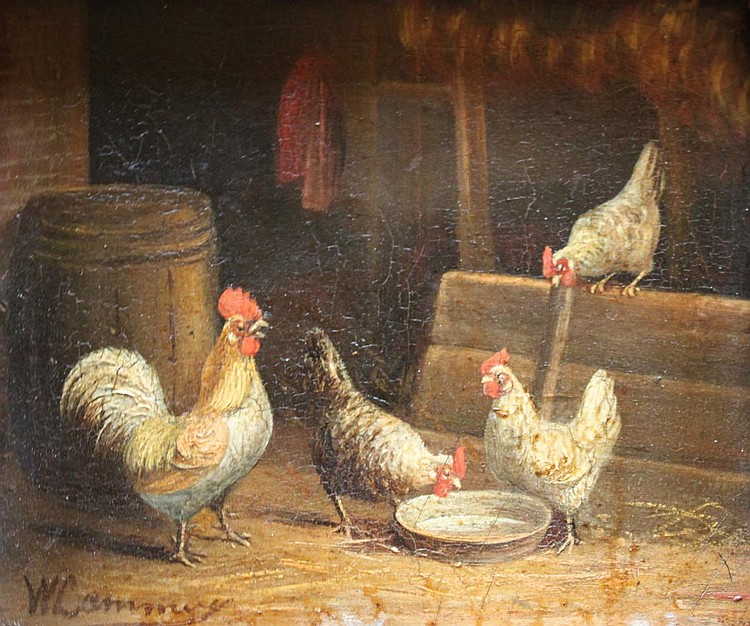
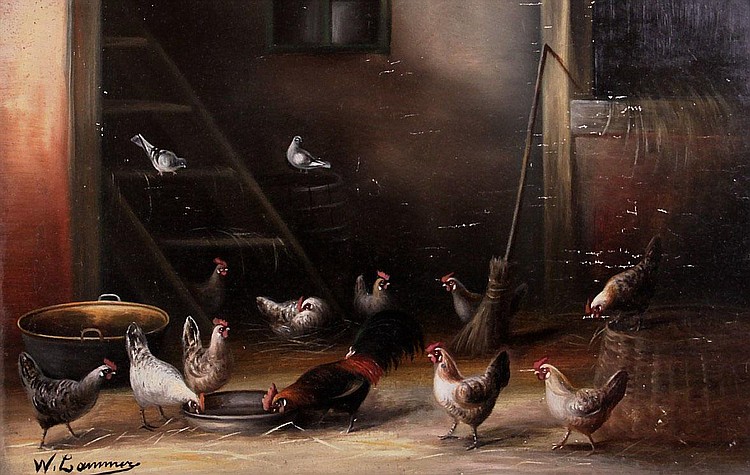
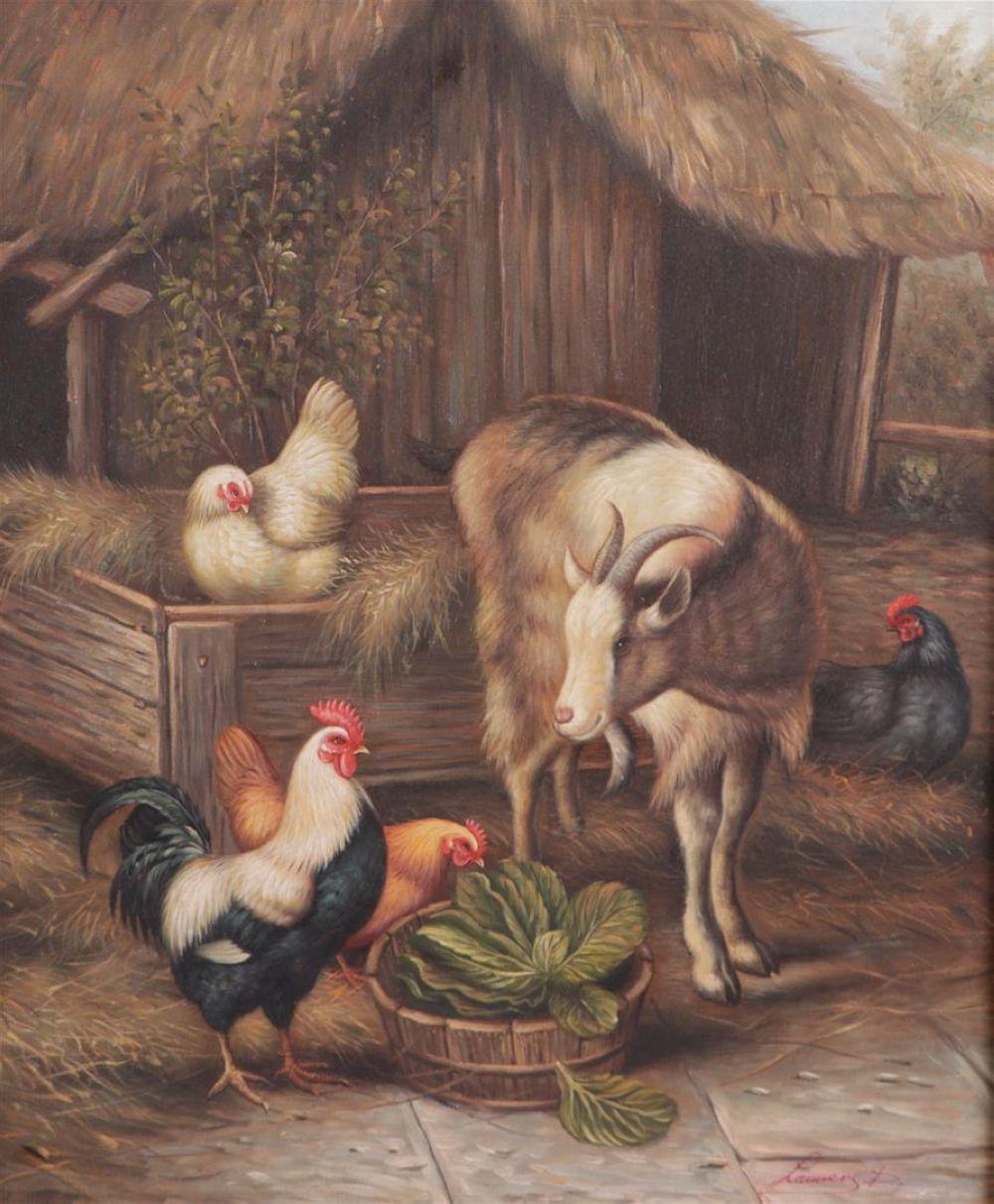
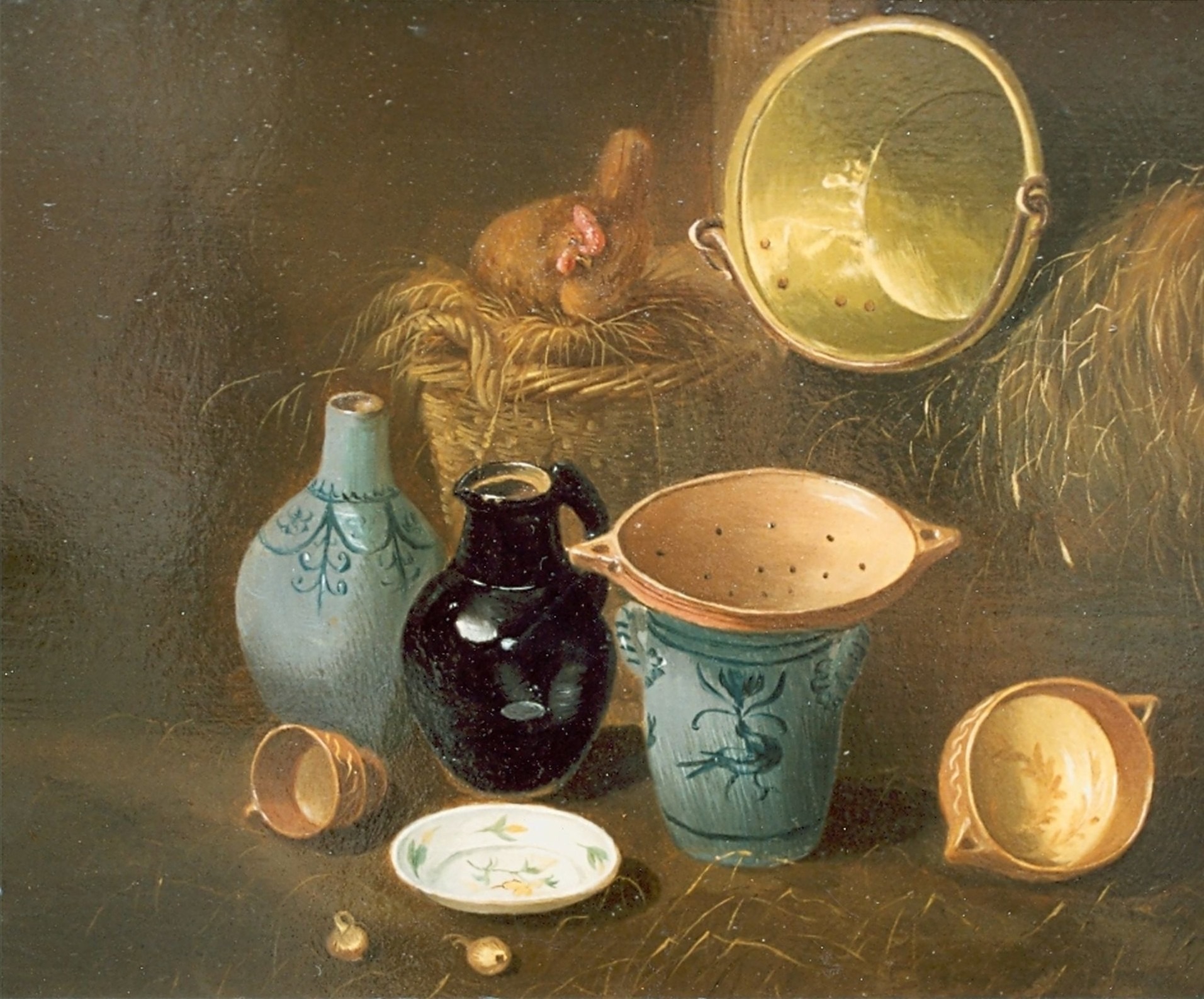
Wilhelm Albertus (Willem) Lammers (Aalten, 1857 – Ginneken, 1913) was a Dutch painter with a remarkable specialisation: poultry scenes. Until the end of the 19th century, hardly any attention was paid to the living conditions of poultry. Chickens typically slept in a farm barn or in trees. The painter managed to capture this vividly on canvas.
Lammers was born on 3 April 1857 at the Schulenkamp farm in the Dale hamlet near Aalten, as the son of Albertus Lammers and Theodora Huls. The family moved several times within Aalten – first to Kerkstraat, then to Dijkstraat and Hoekstraat. Willem Lammers was initially a shoemaker by trade. In 1880, he left for Gaanderen, and a few years later, he lived in Amsterdam.
In 1887, the Court-Martial in ‘s-Hertogenbosch sentenced him to four months of military detention for desertion. Upon his registration, his occupation was recorded as painter, his religion as Roman Catholic, his height as 1.66 m, with blonde hair, blue eyes, and a curly beard.
On 24 July 1890, Lammers married Wilhelmina van den Akker in Breda. The couple lived briefly in Aalten (Dijkstraat) and moved to Breda in April 1891. Eight children were born there: seven daughters—one of whom was stillborn—and one son. Lammers passed away on 4 February 1913 in Ginneken (municipality of Breda).
Arts
As an artist, Lammers was self-taught. He worked mainly in oil on canvas or panel, mostly in small to medium formats. His scenes depict chickens, chicks, and cockerels in their daily environment: around the feeding area, by the haystack, or inside a barn. He signed his work as “W.A. Lammers”, “W. Lammers”, or with the monogram “W.L.”.
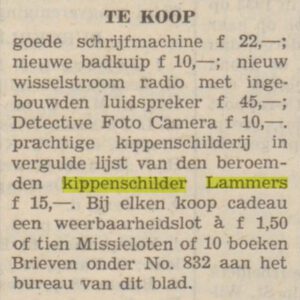
Wilhelm Albertus Lammers (1857–1913)De Volkskrant, 4 April 1939
Gallery
A selection of the work of Wilhelm Albertus Lammers:
Chicks, chickens, and a cockerelStable interior with a farmer’s wife and poultryA cockerel and three hensChickens, a cockerel, and peacocks in the farmyardHerders with cattleCockerelsPoultry in the stableSmall livestock on a farmStill life of kitchen utensils
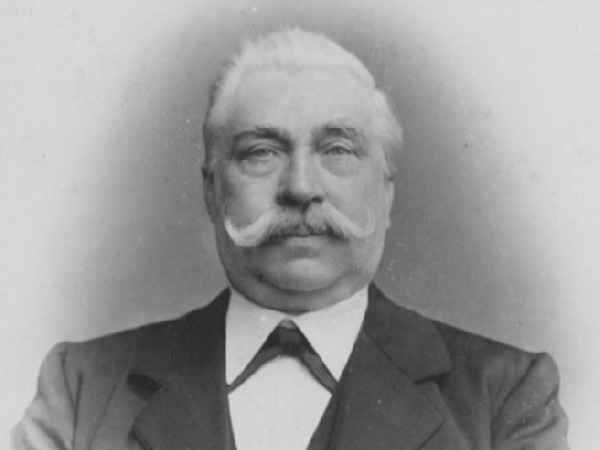
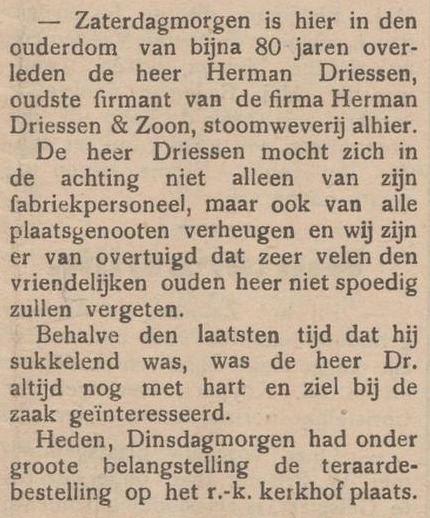
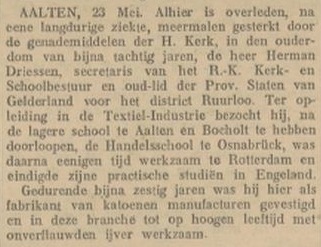
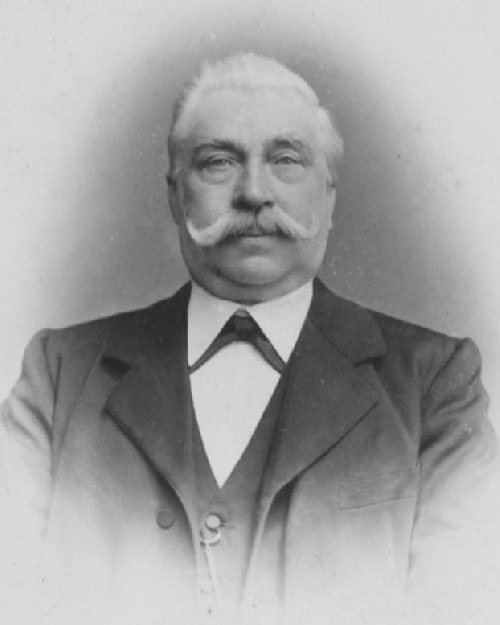
Herman Anton Frans Carl Maria Driessen (Aalten, 1831-09-22 – Aalten, 1911-05-20) was a textile manufacturer of great significance to Aalten’s textile history. He was the son of textile manufacturer Anton Driessen and Isabella Dees. In 1862, he married Anna Maria Theodora Mühren, a merchant’s daughter, in Neuenkirchen near Rheine (Germany).
Around 1863, he and his wife moved into a newly built house on the corner of Landstraat and Hoekstraat, at the location where his father had operated a cotton mill from 1827 to 1862.
In 1893, Herman Driessen retired from the management of Gebroeders Driessen. Together with his son Joseph, he founded a modern steam weaving mill with 34 looms at ‘het Blik’ on Hofstraat: the NV Stoomweverij Herman Driessen & Zoon, often abbreviated as HDZ. Alongside the factory, Herman’s new home was also built: the stately Villa Beukenhof.
Bernardus Hendrikus Bloemers was born on March 12, 1845, in Bredevoort, house number 7a, in the vicinity of the Misterstraat and Bekendijk. He was a son of Johannes Arnoldus Hendrikus Bloemers and Theodora Sessink. The family lived briefly on the Ambthuiswal, but departed for Terborg in December 1847.
Bernard’s life was no bed of roses. In 1896, he was arrested for vagrancy and, as punishment, admitted to the State Workhouse Veenhuizen I in Drenthe.
A wandering existence
The population register shows that Bernard certainly did not lead a settled life. From the age of sixteen, he stayed in numerous places, interspersed in his younger years with temporary returns to the parental home in Terborg:
1861–1862: ‘Esheren in Prussia’ (Esserden near Rees?)
1862–1864: Vethuizen, municipality of Bergh, as a farmhand on a farm
1867: Tegelen, Limburg
1867–1868: Beek near Sterkrade in Prussia (now Duisburg-Beeck)
1869: to Sterkrade again
1870: working as an iron molder near Ulft, after which he left for Isselburg
1872: Liège, Belgium.
Around 1873, Bernard married Johanna Francina Kok, born on January 21, 1848, in Oer near Ulft, presumably in Dinslaken. In 1877, he was recorded as “Bernardus Hendrikus Blummer” in the population register of Oosterhout near Tilburg, where he lived with his family, with the profession of sand molder. A few years later, they lived in Nijmegen, on the Steenstraat.
As far as is known, the couple had four sons:
Johannes Hermanus (Dinslaken, 1874 – 1876)
Johannes Arnoldus (Dinslaken, 1875)
Johannes Hermanus (Oosterhout, 1877 – Rotterdam, 1962)
Bernardus (Nijmegen, 1880 – Rotterdam, 1949).
In December 1883, the family left for Breda, and only a month later for ‘s-Hertogenbosch. In the population register, there is a difficult-to-read note behind Bernard’s name, possibly: “tried on October 9, 1884, in Utrecht”. Later, the family appeared in Rotterdam, where they seemed to settle permanently. Johanna passed away there in 1909.
It is striking that Bernard reappeared in Nijmegen in 1895 — without his family, coming from Zwolle. Why he left his family remains a matter of speculation. Poverty likely played a significant role. The frequent moves possibly point to an uncertain existence, in which one constantly sought better prospects — or fled from debts and problems.
In any case, Bernard’s life was no bed of roses, and the fact that he had fallen on hard times was confirmed shortly thereafter.
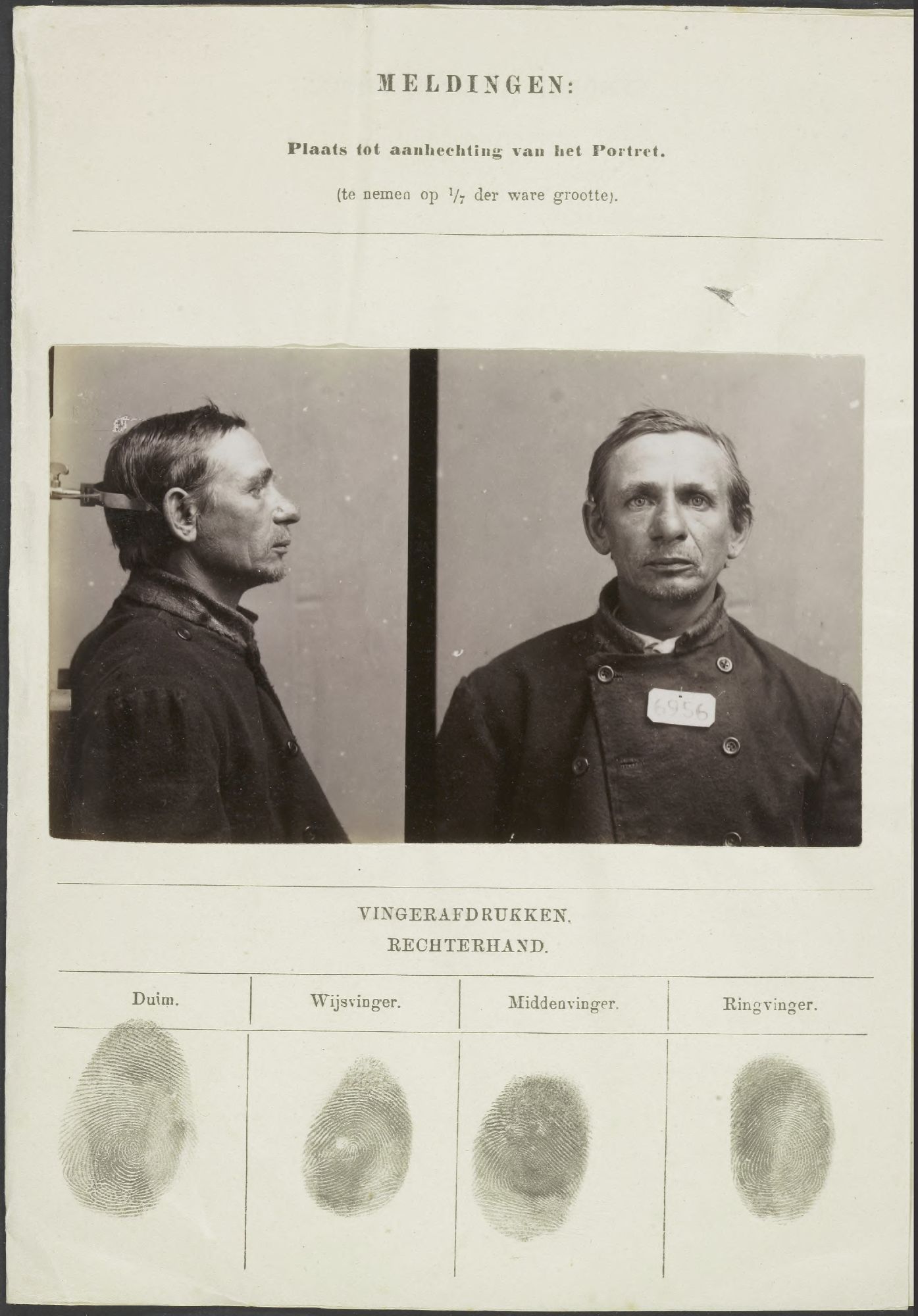
Description card of Bernardus Hendrikus Bloemers, Veenhuizen I, June 22, 1896
Admission to Veenhuizen
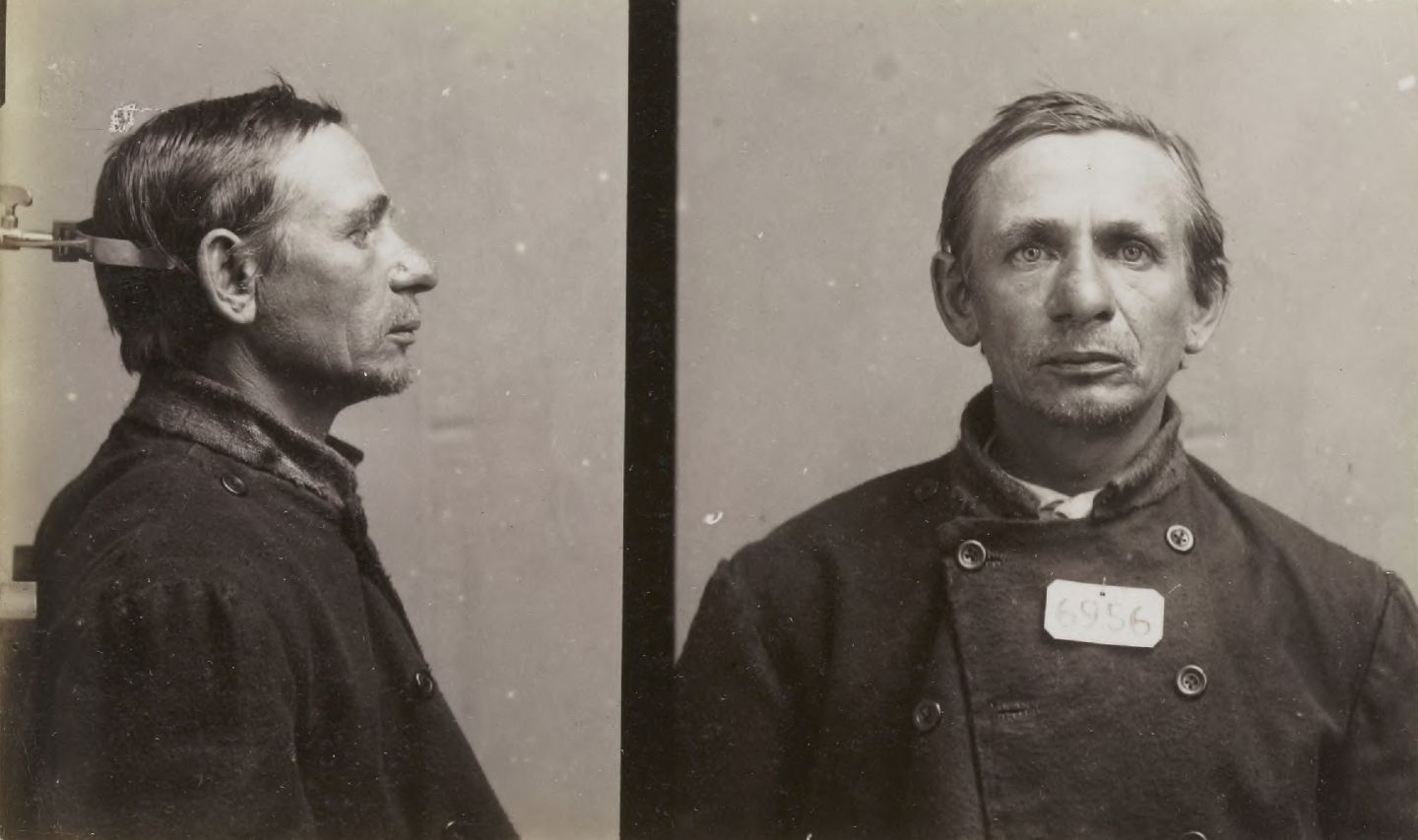
On June 22, 1896, Bernard was admitted to the Veenhuizen I State Workhouse for vagrancy. Upon entry, a description card was drawn up, featuring photographs, fingerprints, and a precise description of his appearance.
It is also mentioned that at that time he had no fixed place of residence (Nijmegen was noted as his last place of residence). His profession was ‘iron molder’, he had no identity papers, and was unmarried (!). He had been convicted of vagrancy in ‘s-Hertogenbosch. He had already been convicted twice before for the same offense.
The description card contains a detailed account of his physical characteristics, including his height (1 meter 51.9). His nose was broad, protruding, ‘with much blood showing through from below’ and with a scar on the right nostril.
What happened to Bernard after that remains unknown. We do not know if he ever left Veenhuizen, nor where or when he died.
Stay in the State Workhouse in Veenhuizen
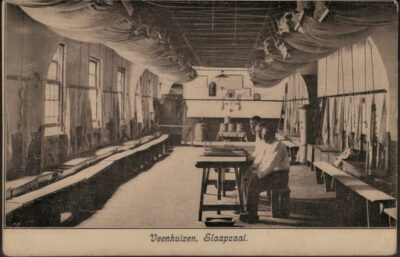
Dormitory Veenhuizen (photo: Prison Museum)
State Workhouse Veenhuizen 1 (the First Asylum) was a closed penal institution for men who had been convicted of begging or vagrancy. In this large-scale complex, discipline and labor were central.
The purpose of the institution was not only retribution, but also to effectively “combat vagrancy and begging” by purging society of individuals considered a nuisance and instilling discipline in them through forced labor.
Daily life was strict and sober under a military regime. Violations of the internal rules were punished with a stay in the punishment cell or a reduction in rations. The residents, referred to as wards, wore mandatory asylum clothing, slept in large communal wards, and were put to work six days a week. The labor consisted of heavy land reclamation on the heath or indoor work in workshops, such as weaving mats and repairing mailbags.
Derk Lijsen was baptised in Aalten on 20 December 1767, the son of Jan Lijsen (1736–1800) and Elisabeth Buunk (1739–1772). In 1797, he married Janna Geziena Degenaar, who also hailed from Aalten, after which the couple settled in Zutphen. Following the birth of their second child, Janna passed away. Derk remarried in 1804 to Sara Stakebrand, with whom he had four more children. He died on 26 October 1838 in his hometown of Zutphen.
Lijsen built a strong reputation in Zutphen as a master carpenter and architect, partly due to his network within the Reformed Church. His craftsmanship did not go unnoticed; he received commissions from the highest social circles. For instance, he carried out a minor renovation at Het Loo Palace for King Louis Napoleon (1778–1846)—he was tasked with plastering over (!) the paintings by Daniël Marot (ca. 1661–1752). Furthermore, in 1813, he produced a design (which remained unexecuted) for Napoleon Bonaparte’s (1769–1821) imperial stud farm in Borculo.
‘De Wildeman’ and Public Works
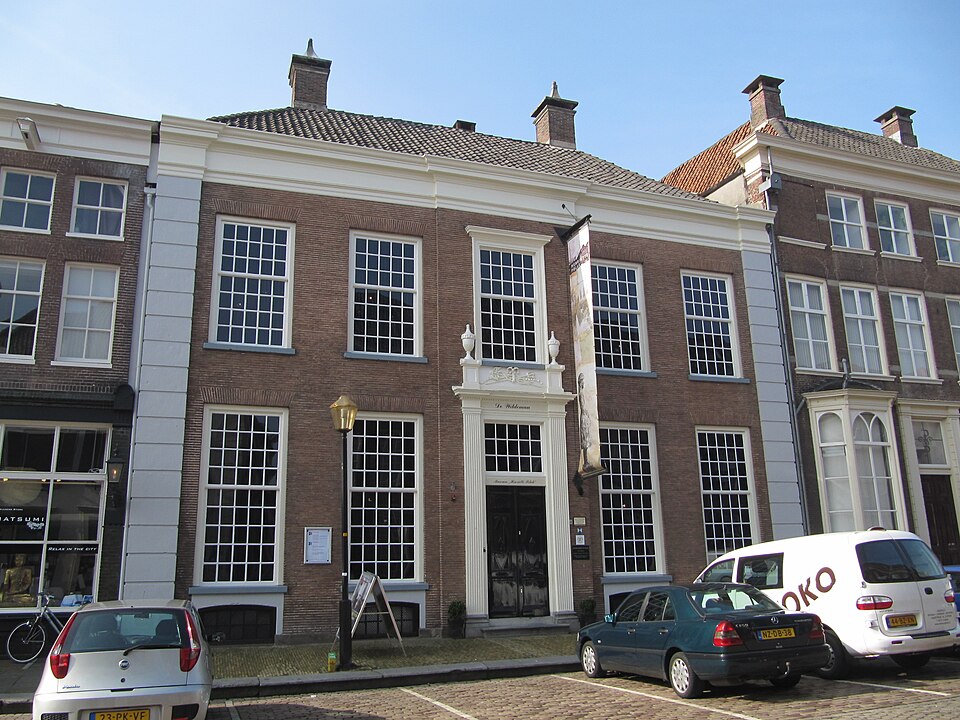
In 1804/1805, Lijsen was responsible for an extensive renovation of the front house of the prestigious residence ‘De Wildeman’ on Zaadmarkt in Zutphen, forging the exterior and interior into a visual unity. Although this was likely not his first commission, it is considered his earliest known work.
Various public commissions followed in the subsequent years. In 1818, Lijsen designed the first town hall of Winterswijk and was responsible for the construction and adaptation of classrooms in Warnsveld and the province of Overijssel. He also designed a villa in Dieren for a brother of the well-known statesman Johan Rudolph Thorbecke, a project completed in 1840.
De Wildeman, Zaadmarkt Zutphen, 2011 (Photo: M.M. Minderhoud, CC BY-SA 4.0)
Ecclesiastical Architecture
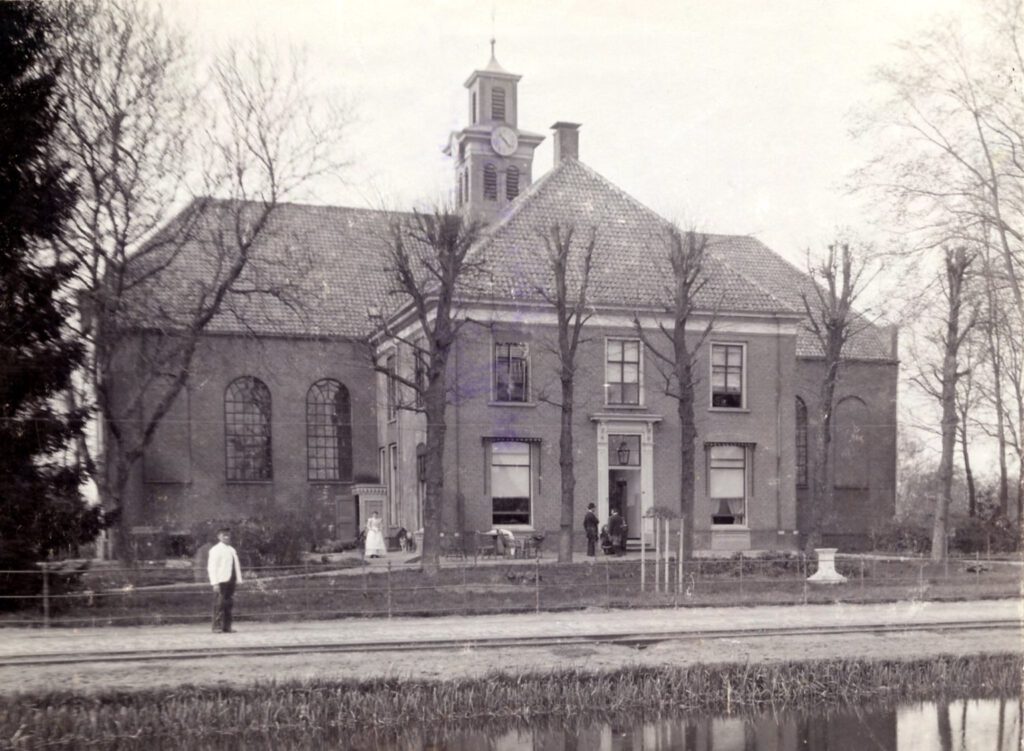
Reformed Church Dedemsvaart, ca. 1915
Lijsen was particularly active in church construction. He oversaw renovations to the Reformed Church in Vorden (1825 and 1836), the Broederenkerk (1826) and the Evangelical Lutheran church (1832) in Zutphen, as well as the schuurkerk (barn church) in Baak (1836). The Reformed Church of Dedemsvaart (1834) was also of his design. He provided the churches of Warnsveld and Dedemsvaart with a radial seating plan, in which the pews were arranged in a circle around the pulpit.
His final major commission concerned the Jacobskerk (St James’s Church) in Winterswijk in 1838. He drew up the building specifications for a large-scale renovation, including masonry and carpentry work, a new pulpit, and a fresh coat of paint. However, he did not live to see the execution; he passed away shortly after completing the plans.
Style and Monumental Status
Lijsen worked entirely in the Neoclassical style, following the fashion of his time. His designs were sober and symmetrical, almost without exception constructed in brick. A rare departure from this rigid style can be found in the lancet windows he applied during the renovation of several churches. The quality of his work is evidenced by the fact that all surviving buildings on which Lijsen demonstrably worked are now protected as national (rijksmonument) or municipal monuments.
A Family of Master Builders
Derk Lijsen was not the only talented builder in his family. His brother Hendrik Jan Lijsen (1765–1838) rose to become the overseer of Het Loo Palace. In addition to various building works around the palace, including the design of ‘Het Kleine Loo’ (1830), Hendrik Jan was responsible for the construction of the Grift Canal between Apeldoorn and Hattem (1829).
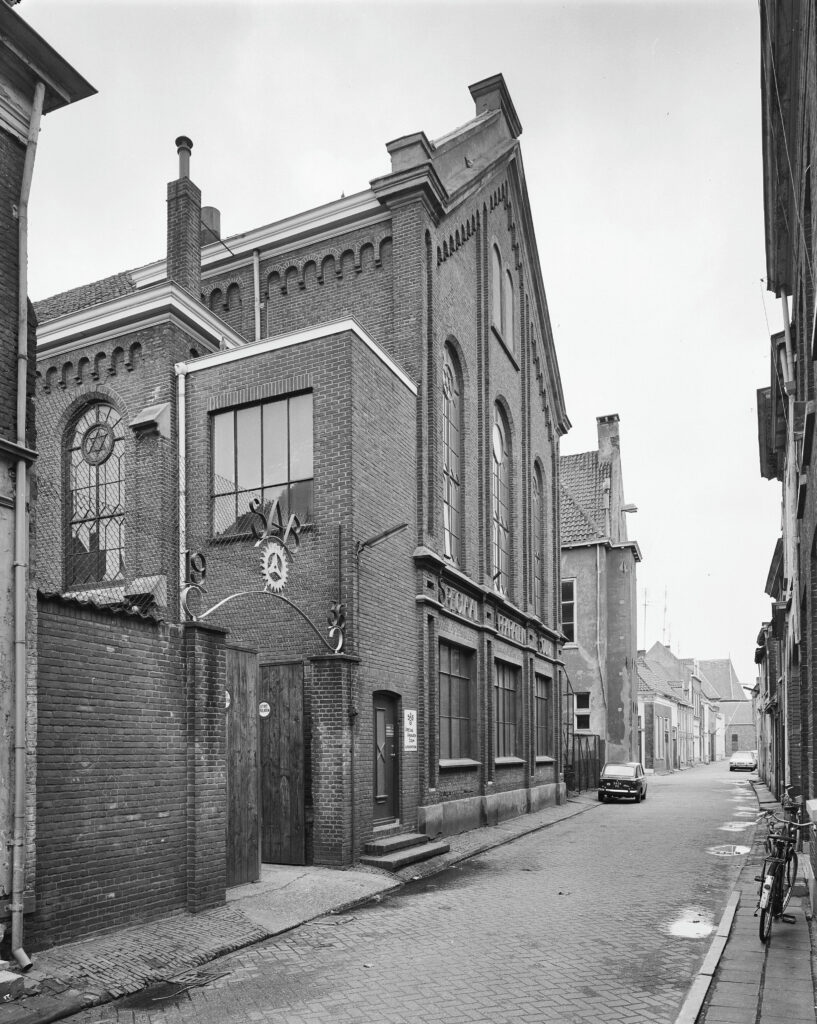
The tradition continued through the following generations. Four works are attributed to Derk’s son, Jan Lijsen (1805–1883), though these have since vanished. However, the most famous architect in the family became Derk’s grandson of the same name, Derk Lijsen (1835–1922). Between 1865 and 1908, he left a significant mark on the appearance of Zutphen and its surroundings with striking buildings such as the synagogue (1879), the labourers’ housing for David Evekink’s Foundation (1880–1896), the Buitensociëteit (1891), and the Groot Graffel asylum (1900–1908).
Zutphen Synagogue, 1977 (Photo: Cultural Heritage Agency of the Netherlands, CC BY-SA 4.0)
Anyone delving into the history of the Lordship of Bredevoort will inevitably come across the name Wilhelm van Haersolte tot Elsen. His name is forever linked to one of the most devastating disasters to strike the Achterhoek in the seventeenth century. As an administrator and military officer, he was at the helm of the region during a time of political tension, but it was a natural phenomenon that abruptly ended his life and that of his family.
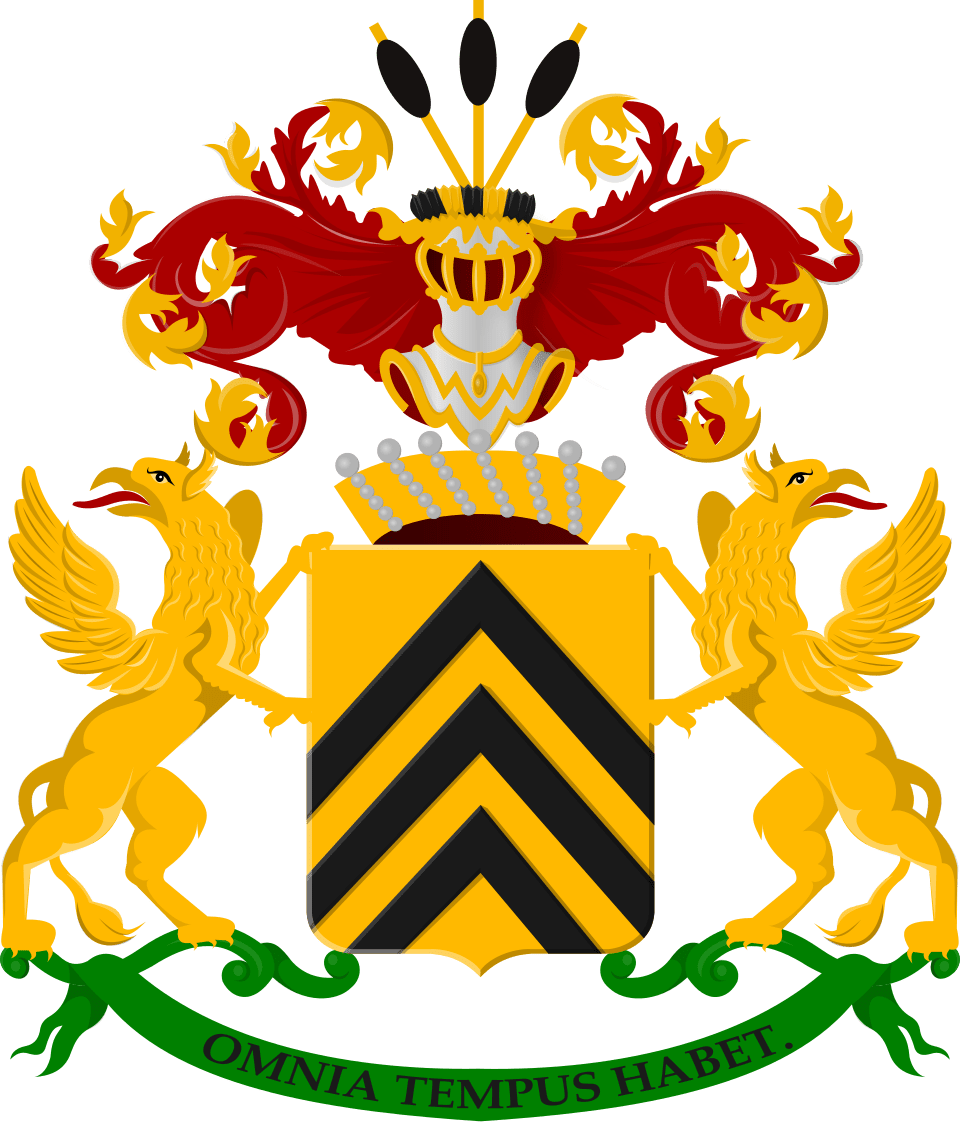
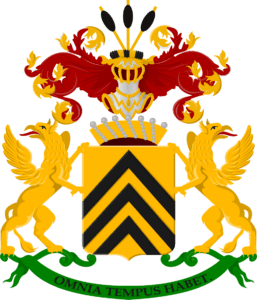
Coat of arms of the Van Haersolte family
Wilhelm van Haersolte was born in Zwolle around the year 1596, the son of Harmen van Haersolte and Anna van Hoeclum. He descended from a prominent noble family from Overijssel and, as was customary in those circles, chose a military career. As an infantry captain, he served in the States Army, the armed forces of the young Republic of the Seven United Provinces.
On 2 February 1630, he married Catharina van Brakel, with whom he would raise a large family. Eight children were born from their marriage, including Anthony (1637), Gerrit (1641), Assuerus (1643), Arent (1644) and Lodwich (1645). Furthermore, in 1638, a year after his appointment, Wilhelm and Catharina purchased the Elsen manor (havezate), which explained the addition of ‘tot Elsen’ to his name.
His bond with the Achterhoek was sealed in 1637. Following the death of his older brother, Arent van Haersolte, Wilhelm was granted the honourable and responsible position of drost and richter (drossard and magistrate) of the Lordship of Bredevoort. This meant that he held both the military command over the fortified town and the civil and judicial administration over the surrounding area, which at the time also included Aalten, Winterswijk and Dinxperlo. For his new role, Van Haersolte and his family moved into the imposing castle of Bredevoort.
Fate on a summer’s day
For nine years, Van Haersolte governed the region with a firm hand. The end of his term of office — and his life — came entirely unexpectedly, however, on 12 July 1646. That day, a severe thunderstorm swept across the Achterhoek. A fierce lightning strike hit the castle’s gunpowder tower, where vast quantities of gunpowder were stored at the time for the defence of the border region.
The ensuing explosion was catastrophic. The castle was virtually wiped off the map in a single blow, and the surrounding town sustained monumental damage. In total, 49 people lost their lives in this Gunpowder Tower Disaster (Kruittorenramp). Among the victims were Wilhelm van Haersolte himself, his wife Catharina and almost all of their children who were present in the castle at that moment.
Following this tragic death, Wilhelm was succeeded as drossard of the Lordship of Bredevoort by Georg Nicolaas van der Lawick.
The family’s legacy
The disaster almost brought an end to this branch of the Van Haersolte family. Only one son, the then six-year-old Anthonie, survived the drama because he happened to be staying elsewhere that day. Thanks to him, the family line did not die out; all modern-day noble descendants bearing the name Van Haersolte are directly descended from this young survivor.
Although the castle was never rebuilt to its former glory, the traces of Wilhelm van Haersolte are still tangible in the region. In the Sint-Joriskerk (St George’s Church) in Bredevoort is a fire bell that he donated to the community in 1644. In addition, during restoration work in the church, the historical tombstones of the drossard and his family members were rediscovered and restored to a place of honour, keeping the memory of this fatal history alive for the residents of the former Lordship of Bredevoort.
Sources
Gelders Archief (Arnhem): Archive of the Nassau Domain Council, inv. no. 685 (Ambtboek), containing the official registrations of the drossards and their appointments in the Lordship of Bredevoort.
Collectie Overijssel (Zwolle): Van Haersolte family archive (Haerst, den Doorn and Zuthem branch), inventory number 0237.1, inv. no. 335. This archive contains the personal and business documents of the noble family.
Staring Instituut:Bredevoort een Heerlijkheid (ISBN 90-9002135-3), an important standard work on the history of the fortified town, the castle and the region.
Transcription of Baptismal and Burial Registers of Bredevoort: Historical church registers containing details regarding the interment of Wilhelm van Haersolte, his wife Catharina van Brakel and their children in the choir of the Sint-Joriskerk following the disaster on 16 July 1646.
Kastelen in Overijssel: Documentation and historical background regarding the Elsen manor, the ancestral estate purchased by the couple in 1638.
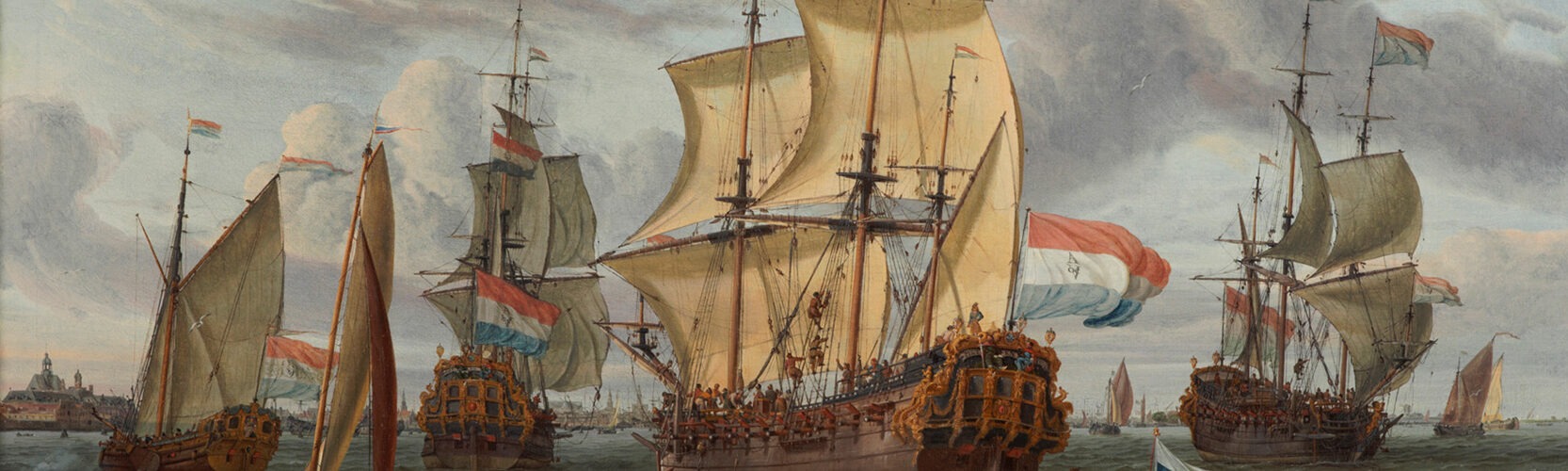
During the 17th and 18th centuries, over two hundred men from Aalten and Bredevoort enlisted on ships of the Dutch East India Company (VOC). Some were still minors; many never returned. What prompted them to trade the rural Achterhoek for a dangerous sea voyage to the East, thousands of kilometers from home?
The VOC and its administration
The VOC (1602–1795) was the world’s first multinational and grew into a powerful colonial enterprise with trade monopolies and its own military force. In nearly two hundred years, over 4,700 ships departed for Asia. In the 18th century alone, approximately 655,000 people were aboard VOC ships.1 Only a small portion came from the Achterhoek. From the records, we know over 200 names of men from Aalten and Bredevoort who entered the service of the VOC.
That we know this is thanks to the meticulous personnel administration. Personal details, roles, ships, destinations, and the reason for leaving service were recorded in the so-called ship’s pay ledgers. These sources have largely been preserved and can be consulted online via the website of the National Archives. The table at the bottom of this article was compiled based on these records.2
Aalten and the VOC: involved from the beginning
The involvement of Aalten residents with the VOC did not only begin when men enlisted as soldiers or sailors. An Aalten native played a notable role as early as its founding in 1602. Wessel Schenk, born in Aalten and later a merchant in Amsterdam, invested 30,000 guilders in the new company at that time. This made him one of the largest shareholders of the VOC.3
The service was risky: more than half died en route or in Asia, while only a third demonstrably returned alive. Enlistments took place throughout the 17th and 18th centuries, with slight peaks in the 1720s and 1760–70.
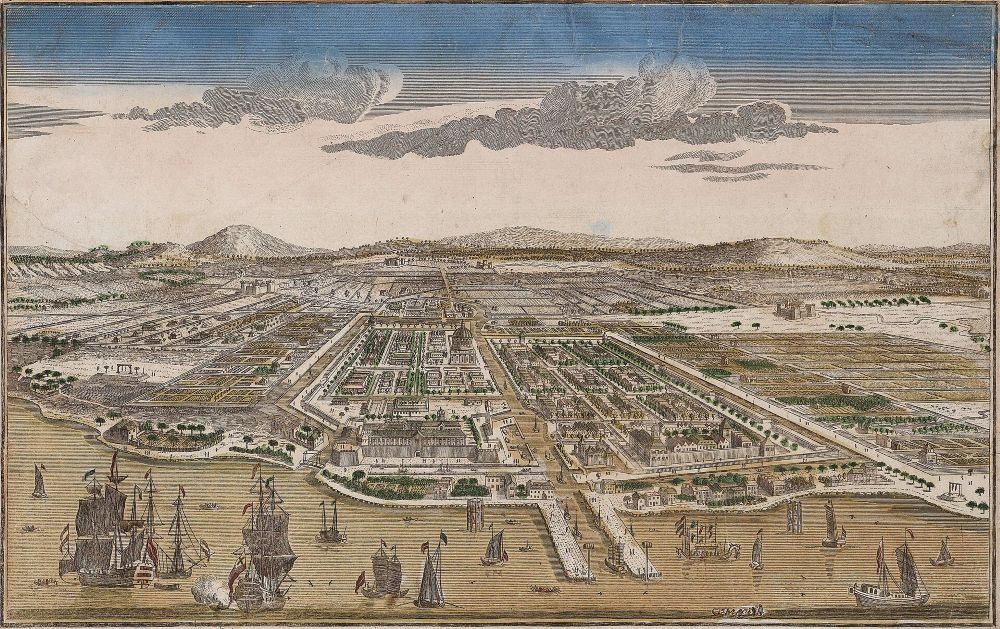
Optical print of Batavia in 1780 (source: Wikipedia)
Motives for departure
Why did these men choose an uncertain existence at sea? For many, it was a matter of poverty or a lack of prospects: a steady income with the VOC offered security. For others, the urge for adventure and independence played a role, a chance to see the world and escape the constraints of rural life.4
Military roles
Nearly half of the men from Aalten and Bredevoort held a military position. Until 1755, there was a garrison in Bredevoort5, which may have played a role in this. For military personnel, the VOC presumably offered the opportunity to utilize their experience with weapons and discipline, often for better pay and with more career prospects. At the same time, it is equally possible that men with experience in the civic guard were deployed for such roles. The departure of the garrison from Bredevoort seems to have had no demonstrable influence on the number of enlistments.
Names and data
The table below contains the details of individuals from Aalten and Bredevoort who were in the service of the VOC. Some individuals are listed multiple times because they made several voyages. This table is not flawless and is likely not exhaustive. For some individuals, it is not certain that they actually originated from Aalten or Bredevoort, as the origin is sometimes difficult to read and spelling varies. Partly for this reason, names are undoubtedly missing, but possibly also because parts of the administration have been lost.
The 📜 behind each name contains a link to the relevant entry in the National Archives, where the scan of the original document can also be viewed. A 🌳 refers to the family tree of the person in question on FamilySearch (free account required), where known – work in progress!
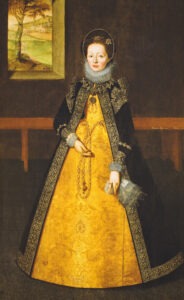
Gertrud van Myllendonk (1552–1612), also known as Geertruida van Millendonck, was a noble administrator in the German-Dutch border region. She was Lady of Drachenfels, Königswinter, and Anholt, and for thirty years the pledge-holder of the Lordship of Bredevoort (1582–1612).
Her reign took place in the midst of the Eighty Years’ War (1568–1648). While the region was torn apart by violence between Spain and the emerging Dutch Republic, she attempted to keep her territories out of the line of fire through a strict policy of neutrality. Although she was personally Roman Catholic and pro-Spanish, she took no side politically. In 1612, she transferred her rights over Bredevoort to Prince Maurice of Orange.
Early years and marriage
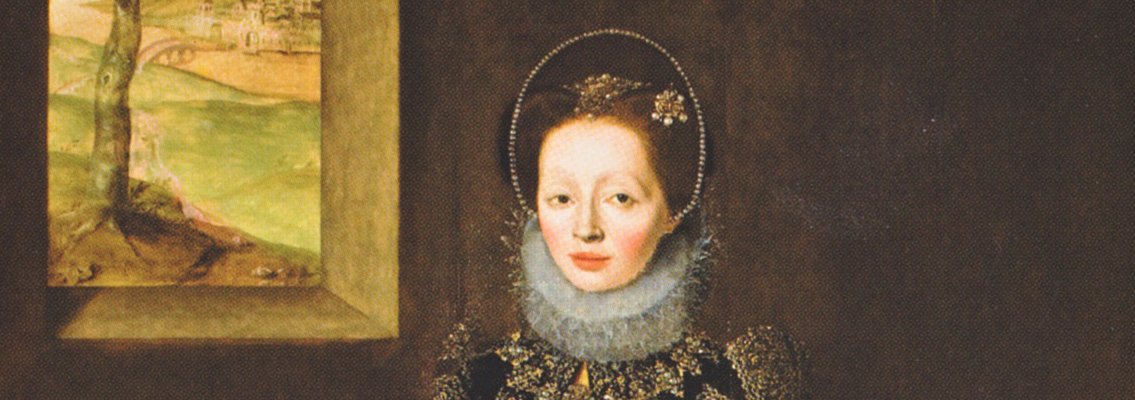
Gertrud van Myllendonk (1552–1612)
Gertrud van Myllendonk was born in 1552 at Myllendonk Castle, near Düsseldorf. She was the daughter of Dietrich von Myllendonk and Theodora van Bronckhorst-Gronsveld. Through her father, she inherited various properties and noble titles along the Rhine.
On 13 May 1576, Gertrud married Jacob van Bronckhorst-Batenburg, the Lord of Anholt, in Anholt. At that time, his family held the Lordship of Bredevoort in pledge. This meant they governed the castle, the town, and the surrounding area in exchange for substantial loans they had provided to the sovereign. The couple had three children:
Elisabeth van Bronckhorst-Batenburg (Aalten, February 1582 – 1629), married Willem van Ketteler, Lord of Lage, in 1613.
Family life was short-lived. Jacob fought in Spanish service and was severely wounded in September 1582 during fighting near Lochem. He succumbed to his injuries a short time later at the age of 29 at the Castle of Bredevoort. Gertrud was left a widow at the age of thirty with three young children.
Administration and neutrality policy
After her husband’s death in 1582, Van Myllendonk took over the administration of the Lordship of Anholt and the pledge of Bredevoort. During this period, the front between the Spanish and States armies ran straight through the Achterhoek. Although she was personally Roman Catholic and pro-Spanish, she chose a strictly neutral stance for strategic reasons to prevent looting and quartering in the countryside.
In doing so, she continued the policy of her father-in-law, Diederik van Bronckhorst-Batenburg. He had attempted to keep the territories out of the conflict by declaring that the Spanish king possessed no sovereign rights over Anholt and Bredevoort. Although the neutrality of Anholt was respected internationally, this did not apply to Bredevoort. Due to its strategic location and strong fortifications, Bredevoort remained a military target for both parties.
Administrative crisis in Winterswijk
Van Myllendonk’s reign was threatened not only by external armies but also by internal political tensions. In Winterswijk, which fell under the jurisdiction of the Lordship of Bredevoort, the pledge-holder was not without controversy.
A direct power struggle arose when Johan Rump was appointed as guardian of Winterswijk without her involvement. In response, the bailiff of Bredevoort appointed by Van Myllendonk took firm action: he had Rump arrested and installed a counter-candidate, Otto Volmer. This intervention led to escalation and unrest in the region. To de-escalate the situation, Van Myllendonk deployed her personal agent from Brussels and Antwerp, Gottfried Gerardi. Only after Jacob Vockink was installed as the new guardian did peace return to the Winterswijk administration.
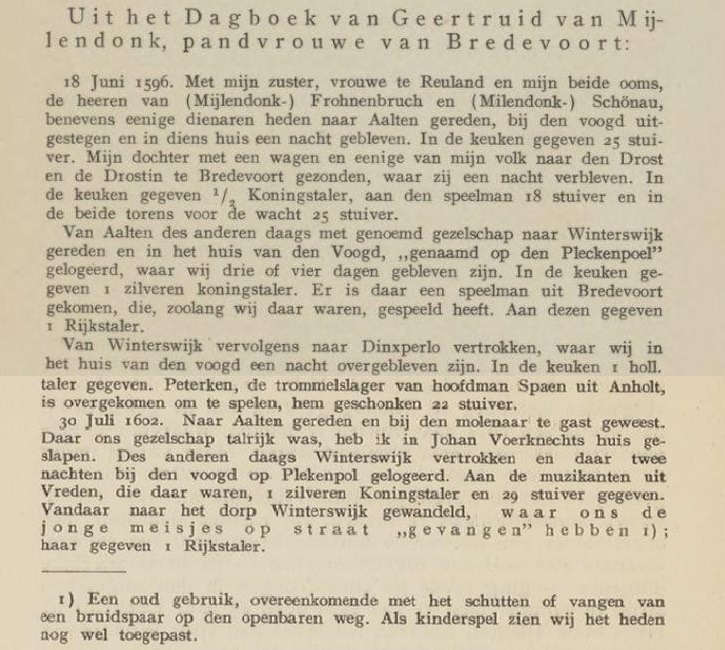
“From the diary of Geertruid van Mijlendonk”, 18 June 1596
The Siege of Bredevoort in 1597 and the aftermath
Gertrud’s neutrality policy ultimately failed to hold when a Spanish garrison took possession of the Bredevoort fortress. Like the States’ military leadership, Gertrud wanted these troops gone as quickly as possible, but she did not receive permission for this from the Spanish Governor-General Parma.
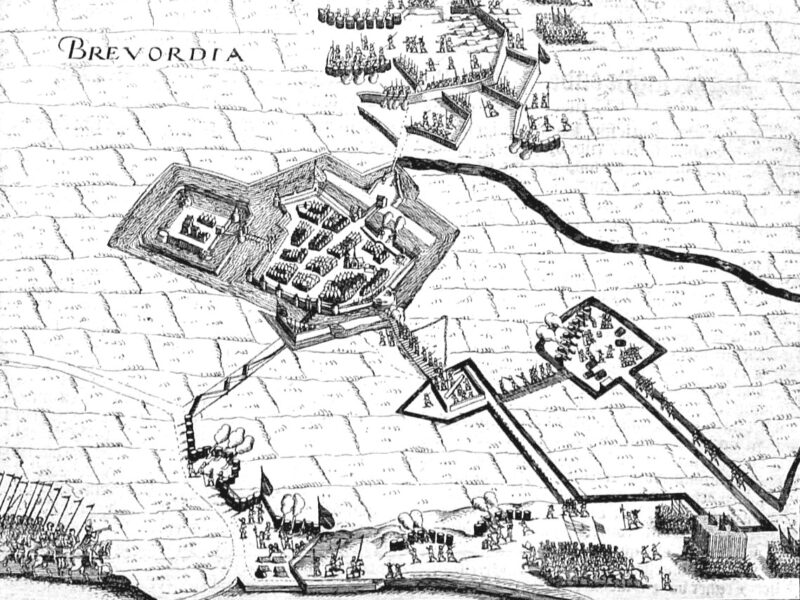
During the Siege of Bredevoort in 1597, Prince Maurice of Orange surrounded the city with a States army. Gertrud made an urgent appeal to Maurice to respect her pledge rights and spare the city, but the Spanish occupiers refused to surrender. The subsequent shelling and the final assault caused enormous destruction in the city and at the castle.
Siege of Bredevoort, 1597
Despite this defeat, Gertrud continued to fight legally for her possessions. Successfully: in 1602, the States of Gelderland temporarily returned the Lordship of Bredevoort to her. Her eldest son, Dirk IV, then proposed a radical solution: the complete demolition (dismantling) of the fortifications of Bredevoort. His logic was that an undefendable city would no longer attract armies, which would provide peace for the local population. Prince Maurice and the States of Gelderland, however, put a stop to this. Maurice had gone to too much trouble to capture the strategic border barrier and rejected the demolition.
Transfer and death
Financial and political pressure on the pledge increased in the following years. On 20 October 1612, the States of Gelderland and Gertrud van Myllendonk reached a final agreement. The outstanding pledge was financially settled, and the Lordship of Bredevoort was officially transferred to Prince Maurice, who thereby became the new pledge-holder.
Just over a month after this transfer, on 23 November 1612, Gertrud van Myllendonk passed away at the age of sixty in Anholt. Her sons continued the noble titles, with her second son, Johan Jakob, later playing a prominent role as Imperial Field Marshal during the Thirty Years’ War.
Sources
H.A. Hauer: Breevoort can ick vergeten niet, second edition, 1993