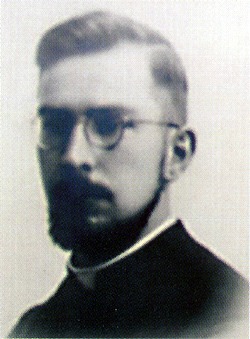
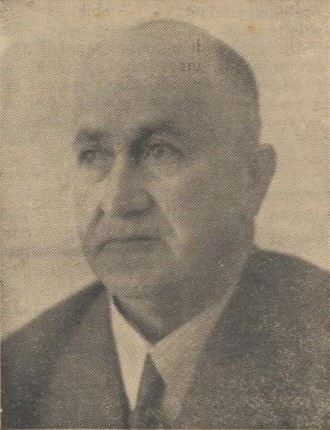
Jan de Vries (Bredevoort, March 21, 1911 – Bafwasende, December 19, 1964) was the son of Johan de Vries, station master of the tram station in Bredevoort, and his wife Aleida Wensink. He served for many years as a Roman Catholic missionary in the Belgian Congo (present-day Zaire), where he was murdered in 1964.
At the age of 12, he left for Bergen op Zoom to attend the Juvenate of the Priests of the Sacred Heart of Jesus; after completing this education, he took his vows on September 8, 1930. He subsequently studied philosophy in Liesbosch and theology in Hees (Nijmegen). On July 14, 1935, Jan was ordained as a priest.
Missionary in the Belgian Congo
On August 27, 1937, he left for the Belgian Congo, where he became a traveling missionary in the Archdiocese of Stanleyville. There, he traveled through the jungle from village to village, a period he described in the children’s book Waar het oerwoud ruist (Where the Jungle Rustles, 1938). Later, he became the director of several schools in Avakubi, where he conducted a choir, and served as novice master in Bafwasende, where he trained brothers from the Belgian Congo. In his final years, he was a mission superior and parish priest of Lubutu and Batama. In 1960, De Vries returned to Bredevoort to celebrate the silver jubilee of his priesthood.
These film recordings were likely made at that time:
Bafwasende Massacre 1964
In that same year, the Congo gained independence, and a civil war broke out when the Simbas rebelled against the new government. De Vries was on a retreat in Stanleyville but immediately returned to his mission in Batama. There, on October 31, 1964, he was captured and mistreated by the rebels along with four brothers and two sisters. They were among twenty-seven people transported by truck to Bafwasende.
On November 25, the priests were sentenced to death by a kind of military tribunal. On November 27, they were taken to the banks of the Lindi River near the village of Bafwasende. The women who remained behind heard machine-gun fire. The women were eventually liberated by mercenaries on December 19.
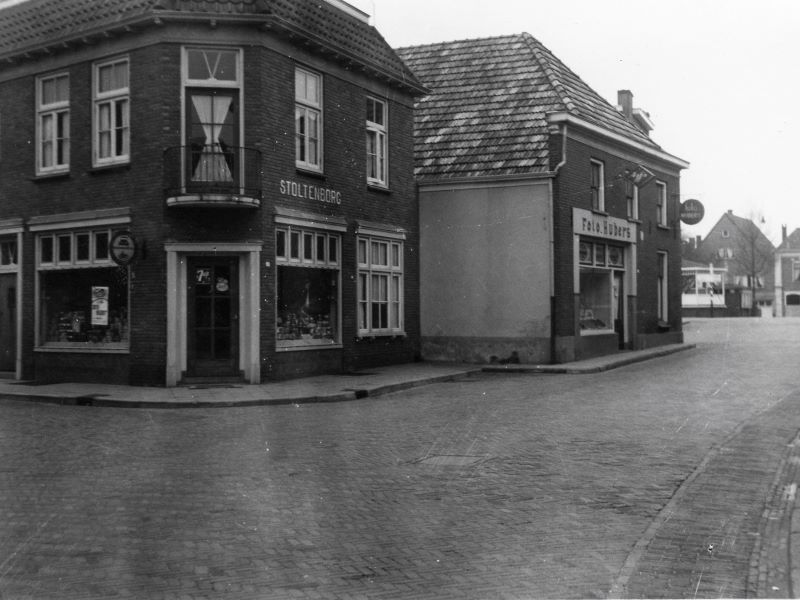
The death of Jan de Vries made a profound impact on Bredevoort. That same year, a memorial stone was placed in the local RC church. When his house was demolished a few years later to create access to a newly planned street, the municipality of Aalten decided (presumably in 1969) to name this street Pater Jan de Vriesstraat.
Sources
Nazareth, Bredevoort en zijn katholieken – Jos Wessels, Uitgeverij Fagus, 1997 (ISBN 90-70017 16-4)
Pater Jan de Vries, een man met een missie – Hans de Graaf 2014, Uitgeverij Lammers Dtp
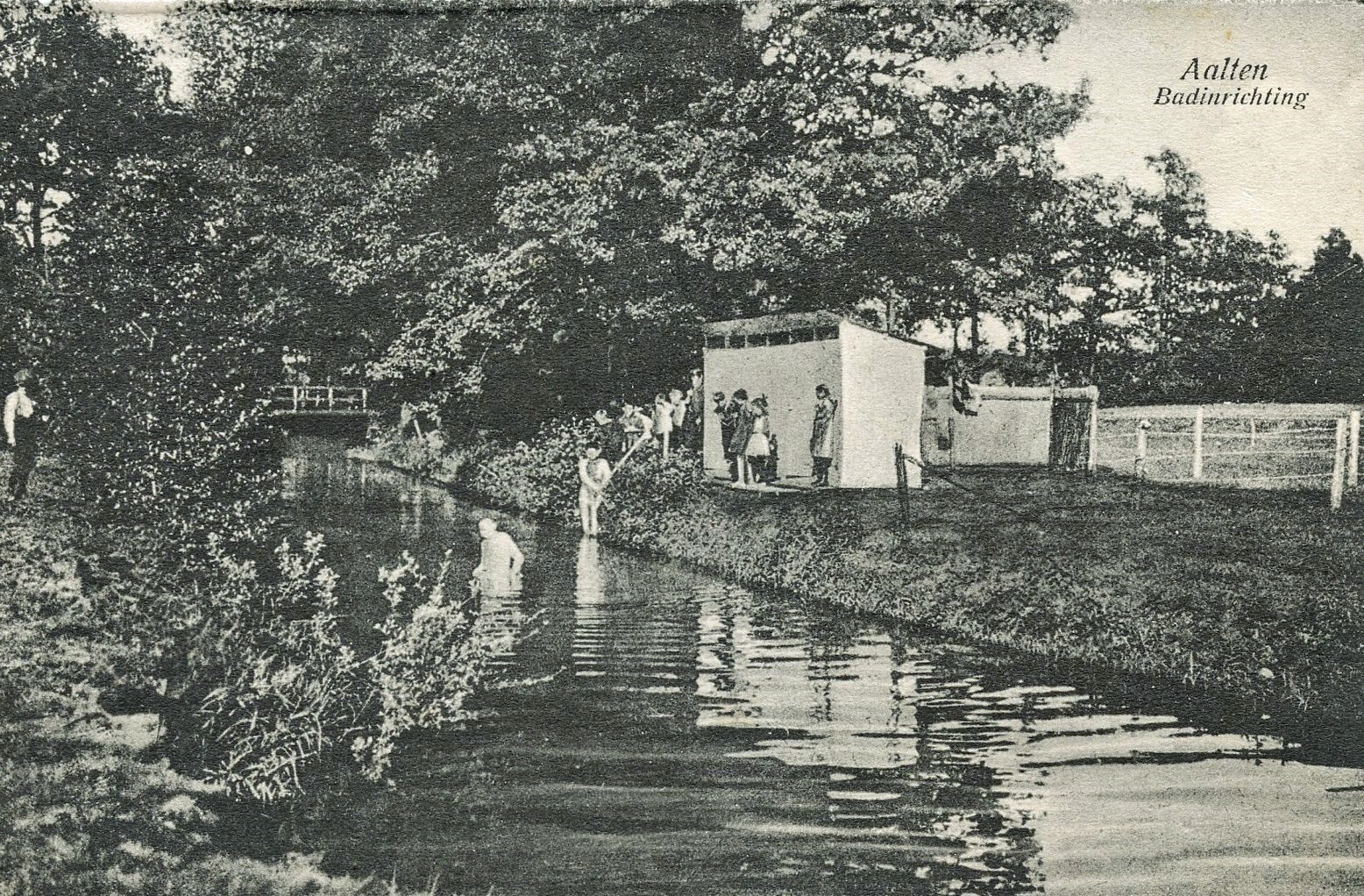
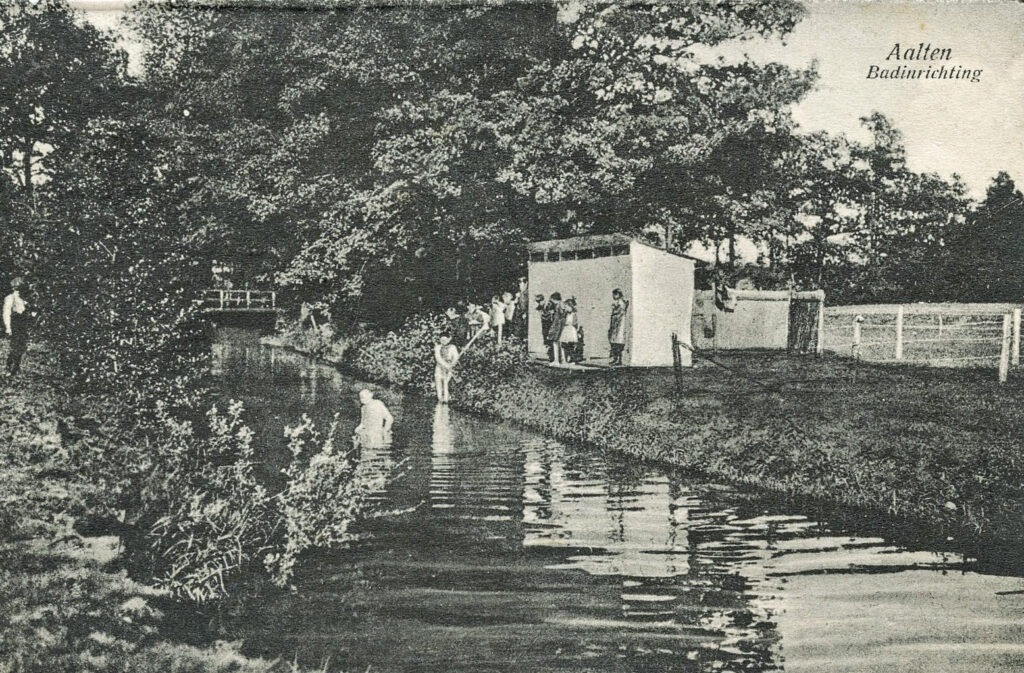
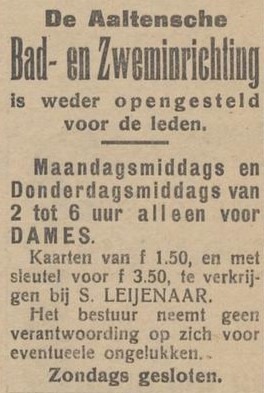
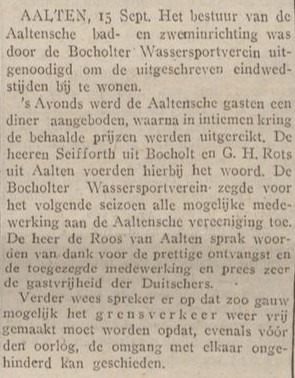
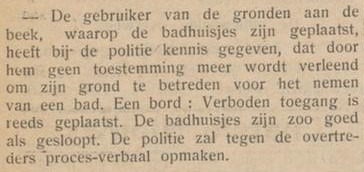
Before the construction of formal bathing facilities, the people of Aalten sought cooling in the Slingebeek during warm days.
As early as 1906, local interest group ‘Aaltens Belang‘ searched for a suitable place to swim. The location had to be reliable, but the stream was occasionally too shallow. The most suitable spot was found to be the pool at De Pol, where the water mill once stood. Swimming once took place there within a casing, a type of weir. Around 1920, people could “enter the water” in the stream near Nannielaantje (Smeeslaantje); however, the water board removed the weirs from the stream.
Bathing facility near the Smeeslaantje in Aalten, 1924
In 1920, the municipality purchased a site between Aalten and Bredevoort known as ‘Oosterman’ with the intention of establishing a new general cemetery there. This plan was later reconsidered. On 4 July 1930, during a meeting of the municipal council, the question was raised whether the Mayor and Aldermen were inclined to submit proposals regarding the establishment of a municipal bathing and swimming facility.
In 1933, it was decided to construct a swimming pool on the Oosterman site. Seventy unemployed individuals were deployed as part of the job creation scheme, and the work was completed under the direction of D. Roenhorst of the Nederlandse Heidemaatschappij. Using wooden wheelbarrows with iron-rimmed wheels and shovels, the sand was moved to the sides, creating an earthen embankment around the pool. The construction costs amounted to approximately 14,500 guilders. On 23 June 1934, the ‘Walfort’ swimming pool was opened with swimming and diving demonstrations provided by the Winterswijk water sports association and the women’s swimming club ‘Inter Nos’ from Amsterdam.
Newspaper reports
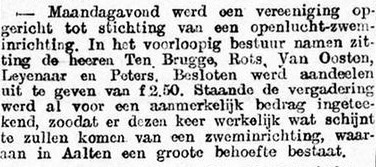
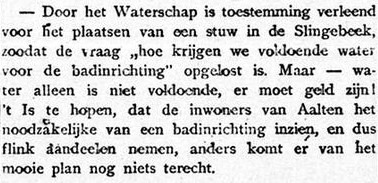
Zutphensche Courant, 11 July 1885De Graafschapbode, 1 June 1920De Graafschapbode, 22 June 1920Aaltensche Courant, 15 October 1920
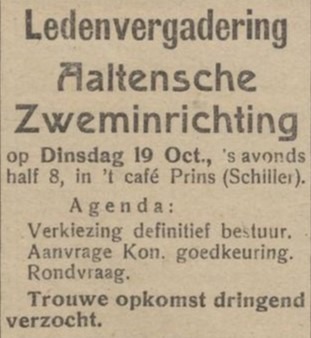
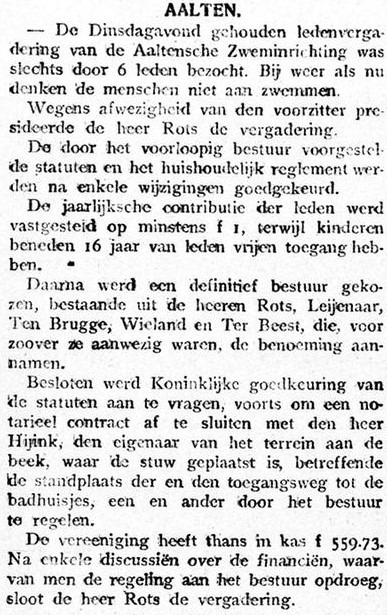
De Graafschapbode, 22 October 1920Aaltensche Courant, 11 May 1923
Zutphensche Courant, 16 September 1925De Graafschapper, 4 August 1931
Gerrit Jan Prinsen was born on 14 August 1888 at house number 242 in Aalten (Lichtenvoordsestraatweg 16), the son of night watchman Gerrit Jan Prinsen and Dela ter Maat. He passed away on 7 June 1941 in Aalten. Gerrit Jan Prinsen was buried at Berkenhove Cemetery.
At the time, the Aaltensche Courant wrote the following about him:
At the age of 52, Mr G.J. Prinsen, sworn estate agent and valuer, has passed away. A severe illness, which he battled for over eight months whilst being lovingly nursed by his wife, brought an end to his earthly life on Saturday 7 June.
A few weeks ago, we sat by his sickbed, hoping along with him that the spring sun might soon arrive and bring a restoration of his strength. God has ordained it otherwise, and may the knowledge that it was His will now bring comfort to his widow and family.
Our municipality has lost a good citizen in Mr Prinsen. Not as one who sought to make a name for himself, but as one to whom people listened. This was clearly expressed in the words of the chairman of the Aalten’s Belang association at the most recent annual general meeting: “…though in the future we shall sorely miss him, who was one of our most active members, and to whose advice at our meetings everyone listened with close attention.”
As chief churchwarden (president-kerkvoogd) of the Dutch Reformed congregation and chairman of the Organ Committee, Mr Prinsen played a major part in the complete restoration of the church organ. Furthermore, the deceased was a member of the Board of Directors of the Middenstandsbank, to which ever-growing institution he gladly devoted his time.
In his professional capacity, Mr Prinsen handled several major transactions and, as a structural designer and builder, gave various properties a new lease of life over the years. For instance, acting on instructions from the company, he purchased the land for the water tower near the Lindeboom (the lime tree in the coat of arms of Aalten). He was also ever willing to assist the common man, consistently winning their trust through his helpfulness and fairness. May the certainty that his memory will live on gratefully in many hearts serve as a consolation to his bereaved family.
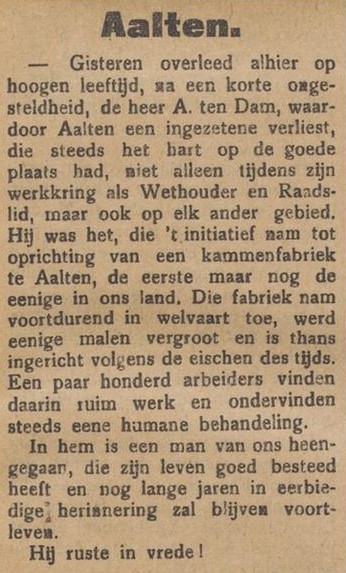
Abraham (Bram) ten Dam was born on 14 July 1834 in Kerkstraat in Aalten, the son of silversmith Harmen Jan ten Dam and Petronella Johanna Gerber. On 6 June 1861, he married Elisabeth Manschot.
In 1871, Abraham and his brother-in-law Bernard Manschot founded a comb factory on Damstraat in Aalten: Ten Dam & Manschot. They lived opposite each other on Bredevoortsestraatweg; Bram in the house that now characterises the Van Panhuis physiotherapy clinic, and Bernard in the white villa across the road. Bram’s son (and successor), Herman, commissioned the construction of the house at Bredevoortsestraatweg 52.
Ten Dam also served as a local councillor and alderman in the municipality of Aalten.
Abraham ten Dam passed away on 1 February 1915, at the age of 80, and was buried at the Old Cemetery in Aalten.
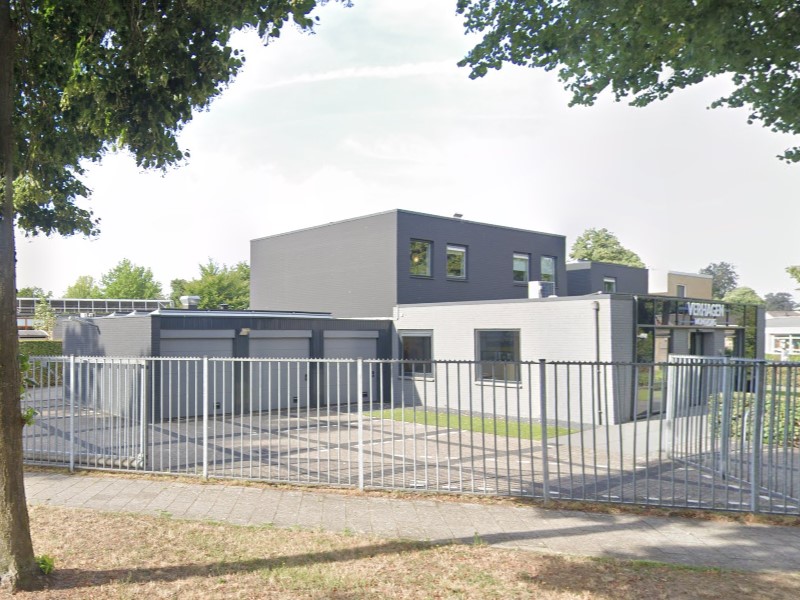
The former police station on Polstraat (collection EHDC)
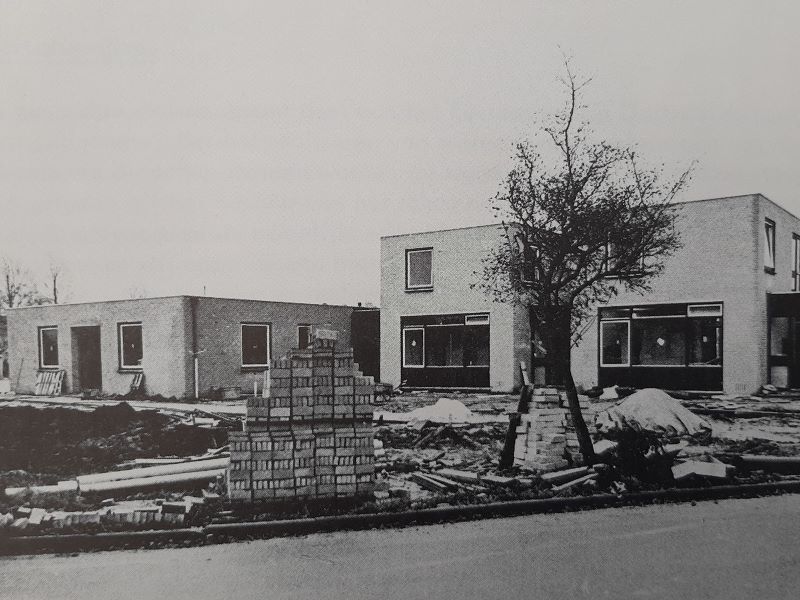
The local police station was based here until 2018. Today, the building houses a dental practice.
In February 1963, the Municipality of Aalten purchased the land on the corner of Polstraat and Bonifaciusstraat, which at the time occupied a small farm belonging to the widow Scholten. It is likely that the intention was already to demolish the farm and develop a new police station and a number of houses on the site.
In 1965, the Aalten municipal council discussed the private sale of a section of the building plot, measuring 1,500 square metres, for the construction of a group and district office for the National Police (Rijkspolitie) in Aalten.
It was not until the early 1970s that the new police station was completed. The Aalten police remained at this location until 2018, when they moved to the Köstersbulte.
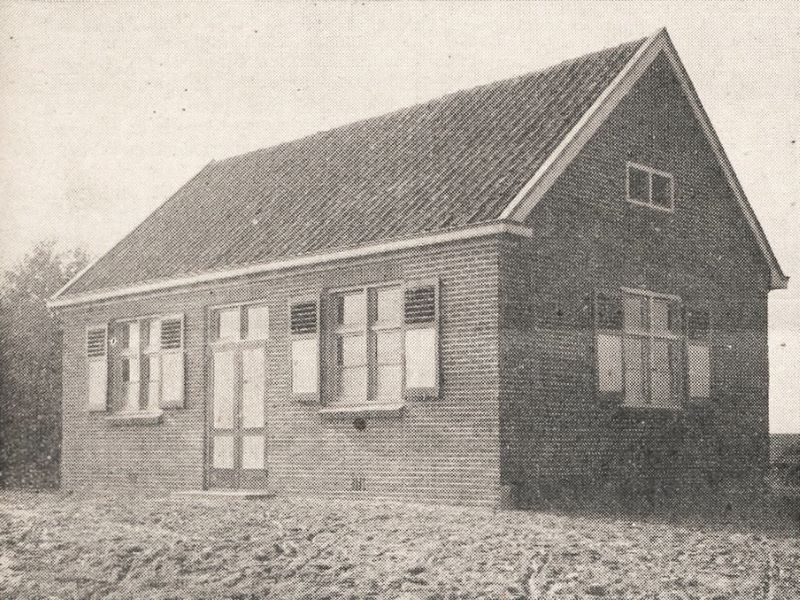
Until 1989, a small Sunday school stood at Brethouwerweg 9 in the Aalten hamlet of Heurne, where Sunday school was held once a week for children up to the age of 12. After reaching that age, they could attend the youth club, which also took place once a week. Occasionally, the building was also used for small parties and gatherings.
Regarding the old Sunday school, we read in De Graafschapper of 22 October 1937, among other things:
Commissioning of the new Sunday School hall in Heurne
Last Wednesday was a happy day for many residents of the hamlet of Heurne near Aalten. On this day, the completely renovated Sunday school hall was festively and officially commissioned. With this, this hamlet has also been released from its so-called isolation regarding a good location to hold meetings.
It was more than necessary. The old, small building, which had been erected with very primitive means at the time, was in such a desolate state despite various repairs over the years that a new building or a complete renovation proved more than necessary. The latter has now been achieved through the well-meaning cooperation of many within and outside this hamlet. The building itself has, among other things, two reasonably spacious rooms, which are connected in such a way that, in the event of large meetings, etc., one large room can be obtained.
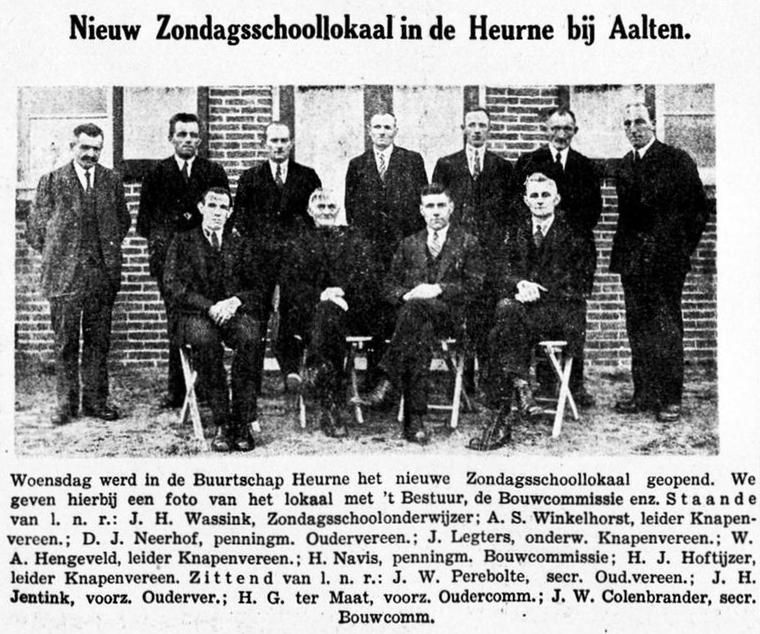
On Wednesday evening, the official opening took place for the elders and interested parties. The chairman of the Building Committee, Mr H.G. ter Maat, opened this festive gathering by having Psalm 89:1 sung and led in prayer. He then read Psalm 147. In his opening address, he expressed thanks to all who cooperated to achieve the construction and completion of this project.
After a break, a beautiful report followed from Mr J.W. Colenbrander, secretary of the Building Committee, as well as from Mr H. Navis, treasurer. The delegate of the Boys’ Meeting conveyed congratulations and presented the chairman with a beautiful gift for wall decoration. A recitation by Mr J. Legters closed this second part before a new break.
Subsequently, Mr S. Wevers spoke on behalf of the Association of Sunday School Teachers. Several recitations by Mr H. Hoftijzer (Veenhuis) and Colenbrander provided the necessary variety. The dialogue by Messrs H. and G. Wesselink and Klein Poelhuis was also superb in one word. Mr H. Nijman spoke an earnest and inspiring word after having told several interesting things from the old days regarding the rise and further development of youth work in Heurne.
Finally, the chairman thanked everyone who had cooperated in the success of this evening; he then handed over the building to Mr J.H. Jentink, as chairman of the Association that will manage the building. The latter finally spoke a concluding word, after which this festive meeting was ended.
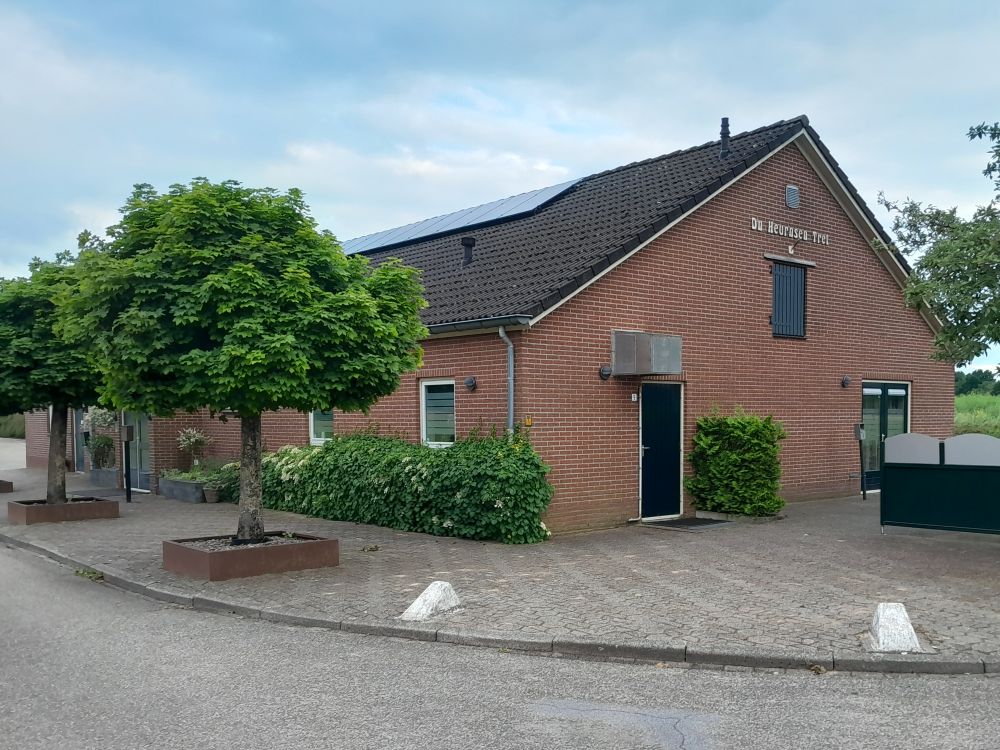
D’n Heurnsen Tref
Heurne is a rural district without a central core. There is no school or café and no clear focal point. Therefore, the Heurns Belang (Heurne Interest) association devised a plan to transform the small Sunday school into a slightly larger community centre that could be used for multiple activities. A round of visits to the residents of Heurne to hear if there was interest in this and if they were potentially willing to contribute financially had a positive result.
Heurns Belang hired an architect and applied for a building permit for a new community centre. To keep costs low, many volunteers helped with the construction. On 6 April 1990, the building was festively opened, and the fitting name, devised by a resident of Heurne, was revealed: ‘D’n Heurnsen Tref‘ (The Heurne Meeting Place).
Standing from left to right: J.H. Wassink, Sunday school teacher; A.S. Winkelhorst, leader of the boys’ association; D.J. Neerhof, treasurer of the parents’ association; J. Legters, teacher of the boys’ association; H.A. Hengeveld, leader of the boys’ association; H. Navis, treasurer of the building committee; H.J. Hoftijzer, leader of the boys’ association. Sitting from left to right: J.W. Perebolte, secretary of the parents’ association; J.H. Jentink, chairman of the parents’ association; H.G. ter Maat, chairman of the building committee; J.W. Colenbrander, secretary of the building committee (Graafschapbode, 22 October 1937)D’n Heurnsen Tref (photo: G. Schreurs, 2025)
Izaak Antonie de Moor, born on May 31, 1905, in Goedereede, was appointed mayor of Breskens in 1939. In 1941, he joined the N.S.B. there. After ‘Dolle Dinsdag‘ (Mad Tuesday), he fled to Aalten, where he took over the mayoral duties from September 18, 1944, during the period when Mayor Monnik was in hiding. When things became too difficult for him a few days before the liberation, he fled to Grijpskerk, where he was arrested upon liberation. After 1½ years of internment, he was provisionally released.
On March 10, 1947, De Moor stood trial before the war tribunal in Groenlo. The charges were as follows: group leader and sub-district leader of the N.S.B., neighborhood head of the N.V.D., member of the N.A.F. during his term in Breskens; taking the oath of allegiance to Mussert; organizing N.V.D. training afternoons; threatening the municipal messenger J.J. Bliek; applying for a weapons permit from the Representative of the Reich Commissioner; stating, when returning Dutch soldiers to Germany as prisoners of war: “They deserve no better; they have done nothing but sabotage”; distributing the publications Volk en Vaderland and De Zeeuwsche Stroom; cooperating with the labor deployment for coastal defense works; and providing a training course for mayors in Goes.
The term of office in Aalten
The summons regarding his term of office in Aalten included the following charges: cooperating with the O.T. labor deployment in Zevenaar and Bocholt; calling in the assistance of the Landwacht to check for people in hiding, for the requisitioning of bicycles, and for the arrest of a person in hiding at Te Giffel. Furthermore, the accused dismissed all municipal officials who were in hiding and informed the Sicherheitspolizei in Doetinchem of the arrest of three individuals, including B.H. Wikkerink, for engaging in illegal activities. Finally, he called in the assistance of the Grüne Polizei stationed in Aalten in connection with the arrest of the Baruch family, a Jewish family in hiding.
The accused explained that by accepting the office of mayor in Aalten, he had intended to be of as much service as possible to the population. The president: “You have given all your strength to the German, and thus enemy, cause for the destruction of both the Dutch material and spiritual resistance. When you saw in Breskens who and what the Germans were, you should no longer have acted as mayor in Aalten.” The accused: “I had to choose between being a member of the Landwacht or a mayor. I had no desire for the Landwacht.” The president: “You could also have chosen another path: neither.”
The discussion then turned to why the accused had been present on October 10, 1944, when the S.S. had conducted a raid in Aalten and the detained persons were brought to the community center. The accused: “The S.S. intended to cordone off the churches. I knew this would cause much unrest in Aalten, so I tried to make amends where possible. In some cases, I was able to do something in favor of those detained.” The accused denied having ordered the arrest of the six hostages. “In the report to Doetinchem,” the accused stated, “I did declare it. The late Mr. v.d. Glas, the Landwacht commander, gave the order to arrest the hostages. As mayor, I was required to report it.”
The president: “Why did you attempt to compile a new population register, when you knew that the old one had been deliberately disappeared? You were in every respect a mindless tool in the hands of the Germans.” Furthermore, the speaker pointed out how dangerous it was to inform Vossers that the municipal secretary, Bijlsma, had made off with the municipal papers and documents, and to tell the aforementioned Vossers where B. was likely located. President: “You were a convinced and fierce member of the N.S.B.” The accused: “Not fierce, I was an idealist. I considered it my calling and task to do something for the Dutch people.”
After the various points of the indictment during his term in Breskens were addressed, the arrest of the Baruch family, who were in hiding in Aalten, was finally discussed. The accused admitted to having acted incautiously. He had mentioned it in a conversation with the Grüne Polizei. The president: “You knew yourself what kind of beasts the G.P. were.” The accused: “It did not sink in at that moment. I was able to prevent the Oberleutnant from having the three Jews in question shot. At my insistence, they were to be transported to Doetinchem. As the liberation approached, they were able to remain in Aalten. And upon my departure, I told Tilbusscher that the Jews could be released immediately, which is what happened.”
Verdict
The accused, who had no defense counsel, said in his closing statement that he is now back in the workforce. He appealed for the clemency of the Tribunal. “I have had a lesson for life. Moreover, my house in Breskens was bombed, and my 17 years of pension are gone. I was a civil servant heart and soul; I admit to having been completely wrong. Give me the opportunity now to care for my family again,” he exclaimed.
After deliberation, the president stated that it would be fair to impose an internment longer than the pre-trial detention. However, the Tribunal wished to take into account the circumstances in which the accused currently finds himself. The following measures were imposed upon him: internment equal to the pre-trial detention; disqualification from holding any public or semi-public office; deprivation of both voting rights; and confiscation of his radio.
De Moor passed away on February 17, 1984, at the age of 78, in Warnsveld.
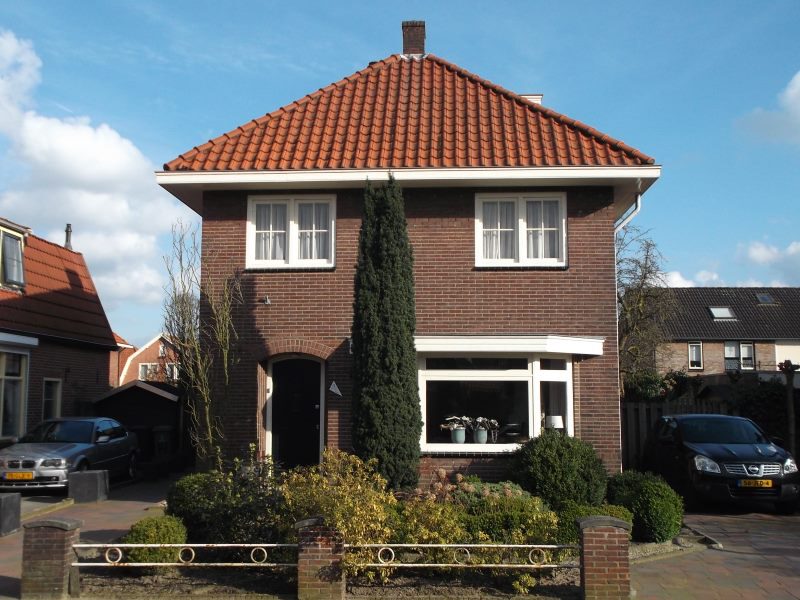
In the early morning of 21 September 1943, Piet Hoogenkamp, the assistant of the Aalten general practitioner and resistance fighter Joop der Weduwen, placed a package in front of the house with address Patrimoniumstraat 12 in Aalten. Resistance leader Hendrik Jan Wikkerink alias Uncle Jan lives at that address with his family. The doorbell rings.
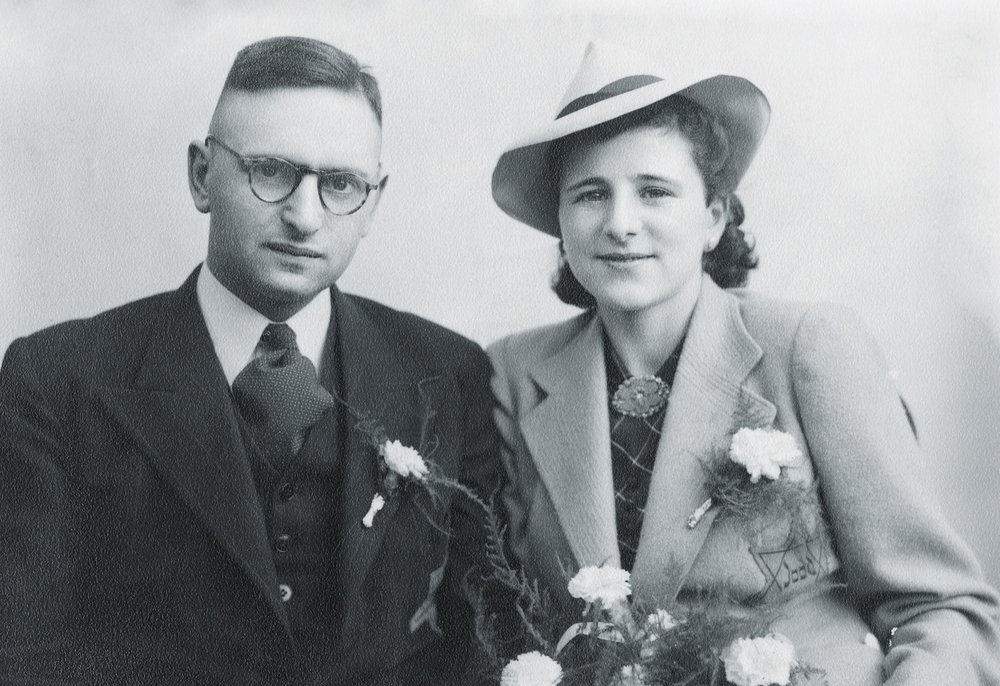
The package turns out to be a newborn baby. He is the son of Lena Jedwab-Kropveld and Yitzack Jedwab, rabbi (pastor) of the Jewish community in Aalten. From mid-1942 the couple was in hiding on the De Ronde farm of the Veldboom family in Lintelo. Resistance leader Uncle Jan and doctor Der Weduwen have agreed in advance to lay the foundling.
Foundling
Daughter Jo Wikkerink later told about this:
“We knew that the delivery was coming and the baby would be brought to us. Father and mother only told the oldest three. The youngest knew nothing. They could not talk past their mouths. Father and mother waited in the dark room in the evening. It seemed to the neighborhood as if they had gone to bed. When the doorbell rang, they knew the baby was there. They got the youngest out of bed and shouted in surprise: “Come and see what is there now!”
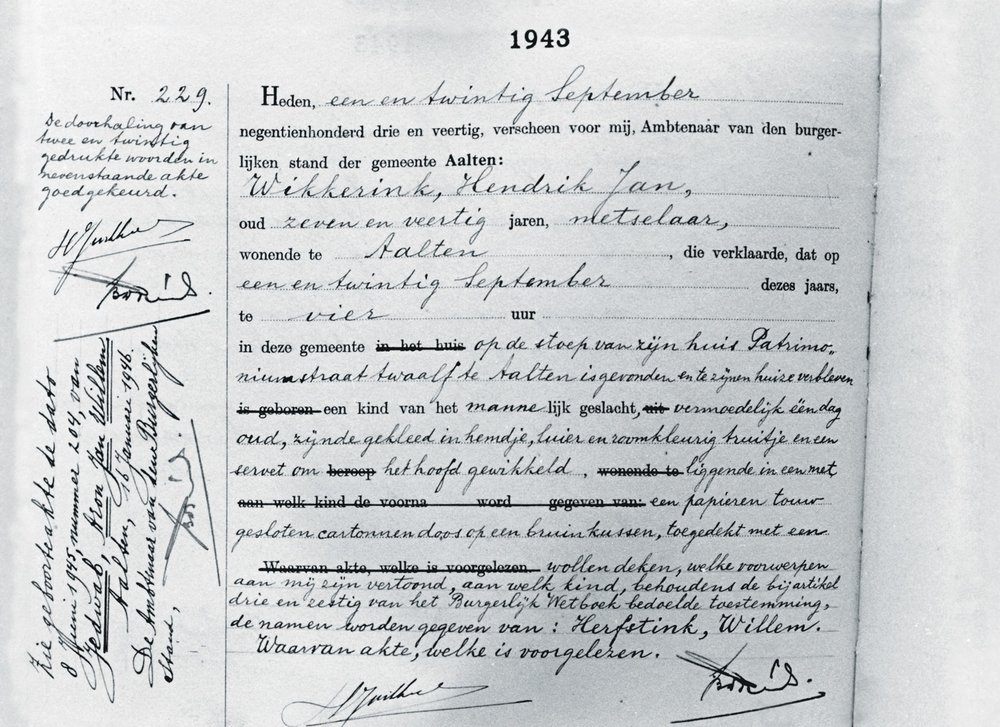
The Jewish child was therefore born in hiding and was registered three days later by Mrs. Dela Wikkerink-Eppink with the name ‘Willem Herfstink’ and registered as such in the birth register of the municipality of Aalten. The name was chosen symbolically. Willem refers to Queen Wilhelmina, Herfstink to the first day of autumn (21 September) and the Saxon suffix ‘ink’ means ‘belonging to the yard or family of’.
Because only a few people – such as doctors – were allowed to be on the street at one o’clock in the morning, four o’clock in the morning was given as the time when the baby was found. This made the investigation into the origin of the child considerably more difficult. “I sometimes came home late at night with a big belly by train. Then I had ‘contraband’ with me as if I was heavily pregnant. When Wimke was put on the sidewalk, they said: “That’s what they say, but it must be one of the girls.”
Declared Aryan
The next day, the municipal doctor on duty, Dr. Knol, had to examine the foundling. The baby was not circumcised and therefore he issued the declaration that the child was 100% Aryan. “The next day father immediately went to Schepers, who lived diagonally across from us (he worked at Paske). Father knew: if I tell it there, everyone in Aalten will know it immediately. Behind us, next to Vossers, lived an NSB woman. She was on her knees in front of Wimke’s crib to see if he had any Aryan features.”
Lennie and Yitzchak had meanwhile moved to another hiding place in Lintelo. In June 1944, the resistance moved them in a hay-covered wagon to the house of Bernard and Gesina Wevers in the hamlet of Dale, behind the Ringweg, just outside the village of Aalten.
Initially, they did not want to take the Jedwab couple into their home because they were already sheltering evacuees. A minister of the Reformed Church changed the pious Calvinists’ minds: he preached that the persecuted should be helped.
Bernard, a carpenter, built them a room behind the closet where they spent all their time. Mrs. Wevers cooked for her Jewish guests as much as possible according to kosher rules.
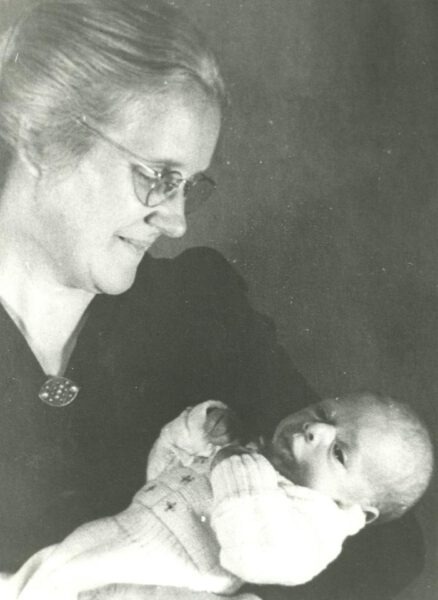
In the meantime, Willem had been lovingly taken into the family of the Wikkerink family. Especially mother Dela and eldest daughter Lien Wikkerink took care of ‘Wimke’ as they called him. Dela Wikkerink regularly walked with the baby in the pram to the hiding place of the Jewish parents in Dale. She often took some fruit from the vegetable garden with her in her bag. There were people in Aalten who said: “What does Mrs. Wikker always have to do with Wevers?”
Towards the end of the war, two German soldiers were billeted in the Wevers house. While the soldiers were in the house, Lena and Yitzack sat in chairs in their hidden room and were not allowed to move or make a sound, sometimes for days.
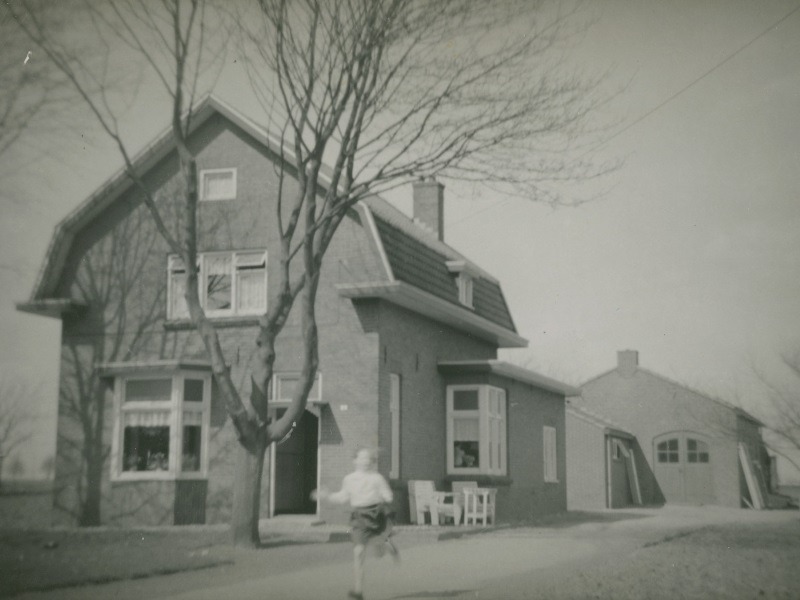
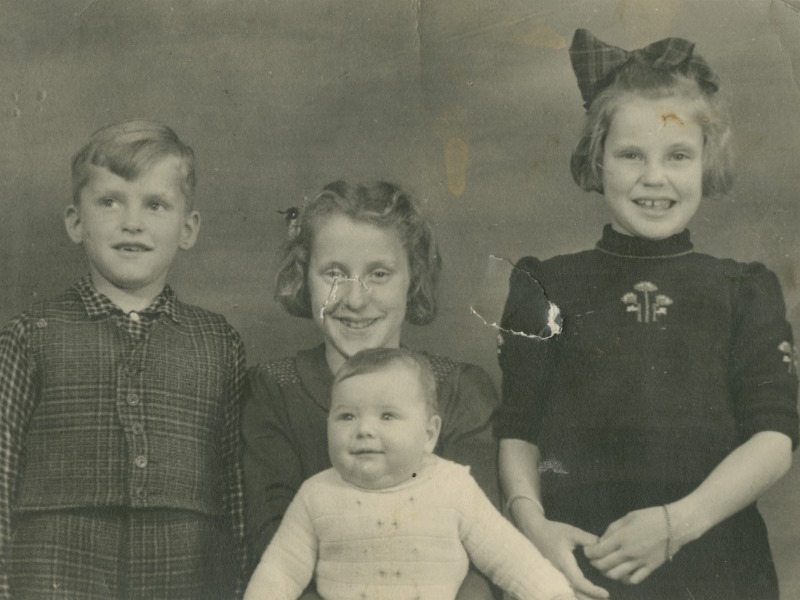
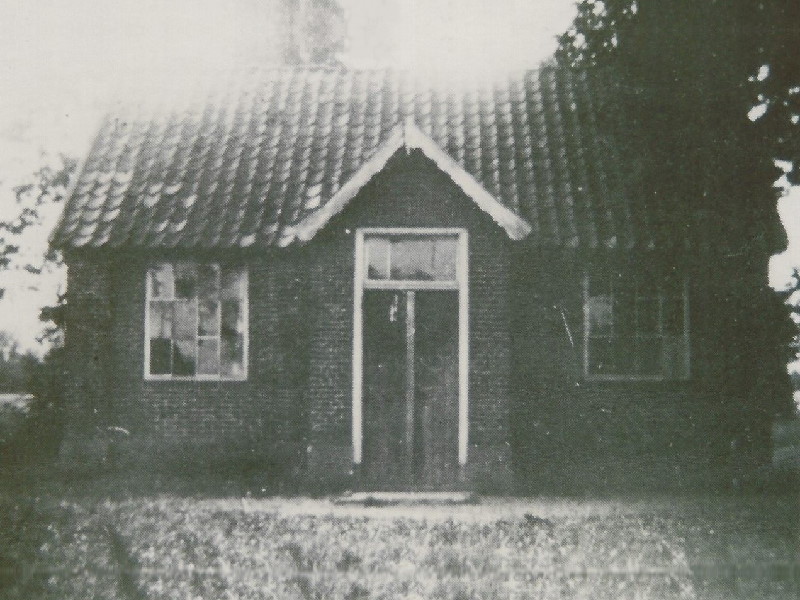
Dela Wikkerink-Eppink with Aron Jedwab alias Willem HerfstinkPatrimoniumstraat 12, AaltenKoningsweg 2, Dale (source)Yitzchak Jedwab and Lena Kropveld – wedding photo, March 1942Aron Jedwab with Dick, Jannie and Ina Wikkerink, 1943 (source)Birth certificate ‘Willem Herfstink’, 21 September 1943
After the war
After the liberation in March 1945, the family was reunited and the little one was given his real name: Aron Jan Willem Jedwab. The name Willem remained and the second first name Jan refers to his rescuer Jan Wikkerink. Queen Wilhelmina came to Aalten soon after the war and visited the Wikkerink family to honour them for their actions in the resistance. Jo Bulsink-Wikkerink: “I can still see Wilhelmina. She slapped my grandfather on the shoulder and said: Wikkerink, you have a brave son.”
The young child Willem hardly knew his own parents. Jo Wikkerink – the second daughter in the family – then moved in with the Jedwab family for a year, so that Willem could get used to his own parents and new environment a little easier. The Jedwab family emigrated to the US in 1947 and there they changed their surname to Jade.
In the nineteenth century, Reverend Breukelaar had arranged that Sunday schools were established in Aalten. For children in the surrounding districts, the Sunday school was held at someone’s home on a farm, so that the children did not have to travel all the way to the village.
Gradually, a need arose within the hamlets to build dedicated rooms or small Sunday school houses (zondagsschoolhuuskes). A total of nine small Sunday schools were eventually built, of which only a few have been preserved.
Lintelo formerly had two Sunday schools. In the heart of Lintelo, on Schooldijk, a small Sunday school stood on land belonging to the Helmink family. It was demolished in 1950. In 1934, the building’s address was Lintelo 150. A residential house was built at this location in 1953, which became Schooldijk 1 in 1967.
Additionally, there was a Sunday school on Sondernweg in Lintelo. That building still stands today and currently serves as a vacation rental.
For centuries, the Gasthuis (also referred to as the Armenhuis or almshouse) served as a refuge for the poor, the sick, and the elderly in Bredevoort. From 1641 until approximately 1930, the institution occupied various locations within the city walls. The current Gasthuisstraat owes its name to this establishment.
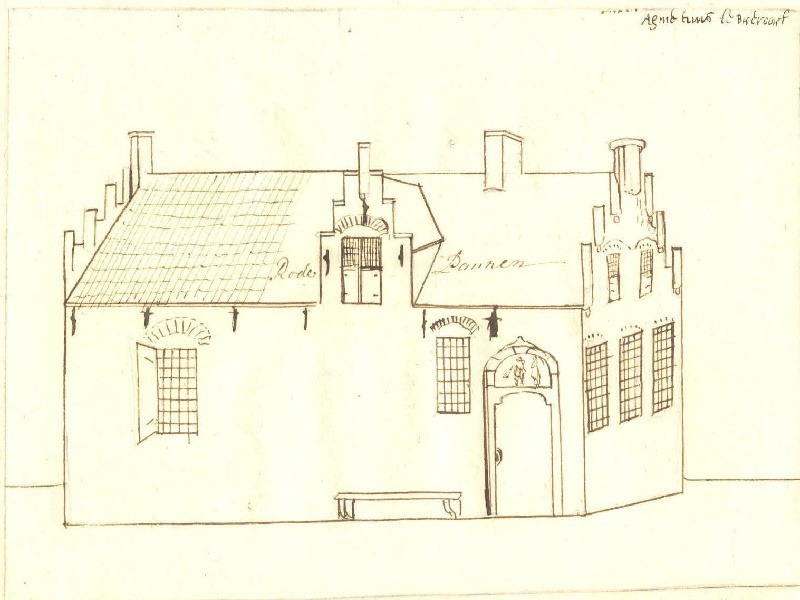
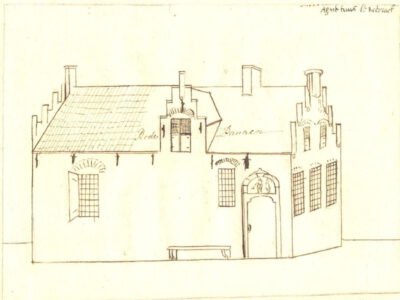
The house of Misslich (Agnietenhuis)
Almshouse / Agnieten House (Mislich’s house)
The earliest known mention of an almshouse in Bredevoort dates to 1641. It occupied the old borgmanshuis (a fortified town house) and the orchard behind it, formerly belonging to Wolf Mislich, then Governor of the Lordship of Bredevoort. In 1639, Mislich drafted a will bequeathing his house and entire estate—valued at 15,000 guilders, a significant fortune at the time—to the poor relief of Bredevoort.
Following his death in 1639, the will was executed, giving rise to the local saying: “De armen van Bredevoort bunt rieke” (The poor of Bredevoort are rich).
The House of Misslich, also known as the Agnietenhuis, was presumably located in the vicinity of the later Ambthuis. Rental income from the property benefited the poor, and besides the Widow Mislich, two other families lived in the main house, while three smaller dwellings in the backyard were occupied by the needy.
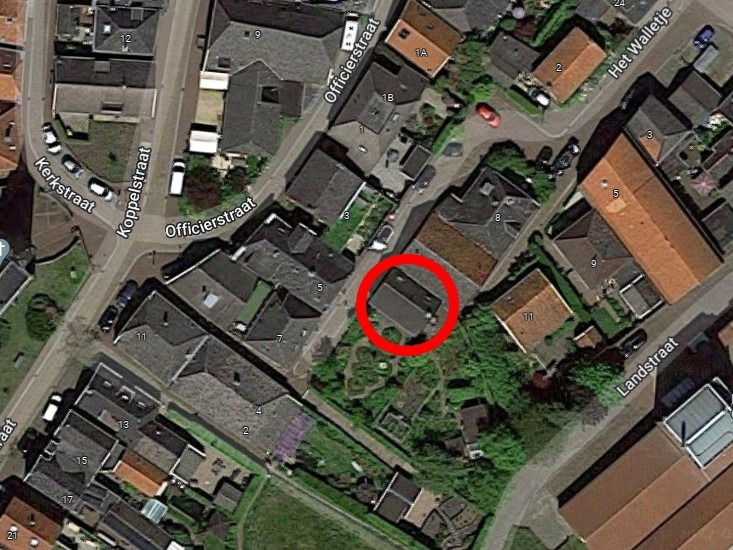
The location of the second almshouse on ‘t Walletje
‘t Walletje
Around 1800, records regarding the Mislich house become silent. An 1832 cadastral map shows the ‘Armen Gasthuis van Bredevoord’ located at ’t Walletje, in the extension of the Vismarkt (cadastral plots B126-B129). This complex consisted of four dwellings, ranging in size from 22 to 26 m².
Gasthuisstraat
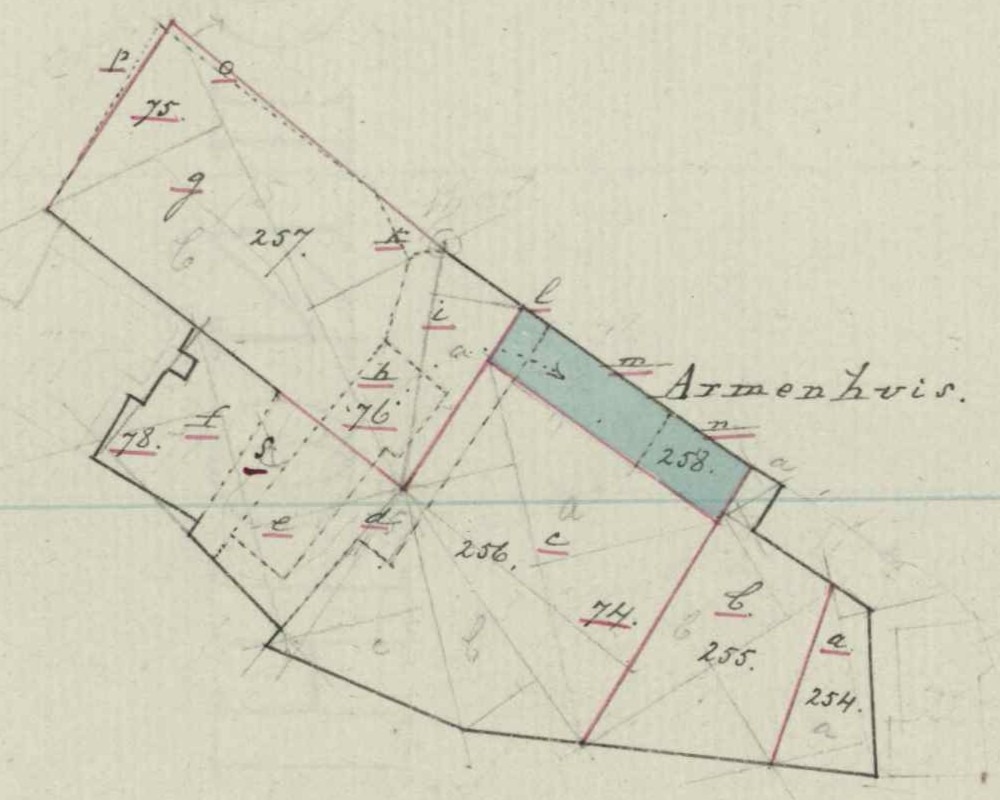
The third and final almshouse was built in 1844 on the Gasthuisstraat and consisted of eight dwellings. The land was purchased from the Hof van Barnsveld, a former borgmanshuis.
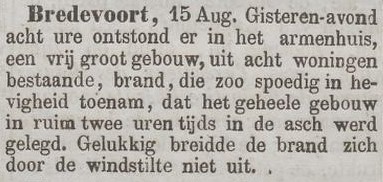
On 14 August 1879, this building burned down completely, though it was subsequently repaired. In 1911, the almshouse underwent a thorough renovation, though it remained incomplete; the houses were eventually sold off and demolished one by one. In 1897, the Sint Bernardus building was purchased, where nursing care was provided around the turn of the century.
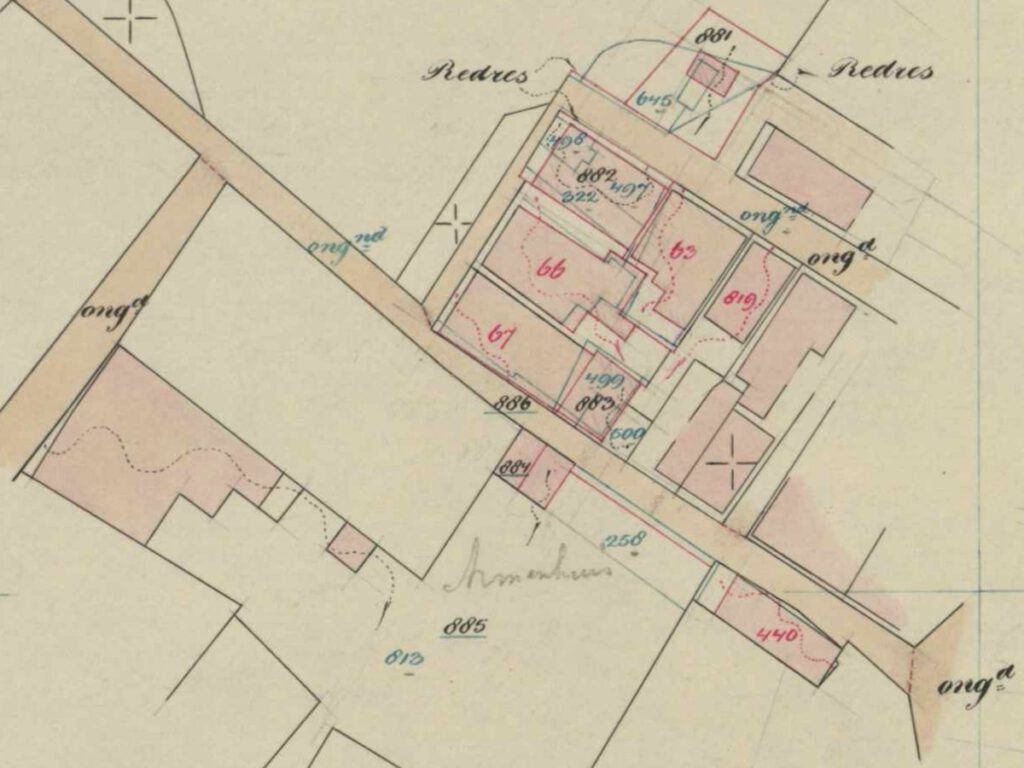
The Almshouse at the Gasthuisstraat – Fragment cadastral map, 1847
De Tijd, 18 August 1879
Fragment cadastral map, 1934 (plot B-884/885)
Residents
Population registers recorded each household on separate cards. Below is an overview of the inhabitants of the almshouse on the Gasthuisstraat over time:
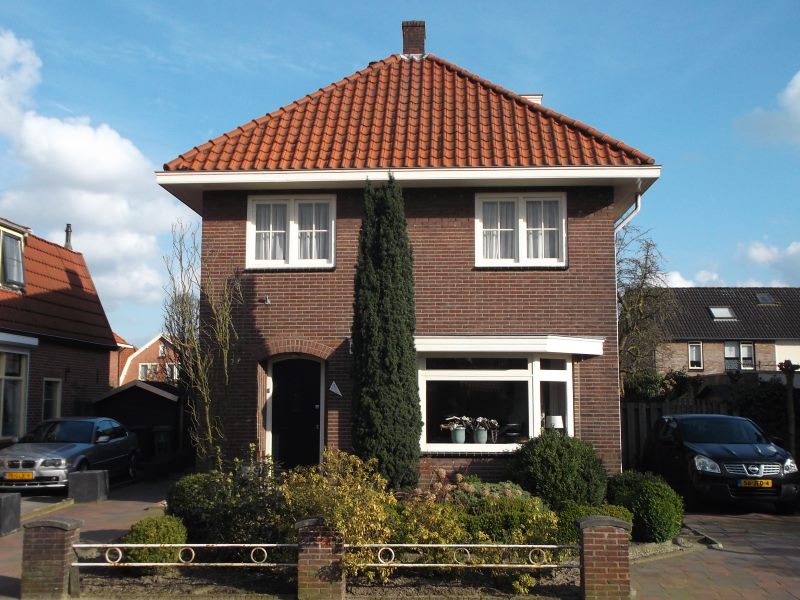
The house is of particular significance due to its history of occupation. During the Second World War, it was inhabited by the resistance leader ‘Ome Jan’ (Uncle Jan) Wikkerink and his family. Motivated by his religious convictions, Wikkerink was deeply involved in assisting those in hiding. He became the leader of the Landelijke Organisatie voor hulp aan Onderduikers (LO – National Organisation for Aid to People in Hiding) and the Landelijke Knokploegen (KP – National Assault Teams) in Aalten.
On Sunday, 15 September 1944, the house was surrounded and he was arrested along with several others. However, he was liberated that very same day. In retaliation for the rescue operation, the Germans threw hand grenades into the house on Patrimoniumstraat, causing the interior to go up in flames.
The house was built in the traditional brick architecture characteristic of the Interwar period, featuring a substantial overhang and strong horizontal elements, such as the bay window at the front of the property.
Owners
Overview is incomplete.
Year
Plot
Owner
Description
1832
I-167
de Hervormde Armen van Bredevoort (Reformed Poor of Bredevoort)
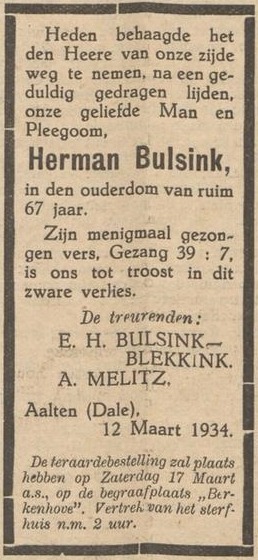
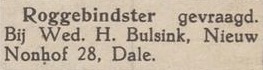
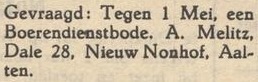
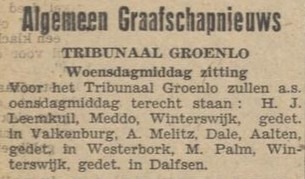
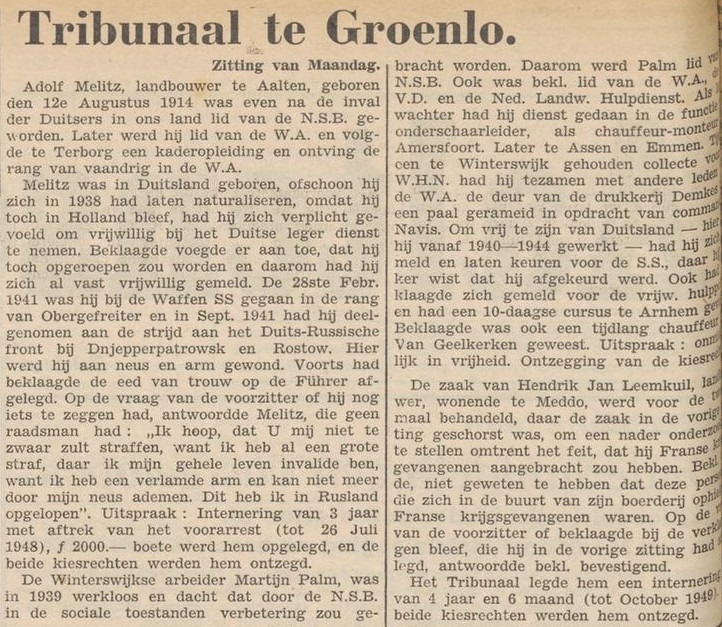
This farm was built around 1910 on the instructions of its first occupants, Herman Bulsink—originally from the Nonhof farm—and his wife Everdina Hendrina Blekkink. Their foster son, Adolf Melitz, later became the primary occupant.
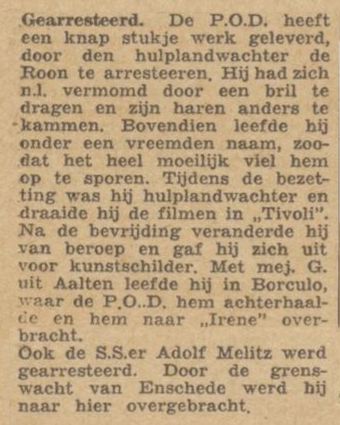
Melitz was German by birth, but became a naturalised Dutch citizen in 1938. Shortly after the German invasion, he joined the Dutch National Socialist Movement (NSB) and in 1941 enlisted in the Waffen SS, with the rank of Obergefreiter. In September of that year, he took part in fighting on the German–Russian front near Dnepropetrovsk and Rostov, where he sustained permanent injuries to his nose and arm.
In 1942, the farm was listed in the telephone directory as a ‘Regional Farm’ of the N.J.S. (Nationale Jeugdstorm, a youth movement). Reportedly, following the Liberation, the farm was set on fire by local people as an act of retaliation and was never rebuilt.
In 1947, Melitz was sentenced to three years’ imprisonment, a fine of 2,000 guilders, and disenfranchisement.
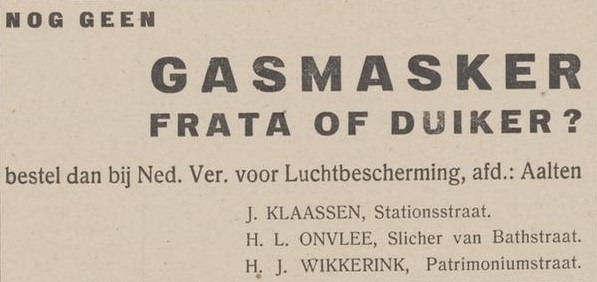
Aaltensche Courant, 13 March 1934Aaltensche Courant, 6 July 1937Aaltensche Courant, 21 April 1939Directory for the local telephone service, January 1942
De Graafschapper, 1 August 1945De Graafschapper, 11 July 1947Aaltensche Courant, 18 July 1947
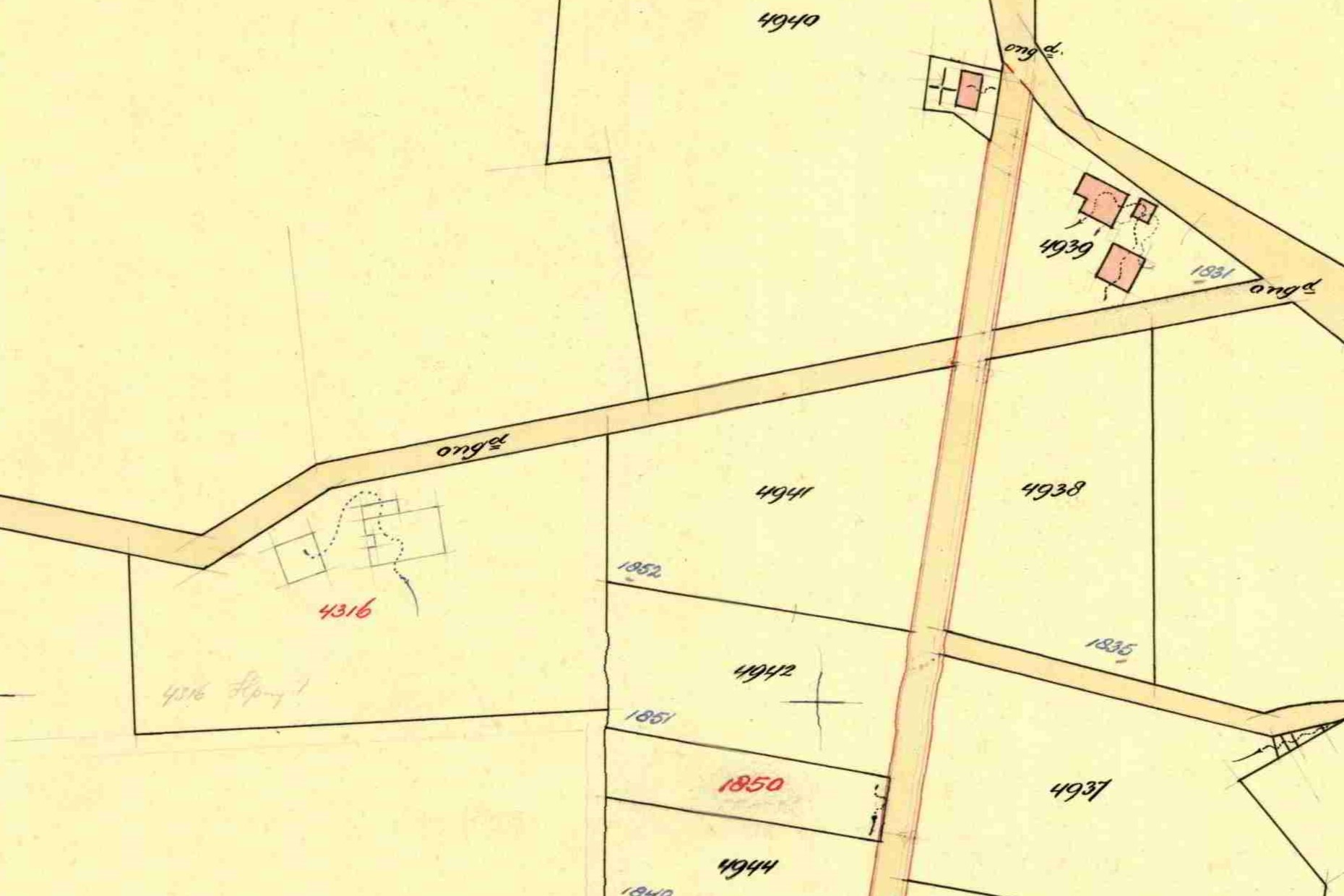
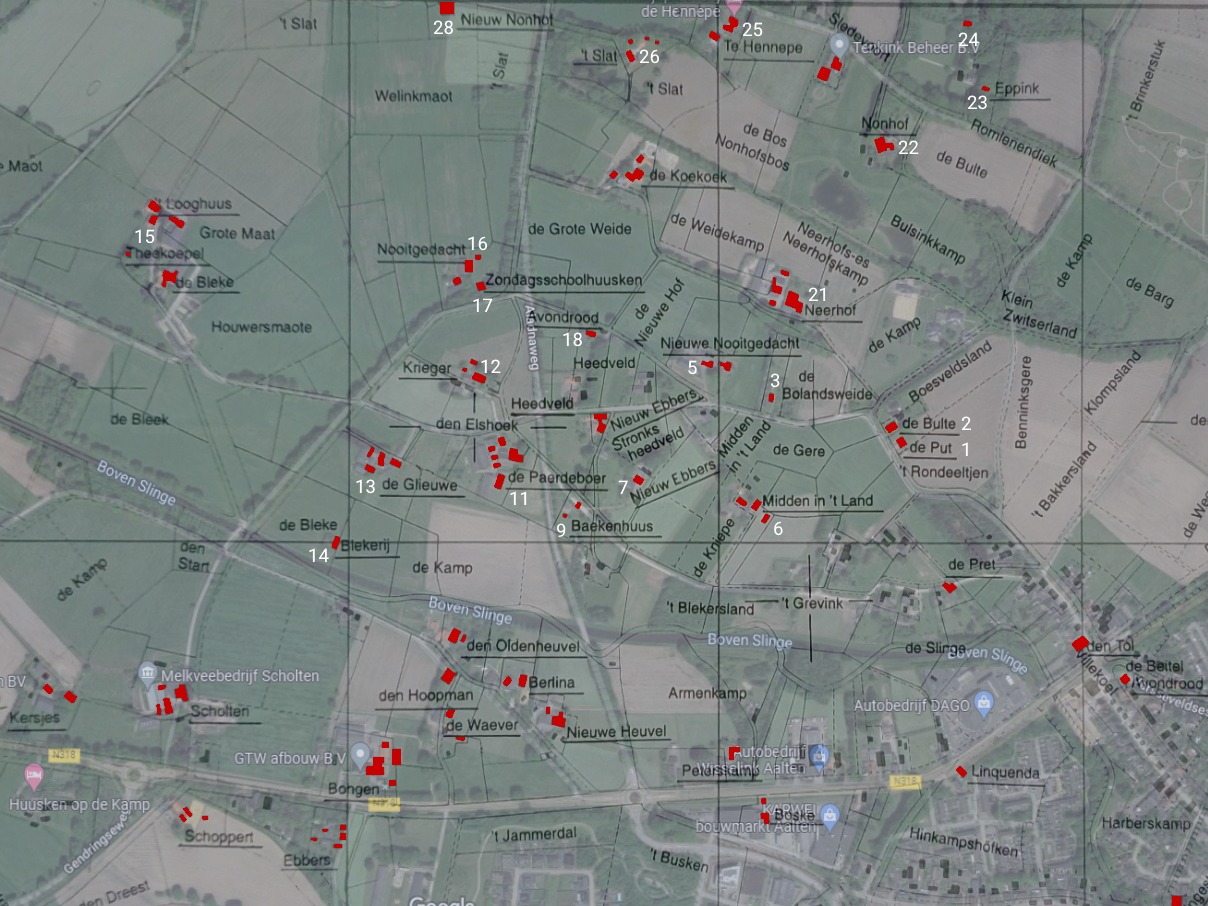
Projection from ‘Farm and Field Names in Aalten’ on Google aerial photograph, with 1967 house numbersFragment of the cadastral map, 1950 (plot C-4316); the contours of the vanished farm are visible on the left
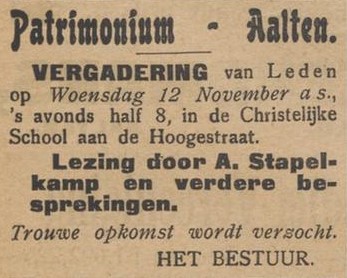
Antoon Stapelkamp was born on 27 February 1886 at house number 162 (Hogestraat 26) in Aalten and passed away on 19 January 1960 in Utrecht. He was the son of Gerrit Jan Stapelkamp, a factory worker and smallholder, and Hendrika te Sligte. On 12 June 1913, Antoon married Johanna Aleida Stronks, with whom he had five daughters and two sons.
Stapelkamp grew up in a strict Calvinist (gereformeerd) family with four children in Aalten. After completing his education at the Christian primary school, he had to start contributing to the family income at the age of twelve. He joined the Ten Dam and Manschot button and comb factory, which had been established in Aalten since 1872. His father already worked there, and a few years later, the company also employed his younger brother Herman.
Encouraged by their parents, both boys attended evening classes for further education. However, only the youngest managed to obtain diplomas and pursue a career in teaching. Antoon continued to make horn combs at Ten Dam and Manschot for more than twenty years.
At the age of fourteen, Stapelkamp witnessed a debate between the Enschede-based socialist J.F. Tijhof and H. Verveld, the chairman of the interdenominational Dutch Christian Textile Workers’ Union ‘Unitas’. Impressed by Verveld’s performance, he signed up as a youth member of the local branch that Verveld had founded in Aalten. However, this branch proved unsustainable.
Administrative Career
Membership of the Calvinist Young Men’s Association (Gereformeerde Jongelingsvereniging), the breeding ground for administrative talent within the orthodox Protestant community, was of great importance to Stapelkamp’s social and political development. Apart from serving as secretary and chairman of the Aalten branch, he was a board member of the Gelderland section of the Dutch Association of Young Men’s Societies on a Calvinist Foundation.
In the local branch of the workers’ association Patrimonium, his administrative qualities were quickly noticed, which led to his election as secretary in 1903. He declined, however, believing that at seventeen, he was too young and inexperienced. Eleven years later, he would accept this very position.
In 1914, Stapelkamp and a few friends from Patrimonium founded the Association of Christian Hornworkers, a local trade union that joined the CNV (National Federation of Christian Trade Unions) as an independent organisation on 1 March 1914. He took on the role of secretary himself. However, the trade union was too small to have a future, and the Hornworkers’ Union soon collapsed. Stapelkamp subsequently founded an Aalten branch of the Dutch Union of Christian Factory and Transport Workers (NBCFHT). Once again, he became the secretary.
After a period as an active member and executive of the NBCFHT, he became a member of the CNV executive board in 1931. The Stapelkamp family relocated to The Hague, where the federation had established a new headquarters. This marked the end of Stapelkamp’s nascent membership of the Anti-Revolutionary Party (ARP) in the Aalten municipal council.
Aaltensche Courant, 8 November 1913
CNV Chairman
In 1935, he was appointed chairman. He attempted to chart an independent course for the CNV and exert influence on government policy, which was heavily focused on austerity. Although he shared the general policy direction of the Colijn cabinets, he frequently disagreed with the specific measures introduced.
During the occupation years, Stapelkamp developed into a forceful chairman. Led by him, the CNV followed a course of evasive adaptation during the first year of the occupation, keeping contact with the occupying forces to an absolute minimum and rejecting structural reforms. In November 1940, Stapelkamp accepted an invitation from the Deutsche Arbeitsfront to go on a study tour to Germany. This decision would be held against him for a long time.
On 30 June 1941, Stapelkamp was arrested alongside approximately ninety other prominent anti-revolutionaries. Until December 1942, he was detained successively in the Schoorl, Buchenwald, Haaren, and St. Michielsgestel camps. After his release, Stapelkamp was a driving force behind the underground ‘Internal Contact Group’. He also restored relations with representatives of other employee and employer organisations.
Following World War II, Stapelkamp was reappointed chairman of the CNV, a position he held until his resignation in 1947. Furthermore, he served as:
Member of the Senate of the States-General, from 20 November 1945 to 4 June 1946
Alderman (for Social Affairs) of Utrecht, from November 1945 to 2 September 1946
Member of the House of Representatives of the States-General, from 4 June 1946 to 3 July 1956
Member of the Provincial Council of Utrecht, from 20 June 1946 to 4 July 1950
In early 1960, Stapelkamp fell ill with neglected diabetes. He died from subsequent complications.
Publications
Pseudonym: ‘Socius’.
‘Mag boycot onder de toelaatbare strijdmiddelen in den economischen strijd worden gerangschikt?’ in: Verslag van de veertiende algemeene vergadering van het Christelijk Nationaal Vakverbond (Utrecht 1929) 57-70;
‘De christelijke vakbeweging: vrucht van het verleden; eisch van het heden; levensvoorwaarde voor de toekomst’ (Utrecht 1945);
‘Dr. H. Colijn en het sociale leven’ in: Een groot vaderlander. Dr. H. Colijn herdacht door tijdgenooten (Leiden 1947);
‘Het sociale beleid van het kabinet-Drees’ (Den Haag z.j.);
‘Verantwoorde emigratie’ (Den Haag 1951);
‘De gemeenten en de werkgelegenheidspolitiek’ (Den Haag 1953);
‘De banier opnieuw geheven. Geschiedenis van het Christelijk Nationaal Vakverbond in Nederland in de jaren van de tweede wereldoorlog’ (met J. Schipper, Hoorn 1956).
Literature
‘Om te doen gedenken. Verslag van de buitengewone vergadering van het C.N.V. en van de receptie-samenkomst ter gelegenheid van het afscheid van K. Kruithof als voorzitter en het optreden van A. Stapelkamp als zoodanig’ (Utrecht 1935);
‘Onze nieuwe voorzitter’ in: De Gids, 31.10.1935;
Verslag 22e algemene vergadering Christelijk Nationaal Vakverbond gehouden op donderdag 24 en vrijdag 25 juli 1947 (Hoorn 1947) 38-61;
Trouw, 20.1.1960; J. Schipper, ‘In dankbare herinnering’ in: De Gids, 6.2.1960;
‘Stapelkamp ter nagedachtenis’ in: De Gids, 6.2.1960;
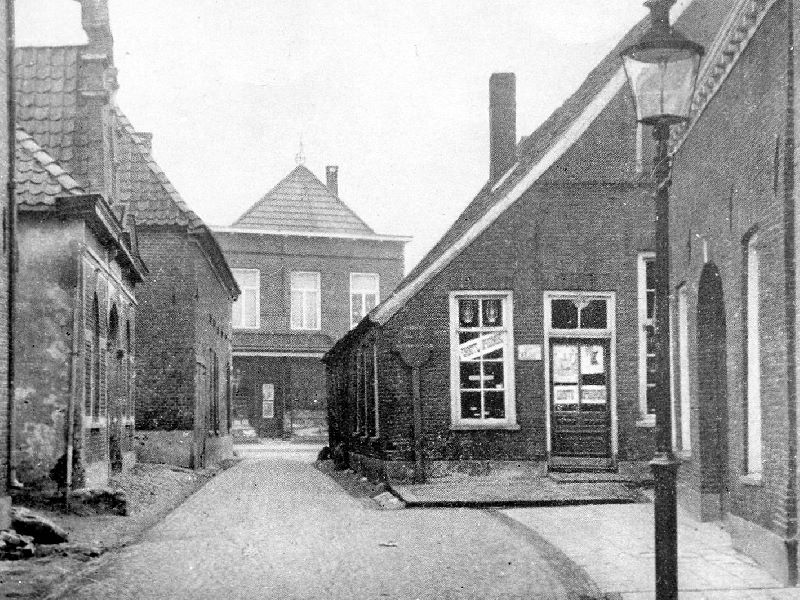
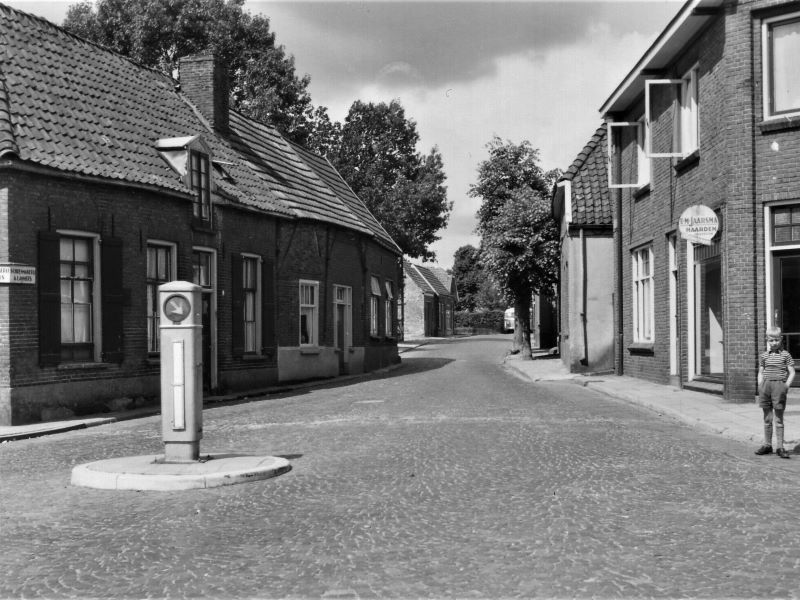
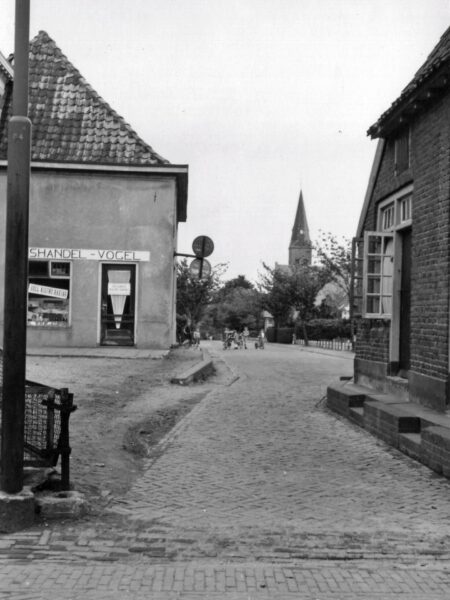
Due to the increase in motorised traffic in the twentieth century, several houses in the old village centre of Aalten at one point stood – both literally and figuratively – ‘in the way’. On this page, we have gathered a number of these so-called ‘bottlenecks’. Do you know of any others?
A “Stumbling Block” in Aalten, which is to disappear very shortly!
The 203-year-old house and smithy of Mr Buesink in Aalten, situated on the corner and entrance of the Peperstraat there, had long stood in the way of widening the busy Peperstraat, located right in the heart of the village.
In the last council meeting, it was decided, in agreement with the owner, to have this property demolished, whereby the owner will be given compensation of ƒ2,500, on condition that the street at that point achieves a width of 13 metres and that his new property will have risen within 8 months.
Whilst it is highly commendable that this street, which is always so busy but so narrow at that spot, is to be significantly widened and that the new building will embellish the surrounding area and the square there, it is at the same time a pity, viewed from an antiquarian standpoint and from that of picturesque village beauty, that yet another of the oldest and most typical houses from the heart of the village is to disappear for the benefit of modern traffic. It should also be mentioned that until now, the Peperstraat was closed to all motor vehicles due to its narrowness!
The beautiful village of Aalten, built on hills by past generations, has several steeply sloping, rather narrow streets with sharp bends, as a result of which the village, as a traffic junction, often presents difficulties. In particular, the confluence of Landstraat, Kerkhofstraat and Veemarktstraat can be designated as a “dangerous intersection”, where collisions and accidents are a near-daily occurrence and where, with the development of today’s fast-moving traffic, double the caution and alertness are required.
This problem has engaged the attention of the local authority for years and years, and the Vereeniging „Plaatselijk Belang” (Local Interest Association) and the K.N.A.C. (Royal Dutch Automobile Club) have also been active in this matter for many years, though without tangible result. The right solution seems hard to find, but given the large number of accidents, which for understandable reasons are increasing rather than decreasing, it really is high time that vigorous action is taken here by the authority concerned, before even more serious accidents than have occurred hitherto force them to look to locking the stable door.
The Aalten council will convene for a meeting this coming Thursday afternoon at half past two. The agenda to be dealt with is by no means unimportant. For instance, a decision will have to be made on a proposal from the executive executive (College van B. en W.) regarding the purchase of the house on the corner of Oosterkerkstraat and Lichtenvoordsestraat. This house is a major obstacle to traffic and a thorn in the side of all motorists who have the misfortune of having to go from Oosterkerkstraat to Lichtenvoordsestraat.
Lately, parking signs have even been erected, indicating that the last five metres of Oosterkerkstraat are a prohibited area for four-wheeled vehicles. Thus, one can now see almost daily that cars coming out of Oosterkerkstraat clandestinely drive across the forbidden section of the road to the Lichtenvoordsestraat. Usually, a fellow passenger is first asked to have a quick look to see if there happens to be a policeman nearby. It is absurd, people judge, that one has to drive out of the entire Oosterkerkstraat in reverse – as one cannot turn in this street – in order to reach the Lichtenvoordsestraat via a massive detour.
Mr M. Meijerman, the current owner of the house that is the cause of all the trouble, has declared his willingness to part with the property for ƒ4,000, and the executive are eagerly seizing the opportunity. The council undoubtedly no less so. We do not know whether the executive consider it justifiable to demolish the house in the near future. On the one hand, the current housing shortage has a strong say in the matter, but on the other hand, the question is whether the house should remain standing until accidents happen, especially now that traffic is becoming heavier.
De Misterpoort is een voormalige stadspoort in Bredevoort. De poort maakte deel uit van de vestingwerken van Bredevoort. Tegenwoordig herinnert een café-restaurant met deze naam nog aan de oude stadspoort, die haar naam weer dankt aan de weg naar buurtschap Miste. In een poortwachtersreglement uit 1726 werd de poort Munsterspoort genoemd.
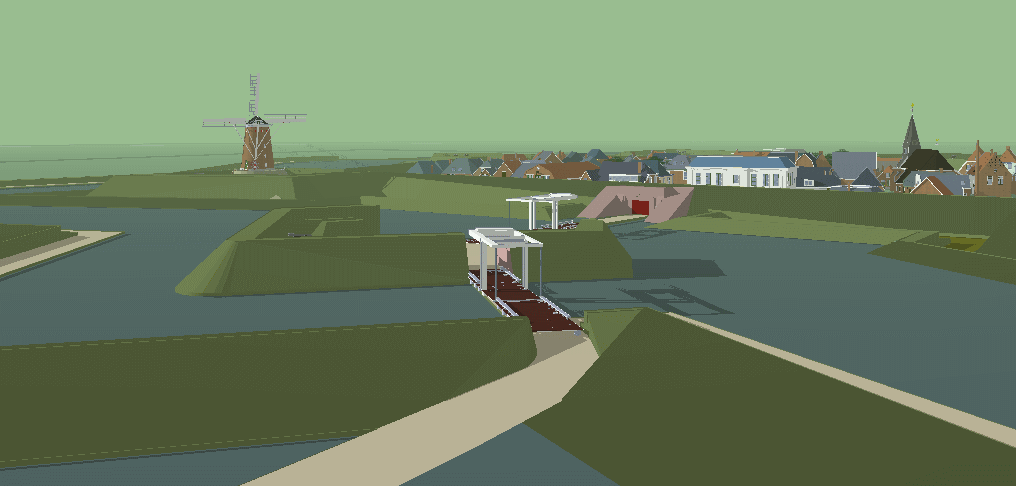
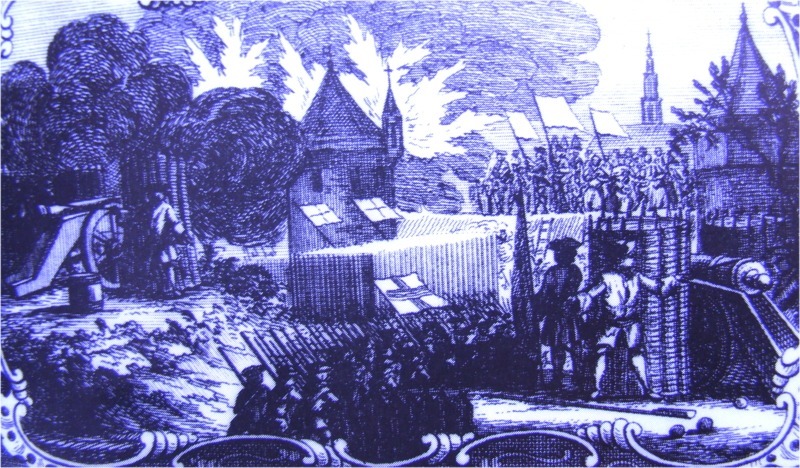
Following the Siege of Bredevoort in 1606, work began in late March on the construction of fortifications designed by the urban planner Adriaen Anthonisz van Alcmaer. During this process, the medieval city walls and their gates disappeared. The town was equipped with bastions and ravelins, and the Misterpoort was replaced by a brick structure set within the rampart. The name ‘Misterpoort’, however, remained.
In 1704 werden er nog verbeteringen aangebracht aan zowel de Misterpoort, als aan de tegenoverliggende Aalterpoort volgens de nieuwste inzichten van die tijd van Menno van Coehoorn.
In 1727, two new counterscarps were constructed in front of both city gates, a project that took two years to complete. In 1755, the fortifications were decommissioned by the Council of State and transferred to the civil authorities. Some time later, in 1784, a government inspection of the fortifications revealed that citizens had excavated more than half of the ramparts down to ground level—with the exception of two bastions—and had demolished the gates and bridges. Plans were drawn up to restore the fortifications and add three lunettes, but these were never carried out.
Archeology
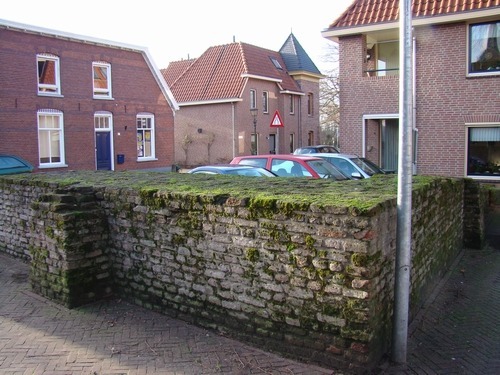
Excavations took place at the site in 1963 and 1979. In 1963, the State Service for Archaeological Heritage (ROB) was present and reported: “The foundation remnants were found to have been constructed using brick blind arches over the fill of a moat. On the inner side (the town side) of the moat, the remains of exceptionally heavy, vertically buried oak posts were found within the embankments.”
During the 1979 excavations, a wall with a thickness of 1.70 metres, featuring transverse foundations, was discovered and quickly demolished. However, the remains were measured and photographed by the newly established local ADW Archaeological Working Group. These findings have raised more questions than answers, and it remains difficult to conclude which remnants date from which specific period.
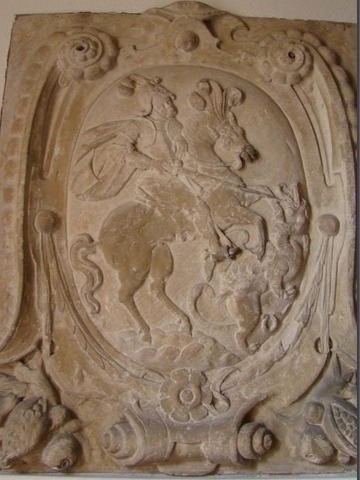
Waarschijnlijk is het enige zichtbare overblijfsel van de stadspoort bewaard gebleven in de hal van de Sint-Georgiuskerk. Het betreft hier een gevelsteen met een afbeelding van het schutspatroon van Bredevoort, St. Joris en de draak.
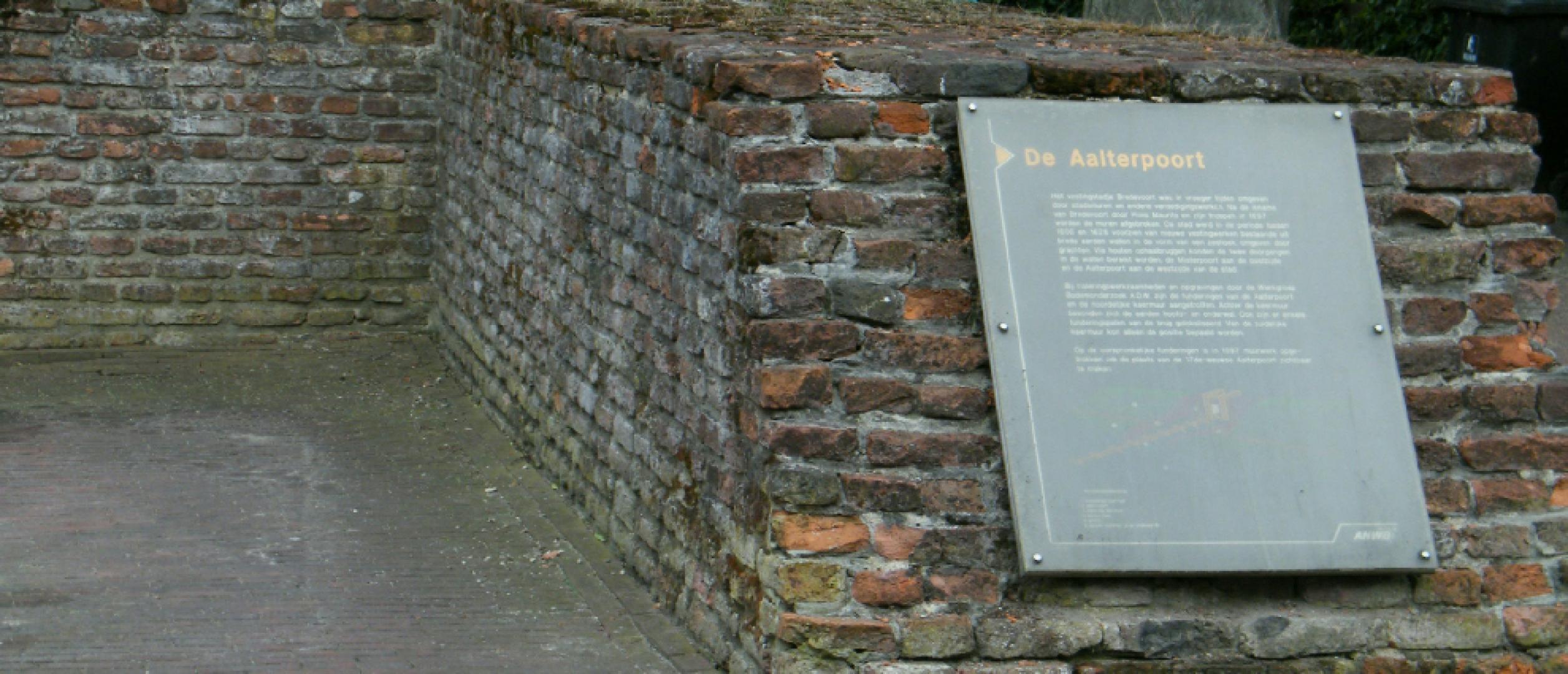
The Aalterpoort was one of the two city gates of Bredevoort and formed part of the fortifications of Bredevoort. The gate was situated on the western side of the fortified town and marks the start of the Landstraat.
It is unknown when the first gate was constructed at this site. Accounts from the year 1500 show that maintenance work was carried out on the gates that year. A map by Jacob van Deventer from 1560 depicts a heavy tower with a bulwark or barbacane in front of it. On siege maps (from 1597 onwards), the city gate is shown with a drawbridge. The gate is flanked by two towers topped with spires. A “half-moon” (halve maan) outwork is situated in front of this gate.
Improvements ca. 1550
It is known that Maarten van Rossum ordered improvements between 1545 and 1555. It is possible that the gatehouse was also renovated during this period. This medieval gate was demolished in 1606, shortly after the relief of the town by Frederick Henry. From that time onwards, Bredevoort was equipped with fortifications according to the latest insights of the era, which included a new gate. This was a brick-built gate set within the rampart. The half-moon was replaced by a larger ravelin.
Demolition
Following the introduction of the Fortifications Act (Vestingwet) in 1874, the gate was demolished by residents to save on maintenance costs. The bridge was replaced by a causeway.
Today, two residential buildings stand at this location, completed in 1998 on the site of the former city gate. A remnant of the original city gate was incorporated into the design.
Features
Function
City gate
Year of construction
unknown
Demolition
19th century
Sources
‘Breevoort can ick vergeten niet’ (blz. 126), H.A. Hauer
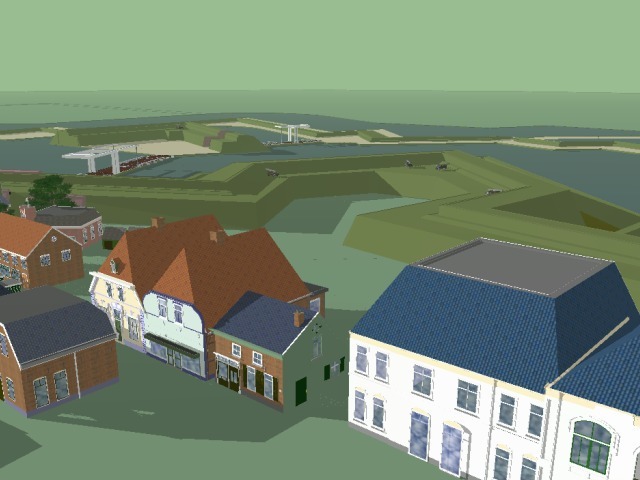
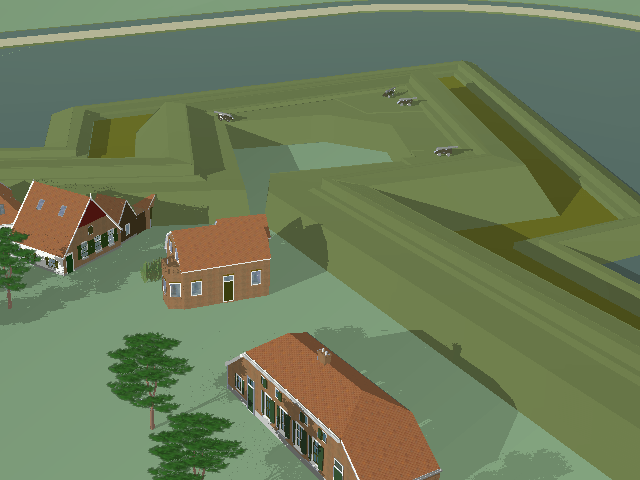
Bastion Stoltenborg was one of the six bastions of Bredevoort. It was situated to the east of the town, at what is now the start of Pater Jan de Vriesstraat, and formed part of the Bredevoort fortifications.
Behind the houses on the Ambthuiswal lay the eight-metre-high hollow bastion, equipped with three cavaliers (katten) in each corner. The terreplein was accessible from Hozenstraat and Ambthuiswal. The gorge (keel), or entrance to the bastion, was located just past the junction with Gasthuisstraat, directly in front of the town farm situated next to the Ambtshof.
The name Stoltenborg is thought to be related to the German word ‘stolz’ (proud), perhaps referring to the proud ‘borg’ (stronghold) of Bredevoort.
Reconstruction
The image shows a reconstruction of Bastion Stoltenborg. It illustrates the bastion’s position relative to the houses that stand there today; the adjacent building is the town farm next to the Ambtshof, with Gasthuisstraat running in front of it. The reconstruction also shows the onderwal (lower rampart) situated in front of the bastion. The moat has since been filled in; the site is now occupied by ‘t Bastion school and the surrounding modern housing.
Bastion Ossenkop (‘Ox Head’) was one of the six bastions of Bredevoort. It was situated to the south-west of the town, at what is now the start of Kerkstraat coming from Koppelstraat, and formed part of the Bredevoort fortifications.
On the site behind St George’s Church lay the eight-metre-high ‘solid’ bastion, equipped with three cavaliers (katten) in each corner. The terreplein was accessible via ramps (oprillen), possibly from Koppelstraat and Kerkstraat.
Reconstruction
The image shows a reconstruction of Bastion Ossenkop. It illustrates its position relative to the houses that stand there today; St George’s Church now stands upon the curtain wall (courtine). The gorge (keel) of the bastion is now occupied by gardens, and the site of the bastion itself is currently the Ossenkop playground.
The reconstruction also shows the lower rampart situated in front of the bastion. The moat has been filled in; this area is now the site of the school and the surrounding modern housing on Schoolstraat and Tramstraat. Nothing has been preserved to serve as a physical reminder of the former bastion.
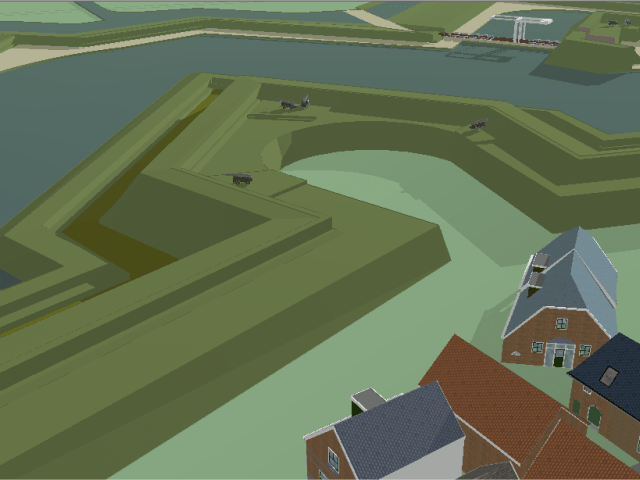
Bastion Vreesniet (‘Fear not’) was one of the six bastions of Bredevoort. It was situated to the west of the town, in the area now behind Prinsenstraat, and formed part of the Bredevoort fortifications. Its remains are protected as a national monument (rijksmonument).
At this location, the outline of the bastion is still vaguely visible on the modern map of Bredevoort. It was once an eight-metre-high ‘hollow’ bastion, equipped with three cavaliers (katten) in each corner. The gorge (keel), or entrance to the bastion, was situated just past the junction of Landstraat and Kerkstraat; the alley behind these houses still exists today. The present-day town meadow once served as the bastion’s terreplein (the level space behind the ramparts).
In 1782, the bulwark was granted under a long-term lease (erfpacht) to Bernard Andries Roelvink. During the 19th century, the fortifications were dismantled to make way for the gardens that are still there today. A small section of the onderwal (lower rampart) has been preserved, upon which the Roelvink family’s tea pavilion was built.
Reconstruction
The image shows a reconstruction of Bastion Vreesniet. It illustrates the bastion’s position relative to the houses that stand there today, with Sint Bernardus visible on the right. The lower rampart in front of the bastion is also shown. The terreplein is now the small meadow situated between the gardens and Kerkstraat.
The moat in front of it is known today as the Grote Gracht (Large Moat). The section of the moat to the left of the ravelin is now known as the Kleine Gracht (Small Moat). The filled-in section of the moat and the glacis (sloping bank) that were once here are now occupied by the ‘De Halve Maan’ (Half Moon) allotments.
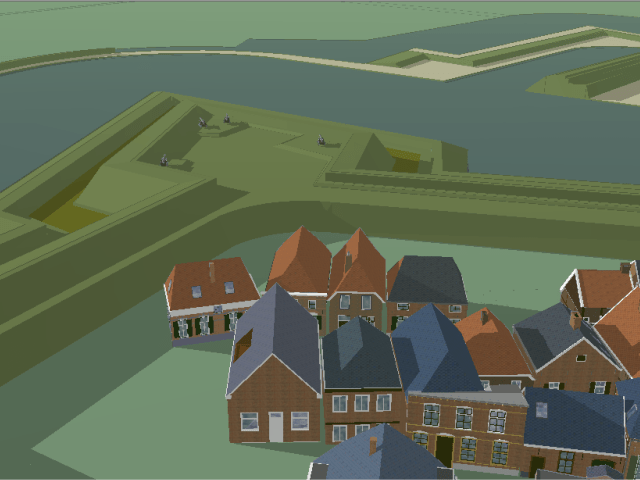
Bastion Treurniet (‘Grieve Not’), or Kruittoren (Powder Tower) in common parlance, is a national monument (rijksmonument) and was one of the six bastions of Bredevoort. It is situated to the north of the town, on what is now the Kruittorenstraat opposite the community centre Ons Huis, and formed part of the Bredevoort fortifications.
At this location, a rise in the landscape can still be seen today; this was the onderwal (lower rampart) of the bastion. Behind it lay an eight-metre-high hollow bastion, equipped with three cavaliers (katten) in each corner. A powder magazine (kruithuis) for the garrison stood upon the terreplein. The gorge (keel), or entrance to the bastion, was situated just past the junction of Kruittorenstraat and ’t Zand.
The powder tower of Bredevoort Castle must also have stood at this site. The curtain wall (courtine) of the main rampart ran behind the houses towards Sint Bernardus. In 2010, an artwork was placed on the remnants of the lower rampart in the form of steel ribs that represent its original profile.
Reconstruction
The image shows a reconstruction of Bastion Treurniet. It illustrates the bastion’s position relative to the houses that stand there today. The lower rampart situated in front of the bastion is also visible. The section on the right is the part that remains today as a shapeless mound.
The terreplein is now the small meadow on Kruittorenstraat. The powder magazine would once have stood on the spot now occupied by the Bredevoort Schittert building. The section of the moat shown in the reconstruction still exists today.
Deze website gebruikt cookies voor een optimale ervaring en analyse van bezoekgegevens. Ga je hiermee akkoord? Zonder toestemming werken sommige onderdelen van de site mogelijk minder goed.
Functioneel
Always active
De technische opslag of toegang is strikt noodzakelijk voor het legitieme doel het gebruik mogelijk te maken van een specifieke dienst waarom de abonnee of gebruiker uitdrukkelijk heeft gevraagd, of met als enig doel de uitvoering van de transmissie van een communicatie over een elektronisch communicatienetwerk.
Voorkeuren
De technische opslag of toegang is noodzakelijk voor het legitieme doel voorkeuren op te slaan die niet door de abonnee of gebruiker zijn aangevraagd.
Statistieken
De technische opslag of toegang die uitsluitend voor statistische doeleinden wordt gebruikt.De technische opslag of toegang die uitsluitend wordt gebruikt voor anonieme statistische doeleinden. Zonder dagvaarding, vrijwillige naleving door je Internet Service Provider, of aanvullende gegevens van een derde partij, kan informatie die alleen voor dit doel wordt opgeslagen of opgehaald gewoonlijk niet worden gebruikt om je te identificeren.
Marketing
De technische opslag of toegang is nodig om gebruikersprofielen op te stellen voor het verzenden van reclame, of om de gebruiker op een site of over verschillende sites te volgen voor soortgelijke marketingdoeleinden.