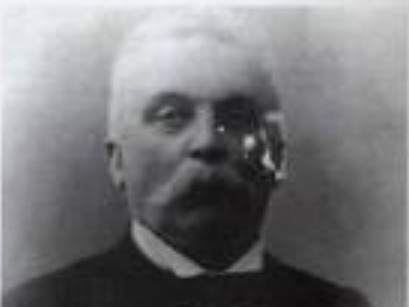
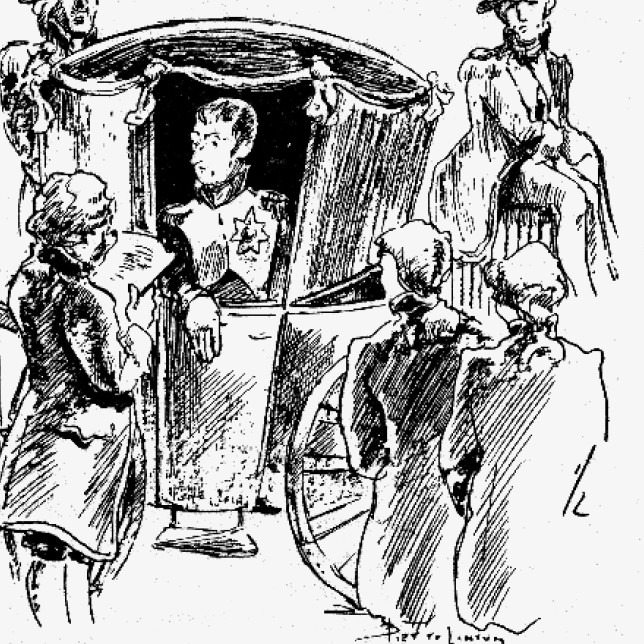
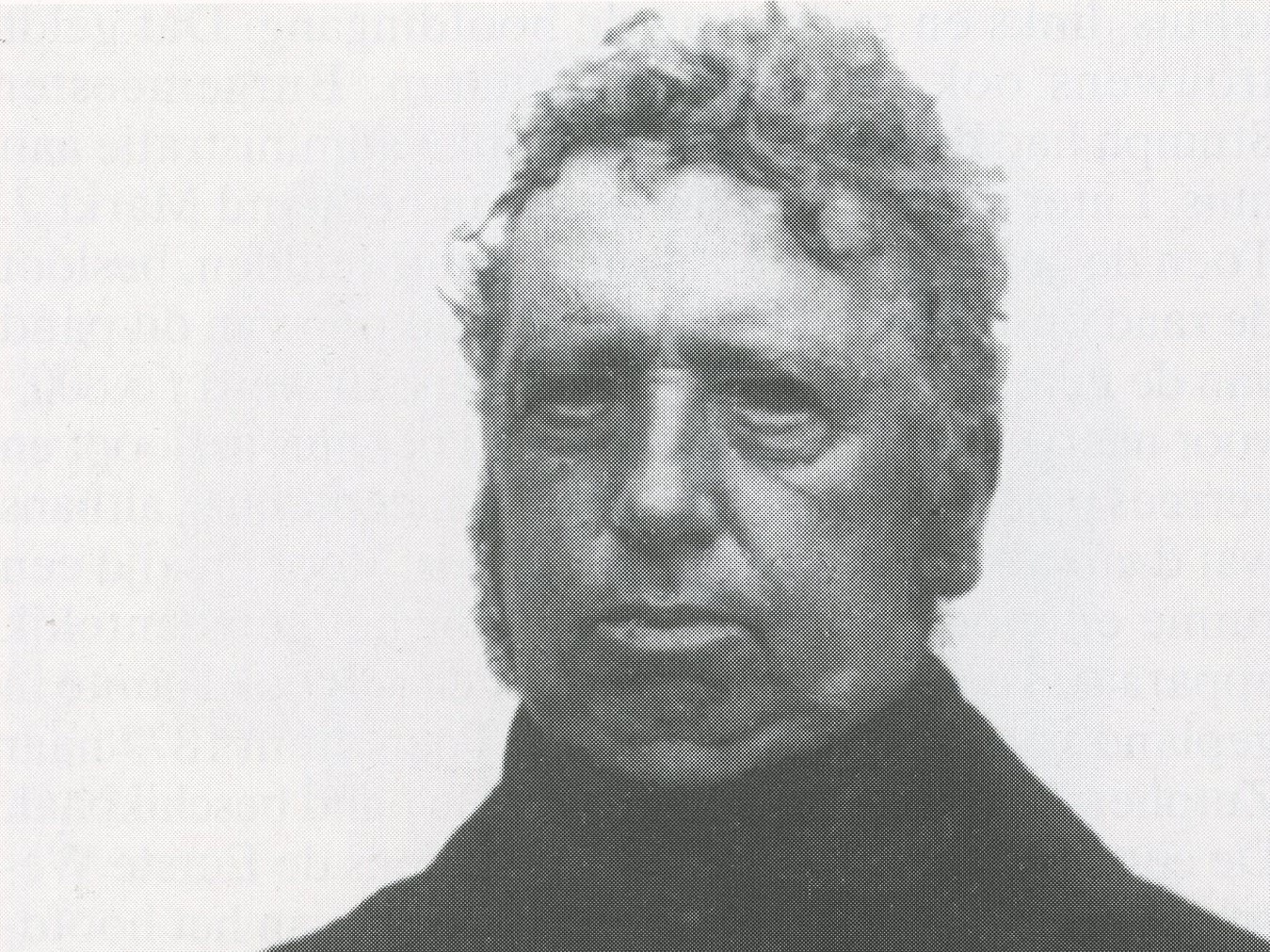
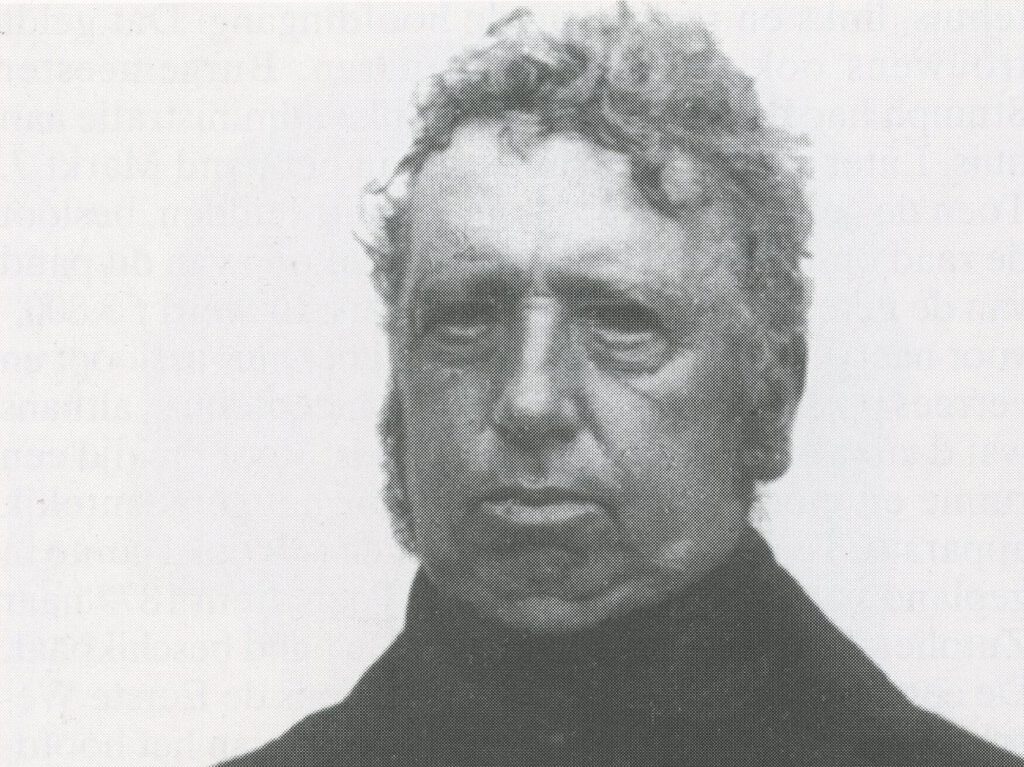
Willem Carel Tack zag op 26 september 1838 in Doesburg het levenslicht als zoon van Benjamin Tack, lid van de stedelijke raad, en Françoise Caroline Madelon baronesse Van Eck. Op 5 juni 1873 trouwde hij in Aaltenmet predikantendochter Cornelia Johanna Paré (Bredevoort, 2 augustus 1848). Samen kregen zij vijf kinderen.
Op 4 maart 1880 werd Tack per Koninklijk Besluit benoemd tot burgemeester van Kesteren. Na een eervol ontslag als burgemeester van die gemeente aanvaardde hij met ingang van 15 december 1895 het burgemeesterschap van Aalten. Hij volgde jonkheer Georg Ludwig Carl Heinrich Baud op.
Feestelijke ontvangst in Aalten
Op maandagmiddag wachtte een grote menigte Tack en zijn familie op het station Aalten op en heette hen daar welkom. Koetsen, ruiters en een muziekkorps begeleidden de familie vervolgens naar de ambtswoning aan de Gasthuisstraat (het huidige Haartsestraat 10), die later de bijnaam ‘Tackshuis’ kreeg. Die avond trok ter ere van de nieuwe burgemeester een fakkeltocht door het met vlaggen en groen versierde dorp. Bij Koninklijk Besluit van 25 november 1907 werd Tack herbenoemd tot burgemeester met ingang van 15 december 1907.
Tack overleed op 4 mei 1915 in Aalten op 76-jarige leeftijd en vond op 8 mei in Doesburg zijn laatste rustplaats.
Fotograaf, kunstschilder, tekenaar en amateur-natuurgeneeskundige
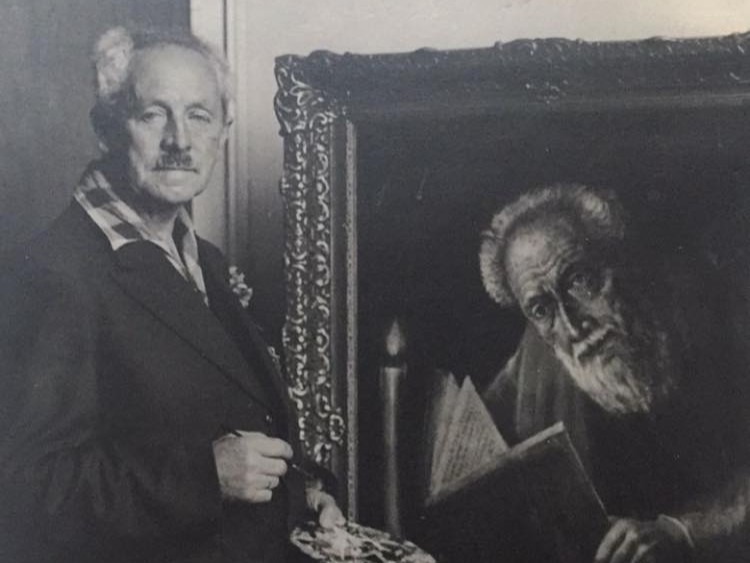
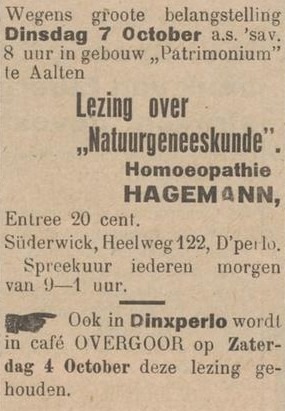
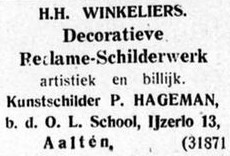
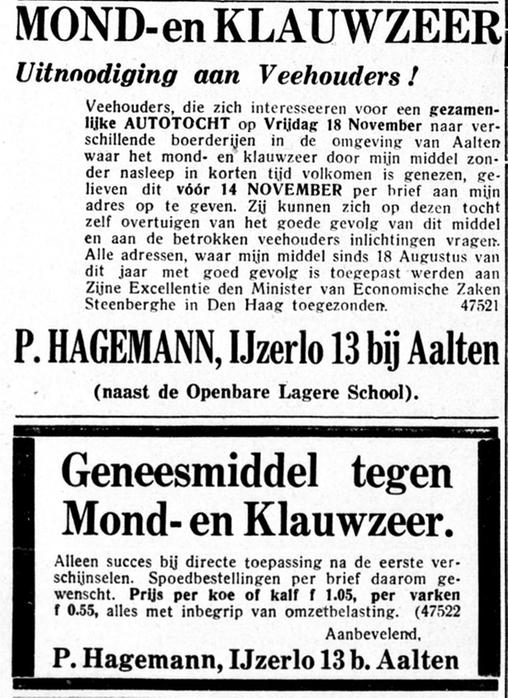
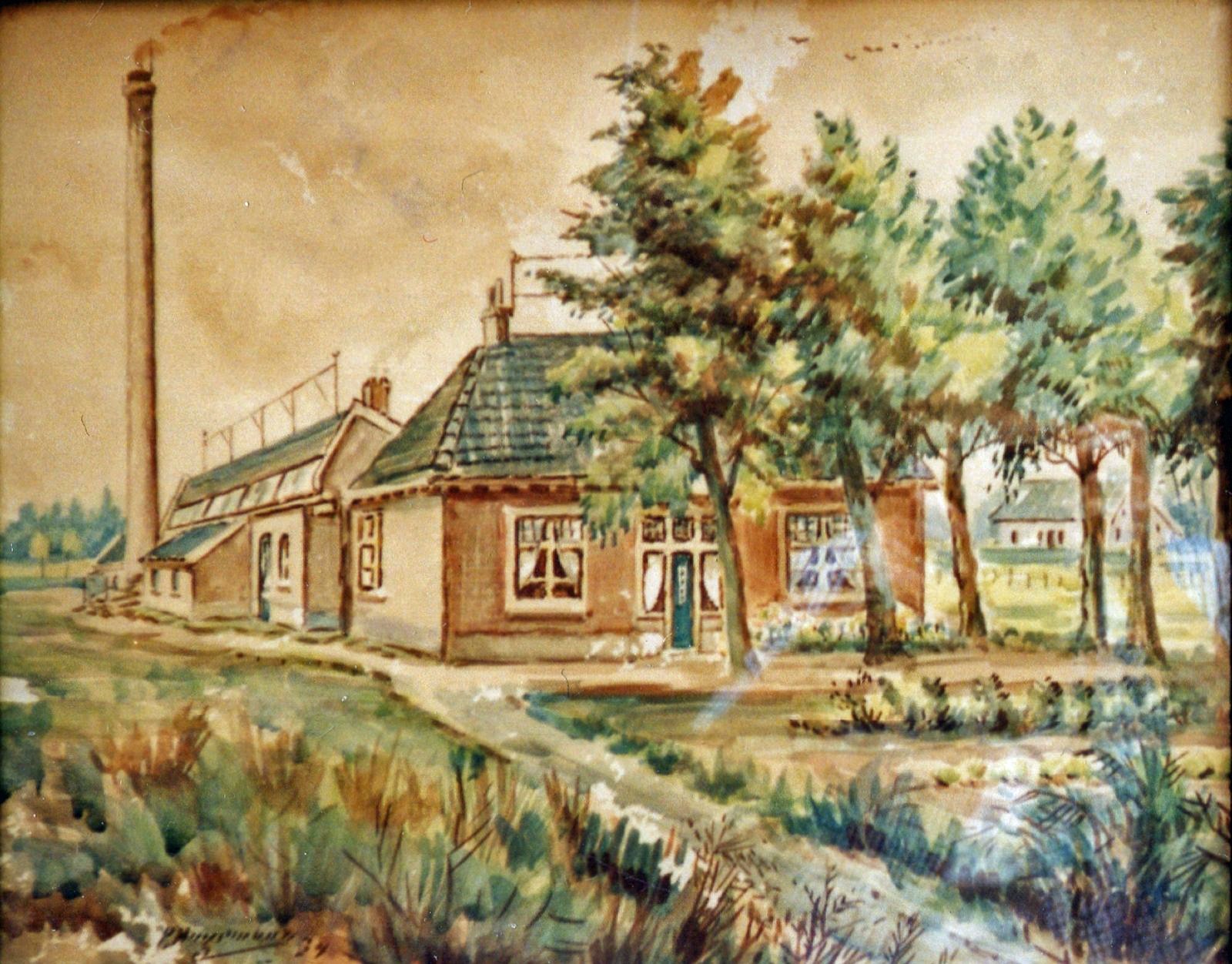
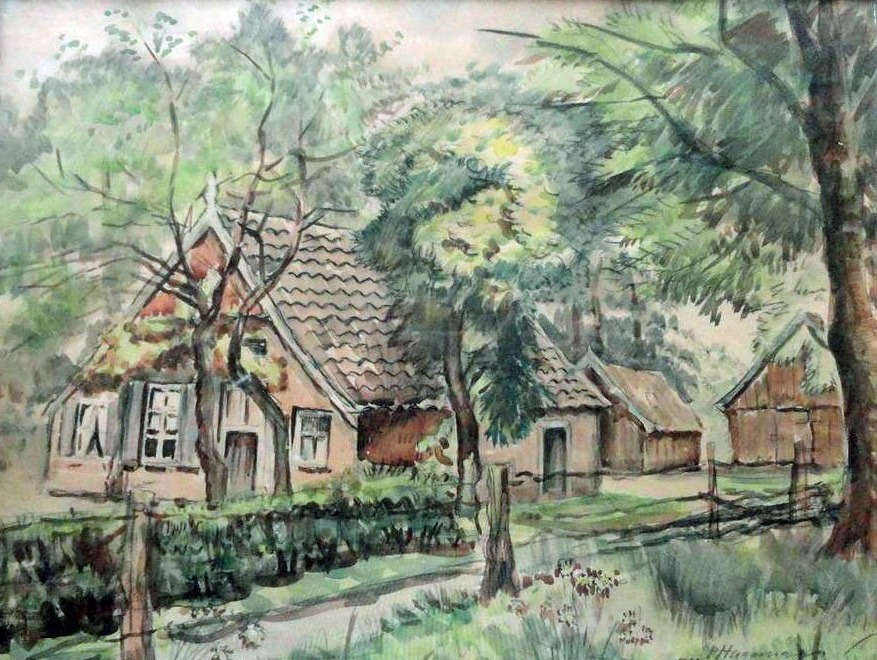
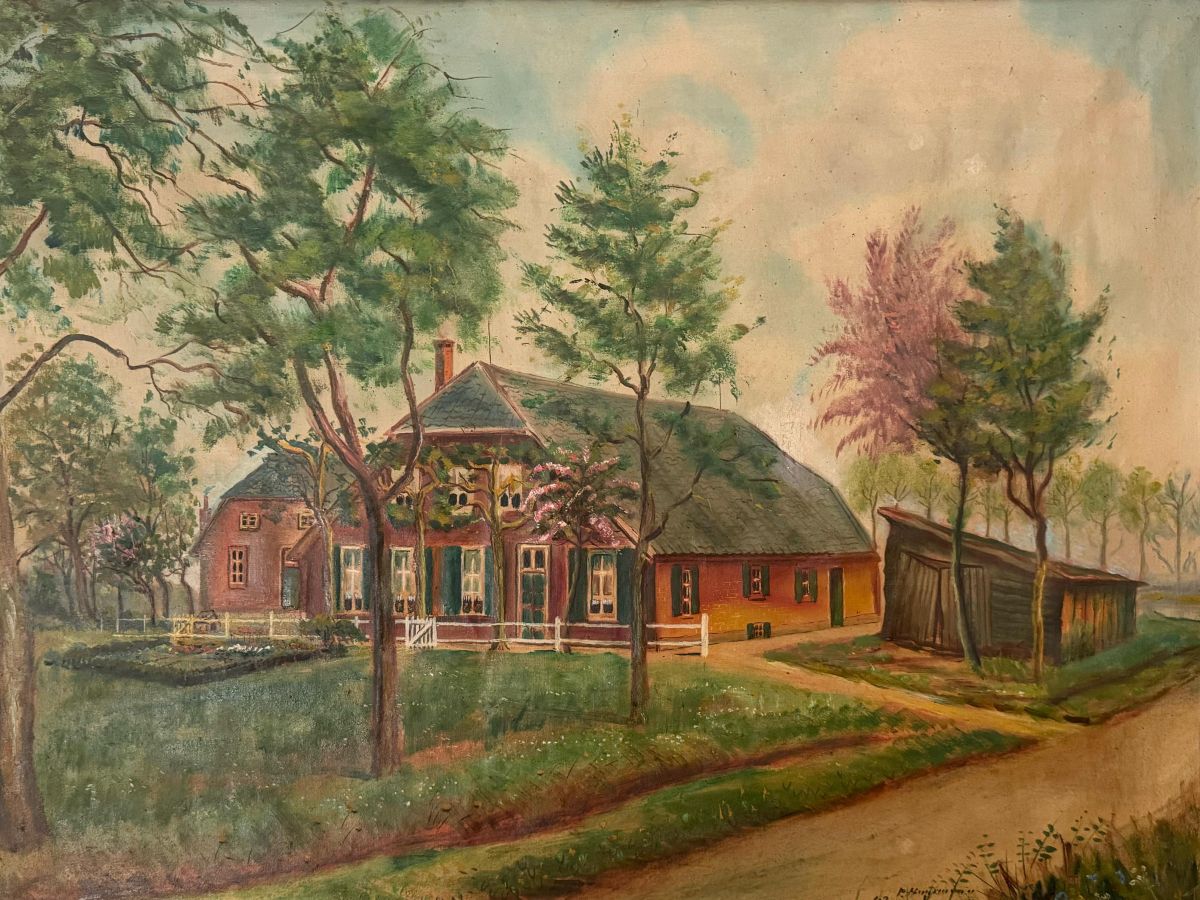
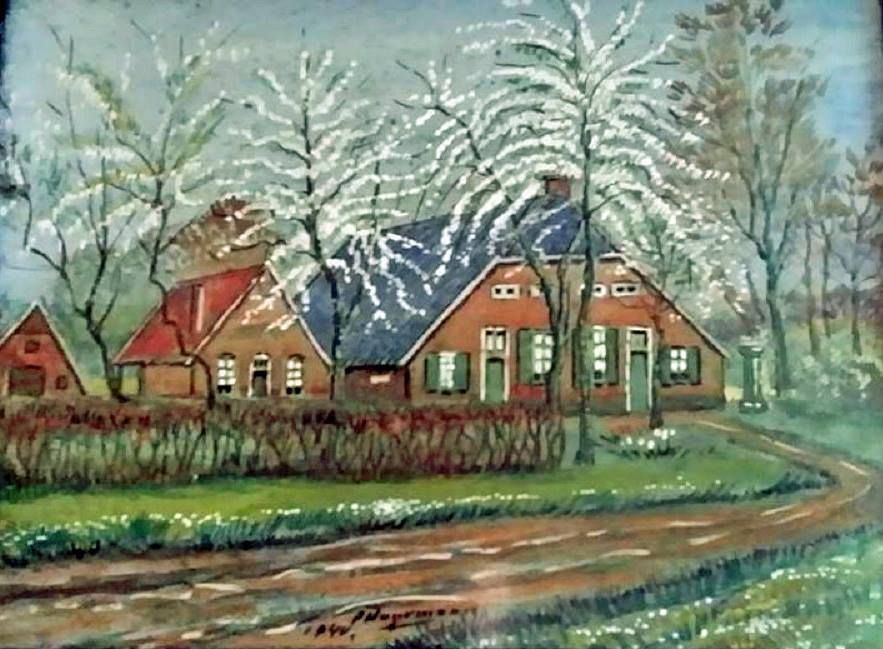
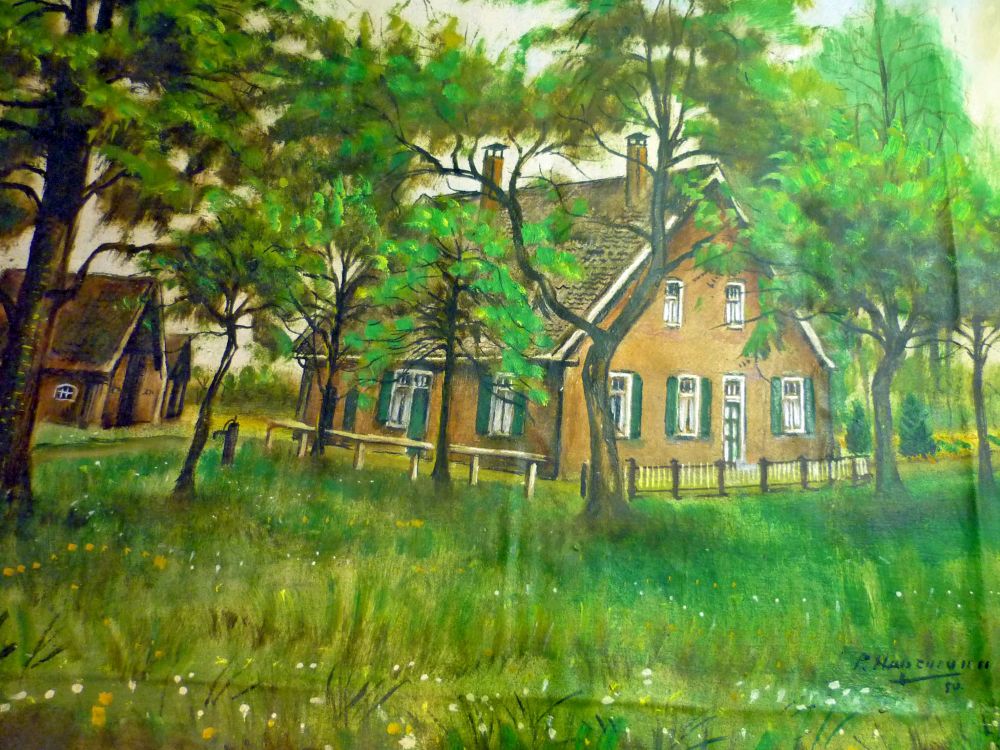
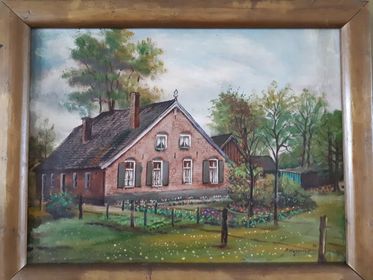
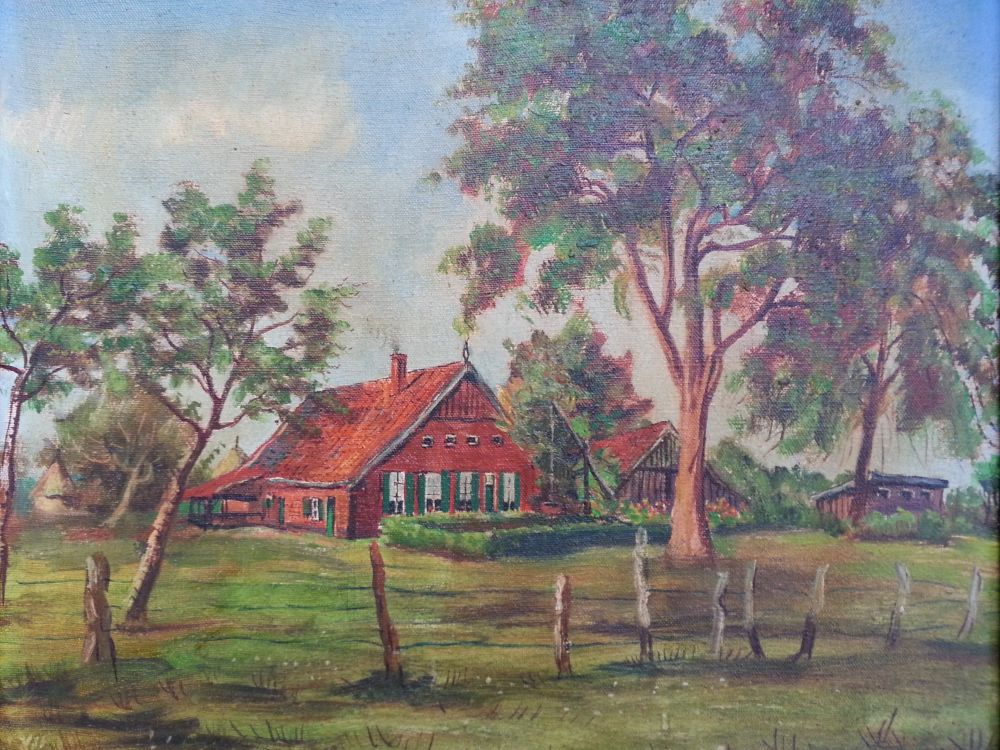
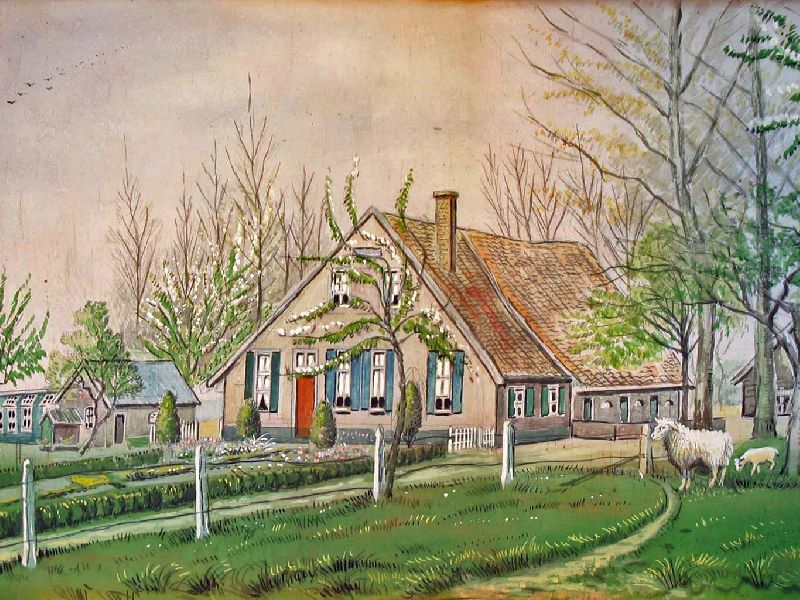
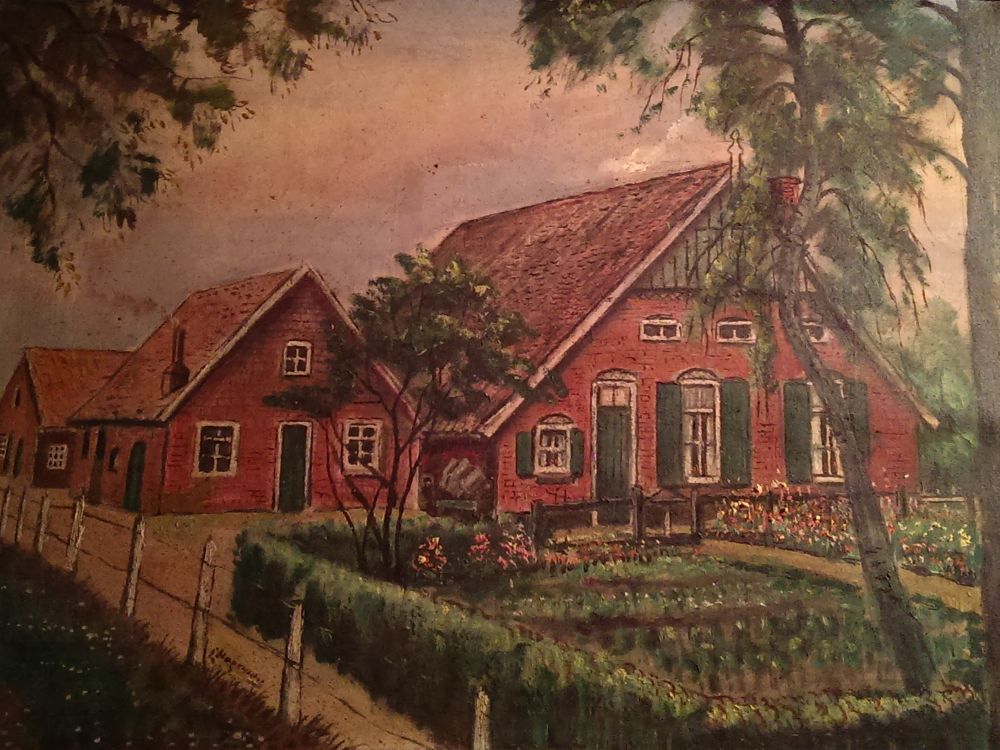
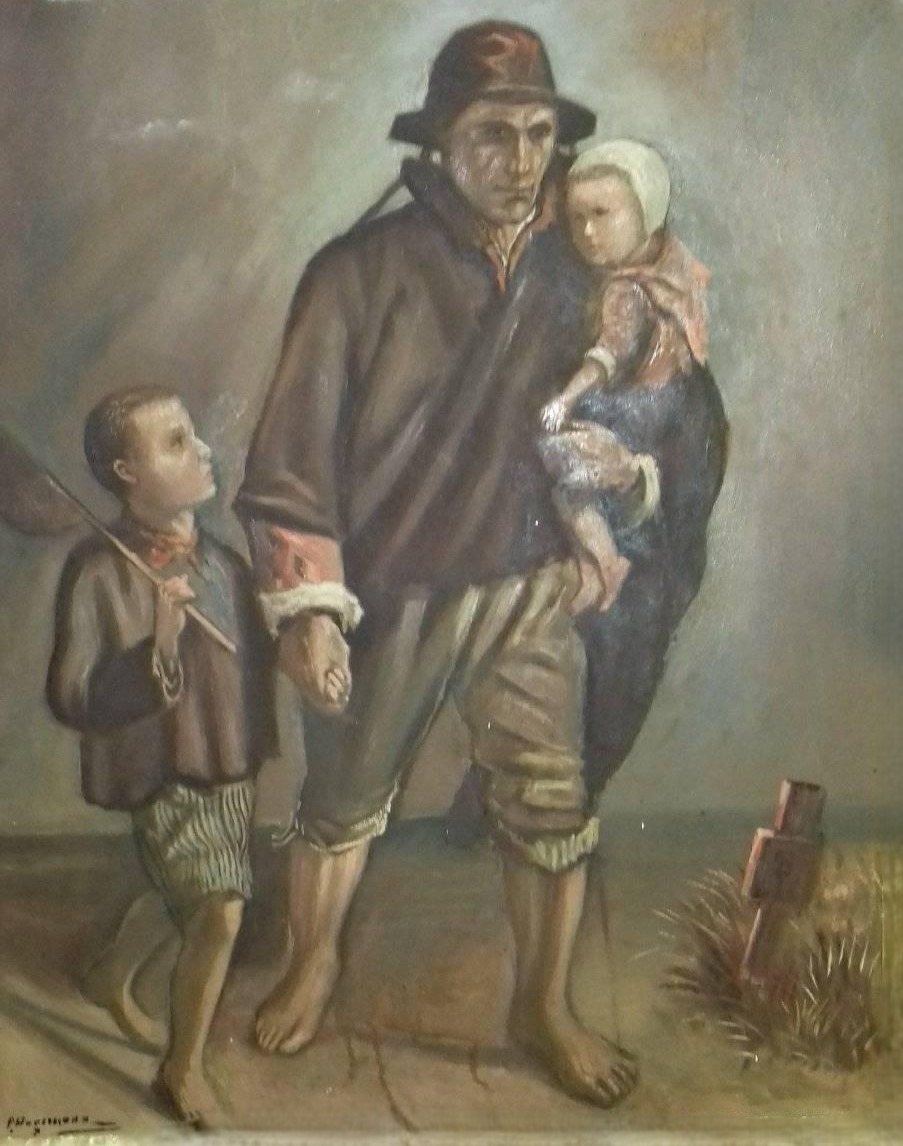
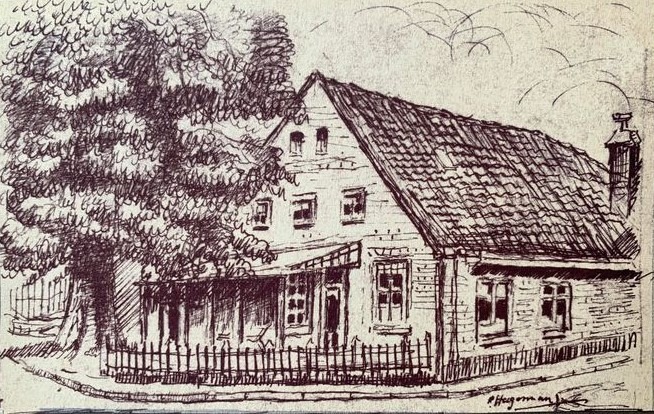
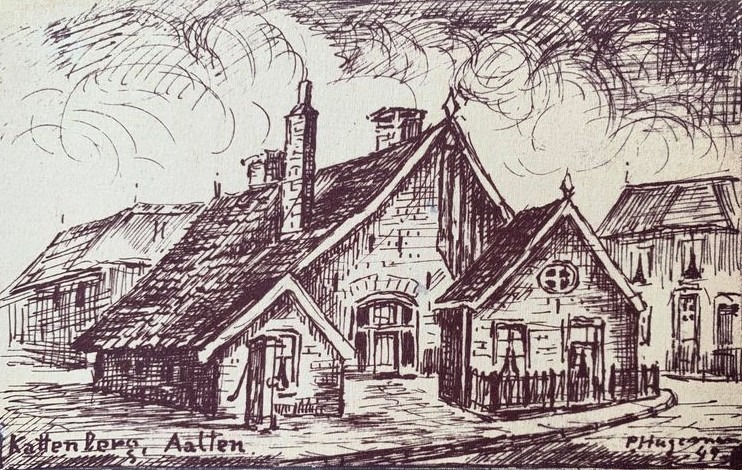
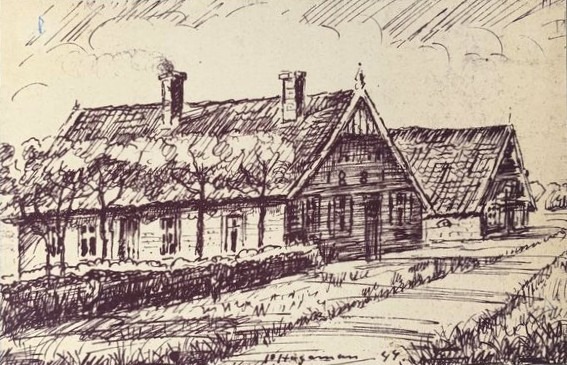
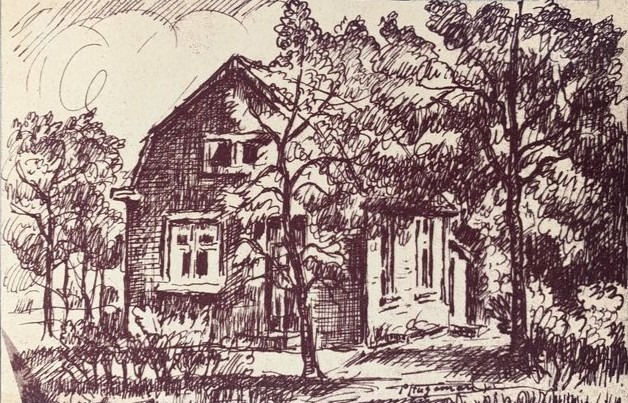
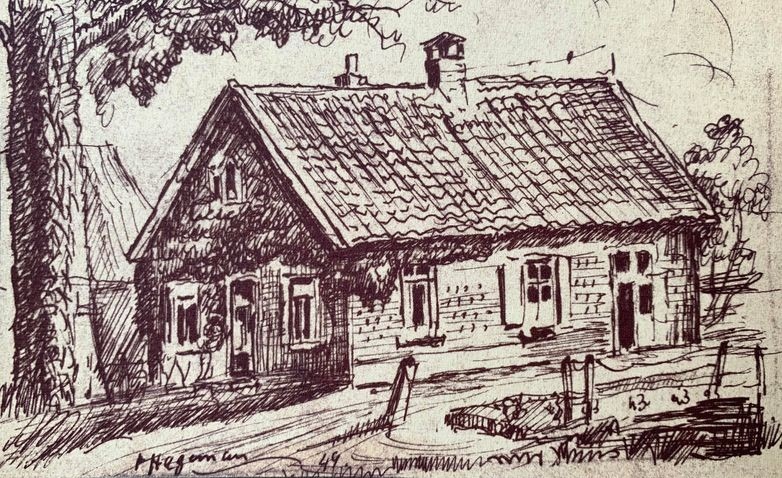
Paul Hagemann (1882-1960) was een in Duitsland geboren kunstenaar en natuurgeneeskundige die zich rond 1926 in Aalten vestigde. Hij werkte als fotograaf, kunstschilder en tekenaar, en legde veel boerderijen rond Aalten vast. Daarnaast hield hij zich bezig met amateur-natuurgeneeskunde.
Johannes Paul Hagemann, roepnaam Paul, werd geboren op 3 maart 1882 in Münster (Duitsland). Op 15 november 1923 trad hij in Amsterdam in het huwelijk met Francina Gijsberta (Bep) van Arkel.
Het echtpaar vestigde zich vermoedelijk rond 1926 in Aalten. In 1934 stonden ze geregistreerd als bewoners van Bodendijk 19a in Aalten; in 1938 woonden ze op het adres IJzerlo 13b, en in 1945 weer in het dorp, aan de Dijkstraat 5.
Hagemann heeft onder andere veel boerderijen en huizen in en rond Aalten op doek vastgelegd. Naast zijn artistieke bezigheden hield hij zich ook bezig met natuurgeneeskunde. Eén van zijn gezondheidsproducten was een doosje met metaal en iets van elektriciteit.
Paul Hagemann overleed op 8 augustus 1960. Hij werd begraven op de rooms-katholieke begraafplaats aan de Piet Heinstraat in Aalten.
Johannes Paul HagemannDe Graafschapper, 3 oktober 1930De Graafschapbode, 9 september 1938De Graafschapbode, 9 november 1938Aaltensche Courant, 23 oktober 1945
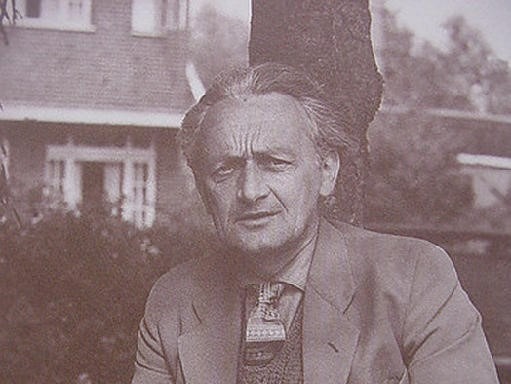
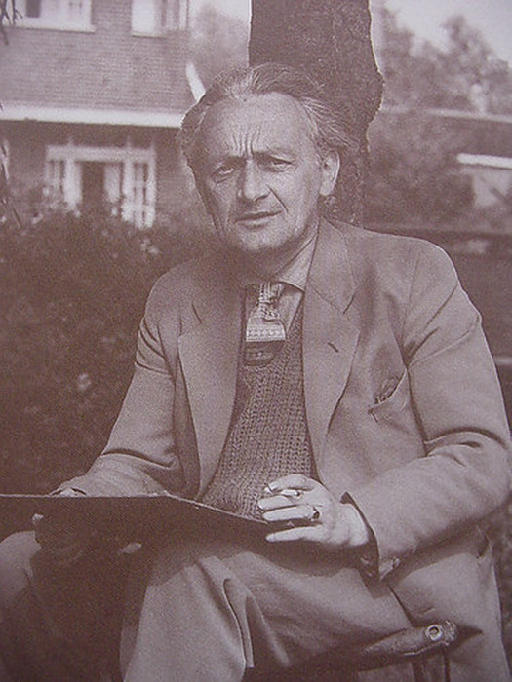
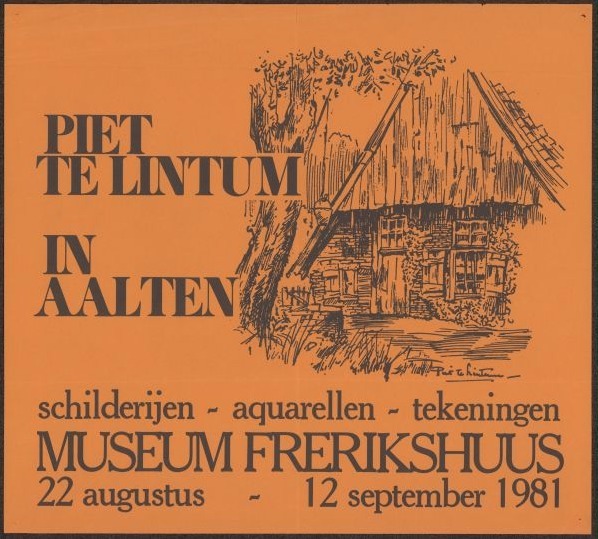
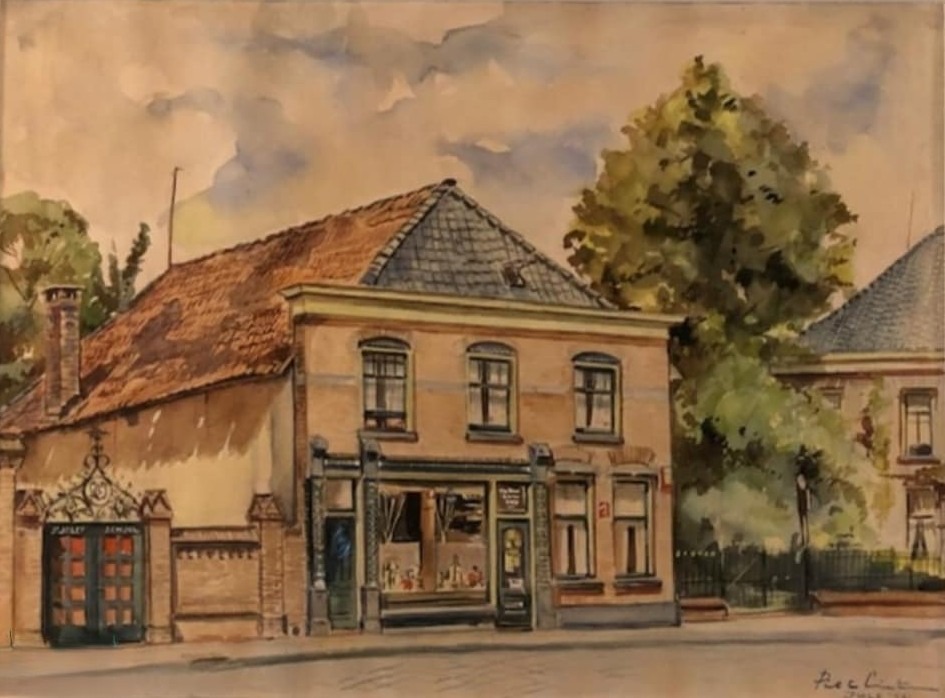
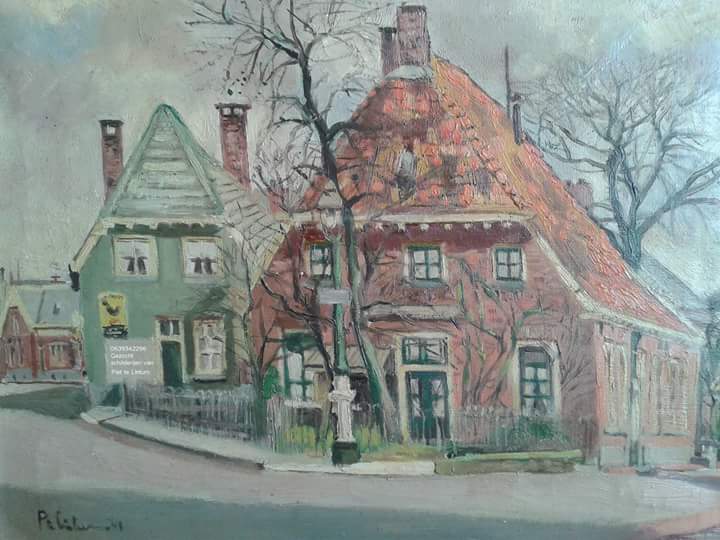
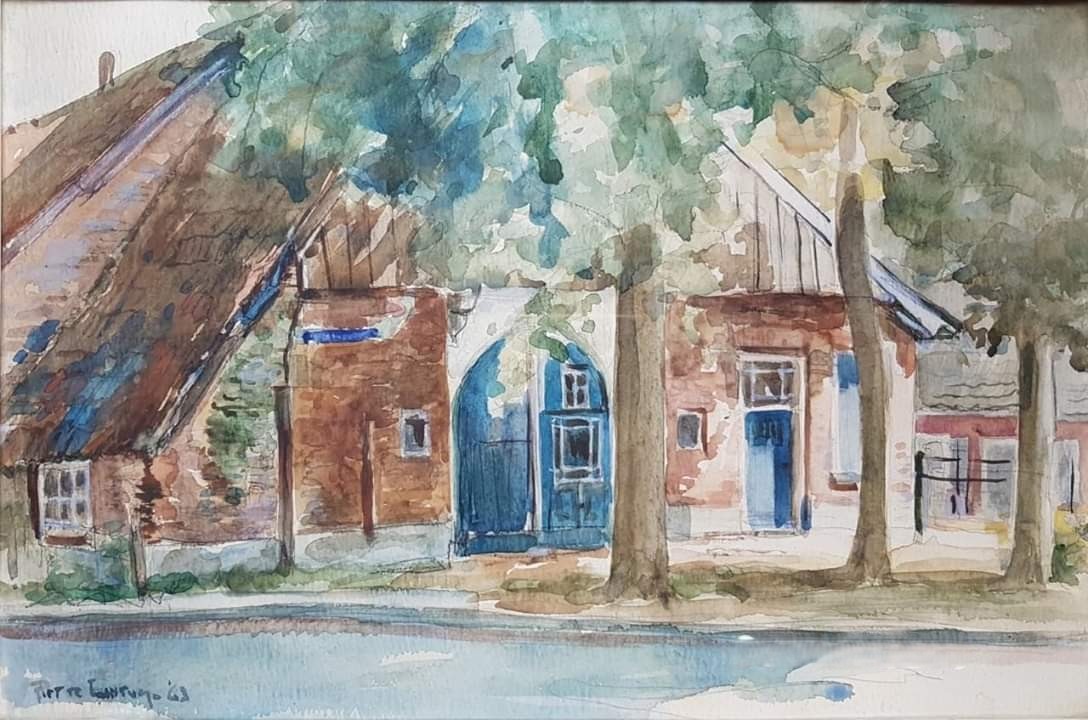
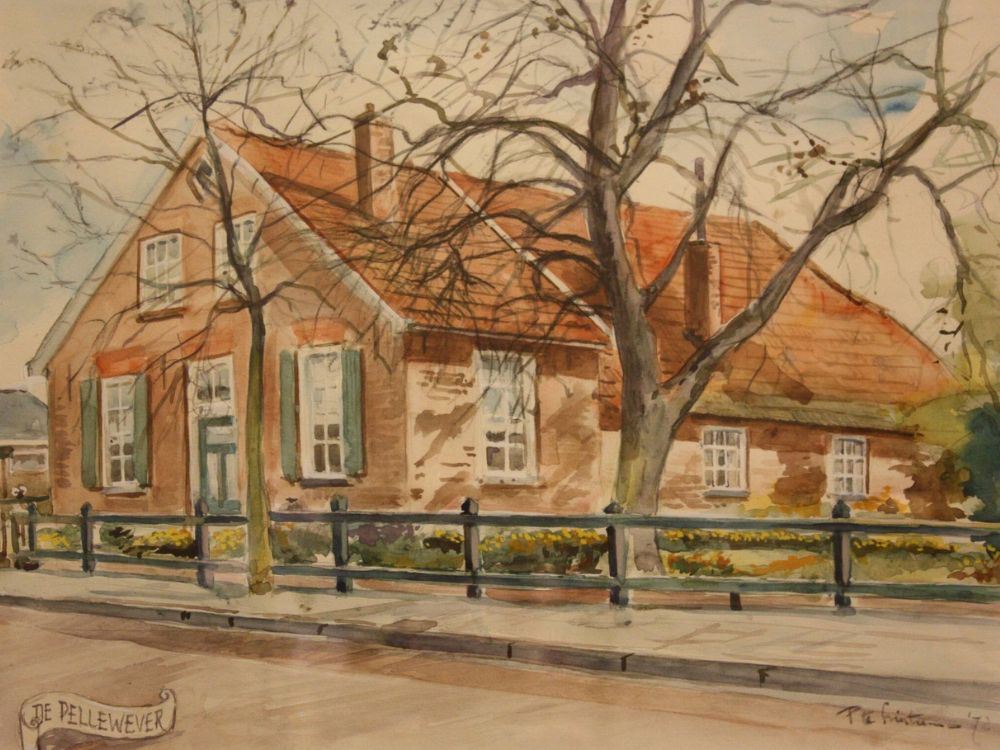
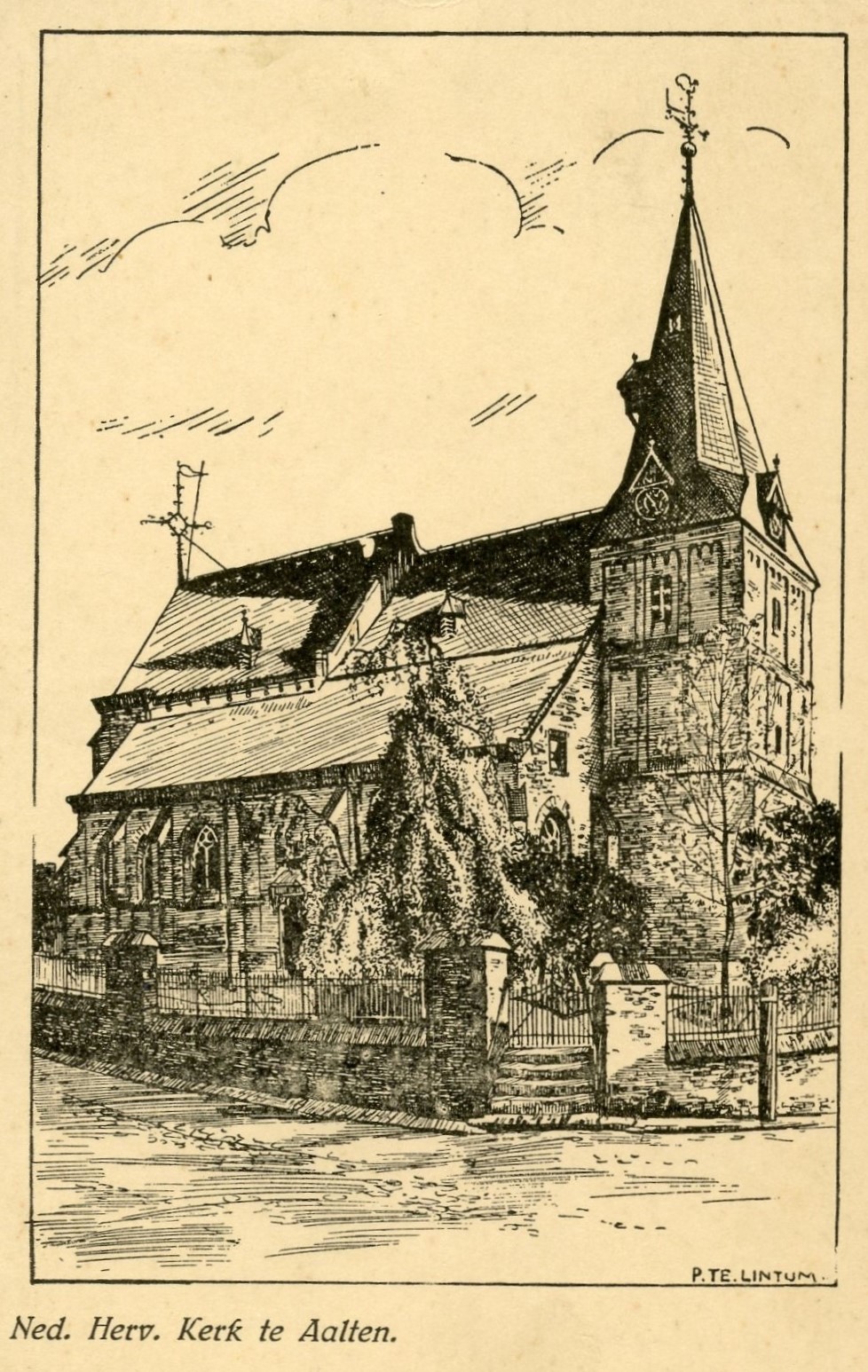
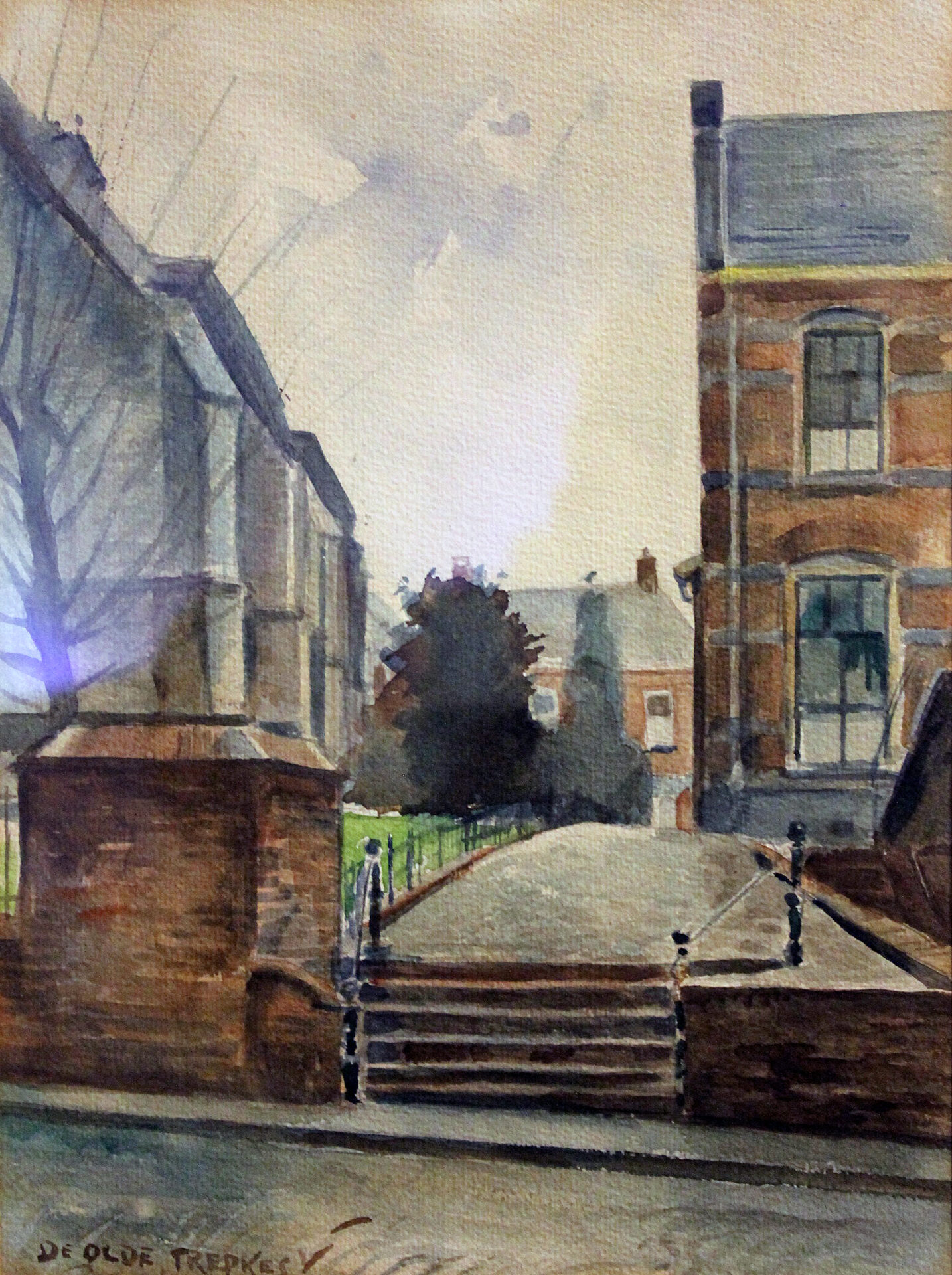
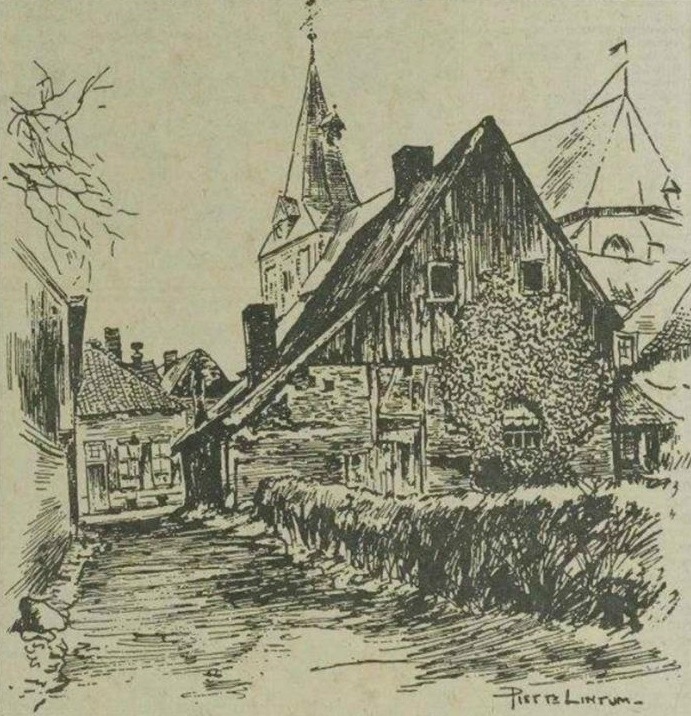
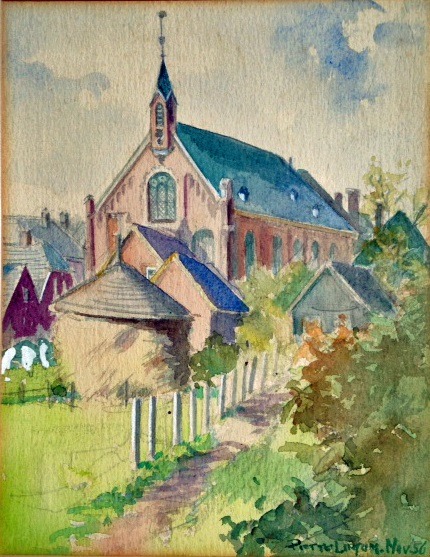
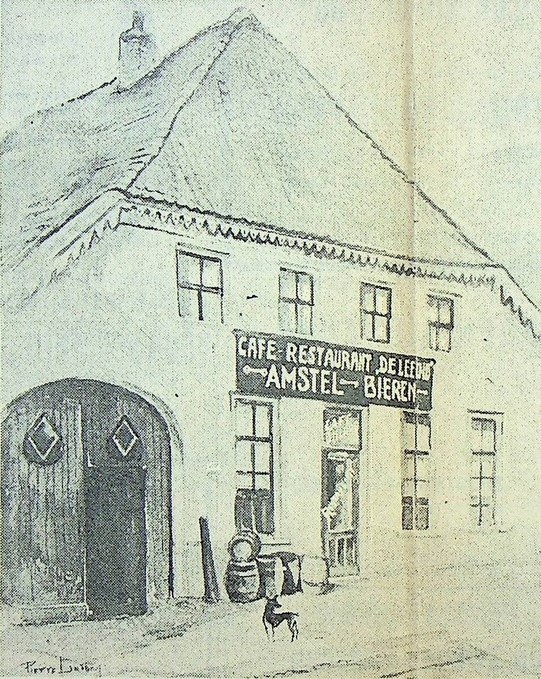
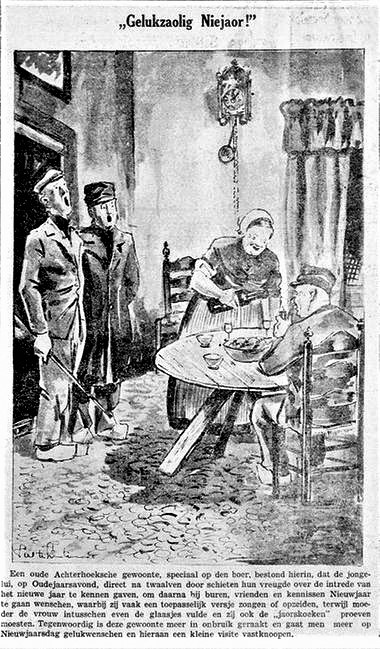
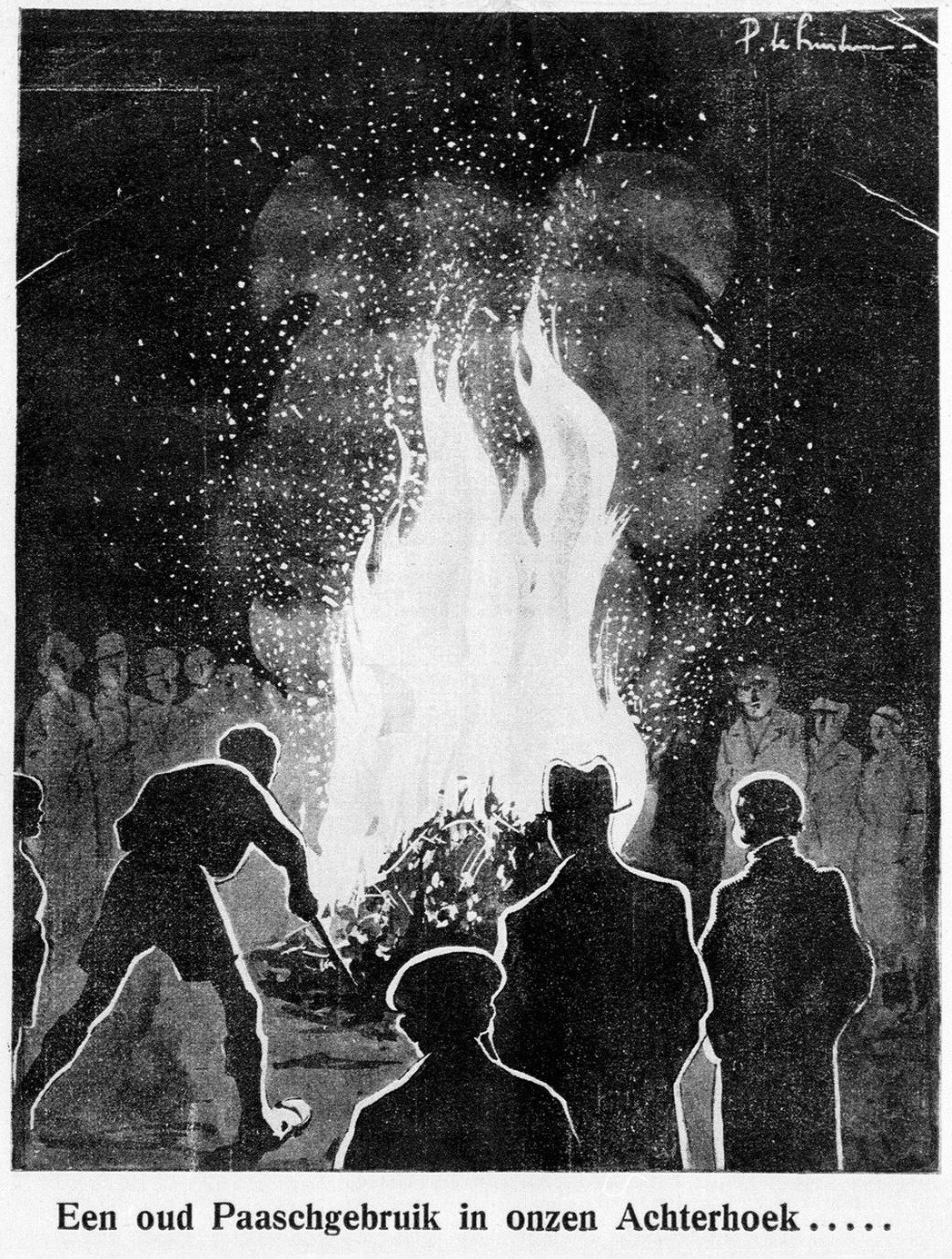
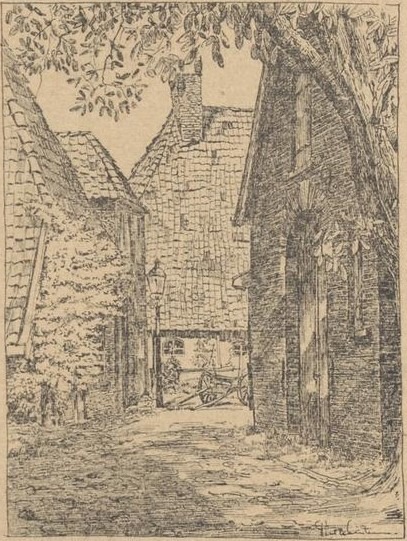
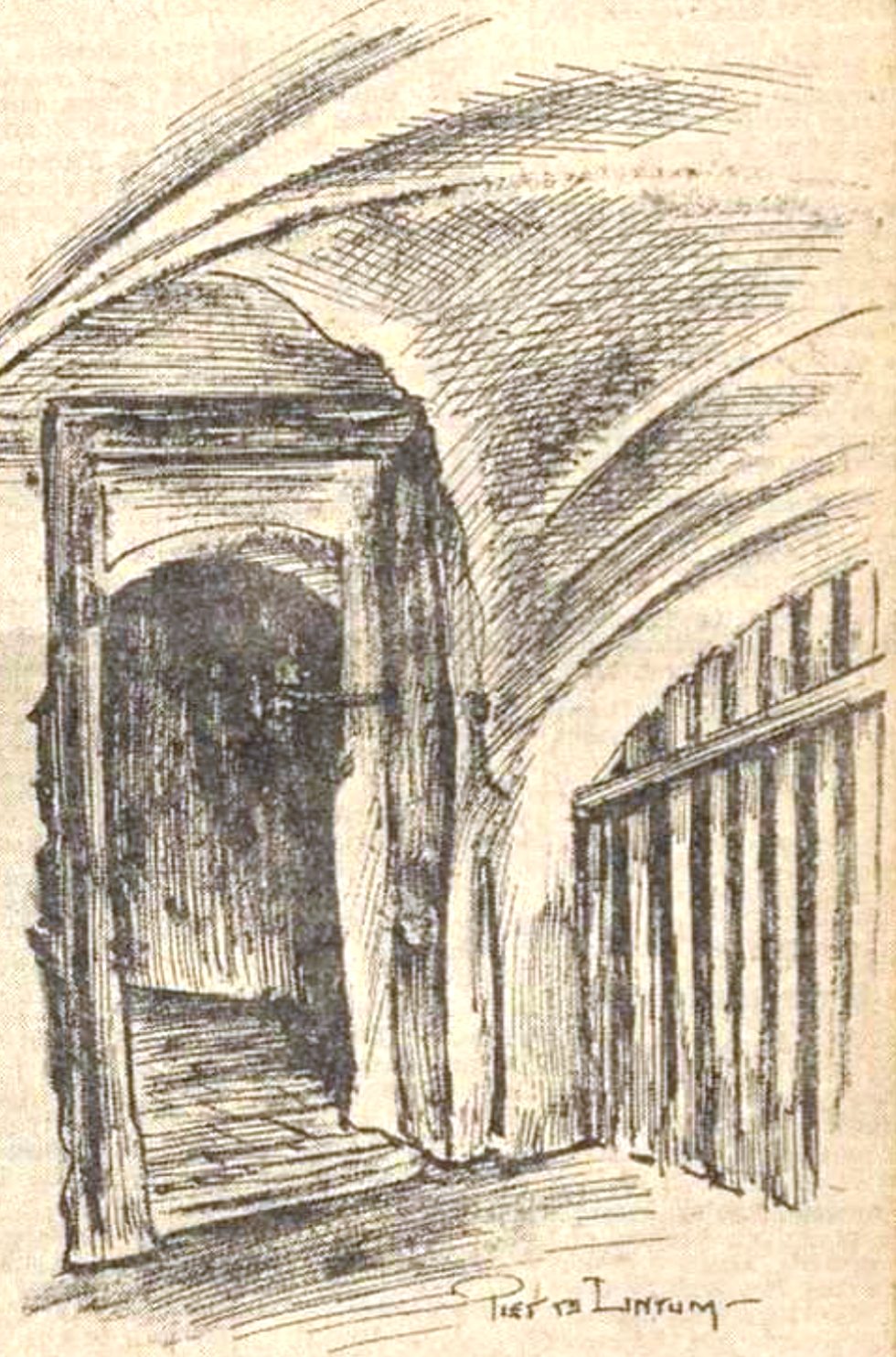
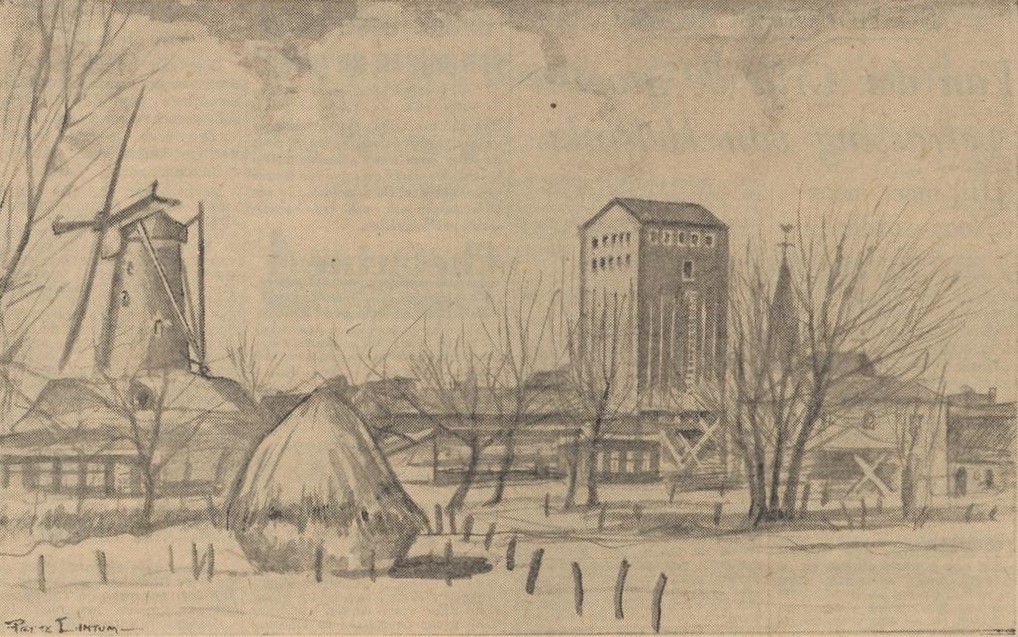
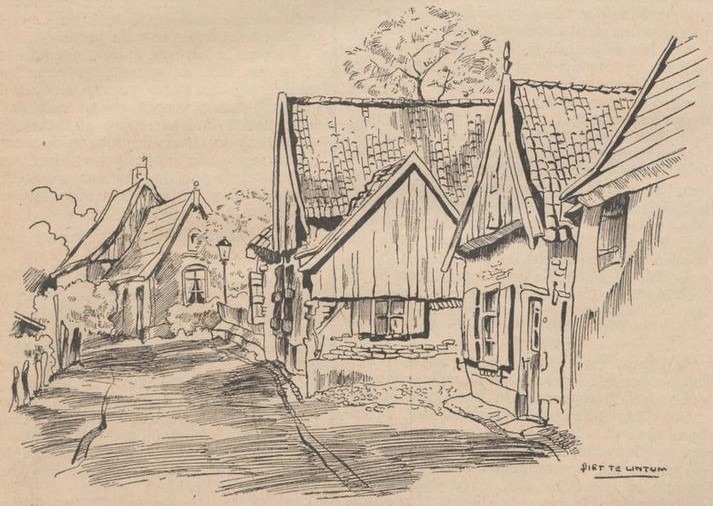
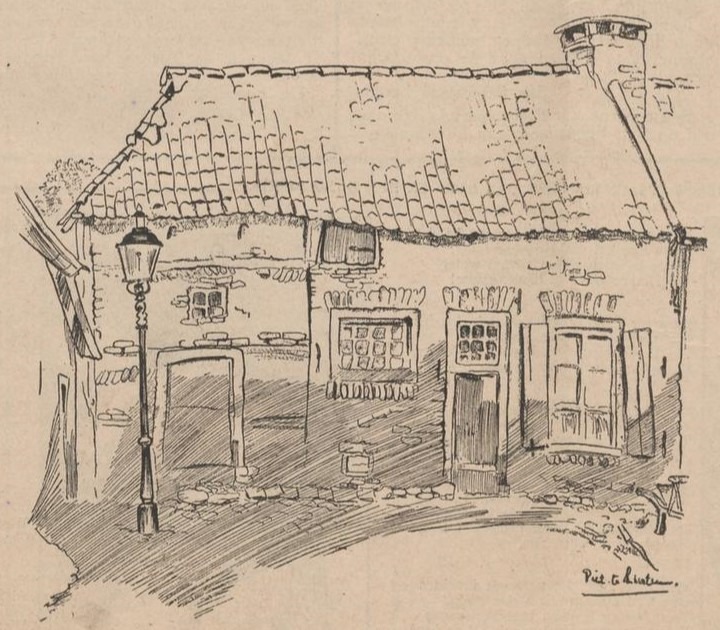
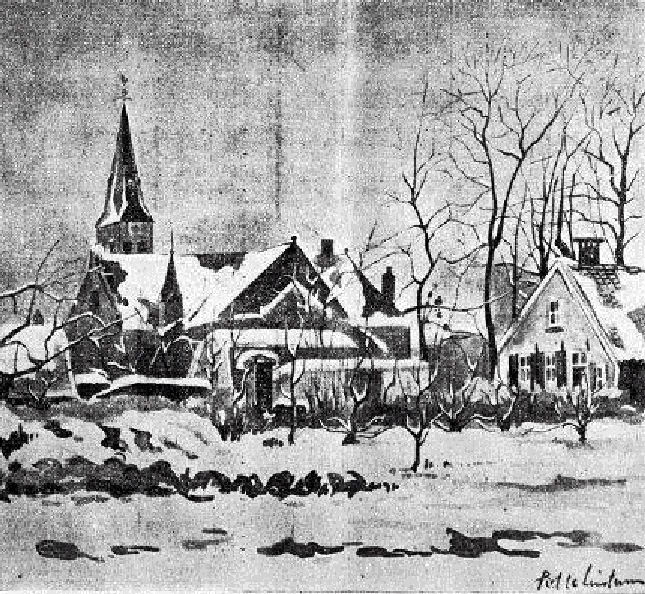
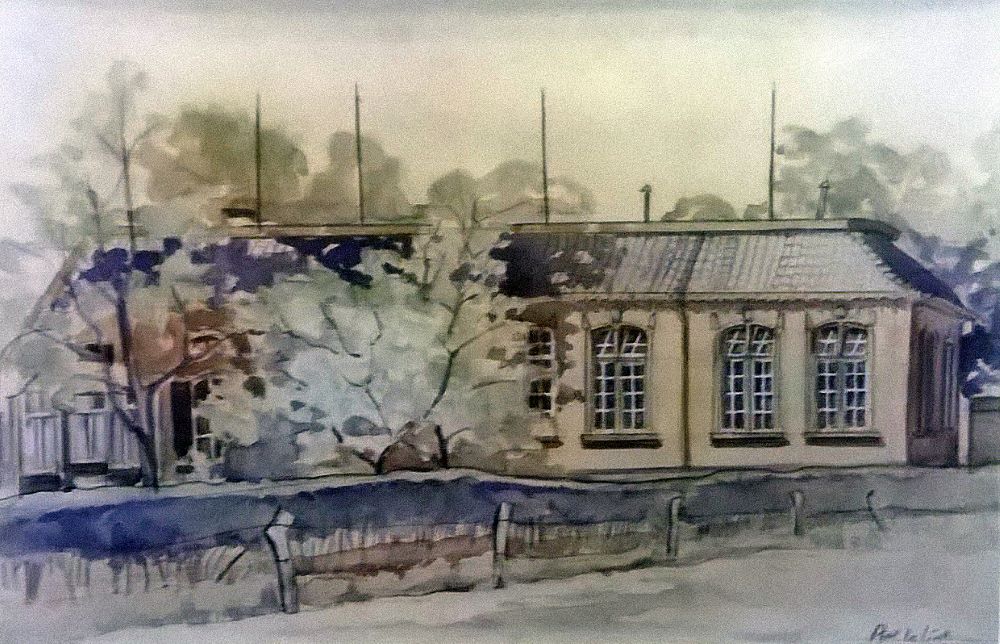
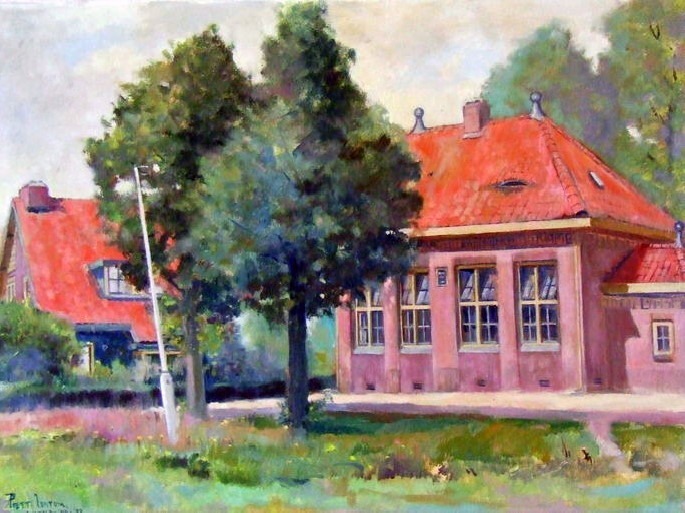
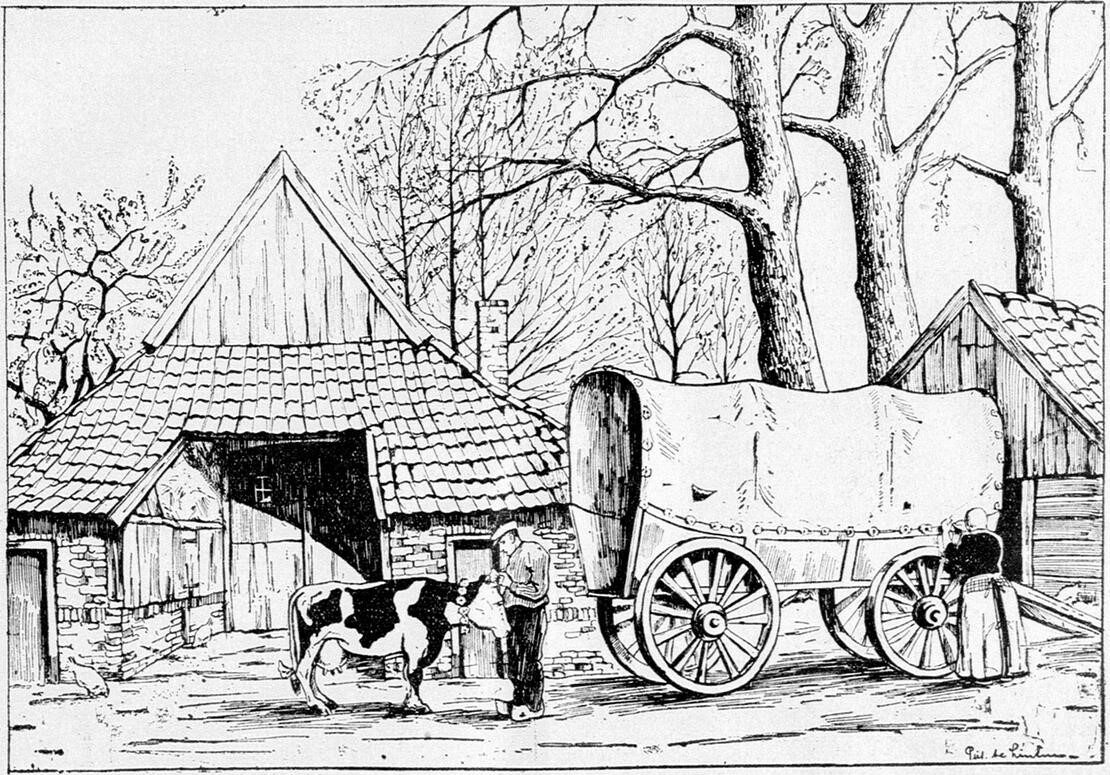
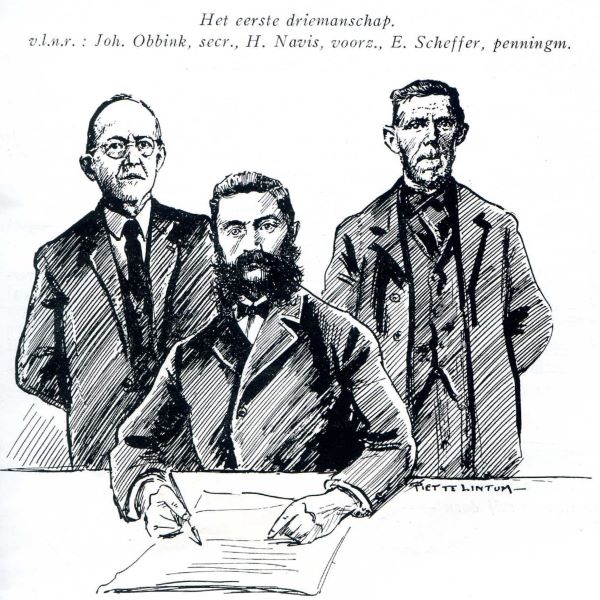
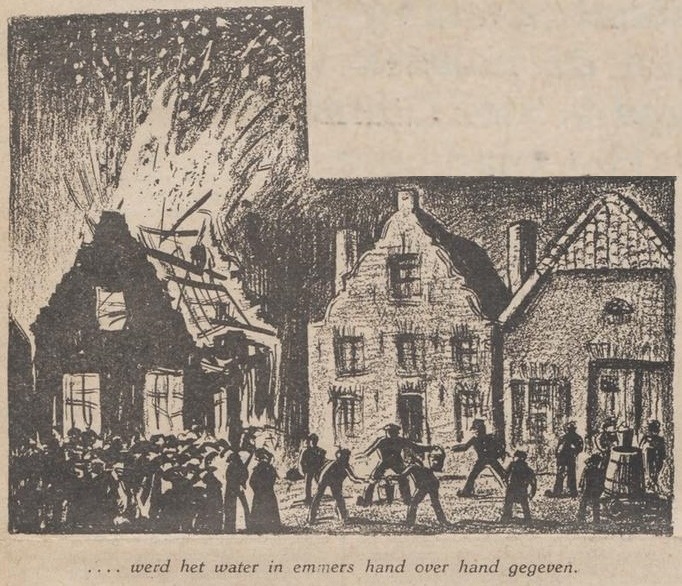
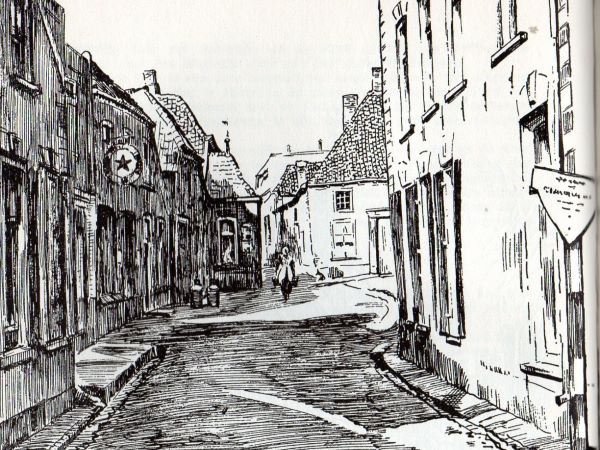
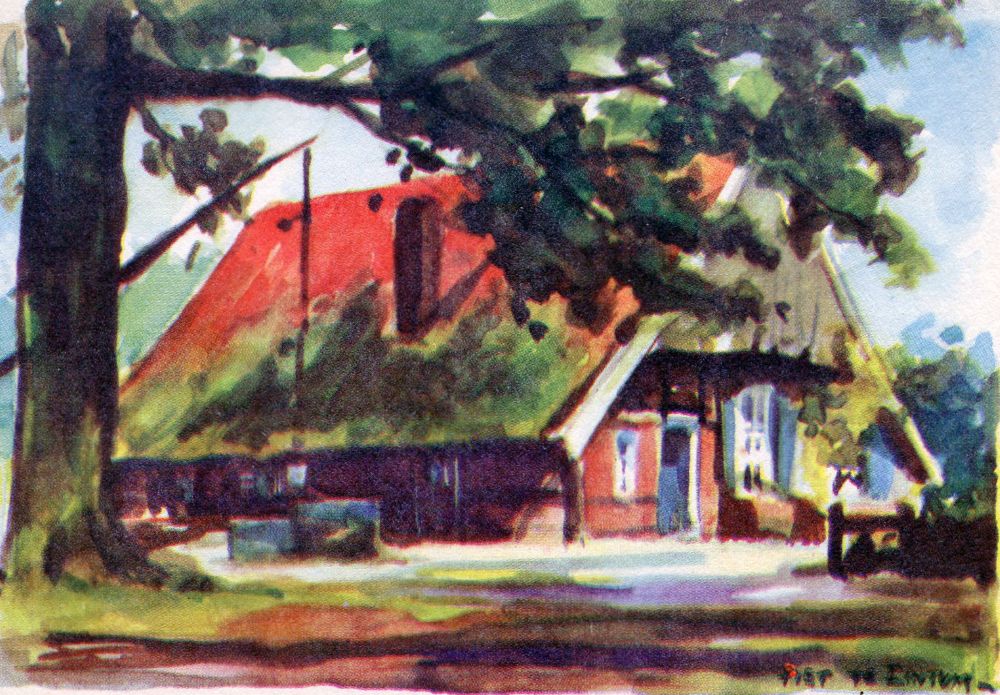
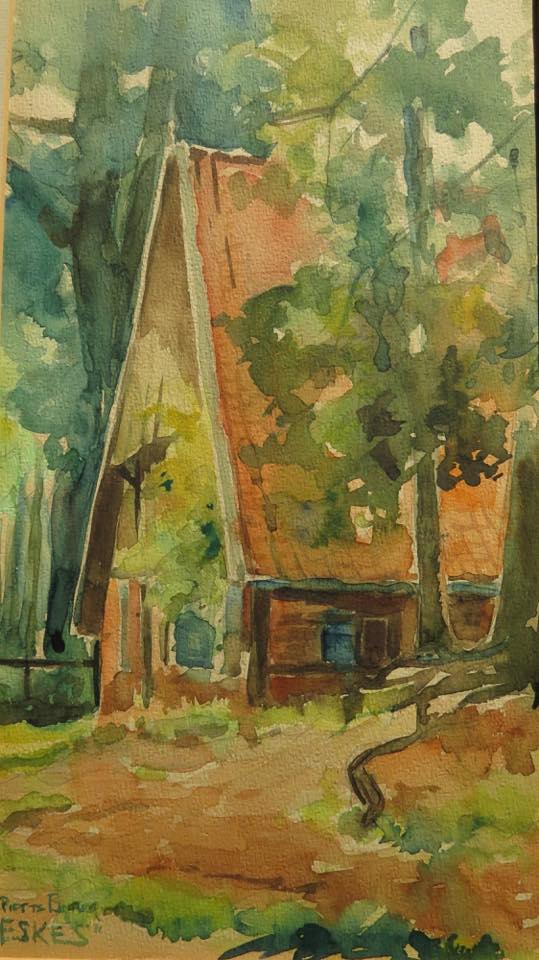
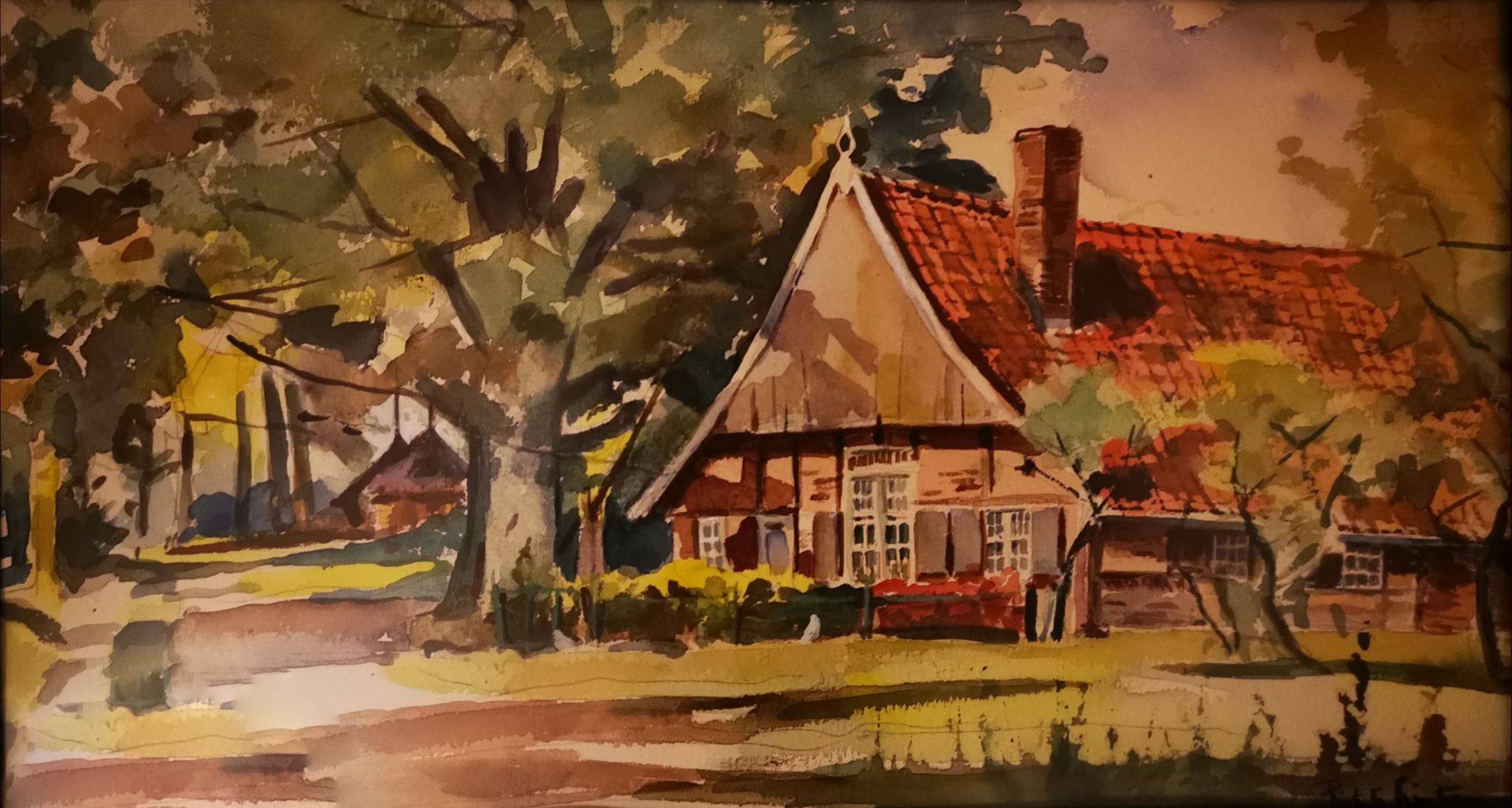
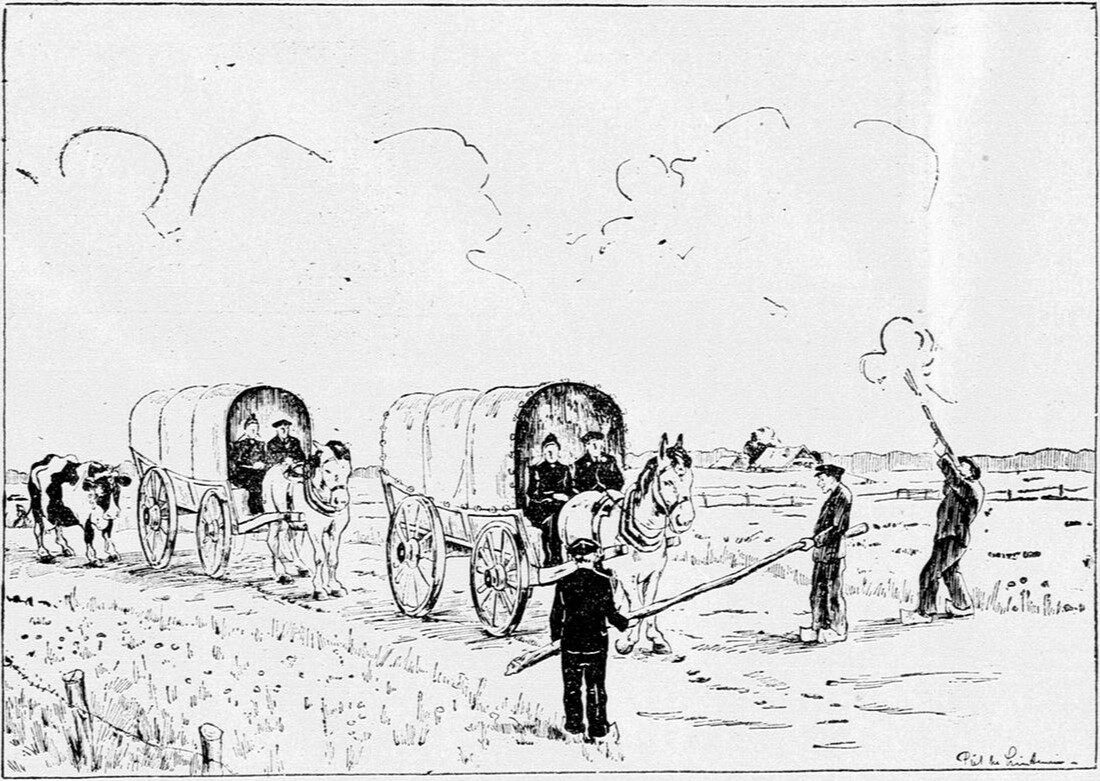
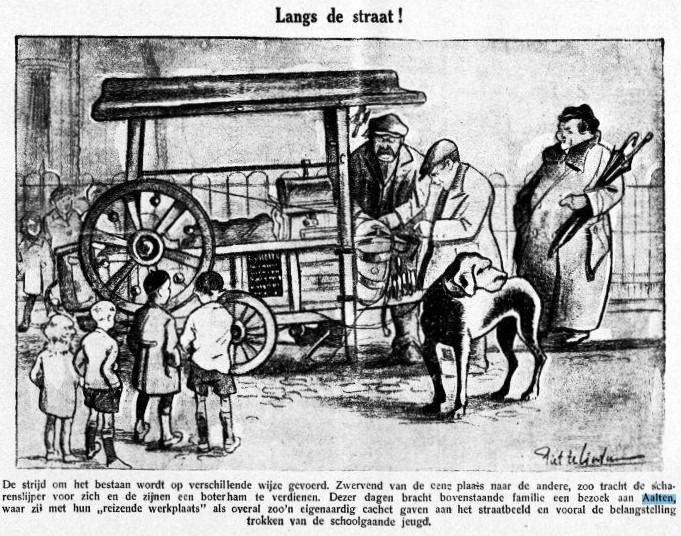
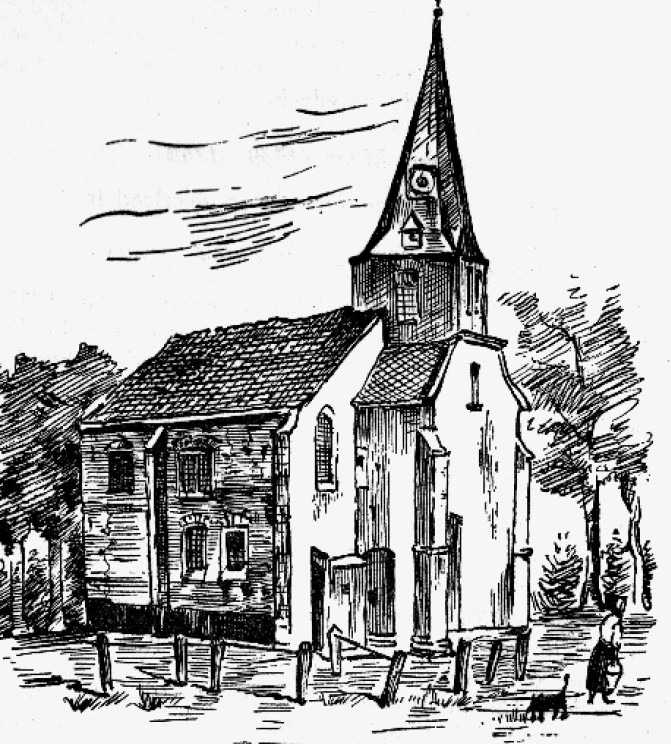
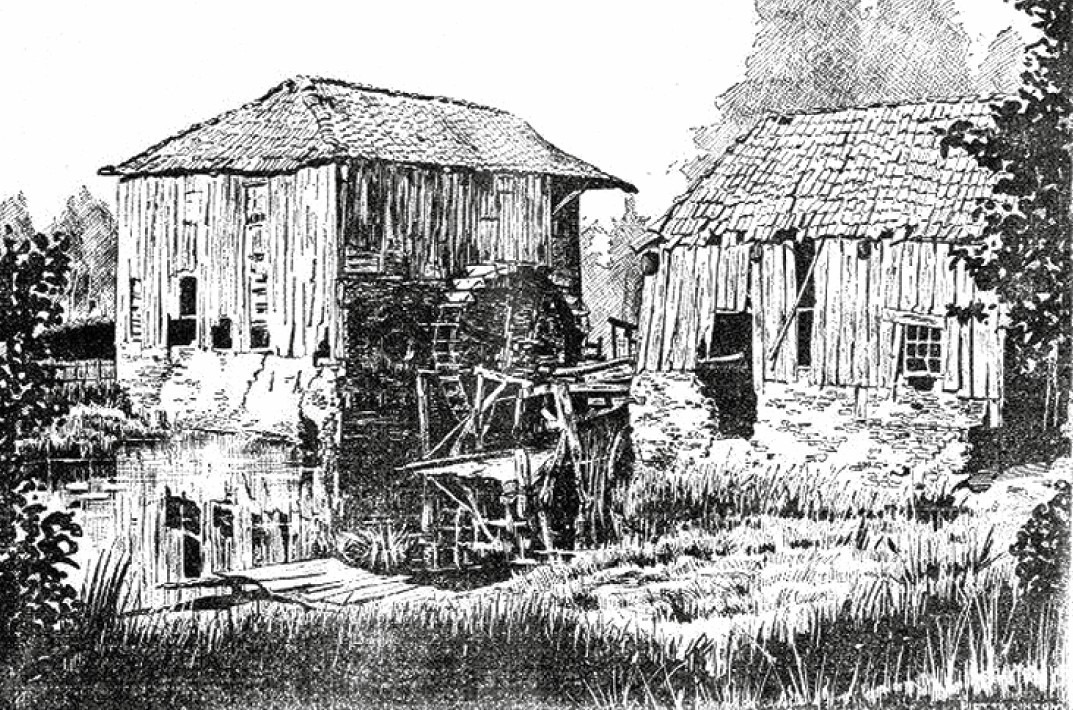
Piet te Lintum (1909-1985) was een veelzijdig kunstenaar uit de Achterhoek. Hij werkte als columnist, illustrator, tekenaar en kunstschilder, en schilderde een groot aantal landschappen en dorpstaferelen van zijn geboortestreek. Hij wordt daarom ook wel de “schilderende ambassadeur van de Achterhoek” genoemd.
Pieter (Piet) te Lintum werd op 13 januari 1909 geboren in Aalten, als zoon van Jan te Lintum, kruidenier, en Johanna Christina Adolphina te Giffel. Het gezin woonde aan de Dijkstraat 4, het pand waar tot 2022 bakker Van den Dobbelsteen gevestigd was. Op 15 augustus 1942 trad hij in het huwelijk met Elisabeth Maria Schenk, met wie hij twee kinderen kreeg.
Talent
Van jongs af aan liet Te Lintum zien dat hij over uitzonderlijk tekentalent beschikte. Al op elfjarige leeftijd maakte hij goed gelijkende portretten. Zijn eerste lessen kreeg hij van een kunstenaar die juist afgestudeerd was van de kunstacademie. Tevens volgde hij een jaar lang schriftelijke cursussen van een instituut in Parijs.
Op zijn achttiende volgde hij lessen aan de Kunstnijverheidsschool in Arnhem, waar hij les kreeg van Hendrik Valk en Gerard van Lerven. Daarna volgde hij drie jaar lessen aan de Rotterdamse Kunstacademie van David Bautz en Herman Mees. Zijn meest invloedrijke leermeester was echter prof. Johannes Hendricus Jurres, aan de Rijksschool voor Kunstnijverheid in Amsterdam.
Loopbaan
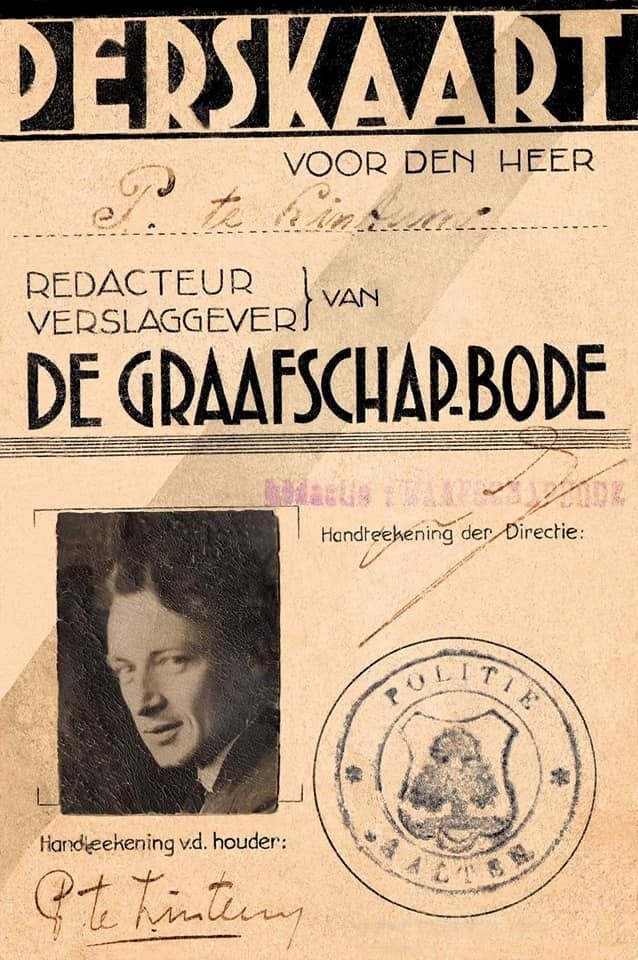
Na zijn opleiding bouwde Piet te Lintum een veelzijdige carrière op als illustrator voor diverse uitgeverijen. Hij tekende onder andere de illustraties bij de avonturen van Aornt Peppelenkamp, geschreven door Frans Roes onder het pseudoniem Herman van Velzen. Ook werkte hij voor uitgeverij Misset in Doetinchem (o.a. De Graafschapbode) en maakte hij stripvormige columns voor dagblad Tubantia. Daarnaast ontwierp hij reclamewerk, ansichtkaarten en maakte hij muurschilderingen.
Piet te Lintum staat vooral bekend om het schilderen van bouwvallige gebouwen. Hij meed het moderne, rechtlijnige. Voor hem gold: hoe ouder en rotter het gebouw, des te mooier het geheel. Hierbij ging het hem niet alleen om het romantische beeld van verwaarloosde huizen en boerderijen. Hij vroeg met zijn werken ook aandacht voor de historie.
Te Lintum zag destijds al met lede ogen aan dat er steeds meer oude gebouwen met een verleden werden gesloopt voor herinrichting van het Achterhoekse landschap. Het boerderijtje van Bernard Schlüter in het Duitse Südlohn en het Kuupershuusken in Bredevoort zijn om deze reden steen voor steen wederopgebouwd. Allemaal ten behoeve van de rijke, lokale geschiedenis.
Nalatenis
Op 1 mei 1985 overleed Piet te Lintum in Winterswijk. Zijn werk leeft voort in de herinnering van velen, niet in de laatste plaats dankzij het boek Wat ik te zeggen heb… van Hans de Beukelaer, dat een ode brengt aan zijn leven en werk. Voor het boek werden meer dan 500 werken van zijn hand opgespoord. Hoewel een groot deel van zijn muurschilderingen de tand des tijds niet heeft doorstaan, zijn zijn schilderijen van boerderijen, gebouwen en gezichten uit de streek blijvende getuigen van zijn liefde voor de Achterhoek.
In het Cultuurhistorisch tijdschrift voor Achterhoek en Liemers, Oer/39 van maart 2021, verscheen een artikel over Piet te Lintum. Dit tijdschrift is nog verkrijgbaar bij het ECAL in Doetinchem.
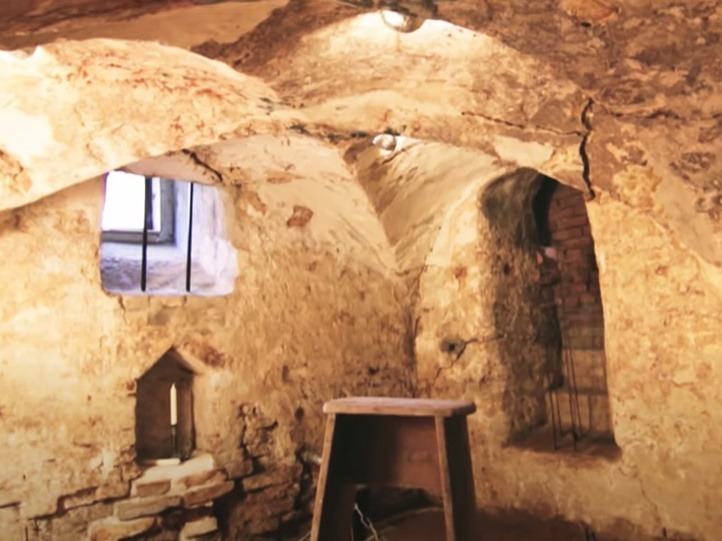
The late-medieval Merfelt Cellar belonged to a borgmanhuis (townhouse of a knight) where Adolf van Merfelt, a borgman of Bredevoort, resided in former times. The cellar of this townhouse is both rare and ancient. The method by which it was vaulted is highly unusual for a private dwelling: it features four cross vaults with a central supporting pillar.
In 2014, the Merfelt Cellar was nominated for the Aalten Municipality Heritage Prize. The reason for the nomination was the meticulous care and respect for historical character and the use of authentic materials during its restoration.
The restoration work on the cellar took place over several years. The highlight of the project was the repair of the vaulting, which ensured the long-term stability of the cross vaults.
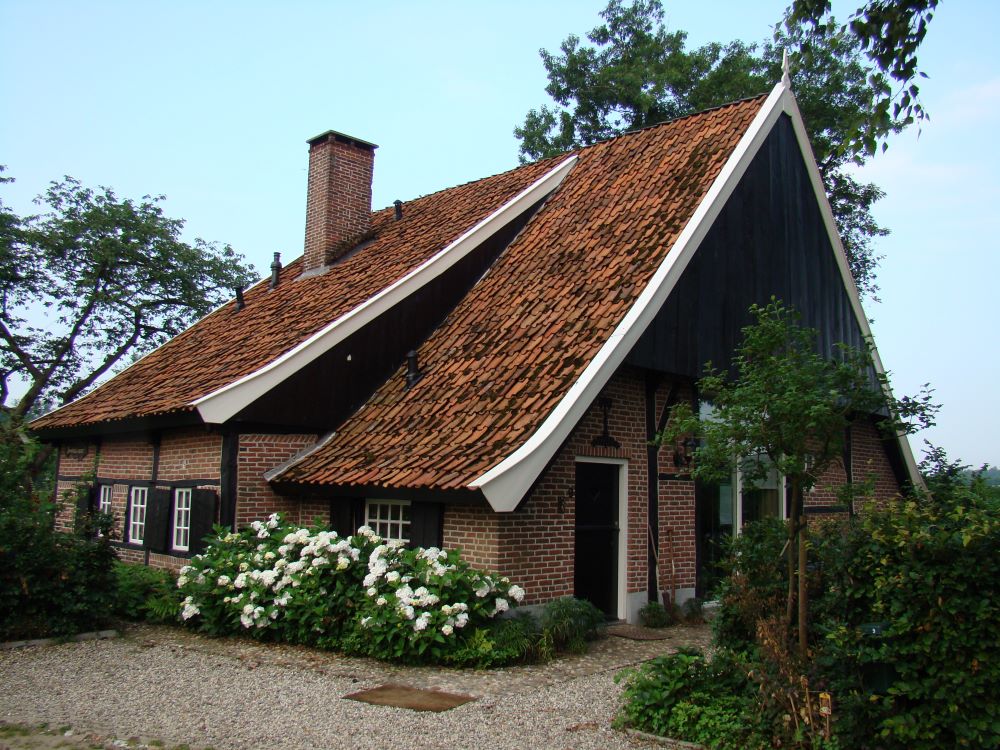
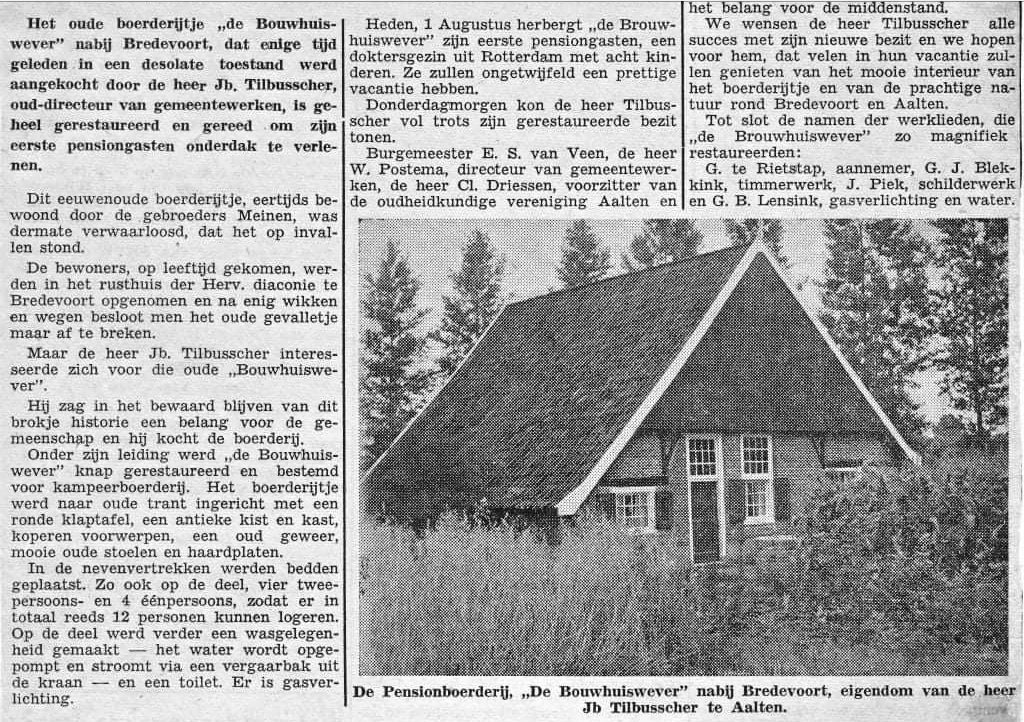
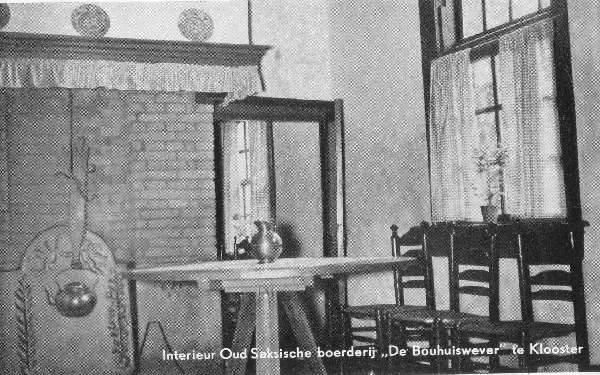
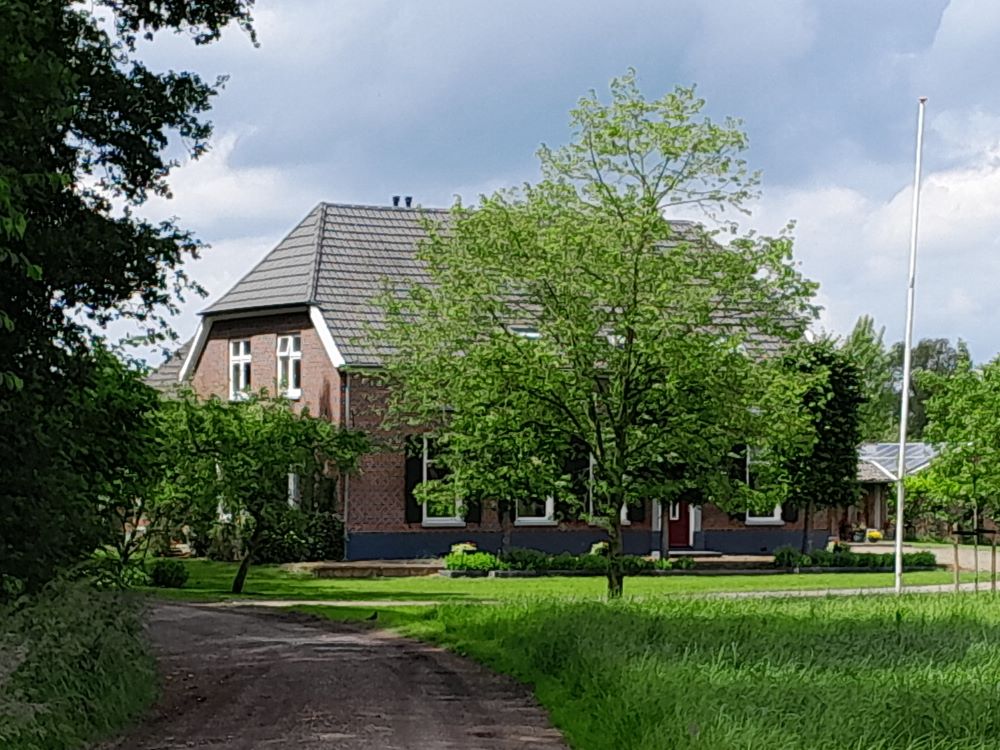
Bouwhuis Wever was formerly also known as Klein Bouwhuis.
It is a well-preserved and restored 18th-century Saxon timber-framed farmhouse with a high roof covered in roof tiles, a wooden front gable, and windows with small panes and shutters. A section of the roof has been ‘lifted’ to create an additional room: the weaving workshop. It is situated on a side path (which has been named Heericks-es since 2012) off the Kloosterdijk, traditionally the route from Bredevoort to ’t Klooster. The house has been registered as a national monument (rijksmonument) since 1967.
Archives
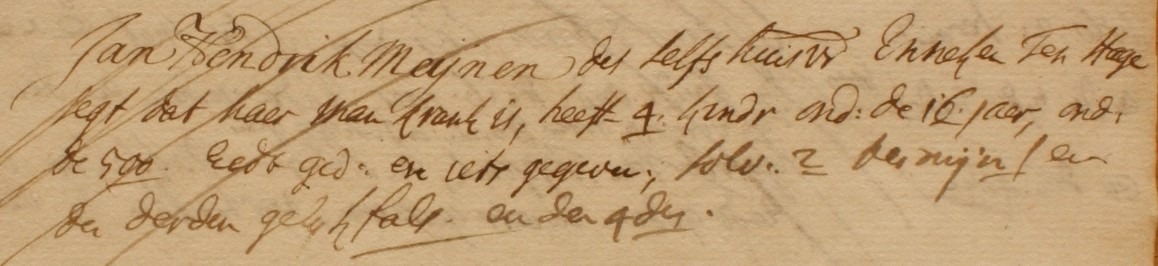
Liberal Gift 1748
Owners
Overview is incomplete.
Year
Plot
Owner
Description
1832
B-268
Evert Meijnen, farmer in Borculo
450 m² house & yard
Residents
First known residents:
Jan Hend(e)rik Meijnen alias (Klein) Bouhuis (Aalten, 20-04-1704 – Barlo, 18-04-1785) married 23-03-1737 in Winterswijk Enneken / Anneke ten Hagen (Winterswijk, 30-08-1711 – Barlo, 01-02-1784)
Next residents, son and daughter in law:
Jan Bouhuis alias Meijnen (Aalten, 15-09-1748 – Barlo, 07-06-1827) married (1) 20-11-1785 in Aalten Hendrina van Eerden (Aalten, 15-09-1765 – Barlo, 15-08-1794)
Next residents, widower and 2nd wife:
Jan Bouhuis alias Meijnen (Aalten, ged. 15-09-1748 – Barlo, 07-06-1827) married (2) 28-02-1795 in Aalten Willemke Oonk (Aalten, ged. 03-12-1758 – Barlo, 04-04-1830)
Period 1823-1850
“Wever”
Barlo 69
Jan Bouhuis alias Meijnen (Aalten, bap. 15-09-1748 – Barlo, 07-06-1827), s/o Hendrik and Anneke Bouhuis, married 28-02-1795 in Aalten Willemke Oonk (Aalten, bap. 03-12-1758– Barlo, 04-04-1830)
Next residents, son and daughter in law:
Evert Meijnen (Aalten, 20-08-1801 – Barlo, 27-08-1855), married 06-05-1828 in Aalten Janna Geertruid Boddewijs (Winterswijk, 03-04-1808 – Barlo, 05-04-1886)
Jan Hendrik Meijnen (Barlo, 11-09-1836 – Aalten, 29-07-1901), married 26-06-1868 in Aalten Grada Theodora Oonk (Miste, 31-08-1844 – Aalten, 03-02-1922)
Children:
Evert Jan Meijnen (Barlo, 15-02-1869 – Winterswijk, 02-06-1941)
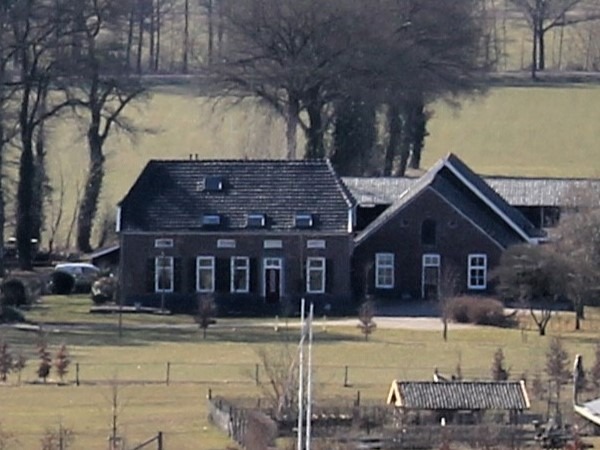
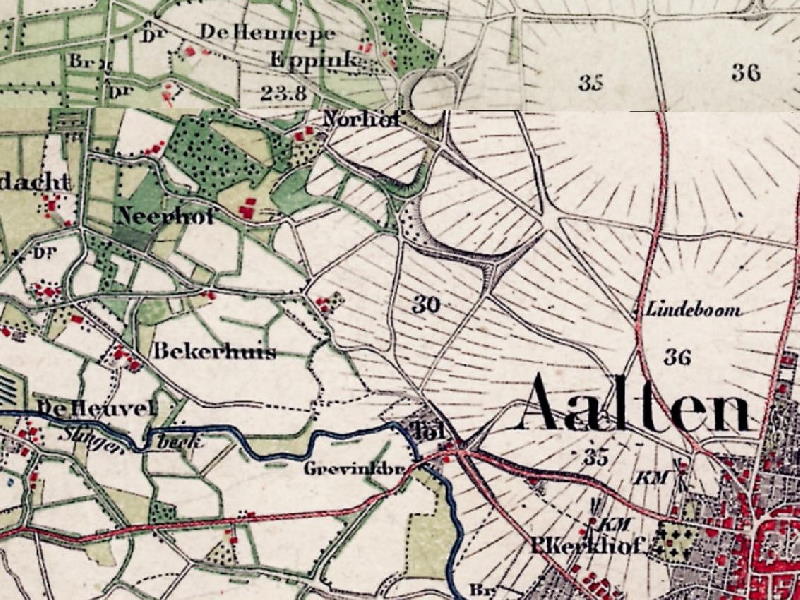
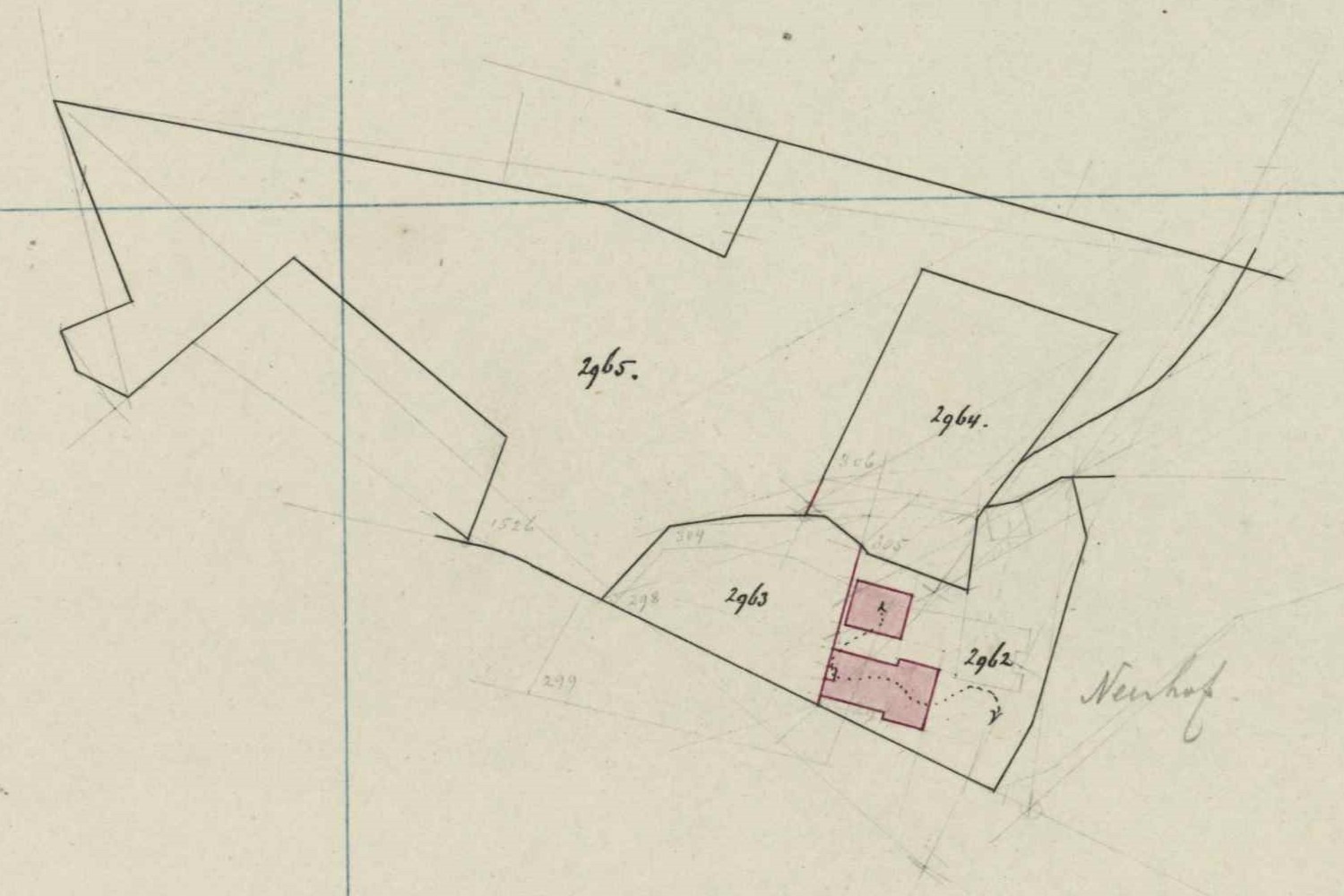
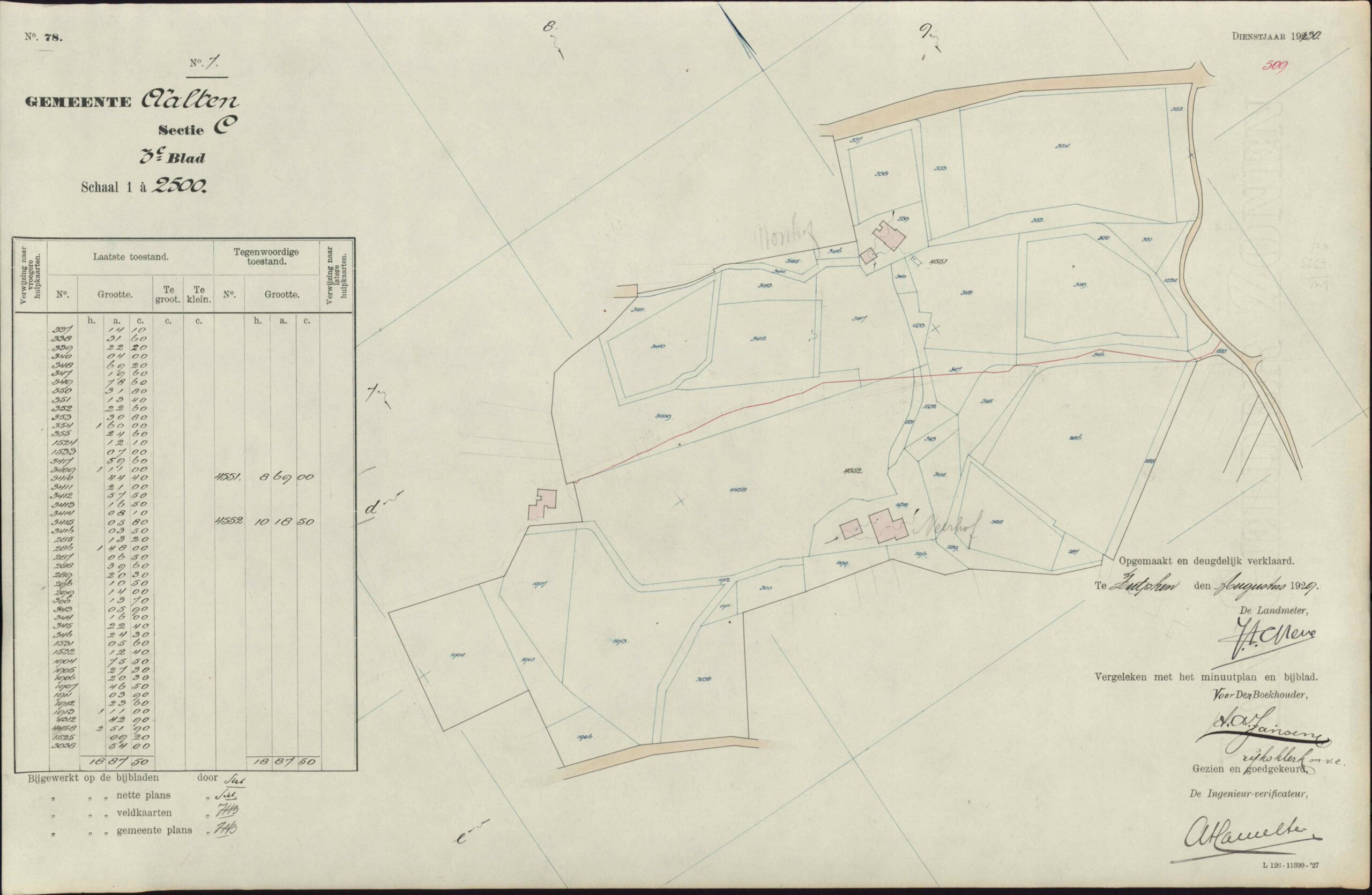
‘Neerhof’ is an ancient farmstead located in the rural district of Dale in Aalten. Many people who carry the surname Neerhof today—including descendants of emigrants in the US and Canada—can trace their roots back to this place. There is even a Facebook group they can join: I’m a Neerhof.
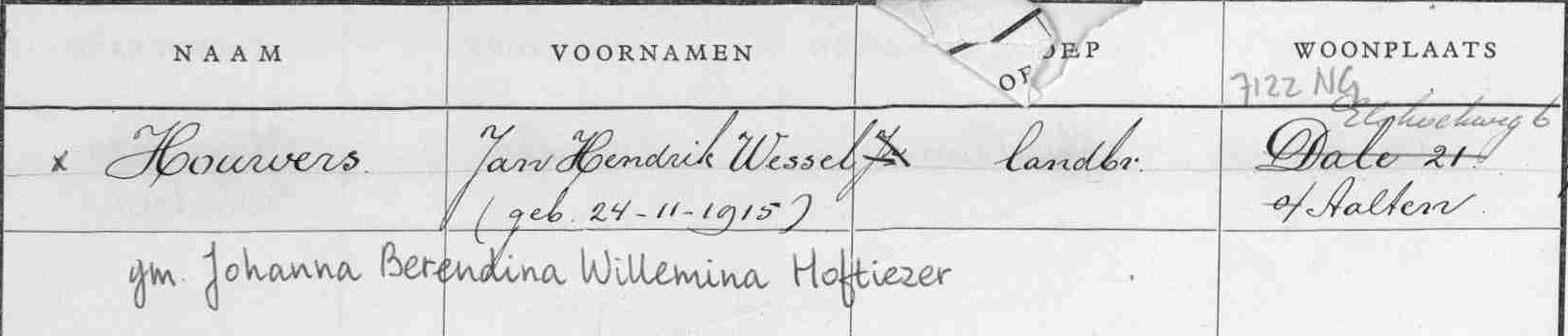
The last Neerhofs to live there left the farm in the second half of the 19th century. Since then, the farm has been occupied (primarily) by the Houwers family. The original farmhouse is gone; the current house was built in 1893.
During World War II, the Houwers family sheltered people in hiding. One of these, a French non-commissioned officer from the Pyrenees, sent them a letter after the war.
Fun fact: There is a street in Canada named ‘Neerhof Lane’.
Archives
Judicial Archive of Bredevoort
Tuesday, 6 February 1616: Statholder Joannes ter Woert, assessors Jan ten Berge, Henrick Menekinck, Peter Cloeck.
Margin note: Anno 1629, 19 January, Jenneken Neerhave declared this to be redeemed. Therefore, void.
Appeared Jan Filette and Enneken Huijsinck, spouses, who declared for themselves and their heirs that for a received and well-paid sum of money, they sold a yearly pension to Juerden ten Neerhave and Jenneken, spouses, and their heirs: three dalers (per daler calculated at thirty stuivers, per stuiver at fifteen placken). Payable annually on Candlemas, first due on Candlemas 1617. Pledging as security their estate Hoff ant Benninck Vehne, along with house and yard within Bredevoort, and all their movable and immovable goods, to recover the aforementioned yearly pension along with costs and damages by distraint according to land law. With the right reserved to redeem the pension annually by giving one quarter’s notice, and then on Candlemas (Purification of Mary), fourteen days before or after without delay, by paying the sum of fifty dalers of the aforementioned currency. This ceded and issued, and renounced by hand and word; guarantee, better written deed, and confirmation promised. All under penalty of distraint as prescribed, without exception or deceit.
Wednesday, 19 February 1617: Statholder Herman van Munster, assessors Johan Nachtegaell, Herman Steinrot, Peter Evertz.
Appeared Bernt Huijninck and Enneken Snijders, spouses, who declared for themselves and their heirs that for a well-paid sum of money, by right of perpetual and irrevocable inheritance, they have transferred and sold to Joerden ten Neerhave and Jenneken, spouses, and their heirs, a piece of land, of approximately three schepelsaet, on the Aelter Ess, situated with one side bordering land now belonging to the purchaser, Mechtelt Snijders, and with the other side bordering the common road, with one end bordering Peter Martens’ land, and the other end stretching to the Barlschen Heelwech, with its appurtenances and rights, free of all encumbrances. This inherited, ceded and issued, and renounced by hand, straw, and word; guarantee, better written deed, and hereditary confirmation promised according to land law, by hypothecation of their goods. Without exception or deceit.
Saturday, 10 January 1618: Drost and Judge Gosswin van Lawick, assessors Henrick Menekinck, Jan ten Berge.
Appeared Gerrit Gijsberts, gatekeeper in Bredevoort and Mechtelt Snijders, spouses, who declared for themselves and their heirs that for a well-paid sum of money, they transferred and sold by right of perpetual and irrevocable inheritance to Joerden ten Neerhave and Jenneken, spouses, and their heirs, a piece of arable land of approximately two moldersaet, called Snijders Stucke, on the Aelter Ess, bounded on one side by the Nonhaver Cruijss plot and on the other side by land belonging to the purchaser, with one end bordering Peter Marten’s land and the other end stretching to the Barlschen wech, with its appurtenances and rights, free of all encumbrances, reserving to the Hoff ten Ahave the tenth sheaf. This inherited, ceded and issued, and renounced by hand, straw, and word; guarantee, better written deed, and hereditary confirmation promised according to land law. Without exception or deceit.
Wednesday, 29 March 1620: Statholder Herman van Munster, assessors Herman Steinrotz, Lenardt van Elverfelt, Peter Evertss.
Appeared Peter Evertz and Margareta Mächtes, spouses, who declared for themselves and their heirs that for a well-paid sum of money, they transferred and sold by right of perpetual and irrevocable inheritance to Joerden ten Neerhave and Henricke ten Ruell Geesken, spouses, and their heirs, a piece of land previously purchased from the Marcke, with its ditches, embankments, and boundaries, situated in the parish of Aalten, district of Lintell, in the Aelter Hemell, with one end stretching to the Kortbeker Maet, with its appurtenances and rights, free of all encumbrances, reserving the lord’s taxes as may be assessed upon it. This inherited, ceded and issued, and renounced by hand, straw, and word; guarantee, better written deed, and hereditary confirmation promised according to land law, by pledging the sellers’ goods. Without exception or deceit.
Appeared Willem ten Brincke and Marrie, spouses, who declared for themselves and their heirs that for a well-paid sum of money, they transferred and sold by right of perpetual and irrevocable inheritance to Joerden ten Neerhave and Jenneken, spouses, and their heirs, a piece of land of approximately one Moldergeseijs on the Aelter Esch, bounded on one side by Ebbert Wever’s land and on the other side by Geerdte Lock’s land, in its borders and boundaries, with one end stretching to the Heelwech and the other end to Hoeneper Landt, with all its old and new appurtenances and rights, free of all encumbrances. This ceded and issued, and renounced by hand, straw, and word; guarantee, better written deed, and hereditary confirmation promised according to land law, under hypothecation of the sellers’ goods. Without objection or deceit.
5 Mtr. gesaeis, Jorden Neerhof, hier gaet af 1½ sch. an Kerck, blijft 4 mdr. 2½ sch. 38 – 10 – 8. An de Kerck te Aelten 2 dlr. 3 – 0 -. Een stuck groen lants in Lintel gelegen van 3 voeder hoij gewass of 2 koeweidens 9 – 0 -.
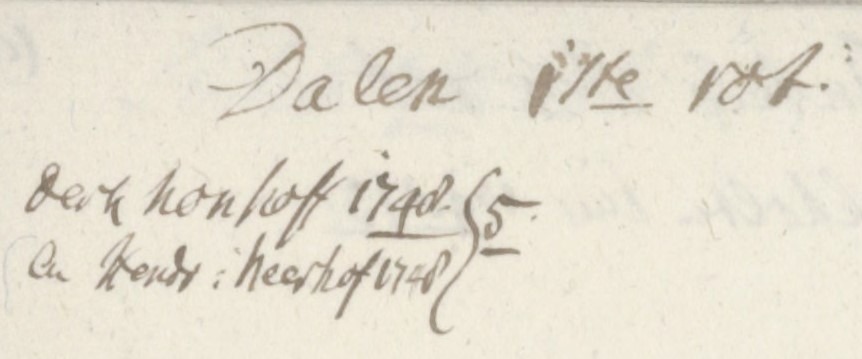
Liberal Gift 1748
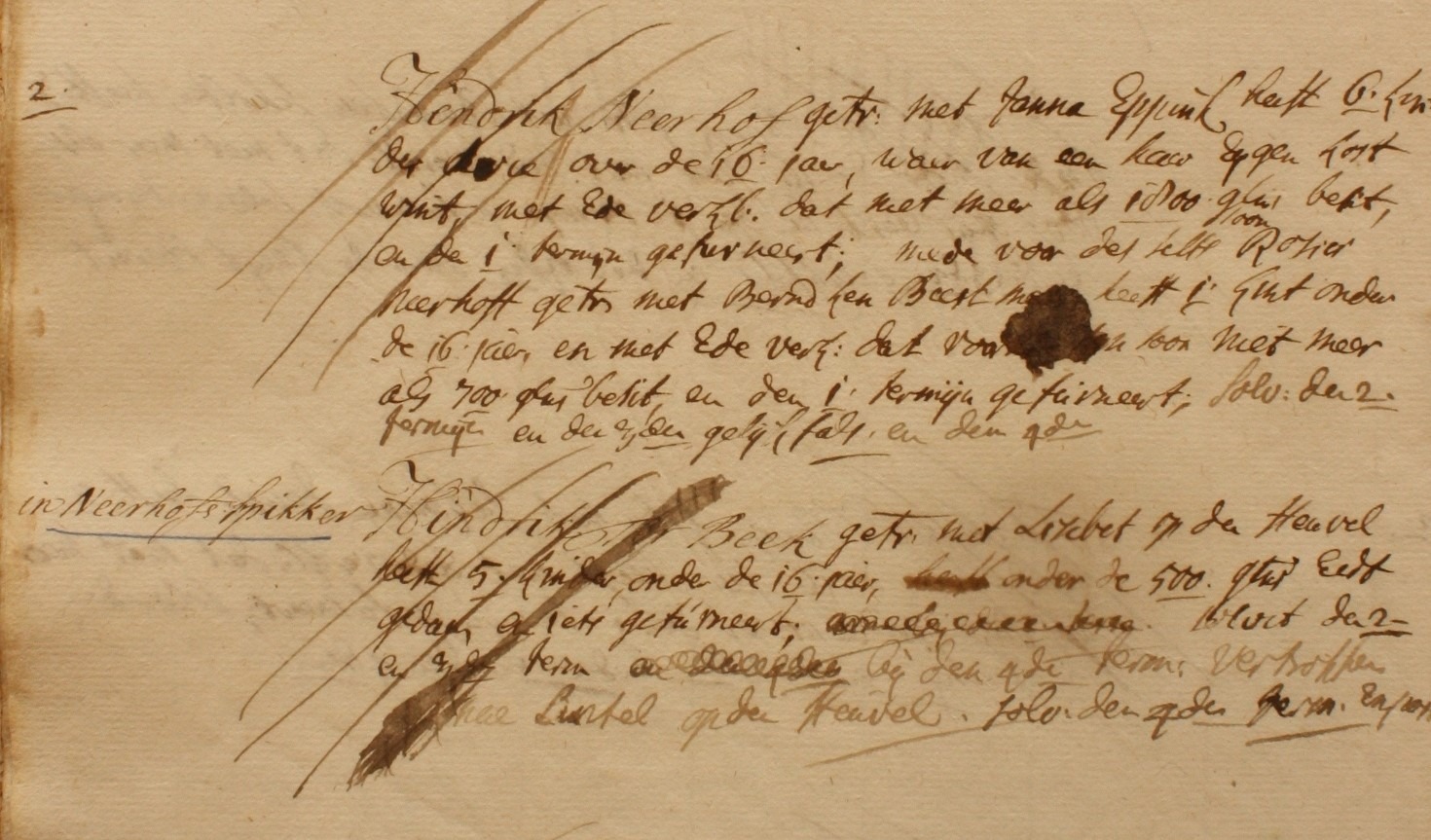
Below is a fragment from this tax register mentioning Hendrik Neerhof and Janna Eppink, as well as their son Rosier Neerhof and his wife Beerndeken Beestman. They declared under oath that their assets amounted to 1800 and 700 guilders respectively and paid their taxes duly.
Immediately below it is noted that the couple Hindrik ter Beek and Lisebeth op den Heuvel lived ‘in Neerhofs Spikker’ (or ‘Spieker’). They possessed less than 500 guilders but evidently paid a voluntary contribution.
J(oe/o/ue)rden was a farmer at Neerhof in 1650 (Land Tax Register, original register).
Child:
Salike Nerhofs (Dale), married Wendel Brunsinck in Dinxperlo in 1664
Next residents:
Hendrik Neerhof (? – < 04-1697) ⚭ ca. 1654 Deve (Eva) te Gantvoort (? – > 03-1697), this was her second marriage
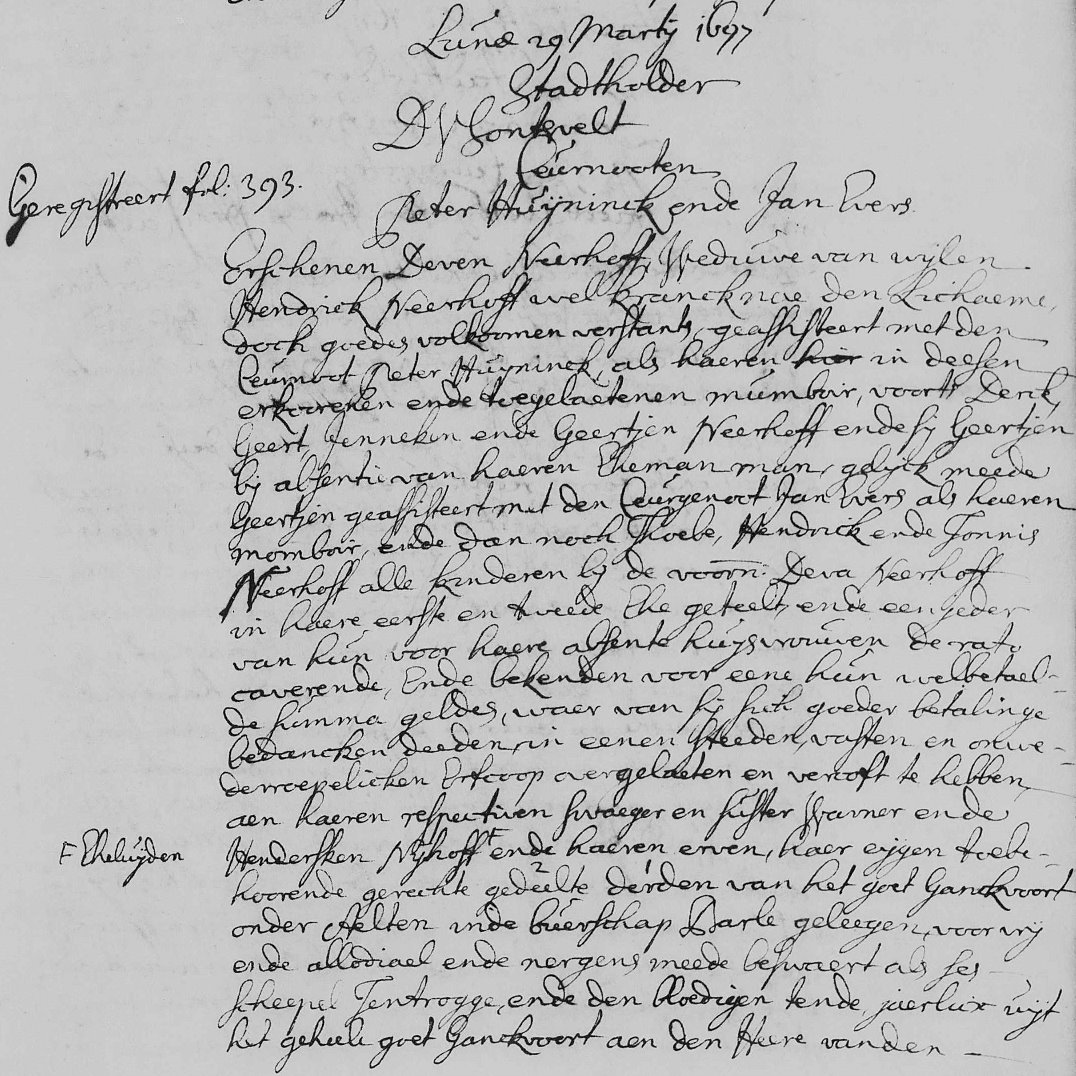
On 29 March 1697, Deven Neerhoff, widow of Hendrick Neerhoff, appeared before the statholder in Bredevoort with all her children “born of her first and second marriage”. The children, therefore, evidently came from two of the mother’s marriages. Who the first husband was, we do not know.
As far as is known, Deve was the only child of Thoebe te Hondorp, called Gantvoort, and Lotte te Welpshof. Deve was an heir to the Gantvoort farmstead, and thus her children were as well. The document describes how Deve and seven of her children sold their inheritance share in the Gantvoort estate to the eighth child and (half-)sister, Hendersken, and her husband, Wander Nijhof.
(Step)children:
Hendersken Neerhof (c. 1655), ⚭ (1) 1679 Aalten Lubbert Luiten, (2) 1682 Warner Nijhof at Nijhof in Barlo
Jenneken / Jannetie Neerhof (Bredevoort, bap. Jan. 1658 – < 1700), ⚭ 1693 Aalten Antonij ten Hietbrink, they left for Amsterdam
Geertjen Neerhof (c. 1662), ⚭ 1684 Aalten Hendrik ter Sligt at Gantvoort in Barlo
Derck Neerhof (Bredevoort, bap. May 1665), ⚭ 1694 Aalten Wendele in ’t Heegt
Geert Neerhof (Aalten, bap. 04-10-1668), ⚭ 1702 Aalten Geesken Hoopmans, they left for Varsseveld
Thobe Neerhof alias Tolkamp (Dale – Barlo, 1720/1721), ⚭ 1694 Aalten Geesken Nieuwhof at Tolkamp in Barlo
Hendrik Neerhof alias Hondorp alias Lijsen, ⚭ 1690 Aalten Grietjen Lijsen at Liezen in Dale
Antonij / Tonis Neerhof alias Vrieseler (Aalten, bap. 02-04-1671 – < 1760), ⚭ 1705 Bocholt Schwantgen Frieselaer (Swenneken Vrieseler), they lived at the Haesencamp in Silvolde from 1707 onwards (source)
Next residents, son and daughter-in-law:
Derck Neerhof (Bredevoort, bap. mei 1665) ⚭ 18-11-1694 Aalten Wendele aan ’t Heeght (Aalten, bap. 02-12-1666)
Children:
Hendrik Neerhof (1695 – 1763), ⚭ 1717 Janna Eppink
Dersken Neerhof (1697 – 1719)
Janna Neerhof (1700 – ?)
Eva Neerhof (1697 – 1719)
Jan Neerhof (Buunk) (1700 – 1787), ⚭ 1724 Berentje Buunk at Beunk in Lintelo
Dela Johanna Neerhofemployed (Dale, 06-02-1843), daughter of Willem Neerhof and Engelina Heusinkveld at Krieger. So she is a cousin of the four aforementioned brothers *
* * They left (presumably in the spring of 1868) for Haart 19 (Lievers) and, in 1869, for America. At the same time, the newlywed Houwers couple moved from Lievers to Neerhof.
Next residents:
Arent Jan Houwers (Dale, 28-04-1824 – Dale, 28-10-1880), farmer ⚭ 02-04-1868, Aalten Grada Aleida Ormel (De Heurne, 13-10-1843 – Dale, 12-04-1875)
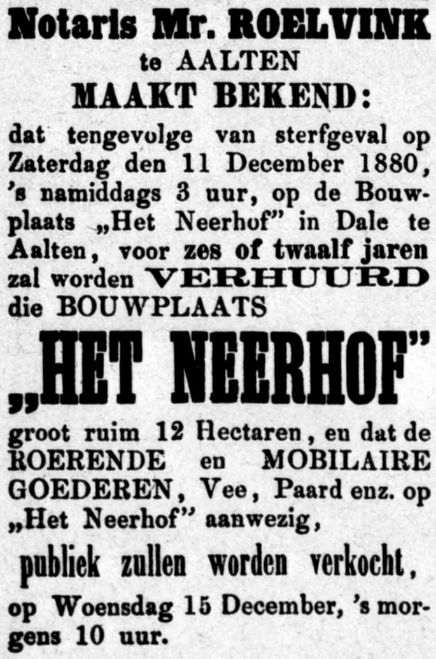
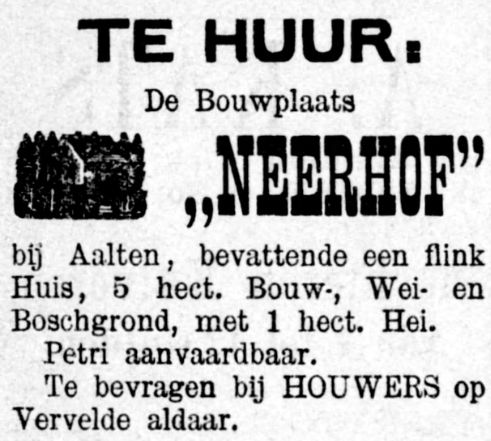
Following their father’s death, the three orphans were taken in by relatives on other farms (as noted below). ‘Bouwplaats Het Neerhof’ was to be let out for the time being:
The following residents came from Wisch in early 1881:
In the rural district of Dale, there was once the manorial estate known as Neerhof. Here is a piece of history about ‘t Neerhof that we found in a booklet:
“When the Saxons were subjugated by the Franks and Charlemagne became the landowner, he established Frankish landholdings where the ‘schout’ or ‘scholte’—the lord’s representative—would reside. They were responsible for collecting taxes, and the Saxon farmers became subservient to the lord’s ‘hof’ (court/estate).
In every district of Aalten, we find an old, distinguished estate, all of which strongly suggest that they share the aforementioned origin. In the past, all these farmsteads were surrounded by a moat. Each farmstead is situated on the edge of an ‘es’ (es-land) in such a way that the latter extends around it, virtually in the shape of a half-moon, so that the ‘Hof’ forms the centre. This indicates that the large-scale cultivation of the essen must have originated from the ‘Hof’ and was continued progressively further outwards.
The Aaltense Es is, in fact, the es of the district of Dale (= low-lying area). It lies within a semi-circle with a radius of approximately two kilometres around the Havezathe (manor house) De Pol, with the latter as its centre point.
A remarkable circumstance now arises in that we still find two adjacent estates in Dale called ‘Nonhof’ and ‘Neerhof’. Both farmsteads lie quite a distance from the Ahof ‘De Pol’, but this is clear if we take into account the location and extent of Dale; these farmsteads could easily occupy their positions in the lower-lying west of Dale. It is said that brothers and sisters of an order may also have lived here.
In the past, the Neerhof and Nonhof estates belonged to the St. Antonie vicarage, which was established in the Aalten Church. Later, they became domains of the sovereign.
According to some, the name is derived from ‘d’n Heerhof’, which merged into ‘de Neerhof’.
At the beginning of the 17th century, we also encounter the spelling ‘Neerhave’.
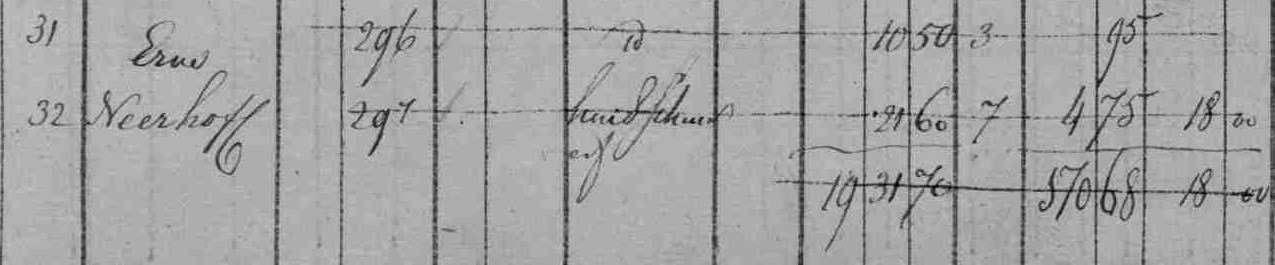
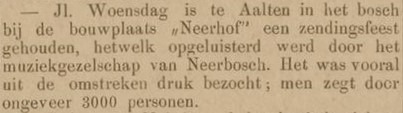
Bredevoort Judicial Archives, voluntary deeds, 29 March 1697In 1748, five soldiers were billeted at Neerhof.Excerpt from the land registry entry, 1876Graafschapbode, 4 December 1880Nieuwe Vlaardingsche Courant, 25 August 1888Graafschapbode, 31 August 1889Excerpt from the land registry entry, 1960
Leonard Roelvink werd op 30 april 1833 geboren als zoon van Arnoldus Florentinus Roelvink, burgemeester van Aalten, en Elzabé Maria Theodora ten Cate. Op 14 november 1870 trad hij in Winterswijk in het huwelijk met Christina Paschen, geboren aldaar op 27 maart 1848.
In 1857 publiceerde Roelvink bij uitgeverij Post Uiterweer te Utrecht zijn juridische proefschrift onder de titel Theses juridicae inaugurales. Vier jaar later, in 1861, volgde hij zijn vader op als burgemeester van de gemeente Aalten.
Roelvink woonde in de villa aan ‘t Zand in Bredevoort die we tegenwoordig kennen als Sint Bernardus. Dagelijks reed hij per rijtuig naar Aalten, net als zijn vader had gedaan. Hij was fel tegen de komst van de spoorlijn naar Aalten, uit angst dat zijn paarden zouden schrikken van het “dampende treinmonster”.
Leonard Roelvink overleed op 3 maart 1886 aan een beroerte. De gemeenteraad zou juist vergaderen en wachtte op de komst van haar voorzitter toen een arts het treurige bericht van zijn overlijden kwam mededelen. Hij werd begraven op de oude begraafplaats aan de Prins Mauritsstraat in Bredevoort.
Na zijn overlijden richtten zes vooraanstaande Aaltenaren zich in een brief tot de minister van Binnenlandse Zaken. Ze maakten van de gelegenheid gebruik om hun zorgen te uiten over wat zij als wantoestanden beschouwden binnen de gemeente, die ze toeschreven aan het beleid, of het ontbreken daarvan, van de overleden burgemeester. In hun brief stelden ze nadrukkelijk géén invloed te willen uitoefenen op de benoeming van een nieuwe burgemeester, maar gaven tegelijkertijd aan dat “de treurige toestand” in Aalten volgens hen mede het gevolg was van het feit dat de functie van vader op zoon was overgegaan. Ze klaagden over onder meer gebrekkig onderwijs, slechte wegen, overmatig drankgebruik en ongeoorloofde kinderarbeid. De zes pleitten voor de benoeming van een krachtige opvolger die orde op zaken kon stellen. Hun bezwaren werden serieus genomen door zowel de minister als de commissaris van de Koning.
Roelvink werd als burgemeester van Aalten opgevolgd door Johan Hora Adema.
Gerhardus Franciscus (Gerard) Tebroke was born on 9 November 1949 in Aalten, the second child in a family of four sons and one daughter. His parents, Hendrik Bernard Tebroke (1912–1987) and Grada Johanna Bijvank (born 1916), both came from Eibergen, where they had married in 1944. Gerard passed away unmarried on 19 March 1995.
As a child, Gerard Tebroke from Aalten was so stiff that he was exempted from gymnastics classes in primary school. Nevertheless, he became one of the best Dutch athletes ever in the 5,000-metre and 10,000-metre events.
Tebroke achieved many successes, but because he often pushed his body too hard during training, he was frequently injured and missed important sporting events, such as the Olympic Games in 1972 and 1976. However, his speed for that era was unprecedented. He held the Dutch record in the 10,000 metres for over 18 years and in the 5,000 metres for more than 22 years.
In 1982, he decided to bid farewell to the sport. He retreated to a small farm in Silvolde with his dog and sheep, leading a reclusive life. Gerard Tebroke passed away in 1995 at the age of 45. Since then, the biennial Gerard Tebroke Memorialloop (a memorial run) has been held in Aalten as a tribute to him.
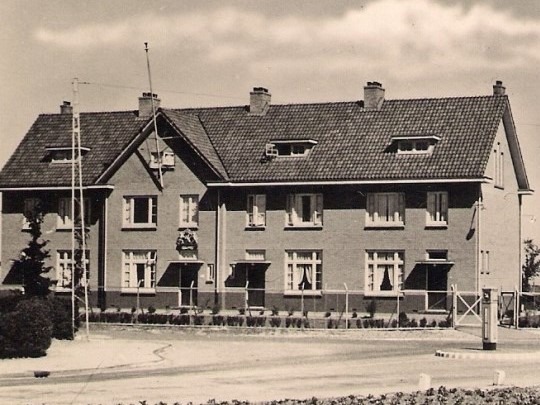
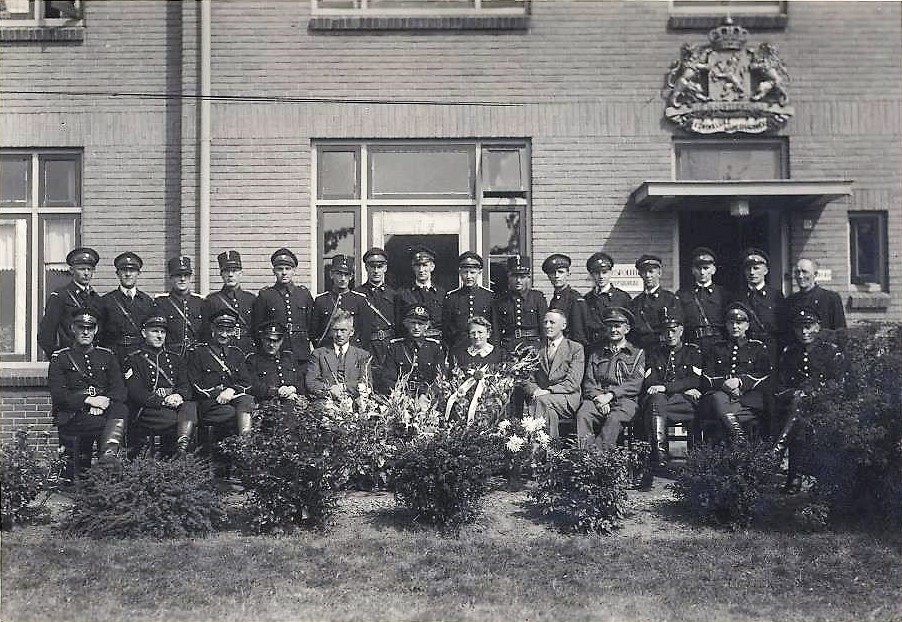
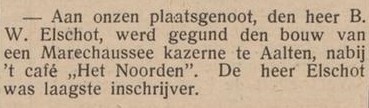
The Aalten Marechausseekazerne (Royal Military Constabulary barracks) was built around 1937. Previously, the constabulary had been stationed at the Heurne-Hemden border crossing. The premises contained three houses intended for the families of the constabulary and a service section, which was larger than the residential parts. There were also additional rooms for unmarried officers. These men were required to serve a certain number of years with the Marechaussee before they were permitted to marry, and therefore lived on-site.
The service section contained two holding cells, and all three houses were equipped with a ‘gas cellar’ to provide shelter in the event of a war involving gas attacks. During World War II, a V-1 flying bomb landed next to the barracks; however, given the sturdy construction typical of military objects, the building suffered virtually no damage.
World War II
When war broke out on 10 May 1940, Sergeant (wachtmeester) Sijbring—who was on night duty—warned the officers of the German advance. A number of them fled by bicycle via the Wolboom towards Bronkhorst, where they crossed the IJssel. From there, they could be deployed in the defence of the Netherlands.
If people were arrested during the war, they were taken either to the Town Hall, where the NSB (Dutch Nazi Party) was based, or to the Marechaussee barracks. A number of constabulary officers were still stationed there. On one occasion, the resistance leader ‘Ome Jan’ Wikkerink was arrested and brought to the barracks. The resistance quickly devised a plan to liberate him. They made an arrangement with the guard, the younger Officer Bruggeman, that they would give him a black eye and stun him with chloroform. In this manner, Ome Jan was freed. When the SD (German security service) arrived shortly after and found the guard with a black eye and barely conscious, they believed his story, and he avoided any repercussions.
Residences
The barracks were closed on 1 March 1968. Subsequently, the building was transferred to the Government Buildings Agency. In 1989, the houses were sold to the tenants and passed into private ownership.
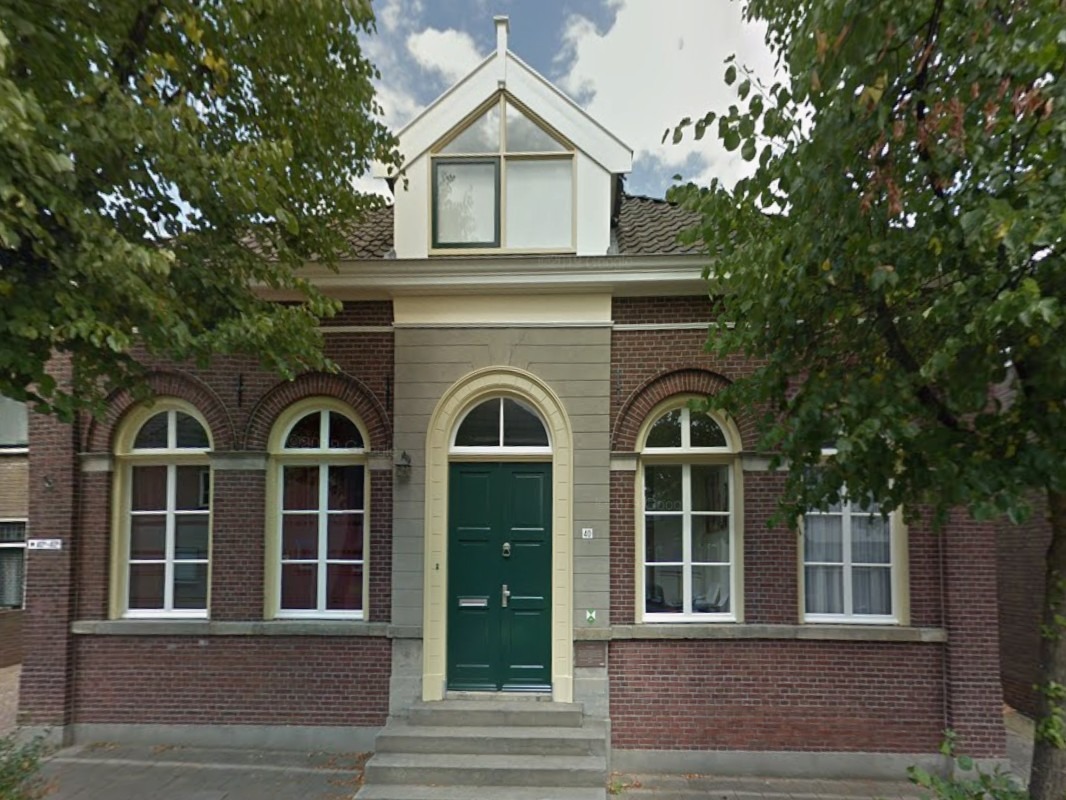
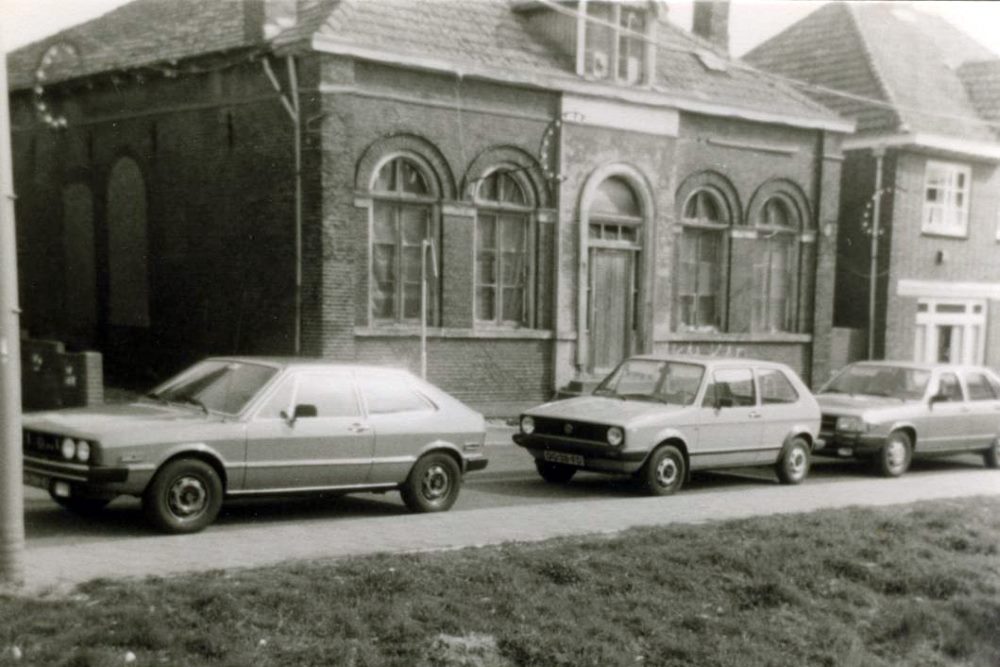
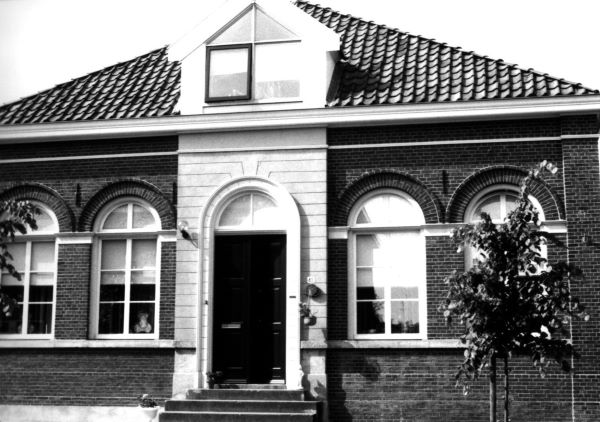
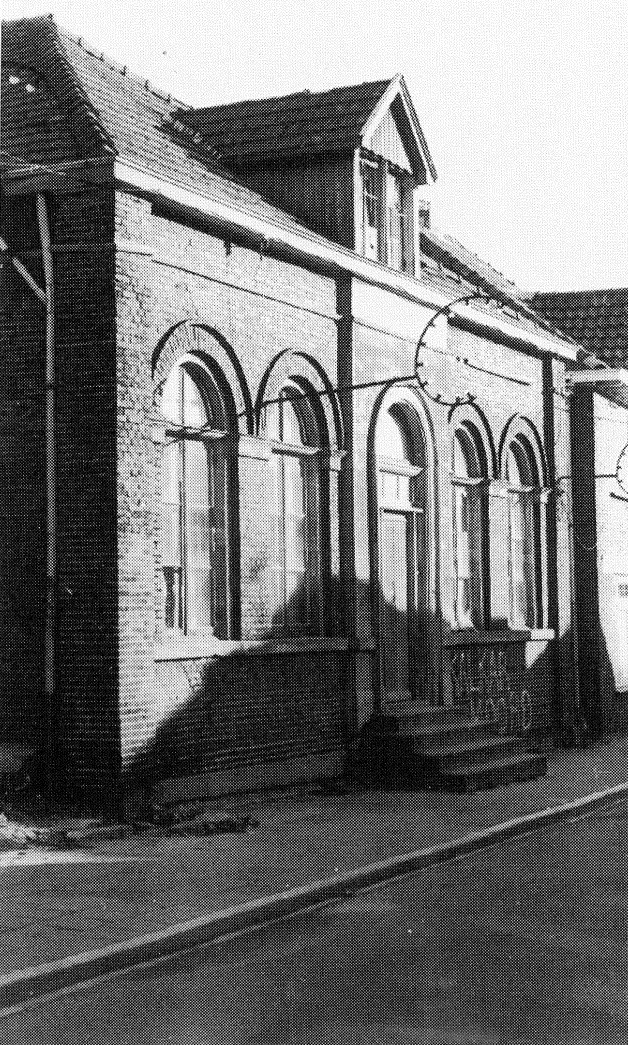
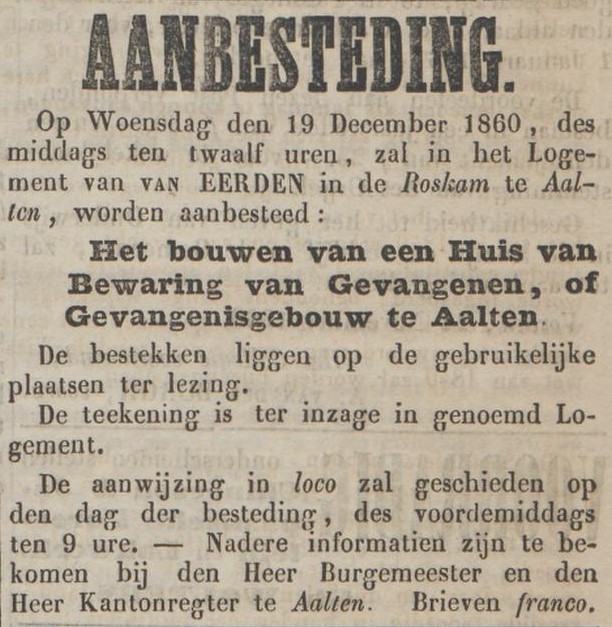
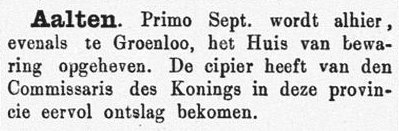
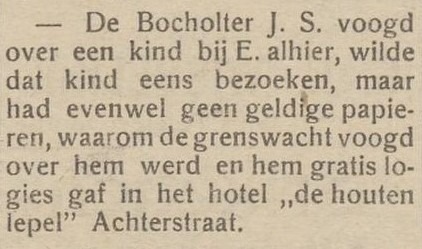
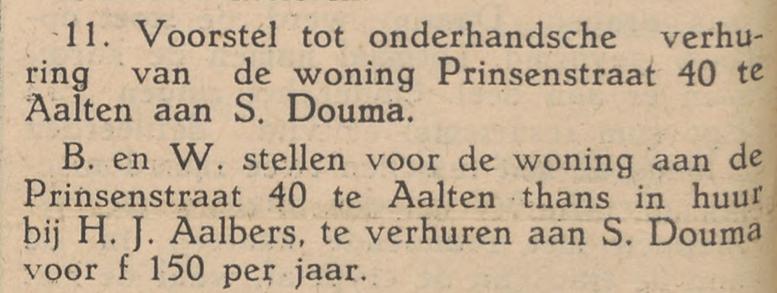
The former prison on Prinsenstraat in Aalten was built in 1861 in Neoclassical style as a cantonal house of detention, featuring six cells and a gaoler’s residence. In 1886, its cantonal status was revoked, but the building remained in use as a municipal prison until the Second World War. Today, the property is a private residence.
Een inventarislijst uit 1933 noemt nog ‘meubilair en overige goederen behorend tot de gevangenis in de Achterstraat’ (de oude naam van de Prinsenstraat). Vóór 1861 bevond het plaatselijke cachot zich aan de Landstraat.
In 1937, G.H. Rots described in a series of articles how things were handled in Aalten in earlier times. Regarding the old prison, he wrote:
“For cantonal court matters, one did not have to walk far. After all, the cantonal judge sat in our good village, and the cantonal court was held in the town hall. The prison in Aalten was also equipped for the detention of prisoners for longer than twenty-four hours. A gaoler was appointed for this purpose, and for many years Wessel te Brake held this post. To ensure the proper fulfillment of the feeding and care of the prisoners, he had to sign a contract and provide several sureties. As a matter of interest, we publish the transcript of this contract here:
Between the Board of Supervision of the house of detention in Aalten on the one hand, and Wessel te Brake, gaoler of the prisoners residing in Aalten, on the other, the following contract has been entered into today regarding the maintenance of the prisoners during the year 1862, at the price of fifty cents per prisoner per day.
Article One.
The Contractor undertakes to provide feeding and nursing for the prisoners in the aforementioned house, providing each of them daily with:
A. Four ounces of rye bread made of pure baked flour.
B. Three measures of warm drink consisting of one part fresh milk and four parts boiled water.
C. At midday, a nutritious midday meal at least in accordance with the dietary standards established for prisoners in general.
D. In the evening, two and a half ounces of well-baked rye bread as above and two and a half measures of warm drink, consisting of four parts boiled water and one part fresh milk with five wigtjes [units of weight] of coffee and the necessary chicory.
E. Further necessary drinking water.
Article Two.
The various food items must be of good quality and prepared as required, and shall always be subject to the approval of the Board of Supervision, by whose judgment the Contractor shall abide.
Article Three.
The Contractor shall also be required, in occurring cases, to provide sick prisoners with such food and drink as the medical practitioner shall prescribe, with the exception of medicines.
Article Four.
The Contractor shall be paid within two months after the submission of his three-monthly or annual declaration.
Article Five.
In the prescribed declaration and statements, he may charge for the day of arrival of the prisoners, but not for the day of departure. However, if the prisoners have already enjoyed the midday meal upon their arrival and stay only until the following day, so that only supper and breakfast are provided, or if they should depart again on the day of their arrival, so that only the midday meal is provided, only half a nursing day may be declared in such cases. For the maintenance of children temporarily confined with their parents, half the contract price may be charged for each full nursing day. Mention of this must be made in the Remarks column and the nominative statement.
Article Six.
The Contractor must always submit separate declarations and nominative statements for the maintenance costs of police prisoners, which are borne by the municipalities to which they belong. Should it be necessary in special cases to light or heat the prison, the Contractor must provide for this in such a manner as the Board of Supervision shall prescribe.
Article Seven.
The costs of stamps and registration of the contract, as well as the stamp duties of the mandates when these exceed ten guilders, shall be borne by the Contractor.
Article Eight.
Should any dispute arise concerning the correct understanding and execution of the foregoing provision, the same shall be judged and decided by the King’s Commissioner in the province, without appeal to any other authority.
After reading the above terms, the Contractor, Wessel te Brake, declares to have understood them all well, to follow them, and for the proper fulfillment of his commitment to provide as sureties Jan Wegchelaar, messenger, and Jan te Hoonte, constable, both residing in Aalten, who are also present here and declare that they are well aware of the obligations to be fulfilled by the Contractor, hold themselves jointly and severally liable with him for the execution thereof, and renounce all exceptions that might be raised by them as sureties. And the Contractor and his sureties have also signed this.
Done at Aalten, 10th Dec. 1861. 1861. The Board of Supervision of the house of detention in Aalten, (signed) F.W.J. IMMINK (President) (signed) L. ROELVINK, Secretary.
The Contractor and the sureties: (signed) W. TE BRAKE (signed) J. WEGCHELAAR (signed) J. TE HOONTE.
The document was registered in Groenlo. The costs for this were 20 cents plus 38 surtax, making 28 cents in total.”
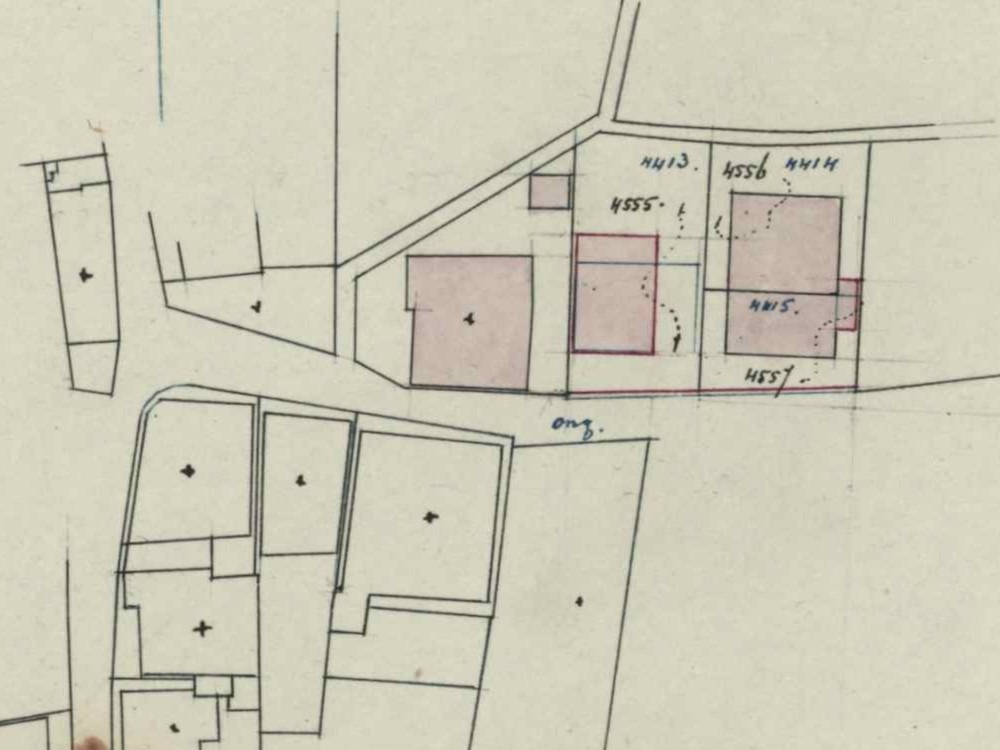
Owners
Overview is incomplete.
Year
Plot
Owner
Description
1862
I-2633 I-2634
The Board of Supervision of the cantonal prison of Aalten
280 m² prison, yard 205 m² house, yard
1891
I-4414 I-4415
The Municipality of Aalten
269 m² house of detention & yard 185 m² house & yard
1893
I-4556 I-4557
The Municipality of Aalten
265 m² house of detention & yard 179 m² house & yard
1941
I-5611 I-4557
The Municipality of Aalten Antonius Johannes Veldhuis, merchant
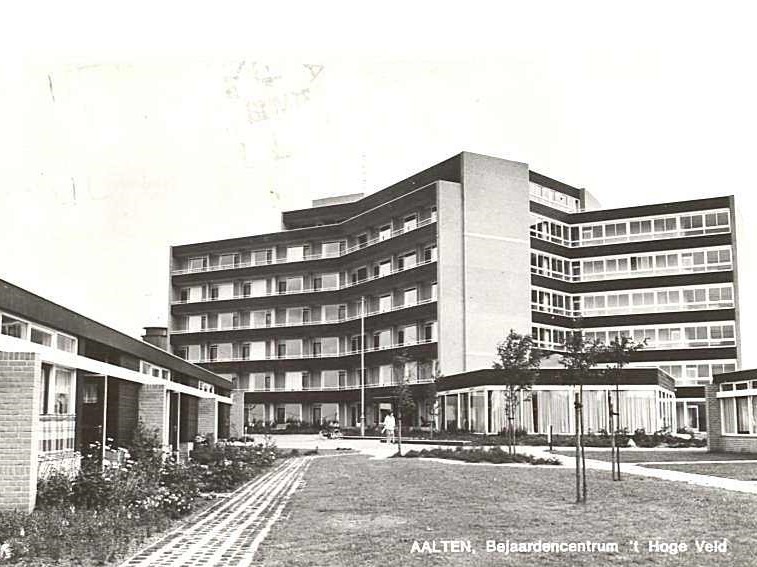
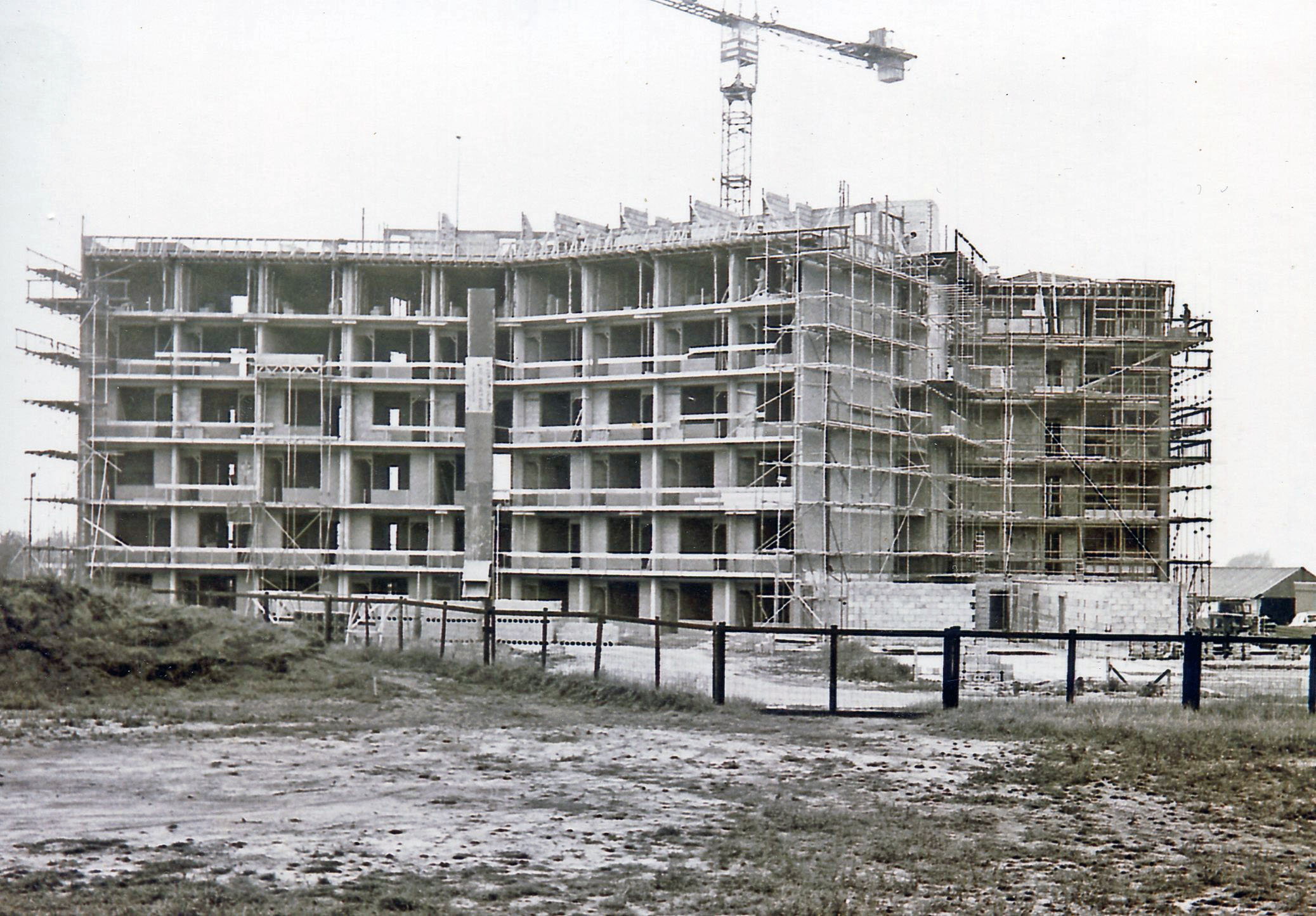
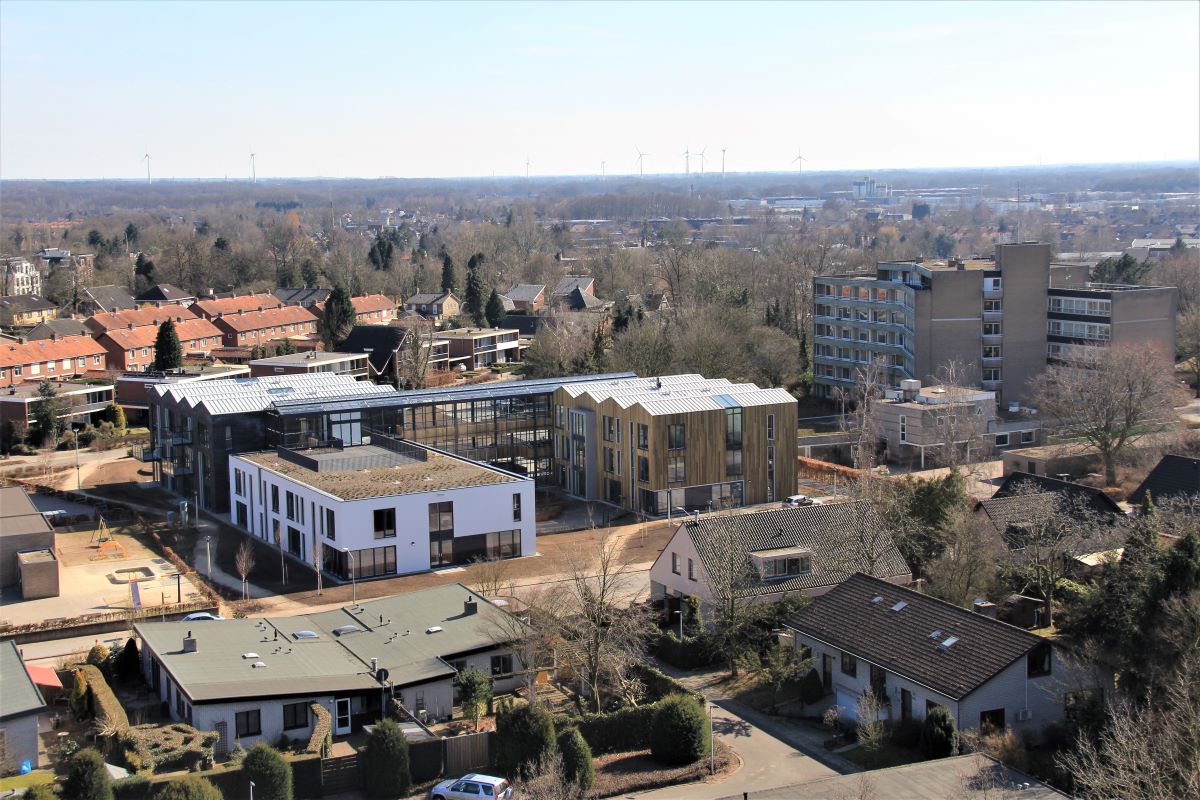
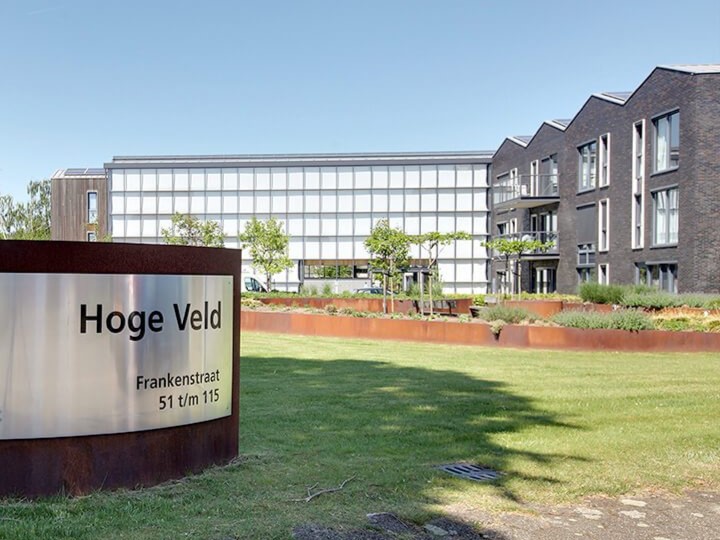
The ‘t Hoge Veld residential care center in Aalten opened in 1970 as the successor to the Avondvrede rest home on Hogestraat. The building accommodated dozens of elderly residents and was a recognizable nursing home in Aalten for decades. In 2018, the complex was demolished and replaced by new construction.
In 1967, the Reformed congregations of Aalten, Bredevoort, and Lichtenvoorde jointly established the Reformed Foundation for the Aalten Senior Center. This foundation was later renamed the ‘t Hoge Veld Senior Center Foundation. In 1970, the residents of the Avondvrede rest home on Hogestraat moved to the newly built ‘t Hoge Veld senior center in Aalten.
High-rise construction
The new building was a six-story structure. At the time, this was considered quite spectacular in Aalten, as there was hardly any high-rise construction in the village. The only tall buildings were the Landbouw silo and the water tower. From the top floor of ‘t Hoge Veld, one had a beautiful view over Aalten and the surrounding area.
During construction, some elderly residents remarked: “If they add a slide, we can go straight to the cemetery across the street after we die.” Later, the residents felt very positive about it. They enjoyed the view and the excellent care provided in this nursing home.
The main building contained 78 single rooms and 11 double rooms. Additionally, there were 12 sheltered housing units.
Demolition and new construction
In 2018, the apartment block and the sheltered housing units were demolished to make way for new (lower) residential care center buildings and luxury homes in a park-like setting.
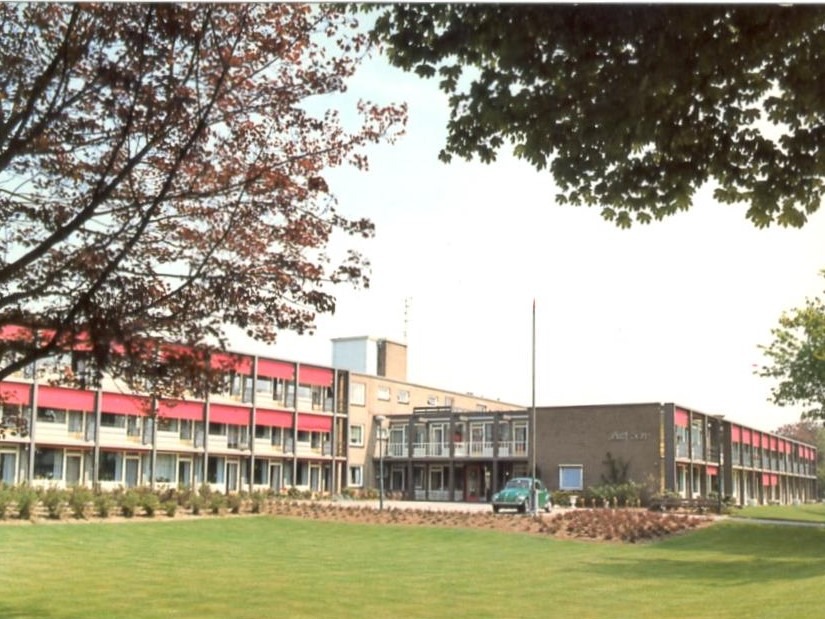
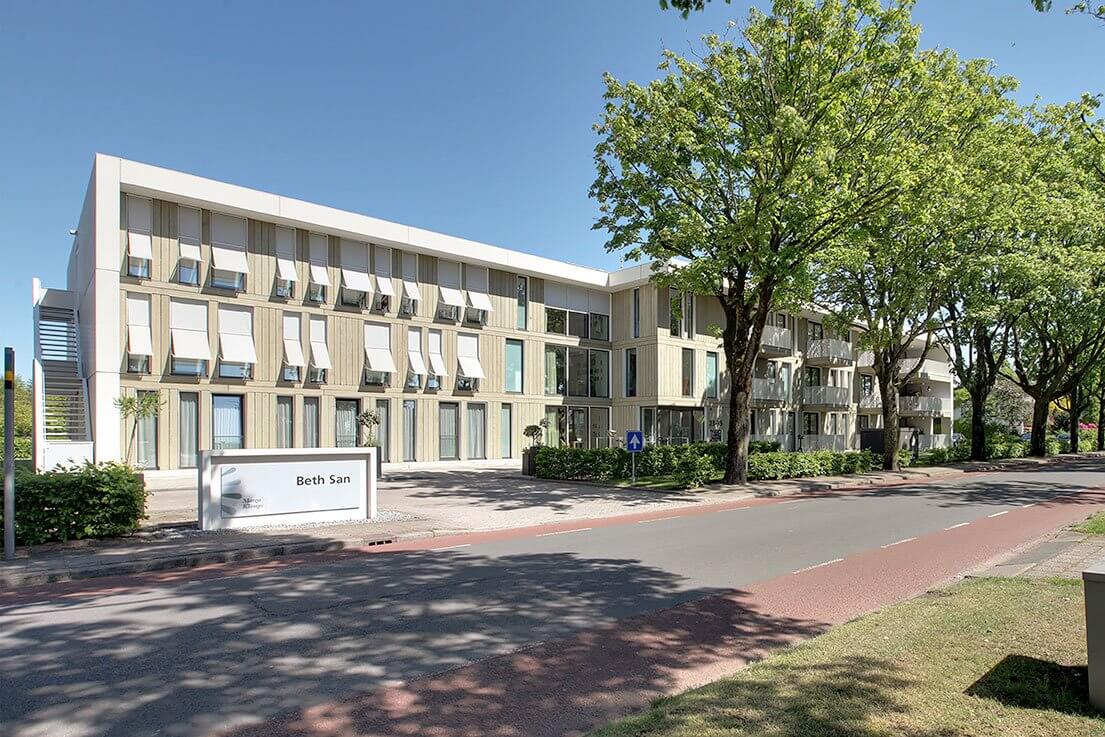
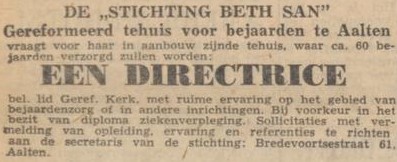
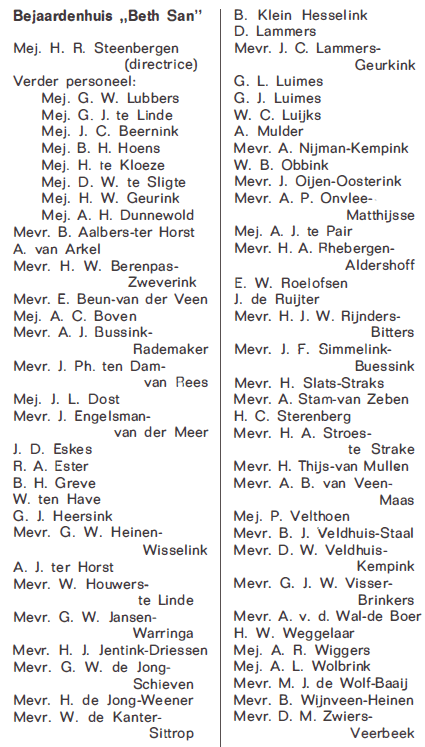
Beth San Residential Care Center on Ludgerstraat in Aalten was opened in 1960 as a ‘Reformed home for the elderly’. After fifty years, the complex no longer met the requirements of the time and the care center, along with the associated sheltered housing, was replaced by a new building. The opening of the new Beth San took place in 2013.
The initiative for Beth San came from the diaconate of the Reformed Church in Aalten. The name means ‘House of Rest’. In 1957, over 12,000 m² of land was purchased between Ludgerstraat and the section of Eligiusstraat that was yet to be constructed. The buildings were designed by architects Gjalt van der Zee (1901-1994) and Ir. Cornelis Veerling (1912-1997) from Bolsward.
The main building consisted of 63 single rooms, 4 double rooms, and 8 rooms for live-in staff. In addition, 12 sheltered housing units were built. The total investment amounted to over 1 million guilders.
At its opening in 1960, Beth San provided accommodation for more than seventy residents. The home was considered a modern facility for its time, featuring central heating and provisions for independent seniors in the sheltered housing units.
Renovation and New Construction
Five decades after its opening, the complex no longer met current standards. The complex was demolished and replaced by a new residential care center, which opened in 2013.
The new Beth San consists of two buildings with thirty apartments and five group homes for people with dementia. The group homes are small-scale in design and offer 24-hour care and support. Additionally, the center features a restaurant, an exercise garden, and spaces for activities and social gatherings, such as exercise classes for seniors (MBVO) and an internet café.
Next to Beth San, a residential building for independent seniors was erected, featuring thirteen apartments and an underground parking garage. This complex replaced the sheltered housing units that previously stood there.
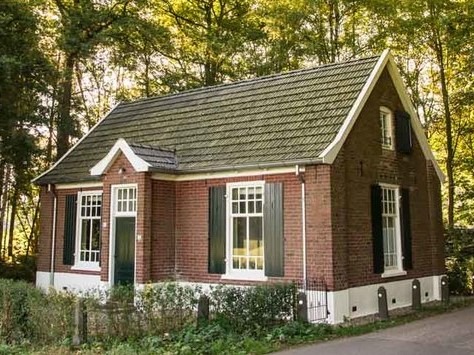
Former Sunday school dating from the early 20th century, restored and converted into a vacation rental.
In the nineteenth century, Rev. Breukelaar ensured that Sunday schools were established in Aalten. For children in the surrounding hamlets, Sunday school was held at someone’s home on a farm, so the children did not have to travel all the way to the village. Gradually, a need arose in these hamlets to build a local hall or zondagsschoolhuuske (Sunday school house). A total of nine small Sunday schools appeared, only a few of which have been preserved.
In the rural district of Lintelo, there were formerly two Sunday schools. In the centre of Lintelo, there was a small Sunday school on the Schooldijk, but this was demolished around 1950. The ‘Lintelo Veur’ Sunday school was built in 1924. Originally, the school had two rooms and was considerably more spacious than most Sunday schools in the municipality of Aalten.
Foundation
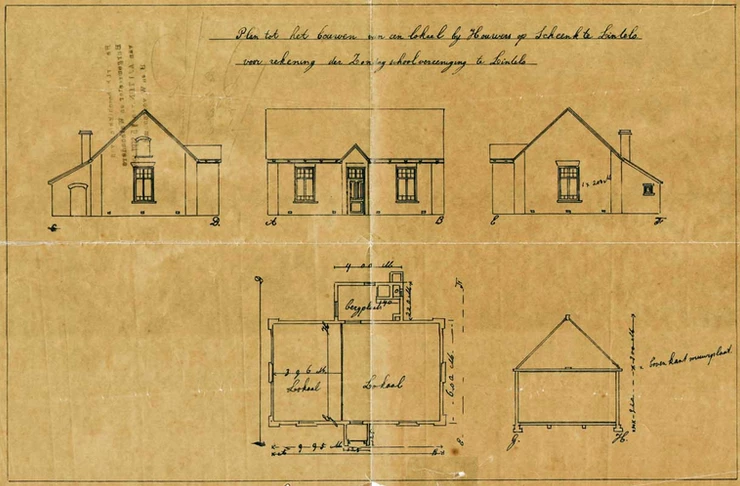
That the plans in Lintelo were serious was evidenced by the official publication in the Staatscourant (Government Gazette) regarding the establishment of the ‘Zondagschoolvereniging te Vóór Lintelo’ (Sunday School Association for Vóór Lintelo). At a meeting in May 1924, the 17 members present decided that a ‘hall’ should be built to be used as a Sunday school for children from Lintelo.
To build the hall, money and land were required. To raise funds, a collection was held in Lintelo as well as in the surrounding hamlets. Quotes were requested from various contractors. Initially, they considered a building with one large room measuring eight by five metres. Eventually, they decided the building should be larger—albeit more expensive—but, as the reasoning went, cheaper per square metre.
The building would have two rooms and a separate storage area. A second collection was held to raise additional funds. The necessary land was also found; for a symbolic amount, a small piece of land was acquired from the former Schenk farm, at the corner of the Veldweg and Sondernweg.
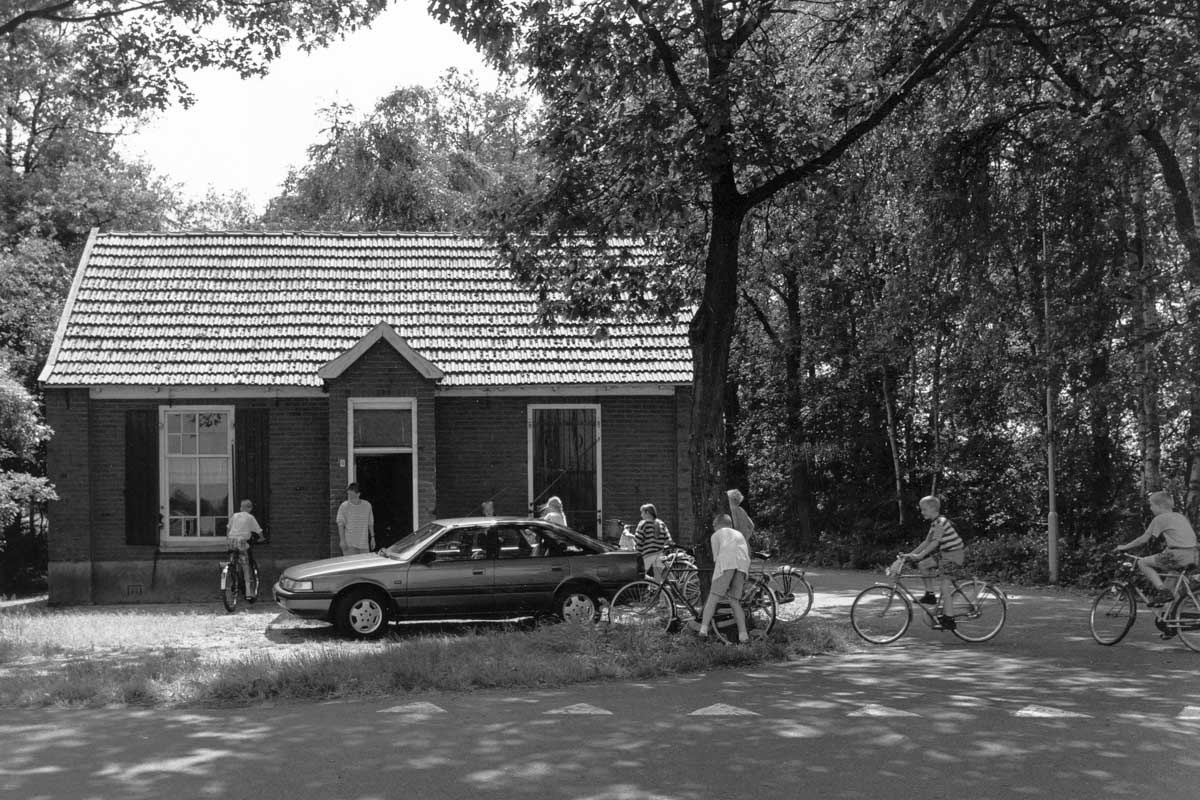
From 1925 onwards, the children came to ‘Lintelo Veur’ every Sunday. Each year at Easter, there was a larger children’s party. This continued until the war. During the war, the occupying forces confiscated the Sunday school for use as storage. The Sunday school was forced to be held on a farm again. Immediately after the war, the Sunday school was designated as emergency housing.
It took until the end of 1950 for the association to regain the building following a lawsuit. The building was refurbished and was ready just before Christmas. It was returned to use with a festive Christmas celebration. With this Christmas party, a new tradition was born that continued until the mid-90s: every child received a book annually during the Christmas party. A small notebook was kept to meticulously record which child had received which book and when.
Gradually, the number of children attending Sunday school declined. Over seventy years after the founding of the ‘Zondagschoolvereniging te Vóór Lintelo’, the decision was made to dissolve it at the end of 1995. The property was sold.
Listed
Five years later, in 2000, the Sunday school was placed on the municipal monument list because “it is a good example of a traditional school from the early 20th century. With its prominent location, it is of particular importance for the original character of the area. It is important for keeping the development of education in the municipality of Aalten in the twentieth century visible.”
The small building was subsequently used regularly for parties and as a rehearsal space for a band. However, the condition of the building gradually deteriorated.
Vacation rental
In 2008, the current owners began making plans. After consultation with the municipality, it turned out that a vacation rental was the most achievable scenario. However, the building was not insulated, and there was no upper floor. A thorough and sustainable approach was required. Work began in early 2012. Gradually, unexpected old elements reappeared, such as old doors with their characteristic green colour, the frames around the doors and windows, and the dark oak ceiling.
Today, the little school looks beautiful again and is available for overnight stays.
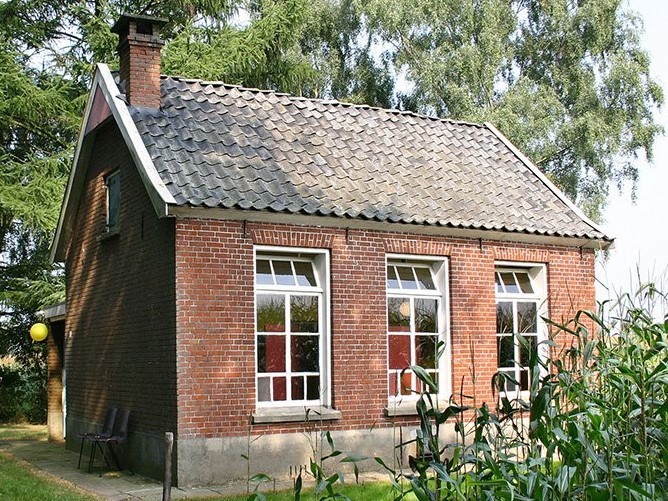
The small, single-classroom schoolhouse in the rural area between Aalten and the German border was built in 1924 on the initiative of the Reformed Church council.
This type of one- or two-classroom Sunday school building could be found in various hamlets throughout the Achterhoek region. In those days, the roads from these areas to the villages were often little more than simple cart tracks. Particularly in winter, these became nearly impassable dirt roads. Much of the land in this area had only recently been cleared for cultivation.
The plot of land on which the building stands was once part of a patch of forest (wasteland) that local farmers were in the process of reclaiming. An association of parents with school-age children purchased this piece of land and built the small schoolhouse using their own contributions.
In this Sunday school, a number of parents took turns telling stories from the Bible and teaching the children Christian songs. The number of children attending varied between 12 and 30. Rev. D. Breukelaar from Aalten and Rev. J. van Dijk from Doetinchem had a significant influence on this work.
Around 1925–1930, partly due to the emancipation movement, a girls’ association and a women’s association were founded. The girls’ association met there weekly, and the women’s association met once a month. At these meetings, the Bible was studied, but social topics were also discussed, such as the position of women in the church and in politics.
From 1945 until 1997, boys’ and girls’ clubs met here, discussing the Bible and/or themes relevant to young people. Both the Sunday school and the clubs operated under a Parents’ Association, which maintained the building. Due to various societal changes, all these associations eventually ceased to exist.
In 2005, the Geldersch Landschap & Kasteelen foundation received the Sunday schoolhouse as a donation from the Haart-Heurne Parents’ Association. In order to preserve the small building, a suitable new purpose was sought. Since 2009, it has been available for rent as a holiday home.
Hendrickje Stoffels or Hendrickje Jegers (Bredevoort, 1626 – Amsterdam, July 1663) was a domestic servant and art dealer. For a period, she was the official employer of the Dutch painter Rembrandt van Rijn. She was also Rembrandt’s romantic partner, the mother of one of his three daughters (all of whom were named Cornelia), and possibly one of his models.
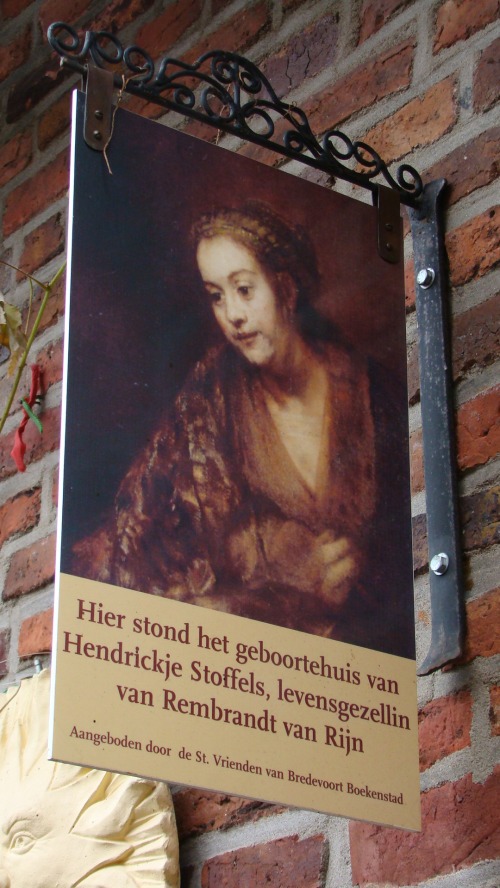
Hendrickje Stoffels was born in Bredevoort in 1626 as the daughter of Stoffel Stoffelse and Mechteld Lamberts and grew up in the Muizenstraat. Her father was a sergeant under a captain from the Ploos van Amstel family. Stoffel was also a hunter for the castle at Bredevoort and was therefore also called Jeger. In common parlance, his children were called ‘Jegers’, but in official documents they were always referred to as ‘Stoffels’ (meaning son or daughter of Stoffel).
Hendrickje had one sister and three brothers: Martijne Jegers, Hermen, Berent, and Frerick. She may also have had a sister named Margriete.
Hendrickje’s father almost certainly passed away in July 1646, possibly as an unidentified victim of the gunpowder tower explosion in Bredevoort. It was likely due to this event that Hendrickje left for Amsterdam.
Rembrandt’s partner
From that time on, Hendrickje entered service as a maid for the already famous painter Rembrandt van Rijn, in what is now the Rembrandt House on Jodenbreestraat in Amsterdam. On July 16, 1649, Hendrickje was back in Bredevoort; she is mentioned as a baptismal witness in the Bredevoort Baptismal Register. It is possible that Rembrandt made the journey to Bredevoort with her. This may be evidenced by several etchings by Rembrandt from 1649 and 1650, the locations of which are unknown.
Later, Hendrickje became Rembrandt’s partner, and in 1654 they had a daughter together, Cornelia. In 1658, she started an art shop together with Titus, Rembrandt’s son from his earlier marriage to Saskia van Uylenburgh, where they sold paintings, drawings, copper engravings, woodcuts, and curiosities.
There are several paintings and prints by Rembrandt in which Hendrickje Stoffels is recognized. However, there is no single documented image of her. Furthermore, some experts believe that the portraits identified as Stoffels exhibit a wide variety of facial features. In any case, there are a number of works by Rembrandt from the period in which Stoffels lived with him that possibly depict the same woman.
In 1663, a plague epidemic struck Amsterdam. Hendrickje Stoffels was likely also fatally affected by this disease, as she died in July of that year. She was buried on July 24, 1663, in a rented grave in the Westerkerk in Amsterdam.
Statue on ‘t Zand
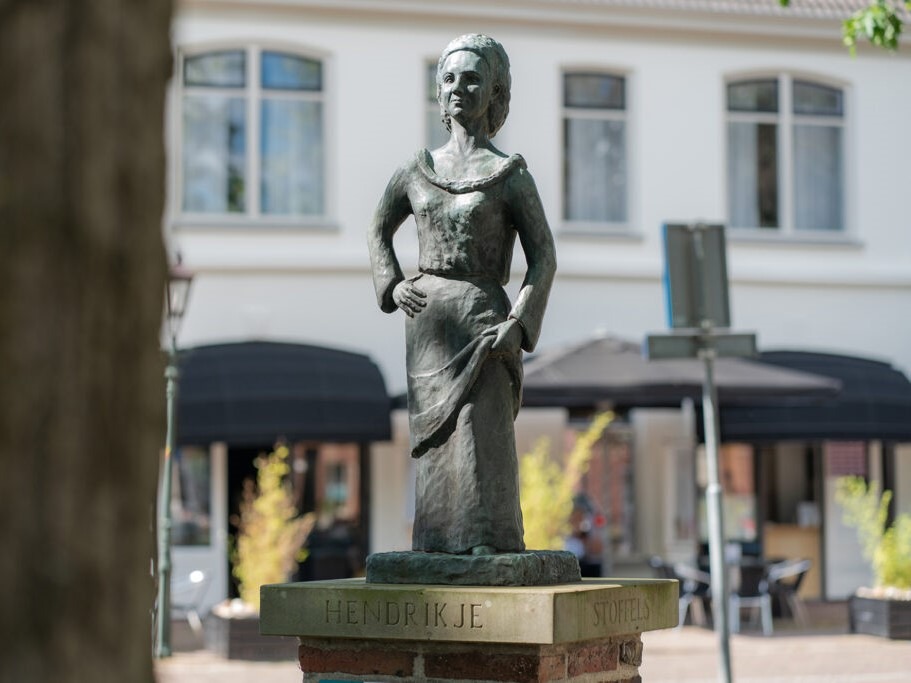
On ‘t Zand in Bredevoort stands a statue of Hendrickje Stoffels, created by sculptor G.J.F. (Truus) Doodeheefver-Kremer. Before creating the statue on ‘t Zand, the artist conducted research, including at the Rijksmuseum, and chose to depict Hendrickje around the age of twenty, the period when she left Bredevoort for Amsterdam. The statue was unveiled on July 7, 1977.
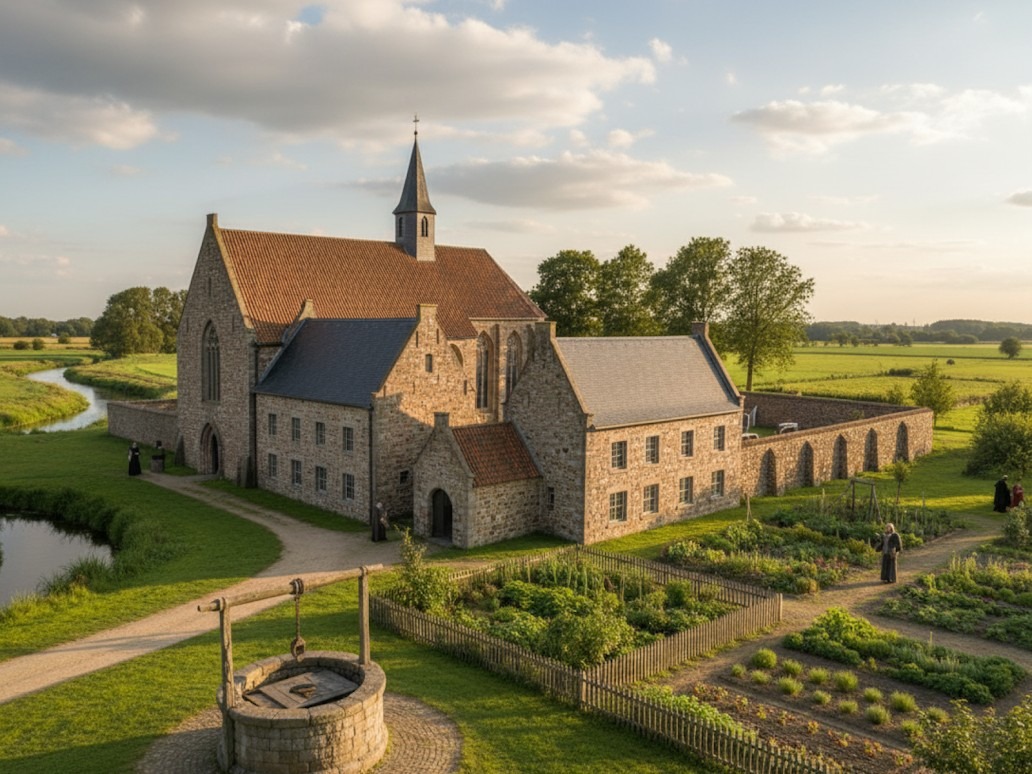
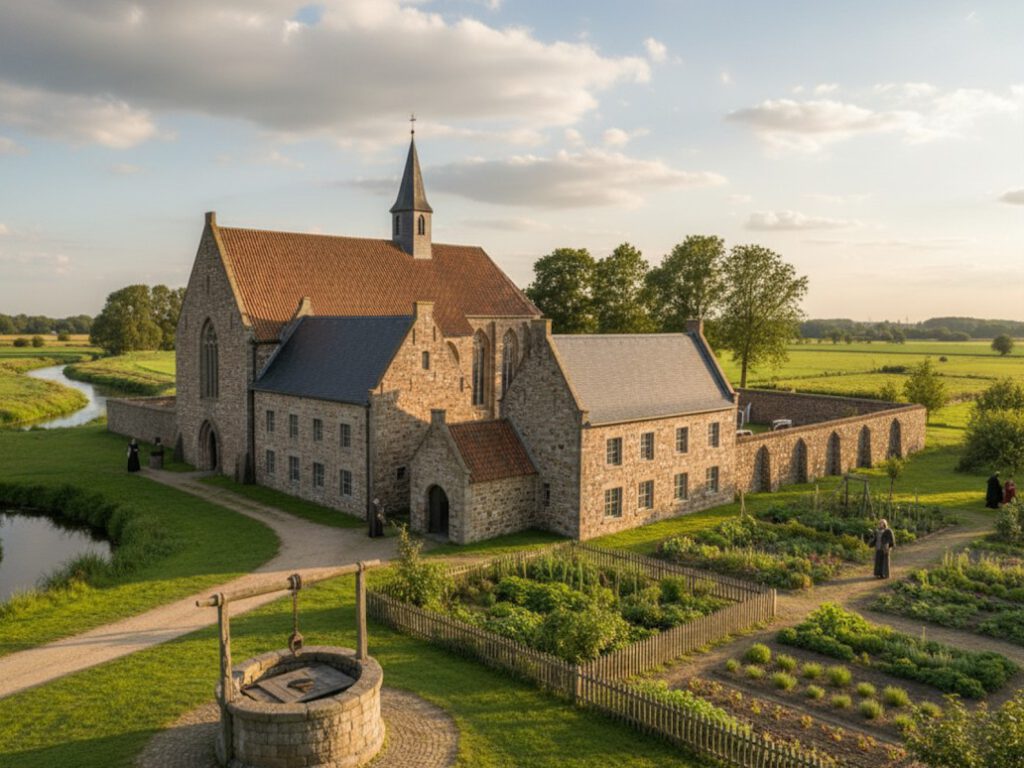
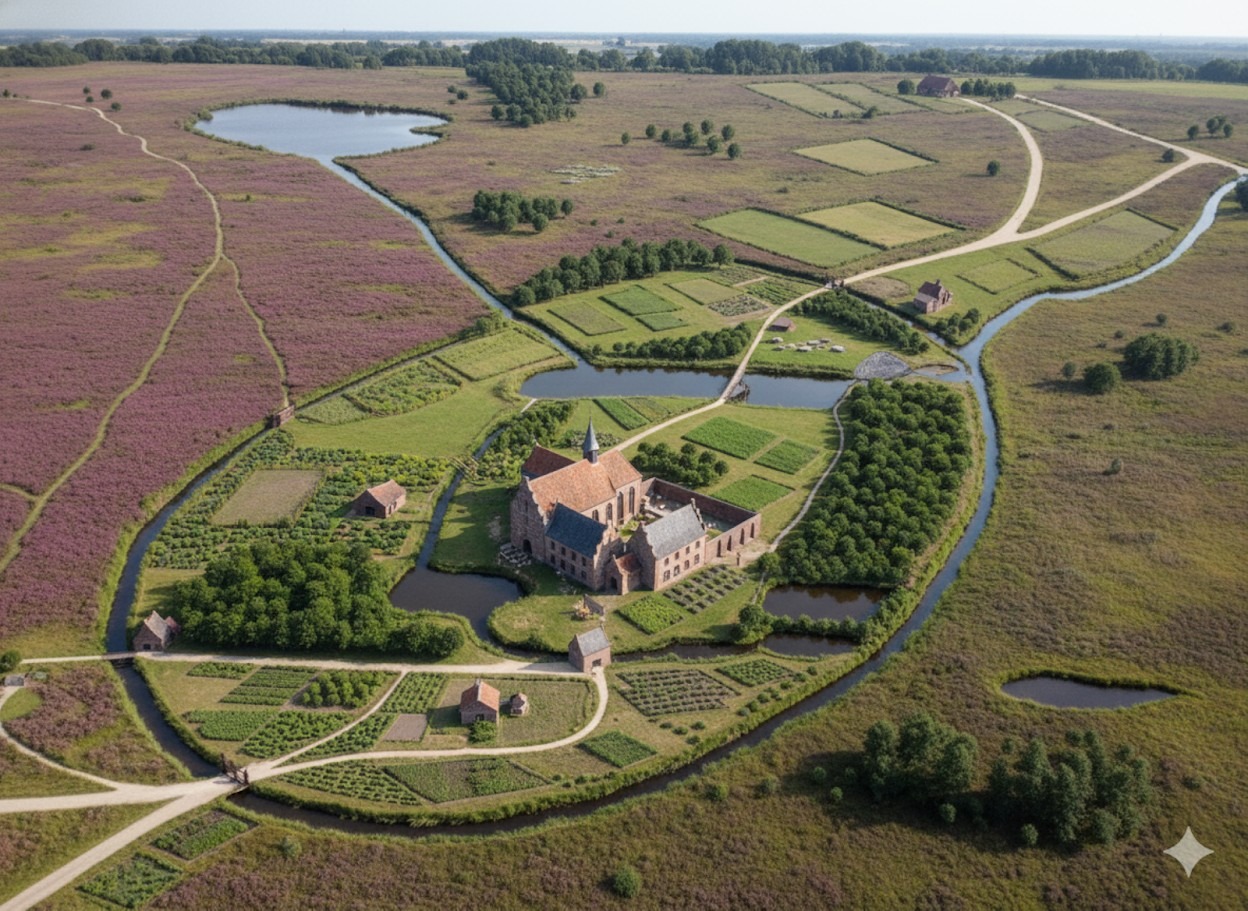
Illustration of Schaer Monastery near Bredevoort based on a reconstructed floor plan using historical sources and archaeological data, created with AI by Paul van Druten.
Schaer Monastery was a monastic house near Bredevoort, founded in 1429 and belonging to the order of the Modern Devotion. It was located in the hamlet of ’t Klooster, approximately two kilometres north of Bredevoort, on the left bank of the Schaarsbeek.
The pious nobleman Derck van Lintelo and Conraedt Slindewater, clerk to the Drost of Zutphen and originating from a prominent patrician family from the Hanseatic city, donated land and farms in 1429 to displaced monks from Windesheim, near Zwolle.
The Windesheimers belonged to the late-medieval movement of the Modern Devotion, which had emerged under the leadership of Geert Grote (1340–1384) in Deventer. From the IJssel cities, this reform movement spread across Western Europe and led to the founding of more than a hundred monasteries. The Modern Devotion strove for the renewal of church and society, forming a transition between the Middle Ages and the early modern period.
Foundation
The Windesheimers preferred to settle in remote locations. The donation of land near the Schaersvoorde—in the current hamlet of ’t Klooster—in 1429 fitted this preference well. It was a high-lying area on the edge of the vast Schaersheide, bordering the low-lying and marshy Bredevoortse Broek. Using the clay present just below the surface, the monks baked their own ‘kloostermoppen’ (monastic bricks).
The monastery, Domus Beatae Mariae in Nazareth (House of the Blessed Mary in Nazareth), rose shortly thereafter. It was popularly known as Schaer Monastery, named after the heath on which it was situated. The residents were soon actively involved in the care of young students and the improvement of the living conditions of the local population.
Prayer and work defined daily life for the Windesheimers. Through diligent labour, the monks managed to reclaim the immediate surroundings of the monastery. By 1500, it was a fertile, egg-shaped oasis in the wilderness, with Nazareth as its centre, surrounded by an outer moat.
In 1522, several improvements were made. The monastery’s clockwork and chiming bell were transferred to the Saint George’s Church in Bredevoort in 1596—where the bell still hangs today.
Legend and Gold Treasure
In 1597, when the army of Prince Maurice was on its way to Bredevoort, the last prior of Schaer Monastery fled. The remaining monks also found it safer to seek refuge elsewhere. Shortly thereafter, the abandoned monastery was destroyed by marauding soldiers.
Since then, the story has circulated that the fleeing monks hid a treasure in the ground—under the third holly bush behind the sheepfold. However, no one remembers exactly where that sheepfold once stood. According to legend, the treasure will one day be found again, indicated by ‘heavenly signs’: a strange light will appear in the sky until a black rooster crows.
On the night of 13 to 14 September 1943, an unusual light was indeed observed: a moonbow. There were many bombers in the air that night, meaning many people were awake to witness this rare phenomenon. Whether a black rooster also crowed that night is unknown.
Size
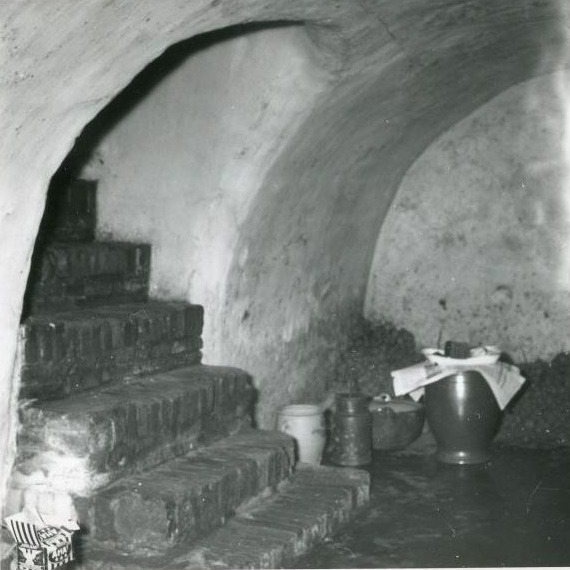
Field and archival research shows that Schaer Monastery was of modest size. The perimeter of the monastery grounds is easily traceable: field names are still recognisable, and remains can be found on a farmyard. At the beginning of the twentieth century, a crucifix and a skull were discovered during excavation work. Furthermore, the so-called Kloosterschans (Monastery Redoubt) is still located on the site. In 1978, the last above-ground wall remains were demolished, but a monastery cellar with a barrel vault still exists beneath the local farmhouse.
The oval monastery area—also called the corpus—covered approximately 118 hectares and showed a height difference of over ten metres from west to east. The monks made optimal use of the relief, the water, and the soil conditions. Seepage and rainwater, as well as water flowing from the high Schaerheide, moved just below the surface over impermeable clay layers towards the Bredevoortse Broek. The monks threw up a dyke straight through the area to dam the water and utilise it to power a corn and oil mill.
With a system of interconnected waterways and ponds, the monks kept their feet dry and prevented the water from flowing unused into the low marshlands. On the east side of the monastery complex, they created a remarkable piece of earthwork: the Eremus in Aquis—literally ‘the wilderness in the waters’—a hermitage on the edge of the marshy Bredevoortse Broek. The moats around this hermitage served as water storage.
Remains
After the destruction of the monastery in 1597, the lands became overgrown with heath and coppice. The monastic bricks from the complex were partly reused for the repair of fortifications and houses in Bredevoort. The monastery’s possessions were confiscated by the Duchy of Guelders. The Eremus in Aquis may have been used as a redoubt during military operations around Bredevoort in later years. In 1672, the west wing of the rectangular monastery complex was still standing.
With the seizure of the monastery area, the landscape took on a second historical layer: the planting of timber plantations. Guelders leased the lands for the production of oak wood. Around 1700, work began on the necessary drainage. Straight channels drained water quickly into the Schaarsbeek, and the same stream—once part of the outer moat—was straightened towards Bredevoort to supply the town’s moats with water. The waterways near the Eremus in Aquis silted up, and so-called rabatten (narrow raised beds) were laid out on the former monastery grounds to plant young oaks.
Due to several very harsh winters, the first plantings failed. Guelders then decided to sell the monastery area. The new owners continued the forestry following the same system of rabatten and drainage. The current 25-hectare Kloosterbos (Monastery Forest) still preserves the traces of the late-medieval water management system once laid out by the monks of Schaer.
Archives
Verpondingskohier (tax register), 1647
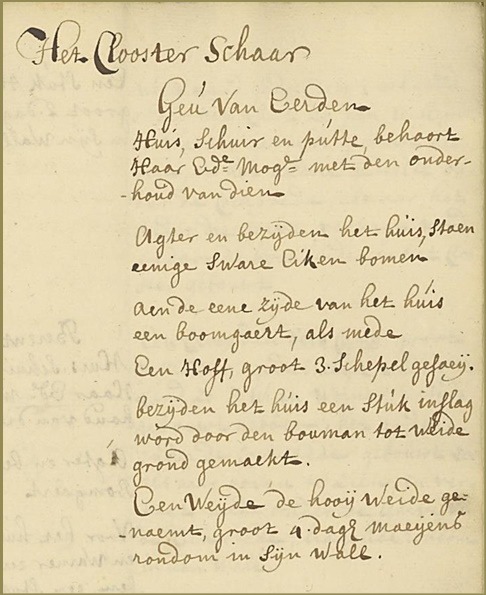
t’Clooster te Schaer en sijn becirck?, Geestl. 2 Huisen, met etlicke koolhoven, 3 sch. Boulant 27 mdr., 3de gerve 225 – 0 -. Inslagh en hoeijmate van 4 daghen meijens, slechten waterigen gront.
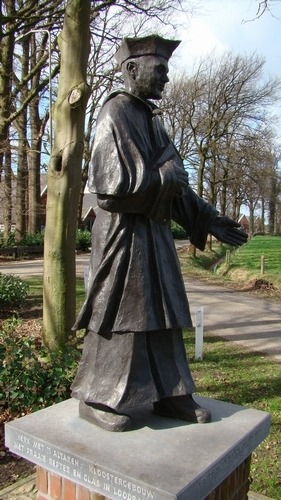
Illustration of Schaer Monastery near Bredevoort based on a reconstructed floor plan using historical sources and archaeological data, created with AI by Paul van Druten.Monk by sculptor Jan te Kulve. Canon of Schaer Monastery in the habit of his Order. [Source: tekulve.nl] Lease register of Schaer Monastery, 1786Cellar of the former Schaer Monastery
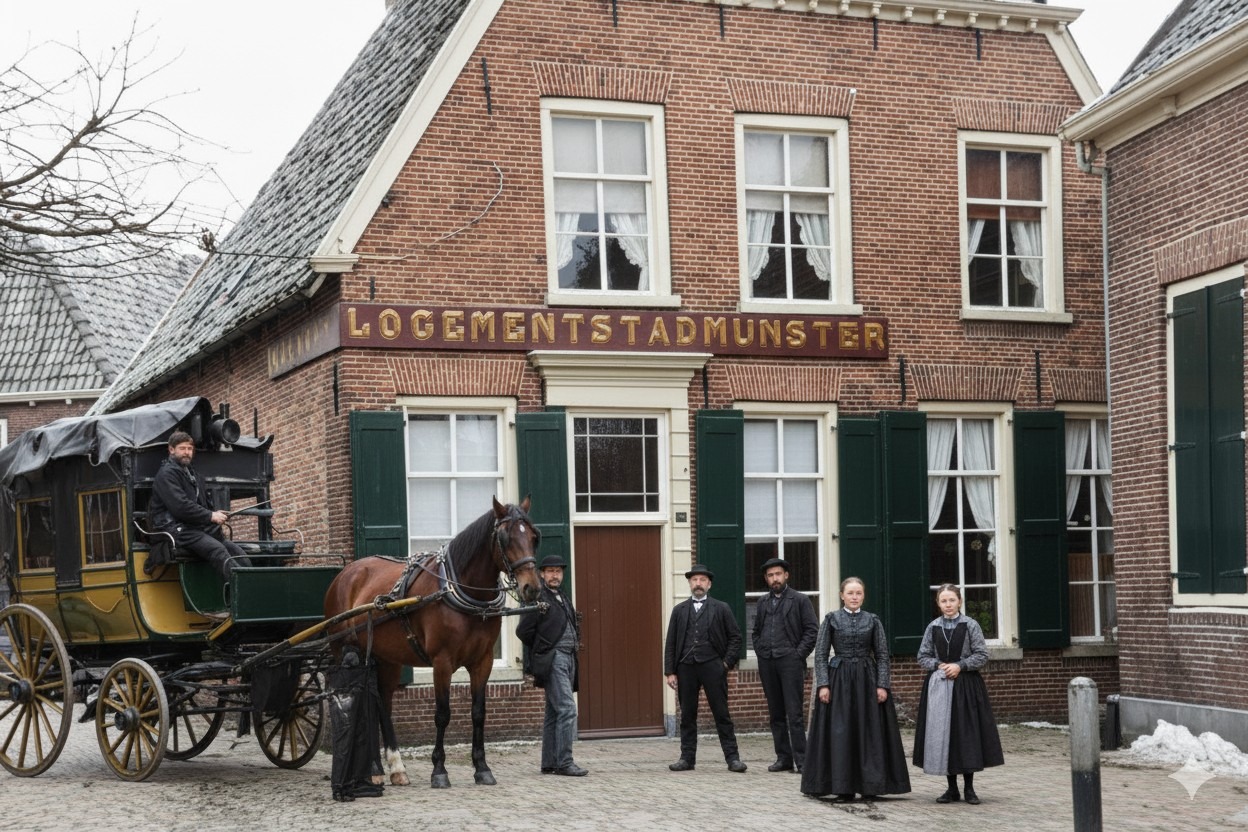
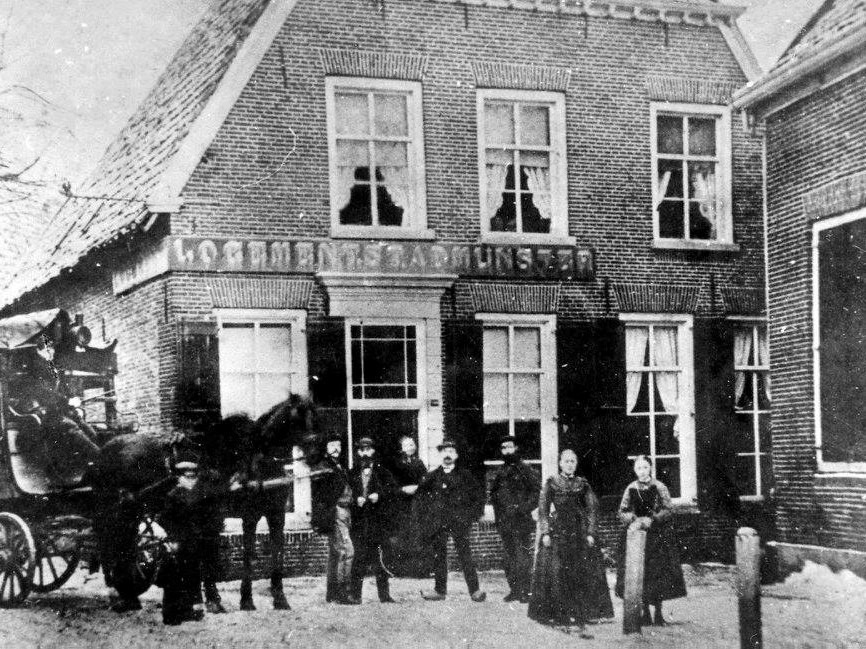
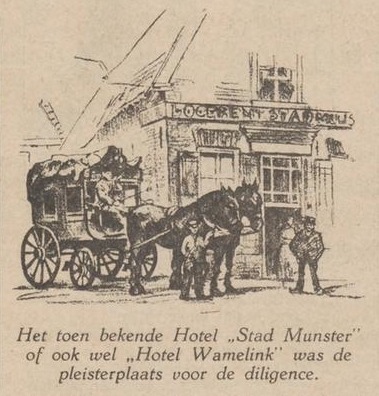
Stad Munster Lodging House in Peperstraat, Aalten (image AI-generated based on an old photograph).
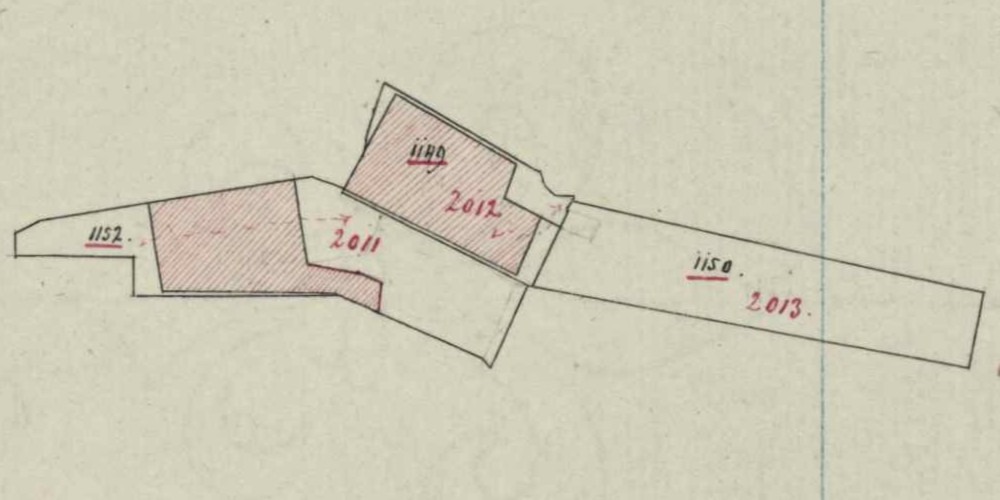
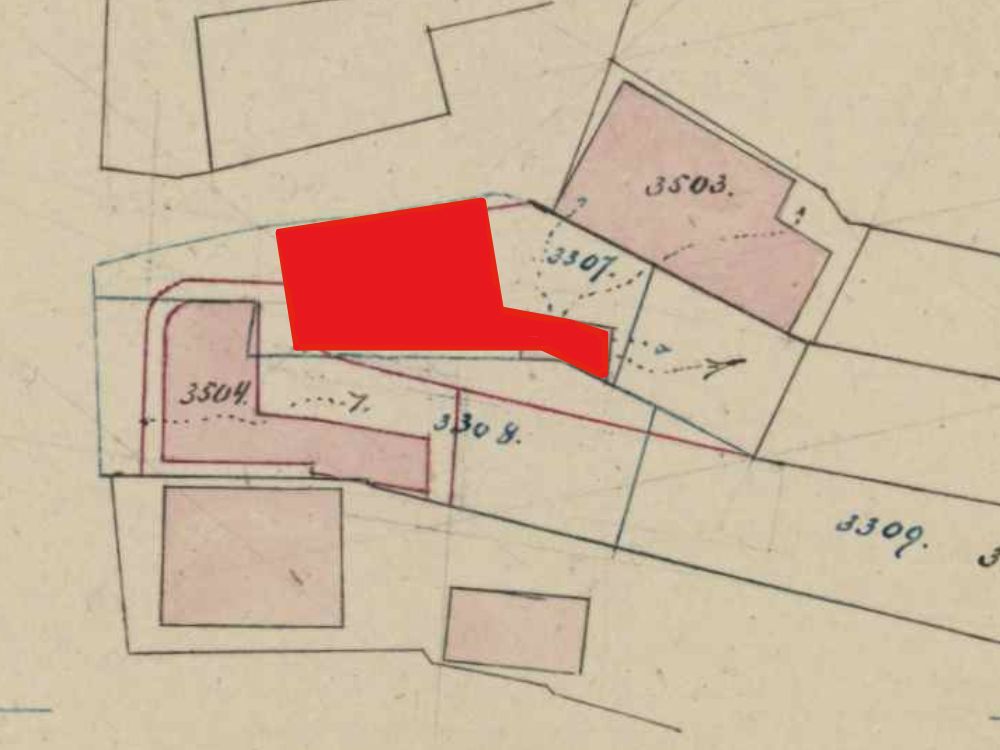
Stad Munster Lodging House was once an important rest stop for travellers and mail coaches. It stood in Peperstraat, situated between the former post office and ‘De Postiljon’, opposite Stegers. Following the municipal reorganisation of 1816, it briefly served as a courthouse (Rechthuis). In 1873, the building was completely destroyed by fire and was never rebuilt.
A Coaching Inn for the Diligence
In previous centuries, when the mail coach—or diligence—was the official mode of transport, ‘Logement Stad Munster’ (also known as ‘Hotel Wamelink’) functioned as a coaching inn for the diligence and a place of rest for weary travellers. Those embarking on a long journey who could afford it would board at Hotel Wamelink, after which the journey continued, jolting and bumping towards its destination. Those with less to spend put on their ‘steffels’ (boots) and undertook the journey on foot; a walk to Arnhem or Zutphen was no rarity in those days. People had the time. Stad Munster welcomed travellers of all kinds, such as a manufacturer from Armentières in France, a merchant from Stadlohn, and a clerk on foot from Oosterwijk. Three English factory workers from Manchester, Ashton, and Oldham once stayed there for two months.
The Wamelink Family
In 1823, Johanna Maria Martha Mensinck was registered at this address as the lodging house keeper. She was the widow of Gerrit Jan Wamelink, who had passed away in 1822. Johanna died in 1854. Their son, Lambertus Hermanus Wamelink, continued the business. In 1852, at the age of 39, he had married Johanna Catharina Heming. After her death in 1854, he remarried Wilhelmina Louisa Hendrina Meijrink in 1856.
Fire
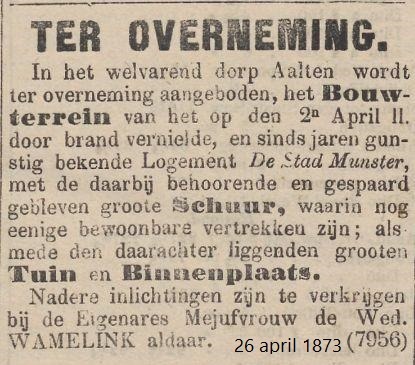
On 2 April 1873, a violent thunderstorm broke out over Aalten. Labourers in the fields fled into barns and garden sheds. Thunder rolled incessantly and lightning filled the sky. Suddenly, a loud crack was heard, and shortly thereafter, everyone could hear the tolling of the fire bell in the church tower above the sound of the rain. A lightning strike had hit the building next to the lodging house, which was occupied by Mr Van Eerden and the national tax collector, Mr Boudewijn.
By the time the fire wardens arrived, both buildings were engulfed in flames. The fire engines could do little against such a blaze. The old lodging house—the pride of the Wamelinks, who had lived there since the beginning of the 18th century—burnt to the ground, as did the adjacent house on the corner of Kerkstraat. The lodging house was never rebuilt, and the site has remained an open passage between Peperstraat and Het Hoge Blik ever since.
Owners
This overview is incomplete.
Year
Plot
Owner
Description
1832
I-1152
widow of Gerrit Jan Wamelink
490 m² house, barn
1858
I-2011 I-2012
widow of Gerrit Jan Wamelink heirs of Lambertus Hermanus Wamelink
490 m² house, yard 260 m² barn, stabling
1863
I-2011 I-2012
Wilhelmina Louisa Hendrina Meijerink, lodging house keeper
Fragment cadastral map, 1858 (plot I-2011)Contours of the former Stad Munster Lodging House, taken from a cadastral auxiliary map from 1858, projected onto a map from 1879.Illustration: Piet te LintumDe Tijd, 26 April 1873
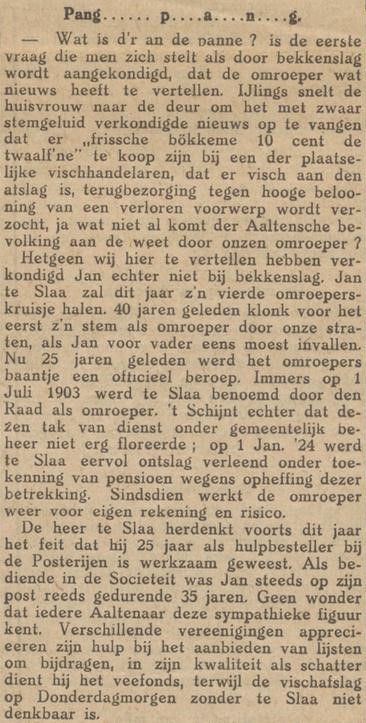
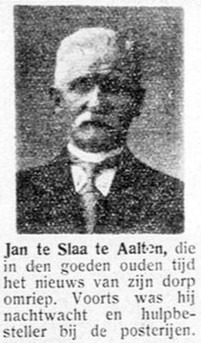
Dorpsomroeper, beter bekend als ‘Jan met de panne’
Arent Jan te Slaa (roepnaam Jan) werd geboren op 22 maart 1870 in Aalten, huisnummer 152 (Varsseveldsestraat 3), zoon van Derk Hendrik te Slaa (nachtwaker) en Janna Willemina te Brake. Op 29 augustus 1895 trouwde hij in Aalten met Dina Geertruida Klein Hesselink (IJzerlo, 13 september 1871). Het echtpaar ging wonen op het adres Hofstraat 3. Ze kregen zes kinderen.
Het laatste nieuws
In de 19e eeuw kwam bij maar weinig Aaltenaren een krant in huis. Wie wel zo rijk was kon bijna iedere avond rekenen op burenvisite om het laatste nieuws te horen. Maar dat hoefde niet voor niets: meestal werd door het bezoek onder de stoel een turf achtergelaten.
Zoals in veel plaatsen werden op handen zijnde verkopingen op zondagmorgen na de kerkdienst buiten de kerk bekend gemaakt. Meestal deed de schoolmeester dat, staande op een bankje of grote steen. Voor officiële bekendmakingen van de gemeente stond aan de Markt in Aalten een groot aanplakbord. Vele jaren werden nieuwe bekendmakingen daarop aangekondigd door het luiden van de kerkklok, maar in 1901 werd dat afgeschaft.
Dorpsomroeper
Intussen ging ook de eerste dorpsomroeper al rond in het dorp. In 1868 was dat D.H. te Slaa, die, samen met B.H. Wieskamp, de functie van nachtwaker vervulde. Dat zij tevens omroeper waren blijkt uit een notitie van B&W van 19 februari 1876, waarbij de heren werden vermaand omdat ze niet ver genoeg gingen. Want Aalten groeide, maar de routes van de omroepers groeiden niet mee.
Toen Te Slaa in 1903 overleed, werd hij door zijn zoon Jan als nachtwaker opgevolgd. De functie van omroeper was toen nog geen officiële betrekking, al trad hij dus al wel als zodanig op. Die benoeming kreeg Jan te Slaa pas met ingang van 1 januari 1915, “zulks op eene jaarwedde van 10 gulden”.
Jan met de Panne
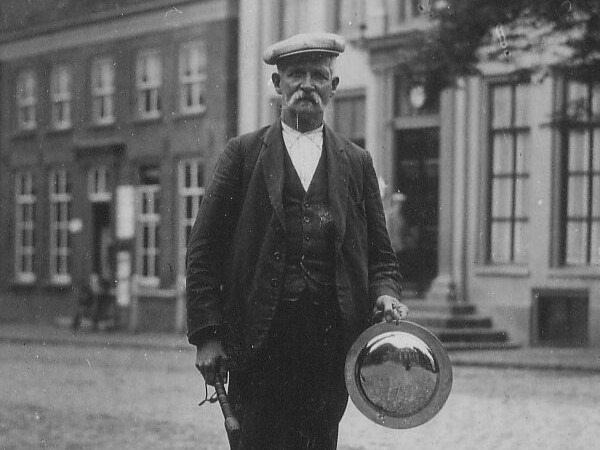
Door zijn wijze van optreden verwierf hij een haast legendarische faam. Om de aandacht van de bevolking te krijgen sloeg hij met een houten klepel enkele malen krachtig op de panne, het koperen bekken dat hem de bijnaam ‘Jan met de Panne’ bezorgde. Als de omwonenden dan naar buiten kwamen om te horen ‘wat er aan de panne was’, dan verkondigde hij fier rechtop staande zijn boodschap.
Op gezette tijden maakte hij zijn ronde door het dorp om lief en leed over Aalten uit te roepen. Ook werd de verkoop van vlees van noodslachtingen aangekondigd, mededelingen van de notaris bekend gemaakt en wat al niet meer. Hij verkondigde ook aanbiedingen van winkeliers, bijvoorbeeld dat een plaatselijke visboer twaalf bokkingen verkocht voor 10 cent. Een soort wandelende Aalten Vooruit dus.
Begin 1918 werd het gemeentebestuur gevraagd om de omroeper “ook in de buitenwijken te laten roepen het nieuws van den dag”. Omroeper Te Slaa verklaart daarop voor zijn schamele vergoeding van 30 cent per omroeping niet in de buitenwijken te kunnen komen, “omdat Aalten zich steeds meer uitbreidt en hij heel gaarne tegen verdubbeling van het tarief alle hoorenden tevreden wil stellen”.
Op 9 november 1924 besloten burgemeester en wethouders van Aalten de functie van dorpsomroeper op te heffen. Met het ontslag van Jan te Slaa – “wegens opheffing der betrekking werd eervol ontslag verleend als omroeper te Aalten” – verdween er een opvallend figuur uit het dorpsbeeld en ging een karakteristiek stukje dorpsleven verloren.
Na zijn ontslag bleef Te Slaa nog wel voor particulieren omroepen en dat is, maar dan door zijn opvolgers, tot na de Tweede Wereldoorlog doorgegaan.
De originele panne heeft een mooie plek gekregen in het Nationaal Onderduikmuseum aan de Markt in Aalten. ‘De Panne’ is tevens de naam van het magazine van het museum dat tweemaal per jaar verschijnt, vernoemd naar de illustere dorpsomroeper.
‘Jan met de panne’ op de Markt in AaltenEveneens op de MarktAaltensche Courant, 25 mei 1928‘Zij, die in 1935 van ons gingen.’ De Graafschapbode, 30 december 1935
Overlijden
Jan te Slaa overleed op 6 augustus 1935 en ligt begraven op Oude Begraafplaats aan de Varsseveldsestraatweg in Aalten.
De Aaltensche Courant schreef naar aanleiding van zijn overlijden:
Jan te Slaa †
Dinsdagmiddag is de heer A.J. te Slaa alhier op 65-jarigen leeftijd overleden. Met Jan te Slaa gaat een bekende figuur van onze plaats heen. Ouderen zullen zich Jan nog wel herinneren als hij gewapend met pan en klepel door het dorp ging het nieuws omroepende. Op de vraag: „Jan wat is er an de panne?” gaf hij steeds welwillend antwoord.
Ook als nachtwaker heeft hij onze gemeente jarenlang z’n diensten bewezen. Met nieuwjaar werd dan de inwoners met de beste heilwenschen een Zutphensche Almanak te koop aangeboden, in den prijs die men hiervoor betalen wilde kon men tevens z’n waardeering voor het werk der nachtwachts tot uitdrukking brengen.
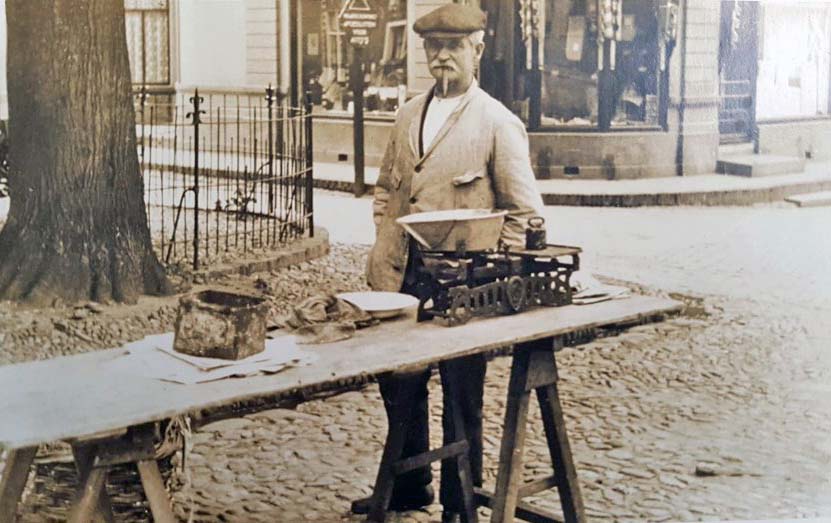
Het terrein van de werkzaamheden van Te Slaa was velerlei. Zoo fungeerde de ontslapene tot voor eenige jaren nog als doodgraver, was hij hulpbesteller bij de posterijen, zijn functie van vischafslager dateerende uit de mobilisatiejaren werd later door hem voortgezet in den vorm van een vischstalletje op de Donderdagmorgenmarkt.
Verschillende vereenigingen ter plaatse maakten van zijn diensten als bode of incasseerder gebruik, terwijl op belangrijke feesten, vooral in de Sociëteit, Jan steeds de geliefdste kellner was. Lange jaren vervulde bij een bestuursfunctie in het Aaltensche Veefonds. Sinds z’n val van het rijwiel, voor enkele jaren terug, is Jan niet weer de oude geweest, en zoo is dan thans met hem een bekend Aaltenaar van ons gegaan.
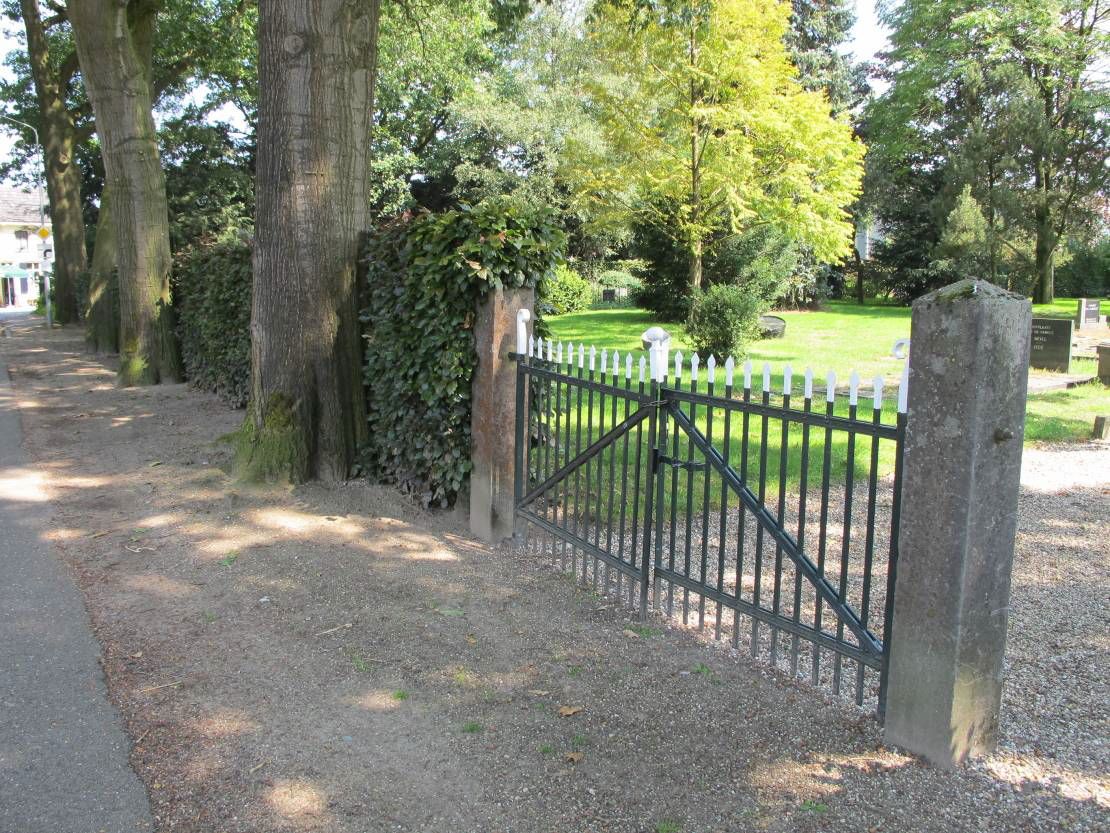
The Old Cemetery on Prins Mauritsstraat in Bredevoort was established around 1830, concurrently with the adjacent Jewish Cemetery. The site became available following the dismantling of the fortifications on the eastern side of the town.
The cemetery is characterised by an irregular floor plan, surrounded by beech hedges and tall trees. The oldest section is situated directly along Prins Mauritsstraat. In 1925, the southernmost strip was added to the cemetery. At the same time, a new entrance gate was installed, and a mortuary was built a few years later.
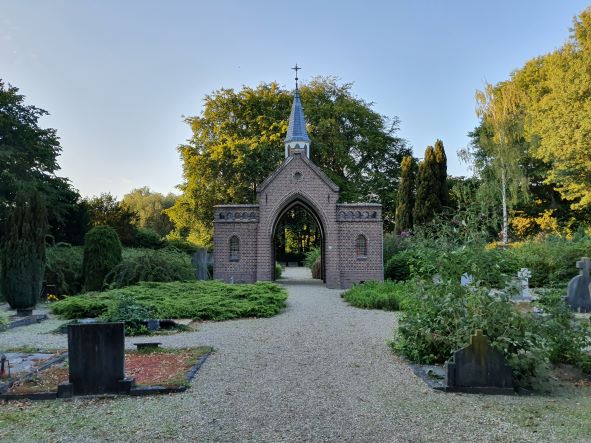
The Kloosterhof Cemetery on the Kloosterdijk in Bredevoort was laid out in 1862–1863 and originally served as a Roman Catholic cemetery.
The oldest, centrally located section features a symmetrical layout with a distinctive entrance gate, a mortuary that also functions as a workshop, and rows of graves facing a Calvary Cross at the rear of the site.
In the 1980s, the cemetery was extended with a general section. In 1989, a mortuary building was also erected, providing facilities for the deceased to lie in state, for families to pay their last respects, and for offering condolences.
In 2024, the Municipality of Aalten announced that part of the cemetery would be designated as a natural burial ground. This development aligns with modern wishes and needs regarding burial.
Deze website gebruikt cookies voor een optimale ervaring en analyse van bezoekgegevens. Ga je hiermee akkoord? Zonder toestemming werken sommige onderdelen van de site mogelijk minder goed.
Functioneel
Always active
De technische opslag of toegang is strikt noodzakelijk voor het legitieme doel het gebruik mogelijk te maken van een specifieke dienst waarom de abonnee of gebruiker uitdrukkelijk heeft gevraagd, of met als enig doel de uitvoering van de transmissie van een communicatie over een elektronisch communicatienetwerk.
Voorkeuren
De technische opslag of toegang is noodzakelijk voor het legitieme doel voorkeuren op te slaan die niet door de abonnee of gebruiker zijn aangevraagd.
Statistieken
De technische opslag of toegang die uitsluitend voor statistische doeleinden wordt gebruikt.De technische opslag of toegang die uitsluitend wordt gebruikt voor anonieme statistische doeleinden. Zonder dagvaarding, vrijwillige naleving door je Internet Service Provider, of aanvullende gegevens van een derde partij, kan informatie die alleen voor dit doel wordt opgeslagen of opgehaald gewoonlijk niet worden gebruikt om je te identificeren.
Marketing
De technische opslag of toegang is nodig om gebruikersprofielen op te stellen voor het verzenden van reclame, of om de gebruiker op een site of over verschillende sites te volgen voor soortgelijke marketingdoeleinden.