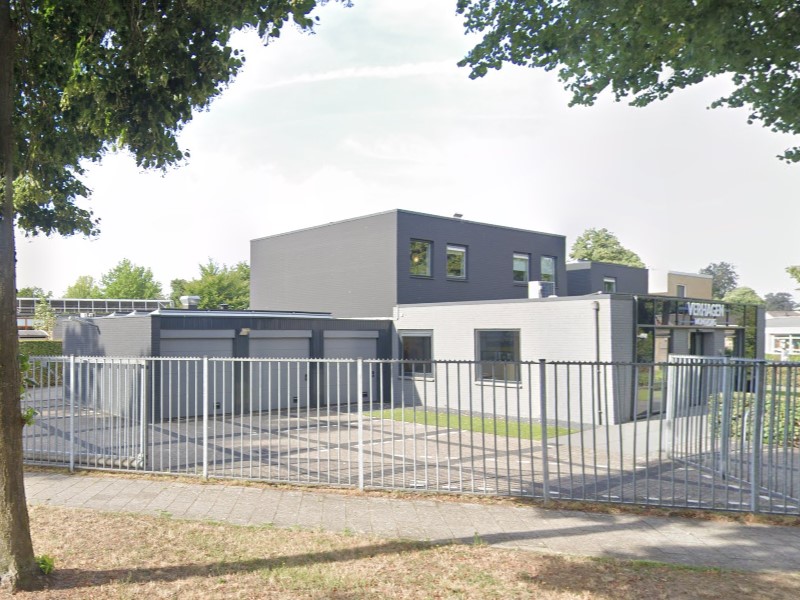
Tag: Bocholtsestraatweg

  • Warenhuis Geling

    Warenhuis Geling

    Landstraat 5, Aalten
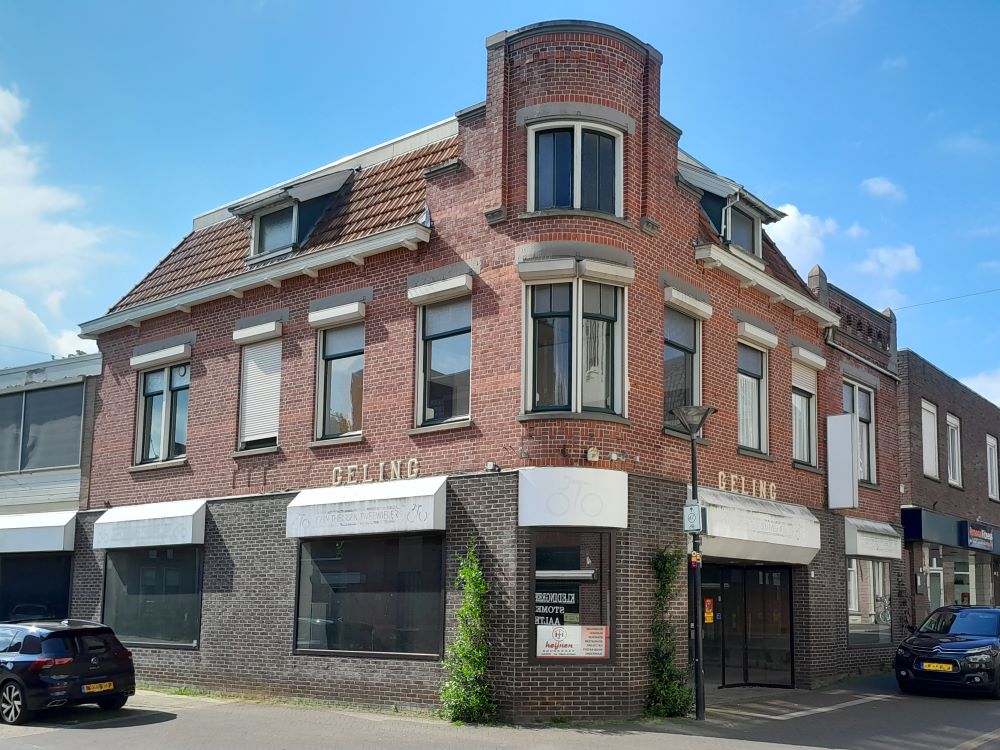
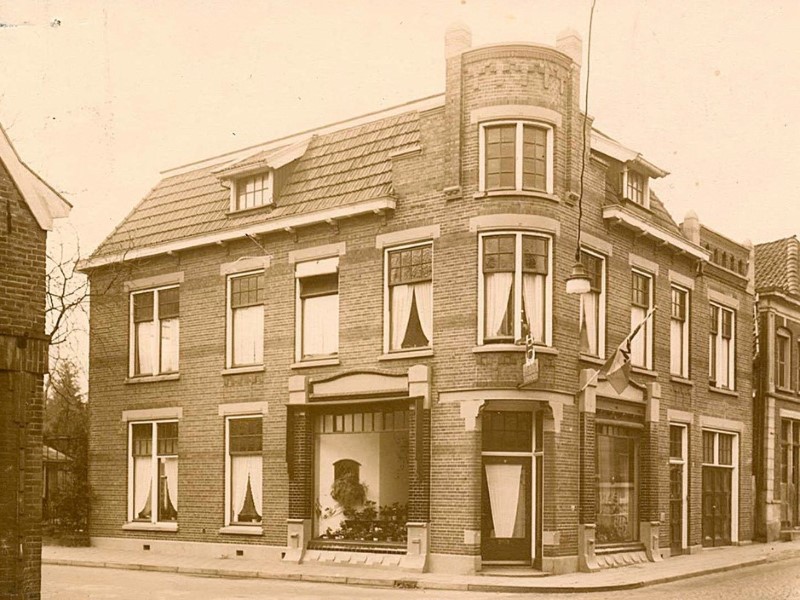
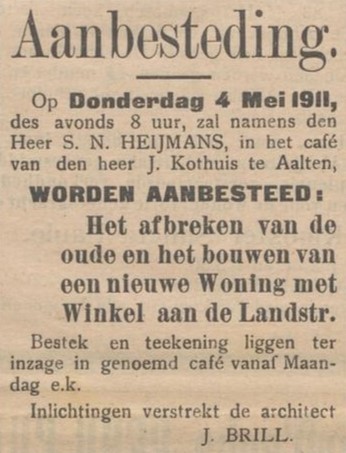
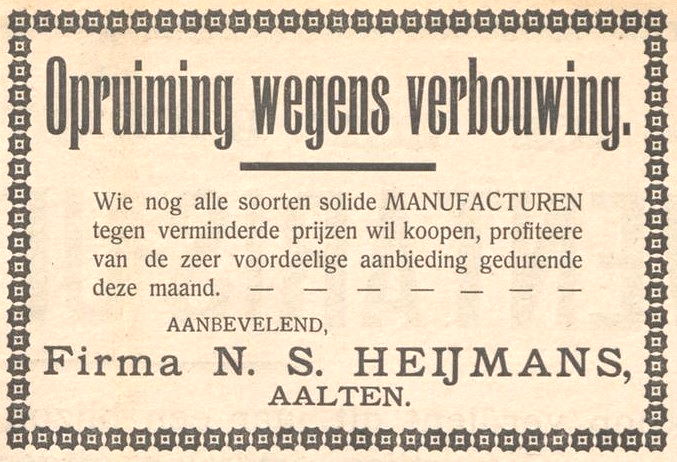
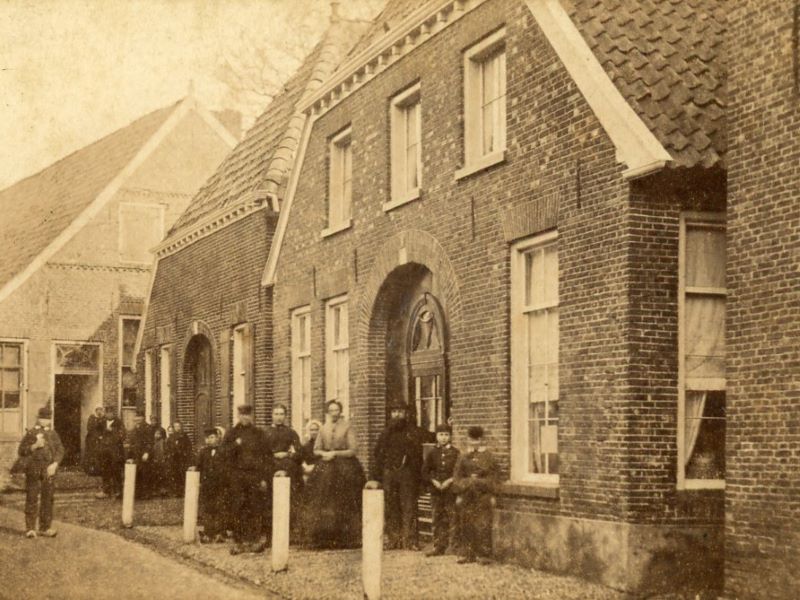
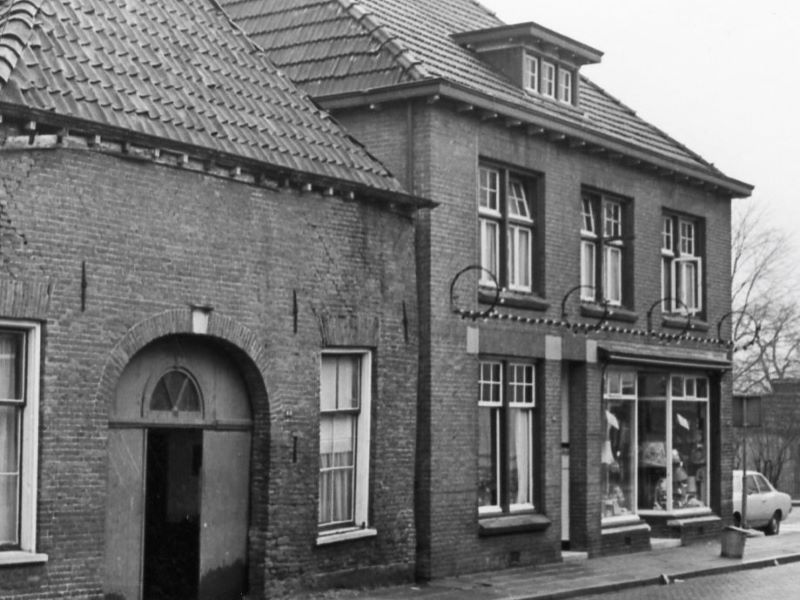
    Landstraat 5 in Aalten is a characteristic residential and commercial building dating from 1911, built for the Heijmans firm, drapers and cloth merchants. The new building replaced an older house on the same site. The Aalten architect Jan Brill was responsible for the design.

    In the 1930s, Bulten’s Bloemenhuis (flower shop) established itself here, and two greenhouses were erected at the rear of the property. In 1947, the narrow northern section of the building—originally consisting of a room, kitchen, and upper room—was incorporated into the business. The ground floor then housed a garage/workshop, a florist’s workshop, a small kitchen, and an office, with a storage attic above.
    Geling’s Department Store

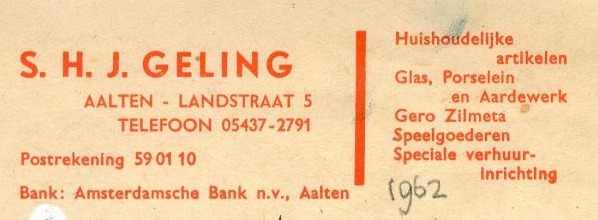
    In the late 1950s, S.H.J. Geling established a department store here, specialising in household goods and toys. Under his instruction, the building underwent extensive renovations in 1960, based on a design by H.A. and J.L.F. Waalders. During this project, the building was fitted with new shopfronts and a modernised layout.

    Three years later, in 1963, a significant expansion followed on the western side, including additional shop and warehouse space, also designed by the Waalders architectural firm from Winterswijk. In the following decades (1960s and 1970s), the shop and its facade were further modernised, and the workshop was integrated into the retail area.

    Following the closure of Geling’s department store, Theissen Tweewielers (a bicycle shop) occupied the premises for some time. Currently (2025), the building has been vacant for many years.


    Owners

    Overview is incomplete.

    YearPlotOwnerDescription
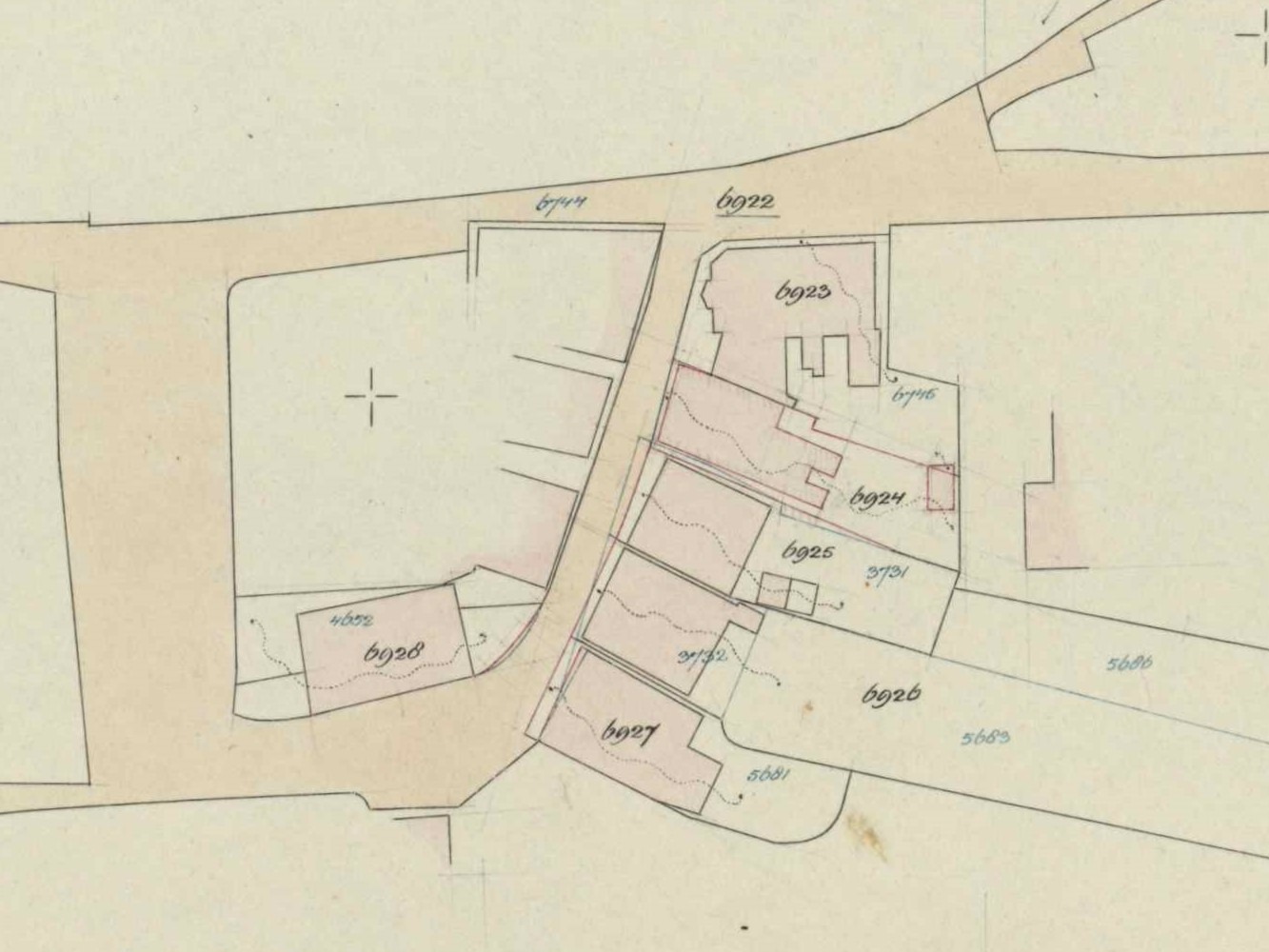
    1832I-1269
    I-1270
    I-1271
    I-1272
    widow of Jan Hendrik Brethouwer 38 m² house & yard
    51 m² house & yard
    192 m² house & yard
    350 m² garden

    Residents

    1813

    Aalten 63

    Jan Hendrik Brethouwer (Aalten, 14-06-1761), cloth merchant

    1 man
    1 woman

    Population register 1823-1838

    Aalten 63

    Harmina (Hendrika) Manschot (Aalten, 21-12-1766), shopkeeper
    widow of Jan Hendrik Brethouwer

    Next residents:

    Joseph Wilhelm Stephan Blomesath (Bocholt, 26-12-1806), weaver
    Johanna Magdalena Vultink (Aalten, 21-03-1811)

    Population register 1838-1850

    Aalten 60

    Joseph Wilhelm Stephan Blomesath (Bocholt, 26-12-1806), weaver
    Johanna Magdalena Vultink (Aalten, 21-03-1811)

    Next residents:

    Derk Prins (Aalten, 09-09-1794), farmer
    Willemina Aleida Freriks (Aalten, 30-11-1801)

    Next residents:

    Johan Henrich Geuting (Bocholt, 06-03-1808), cotton spinner
    Johanna Hafkenscheid (Ulft, 23-08-1803)

    Next residents:

    Derk Hendrik Gerhardus Brethouwer (Aalten, 25-02-1794), farmer
    Johanna te Bokkel (Aalten, 15-02-1807)

    Population register 1850-1860

    Aalten 60

    Derk Hendrik Gerhardus Brethouwer (Aalten, 25-02-1794), farmer
    Johanna te Bokkel (Aalten, 15-02-1807)

    Next residents:

    Johan Wilhelm Carl Schmeinck (Bocholt, 26-02-1803), office clerk
    Antonetta Kramer (Aalten, 16-08-1816)

    Next residents:

    Population register 1860-1870

    Aalten 60

    Hendrikus Brethouwer (Aalten, 06-08-1823), grocer
    Everdina Wilhelmina Margaretha Smits (Winterswijk, 18-07-1834)

    Next residents:

    Population register 1870-1880

    Aalten 75

    Maria Adriana Ledeboer (Oud Beijerland, 04-09-1815)

    Next residents:

    Nathan Salomon Heijmans (Groenlo, 14-11-1826), merchant
    Bettij van Oss (Emden/D, 12-01-1847)

    Population register 1880-1890

    Aalten 83

    Nathan Salomon Heijmans (Groenlo, 14-11-1826), merchant
    Bettij van Oss (Emden/D, 12-01-1847)

    Population register 1890-1900

    Aalten 79

    Nathan Salomon Heijmans (Groenlo, 14-11-1826), clothier
    Bettij van Oss (Emden/D, 12-01-1847)

    Population register 1900-1910

    Aalten A101 > A130

    Nathan Salomon Heijmans (Groenlo, 14-11-1826), clothier
    Bettij van Oss (Emden/D, 12-01-1847)

    Next (head) resident, son:

    Simon Nathan Heijmans (Aalten, 01-11-1877), clothier

    Population register 1910-1920

    Aalten A130 > 131

    Simon Nathan Heijmans (Aalten, 01-11-1877), clothier

    Address directory 1934

    Aalten A131 > Landstraat 5

    N.S. Heijmans

    Address directory 1967

    Landstraat 5

    S.H.J. Geling

    Features


    Cadastral no.I-8118
    FunctionResidential house,
    Shop
    ArchitectJan Brill
    Year of construction1911
    ListedGemeentelijk
    monument

    Sources


  • Van Herwaarden Coppersmith Workshop

    Van Herwaarden Coppersmith Workshop

    Peperstraat 4 (a), Aalten

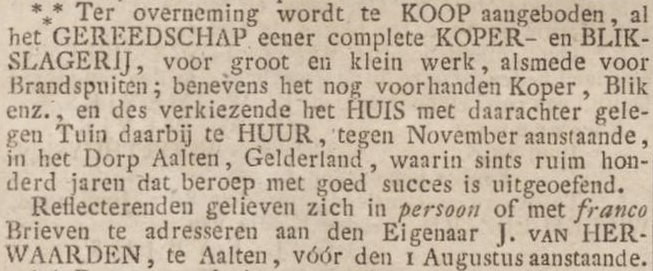
    At this location once lived the Van Herwaarden family, a lineage of coppersmiths who operated a workshop here for approximately 125 years until 1850. Around 1725, the couple Everhard van Herwaarden and Berendina van Isendoorn settled in Aalten, initially living with Berendina’s father, Abraham van Isendoorn, a man of high social standing. They subsequently established a coppersmith workshop on the small street that later became known as Peperstraat.

    Generations later, their children and grandchildren also lived in Weesp, Naarden, and Amsterdam, including Jacobus Hendricus van Herwaarden. He was born in 1817 in Weesp, as the son of coppersmith Jacobus Everhardus van Herwaarden and Anna Catharina Berner, a ‘coppersmith-trader’. Jacobus Hendricus moved in with his grandfather Jacob(us), who had taken over the coppersmith workshop in Aalten and saw in him a successor.

    However, this succession in Aalten never came to fruition. In 1837, the twenty-year-old Jacobus Hendricus left for Amsterdam and from there departed for Suriname. In 1848, Jacobus, nearly 89 years old, returned to his city of birth, Amsterdam. This marked the end of the Van Herwaarden coppersmith workshop in Peperstraat.


    Owners

    Overview is incomplete.

    YearPlotOwnerDescription
    1832I-1148Jacobus van Herwaarde240 m² house & yard

    Residents

    Jacobus van Herwaarden (Amsterdam, 21-10-1759 – Amsterdam, 05-01-1854)
    married on 22-03-1789 in Aalten to
    Mette te Kulve (Winterswijk, 23-09-1763 – Aalten, 27-02-1844)

    Jacobus became a church member in Aalten on 07-04-1779.

    Jacobus is mentioned in 1813 as a ‘garçon de chaudronnier’ (coppersmith’s assistant) in the Register Civique of Aalten.

    Population register 1823-1838

    Aalten 254

    Jacobus van Herwaarden (Amsterdam, 21-10-1759 – Amsterdam, 05-01-1854), coppersmith
    Mette te Kulve (Winterswijk, 23-09-1763 – Aalten, 27-02-1844)

    Population register 1838-1850

    Aalten 269

    Jacobus van Herwaarden (Amsterdam, 21-10-1759 – Amsterdam, 05-01-1854), coppersmith
    Mette te Kulve (Winterswijk, 23-09-1763 – Aalten, 27-02-1844)

    Next residents:

    Jacob Simon Schaap (Aalten, 02-02-1813), merchant
    married on 04-02-1836 in Aalten to
    Rebecca van Gelder (Winterswijk, 10-12-1812)

    Population register 1850-1860

    Aalten 269

    Jacob Simon Schaap (Aalten, 02-02-1813), merchant
    Rebecca van Gelder (Winterswijk, 10-12-1812)

    Next residents:

    Cornelis Philippus Jacobus Penning (Zutphen, 04-01-1818), registrar
    married on 18-09-1857 in Aalten to
    Maria Jacoba Bekink (Amsterdam, 24-06-1821)

    Population register 1860-1870

    Aalten 269

    Cornelis Philippus Jacobus Penning (Zutphen, 04-01-1818), registrar
    Maria Jacoba Bekink (Amsterdam, 24-06-1821)

    Population register 1870-1880

    Aalten 346

    Cornelis Philippus Jacobus Penning (Zutphen, 04-01-1818), registrar
    Maria Jacoba Bekink (Amsterdam, 24-06-1821)

    Population register 1880-1890

    Aalten 390

    Cornelis Philippus Jacobus Penning (Zutphen, 04-01-1818), former registrar
    Maria Jacoba Bekink (Amsterdam, 24-06-1821)

    Next residents:

    Jan Hendrik Lensink (Aalten, 05-11-1833), tailor
    married on 05-11-1870 in Aalten to
    Helena Kloss (Wertherbruch/D, 21-04-1839)

    Population register 1890-1900

    Aalten 384

    Jan Hendrik Lensink (Aalten, 05-11-1833), tailor
    Helena Kloss (Wertherbruch/D, 21-04-1839)

    Population register 1900-1910

    Aalten 454 > 509

    Jan Hendrik Lensink (Aalten, 05-11-1833), tailor
    Helena Kloss (Wertherbruch/D, 21-04-1839)

    Next residents, son and daughter-in-law:

    Herman Lensink (Aalten, 21-04-1873), tailor
    married on 03-08-1899 in Aalten to
    Josina Johanna Hoftijzer (Aalten, 28-09-1870)

    Population register 1910-1920

    Aalten C509 > D562

    Herman Lensink (Aalten, 21-04-1873), tailor
    Josina Johanna Hoftijzer (Aalten, 28-09-1870)

    Address directory 1934

    Aalten D562 > Peperstraat 4a

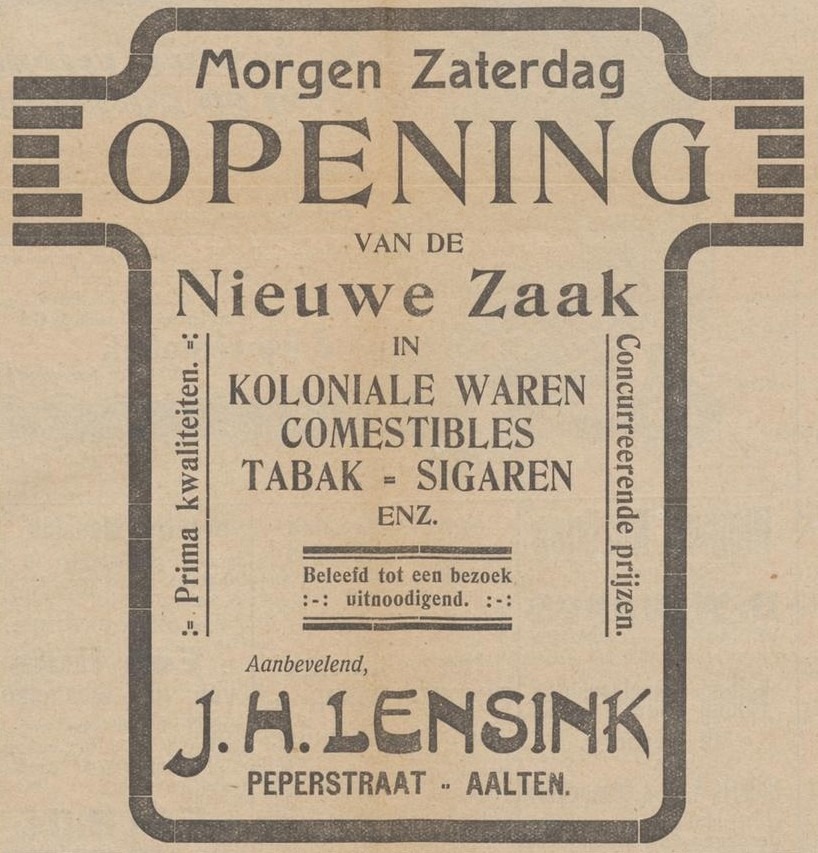
    H. Lensink

    Aalten D562a > Peperstraat 4

    J.H. Lensink

    Address directory 1967

    Peperstraat 4a

    A.A.J. Driessen

    Peperstraat 4

    H. Luimes

    Features


    Cadastral no.I-11118
    FunctionResidential house,
    Coppersmith workshop
    Year of constructionunknown
    Demolitionunknown
  • Evert Maarten Smilda

    Evert Maarten Smilda

    Historicus, docent en veteraan

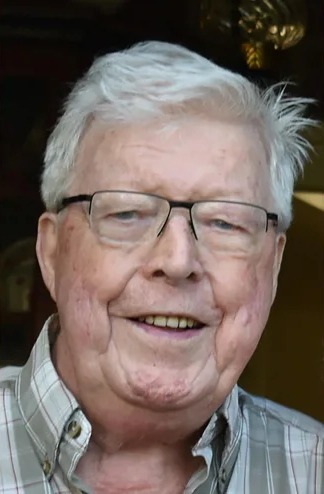
    Evert Maarten Smilda werd op 10 juni 1928 geboren in Utrecht. Hij is op 11 november 2020 overleden. Smilda heeft in Aalten een grote rol van maatschappelijke betekenis gespeeld. Zo leverde hij onder andere een belangrijke bijdrage aan het op de kaart zetten van de Aaltense geschiedenis.

    Nederlands Indië

    Hij werkte in een laboratorium als instrumentmaker toen hij als militair werd uitgezonden naar Nederlands Indië, het tegenwoordige Indonesië. In Arnhem volgde hij zijn militaire opleiding en in Zaandam leerde hij voor ‘geweermaker’. Dat was zijn functie in Indonesië. Evert was net twintig toen hij naar het oosten vertrok. De bootreis duurde een maand.

    Smilda diende twee jaar in Indonesië. De taak van de Nederlandse militairen was om een poging te doen om de rust te laten terugkeren na het vertrek van de Japanners. Ze trokken van dorp naar dorp. Als het ‘gewone’ leven weer werd opgepakt gingen de jongens verder.

    Bij terugkeer in Nederland was er voor de oud-Indiëgangers veel niet goed geregeld. Evert was zijn baan kwijt. Hij pakte echter de draad op en volgde een opleiding voor amanuensis. Later haalde hij een graad in de wiskunde, natuurkunde en scheikunde en gaf jarenlang les op de LTS in Aalten.

    Kort nadat Evert uit dienst trad leerde hij zijn toekomstige vrouw Itte kennen. In 1959 kwam hij met zijn vrouw naar Aalten om te gaan werken als amanuensis aan de Christelijke Scholengemeenschap. Door avondstudie werkte hij zich op tot leraar aan de avondmavo en de LTS.

    Plaatselijke geschiedenis

    Smilda had een grote belangstelling voor geschiedenis. Al vroeg in de jaren zestig zag Smilda het belang van het mooie Aaltense dorpsgezicht in. Hij heeft bij de provincie Gelderland gelobbyd om verschillende karakteristieke panden op de monumentenlijst te krijgen die anders afgebroken zouden worden. Mede daardoor werd het centrum van Aalten het eerste Beschermde Dorpsgezicht van Gelderland.

    In 1962 was hij betrokken bij de oprichting van de oudheidkundige werkgemeenschap ADW. In dezelfde tijd kwam hij in het bestuur van de Aaltense Oudheidkamer. Veertig jaar zat hij in het bestuur, waarvan negentien jaar als voorzitter. Samen met anderen heeft hij de basis gelegd van wat nu het Nationaal Onderduikmuseum is.

    In 1964 schreef hij ‘Twee eeuwen tussen Es en Slinge‘, over de koperslagers in de Peperstraat. Later verzorgde hij de uitgifte van ‘Aalten in oude ansichten‘ en twee delen ‘Aalten, zoals het was zoals het is‘ in samenwerking met G.J. Timmer.

    Toen de plaatselijke Joodse gemeenschap het onderhoud van de Aaltense synagoge niet meer kon betalen nam Evert, op dat moment voorzitter van de Vereniging Oudheidkamer Aalten, het initiatief om de synagoge tot Gemeentelijk Monument te laten verklaren en richtte hij in 1983 samen met anderen de stichting ‘Vrienden van de Aaltense synagoge‘ op.

    Op het toenmalige asielzoekerscentrum Groot Deunk in Barlo verzorgde Smilda lessen Nederlands. Ook was hij 22 jaar lid van de Gemeentelijke Monumentencommissie in Aalten. Samen met met Duitse historici werkte hij aan de uitgifte van tweetalige geschiedwerken.

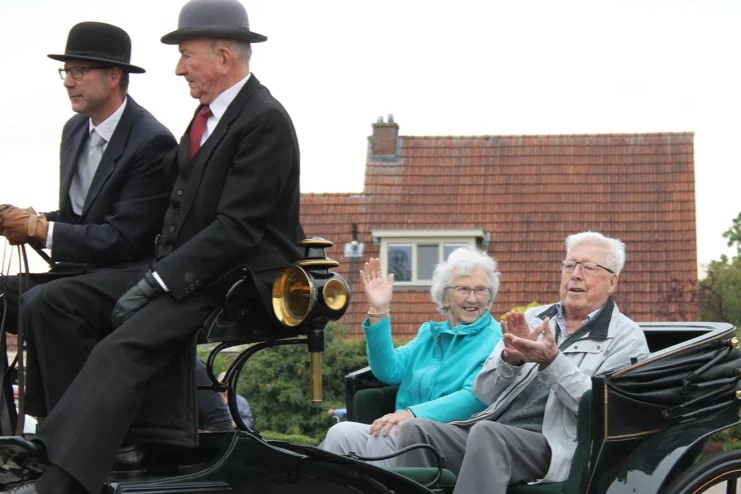
    In 2005 werd Smilda lid van het Aaltens Evergreenkoor. Op zijn 92e verjaardag werd Evert door het koor verrast met een aubade bij de Zuiderkerk. Dat was tevens bedoeld als afscheidscadeau voor Smilda, die eerder dat jaar had aangegeven te willen stoppen als koorlid. In een open Landauer getrokken door twee prachtige paarden, maakte Evert met zijn vrouw een rit door het dorp. De aanwezigheid van zijn familie maakte de verrassing compleet.

    Smildapad

    Op het terrein van de voormalige Technische School worden 56 woningen gebouwd. Tussen het zuidelijk en het noordelijk deel van het bouwplan aan de Ludgerstraat zal een straat worden aangelegd. Oudheidkundige kringen en sympathisanten van de synagoge hebben verzocht om deze te vernoemen naar Evert Smilda, als erkenning voor al zijn maatschappelijke verdiensten. De gemeente heeft in oktober 2022 positief gereageerd en besloten dat de straat de naam Smildapad zal dragen.

  • Dick Fries

    Dick Fries

    Shopkeeper

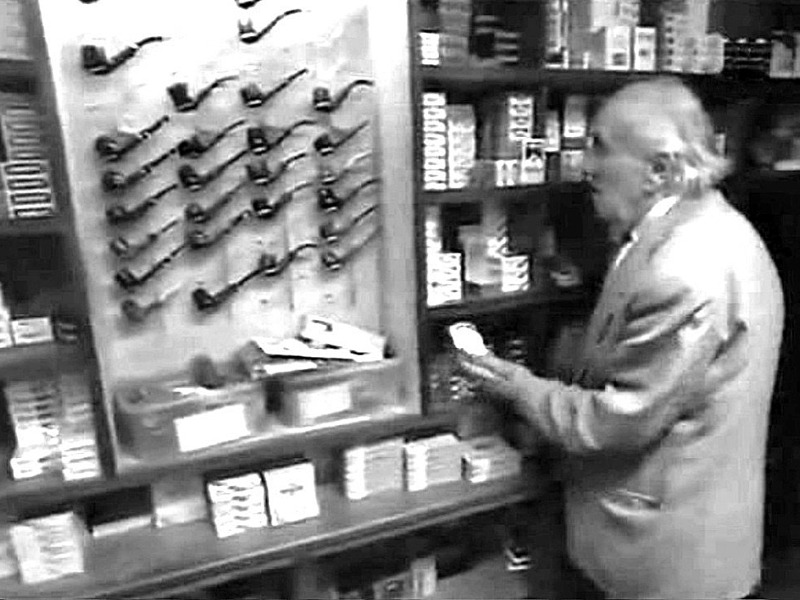
    Dirk (Dick) Fries (1924-03-30 – 2002-10-08), son of Georg Fries and Jansje Meijerman, was a household name in Aalten. Everyone knew him from his tobacco shop, Sigarenmagazijn Dick Fries. He was also a well-known figure on the streets, accompanied by his guide dog.

    Fries had become blind during World War II. In 1949, he opened his shop on Landstraat in Aalten. Despite his disability, he was able to find his way around his shop flawlessly. Handling payments with customers also presented no problem for him.

    Every cigar enthusiast knew how to find Dick Fries’s little shop in Aalten. Dick Fries was even a Purveyor to the Royal Household. Two years after his passing, the interior of this shop was moved to the Netherlands Open Air Museum in Arnhem.

  • The Vehmic Court at ‘t Walfort

    The Vehmic Court at ‘t Walfort

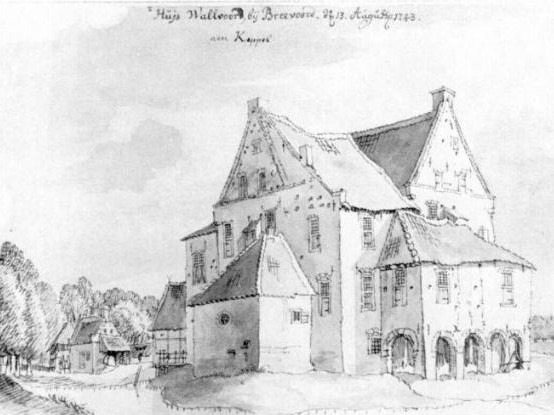
    In the Middle Ages, a so-called veemgericht (vehmic court) was established in the vicinity of manor house ‘t Walfort near Aalten. Veem is Low Saxon for ‘punishment’. It was a special court whose hearings took place in the open air near a grove called “Sleehegge”. Here, justice was administered four times a year at sunrise.

    The court was presided over by a free-count, a judge after the old Westphalian model. A free-count represented a so-called free seat. A free seat covered a certain area, usually similar to the gauges of Carolingian times. The free-count has its origins with the Saxons. After the subjugation of the Saxons by Charlemagne, the old vehmic courts continued to exist for a long time.

    This free-count and a number of free vehmic jurors or assessors ruled on the charges, after summoning the suspect. The vehmic court would have intervened if there were concerns that a privileged person could not be brought before a regular court, thus filling a gap in the legal system.

    The Dücker will get you

    The most famous and notorious free-count at ‘t Walfort was Berend de Dücker, also mayor of Bocholt. He was appointed to ‘t Walfort in 1430 and was particularly feared, because his convictions often ended in death. The condemned man was hung by three anonymous vehmic jurors on a noose of willow branches. De Dücker presided over the vehmic court for 61 years. A well-known threat from parents to their children, if they did not want to obey, was still until the 20th century: “The Dücker will get you”.

    Because the vehmic courts undermined the government’s monopoly to impose punishments, the Duke of Guelders forbade his subjects to comply with a summons to the vehmic court. At the end of the sixteenth century, the vehmic court on ‘t Walfort disappeared. It is the only place in the Netherlands where it has been proven that there was a vehmic court.

    In 1936, the Rotterdamsch Nieuwsblad wrote about the vehmic court at ‘t Walfort:

    Vehmic Court at the Walfort - Rotterdamsch Nieuwsblad, 5 February 1936
    The vehmic court on the Walfort.

    Arising from the pressure of the times and as a reaction to the tyrannical domination of the Pledgers, it [the cattle court, ed.] met at night. The citizens, who formed the court, sometimes did not know each other. They appeared masked. To prevent the prisoners from revealing what had happened, and where the hearings, or rather the meetings, were held, the sentence that was passed was always the death penalty. The easiest punishment to carry out was that of the noose.

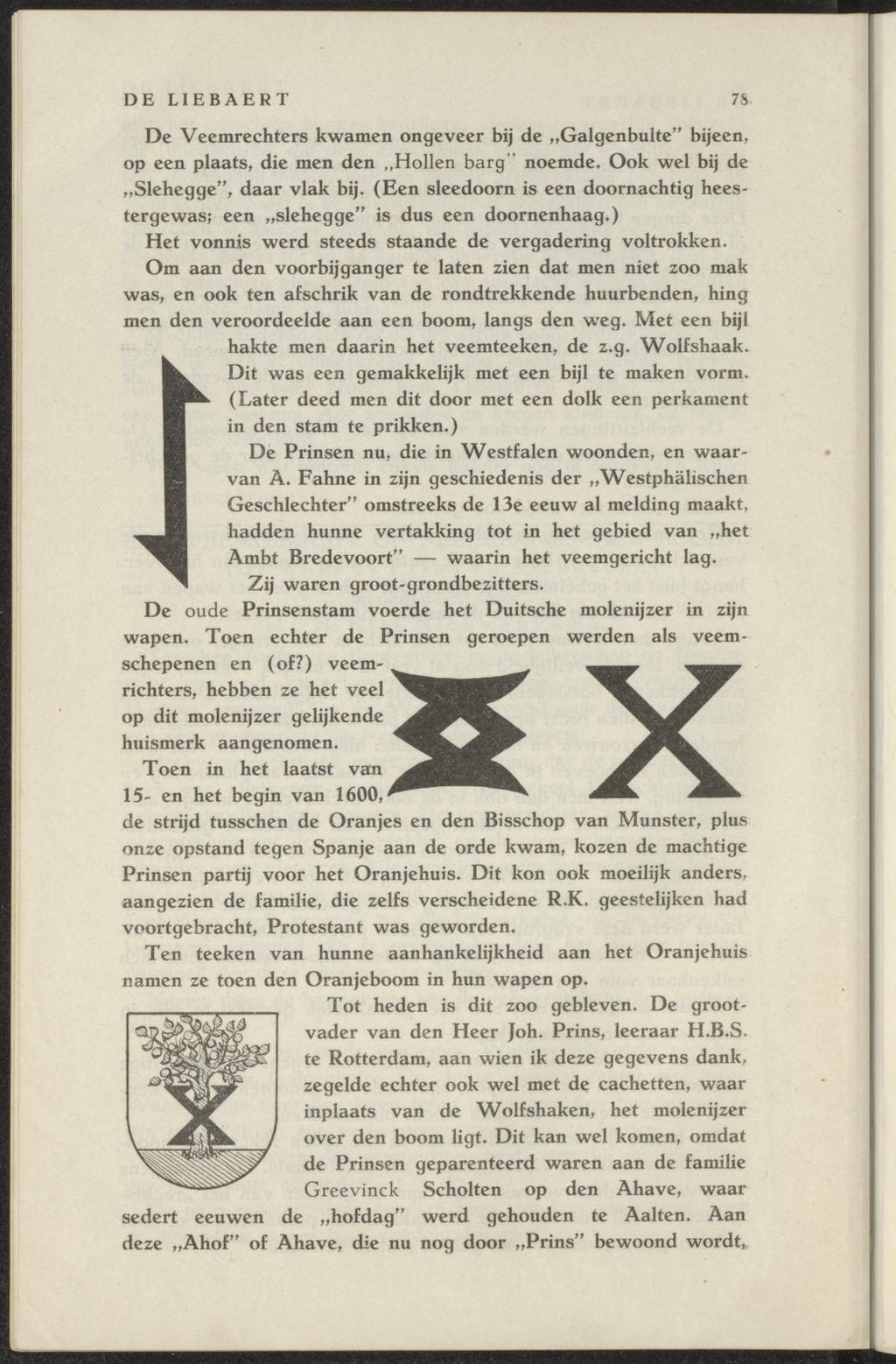
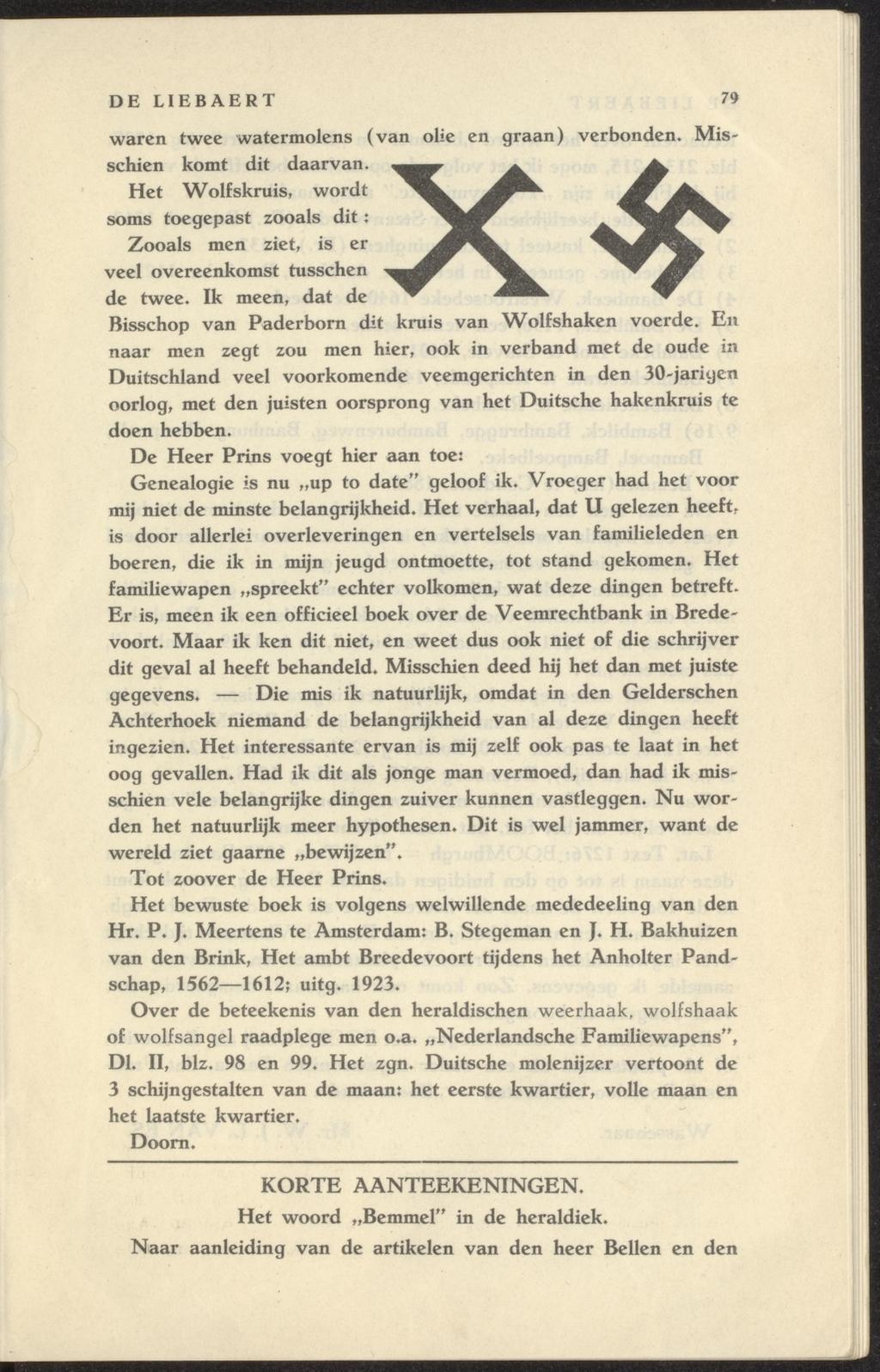
    In order to show the passing that they were dealing with a vehmic sentence, the sign of the vehmic court was cut in the tree on which the hanged man had been sentenced with an axe, a so-called ‘Wolfshaak’ [or Wolfs’ Hook, ed.]. All this seems to us, at the present time, very cruel. But it must not be forgotten that the bitterness in connection with the need of the times has led to these measures.

    For chiefly the majesties turned against the dismissed soldiers of the many armies of the many little armies of the many little potentates who were constantly fighting each other.

    These warriors, who spared neither friend nor foe, scoured the countryside in larger or smaller troops. They stole cattle, chickens and food. Also money, which was scarce among the peasant population of those ancient times, as well as household goods and jewelry. And church treasures were to their liking.

    These people behaved shamefully towards women and children. And woe betide the farmer who lived on a lonely farm dared to resist their crimes. His family was abused in front of his eyes, while he watched, bound. His farm was set on fire, and he himself was the last to be beaten to death.

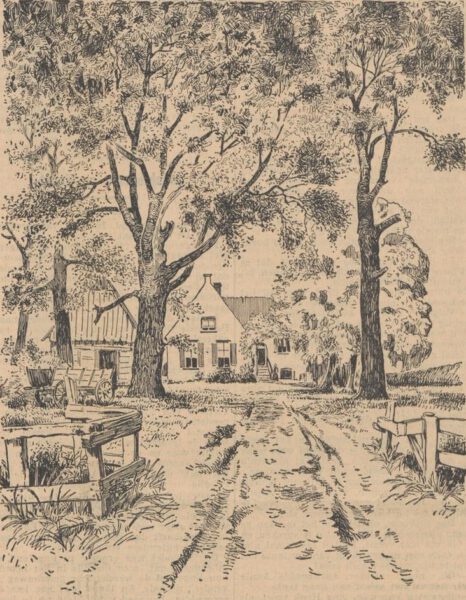
    The vehmic court, which was composed of residents of Bredevoort and Aalten, was later officially established on the Walfort, where the van Lintelo family, the judge, free-count or president of the court were elected. In 1573 we find Arend van Lintelo as such.

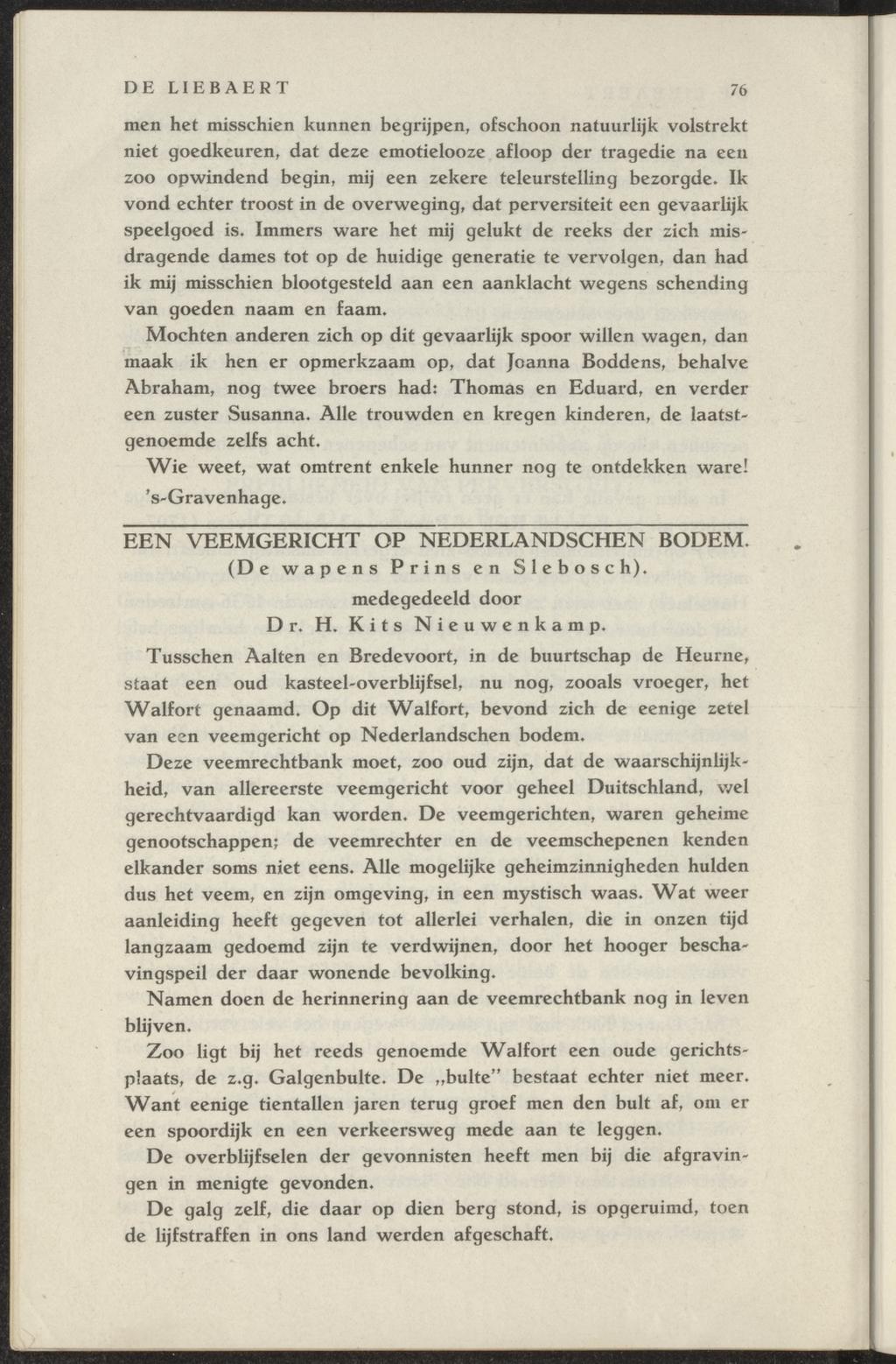
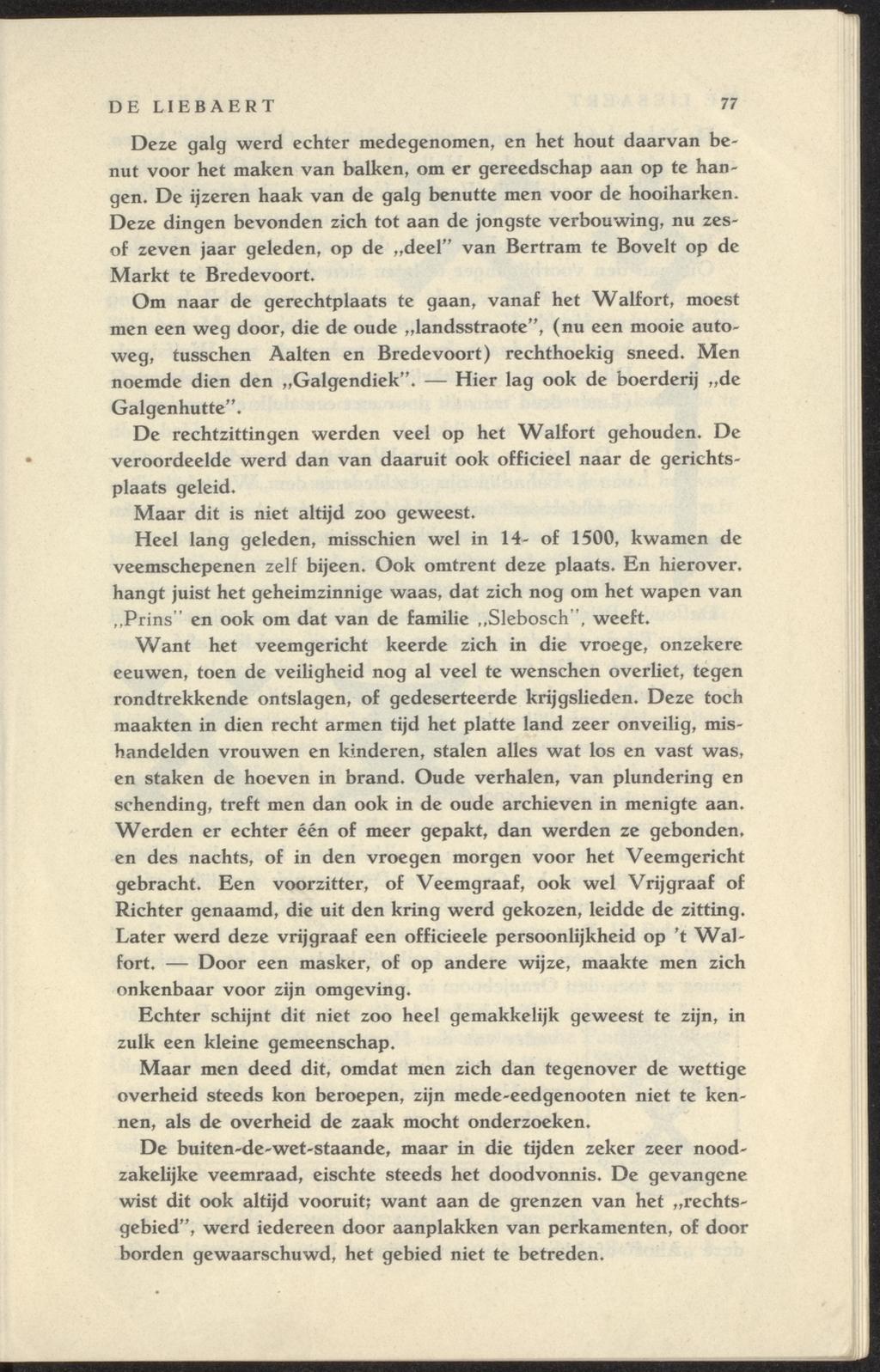
    Also read “A vehmic court on Dutch soil”, by Dr. H. Kits Nieuwenkamp (1938):

    Sources


  • Pop Culture

    Pop Culture

    We hope to provide more information about pop culture in Aalten soon.

    You can already read much of this in the book series ‘AALTEN IN ROERIGE JAREN’ (5 volumes), by H. de Beukelaer and Aad Schepers.

    In addition, we would like to refer you to the Facebook page “Aaltense popcultuur in de jaren 60/70

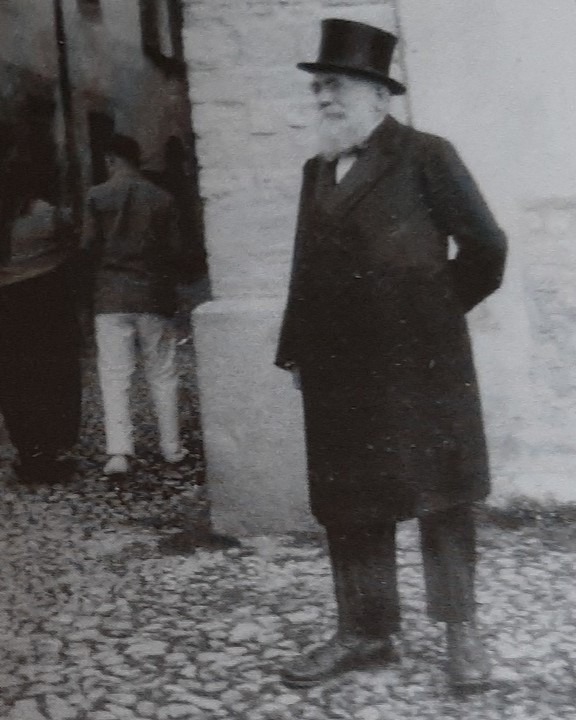
  • Gerrit Hendrik Heinen

    Gerrit Hendrik Heinen

    Ondernemer, fotograaf, decoratie- en kunstschilder en levensgenieter

    Gerrit Hendrik Heinen (Aalten, 01-08-1851 – Aalten, 26-09-1930) werd geboren aan de Varsseveldsestraat in Aalten. Zijn ouders waren Jan Willem Heinen en Antonetta Piepers.

    Op negentienjarige leeftijd vertrok Gerrit Hendrik naar Warnsveld, na een jaar kwam hij in 1871 weer terug in Aalten. In 1877 vertrok hij opnieuw. Ditmaal naar Rotterdam, om het vak van huis- en decoratieschilder te leren. Twee jaar later kwam hij in Amsterdam terecht. Daar begon hij een schildersbedrijf en had na enige jaren meer dan honderd gezellen in dienst.

    Heinen kreeg opdrachten voor wand- en plafondschilderingen, onder meer voor het Doelen Hotel, het Centraal Station te Amsterdam en de stations van Enschede en Antwerpen.

    Schiller

    Heinen maakte het zogezegd en investeerde in onroerend goed. Hotel-Café Schiller aan het Rembrandtplein was de ontmoetingsplaats voor de huizenhandel en Heinen was daar dan ook vaak te vinden.

    Daar werkte destijds ook Gerrit Jan Prins uit Aalten, de latere eigenaar van het café aan de Prinsenstraat. Door bemiddeling van Heinen werd op 1 april 1901 de officiële opening gevierd van ‘Sociëteit Schiller Prins’ in aanwezigheid van de heer Schiller uit Amsterdam. In 1902 schonk Heinen vier wandschilderingen, samen de vier jaargetijden vormend, voor de nieuw aangebouwde serre van Schiller.

    Heinen bleef ook Aalten vaak bezoeken. Hij was een levensgenieter, stedeling en natuurlijk kunstenaar in het decoratieve. Hij droomde ervan om van Aalten een kunstplaats te maken en stelde enkele werken beschikbaar aan de Oudheidkamer. De drommen mensen bleven echter uit.

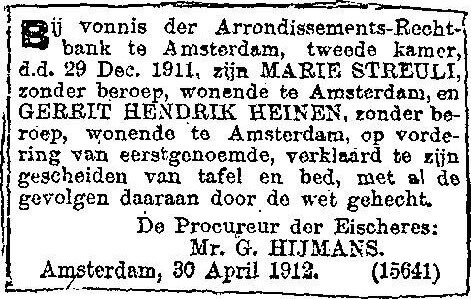
    Op een van zijn reizen naar het buitenland leerde Heinen de Zwitserse Marie Streuli kennen. In 1880 trouwde hij met haar en samen kregen ze negen kinderen. Ze woonden aan de Keizersgracht. Gerrit Hendrik Heinen is de vader van onder anderen Marie Heinen, directrice van het Nationaal Bureau voor Vrouwenarbeid. Gerrit Heinen en Marie Streuli scheidden in 1911.

    Fotografie

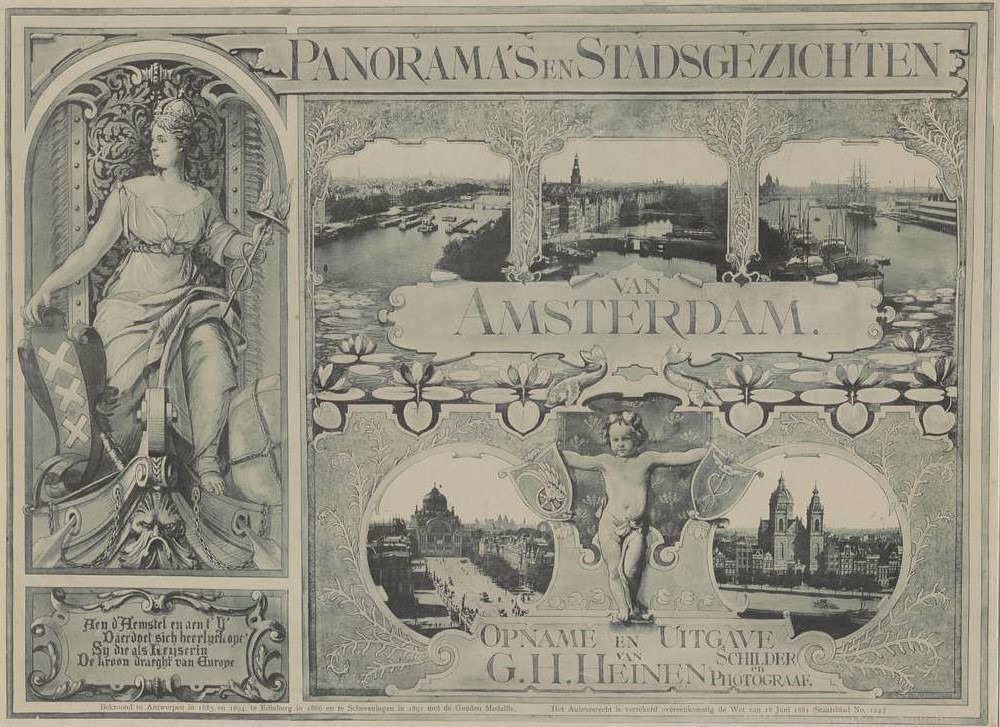
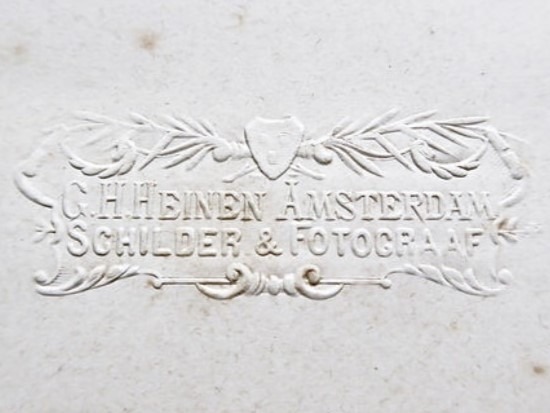
    In 1894 maakte Heinen een serie foto’s van Amsterdam die hij in eigen beheer uitgaf onder de titel ‘Panorama’s en stadsgezichten van Amsterdam’ met 26 opnames. Voor zijn fotografie koos hij hoge standpunten, zoals het Rijksmuseum, het Centraal Station, het Paleis voor Volksvlijt en het Doelen Hotel, maar ook watertoren van Nieuweramstel en de zolders van gewone woonhuizen. In het Centraal Station in Amsterdam zijn nog steeds schilderingen van Heinen aanwezig.

    Heinen verdiende zoveel geld als ondernemer dat hij in 1913 kon ophouden met werken. Hij bleef wel bas-reliëfs schilderen. De laatste jaren van zijn leven bracht hij door in Italië, waar hij kennis maakte met Pietro Armati, een Italiaans kunstschilder, die hij naar Aalten bracht en aan opdrachten hielp.

    In 1930 stierf de schilder in Aalten. Hij werd begraven op begraafplaats Berkenhove.

  • Servaas van Leuven

    Servaas van Leuven

    Genees-, Heel- en Vroedmeester

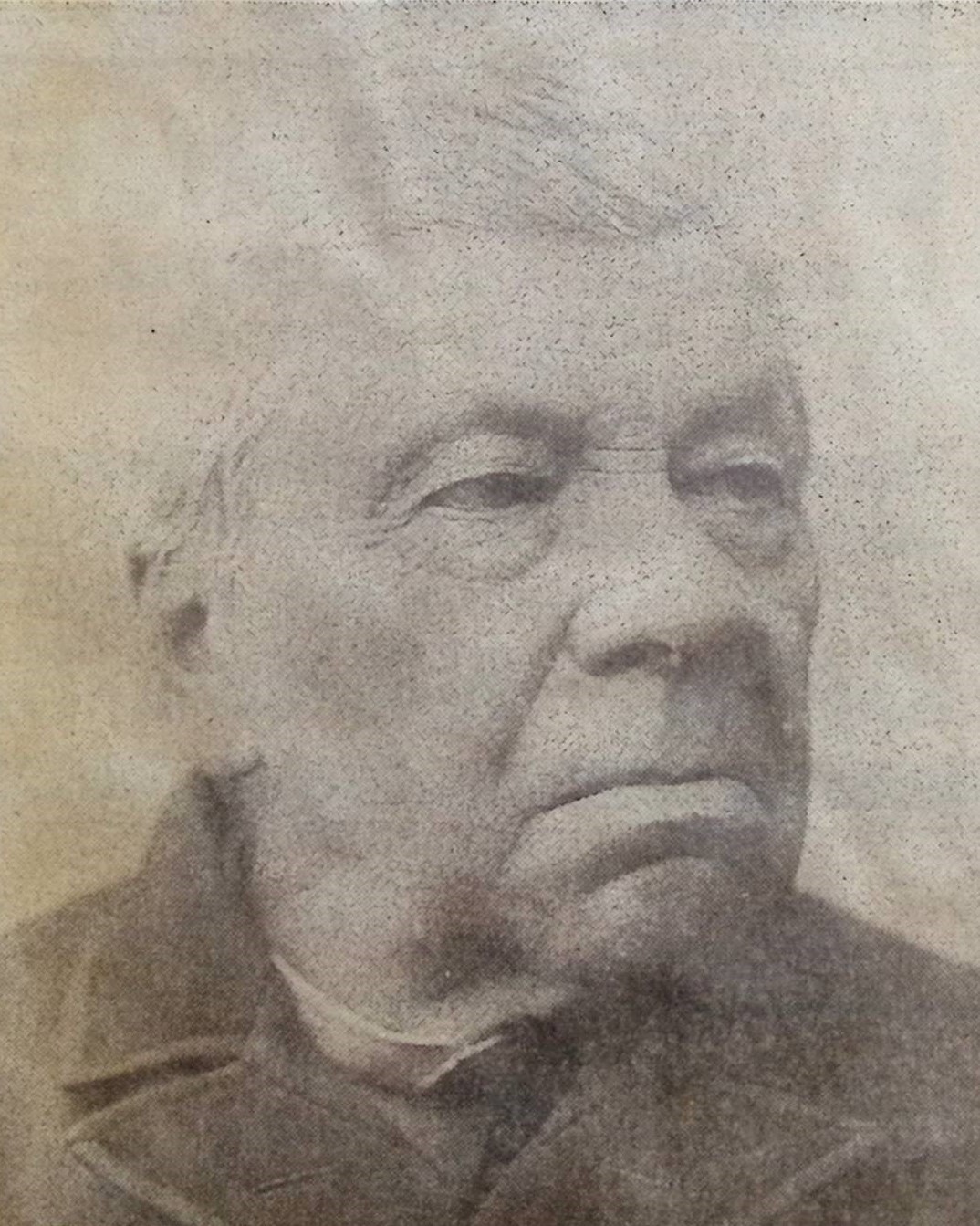
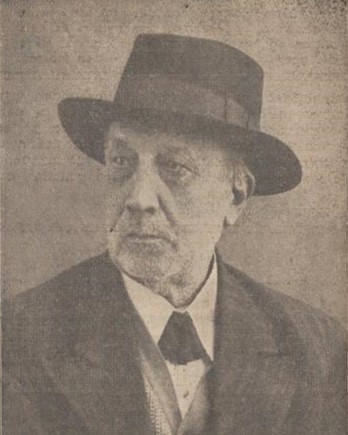
    Servaas van Leuven was van 1836 tot 1896 arts te Aalten. Hij werd geboren op 12 maart 1811 in Kampen, als zoon van Jan Adrianus van Leuven, kleermaker, en Johanna Maria Huijzer. Van Leuven overleed in 1898 op 87-jarige leeftijd.

    Op 1 mei 1836 arriveerde Van Leuven in Aalten als opvolger van de kort daarvoor overleden chirurgijn Adolph Wechgelaar. Aanvankelijk vestigde hij zich op diens woonadres aan de Dijkstraat.

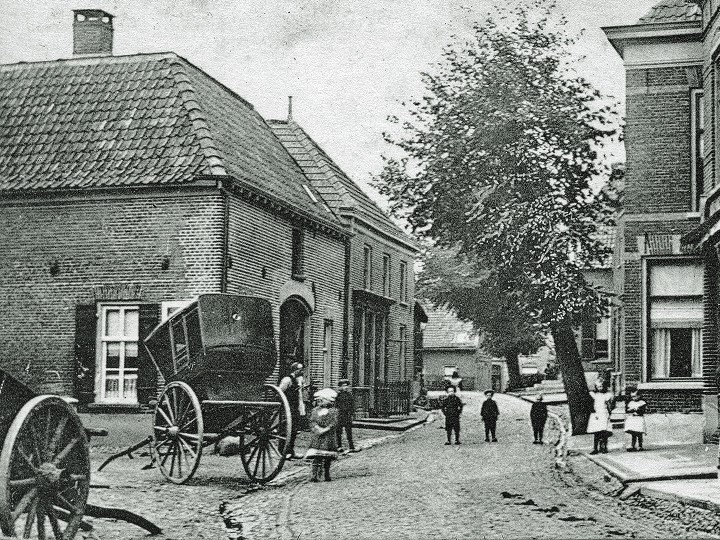
    Op 18 mei 1838 trouwde hij in Aalten met Henriette Wilhelmina Christina Theodora Rost, dochter van de gepensioneerde kapitein Johann Christian Rost. In 1839 verhuisde het echtpaar naar de Peperstraat. Niet lang daarna vestigden zij zich definitief aan de Bredevoortsestraatweg. Tegenover hun woning, op de hoek met de Peperstraat, bevond zich de stalhouderij waar het paard en de koets van dokter Van Leuven stonden.

    Het echtpaar kreeg maar liefst tien kinderen. Twee van hen overleden op zeer jonge leeftijd en werden begraven in de grafheuvel op ‘t Smees.

    Werk als arts

    Servaas van Leuven was een gewaardeerd en gerespecteerd arts die decennialang een belangrijke rol speelde in de plaatselijke gezondheidszorg.

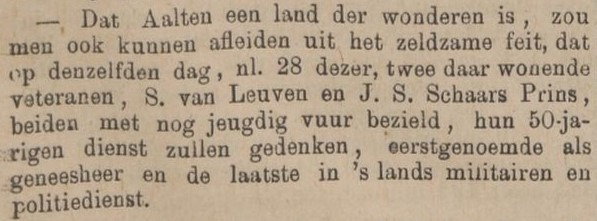
    Zestig jaar lang oefende hij met grote toewijding zijn vaak zware en afmattende werk uit. Vooral op verloskundig gebied muntte hij uit door ijver en plichtsbetrachting. Bij nacht en ontij, in winterse kou en storm, werd zijn hulp zelfs op hoge leeftijd nooit tevergeefs ingeroepen.

    In een tijd waarin medische hulp in de Achterhoek schaars was, gold hij voor velen als een reddende engel. Hij voerde duizenden bevallingen uit en bood aan vele minderbedeelden belangeloze zorg en advies.

    Laatste jaren en overlijden

    Na ruim zestig jaar praktijk te hebben gevoerd, beëindigde Van Leuven in 1896 op 85-jarige leeftijd zijn werkzaamheden als arts.

    Servaas van Leuven overleed op 24 november 1898 in Aalten en werd begraven op de Oude Begraafplaats aan de Varsseveldsestraatweg.

  • Warnar Willem Marinus Moll

    Warnar Willem Marinus Moll

    Teacher, with various social and community roles

    Warnar Willem Marinus Moll was born on August 17, 1857, in Bredevoort. He passed away on November 18, 1937, in Winterswijk.

    The Aaltensche Courant wrote the day after his death:

    A well-known figure from our municipality passed away on Wednesday at the age of over 80. Mr. W.W.M. Moll, a former teacher—the always cheerful and vigorous elderly gentleman—passed away at the hospital in Winterswijk after a few days of illness.

    Since time immemorial, ‘Master Moll’ served education in Bredevoort, and he saw the majority of Bredevoort’s residents in the school benches. Outside of school, Mr. Moll participated intensely in social life, serving public life in many capacities.

    His greatest passion was undoubtedly the Tuberculosis Association, which was based in Aalten. For many years, he was the driving force behind this association. Furthermore, he served for years as the chairman of the Butter Factory and Bredevoorts Belang, and held board positions in the livestock fund, the association for hospital nursing, the Zwanenbroek commission, etc. From its founding until 1922, he was a director of the Geld.-Westf. Tramweg Mij. Mr. Moll was one of those who gave the initial impetus for the founding of this company. Additionally, the deceased held the chairmanship of the committee for the prevention of truancy, a position he had already filled for a great many years.

    Bredevoort in the first place, and the municipality of Aalten, lose in Mr. Moll a fellow citizen who did a great deal for the interests of his place of residence. On Monday afternoon, the remains will be interred at the general cemetery in Bredevoort. Undoubtedly, many will feel compelled to pay their last respects to the deceased.

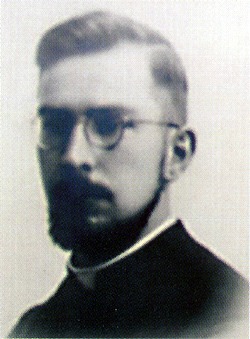
  • Father Jan de Vries

    Father Jan de Vries

    RC missionary in the Belgian Congo

    Jan de Vries (Bredevoort, March 21, 1911 – Bafwasende, December 19, 1964) was the son of Johan de Vries, station master of the tram station in Bredevoort, and his wife Aleida Wensink. He served for many years as a Roman Catholic missionary in the Belgian Congo (present-day Zaire), where he was murdered in 1964.

    At the age of 12, he left for Bergen op Zoom to attend the Juvenate of the Priests of the Sacred Heart of Jesus; after completing this education, he took his vows on September 8, 1930. He subsequently studied philosophy in Liesbosch and theology in Hees (Nijmegen). On July 14, 1935, Jan was ordained as a priest.

    Missionary in the Belgian Congo

    On August 27, 1937, he left for the Belgian Congo, where he became a traveling missionary in the Archdiocese of Stanleyville. There, he traveled through the jungle from village to village, a period he described in the children’s book Waar het oerwoud ruist (Where the Jungle Rustles, 1938). Later, he became the director of several schools in Avakubi, where he conducted a choir, and served as novice master in Bafwasende, where he trained brothers from the Belgian Congo. In his final years, he was a mission superior and parish priest of Lubutu and Batama. In 1960, De Vries returned to Bredevoort to celebrate the silver jubilee of his priesthood.

    These film recordings were likely made at that time:

    Bafwasende Massacre 1964

    In that same year, the Congo gained independence, and a civil war broke out when the Simbas rebelled against the new government. De Vries was on a retreat in Stanleyville but immediately returned to his mission in Batama. There, on October 31, 1964, he was captured and mistreated by the rebels along with four brothers and two sisters. They were among twenty-seven people transported by truck to Bafwasende.

    On November 25, the priests were sentenced to death by a kind of military tribunal. On November 27, they were taken to the banks of the Lindi River near the village of Bafwasende. The women who remained behind heard machine-gun fire. The women were eventually liberated by mercenaries on December 19.

    The death of Jan de Vries made a profound impact on Bredevoort. That same year, a memorial stone was placed in the local RC church. When his house was demolished a few years later to create access to a newly planned street, the municipality of Aalten decided (presumably in 1969) to name this street Pater Jan de Vriesstraat.

    Sources


    • Nazareth, Bredevoort en zijn katholieken – Jos Wessels, Uitgeverij Fagus, 1997 (ISBN 90-70017 16-4)
    • Pater Jan de Vries, een man met een missie – Hans de Graaf 2014, Uitgeverij Lammers Dtp
    • Wikipedia
  • Gerrit Jan Prinsen

    Gerrit Jan Prinsen

    Makelaar/taxateur, met diverse maatschappelijke functies

    Gerrit Jan Prinsen werd geboren op 14 augustus 1888 in huis nr. 242 te Aalten (Lichtenvoordsestraatweg 16), als zoon van nachtwaker Gerrit Jan Prinsen en Dela ter Maat. Hij overleed op 7 juni 1941 in Aalten. Gerrit Jan Prinsen werd begraven op begraafplaats Berkenhove.

    De Aaltensche Courant schreef destijds het volgende over hem:

    In den leeftijd van 52 jaren is overleden de heer G.J. Prinsen, beëedigd makelaar en taxateur. Een zware ziekte waarmee hij ruim acht maanden streed, liefdevol verpleegd door zijn echtgenoote, bracht Zaterdag 7 Juni het einde van zijn aardsche leven.

    Enkele weken geleden zaten wij aan zijn ziekbed en hoopten met hem dat spoedig de voorjaarszon mocht komen en herstel van krachten zou kunnen brengen. God heeft het anders gemaakt en dat Hij het was, trooste thans zijn weduwe en familie.

    Onze gemeente heeft in den heer Prinsen een goed burger verloren. Niet als een die van zich deed spreken, maar als een naar wien werd geluisterd. Duidelijk kwam dit tot uitdrukking in de woorden van den voorz. van Aalten’s Belang op de laatst gehouden jaarvergadering: „al zullen we in de toekomst hem, die één onzer werkzaamste leden was, en naar wiens adviezen op onze vergaderingen ieder met aandacht luisterde, noode missen“.

    Als president-kerkvoogd der Ned. Herv. gemeente en voorzitter van het Orgelcomité heeft de heer Prinsen een groot aandeel gehad in de algeheele restauratie van het orgel. Voorts was de thans overledene lid van den Raad van Commissarissen der Middenstandsbank, voor welke steeds groeiende instelling hij gaarne zijn tijd gaf.

    Ambtshalve verrichtte de heer Prinsen meerdere groote transacties en gaf als bouwkundige meerdere panden in de loop der tijden een nieuw aanzien. Zoo kocht hij b.v. het terrein voor den watertoren der W.O.G. nabij den Lindeboom, in opdracht van die maatschappij. Ook de kleinere man hielp hij gaarne voort en won door zijn hulpvaardigheid en rechtvaardigheid steeds hun vertrouwen. De zekerheid dat zijn nagedachtenis dankbaar in veler harten zal voortleven zij de nabestaanden tot troost.

    Gerrit Jan Prinsen (1888-1941)

    Bron


    • Aaltensche Courant, 10 juni 1941 (Delpher)
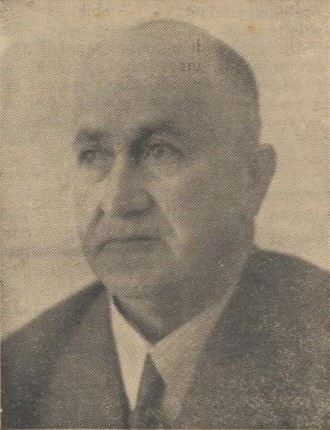
  • Abraham ten Dam

    Abraham ten Dam

    Fabrikant

    Abraham (Bram) ten Dam werd geboren op 14 juli 1834 in de Kerkstraat te Aalten, als zoon van zilversmid Harmen Jan ten Dam en Petronella Johanna Gerber. Op 6 juni 1861 trouwde hij met Elisabeth Manschot.

    In 1871 stichtten Abraham en zijn zwager Bernard Manschot een kammenfabriek aan de Damstraat in Aalten: Ten Dam & Manschot. Zij woonden tegenover elkaar aan de Bredevoortsestraatweg, Bram in het huis waar nu Fysiotherapie van Panhuis is gevestigd en Bernard in de witte villa er tegenover. De zoon (en opvolger) van Bram, Herman, heeft de woning aan de Bredevoortsestraatweg 52 laten bouwen.

    Ten Dam is tevens raadslid en wethouder geweest in de gemeente Aalten.

    Abraham ten Dam overleed op 1 februari 1915, 80 jaar oud, en werd begraven op de Oude Begraafplaats in Aalten.

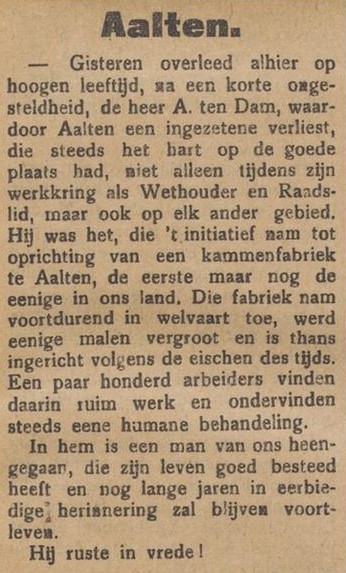
    Overlijden Abraham ten Dam - Aaltensche Courant, 03-02-1915
    Aaltensche Courant, 3 februari 1915
  • Police Station

    Police Station

    Polstraat 36, Aalten (relocated)

    The local police station was based here until 2018. Today, the building houses a dental practice.

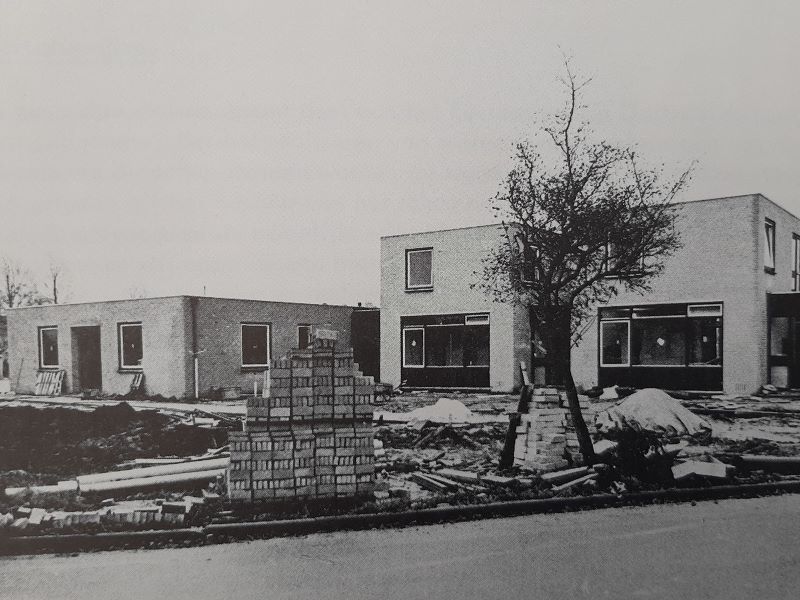
    In February 1963, the Municipality of Aalten purchased the land on the corner of Polstraat and Bonifaciusstraat, which at the time occupied a small farm belonging to the widow Scholten. It is likely that the intention was already to demolish the farm and develop a new police station and a number of houses on the site.

    In 1965, the Aalten municipal council discussed the private sale of a section of the building plot, measuring 1,500 square metres, for the construction of a group and district office for the National Police (Rijkspolitie) in Aalten.

    It was not until the early 1970s that the new police station was completed. The Aalten police remained at this location until 2018, when they moved to the Köstersbulte.

    Features


    Cadastral no.I-11909
    FunctionHouse
    Year of construction1971
    Listedno
  • Sunday school Heurne

    Sunday school Heurne

    Brethouwerweg 9, Heurne

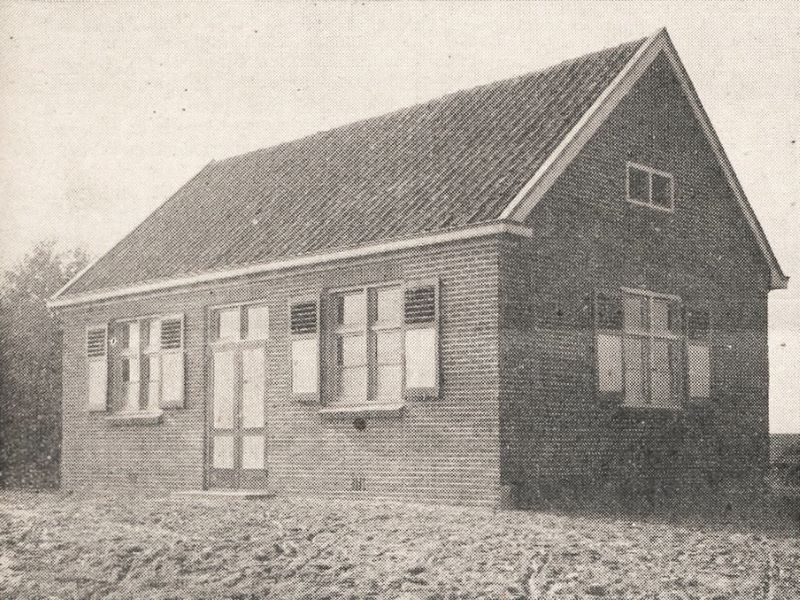
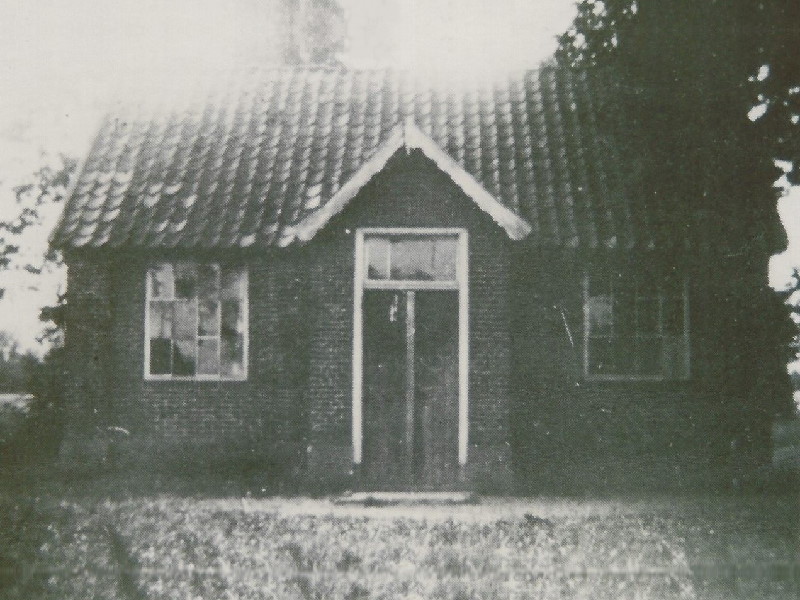
    Until 1989, a small Sunday school stood at Brethouwerweg 9 in the Aalten hamlet of Heurne, where Sunday school was held once a week for children up to the age of 12. After reaching that age, they could attend the youth club, which also took place once a week. Occasionally, the building was also used for small parties and gatherings.

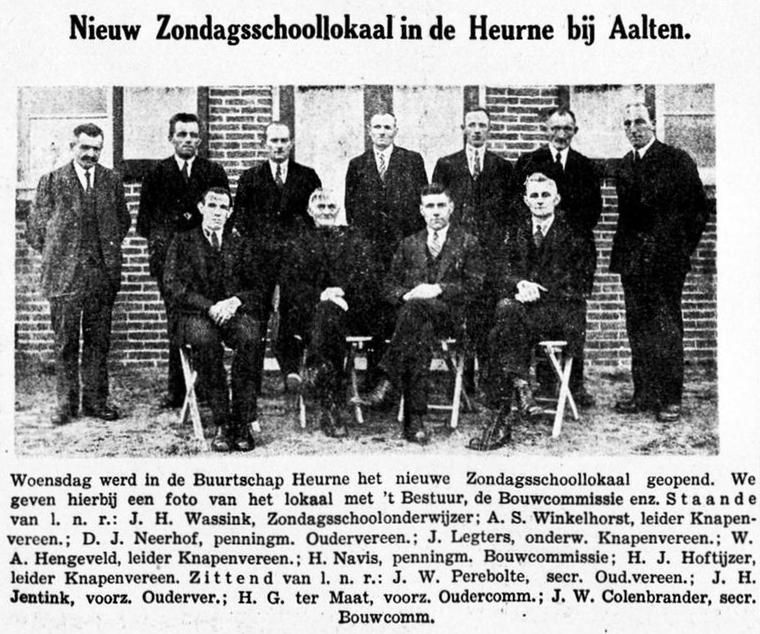
    Regarding the old Sunday school, we read in De Graafschapper of 22 October 1937, among other things:

    Commissioning of the new Sunday School hall in Heurne

    Last Wednesday was a happy day for many residents of the hamlet of Heurne near Aalten. On this day, the completely renovated Sunday school hall was festively and officially commissioned. With this, this hamlet has also been released from its so-called isolation regarding a good location to hold meetings.

    It was more than necessary. The old, small building, which had been erected with very primitive means at the time, was in such a desolate state despite various repairs over the years that a new building or a complete renovation proved more than necessary. The latter has now been achieved through the well-meaning cooperation of many within and outside this hamlet. The building itself has, among other things, two reasonably spacious rooms, which are connected in such a way that, in the event of large meetings, etc., one large room can be obtained.

    On Wednesday evening, the official opening took place for the elders and interested parties. The chairman of the Building Committee, Mr H.G. ter Maat, opened this festive gathering by having Psalm 89:1 sung and led in prayer. He then read Psalm 147. In his opening address, he expressed thanks to all who cooperated to achieve the construction and completion of this project.

    After a break, a beautiful report followed from Mr J.W. Colenbrander, secretary of the Building Committee, as well as from Mr H. Navis, treasurer. The delegate of the Boys’ Meeting conveyed congratulations and presented the chairman with a beautiful gift for wall decoration. A recitation by Mr J. Legters closed this second part before a new break.

    Subsequently, Mr S. Wevers spoke on behalf of the Association of Sunday School Teachers. Several recitations by Mr H. Hoftijzer (Veenhuis) and Colenbrander provided the necessary variety. The dialogue by Messrs H. and G. Wesselink and Klein Poelhuis was also superb in one word. Mr H. Nijman spoke an earnest and inspiring word after having told several interesting things from the old days regarding the rise and further development of youth work in Heurne.

    Finally, the chairman thanked everyone who had cooperated in the success of this evening; he then handed over the building to Mr J.H. Jentink, as chairman of the Association that will manage the building. The latter finally spoke a concluding word, after which this festive meeting was ended.

    D’n Heurnsen Tref

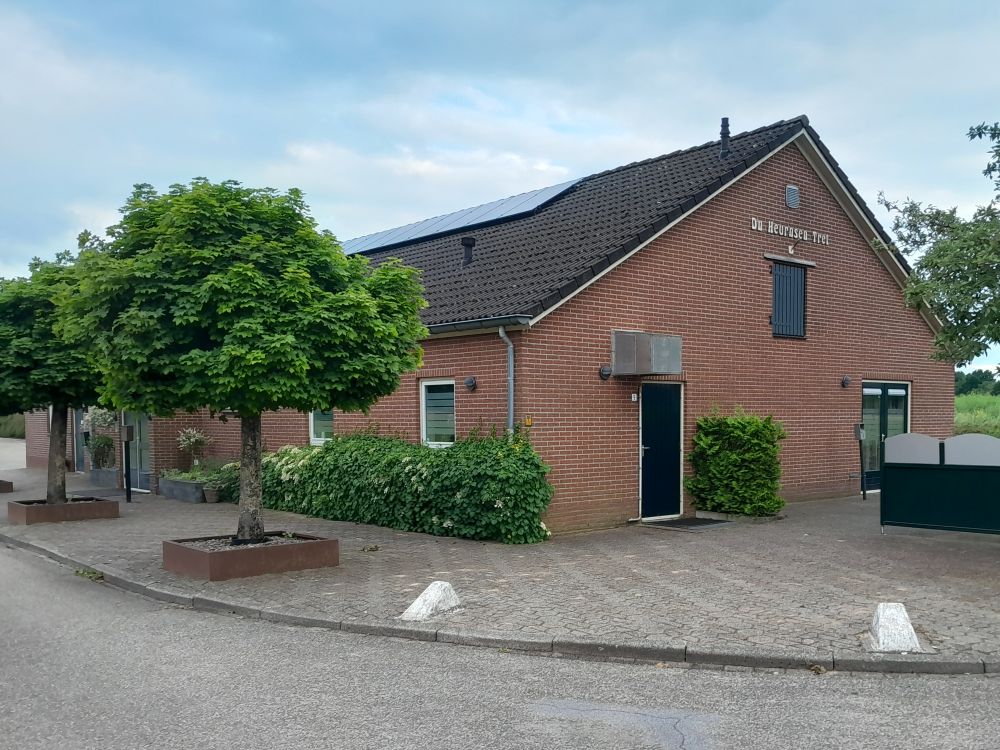
    Heurne is a rural district without a central core. There is no school or café and no clear focal point. Therefore, the Heurns Belang (Heurne Interest) association devised a plan to transform the small Sunday school into a slightly larger community centre that could be used for multiple activities. A round of visits to the residents of Heurne to hear if there was interest in this and if they were potentially willing to contribute financially had a positive result.

    Heurns Belang hired an architect and applied for a building permit for a new community centre. To keep costs low, many volunteers helped with the construction. On 6 April 1990, the building was festively opened, and the fitting name, devised by a resident of Heurne, was revealed: ‘D’n Heurnsen Tref‘ (The Heurne Meeting Place).


    Address history

    Address directory 1934

    Heurne 57 > 49

    Sunday school hall

    Address directory 1967

    Heurne 49 > Kappersweg 2

    Sunday school hall

    Features


    Cadastral no.R-854
    FunctionSunday school
    Year of constructionunknown
    Demolition1989
  • Izaak Antonie de Moor

    Izaak Antonie de Moor

    Acting (NSB) mayor (1944–1945)

    Izaak Antonie de Moor, born on May 31, 1905, in Goedereede, was appointed mayor of Breskens in 1939. In 1941, he joined the N.S.B. there. After ‘Dolle Dinsdag‘ (Mad Tuesday), he fled to Aalten, where he took over the mayoral duties from September 18, 1944, during the period when Mayor Monnik was in hiding. When things became too difficult for him a few days before the liberation, he fled to Grijpskerk, where he was arrested upon liberation. After 1½ years of internment, he was provisionally released.

    On March 10, 1947, De Moor stood trial before the war tribunal in Groenlo. The charges were as follows: group leader and sub-district leader of the N.S.B., neighborhood head of the N.V.D., member of the N.A.F. during his term in Breskens; taking the oath of allegiance to Mussert; organizing N.V.D. training afternoons; threatening the municipal messenger J.J. Bliek; applying for a weapons permit from the Representative of the Reich Commissioner; stating, when returning Dutch soldiers to Germany as prisoners of war: “They deserve no better; they have done nothing but sabotage”; distributing the publications Volk en Vaderland and De Zeeuwsche Stroom; cooperating with the labor deployment for coastal defense works; and providing a training course for mayors in Goes.

    The term of office in Aalten

    The summons regarding his term of office in Aalten included the following charges: cooperating with the O.T. labor deployment in Zevenaar and Bocholt; calling in the assistance of the Landwacht to check for people in hiding, for the requisitioning of bicycles, and for the arrest of a person in hiding at Te Giffel. Furthermore, the accused dismissed all municipal officials who were in hiding and informed the Sicherheitspolizei in Doetinchem of the arrest of three individuals, including B.H. Wikkerink, for engaging in illegal activities. Finally, he called in the assistance of the Grüne Polizei stationed in Aalten in connection with the arrest of the Baruch family, a Jewish family in hiding.

    The accused explained that by accepting the office of mayor in Aalten, he had intended to be of as much service as possible to the population. The president: “You have given all your strength to the German, and thus enemy, cause for the destruction of both the Dutch material and spiritual resistance. When you saw in Breskens who and what the Germans were, you should no longer have acted as mayor in Aalten.” The accused: “I had to choose between being a member of the Landwacht or a mayor. I had no desire for the Landwacht.” The president: “You could also have chosen another path: neither.”

    The discussion then turned to why the accused had been present on October 10, 1944, when the S.S. had conducted a raid in Aalten and the detained persons were brought to the community center. The accused: “The S.S. intended to cordone off the churches. I knew this would cause much unrest in Aalten, so I tried to make amends where possible. In some cases, I was able to do something in favor of those detained.” The accused denied having ordered the arrest of the six hostages. “In the report to Doetinchem,” the accused stated, “I did declare it. The late Mr. v.d. Glas, the Landwacht commander, gave the order to arrest the hostages. As mayor, I was required to report it.”

    The president: “Why did you attempt to compile a new population register, when you knew that the old one had been deliberately disappeared? You were in every respect a mindless tool in the hands of the Germans.” Furthermore, the speaker pointed out how dangerous it was to inform Vossers that the municipal secretary, Bijlsma, had made off with the municipal papers and documents, and to tell the aforementioned Vossers where B. was likely located. President: “You were a convinced and fierce member of the N.S.B.” The accused: “Not fierce, I was an idealist. I considered it my calling and task to do something for the Dutch people.”

    After the various points of the indictment during his term in Breskens were addressed, the arrest of the Baruch family, who were in hiding in Aalten, was finally discussed. The accused admitted to having acted incautiously. He had mentioned it in a conversation with the Grüne Polizei. The president: “You knew yourself what kind of beasts the G.P. were.” The accused: “It did not sink in at that moment. I was able to prevent the Oberleutnant from having the three Jews in question shot. At my insistence, they were to be transported to Doetinchem. As the liberation approached, they were able to remain in Aalten. And upon my departure, I told Tilbusscher that the Jews could be released immediately, which is what happened.”

    Verdict

    The accused, who had no defense counsel, said in his closing statement that he is now back in the workforce. He appealed for the clemency of the Tribunal. “I have had a lesson for life. Moreover, my house in Breskens was bombed, and my 17 years of pension are gone. I was a civil servant heart and soul; I admit to having been completely wrong. Give me the opportunity now to care for my family again,” he exclaimed.

    After deliberation, the president stated that it would be fair to impose an internment longer than the pre-trial detention. However, the Tribunal wished to take into account the circumstances in which the accused currently finds himself. The following measures were imposed upon him: internment equal to the pre-trial detention; disqualification from holding any public or semi-public office; deprivation of both voting rights; and confiscation of his radio.

    De Moor passed away on February 17, 1984, at the age of 78, in Warnsveld.

  • Aron Jedwab (Willem Herfstink)

    Aron Jedwab (Willem Herfstink)

    Jewish ‘foundling’, born in hiding

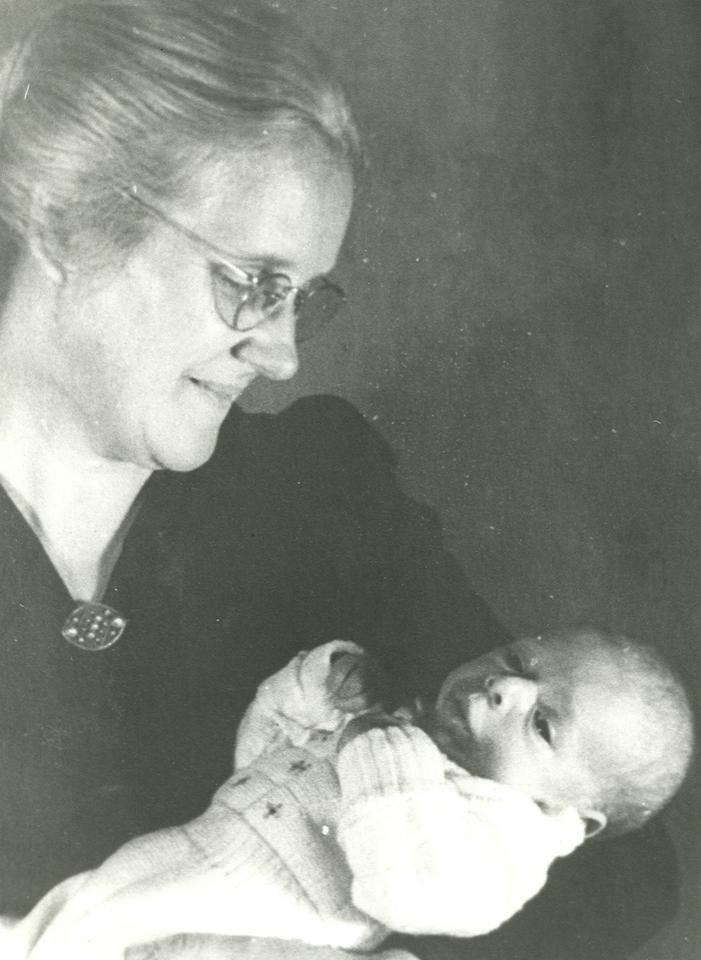
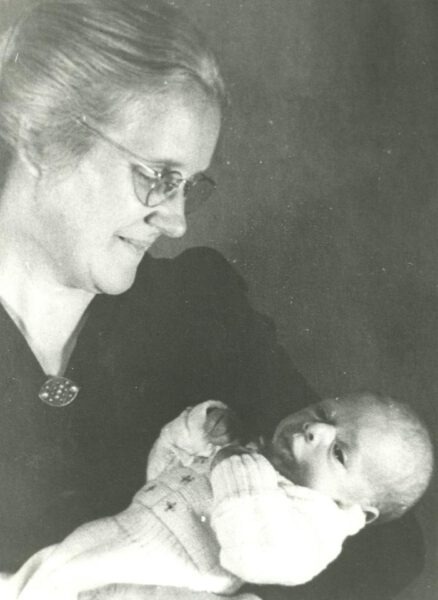
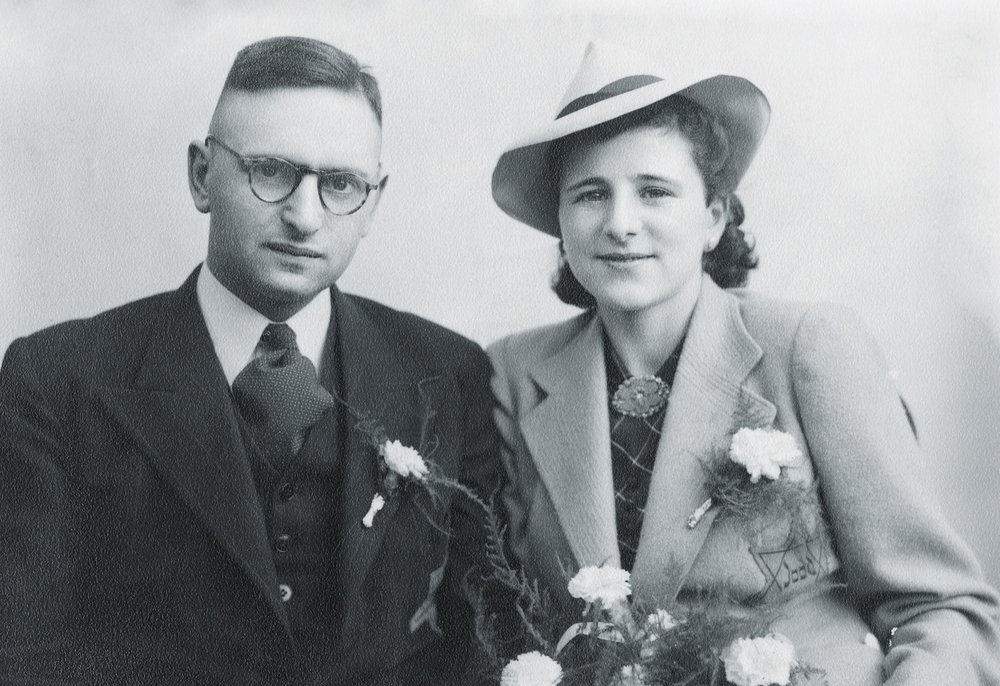
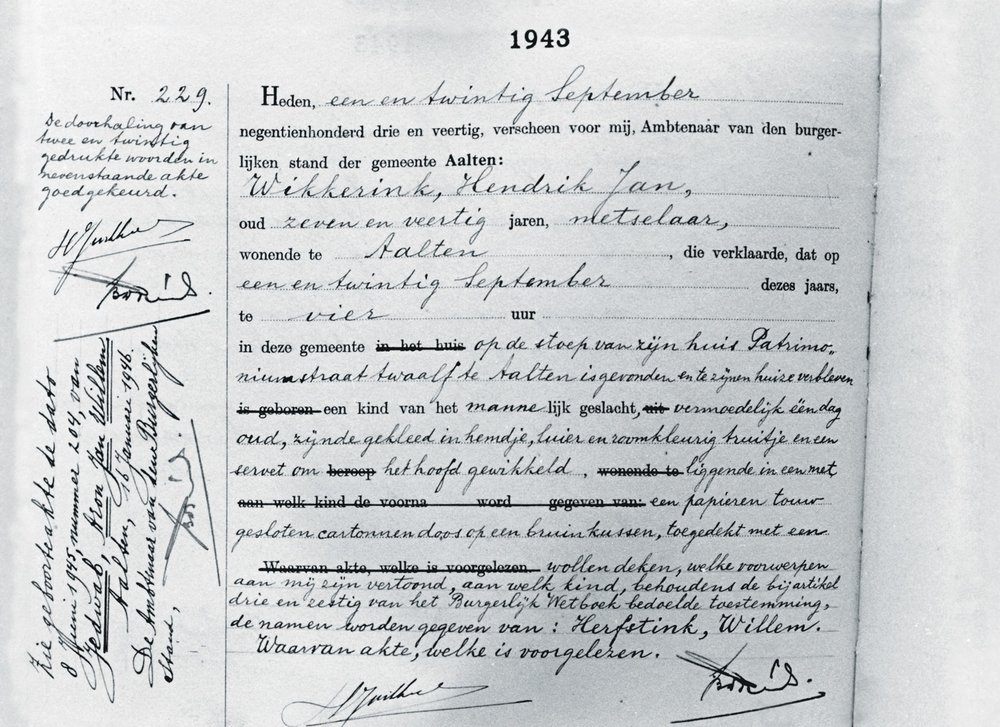
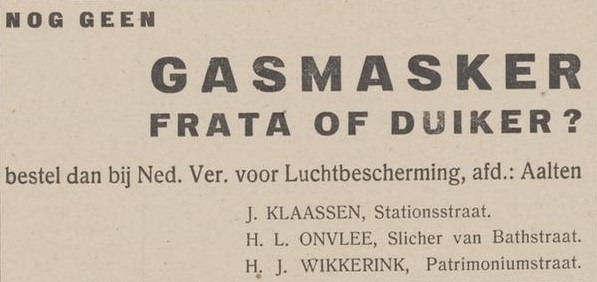
    In the early morning of 21 September 1943, Piet Hoogenkamp, the assistant of the Aalten general practitioner and resistance fighter Joop der Weduwen, placed a package in front of the house with address Patrimoniumstraat 12 in Aalten. Resistance leader Hendrik Jan Wikkerink alias Uncle Jan lives at that address with his family. The doorbell rings.

    The package turns out to be a newborn baby. He is the son of Lena Jedwab-Kropveld and Yitzack Jedwab, rabbi (pastor) of the Jewish community in Aalten. From mid-1942 the couple was in hiding on the De Ronde farm of the Veldboom family in Lintelo. Resistance leader Uncle Jan and doctor Der Weduwen have agreed in advance to lay the foundling.

    Foundling

    Daughter Jo Wikkerink later told about this:

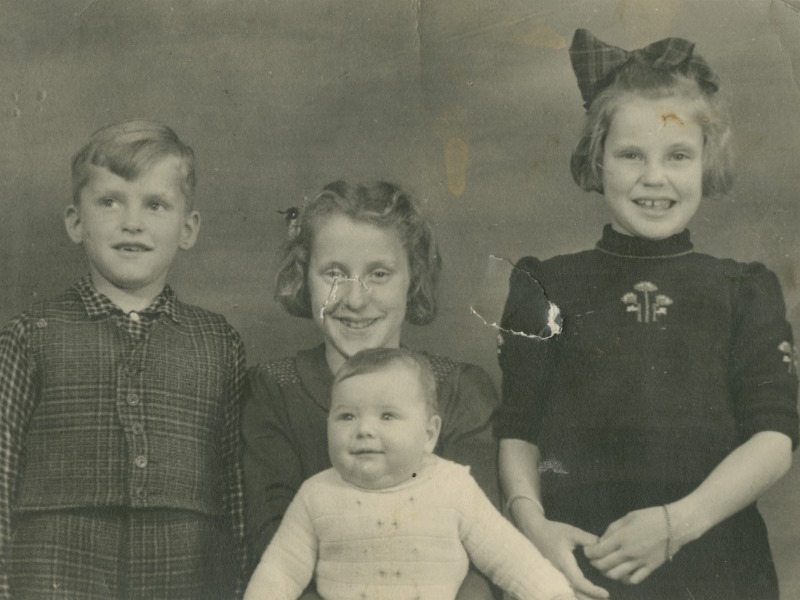
    “We knew that the delivery was coming and the baby would be brought to us. Father and mother only told the oldest three. The youngest knew nothing. They could not talk past their mouths. Father and mother waited in the dark room in the evening. It seemed to the neighborhood as if they had gone to bed. When the doorbell rang, they knew the baby was there. They got the youngest out of bed and shouted in surprise: “Come and see what is there now!”

    The Jewish child was therefore born in hiding and was registered three days later by Mrs. Dela Wikkerink-Eppink with the name ‘Willem Herfstink’ and registered as such in the birth register of the municipality of Aalten. The name was chosen symbolically. Willem refers to Queen Wilhelmina, Herfstink to the first day of autumn (21 September) and the Saxon suffix ‘ink’ means ‘belonging to the yard or family of’.

    Because only a few people – such as doctors – were allowed to be on the street at one o’clock in the morning, four o’clock in the morning was given as the time when the baby was found. This made the investigation into the origin of the child considerably more difficult. “I sometimes came home late at night with a big belly by train. Then I had ‘contraband’ with me as if I was heavily pregnant. When Wimke was put on the sidewalk, they said: “That’s what they say, but it must be one of the girls.”

    Declared Aryan

    The next day, the municipal doctor on duty, Dr. Knol, had to examine the foundling. The baby was not circumcised and therefore he issued the declaration that the child was 100% Aryan. “The next day father immediately went to Schepers, who lived diagonally across from us (he worked at Paske). Father knew: if I tell it there, everyone in Aalten will know it immediately. Behind us, next to Vossers, lived an NSB woman. She was on her knees in front of Wimke’s crib to see if he had any Aryan features.”

    Lennie and Yitzchak had meanwhile moved to another hiding place in Lintelo. In June 1944, the resistance moved them in a hay-covered wagon to the house of Bernard and Gesina Wevers in the hamlet of Dale, behind the Ring Road, just outside the village of Aalten.

    Initially, they did not want to take the Jedwab couple into their home because they were already sheltering evacuees. A minister of the Reformed Church changed the pious Calvinists’ minds: he preached that the persecuted should be helped.

    Bernard, a carpenter, built them a room behind the closet where they spent all their time. Mrs. Wevers cooked for her Jewish guests as much as possible according to kosher rules.

    In the meantime, Willem had been lovingly taken into the family of the Wikkerink family. Especially mother Dela and eldest daughter Lien Wikkerink took care of ‘Wimke’ as they called him. Dela Wikkerink regularly walked with the baby in the pram to the hiding place of the Jewish parents in Dale. She often took some fruit from the vegetable garden with her in her bag. There were people in Aalten who said: “What does Mrs. Wikker always have to do with Wevers?”

    Towards the end of the war, two German soldiers were billeted in the Wevers house. While the soldiers were in the house, Lena and Yitzack sat in chairs in their hidden room and were not allowed to move or make a sound, sometimes for days.

    After the war

    After the liberation in March 1945, the family was reunited and the little one was given his real name: Aron Jan Willem Jedwab. The name Willem remained and the second first name Jan refers to his rescuer Jan Wikkerink. Queen Wilhelmina came to Aalten soon after the war and visited the Wikkerink family to honour them for their actions in the resistance. Jo Bulsink-Wikkerink: “I can still see Wilhelmina. She slapped my grandfather on the shoulder and said: Wikkerink, you have a brave son.”

    The young child Willem hardly knew his own parents. Jo Wikkerink – the second daughter in the family – then moved in with the Jedwab family for a year, so that Willem could get used to his own parents and new environment a little easier. The Jedwab family emigrated to the US in 1947 and there they changed their surname to Jade.

    Patrimoniumstraat 12, Aalten
    Patrimoniumstraat 12, Aalten
  • Sunday school Lintelo

    Sunday school Lintelo

    Schooldijk 1, Lintelo

    In the nineteenth century, Reverend Breukelaar had arranged that Sunday schools were established in Aalten. For children in the surrounding districts, the Sunday school was held at someone’s home on a farm, so that the children did not have to travel all the way to the village.

    Gradually, a need arose within the hamlets to build dedicated rooms or small Sunday school houses (zondagsschoolhuuskes). A total of nine small Sunday schools were eventually built, of which only a few have been preserved.

    Lintelo formerly had two Sunday schools. In the heart of Lintelo, on Schooldijk, a small Sunday school stood on land belonging to the Helmink family. It was demolished in 1950. In 1934, the building’s address was Lintelo 150. A residential house was built at this location in 1953, which became Schooldijk 1 in 1967.

    Additionally, there was a Sunday school on Sondernweg in Lintelo. That building still stands today and currently serves as a vacation rental.

    Features


    Cadastral no.L-66
    FunctionSunday school,
    Vacation rental
    Year of constructionunknown
    Demolition1950
  • Gasthuis (Almshouse) Bredevoort

    Gasthuis (Almshouse) Bredevoort

    For centuries, the Gasthuis (also referred to as the Armenhuis or almshouse) served as a refuge for the poor, the sick, and the elderly in Bredevoort. From 1641 until approximately 1930, the institution occupied various locations within the city walls. The current Gasthuisstraat owes its name to this establishment.

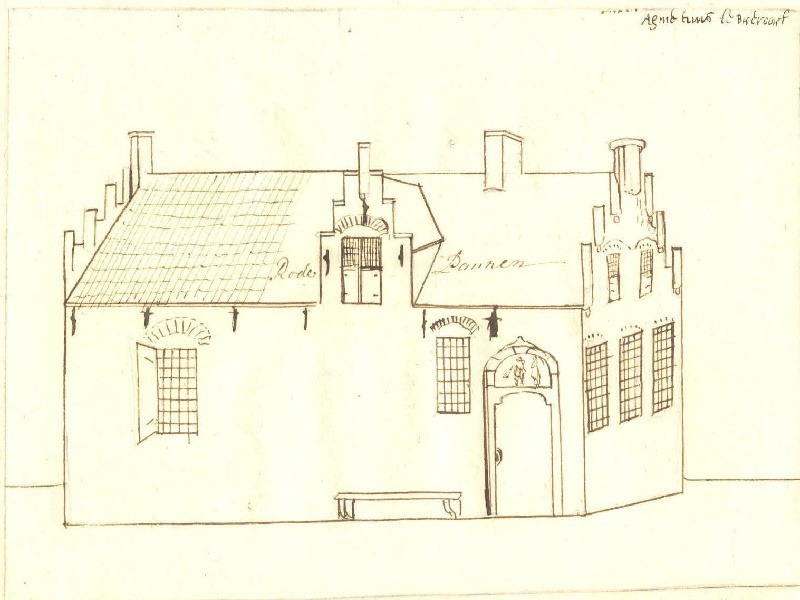
    The house of Misslich (Agnietenhuis)

    The earliest known mention of an almshouse in Bredevoort dates to 1641. It occupied the old borgmanshuis (a fortified town house) and the orchard behind it, formerly belonging to Wolf Mislich, then Governor of the Lordship of Bredevoort. In 1639, Mislich drafted a will bequeathing his house and entire estate—valued at 15,000 guilders, a significant fortune at the time—to the poor relief of Bredevoort.

    Following his death in 1639, the will was executed, giving rise to the local saying: “De armen van Bredevoort bunt rieke” (The poor of Bredevoort are rich).

    The House of Misslich, also known as the Agnietenhuis, was presumably located in the vicinity of the later Ambthuis. Rental income from the property benefited the poor, and besides the Widow Mislich, two other families lived in the main house, while three smaller dwellings in the backyard were occupied by the needy.

    ‘t Walletje

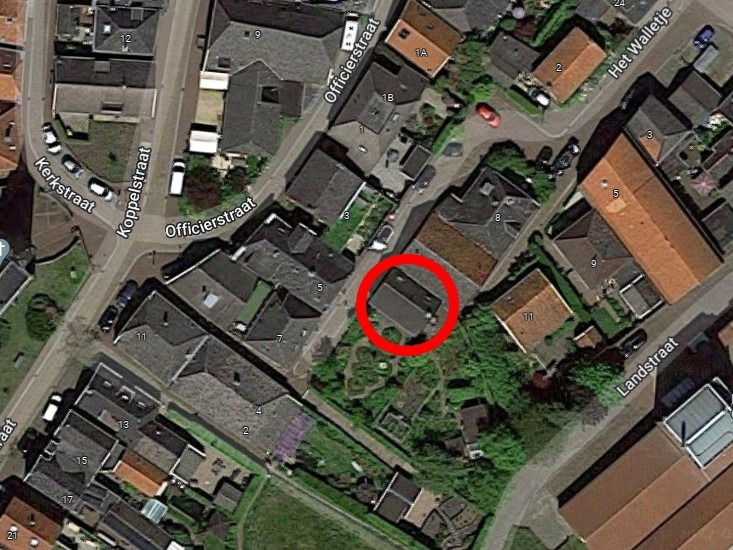
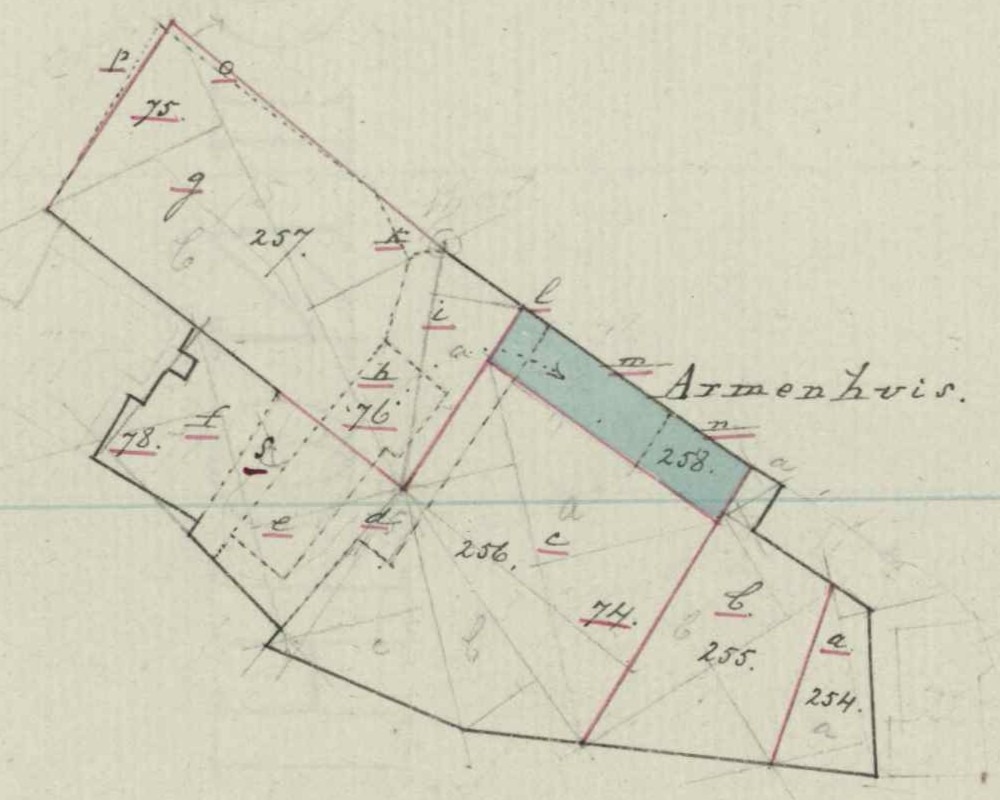
    Around 1800, records regarding the Mislich house become silent. An 1832 cadastral map shows the ‘Armen Gasthuis van Bredevoord’ located at ’t Walletje, in the extension of the Vismarkt (cadastral plots B126-B129). This complex consisted of four dwellings, ranging in size from 22 to 26 m².

    Gasthuisstraat

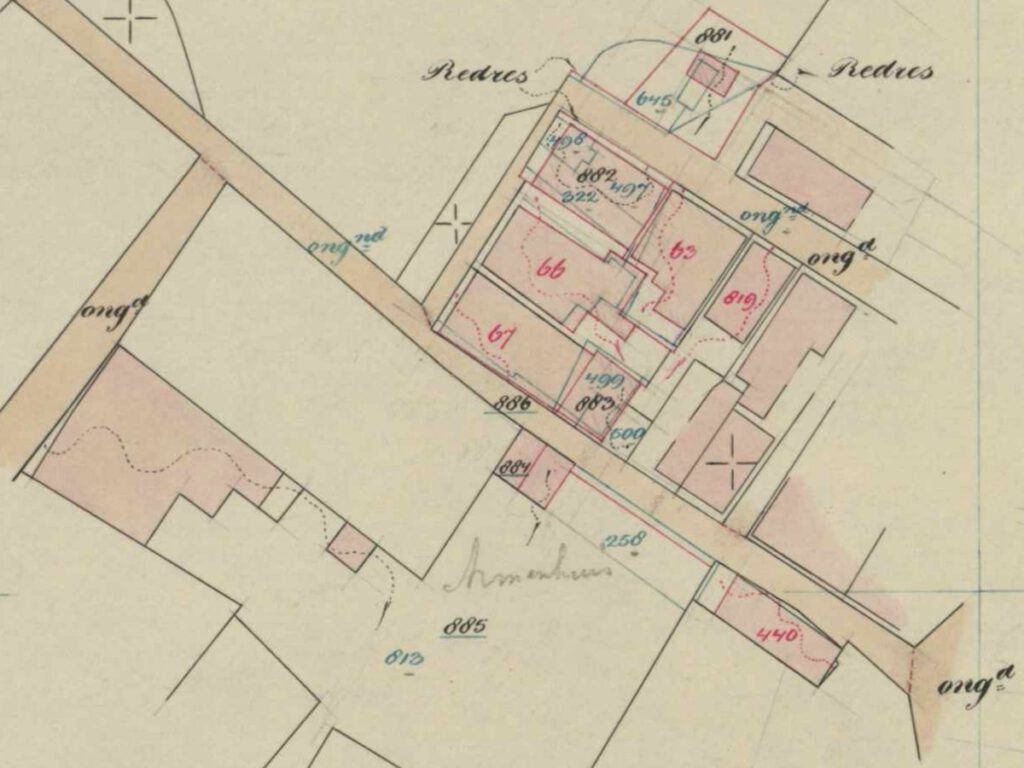
    The third and final almshouse was built in 1844 on the Gasthuisstraat and consisted of eight dwellings. The land was purchased from the Hof van Barnsveld, a former borgmanshuis.

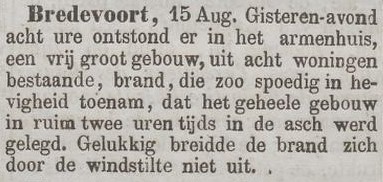
    On 14 August 1879, this building burned down completely, though it was subsequently repaired. In 1911, the almshouse underwent a thorough renovation, though it remained incomplete; the houses were eventually sold off and demolished one by one. In 1897, the Sint Bernardus building was purchased, where nursing care was provided around the turn of the century.


    Residents

    Population registers recorded each household on separate cards. Below is an overview of the inhabitants of the almshouse on the Gasthuisstraat over time:

    Period 1838-1850

    282828282828
    Maria Catharina Harmsen
    (Winterswijk, 26-01-1787)
    Johanna Hendrika Lindeman
    (Bredevoort, 04-12-1786)
    Andries Willemsen
    (Bredevoort, 14-08-1790)
    Janna Geertruid Meinen
    (Bredevoort, 06-01-1789)
    Jan Hendrik Duenk
    (Bredevoort, 17-10-1810)
    Fredrik Boom
    (Bredevoort, 24-03-1797)

    Period 1850-1860

    2828a28b28c28d28e28f28g
    Janna Geertruid Meinen
    (Bredevoort, 06-01-1789)
    Johanna Hendrika Lindeman
    (Bredevoort, 04-12-1786)
    Hendrikus Kempink
    (Bredevoort, 16-09-1815)
    Jan Hendrik Duenk
    (Bredevoort, 17-10-1810)
    Fredrik Boom
    (Bredevoort, 24-03-1797)
    Toni Blekking
    (Aalten, 15-07-1798)
    Andries Willemsen
    (Bredevoort, 14-08-1790)
    Gerrit Jan Sikking
    (Bredevoort, 14-10-1792)
    Hendrika Aleida Kalf
    (Aalten, 23-05-1822)
    Jan Willemsen
    (Bredevoort, 28-02-1802)

    Period 1860-1870

    2828a28b28c28d28e
    Hendrikus Kempink
    (Bredevoort, 16-09-1815)
    Jan Hendrik Duenk
    (Bredevoort, 17-10-1810)
    Hendrika Aleida Kalf
    (Aalten, 23-05-1822)
    Toni Blekking
    (Aalten, 15-07-1798)
    Jan Willemsen
    (Bredevoort, 28-02-1802)
    Gerrit Jan Sikking
    (Bredevoort, 14-10-1792)
    Grada Meinen
    (Aalten, 11-12-1797)

    Period 1870-1880

    30/130/230/330/430/530/630/730/8
    Mina Helmig
    (Bredevoort, 05-07-1824)
    Christina ten Pas
    (Winterswijk, 21-08-1812)
    Hendrikus Kempink
    (Bredevoort, 16-09-1815)
    Hendrika Aleida Kalf
    (Aalten, 23-05-1822)
    Jan Hendrik Duenk
    (Bredevoort, 17-10-1810)
    Janna Geertruid te Slaa
    (Winterswijk, 05-04-1802)
    Jan Willemsen
    (Bredevoort, 28-02-1802)
    Berendina Villekes
    (Bredevoort, 26-06-1800)
    Johanna Ribbink
    (Winterswijk, 01-08-1810)
    Theodora Berendina Grotenhuis
    (Henxel, 01-01-1829)
    Berendina Hijink
    (Lichtenvoorde, 19-06-1834)
    Derk Willem Bloemers
    (Woold, 10-02-1821)

    Period 1880-1890

    38/138/238/338/438/538/638/738/8
    Johanna Ribbink
    (Winterswijk, 01-08-1810)
    Berendina Hijink
    (Lichtenvoorde, 19-06-1834)
    Theodora Berendina Grotenhuis
    (Henxel, 01-01-1829)
    Christina ten Pas
    (Winterswijk, 21-08-1812)
    Jan Hendrik Duenk
    (Bredevoort, 17-10-1810)
    Derk Willem Bloemers
    (Woold, 10-02-1821)
    Gerritjen Duenk
    (Lichtenvoorde, 28-01-1824)
    Frans Julius Römer
    (Mittweida/D, 02-11-1815)
    Willemina Kwak
    (Wisch, 04-04-1829)
    Berendina Villekes
    (Bredevoort, 26-06-1800)
    Mina Helmig
    (Bredevoort, 05-07-1824)
    Hendrika Harmina Schoppers
    (Dale, 09-11-1821)
    Geertruid Kobus
    (Winterswijk, 02-08-1842)
    Jan Hendrik Grotenhuis
    (Henxel, 22-07-1832)
    Gerritjen Dina Scholtz
    (Aalten, 31-12-1834)
    Janna Berendina Dreijers
    (Aalten, 25-05-1833)

    Period 1890-1900

    30/130/230/330/430/530/630/730/8
    Johanna Ribbink
    (Winterswijk, 01-08-1810)
    Berendina Hijink
    (Lichtenvoorde, 19-06-1834)
    Geertruid Kobus
    (Winterswijk, 02-08-1842)
    Janna Berendina Dreijers
    (Aalten, 25-05-1833)
    Jan Hendrik Duenk
    (Bredevoort, 17-10-1810)
    Mina Helmig
    (Bredevoort, 05-07-1824)
    Gerritjen Duenk
    (Lichtenvoorde, 28-01-1824)
    Gerritjen Dina Scholtz
    (Aalten, 31-12-1834)
    Janna Geertruid te Wieske
    (Winterswijk, 11-11-1840)
    Gerrit Hendrik Mengerink
    (Neede, 07-01-1851)
    Harmen Jan Piek
    (Aalten, 09-03-1826)
    Maria Hendrika Slats
    (Aalten, 03-05-1823)
    Geertruid Kobus
    (Winterswijk, 02-08-1842)
    Gerrit Hendrik Piek
    (Vragender, 24-08-1834)
    Gerrit Hendrik Piek
    (Vragender, 24-08-1834)
    Janna Berendina Dreijers
    (Aalten, 25-05-1833)

    Period 1900-1910

    2727/327/427/527/627/7
    Janna Berendina Dreijers
    (Aalten, 25-05-1833)
    Harmen Jan Piek
    (Aalten, 09-03-1826)
    Maria Hendrika Slats
    (Aalten, 03-05-1823)
    Geertruid Kobus
    (Winterswijk, 02-08-1842)
    Gerrit Hendrik Piek
    (Vragender, 24-08-1834)
    Gerritjen Dina Scholtz
    (Aalten, 31-12-1834)
    Tonia Gesiena Oonk
    (Miste, 05-09-1869)
    Jan Derk Wilterdink
    (Miste, 02-11-1860)

    Period 1910-1920

    28/528/7
    Geertruid Kobus
    (Winterswijk, 02-08-1842)
    Gerritjen Dina Scholtz
    (Aalten, 31-12-1834)

    Owners

    Overview is incomplete.

    YearPlotOwnerDescription
    1832B-76Anthony Lurvink, merchant690 m² house, sched & garden
    1847B-258the Reformed Diaconate of Bredevoort199 m² almshouse & garden

    Sources


  • Patrimoniumstraat 12

    Patrimoniumstraat 12

    Aalten

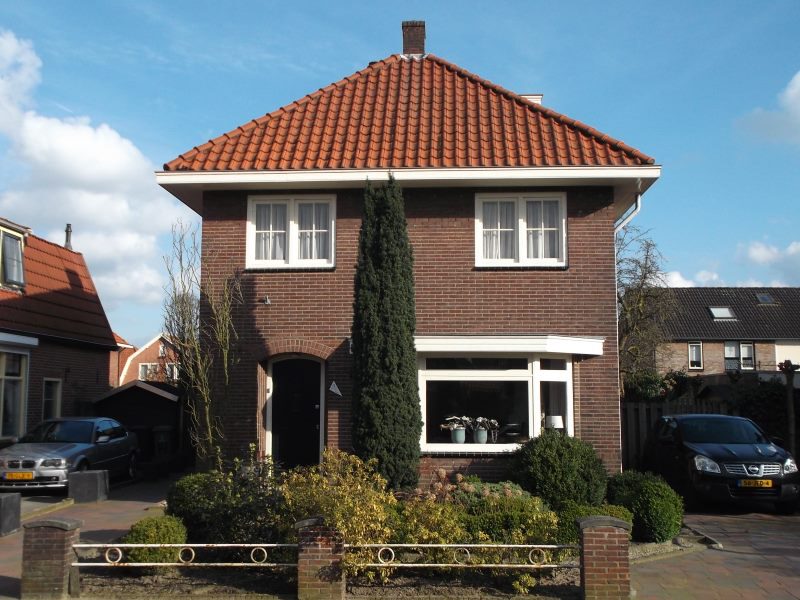
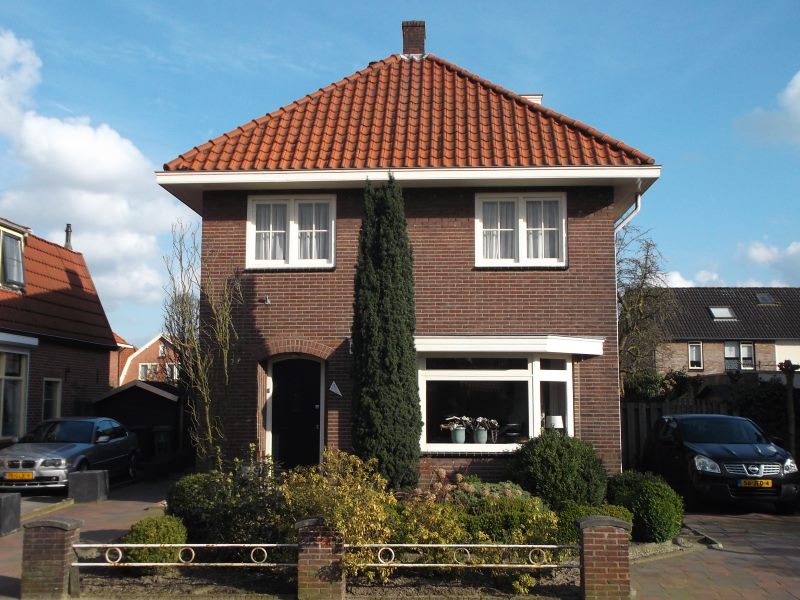
    The house is of particular significance due to its history of occupation. During the Second World War, it was inhabited by the resistance leader ‘Ome Jan’ (Uncle Jan) Wikkerink and his family. Motivated by his religious convictions, Wikkerink was deeply involved in assisting those in hiding. He became the leader of the Landelijke Organisatie voor hulp aan Onderduikers (LO – National Organisation for Aid to People in Hiding) and the Landelijke Knokploegen (KP – National Assault Teams) in Aalten.

    On Sunday, 15 September 1944, the house was surrounded and he was arrested along with several others. However, he was liberated that very same day. In retaliation for the rescue operation, the Germans threw hand grenades into the house on Patrimoniumstraat, causing the interior to go up in flames.

    The house was built in the traditional brick architecture characteristic of the Interwar period, featuring a substantial overhang and strong horizontal elements, such as the bay window at the front of the property.


    Owners

    Overview is incomplete.

    YearPlotOwnerDescription
    1832I-167de Hervormde Armen van Bredevoort (Reformed Poor of Bredevoort)57.570 m² farmland

    Residents

    Population register 1930-1940

    Hendrik Jan Wikkerink (Aalten, 30-06-1896), bricklayer
    Dela Gesina Eppink (Dale, 28-02-1898)

    Address directory 1934

    Aalten C439/2 > Patrimoniumstraat 12

    H.J. Wikkerink

    Address directory 1967

    Patrimoniumstraat 12

    G.C. Wikkerink

    Features


    Cadastral no.I-12553
    FunctionHouse
    Year of construction1932
    Listedno
  • Nieuw Nonhof

    Nieuw Nonhof

    Pasopweg, Dale (no longer extant)

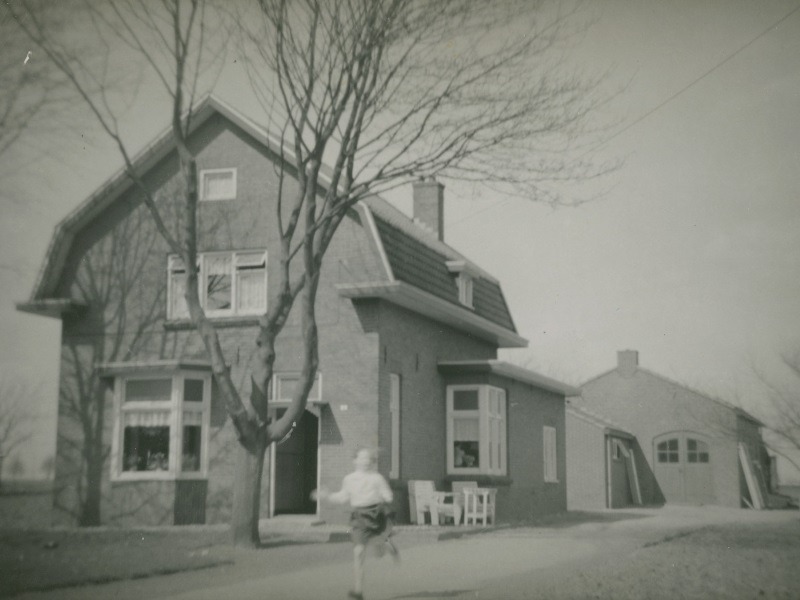
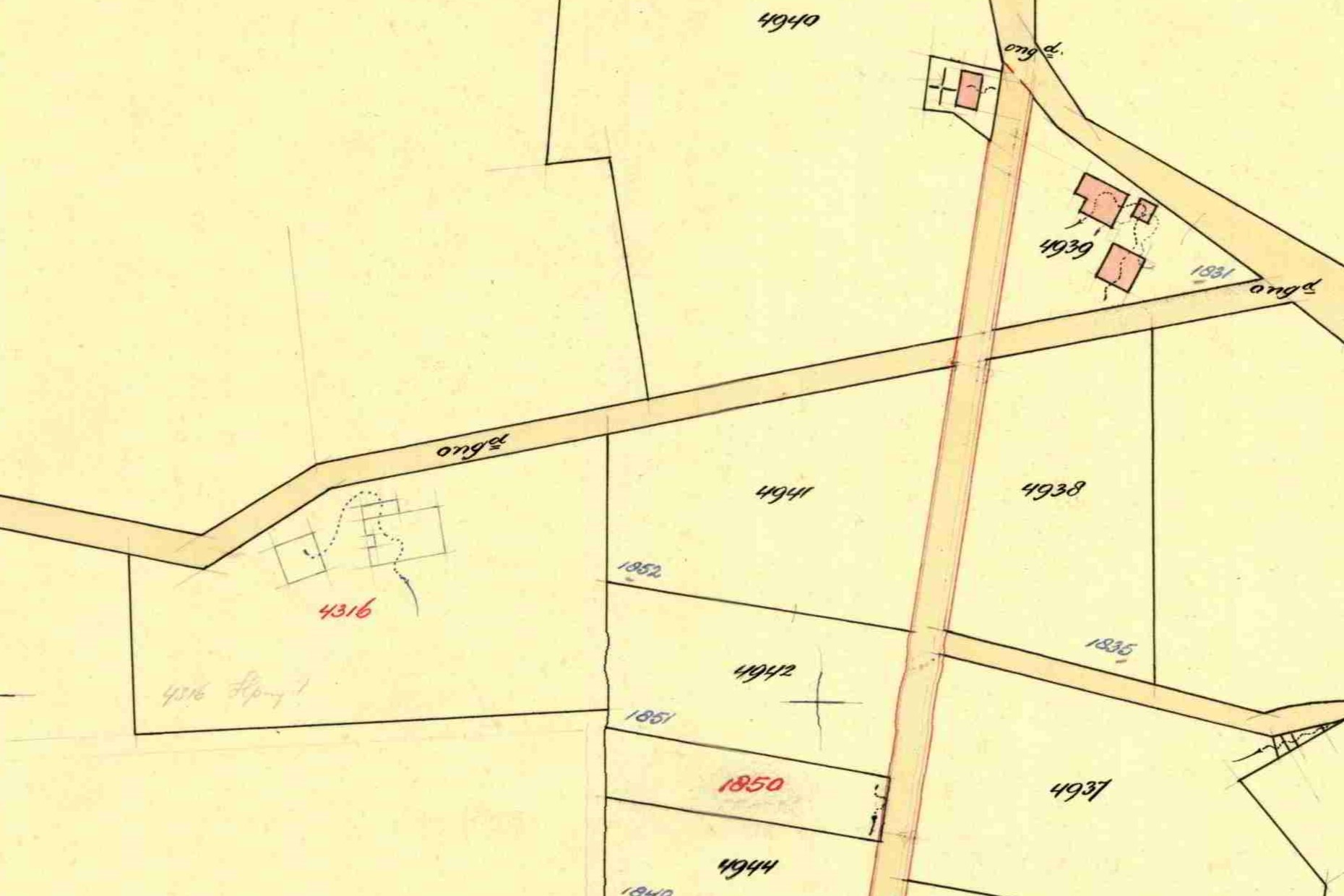
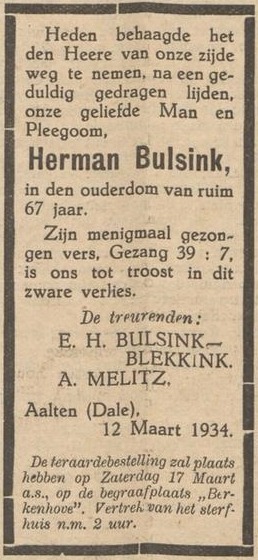
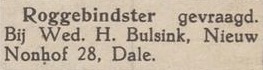
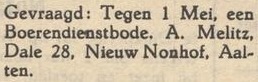
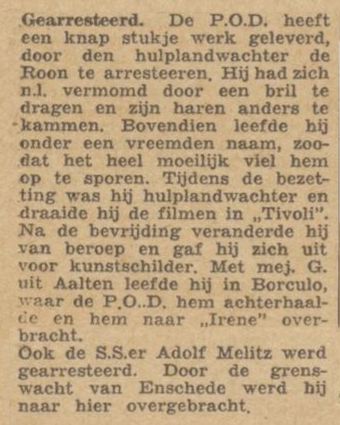
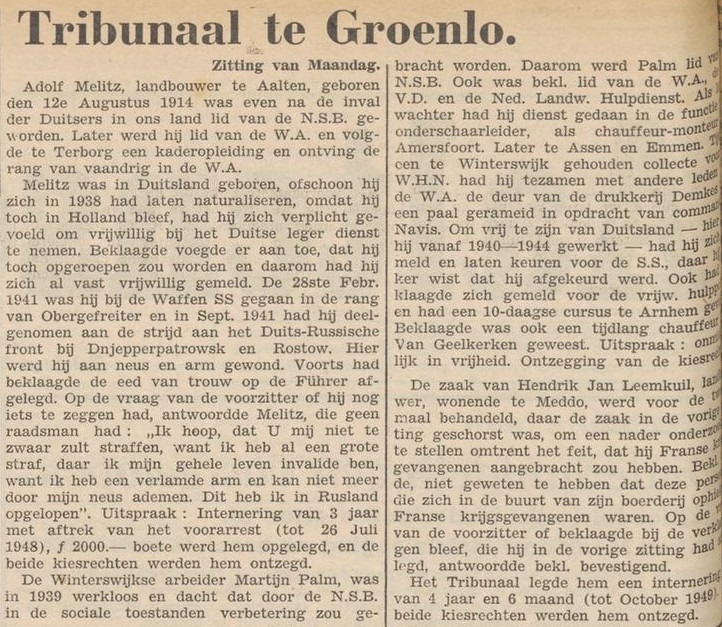
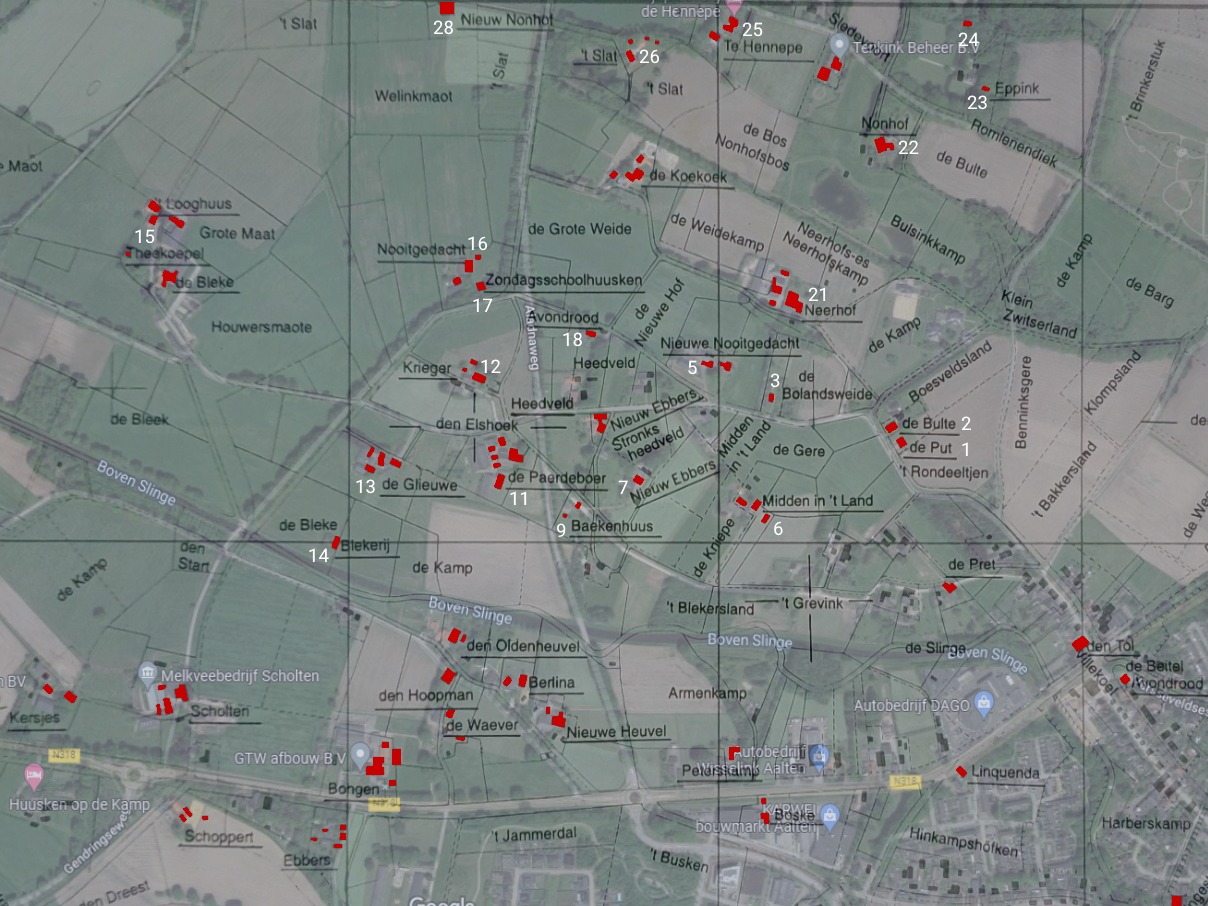
    This farm was built around 1910 on the instructions of its first occupants, Herman Bulsink—originally from the Nonhof farm—and his wife Everdina Hendrina Blekkink. Their foster son, Adolf Melitz, later became the primary occupant.

    Melitz was German by birth, but became a naturalised Dutch citizen in 1938. Shortly after the German invasion, he joined the Dutch National Socialist Movement (NSB) and in 1941 enlisted in the Waffen SS, with the rank of Obergefreiter. In September of that year, he took part in fighting on the German–Russian front near Dnepropetrovsk and Rostov, where he sustained permanent injuries to his nose and arm.

    In 1942, the farm was listed in the telephone directory as a ‘Regional Farm’ of the N.J.S. (Nationale Jeugdstorm, a youth movement). Reportedly, following the Liberation, the farm was set on fire by local people as an act of retaliation and was never rebuilt.

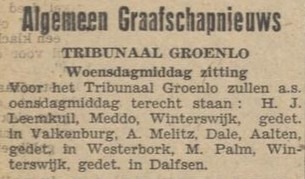
    In 1947, Melitz was sentenced to three years’ imprisonment, a fine of 2,000 guilders, and disenfranchisement.


    Owners

    Overview is incomplete.

    YearPlotOwnerDescription
    1915C-4316Herman Bulsink, farmer9.290 m² house, barn & pasture

    Residents

    Population register 1900-1910

    Dale 33

    Following their marriage, the following moved into this newly built farm:

    Herman Bulsink (Dale, 04-02-1867), coming from Nonhof
    married on 04-05-1910 in Aalten to
    Everdina Hendrina Blekkink (Woold, 01-05-1872)

    Population register 1910-1920

    Dale 33 > 36

    Herman Bulsink (Dale, 04-02-1867)
    Everdina Hendrina Blekkink (Woold, 01-05-1872)

    Population register 1920-1930

    Dale 36

    Herman Bulsink (Dale, 04-02-1867)
    Everdina Hendrina Blekkink (Woold, 01-05-1872)

    Adolf Melitz (Alstaden (D), 12-08-1914), foster son

    Address directory 1934

    Dale 36 > 28

    H. Bulsink

    Features


    Cadastral no.unknown
    FunctionFarmhouse
    Year of constructionc. 1910
    Destroyed1945

    Related farms