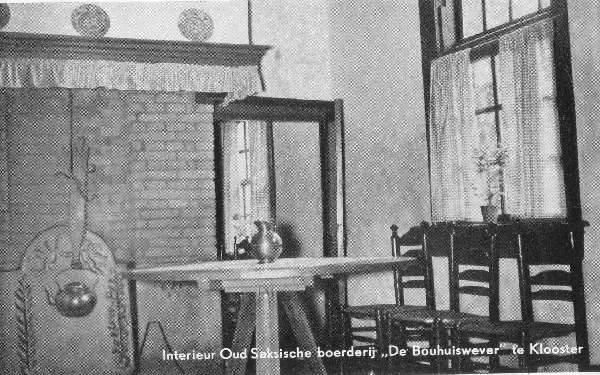
Tag: Farm

  • Adriaan Pieter Slicher van Bath

    Adriaan Pieter Slicher van Bath

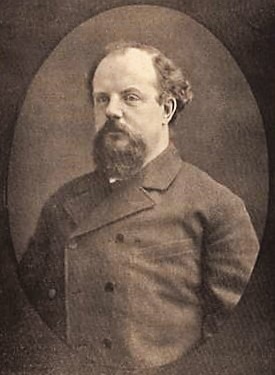
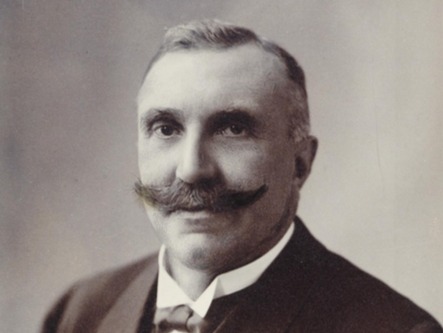
    Adriaan Pieter Slicher van Bath (Middelburg, 1838-06-07 – Aalten, 1933-11-18) was a local notable and benefactor who contributed significantly to the Aalten community. He had resided in Aalten since 1867 and married Johanna Geertruida (‘Nannie’) van Hopbergen (1849–1924) here in 1874. She was a daughter of the local landowner Major J.W. van Hopbergen (1817–1913).

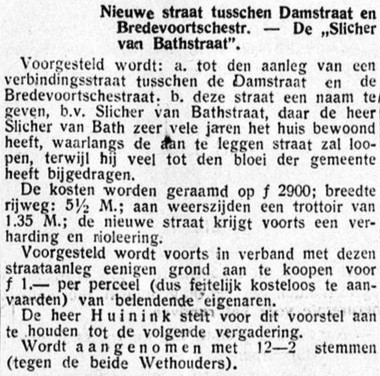
    A street and a lane in Aalten are named after this couple. On the corner of the Slicher van Bathstraat and the Bredevoortsestraatweg, we still find their former residence, villa ‘Welgelegen‘. Furthermore, every resident of Aalten is familiar with the Nannielaantje, which runs across their former estate, the ‘Smees’ property.

    Offspring

    Their son Willem Antonie (‘Toon’) Slicher, born in 1881, and Anna Becking, born in 1883, married in Aalten in 1908 and were the parents of Professor B.H. Slicher van Bath in Wageningen. The title ‘Van Bath’, a small seigniory at Rilland-Bath in Zeeland, was intended to be inherited by B.H. Slicher’s uncle, but was transferred to his grandson by the grandfather for personal reasons.

    In memoriam

    On November 20, 1933, the Zutphense Courant published this report from Aalten:

    “After an illness of several months, our oldest resident, Mr. A.P. Slicher van Bath, passed away here on Saturday evening at the advanced age of 95.

    Mr. Slicher van Bath, who had already lived here for a normal lifetime, sailed a large part of the world’s oceans on a sailing ship in his younger years. After initially working at the Greenwich Observatory, he was sent out on behalf of English interests to conduct meteorological observations for the benefit of sailing. During these voyages, he visited St. Helena, the Cape of Good Hope, India, Australia, and Cape Horn, among others.

    After settling here, Mr. A.P. Slicher van Bath was very active in the interests of this region. Among other things, he provided the initial impetus for the establishment of the Geld. Overijselsche Mij. van Landbouw, the Coöp. Zuivelfabriek (Cooperative Dairy Factory), the gasfabriek (gasworks), and the Geld.-Overijs. Locaal Spoorweg (Local Railway). ‘Floralia’, which has now existed for over 50 years, owed its origin to Mr. Slicher. No effort or expense was too much for him when it concerned ‘Floralia’, and when he was no longer able to involve himself in its management, this association received his significant donations every summer.

    For many years, Mr. Slicher was chairman and later honorary chairman of the local department of ‘t Nut, and as such, the bewaarschool (nursery school) was his great passion. This institution also benefited from his substantial financial support every year.

    Mr. Slicher was also a member of the Provincial Council of Gelderland for several years. Furthermore, until his 90th year, the deceased was an observer for the Meteorological Institute in De Bilt and, until the present, a correspondent for ‘Arti et Amicitiae’.

    It is certainly noteworthy that Mr. Slicher’s memory remained excellent until the very end and that he continued to take an interest in all major world events.

    With the passing of Mr. Slicher van Bath, a very well-known Aalten personality is gone, and numerous associations and institutions will deeply miss his great support.

    The interment will take place on Wednesday afternoon at 3:00 PM at the Oude Begraafplaats (Old Cemetery) here.”

    Slichter van Bathstraat, Aalten – De Graafschapbode, 21 December 1934
    De Graafschapbode, 21 December 1934
  • Heinrich Driessen

    Heinrich Driessen

    Textile manufacturer – “the front Dreessen”

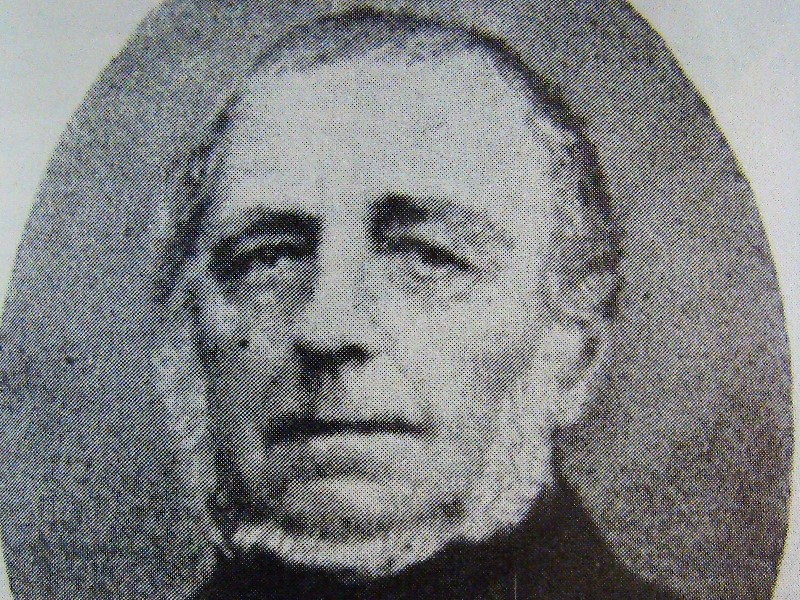
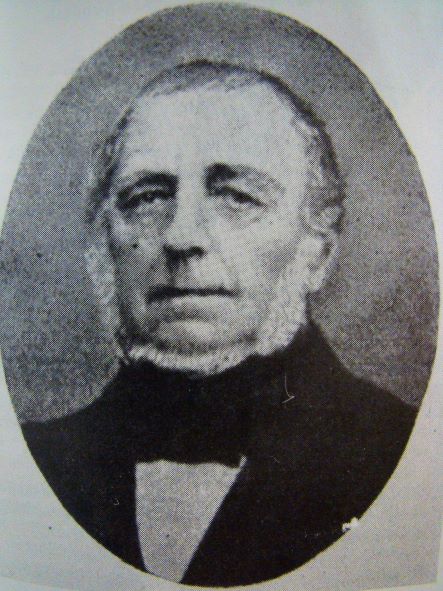
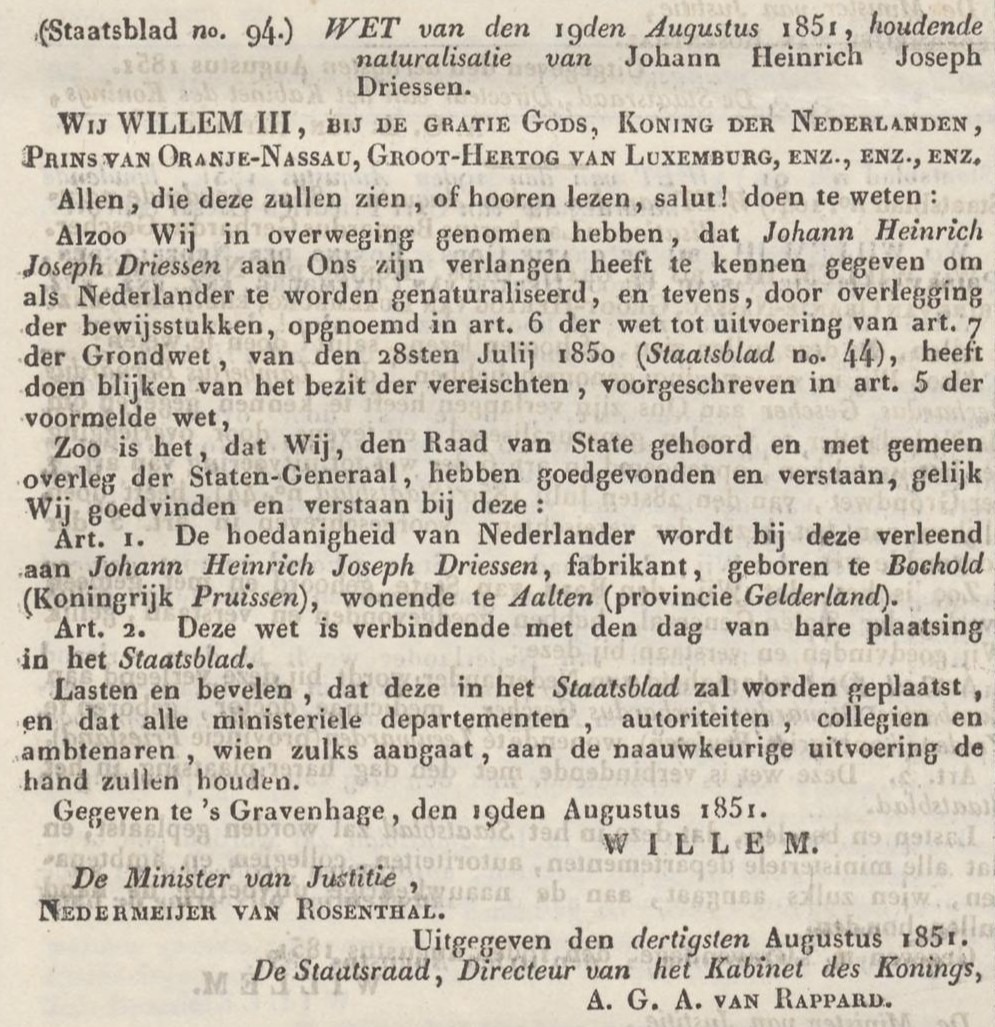
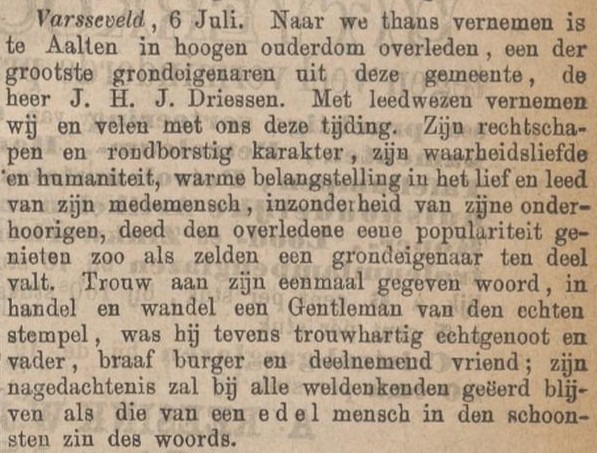
    Johann Heinrich Joseph (known as Heinrich) Driessen (Bocholt, 10-07-1794 – Aalten, 04-07-1879) was a prominent textile manufacturer in Aalten. Heinrich descended from a Bocholt textile dynasty. He was the only son of Peter Driessen and Maria Hölscher. His father held a distinguished position in the Prussian town, just across the border from Aalten. In addition to being a textile manufacturer, he served there as a magistrate and, from 1797 to 1811, as deputy mayor.

    Heinrich received a thorough education at the Jesuit College in Amsterdam and spoke excellent French, so that in 1812, when Napoleon’s troops passed through Bocholt, he was the only one capable of acting as an interpreter between the municipal authorities and the French generals.

    Peter Driessen & Sohn

    In 1810, Heinrich joined his father’s business. On December 2, 1820, he married Lisette Sträter in Rheine (Germany), a descendant of another prominent textile family. They had nine sons and two daughters. In 1826, he was entrusted with the management of the firm Peter Driessen & Sohn.

    In that same year, his cousins Anton and Joseph Driessen submitted a request to King William I to establish a textile factory in Aalten, which was granted by William I. Not long after, Heinrich Driessen also requested permission from the King to settle in Aalten. The firm Peter Driessen & Sohn also received the requested establishment permit.

    In Aalten

    His father Peter continued to live in Bocholt while his son Heinrich settled in Aalten. He initially lived with the Meijerink family on Kerkstraat, one of the few remaining Catholic families in Aalten, in the same building as his cousin Anton Driessen.

    In Aalten, Heinrich established a branch of his father Peter Driessen’s fustian trade and hand-spinning mill. They already owned the necessary land in Aalten and Varsseveld, and in 1826 he expanded his activities to Groenlo. There, Heinrich had purchased a house from De Heyder. That house was converted into a spinning mill. He made the yarn spun there available to home weavers who processed it into cloth.

    Heinrich was an enterprising man. By 1832, he had approximately 500 linen weavers in Aalten and the surrounding area working for him, and three years later, along with Blijdenstein in Enschede, he was among the largest fustian manufacturers in the eastern Netherlands. He was one of the first in the Netherlands to utilize steam in his bleachery.

    ‘Den veursten Dreessen’

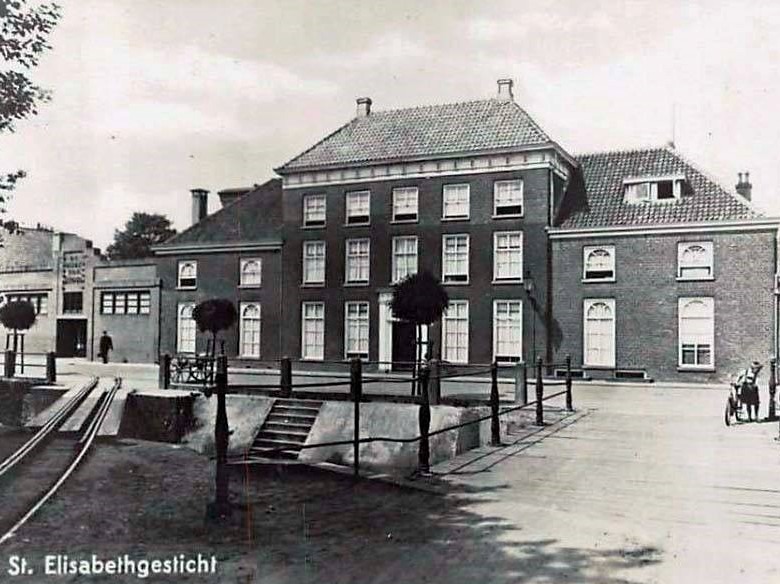
    In 1837, he had a grand residence built at the beginning of Dijkstraat. For this reason, he was popularly known as ‘den veursten Dreessen’ (the front Driessen), while his cousin Anton, who built Beekhuize a little further along, was called ‘den achtersten Dreessen’ (the rear Driessen). Heinrich’s eldest son, Theodoor, laid the first stone on June 29, 1837. Business premises were also located at the residence, primarily serving as storage for yarns and woven fabrics. These fabrics were transported by a wagon, often pulled by an ox, to the bleachery in Dale. The driver bore the fitting nickname Ossen Willem (Oxen William). After Heinrich’s death, the house was repurposed as a convent.

    Following his father’s death in 1843, Heinrich became the sole owner of Peter Driessen & Sohn. His eldest son Theodor (1821-1878) was then placed in charge of the management in Bocholt. In 1851, King William III granted Heinrich Dutch nationality.

    In 1849, Heinrich established a steam spinning mill on Hogestraat in Aalten, the first of its kind in the Achterhoek region. This was soon expanded with several ‘power looms’ (steam-driven weaving looms). After this factory burned down on the night of August 19 to 20, 1859, he did not rebuild the business.

    To Leiden

    Heinrich shifted his focus to Leiden. There, in 1846, together with his nephew (his sister’s son), the soap boiler Ignatz van Wensen, he had purchased the declining textile printing and dyeing works De Heyder & Co., later known as the Leidsche Katoenmaatschappij (Leiden Cotton Company). He had his second son Louis (1823-1904) come over from England to take charge in Leiden. With the knowledge he had acquired in Manchester, Louis soon managed to make the company profitable.

    Heinrich’s son Eduard (1824-1895) continued to look after the company’s interests in Aalten. Initially, the bleachery there remained operational, but over time Eduard primarily focused on the trade in cotton and yarns. The branch in Bocholt, managed by Theodor, was closed after he and his brother Peter (1832-1895) started a blue-dyeing and printing works there in 1854, named the firm Theodor and Peter Driessen.

    Catholic

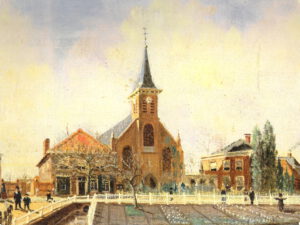
    The Driessen family was also of great significance to the Aalten Catholic community, which had been a minority in the Reformed village since the Reformation of 1596. Not only through their prestige and influence, but also through various donations from the Driessens, the Catholic church in Aalten was able to grow into a fully-fledged church community. Both Heinrich and his cousin Anton played important roles as churchwardens and overseers of the poor, roles that were continued by their descendants.

    Heinrich Driessen was very strong-willed in his conduct and often followed his own path in ecclesiastical matters as well. For instance, during the disputes between the Catholics and the Reformed in 1842 regarding the ringing of the bells. Pastor G.H.J. Wansing of Aalten wrote a letter about this to the Archpriest of Gelderland, M. Terwindt, which was co-signed by the churchwardens Th.W. Meijerink, H. Vulting, and A. Driessen. Heinrich Driessen, although a member of the church board, had not signed this letter and addressed two personal letters to Terwindt himself.

    What stands out in these letters is that he stated, among other things, that the pastor seemed a priori prejudiced against Aalten and expressed the hope that the Aalten parish would receive a new shepherd who would be to everyone’s liking. He requested Terwindt to take his reflections into consideration when making his choice and assured him that he preferred to employ everything that was conducive to the honor of their holy religion. But at the same time, Driessen wrote that—because the old pastor showed him the greatest respect and because he himself esteemed the pastor as a man whose moral conduct could serve as an example to an entire province—he trusted that it would also please the Archpriest that the contents of the letters never be disclosed to others.

    New church

    A subsequent problem arose when it was decided around 1853 to build a new church. This led to serious disagreements within the church board. For instance, churchwarden Heinrich Driessen again found it necessary to act independently by contacting the Archbishop behind the backs of the other board members. In a letter to the Archbishop, he referred to the approval the latter had given to the plans for the construction of the church, on the condition that the confessional or confessionals be placed inside the church and not in the sacristy or in separate extensions on the side walls. Based on that condition, a plan had been sent to the King for approval.

    However, during Driessen’s absence, the tendering for the church had taken place, in which an extension was nevertheless planned, contrary to the archiepiscopal approval. An extension to the church for the purpose of the confessional would, according to Heinrich, only disfigure a church. He had tried to convince the pastor of this, but had not succeeded. Driessen preferred to see the confessional inside the church, as was common in the Münsterland, rather than in an extension. According to him, the error could still be rectified, even though the masonry on that side was already in full swing. In his letter to the Archbishop, he therefore requested that instructions be given to the church board as soon as possible. The outcome of the matter is unknown. This action, however, is characteristic of Heinrich Driessen, who was apparently accustomed to getting his way and took the necessary steps on his own initiative to achieve it.

    Wealthy

    At the end of his life, Heinrich was a wealthy man. He held shares in spinning mills in Enschede, Gronau, and Rheine. Rheine was his wife’s birthplace, and her relatives managed textile enterprises there. Furthermore, he owned many lands and farms in the vicinity of Aalten, Varsseveld, and Bocholt.

    Heinrich reached the advanced age of nearly 85 years. Several of his children and grandchildren entered the textile industry.

    Sources


    • Biografisch Woordenboek Gelderland
    • Annex to De Graafschapbode, 23 July 1937
    • Delpher
    • Nijver in het groen. Twee eeuwen industriële ontwikkeling in Achterhoek en Liemers, H. de Beukelaer
    • St.-Helena’s ommegang. De geschiedenis van de Aaltense katholieken, H. de Beukelaer
    • Geweven goed. De textielgeschiedenis van Aalten en Bredevoort, Aalten 1992, H. de Beukelaer en J.G. ter Horst
    • Stammbuch und Chronik der Familien Driessen, Giessing, van Wensen, Schwartz, Sträter, Hölscher, F. Schwartz
  • Aalten Fire Service

    Aalten Fire Service

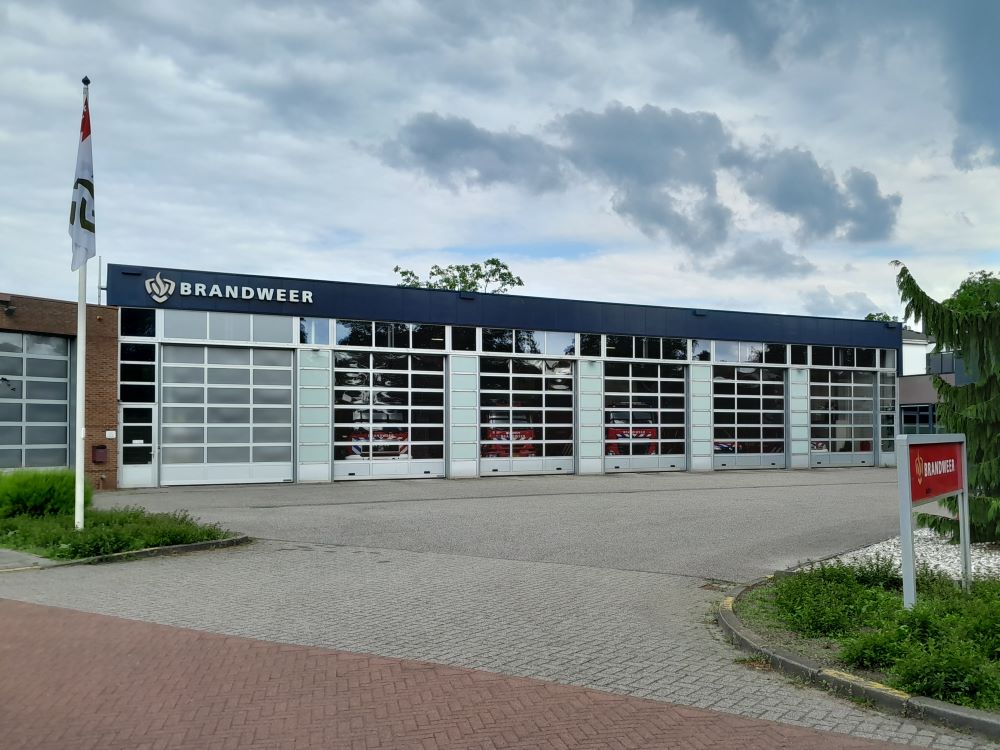
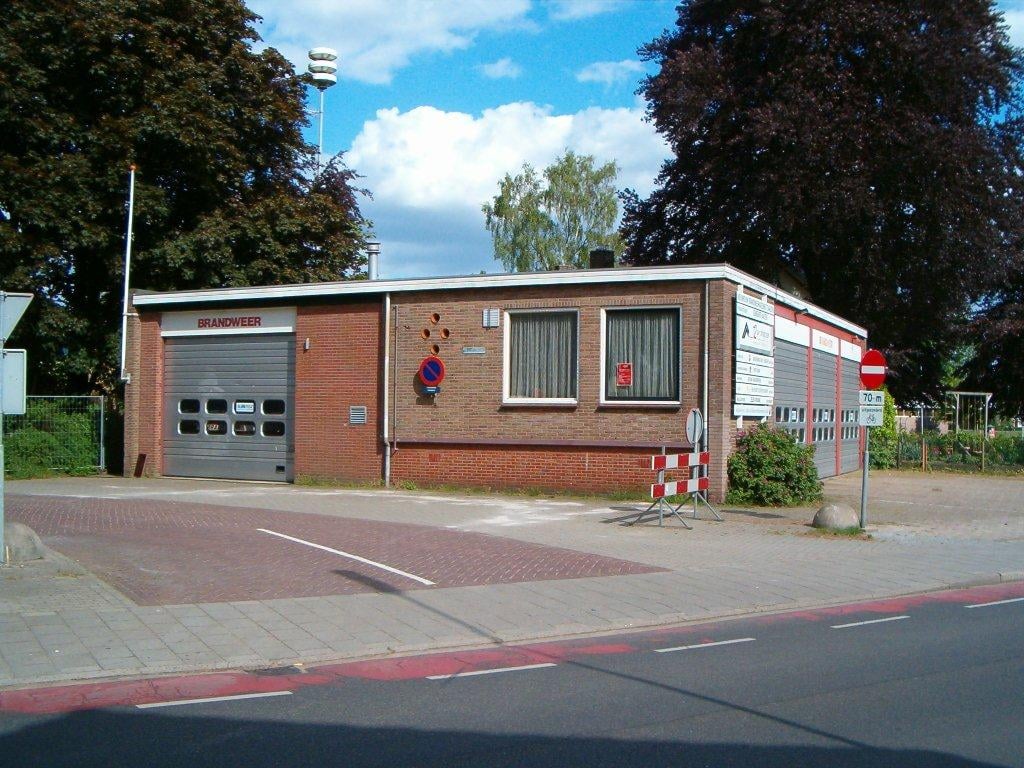
    Tramstraat 1, Aalten

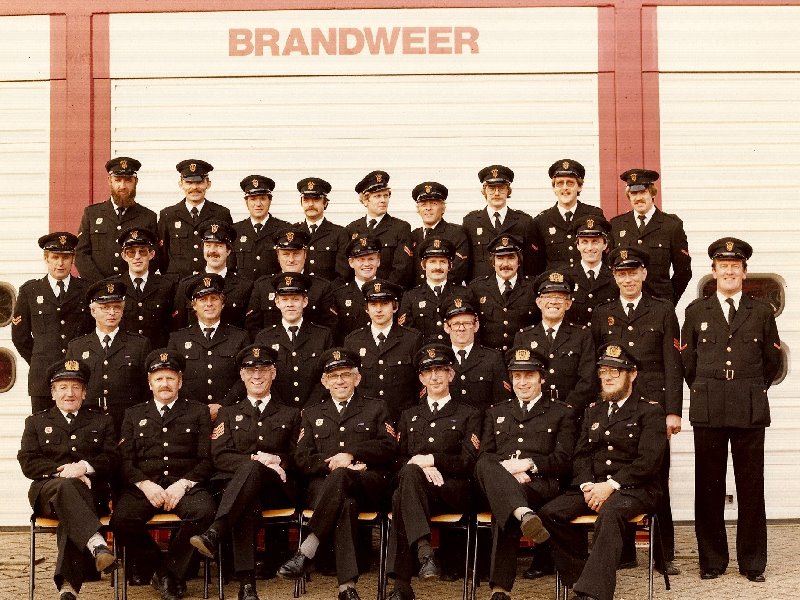
    In 1889, the ‘Regulation on the Fire Engine Service and the extinguishing of fires in the municipality of Aalten’ was established by the municipal council. Article 1 of that regulation states: ‘Every male resident from the 18th up to and including the 59th year of age is, subject to the exceptions to be mentioned hereafter, called upon and liable for service with the fire engines’. The fire brigade therefore consisted entirely of volunteers, appointed and dismissed by the Board of Mayor and Aldermen.

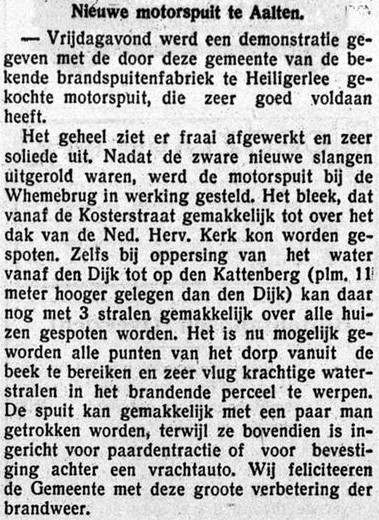
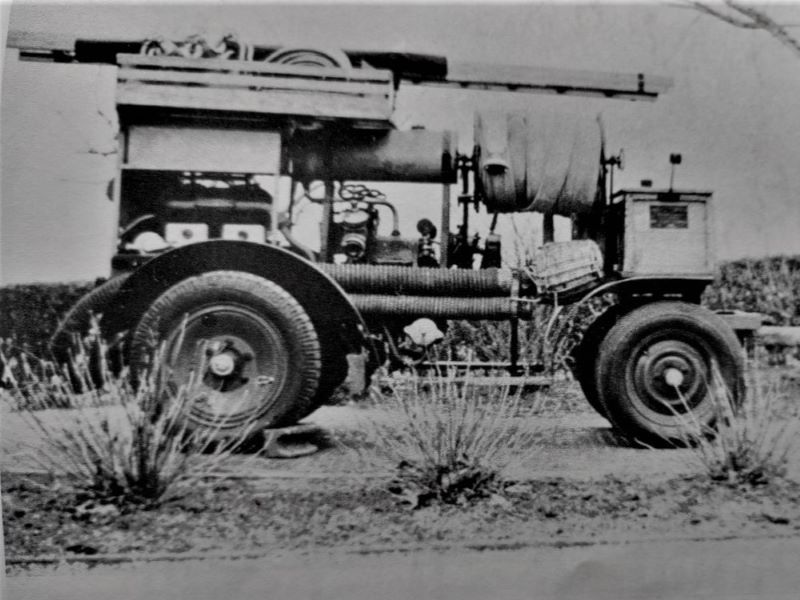
    On June 19, 1925, the first meeting of the newly appointed corps of Firemasters took place. Over time, the available equipment was modernized. For example, a motorized pump was purchased in 1930, followed by an ‘auto-tractor’ in 1933, which made it possible to transport this pump to the fire.

    During the eighties and nineties of the last century, increasingly close cooperation developed between the fire brigades in the Achterhoek and the Cooperation Association of East Gelderland, known as the Achterhoek Region from 1995 onwards.

    In 1987, the Bredevoort fire group, which until then had been part of the corps, was disbanded. A centralization of command structures in Doetinchem was established, so that the Aalten volunteer fire brigade lost its actual independence.

    The fire brigade in the 19th century

    In 1937, G.H. Rots described in a series of articles how things were done in Aalten in former times. Regarding the Fire Brigade, he wrote:

    “The performance of the modern fire brigade, as was again evident during the large factory fire in Winterswijk, makes our thoughts return to the primitive fire-extinguishing methods of former days. A fire brigade did exist in the middle of the last century, and in their own way, they made serious attempts to fight a fire or prevent it from spreading, but they had to make do with the tools they had.

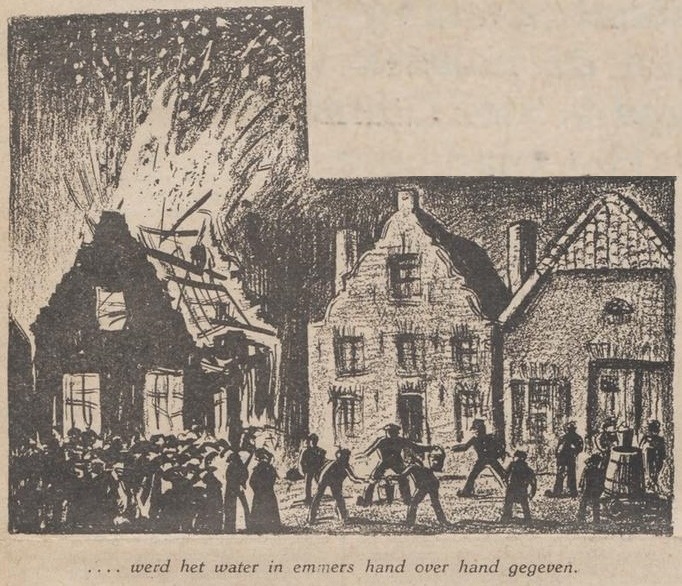
    The first form of firefighting was to throw buckets of water onto the fire. From existing wells and pumps, the water was passed in buckets from hand to hand. When the well was empty, one had to wait until the supply was replenished. If the fire broke out near the stream, one could, of course, continue scooping. There were reserve wells where a quantity of water was always kept, and on the Market Square stood a row of large barrels filled with water on mobile chassis, which were immediately driven to the scene of the disaster by a designated driver.

    The introduction of hand pumps brought some improvement. The water could now be sprayed at least ten meters high to keep roofs and houses wet. Later still, another improvement came with the addition of the so-called booster, a suction and pressure pump placed at the water supply, which forced the water through hoses to the pump engines. Behind the town hall were the buildings for storing these fire-extinguishing tools.

    The firemasters (for an organized fire brigade had already existed for many years) had as a sign of their dignity a copper rod, a kind of scepter, or an oval copper plate, which adorned the chest of the firemaster in the event of a fire.

    The many fires that plagued Aalten caused the city council to look for ways to prevent fire, for the new lamps fed with petroleum, which had to serve for lighting in the evenings on the threshing floor near hay and straw, were dangerous. An article was added to the police regulation, mandating that in the vicinity of hay or straw, on threshing floors and in stables, workshops, etc., where highly flammable material was present, lighting had to be done with closed lanterns. Whether it helped much? Fires continued to occur regularly thereafter, and each time one heard the dismal sound of the fire bell.”

    Fire engines

    The website ‘Brandweer Voertuigen Online’ contains an overview of fire vehicles that served with Dutch fire brigades, including Aalten and Bredevoort:

    Sources


  • Wim Mateman

    Wim Mateman

    Willem Antoon (Wim) Mateman (Aalten, 07-05-1945 – Rijswijk, 08-06-2019) was a Dutch politician. On behalf of the CDA (Christian Democratic Appeal), he was a member of the House of Representatives of the States-General (Tweede Kamer) from 1979 to 1998. From 2003 to 2018, Mateman served as an alderman, municipal councillor, and head of the CDA parliamentary group in the municipality of Rijswijk.

    Mateman trained as a teacher in civics and economics (MO-staatsinrichting and MO-staathuishoudkunde). He subsequently studied sociology at the Catholic University of Nijmegen. During his student years, he co-founded the Student Trade Union Movement (Studentenvakbeweging) in Nijmegen. Following his studies, Mateman became a teacher of economics, civics, and social studies at the Christian secondary school in Zutphen. From 1970 onwards, he was a member of the Provincial States of Gelderland and a member of the municipal council of Aalten on behalf of the Christian Historical Union (CHU). He also became an alderman in Aalten.

    In the 1977 general election, Mateman stood as a candidate for the CDA but was not directly elected. Later that year, he was offered the opportunity to take a seat in the House, but he declined. Two years later, Mateman entered parliament after all via a mid-term vacancy. He was sworn in on 28 August 1979. In the House, his portfolio included trade policy, defence, and domestic governance.

    Wim Mateman belonged to the conservative wing of the CDA. He was deeply disappointed when he had to leave the House because the new party leadership sought to refresh the parliamentary group. Consequently, Mateman did not stand for re-election in the 1998 general election.

    In 2003, he became the Alderman for Finance and Land Affairs for the CDA in the South Holland municipality of Rijswijk. In May 2014, the CDA left the Rijswijk municipal executive, and he returned to the municipal council, where he became leader of the CDA parliamentary group. He retired from local politics in 2018.

    Mateman was married and had two children. He was appointed a Knight in the Order of the Netherlands Lion in 1992 and a Knight in the Order of Orange-Nassau in 1998. In 1992, he was also named Pipe Smoker of the Year.

    Headstrong ‘right-winger’ of the CDA – NRC Handelsblad, 13 April 1992

    Sources


  • Klepperklumpkes van ‘t Walfort

    Klepperklumpkes van ‘t Walfort

    Folkloristic dance group

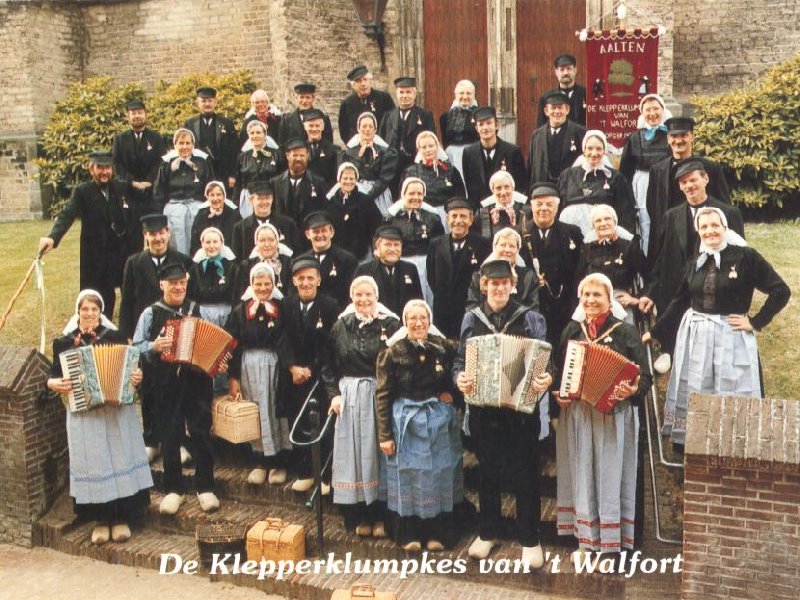
    The Klepperklumpkes van ’t Walfort was a folkloristic dance group from Aalten. The group was founded on 10 May 1954 with the objective of preserving Gelderland’s regional folklore for future generations. Members of the group were dressed in authentic Gelderland (Achterhoek) traditional costume, as it was worn around 1900.

    The dance repertoire consisted of approximately 35 traditional dances, mostly from the Achterhoek and Twente regions, which also date back to that era. The most well-known dances include the Driekesman, Pot met bonen (Pot of beans), and the Hôksebarger, performed, of course, in polished wooden clogs.

    A Welcome Guest

    The Klepperklumpkes was an active association. Over the past decades, they performed in various institutions, at street markets, and in many countries. They were a welcome guest at festivals in Belgium, Denmark, Germany, England, France, Austria, Slovakia, Spain, Sweden, and Switzerland, among others. They even performed in China.

    During their peak years, the Klepperklumpkes organised a large international festival in Aalten every four years, featuring many foreign guests. These guests were hosted by local families, providing many with a unique introduction to the international dancers and their respective folklore.

    In their final years, the dance group rehearsed in the hall of café Setz.

    After nearly 70 years, the Klepperklumpkes disbanded in 2022. In their final years, the number of activities had gradually declined; many members were getting older, physical stamina was decreasing, and there was a lack of new members joining.

  • Sunday school Dale West

    Sunday school Dale West

    Aladnaweg 3, Dale

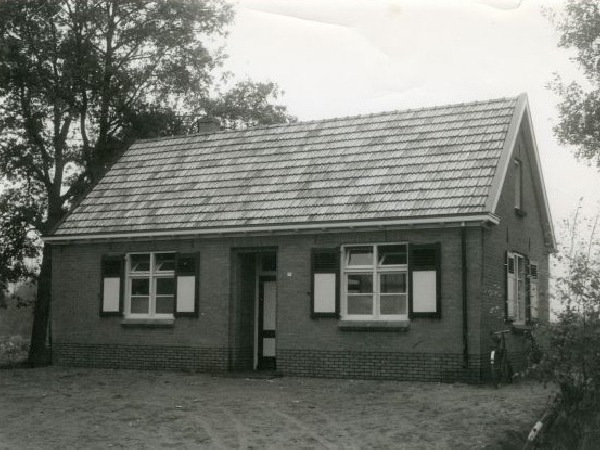
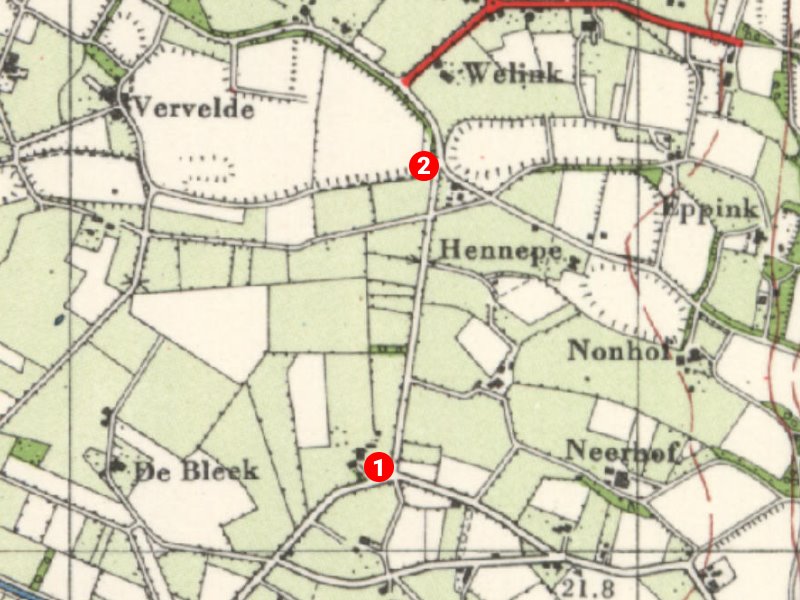
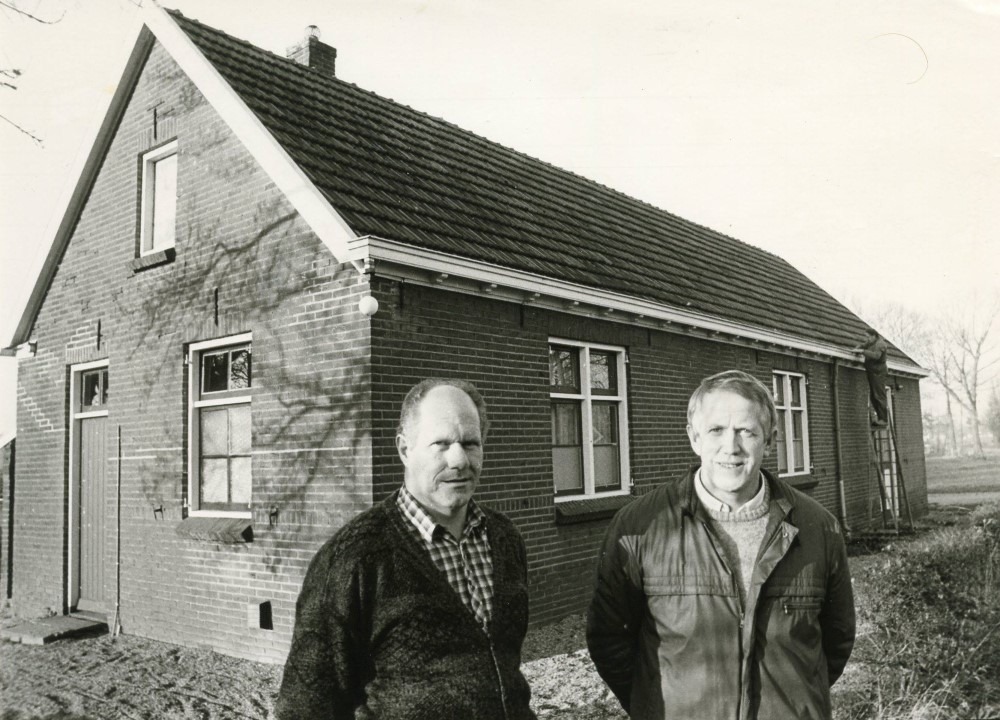
    Approximately at the location where the community center ‘t Romienendal is situated today, on the current Aladnaweg, the Dale West (Elshoek) Sunday school used to stand.

    The Dale Sunday school association was founded on 2 March 1928. The purpose of the association was the ‘establishment and maintenance of a Christian Sunday school’. There was also a Dale Oost Sunday school, located on the Walfortlaan.

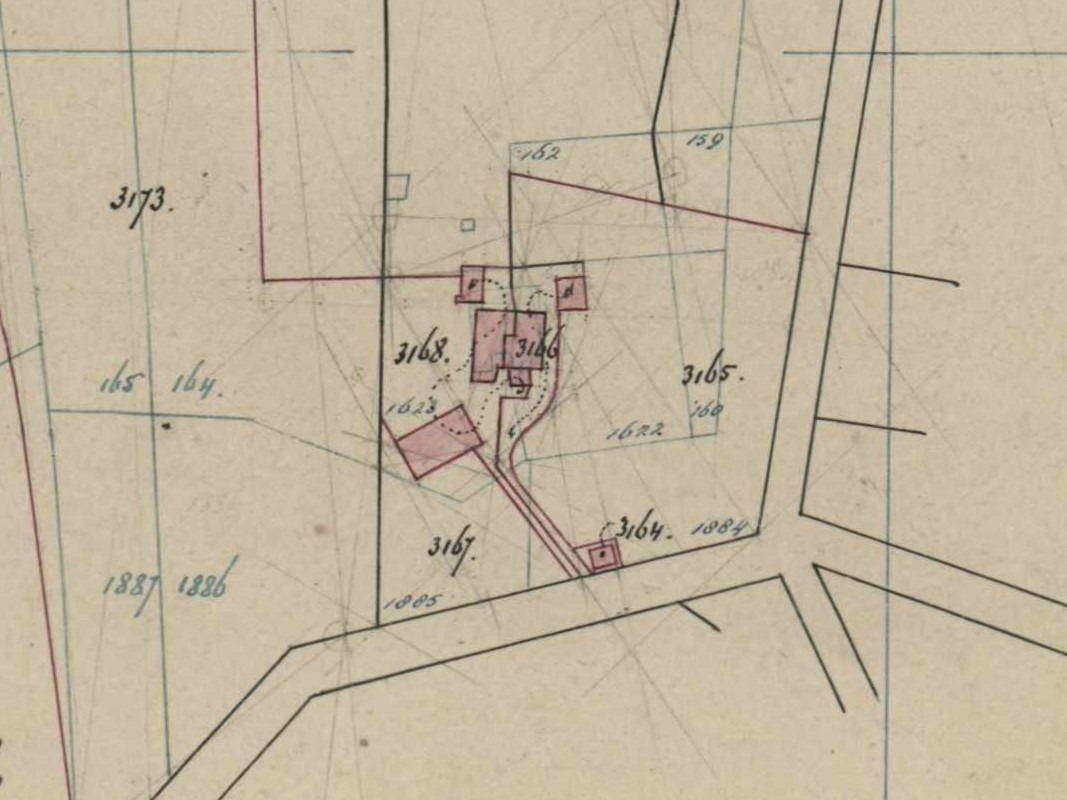
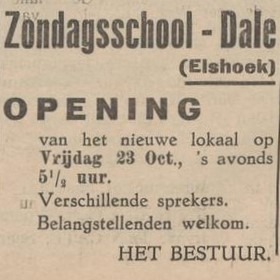
    The Sunday school building was put into use on 23 October 1936, replacing an older ‘Sunday school hut’ located approximately 500 meters further south on the Slatdijk. That older building was situated on the grounds of the ‘Nooitgedacht‘ farm, owned by Derk Willem Neerhof. They had been allowed to meet there for 60 years.

    New owner

    In 1986, the Sunday school on the Aladnaweg became too small and no longer met the requirements of the time. Previously, the Sunday school and youth clubs used the building, and occasional birthday parties were held there. Until then, the Sunday school association had managed and maintained the building, which was becoming increasingly difficult financially. Furthermore, there was a desire for more opportunities to establish and house other associations. Therefore, in December 1986, a new association for a Building for General Christian Interests in Dale was founded.

    This association took over the old Sunday school building from the Sunday school association. They investigated various possibilities, but expanding the small building proved to be impossible. They changed course and the adjacent plot was purchased.

    ‘t Romienendal

    To finalize the financial side of the project, various fundraising activities were organized, such as a flea market, a vintage car show, and a collection among the members. The municipality of Aalten also provided a loan. With all of this and a great deal of help from member volunteers, the new building was realized. On 3 April 1991, ‘t Romienendal was officially opened.


    Address history

    Address directory 1934

    Dale 34 > 17 (old location)

    Sunday school hall

    Address directory 1967

    Dale 27/1 > Slatdijk 7 (new location)

    Sunday school hall

    Features


    Cadastral no.O-1090
    FunctionSunday school
    Year of construction1936
    Demolitionca. 1990

    Sources


  • Sunday school Dale Oost

    Sunday school Dale Oost

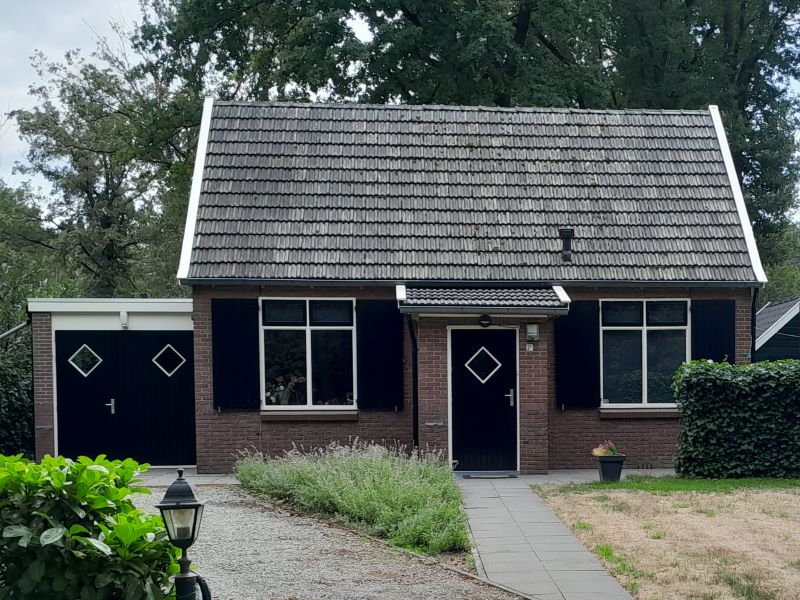
    Walfortlaan 2a, Dale

    The “Walfort” Sunday school association in Dale was founded in November 1934, according to its statutes. This date marks the first board meeting; however, the earliest recorded members’ meeting dates back to 28 November 1930.

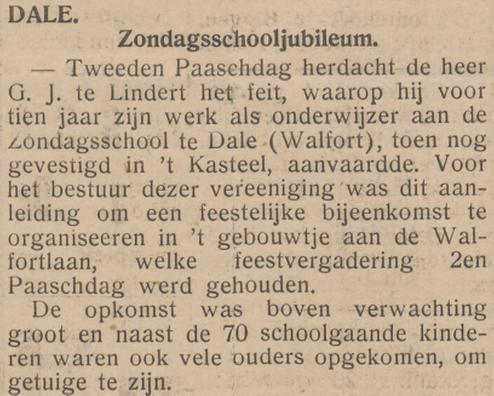
    Blijkens een krantenbericht uit 1937 werd er voor de oprichting van dit gebouwtje zondagsschoolonderwijs gegeven in Havezathe ‘t Walfort.

    Due to a lack of interest, Sunday school activities were ceased in 2000. The school building was sold in 2007. The association’s archive was donated to the Erfgoedcentrum Achterhoek en Liemers (Heritage Centre) in 2013.

    Er was ook een zondagsschool Dale West, bij het huidige Romienendal aan de Aladnaweg.


    Address directory 1967

    Dale 151/1 > Walfortlaan 2

    Sunday school hall

    Features


    Cadastral no.P-161
    FunctionSunday school
    Year of construction1935
    Listedno
  • Doeke Bekius

    Doeke Bekius

    Mayor (1976–1988)

    Doeke Bekius (Gauw, 14 November 1922 – Haart, 8 June 2013) was a Dutch politician, representing successively the Anti-Revolutionary Party (ARP) and the Christian Democratic Appeal (CDA).

    Bekius was born and grew up in the Frisian village of Gauw, near Sneek. After completing his ULO (advanced elementary education), he joined the municipality of Wymbritseradeel at the age of sixteen, a rural municipality surrounding Sneek that comprised 28 villages. In 1946, he moved to the municipality of Zutphen. With the experience gained there, he accepted the position of Head of General Affairs at the municipality of Apeldoorn in 1951. In July 1961, he became Mayor of Westdongeradeel, which was followed in December 1966 by his appointment as Mayor of Kollumerland en Nieuwkruisland.

    Mayor in the municipality of Aalten

    In mid-1976, Bekius accepted the mayoralty of the municipality of Aalten, succeeding Mayor Faber. He considered the small town of Bredevoort to be a gift, an inspiring assignment. In 1988, he was appointed ‘honorary drossard’ (eredrost) there.

    After his retirement, he continued to reside within the municipality of Aalten. He remained a member of both Bredevoorts Belang and Haarts Belang (local community interest groups). Furthermore, he dedicated himself to the Vereniging van Kleine Kernen (VKK – Association of Small Communities) Gelderland. At the end of 1987, he started there as an advisor to the board; he soon joined as a board member and subsequently served as its chairman for many years.

    Bekius lived and passed away in the hamlet of Haart, in the municipality of Aalten. On 14 June, his funeral took place in his birthplace of Gauw.

    He was succeeded as Mayor of Aalten by Tijme Bouwers.

    Leestip


    ‘Van Maire Stumph tot Burgemeester Stapelkamp’, door Leo van der Linde

  • Evert Sickens van Veen

    Evert Sickens van Veen

    Mayor (1946–1967)

    Evert Sickens van Veen (Hijkersmilde, 04-10-1902 – Winterswijk, 03-05-1976) was a Dutch politician representing the CHU (Christian Historical Union).

    He was born the son of Jan van Veen (1855–1917; a farmer) and Matje Prins (1867–1943). He attended the gymnasium but suffered from health problems and left the school prematurely to undergo a health cure in Switzerland. After subsequently working in the agricultural sector in France for a period, he returned to the Netherlands in 1926. He became an unpaid apprentice (volontair) at the municipality of Schoonebeek, and in mid-1930 he was appointed as an administrative officer at the town clerk’s office of the municipality of Stad Hardenberg. Two years later, he transferred to the municipality of Gramsbergen, where he rose to the position of chief administrative officer.

    On 25 March 1931, Evert Sickens van Veen married Johanna Jacoba Strating in Oosterhout (North Brabant).

    In late 1937, Van Veen was appointed Mayor of Nijeveen. In September 1943, he went on sick leave, at which point the Mayor of Meppel, Geert Wisman, also became acting Mayor of Nijeveen. Early in 1944, Van Veen was dismissed, but he later returned to his post as Mayor of Nijeveen. Furthermore, in late 1945, he served as acting Mayor of Ruinerwold for several months.

    In 1946, Van Veen was appointed Mayor of Aalten, succeeding Mayor Monnik. Van Veen retired from his post there in November 1967 and passed away in 1976 at the age of 73. He is buried at Berkenhove Cemetery.

    Van Veen was succeeded as Mayor of Aalten by Hendrik Hieltje Hans Haverkamp, LLB.

    Leestip


    ‘Van Maire Stumph tot Burgemeester Stapelkamp’, door Leo van der Linde

    Sources


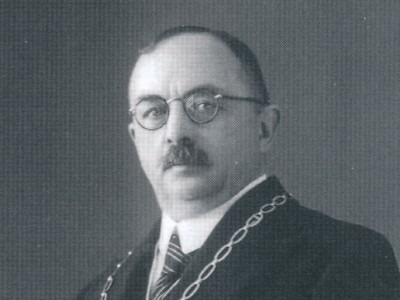
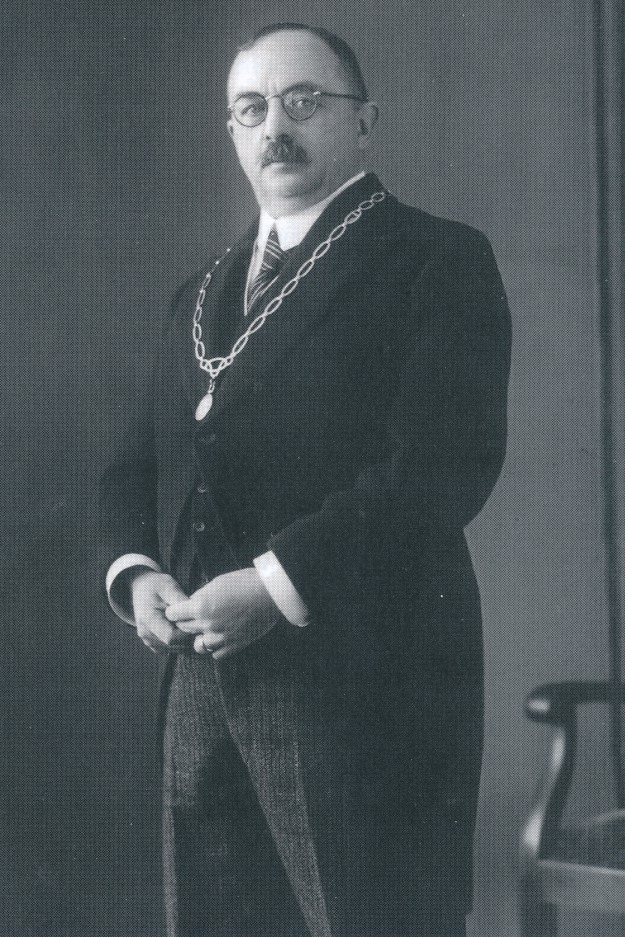
  • Adriaan Johannes Willem Monnik

    Adriaan Johannes Willem Monnik

    Mayor (1910–1945)

    Adriaan Johannes Willem Monnik was born on 19 November 1879 in Vorden, the son of Adriaan Johannes Wilhelmus Monnik, a medical doctor, and Anna Hendrika Blotkamp. On 22 May 1913, he married Louise Wilhelmina de Waal Malefijt (born in Zeist, 17 August 1881) in The Hague. She was the daughter of Jan Hendrik de Waal Malefijt, Minister of the Colonies, and Frederica Sophia Wilhelmina Couvée.

    Monnik was appointed Mayor of Aalten in 1910, succeeding Willem Carel Tack.

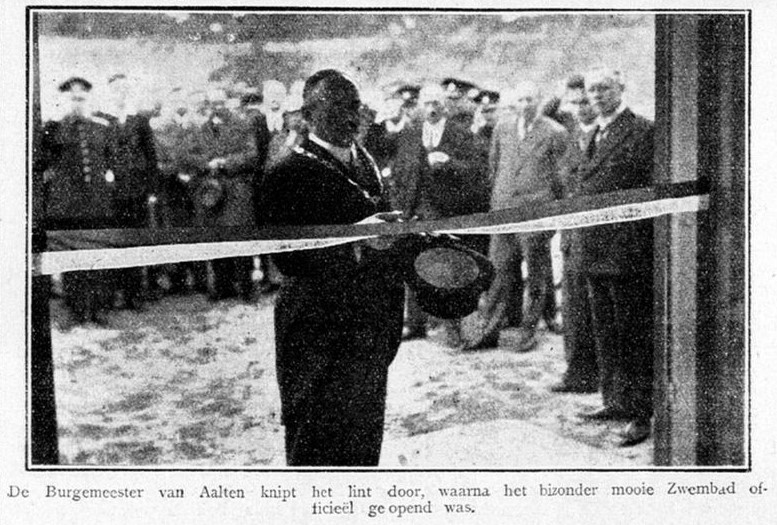
    He served as Mayor of Aalten for no less than 35 years. The Monnik family lived in villa Zonneheuvel on Bredevoortsestraatweg in Aalten, on the site where the indoor swimming pool would later be built.

    In 1944, Mayor Monnik received orders to ensure that 500 men from Aalten report to Zevenaar to be deployed in digging military defences. He and his municipal officials took the collective decision to refuse and go into hiding together. The civil register (bevolkingsregister) was moved to safety.

    During his period in hiding, Monnik was replaced by I.A. de Moor, the former Mayor of Breskens who had fled from there along with many other NSB (Dutch Nazi Party) members. Following the liberation, Monnik returned to his post as mayor and retired on 1 November 1945.

    In 1946, Monnik was appointed a Knight in the Order of Orange-Nassau.

    On 2 August 1951, he passed away at the Bronovo Hospital in The Hague following an operation. He was buried at Berkenhove Cemetery.

    He was succeeded as Mayor of Aalten by Evert Sickens van Veen.

    Interview on his 25th anniversary in office

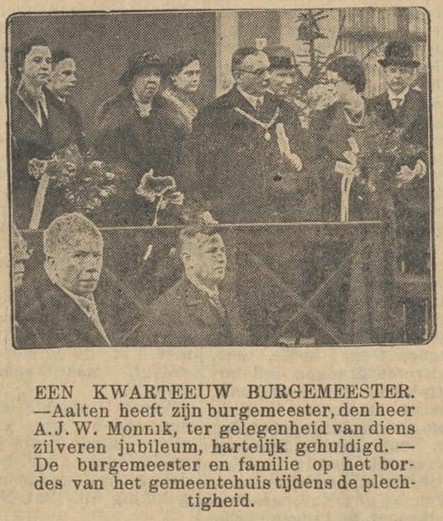
    On the occasion of Mayor Monnik’s 25th anniversary in office, De Graafschapbode published an interview with the jubilarian on 8 March 1935, reproduced below in a slightly abridged form:

    When we are seated in the spacious mayoral office, our first question is naturally: “Could you tell us something about your very earliest years, school education, and so forth?” We learn that Adriaan Johannes Willem Monnik was born on 19 November 1879 in Vorden. His first two school years were spent at the Christian school in his birthplace. Then, a governess came to the house. One room was fitted out as a schoolroom, and here the young pupil, alongside just one fellow classmate, was prepared for the gymnasium.

    Following this primary education, he attended the Christian gymnasium of the Reverend Van Lingen in Zetten for three years. His studies had to be interrupted at that point for health reasons and were later resumed at the H.B.S. (modern secondary school) in Zutphen. He then attended the lectures of Professor Hugo de Vries at the Municipal University of Amsterdam for a year.

    Appointed Mayor of Aalten

    “It was always my ambition,” Mr Monnik tells us, “to become a mayor one day, and when the vacancy in Aalten arose, I was appointed Mayor of Aalten on 23 February 1910.” Following his swearing-in on 2 March, Mr Monnik was installed as mayor here on 15 March 1910. The senior alderman (wethouder), Z.G. van Eerden, delivered the installation address. The mayor concluded his reply by stating, among other things: “I shall do what is a mayor’s duty.”

    At that time, Mr B.H. Vaags was the town clerk (gemeente-secretaris), and the aldermen were Messrs Z.G. van Eerden and W. te Gussinklo. The council was composed as follows: F.H. Somsen, Th.A.M. Driessen, Sal. Gussinklo, L. Heusinkveld, H.A.J. Luiten (Sondern), J.P. Obbink, H.J. Veldhuis (Vels), Wander Nijhof, J.H. Veldkamp (Bredevoort), and A.P. Slicher van Bath.

    Until his marriage, Mr Monnik lodged with the Misses Vaags on the Kattenberg.

    Key decisions and events

    The mayor believes he recalls that his first decision was the purchase of the old Heijmans house on the corner of Koelmansteeg, to widen the entrance to Koelmansteeg (now Stationsstraat). The old minutes books are fetched, and indeed, it is correct (our mayor’s memory is, in passing, exceptionally good): this corner house was purchased for 3,500 guilders, allowing for a proper entrance to Stationsstraat.

    Then, on 27 April 1910, followed the opening of the tramway, the G.W.S.M. line B (Lichtenvoorde, Bredevoort, Aalten, Bocholt).

    Right from the start in 1910, his passion for public health became apparent when several dwellings were declared unfit for human habitation. “I have never involved myself much in politics; I feel much more drawn to public health, housing, and the like,” the town’s father figure remarks in passing.

    Later in 1910, we saw the construction of the Koembrug, the first concrete bridge in Aalten, as well as the public school renovation and the reorganisation of the police force (Mr Blom became chief rural constable at the time). The appointment of a foreman for the municipal labourers also dates from this period.

    In 1911, the abolition of German currency was brought up, though it was not until July 1914 that this was implemented. Due to the large number of labourers who went to work in the factories in Bocholt at the time, all of whom were registered with a German health insurance fund (Krankenkasse), a complex insurance issue had arisen, which was also resolved now.

    In March 1911, a weekly market for vegetables, chickens, eggs, and fish was introduced. The improvement of the drainage of De Goor also took a major step forward with the establishment of the Baaksche Beek Water Board. An old covenant had stipulated that the Veengoot ditch could not be deepened, making drainage of De Goor impossible. The creation of the Water Board allowed for a change. In 1911, Lankhofstraat and Ormelstraat were also laid out.

    It would take us too far to deal with every year in such detail. We shall walk through the subsequent years at a slightly accelerated pace and mention them more as chronological milestones. In 1912, we find the retirement of rural constable Heersink.

    On 22 May 1913, Mr Monnik married L.W. de Waal-Malefijt. His lodgings with the Misses Vaags were exchanged for villa Zonneheuvel.

    On 21 February 1914, the council decided to build new schools in IJzerlo and on De Haart. On 13 March of the same year, the schoolmaster’s house in Aalten followed. In February, house construction on Haartseweg was also commenced.

    On 1 August, we see the beginning of the Great War, which brought numerous hardships. Gradually, all foodstuffs and provisions became scarcer, leading us into the era of rationing. What an immense amount of work and trouble that entailed! During that period, we supplied 1,000,000 kilograms of rye, making us one of the largest rye-supplying municipalities in the country.

    In September 1914, the ordinance on pub closing hours came into force, and the “blacklist” was introduced. On 31 October, the budget post for night watchmen was scrapped, and by 1 January 1915, the night watchman in Aalten belonged to the past.

    In late 1917, the council expressed its approval in principle for taking over the gasworks. The decision to acquire it was taken on 19 December 1918. 1918. The council took over the gasworks for 115,000 guilders, plus 29,602.87 guilders for the pipes, gas meters, etc. The date of transfer was 2 May 1919.

    Following the armistice, when the prisoners of war arrived at the border, it was rumoured that 30,000 of them would be coming here. Fortunately, they took another direction in Bocholt. Nevertheless, we received our share in November 1918, namely Frenchmen and Italians, who were housed in the Community Hall and in the factory of the N.V. Textiel Mij. textile company. The people were starved. “We experienced something rather peculiar with those Italians,” the mayor tells us. “We had given them all some of our excellent soap, of which we had a large stock at the time, so they could wash themselves properly, but by the following day, all the soap had been eaten by the Italians!”

    On 26 February 1920, the Oosterman plot was purchased with the intention of creating the new cemetery there. This plan did not go ahead. Later, in 1922, another site was designated for this purpose: the present-day Berkenhove Cemetery.

    In August 1920, a start was made on the official naming of streets. The first was Oranjestraat in Bredevoort. August also saw the tendering for Gendringseweg.

    On 19 May 1922, the cattle market was moved to the inner market square. In recent years, however, the cattle market has been restored to its former glory. This year also saw the introduction of the meat inspection service, with Dr Rexwinkel appointed as inspecting veterinary surgeon. On 11 April, the slaughterhouse was taken over by the municipality.

    Then we come to the most recent years, which are still fresh in all our memories. Various roads were paved during these years: Sondernweg and Haartseweg in 1929. A ring road was constructed on 24 August 1928, and now the Walfort open-air lido, a project of the very last few years.

    The Aldermen over these 25 years

    It is quite interesting to look back at which aldermen we have had during these 25 years. In 1910, as previously mentioned, they were Z.G. van Eerden and W. te Gussinklo. Following the death of Van Eerden, Mr Theod. Driessen became alderman in May 1916, stepping down again in 1918. We then had Mr F.H. Somsen for a brief spell. From 2 September 1919 to 4 September 1923, the aldermen were Messrs H.J.J.G. ten Dam and Joh. Obbink. Mr F.H. Somsen then took the place of Mr ten Dam (4 September 1923), and on 8 March 1926, Mr A. Brethouwer succeeded Mr Obbink. Messrs Somsen and Brethouwer remain in office as aldermen to this day.

    As town clerk, Mr S. Bijlsma succeeded his predecessor, Mr B.H. Vaags, on 1 February 1930. On 29 January 1924, the municipal treasurer, Mr F.H. Freriks, retired. Mr F. Heisterman was then appointed as treasurer. At the Municipal Works department, following the passing of Mr J. Brill, Mr Tilbusscher became the municipal architect, assisted by Mr H. Rollman.

    Other roles of the jubilarian

    Alongside his own busy professional sphere, the mayor takes a particular interest in education. Mr Monnik serves as treasurer of the Union of School Boards, Teachers, and Supporters of Christian Education in the Gelderland Achterhoek and surrounding areas.

    He is also a board member of the Groen van Prinsterer Teacher Training College in Doetinchem. Furthermore, he is a director of the N.V. Waterleiding Oostel. Gelderland water company and a member of the Supervisory Board of De Graafschap printing and publishing company.

    Finally, we are curious to know the mayor’s view on the prospects of our municipality in the near future.

    “These past 25 years,” Mr Monnik says, “have certainly not been easy. First the war years, and now the perhaps even more difficult post-war period with its severe decline in every field, its massive unemployment, with the unemployment relief schemes (werkverschaffing) and everything that entails. My wife has always been an immense support to me through all these difficulties.”

    Regarding the relief schemes, we can add that on 24 November 1916, the Patrimonium association requested employment relief. The first project was gravel digging in 1918. On 30 May 1917, Aalten became one of the first municipalities to adopt unemployment insurance.

    The mayor concludes: “We as a municipality are not in too bad a position. This is a very heavy year, certainly, but I foresee that things will gradually improve. We shall move forward with confidence, one eye looking upward, one eye looking inward. Hand to the plough, and the end will be good. We must seek not what divides us, but what binds us together!”

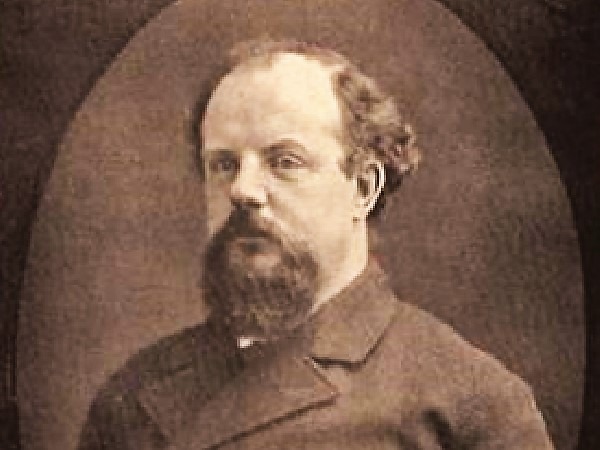
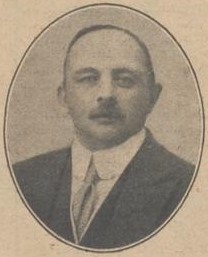
    Burgemeester Monnik – Aaltensche Courant, 27-05-1927
    Aaltensche Courant, 27 May 1927
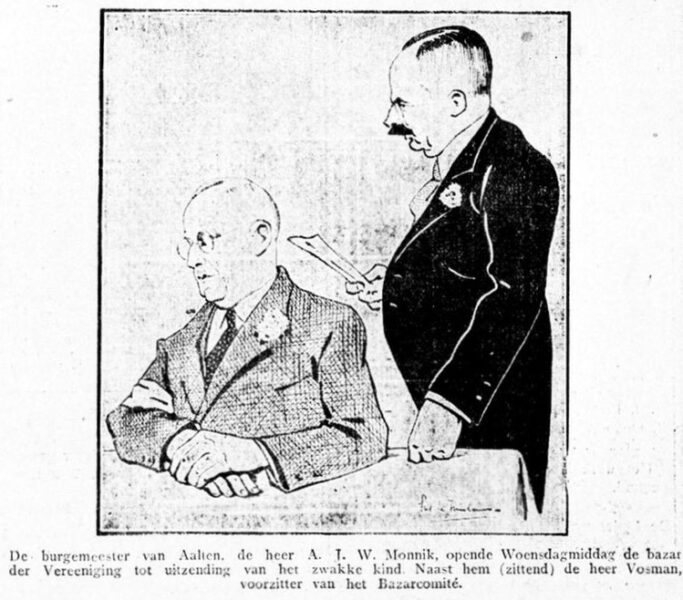
    Mayor Monnik opens Bazar – Graafschapbode, 13 April 1934
    Graafschapbode, 13 April 1934
    Mayor Monnik opens 't Walfort swimming pool, 25 juni 1934
    Graafschapbode, 25 June 1934
    25th anniversary mayor Monnik – Sumatra Post, 8 June 1935
    Sumatra Post, 8 June 1935
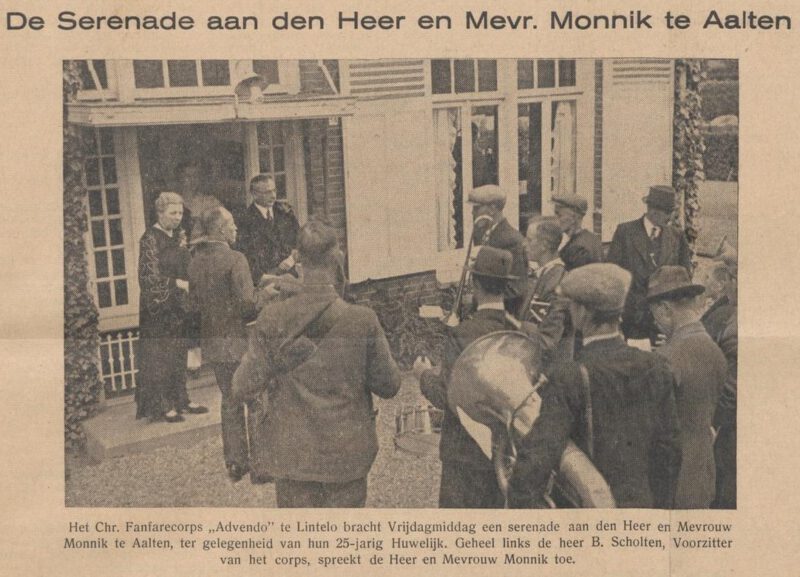
    Serenade mayor Monnik – De Graafschapper, 24 May 1938
    De Graafschapper, 24 May 1938
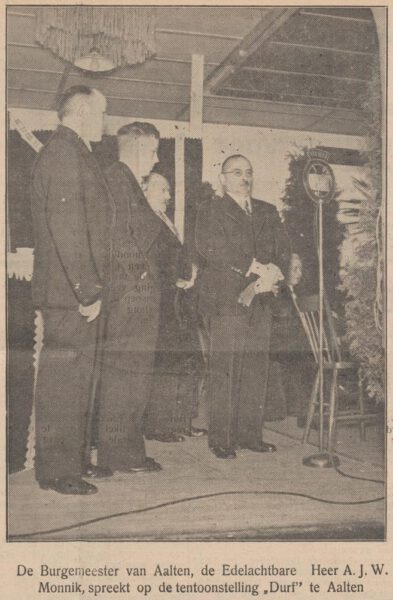
    Mayor Monnik – De Graafschapper, 7 November 1938
    De Graafschapper, 7 November 1938

    Recommended reading


    ‘Van Maire Stumph tot Burgemeester Stapelkamp’, by Leo van der Linde

    Sources


  • Johan Hora Adema

    Johan Hora Adema

    Johan Hora Adema (Leeuwarden, 24 April 1843 – Velp, 15 March 1938) was a mayor in three different municipalities. In addition, he served as a captain in the Grenadiers and Rifles Regiment (Regiment Grenadiers en Jagers). In 1870, he married the Frisian Lucia Aurelia Bergsma Fruitier de Talma, with whom he had four children.

    Festive arrival in Aalten

    In 1886, Hora Adema was appointed town major of Aalten, succeeding Mayor L. Roelvink, LL.M. To mark his arrival, a festive welcome procession was organised. A competition was held for the most beautiful triumphal arch, and in many parts of the village, people worked hard to prepare a fitting welcome for the new mayor.

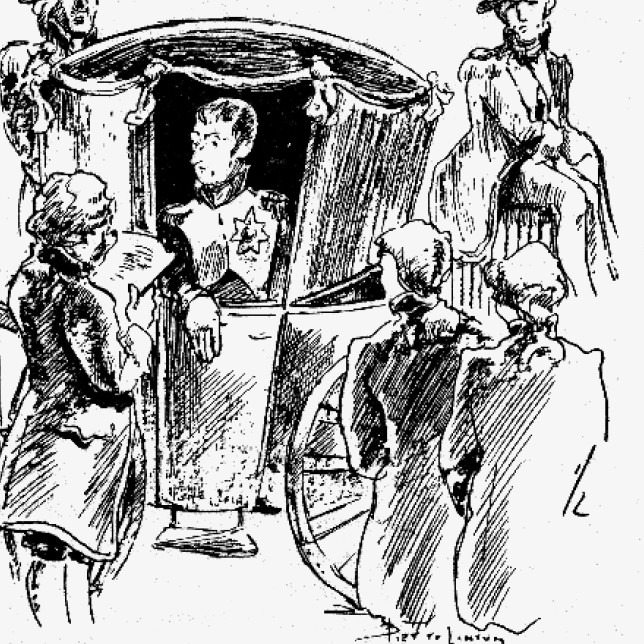
    The day of his arrival was exceptionally warm and celebratory; almost everyone was out on the streets. The new town father was driven through Aalten in a carriage. At each triumphal arch, the carriage halted so he could read the inscriptions displayed on them. The triumphal arch in Dijkstraat was particularly outstanding. It read:

    “Wees welkom J. Hora Adema,
    Voor U is deze boog geplant.
    Bestuur, beheer voor aller eer
    Dit dorp in ons vaderland.”
    (Welcome J. Hora Adema, / For you this arch is raised. / Govern, manage to everyone’s honour / This village in our fatherland.)

    The creators of this triumphal arch were awarded first prize. The new mayor took up residence in Landstraat.

    Mayor in three municipalities

    Hora Adema served successively as mayor of the municipalities of Aalten (1886–1888), Hengelo (1888–1891), and Harlingen (1896–1914).

    He was succeeded as mayor of Aalten by Squire Georg Ludwig Carl Heinrich Baud.

    Sources


  • Hendrik Hieltje Hans Haverkamp

    Hendrik Hieltje Hans Haverkamp

    Mayor (1968–1970)

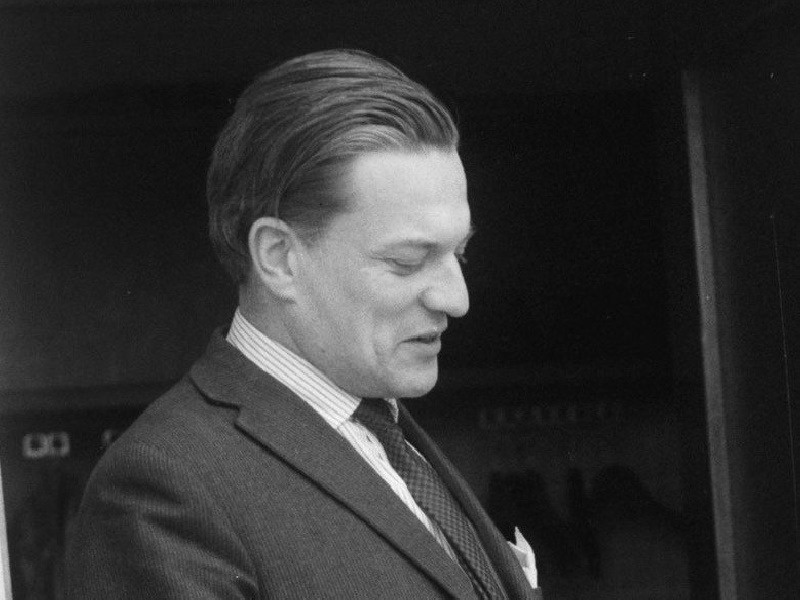
    Hendrik Hieltje Hans Haverkamp (Doetinchem, 1927-04-28 – Arnhem, 2011-06-19) was a Dutch politician of the CHU.

    He was born the son of Johan Hendrik Wilhelm Haverkamp (1900-1953), an official at the municipality of Doetinchem and later mayor of Dinxperlo, and Louisa Petronella Ynzonides (Obergum, 1901-08-12), a minister’s daughter. He graduated in law and served as deputy chief of the cabinet of the Queen’s Commissioner in Overijssel before being appointed mayor of Staphorst in April 1963.

    In January 1968, he succeeded Evert Sickens van Veen as mayor of Aalten. Only two and a half years later, in August 1970, he resigned as mayor to become the second secretary of the Rijnmond Council. Haverkamp passed away in 2011 at the age of 84.

    Haverkamp was succeeded as mayor of Aalten by Ruurd Faber.

    Mayor Hendrik Hieltje Hans Haverkamp

    Leestip


    ‘Van Maire Stumph tot Burgemeester Stapelkamp’, door Leo van der Linde

  • Georg Ludwig Carl Heinrich Baud

    Georg Ludwig Carl Heinrich Baud

    Jonkheer Georg Ludwig Carl Heinrich Baud was born on March 28, 1858, in Amersfoort, son of Jean Chretien Baud and Eveline Alexandrine van Ranzow.

    By Royal Decree of February 2, 1888, Baud was appointed mayor of Aalten. He succeeded Johan Hora Adema. At his own request, no public tribute was paid during his installation as mayor, other than the flying of flags.

    In 1892, he stood as a candidate for the Provincial Council on behalf of the Liberal Electoral Association. He was elected. On December 1, 1895, he requested an honorable discharge as mayor. He was succeeded as mayor of Aalten by Mr. Willem Carel Tack.

    In 1898, he resigned as a member of the Provincial Council to prevent a split within his party.

    On March 31, 1908, at the age of 50, he married Elisabeth Lamberta van Riemsdijk (Batavia, 1871-10-10) in The Hague, who was 14 years his junior. Baud passed away on April 4, 1921, in The Hague.

    Leestip


    ‘Van Maire Stumph tot Burgemeester Stapelkamp’, door Leo van der Linde

  • Willem Carel Tack

    Willem Carel Tack

    Mayor (1895–1910)

    Willem Carel Tack was born on September 26, 1838, in Doesburg as the son of Benjamin Tack, member of the city council, and Françoise Caroline Madelon Baroness Van Eck. On June 5, 1873, he married Cornelia Johanna Paré (Bredevoort, August 2, 1848), the daughter of a minister, in Aalten. Together they had five children.

    On March 4, 1880, Tack was appointed mayor of Kesteren by Royal Decree. Following an honorable discharge as mayor of that municipality, he assumed the mayoralty of Aalten effective December 15, 1895. He succeeded Jonkheer Georg Ludwig Carl Heinrich Baud.

    Festive Reception in Aalten

    On Monday afternoon, a large crowd awaited Tack and his family at Aalten station to welcome them. Carriages, riders, and a brass band then escorted the family to the official residence on Gasthuisstraat (currently Haartsestraat 10), which later earned the nickname ‘Tackshuis’. That evening, a torchlight procession passed through the village, which was decorated with flags and greenery, in honor of the new mayor. By Royal Decree of November 25, 1907, Tack was reappointed as mayor effective December 15, 1907.

    Tack passed away on May 4, 1915, in Aalten at the age of 76 and was laid to rest in Doesburg on May 8.

    Following his departure, Adriaan Johannes Willem Monnik succeeded him as mayor of Aalten.

    Leestip


    ‘Van Maire Stumph tot Burgemeester Stapelkamp’, door Leo van der Linde

  • Paul Hagemann

    Paul Hagemann

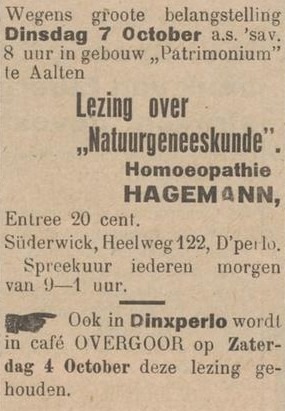
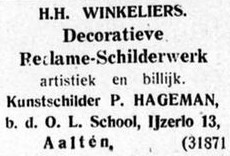
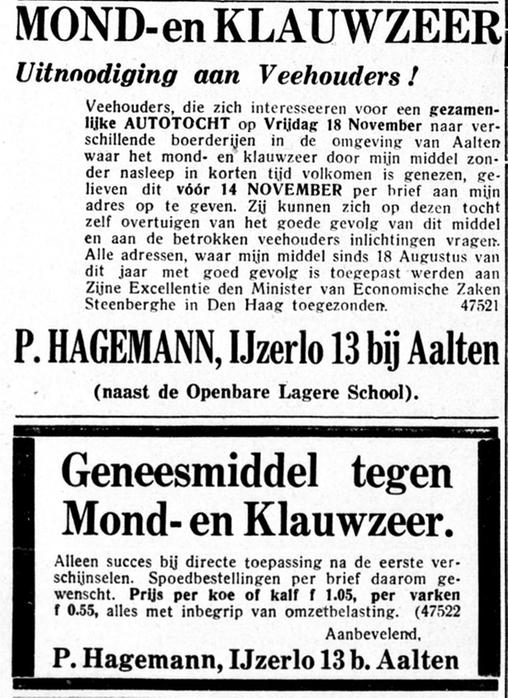
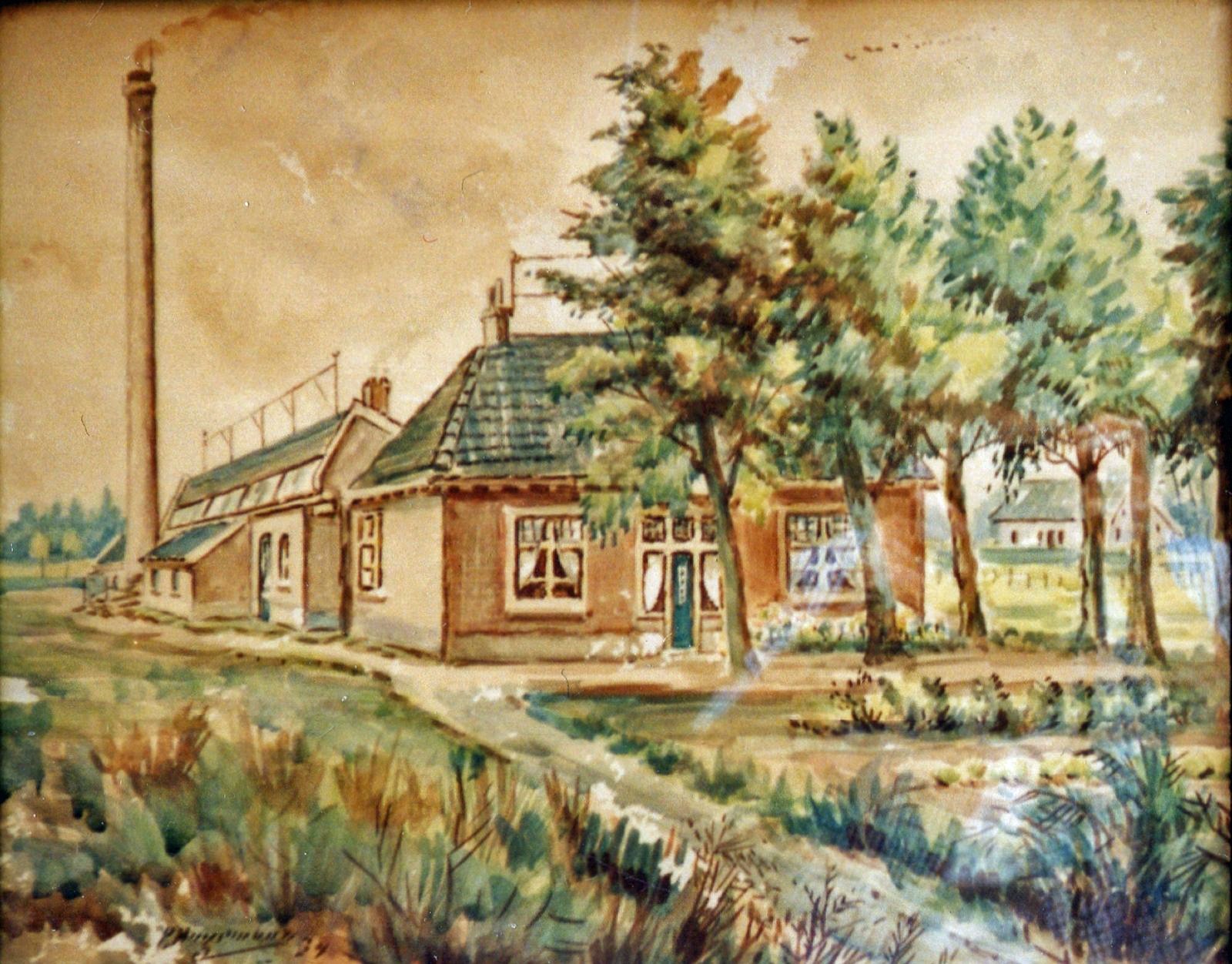
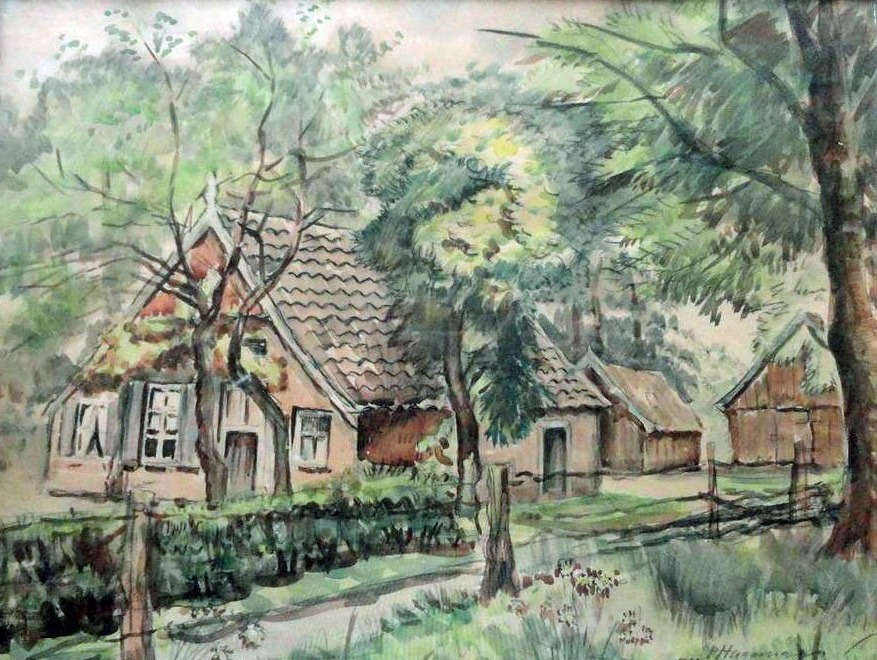
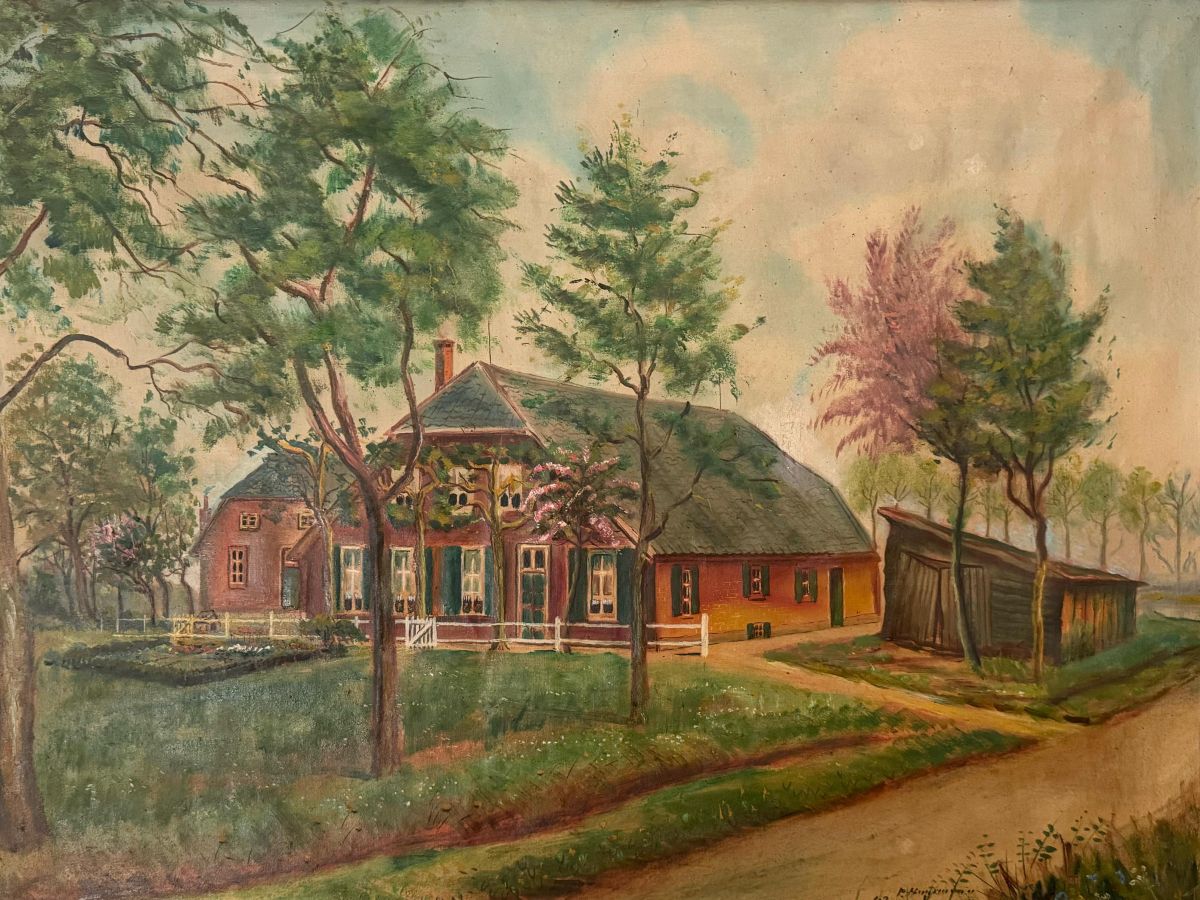
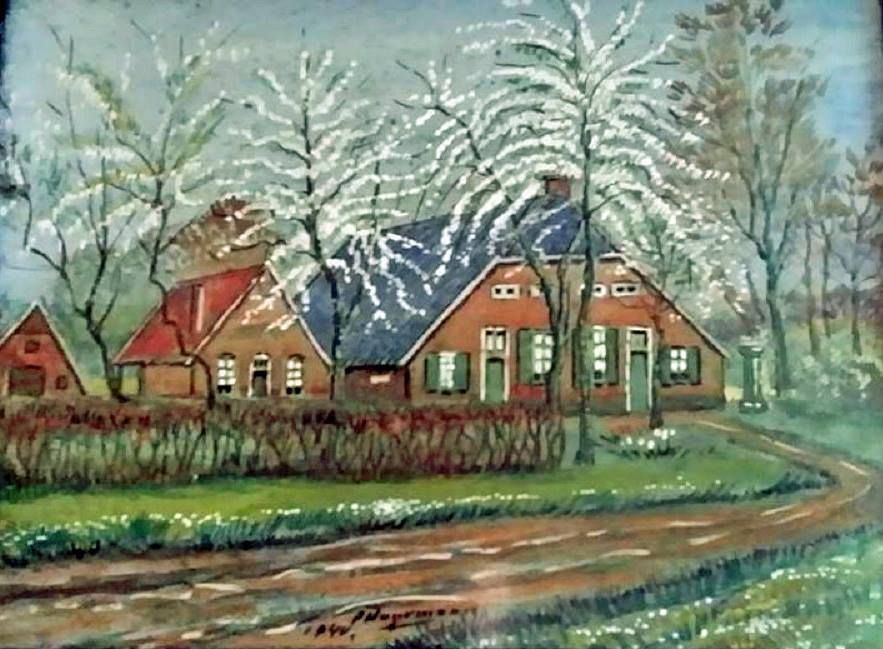
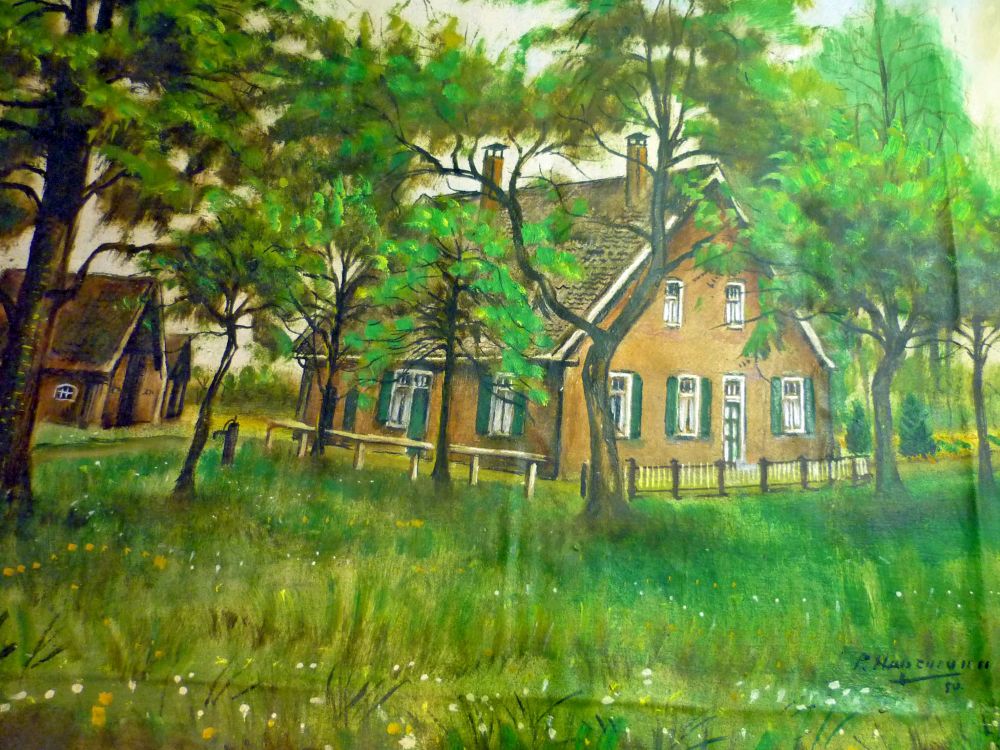
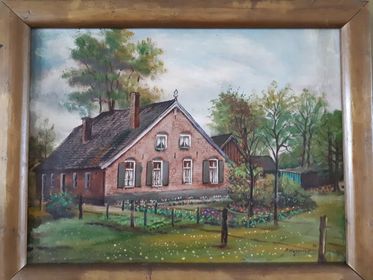
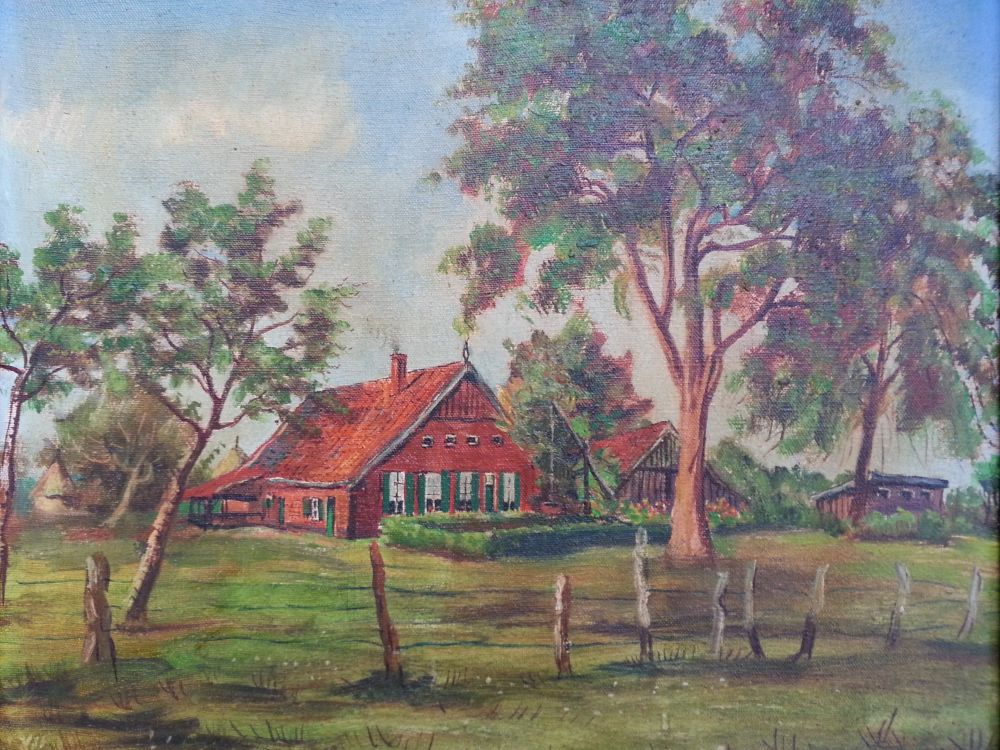
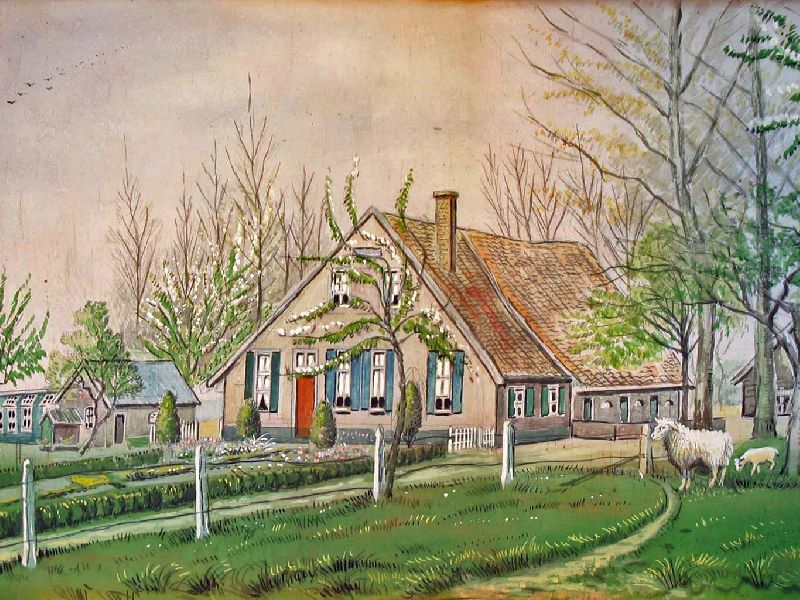
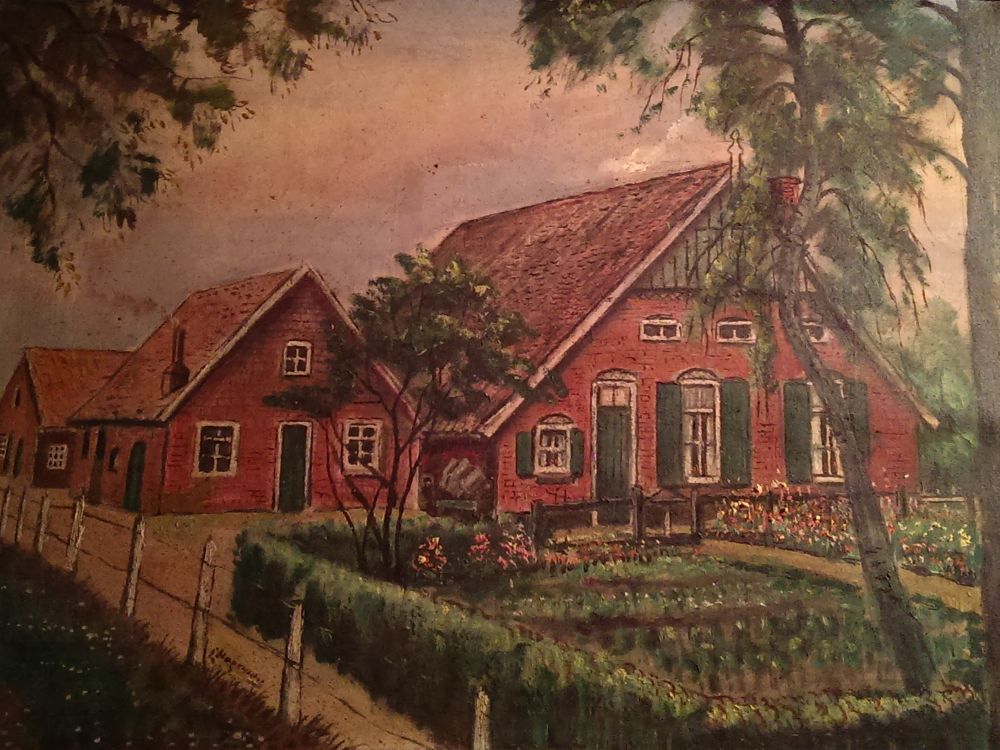
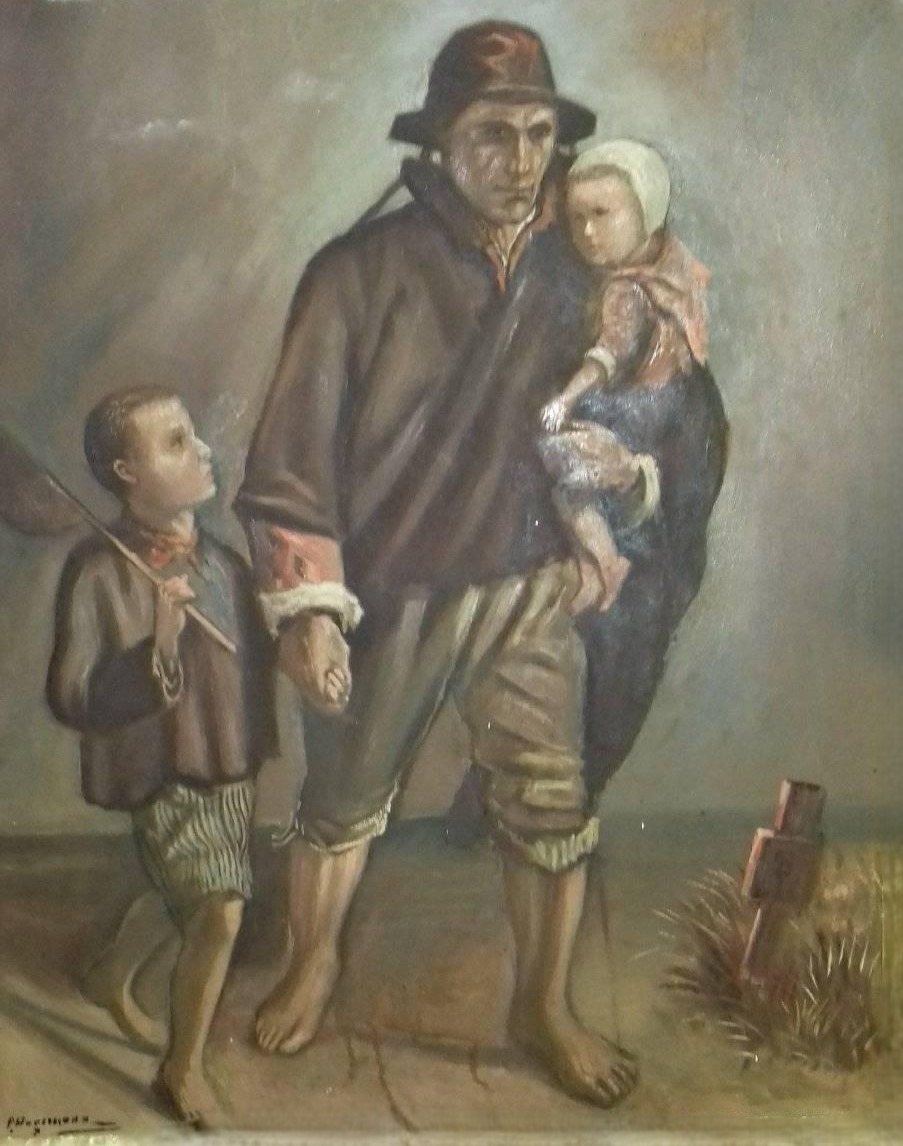
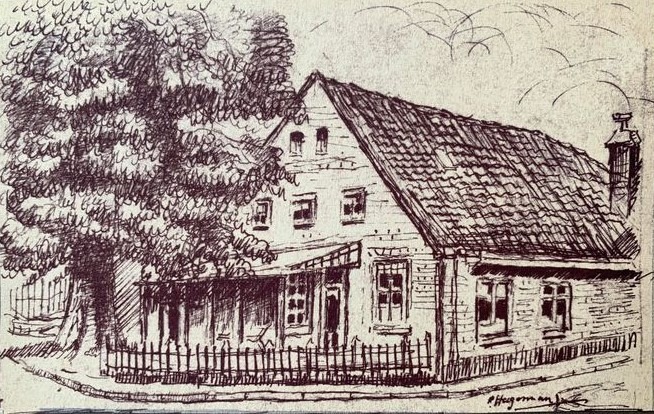
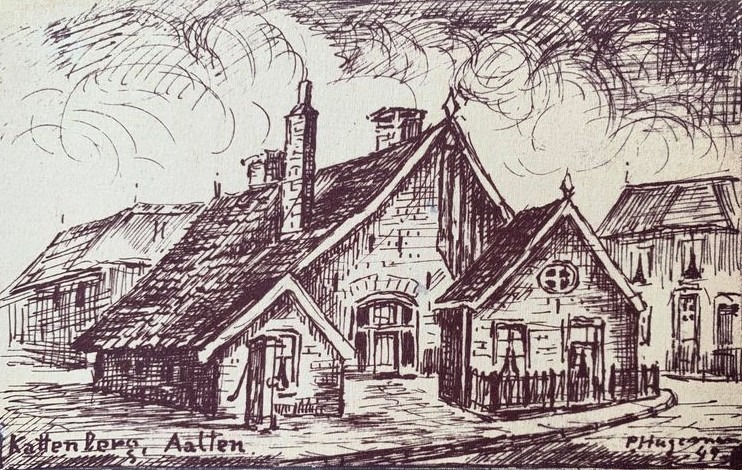
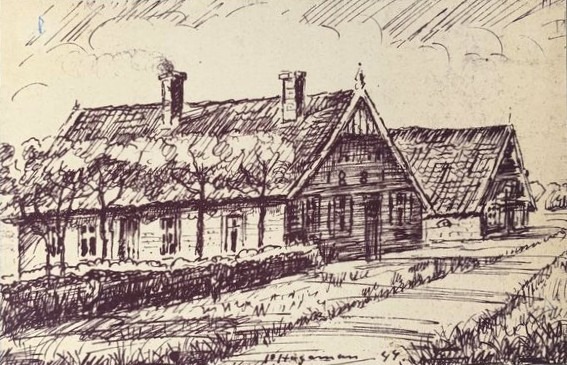
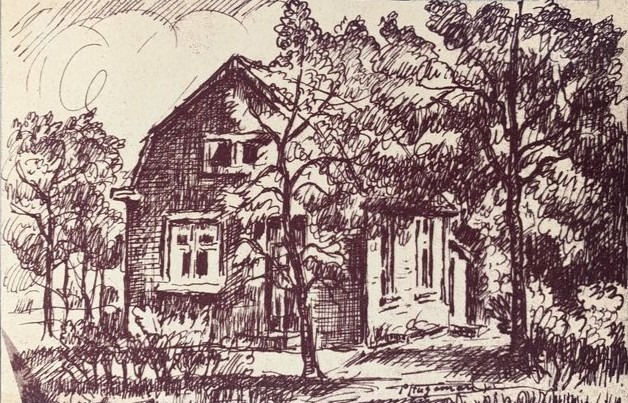
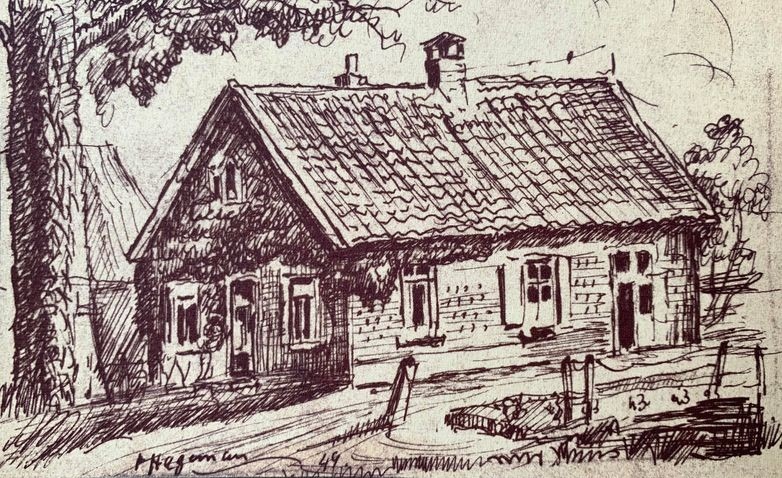
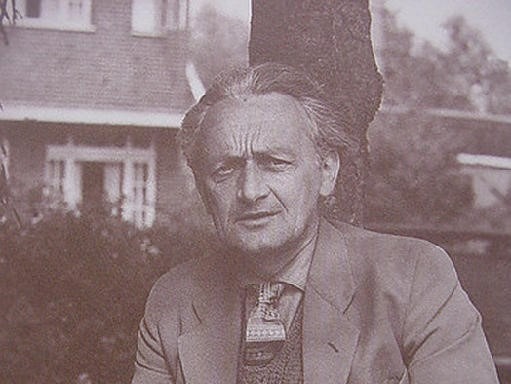
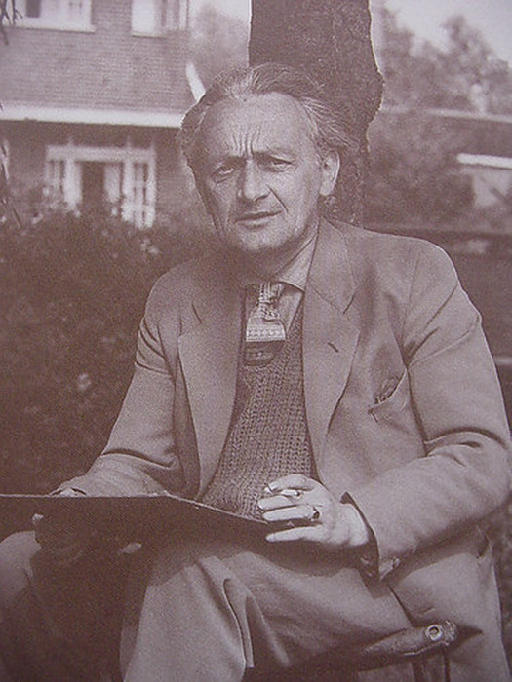
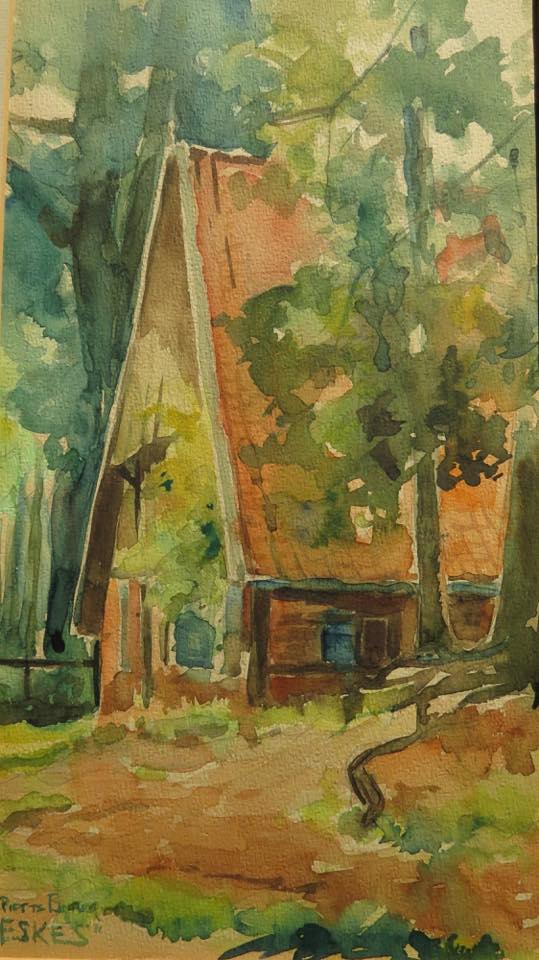
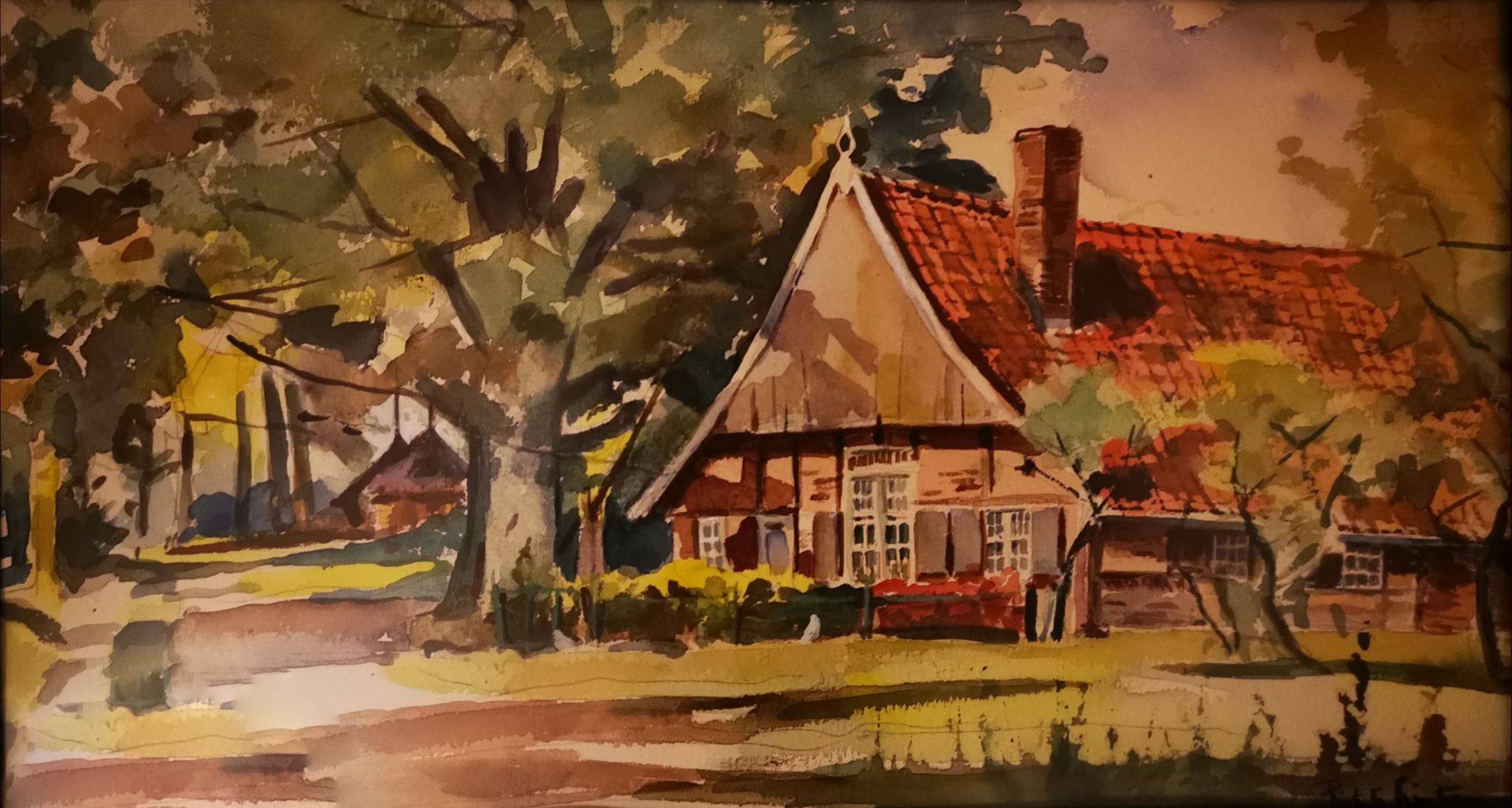
    Paul Hagemann (1882–1960) was a German-born artist and naturopath who settled in Aalten around 1926. He worked as a photographer, painter and sketch artist, documenting many of the farms around Aalten. In addition, he practiced amateur naturopathy.

    Johannes Paul Hagemann, known as Paul, was born on 3 March 1882 in Münster (Germany). On 15 November 1923, he married Francina Gijsberta (Bep) van Arkel in Amsterdam.

    The couple presumably settled in Aalten around 1926. In 1934, they were registered as residents of Bodendijk 19a in Aalten; in 1938, they lived at the address IJzerlo 13b, and by 1945, they were back in the village, at Dijkstraat 5.

    Among other subjects, Hagemann captured many farms and houses in and around Aalten on canvas. Alongside his artistic pursuits, he was also involved in naturopathy. One of his health products consisted of a small box containing metal and some form of electricity.

    Paul Hagemann passed away on 8 August 1960. He was buried at the Roman Catholic cemetery on Piet Heinstraat in Aalten.


    Gallery

    A selection of works by Paul Hagemann:

  • Piet te Lintum

    Piet te Lintum

    Columnist, illustrator, sketch artist and painter

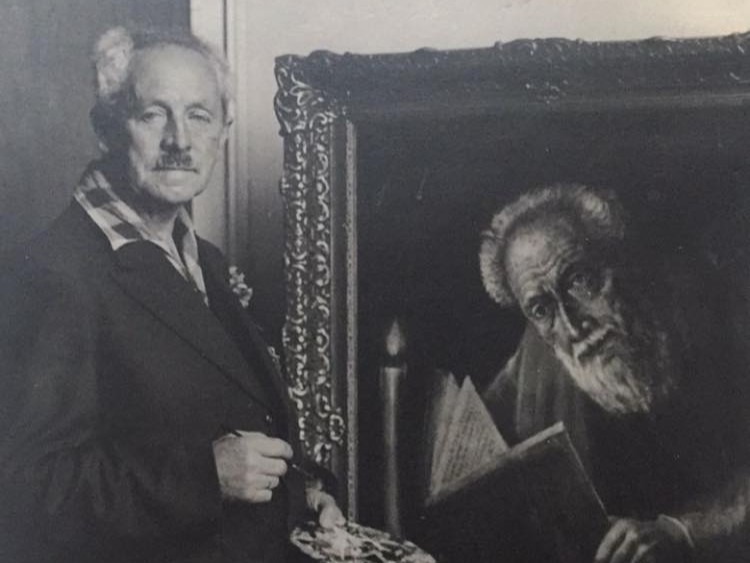
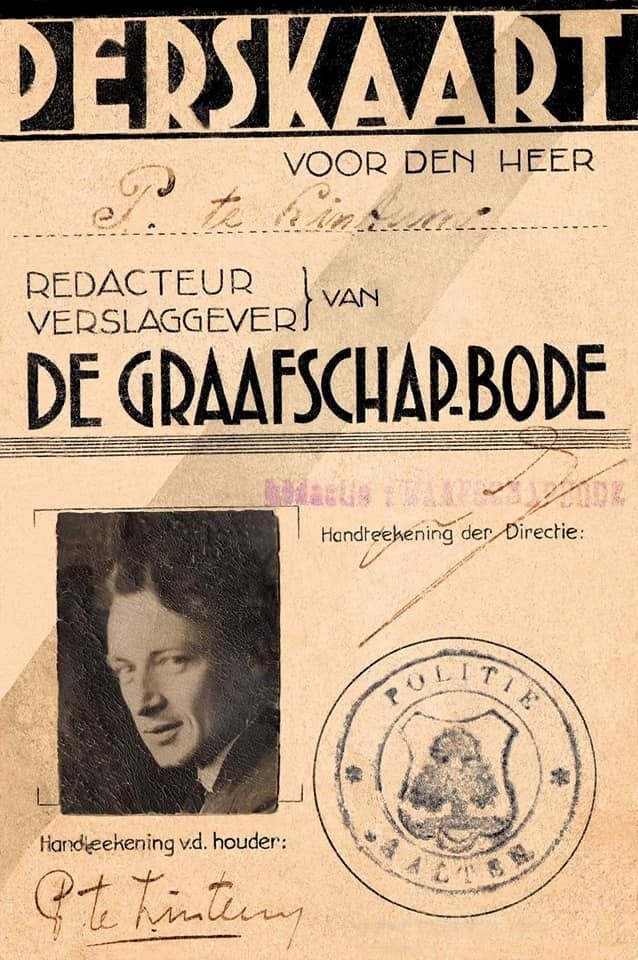
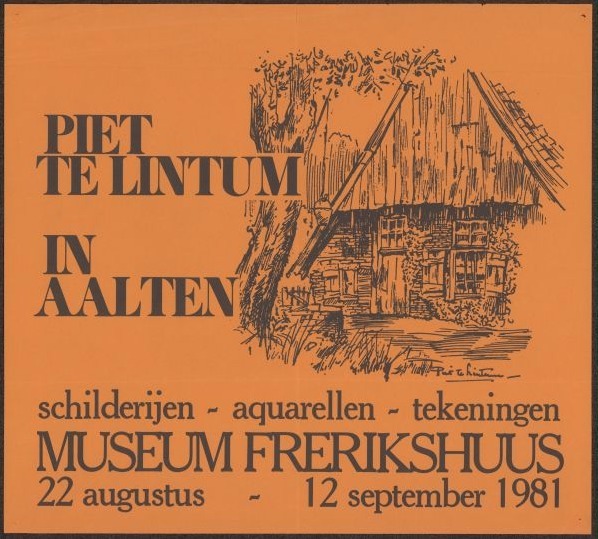
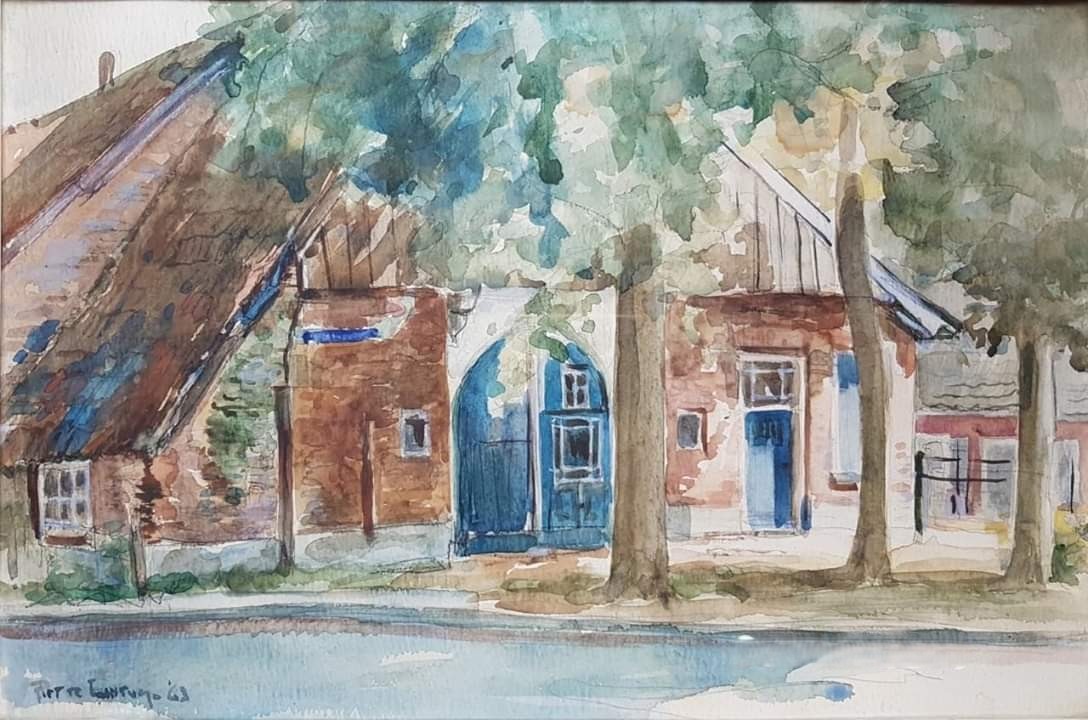
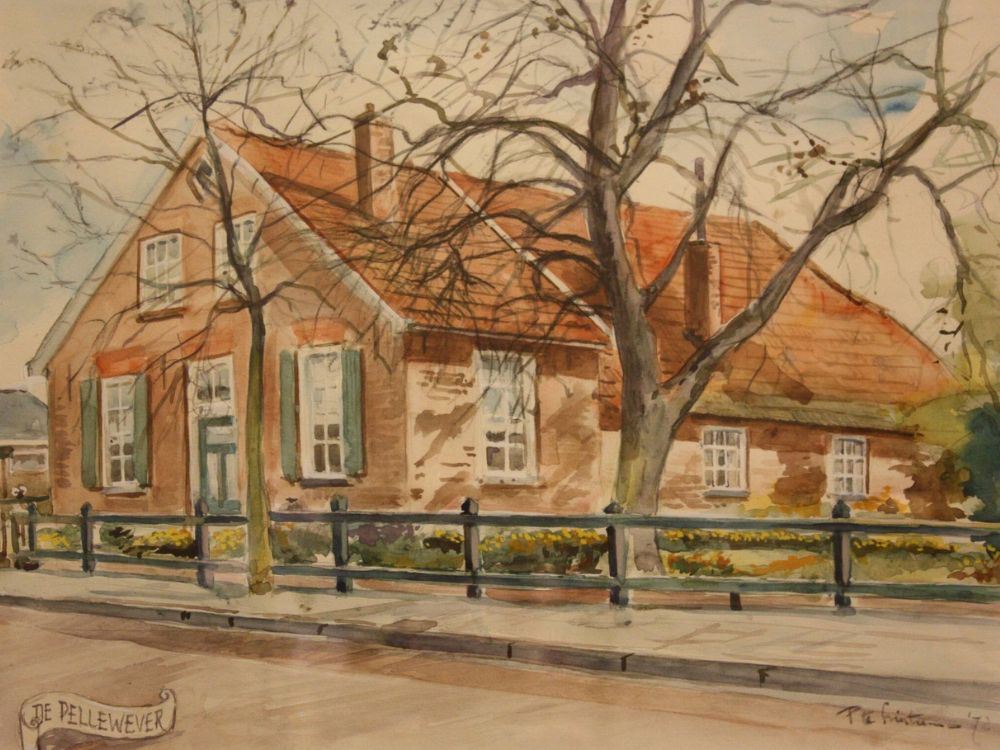
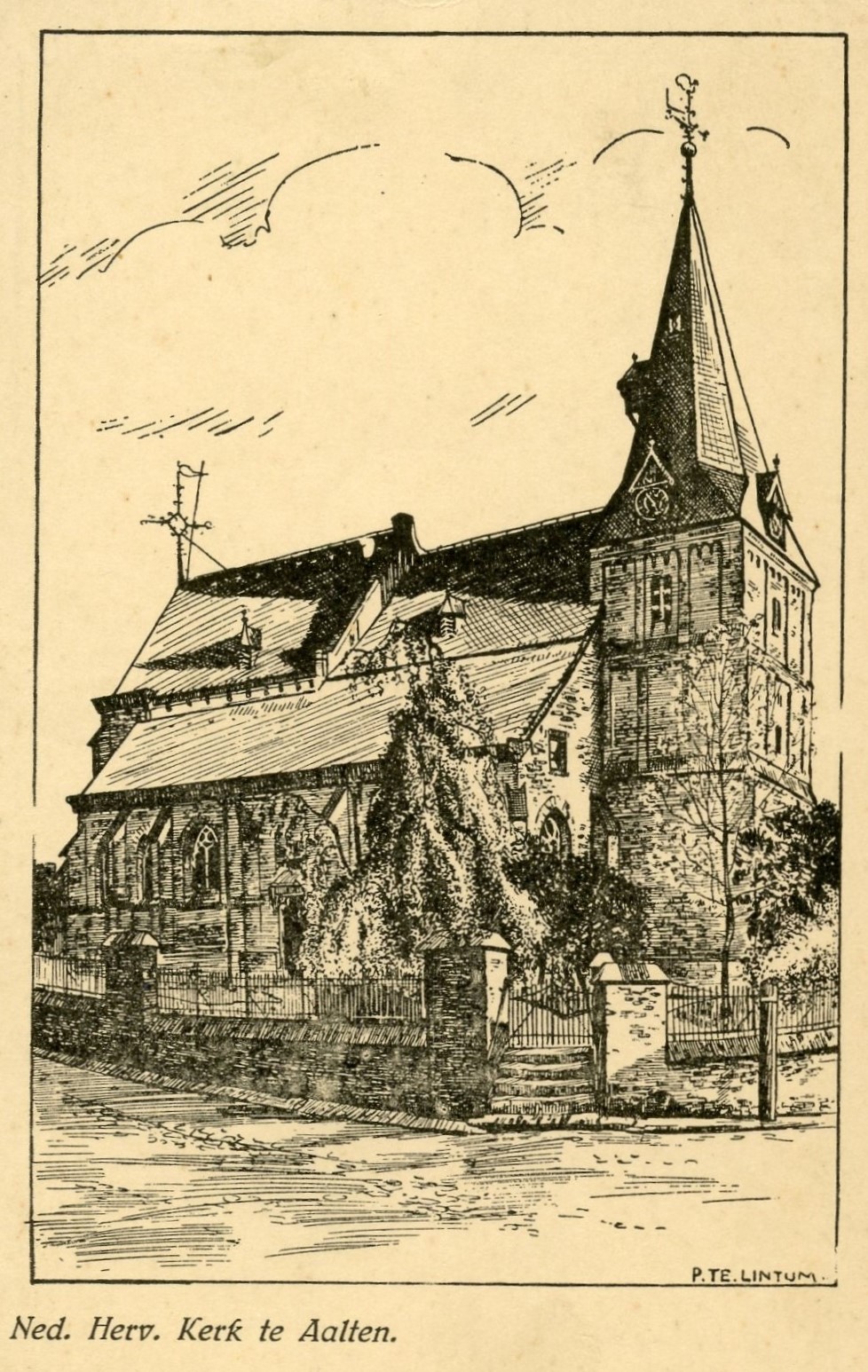
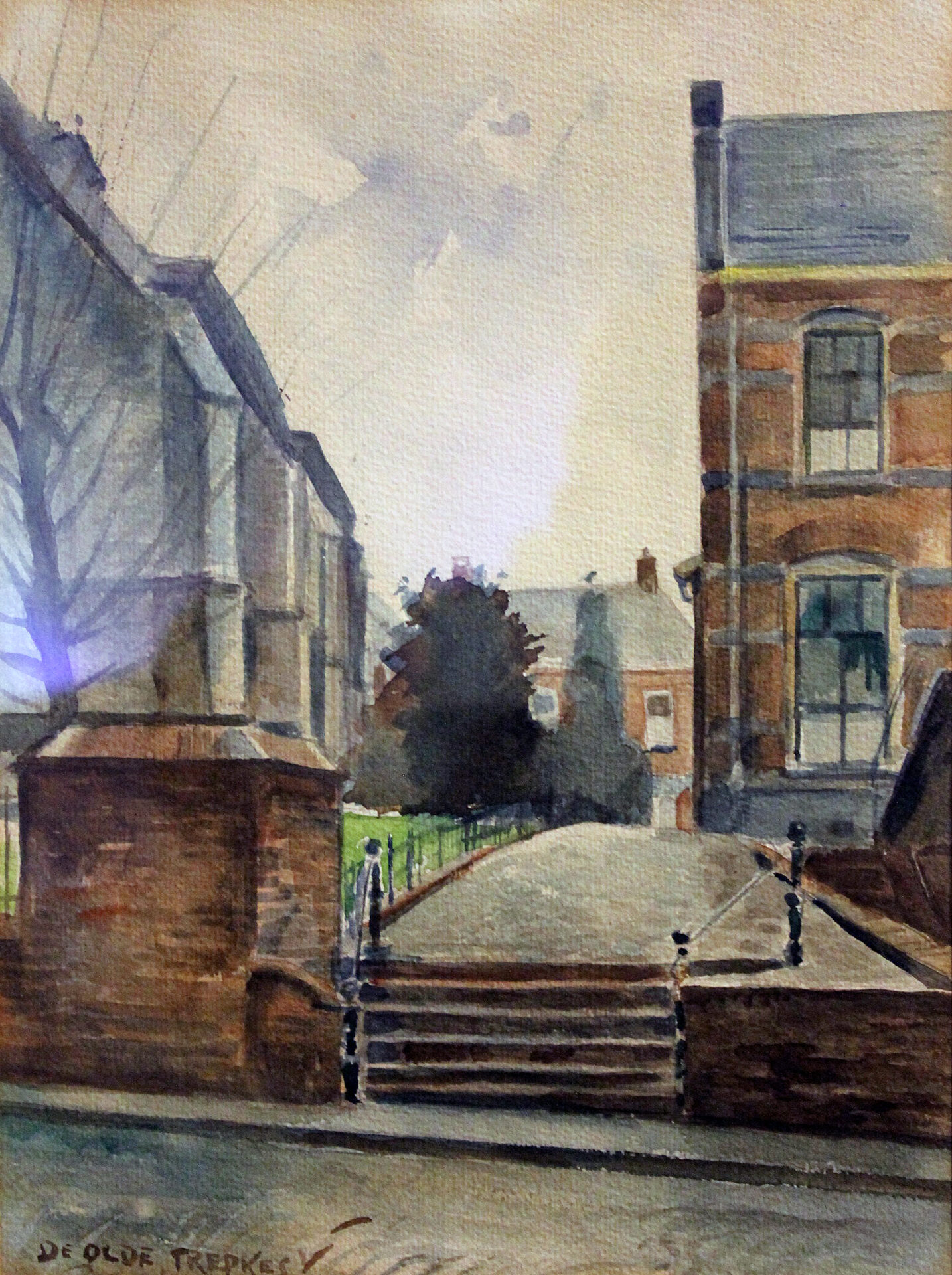
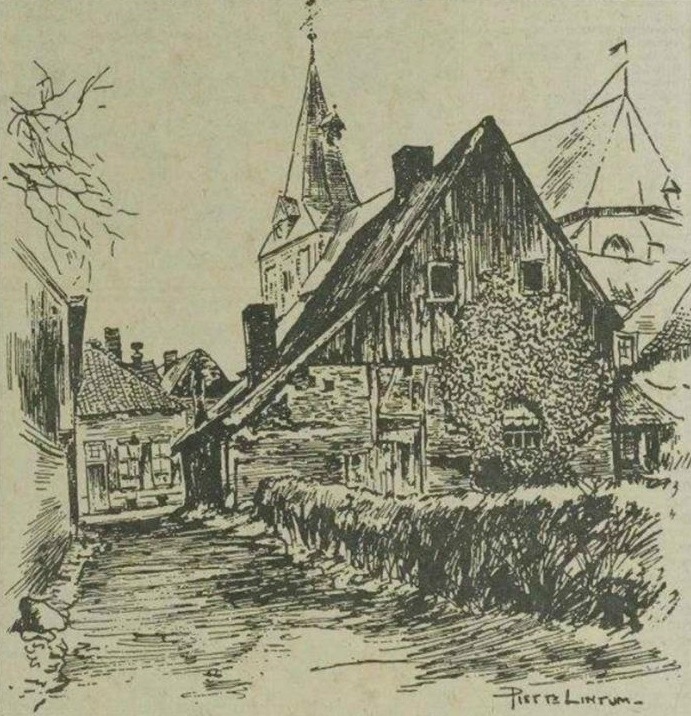
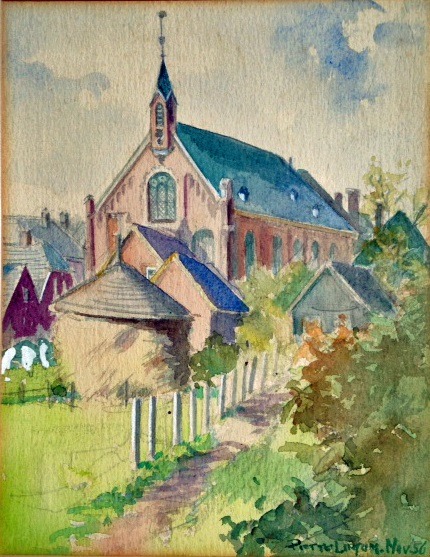
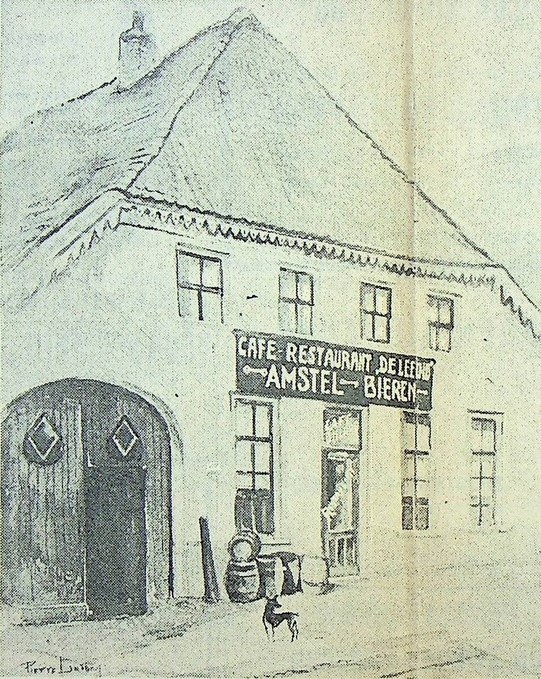
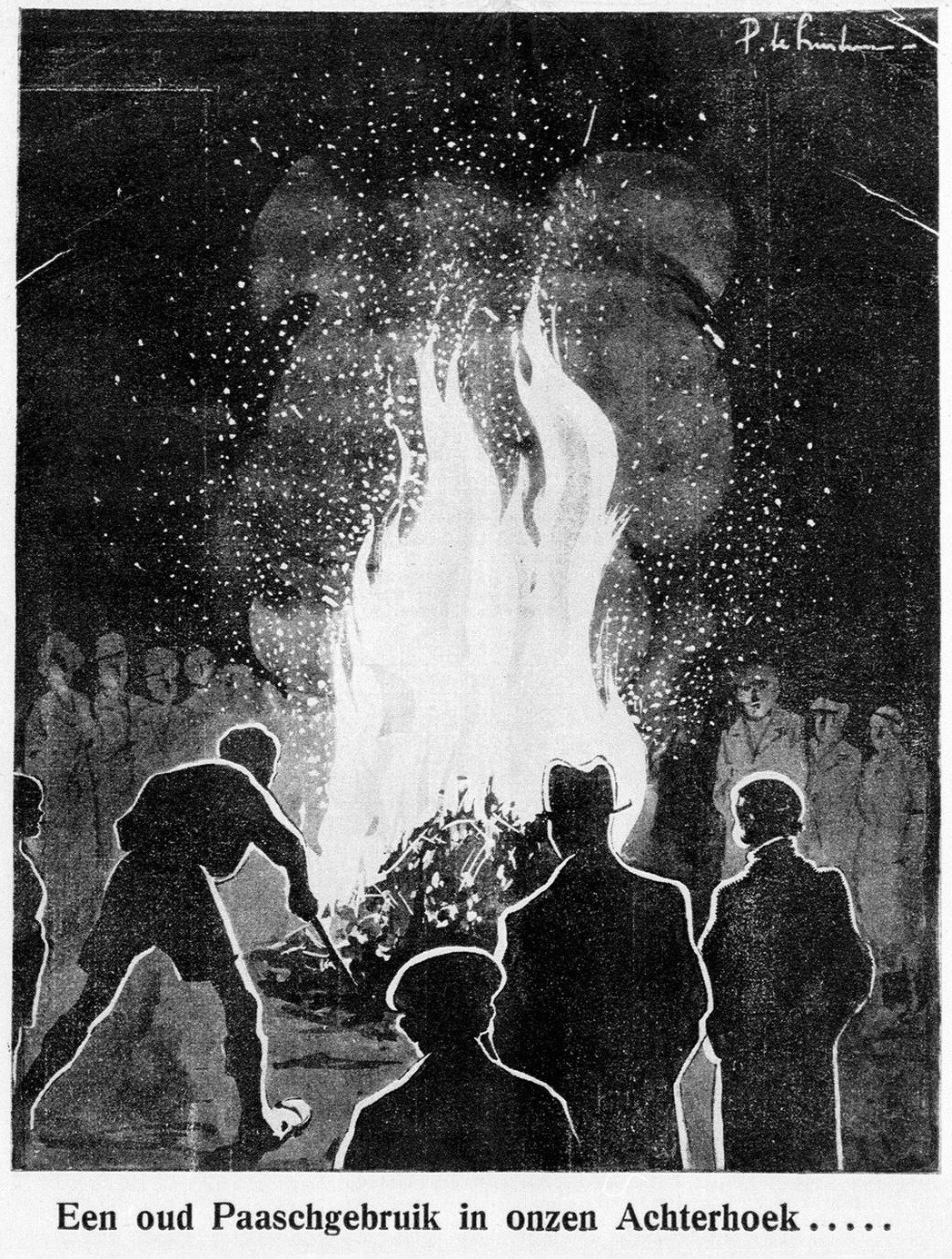
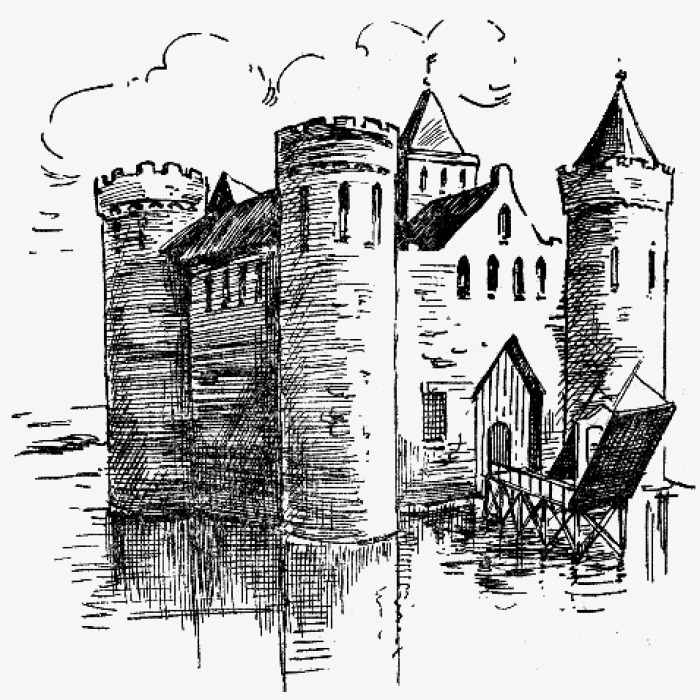
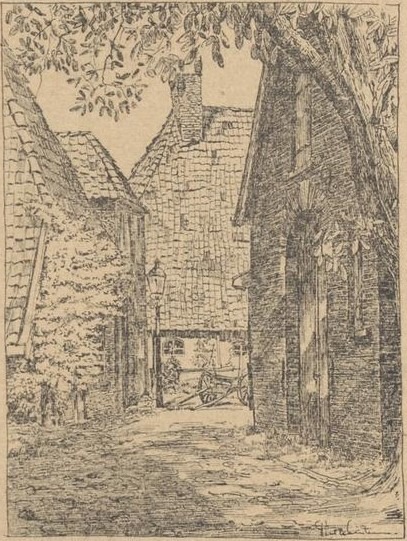
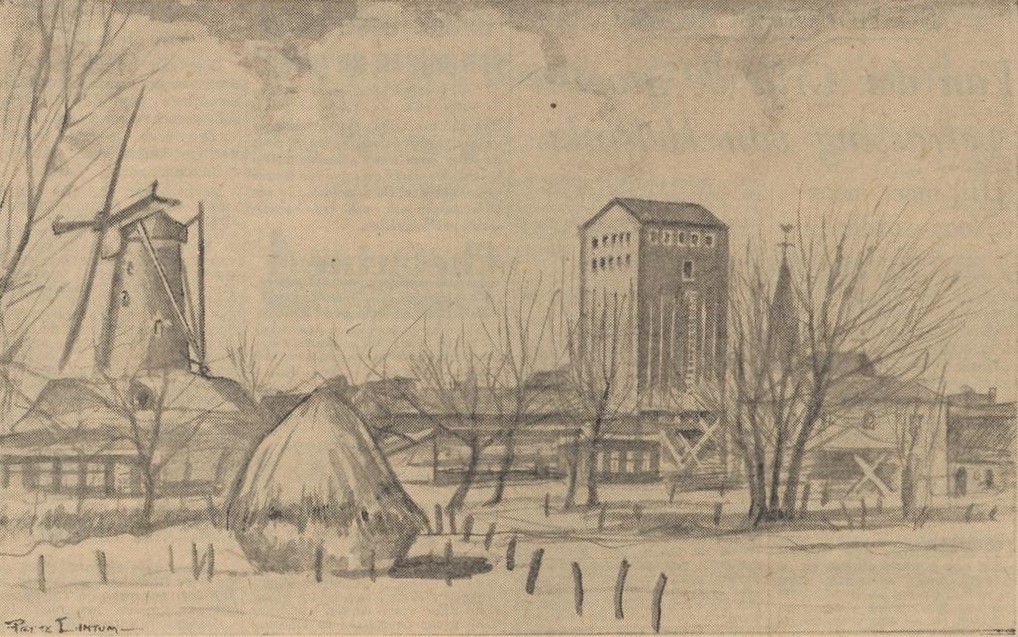
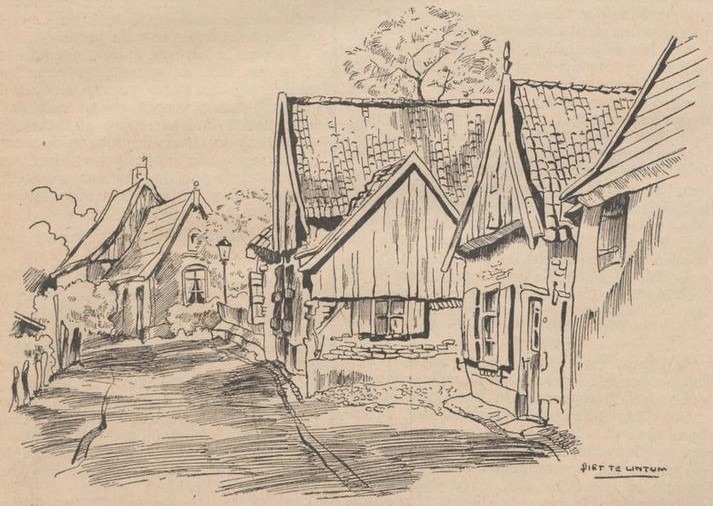
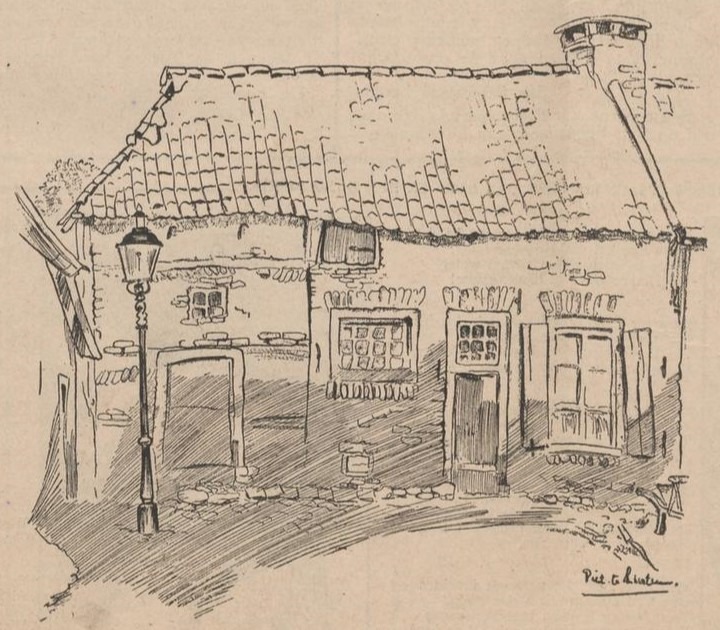
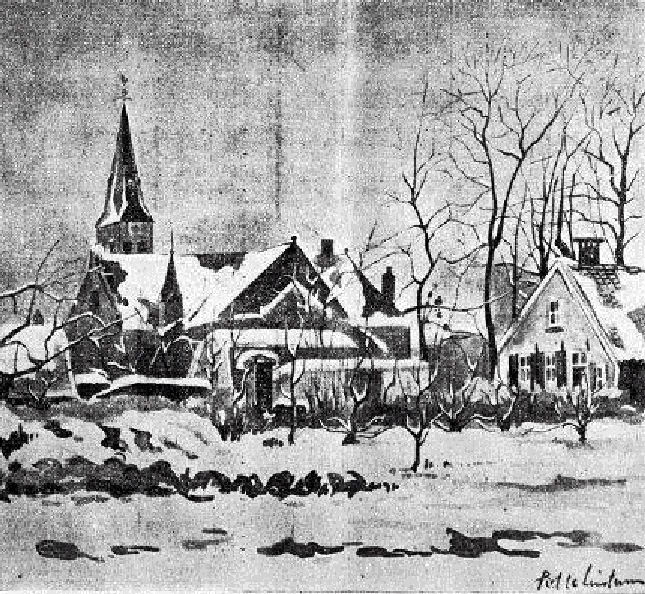
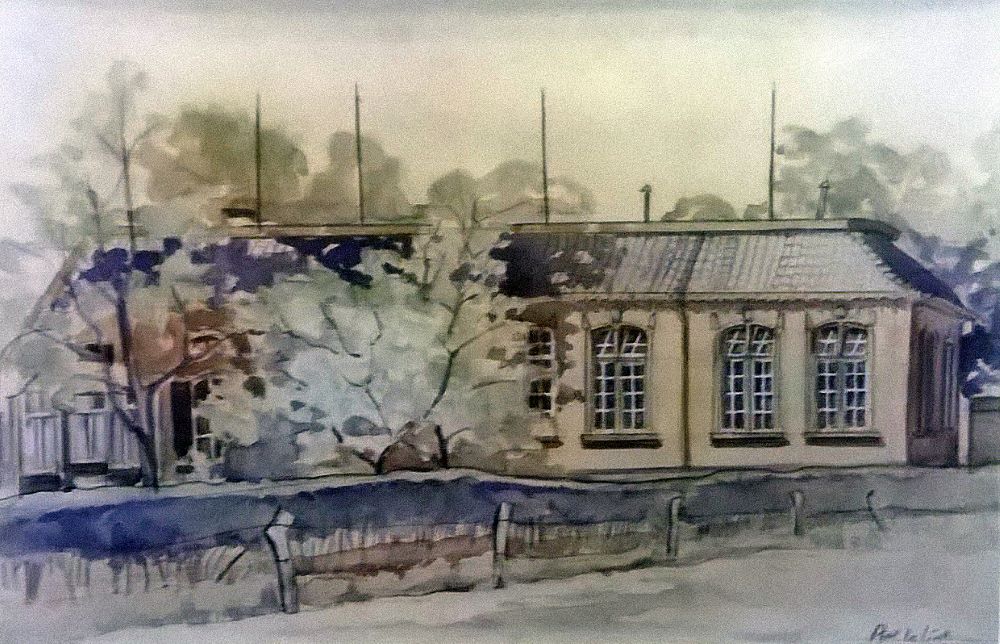
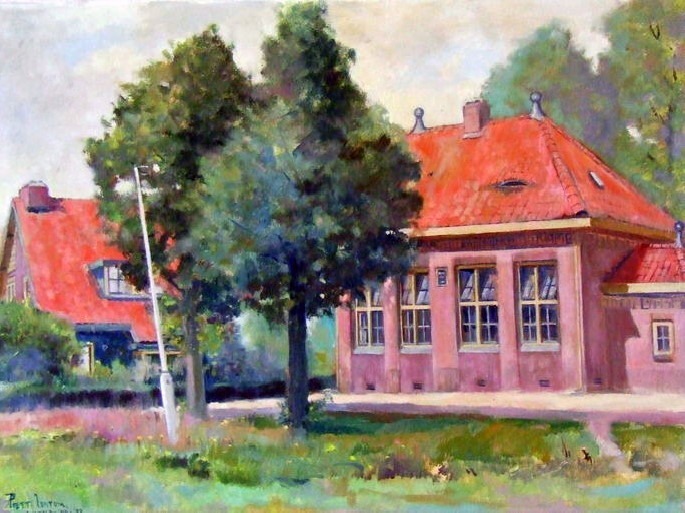
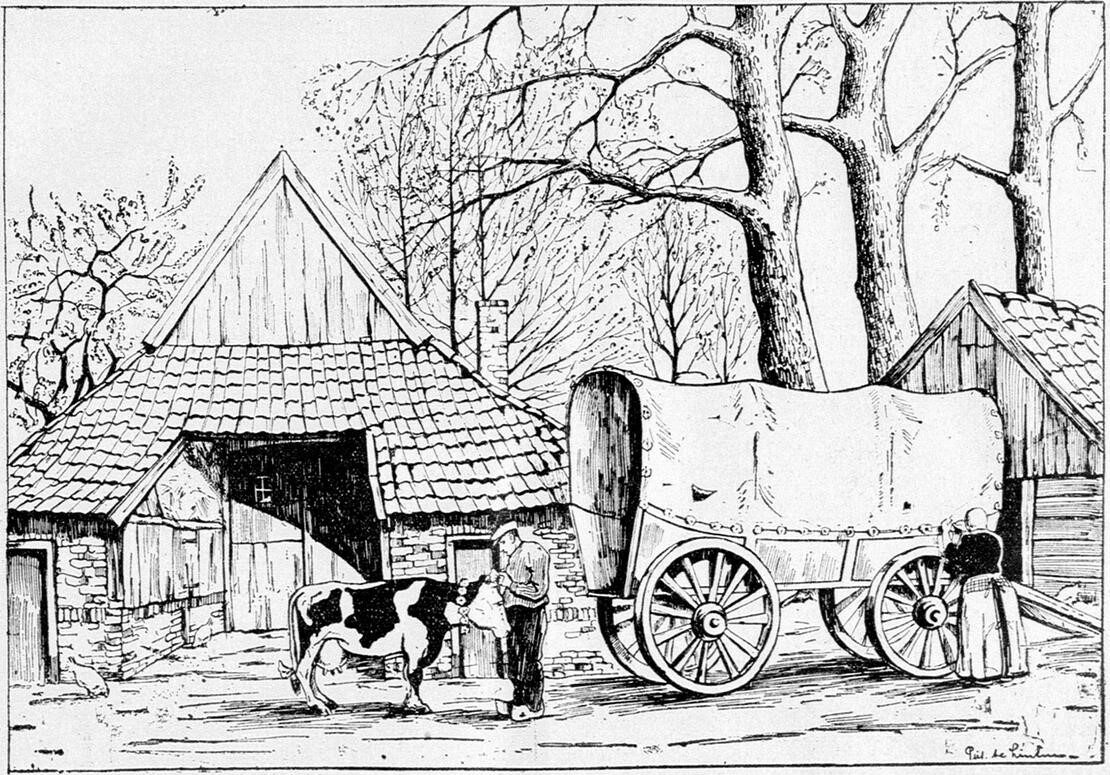
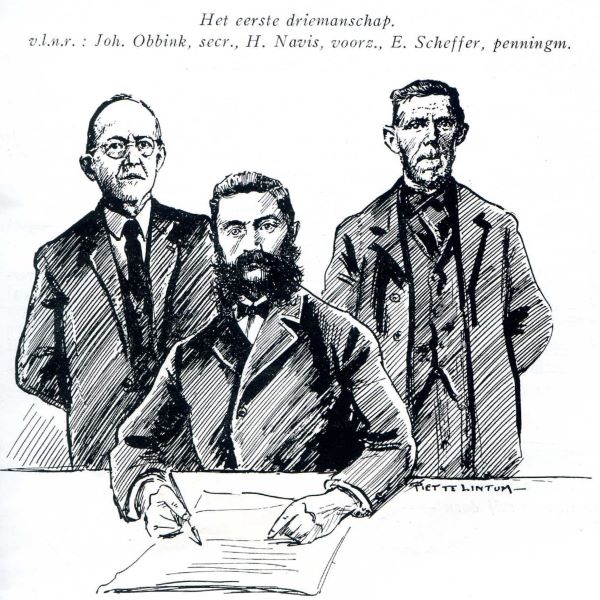
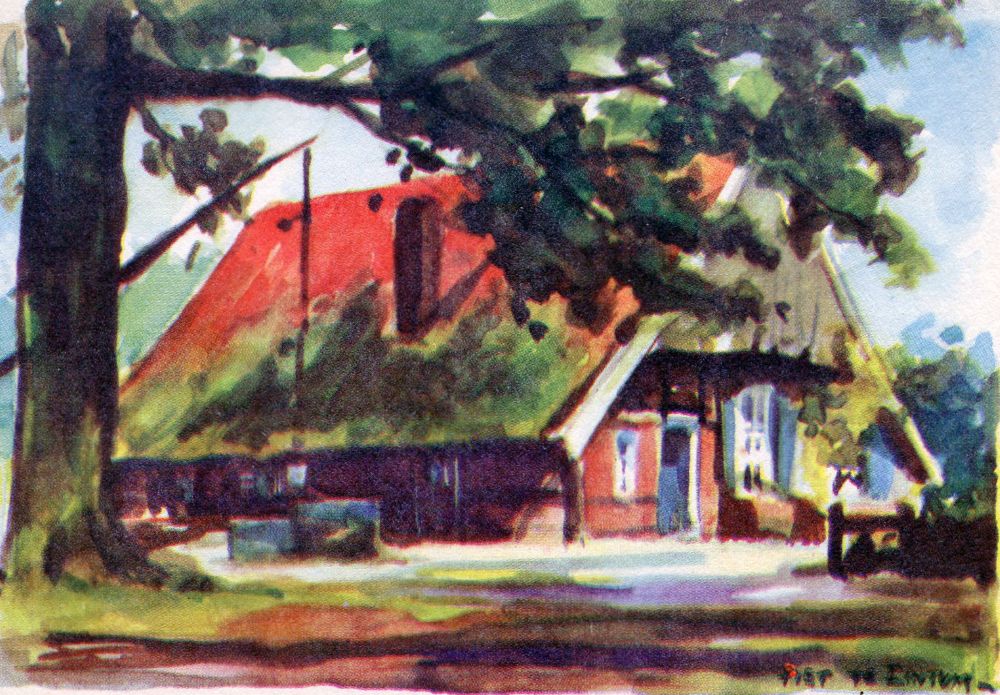
    Piet te Lintum (1909–1985) was a versatile artist from the Achterhoek. He worked as a columnist, illustrator, sketch artist and painter, capturing a vast number of landscapes and village scenes of his native region. For this reason, he is often referred to as the “painting ambassador of the Achterhoek”.

    Pieter (Piet) te Lintum was born on 13 January 1909 in Aalten, the son of Jan te Lintum, a grocer, and Johanna Christina Adolphina te Giffel. The family lived at Dijkstraat 4, the premises occupied by the Van den Dobbelsteen bakery until 2022. On 15 August 1942, he married Elisabeth Maria Schenk, with whom he had two children.

    Talent

    From an early age, Te Lintum demonstrated an exceptional talent for drawing. By the age of eleven, he was already producing accurate, lifelike portraits. He received his first lessons from an artist who had just graduated from art academy. He also spent a year taking correspondence courses from an institute in Paris.

    At eighteen, he attended classes at the Kunstnijverheidsschool (School of Arts and Crafts) in Arnhem, where he was taught by Hendrik Valk and Gerard van Lerven. Following this, he studied for three years at the Rotterdam Art Academy under David Bautz and Herman Mees. His most influential master, however, was Professor Johannes Hendricus Jurres at the Rijksschool voor Kunstnijverheid (State School of Arts and Crafts) in Amsterdam.

    Career

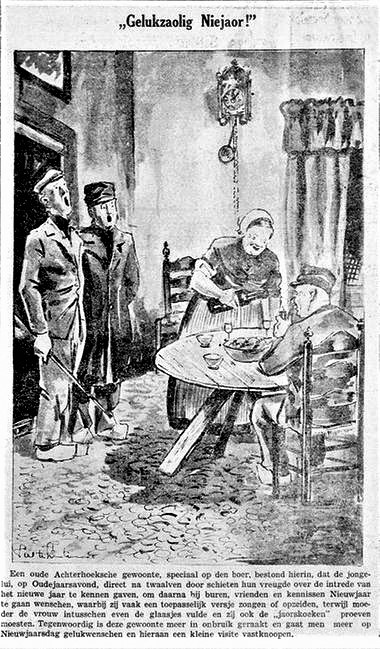
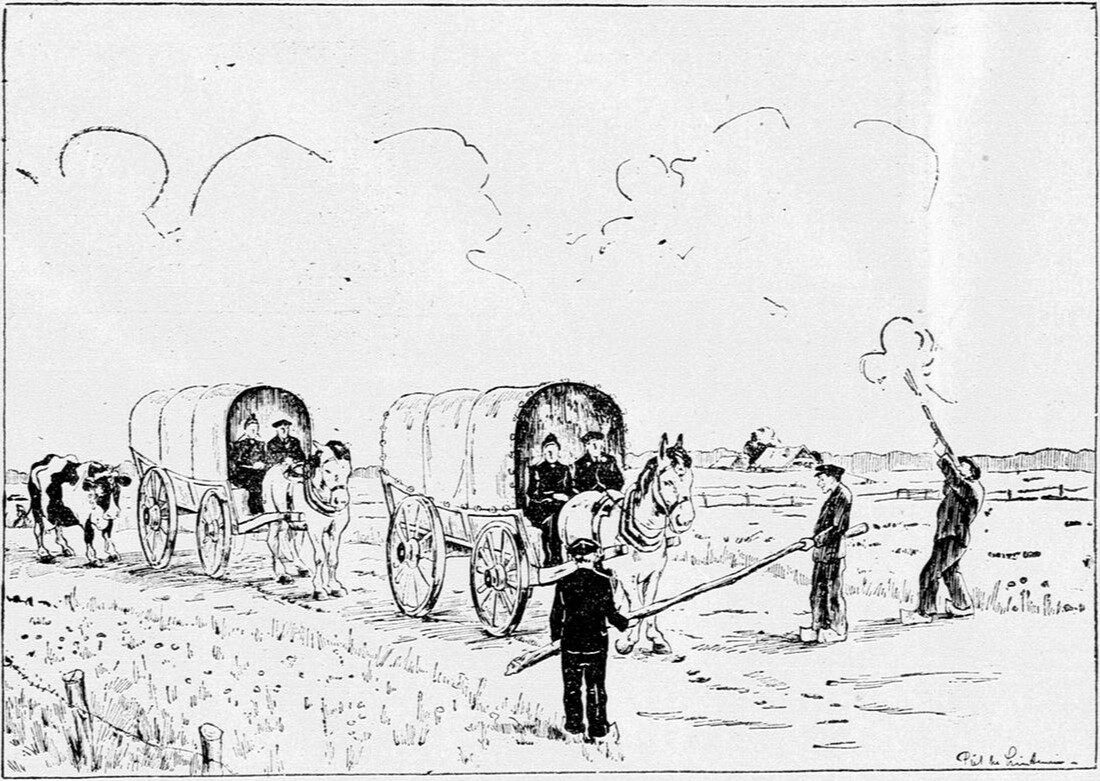
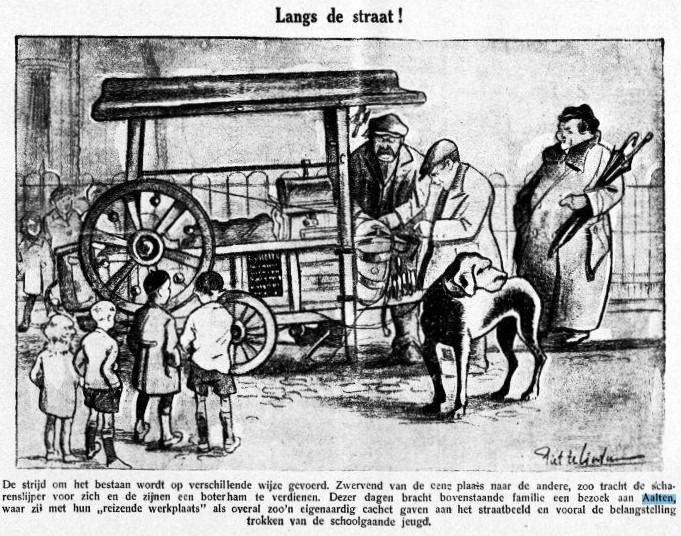
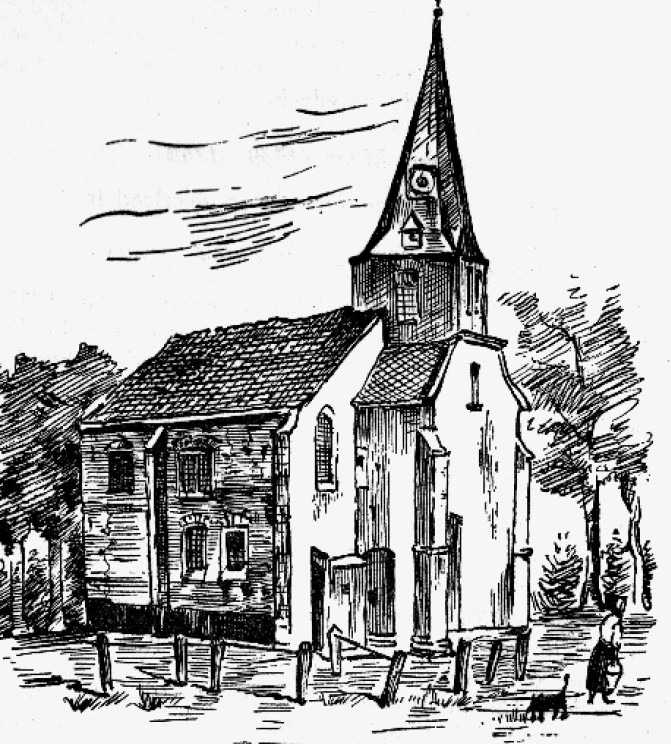
    After finishing his education, Piet te Lintum built a multifaceted career as an illustrator for various publishing houses. Among other projects, he drew the illustrations for the adventures of Aornt Peppelenkamp, written by Frans Roes under the pseudonym Herman van Velzen. He also worked for the Misset publishing house in Doetinchem (including for the newspaper De Graafschapbode) and created comic-strip-style columns for the Tubantia daily newspaper. In addition, he designed commercial advertising work, postcards and painted murals.

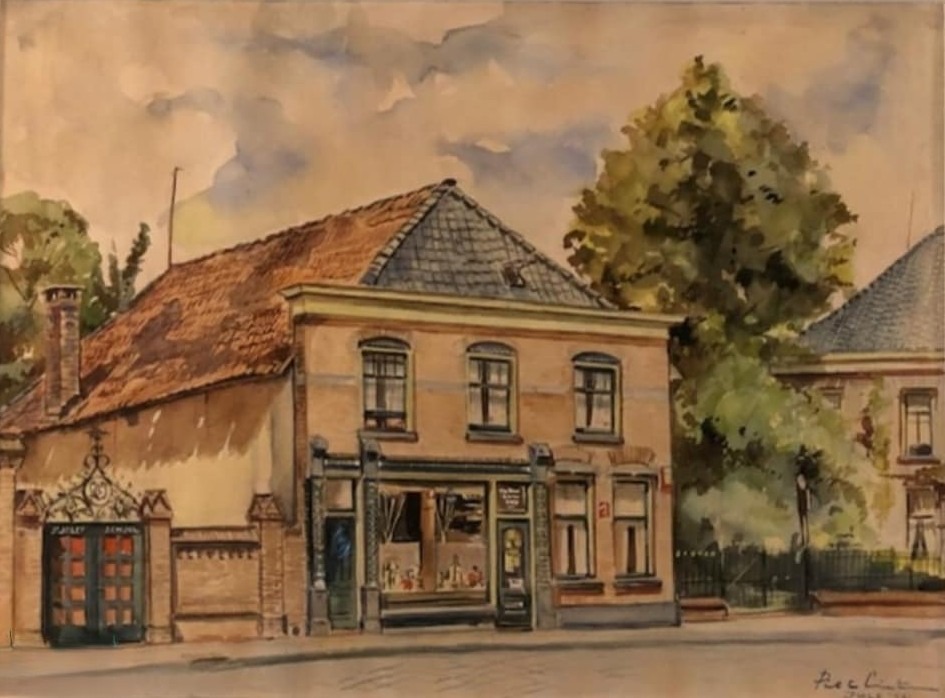
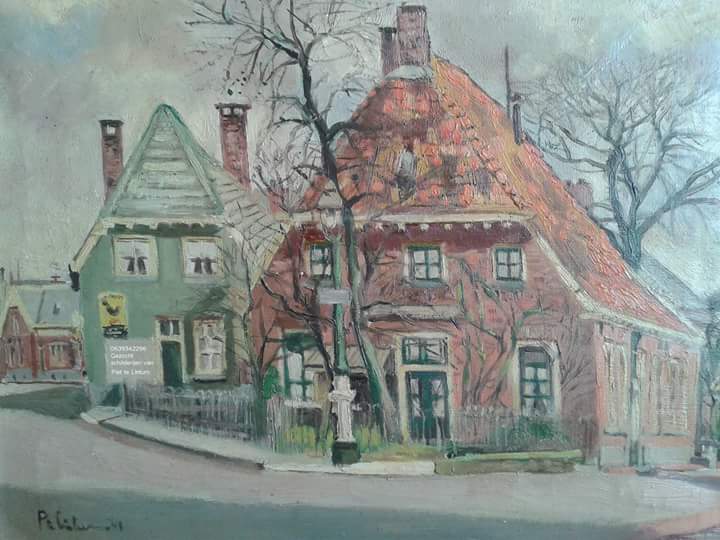
    Piet te Lintum is particularly renowned for his paintings of dilapidated buildings. He shunned the modern and rectilinear. For him, the rule was: the older and more decayed the building, the more beautiful the picture as a whole. In doing so, he was not merely interested in the romantic imagery of neglected houses and farms; through his works, he also sought to draw attention to local history.

    Even back then, Te Lintum watched with sorrow as an increasing number of old, historic buildings were demolished to make way for the redevelopment of the Achterhoek landscape. It is for this very reason that Bernard Schlüter’s small cottage in Südlohn, Germany, and the Kuupershuusken in Bredevoort were rebuilt brick by brick—all for the sake of preserving the rich local history.

    Legacy

    On 1 May 1985, Piet te Lintum passed away in Winterswijk. His work lives on in the memory of many, not least thanks to the book Wat ik te zeggen heb… (What I have to say…) by Hans de Beukelaer, which pays tribute to his life and work. More than 500 of his pieces were tracked down for the publication. Although a large portion of his murals have not withstood the test of time, his paintings of farms, buildings and regional views remain lasting testaments to his love for the Achterhoek.

    Gallery

    A selection of works by Piet te Lintum:

    Recommended reading

    • Wat ik te zeggen heb…‘, Piet te Lintum’s picturesque journey through the Achterhoek and the nearby border region
      Hans de Beukelaer en Jos Betting
    • Schilders uit de Achterhoek & Liemers, 1850-1950′
      Jan Stap en Jacob Schreuder
    • An article about Piet te Lintum was published in the March 2021 issue (Oer/39) of the cultural-historical magazine for the Achterhoek and Liemers. This magazine is still available from the ECAL (Heritage Centre Achterhoek and Liemers) in Doetinchem.
  • The Merfelt Cellar

    The Merfelt Cellar

    Prinsenstraat 3a, Bredevoort

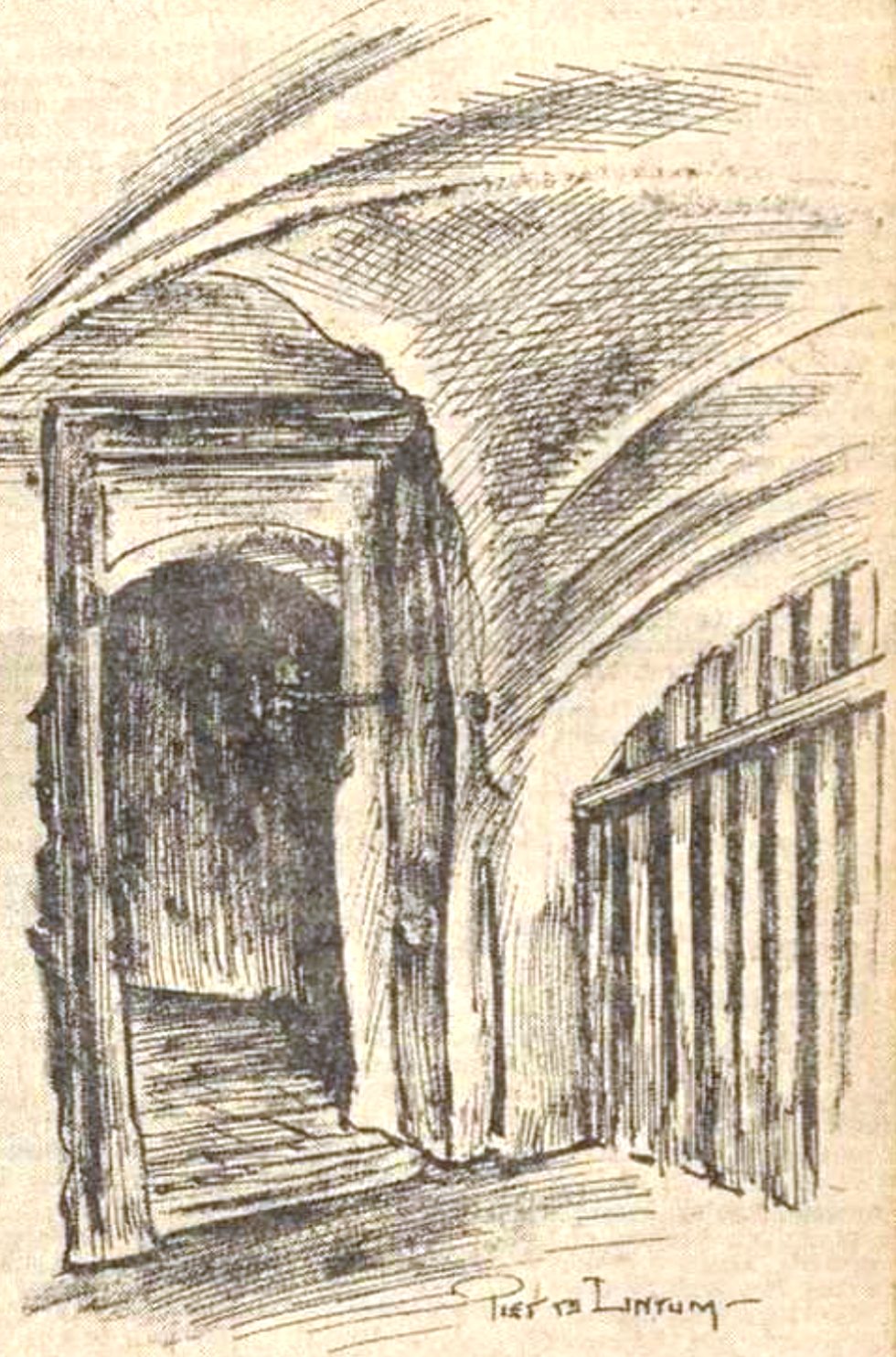
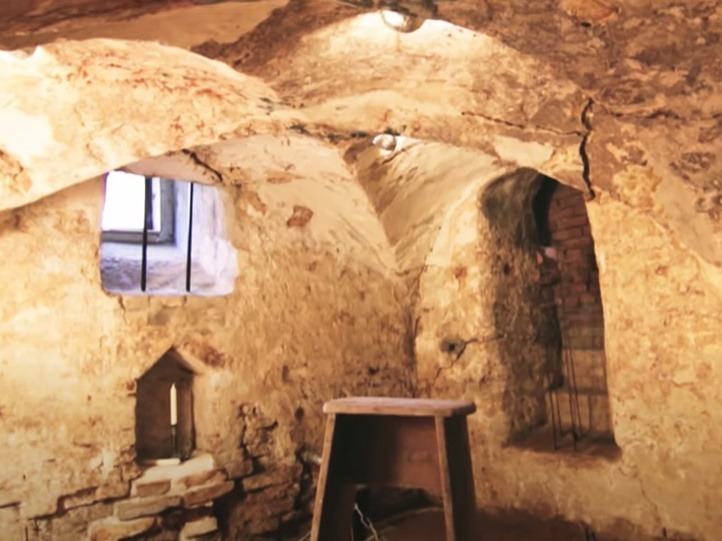
    The late-medieval Merfelt Cellar belonged to a borgmanhuis (townhouse of a knight) where Adolf van Merfelt, a borgman of Bredevoort, resided in former times. The cellar of this townhouse is both rare and ancient. The method by which it was vaulted is highly unusual for a private dwelling: it features four cross vaults with a central supporting pillar.

    In 2014, the Merfelt Cellar was nominated for the Aalten Municipality Heritage Prize. The reason for the nomination was the meticulous care and respect for historical character and the use of authentic materials during its restoration.

    The restoration work on the cellar took place over several years. The highlight of the project was the repair of the vaulting, which ensured the long-term stability of the cross vaults.


    Owners

    This overview is incomplete.

    YearPlotOwnerDescription

    Residents

    Address directory 1967

    Prinsenstraat 3a

    B. te Winkel

    Features


    FunctionCellar
    Year of constructionLate Middle Ages
    ListedMunicipal
    monument
  • Gängeskes

    Gängeskes

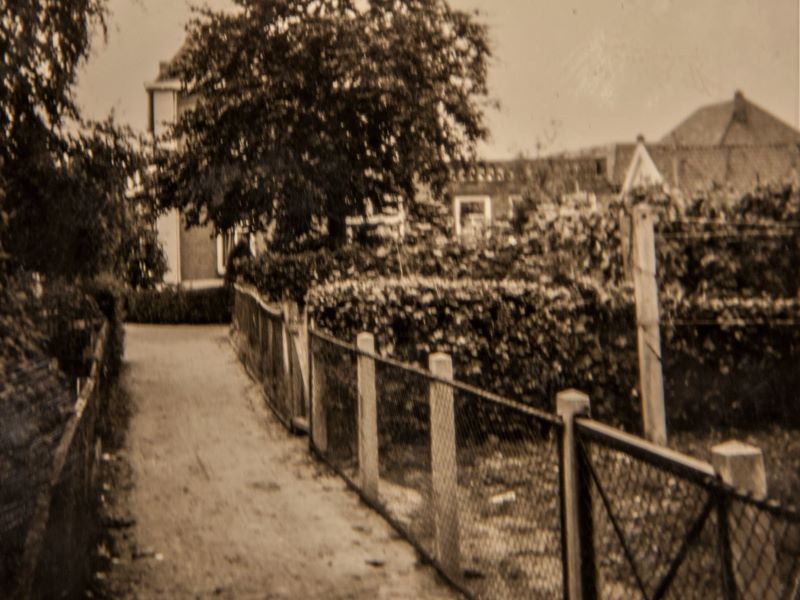
    Since the Late Middle Ages, the village of Aalten has possessed a remarkable network of narrow pathways known as ‘gängeskes’. In this agricultural esdorp (a type of village centered around communal open fields), houses and farmsteads stood scattered along a few main roads. In between lay the ‘gaorden’ – the vegetable gardens of the inhabitants.

    The gängeskes originated as connecting paths between the village streets and these gardens. They are generally just wide enough for two people with wheelbarrows to pass each other.

    These paths were used to supply houses with fresh produce. The winding pathways also allowed for quick visits from one neighbour to another, and children used them to walk to school. Similar gängeskes could be found in many villages throughout the Achterhoek. In the twentieth century, many gängeskes unfortunately disappeared, often being incorporated into the adjoining gardens. In Aalten, however, a large part of this unique network was preserved as important heritage.

    In 2011, the paths were given official names. Some routes within the total 2.5-kilometre-long system retained their original names, while others were given a name that recalls the activities of yesteryear.

    Walking Route

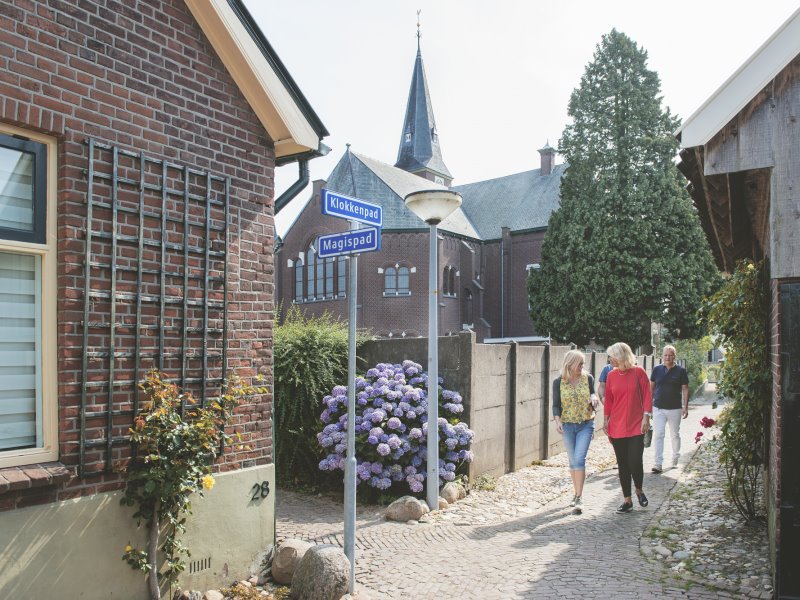
    At the Aalten Tourist Information Office (VVV), you can book a walking route through the gängeskes, either with or without a guide. The Armenpad, Frerikspad, Klokkenpad, Kloosterpad, Langs de Gevangenis, Magispad, and other paths lead visitors past the most picturesque spots in Aalten and offer a glimpse into the village’s history. For children, there is the ‘Gängeskes Junior’ route.

    More information can be found at vvvaalten.nl.

  • Kesenbult (Boundary Stone 171)

    Kesenbult (Boundary Stone 171)

    Kiefteweg / Veenhuisweg, Heurne

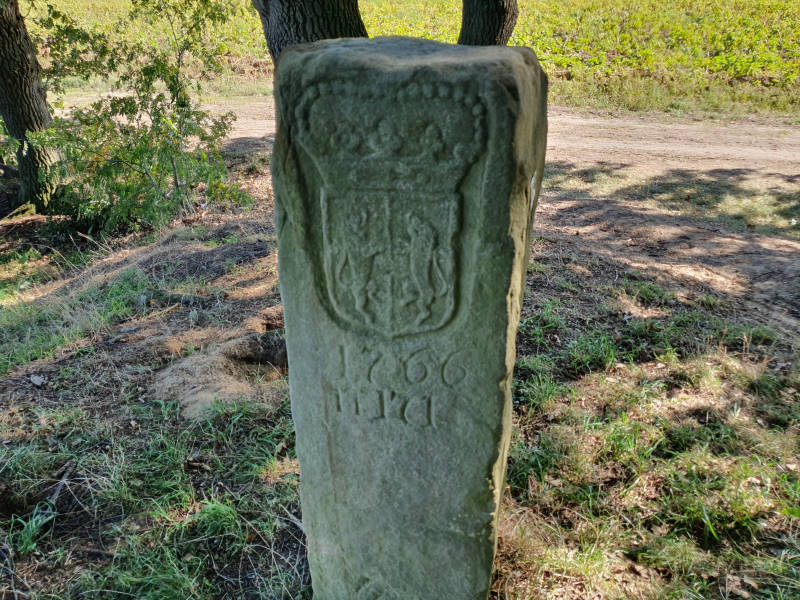
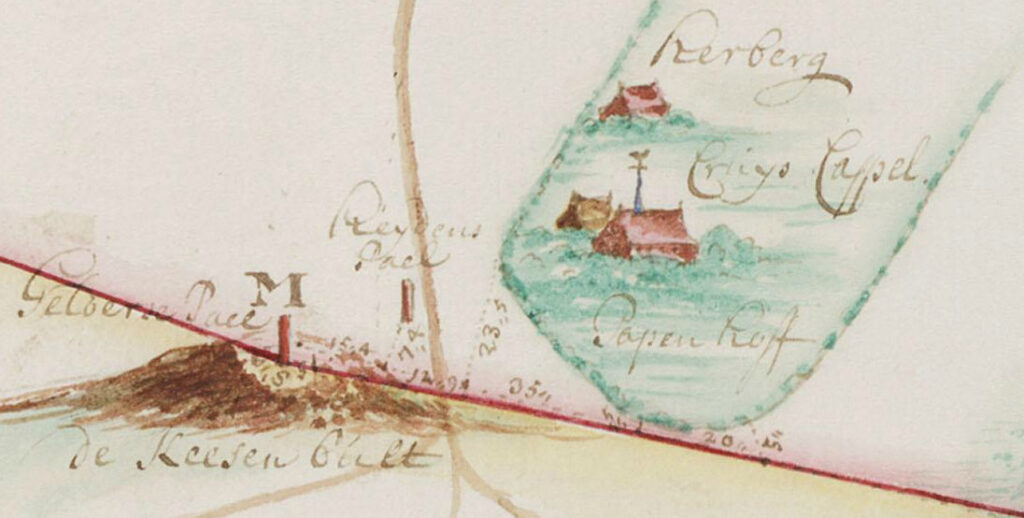
    The Kesenbult is a small hill at the end of the Kiefteweg, near the green border crossing between the Netherlands and Germany. Atop the hill stands a centuries-old boundary stone, crafted from Bentheim sandstone. The stone bears the coats of arms of Guelders and Münster, the year 1766, and the number 171. It has thus marked a formerly important border crossing for more than 250 years.

    Trade route and border crossing

    In the 18th century, the Kiefteweg – which used to be called Bodendijk – formed part of the trade route between the Duchy of Guelders and the Bishopric of Münster. Not only commercial travellers passed through here, but also royal couriers, or messengers (boden). The name Bodendijk refers to these couriers.

    Cross Chapel

    In addition to trade and transit, the Kesenbult also played a role in religious life. During the period of Calvinism (1675–1799), when Catholic worship was banned in the Dutch Republic, Catholics from Aalten and Bredevoort crossed the border here.

    Some two hundred metres across the border stood the Cross Chapel (Kruiskapel), built in 1675 on the Reyerding estate by order of the Bishop of Münster, Bernhard van Galen (popularly known as Bommen Berend). The timber, octagonal chapel became the religious focal point for exiled Catholics.

    According to tradition, worshippers travelled to the chapel in workwear and carrying their tools, so as not to be recognised as churchgoers.

    Present-day significance

    The Cross Chapel has since vanished, but the boundary stone on the Kesenbult remains. It serves as a reminder of centuries of trade, religion, and border traffic between Aalten and the Münsterland. As such, the Kesenbult still forms a tangible symbol of the shared history on both sides of the border.

    Features


    Cadastral no.R-426
    FunctionBoundary stone
    Year of construction1766
    ListedNational monument

    Sources


  • Bouwhuis Wever

    Bouwhuis Wever

    Kloosterdijk 9, ‘t Klooster

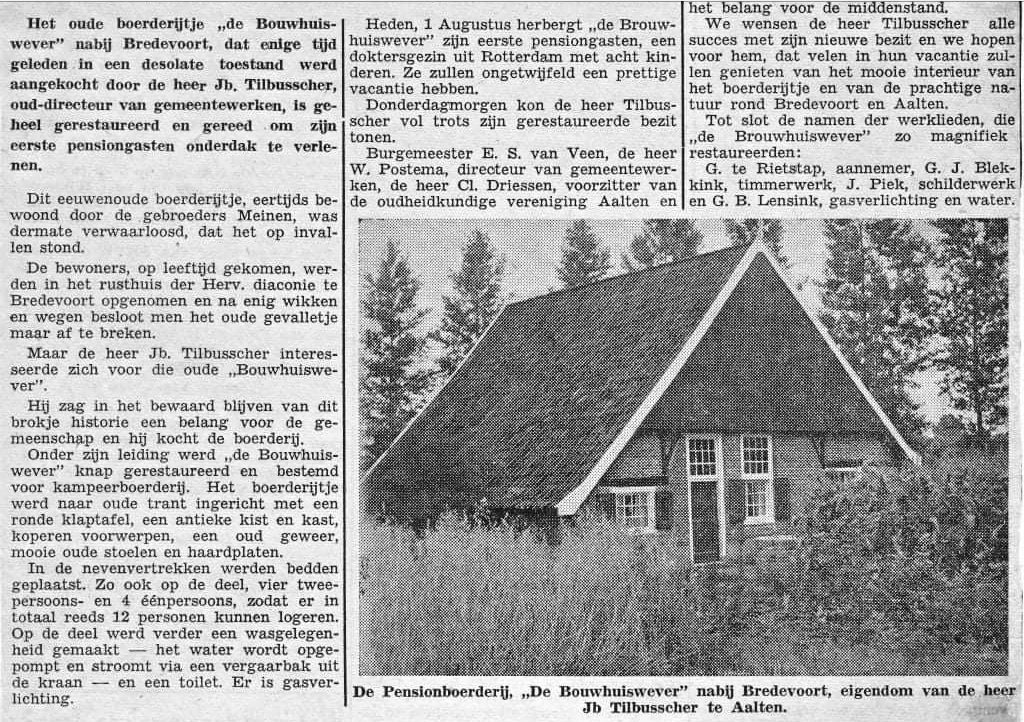
    Bouwhuis Wever was formerly also known as Klein Bouwhuis.

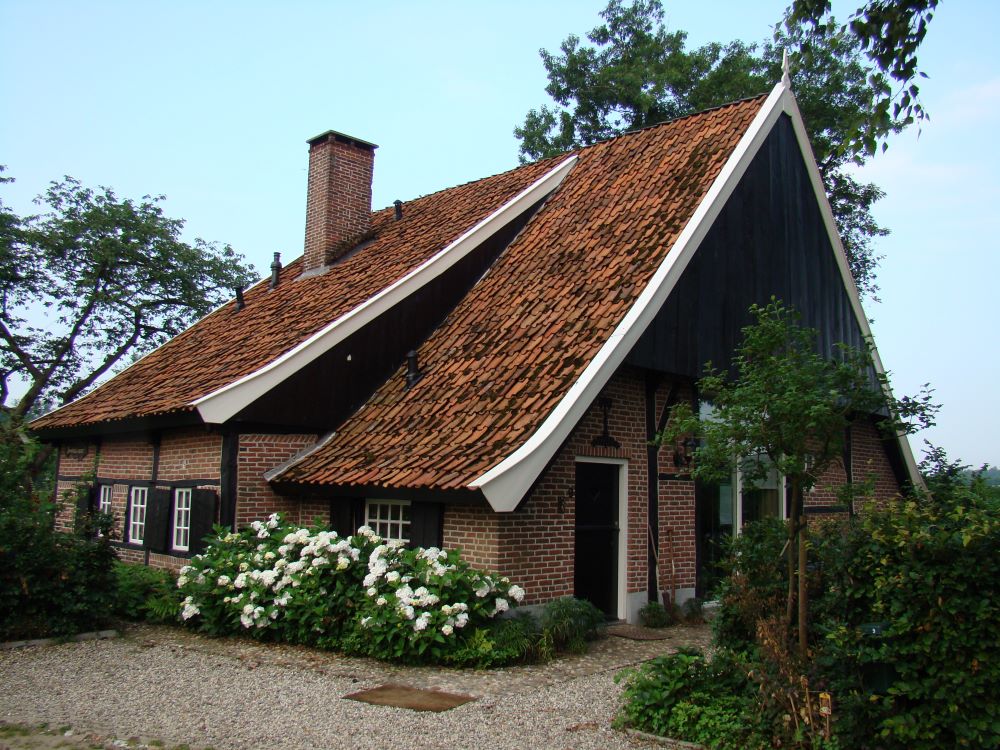
    It is a well-preserved and restored 18th-century Saxon timber-framed farmhouse with a high roof covered in roof tiles, a wooden front gable, and windows with small panes and shutters. A section of the roof has been ‘lifted’ to create an additional room: the weaving workshop. It is situated on a side path (which has been named Heericks-es since 2012) off the Kloosterdijk, traditionally the route from Bredevoort to ’t Klooster. The house has been registered as a national monument (rijksmonument) since 1967.


    Archives

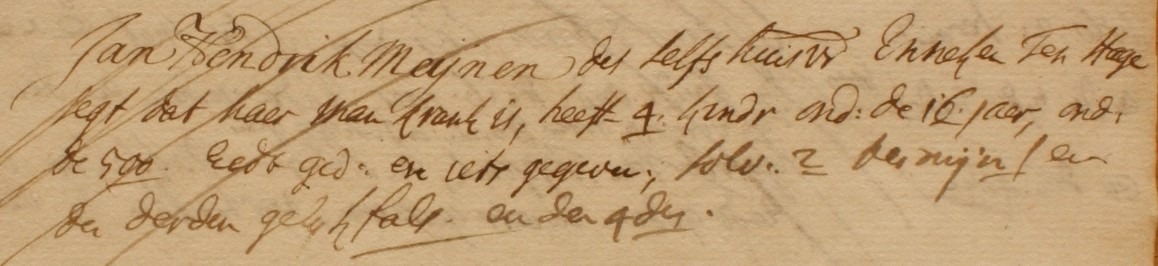
    Liberal Gift 1748


    Owners

    Overview is incomplete.

    YearPlotOwnerDescription
    1832B-268Evert Meijnen,
    farmer in Borculo
    450 m² house & yard

    Residents

    First known residents:

    Jan Hend(e)rik Meijnen alias (Klein) Bouhuis (Aalten, 20-04-1704 – Barlo, 18-04-1785)
    married 23-03-1737 in Winterswijk
    Enneken / Anneke ten Hagen (Winterswijk, 30-08-1711 – Barlo, 01-02-1784)

    Next residents, son and daughter in law:

    Jan Bouhuis alias Meijnen (Aalten, 15-09-1748 – Barlo, 07-06-1827)
    married (1) 20-11-1785 in Aalten
    Hendrina van Eerden (Aalten, 15-09-1765 – Barlo, 15-08-1794)

    Next residents, widower and 2nd wife:

    Jan Bouhuis alias Meijnen (Aalten, ged. 15-09-1748 – Barlo, 07-06-1827)
    married (2) 28-02-1795 in Aalten
    Willemke Oonk (Aalten, ged. 03-12-1758 – Barlo, 04-04-1830)

    Period 1823-1850

    “Wever”
    Barlo 69

    Jan Bouhuis alias Meijnen (Aalten, bap. 15-09-1748 – Barlo, 07-06-1827), s/o Hendrik and Anneke Bouhuis,
    married 28-02-1795 in Aalten
    Willemke Oonk (Aalten, bap. 03-12-1758– Barlo, 04-04-1830)

    Next residents, son and daughter in law:

    Evert Meijnen (Aalten, 20-08-1801 – Barlo, 27-08-1855), married 06-05-1828 in Aalten
    Janna Geertruid Boddewijs (Winterswijk, 03-04-1808 – Barlo, 05-04-1886)

    Period 1850-1860

    Barlo 81

    Evert Meijnen (Aalten, 20-08-1801 – Barlo, 27-08-1855)
    Janna Geertruid Boddewijs (Winterswijk, 03-04-1808 – Barlo, 05-04-1886)

    Period 1860-1870

    Barlo 81

    Janna Geertruid Boddewijs (Winterswijk, 03-04-1808 – Barlo, 05-04-1886)

    Next residents, son and daughter in law:

    Jan Hendrik Meijnen (Barlo, 11-09-1836 – Aalten, 29-07-1901), married 26-06-1868 in Aalten
    Grada Theodora Oonk (Miste, 31-08-1844 – Aalten, 03-02-1922)

    Children:

    1. Evert Jan Meijnen (Barlo, 15-02-1869 – Winterswijk, 02-06-1941)
    2. Tobias Meijnen (Barlo, 23-11-1870 – Aalten, 26-09-1929)
    3. Jan Willem Meijnen (Barlo, 13-03-1873)
    4. Janna Geertruida Meijnen (Barlo, 17-03-1875 – Barlo 26-01-1878)
    5. Hendrika Meijnen (Barlo, 26-07-1877 – Aalten, 15-02-1890)
    6. Jan Gerhard Meijnen (Barlo, 30-11-1879 – Barlo, 23-01-1880)
    7. Gerrit Hendrik Meijnen (Aalten, 07-01-1881 – Aalten, 26-01-1955)
    8. Janna Geertruida Meijnen (Barlo, 02-12-1883 – Winterswijk, 30-10-1955)
    9. NN Meijnen (Barlo, 15-07-1886), stillborn
    10. Hendrik Jan Meijnen (Aalten, 28-08-1887 – 10-03-1974)

    Period 1870-1880

    Barlo 92

    Jan Hendrik Meijnen (Barlo, 11-09-1836 – Aalten, 29-07-1901)
    Grada Theodora Oonk (Miste, 31-08-1844 – Aalten, 03-02-1922)

    Period 1880-1890

    Barlo 92

    Jan Hendrik Meijnen (Barlo, 11-09-1836 – Aalten, 29-07-1901)
    Grada Theodora Oonk (Miste, 31-08-1844 – Aalten, 03-02-1922)

    Period 1890-1900

    Barlo 98

    Jan Hendrik Meijnen (Barlo, 11-09-1836 – Aalten, 29-07-1901)
    Grada Theodora Oonk (Miste, 31-08-1844 – Aalten, 03-02-1922)

    Period 1900-1910

    Barlo 100

    Jan Hendrik Meijnen (Barlo, 11-09-1836 – Aalten, 29-07-1901)
    Grada Theodora Oonk (Miste, 31-08-1844 – Aalten, 03-02-1922)

    Period 1910-1920

    Barlo 114 > 126

    Grada Theodora Oonk (Miste, 31-08-1844 – Aalten, 03-02-1922)

    Address directory 1934

    Barlo 126 > 143

    E.J. Meijnen

    Features


    Cadastral no.O-416
    FunctionFarmhouse
    Year of construction1800
    ListedNational monument

    Related farms