Category: Canada

  • Willem te Gussinklo Sr.

    Willem te Gussinklo Sr.

    Pipe manufacturer

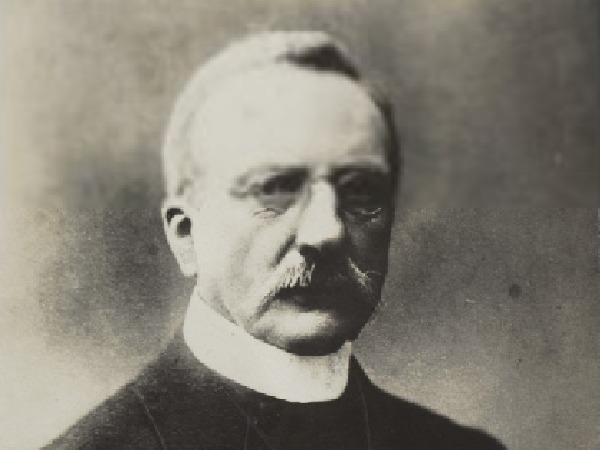
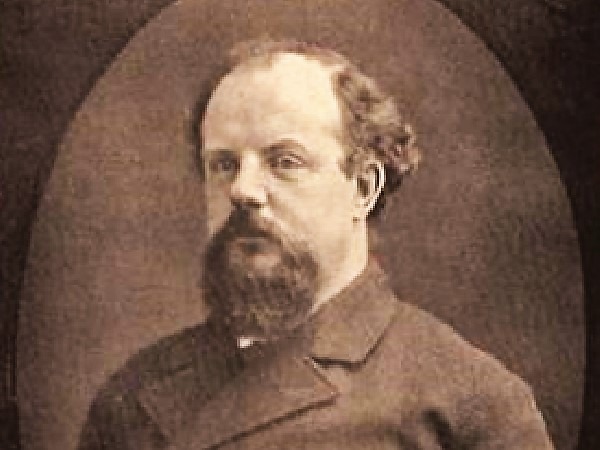
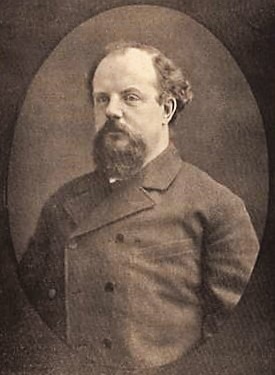
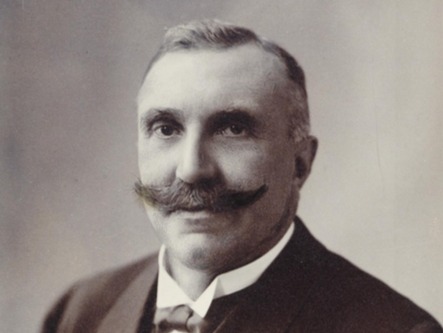
    Willem te Gussinklo Sr. (1852–1920) was one of the key figures in the history of the horn-working industry in Aalten. Initially, he made German pipes and handles for walking sticks and umbrellas. Later, he focused on the production of buttons.

    Willem te Gussinklo was born on 13 November 1852 at house number 284 (Markt 3) in Aalten, the son of shopkeeper Willem te Gussinklo and Josina Aleida Mierdink. On 26 May 1887, he married Maria Jacoba Gangel (a sister of the Reverend Gangel). Around 1890, they moved into a stately villa on Willemstraat.

    Willem learned the craft of horn working from his brother-in-law, Gerrit Peters. Together with Wessel Becking, he started a pipe factory. However, in 1884 their paths crossed and they went their separate ways. Following the unsuccessful partnership with Becking, Willem te Gussinklo manufactured German pipes and handles for walking sticks and umbrellas.

    Buttons

    Around 100 years ago, companies had emerged in Germany and England that manufactured buttons from horn. Inspired by this example, Willem began making horn buttons in 1905, a first for the Netherlands. Soon afterwards, his son Willem te Gussinklo Jr. (known as ‘Piepkes Willem’) joined the company, developing into an innovative entrepreneur.

    Te Gussinklo’s first factory was located at ’t Dal in Aalten, which is now Willemstraat.

    Willem te Gussinklo Sr. passed away on 21 June 1920 and is buried at the Old Cemetery on Varsseveldsestraatweg in Aalten.

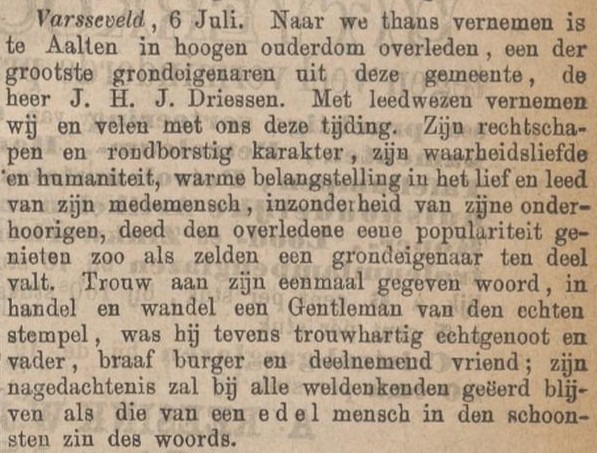
    Willem te Gussinklo Sr. (1852–1920)
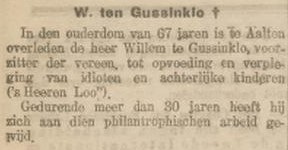
    W. te Gussinklo – De Nederlander, 26 June 1920
    De Nederlander, 26 June 1920
  • Willem te Gussinklo Jr.

    Willem te Gussinklo Jr.

    Button manufacturer

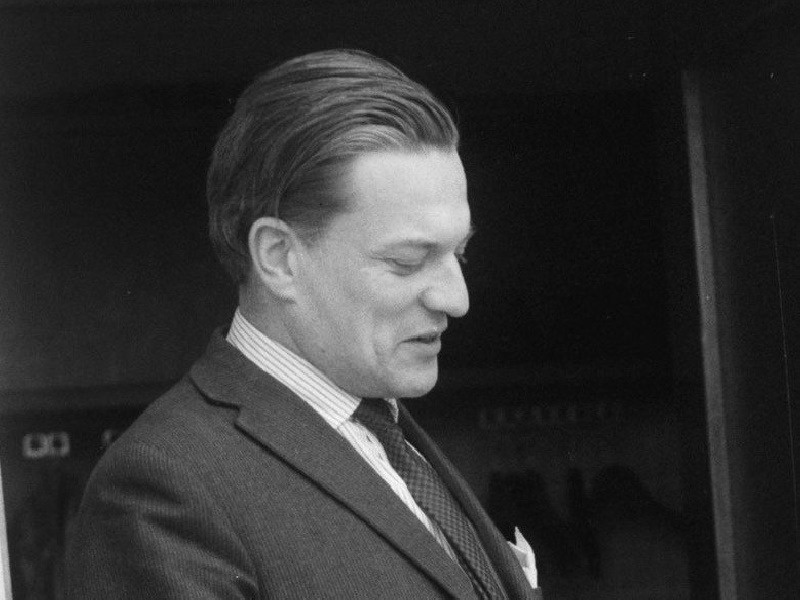
    Willem te Gussinklo Jr. (1888–1969), nicknamed ‘Piepkes Willem’, was one of the key figures in the history of the horn-working industry in Aalten. He was the director of Dutch Button Works in Bredevoort.

    Willem te Gussinklo Jr. was born on 18 May 1888 at house number 239a in Aalten, which is approximately where the JAWI garage is located today. He was the son of pipe manufacturer Willem te Gussinklo (Sr.) and Maria Jacoba Gangel (a sister of the Reverend Gangel). On 7 July 1914, Willem Jr. married Engelina Arriana van Houte in Zwolle (Overijssel).

    He served as the director of Dutch Button Works (DBW) in Bredevoort and lived at Slingesteyn in Aalten.

    Willem te Gussinklo Jr. passed away on 5 June 1969 and is buried at the Old Cemetery on Varsseveldsestraatweg in Aalten.

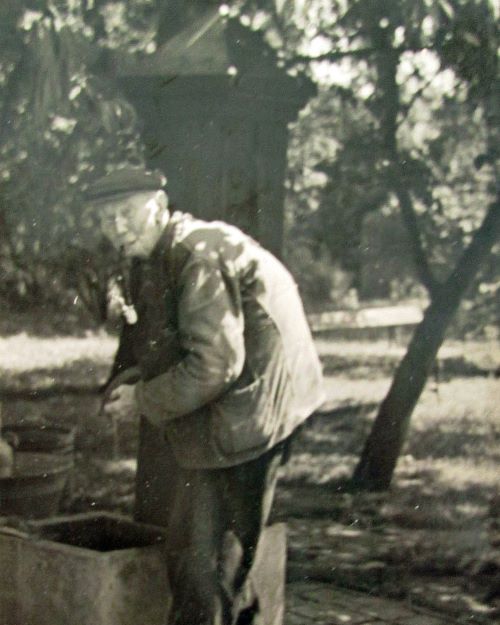
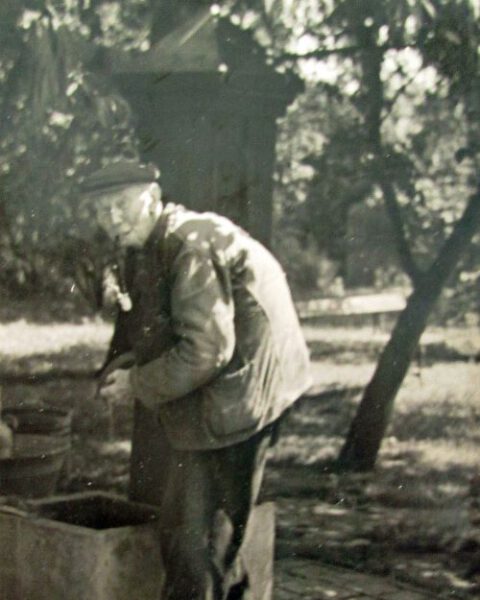
    Willem te Gussinklo Jr. (Piepkes Willem), ca. 1943
    Willem te Gussinklo Jr. ca. 1943
  • Luutenshuus, Haartsestraat, Aalten

    Luutenshuus, Haartsestraat, Aalten

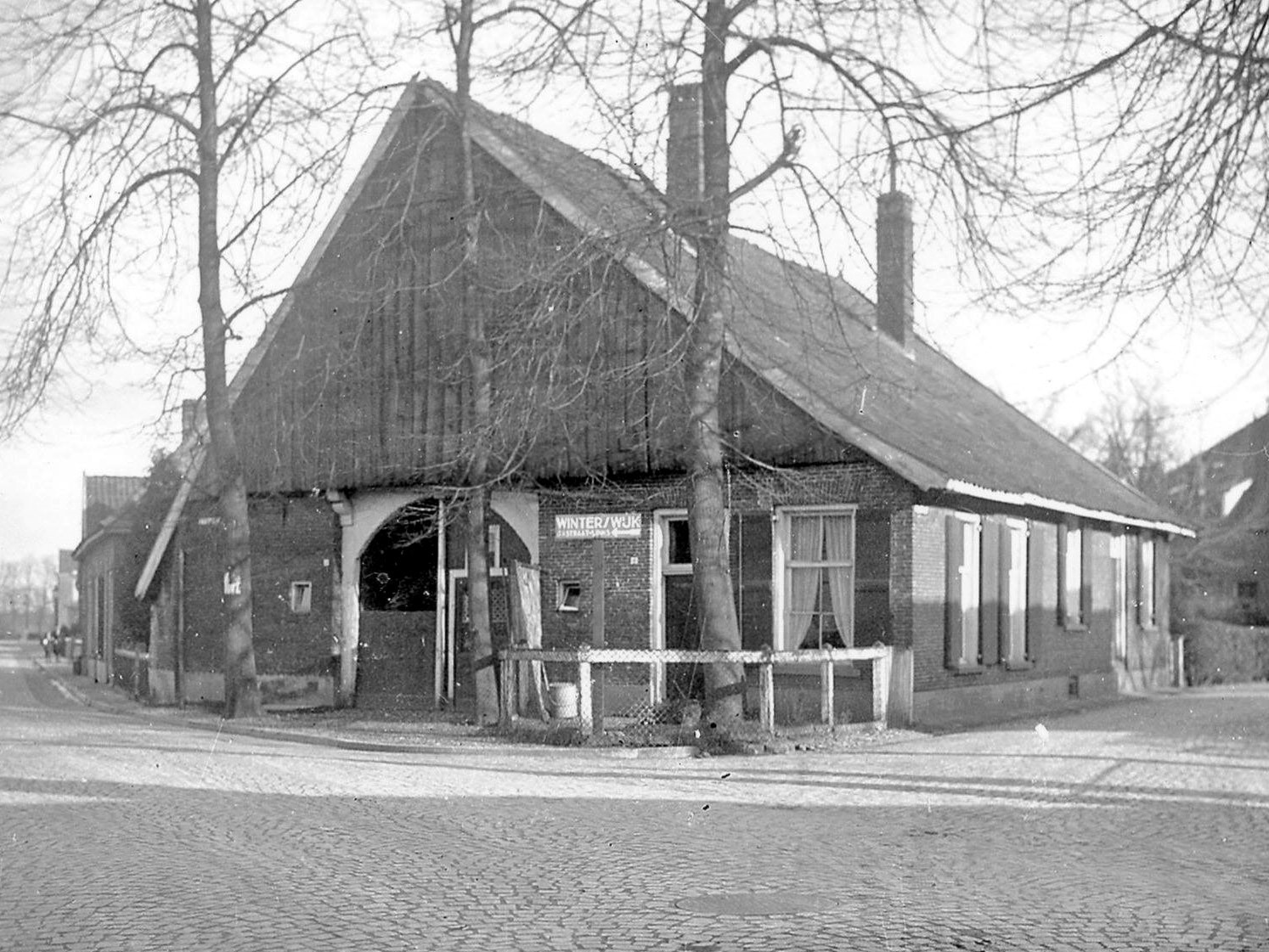
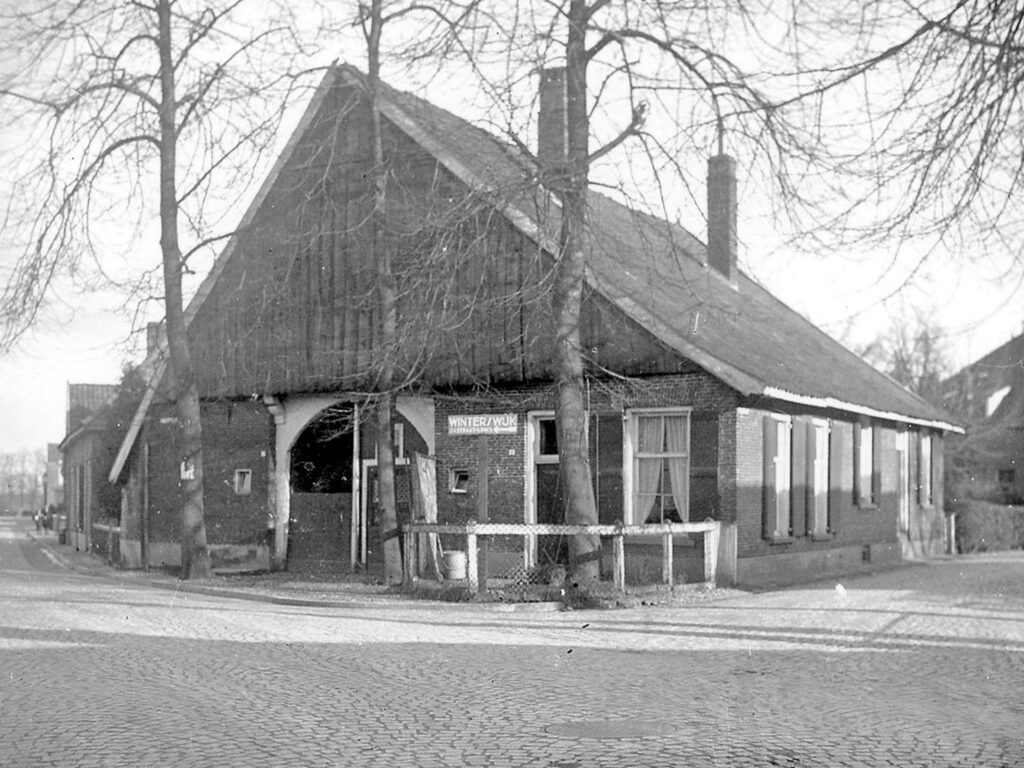
    Rond 1960 leefde er in Aalten een vrouwtje met de bijzondere bijnaam ‘Knonnepoetse’. Zij woonde in het Luutenshuus, een eeuwenoude boerderij op de hoek Polstraat/Haartsestraat die in 1962 is afgebroken om plaats te maken voor de doortrekking van de Polstraat.

    Op weg naar school daagden kinderen elkaar uit om daar op de ramen te kloppen. Er kwam dan een woedend oud vrouwtje naar buiten gestormd die half Duits sprak. Kinderen waren doodsbang voor haar.

    Guste Mina

    In de volksmond werd ze ook wel Guste Mina genoemd. Van oorsprong zou ze Poolse zijn en rond de oorlogsperiode uitgeweken naar Duitsland. Ze trouwde met een zekere Koskamp uit Aalten.

    Luutenshuus, Haartsestraat, Aalten
    Het ‘Luutenshuus’, in 1962 gesloopt

    Deze Koskamp was in de oorlog ‘fout’. Hij liep met een geweer om zijn nek rond door het dorp. Dit geweer noemde hij ‘seine Kanone’. Hij poetste zijn geweer dikwijls. Vaak zei hij dan: “Ik moet nog even mijn ‘Kanone’ poetsen”. Na zijn dood hield het vrouwtje er de bijnaam ‘Knonnepoetse’ aan over. De naam was dus oorspronkelijk toebedacht aan haar echtgenoot.

    Het echtpaar woonde aanvankelijk op de hoek van de Stationsstraat en de Admiraal de Ruyterstraat in Aalten, in de oude woning van Lurvink. Later is deze woning afgebroken en vestigde zich daar Nijman met zijn tankstation, later tankstation Veneman en tegenwoordig cafetaria ‘De Admiraal’. Het echtpaar Koskamp verhuisde vervolgens naar het Luutenshuus.

    Wie was zij?

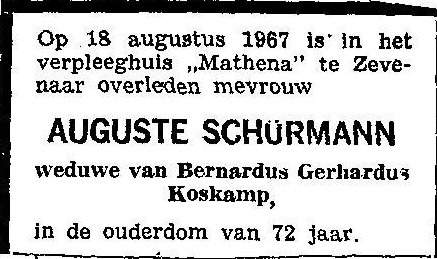
    Haar echte naam was Auguste Koskamp-Schürmann. Zij werd geboren in Sterkrade (D) en in 1919 te Aalten getrouwd met Bernardus Gerhardus Koskamp. Ze woonden omstreeks 1920 in het dorp Aalten op adres A211a, later omgenummerd naar B215a. Vermoedelijk werd dit adres later/tegenwoordig Hogestraat 60a.

    In het Adresboek der gemeente Aalten uit 1967 staat zij vermeld op het adres Polstraat 17a. Op 18 augustus in datzelfde jaar overleed Auguste in een verpleeghuis te Zevenaar. Zij werd begraven bij haar man op begraafplaats Berkenhove.

    ‘Knonnepoetse’ heeft geen gemakkelijk leven gehad; ze kon snel kwaad worden. De jeugd wist dit en maakte daar misbruik van. Pesten was iets dat in die tijd ook al voorkwam.

  • Wisselink Textiles

    Wisselink Textiles

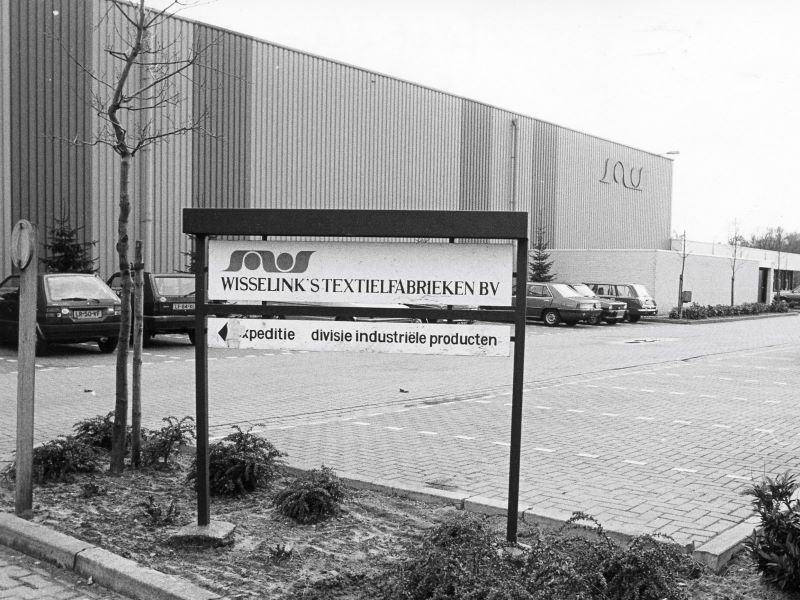
    Eerste Broekdijk 85, Aalten (no longer extant)

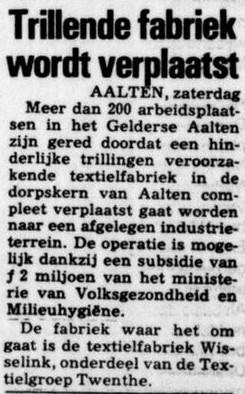
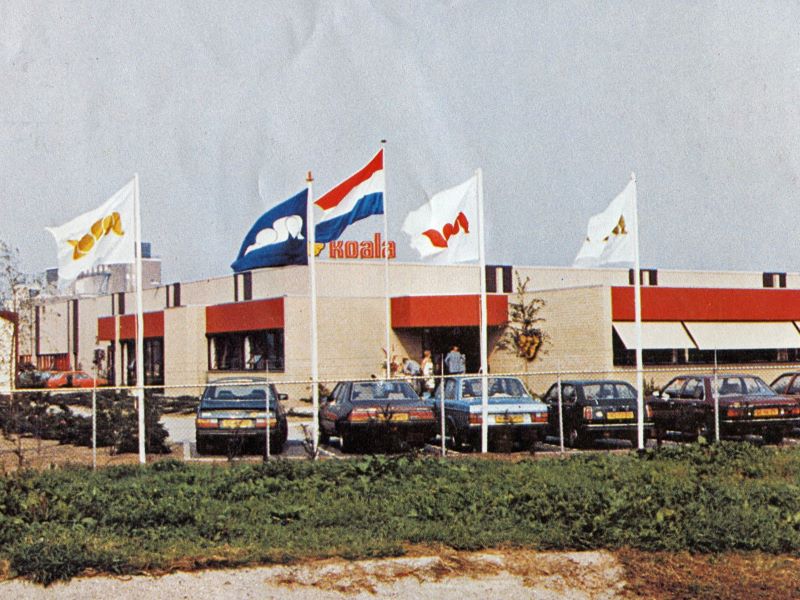
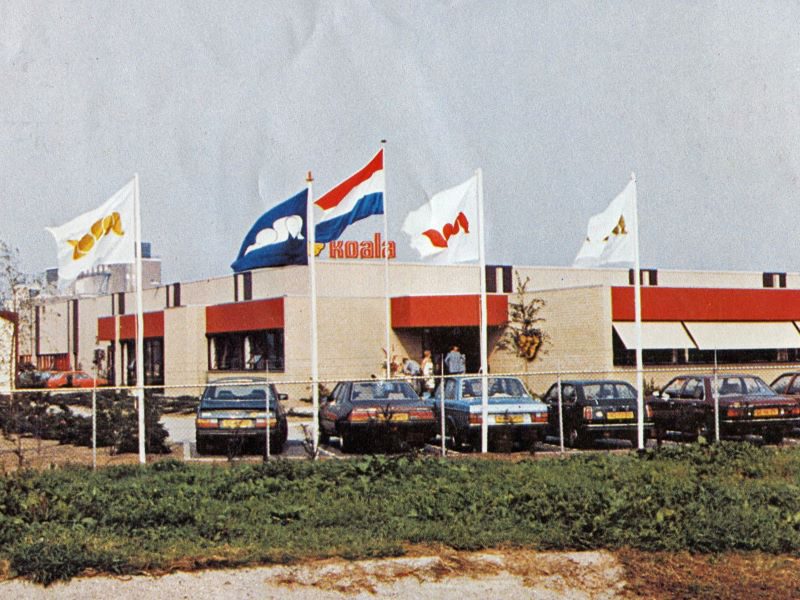
    The textile weaving mill Wisselink Textiles, formerly Gebr. Driessen, had been part of the Textielgroep Twente since 1960. They manufactured products such as technical textiles, tent canvases, and flag bunting. For years, the company was located on Dijkstraat, but its presence in the village centre caused excessive noise and vibration nuisance.

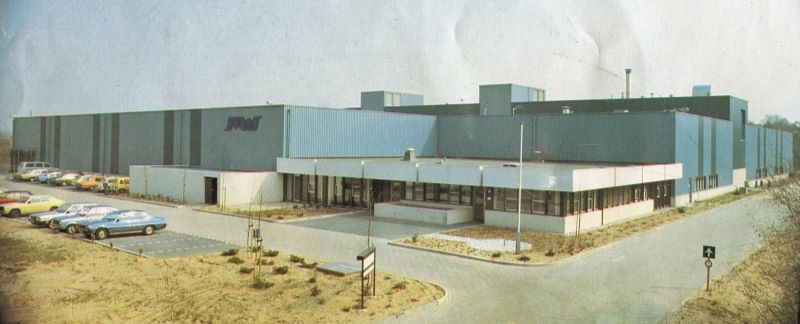
    Consequently, the factory relocated in 1981 to new premises on Eerste Broekdijk, within the ’t Broek industrial estate. Its sister company, Koala Tricotagefabriek, moved to Industriestraat. This relocation ensured the preservation of over 200 jobs.

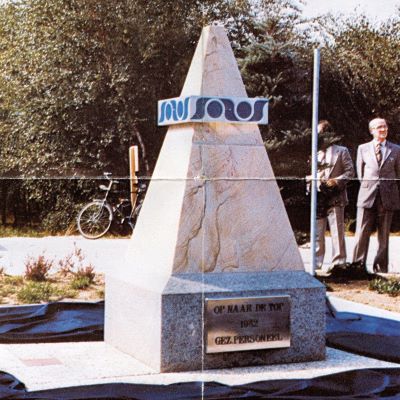
    The official opening of the new building was performed by the then Queen’s Commissioner for Gelderland, Mr Geertsema. The collective staff presented the company with a pyramid-shaped sculpture with a flattened top, inscribed: ‘OP NAAR DE TOP’ (Onwards to the Top). However, Wisselink never quite reached that summit.

    The Most Modern in Europe

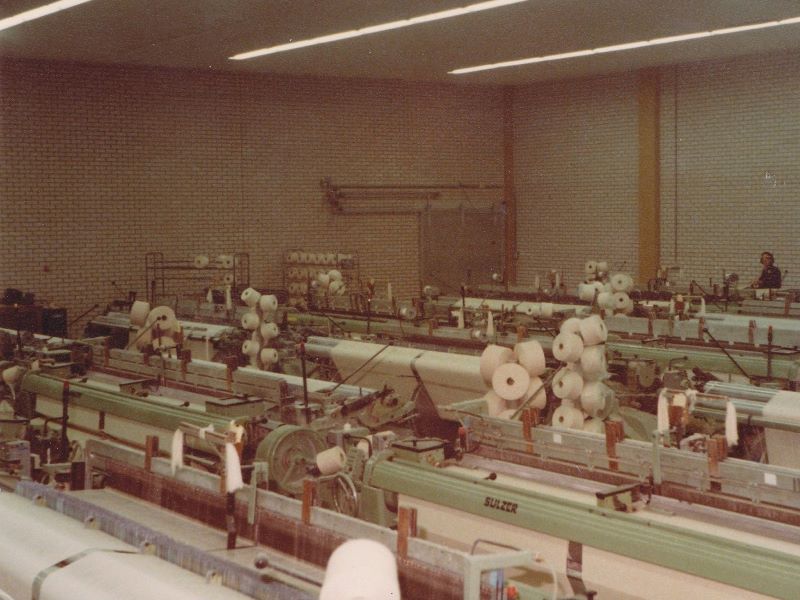
    At the time, the new weaving mill was by far the most modern in Europe. It initially housed 76 state-of-the-art Sulzer projectile weaving machines and 20 older Picanol looms. The directors were, in succession, Messrs Schukkink, Van der Gronden (interim), Defourney, and Brouwer.

    The company organised several staff parties a year. Highlights included sports days with sister companies from Enschede, Weerselo, Hengelo, and Bree (Belgium). The group’s centenary celebration at the Theaterhotel in Almelo was also a grand event. Wisselink had its own shooting club, ‘WIA’ (Wisselink Textiel Aalten), which was affiliated with the Aalten Shooting Association.

    Despite the festivities, the textile industry demanded hard work: shift work, dust, and noise… above all, a lot of noise!

    Takeover and Closure

    Eventually, Wisselink faced financial difficulties. By 1997, the workforce had dwindled to 93 people—significantly fewer than in previous years. Following several painful reorganisations, the curtain finally fell in 2002. The company was taken over by the German firm Setex. A year later, the entire production was moved to the headquarters in Dingden, Germany. On 31 March 2003, the Aalten factory closed, and the building on Eerste Broekdijk was left vacant.

    Some years after the closure, the premises were purchased by Kaemingk Season Decorations. The former production facility was repurposed as a warehouse. In 2015, the building was demolished and replaced by a new, larger warehouse built by Kaemingk.

    Invention

    On 16 August 1980, the Dutch newspaper De Telegraaf reported on a new invention by the Wisselink textile factory:

    ‘Schulp’ without buttons designed for soldiers

    In the future, soldiers can literally crawl into their shells (schulp). ‘Schulp’ is the name of the tent developed for the army by order of the Ministry of Defence. It is a two-person, single-roof tent for mobile use—quick to pitch and lightweight.

    The latter is thanks to a new type of tent canvas, KSOOI/Wetfold, an invention by the Wisselink textile factory in Aalten. It is a lightweight cotton fabric provided with a so-called multi-porous coating (MPC).

    Bivouacking becomes a lot easier because of it. The unique feature of this canvas is that it does not leak if touched during a rain shower or if it is folded and packed while soaking wet.

    Thanks to an ingenious tensioning system, only two pegs are needed to set up the shelter. What more could a soldier want during field exercises in harsh weather conditions?

    It is not just soldiers who can benefit from the tent designed by Mick Schmidt; a civilian version was also produced. It was awarded the 1986-’87 ANWB prize for the best tent design of the year.

    Perhaps the greatest advantage of the tent is that it does not consist of two halves. There is not a single button on it. The only thing that might cause an argument is which of the two has to carry the thing on their knapsack.

    Video

    In 1990, FilmAalten made film recordings inside the Wisselink textile weaving mill:

    Features


    Cadastral no.L-1207
    FunctionTextile factory
    Opening1981
    Sluiting2003

    Sources


  • Koala Body Fashion

    Koala Body Fashion

    Industriestraat 15, Aalten (no longer extant)

    Koala Body Fashion (1982)

    Formerly Koala Tricotagefabriek, manufacturer of underwear.

    The Algemeen Dagblad wrote on 15 March 1989:

    FROM JANSEN & TILANUS TO KOALA BODY FASHION

    Koala Body Fashion is the new name of the manufacturer of the underwear and nightwear brand Jansen & Tilanus. This operating company of the Textielgroep Twente holds a 10 per cent share of the Dutch market. Koala — formerly Koala Tricotagefabriek — hopes that with this change of name, the company’s upward trend will continue.

    In 1987, profits rose by 10 per cent compared to the previous year. Although managing director H. ter Balkt does not expect this percentage to have been achieved in 1988, there is once again talk of substantial growth. He cites responding as quickly as possible to consumer desires as the most important prerequisite for this.

    Because nightwear and underwear have increasingly become an essential part of fashion in recent years, they are subject to new trends, rages, and developments. “An increasing portion of turnover is determined by products that did not exist six months earlier. In such a situation, you cannot work with long delivery times,” says Ter Balkt.

    In honour of its 70th anniversary, Koala Body Fashion is the first company in the Netherlands to deposit ƒ1,000 into a fund established by the Enschede University of Applied Sciences (Hogeschool Enschede). This fund is intended to enable the international exchange of lecturers and students in the field of textiles in the future. Koala is making an identical amount available for the best graduation project at the Higher Technical School for the Garment Industry (HTS voor de Konfektie Industrie) in Amsterdam.

    And Het Parool wrote on 1 September 1995:

    Textile company moves to Asia

    Textielgroep Twenthe is going to move its garment manufacturing activities to Southeast Asia. Other activities may also disappear from the Netherlands in the course of the year. Due to persistent losses, further reorganisations are not ruled out. In the first half of this year, the textile group suffered a loss of 4.5 million guilders.

    Seventy people work at Koala Body Fashion in Aalten. The garment workshop is the main cause of the persistent losses.

    According to a statement from the company, relocation is inevitable from the point of view of reducing cost prices and increasing flexibility. Efforts are being made to find a new location in Southeast Asia.

    A social plan has been drawn up for the forty staff members who will be made redundant. Approximately thirty people will remain in Aalten. They will focus on the manufacture of highly fashion-sensitive products for which a short delivery time is necessary.


    Video

    Features


    Cadastral no.K-1678
    FunctionTextile factory
    Foundation1982
    Closure1995

    Sources


  • Anton Driessen

    Anton Driessen

    Textile manufacturer – “the rear Dreessen”

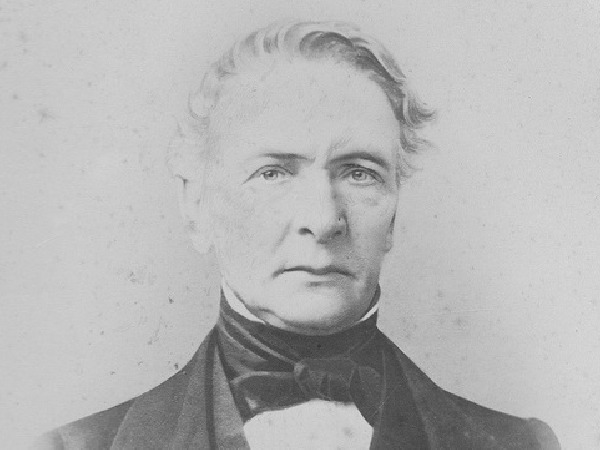
    Johan Bernard Anton (known as Anton) Driessen (Bocholt, December 5, 1797 – Aalten, March 7, 1879) was a prominent textile manufacturer in Aalten. Anton descended from a textile dynasty in Bocholt. His father Herman (1765–1817) was also a textile manufacturer, as was his brother Peter Driessen (1756–1843), who also served as an alderman and second mayor of Bocholt.

    After their father’s death, Anton and his younger brother Joseph founded the textile company ‘Gebrüder Driessen‘. In 1826, Anton and Joseph Driessen submitted a request to King William I to establish a textile factory in Aalten. The motives for the Driessen brothers’ request were the increased import duties in the Netherlands. They had chosen Aalten ‘as this place was best suited for this purpose‘.

    They requested permission to establish a fustian weaving mill and bleachery, as well as a cotton spinning mill and dye works. The Driessen brothers were granted permission for the establishment on the condition that it be located within the village center of Aalten.

    Not long after, their cousin Heinrich Driessen also requested permission from the King, which was likewise granted.

    In Aalten

    Anton moved to Aalten in 1826. He initially lived with Meijerink in the Kerkstraat. His brother Joseph remained in Bocholt, where they maintained a branch office.

    The company started “in the Barn and Garden Room of Mr. Bonninghoff”. This most likely referred to the house at Markt 18 belonging to the justice of the peace G.J. te Gussinklo, who had purchased the Borninkhof farm in 1804. Owners were often referred to by the name of their farm.

    For the processing of the yarn, Anton Driessen relied on the many home workers living in the area. Furthermore, the municipal report of 1826 mentions, among other things: “Several households have settled here, primarily from Bocholt“. The report for 1827 mentions for the first time that, alongside agriculture as the primary source of livelihood, much fustian was woven for the manufacturers from Bocholt. There were approximately 218 fustian weavers at that time, “performing the work in their homes“.

    On November 22, 1827, Anton Driessen married Isabella Dees in Bocholt.

    In that same year, the cotton spinning mill was moved from Bonninghoff’s barn and garden room to a better-equipped building in the center of the village. Driessen had purchased a house there from Manus Scholten, located at the site of the current address Landstraat 25.

    However, the relocation did not proceed without incident. Two neighbors, the schoolmaster H. Schotman and the farmer W. Obrink, submitted a formal objection to the municipal council, fearing noise nuisance and fire hazards. The municipality, however, rejected their objections. The two neighbors did not leave it at that and subsequently addressed their grievances to the Governor of the province of Gelderland. However, the Governor also saw no reason to give “any follow-up” to their objections.

    At the end of 1827, Anton Driessen was able to begin converting the house into a spinning mill. The new premises had an upper floor, which, along with the ground floor, was designated as workspace. Machines were installed on both levels.

    Beekhuize

    In 1833, Anton wished to build a new residence. To this end, he had purchased a house from the Degenaar heirs at the end of the Landstraat—now called Dijkstraat. He intended to demolish that house and build a new, modern residence with a warehouse, barn, and stables on the site. For this, however, he required more space than the existing plot. Anton Driessen submitted a plan to the municipal council with the request, “since the beautification of a Village is always one of the most pleasant duties of a Local government, to kindly grant the same, and consequently to support the undersigned in his intention as much as possible”.

    To realize Anton’s plans, both the stream and the street had to be diverted. Furthermore, a new bridge was required. Because the piles of the old bridge had almost decayed, the construction of the new bridge was not only highly necessary, but according to Driessen, the relocation was also less costly. In addition to diverting the stream and building a new bridge, Driessen also needed land for his plans. To this end, he exchanged a piece of land with the municipality. Negotiations regarding these matters lasted several years.

    In March 1835, Driessen was able to begin construction. For the production of the necessary bricks, he had meanwhile requested permission to establish a brickyard on the Schaarsheide and to excavate a three-hectare site. Due to the poor state of the roads in East Gelderland at that time, it was more practical and economical to set up a field kiln near the construction site than to purchase bricks elsewhere.

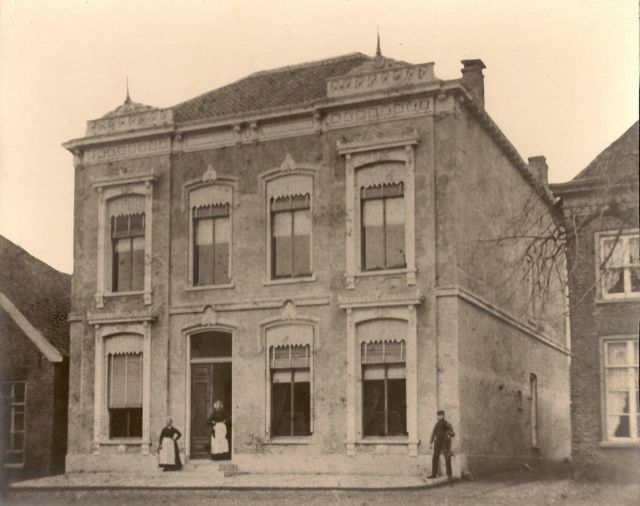
    The stately villa that Anton Driessen had built on the current Dijkstraat is known to every resident of Aalten as Beekhuize.

    Grave

    Anton Driessen is buried in the old Roman Catholic cemetery on Piet Heinstraat in Aalten.

    Sources


    • Delpher
    • ‘Geweven goed. De textielgeschiedenis van Aalten en Bredevoort’ (Woven Goods: The Textile History of Aalten and Bredevoort), H. de Beukelaer and J.G. ter Horst
  • Jews in Aalten and Bredevoort

    Jews in Aalten and Bredevoort

    After the Union of Utrecht , freedom of religion prevailed in the Netherlands. As a result, many Jews came to the Netherlands at the beginning of the 17th century. The first Jews in Aalten were documented around 1630. At that time, Aalten was a small, isolated and closed agricultural-artisan village community with a poor and still highly superstitious population.

    People looked strangely at the Jews with their different religion, customs and clothing. The local population considered them strangers for a long time. Until the Napoleonic era, the number of Jews was limited to four families, who lived in the remote streets of the village of Aalten. The profession was usually ‘merchant’.

    Bredevoort

    As early as 1631, Bredevoort had Jewish residents. At the time, they lived mainly around the Hozenstraat, where they also had their own cemetery, popularly called ‘De Timp’. Around 1700, a Jewish merchant in manufactures set up a house synagogue in Bredevoort. In 1714, this house synagogue moved to a more spacious location, a large stone barn on the Ganzenmarkt between Hozenstraat and Gasthuisstraat. This barn is still there. Jews from Aalten and Lichtenvoorde also visited this synagogue.

    Until 1821 the community was still part of Winterswijk, but in 1830 it became an independent municipality. Around 1830, a real synagogue was built on the Vismarkt.

    Around 1800, the Jewish community in Bredevoort had almost as many members as the Aalten community, but steadily declined in size in the course of the 19th century. In 1900 there were not enough members to hold regular services and the Bredevoort congregation was merged with that of Aalten.

    The building on the Vismarkt served as a synagogue until the beginning of the First World War. Around 1920 the synagogue was converted into a residence. Nowadays the building is a municipal monument.

    Aalten

    It was not until 1776 that a ‘Jewish church’ in Aalten was first mentioned. That must also have been a house synagogue. Between 1800 and 1850, the number of Jewish communities in Aalten grew from 39 to 70, mainly due to the expansion of the family in the existing Jewish families: the number of households hardly increased.

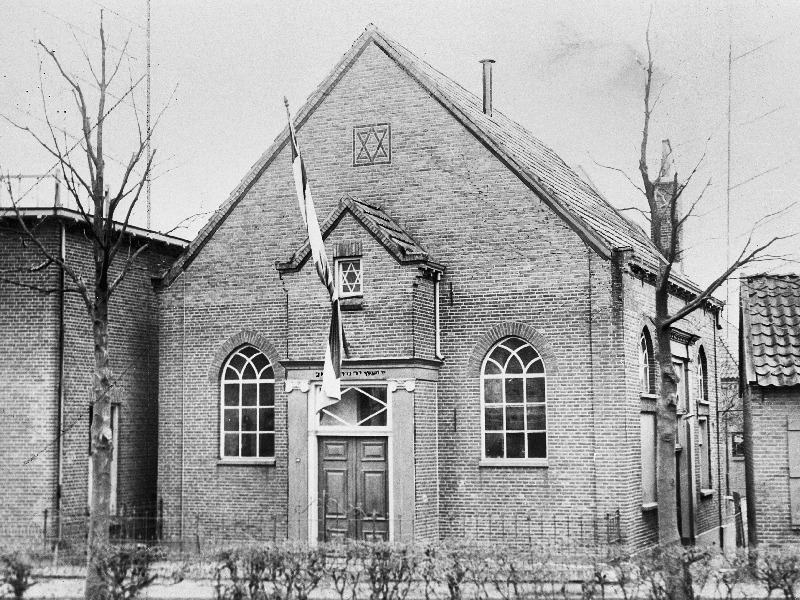
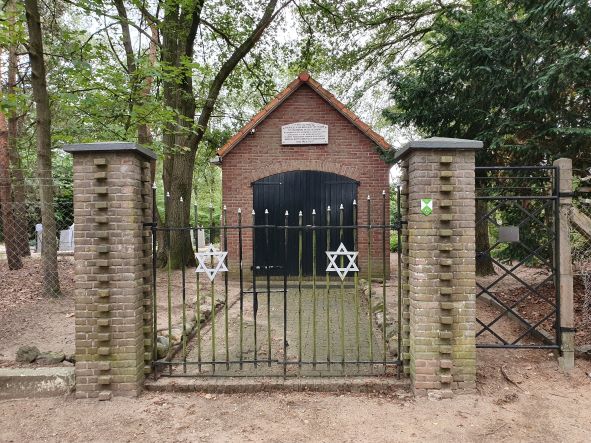
    In 1857 the synagogue on the Stationsstraat was put into use. The Jewish community acquired ownership of the cemetery on Haartsestraat in 1852, but had already been used there (we do not know for how long) to bury the dead.

    In the period 1870-1900, the number of Jewish inhabitants in Aalten decreased from 80 to 50. This must be explained by local circumstances: the number of Jews who had to earn a living with a small business had become too large for the hardly grown population of Aalten (which even decreased slightly due to emigration) due to the strong growth in the preceding years. Some of the Jews from Aalten therefore also moved away, especially to the larger cities in the east of the Netherlands (Arnhem, Zutphen, Deventer).

    Only when the total population of Aalten started to increase again, the number of people working in the small trade could also grow again. And that happened, not only because of birth surplus, but for the first time in a long time also because of the settlement of new families.

    Around 1900

    At the beginning of 1900, the church board had three members. There was a religious school with one teacher and a ritual bath. In addition to a funeral association for men, Aalten had a women’s society that offered help in case of illness and death.

    The Jewish community in Aalten was religious, although some may have done a little more about it than others. Social control did play a role in this. However, the Sabbath rules were not always strictly observed for economic reasons.

    The Jewish community in Aalten consisted mainly of cattle traders and butchers. The fact that many within the small congregation belonged to the same professional group often led to quarrels, which were often fought out in or near the synagogue. These tensions and quarrels, between ritual butchers who had to determine whether a cow was kosher, and between butchers who wanted to sell, were just as much a part of the Jewish culture in Aalten as the mutual aid in case of illness and poverty.

    Integration

    In the 17th and 18th centuries, Jews were still tolerated as foreigners, but in the 19th century a process of integration gradually took place. This led to the fact that the Jews were an accepted minority in the early 20th century. For example, they held board positions in associations such as Aaltens Belang, the Oudheidkamer and the Feestgebouw.

    Marcus Gans was co-founder of the Peters en Gans pipe factory on the former Gasthuisstraat. Jewish cattle traders were involved as shareholders in the establishment of the dairy . The public school had Jewish teachers, the Aalten Orchestra Society, the Thalia drama society and Symphonia had Jewish members. Jewish members were part of the Aalten branch of the National Crisis Committee and the volunteer fire brigade.

    Most Jewish children also had non-Jewish friends and the older ones were also usually friendly with non-Jews. The municipal council was officially represented at official events in Jewish circles.

    Refugees from Germany

    In the years after 1933, a stream of refugees started from Germany. After the Reichskristallnacht in 1938, this flow increased sharply. A small part of those who were admitted to the Netherlands were allowed to settle in Aalten. Most were sent to special refugee camps that had been set up in various places in the country.

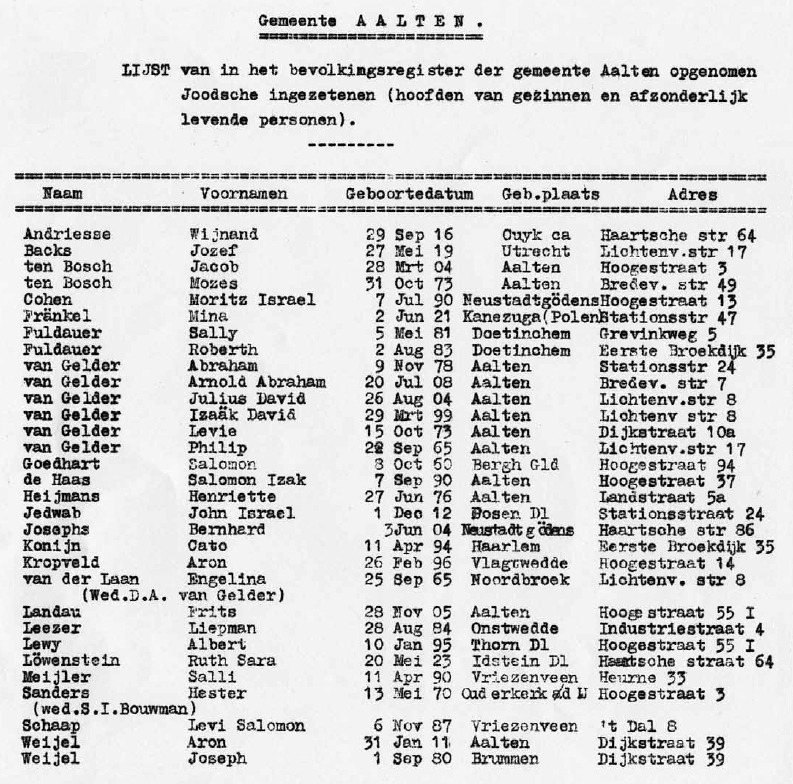
    On 1 January 1942, Aalten had 17 inhabitants with German nationality (which, by the way, they had officially lost on 25 November 1941: the German refugees had effectively become stateless citizens). In the first weeks and months of the German occupation, everything remained quiet in Aalten. Measures taken against the Jews did not directly affect the Jewish community in Aalten in the first year. What would have consequences in the long run was the registration of all Jewish residents in the autumn of 1940. 63 cards were sent to Arnhem.

    Choices

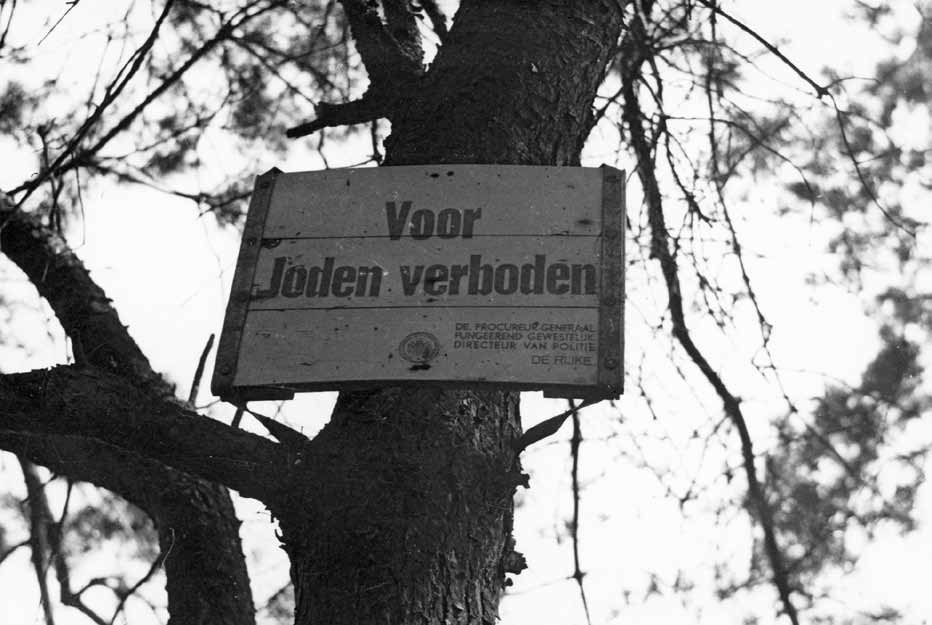
    In 1941, the expulsion of Jews from public life began. First there were fewer and fewer advertisements from Jewish shopkeepers in the newspapers, then came the regulations that forbade them to participate in public meetings and access to public spaces. Jewish pupils were banned from education. In the same year 1941, the first Jewish victim fell from the Jewish community in Aalten as a result of a raid.

    The list of prohibitions and obligations that applied specifically to Jews continued to grow and in the summer of 1942 the deportations began. They had to decide whether or not to go into hiding. Those who did not opt for the latter were deployed for what was called ‘the expansion of work in the east’ and – as we know afterwards – murdered in the gas chambers.

    Hiding

    On 13 July 1942, the overview of the Jews in Aalten was sent in five copies to the Zentralstelle für jüdische Auswanderung in Amsterdam. That was the beginning of the end.

    With the exception of the NSB members, the non-Jewish population of Aalten generally behaved helpfully. In retrospect, however, one can say that both Jews and non-Jews underestimated the danger and did not see the severity of the measures.

    On 4 October 1942, 10 Jews from Aalten, family members of Jews who had been transferred to Westerbork from a number of closed labour camps, were put on a transport to the transit camp and from there to Poland. Shortly afterwards they were removed from the population register ‘because they left for abroad’.

    Within a month of that, 37 Jews from Aalten were in hiding. They were also removed from the population register with the addition v.o.w. (left, unknown whereto). At the beginning of 1943, another 15 Jews from Aalten went into hiding. The other 25 were deported via Vught or Westerbork. This made Aalten officially Judenrein on 10 April 1943.

    Victims

    The houses of the deported families were emptied (for the benefit of German Bombengeschädigte) and rented out again. Outstanding bills and transport costs were paid by Lippmann and Rosenthal, the bank in Amsterdam where all Jewish assets were housed.

    In 1941 people went into hiding temporarily, but from October 1942 the hiding took on a permanent character. Not everyone returned from hiding.

    Of the 52 Jews in hiding, three eventually died during their hiding period and six were arrested, deported and murdered after being betrayed. There have also been Jews who were born in Aalten, who may or may not have spent a large part of their lives there, but who lived elsewhere in the Netherlands during the occupation due to relocation. The information about their fate is not complete. If we count them, the number of victims from Aalten is much larger than the 34 of whom we know for sure.

    After the war

    The 46 members of the Jewish community in Aalten who had survived the war were distraught. Many had lost a large part of their family and no longer owned anything. Their attempts to get some of their former possessions back did not always meet with cooperation and often met with reluctance.

    The number of Jews in Aalten steadily declined after the war. Young people left for Israel or to the west of the country, the older ones died. In 1965 the number was 28, in 1981 21, and now there are only a few.

    Hint


    The National Hiding Museum in Aalten tells the great history of resistance, hiding and freedom before, during and after the Second World War with ‘small’ stories. The museum examines the choices and dilemmas of ordinary citizens on the Dutch-German border and uses the stories of the past to have a conversation about today.

    nationaalonderduikmuseum.nl

    Sources


  • Naoberschap

    Naoberschap

    In the east of the Netherlands, the concept of naoberschap is widely known. This phenomenon, also referred to as neighborly duty or neighborly aid, refers to the tradition in which neighbors support one another during both joyful and sorrowful events.

    In 1874, J. ter Gouw, with the cooperation of E.F. Avenarius, a teacher in Lintelo, and Is. de Waal, a former minister in Aalten, described the customs and duties of the naoberschap as they were common in Aalten at that time.1 The article is presented below.

    N.B. In the original article, naoberschap is spelled with oa. Because we are Old Aalten and the article concerns Aalten, we have chosen to adapt this term to the WALD spelling, thus using ao.2

    Although these customs are still in vogue in the municipality of Aalten, they nevertheless belong to the olden days. They are remnants of ancestral morals, mere fragments that still live on there, but which may also disappear after only a few years.

    New Construction

    When building a new home, the future resident visits eight or twelve of the nearest neighbors and asks them if they wish to be his “naober.” This is usually accepted, as a refusal is considered an insult, and terminating the naoberschap also signifies the breaking off of all mutual social interaction.

    Mutual obligations rest upon the naobers. For instance, every naober is obliged to help erect the wooden frames and the roof free of charge when a house is being built. In the evening, the naober youth then place the May trees (a few pines) in front of the house, for which the owner must treat them.

    This is followed by a so-called “rigtemaal” (topping out meal) for the naobers, who also take this opportunity to give the new building a name, by which name the resident is subsequently called, and often better known than by his family name.

    Before the new home is occupied, the naober women, or their daughters or servants, arrive with baskets full of peat and wood to “aan te bueten” the fire, which is to say: to light it. And if the new resident is among the needy, his more affluent naobers often bring him such a large quantity of fuel that he can provide for his hearth for several months.

    J. ter Gouw

    Marriage

    When a young man or young woman is to enter into marriage, the other young people from the naoberschap go to the residents with whom the newlyweds will take up residence, before the second marriage banns take place, and ask the bridegroom or the bride if they may “make it beautiful.” This beautification consists of planting four tall pine trees in front of the door, which are interconnected with arches, wound with palm, and adorned with small flags of colored paper; while in the center a crown is hung, wound with cut paper and decorated with gilded eggs. Inside this crown hangs a wooden dove, as the symbol of love, which is neatly covered with gold paper.

    These wedding crowns are held in high honor and preserved for as long as possible. At many farms, one can still see the crowns that were hung at their grandfathers’ weddings.

    The fetching of the bridegroom or the bride to bring them to their destined home is also performed by the naober youth. The wagon is decorated with greenery and often drawn by four horses; the girls from the naoberschap take their places upon it, and while singing or rather shouting out: “To Austria we wish to sail, almost across the heath, etc.”, they set off on their way.

    If it is a bridegroom fetching his bride, he sits at the front of the wagon smoking a long Gouda pipe — if possible a steel pipe, decorated by his naober girls with red, white, and blue silk ribbon. Now, that is of course long out of fashion; bridegrooms now smoke cigars or do not smoke at all. But in the time of pipes, a bridegroom had to smoke. I have seen some who actually belonged to the non-smokers, and yet sat with the bridegroom’s pipe between their teeth during the ‘bride’s tears’ and at the wedding, and had to pack and light it every now and then.

    Upon arriving at the bride’s home, a bouquet of colored and gilded paper is fastened to the left side of his hat, so that many would take him for a coachman with a cockade on his hat. The bride receives a similar bouquet on the left side of her chest.

    Once some bread and coffee have been consumed, the bride is led to the wagon by a naober boy and the bridegroom by a naober girl, while the other naober boys fetch the “bride’s cow” from the stable and lead it behind the wagon. If the bride’s parents are well-to-do people, the naober boys take the liberty of also bringing some sausage, bacon, meat, chickens, and more of that nature for the newlyweds.

    Often, the bride’s cupboard, well-stocked with rolls of linen, napkins, and table linens, along with eight or twelve chairs, a spinning wheel, and a reel, has already been brought to the future home the day before.

    When the bridal wagon has arrived there, the naober youth spend not only the evening but also a large part of the night drinking “foesel” (gin) and shouting out all kinds of songs, for one cannot call it singing, and finally return to their homes to pay for the frequent use of that “plague drink,” as some call it, with headaches and listlessness the following day.

    Sometimes the wedding or “broedlagt” follows weeks, even months later, or is combined with the ‘kinderbier’ (child-beer) of the first offspring.

    J. ter Gouw

    Death

    In the event of a death, the obligations of the naobers are even more numerous. As soon as someone dies in a household, one of the nearest naobers is notified, if none are present, and he immediately goes around the entire naoberschap; thereafter, the naobers go together to the house of the deceased to “verhennekleeden” the dead, which is: to remove their clothes and shroud them in the burial garment.

    The next day, the passing of the deceased is tolled, and the naobers must announce the death to the family, even up to a distance of five hours away. In the evening, two or three naobers bring the coffin and place the body inside. If the deceased died of a contagious disease, or if the unpleasant odor already indicates decomposition, he is given a glass of “plague drink.” But this is then also the only gin used in a house of mourning.

    From the time of death until the funeral, the naobers manage everything. They must take the grain required for the funeral meal to the mill and provide everything else that is needed. The naober women must sift the flour and bake bread, and because of this, there is a bustle in the house of mourning that is bothersome to the relatives, who would prefer to be alone with their beloved dead. One can form an idea of that bustle when one knows that more than a hundred households may be invited to a funeral or ‘groeve’.

    (This was the case with one of my farmers, who was quite well-to-do but still had only a small farm, when there was a ‘groeve’ at the house upon the death of his elderly mother. On that occasion, four mud of rye were baked, yielding 75 loaves of bread, and since the bread was intended for four people, they had counted on three hundred eaters. Furthermore, the following was purchased: one full Leiden cheese and one nearly full, together 33 old pounds; twelve old pounds of coffee, and 1.25 old pounds of white sugar lumps. A barrel of beer was ordered from the brewer, which they expected would not be sufficient. The bell-ringers drank three guilders’ worth of gin.)

    On the day of the funeral, at ten o’clock in the morning, the body is placed on “den deel” (the threshing floor), and the coffin is opened far enough so that the face of the dead is visible. The naober women now pour coffee and present bread to the guests, while that naober woman whose husband must drive the body to the cemetery has the privilege of serving the immediate family, and thus every naober woman has her specific task according to her rank and status.

    After all the guests, which include the naobers and the residents of het rot (the district), have satisfied themselves with bread and coffee, everyone goes to the threshing floor to see the deceased for the last time. If a minister is present, he gives a speech by the open coffin; he seeks to comfort the bereaved, reminds everyone of the memento mori, and concludes with an appropriate prayer.

    Now the coffin is placed on the back of a wagon, and the two closest relatives of the deceased sit at the foot of the coffin, followed by the next two, and so on until all seats are occupied. The women have a black rain cloak or ‘folie’ hanging over their heads and know how to indicate their relationship to the deceased very precisely by covering themselves entirely or partially with it.

    The procession to the grave forms a long, sometimes endless line, as not only the relatives but also the naobers and those belonging to the ‘rot’ follow the body, and moreover, as soon as the funeral procession approaches the village, many from there also join in; so that not infrequently one hundred and fifty men, women, and children take part in that procession.

    From the moment the procession comes into view of the village until it has left the cemetery again, all the bells are tolled, and from the grave, they go to the brewer, where a few drink tea, but most drink beer, and the latter in very generous amounts. From the brewer, they return to the house of mourning; here bread and coffee are consumed once more, and the ceremony is concluded.

    But the next day, a small after-reflection follows. Already at the crack of dawn, the poor stand at the door (fifty or a hundred sometimes) to be able to carry away “a morsel” from the house of mourning. They are given the not very carefully sifted bran from the consumed rye and the leftover bread.

    In the afternoon, the naober women come to the house of mourning once more; they again consume coffee and a sandwich, and thereafter each gathers her borrowed cups, saucers, knives, etc., and departs with the customary: “I wish you the best.”

    Lintelo, E.F. Avenarius

    In the village

    What has been communicated by my friend Avenarius, and to which I have added a few remarks, specifically concerns the naoberschap among the country folk. In the center of the municipality, one has the same theme but with some variation.

    Upon moving into a home, an offer soon comes from the naobers who belong to the house (according to a choice once made) to “aan te bueten a fire,” i.e., to light it. This being accepted and the hour determined, the naobers send daughters or maidens (servants) with fuel — “kluwen” or dredged peat from one, wood from the other — and everything is piled up at the empty hearth, as if it were to be set ablaze immediately. If one wishes to make it truly beautiful, a wreath of colored paper is placed over everything. After this “fire-lighting,” a glass of “foesel” (gin) is immediately expected, and if there is something to go with it, all the better; thereafter the naobers themselves are “geneugd” (invited), and consequently, the heads of the families are received for “a cup of coffee” with “kluntje” (sugar lump), currant bread, and finally “foesel with sugar” (gin with sugar).

    Also after the conclusion of a wedding and funeral, the naobers are invited in the same manner, and then Jew and Christian, Roman Catholic and non-Roman Catholic, rich and poor, sit together in brotherly friendship; and such an evening leaves pleasant memories behind, while one feels newly inclined to perform for one another all the services that the duties of naoberschap prescribe.

    Within the town, funerals are generally not arranged on such a large scale as we have just heard; yet the gathering is sometimes so numerous that the minister, who leads in prayer before the refreshments are consumed, must sometimes place himself between two spacious rooms in order to be heard in both. It even happens that a third room is necessary, where the guests must then make do with a few sounds from a distance.

    Middelburg, Is. de Waal

  • Adriaan Pieter Slicher van Bath

    Adriaan Pieter Slicher van Bath

    Notable

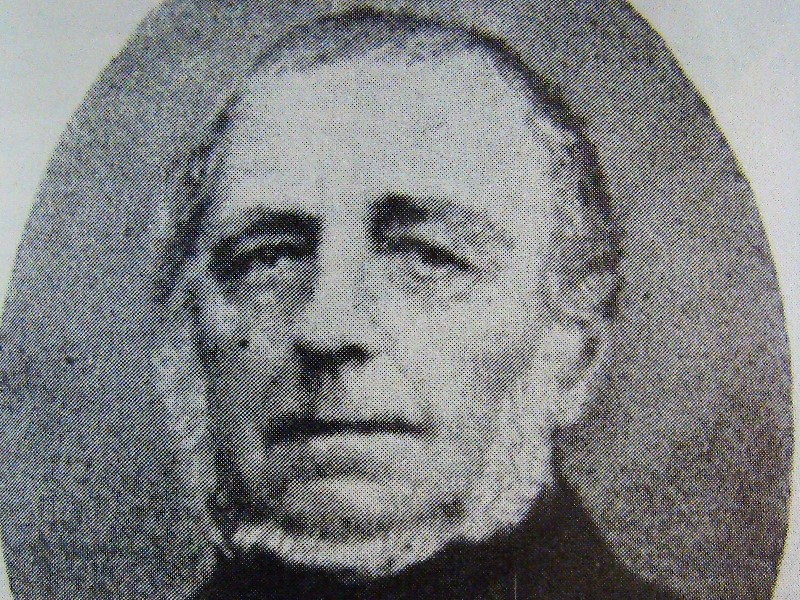
    Adriaan Pieter Slicher van Bath (Middelburg, 1838-06-07 – Aalten, 1933-11-18) was a local notable and benefactor who contributed significantly to the Aalten community. He had resided in Aalten since 1867 and married Johanna Geertruida (‘Nannie’) van Hopbergen (1849–1924) here in 1874. She was a daughter of the local landowner Major J.W. van Hopbergen (1817–1913).

    A street and a lane in Aalten are named after this couple. On the corner of the Slicher van Bathstraat and the Bredevoortsestraatweg, we still find their former residence, villa ‘Welgelegen‘. Furthermore, every resident of Aalten is familiar with the Nannielaantje, which runs across their former estate, the ‘Smees’ property.

    Offspring

    Their son Willem Antonie (‘Toon’) Slicher, born in 1881, and Anna Becking, born in 1883, married in Aalten in 1908 and were the parents of Professor B.H. Slicher van Bath in Wageningen. The title ‘Van Bath’, a small seigniory at Rilland-Bath in Zeeland, was intended to be inherited by B.H. Slicher’s uncle, but was transferred to his grandson by the grandfather for personal reasons.

    In memoriam

    On November 20, 1933, the Zutphense Courant published this report from Aalten:

    “After an illness of several months, our oldest resident, Mr. A.P. Slicher van Bath, passed away here on Saturday evening at the advanced age of 95.

    Mr. Slicher van Bath, who had already lived here for a normal lifetime, sailed a large part of the world’s oceans on a sailing ship in his younger years. After initially working at the Greenwich Observatory, he was sent out on behalf of English interests to conduct meteorological observations for the benefit of sailing. During these voyages, he visited St. Helena, the Cape of Good Hope, India, Australia, and Cape Horn, among others.

    After settling here, Mr. A.P. Slicher van Bath was very active in the interests of this region. Among other things, he provided the initial impetus for the establishment of the Geld. Overijselsche Mij. van Landbouw, the Coöp. Zuivelfabriek (Cooperative Dairy Factory), the gasfabriek (gasworks), and the Geld.-Overijs. Locaal Spoorweg (Local Railway). ‘Floralia’, which has now existed for over 50 years, owed its origin to Mr. Slicher. No effort or expense was too much for him when it concerned ‘Floralia’, and when he was no longer able to involve himself in its management, this association received his significant donations every summer.

    For many years, Mr. Slicher was chairman and later honorary chairman of the local department of ‘t Nut, and as such, the bewaarschool (nursery school) was his great passion. This institution also benefited from his substantial financial support every year.

    Mr. Slicher was also a member of the Provincial Council of Gelderland for several years. Furthermore, until his 90th year, the deceased was an observer for the Meteorological Institute in De Bilt and, until the present, a correspondent for ‘Arti et Amicitiae’.

    It is certainly noteworthy that Mr. Slicher’s memory remained excellent until the very end and that he continued to take an interest in all major world events.

    With the passing of Mr. Slicher van Bath, a very well-known Aalten personality is gone, and numerous associations and institutions will deeply miss his great support.

    The interment will take place on Wednesday afternoon at 3:00 PM at the Oude Begraafplaats (Old Cemetery) here.”

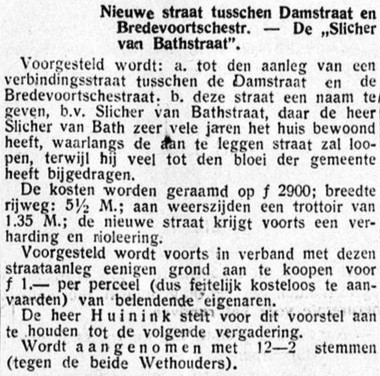
    Slichter van Bathstraat, Aalten – De Graafschapbode, 21 December 1934
    De Graafschapbode, 21 December 1934
  • Heinrich Driessen

    Heinrich Driessen

    Textile manufacturer – “the front Dreessen”

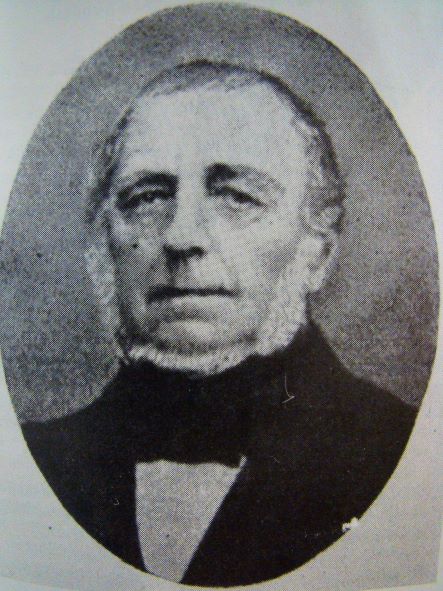
    Johann Heinrich Joseph (known as Heinrich) Driessen (Bocholt, 10-07-1794 – Aalten, 04-07-1879) was a prominent textile manufacturer in Aalten. Heinrich descended from a Bocholt textile dynasty. He was the only son of Peter Driessen and Maria Hölscher. His father held a distinguished position in the Prussian town, just across the border from Aalten. In addition to being a textile manufacturer, he served there as a magistrate and, from 1797 to 1811, as deputy mayor.

    Heinrich received a thorough education at the Jesuit College in Amsterdam and spoke excellent French, so that in 1812, when Napoleon’s troops passed through Bocholt, he was the only one capable of acting as an interpreter between the municipal authorities and the French generals.

    Peter Driessen & Sohn

    In 1810, Heinrich joined his father’s business. On December 2, 1820, he married Lisette Sträter in Rheine (Germany), a descendant of another prominent textile family. They had nine sons and two daughters. In 1826, he was entrusted with the management of the firm Peter Driessen & Sohn.

    In that same year, his cousins Anton and Joseph Driessen submitted a request to King William I to establish a textile factory in Aalten, which was granted by William I. Not long after, Heinrich Driessen also requested permission from the King to settle in Aalten. The firm Peter Driessen & Sohn also received the requested establishment permit.

    In Aalten

    His father Peter continued to live in Bocholt while his son Heinrich settled in Aalten. He initially lived with the Meijerink family on Kerkstraat, one of the few remaining Catholic families in Aalten, in the same building as his cousin Anton Driessen.

    In Aalten, Heinrich established a branch of his father Peter Driessen’s fustian trade and hand-spinning mill. They already owned the necessary land in Aalten and Varsseveld, and in 1826 he expanded his activities to Groenlo. There, Heinrich had purchased a house from De Heyder. That house was converted into a spinning mill. He made the yarn spun there available to home weavers who processed it into cloth.

    Heinrich was an enterprising man. By 1832, he had approximately 500 linen weavers in Aalten and the surrounding area working for him, and three years later, along with Blijdenstein in Enschede, he was among the largest fustian manufacturers in the eastern Netherlands. He was one of the first in the Netherlands to utilize steam in his bleachery.

    ‘Den veursten Dreessen’

    In 1837, he had a grand residence built at the beginning of Dijkstraat. For this reason, he was popularly known as ‘den veursten Dreessen’ (the front Driessen), while his cousin Anton, who built Beekhuize a little further along, was called ‘den achtersten Dreessen’ (the rear Driessen). Heinrich’s eldest son, Theodoor, laid the first stone on June 29, 1837. Business premises were also located at the residence, primarily serving as storage for yarns and woven fabrics. These fabrics were transported by a wagon, often pulled by an ox, to the bleachery in Dale. The driver bore the fitting nickname Ossen Willem (Oxen William). After Heinrich’s death, the house was repurposed as a convent.

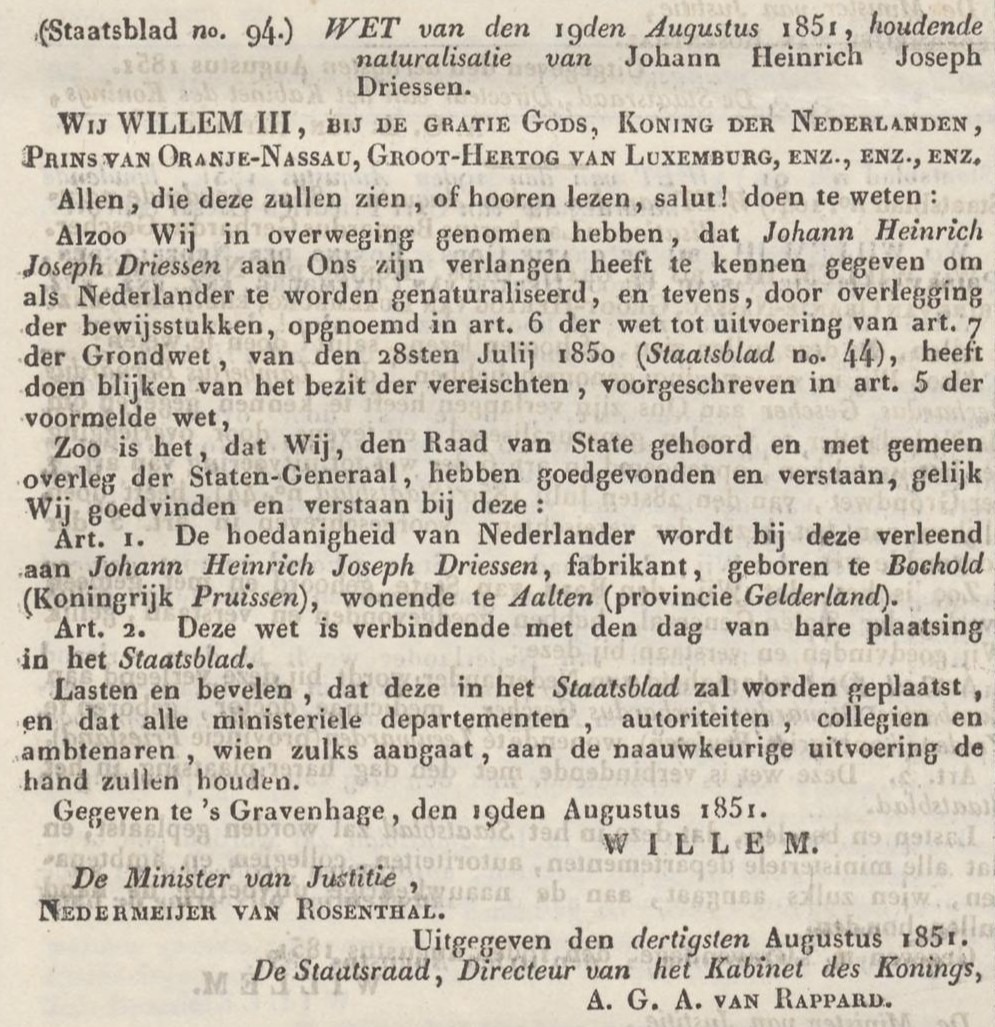
    Following his father’s death in 1843, Heinrich became the sole owner of Peter Driessen & Sohn. His eldest son Theodor (1821-1878) was then placed in charge of the management in Bocholt. In 1851, King William III granted Heinrich Dutch nationality.

    In 1849, Heinrich established a steam spinning mill on Hogestraat in Aalten, the first of its kind in the Achterhoek region. This was soon expanded with several ‘power looms’ (steam-driven weaving looms). After this factory burned down on the night of August 19 to 20, 1859, he did not rebuild the business.

    To Leiden

    Heinrich shifted his focus to Leiden. There, in 1846, together with his nephew (his sister’s son), the soap boiler Ignatz van Wensen, he had purchased the declining textile printing and dyeing works De Heyder & Co., later known as the Leidsche Katoenmaatschappij (Leiden Cotton Company). He had his second son Louis (1823-1904) come over from England to take charge in Leiden. With the knowledge he had acquired in Manchester, Louis soon managed to make the company profitable.

    Heinrich’s son Eduard (1824-1895) continued to look after the company’s interests in Aalten. Initially, the bleachery there remained operational, but over time Eduard primarily focused on the trade in cotton and yarns. The branch in Bocholt, managed by Theodor, was closed after he and his brother Peter (1832-1895) started a blue-dyeing and printing works there in 1854, named the firm Theodor and Peter Driessen.

    Catholic

    The Driessen family was also of great significance to the Aalten Catholic community, which had been a minority in the Reformed village since the Reformation of 1596. Not only through their prestige and influence, but also through various donations from the Driessens, the Catholic church in Aalten was able to grow into a fully-fledged church community. Both Heinrich and his cousin Anton played important roles as churchwardens and overseers of the poor, roles that were continued by their descendants.

    Heinrich Driessen was very strong-willed in his conduct and often followed his own path in ecclesiastical matters as well. For instance, during the disputes between the Catholics and the Reformed in 1842 regarding the ringing of the bells. Pastor G.H.J. Wansing of Aalten wrote a letter about this to the Archpriest of Gelderland, M. Terwindt, which was co-signed by the churchwardens Th.W. Meijerink, H. Vulting, and A. Driessen. Heinrich Driessen, although a member of the church board, had not signed this letter and addressed two personal letters to Terwindt himself.

    What stands out in these letters is that he stated, among other things, that the pastor seemed a priori prejudiced against Aalten and expressed the hope that the Aalten parish would receive a new shepherd who would be to everyone’s liking. He requested Terwindt to take his reflections into consideration when making his choice and assured him that he preferred to employ everything that was conducive to the honor of their holy religion. But at the same time, Driessen wrote that—because the old pastor showed him the greatest respect and because he himself esteemed the pastor as a man whose moral conduct could serve as an example to an entire province—he trusted that it would also please the Archpriest that the contents of the letters never be disclosed to others.

    New church

    A subsequent problem arose when it was decided around 1853 to build a new church. This led to serious disagreements within the church board. For instance, churchwarden Heinrich Driessen again found it necessary to act independently by contacting the Archbishop behind the backs of the other board members. In a letter to the Archbishop, he referred to the approval the latter had given to the plans for the construction of the church, on the condition that the confessional or confessionals be placed inside the church and not in the sacristy or in separate extensions on the side walls. Based on that condition, a plan had been sent to the King for approval.

    However, during Driessen’s absence, the tendering for the church had taken place, in which an extension was nevertheless planned, contrary to the archiepiscopal approval. An extension to the church for the purpose of the confessional would, according to Heinrich, only disfigure a church. He had tried to convince the pastor of this, but had not succeeded. Driessen preferred to see the confessional inside the church, as was common in the Münsterland, rather than in an extension. According to him, the error could still be rectified, even though the masonry on that side was already in full swing. In his letter to the Archbishop, he therefore requested that instructions be given to the church board as soon as possible. The outcome of the matter is unknown. This action, however, is characteristic of Heinrich Driessen, who was apparently accustomed to getting his way and took the necessary steps on his own initiative to achieve it.

    Wealthy

    At the end of his life, Heinrich was a wealthy man. He held shares in spinning mills in Enschede, Gronau, and Rheine. Rheine was his wife’s birthplace, and her relatives managed textile enterprises there. Furthermore, he owned many lands and farms in the vicinity of Aalten, Varsseveld, and Bocholt.

    Heinrich reached the advanced age of nearly 85 years. Several of his children and grandchildren entered the textile industry.

    Sources


    • Biografisch Woordenboek Gelderland
    • Annex to De Graafschapbode, 23 July 1937
    • Delpher
    • Nijver in het groen. Twee eeuwen industriële ontwikkeling in Achterhoek en Liemers, H. de Beukelaer
    • St.-Helena’s ommegang. De geschiedenis van de Aaltense katholieken, H. de Beukelaer
    • Geweven goed. De textielgeschiedenis van Aalten en Bredevoort, Aalten 1992, H. de Beukelaer en J.G. ter Horst
    • Stammbuch und Chronik der Familien Driessen, Giessing, van Wensen, Schwartz, Sträter, Hölscher, F. Schwartz
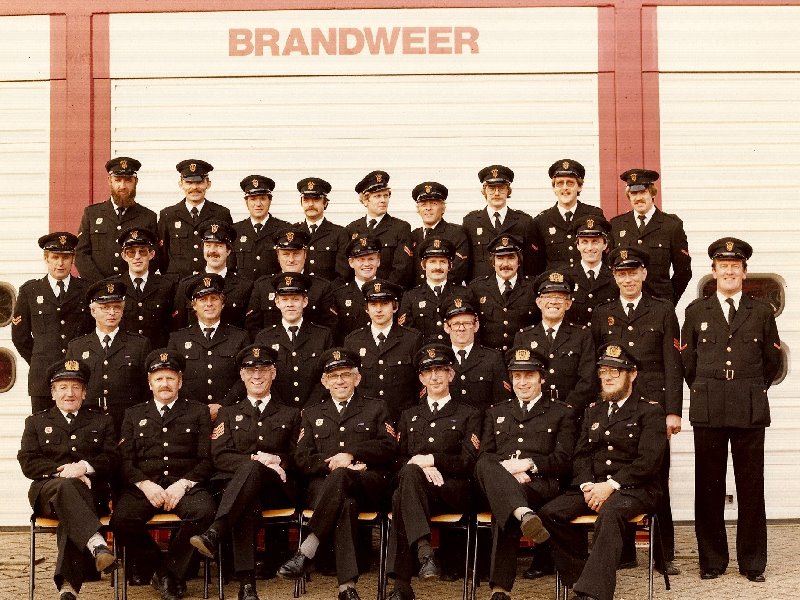
  • Aalten Fire Service

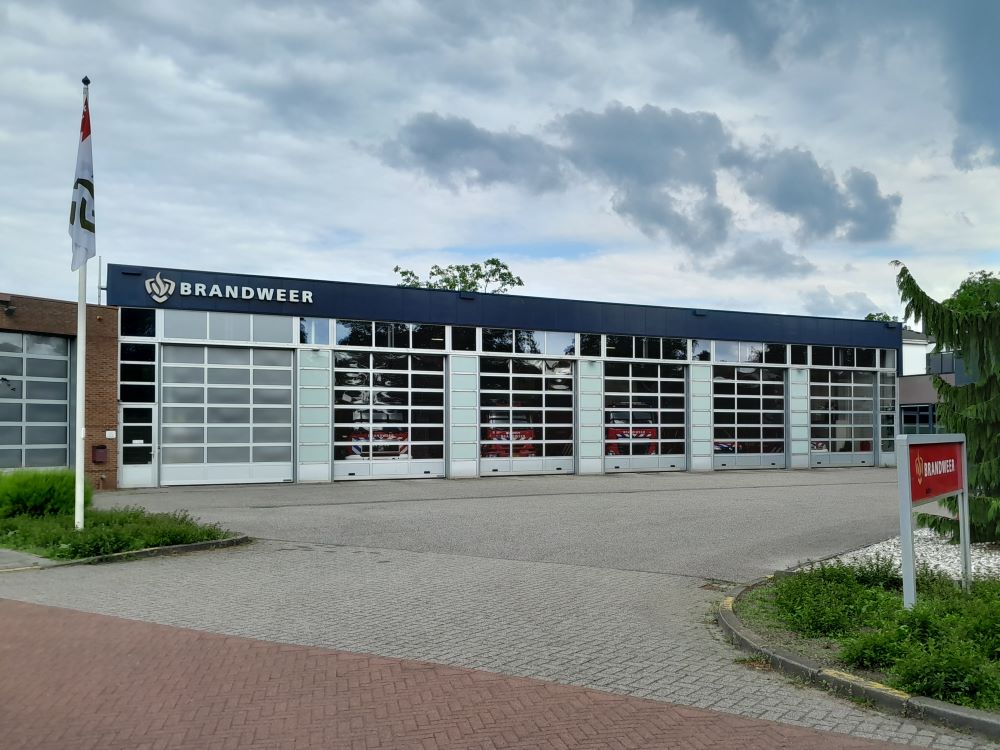
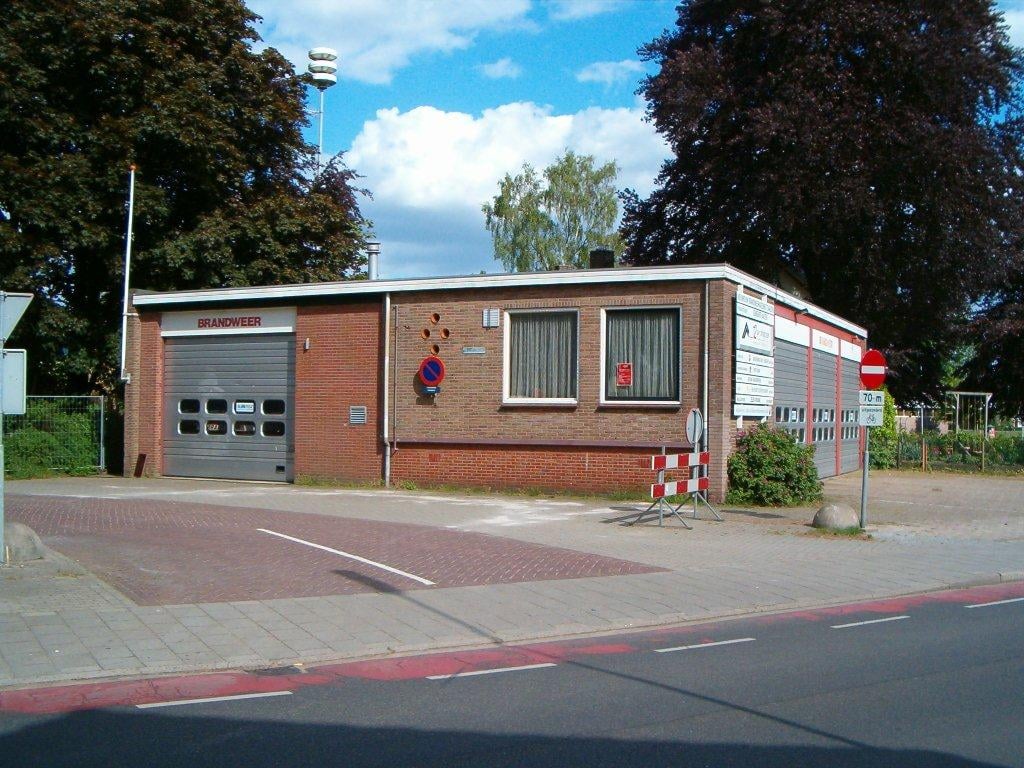
    Aalten Fire Service

    Tramstraat 1, Aalten

    In 1889, the ‘Regulation on the Fire Engine Service and the extinguishing of fires in the municipality of Aalten’ was established by the municipal council. Article 1 of that regulation states: ‘Every male resident from the 18th up to and including the 59th year of age is, subject to the exceptions to be mentioned hereafter, called upon and liable for service with the fire engines’. The fire brigade therefore consisted entirely of volunteers, appointed and dismissed by the Board of Mayor and Aldermen.

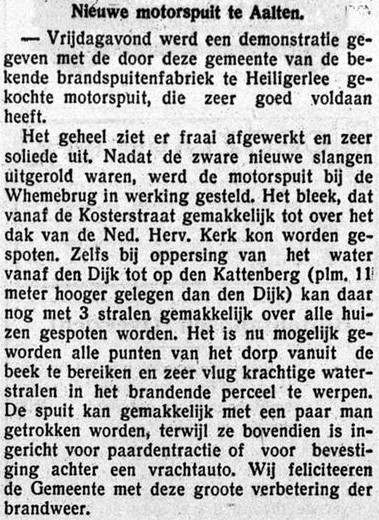
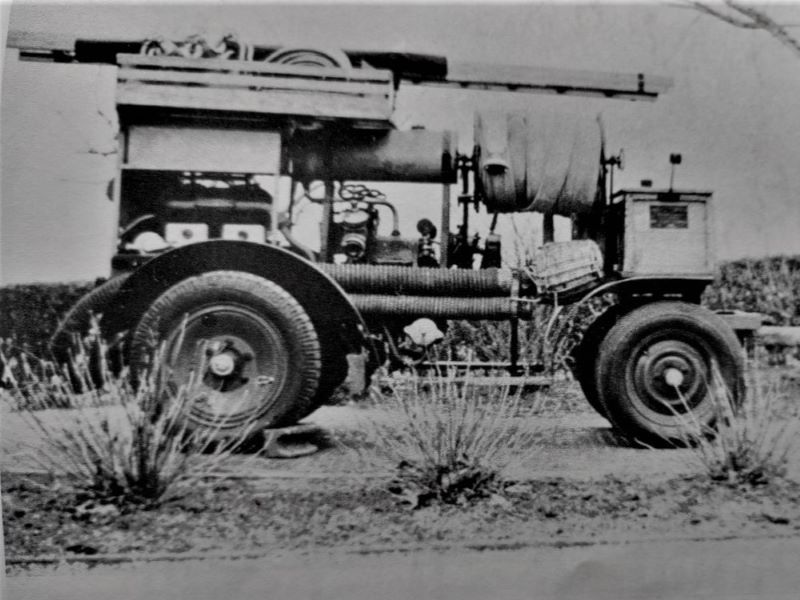
    On June 19, 1925, the first meeting of the newly appointed corps of Firemasters took place. Over time, the available equipment was modernized. For example, a motorized pump was purchased in 1930, followed by an ‘auto-tractor’ in 1933, which made it possible to transport this pump to the fire.

    During the eighties and nineties of the last century, increasingly close cooperation developed between the fire brigades in the Achterhoek and the Cooperation Association of East Gelderland, known as the Achterhoek Region from 1995 onwards.

    In 1987, the Bredevoort fire group, which until then had been part of the corps, was disbanded. A centralization of command structures in Doetinchem was established, so that the Aalten volunteer fire brigade lost its actual independence.

    The fire brigade in the 19th century

    In 1937, G.H. Rots described in a series of articles how things were done in Aalten in former times. Regarding the Fire Brigade, he wrote:

    “The performance of the modern fire brigade, as was again evident during the large factory fire in Winterswijk, makes our thoughts return to the primitive fire-extinguishing methods of former days. A fire brigade did exist in the middle of the last century, and in their own way, they made serious attempts to fight a fire or prevent it from spreading, but they had to make do with the tools they had.

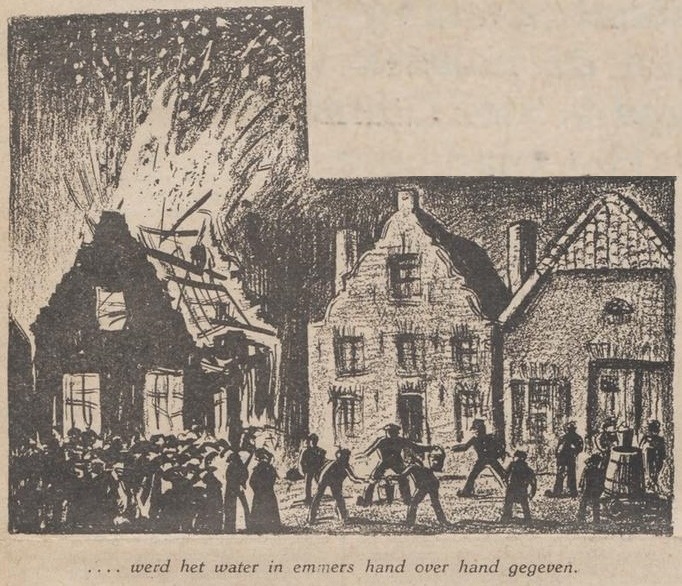
    The first form of firefighting was to throw buckets of water onto the fire. From existing wells and pumps, the water was passed in buckets from hand to hand. When the well was empty, one had to wait until the supply was replenished. If the fire broke out near the stream, one could, of course, continue scooping. There were reserve wells where a quantity of water was always kept, and on the Market Square stood a row of large barrels filled with water on mobile chassis, which were immediately driven to the scene of the disaster by a designated driver.

    The introduction of hand pumps brought some improvement. The water could now be sprayed at least ten meters high to keep roofs and houses wet. Later still, another improvement came with the addition of the so-called booster, a suction and pressure pump placed at the water supply, which forced the water through hoses to the pump engines. Behind the town hall were the buildings for storing these fire-extinguishing tools.

    The firemasters (for an organized fire brigade had already existed for many years) had as a sign of their dignity a copper rod, a kind of scepter, or an oval copper plate, which adorned the chest of the firemaster in the event of a fire.

    The many fires that plagued Aalten caused the city council to look for ways to prevent fire, for the new lamps fed with petroleum, which had to serve for lighting in the evenings on the threshing floor near hay and straw, were dangerous. An article was added to the police regulation, mandating that in the vicinity of hay or straw, on threshing floors and in stables, workshops, etc., where highly flammable material was present, lighting had to be done with closed lanterns. Whether it helped much? Fires continued to occur regularly thereafter, and each time one heard the dismal sound of the fire bell.”

    Fire engines

    The website ‘Brandweer Voertuigen Online’ contains an overview of fire vehicles that served with Dutch fire brigades, including Aalten and Bredevoort:

    Sources


  • Wim Mateman

    Wim Mateman

    Politician

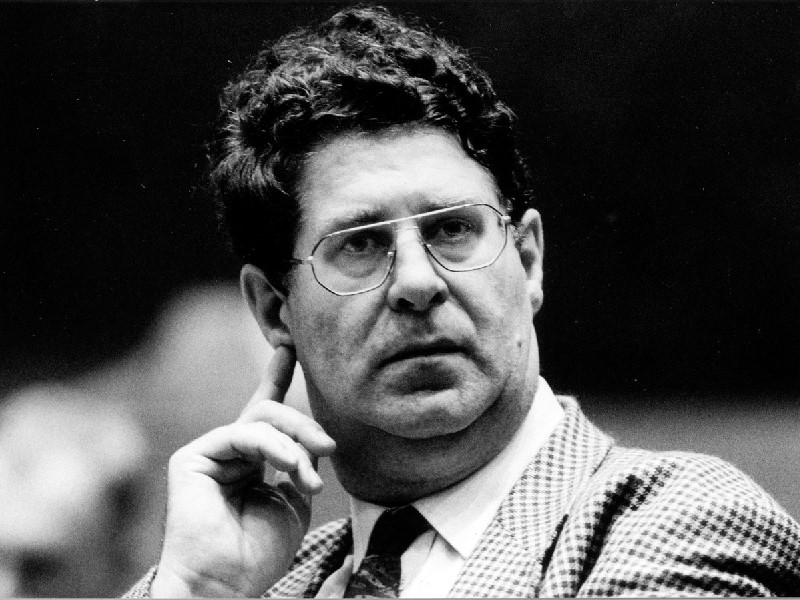
    Willem Antoon (Wim) Mateman (Aalten, 07-05-1945 – Rijswijk, 08-06-2019) was a Dutch politician. On behalf of the CDA, he was a member of the House of Representatives of the States General from 1979 to 1998. From 2003 to 2018, Mateman served as an alderman, municipal councillor, and parliamentary group leader for the CDA in the municipality of Rijswijk.

    Mateman completed teaching qualifications (MO) in civics and political economy. He subsequently studied sociology at the Catholic University of Nijmegen. During his student years, he was a co-founder of the Student Union (SVB) in Nijmegen. After his studies, Mateman became a teacher of economics, civics, and social studies at the Christian secondary school in Zutphen. From 1970, he was a member of the Provincial Council of Gelderland and a member of Aalten Municipal Council on behalf of the Christian Historical Union (CHU). He also served as an alderman in Aalten.

    During the 1977 general election, Mateman stood as a candidate for the CDA but was not directly elected. Later that year, he was offered the opportunity to take a seat in the House, but he declined. Two years later, Mateman entered parliament as an interim member after all. He was sworn in on 28 August 1979. In the House, his focus included trade policy, defence, and domestic governance.

    Wim Mateman belonged to the conservative wing of the CDA. He was greatly disappointed when he had to leave the House because the new party leadership sought to renew the parliamentary group. Mateman did not stand for re-election in the 1998 general election.

    In 2003, he became the CDA alderman for Finance and Land Affairs in the South Holland municipality of Rijswijk. In May 2014, the CDA left the Rijswijk municipal executive, and he returned to the municipal council, becoming the leader of the CDA parliamentary group. In 2018, he retired from local politics.

    Mateman was married and had two children. In 1992, he was appointed Knight of the Order of the Netherlands Lion, and in 1998, Knight of the Order of Orange-Nassau. In 1992, he was named Pipe Smoker of the Year.

    Headstrong ‘right-winger’ of the CDA – NRC Handelsblad, 13 April 1992

    Bronnen


  • Klepperklumpkes van ‘t Walfort

    Klepperklumpkes van ‘t Walfort

    Folkloristic dance group

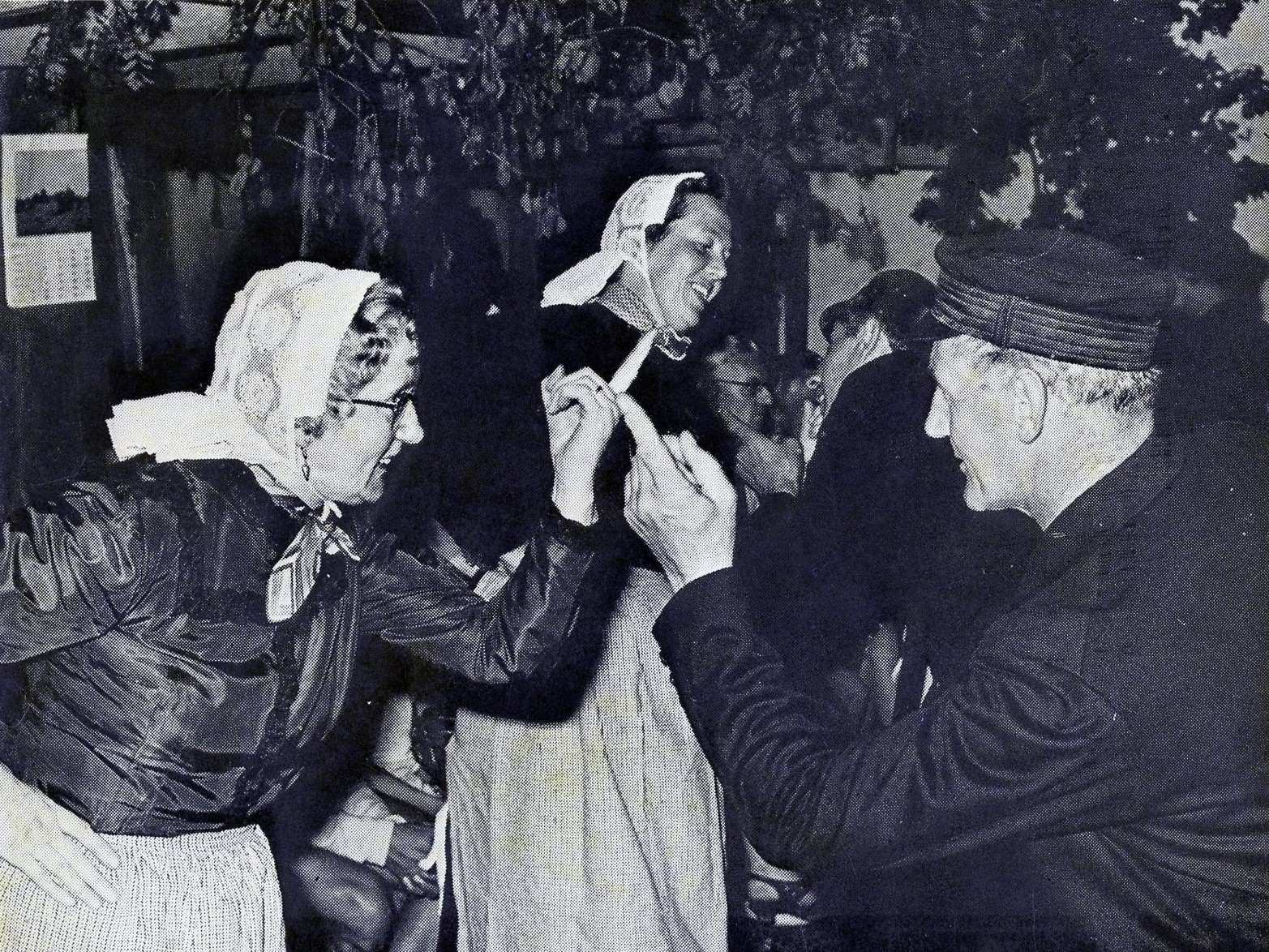
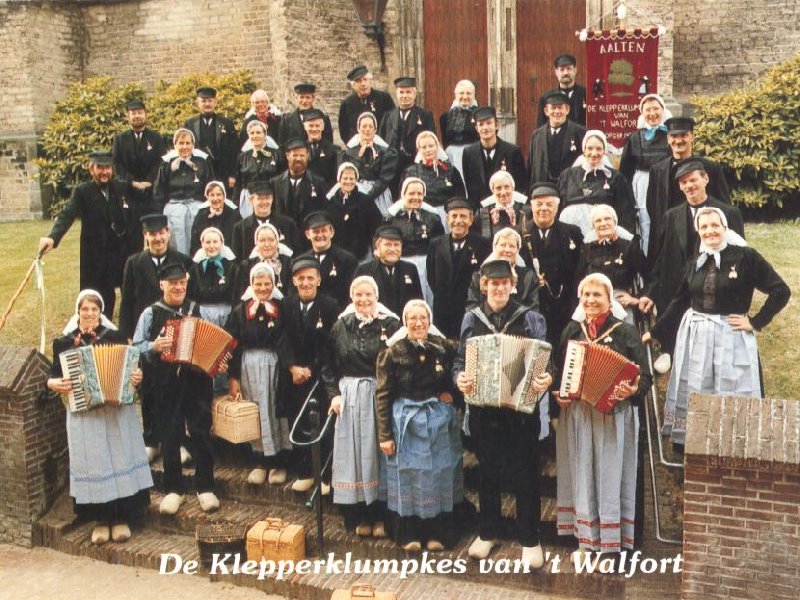
    The Klepperklumpkes van ’t Walfort was a folkloristic dance group from Aalten. The group was founded on 10 May 1954 with the objective of preserving Gelderland’s regional folklore for future generations. Members of the group were dressed in authentic Gelderland (Achterhoek) traditional costume, as it was worn around 1900.

    The dance repertoire consisted of approximately 35 traditional dances, mostly from the Achterhoek and Twente regions, which also date back to that era. The most well-known dances include the Driekesman, Pot met bonen (Pot of beans), and the Hôksebarger, performed, of course, in polished wooden clogs.

    A Welcome Guest

    The Klepperklumpkes was an active association. Over the past decades, they performed in various institutions, at street markets, and in many countries. They were a welcome guest at festivals in Belgium, Denmark, Germany, England, France, Austria, Slovakia, Spain, Sweden, and Switzerland, among others. They even performed in China.

    During their peak years, the Klepperklumpkes organised a large international festival in Aalten every four years, featuring many foreign guests. These guests were hosted by local families, providing many with a unique introduction to the international dancers and their respective folklore.

    In their final years, the dance group rehearsed in the hall of café Setz.

    After nearly 70 years, the Klepperklumpkes disbanded in 2022. In their final years, the number of activities had gradually declined; many members were getting older, physical stamina was decreasing, and there was a lack of new members joining.

  • Sunday school Dale Oost

    Sunday school Dale Oost

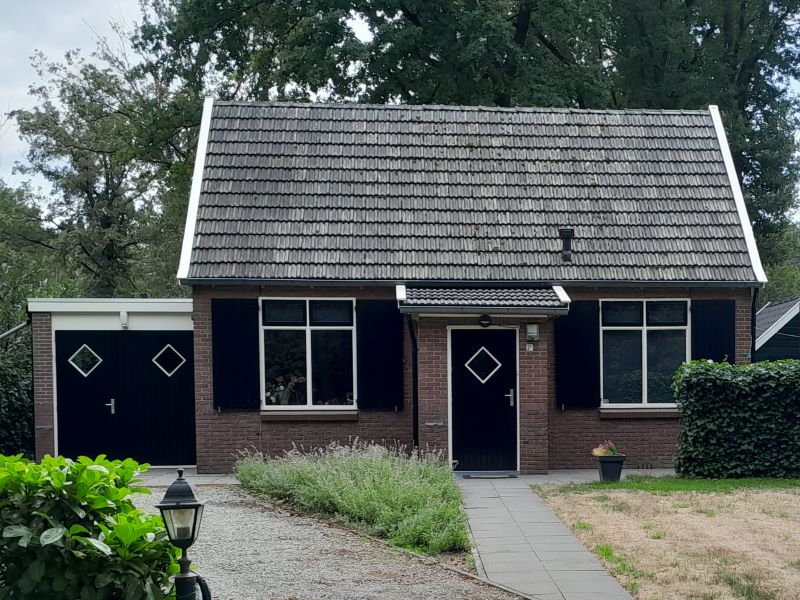
    Walfortlaan 2a, Dale

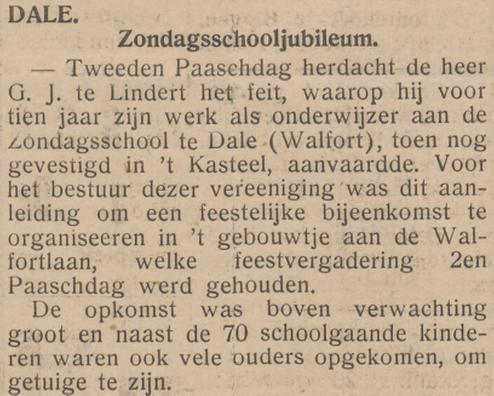
    The “Walfort” Sunday school association in Dale was founded in November 1934, according to its statutes. This date marks the first board meeting; however, the earliest recorded members’ meeting dates back to 28 November 1930.

    According to a newspaper report from 1937, before this small building was established, Sunday school education was held at the Havezathe ’t Walfort estate.

    Due to a lack of interest, Sunday school activities were ceased in 2000. The school building was sold in 2007. The association’s archive was donated to the Erfgoedcentrum Achterhoek en Liemers (Heritage Centre) in 2013.

    There was also a Sunday School Dale West, located near the present-day Romienendal on the Aladnaweg.


    Address directory 1967

    Dale 151/1 > Walfortlaan 2

    Sunday school hall

    Features


    Cadastral no.P-161
    FunctionSunday school
    Year of construction1935
    Listedno
  • Doeke Bekius

    Doeke Bekius

    Mayor (1976–1988)

    Doeke Bekius (Gauw, 14 November 1922 – Haart, 8 June 2013) was a Dutch politician, representing successively the Anti-Revolutionary Party (ARP) and the Christian Democratic Appeal (CDA).

    Bekius was born and grew up in the Frisian village of Gauw, near Sneek. After completing his ULO (advanced elementary education), he joined the municipality of Wymbritseradeel at the age of sixteen, a rural municipality surrounding Sneek that comprised 28 villages. In 1946, he moved to the municipality of Zutphen. With the experience gained there, he accepted the position of Head of General Affairs at the municipality of Apeldoorn in 1951. In July 1961, he became Mayor of Westdongeradeel, which was followed in December 1966 by his appointment as Mayor of Kollumerland en Nieuwkruisland.

    Mayor in the municipality of Aalten

    In mid-1976, Bekius accepted the mayoralty of the municipality of Aalten, succeeding Mayor Faber. He considered the small town of Bredevoort to be a gift, an inspiring assignment. In 1988, he was appointed ‘honorary drossard’ (eredrost) there.

    After his retirement, he continued to reside within the municipality of Aalten. He remained a member of both Bredevoorts Belang and Haarts Belang (local community interest groups). Furthermore, he dedicated himself to the Vereniging van Kleine Kernen (VKK – Association of Small Communities) Gelderland. At the end of 1987, he started there as an advisor to the board; he soon joined as a board member and subsequently served as its chairman for many years.

    Bekius lived and passed away in the hamlet of Haart, in the municipality of Aalten. On 14 June, his funeral took place in his birthplace of Gauw.

    He was succeeded as Mayor of Aalten by Tijme Bouwers.

    Leestip


    ‘Van Maire Stumph tot Burgemeester Stapelkamp’, door Leo van der Linde

  • Evert Sickens van Veen

    Evert Sickens van Veen

    Burgemeester (1946-1967)

    Mayor of Aalten from 1811 to 1844.

    Hij werd geboren als zoon van Jan van Veen (1855-1917; landbouwer) en Matje Prins (1867-1943). Hij zat op het gymnasium maar had gezondheidsproblemen en verliet voortijdig die opleiding om in Zwitserland een kuur te volgen. Na later nog enige tijd in Frankrijk in de agrarische sector werkzaam te zijn geweest, kwam hij in 1926 terug naar Nederland. Hij werd volontair bij de gemeente Schoonebeek en midden 1930 volgde zijn benoeming tot ambtenaar ter secretarie bij de gemeente Stad Hardenberg. Twee jaar later maakte hij de overstap naar de gemeente Gramsbergen waar hij het bracht tot eerste ambtenaar.

    Op 25-03-1931 trouwde Evert Sickens van Veen in Oosterhout (NB) met Johanna Jacoba Strating.

    Eind 1937 werd Van Veen benoemd tot burgemeester van Nijeveen. In september 1943 ging hij met ziekteverlof waarbij de Meppelse burgemeester Geert Wisman tevens waarnemend burgemeester van Nijeveen werd. Begin 1944 volgde ontslag voor Van Veen maar later keerde hij terug als burgemeester van Nijeveen. Bovendien was hij eind 1945 enkele maanden waarnemend burgemeester van Ruinerwold.

    In 1946 werd Van Veen benoemd tot burgemeester van Aalten als opvolger van burgemeester Monnik. Van Veen ging daar in november 1967 met pensioen en overleed in 1976 op 73-jarige leeftijd. Hij ligt begraven op Berkenhove.

    Van Veen werd als burgemeester van Aalten opgevolgd door mr. Hendrik Hieltje Hans Haverkamp.

    Leestip


    ‘Van Maire Stumph tot Burgemeester Stapelkamp’, door Leo van der Linde

    Bronnen


  • A.J.W. Monnik

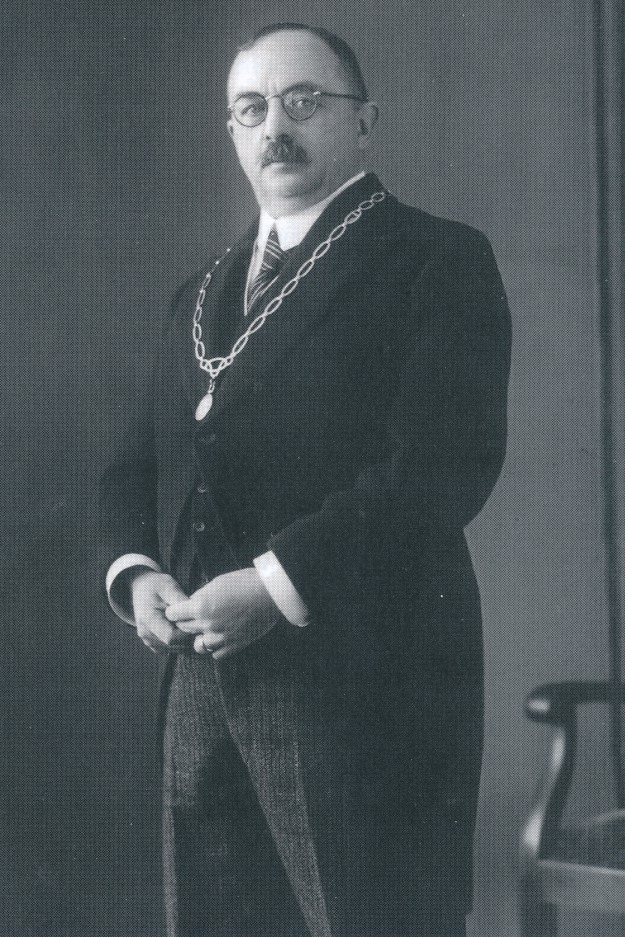
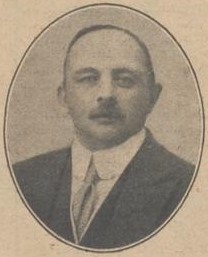
    A.J.W. Monnik

    Burgemeester (1910-1945)

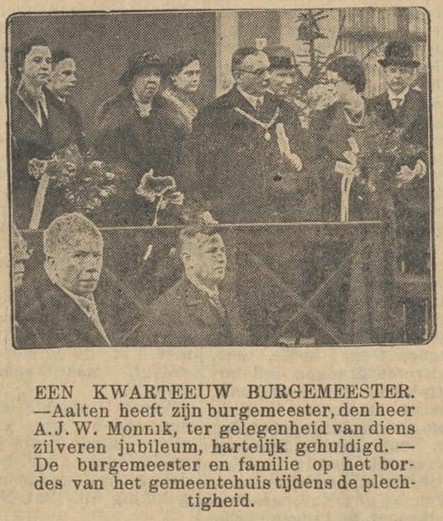
    Adriaan Johannes Willem Monnik werd op 19 november 1879 geboren in Vorden, zoon van Adriaan Johannes Wilhelmus Monnik, geneeskundige, en Anna Hendrika Blotkamp. Op 22 mei 1913 trouwde hij in Den Haag met Louise Wilhelmina de Waal Malefijt (Zeist, 17 augustus 1881), dochter van Jan Hendrik de Waal Malefijt, minister van koloniën, en Frederica Sophia Wilhelmina Couvée.

    Monnik werd in 1910 benoemd tot burgemeester van Aalten. Hij volgde Willem Carel Tack op.

    Hij was maar liefst 35 jaar burgemeester van Aalten. Het gezin Monnik woonde in villa Zonneheuvel aan de Bredevoortsestraatweg in Aalten, waar later het overdekte zwembad zou komen.

    In 1944 krijgt burgemeester Monnik opdracht er voor te zorgen dat 500 mannen uit Aalten in Zevenaar aanwezig zijn, om ingezet te worden voor het graven van militaire verdedigingswerken. Bij hem en zijn ambtenaren valt dan het besluit te weigeren en met zijn allen onder te duiken. Het bevolkingsregister wordt in veiligheid gebracht.

    Tijdens zijn onderduikperiode werd Monnik vervangen door I.A. de Moor, voormalig burgemeester van Breskens en vandaar met vele andere NSB’ers gevlucht. Na de bevrijding keerde Monnik terug als burgemeester en ging op 1 november 1945 met pensioen.

    In 1946 werd Monnik benoemd tot Ridder in de Orde van Oranje-Nassau.

    Op 2 augustus 1951 overleed hij in het Bronovo-ziekenhuis in Den Haag, na een operatie. Hij werd begraven op begraafplaats Berkenhove.

    Hij werd als burgemeester van Aalten opgevolgd door Evert Sickens van Veen.

    Interview 25-jarig ambtsjubileum

    Ter gelegenheid van het 25-jarig ambtsjubileum van burgemeester Monnik publiceerde de Graafschapbode op 8 maart 1935 een interview met de jubilaris, hieronder enigszins verkort weergegeven:

    Wanneer we in de ruime burgemeesterskamer zitten, is vanzelf onze eerste vraag: Wilt U ons eens iets vertellen over uw allereerste jaren, schoolopleiding, enz.? We vernemen dan, dat Adriaan Johannes Willem Monnik den 19en November 1879 te Vorden geboren werd. De eerste twee schooljaren werden op de Chr. school in zijn geboorteplaats doorgebracht. Toen kwam er een gouvernante in huis. Eén kamer werd tot schoollokaal ingericht en hier werd de jeugdige leerling met nog één medeleerlinge, klaargemaakt voor het gymnasium.

    Na dit lager onderwijs werd gedurende 3 jaar het Chr. gymnasium van Ds. van Lingen te Zetten bezocht. De studie moest toen om gezondheidsredenen onderbroken worden en werd later voortgezet aan de H.B.S. te Zutphen. Dan werden een jaar de colleges gevolgd van Prof. Hugo de Vries aan de Gem. Universiteit te Amsterdam.

    Benoemd tot Burgemeester van Aalten

    Het was altijd mijn streven,” vertelt ons de heer Monnik, “om ook nog eens burgemeester te worden, en toen Aalten openkwam werd ik op 23 Febr. 1910 benoemd tot burgemeester van Aalten.” Na de beëediging op 2 Maart werd op 15 Maart 1910 de heer Monnik hier als burgemeester geïnstalleerd. De oudste wethouder, Z.G. van Eerden, hield de installatierede. De burgemeester besloot zijn antwoordrede o.a. met de mededeeling: “lk zal doen wat des burgemeesters is.

    Toentertijd was de heer B.H. Vaags gemeente-secretaris, wethouders waren de heeren Z.G. van Eerden en W. te Gussinklo. De Raad was als volgt samengesteld: F.H. Somsen, Th.A.M. Driessen, Sal. Gussinklo, L. Heusinkveld, H.A.J. Luiten (Sondern), J.P. Obbink, H.J. Veldhuis (Vels), Wander Nijhof, J.H. Veldkamp (Breedev.), A.P. Slicher van Bath.

    Tot zijn huwelijk was de heer Monnik in pension bij de dames Vaags, op de Kattenberg.

    Belangrijkste besluiten, enz.

    De burgemeester meent zich te herinneren, dat het eerste besluit geweest is. de aankoop van het oude huis van Heijmans op den hoek van de Koelmansteeg, voor de verbreeding van de ingang der Koelmansteeg (nu Stationsstraat). — De oude notulenboeken worden er bij gehaald, en ja, het klopt (het geheugen van onzen burgemeester is, tusschen twee haakjes, bijzonder goed): dit hoekhuis werd aangekocht voor ƒ 3500, waardoor er een behoorlijke ingang van de Stationsstraat kon komen.

    Dan volgt op 27 April 1910 de opening van de tram, de G.W.S.M. lijn B (Lichtenvoorde, Breedevoort, Aalten, Bocholt).

    Dadelijk in 1910 komt zijn liefde voor de volksgezondheid naar voren, eenige woningen worden onbewoonbaar verklaard. “Met de politiek heb ik me nooit veel bemoeid: ik voel veel meer voor volksgezondheid, woningbouw en dergelijke,” zegt de burgevader zoo en passant.

    In 1910 krijgen we dan verder nog den bouw van de Koembrug, de eerste betonbrug in Aalten. De openbare school-verbouwing, de reorganisatie van het politiecorps (de heer Blom werd toen chef-veldwachter). Ook dateert de aanstelling van een voorwerker voor de gemeente-arbeiders van dezen tijd.

    In 1911 kwam ter sprake: de afschaffing van het Duitsche geld, maar het duurde nog tot Juli 1914 voor het ingevoerd werd. Door het groote getal arbeiders dat destijds naar de Bocholtsche fabr. gingen werken en die allemaal bij een Duitsche ‘Krankenkasse’ waren aangesloten, was hier een moeilijke ‘Krankenkasse-quaestie’ ontstaan, die ook nu opgelost werd.

    In Maart 1911 werd hier een wekel. markt voor groenten, kippen, eieren en visch ingevoerd. De verbetering van de afwatering van het Goor kwam ook een groote stap verder door de stichting van het Waterschap der Baaksche Beek. Bij een oud convenant was bepaald, dat de Veengoot niet uitgediept mocht worden, zoodat afwatering van het Goor onmogelijk was. Door de stichting van het Waterschap kon er nu verandering komen. In 1911 werden ook de Lankhofstraat en de Ormelstraat aangelegd.

    Het zou ons te ver voeren, om zoo jaar voor jaar uitvoerig te behandelen. We zullen de volgende jaren met een beetje ‘versnelde pas’ doorwandelen en meer als jaartal memoreeren. We krijgen dan in: 1912 de pensionneering van veldwachter Heersink.

    Den 22en Mei 1913 treedt de heer Monnik in het huwelijk met L.W. de Waal-Malefijt. Het pension van de dames Vaags wordt verwisseld voor ‘Zonneheuvel‘.

    Den 21en Febr. 1914 besluit de Raad nieuwe scholen te bouwen in IJzerlo en op de Haart. 13 Maart van hetzelfde jaar volgde de onderwijzerswoning in Aalten. In Febr. werd ook begonnen met den woningbouw aan den Haartschen weg.

    1 Augustus krijgen we dan het begin van den grooten wereldoorlog, die tal van moeilijkheden meebracht. Langzamerhand werden alle levensmiddelen, enz. schaarscher en krijgen we ‘t tijdperk der distributie. Wat ‘n drukte en moeilijkheden bracht die mee! Wij leverden in dien tijd 1.000.000 K.G. rogge en waren één van de grootste roggeleverende gemeenten van het land.

    In Sept. 1914 wordt de verordening op de herbergsluiting van kracht en krijgen we de ‘zwarte lijst’. Den 31 October wordt de post ‘nachtwakers‘ geschrapt en op 1 Januari 1915 behoort de nachtwaker te Aalten tot het verleden.

    In het laatst van 1917 sprak de Raad zich in principe uit voor overname der Gasfabriek. Het besluit tot overname werd genomen op 19 Dec. 1918. De Raad nam toen de gasfabriek over voor ƒ 115.000 plus ƒ 29.602,87 voor de leidingen, gasmeters, enz. De dag van overname was 2 Mei 1919.

    Na den wapenstilstand, toen de krijgsgevangenen naar de grens kwamen, heette het, dat er 30.000 hier naar toe zouden komen. Gelukkig namen ze in Bocholt een andere richting. Toch kregen we ook hier ons deel in November 1918, n.l. Franschen en Italianen, die in het Feestgebouw en in de fabriek der N.V. Textiel Mij. werden ondergebracht. Uitgehongerd waren de menschen. “Met die Italianen beleefden we nog wat eigenaardigs,” vertelt ons de burgemeester, “we hadden ze allemaal wat van onze prachtige zeep, waarvan we toen een heelen voorraad hadden, gegeven om zich eens frisch te kunnen wasschen, maar den volgenden dag was alle zeep door de Italianen opgegeten!

    26 Febr. 1920 werd den ‘Oosterman‘ aangekocht met de bedoeling hier de nieuwe begraafplaats te maken. Dit plan is niet doorgegaan. Later in 1922 werd een ander terrein hiervoor bestemd, het tegenwoordige ‘Berkenhove‘.

    In Aug. 1920 werd een begin gemaakt met de straatnamendoop. De eerste is de ‘Oranjestraat’ te Breedevoort. Ook had in Augustus de aanbesteding plaats van den Gendringschen weg.

    19 Mei 1922 wordt de veemarkt naar de binnenmarkt verplaatst. In de laatste jaren is echter de veemarkt weer in eere hersteld. In dit jaar werd ook de keuringsdienst ingevoerd. Dr. Rexwinkel werd keuringsveearts. Den 11en April werd het slachthuis overgenomen.

    Dan krijgen we de laatste jaren, die ons allen nog versch in het geheugen liggen. Diverse wegen werden in deze jaren verhard: Sondernweg in ’29. Haartscheweg in 1929. Een Ringweg werd aangelegd, 24 Aug. 1928 en nu het Natuurbad ‘t Walfort, een werk van de allerlaatste jaren.

    De Wethouders in deze 25 jaren

    Het is wel interessant ook even na te gaan welke wethouders we in deze 25 jaren gehad hebben. In 1910 waren er, zooals we reeds vermeldden Z.G. van Eerden en W. te Gussinklo. Na den dood van Van Eerden werd in Mei 1916 de heer Theod. Driessen wethouder, die in 1918 weer is afgetreden. We krijgen dan voor een kort poosje den heer F.H. Somsen. Van 2 Sept. 1919 tot 4 Sept. 1923 zijn wethouders de heeren H.J.J.G. ten Dam en Joh. Obbink. Dan neemt de heer F.H. Somsen de plaats in van den heer ten Dam (4 Sept. 1923) en op 8 Maart 1926 volgt de heer A. Brethouwer den heer Obbink op. De heeren Somsen en Brethouwer zijn heden nog als wethouders in functie.

    Als secretaris volgde op 1 Febr. 1930 de heer S. Bijlsma zijn voorganger, den heer B.H. Vaags op. Op 29 Jan. 1924 ging de gemeente-ontvanger, de heer F.H. Freriks, met pensioen. De heer F. Heisterman werd toen als ontvanger benoemd. Bij Gemeentewerken kwam na het overlijden van den heer J. Brill, de heer Tilbusscher als gemeente-architect, die door den heer H. Rollman wordt bijgestaan.

    Andere functies van den jubilaris

    Naast zijn eigen drukken werkkring stelt de burgemeester vooral belang in het onderwijs. De heer Monnik is penningmeester van den Bond van schoolbesturen, onderwijzers en voorstanders van het Chr. onderwijs in den Geld. Achterhoek en omgeving.

    Ook is hij bestuurslid van de Groen van Prinsterer Kweekschool te Doetinchem. Verder nog commissaris van de N.V. Waterleiding Oostel. Gelderland en Lid van den Raad van Toezicht der N.V. ‘De Graafschap‘, Drukkerij en Uitgeverij.

    We zijn ten slotte nog nieuwsgierig naar de meening van den burgemeester over de vooruitzichten van onze Gemeente in de naaste toekomst.

    Deze voorbijgegane 25 jaren,” zegt de heer Monnik, “zijn zeker niet gemakkelijk geweest. Eerst de oorlogsjaren en nu de misschien nog moeilijker na-oorlogsche periode met haar groote achteruitgang op ieder gebied, haar groote werkloosheid, met de werkverschaffing en alles wat daar aan vast zit. Mijn vrouw is mij bij deze moeilijkheden steeds tot zeer grooten steun geweest.

    Wat de werkverschaffing betreft kunnen we nog vermelden, dat op 24 Nov. 1916 ‘Patrimonium‘ om werkverschaffing verzocht. De eerste werkverschaffing was het grintgraven in 1918. Op 30 Mei 1917 ging Aalten, als één van de eerste gemeenten over tot werkloosheidsverzekering.

    De burgemeester vervolgt dan: “Wij als Gemeente, staan er niet zoo slecht voor. Dit is een zeer zwaar jaar, zeker, maar ik zie aankomen, dat het langzamerhand beter wordt. We zullen met vertrouwen voortgaan, één oog naar boven, één oog naar binnen. De hand aan de ploeg, dan zal het einde goed zijn. We moeten zoeken niet wat verdeelt, maar wat samenbindt!

    Burgemeester Monnik - Aaltensche Courant, 27-05-1927
    Aaltensche Courant, 27 mei 1927
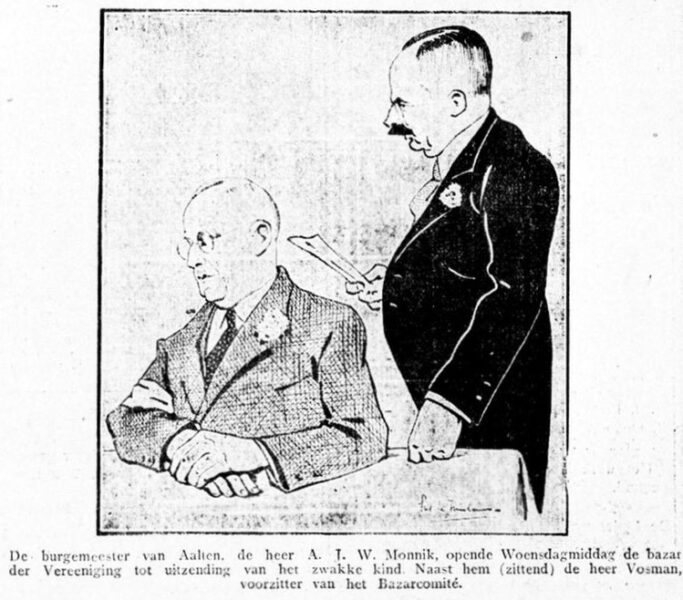
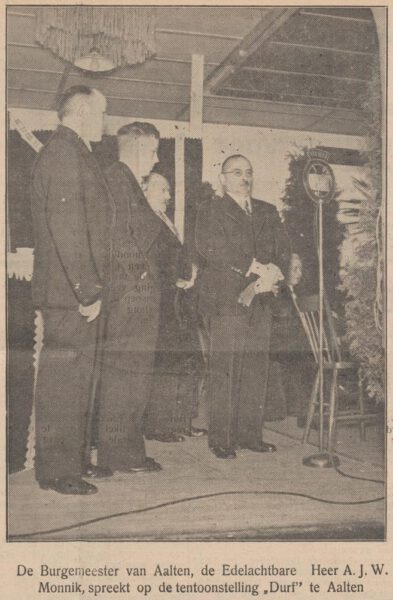
    Burgemeester Monnik opent Bazar - Graafschapbode, 13-04-1934
    Graafschapbode, 13 april 1934
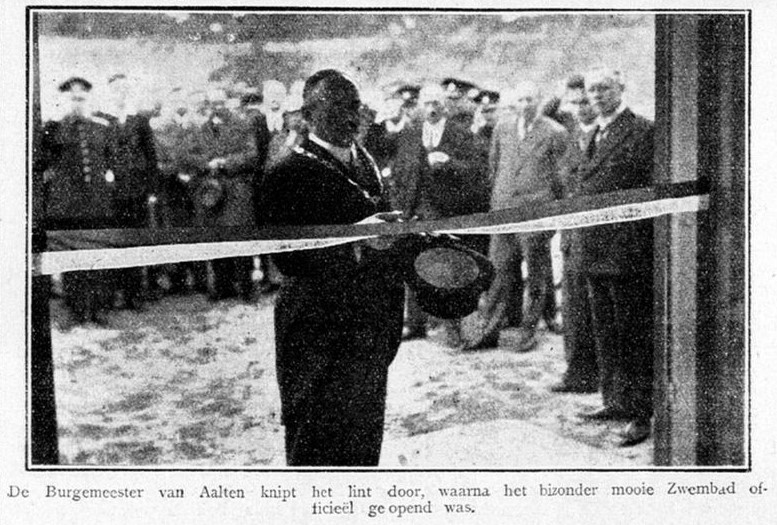
    Burgemeester Monnik opent zwembad 't Walfort, 25 juni 1934
    Graafschapbode, 25 juni 1934
    25-jarig jubileum burgemeester Monnik - Sumatra Post, 08-06-1935
    Sumatra Post, 8 juni 1935
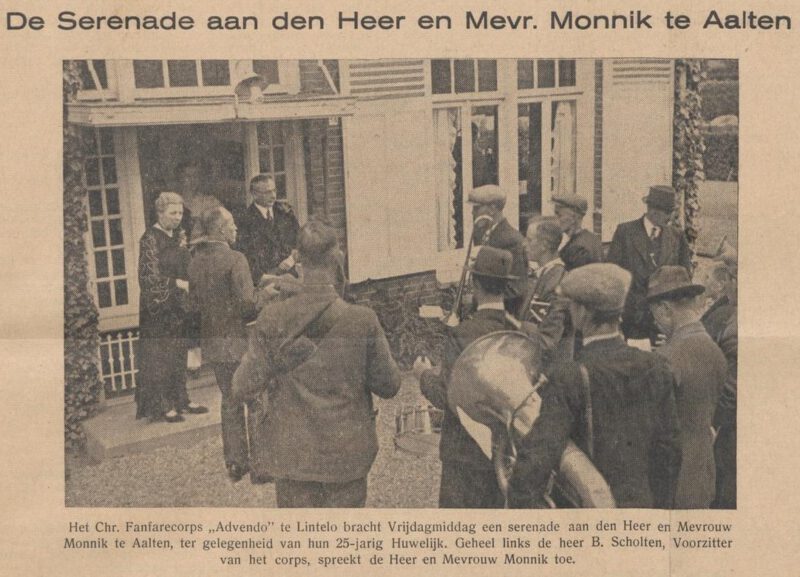
    Serenade burgemeester Monnik - De Graafschapper, 24-05-1938
    De Graafschapper, 24 mei 1938
    Burgemeester Monnik - De Graafschapper, 07-11-1938
    De Graafschapper, 7 november 1938

    Leestip


    ‘Van Maire Stumph tot Burgemeester Stapelkamp’, door Leo van der Linde

    Bronnen


  • Johan Hora Adema

    Johan Hora Adema

    Mayor (1886–1888)

    Johan Hora Adema (Leeuwarden, 24 April 1843 – Velp, 15 March 1938) was a mayor in three different municipalities. In addition, he served as a captain in the Grenadiers and Rifles Regiment (Regiment Grenadiers en Jagers). In 1870, he married the Frisian Lucia Aurelia Bergsma Fruitier de Talma, with whom he had four children.

    Festive arrival in Aalten

    In 1886, Hora Adema was appointed town major of Aalten, succeeding Mayor L. Roelvink, LL.M. To mark his arrival, a festive welcome procession was organised. A competition was held for the most beautiful triumphal arch, and in many parts of the village, people worked hard to prepare a fitting welcome for the new mayor.

    The day of his arrival was exceptionally warm and celebratory; almost everyone was out on the streets. The new town father was driven through Aalten in a carriage. At each triumphal arch, the carriage halted so he could read the inscriptions displayed on them. The triumphal arch in Dijkstraat was particularly outstanding. It read:

    “Wees welkom J. Hora Adema,
    Voor U is deze boog geplant.
    Bestuur, beheer voor aller eer
    Dit dorp in ons vaderland.”

    (Welcome J. Hora Adema, / For you this arch is raised. / Govern, manage to everyone’s honour / This village in our fatherland.)

    The creators of this triumphal arch were awarded first prize. The new mayor took up residence in Landstraat.

    Mayor in three municipalities

    Hora Adema served successively as mayor of the municipalities of Aalten (1886–1888), Hengelo (1888–1891), and Harlingen (1896–1914).

    He was succeeded as mayor of Aalten by Squire Georg Ludwig Carl Heinrich Baud.

    Sources


  • Hendrik Hieltje Hans Haverkamp

    Hendrik Hieltje Hans Haverkamp

    Mayor (1968–1970)

    Hendrik Hieltje Hans Haverkamp (Doetinchem, 1927-04-28 – Arnhem, 2011-06-19) was a Dutch politician of the CHU.

    He was born the son of Johan Hendrik Wilhelm Haverkamp (1900-1953), an official at the municipality of Doetinchem and later mayor of Dinxperlo, and Louisa Petronella Ynzonides (Obergum, 1901-08-12), a minister’s daughter. He graduated in law and served as deputy chief of the cabinet of the Queen’s Commissioner in Overijssel before being appointed mayor of Staphorst in April 1963.

    In January 1968, he succeeded Evert Sickens van Veen as mayor of Aalten. Only two and a half years later, in August 1970, he resigned as mayor to become the second secretary of the Rijnmond Council. Haverkamp passed away in 2011 at the age of 84.

    Haverkamp was succeeded as mayor of Aalten by Ruurd Faber.

    Mayor Hendrik Hieltje Hans Haverkamp

    Leestip


    ‘Van Maire Stumph tot Burgemeester Stapelkamp’, door Leo van der Linde

  • Georg Ludwig Carl Heinrich Baud

    Georg Ludwig Carl Heinrich Baud

    Jonkheer Georg Ludwig Carl Heinrich Baud was born on March 28, 1858, in Amersfoort, son of Jean Chretien Baud and Eveline Alexandrine van Ranzow.

    By Royal Decree of February 2, 1888, Baud was appointed mayor of Aalten. He succeeded Johan Hora Adema. At his own request, no public tribute was paid during his installation as mayor, other than the flying of flags.

    In 1892, he stood as a candidate for the Provincial Council on behalf of the Liberal Electoral Association. He was elected. On December 1, 1895, he requested an honorable discharge as mayor. He was succeeded as mayor of Aalten by Mr. Willem Carel Tack.

    In 1898, he resigned as a member of the Provincial Council to prevent a split within his party.

    On March 31, 1908, at the age of 50, he married Elisabeth Lamberta van Riemsdijk (Batavia, 1871-10-10) in The Hague, who was 14 years his junior. Baud passed away on April 4, 1921, in The Hague.

    Leestip


    ‘Van Maire Stumph tot Burgemeester Stapelkamp’, door Leo van der Linde