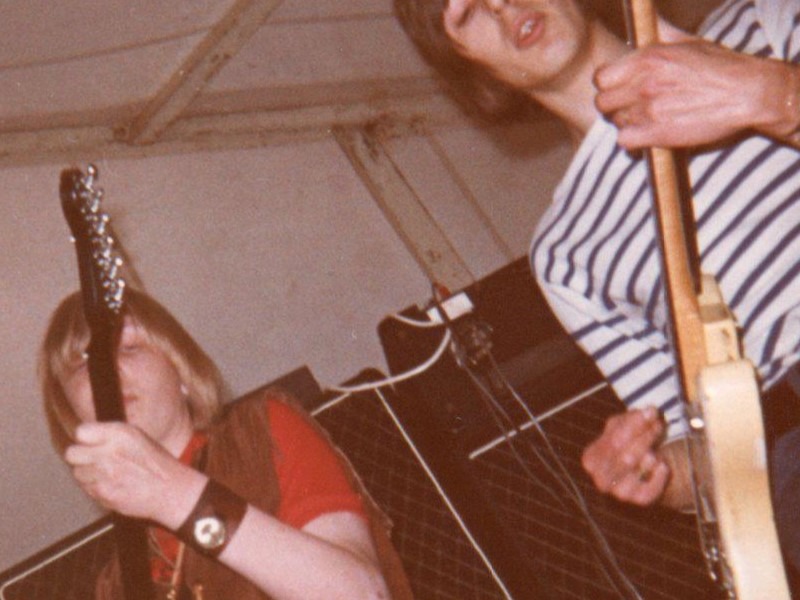
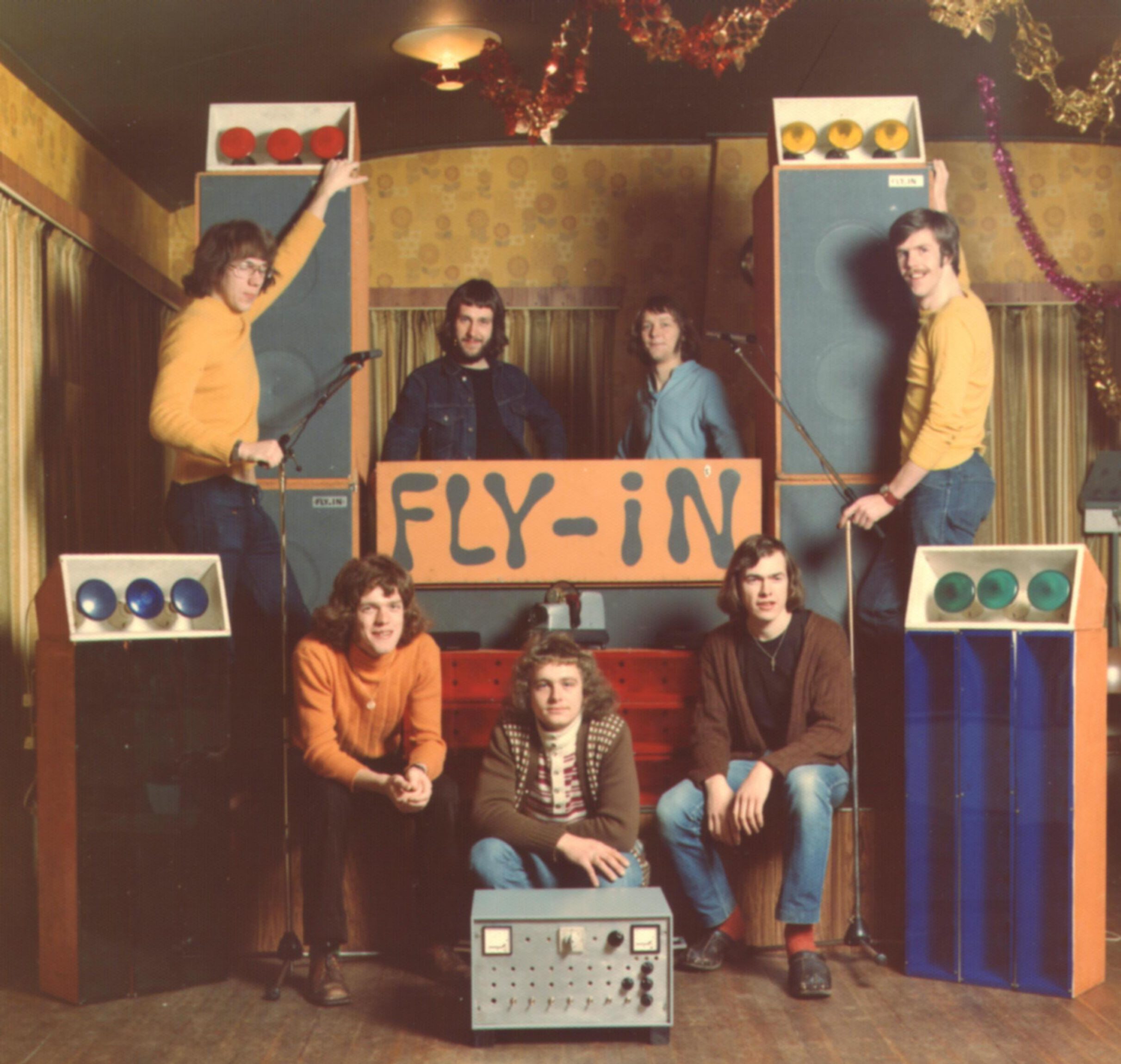
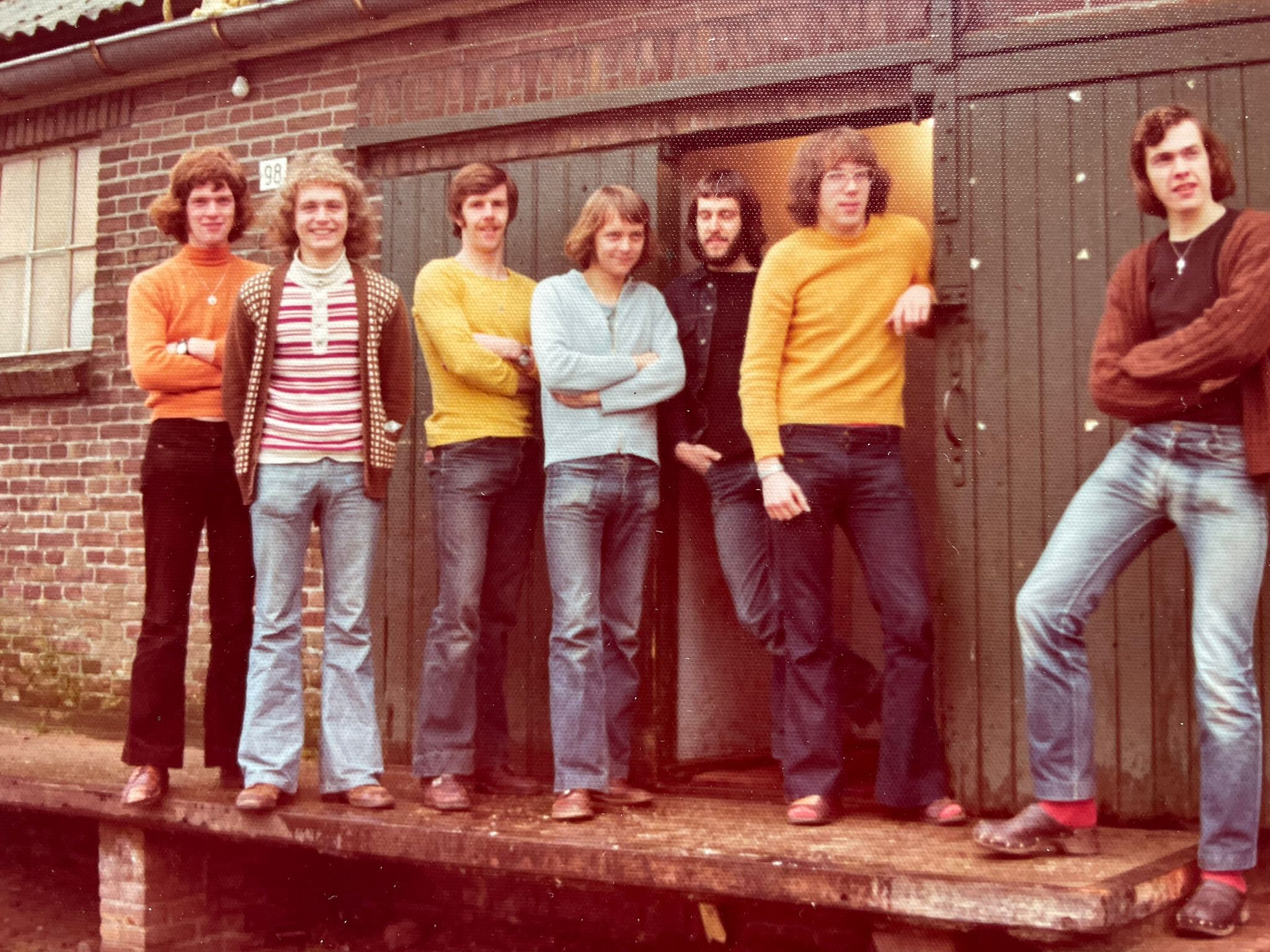
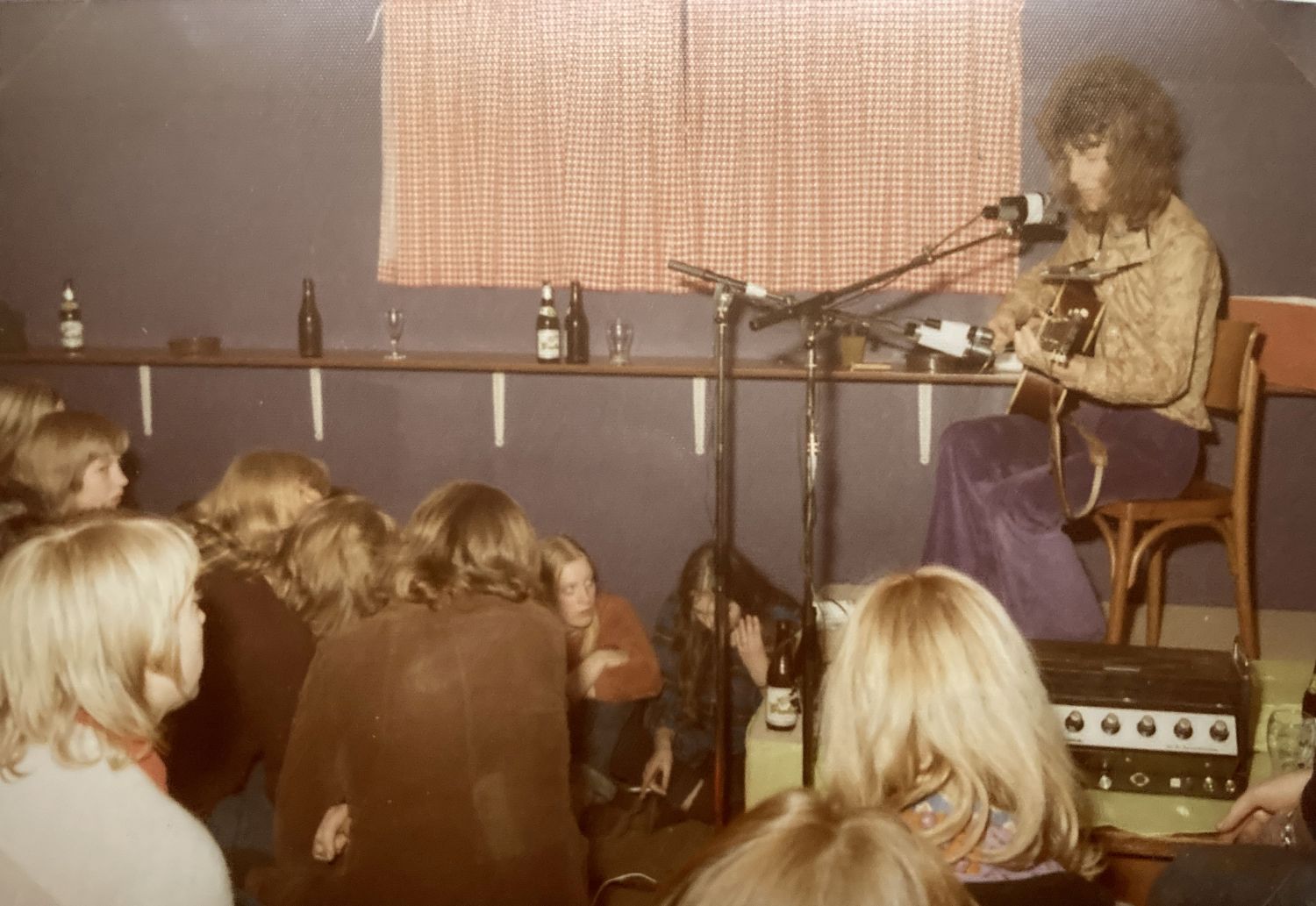
Discobar Fly-In in Barlo opened in 1969 in a vacant chicken coop on Barloseweg. The discobar was run by a group of young volunteers and quickly grew into a popular nightlife venue. In 1972, a new location was put into use. Many musicians and bands performed there, and music events were organized. At the end of 1974, Fly-In ceased to exist and continued as De Loods.
The origins of Fly-In lie in 1968, when various parties were held in Barlo. For these parties, part of a barn or farmhouse was partitioned off with black agricultural plastic and furnished with a record player, amplifier, and colored lights. Because this had to be reinstalled at a different location every time, a number of young people came up with the idea for a permanent venue.
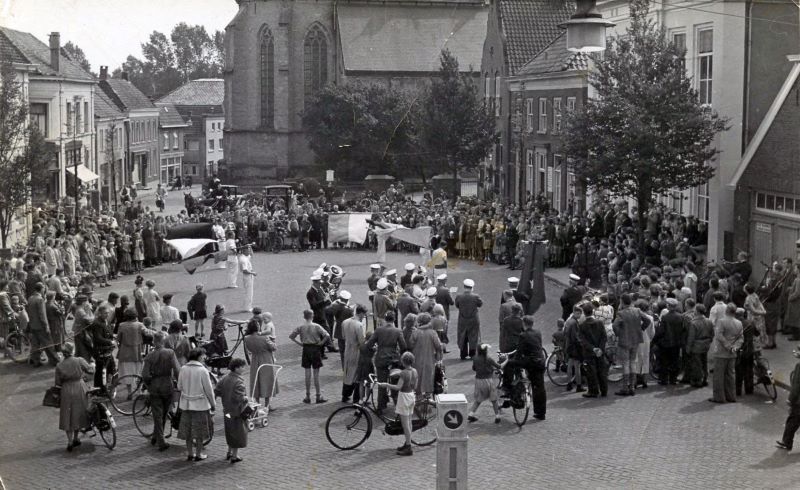
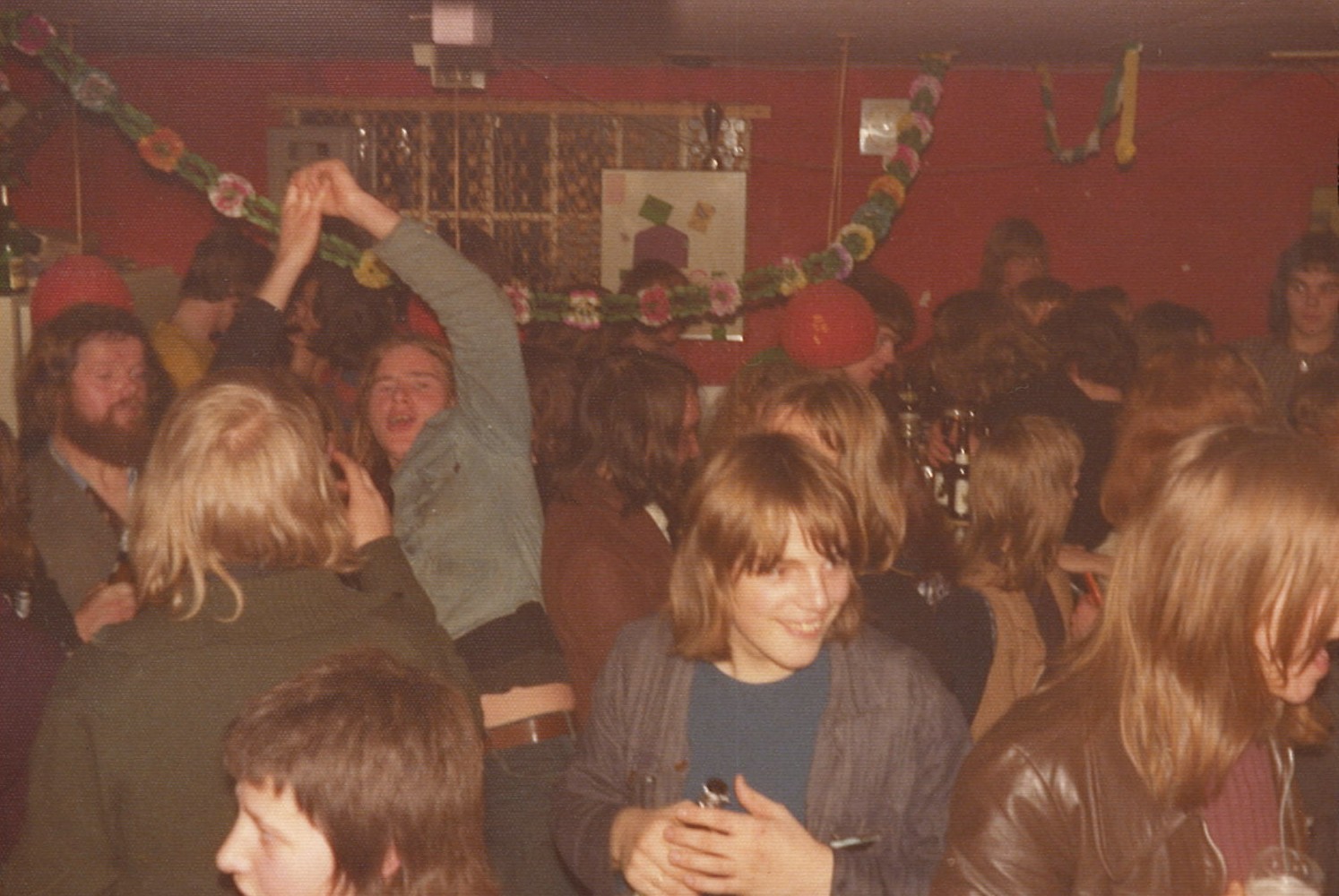
Closing party, December 13, 1974
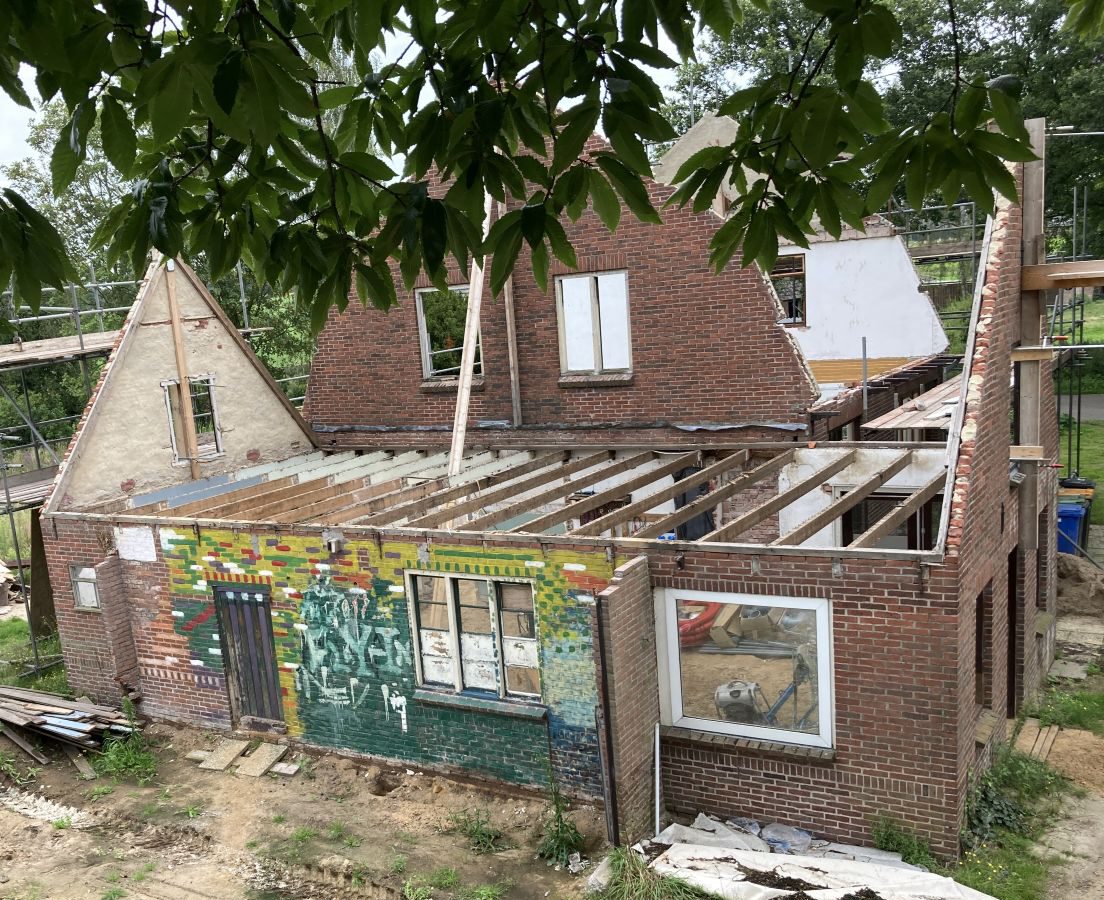
The former interior wall of Fly-In in 2024
First accommodation was a chicken coop
The first location of Fly-In was a vacant chicken coop behind Derk Ebbers’ grocery store on Barloseweg. After cleaning and pouring a concrete floor, discobar Fly-In opened on December 13, 1969. The words ‘Fly In’ were painted in large letters on an interior wall. During a renovation of the building in 2024, it turned out that these letters were still on the wall.
The original idea to use the space occasionally was quickly replaced by the plan to open every two weeks on Saturday. The evenings at Fly-In were concluded at 11:30 PM with a fixed closing tune — initially Comin’ Home Baby by Casey & the Pressure Group, later Time Is Tight by Booker T. & the MG’s.
Problems and drive-in shows
It soon became clear that the accommodation was not ideal: the space was too small (approximately 25 m²) and the furnishings were very simple; there was no cloakroom and no private toilet. Girls were allowed to use ‘Uncle Derk’s’ private toilet, while the boys could pick out a tree outside.
If a group of young people were still chatting on the road after the disco evening, Uncle Derk would come outside and shout: “staot neet op de weg te dralliën, maor gaot naor huus!” (don’t loiter on the road, go home!). After about a year, Fly-In stopped at this location and continued by providing drive-in shows in the wider area.
Fly-In with drive-in equipment
Fly-In board in front of the former warehouse
New location
After about a year, a new location was found in the vacant warehouse of the machinery association on Lichtenvoordsestraatweg in Barlo, directly opposite café Domme Aanleg. The former agricultural warehouse was renovated with a bar, a turntable, a cloakroom, and a toilet. Benches and tables were made from oak planks.
The official opening took place on Saturday, March 11, 1972. From that moment on, Fly-In was open on Wednesdays, Fridays, and Saturdays for members (membership card at ƒ 2.50).
Renovation and celebration
Due to the great interest, a renovation followed in the summer of 1972, during which the floor area was almost doubled. In 1974, the cloakroom was enlarged and extra toilets were installed.
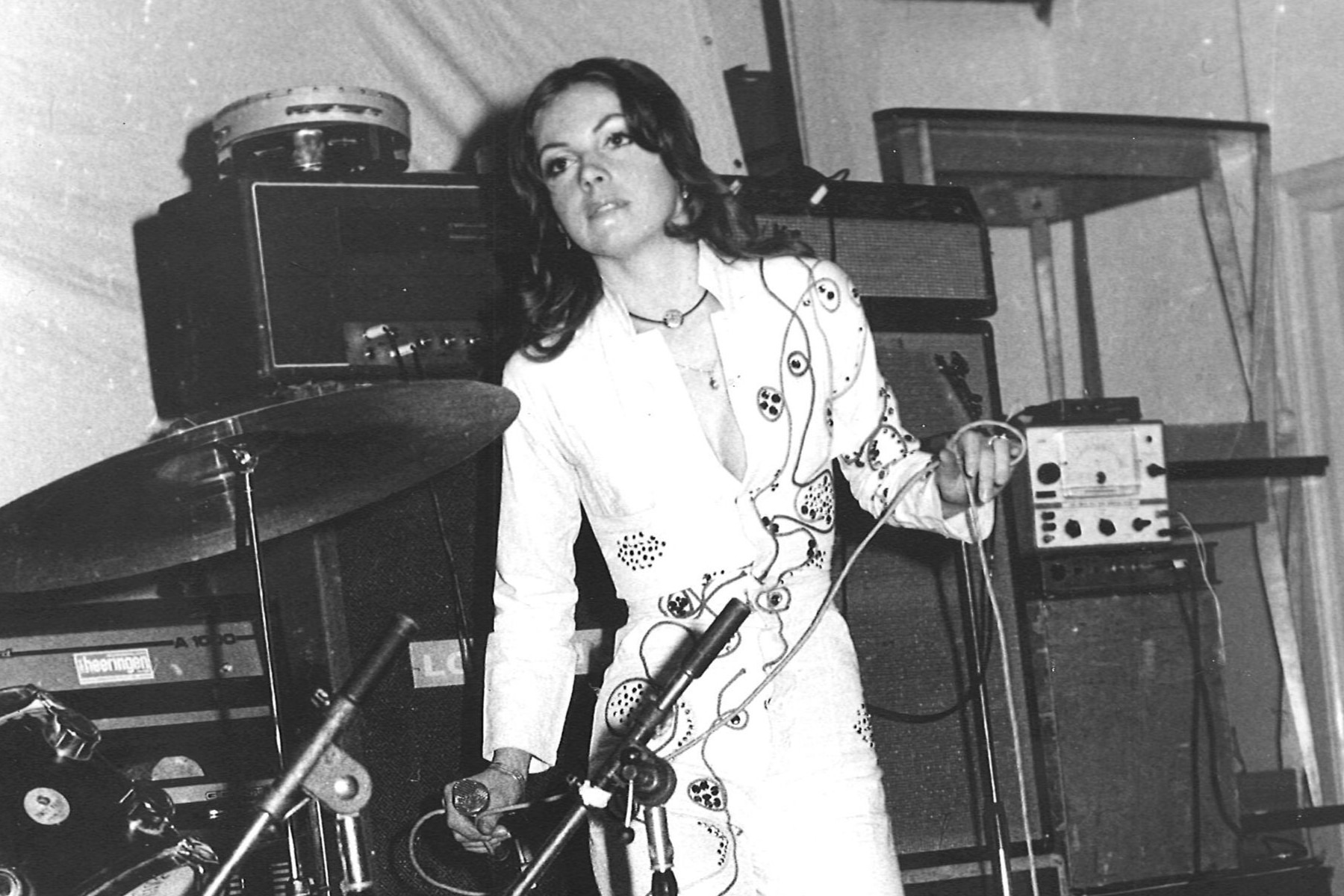
On Saturday, December 15, 1972, the renovation was celebrated with over 800 guests in the Community Hall in Aalten with Earth & Fire, Mr. Albert Show, and Alquin. During the breaks, films were shown and records were played. The admission price was ƒ 6.50.
Jerney Kaagman (Earth & Fire) in the Community Hall in Aalten
Board of the Fly-In Barlo Foundation, 1973
Fly-In Foundation
To prevent being held personally liable for any damages, the board decided in 1973 to establish a foundation.
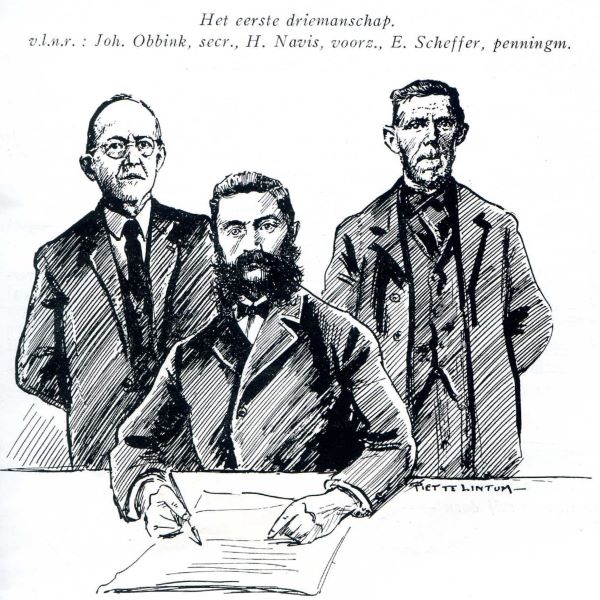
After at least four board members had reached the age of majority (21 at the time), the ‘Fly-In Foundation’ was established at notary Obbink in Aalten. The foundation had a starting capital of one hundred guilders and aimed to organize and provide cultural and creative activities.
Performances and film screenings
During Fly-In’s existence, many performances took place by bands and artists, including Kaz Lux, Kraayeveld, Tom Haket, Dimitri van Toren (Hé kom aan), Armand (Ben ik te min), and Shepstone & Dibbens.
Concerts were also regularly organized in the Community Hall, featuring performances by the Bintangs, Chicory Tip, Dizzy Man’s Band, Earth & Fire, Long Tall Ernie, Mayfly, Plastic Feet, Q65, and Solar Plexus, among others.
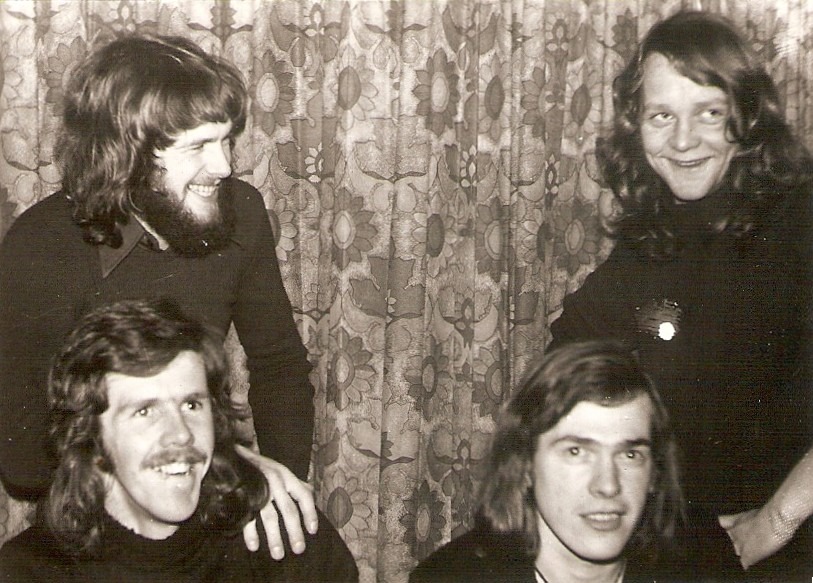
Armand at Fly-In, December 13, 1973
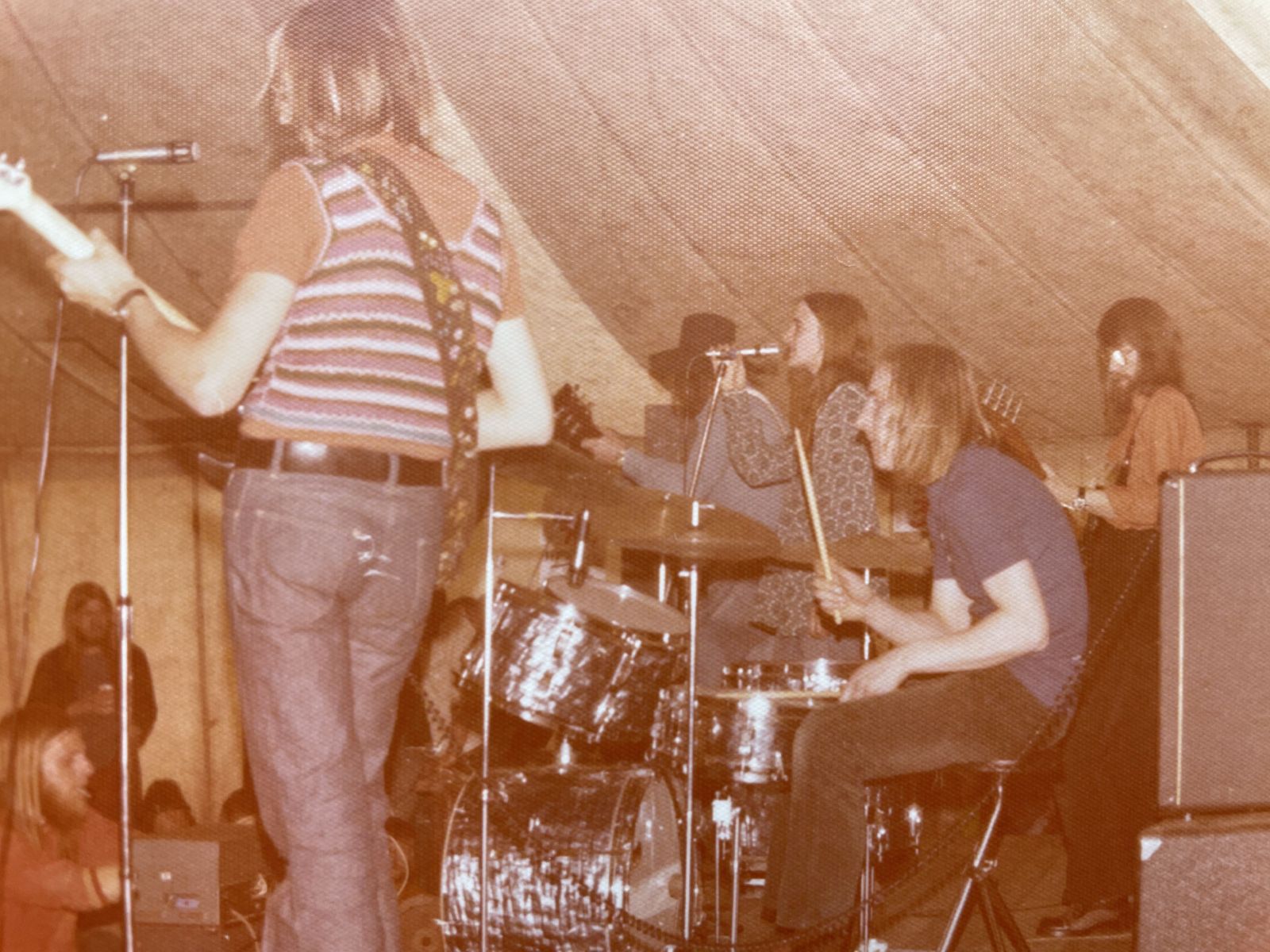
Puddingh at Paaspop in Aalten, 1974
Paaspop 1974
On April 15, 1974 (Easter Monday), Fly-In organized a festival under the name Paaspop. It took place in a festival tent on the grounds of AD’69 on Bocholtsestraatweg. The program included performances by Puddingh, Hobo String Band, Livin’ Blues, Kayak, Bronco, and Shakin’ Stevens & the Sunsets.
Two stages were built in the festival tent so that the bands could alternate, but due to trouble with Livin’ Blues’ van, this did not go entirely smoothly. Approximately 1,500 visitors attended the festival.
Closing party and poem
The closing party of Fly-In took place on December 13, 1974. The discobar would continue under the name De Loods.
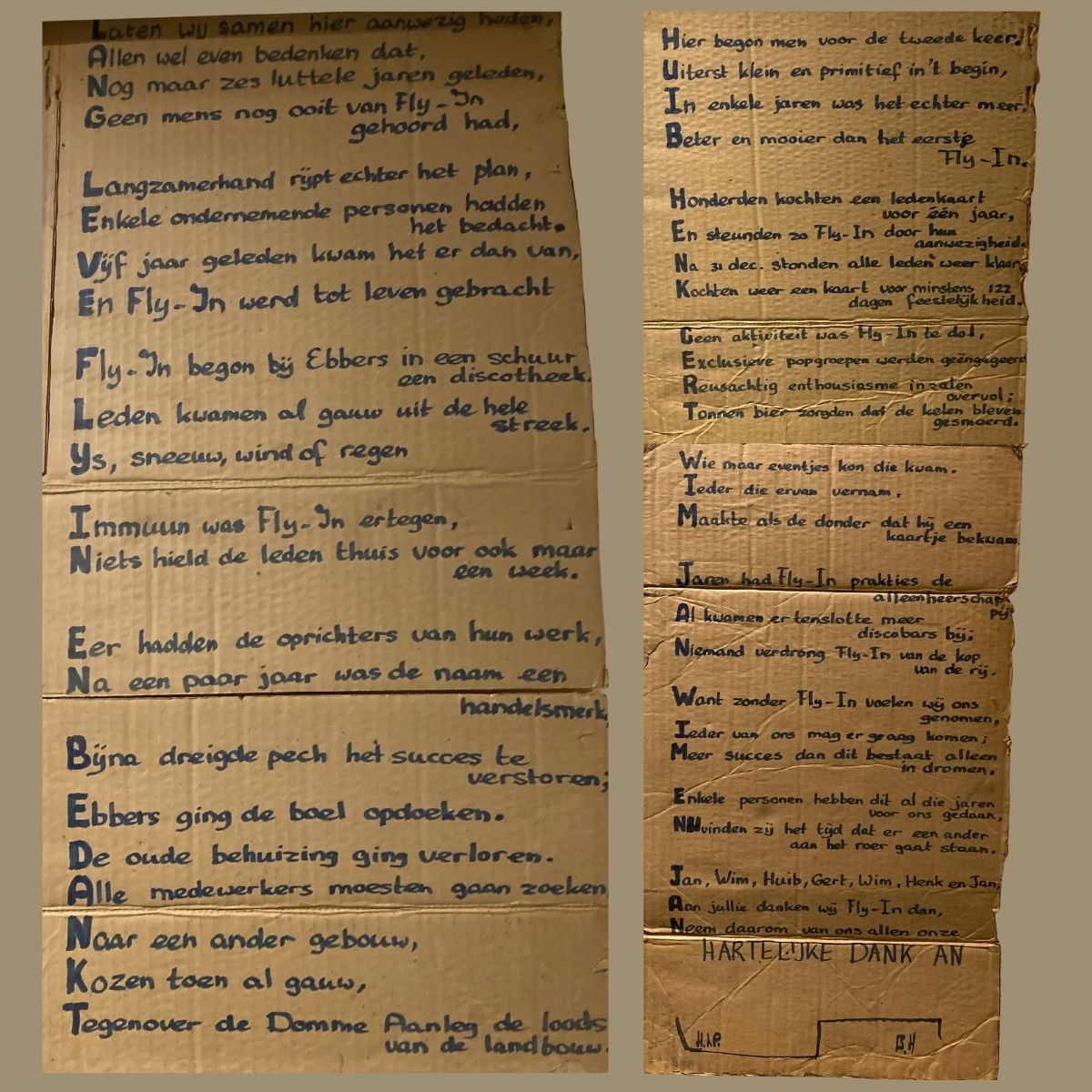
At the closing party, the board was presented with a poem on a large piece of cardboard — an acrostic of 48 lines, of which the first letters together formed the following sentence:
“Long live Fly-In and thanks Huib, Henk, Gert, Wim, Jan, Wim and Jan.”
The poem is signed with the initials H.t.P. and B.H., but to date, it has not been possible to find out who these unknown poets were. If you happen to know, please respond at the bottom of this page!
Source
‘FLY-IN’ 1969-1974: The FLY-IN archive, Wim Simmelink
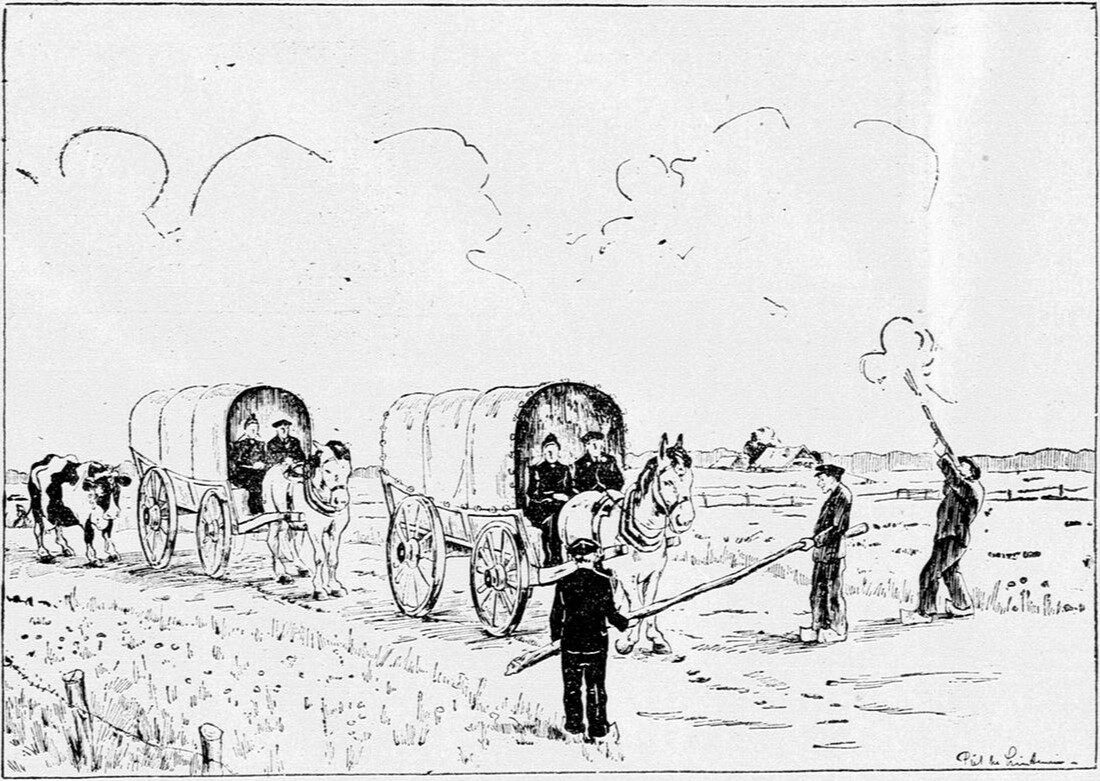
In 1937, G.H. Rots described in a series of articles how things were done in Aalten in former times. Among other things, he wrote about the customs when a farmer moved:
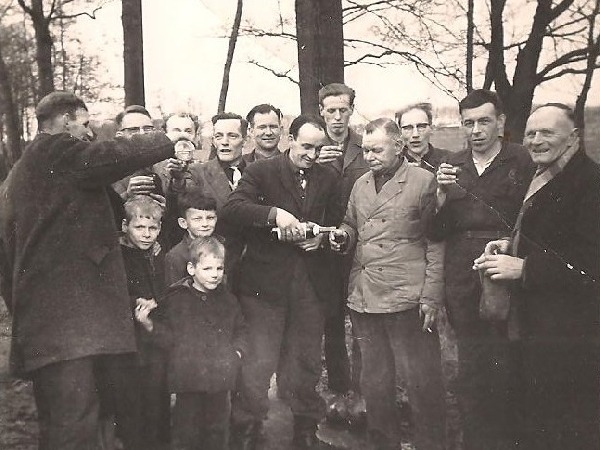
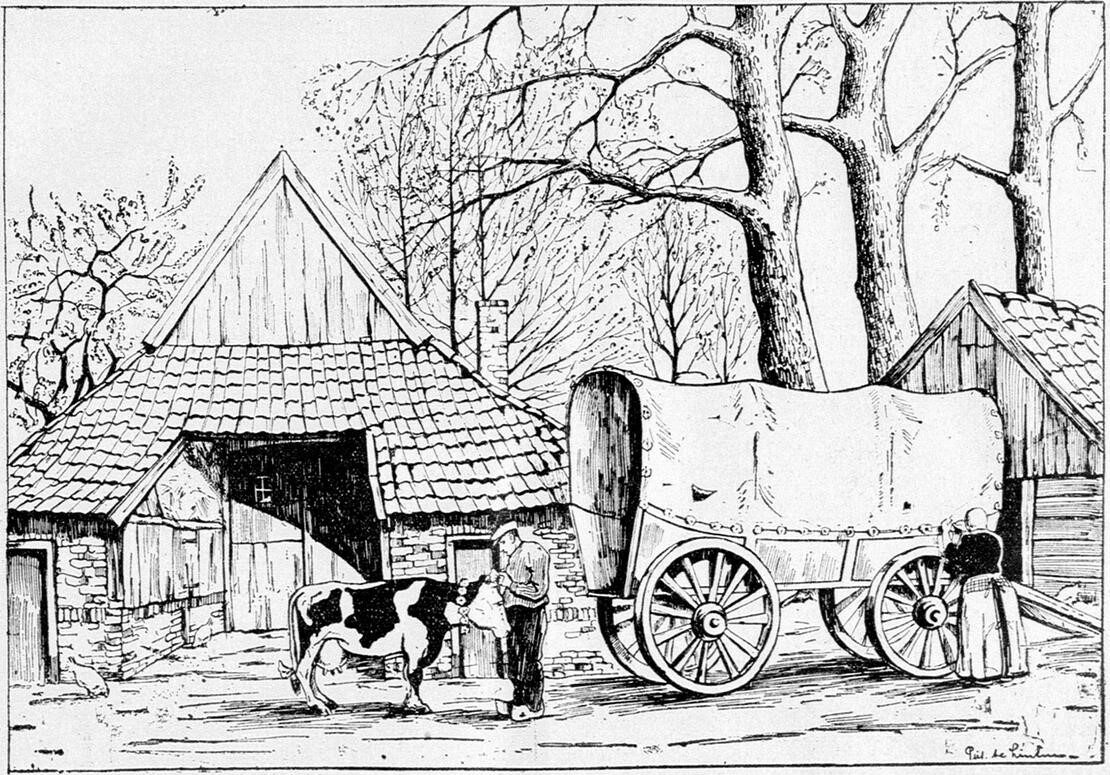
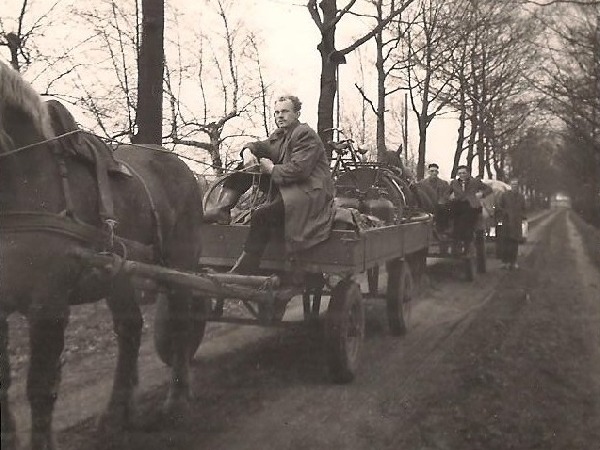
“On the rare occasion that a farmer moved, this took place on ‘Saint Peter’s Day,’ February 22nd. All belongings were loaded onto the neighbors’ wagons, and the entire procession moved from the old house to the new or different farmstead. The neighbor women had already gone ahead to the new home, had cleaned it, and had lit the fire. In the local dialect, this was called ‘vuur beün’ (preparing the fire).”
When the new residents arrived, the coffee had already been brewed, and the newcomers could immediately refresh themselves with a nice cup of coffee. The neighbors helped that day; one person would put something here, another there—it was a scene of immense activity. To top it all off, the ‘housewarming meal’ followed later, where there was certainly no shortage of spirited drinks.”
A moving procession
Source
‘From Aalten’s verleden’, by G.H. Rots, Aaltensche Courant, 12 & 19 November 1937 (via Delpher: part IV)
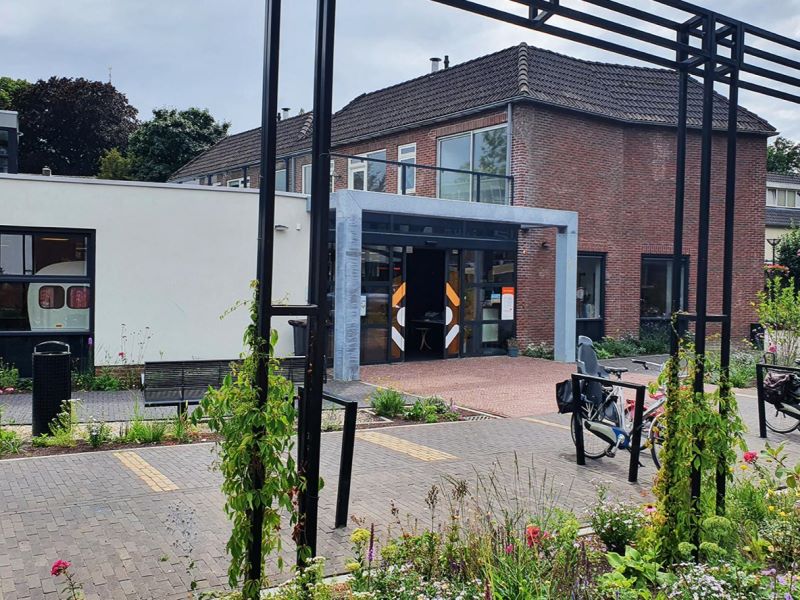
“Elk dörpken hef zien eigen klinkers, zien eigen spreuken en woordenschat.” (Every village has its own vowels, its own sayings, and vocabulary). This sentence is displayed on the façade of the Aalten library. It is a line from the song “Hier in de Achterhoek” (Here in the Achterhoek), by Rocco Ostermann and Matthijs Stronks. And it is entirely accurate.
The Achterhoek dialect, a variant of Low Saxon (Nedersaksisch), has traditionally been spoken in the north-east of the Netherlands and the north of Germany. Within the Achterhoek region, every municipality, and sometimes even every village, has its own nuances in the dialect, which is colloquially referred to as ‘plat’.
“A’j plat könt praoten, mo’j ‘t neet laoten”
The Aalten dialect possesses many ancient words and expressions that do not exist in Standard Dutch.
[To be developed: we are considering a description of the general characteristics that define the Aalten / Achterhoek dialect, perhaps including a few examples, but not an exhaustive glossary. Suggestions for this section are welcome!]
Dialect in daily life
In Aalten, the dialect still plays an important role in the daily lives of many residents. You can still frequently hear Aalten dialect spoken at home, on the street, in shops, and during local events. Many Aalten residents were raised bilingually, speaking the dialect at home and Standard Dutch at school.
Although the Aalten dialect is still spoken, younger generations are mastering it to a lesser degree. They often speak an ‘Achterhoek-flavoured’ version of Dutch, in which many of the typical old words and expressions used daily by their ancestors have disappeared. This development presents a challenge for the preservation of the dialect.
Cultural Heritage
The Aalten dialect is an important part of the local cultural heritage and forms a vivid link with the past. The history and daily life of Aalten are brought to life in stories, songs, and poems written in the dialect. The Aalten dialect thus contributes to the unique identity of the community.
To prevent the Achterhoek dialect from fading away, efforts are being made to pass it on to new generations. This is done, for example, through regional language projects in schools and cultural associations. These initiatives are essential to keeping the dialect vibrant and ensuring that it does not disappear, despite the influence of Standard Dutch and other modern languages.
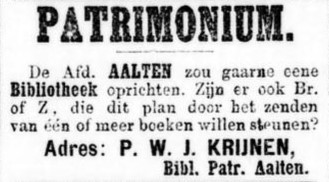
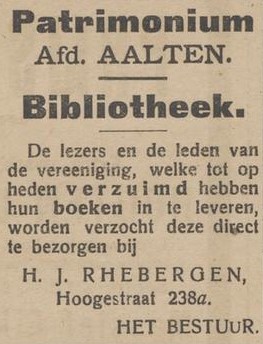
The history of the library in Aalten begins in 1894. In that year, the Aalten branch of the Christian workers’ union Patrimonium already began lending books to members. It was, therefore, not yet a public library. At the end of 1893, P.W.J. Krijnen placed an appeal in De Standaard to donate books for the library. Krijnen was a teacher and lived in the Hoekstraat.
Agricultural Library
In the Netherlands at that time, libraries and reading rooms were established in several places, usually organised according to the prevailing social and religious beliefs of the day.
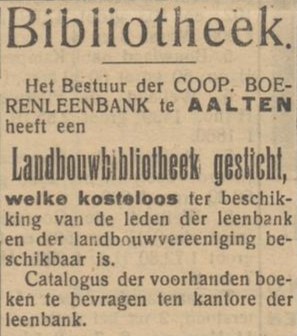
In 1922, the Coop. Boerenleenbank in Aalten founded an Agricultural Library for members of the bank and the agricultural association. The aim was to provide the agricultural section of the Aalten population with the opportunity to increase their knowledge. How long this library existed and what happened to its collection is currently unknown to us.
Patrimonium
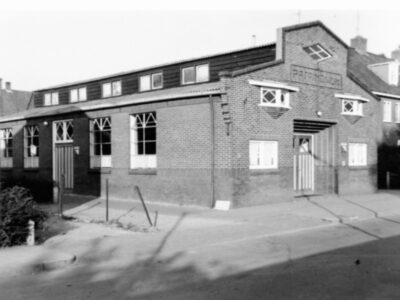
In 1926, the first stone was laid for the Patrimonium building on the Hofstraat. The Christian folk library was located at the back of that building.
On 6 December 1960 Dagblad Tubantia reported:
On 10 December, the new Christian library in Aalten, furnished according to modern requirements, will be officially opened, and the new lending system will be introduced under the guidance of qualified library technical staff. This marks the end of an era in which much hard work was done to provide Aalten with good library facilities.
Patrimonium Building, Hofstraat 5
The Christian Folk Library „Patrimonium” has been active in this field for many years and has seen this work grow into a significant cultural contribution to the community in Aalten. The book loans, rising from 8,400 in 1951 to around 30,000 in 1960, speak volumes. The foundation board was mindful of this development and recognised that the existing provision had become insufficient to meet the ever-increasing interest. The board turned to the Central Rural Library for Gelderland.
The C.P.G. carried out the coordinating work and, after the board of „Patrimonium” had decided to erect a new building, was able to furnish the library according to the requirements set out in the national subsidy conditions. Because the library can now fully meet the requirements with its new setup, it can make use of the services of the Central Rural Library.
Relocations
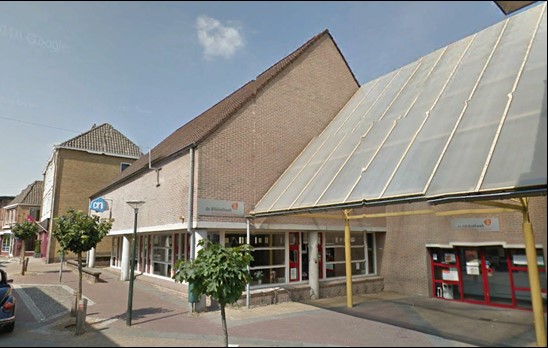
In the early 1990s, the Aalten library moved to a new building at Hogestraat 10. Above the library, the Albert Heijn supermarket was located. The differences in elevation in the centre of Aalten made it possible for both the library and the supermarket above it to have their entrances on the ground floor, the latter at the higher-situated De Hoven.
In 2021, the library moved again. This time from the Hogestraat to a building on the Lage Blik, where the Aldi supermarket was previously located.
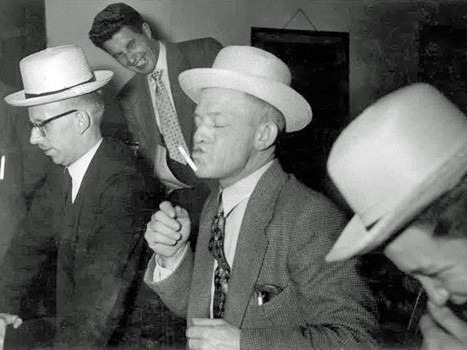
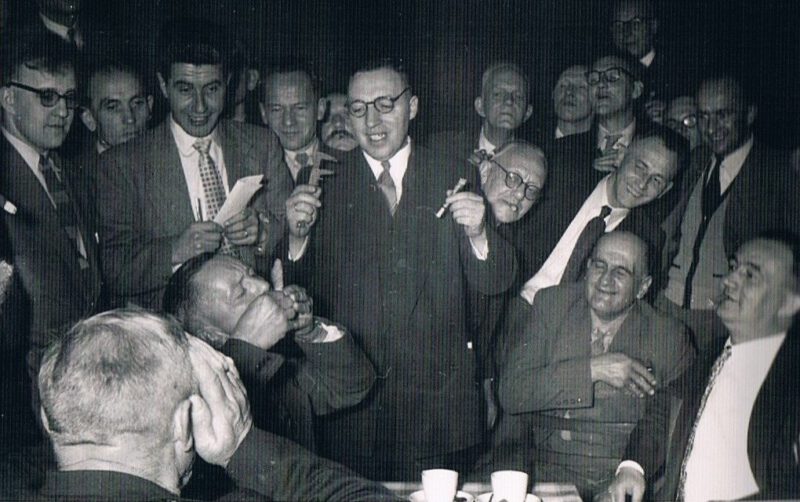
We can hardly imagine it nowadays, but in the last century, competitions were organised in which participants competed against each other in various disciplines related to the smoking of cigars and cigarettes.
Smoking Competition in Aalten – Photo: Annemieke Klein Hesselink
The Arnhemsche Courant wrote on 6 March 1908:
In the Catholic circle in Aalten, a smoking competition was held in slow and fast smoking. Mr J. Betting received the first prize for fast smoking, smoking his cigar in 7 minutes, and in slow smoking, the 1st prize was won by H. Weijkamp, who took an hour and 45 minutes over his pipe of tobacco. A useful way to pass the time as well!
In the 1960s, Dick Fries organised smoking competitions in Aalten. On the right, you can see a photo of the “Throwing a cigarette butt in the air and catching it in the mouth” event.
Photo: André Heersink
On 21 March 1961, the Dagblad Tubantia wrote:
Aalten has another smoking champion
Mr E. Jentink, Lintelo 67, became the champion cigar smoker of Aalten on Monday evening, for the time being for a year. He won this title during the annual smoking competition held at the Sociëteit on the Hofstraat. As is known, this competition is about the longest cone of ash on a 110 mm cigar. Mr Jentink managed to produce one of no less than 104 mm, however 1 mm shorter than last year’s champion.
The interest in this smoking festival grows every year and had already grown to over 200 participants yesterday. It went without saying that when the command “fire” was given around half-past eight and the brand was lit in over 200 cigars simultaneously, all were soon shrouded in dense mists.
It cost the participants effort to see how far his neighbour was progressing with the ash cone. It did not take long, however, before exclamations of “Oh, what a shame, I’ve lost it” rang through the hall.
After about an hour, there were only a few left who could be eligible for the championship. Very carefully, an attempt was still made to take one last puff in order to stretch for another millimetre. The result, however, was usually a couple of “glowing” fingers and an avalanche of ash over their clothing.
When the last cone had fallen and the balance could be made, it turned out that Mr Jentink had become champion with 104 mm. Mr A. Pokhuizen occupied second place with a cone of 103 mm. For the third prize, there were two candidates, namely Mr A. Driessen and Mr W. Winkelhorst, each with a cone of 102 mm.
After this battle, the participants were treated to a somewhat “lighter” programme, namely with a performance by Rudi Carell and Dick Harris.
Dagblad Tubantia, 19 March 1963:
Champion smoker produced an ash cone of 100 millimetres
Geert did not have it easy
With an ash cone of exactly 100 mm, Mr G. te Lindert, Lankhofstraat 23, became the champion cigar smoker of Aalten last night. It was certainly not an easy task for Geert, because more than 200 hopefuls competed with him for this title. It was the tenth time in succession that this competition was held.
Great tension and “avalanches”
Little has changed, however, over the course of the years. This was hardly possible, for since the first time this competition was held, this gathering has been at the centre of attention. Only the occasion with which numerous participants enter the fray has grown larger annually. For many, it is no longer a “gamble,” as they practise busily months in advance, and many let their nails grow longer to be able to hold the “butt” for as long as possible.
The sociability of the evening and the tension are certainly no less. From the moment the over 200 cigars go “into the fire,” a deathly silence prevails in the hall. “Shrouded in mists,” the jury members move between the tables to use the callipers where necessary.
“Skew burners” and “curvers” are already plentiful halfway through the competition. Familiar phenomena yesterday were again the avalanches of ash, under which a face, lapel, or jacket were often buried.
Geert te Lindert, a true lover of the cigar, succeeded in bringing the ash cone to 100 mm before it fell. How tense the battle was is proven by the 99½ mm ash cone that his competitor, and last year’s cup holder, Mr D.A. Driessen managed to produce. With a cone of 99 mm, Mr L.C. Rodenburg, who also won prizes last year, took third place.
After this exciting battle, a sociable evening was made of it with the cooperation of Lubbert van Gortel and Kees Schilperoort. The NCRV broadcaster recorded the competition for broadcast in the radio newspaper.
Dagblad Tubantia, 9 March 1965:
Smoking competition was a success
With an ash cone of exactly 100 mm, Mr A. Driessen became the winner on Monday evening of the annual and 12th smoking competition, which was held to great interest in the sociëteit. When the starting signal was given at a quarter to eight, the fire was lit in over 200 substantial cigars at once.
Within a few minutes, the smoke was so thick you could cut it, and the participants could hardly distinguish their neighbour. Of course, that was not necessary, as everyone had enough to do with themselves. Especially when the ash cone increases in length, and then often tends to start pulling askew, no one has any need to interfere with their neighbour’s smoking art.
It becomes different when, after half an hour, the first “victims” see their ash cone fall into pieces with a face of “Oh, what a shame.” Then the dropouts gather in large numbers around the survivors who, often at the cost of a blister and twisting themselves into all sorts of contortions, try to add a few millimetres to the wobbly cone by taking a few more puffs. It becomes deathly quiet in the hall, and the tension can be read on the faces.
So too last night, when all attention was focused on the smoking art of Mr Driessen, who finally succeeded in emerging from the smoke screen as the winner. Last year, he also won the 1st prize. If he succeeds in winning the championship again next year, he will become the definitive owner of the challenge cup.
In second place finished Mr H. Arentsen with a cone of 99½ mm. Mr J. Pluimers came in third place with a cone of 99 mm.
After the smoke screen had cleared somewhat, the participants were treated to a cheerful programme, provided by a cabaret company from Apeldoorn, under the motto: “Lachen is troef” (Laughter is trump).
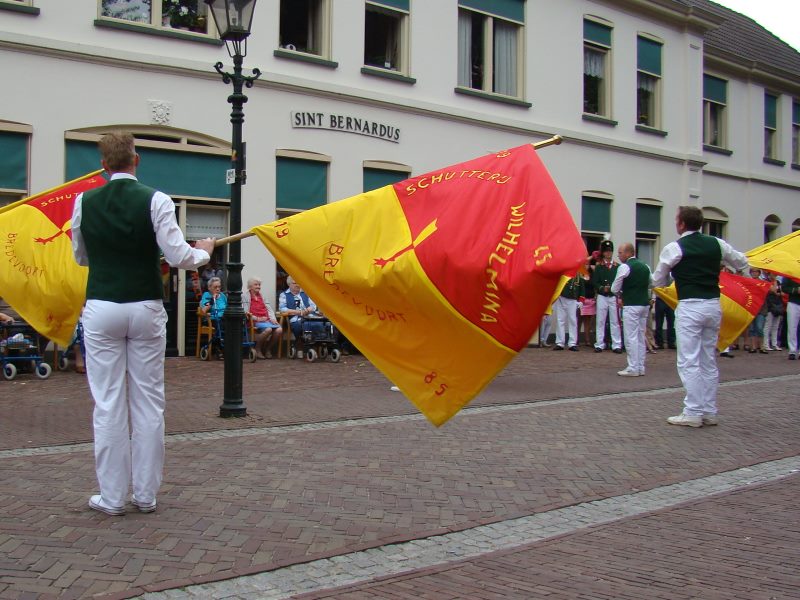
As a garrison town, Bredevoort has had a civic guard, or markmen’s guild, since the Middle Ages. At that time, civic guards were established as local militias intended to guarantee the order and safety of the citizens.
After the civic guards were officially disbanded in 1901, voluntary markmen’s guilds emerged in many places. These had a more folkloric character and organized events such as marksmen’s festivals, the fair, and the king shoot. Many markmen’s guilds also have a brass band and/or flag wavers.
Wilhelmina Markmen’s Guild
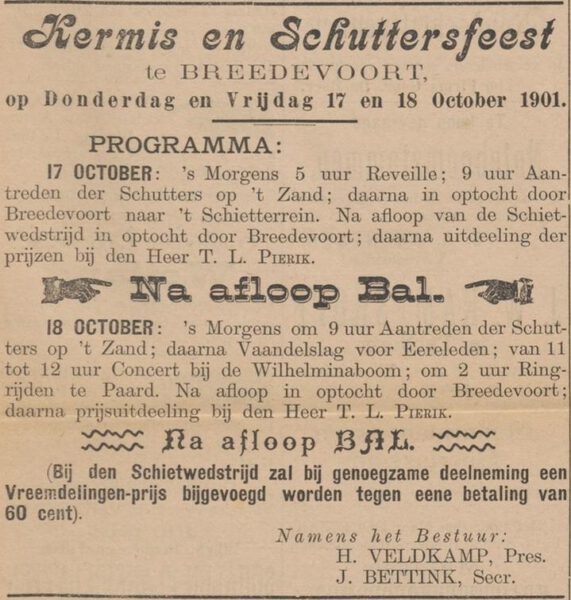
Today, Bredevoort still has a markmen’s guild, namely the Wilhelmina Markmen’s Guild. The first written mention in which this markmen’s guild is referred to by name was found in the Aaltensche Courant of October 25, 1905. It is assumed that the association had already existed for some time by then. During that same period, Bredevoort appears to have had as many as two markmen’s guilds.
The association possibly owes its founding to the year 1898, when the coronation of Queen Wilhelmina was celebrated exuberantly. In Bredevoort, a committee was established for this occasion that organized various festivities. These consisted of a fair and a procession of riders with banners. Additionally, a so-called Wilhelmina tree was planted on the Markt square in honor of Wilhelmina’s birthday. Afterward, a marksmen’s festival took place, with the king shoot as the main event. This tradition is still kept alive during the annual folk and marksmen’s festival held in June.
Restart
During World War II, the association was banned and the banners were destroyed by the occupiers. Immediately after the war in 1945, the Wilhelmina Markmen’s Guild Bredevoort was officially (re-)established. In 2020, the markmen’s guild celebrated its 75th anniversary.
The banners of the Wilhelmina Markmen’s Guild feature a crow’s foot, the coat of arms of the Satink family. In the 18th century, Benjamin Satink (1704–1769) was the acting bailiff of the Lordship of Bredevoort, commissary of the national warehouses, and military auditor.
The Wilhelmina Markmen’s Guild plays an active role in the Bredevoort community. The markmen’s guild’s flag wavers perform serenades at members’ anniversaries and organize the reveille, early in the morning, and the king shoot during the annual fair. The ‘headquarters’ is the markmen’s house on Boterstraat.
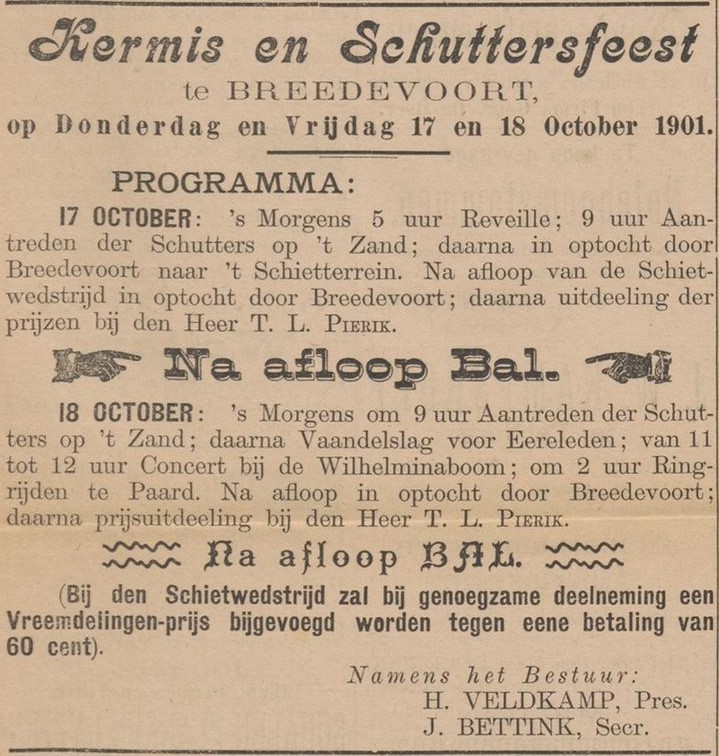
Wilhelmina Markmen’s Guild, BredevoortAaltensche Courant, 12 October 1901
40th Anniversary
In 1985, the Wilhelmina Markmen’s Guild in Bredevoort celebrated its 40th anniversary (after its re-establishment):
The Wilhelmina Markmen’s Guild occupies a special place in the Bredevoort community and is an integral part of special events in the old town. On October 12, the markmen’s guild celebrates its 40th anniversary. In reality, Bredevoort has had a markmen’s guild for much longer. This is evidenced, among other things, by four old banners that are still held in honor and date from the end of the last century.
“An outsider wouldn’t give a penny for them and would throw the whole lot with the rags. But for the members of the markmen’s guild, they are worth their weight in gold,” says the current chairman of the markmen’s guild, Hans Wensink from Boterstraat in Bredevoort. This 58-year-old resident of Bredevoort has been chairman for 30 years and also experienced the founding in 1945. “Perhaps we should speak of a re-establishment. It was after World War II, and during the war, the markmen’s guild was disbanded. However, on October 17, 1945, the markmen’s guild once again became a reality.”
Hans Wensink remembers well that Hendrik Frenken was the first commander. A man with a magnificent commanding voice. “When he gave the command: “battalion forward,” the R’s rolled out so beautifully,” Hans Wensink recalls. He also remembers that during marksmen’s festivals, Frenken did not allow himself to be addressed simply by his name. You had to call him captain, no matter how well you knew him. “That was the atmosphere at the markmen’s guild. After the Frenken period ended, J. van Merkenstein took over command, and now it is D. Dibbets who gives the orders.”
Core group The markmen’s guild has always had a core group. After the war, there were only the old banners. These were later replaced because it was a pity to continue using them. Uniforms also arrived only later. In 1959, the traditional marksmen’s festival came to an end when it was decided to collaborate with the Folk Festival to create a joint celebration.
The markmen’s house has changed over time, but now they are back at their old base, Café Munsterbrug. The banners, however, are “maintained” by Mother Wensink. She meticulously ensures that everything is handled correctly. The 90-year-old is an enthusiastic supporter of the markmen’s guild. She can also tell stories about the markmen’s guild that was active in Bredevoort at the beginning of this century. Her husband, who passed away in 1938, was already an adjutant with the markmen’s guild in 1913 and rode on horseback with the group. In those days, ranks in the markmen’s guild were purchased. People came from far and wide to the markmen’s guild in Bredevoort. Mrs. Wensink also knows that the oldest banner dates from 1898 and was waved by Wubbels Sr., who also had three sons who were flag wavers.
“Ma” Wensink also ensures that the marksmen receive their coffee and bread on time during the bird shoot. In the past 40 years, it has happened seven times that the title of marksman king has gone to the Wensink family. “Then it is a real marksmen’s festival; I leave everything as it is and go to the markmen’s house,” says the elderly resident of Bredevoort.
Celebration The markmen’s guild has 160 members, 40 of whom are “active.” The executive board consists of: Hans Wensink, chairman; Hans Piek, secretary; Engelbert Ebbers, treasurer. On Saturday, October 12, attention will be given to the 40th anniversary.
A reception will be held at the Munsterbrug markmen’s house from 3:00 PM to 5:00 PM, and in the evening, there will be a party for the members. “Whatever may change in the coming years, the markmen’s guild must be held in honor. This is something that was started by our ancestors. We must not tear that down. We must be careful with the traditions and customs,” says Hans Wensink.
In 2022, a jubilee book was published, titled ‘Schutterij Wilhelmina Bredevoort’, written by Jos Wessels.
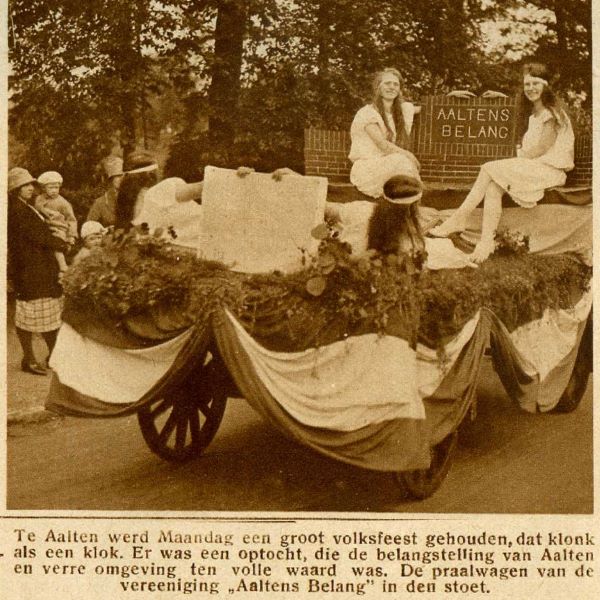
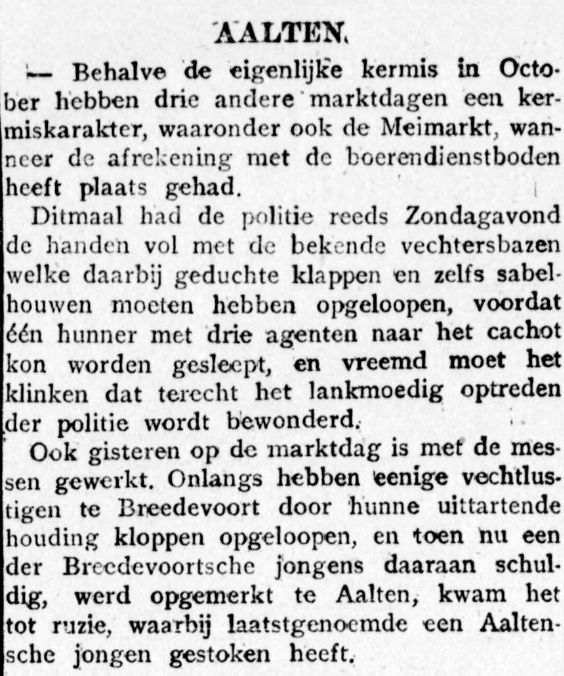
The Aalten Volksfeest is an event that many residents of Aalten look forward to every year. Nowadays, it is celebrated during the third weekend of September. In earlier years, it was also celebrated on other dates. The folk festival is also often referred to as the ‘kermis’ (fair). However, the actual fair, meaning the attractions, is nowadays called the ‘lunapark’.
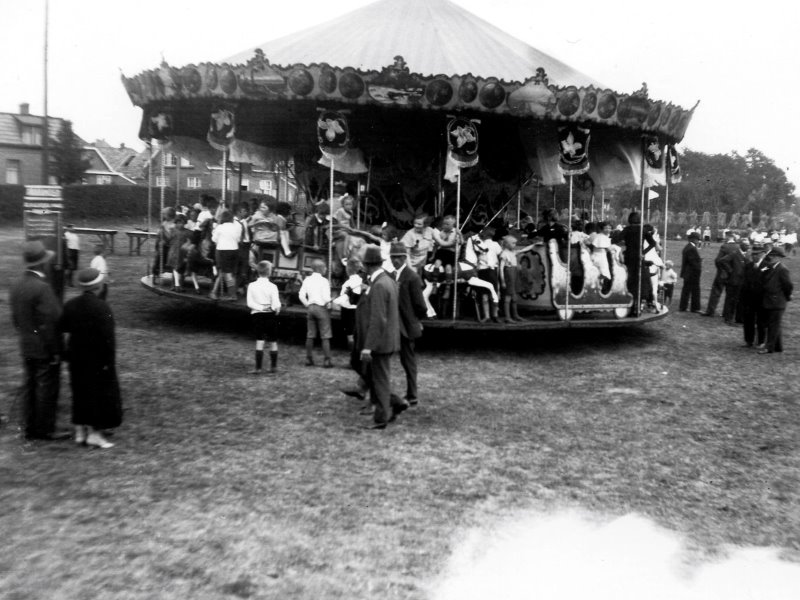
For many decades, the king shooting and the fair were held on the grounds near the Community Hall / ‘De Pol’. Nowadays, however, these activities take place in the center, primarily on the Markt and the Hoge Blik.1
The oldest mention of the fair in Aalten dates back to 1835. That year, the ‘Geldersche Volks-almanak’ mentioned that the fair in Aalten would take place on October 19.2
In the ‘Eleventh report on the state and activities of the Dutch association for the abolition of strong drink’, published in 1855, it is written: “the fair in Aalten is insignificant, mostly children’s joy”.3
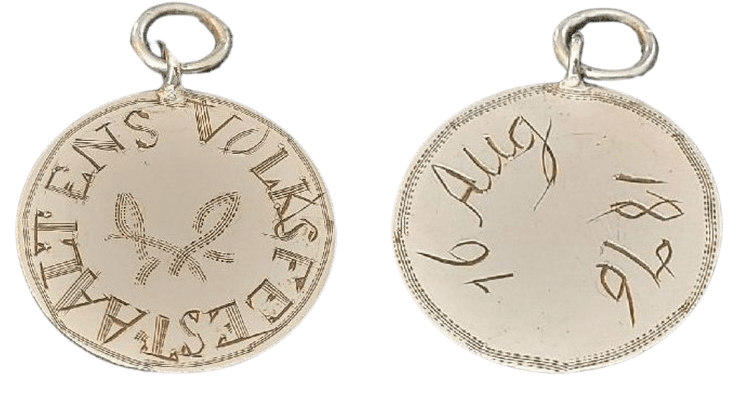
Volksfeest 1876 – silver medal
Medals are often a material reminder of an event in the past. This also applies to the small medal depicted here:
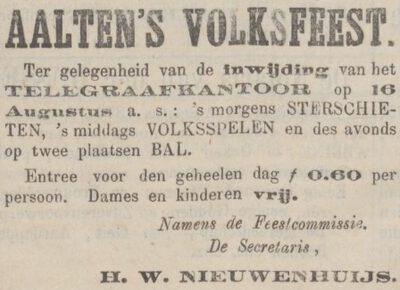
Silver medal Aalten Volksfeest, 1876 (photo: H. Schutte)Zutphensche Courant, August 12, 1876
The medal consists of a silver plate with a diameter of 22 mm, to which an eyelet has been soldered. The front is engraved with the text: AALTENS VOLKSFEEST, with a ribbon surrounded by a border of stripes. On the reverse is the date 16 Aug 1876, within a border of small lines and stripes. The edge of the medal is serrated; the plate is presumably a ground-down coin. It is striking that the engraving was carried out quite amateurishly.
Regarding the occasion for the folk festival, the Zutphensche Courant of August 12, 1876, reports: the opening of the Telegraph Office in Aalten. The precise reason for the production of the medal is unknown; it may have been awarded as a prize during the star shooting.4
Stichting Volksfeest Aalten
In September 1973, a ‘Volksfeest Committee’ was established, created by the merger of the Community Hall, the Schuttersvereniging (Marksmen’s Association), and the Fair Committee. Later, this became the ‘Stichting Volksfeest Aalten’. Ten years later, Wout Delleman (1927), Jan Willem Bilderbeek (1920), and Johan Diederik Beskers (1918) appeared before notary Obbink for the establishment of Stichting Volksfeest Aalten (SVA).
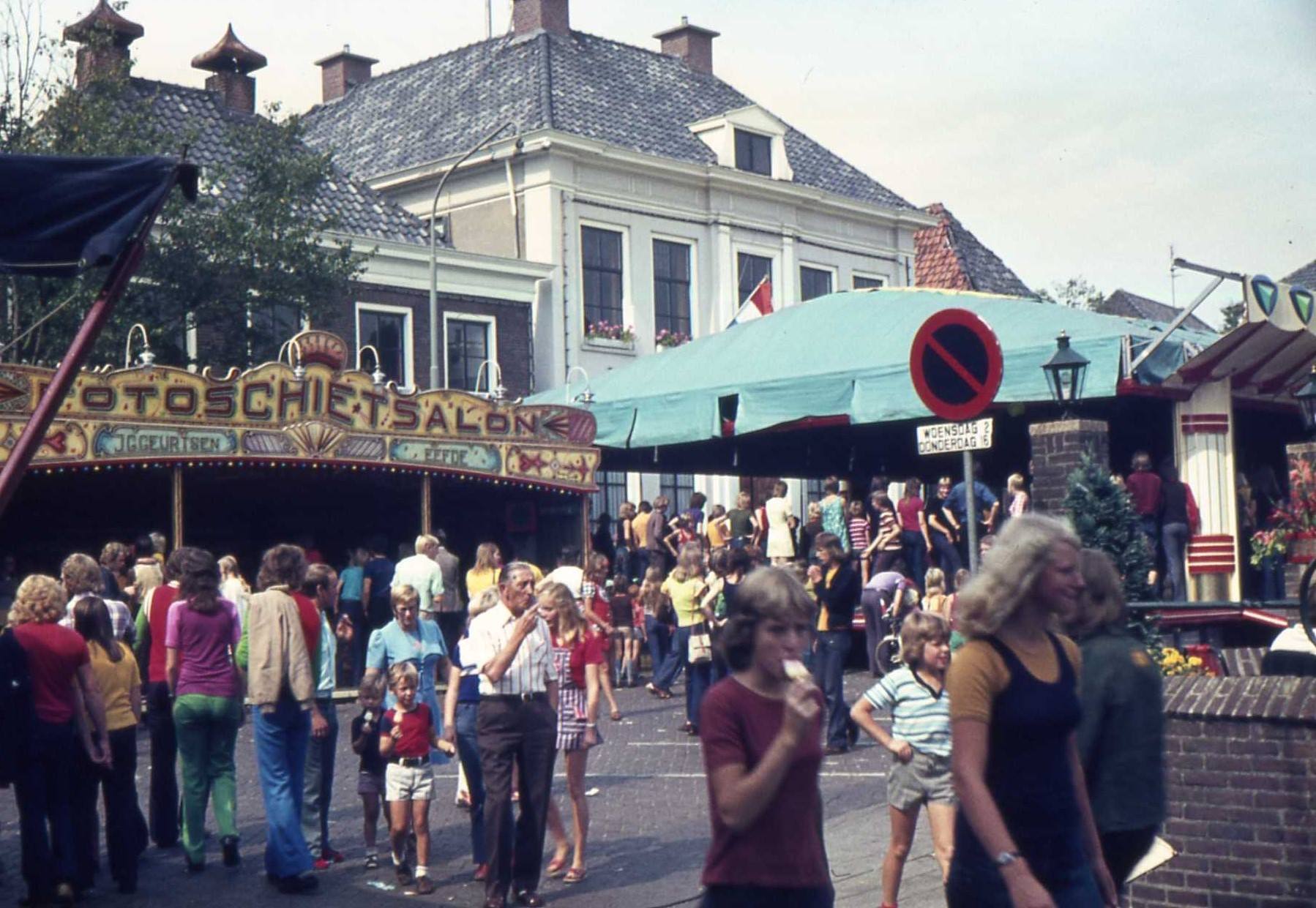
Parade during the Volksfeest in Aalten, 1970s
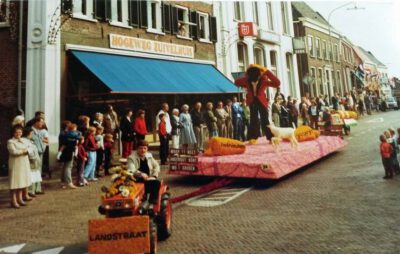
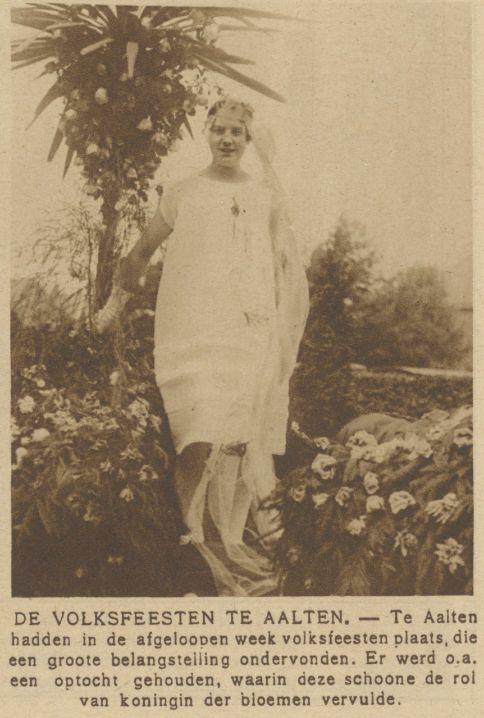
The core activities of Stichting Volksfeest have hardly changed in 50 years. Long before SVA was established, a festival, then called a fair, was organized every year. Children’s games, a lantern parade, king shooting, and the Allegorical parade are traditionally part of the ‘festival for everyone’. The locations have changed several times, and the Volksfeest has also moved from June to the third weekend of September.
Previously, the Volksfeest was held from Thursday to Saturday. Since 2014, Sunday has been added to the program with Frühshoppen.
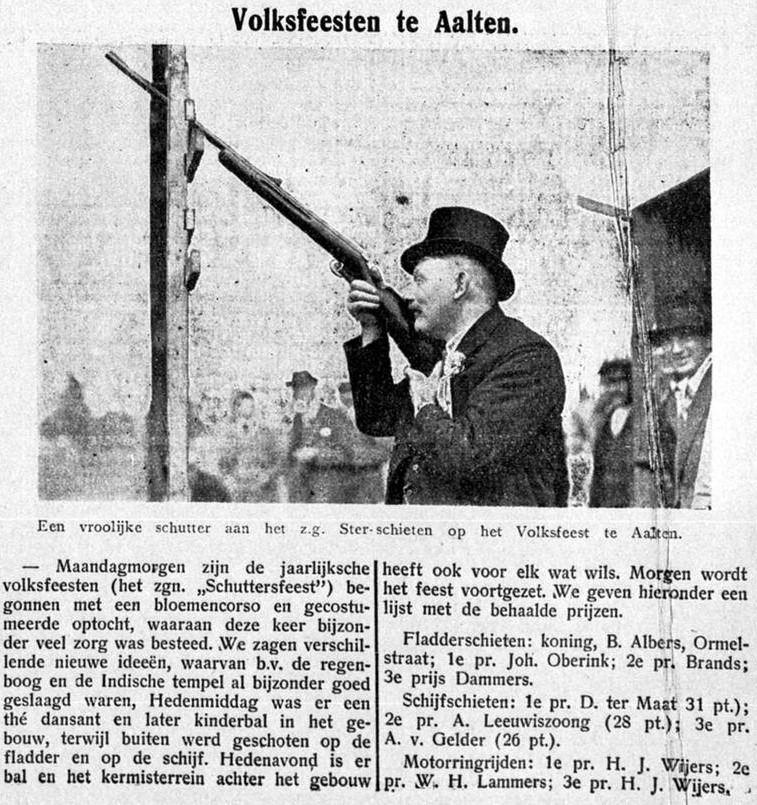
The tradition of king shooting has been known in Aalten since well into the last century. In addition to king shooting, Aalten also had ‘fladder’ and target shooting, and bird clubbing for ladies. Furthermore, at the beginning of the last century, one could also participate in ring tilting on horseback or bicycle.
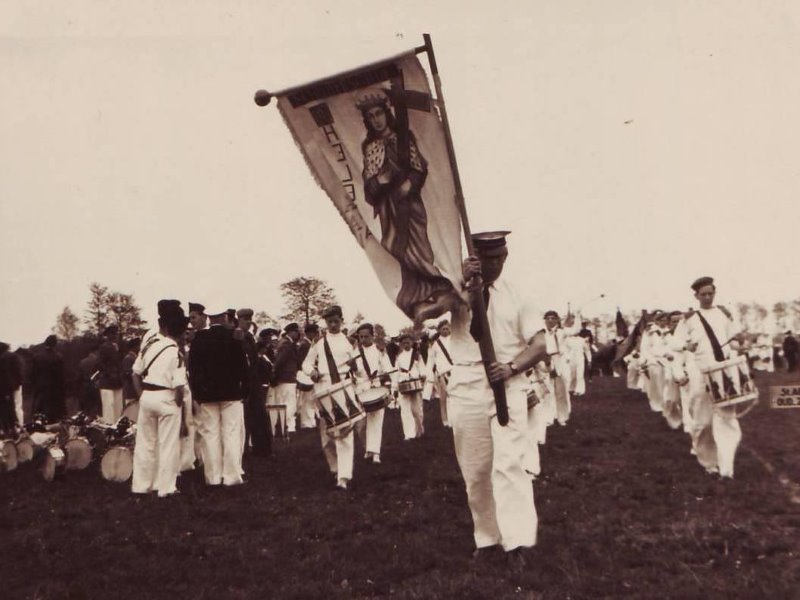
The winners of the shooting competitions on Friday may call themselves king, queen, and youth king/queen of Aalten for a year. The following day, they are driven around in a carriage or cabriolet during the allegorical parade to greet the public. This is followed by the tribute to the flag by the flag wavers of St. Helena on the Markt.
King Shooting
Marksman King Mr. Veldhuis, ca. 1965 (photo via H. Schutte)
A traditional part of the folk festival is the king shooting or bird shooting. King shooting is an old custom found in large parts of Europe. King shooting originates from the schuttersfeest, the annual festive folk entertainment of the local marksmen’s guild.
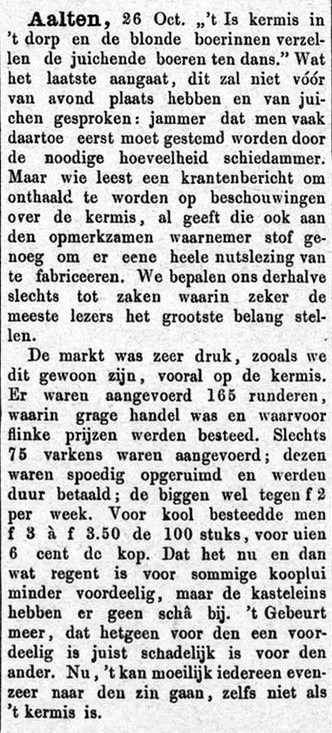
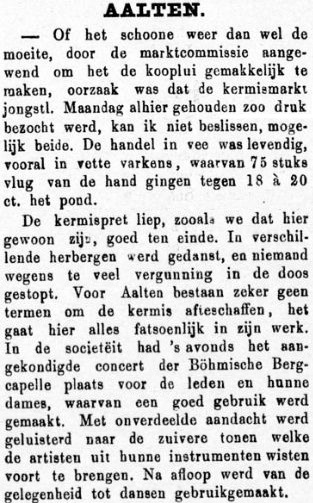
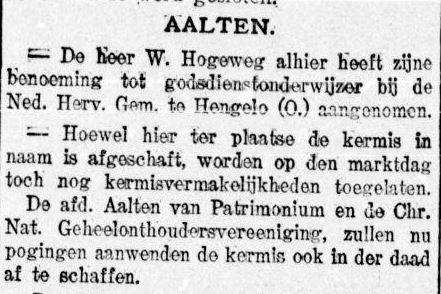
De Graafschapbode, 30 October 1880De Graafschapbode, 20 October 1888De Graafschapbode, 26 October 1889De Graafschapbode, 24 October 1891
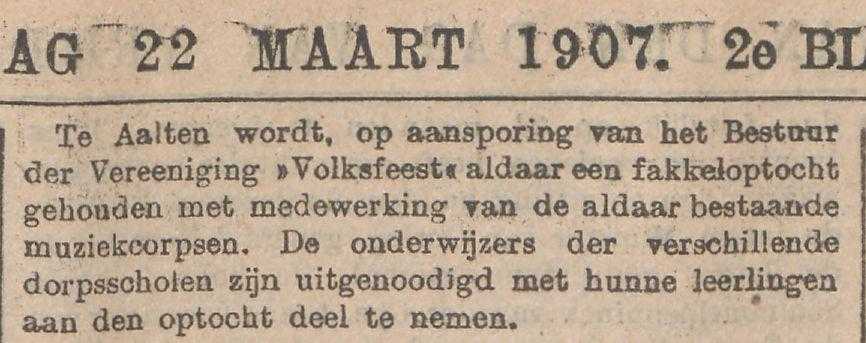
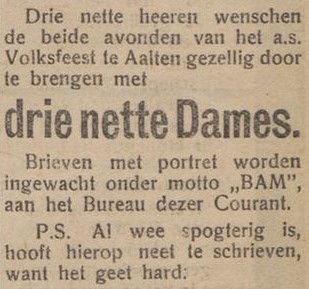
De Graafschapbode, 20 October 1894De Graafschapbode, 24 October 1896Aaltensche Courant, 12 October 190122 March 1907De Graafschapbode, 14 November 1908Aaltensche Courant, 15 July 19191927
5 May 19141928Carousel at the fair behind the ‘Festival Hall’, year unknownDe Graafschapbode, 22 July 1930De Graafschapbode, 20 July 1936
Marksmen’s guilds, or civic guards, were established in the Middle Ages as local militias intended to guarantee the order and safety of citizens. In 1815, a law was passed stipulating that three percent of men between the ages of 18 and 50 were liable for service in the civic guard. In 1827, this was changed to two percent of men between the ages of 25 and 34.
In 1901, the civic guards were officially disbanded and replaced by a Landwehr (reserve army), which consisted of conscripts and volunteers. Later, voluntary marksmen’s guilds were established in many places, which anyone could join.
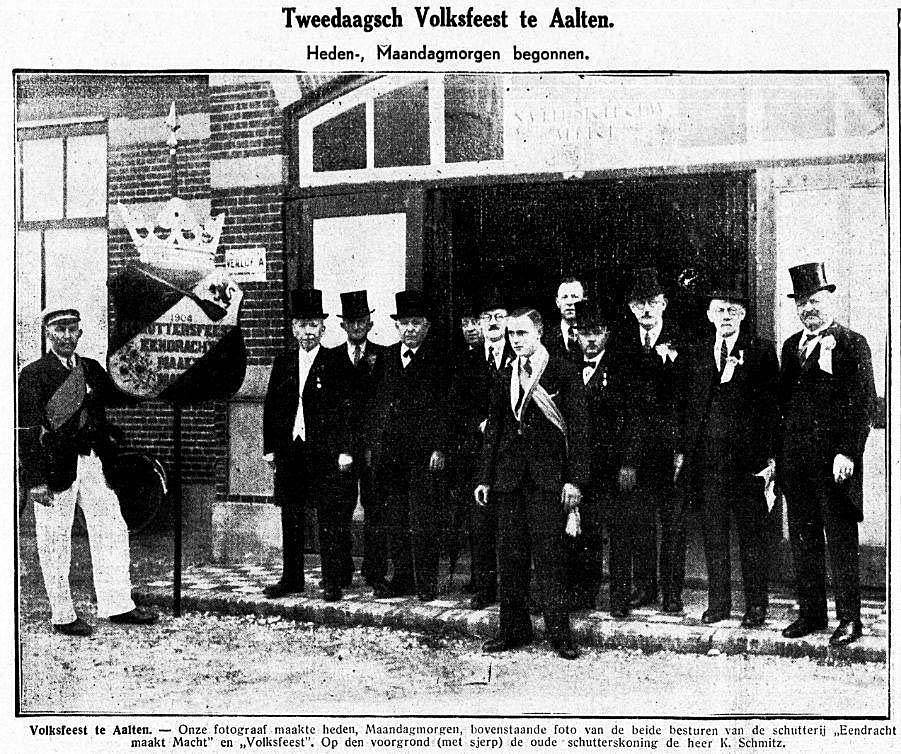
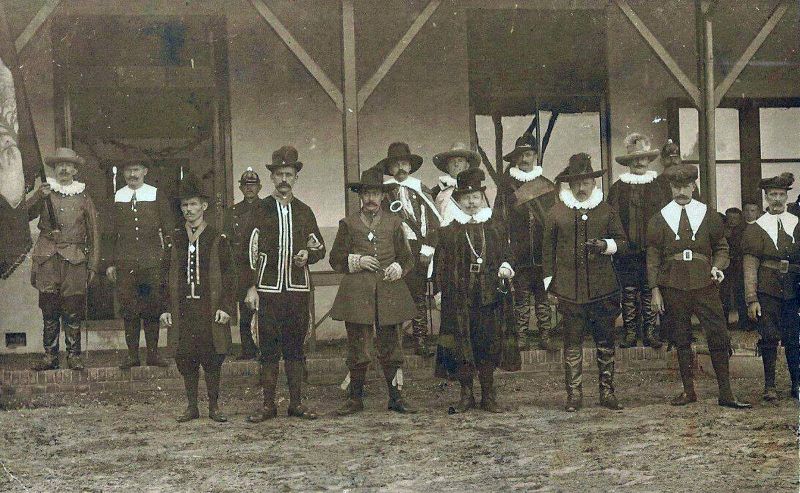
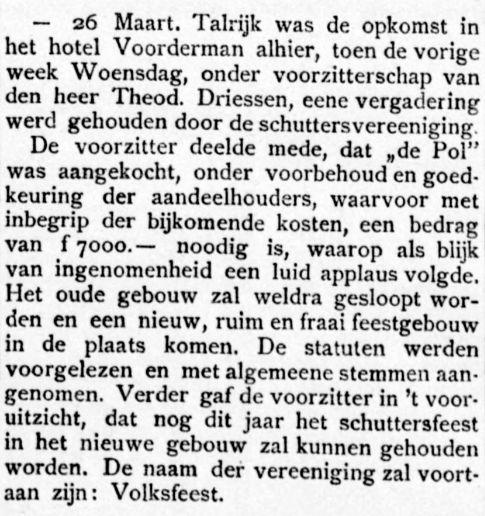
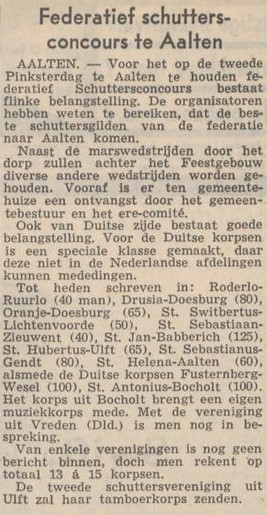
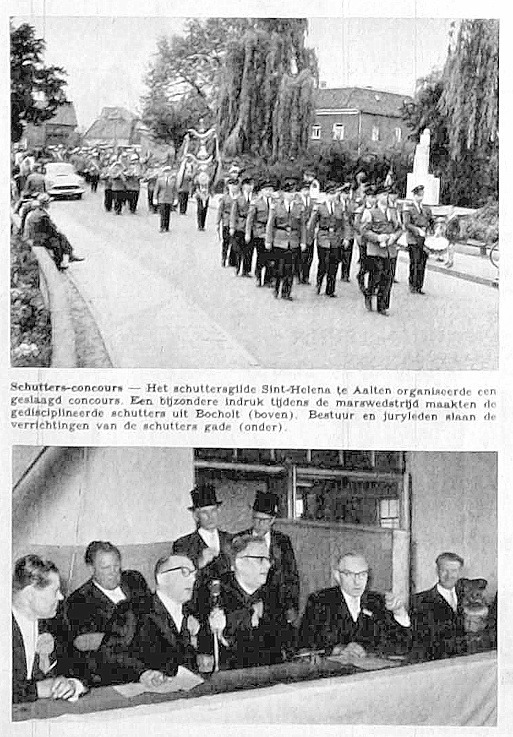
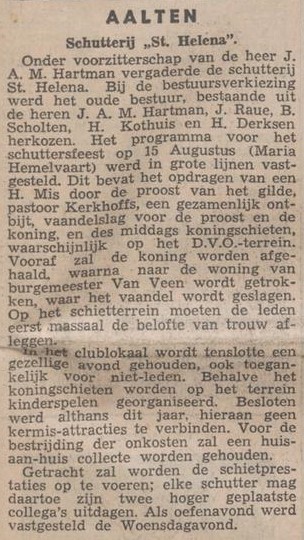
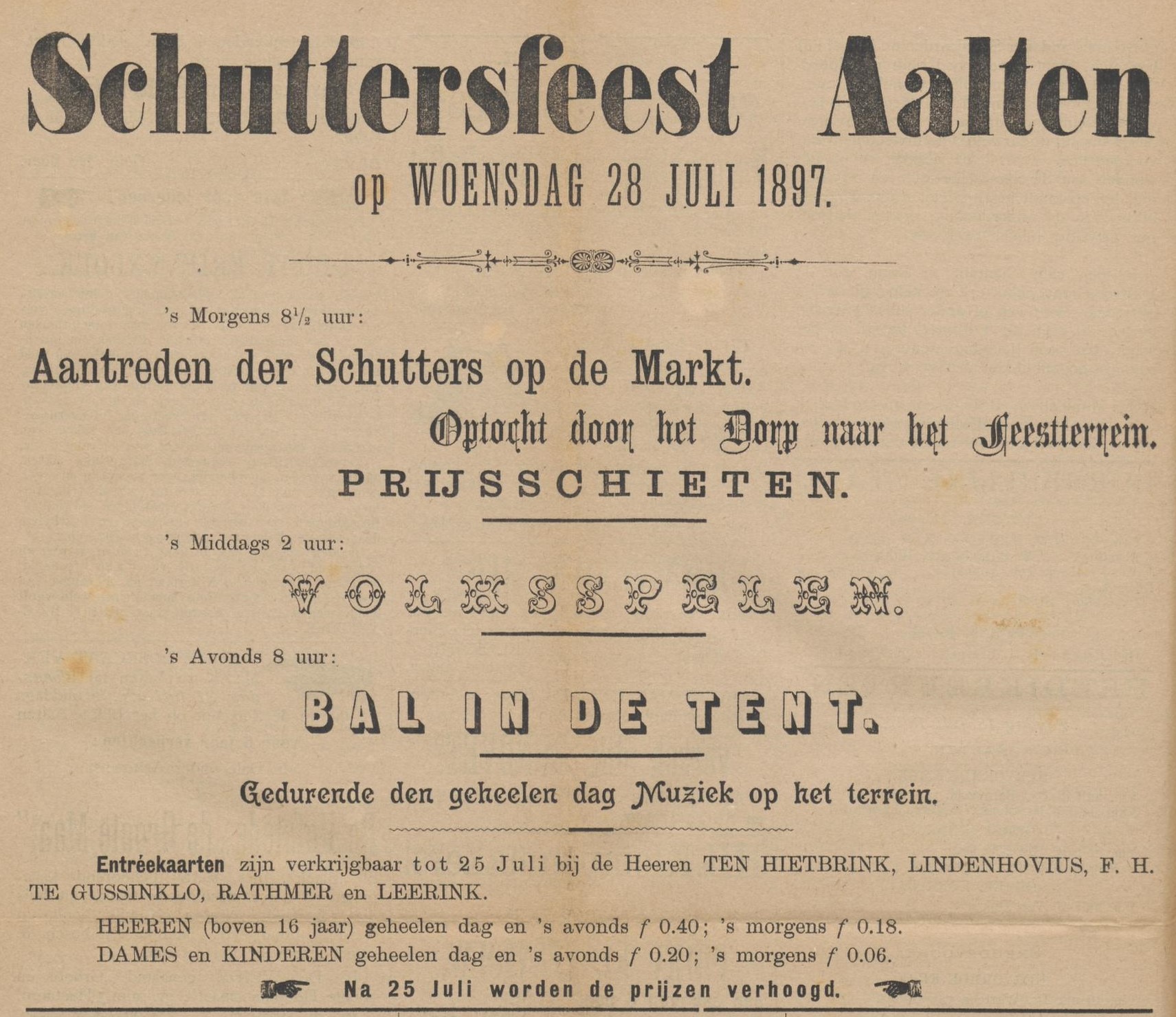
In 1906, the marksmen’s guild in Aalten was instrumental in the establishment of the Community Hall. In the decades that followed, we were unable to find any mentions of the Aalten marksmen’s guild in the Delpher online newspaper archive. It was not until the early 1950s that we found several mentions again, regarding the St. Helena Marksmen’s Guild.
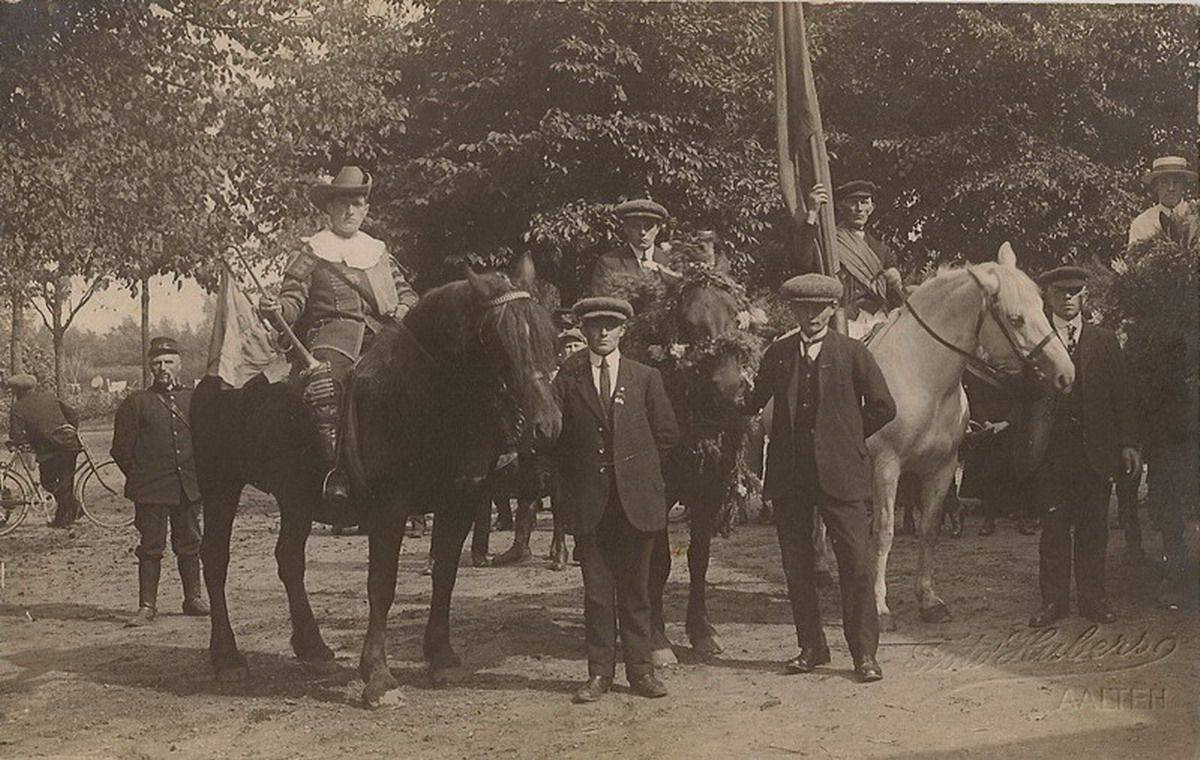
Aalten Marksmen’s Guild in front of the Community Hall, early last century (photo via H. Schutte)
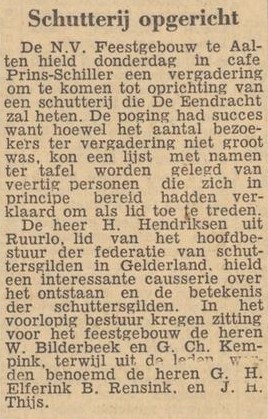
However, in 1957, a report also appeared regarding the establishment of a marksmen’s guild by the NV Community Hall in Aalten, which was to be named ‘De Eendracht’. Exactly how this fits together remains unclear to us for the time being.
In September 1973, a ‘Volksfeest Committee’ was established, formed by the merger of the Community Hall, the Marksmen’s Guild, and the Fair Committee. This later became the ‘Aalten Volksfeest Foundation’.
This page includes several photos and newspaper articles of and about the Aalten marksmen’s guilds that we have collected over recent years. We hope to receive more information in order to write a more complete history of the Aalten marksmen’s guilds in the future.
Zutphens Dagblad, 13 June 1952Dagblad Tubantia, 10 May 1957
Weekblad voor Aalten, Breedevoort, enz., 17 July 1897St. Helena Markmen’s Guild, year unknown (photo via A. Wolterink-Jansen) Aalten Markmen’s Guild, year unknown (photo via H. Schutte)Folk festival in Aalten, 1936Flag waving at Markt square, year unknown
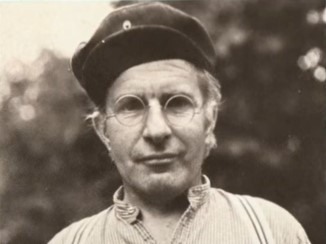
Decades ago, Johan Bennink from Aalten performed as a compère under this name. Nowadays, he might be called a ‘stand-up comedian’. His stage name was a reference to his actual profession: a plasterer.
A visitor to our Facebook page reported the following:
Johan Bennink regularly came to have his car washed in the car wash at Kempers. Most cars got a good service, but some cars needed extra attention. His car always fell into the latter category. Johan had an oversized, gold-coloured Fiat sedan that sagged quite a bit on its suspension because of its contents. He used it for his work as a plasterer. You can probably imagine that there could be thick clumps of mud from the building site on and under the car. For me, as a lad, it was always a challenge to make his car look beautiful again when Johan drove out of the garage. We couldn’t do much about the interior. Nor did we have to. It was packed to the rafters with a small ladder, tools, overalls, and all sorts of buckets with stuff that he would spread on walls or ceilings during the week. He always said: “Leave that to me, it’s my own little shed.”
Achterhoek Plat
On YouTube, we found a recording of Johannes de Gladstrieker from the well-known series ‘Achterhoek Plat’:
Who has more information about Johan Bennink, alias Johannes de Gladstrieker? We are also interested in information about other Old Aalten artists, especially if they performed in the regional dialect.
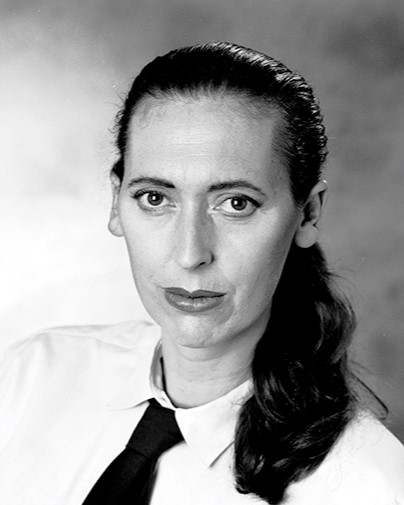
Dela Maria (Marja) Vaags was born on 29 December 1956 in Aalten. As a child, she lived at Bredevoortsestraatweg 105. She later achieved national fame as an actress, primarily for her role as Regina Jongschaap in the drama series Vrouwenvleugel. In 1994, the series won the Gouden Televizier-Ring (Golden Televizier Ring) for best television programme.
Vaags graduated from the Academy for Expression through Word and Gesture (Academie voor Expressie door Woord en Gebaar) in 1981. Following these studies, she took private lessons with tutors including Ton Lutz, Shireen Strooker, Hans Hoes, Rudolf Lucieer, Warren Robertson, and Ad van Kempen. After her training, she co-founded the theatre group Dames & Heren alongside Martine van Os and others.
Furthermore, she had guest roles in Goede tijden, slechte tijden and Medisch Centrum West, and appeared, among other projects, in several of the Sinterklaas films by Martijn van Nellestijn. In addition, she performed for a season with John Lanting’s Theater van de Lach. Her other stage credits included Edward Albee’s The Zoo Story with Stichting de Verwarring, and the play De Overgang with Stichting de Nel.
In 2007, Vaags was diagnosed with cervical cancer. Four years later, on 29 July 2011, she passed away at the age of 54 in her hometown of Amsterdam due to the complications of this illness. She was survived by a son.
Anthonius Julius Hendrikus (Ton) Kötter was born on November 9, 1906, in Aalten, at number 184a (Hogestraat). Two years after his birth, the family moved to Groesbeek. On May 23, 1929, Kötter married Tobina Anna Maria van Spreeken (Rotterdam, October 11, 1896) in Ubbergen.
When he was twelve years old, he received private trumpet lessons. At the age of 14, he took violin and trumpet lessons at the music school in Nijmegen. He subsequently studied music theory and composition privately. He became a member of the Marinierskapel der Koninklijke Marine as a trumpeter. At the Hochschule für Musik in Berlin, he studied composition and orchestral conducting under Professor Freidenberg and Wilhelm Furtwängler.
After World War II, Kotter became the conductor of various concert and fanfare bands, including the Police Band in Nijmegen. In 1948, he became the conductor for several orchestras in the Tilburg area, including the well-known Koninklijke Harmonie “Sophia’s Vereeniging” in Loon op Zand, and from 1950 to 1965, the Andels Fanfare Corps, Andel. He later conducted Soli Deo Gloria in Enschede. In 1965, he became a lecturer at the Conservatorium Enschede. From 1967 to 1977, he served as the conductor of Excelsior Eibergen.
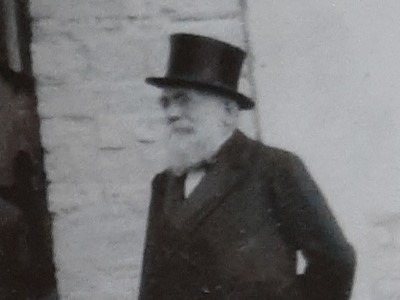
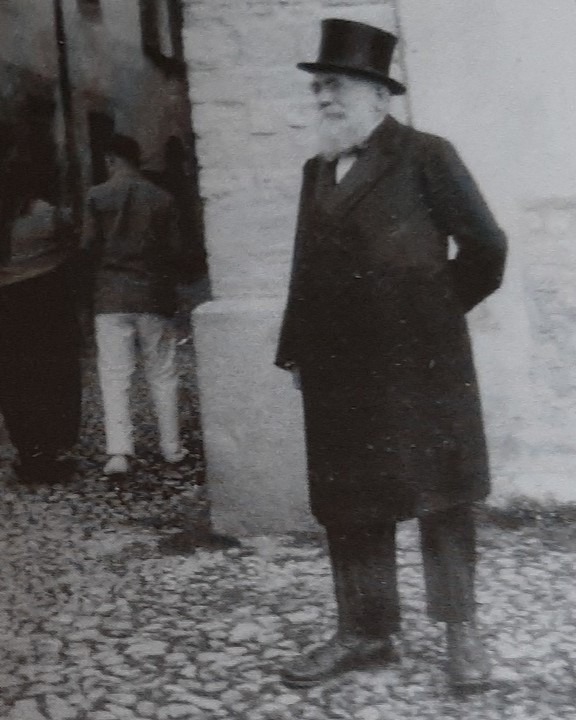
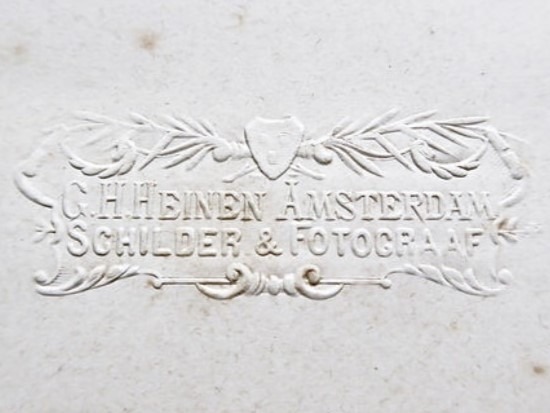
Gerrit Hendrik Heinen (Aalten, 01-08-1851 – Aalten, 26-09-1930) was born on Varsseveldsestraat in Aalten. His parents were Jan Willem Heinen and Antonetta Piepers.
At the age of nineteen, Gerrit Hendrik left for Warnsveld, returning to Aalten a year later in 1871. In 1877, he left once again—this time for Rotterdam, to learn the trade of house painting and decorating. Two years later, he ended up in Amsterdam. There, he started a painting business and, within a few years, employed more than a hundred journeymen.
Heinen received commissions for wall and ceiling murals, including for the Doelen Hotel and Central Station in Amsterdam, and the railway stations in Enschede and Antwerp.
Schiller
Heinen “made it”, so to speak, and invested in real estate. Hotel-Café Schiller on Rembrandtplein was the go-to meeting place for the property trade, and Heinen was consequently a frequent face there.
At the time, Gerrit Jan Prins from Aalten—who would later own the café on Prinsenstraat—also worked there. Through Heinen’s mediation, the official opening of ‘Sociëteit Schiller Prins’ was celebrated on 1 April 1901, attended by Mr Schiller from Amsterdam. In 1902, Heinen gifted four murals, which together depicted the four seasons, for Schiller’s newly built conservatory.
Heinen continued to visit Aalten often. He was a bon vivant, a city dweller, and naturally an artist in the decorative arts. He dreamed of turning Aalten into an art destination and donated several works to the local museum (Oudheidkamer). However, the crowds of people failed to materialise.
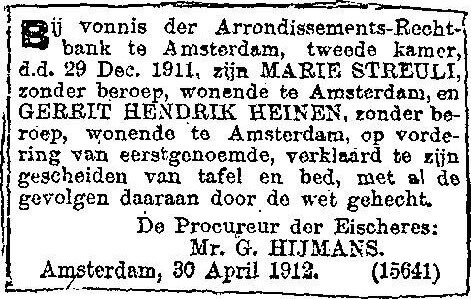
On one of his travels abroad, Heinen met the Swiss Marie Streuli. He married her in 1880, and together they had nine children. They lived on Keizersgracht. Gerrit Hendrik Heinen was the father of, among others, Marie Heinen, who became the director of the Nationaal Bureau voor Vrouwenarbeid (National Bureau for Women’s Labour). Gerrit Heinen and Marie Streuli divorced in 1911.
Photography
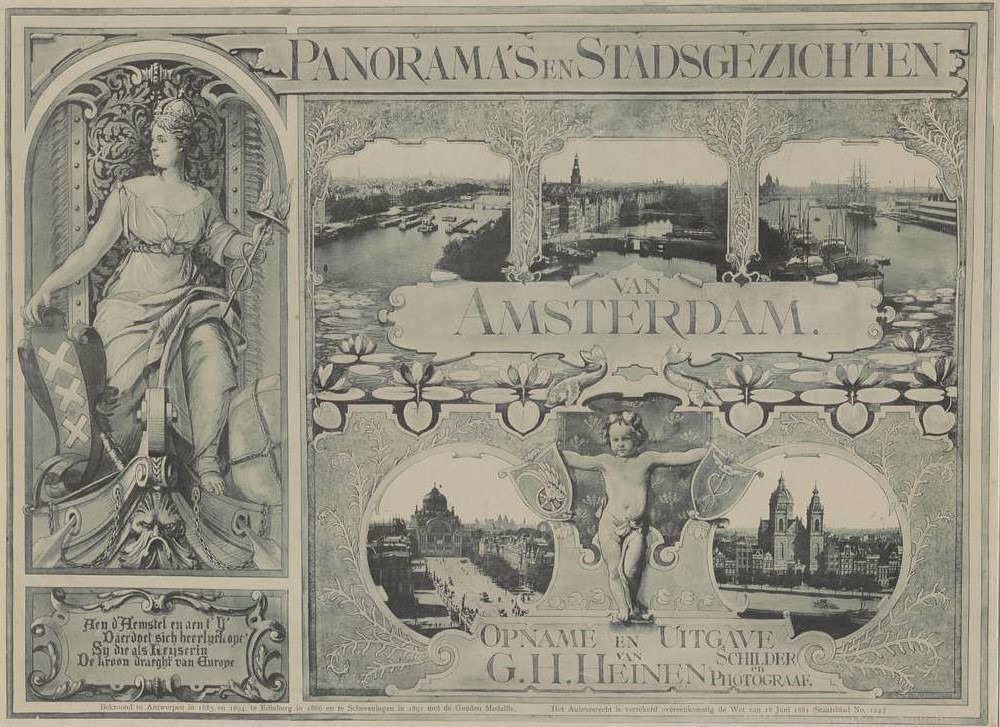
In 1894, Heinen took a series of photographs of Amsterdam, which he published independently under the title ‘Panoramas and Cityscapes of Amsterdam’, featuring 26 prints. For his photography, he chose high vantage points, such as the Rijksmuseum, Central Station, the Paleis voor Volksvlijt (Palace of Popular Industry), and the Doelen Hotel, as well as the Nieuweramstel water tower and the attics of ordinary residential houses. Murals painted by Heinen can still be seen inside Amsterdam Central Station today.
Heinen earned so much money as an entrepreneur that he was able to retire in 1913. He did, however, continue to paint bas-reliefs. He spent the final years of his life in Italy, where he met Pietro Armati, an Italian painter whom he brought to Aalten and helped secure commissions.
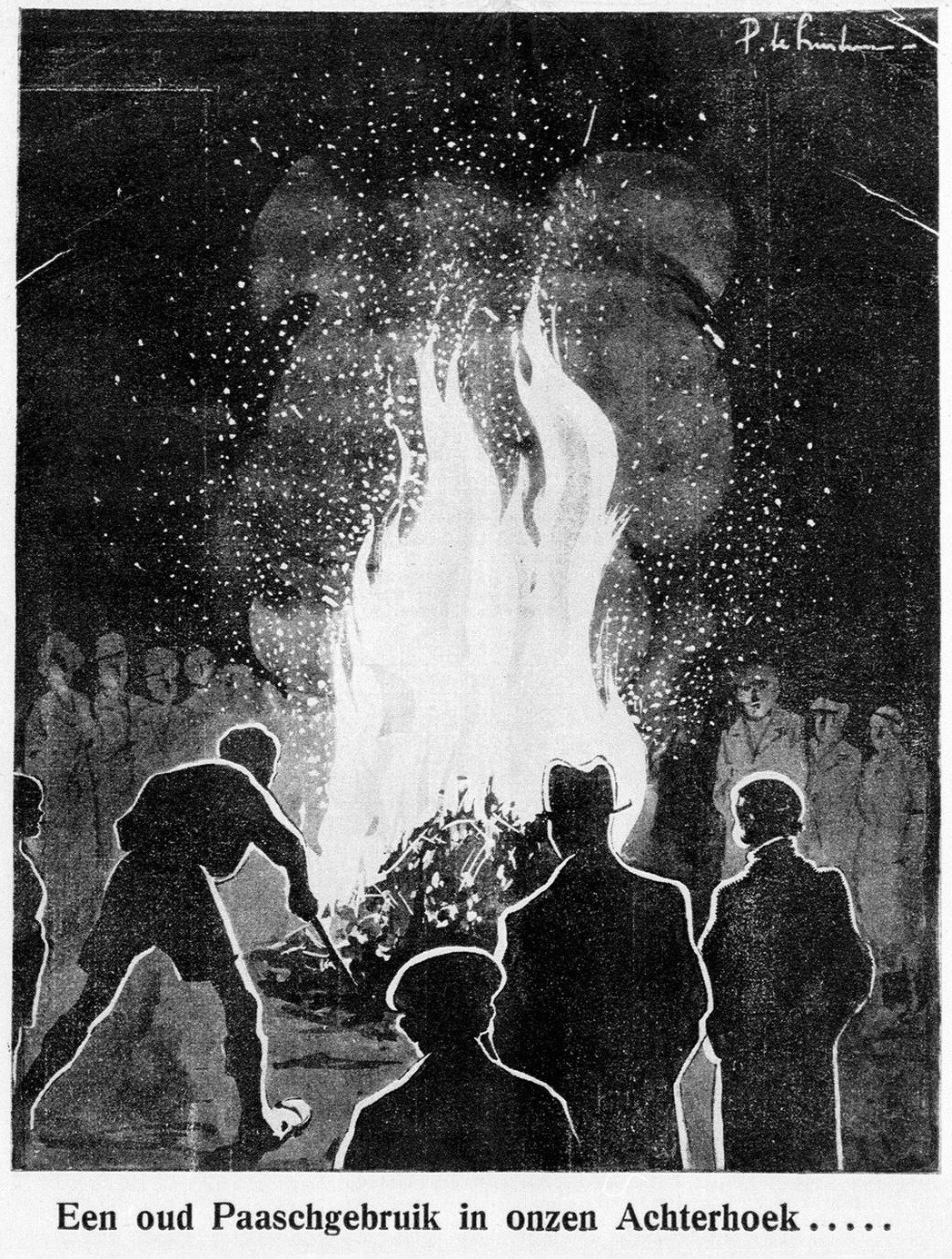
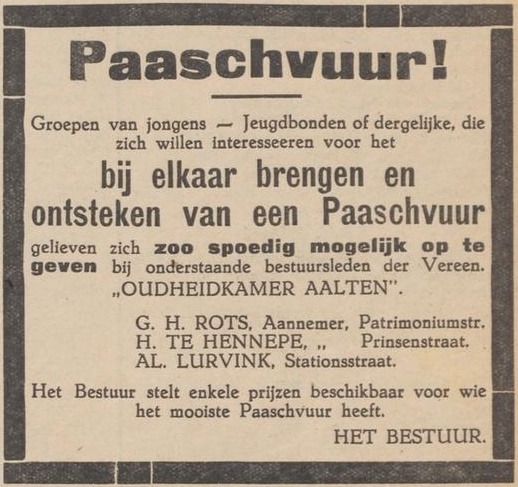
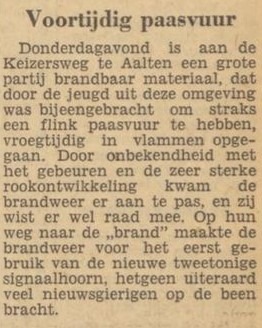
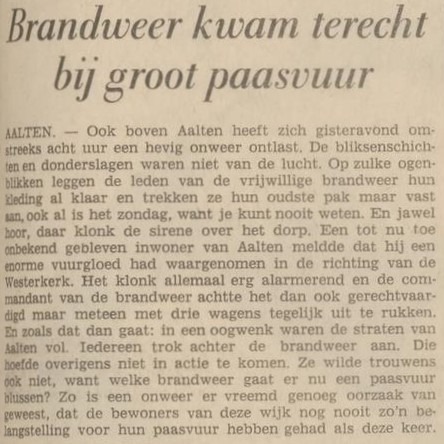
An Easter bonfire is a type of bonfire lit during Easter in parts of Europe. For this purpose, wood is collected and placed in a large pile, which is sometimes dozens of meters high. As darkness falls, the entire stack is set ablaze.
The spectacle often attracts many spectators and is usually a true community event. Originally, it was a Germanic festival dedicated to Ostara, the goddess of spring. After Christianization, the tradition was given a Christian interpretation.
Easter bonfire, illustration from 1934 by Piet te Lintum
Easter Bonfire in Aalten
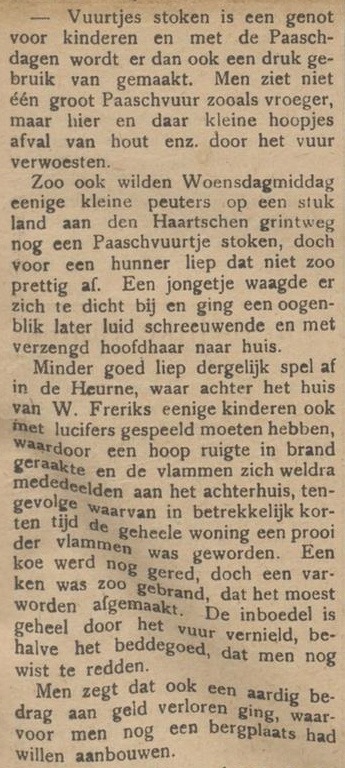
G.H. Rots described the Aalten Easter bonfire tradition in 1937 as follows:
“Every spring as Easter approached, the boys from a ‘rot‘ (= district/neighborhood) gathered to discuss plans for the ‘Easter fire.’ They appointed a board, in which the treasurer in particular played a significant role.
They went from house to house to ask if people had anything left for the Easter fire. Those who had no wood usually offered a small contribution in hard cash, forming a ‘fund.’ The treasurer had to manage this fund, which could sometimes amount to thirty cents. It occasionally happened that the treasurer used the fund, or part of it, for his own purposes. Then there was trouble brewing. Sometimes heavy fighting broke out, and mutual quarrels were the order of the day.
But the end of the story was always: there was an Easter fire. Every district had such a fire, and it was all about who had the largest one. It was not uncommon for one group of boys to head out late at night to hijack wood from another group and supplement their own supply with it.
The fire was lit on Easter Sunday. In the middle was a pole, above which a tar barrel was hung, causing the fire to flare up high. And so, one could see several fires burning around Aalten, a spectacle that had numerous onlookers.”
Palm Sunday
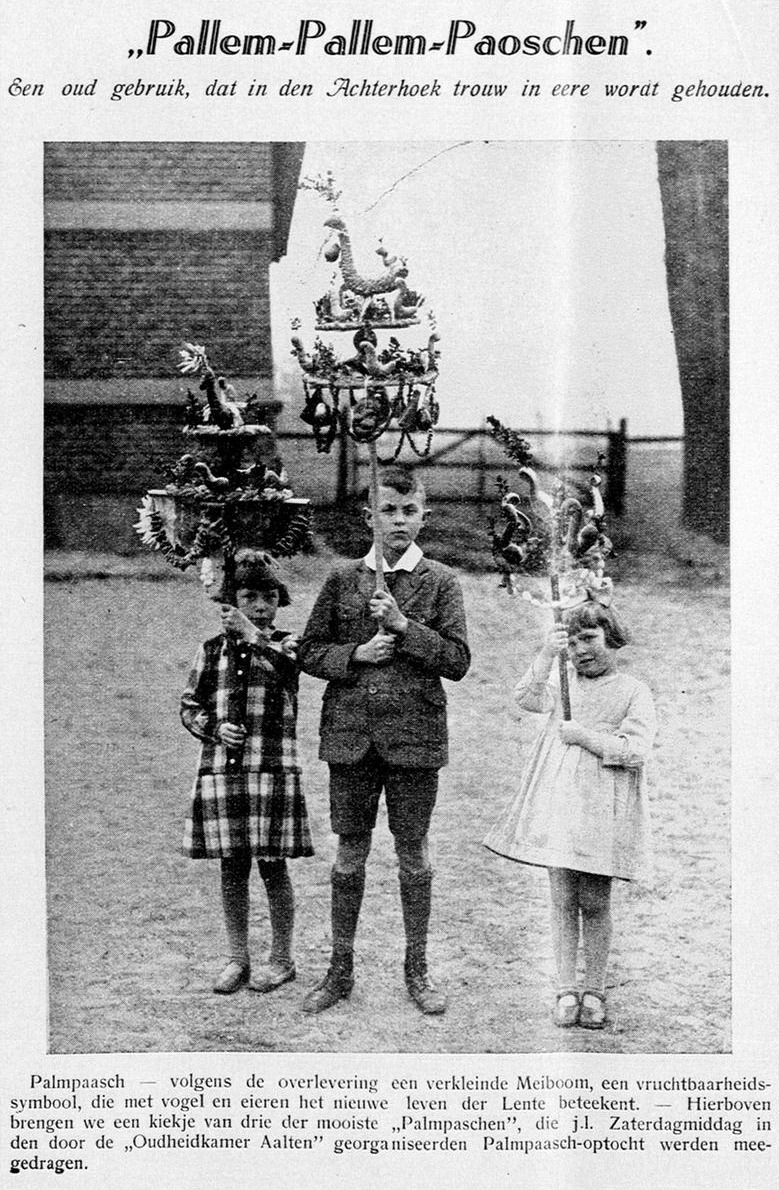
“Egg throwing was still frequently done by small children in the morning. If they wanted them to be a beautiful brown color, they were boiled in chicory porridge. On Palm Sunday, one could see the children walking with beautifully decorated pine branches, so-called ‘palmpaschen,’ while the children sang Palm Sunday songs, including this one:
Eikorij, eikorij, When it is one more Sunday, we get an Easter egg. One egg is no egg. Two eggs is an Easter egg.
These types of songs were sometimes supplemented in other municipalities. These songs are mentioned in folkloric contributions regarding Easter customs.”
Aaltensche Courant, 6 April 1907Aaltensche Courant, 9 April 1935Dagblad Tubantia, 15 April 1960Dagblad Tubantia, 12 April 1966De Graafschapbode, 15 April 1930
In the east of the Netherlands, the concept of naoberschap is widely known. This phenomenon, also referred to as neighborly duty or neighborly aid, refers to the tradition in which neighbors support one another during both joyful and sorrowful events.
In 1874, J. ter Gouw, with the cooperation of E.F. Avenarius, a teacher in Lintelo, and Is. de Waal, a former minister in Aalten, described the customs and duties of the naoberschap as they were common in Aalten at that time.1 The article is presented below.
N.B. In the original article, naoberschap is spelled with oa. Because we are Old Aalten and the article concerns Aalten, we have chosen to adapt this term to the WALD spelling, thus using ao.2
“Although these customs are still in vogue in the municipality of Aalten, they nevertheless belong to the olden days. They are remnants of ancestral morals, mere fragments that still live on there, but which may also disappear after only a few years.“
New Construction
‘Foezel’ as thanks for the (naober) help
When building a new home, the future resident visits eight or twelve of the nearest neighbors and asks them if they wish to be his “naober.” This is usually accepted, as a refusal is considered an insult, and terminating the naoberschap also signifies the breaking off of all mutual social interaction.
Mutual obligations rest upon the naobers. For instance, every naober is obliged to help erect the wooden frames and the roof free of charge when a house is being built. In the evening, the naober youth then place the May trees (a few pines) in front of the house, for which the owner must treat them.
This is followed by a so-called “rigtemaal” (topping out meal) for the naobers, who also take this opportunity to give the new building a name, by which name the resident is subsequently called, and often better known than by his family name.
Before the new home is occupied, the naober women, or their daughters or servants, arrive with baskets full of peat and wood to “aan te bueten” the fire, which is to say: to light it. And if the new resident is among the needy, his more affluent naobers often bring him such a large quantity of fuel that he can provide for his hearth for several months.
J. ter Gouw
Marriage
When a young man or young woman is to enter into marriage, the other young people from the naoberschap go to the residents with whom the newlyweds will take up residence, before the second marriage banns take place, and ask the bridegroom or the bride if they may “make it beautiful.” This beautification consists of planting four tall pine trees in front of the door, which are interconnected with arches, wound with palm, and adorned with small flags of colored paper; while in the center a crown is hung, wound with cut paper and decorated with gilded eggs. Inside this crown hangs a wooden dove, as the symbol of love, which is neatly covered with gold paper.
These wedding crowns are held in high honor and preserved for as long as possible. At many farms, one can still see the crowns that were hung at their grandfathers’ weddings.
The fetching of the bridegroom or the bride to bring them to their destined home is also performed by the naober youth. The wagon is decorated with greenery and often drawn by four horses; the girls from the naoberschap take their places upon it, and while singing or rather shouting out: “To Austria we wish to sail, almost across the heath, etc.”, they set off on their way.
If it is a bridegroom fetching his bride, he sits at the front of the wagon smoking a long Gouda pipe — if possible a steel pipe, decorated by his naober girls with red, white, and blue silk ribbon. Now, that is of course long out of fashion; bridegrooms now smoke cigars or do not smoke at all. But in the time of pipes, a bridegroom had to smoke. I have seen some who actually belonged to the non-smokers, and yet sat with the bridegroom’s pipe between their teeth during the ‘bride’s tears’ and at the wedding, and had to pack and light it every now and then.
Upon arriving at the bride’s home, a bouquet of colored and gilded paper is fastened to the left side of his hat, so that many would take him for a coachman with a cockade on his hat. The bride receives a similar bouquet on the left side of her chest.
Achterhoek peasant wedding; they dance the ‘Driekusman‘
Once some bread and coffee have been consumed, the bride is led to the wagon by a naober boy and the bridegroom by a naober girl, while the other naober boys fetch the “bride’s cow” from the stable and lead it behind the wagon. If the bride’s parents are well-to-do people, the naober boys take the liberty of also bringing some sausage, bacon, meat, chickens, and more of that nature for the newlyweds.
Often, the bride’s cupboard, well-stocked with rolls of linen, napkins, and table linens, along with eight or twelve chairs, a spinning wheel, and a reel, has already been brought to the future home the day before.
When the bridal wagon has arrived there, the naober youth spend not only the evening but also a large part of the night drinking “foesel” (gin) and shouting out all kinds of songs, for one cannot call it singing, and finally return to their homes to pay for the frequent use of that “plague drink,” as some call it, with headaches and listlessness the following day.
Sometimes the wedding or “broedlagt” follows weeks, even months later, or is combined with the ‘kinderbier’ (child-beer) of the first offspring.
J. ter Gouw
Death
In the event of a death, the obligations of the naobers are even more numerous. As soon as someone dies in a household, one of the nearest naobers is notified, if none are present, and he immediately goes around the entire naoberschap; thereafter, the naobers go together to the house of the deceased to “verhennekleeden” the dead, which is: to remove their clothes and shroud them in the burial garment.
The next day, the passing of the deceased is tolled, and the naobers must announce the death to the family, even up to a distance of five hours away. In the evening, two or three naobers bring the coffin and place the body inside. If the deceased died of a contagious disease, or if the unpleasant odor already indicates decomposition, he is given a glass of “plague drink.” But this is then also the only gin used in a house of mourning.
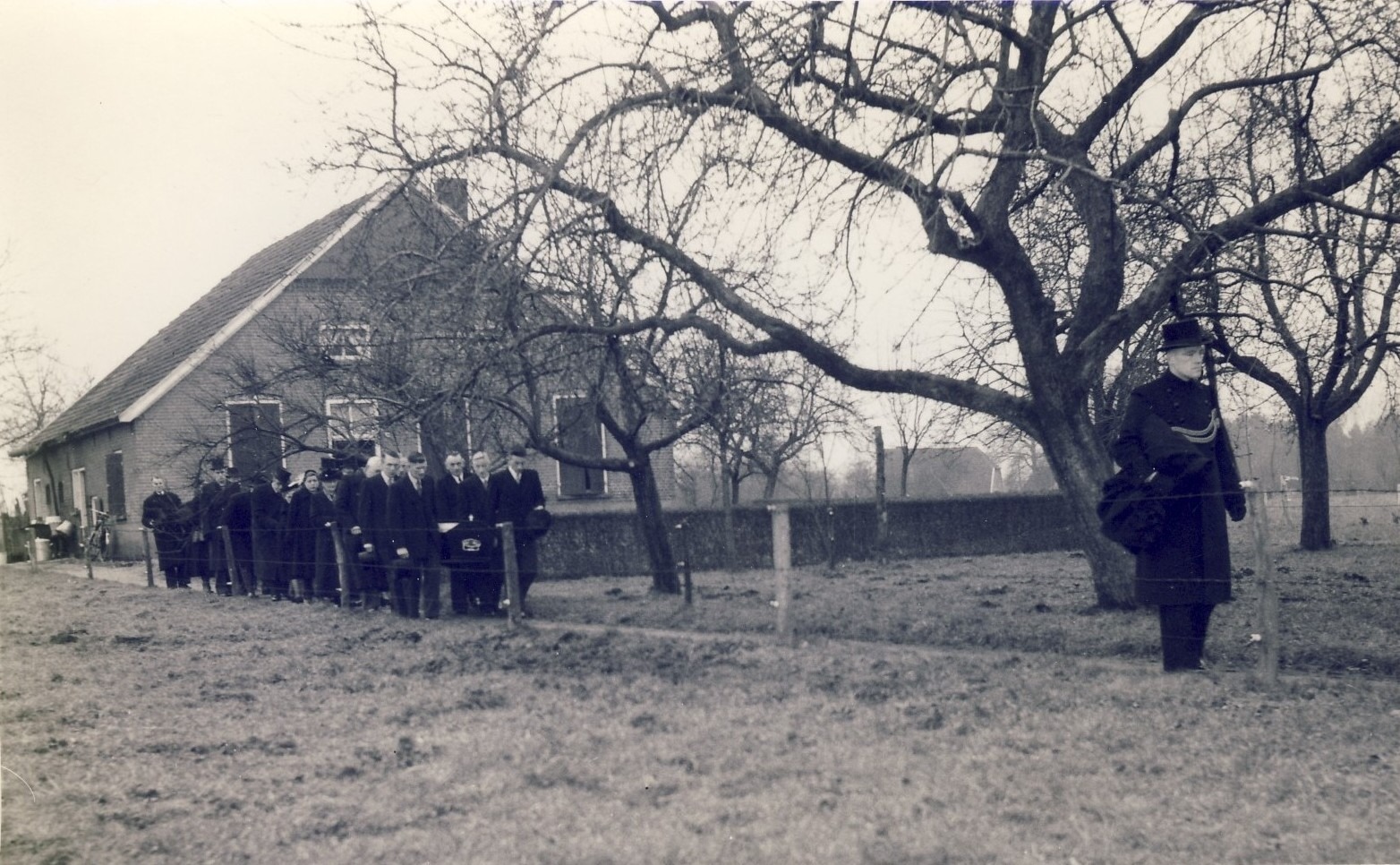
Funeral of Gerhard Aalbers, 1954. Departure from ‘t Slat in IJzerlo. From right to left: 1 gravedigger Rensink; 2 Gerrit Hengeveld of de Smit; 3 Herman Lammers of Lurvink; 4 Bernard Nijman of de Scheel; 5 ?; 6 Johan Lammers of ‘t Nije Loo; 7 Johan Kraaijenbrink of de Wikker; 8 Hendrik van Eerden; 9 mother Betje; 10 Annie; 13 Derk H.; 12 ?; 14 Derk W.; 15 ?
From the time of death until the funeral, the naobers manage everything. They must take the grain required for the funeral meal to the mill and provide everything else that is needed. The naober women must sift the flour and bake bread, and because of this, there is a bustle in the house of mourning that is bothersome to the relatives, who would prefer to be alone with their beloved dead. One can form an idea of that bustle when one knows that more than a hundred households may be invited to a funeral or ‘groeve’.
(This was the case with one of my farmers, who was quite well-to-do but still had only a small farm, when there was a ‘groeve’ at the house upon the death of his elderly mother. On that occasion, four mud of rye were baked, yielding 75 loaves of bread, and since the bread was intended for four people, they had counted on three hundred eaters. Furthermore, the following was purchased: one full Leiden cheese and one nearly full, together 33 old pounds; twelve old pounds of coffee, and 1.25 old pounds of white sugar lumps. A barrel of beer was ordered from the brewer, which they expected would not be sufficient. The bell-ringers drank three guilders’ worth of gin.)
On the day of the funeral, at ten o’clock in the morning, the body is placed on “den deel” (the threshing floor), and the coffin is opened far enough so that the face of the dead is visible. The naober women now pour coffee and present bread to the guests, while that naober woman whose husband must drive the body to the cemetery has the privilege of serving the immediate family, and thus every naober woman has her specific task according to her rank and status.
After all the guests, which include the naobers and the residents of het rot (the district), have satisfied themselves with bread and coffee, everyone goes to the threshing floor to see the deceased for the last time. If a minister is present, he gives a speech by the open coffin; he seeks to comfort the bereaved, reminds everyone of the memento mori, and concludes with an appropriate prayer.
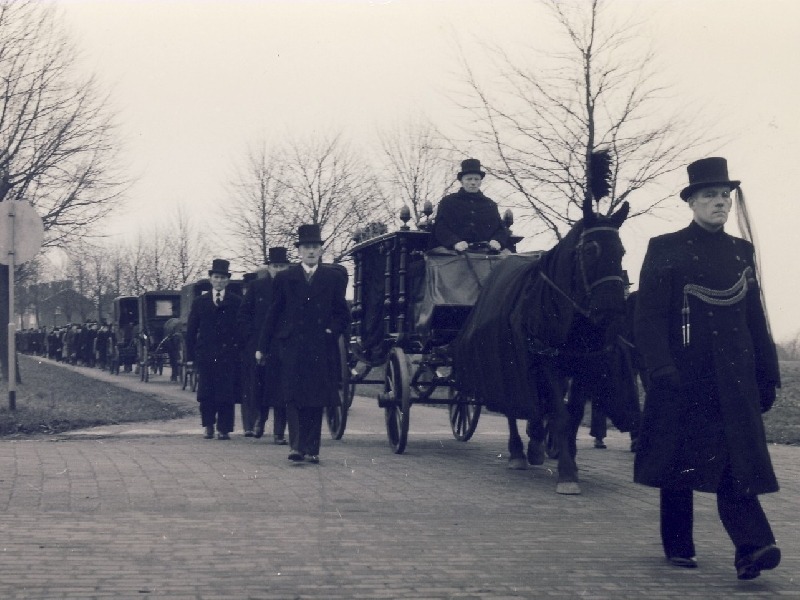
Now the coffin is placed on the back of a wagon, and the two closest relatives of the deceased sit at the foot of the coffin, followed by the next two, and so on until all seats are occupied. The women have a black rain cloak or ‘folie’ hanging over their heads and know how to indicate their relationship to the deceased very precisely by covering themselves entirely or partially with it.
The procession to the grave forms a long, sometimes endless line, as not only the relatives but also the naobers and those belonging to the ‘rot’ follow the body, and moreover, as soon as the funeral procession approaches the village, many from there also join in; so that not infrequently one hundred and fifty men, women, and children take part in that procession.
Funeral procession of Gerhard Aalbers from ‘t Slat in IJzerlo
From the moment the procession comes into view of the village until it has left the cemetery again, all the bells are tolled, and from the grave, they go to the brewer, where a few drink tea, but most drink beer, and the latter in very generous amounts. From the brewer, they return to the house of mourning; here bread and coffee are consumed once more, and the ceremony is concluded.
But the next day, a small after-reflection follows. Already at the crack of dawn, the poor stand at the door (fifty or a hundred sometimes) to be able to carry away “a morsel” from the house of mourning. They are given the not very carefully sifted bran from the consumed rye and the leftover bread.
In the afternoon, the naober women come to the house of mourning once more; they again consume coffee and a sandwich, and thereafter each gathers her borrowed cups, saucers, knives, etc., and departs with the customary: “I wish you the best.”
Lintelo, E.F. Avenarius
In the village
What has been communicated by my friend Avenarius, and to which I have added a few remarks, specifically concerns the naoberschap among the country folk. In the center of the municipality, one has the same theme but with some variation.
Upon moving into a home, an offer soon comes from the naobers who belong to the house (according to a choice once made) to “aan te bueten a fire,” i.e., to light it. This being accepted and the hour determined, the naobers send daughters or maidens (servants) with fuel — “kluwen” or dredged peat from one, wood from the other — and everything is piled up at the empty hearth, as if it were to be set ablaze immediately. If one wishes to make it truly beautiful, a wreath of colored paper is placed over everything. After this “fire-lighting,” a glass of “foesel” (gin) is immediately expected, and if there is something to go with it, all the better; thereafter the naobers themselves are “geneugd” (invited), and consequently, the heads of the families are received for “a cup of coffee” with “kluntje” (sugar lump), currant bread, and finally “foesel with sugar” (gin with sugar).
Also after the conclusion of a wedding and funeral, the naobers are invited in the same manner, and then Jew and Christian, Roman Catholic and non-Roman Catholic, rich and poor, sit together in brotherly friendship; and such an evening leaves pleasant memories behind, while one feels newly inclined to perform for one another all the services that the duties of naoberschap prescribe.
Within the town, funerals are generally not arranged on such a large scale as we have just heard; yet the gathering is sometimes so numerous that the minister, who leads in prayer before the refreshments are consumed, must sometimes place himself between two spacious rooms in order to be heard in both. It even happens that a third room is necessary, where the guests must then make do with a few sounds from a distance.
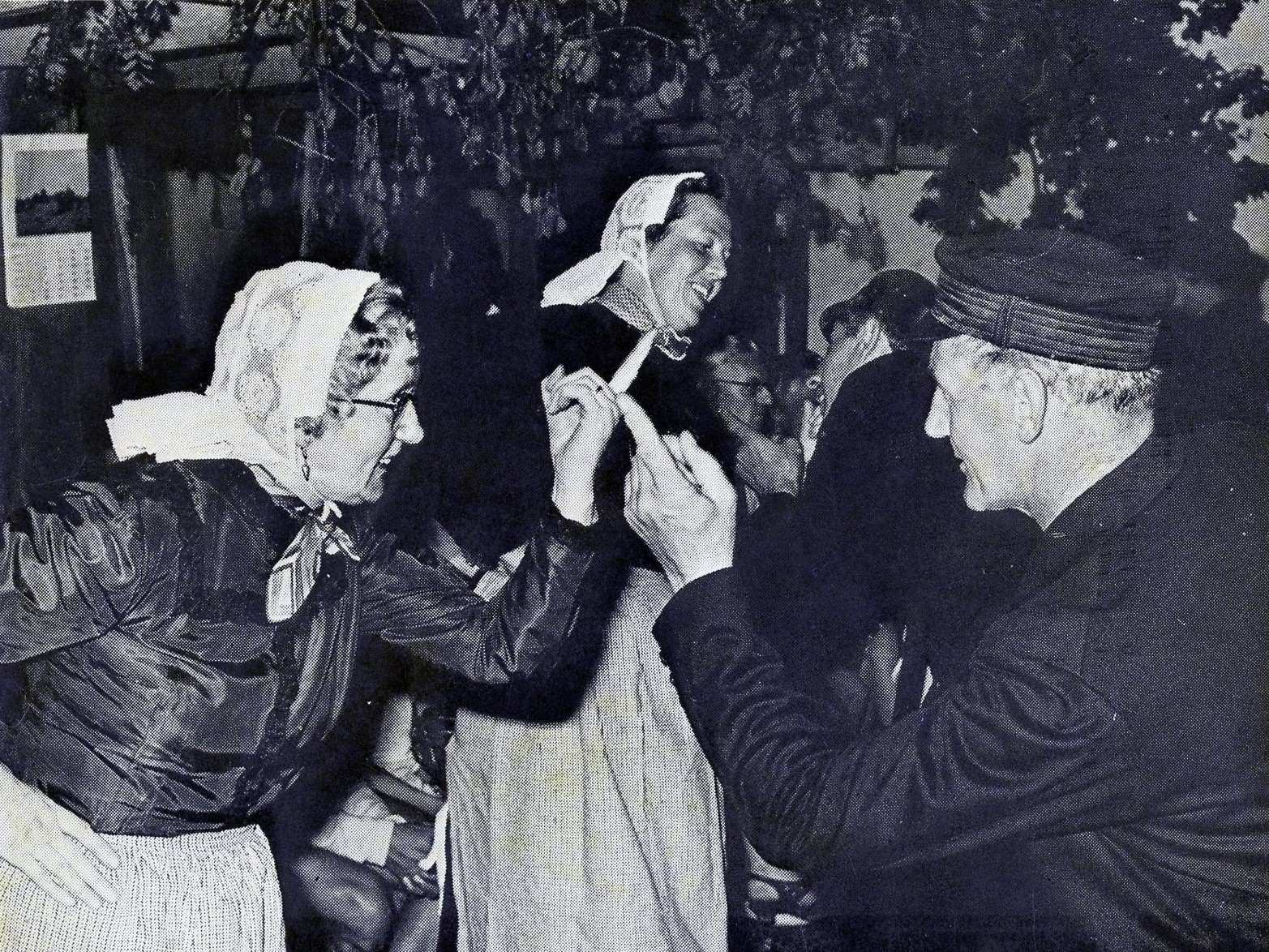
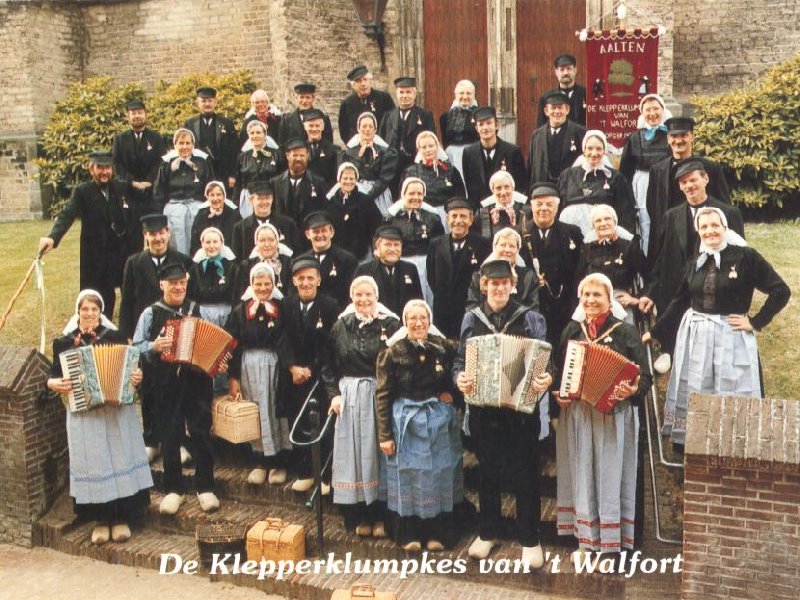
The Klepperklumpkes van ’t Walfort was a folkloristic dance group from Aalten. The group was founded on 10 May 1954 with the objective of preserving Gelderland’s regional folklore for future generations. Members of the group were dressed in authentic Gelderland (Achterhoek) traditional costume, as it was worn around 1900.
The dance repertoire consisted of approximately 35 traditional dances, mostly from the Achterhoek and Twente regions, which also date back to that era. The most well-known dances include the Driekesman, Pot met bonen (Pot of beans), and the Hôksebarger, performed, of course, in polished wooden clogs.
A Welcome Guest
The Klepperklumpkes was an active association. Over the past decades, they performed in various institutions, at street markets, and in many countries. They were a welcome guest at festivals in Belgium, Denmark, Germany, England, France, Austria, Slovakia, Spain, Sweden, and Switzerland, among others. They even performed in China.
During their peak years, the Klepperklumpkes organised a large international festival in Aalten every four years, featuring many foreign guests. These guests were hosted by local families, providing many with a unique introduction to the international dancers and their respective folklore.
In their final years, the dance group rehearsed in the hall of café Setz.
After nearly 70 years, the Klepperklumpkes disbanded in 2022. In their final years, the number of activities had gradually declined; many members were getting older, physical stamina was decreasing, and there was a lack of new members joining.
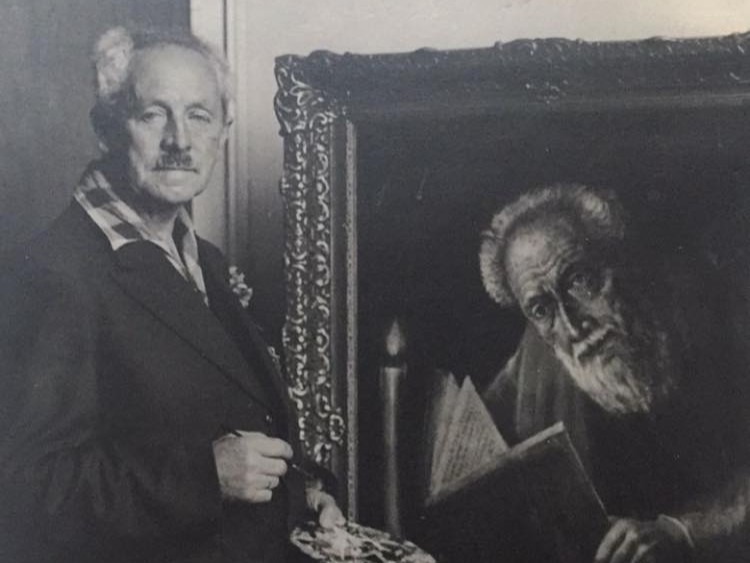
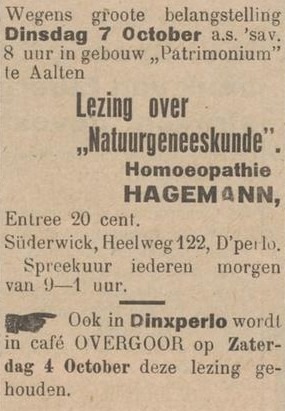
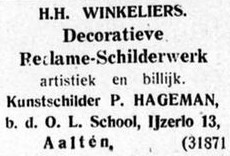
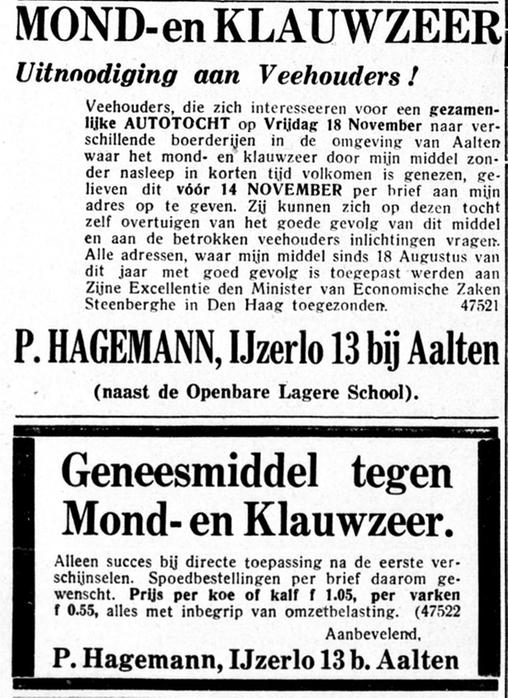
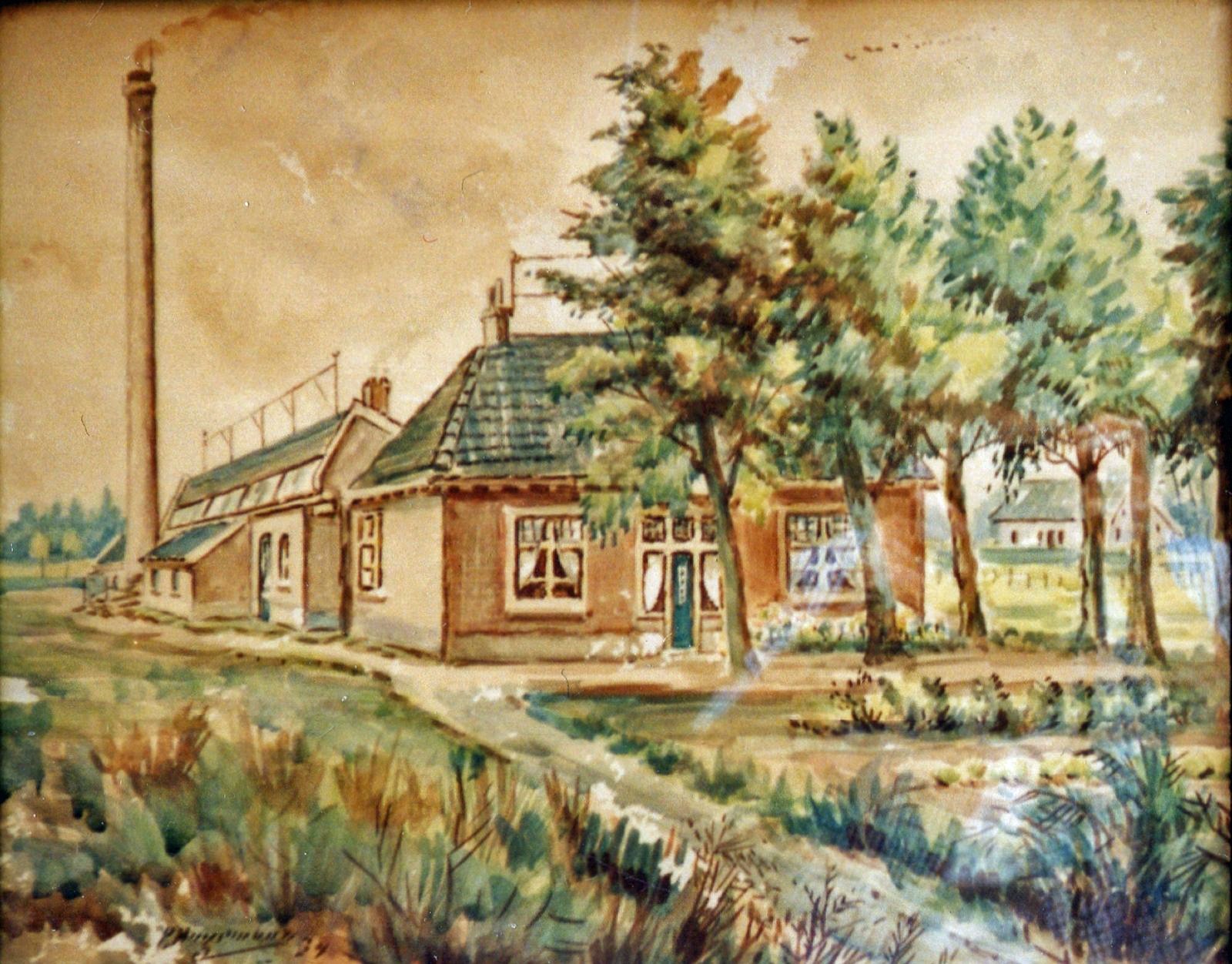
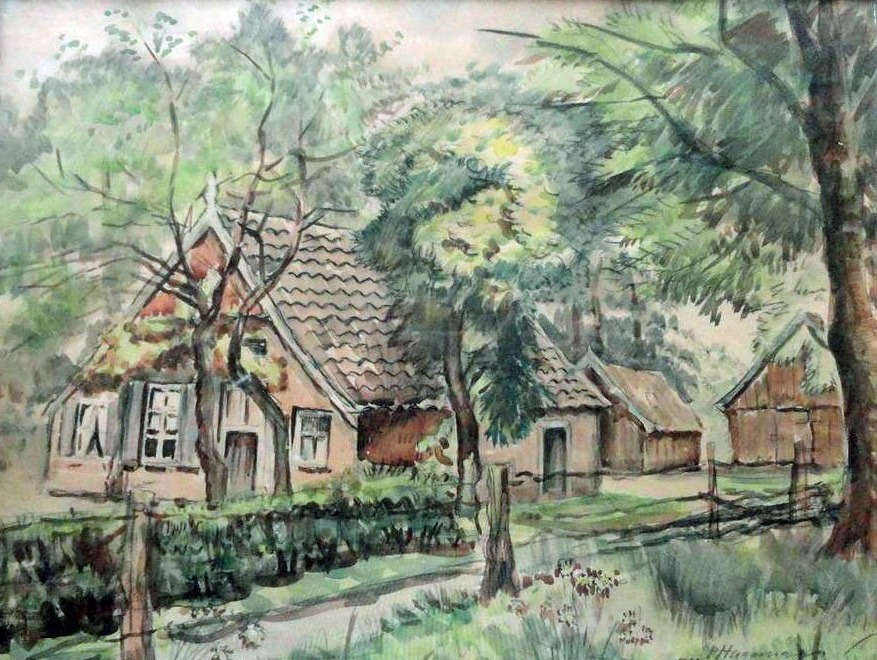
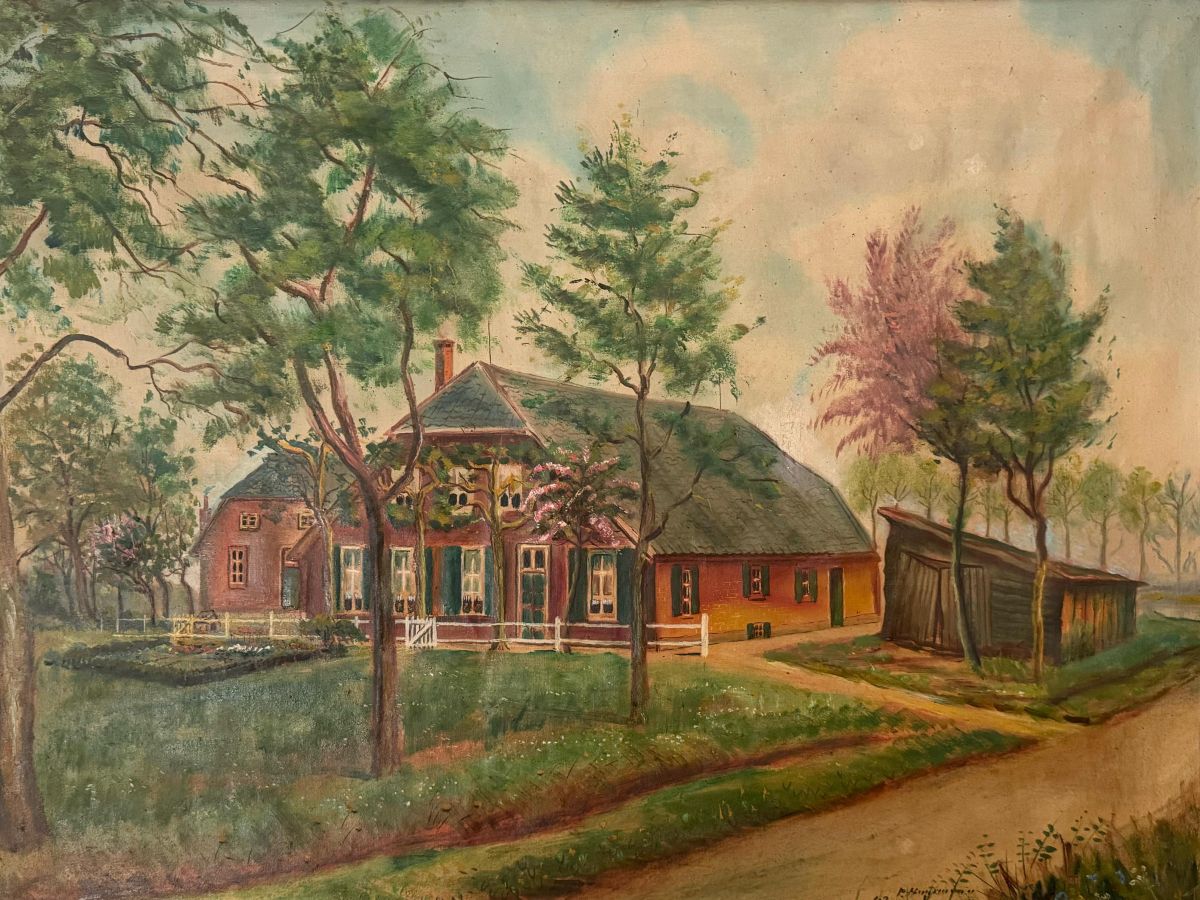
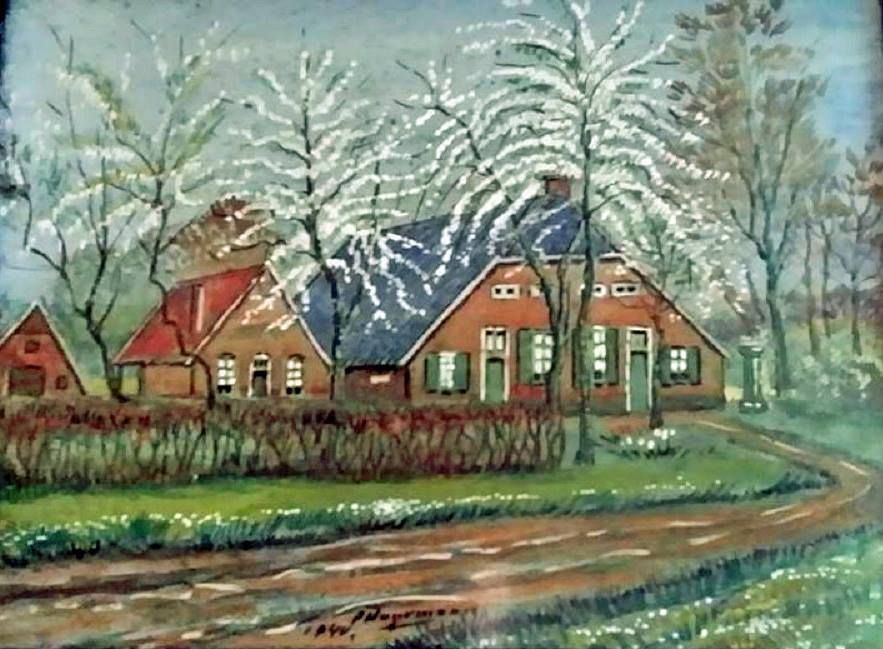
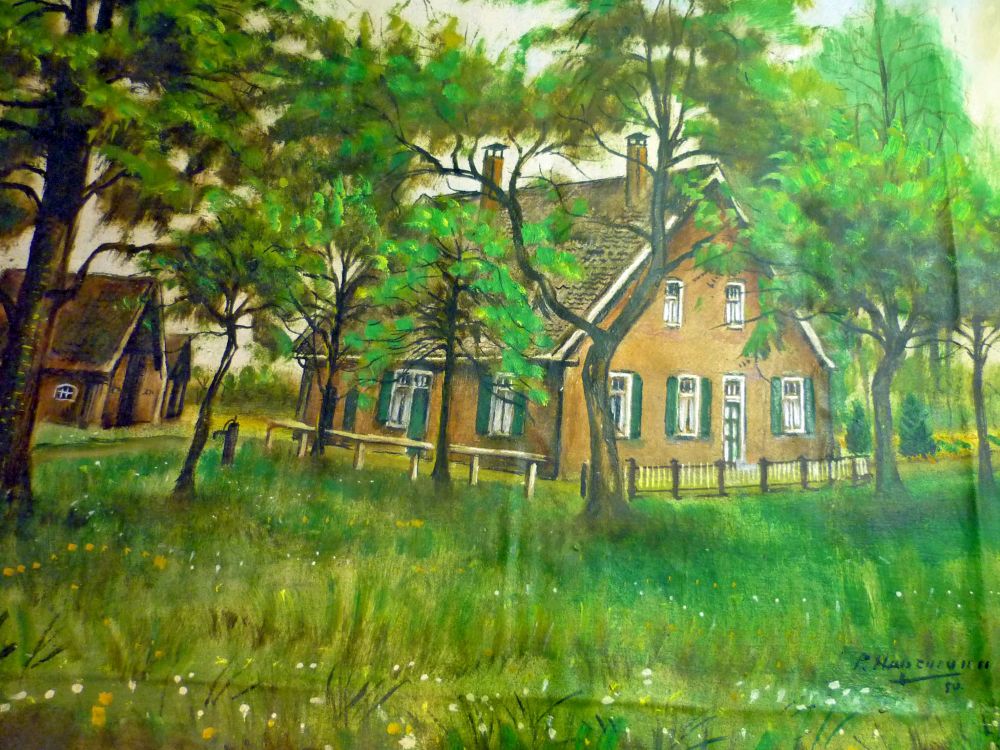
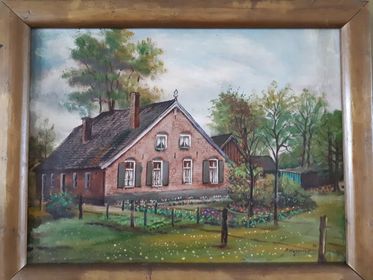
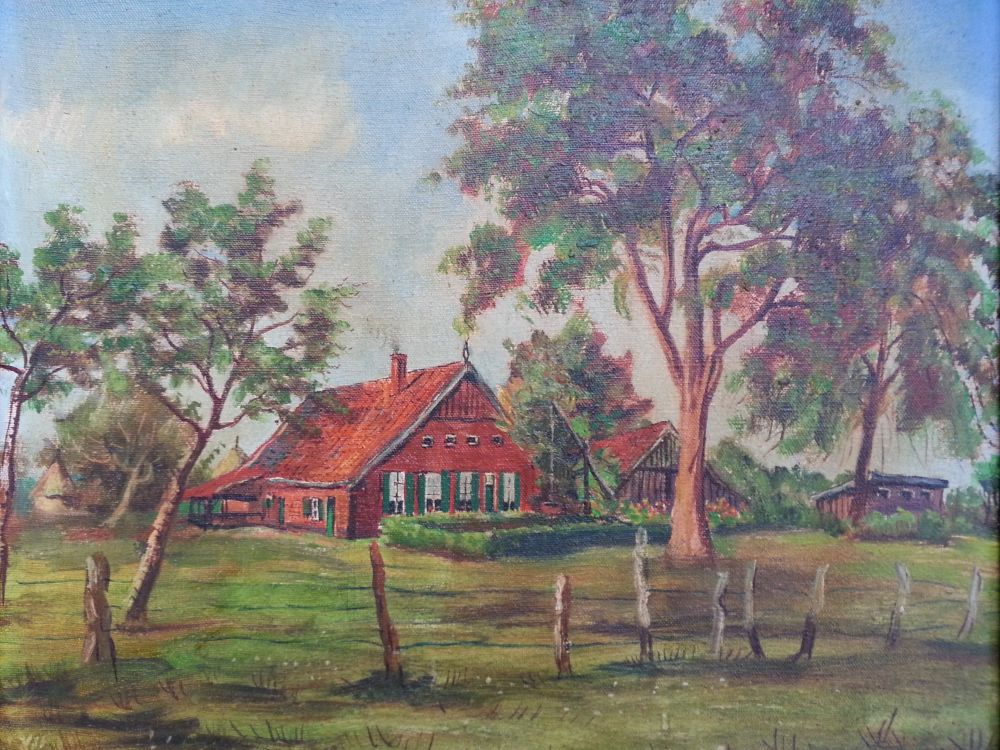
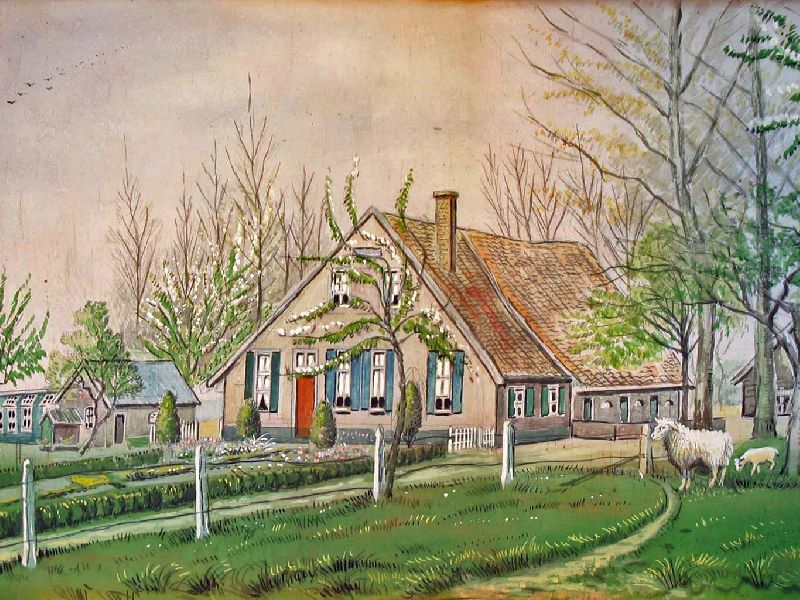
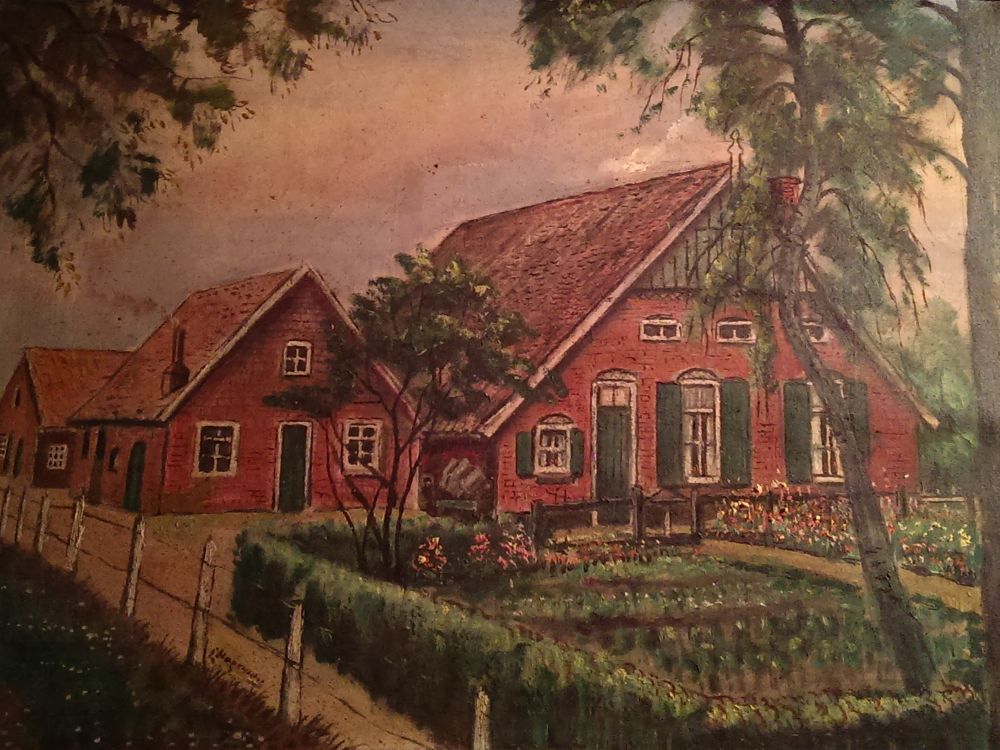
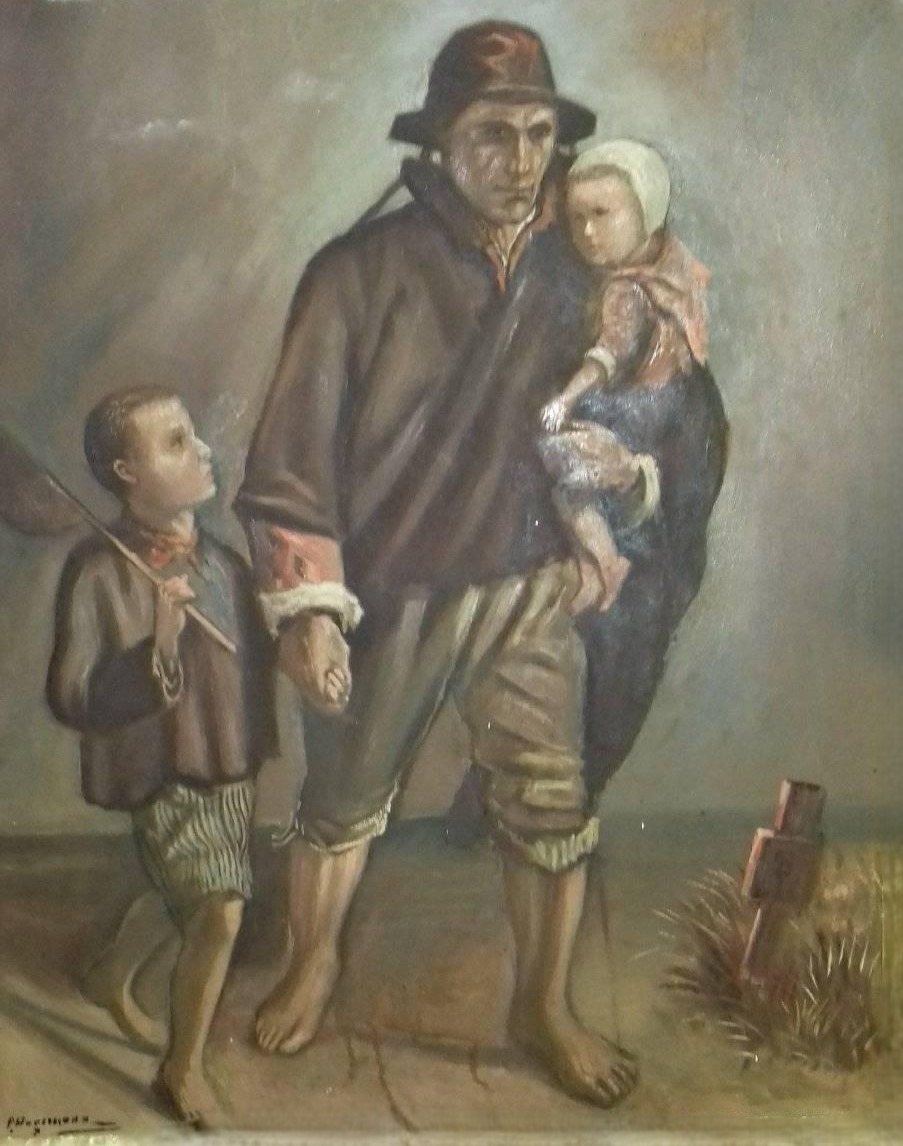
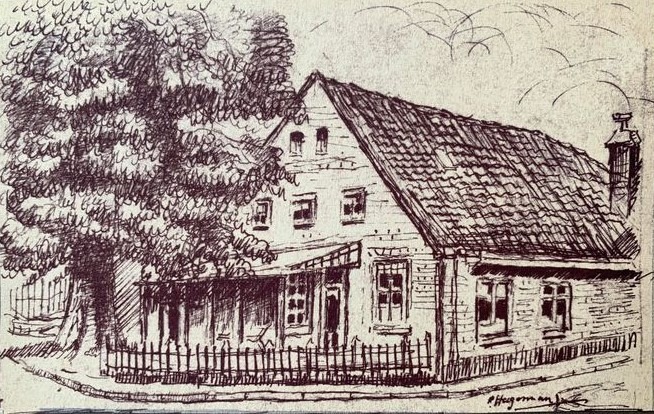
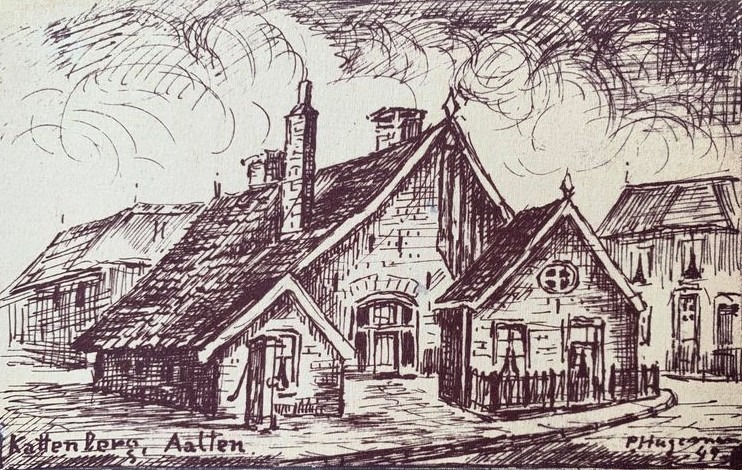
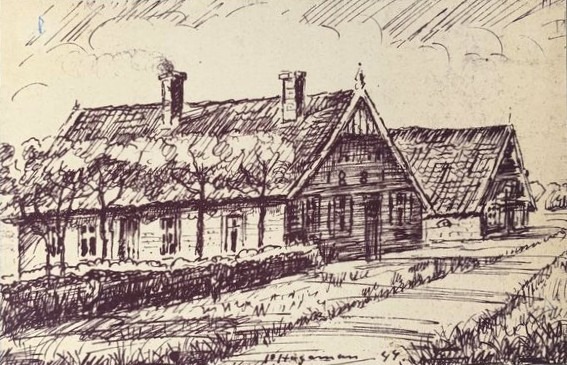
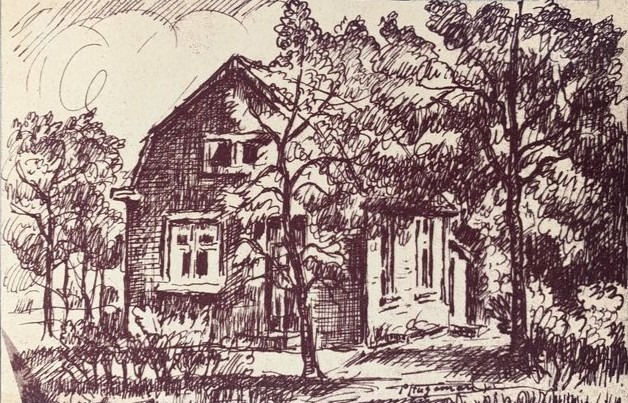
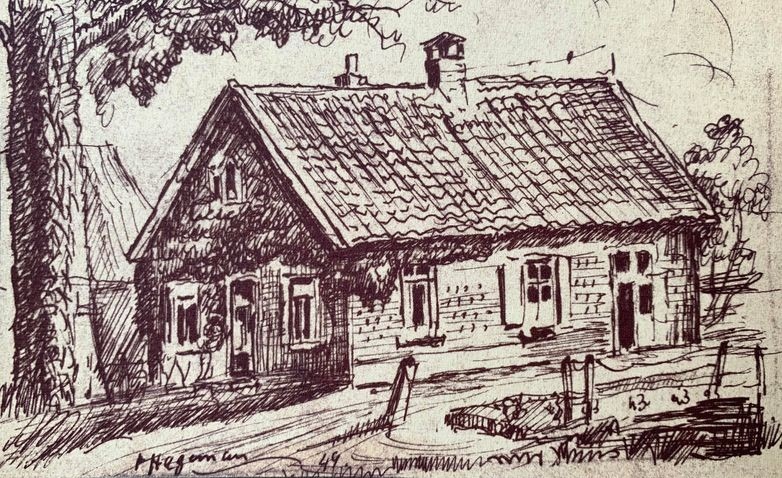
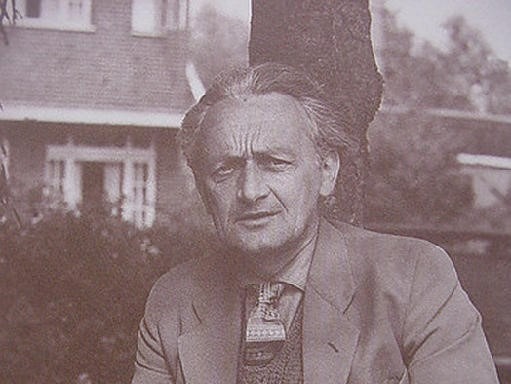
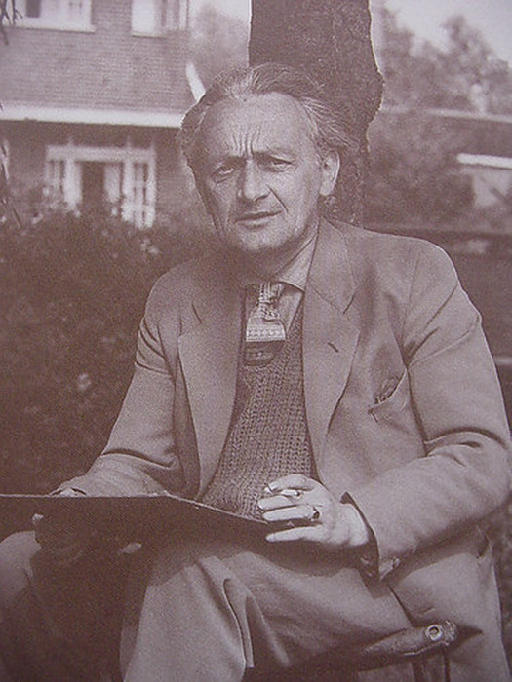
Paul Hagemann (1882–1960) was a German-born artist and naturopath who settled in Aalten around 1926. He worked as a photographer, painter and sketch artist, documenting many of the farms around Aalten. In addition, he practiced amateur naturopathy.
Johannes Paul Hagemann, known as Paul, was born on 3 March 1882 in Münster (Germany). On 15 November 1923, he married Francina Gijsberta (Bep) van Arkel in Amsterdam.
The couple presumably settled in Aalten around 1926. In 1934, they were registered as residents of Bodendijk 19a in Aalten; in 1938, they lived at the address IJzerlo 13b, and by 1945, they were back in the village, at Dijkstraat 5.
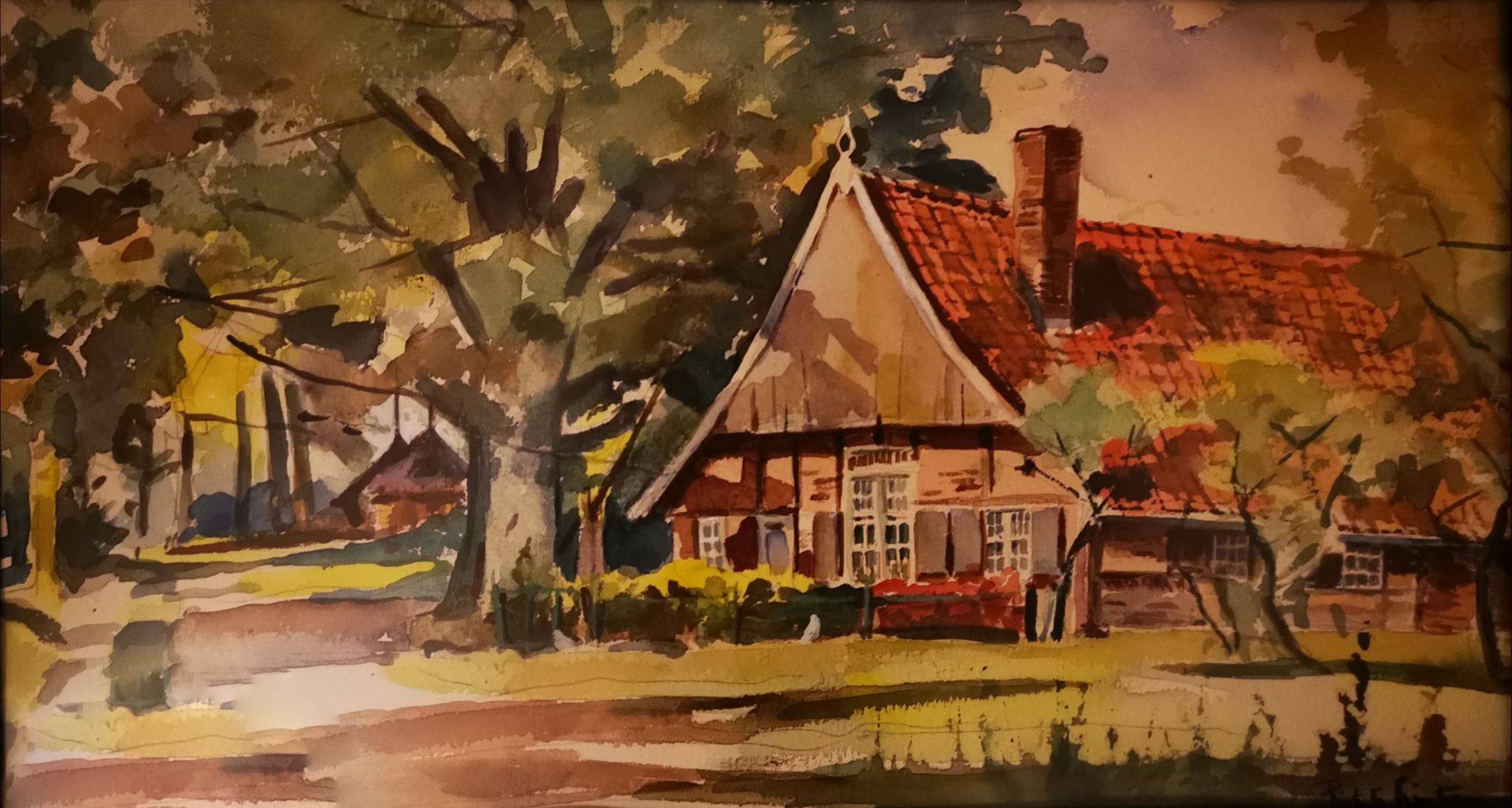
Among other subjects, Hagemann captured many farms and houses in and around Aalten on canvas. Alongside his artistic pursuits, he was also involved in naturopathy. One of his health products consisted of a small box containing metal and some form of electricity.
Paul Hagemann passed away on 8 August 1960. He was buried at the Roman Catholic cemetery on Piet Heinstraat in Aalten.
Johannes Paul HagemannDe Graafschapper, 3 October 1930De Graafschapbode, 9 September 1938De Graafschapbode, 9 November 1938Aaltensche Courant, 23 October 1945
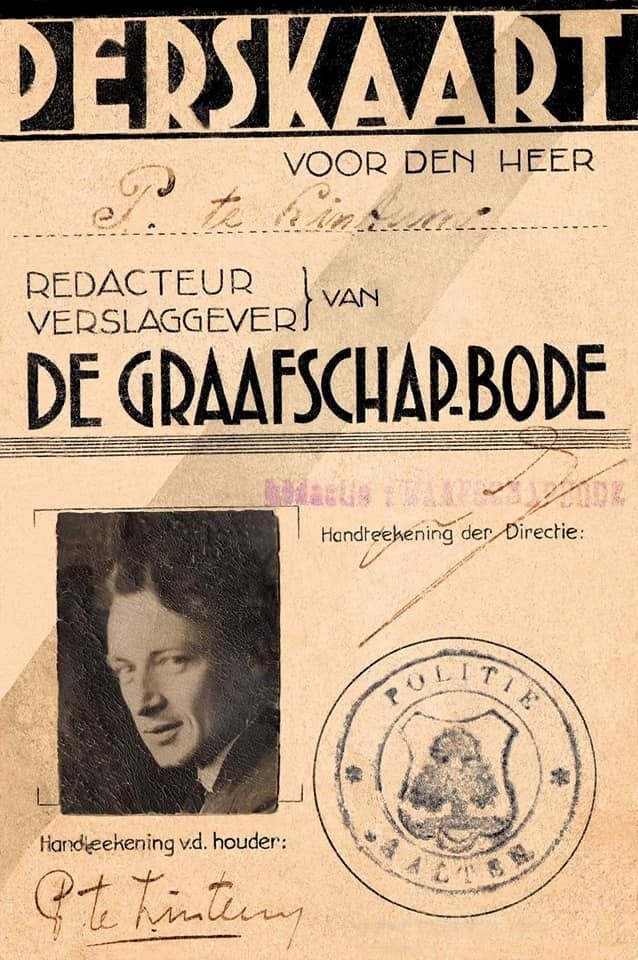
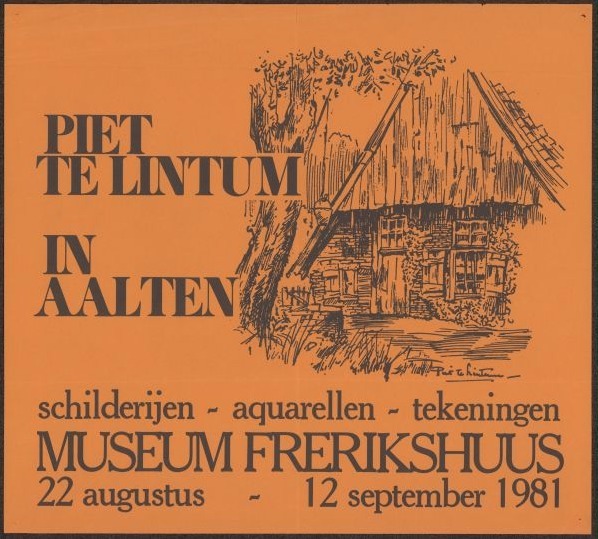
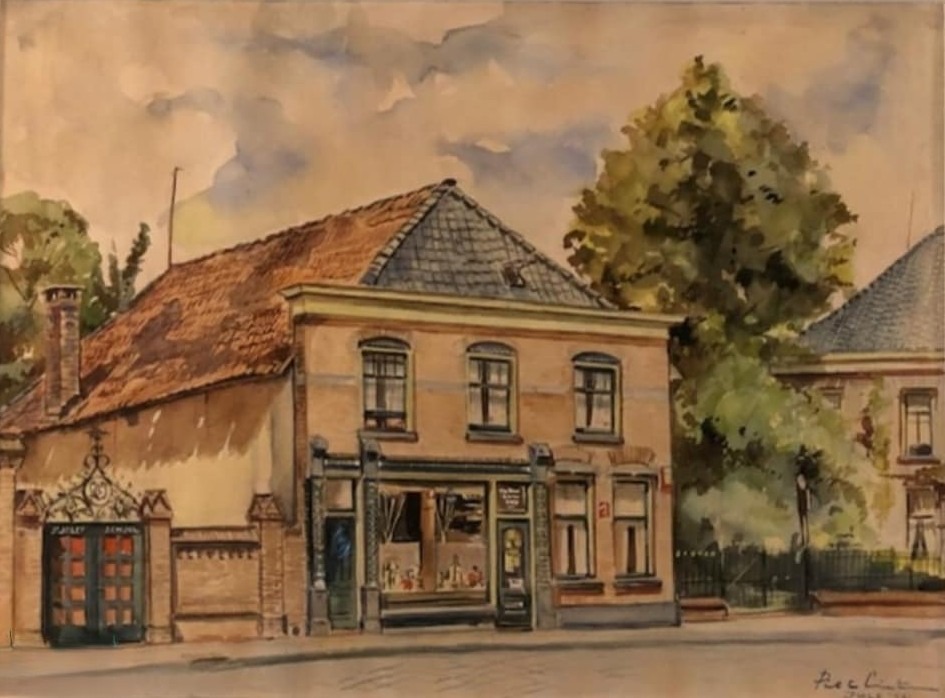
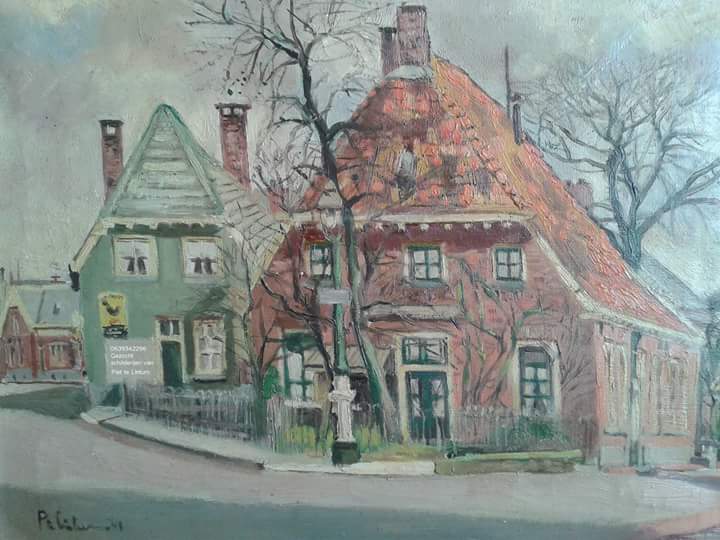
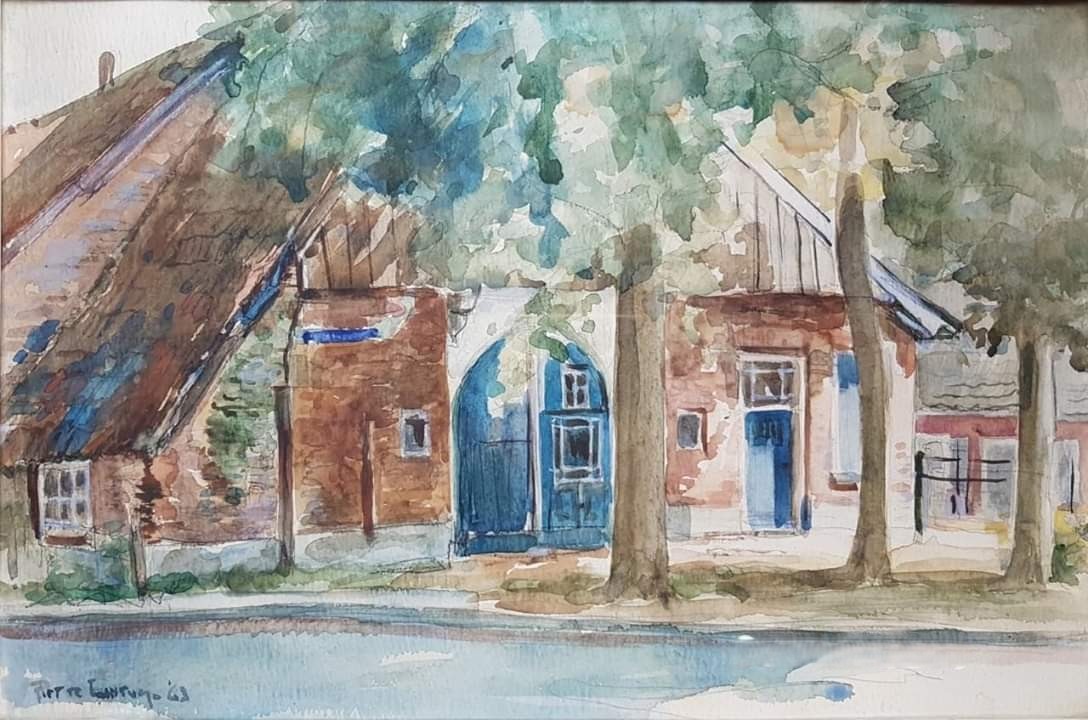
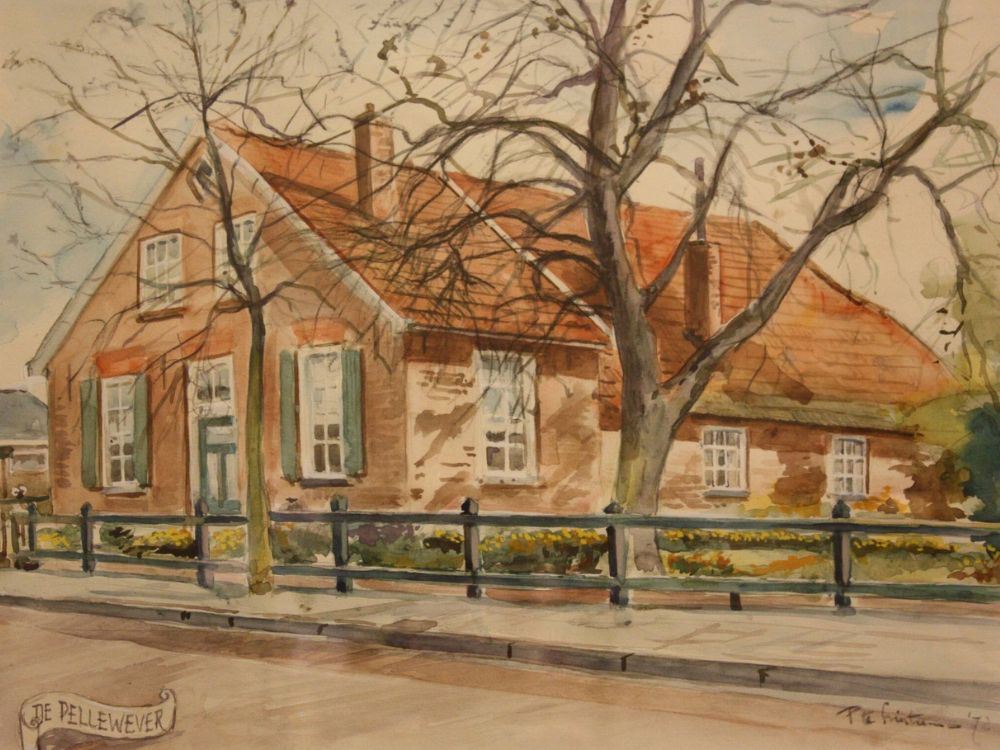
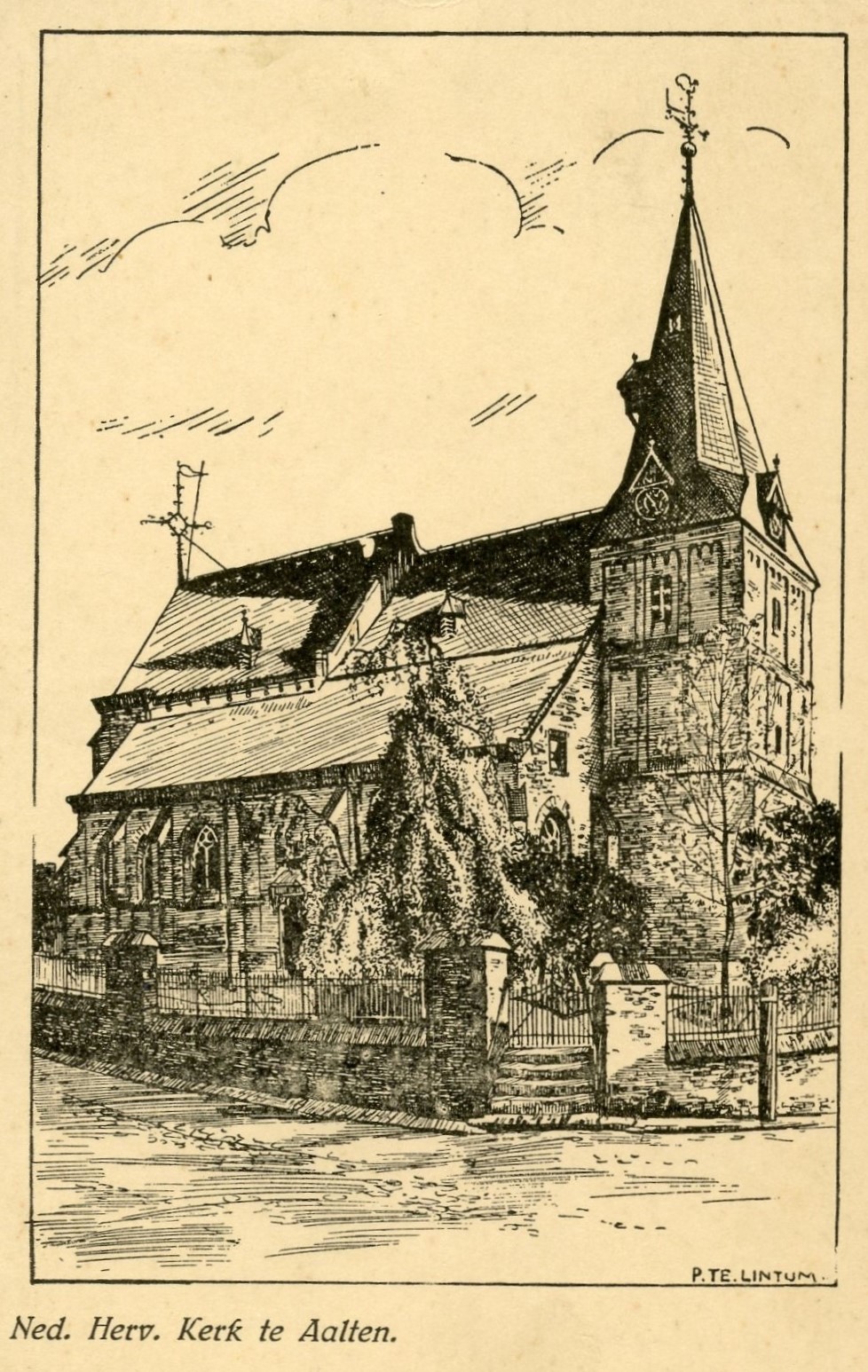
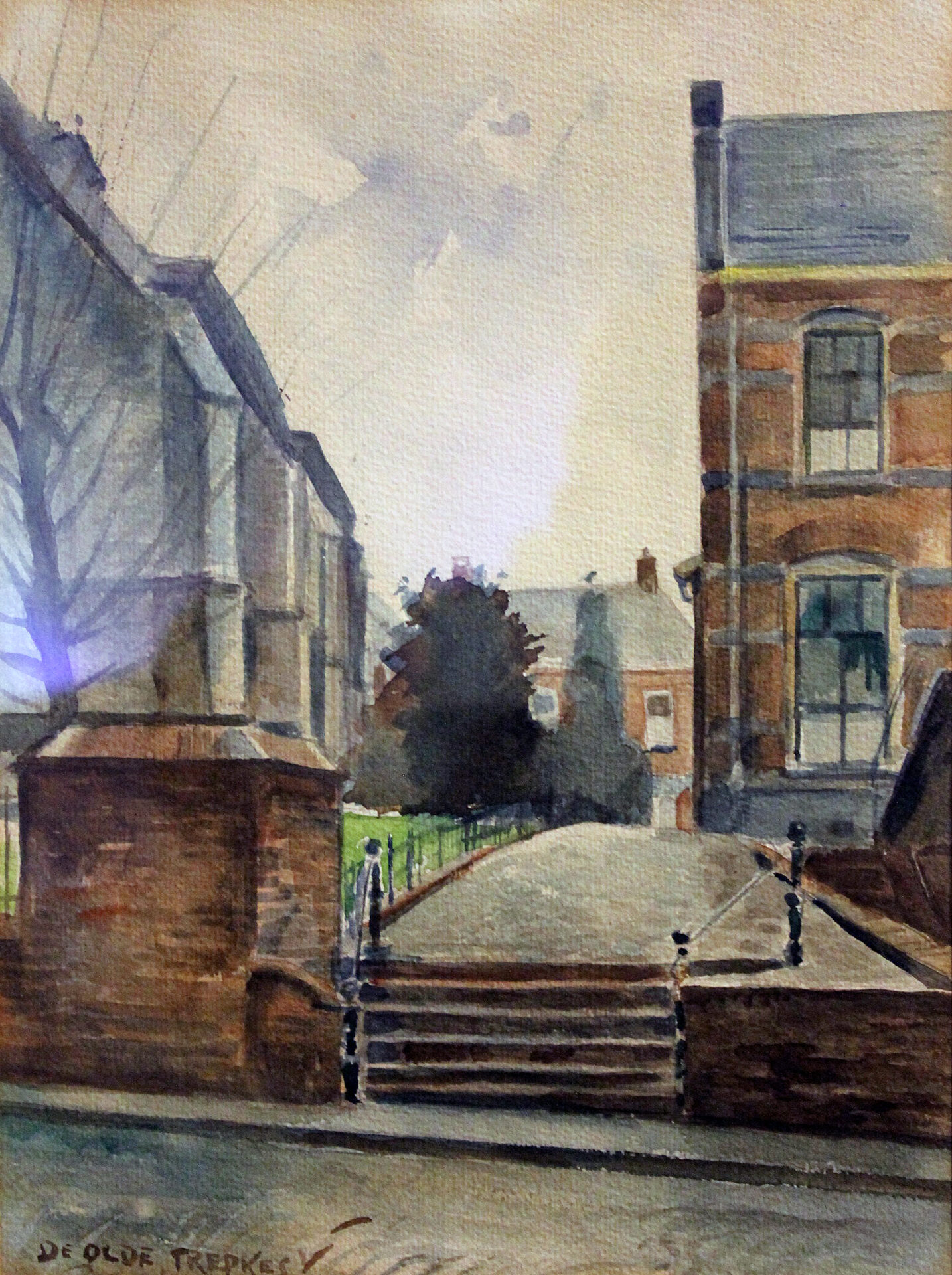
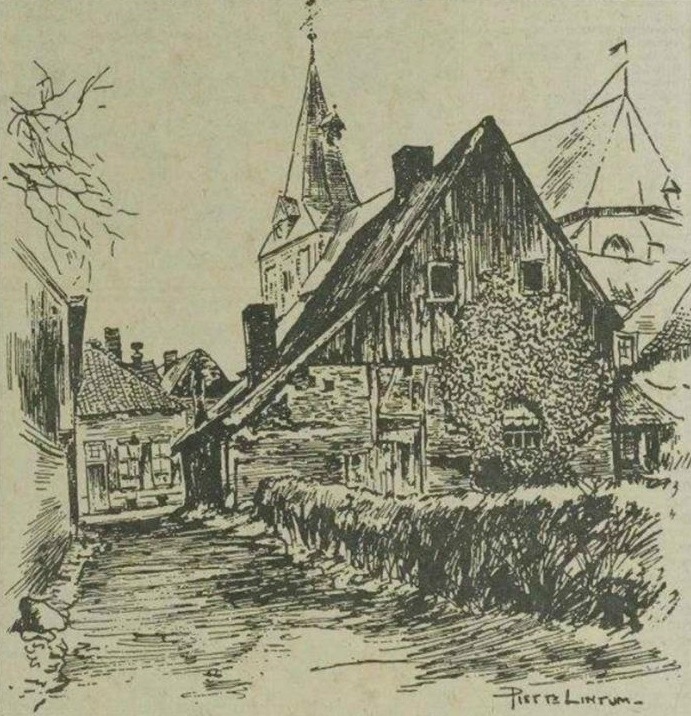
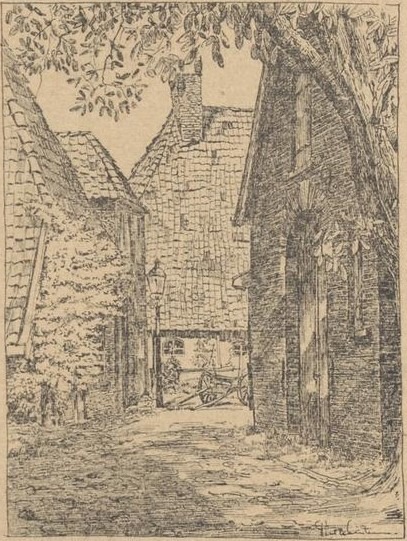
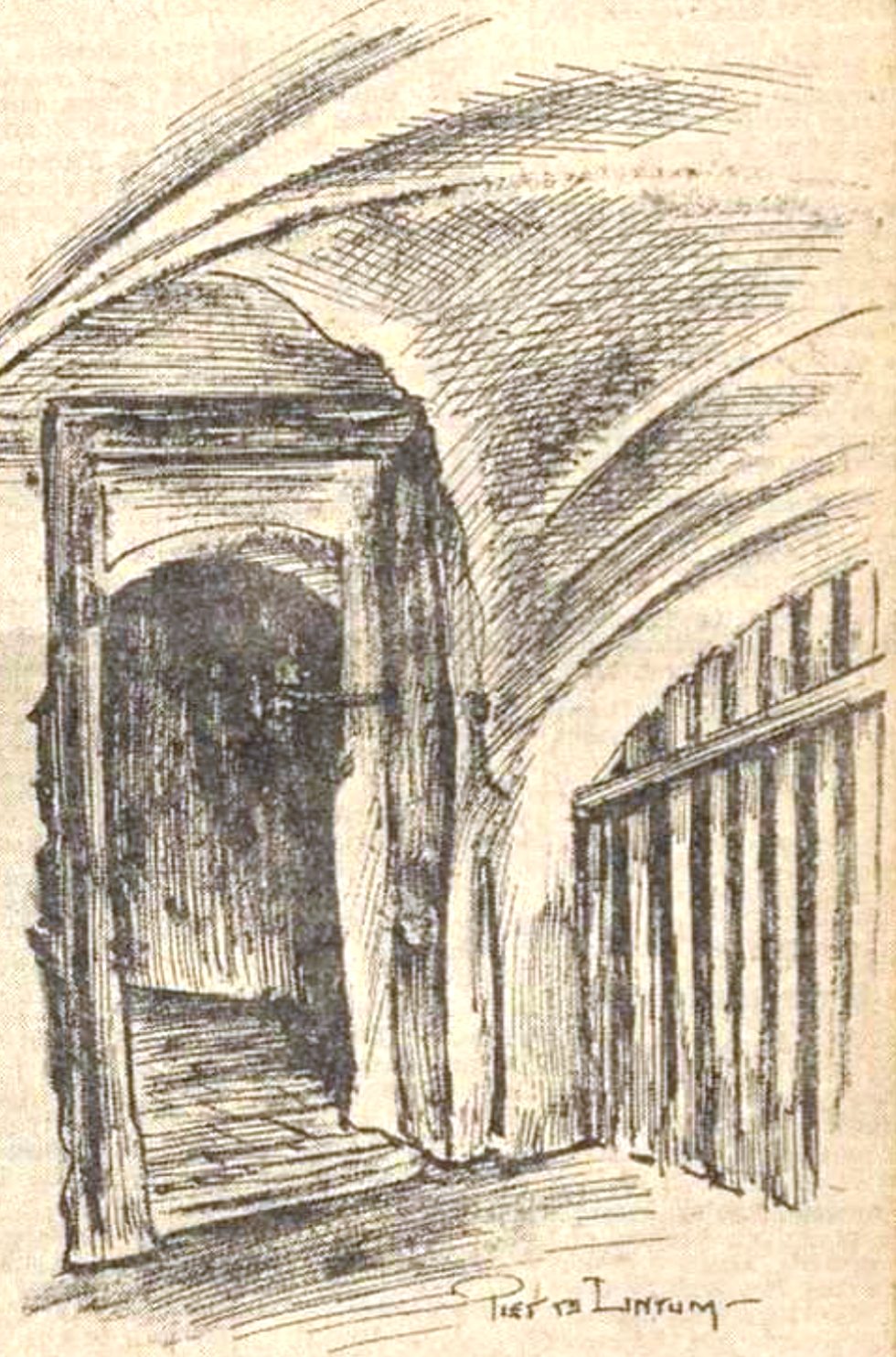
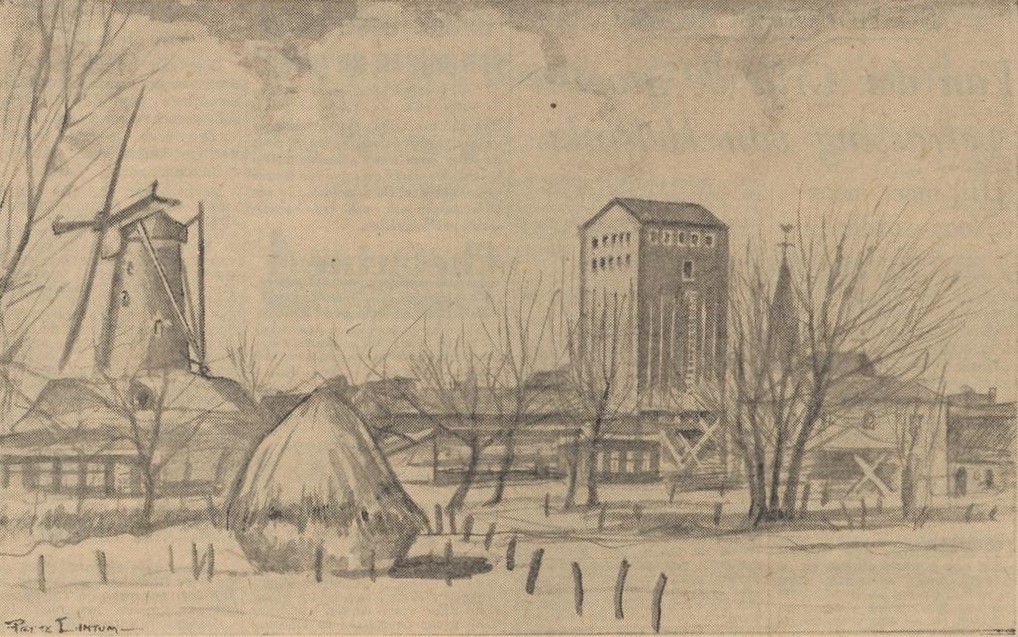
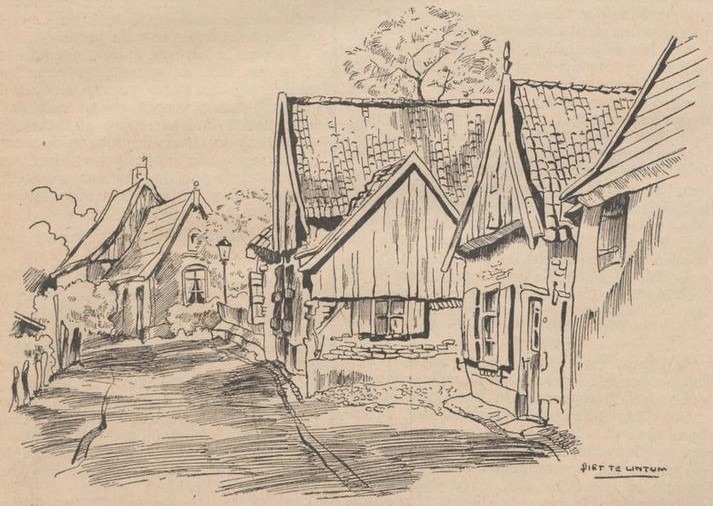
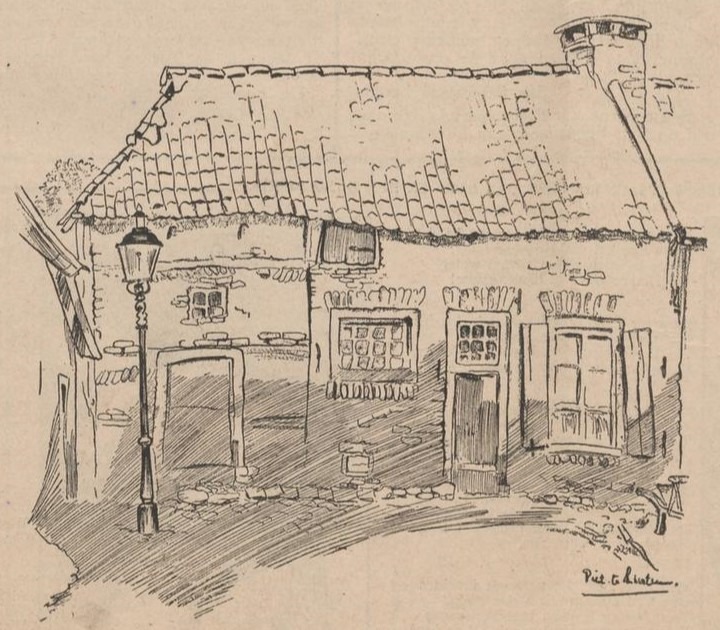
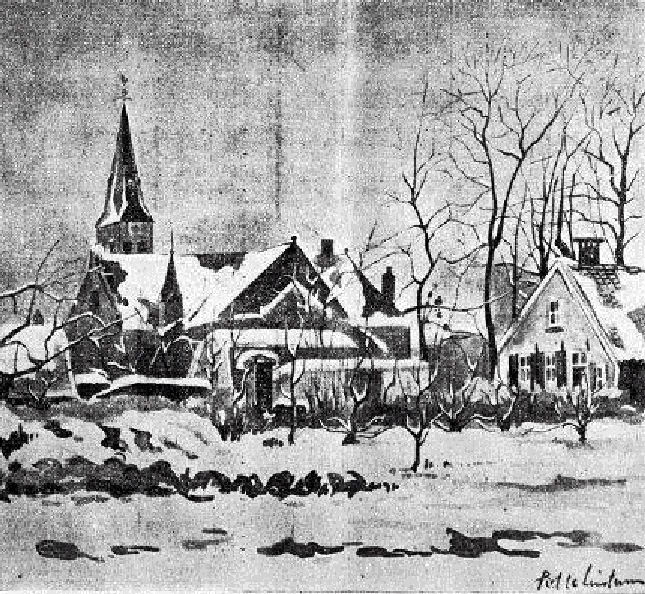
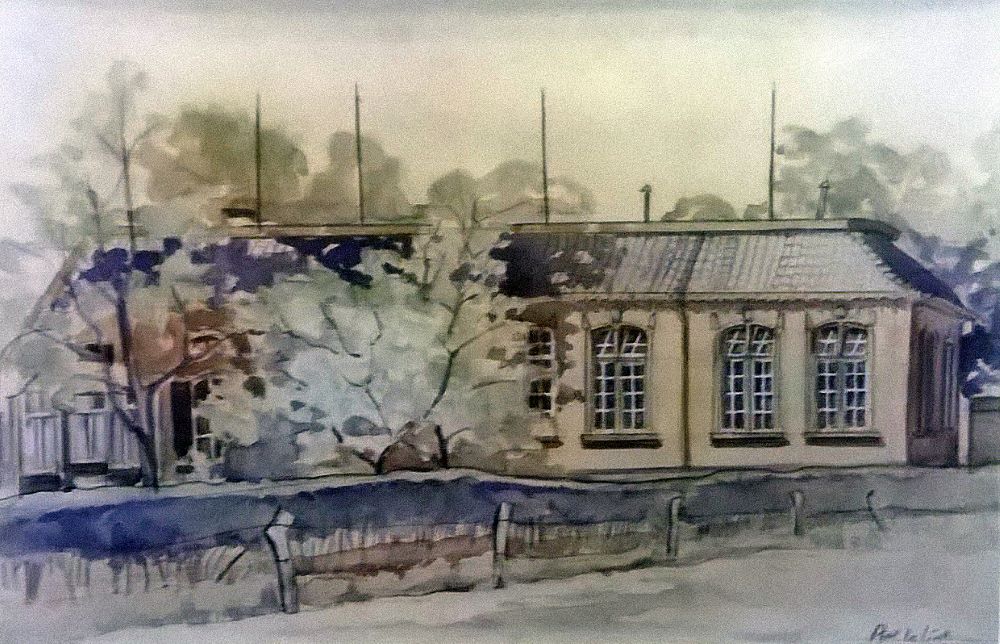
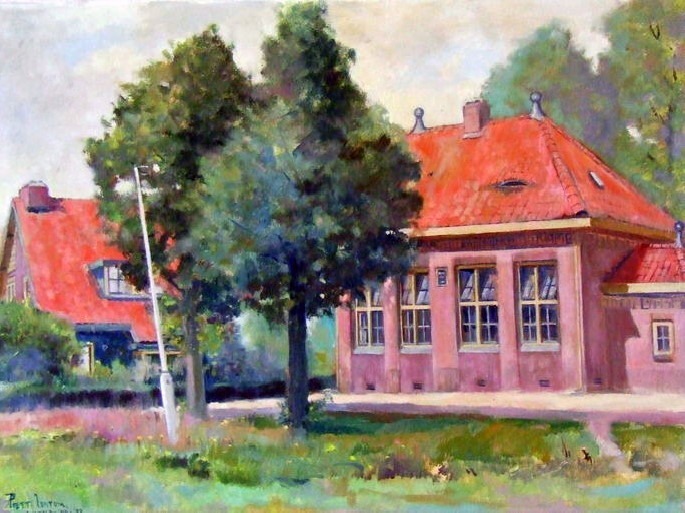
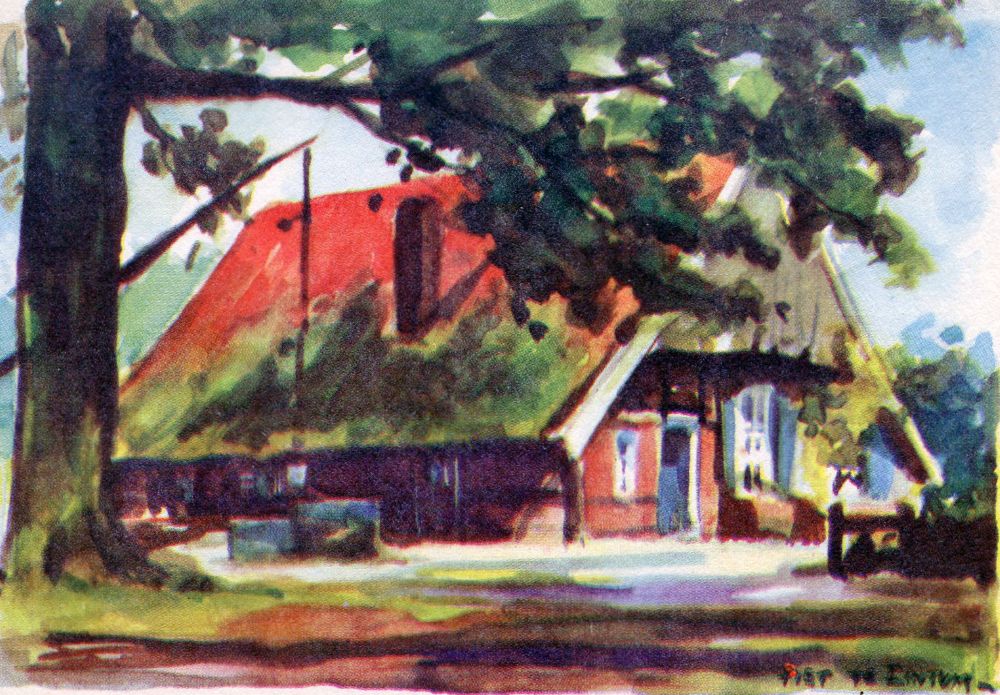
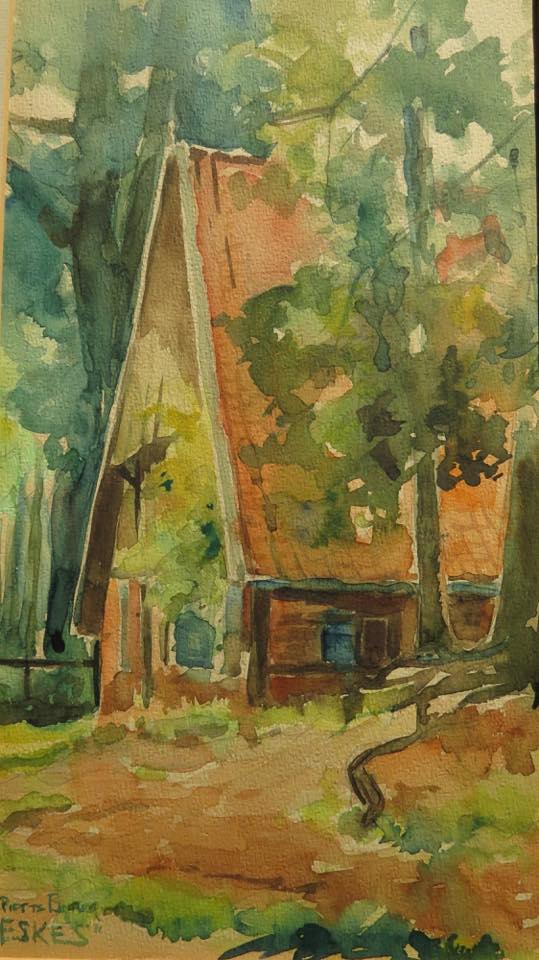
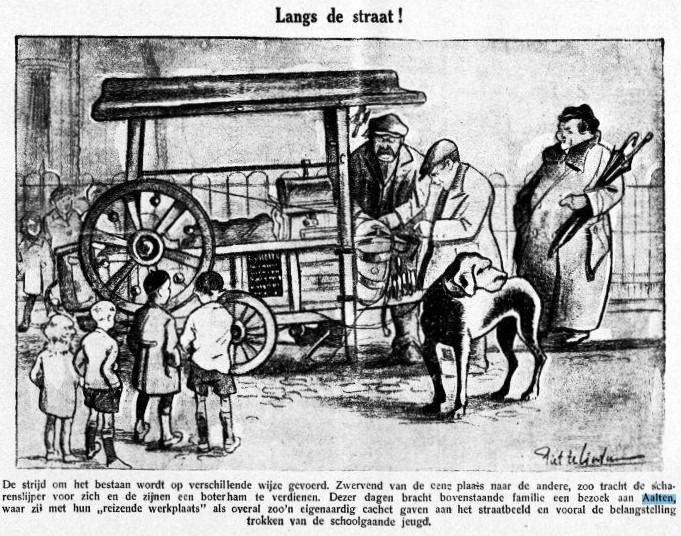
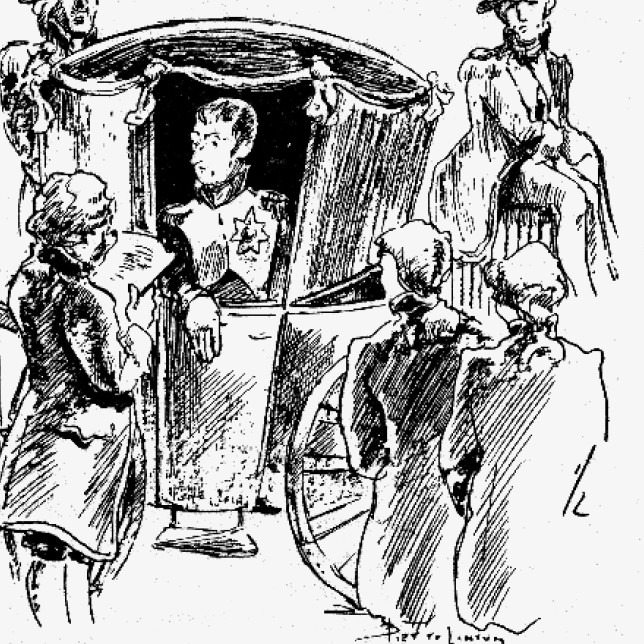
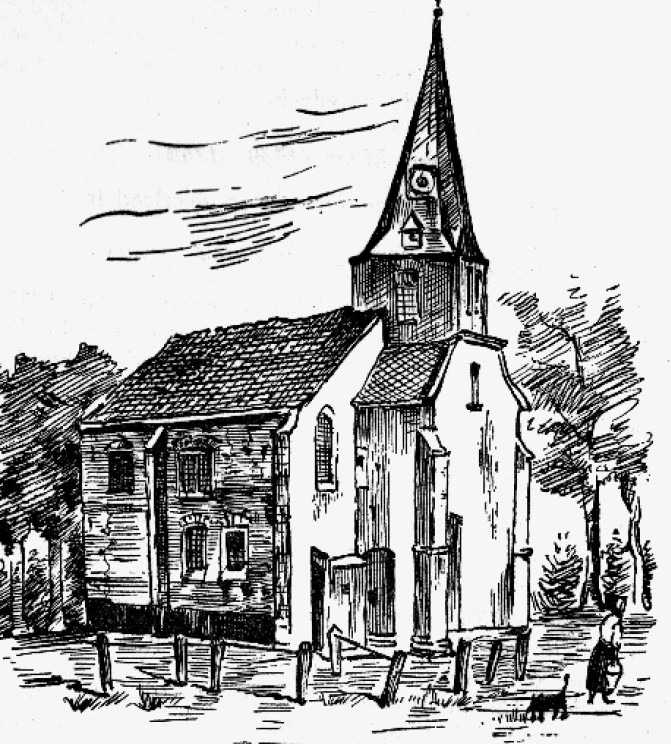
Piet te Lintum (1909–1985) was a versatile artist from the Achterhoek. He worked as a columnist, illustrator, sketch artist and painter, capturing a vast number of landscapes and village scenes of his native region. For this reason, he is often referred to as the “painting ambassador of the Achterhoek”.
Pieter (Piet) te Lintum was born on 13 January 1909 in Aalten, the son of Jan te Lintum, a grocer, and Johanna Christina Adolphina te Giffel. The family lived at Dijkstraat 4, the premises occupied by the Van den Dobbelsteen bakery until 2022. On 15 August 1942, he married Elisabeth Maria Schenk, with whom he had two children.
Talent
From an early age, Te Lintum demonstrated an exceptional talent for drawing. By the age of eleven, he was already producing accurate, lifelike portraits. He received his first lessons from an artist who had just graduated from art academy. He also spent a year taking correspondence courses from an institute in Paris.
At eighteen, he attended classes at the Kunstnijverheidsschool (School of Arts and Crafts) in Arnhem, where he was taught by Hendrik Valk and Gerard van Lerven. Following this, he studied for three years at the Rotterdam Art Academy under David Bautz and Herman Mees. His most influential master, however, was Professor Johannes Hendricus Jurres at the Rijksschool voor Kunstnijverheid (State School of Arts and Crafts) in Amsterdam.
Career
After finishing his education, Piet te Lintum built a multifaceted career as an illustrator for various publishing houses. Among other projects, he drew the illustrations for the adventures of Aornt Peppelenkamp, written by Frans Roes under the pseudonym Herman van Velzen. He also worked for the Misset publishing house in Doetinchem (including for the newspaper De Graafschapbode) and created comic-strip-style columns for the Tubantia daily newspaper. In addition, he designed commercial advertising work, postcards and painted murals.
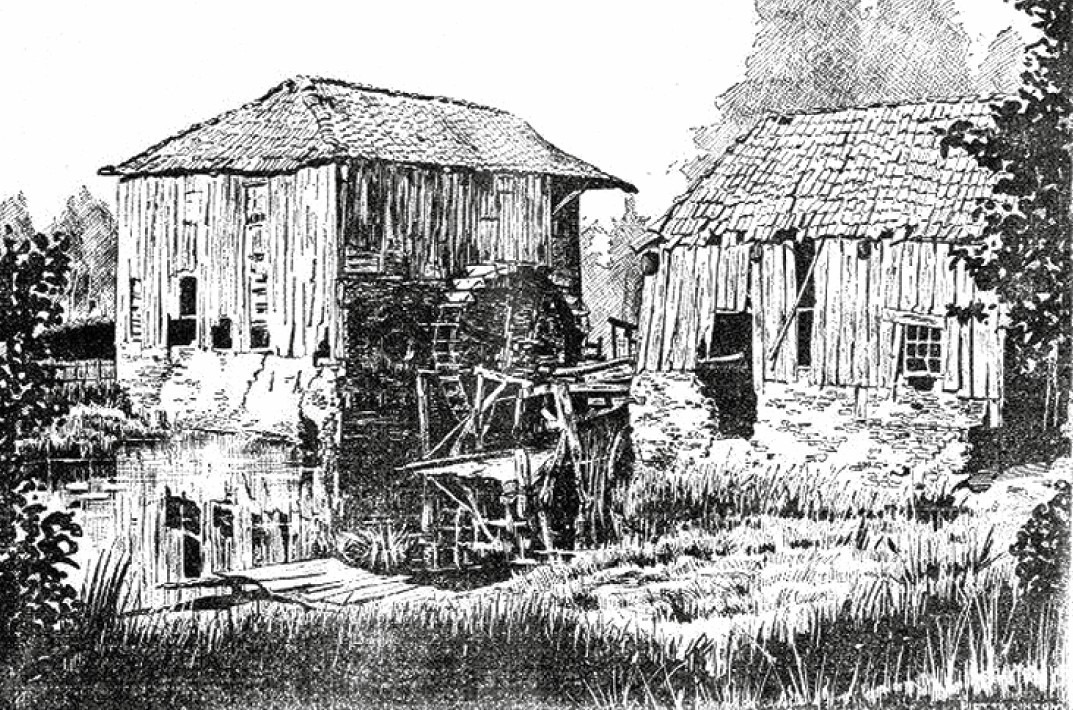
Piet te Lintum is particularly renowned for his paintings of dilapidated buildings. He shunned the modern and rectilinear. For him, the rule was: the older and more decayed the building, the more beautiful the picture as a whole. In doing so, he was not merely interested in the romantic imagery of neglected houses and farms; through his works, he also sought to draw attention to local history.
Even back then, Te Lintum watched with sorrow as an increasing number of old, historic buildings were demolished to make way for the redevelopment of the Achterhoek landscape. It is for this very reason that Bernard Schlüter’s small cottage in Südlohn, Germany, and the Kuupershuusken in Bredevoort were rebuilt brick by brick—all for the sake of preserving the rich local history.
Legacy
On 1 May 1985, Piet te Lintum passed away in Winterswijk. His work lives on in the memory of many, not least thanks to the book Wat ik te zeggen heb… (What I have to say…) by Hans de Beukelaer, which pays tribute to his life and work. More than 500 of his pieces were tracked down for the publication. Although a large portion of his murals have not withstood the test of time, his paintings of farms, buildings and regional views remain lasting testaments to his love for the Achterhoek.
An article about Piet te Lintum was published in the March 2021 issue (Oer/39) of the cultural-historical magazine for the Achterhoek and Liemers. This magazine is still available from the ECAL (Heritage Centre Achterhoek and Liemers) in Doetinchem.
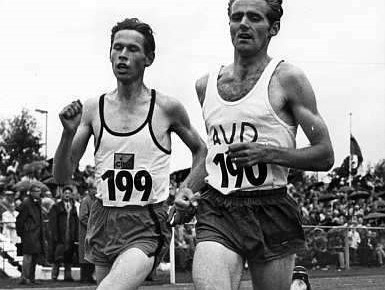
Gerhardus Franciscus (Gerard) Tebroke was born on 9 November 1949 in Aalten, the second child in a family of four sons and one daughter. His parents, Hendrik Bernard Tebroke (1912–1987) and Grada Johanna Bijvank (born 1916), both came from Eibergen, where they had married in 1944. Gerard passed away unmarried on 19 March 1995.
As a child, Gerard Tebroke from Aalten was so stiff that he was exempted from gymnastics classes in primary school. Nevertheless, he became one of the best Dutch athletes ever in the 5,000-metre and 10,000-metre events.
Tebroke achieved many successes, but because he often pushed his body too hard during training, he was frequently injured and missed important sporting events, such as the Olympic Games in 1972 and 1976. However, his speed for that era was unprecedented. He held the Dutch record in the 10,000 metres for over 18 years and in the 5,000 metres for more than 22 years.
In 1982, he decided to bid farewell to the sport. He retreated to a small farm in Silvolde with his dog and sheep, leading a reclusive life. Gerard Tebroke passed away in 1995 at the age of 45. Since then, the biennial Gerard Tebroke Memorialloop (a memorial run) has been held in Aalten as a tribute to him.
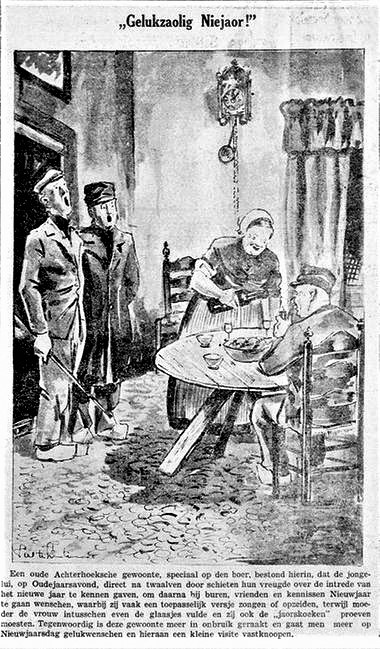
In 1937, G.H. Rots described in a series of articles how things were in Aalten in former times. Regarding New Year’s Eve and Day, he wrote:
“Towards the end of the year, one could see two men walking with a large ‘arm basket’, going from house to house in the village. They were the night watchmen selling almanacs. Not a single household was without an almanac, especially the Zutphen almanac. By offering and selling the almanacs, the night watchmen simultaneously provided the residents with the opportunity to give an unsolicited contribution for the guarding of their property at night. Depending on the financial means of the residents, the aforementioned literature was paid for above the asking price.”
New Year’s Eve
“Then came New Year’s Eve. The cafés had permission to stay open until one o’clock in the morning. The transition from the old to the new year was then celebrated in these establishments, mainly by the local youth. Once the clock had struck twelve, the night watchmen began to deliver their New Year’s wishes. They started with the municipal secretary. A song was sung during this process. The rounds were made to several notables and café owners. It goes without saying that the night watchmen were followed by a large group of curious onlookers, who diligently sang along… and there were free drinks.”
And now the song that the Night Watch and their followers sang on New Year’s Eve:
The old year has now passed by, The new has now arrived. So I wish you with a joyful heart, And you, and all the pious: A new spirit in the new year And a pious life together, So let us praise God here.
How many began the previous year In good health with us, Who have indeed through death Spun out their thread of life. They live in eternity, Life is still prepared for us, So let us now praise God.
It is God who brought forth the light, Who makes the sun and moon rise, To show us the passage of day and night, And month and year. Let us for the past year With thanks to the Supreme Blesser, Praise the God of ages.
The first two stanzas were original creations. The third is from the Evangelical Hymns no. 159 verse 1. Verse 3 of that hymn was also occasionally sung.
One can imagine that these New Year’s greetings on New Year’s Night took quite some time, and the solemnity of it likely faded, especially towards the end of the rounds, particularly as the sound of spirits played the leading role. But for the elderly, the memory of this event is not lost. Especially when reading these articles, the old incidents are recalled and discussed once more, and many look back with nostalgia to the days of yore, remembering, during sleepless nights or when watching over the sick or injured in the quiet of the living room, the monotonous step of the man who traversed Aalten’s streets: “Hark, there is the night watchman!”
“On New Year’s Day, the youth were active again. They and the poorer folk went from house to house to wish people a Happy New Year. One can understand that the population was glad when noon arrived, as it was no longer applicable after that. The downside of all this was that King Alcohol swayed his scepter on those days. In the numerous cafés and taverns, many sacrifices were made to that monarch. Gin was cheap. There were several gin distilleries or ‘branderijen’ in Aalten. Four of these distilleries can still be named. It is no wonder, then, that the use of strong spirits was prevalent on almost all occasions.”
Carbide Shooting
In parts of the eastern Netherlands, including Aalten, it is a tradition to shoot carbide on New Year’s Eve. A small amount of carbide (calcium carbide) is placed in a milk churn, paint tin, or modified gas cylinder, water or saliva is added, and the churn is sealed with a (plastic) ball. Ethyne gas forms, and after waiting about 30 seconds, the gas is ignited through a small touch-hole (or with a spark plug). The gas explodes with a booming bang, launching the ball out of the churn, where it can land dozens of meters away.
The history of carbide shooting is not well known. The tradition may date back to Germanic Yule festivals. In the 19th century, it was customary in both rural and urban areas to make noise on special days. Carbide shooting likely evolved from this practice.
Before acetylene gas was available in cylinders, most village blacksmiths used carbide for welding. It was therefore easy to obtain.
New Year’s Eve, a day like any other. Yet, around four o’clock in the afternoon, many become restless. It is about to happen. There is no other day in the year when we check the clock so often. Outside, in the twilight, we smell the frying of ‘oliebollen’ in the thin winter air. Among children between the ages of four and twelve, a certain tension can be sensed. Tomorrow is the day. Then they will go ‘winning the New Year’.
Winning the New Year in exchange for a treat is a very old custom whose origins are difficult to trace. In our region, it occurs in the former Lordship of Bredevoort, but not in the Roman Catholic enclave of Lichtenvoorde-Groenlo. It possibly relates to religion and the practices surrounding it.
Long before the Reformation, November 11 was an important day: Saint Martin’s Day. According to legend, he gave half of his red cloak to a beggar. He was the patron saint of Utrecht, among other places. The city’s coat of arms is a red-and-white divided shield—red from his cloak and white from his undergarment after he cut part of his cloak away with his sword. This gesture strongly appealed to the popular imagination. As a folk saint, he was venerated and depicted as a rider on a white horse. This was true not only in neighboring Germany but also in the south of our country, in North Holland, Groningen, and Friesland. On his feast day, a mock Saint on a white horse would lead a lantern procession through villages and towns, distributing treats. In Bocholt, just across the border, there was a large lantern procession through a completely darkened city in 1988 and later years. A fairy-tale sight. Upon arriving at the Market, he stood there on a white horse in front of the beautiful town hall, bathed in spotlights. A martial figure. All the children were allowed to walk past him and receive a bag of sweets.
It is not inconceivable that after the Reformation, people wanted to move away from the veneration of saints. A ‘Sint’ was out of fashion. At a meeting of the Zutphen classis in 1668, much was discussed. They wanted to abolish bird shooting, goose pulling, ‘boksebier’, and other irregularities. These were called superstition, or ‘popish insolence’. It is possible that a shift occurred from November 11 to January 1 so as not to forget the children and the needy. Perhaps also because New Year’s Day moved several times on the calendar. Such shifts happened frequently. Moreover, Saint Martin himself had already replaced an old Germanic autumn festival with thank-offerings for the harvest to Wodan.
When shifting the date, other special days had to be taken into account. Saint Nicholas was not an option. This may be how they arrived at January 1. It is an assumption, but not an unlikely one. At that time, they were also troubled by Saint Nicholas; Calvinist ministers wished to do away with it thoroughly. They did not succeed. Bird shooting also continued.
Originally, in the countryside, laborers went to the farmer and his wife—their employers—to wish them a Happy New Year. Belief in omens was strong. If the person delivering the wish was a woman or girl, one was assured of a fertile year with many heifer calves. It seemed almost a competition to be the first to deliver the good wishes. It still is to some extent. There was a firm belief that the wished-for luck would return to the one who spoke the wish first. This was duly rewarded.
In times of great poverty, which were frequent, it could happen that food items were given. It is known that during times of potato shortages, people gave a few potatoes. These were then taken home in a knotted red handkerchief. In the last century, children went out in groups in the neighborhood to ‘win the New Year’. After speaking the good wishes, red handkerchiefs were spread out on the chairs in the kitchen, and all sorts of treats appeared: peanuts, a ‘pöfferken’, ‘opzettertjes’, meringues, figs, an ‘oliebol’ or currant bun, and an apple. Over the years, many customs have disappeared, but ‘winning the New Year’ has remained in our border region.
It has, however, adapted to the times. No red handkerchiefs spread out on chairs with rush mats. Between 1950 and 1980, plastic conquered the world. The red handkerchiefs have made way for well-filled plastic bags, sometimes prepared by businessmen or charitable institutions.
Nowadays, fireworks play an important role on New Year’s Eve. Twenty-five years ago, New Year’s Day was more important. It had to happen on the first day of the new year. Excitement for the children. First to the neighbors. What abundance when they saw thirty or more bags lying on the kitchen counter there. After speaking the good wishes, hands went up almost automatically to take the ‘toete’ (bag).
The older boys would grab their bikes and rush from one house to the next. Formerly with a shoebox under the luggage strap, later with a plastic bag on the handlebars. They were told to look people in the eye and speak politely, but they didn’t allow themselves much time to talk. It was as if they sensed it might be the last time. Once home, the harvest was sorted and placed in portions. Eating until you were sick was something you did on the way. Mother would also start rummaging through it. Cookies went into a tin and sweets into a jar. You could snack on it for a month. It seemed as if that variety symbolized a great number of wishes.
In our time, the fun ends when children are in the first year of secondary school. At most, they shout as they cycle past: ‘Happy New Year, do you have the bags ready?’
Sources
‘From Aalten’s Past’, by G.H. Rots, Aaltensche Courant, 19 November 1937 (via Delpher, part IV & part VI)

#/media/Bestand:Bredevoort_schutterij_Wilhelmina.JPG)