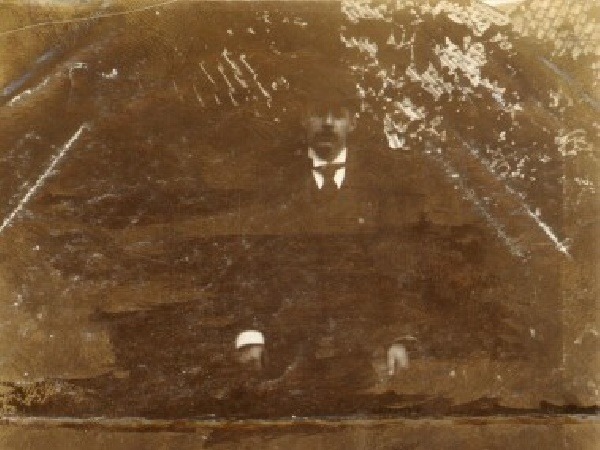
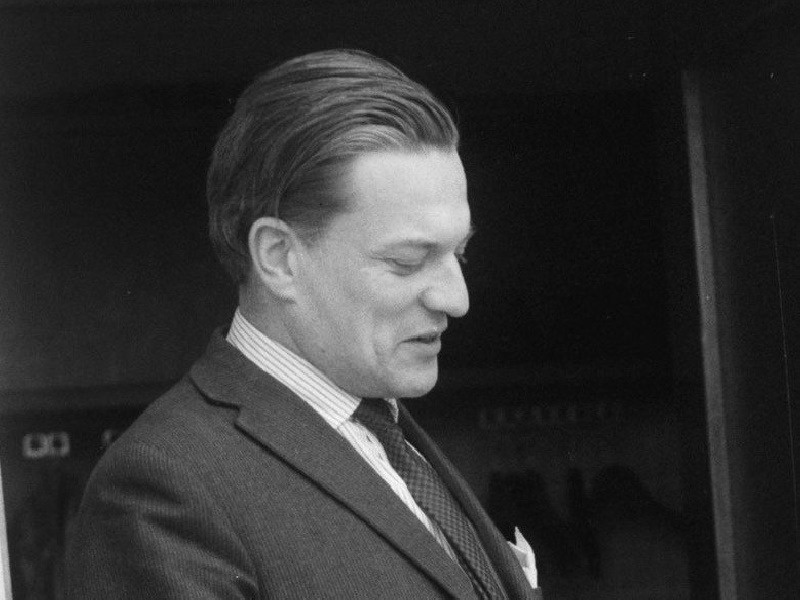
Interview on his 25th anniversary in office
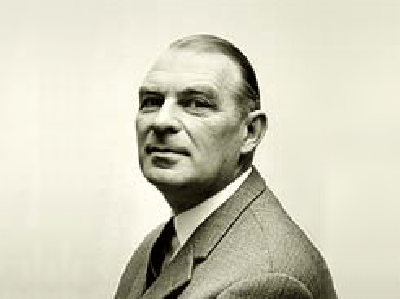
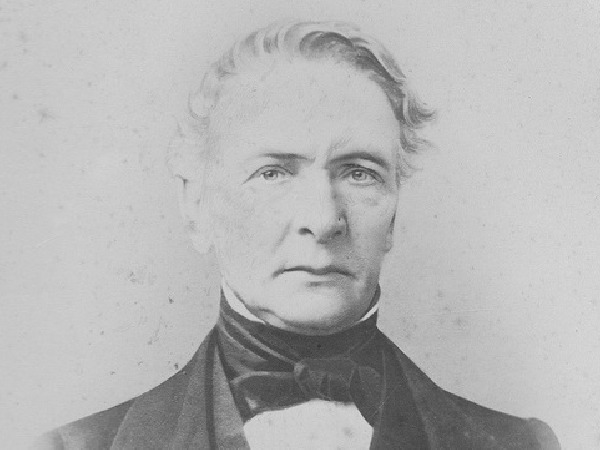
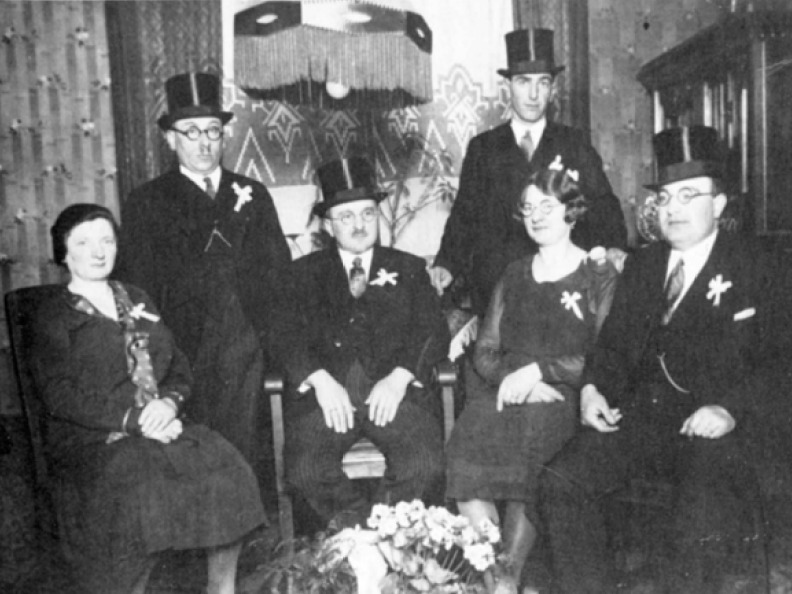
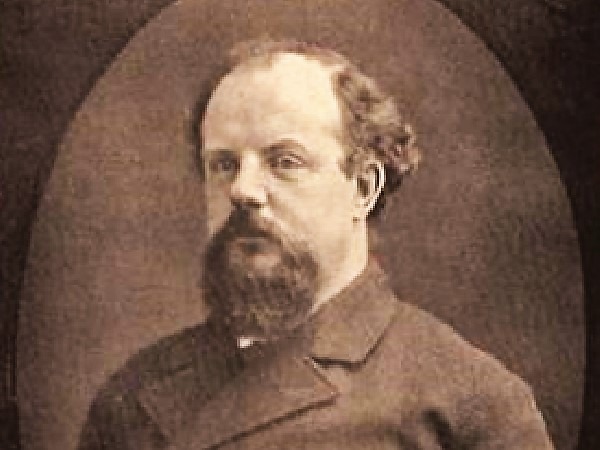
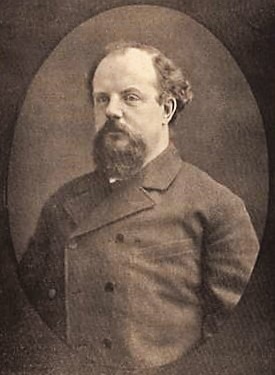
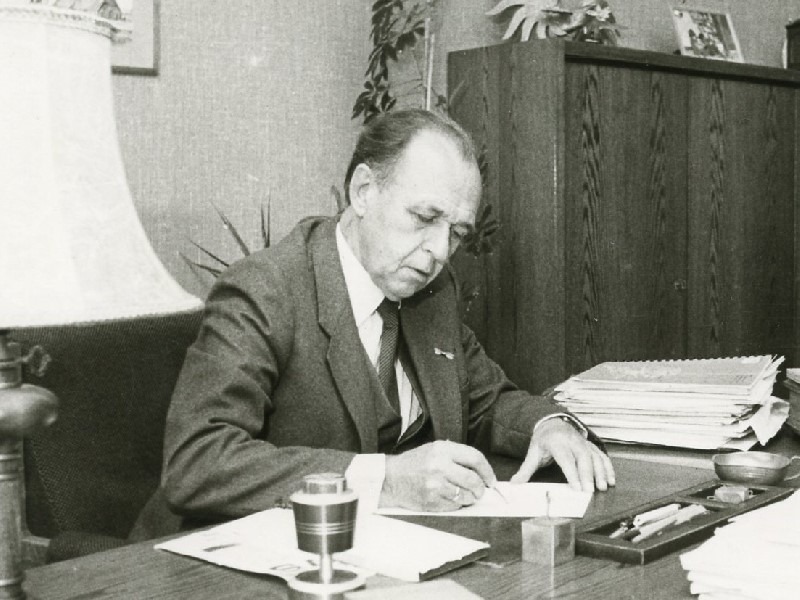
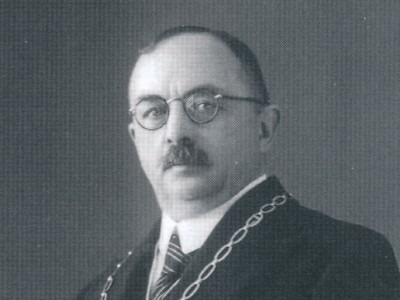
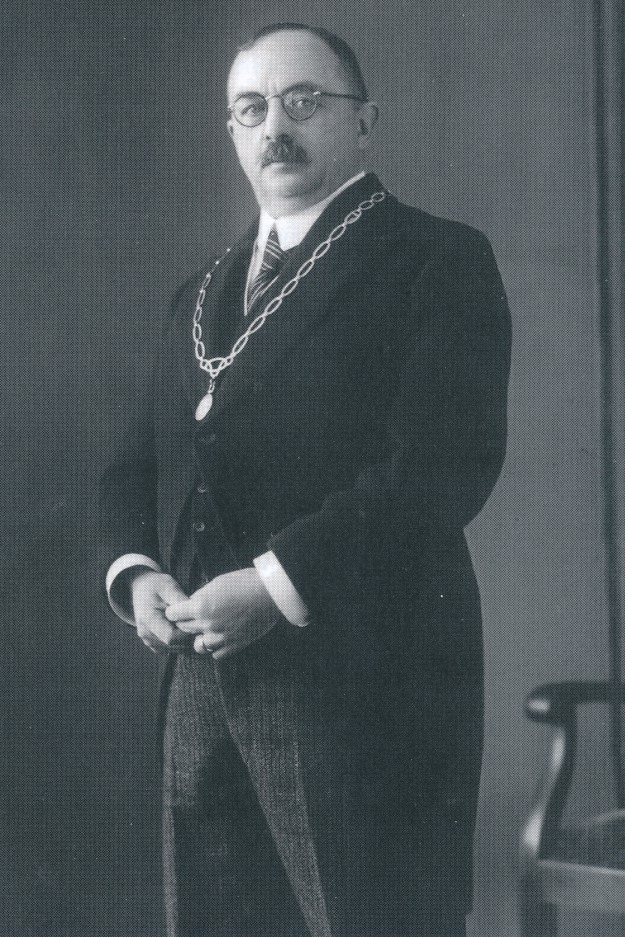
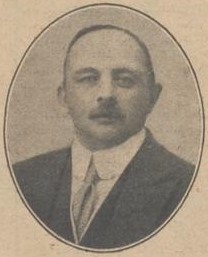
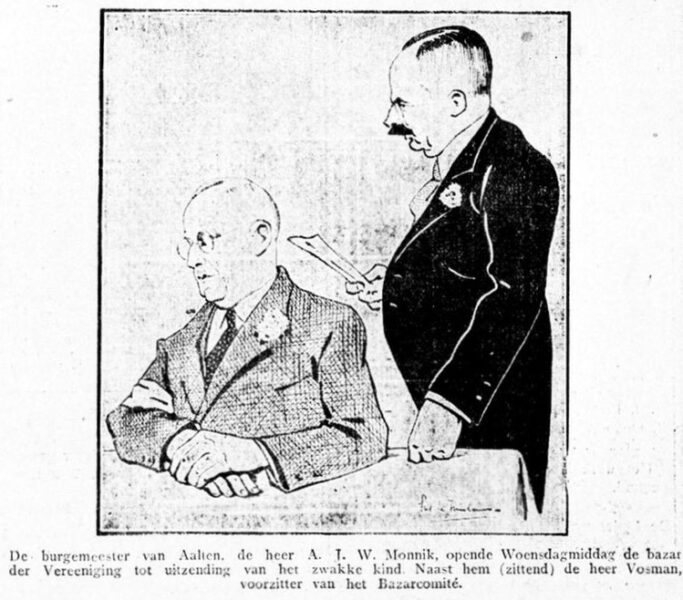
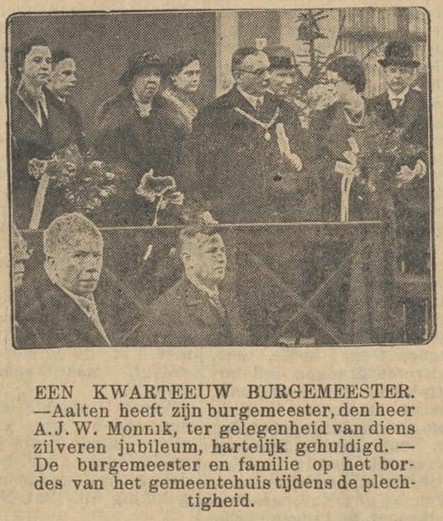
On the occasion of Mayor Monnik’s 25th anniversary in office, De Graafschapbode published an interview with the jubilarian on 8 March 1935, reproduced below in a slightly abridged form:
When we are seated in the spacious mayoral office, our first question is naturally: “Could you tell us something about your very earliest years, school education, and so forth?” We learn that Adriaan Johannes Willem Monnik was born on 19 November 1879 in Vorden. His first two school years were spent at the Christian school in his birthplace. Then, a governess came to the house. One room was fitted out as a schoolroom, and here the young pupil, alongside just one fellow classmate, was prepared for the gymnasium.
Following this primary education, he attended the Christian gymnasium of the Reverend Van Lingen in Zetten for three years. His studies had to be interrupted at that point for health reasons and were later resumed at the H.B.S. (modern secondary school) in Zutphen. He then attended the lectures of Professor Hugo de Vries at the Municipal University of Amsterdam for a year.
Appointed Mayor of Aalten
“It was always my ambition,” Mr Monnik tells us, “to become a mayor one day, and when the vacancy in Aalten arose, I was appointed Mayor of Aalten on 23 February 1910.” Following his swearing-in on 2 March, Mr Monnik was installed as mayor here on 15 March 1910. The senior alderman (wethouder), Z.G. van Eerden, delivered the installation address. The mayor concluded his reply by stating, among other things: “I shall do what is a mayor’s duty.”
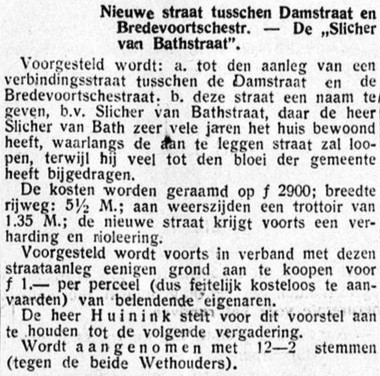
At that time, Mr B.H. Vaags was the town clerk (gemeente-secretaris), and the aldermen were Messrs Z.G. van Eerden and W. te Gussinklo. The council was composed as follows: F.H. Somsen, Th.A.M. Driessen, Sal. Gussinklo, L. Heusinkveld, H.A.J. Luiten (Sondern), J.P. Obbink, H.J. Veldhuis (Vels), Wander Nijhof, J.H. Veldkamp (Bredevoort), and A.P. Slicher van Bath.
Until his marriage, Mr Monnik lodged with the Misses Vaags on the Kattenberg.
Key decisions and events
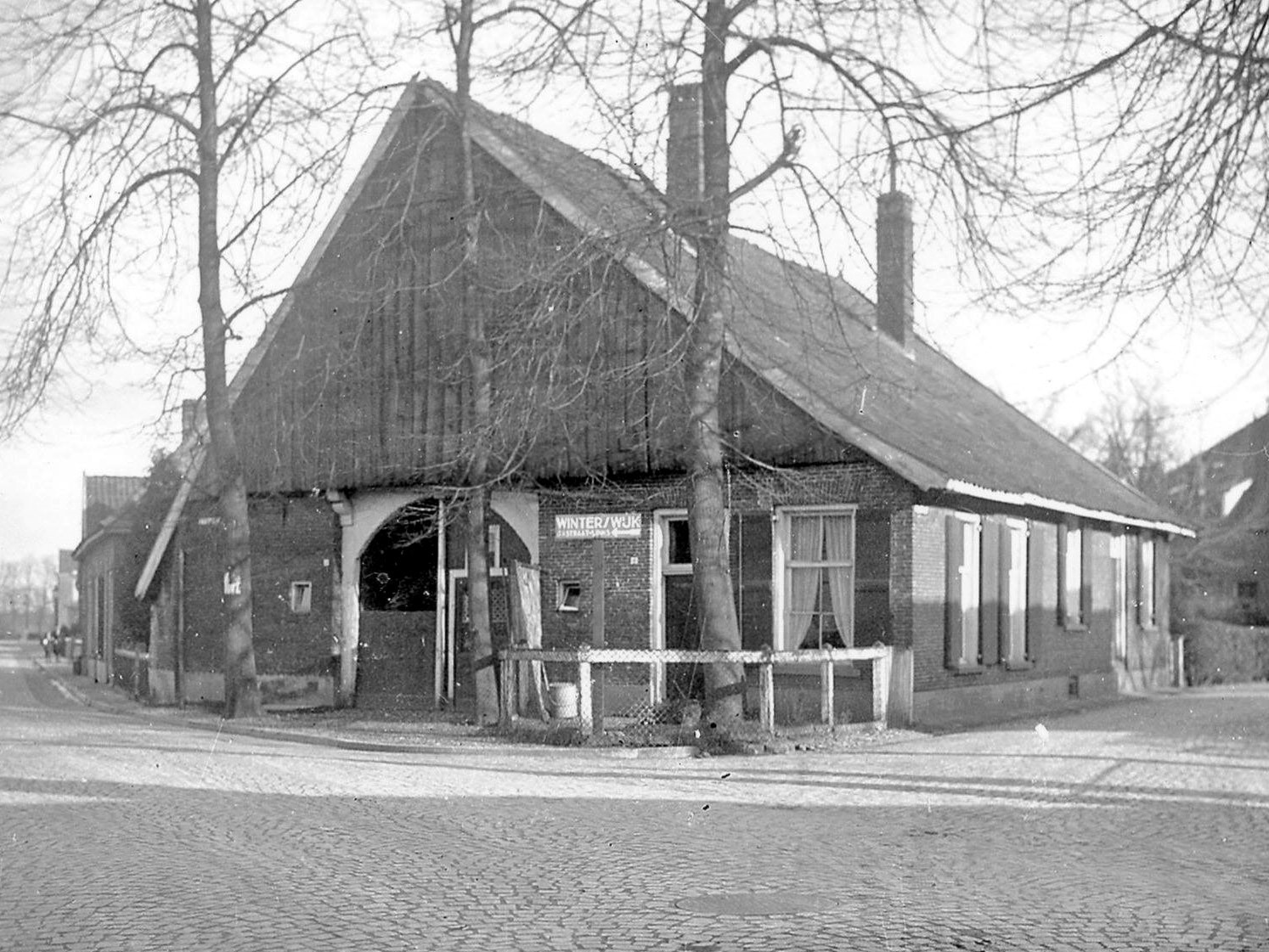
The mayor believes he recalls that his first decision was the purchase of the old Heijmans house on the corner of Koelmansteeg, to widen the entrance to Koelmansteeg (now Stationsstraat). The old minutes books are fetched, and indeed, it is correct (our mayor’s memory is, in passing, exceptionally good): this corner house was purchased for 3,500 guilders, allowing for a proper entrance to Stationsstraat.
Then, on 27 April 1910, followed the opening of the tramway, the G.W.S.M. line B (Lichtenvoorde, Bredevoort, Aalten, Bocholt).
Right from the start in 1910, his passion for public health became apparent when several dwellings were declared unfit for human habitation. “I have never involved myself much in politics; I feel much more drawn to public health, housing, and the like,” the town’s father figure remarks in passing.
Later in 1910, we saw the construction of the Koembrug, the first concrete bridge in Aalten, as well as the public school renovation and the reorganisation of the police force (Mr Blom became chief rural constable at the time). The appointment of a foreman for the municipal labourers also dates from this period.
In 1911, the abolition of German currency was brought up, though it was not until July 1914 that this was implemented. Due to the large number of labourers who went to work in the factories in Bocholt at the time, all of whom were registered with a German health insurance fund (Krankenkasse), a complex insurance issue had arisen, which was also resolved now.
In March 1911, a weekly market for vegetables, chickens, eggs, and fish was introduced. The improvement of the drainage of De Goor also took a major step forward with the establishment of the Baaksche Beek Water Board. An old covenant had stipulated that the Veengoot ditch could not be deepened, making drainage of De Goor impossible. The creation of the Water Board allowed for a change. In 1911, Lankhofstraat and Ormelstraat were also laid out.
It would take us too far to deal with every year in such detail. We shall walk through the subsequent years at a slightly accelerated pace and mention them more as chronological milestones. In 1912, we find the retirement of rural constable Heersink.
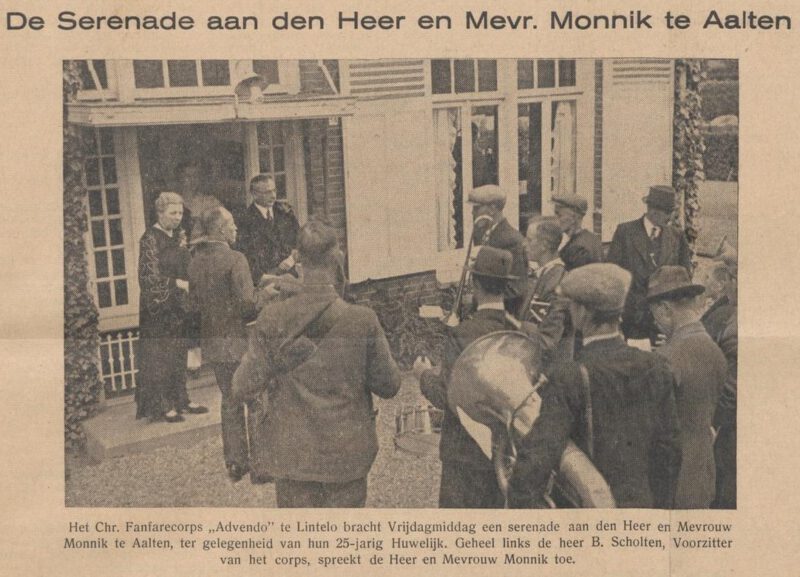
On 22 May 1913, Mr Monnik married L.W. de Waal-Malefijt. His lodgings with the Misses Vaags were exchanged for villa Zonneheuvel.
On 21 February 1914, the council decided to build new schools in IJzerlo and on De Haart. On 13 March of the same year, the schoolmaster’s house in Aalten followed. In February, house construction on Haartseweg was also commenced.
On 1 August, we see the beginning of the Great War, which brought numerous hardships. Gradually, all foodstuffs and provisions became scarcer, leading us into the era of rationing. What an immense amount of work and trouble that entailed! During that period, we supplied 1,000,000 kilograms of rye, making us one of the largest rye-supplying municipalities in the country.
In September 1914, the ordinance on pub closing hours came into force, and the “blacklist” was introduced. On 31 October, the budget post for night watchmen was scrapped, and by 1 January 1915, the night watchman in Aalten belonged to the past.
In late 1917, the council expressed its approval in principle for taking over the gasworks. The decision to acquire it was taken on 19 December 1918. 1918. The council took over the gasworks for 115,000 guilders, plus 29,602.87 guilders for the pipes, gas meters, etc. The date of transfer was 2 May 1919.
Following the armistice, when the prisoners of war arrived at the border, it was rumoured that 30,000 of them would be coming here. Fortunately, they took another direction in Bocholt. Nevertheless, we received our share in November 1918, namely Frenchmen and Italians, who were housed in the Community Hall and in the factory of the N.V. Textiel Mij. textile company. The people were starved. “We experienced something rather peculiar with those Italians,” the mayor tells us. “We had given them all some of our excellent soap, of which we had a large stock at the time, so they could wash themselves properly, but by the following day, all the soap had been eaten by the Italians!”
On 26 February 1920, the Oosterman plot was purchased with the intention of creating the new cemetery there. This plan did not go ahead. Later, in 1922, another site was designated for this purpose: the present-day Berkenhove Cemetery.
In August 1920, a start was made on the official naming of streets. The first was Oranjestraat in Bredevoort. August also saw the tendering for Gendringseweg.
On 19 May 1922, the cattle market was moved to the inner market square. In recent years, however, the cattle market has been restored to its former glory. This year also saw the introduction of the meat inspection service, with Dr Rexwinkel appointed as inspecting veterinary surgeon. On 11 April, the slaughterhouse was taken over by the municipality.
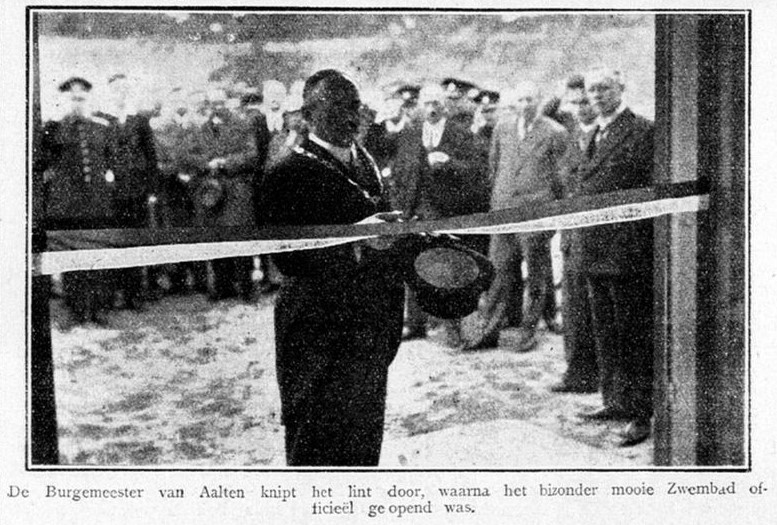
Then we come to the most recent years, which are still fresh in all our memories. Various roads were paved during these years: Sondernweg and Haartseweg in 1929. A ring road was constructed on 24 August 1928, and now the Walfort open-air lido, a project of the very last few years.
The Aldermen over these 25 years
It is quite interesting to look back at which aldermen we have had during these 25 years. In 1910, as previously mentioned, they were Z.G. van Eerden and W. te Gussinklo. Following the death of Van Eerden, Mr Theod. Driessen became alderman in May 1916, stepping down again in 1918. We then had Mr F.H. Somsen for a brief spell. From 2 September 1919 to 4 September 1923, the aldermen were Messrs H.J.J.G. ten Dam and Joh. Obbink. Mr F.H. Somsen then took the place of Mr ten Dam (4 September 1923), and on 8 March 1926, Mr A. Brethouwer succeeded Mr Obbink. Messrs Somsen and Brethouwer remain in office as aldermen to this day.
As town clerk, Mr S. Bijlsma succeeded his predecessor, Mr B.H. Vaags, on 1 February 1930. On 29 January 1924, the municipal treasurer, Mr F.H. Freriks, retired. Mr F. Heisterman was then appointed as treasurer. At the Municipal Works department, following the passing of Mr J. Brill, Mr Tilbusscher became the municipal architect, assisted by Mr H. Rollman.
Other roles of the jubilarian
Alongside his own busy professional sphere, the mayor takes a particular interest in education. Mr Monnik serves as treasurer of the Union of School Boards, Teachers, and Supporters of Christian Education in the Gelderland Achterhoek and surrounding areas.
He is also a board member of the Groen van Prinsterer Teacher Training College in Doetinchem. Furthermore, he is a director of the N.V. Waterleiding Oostel. Gelderland water company and a member of the Supervisory Board of De Graafschap printing and publishing company.
Finally, we are curious to know the mayor’s view on the prospects of our municipality in the near future.
“These past 25 years,” Mr Monnik says, “have certainly not been easy. First the war years, and now the perhaps even more difficult post-war period with its severe decline in every field, its massive unemployment, with the unemployment relief schemes (werkverschaffing) and everything that entails. My wife has always been an immense support to me through all these difficulties.”
Regarding the relief schemes, we can add that on 24 November 1916, the Patrimonium association requested employment relief. The first project was gravel digging in 1918. On 30 May 1917, Aalten became one of the first municipalities to adopt unemployment insurance.
The mayor concludes: “We as a municipality are not in too bad a position. This is a very heavy year, certainly, but I foresee that things will gradually improve. We shall move forward with confidence, one eye looking upward, one eye looking inward. Hand to the plough, and the end will be good. We must seek not what divides us, but what binds us together!”