
Category: Doleantie

  • Monasso: Italian Terrazzo Workers in Aalten

    Monasso: Italian Terrazzo Workers in Aalten

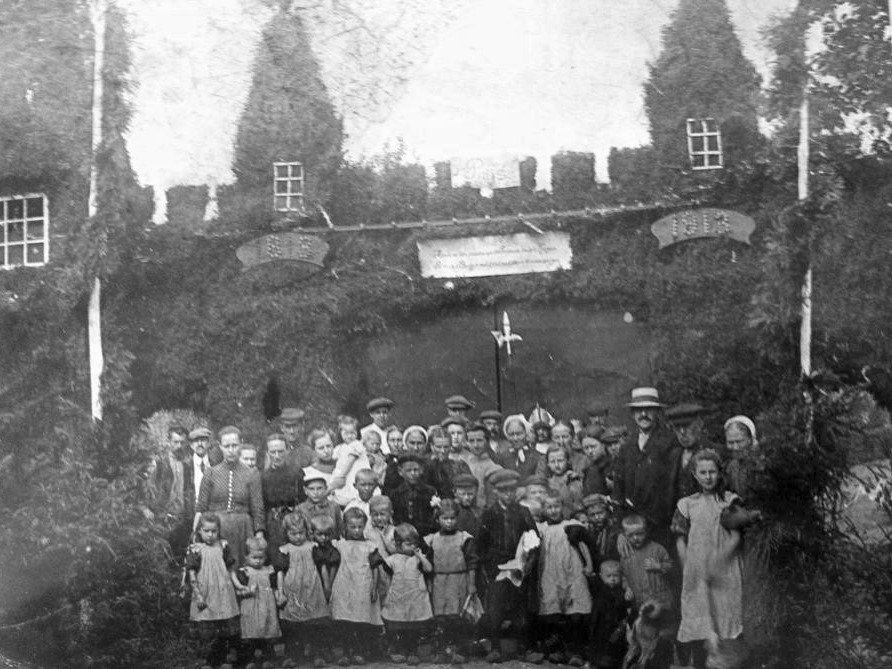
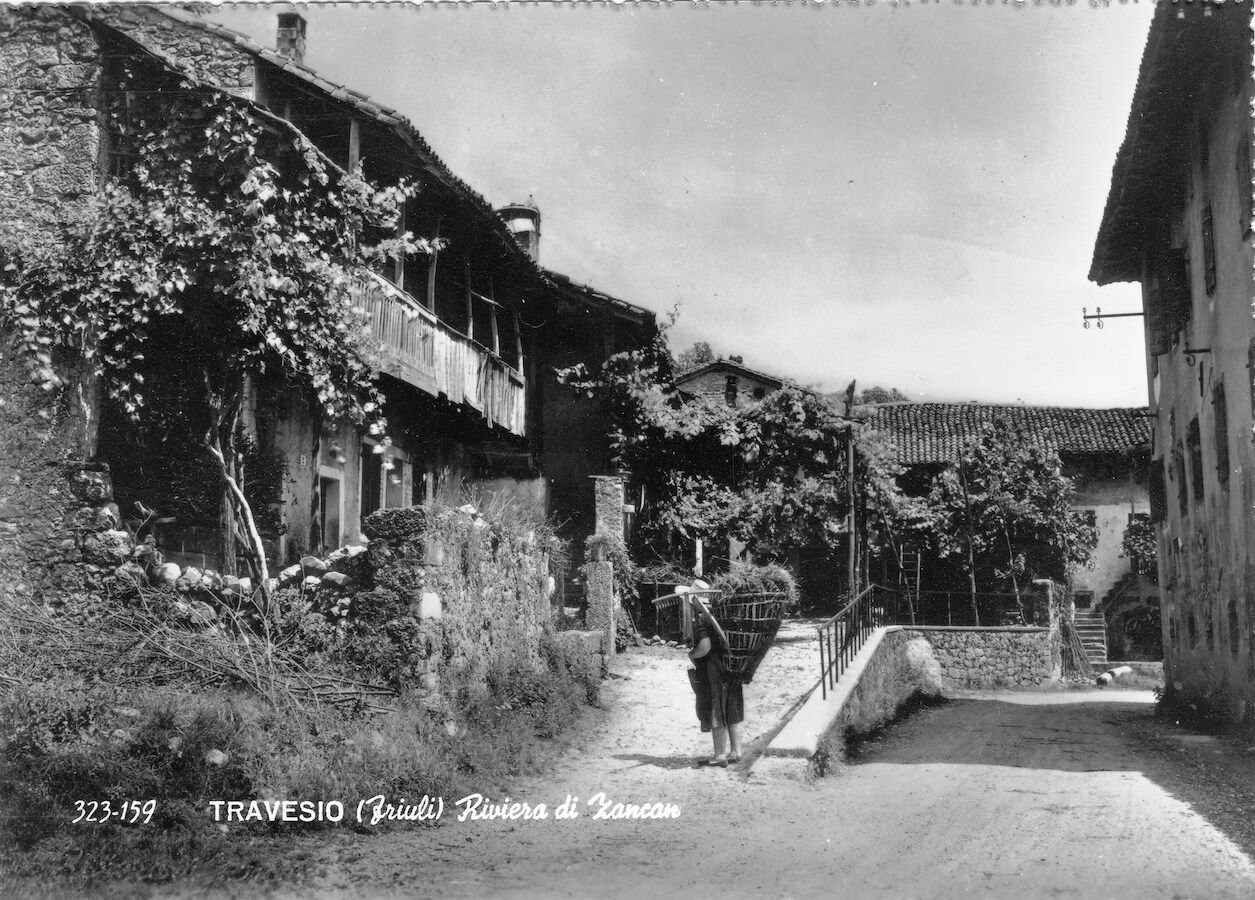
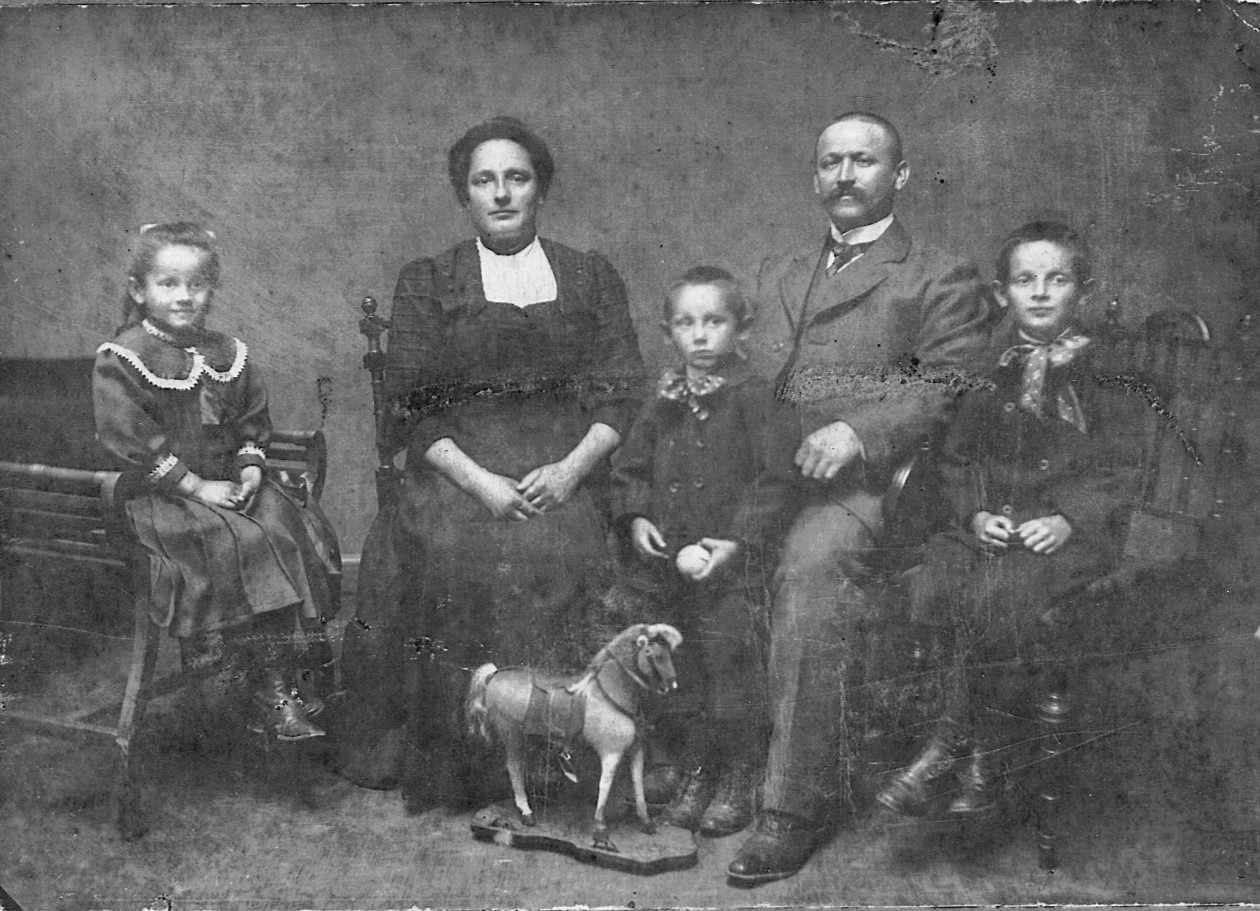
    For more than a century, members of the Monasso family have been crafting terrazzo floors in the Achterhoek. The family ended up in Aalten in 1915, after fleeing from Bocholt, Germany, during World War I. Their origins lie in the Northern Italian region of Friuli.

    The family hails from the mountain village of Travesio, in the Friuli region. It was an impoverished area plagued by poor soil, earthquakes, floods, and high taxes. Many inhabitants left to find work elsewhere. Friulians were known as skilled craftsmen—foresters, carpenters, stonemasons, and terrazzo workers.

    The First Generation

    In 1868, Pietro Monasso married Maria Bortolucci in Travesio. They had three sons and four daughters. All three sons learned the terrazzo craft in Italian cities. One of them, Felice Monasso, was once repairing stairs at St Mark’s in Venice as a boy. He received a banknote worth about twenty guilders—a staggering amount for the time—from the newly arriving Pope Leo XIII. He did not spend it, but kept it as a relic.

    The three brothers were Giovanni (1869–1939), Felice (1871–1962), and Antonio (1876–1967). They left Friuli at a young age: Giovanni and Antonio at age eleven, and Felice at fourteen.
    Work in Germany

    Giovanni travelled with fellow villagers to the Balkans to learn the carpentry trade. Felice worked first in Frankfurt, including at the large Odorico terrazzo company, which employed hundreds of Friulian workers. Giovanni and Antonio later joined him in Germany.

    From Frankfurt, the brothers went to Münster, where their cousin Bortolucci ran a terrazzo business. They worked there as master journeymen, and there was plenty of work in Westphalia and the Netherlands. On the advice of their boss, they established themselves in 1896 in Bocholt, just across the border from Aalten. There, they started a terrazzo firm together.

    The enterprise flourished. This was the era when wealthy textile barons in Bocholt were building grand houses. With their terrazzo work, the Monassos embellished many a villa on the prestigious Bahnhofstraße. The three families lived together with their staff in a large building on Münsterstraße in Bocholt.
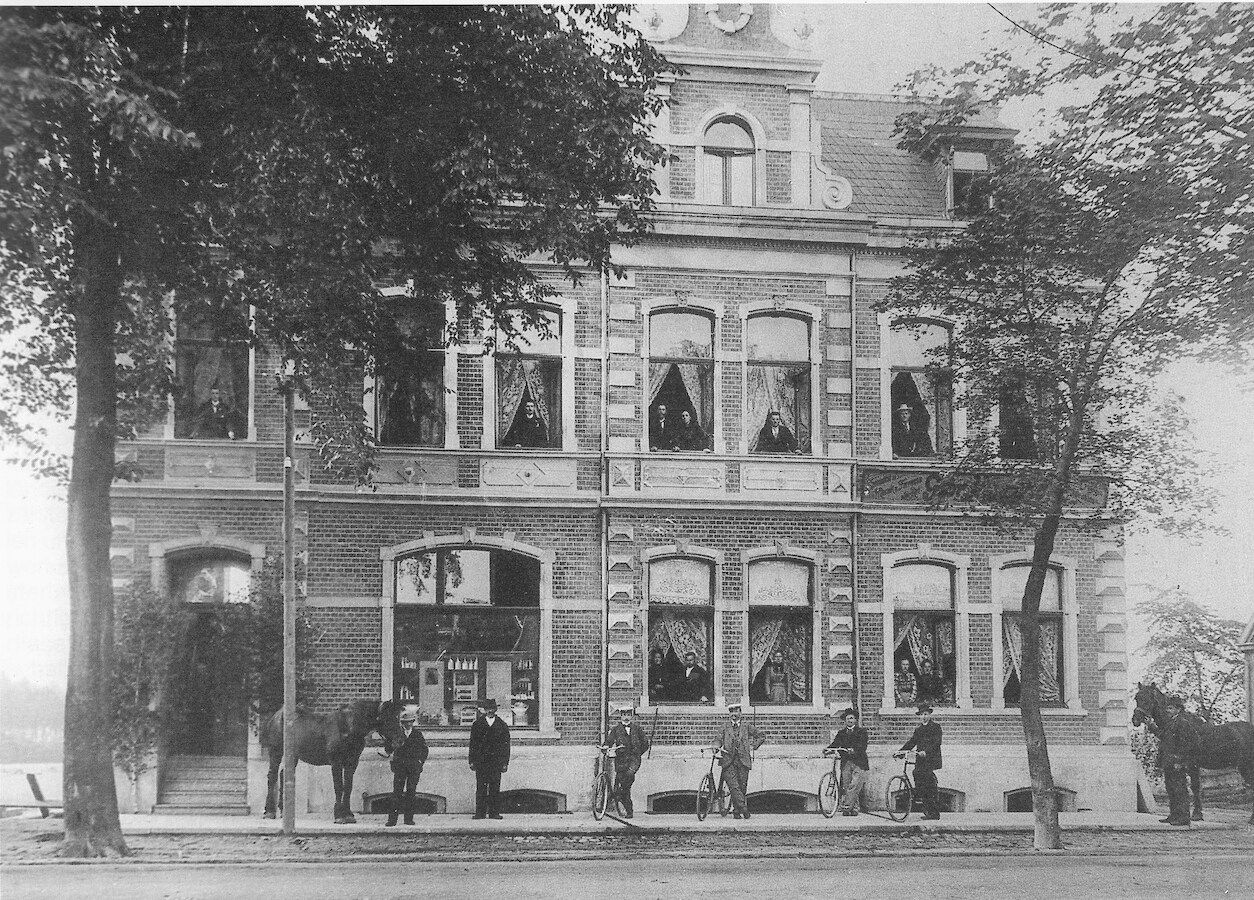
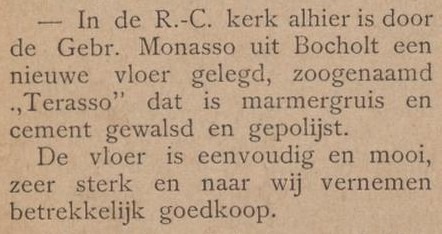
    The firm ‘Gebrüder Monasso’ had plenty of work, including in the Achterhoek. As early as 1897, they laid a terrazzo floor in the Catholic St George’s Church in Bredevoort.
    On 22 November 1899, Giovanni Monasso married Angela Chivilò (1879–1951) in Italy. Together they had four sons and two daughters.

    Flight to Aalten (1915)

    World War I began on July 28, 1914. Italy sided with the Allies, and the Germans saw this as a betrayal. An anti-Italian atmosphere emerged in Germany. Italian workers were insulted and sometimes even mistreated on construction sites. The three Monasso families decided to flee to Aalten, just across the border in the neutral Netherlands. In effect, they were asylum seekers.
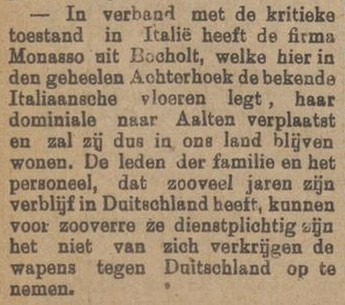
    It was a somber procession that departed Bocholt for Aalten before dawn on 19 May 1915. A horse and cart full of household goods was followed by twenty Italians. Three children remained behind in Bocholt: two because they were too ill to travel and one because he wanted to finish his year at the gymnasium.

    In Aalten, they spent the first night at Vultink’s lodging house on Dijkstraat. The following day, Giovanni and Antonio moved into a house on Landstraat, and Felice into Bredevoortsestraatweg. Antonio and his wife found a home on Haartsestraat shortly thereafter. The then Mayor Monnik arranged for residency permits. The children who had stayed behind joined their families later.

    A New Life in Aalten

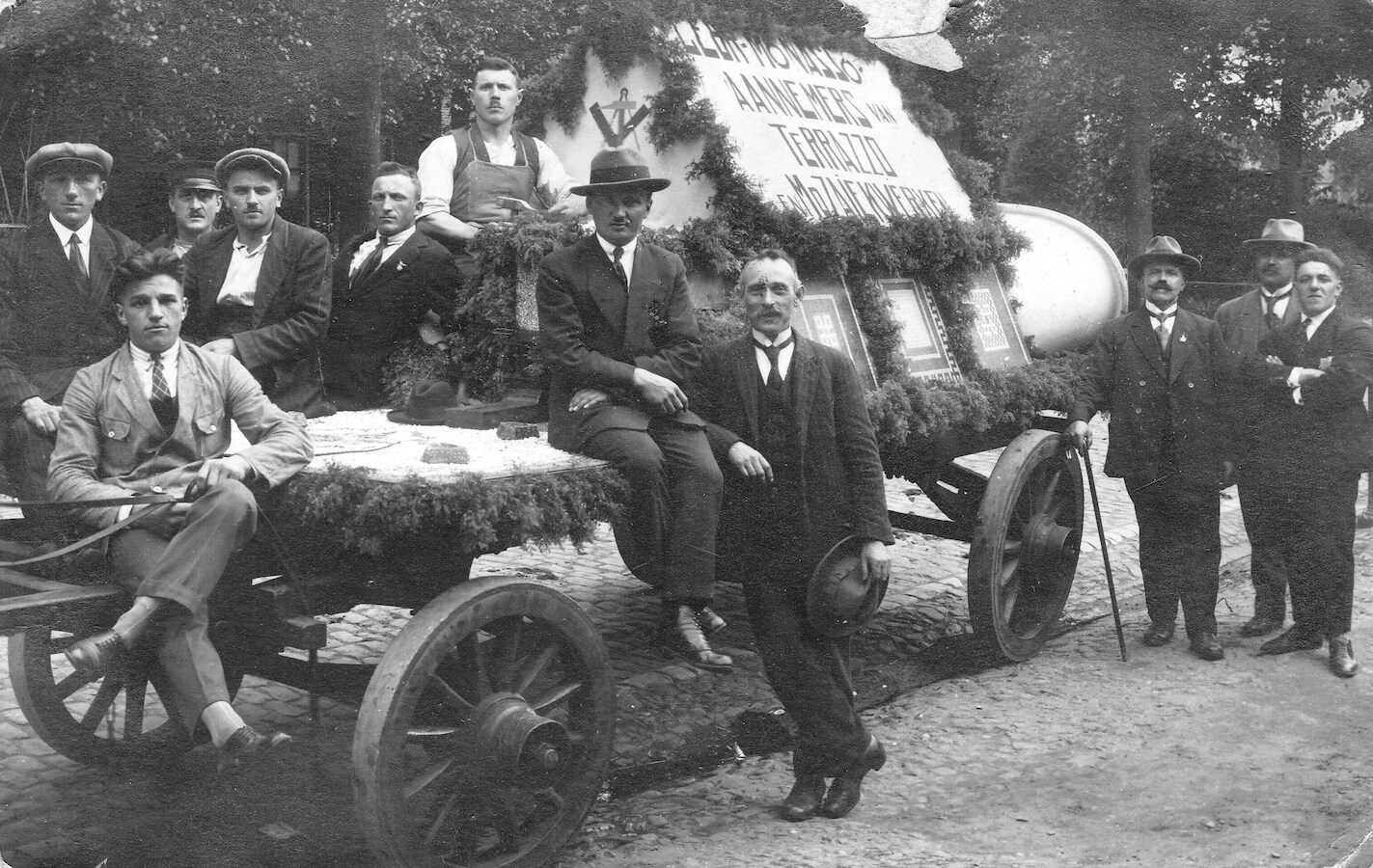
    Giovanni demonstrated his entrepreneurial spirit by registering within a few days at Sociëteit Schiller, where local businessmen met. His brothers followed a week later. Within a short time, the Monassos were working again. They laid floors in homes, shops, schools, and churches in Aalten and the surrounding area, bringing in skilled terrazzo workers from Italy as staff.
    They did not yet use machines or electric tools; everything was made by hand. Terrazzo floors were laid on-site, which was arduous work. Stairs, countertops, and other components were made in the workshop using moulds and were subsequently installed in kitchens or halls.

    Around 1920, Giovanni established his business on Parallelweg in Aalten. In the mid-1950s, they moved to the adjacent Staringstraat, where a new showroom was opened in 1969.

    Felice established a terrazzo business in Winterswijk in 1922; Antonio followed in 1932 with a branch in Doetinchem.
    Later Generations

    The second and third generations also remained active in the craft. In the decades following World War II, sons and grandsons took over the work. All four of Giovanni’s sons became terrazzo workers and married Dutch women.

    Business thrived for decades. In the 1960s and 1970s, demand decreased due to the rise of synthetic floors and steel countertops. Nevertheless, the family business endured. The Monassos combined traditional techniques with modern methods, specialising not only in floors but also in worktops, thresholds, window sills, and restorations.

    Current Company in Aalten

    In 1982, Richard Monasso, Giovanni’s grandson, took over the company in Aalten. The business moved to Industriestraat. In the 21st century, terrazzo became popular once again. Richard Monasso now works on exclusive projects at home and abroad; his work can be found in a department store in London, a restaurant in Paris, and a villa in Greece.

    Willem Monasso

    In 1996, Willem Monasso, son of Giovanni Monasso and Angela Chivilò, spoke about his youth:

    Wilhelm Franz Joseph (Willem) Monasso (1916–2001) was born in Aalten but returned to Italy with his mother as a child. They lived with an uncle who owned grape plantations. He attended primary school there. He did not learn Italian there, but so-called Furlan, a regional language that differs as much from Italian as Frisian does from Dutch.

    At the age of ten, they returned to the Netherlands. Back in Aalten, Willem had to start again in the first grade. He left school after the fourth grade to enter the terrazzo trade.

    On his mother’s side, the Monasso family owned a wine bottling plant and a silk plantation. They regularly had barrels of white wine from their region of origin in Italy shipped over. The first barrel always went to the parish priest of Aalten.

    During World War II, Willem was the only Aalten resident allowed to have a radio because he held Italian nationality. Naturally, the occupiers did not allow him to listen to the English ‘Oranje’ station, but he did so in secret anyway, along with half the neighborhood.

    Willem Monasso could tell captivating stories about his former work in the perfect Aalten dialect. Initially, countertops were made on-site in a formwork built by a carpenter. Later, this was done in the workshop, and they were transported to their destination by a small truck. The terrazzo technique requires great craftsmanship and is incredibly labour-intensive. Throughout the region, many beautiful Monasso floors can still be found in churches, hospitals, monasteries, schools, and scholten farms.

  • German currency as a daily means of payment

    German currency as a daily means of payment

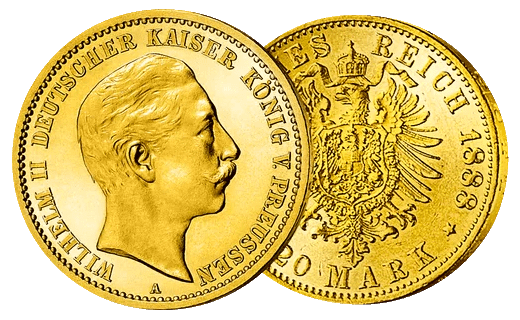
    Until the beginning of the 20th century, German money was the daily means of payment in Aalten. This was due on the one hand to the lively trade with Germany and on the other because many residents of Aalten worked in the textile factories in Bocholt. They were paid in German money and put this into circulation in Aalten.

    In 1937, G.H. Rots described in a series of articles how things were done in Aalten in former times. For instance, he wrote about the local payment transactions:

    “…Speaking of agio, that was caused by the German money that was in circulation here and was the daily means of payment. It was such that Dutch currency was rarely seen. If one needed ‘Dutch money’, for example for taxes, one had to go to a few individuals who ran large businesses to exchange German money. Until the beginning of this century, the circulation of German money in our municipality was still common.

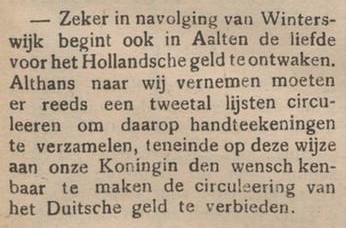
    When the government wanted to take measures to prohibit that circulation, many people resisted. The association ‘Aalten’s Belang’ became involved, and within that association, a fierce struggle arose over the abolition or retention of German money. In Hotel De Roskam, owned by Mr. Voorderman, well-attended meetings were held. Those who conducted a lot of trade with Germany or had German customers in their shops saw a significant disadvantage in the abolition of German money.

    That trade with Germany was quite busy. There were almost no border restrictions, and on the Bocholt market days, numerous merchants went there to sell their wares. And those who worked in Germany also naturally received their wages in German money and put this back into circulation in our municipality. One should therefore not think too lightly of it. And at one of the meetings of Aalten’s Belang, it came to heated debates, and even the continued existence of the association was jeopardized as a result of this issue. Finally, the abolition was introduced in July 1914, and the population adapted to it.”

    Source


    • ‘From Aalten’s Past’, by G.H. Rots, Aaltensche Courant, 31 December 1937 (via Delpher)
  • 100 Years of Independence

    100 Years of Independence

    Aaltensche Courant, 30 July 1913

    We frequently read or hear about “Plan 1913”. What is meant by that? It is the plan or intention to festively commemorate the joyous event of 100 years ago. Is there reason for this? Those who still ask this provide proof that they have forgotten what they learned at school regarding the history of our fatherland. The only thing that can be offered as an excuse is that for many, their school years lie far behind them and oral tradition is no longer heard.

    It was in 1863, when the fiftieth anniversary of the Netherlands’ Independence was celebrated in Aalten, that things were quite different. Back then, there was hardly a family where one did not hear from the lips of grandparents about the sad times our ancestors lived through as long as the French were in charge here. Incidents that had personally affected a family were recounted, but now, 50 years later, much of that is covered by the veil of oblivion.

    In general, therefore, we wish to recall a few facts that history has recorded. The 17th century (1600–1700) is called the “Golden Age” of our history; the 18th century (1700–1800), the “century of decay”.

    What was the cause of that decay? People began to rest on the laurels achieved by their ancestors. A spirit of enterprise was no longer to be found. In idleness, people began to enjoy the accumulated wealth and were afraid to give up anything that might contribute to the promotion of the country’s prosperity. No funds were made available for the army and navy, and the prestige of the once-mighty Republic of the United Netherlands dwindled from year to year.

    In the eyes of other European states, we no longer counted. Furthermore, dissatisfaction with the administration arose, fuelled by the revolutionary spirit that manifested itself in France—so much so that the revolutionaries, called Patriots, acted hostily towards Stadtholder William V and his supporters, called Orangists.

    The French Period

    When the great Revolution had taken place in France, and the revolutionaries had put the King and Queen to death, the Patriots called in the help of the French to drive out the Stadtholder here as well. In 1795, they marched into our country with a large army and were received with cheers by the revolutionaries.

    The government was unable to stop them because the army was not properly equipped and the fortifications were dilapidated. The money needed for their maintenance had been cut, but now they could give the French 100 million guilders, which they demanded for the help and assistance they had provided. William V fled to England, and his opponents took the place of the former government officials.

    Now, the French could have left again, but they did not think of it. Time and again, when the French soldiers here were well-fed and clothed, they were exchanged for a ragged, starving bunch, to recover their strength here at the expense of the citizenry. Their influence on the course of affairs in this country meanwhile increased more and more, until they took the entire administration into their own hands.

    In France, there was great confusion until it finally succeeded for a lawyer’s son from Corsica, named Napoleon Bonaparte, to create some order. He was a brave general and a capable warrior, who defeated the armies of the states that had declared war on France and prescribed humiliating peace terms to his enemies. In 1804, he had himself proclaimed Emperor, and two years later he sent his brother, Louis Napoleon, here to rule over our country as King.

    Heavy Sacrifices

    The alliance with France cost us heavy sacrifices. The English, who were at war with the French, now became our enemies as well and took possession of almost all our colonies and robbed our merchant ships, which meant our trade was as good as gone. One already had to pay a quarter of one’s income in taxes, and yet Napoleon demanded more.

    Napoleon had had his brother Louis proclaimed king here in the expectation that he would submit entirely to his will. However, he was disappointed in this. Louis came here with the intention of promoting the prosperity of his kingdom as much as possible and protecting the people from further oppression. He showed this, among other things, by refusing to introduce conscription and by tacitly allowing smuggling with England.

    To hit England, Napoleon had strictly forbidden all trade with that country. Now that Louis did not support him enough in this, he forced him to abdicate (1810), and Holland was annexed by France. Our country now became a French province and thus ceased to be an independent kingdom. The government was now organised on a French footing. The Dutch language had to gradually disappear. French had to be learned in schools, and newspapers also had to appear in French.

    An army of customs officers occupied the coast and ensured that when a ship with English goods arrived, the cargo was burned. Indische goods, such as coffee, tea, tobacco, and rice, rose astonishingly in price as a result. The impoverished citizenry managed with a decoction of toasted rye bread instead of using coffee, and instead of tobacco, people smoked walnut leaves. To replace sugar, people set themselves to making sugar from the sweet sap of beets.

    Many wealthy citizens became poor, and those who had to live off their interest, as well as numerous orphanages and charitable institutions, suffered want when Napoleon had the interest on the national debt “tiered”—that is, he only acknowledged one-third of it. Those who, for example, were entitled to 300 guilders in interest only received 100 guilders. No more was earned, but more had to be paid, causing poverty to pinch; hundreds of houses were sold for demolition, magnificent country estates were disposed of for a trifle, horses and carriages were abolished, and servants dismissed. In Amsterdam, grass grew on the streets.

    Fighting for Napoleon

    But the Frenchman did not just take goods; he also demanded blood. Napoleon needed soldiers to fight for him in all corners of Europe and now forced our boys to serve in his armies. He introduced conscription, which for us was something unheard of. In our previous wars, there were always enough volunteers to defend the fatherland, but now it was determined by lot who had to take up arms. Thus, numerous families saw their beloved relatives head off to foreign lands, never to see them again.

    Yet no one dared to complain, or they would make the acquaintance of prison. Secret spies crept around everywhere to pick up every suspicious word, and the police often forced their way into homes and opened letters to hear someone’s opinion of the Emperor. Books and newspapers were not allowed to appear before they had been approved.

    Yet this oppression also had its good side. The people now forgot their old party squabbles and felt united again and yearned for salvation. Napoleon’s power had reached its peak. Only England and Russia still defied him; otherwise, he ruled over all of Europe. Russia, too, would now feel his blows. With an army of more than half a million, he marched thither, but for every twenty soldiers, nineteen died miserably in Russia’s snowfields. The approximately fifteen thousand Dutchmen also never returned to their fatherland.

    “Oranje boven” (Orange up/Long live Orange)

    After this outcome, the Counts of Hogendorp, Van Limburg Styrum, and Van der Duijn van Maasdam secretly hatched plans to shake off the French yoke. After the Battle of Leipzig, in which Napoleon was defeated, the signal for the uprising was given by adorning oneself with the orange colour, which was previously punishable by death. The French soldiers watched, bewildered, and did not have the courage to resist.

    Prussia and the Cossacks offered help, and on 15 November 1813, the cry “Oranje boven” already rang through Amsterdam’s streets, and two days later in The Hague. On 21 November, Van Hogendorp and Van der Duijn van Maasdam accepted the provisional government, and on 30 November, the Prince of Orange, son of the expelled Stadtholder William V, set foot on land at Scheveningen, where he was cheered by the crowd with unprecedented enthusiasm. Two days later, he was proclaimed Sovereign Prince in Amsterdam.

    The French slunk away, and the Netherlands was free. That is one hundred years ago now, and all that time we have been spared from enemies crossing our borders. There is, therefore, reason to festively commemorate the Netherlands’ deliverance with thanks to God. Let us value our freedom, for no greater disaster can befall a people than when they are dominated by strangers. At the centenary of our independence to be celebrated within the municipality of Aalten on 28 August next, let our age-old motto therefore ring out loudly: “Oranje boven”.

    Source


  • Wilhelm Albertus Lammers

    Wilhelm Albertus Lammers

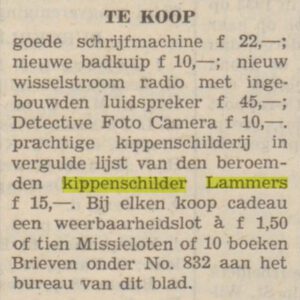
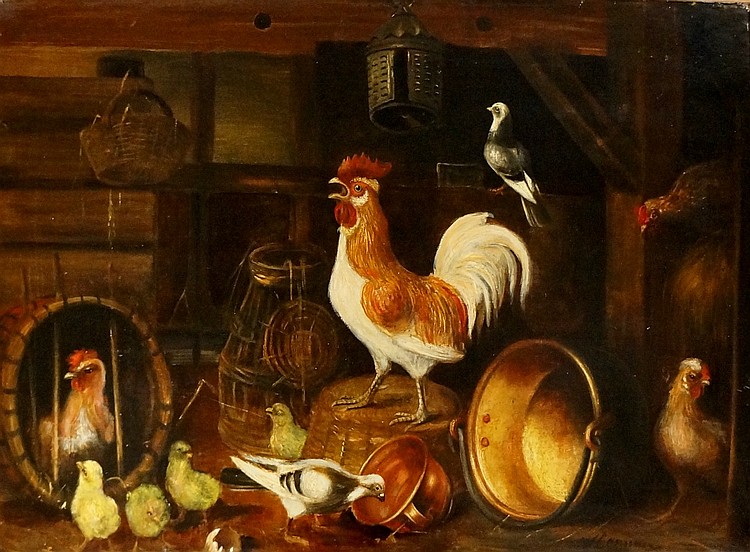
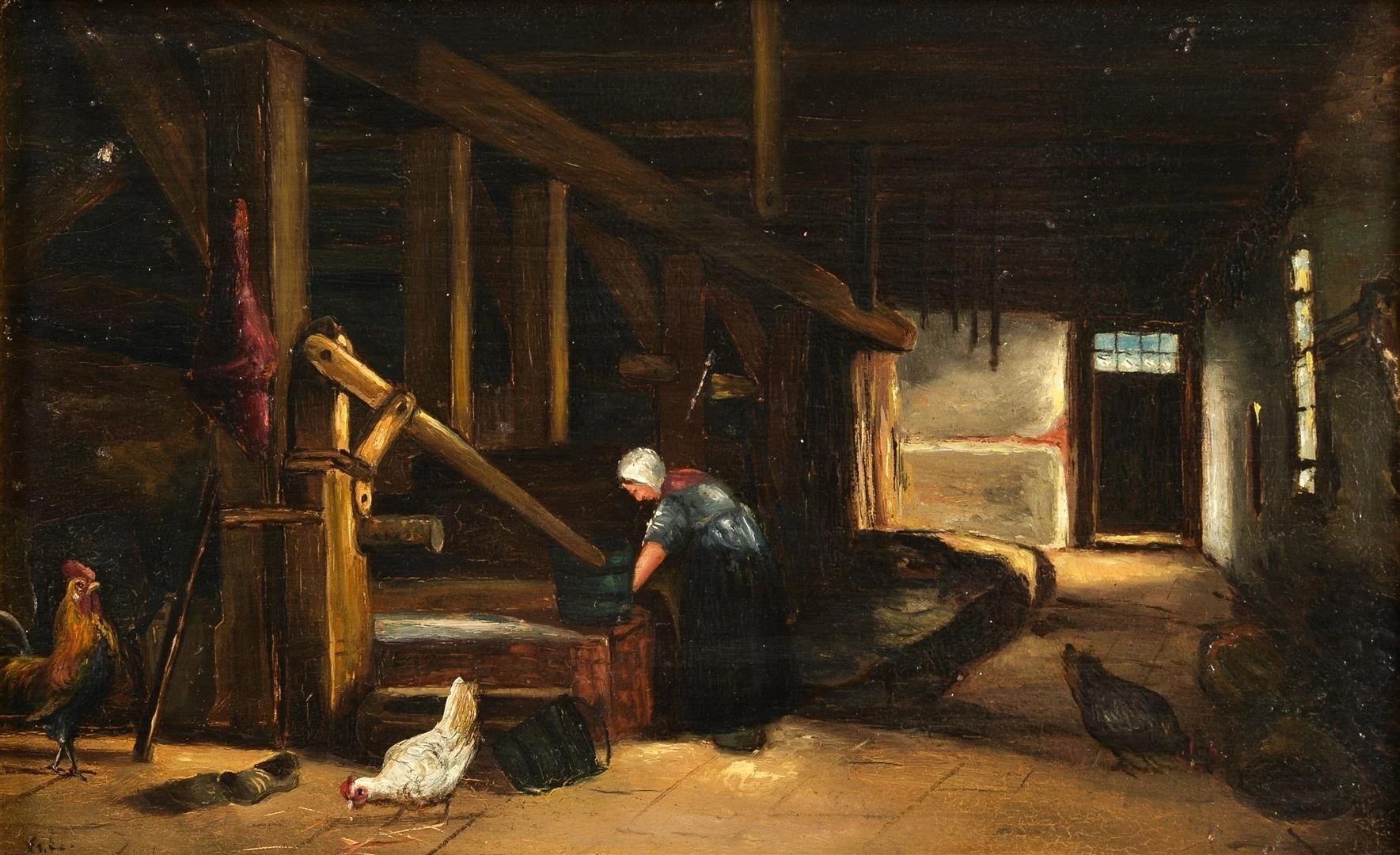
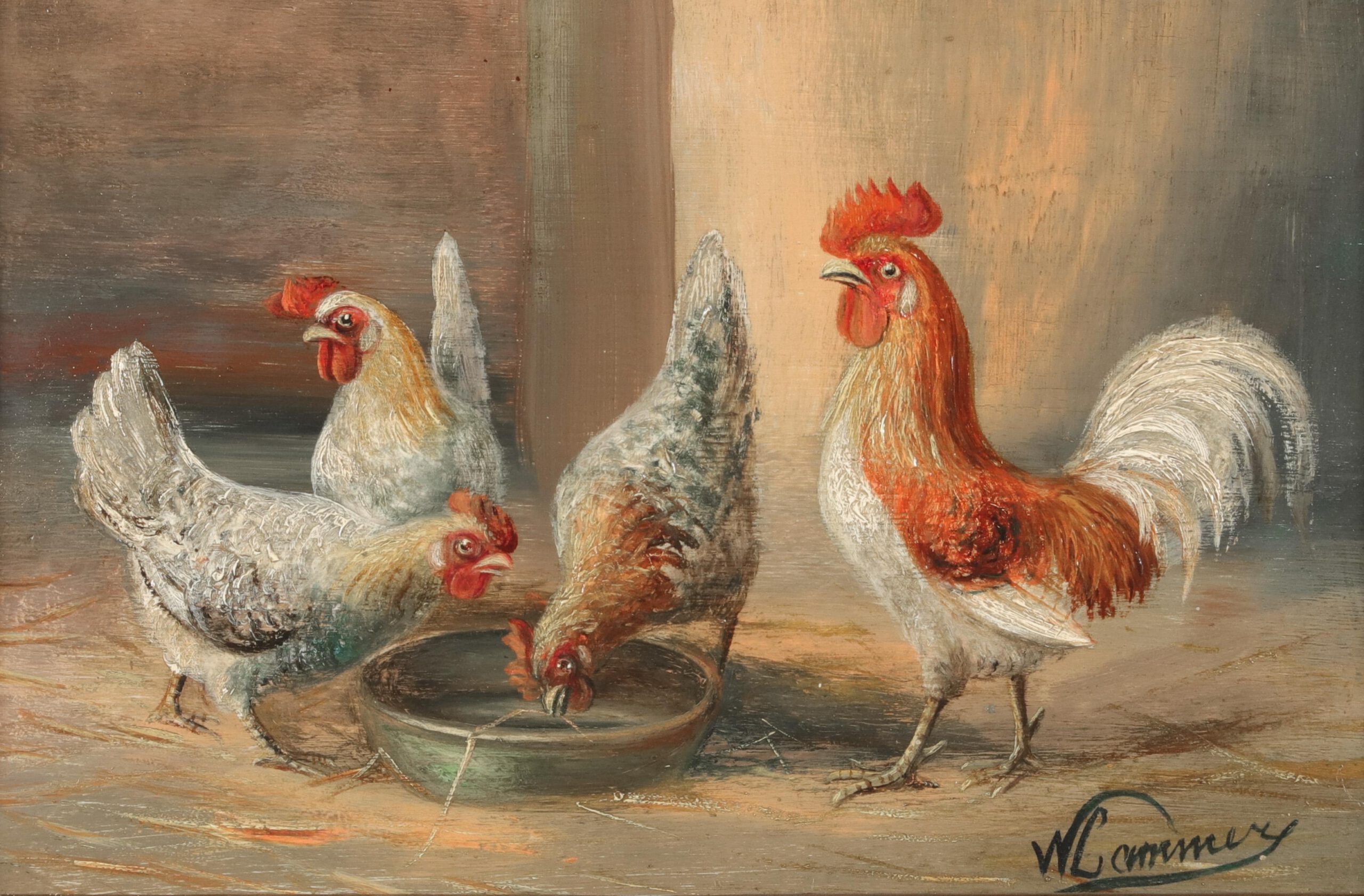
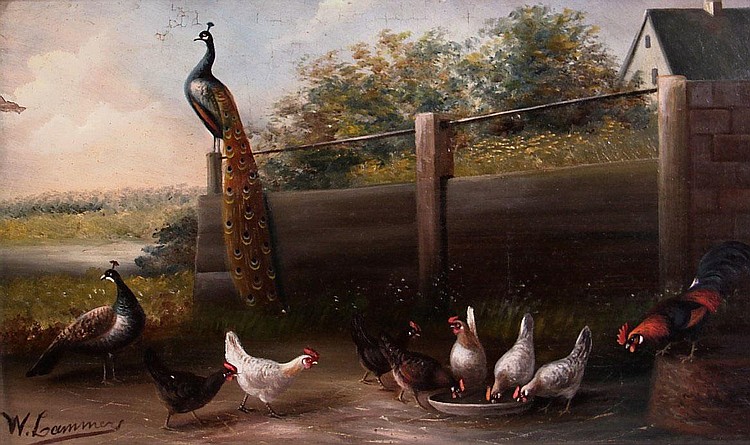
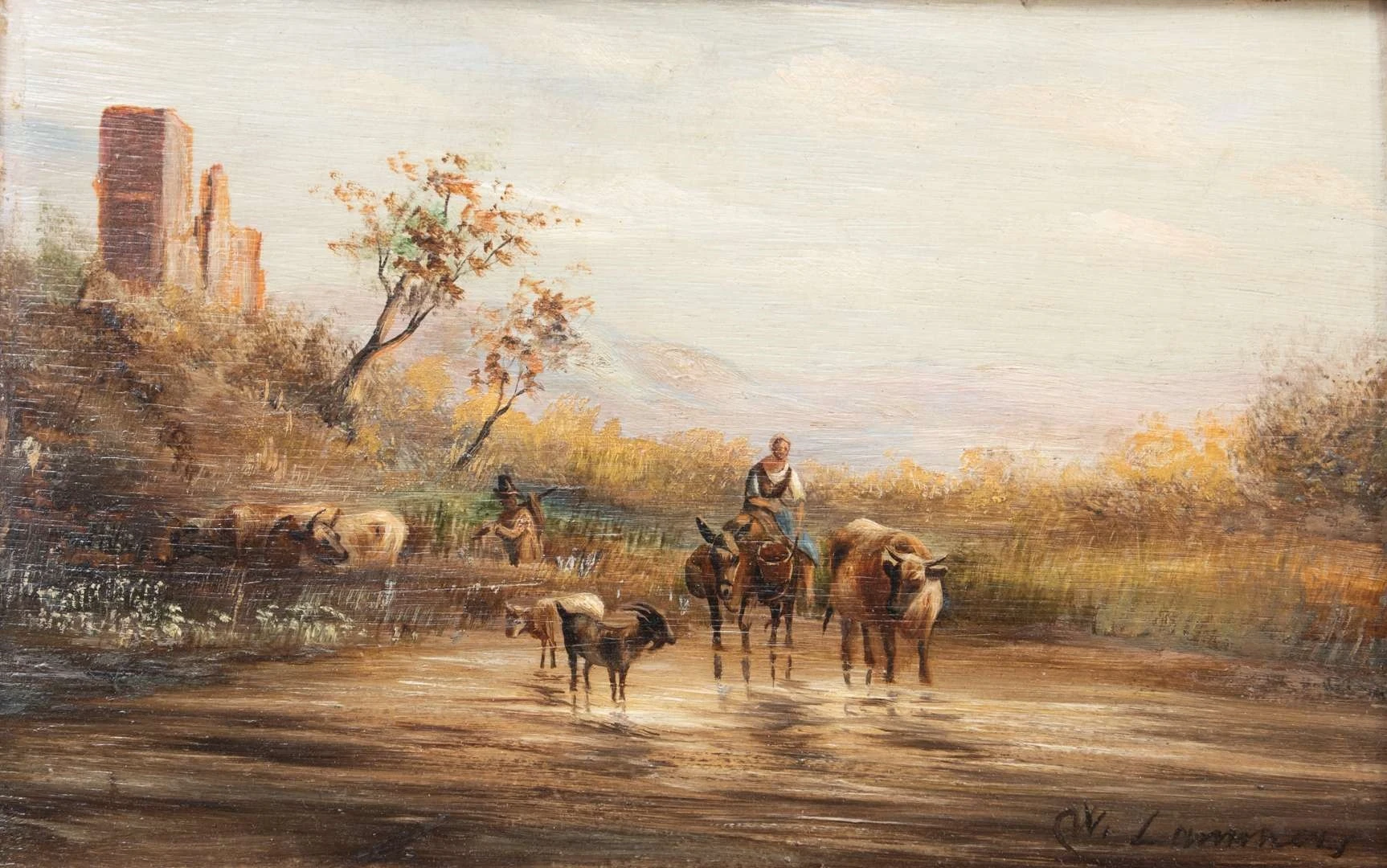
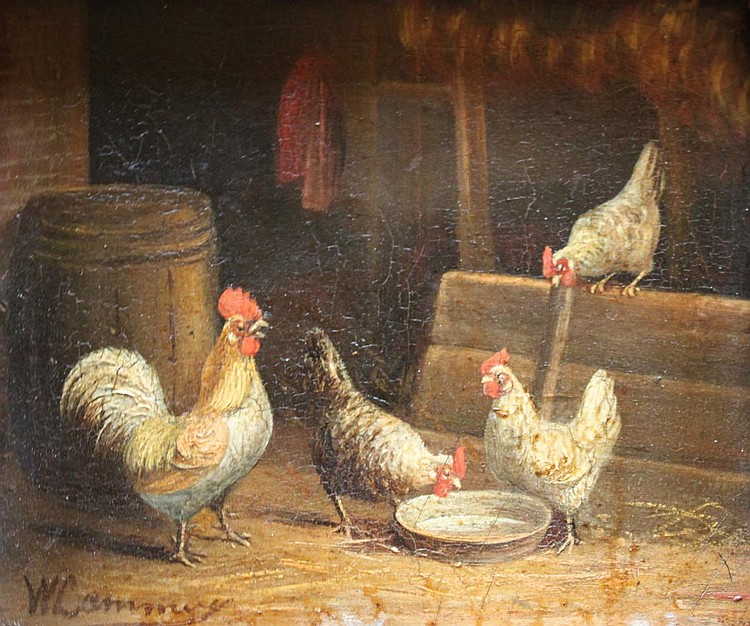
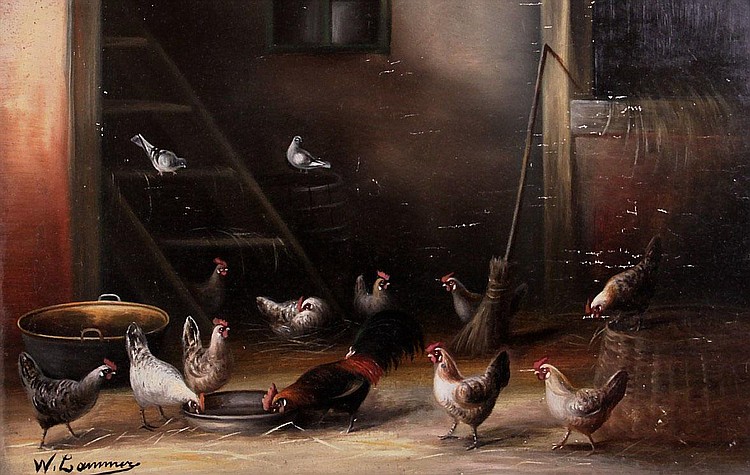
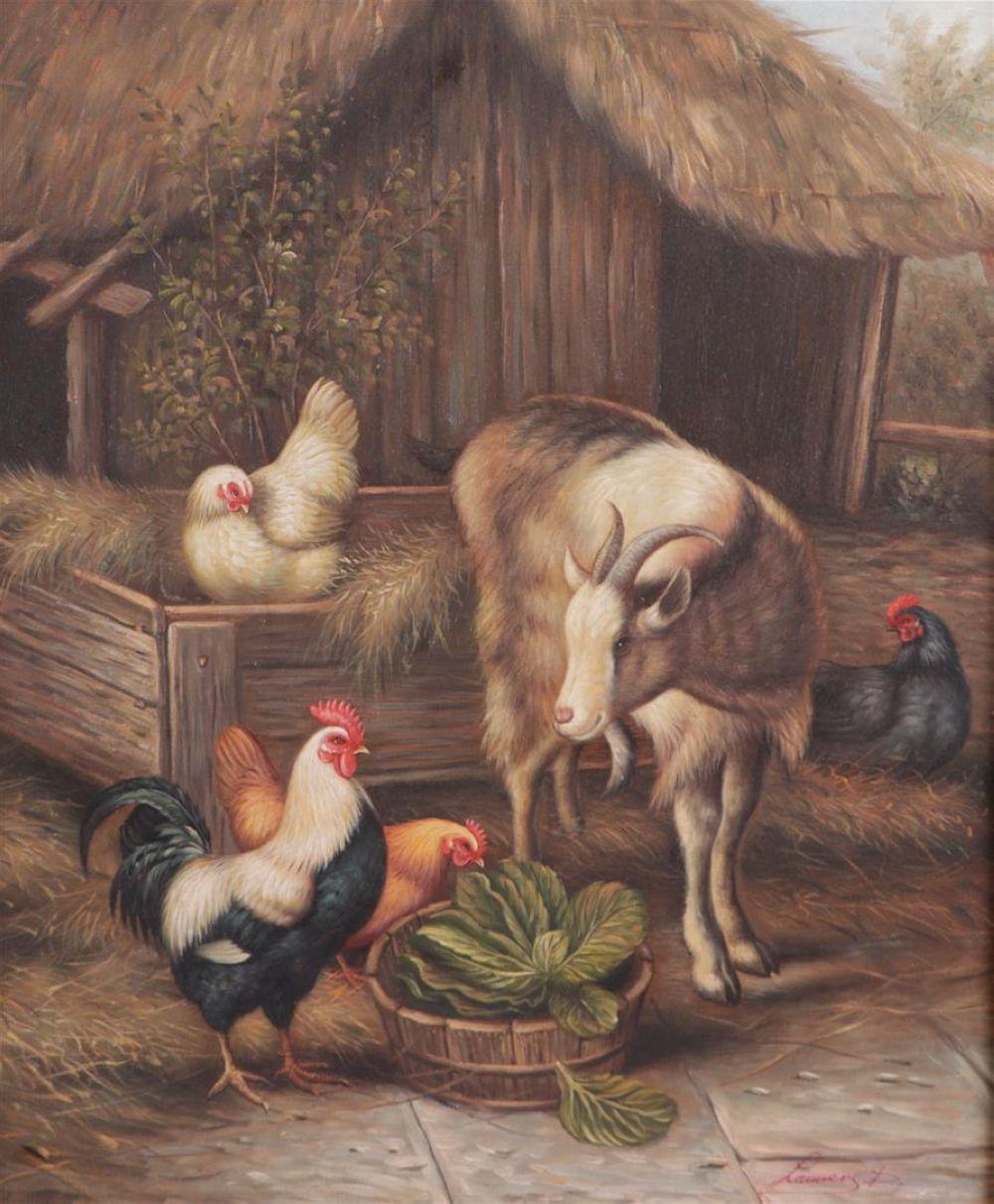
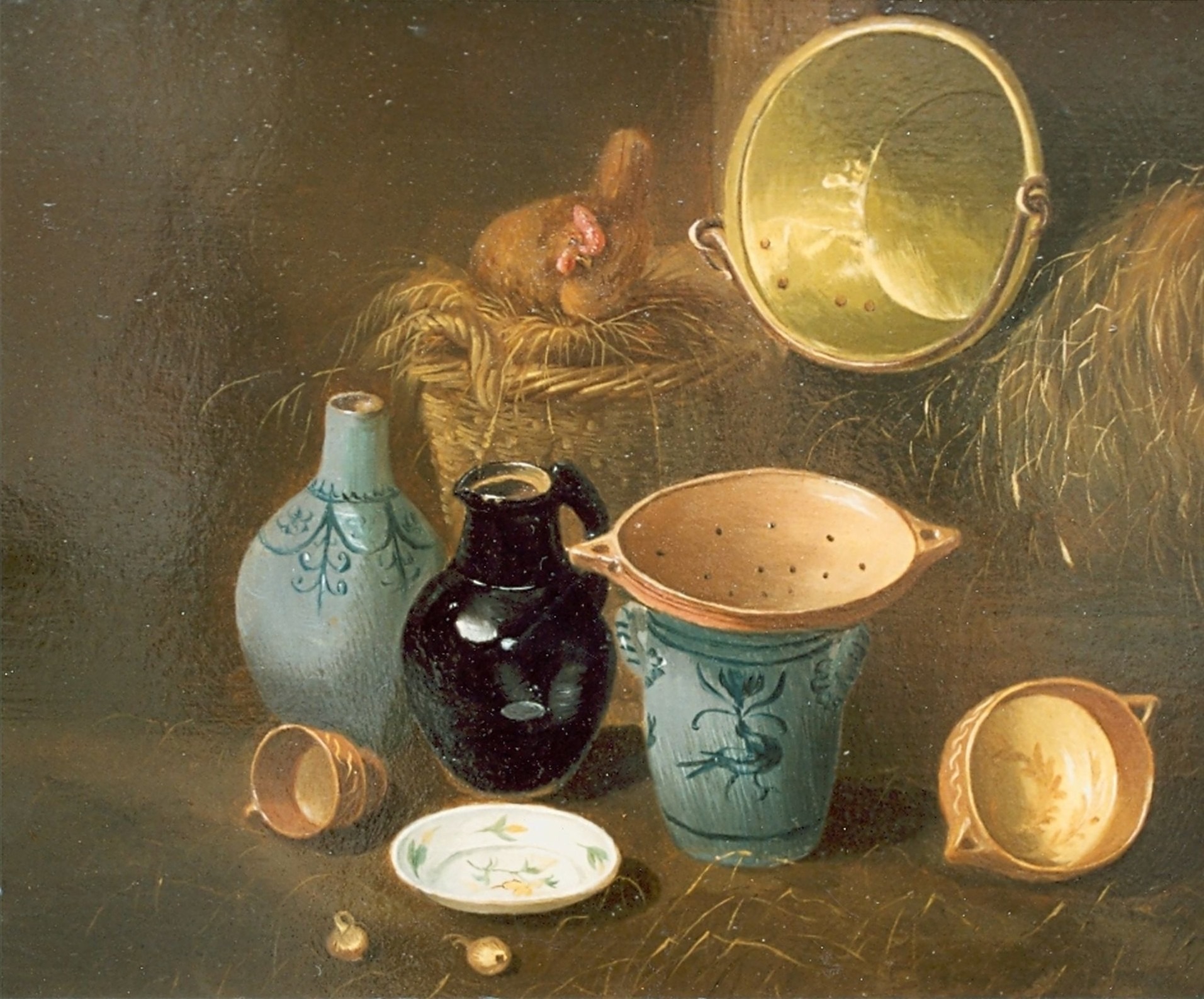
    Wilhelm Albertus (Willem) Lammers (Aalten, 1857 – Ginneken, 1913) was a Dutch painter with a remarkable specialisation: poultry scenes. Until the end of the 19th century, hardly any attention was paid to the living conditions of poultry. Chickens typically slept in a farm barn or in trees. The painter managed to capture this vividly on canvas.

    Lammers was born on 3 April 1857 at the Schulenkamp farm in the Dale hamlet near Aalten, as the son of Albertus Lammers and Theodora Huls. The family moved several times within Aalten – first to Kerkstraat, then to Dijkstraat and Hoekstraat. Willem Lammers was initially a shoemaker by trade. In 1880, he left for Gaanderen, and a few years later, he lived in Amsterdam.

    In 1887, the Court-Martial in ‘s-Hertogenbosch sentenced him to four months of military detention for desertion. Upon his registration, his occupation was recorded as painter, his religion as Roman Catholic, his height as 1.66 m, with blonde hair, blue eyes, and a curly beard.

    On 24 July 1890, Lammers married Wilhelmina van den Akker in Breda. The couple lived briefly in Aalten (Dijkstraat) and moved to Breda in April 1891. Eight children were born there: seven daughters—one of whom was stillborn—and one son. Lammers passed away on 4 February 1913 in Ginneken (municipality of Breda).

    Arts

    As an artist, Lammers was self-taught. He worked mainly in oil on canvas or panel, mostly in small to medium formats. His scenes depict chickens, chicks, and cockerels in their daily environment: around the feeding area, by the haystack, or inside a barn. He signed his work as “W.A. Lammers”, “W. Lammers”, or with the monogram “W.L.”.

    Gallery

    A selection of the work of Wilhelm Albertus Lammers:

  • Herman Driessen

    Herman Driessen

    Textile manufacturer

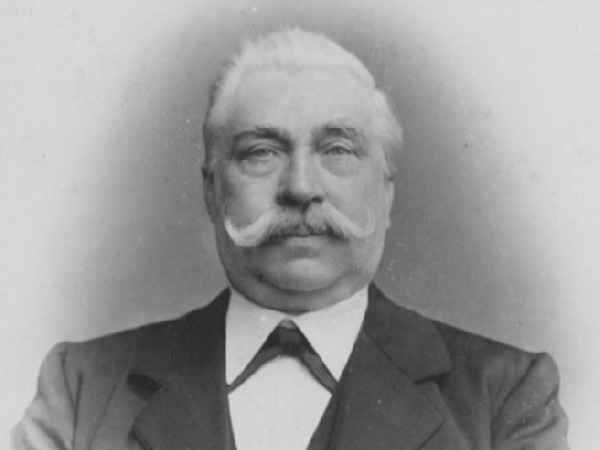
    Herman Anton Frans Carl Maria Driessen (Aalten, 1831-09-22 – Aalten, 1911-05-20) was a textile manufacturer of great significance to Aalten’s textile history. He was the son of textile manufacturer Anton Driessen and Isabella Dees. In 1862, he married Anna Maria Theodora Mühren, a merchant’s daughter, in Neuenkirchen near Rheine (Germany).

    Around 1863, he and his wife moved into a newly built house on the corner of Landstraat and Hoekstraat, at the location where his father had operated a cotton mill from 1827 to 1862.

    In 1893, Herman Driessen retired from the management of Gebroeders Driessen. Together with his son Joseph, he founded a modern steam weaving mill with 34 looms at ‘het Blik’ on Hofstraat: the NV Stoomweverij Herman Driessen & Zoon, often abbreviated as HDZ. Alongside the factory, Herman’s new home was also built: the stately Villa Beukenhof.

    Herman Driessen is buried at the old Roman Catholic cemetery on Piet Heinstraat in Aalten.

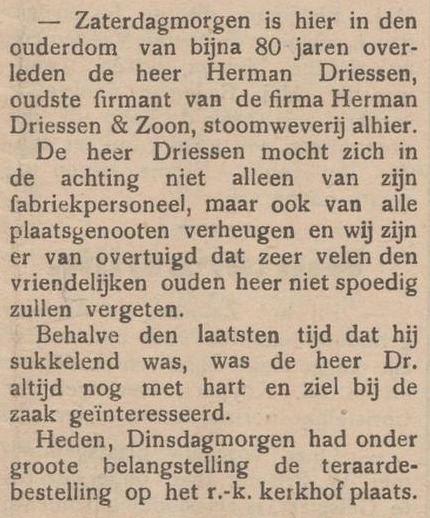
    Hermann A.F.C.M. Driessen – Aaltensche Courant, 24 May 1911
    Aaltensche Courant, 24 May 1911
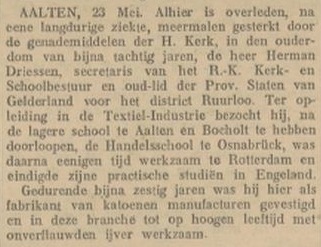
    Hermann A.F.C.M. Driessen – De Maasbode, 24 May 1911
    Maasbode, 24 May 1911
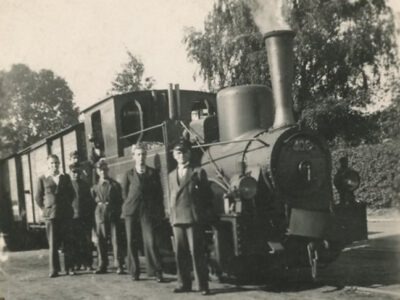
  • Tram line Lichtenvoorde–Bocholt

    Tram line Lichtenvoorde–Bocholt

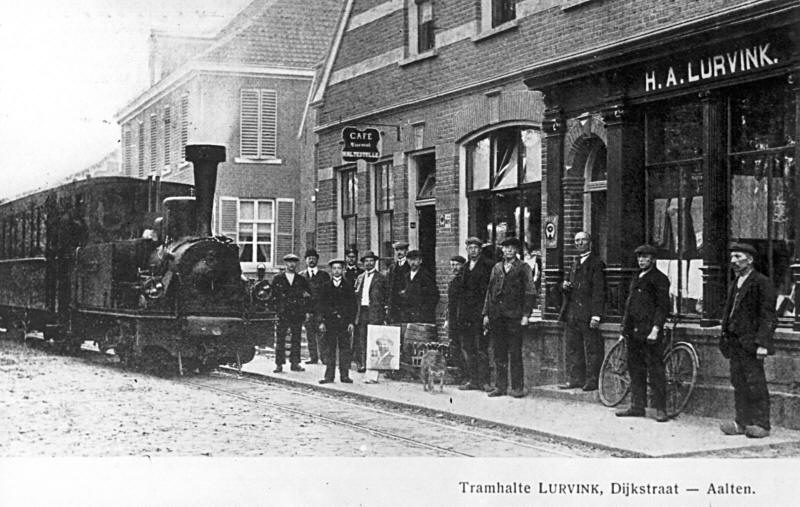
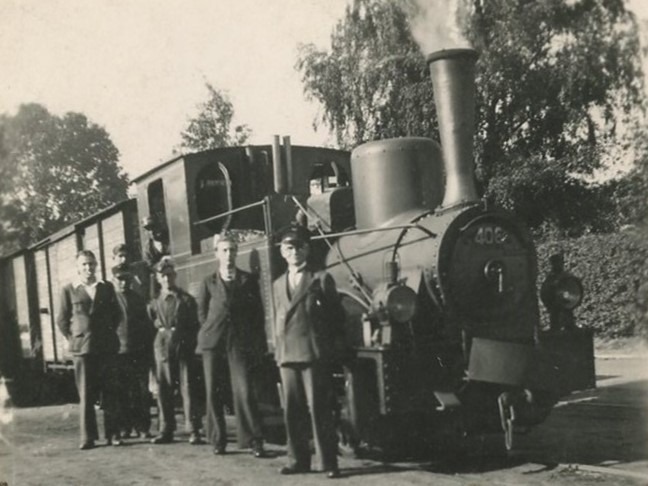
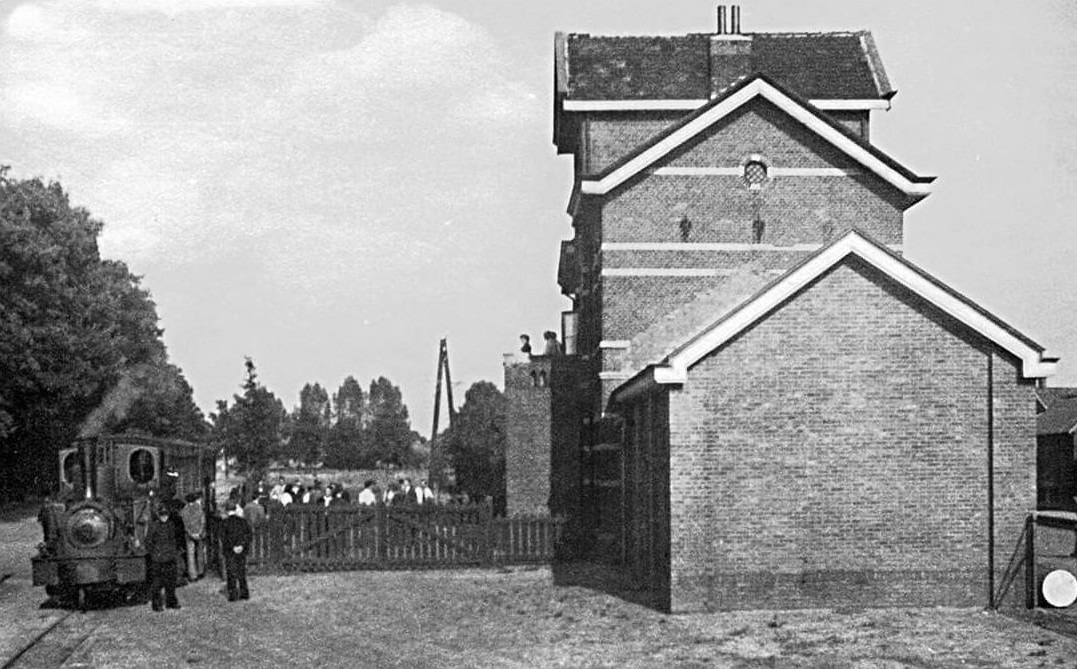
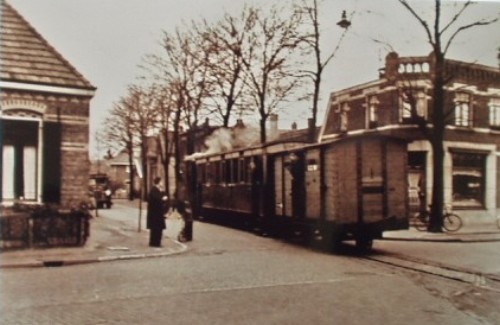
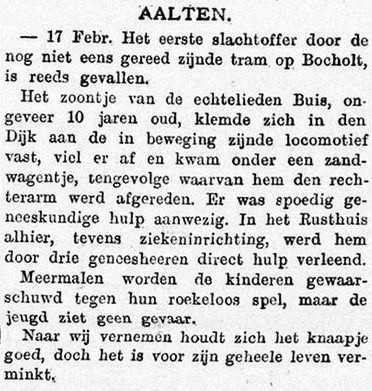
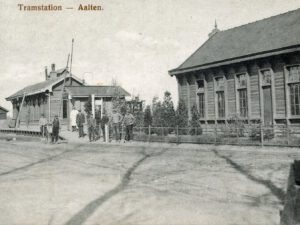
    In 1910, a tram line was opened from Lichtenvoorde to Bocholt, via Bredevoort and Aalten. In 1953, the tram line was discontinued and the tracks were broken up.

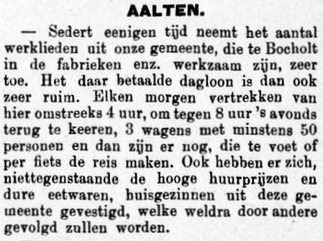
    Around the turn of the 20th century, hundreds of Aalten residents crossed the border every day to work in one of the textile factories in the neighbouring German city of Bocholt. In all weathers, they travelled on foot, by bicycle, or by horse and carriage. Some took up to three hours to cover the (roughly) ten kilometres between home and work, both in the morning and in the evening!

    Plans

    As early as 1880, there were plans to extend the Lichtenvoorde–Groenlo tram line to Aalten, Varsseveld, and Terborg. By 1893, there were plans for a horse-drawn tram line from Groenlo to Lichtenvoorde, Bredevoort, Aalten, and Dinxperlo/Bocholt. In 1899, the final plan was eventually drawn up for two steam tram lines: from the Lichtenvoorde-Groenlo station to Zeddam and to Bocholt. To this end, the Geldersch-Westfaalsche Stoomtram-Maatschappij (GWSM) was established in 1905, with its head office in Lichtenvoorde.

    The Bocholter Volksblatt wrote on 1 October 1907:

    Holländische Arbeiter in Bocholt

    “Yesterday evening, a local citizen on his way back from Aalten to Bocholt, as he informs us as a loyal subscriber, took the pleasure of counting the workers returning by bicycle from Bocholt to the border. On his way from the Kreuzkapelle to the Holtwicker Bach, he counted no fewer than 276 cyclists; he also encountered a large wagon which was also transporting workers, estimated at perhaps 40–50. In this respect, therefore, the Bocholt–Aalten light railway certainly does not have such bad prospects for ridership, especially since there will undoubtedly be many more workers who wish to come here for work.”

    A year later, on 4 November 1908, the same newspaper wrote:

    Dampfeisenbahn Bocholt–Aalten

    “After long negotiations, the Bocholt manufacturers and other interested parties have finally succeeded, through the subscription of large sums of money, in ensuring that the Bocholt–Aalten light railway is now being built. It has now been entered into the commercial register of the local district court under Geldersch-Westfälische Dampfeisenbahn-Gesellschaft AG in Lichtenvoorde in the Kingdom of the Netherlands, with a branch office in Bocholt. Hundreds of Dutch workers are employed in the local factories, who have had to cover the approximately 3-hour journey to Holland on foot or by bicycle, every morning and evening, in wind and weather. Construction of the railway will be commenced immediately.”

    Festive Opening

    In 1909, construction of the tram line began. However, the work suffered significant delays as a result of a major flood near Bredevoort that year. Finally, the tram line was festively opened on 29 April 1910.

    It soon became apparent that only the Aalten–Bocholt section was a successful part of the GWSM. However, due to the outbreak of World War I, the border crossing was closed, making it impossible for transport to continue from Aalten to Bocholt. When this route was resumed in 1915, there were far fewer passengers than before, and it was therefore shut down completely in 1916.

    From the 1920s onwards, passenger services between Aalten and Lichtenvoorde were largely operated by motor trams. This continued until 1933, when buses from the Veldhuis company began operating. After the 1930s, only freight transport proved successful (with the exception of the Aalten–Bocholt section).

    In 1953, the tram line came to an end and the rails were broken up.

    Features


    FunctionTram line
    Opening1910
    Discontinuation1953

    Sources


    Stops

    Below is a list of stops between Lichtenvoorde and Bocholt that were located within the municipality of Aalten (click here for a list of all stops):

  • Murder in Aalten

    Murder in Aalten

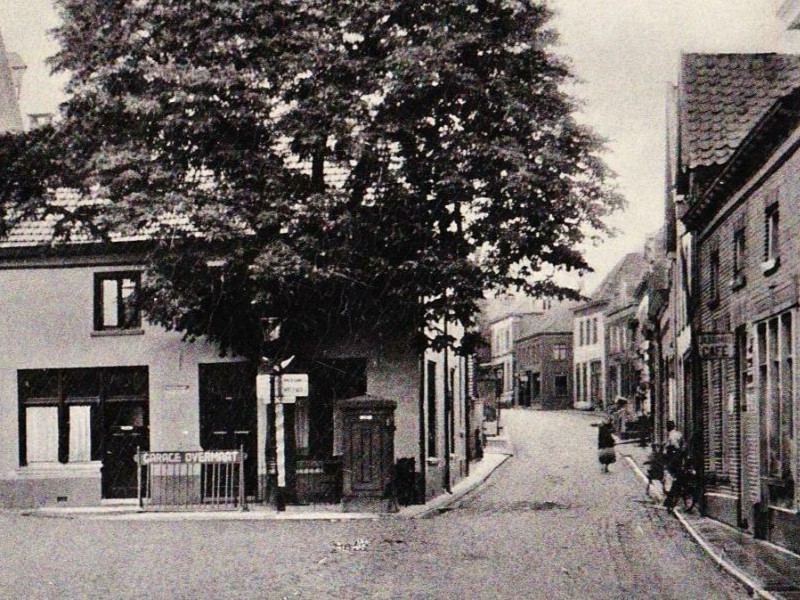
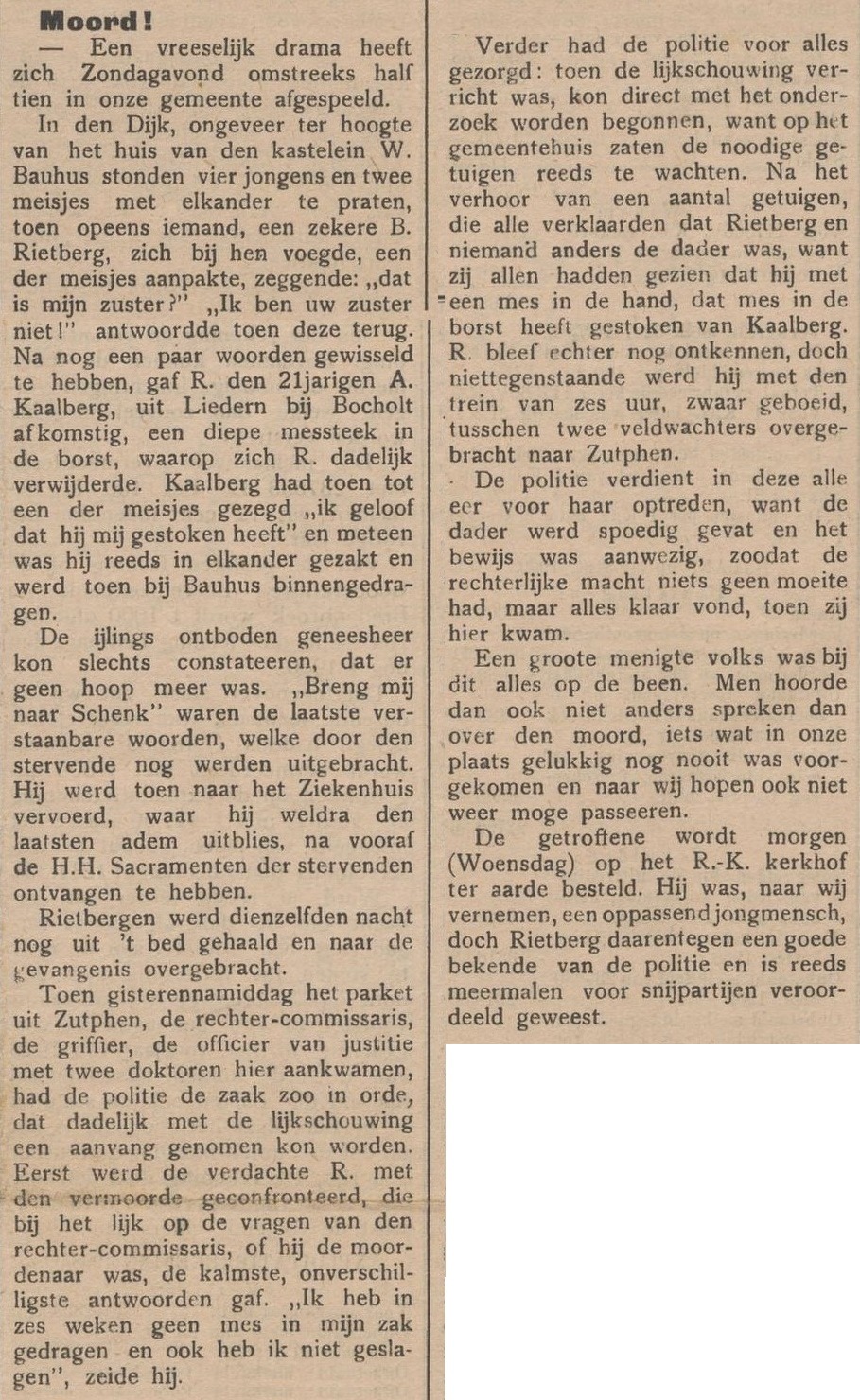
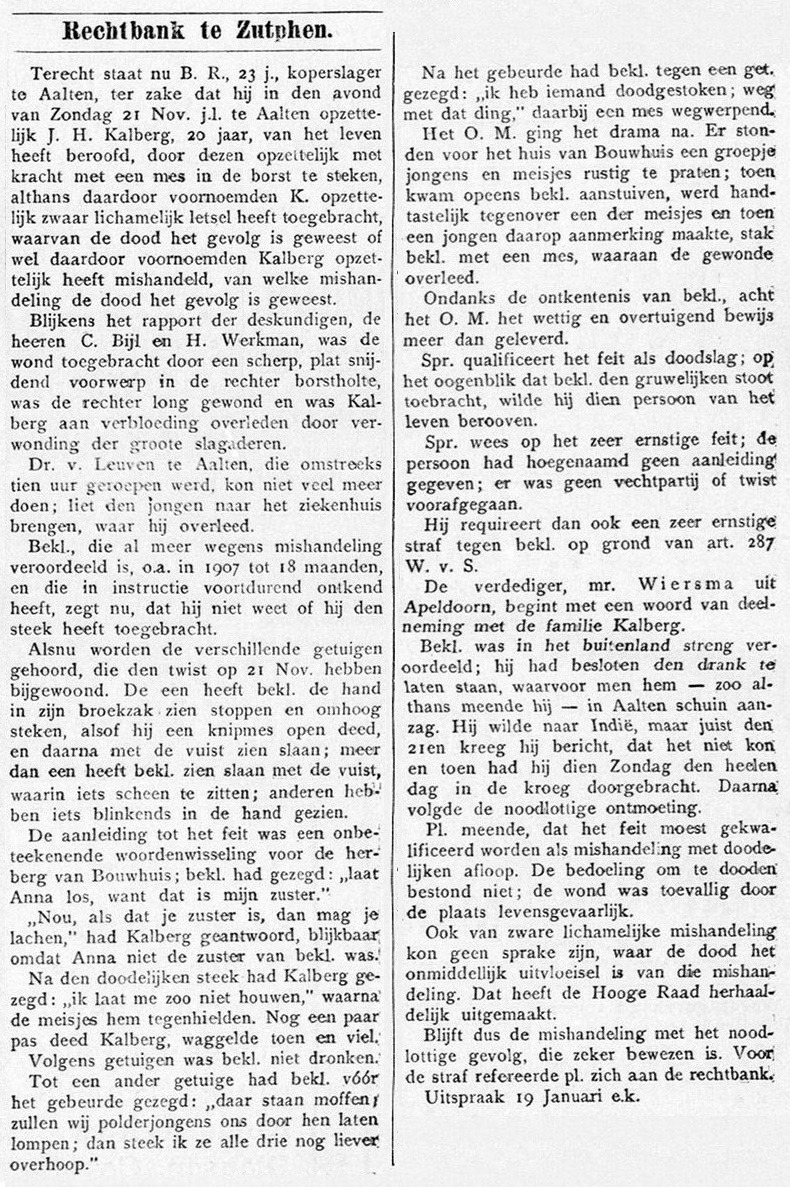
    On Sunday evening, 21 November 1909, at around half past nine, a young man was killed at the beginning of Dijkstraat. Four boys and two girls were standing there talking to one another when 23-year-old coppersmith Bernardus Rietberg from Dale joined the group. He began harassing one of the girls, and an altercation ensued. Rietberg then stabbed one of the boys, 20-year-old factory worker Johann Heinrich Kalberg from Liedern (near Bocholt), in the chest with a knife.

    While the perpetrator walked home in cold blood, according to newspaper reports, the victim managed to stagger a short distance into Kerkstraat before collapsing. His companions, including his younger brother, carried him inside Bauhuis’s café (Dijkstraat 1). Doctor Van Leuven was summoned in great haste to assist him. However, Kahlberg had been struck in his right lung so severely that nothing more could be done. The badly wounded youth was transported to the hospital on a cart. There, half an hour later and after receiving the Holy Sacraments, he drew his last breath. He had bled to death.

    Café Bauhuis, Dijkstraat 5
    Café Bauhuis, Dijkstraat 5 (right)

    Court case

    Rietberg was roused from his bed by the police that very same night and taken to prison. The following day, judicial officials from Zutphen arrived in Aalten to investigate. At the end of the afternoon, they returned on the six o’clock train, this time accompanied by the handcuffed suspect. As the train departed, the assembled crowd voiced its fury with loud shouting.

    The suspect initially denied that he was the perpetrator and also stated that he did not know the victim. The latter claim was highly doubted. A few days later, De Twentsche Courant reported that Rietberg allegedly had his eye on a sister of Kalberg, but that the latter had opposed it. This was considered a potential motive. However, whether this was a fact or merely a rumour remains unclear. The report of the trial in De Graafschapbode of 15 January 1910 makes no mention of it whatsoever.

    Newspapers at the time were able to report that Rietberg had already run afoul of the law in Germany. He had also been previously convicted of assault. It is therefore hardly surprising that he was known in Aalten as an ‘extremely unfavourable’ character. He had reportedly been thrown out of Bauhuis’s café at nine o’clock on the evening of the crime. According to witnesses, however, he did not appear to be under the influence of alcohol.

    On 19 January 1910, Rietberg was sentenced to six years’ imprisonment for taking the life of Johann Heinrich Kalberg.

    National news

    The murder in Aalten was national news at the time. The snippets below provide a fairly comprehensive picture of what was published.

  • Miracle bird shot dead

    Miracle bird shot dead

    Mr P., in Aalten, possessed a magnificent specimen of a parrot that had mastered the art of speech. A few days ago, the animal flew away and kept itself near a farmhouse. The bird’s talking led the farmer to believe that a “miracle bird” was threatening his farm, and so, by means of his rifle, he put an end to the bird’s “tasty, eh?” once and for all!

    A few weeks ago, we also reported on a parrot that had escaped from Mr P. in Aalten and was later shot dead by a farmer who mistook it for a miracle bird. The news made the rounds in several newspapers, and as a result, Mr P. received a letter this week from a lady in The Hague who possessed a “lorry” (parrot) that she was eager to part with. She addressed the letter as follows: — “To Mr P….. in Aalten, where 3 weeks ago the parrot was shot dead.” — The post office, clever as it is, delivered the letter to the correct address, and the lady in question was informed of its safe arrival.

    Miracle bird turns out to be a parrot
    Photo of a parrot, for illustration

    Sources


    • Het Volksdagblad, 10 August 1907 (via Delpher)
    • De Graafschapbode, 31 August 1907 (via Delpher)
  • Cross-border workers Aalten-Bocholt around 1900

    Cross-border workers Aalten-Bocholt around 1900

    The German city of Bocholt lies approximately twelve kilometers south of Aalten. At the end of the 19th and the beginning of the 20th century, Bocholt grew into an important center of the textile industry. This flourishing industrial city attracted many workers from the border region. Hundreds of border workers from Aalten, Bredevoort, and surrounding rural districts found employment there, especially in the numerous textile factories and in construction.

    In 1904, Prof. Dr. H. Blink wrote: “Every day, as many as 150 workers go from Aalten to Bocholt; rough, large wagons, covered with white hoods in the rain and drawn by two horses, bring the workers to Bocholt every morning and carry them back in the evening.”

    Thanks to the Aalten population register, in which the employer was also regularly recorded around 1900, we know of many workers that they worked in Bocholt and for which company.1

    Cross-border workers Aalten-Bocholt – Graafschapbode, 4 December 1897
    De Graafschapbode, 4 December 1897

    Who were the people working in Bocholt?

    In the overview below, you will find the names of many border workers from the municipality of Aalten who were employed in Bocholt around 1900, including their profession and employer. Perhaps some of your ancestors are among them? Please note: this overview is not exhaustive.

    AchternaamVoornaamGeboortedatumBeroepFirmaWoonadresWoonplaats
    AlbersBernadus Augustinus23-03-1877FabrieksarbeiderGebr. WeylBodendijk 37Aalten
    AlbersHermanus06-02-1866WeverVagedesDamstr. 9Aalten
    AlbersJan Willem25-09-1871WeverVagedesDamstr. 9Aalten
    ArentsenMartinus Johannes02-01-1883SpinnerSchwartzOrmelstr. 24Aalten
    BeckersHendrik August20-10-1892Metselaar (knecht)HeusinkveldKoppelstr. 14Bredevoort
    BeckersJohan Joseph August19-10-1889Timmerman (knecht)HulskampKoppelstr. 14Bredevoort
    BeeksHermanus Hendrikus02-05-1873WeverGebr. DriessenPolstr. 9Aalten
    Beest, teWillem17-02-1887BlekerSchwartzMisterstr. 3Bredevoort
    BeijerinkGerhard Johannes27-07-1851BlauwververFrentropBocholtsestr. 50Heurne
    BenninkHendrikus Antonius19-07-1890WeverVon VelsenLichtenvoordsestr. 7Aalten
    BettingHermanus Bernardus14-06-1871WeverFrentropStationsstr. ?Aalten
    BijenHendrikus Johannes25-12-1886TuinmanValléePlein Zuid 3Aalten
    BlekkinkHendrikus22-08-1891RouwerFrentropGasthuisstr. 5Bredevoort
    BlekkinkJan Hendrik30-10-1892WeverFrentropKoppelstr. 3Bredevoort
    BlekkinkTonia Johanna21-06-1891SpinnerMalieKoppelstr. 3Bredevoort
    BleuminkHendrik Jan11-02-1889WeverCosman CohenMisterstr. 3Bredevoort
    BoesveldGerhard04-06-1884WeverCosman CohenDijkstr. 1Aalten
    BoschkerHendrikus Bernardus28-10-1887MetselaarBisschopKoppelstr. 12Bredevoort
    BoschkerTheodorus Hendrikus27-03-1889WeverGebr. BraunschweigKoppelstr. 12Bredevoort
    BretveldHendrik10-08-1849LandbouwerBrauerei TangerdingGrevinkweg 9Dale
    BrinkmanPieter Johannes14-02-1881SpinnerVon VelsenLichtenvoordsestr. ?Aalten
    BrökerArnoldus Wilhelmus01-09-1890SpinnerSchwartzSteile Dalweg 5Aalten
    BrökerGerharda Maria14-01-1894SpoelerSchwartzSteile Dalweg 5Aalten
    BrökerJoseph28-10-1862Spinner / Krasser / AanlapperDriessen / SchwartzSteile Dalweg 5Aalten
    BrusseGerhard02-04-1890WeverMalieMisterstr. 5Bredevoort
    BuitinkJohannes Hermanus02-04-1883SpinnerSchwartzHogestr. 35Aalten
    BultenBernard17-09-1884StokerGebr. BraunschweigStaringstr. 15Aalten
    DanielsAntonius31-10-1887Metselaar?onbekendBredevoort
    DuenkHendrik Jan23-09-1858OppermanBiermanDamstr. 24Aalten
    EbbersJohannes Bernadus03-05-1874FabrieksarbeiderGebr. FelixBodendijk 1Aalten
    EbbersJohannes Wilhelmus13-02-1875WeverHorsmann & Co.Kerkstr. 7Bredevoort
    EbbeskampHendrik12-12-1845SpinnerGebr. DriessenOrmelstr. 24Aalten
    ElferinkDerk Jan10-08-1884OppermanBeltinkBredevoortsestr. ?Aalten
    FiringJohannes Arnoldus27-03-1879Schildersknecht?Landstr.Bredevoort
    FlemingBerend Jan08-01-1866GrondarbeiderBaron van DiepenbroekKoppelstr. 3Bredevoort
    FrenkenJohannes Franciscus31-01-1890WeverGebr. Braunschweig‘t Zand ?Bredevoort
    FrenkenJohannes Hendrikus08-06-1863WeverFrentropAmbthuiswal 24Bredevoort
    FrenkenJohannes Hendrikus02-03-1888WeverGebr. Braunschweig‘t Zand ?Bredevoort
    GillesenJacob22-06-1846WeverA. & L. KettelerKiefteweg 10Heurne
    GillesenMaria06-07-1872WeverA. & L. KettelerKiefteweg 10Heurne
    GriessJohanna Maria Aleida01-01-1890SpinnerGebr. DriessenLandstr. 26Aalten
    GrijsenAntonie30-05-1835Fabrieksarbeider?Berkenhovestr. 5Aalten
    GrijsenHendrika27-09-1878FabrieksarbeiderSchwartzBerkenhovestr. 5Aalten
    Harkel, tenHendrik Jan30-04-1852HoutbewerkerGebr. FelixOrmelstr. 26Aalten
    Have, tenAleida Hendrika19-10-1890SpinnerGebr. DriessenHozenstr. 22Bredevoort
    Have, tenGesina Johanna10-02-1888SpinnerGebr. DriessenHozenstr. 22Bredevoort
    HaverkateJohannes03-02-1867Spoelmeester SpinnerijSchwartzDijkstr. 27Aalten
    HeijnenHendrik Jan04-08-1882Timmerman (knecht)?Varsseveldsestr. ?Aalten
    HeinenHendrik Willem31-03-1891SchildersknechtTen BroekeVarsseveldsestr. 39Aalten
    HilbelinkBerend Willem06-02-1844KnechtBrauerei TangerdingLankhofstr. 17Aalten
    HilbelinkJan Willem30-11-1885WeverFrentropBredevoortsestr. Aalten
    HoebenJohannes Chrisostumus27-06-1882PolderwerkerWittag (?)Prinsenstr.Aalten
    HornHendrik Willem12-05-1876Voerknecht?Landbouwstraat 3a
    Horst, terDerk Jan18-10-1873OppermanValléeBredevoortsestr. 48Aalten
    HubersWillemina Geertruida25-09-1865SpinnerSchwartzRK GasthuisAalten
    HuitinkJan Willem15-02-1886Metselaar (knecht)?Varsseveldsestr. ?Aalten
    JansenHendrik Jan10-03-1866WeverGebr. BraunschweigLoohuisweg 28Haart
    JanssenGerrit Hendrik10-07-1889VerverGebr. BraunschweigHozenstr. 7Bredevoort
    JanssenGrada Willemina23-02-1892SpinnerGebr. DriessenHozenstr. 7Bredevoort
    JanssenWillemina01-10-1894SpinnerGebr. DriessenHozenstr. 7Bredevoort
    KempersCornelis17-07-1878WitweverMortens (?)Haartsestr. 21Aalten
    KempersGerrit Willem20-09-1873OppermanBeltinkHaartsestr. 21Aalten
    KempersJohan06-10-1871WeverA. FisserWillemstr. 13Aalten
    KempersWilhelm10-07-1875WeverTangerdingOrmelstr. 30Aalten
    KempinkJan Berend11-04-1877SpinnerSchwartzAmbthuiswal 24Bredevoort
    Kerkhof, van deCatharina Elisabeth26-08-1894SpinnerSchwartzRK GasthuisAalten
    Klein EssinkBarend Johan18-08-1875MetselaarBiermanHaartsestr. Aalten
    KleinhesselinkJohan Cornelis10-04-1877OppermanBisschopLankhofstr. 1Aalten
    KoelmanHendrikus Wilhelmus04-01-1890Schildersknecht?Dijkstr. 44Aalten
    KoelmanJohanna Elisabeth02-10-1884SpinnerSchwartzOrmelstr. 15Aalten
    KolwagenEverdina Johanna08-12-1874WeverSchwartzHogestr. 70Aalten
    LammersLammert Lambertus19-07-1863SpinnerGebr. DriessenKoopmanstr. 12Aalten
    LangwerdenEimbert Bernard21-05-1859KrasserGebr. DriessenTrompstr. 9Aalten
    LankheetJohanna24-08-1892SpinnerSchwartzZuiderlaan?Aalten
    LieversHendrikus15-09-1893SpinnerGebr. DriessenOrmelstr. 13Aalten
    LieversJohanna Geertruida11-11-1891SpinnerVon VelsenOrmelstr. 13Aalten
    LieversWillemina07-04-1894SpinnerVon VelsenParallelweg 14aAalten
    Lindert, teGerrit27-03-1878MetselaarBeltinkMarkt 16Aalten
    MagisGerrit Willem22-07-1884Opperman?Oosterkerkstr. 12Aalten
    MeijerHeinrich29-08-1878Wever / VerverGrote (?)Dijkstr. 1Aalten
    MeijermanDerk Willem13-10-1883TuinmanBeckmannVarsseveldsestr. 11Aalten
    MengerinkEngbert09-12-1879SpinnerSchwartzHogestr. 35Aalten
    MengerinkGerrit Hendrik05-06-1889FabrieksarbeiderSchwartzLankhofstr. 21Aalten
    MengerinkWillem13-06-1875MetselaarA. VerleeLankhofstr.Aalten
    NavisDerk Jan04-12-1840WeverBeckmannHogestr. 63Aalten
    NavisGerrit Hendrik23-12-1890SpinnerGebr. DriessenLankhofstr. ?Aalten
    NeerhofHendrik Jan11-03-1884Weverde GrootOrmelstr. 6Aalten
    NeerhofHerman05-04-1879WeverGrote (?)Boomkampstr. ?Aalten
    NijenkampGerrit Jan18-02-1877HoutbewerkerGebr. FelixBodendijk 72Aalten
    NijmanJohanna Geertruida22-07-1884SpinnerRothe ErdeonbekendAalten
    OberinkChristiaan06-05-1892SpinnerSchwartzHogestr. 6Aalten
    OberinkHendrikus Jan Willem29-04-1891SpinnerGebr. DriessenHogestr. 64Aalten
    ObrinkJan Hendrik29-01-1883MetselaarHeusinkveldHogestr. 64Aalten
    ObrinkJohan Antoon15-04-1880Timmerman (knecht)W. PoelPrinsenstr. 18Aalten
    OmmeringHendrik Jan27-11-1888Metselaar?Dijkstr. 21Aalten
    OonkHendrik27-04-1871?Danner & Doormeijer (?)Hozenstr. 4Bredevoort
    PeetersWilhelmus Johannes Theodorus30-06-1893AfzetterGebr. WeylLandstr. ?Bredevoort
    PeulersBernardus Johannes07-02-1862SpinnerSchwartzWillemstr. 13Aalten
    PiekGerrit Willem12-06-1884MetselaarValléeLichtenvoordsestr. 15Aalten
    PiekHendrik Jan20-05-1873SmeerderSchwartzLoohuisweg 28Haart
    PrinsAdolf30-10-1871SpinnerSchwartz / Von VelsenVarsseveldsestr. 20Aalten
    PrinsJan Steven Schaars27-02-1887TuinmanknechtA. RemmerBoomkampstr. 24Aalten
    PrinsenGerrit Hendrik Willem22-07-1881BierbrouwersknechtBrauerei TangerdingLoohuisweg 1Haart
    Rietstap, teGerhard01-06-1886Metselaar (knecht)?Ambthuiswal 14Bredevoort
    Rietstap, teJohannes Hendrikus13-04-1892Metselaar (knecht)?Ambthuiswal 14Bredevoort
    SchaapveldHendrikus Johannes Arnoldus19-06-1887?Temmink FietsenhandelDijkstr. 27Aalten
    SchenkBernard Gerhardus06-04-1885FabrieksarbeiderBuggelink (?)Molenkampsdijk 11Aalten
    SchepersAntonij01-12-1866OppermanValléeOrmelstr. 16Aalten
    SchepersGrada Wilhelmina16-01-1891SpinnerVon VelsenOrmelstr. 16Aalten
    SchepersJan27-08-1874FabrieksarbeiderWwe. B. MessingOrmelstr. 9Aalten
    SchepersJohanna12-01-1893SpinnerVon VelsenOrmelstr. 16Aalten
    ScholtenBernardus29-11-1877MetselaarDuysBoomkampstr. 20Aalten
    SchoppersTonij06-05-1877TuinmanWoolsLichtenvoordsestr. ?Aalten
    SikkingHendrikus04-06-1890WeverWietholtKerkstr. 11Bredevoort
    Sligte, teHendrik20-03-1861WeverGebr. DriessenDijkstraat 32Aalten
    StevensEngelbertus05-01-1873Metselaar (knecht)Vallée‘t Zand 3Bredevoort
    StevensHendrikus Wilhelmus21-04-1899Metselaar (knecht)Vallée‘t Zand 3Bredevoort
    StraksGerhard Abraham14-03-1884SchilderBiermanOrmelstr. 18Aalten
    StraksGerrit Jan03-03-1880SchilderGraatmannOrmelstr. 18Aalten
    StronksArent Jan06-12-1873Voerman / vrachtrijderGebr. WolfDinxperlosestr. 77Aalten
    StronksGerrit Jan26-11-1867Landbouwer (knecht)Brauerei TangerdingPrinsenstr. 28Aalten
    TammelHerman22-09-1870KrasserBeckmannSteile Dalweg 8?Aalten
    TemmingBernardus Hendrikus03-02-1892SpinnerGebr. WeylKerkstr. 2Bredevoort
    ToebesAnton Johann13-04-1881FabrieksarbeiderHulskampStationsstr. ?Aalten
    UbbinkBernardus Johannes01-07-1862Timmerman?Officierstr. 2Bredevoort
    UbbinkGradus Bernadus28-03-1872Timmerman (knecht)KokVischmarkt 3Bredevoort
    UbbinkGradus Johannes06-09-1881WeverGebr. BraunschweigGasthuisstr. 3Bredevoort
    UbbinkJohannes Josephus25-08-1886WeverGebr. BraunschweigGasthuisstr. 3Bredevoort
    UebbingAugust Johan06-12-1893WeverLieprijgh (?)Misterstr. 21Bredevoort
    UffinkHendrikus Johannes11-10-1877WeverFrentropSteile Dalweg 8?Aalten
    VeenhuisGerrit Jan16-11-1863WeverFrentropLandstr. /Stationsstr. ?Aalten
    VeldkampHendrikus Antonius04-03-1880WeverGebr. BraunschweigLandstr. 18Bredevoort
    VerstegeWilhelmus22-01-1864VeldarbeiderBaron van BarloKoppelstr. 29Bredevoort
    Vries, deBernardus Hendrikus03-02-1883SpinnerVon VelsenLandstr. 20Bredevoort
    Vries, deHenrich Joseph01-12-1892WeverFrentropLandstr. 20Bredevoort
    Vries, deJohannes Bernardus Josephus29-12-1881Spinner?Ambthuiswal 16Bredevoort
    Waal, van derJohannes24-12-1886SpinnerSchwartzDijkstr. 5?Aalten
    WalvoortJohannes14-06-1881SpinnerBeckmannOrmelstr. 24Aalten
    WansingWilhelm06-09-1879SpinnerSchwartzPatrimoniumstr. 9Aalten
    WeeninkJohan Gerhard16-05-1877TimmermanKnufmanLoohuisweg 3Haart
    WeikampCatharina Johanna30-10-1876WeverFrentropDamstr. 22Aalten
    WeikampGerhardus Hendrikus21-06-1880FabrieksarbeiderRothe ErdeIndustriestr. 3Aalten
    WensingBernard Gerhard13-01-1889SpinnerSchwartzStationsstr. ?Aalten
    WensingHendrika Elisabeth Maria28-06-1891SpinnerRothe ErdeStationsstr. ?Aalten
    WensingJohanna Gesina Maria11-04-1894SpinnerSchwartzStationsstr. ?Aalten
    WensinkFranciscus19-02-1879Wever?Hozenstr. 16Bredevoort
    WensinkJohannes24-05-1874WeverFrentropVischmarkt 11Bredevoort
    WensinkJohannes11-03-1874Wever?Hozenstr. 26Bredevoort
    WentinkHendrik Jan22-05-1893SpinnerSchwartzBoomkampstr. ?Aalten
    WeversHendrikus30-06-1862WeverGebr. DriessenDijkstraat 34Aalten
    WichersJohannes Theodorus Josephus25-12-1887WeverCosman CohenLandstr. 24Bredevoort
    WiggemansGeerart01-12-1883VoermanOsbergen (?)Varsseveldsestr.Aalten
    WiltinkJohanna Elisabeth29-10-1887KrasserGebr. WeylBocholtsestr. 50Heurne
    WiltinkJohanna Willemina13-08-1889SpinnerRothe ErdeDamstr. 26Aalten
    WolferinkHerman Bernard01-12-1884SpinnerSchwartzStationsstr. 29?Aalten
    WubbelsBernadus Engelbartus13-09-1881Fabrieksarbeider?Gasthuisstr. 7Bredevoort
    WubbelsBernardus Gerhardus09-11-1890WeverGebr. Braunschweig‘t Zand 19Bredevoort
    WubbelsJohannes Hendrikus Bernardus07-07-1889WeverGebr. Braunschweig‘t Zand 19Bredevoort
    ZeevalkHarmen30-10-1870Metselaar (knecht)BeltinkLankhofstr. 2-4Aalten

    Companies in Bocholt

    Below is an overview of companies in Bocholt where workers from Aalten were employed around 1900. This list is also incomplete:

    Franz Beckmann & Cie.

    Cotton mill

    Founded in 1895, this firm grew into one of the city’s largest spinning mills. The company was acquired by the firm Flender in 1967. The original factory building has been renovated and restored to its former glory.

    🔗 industriewerk.eu

    Gebr. Braunschweig

    Cotton mill

    Founded in 1873 on Kaiser-Wilhelm-Straße. In 1897, a dye works and a fabric finishing department were added on Frankenstraße. In 1921, the firm was removed from the commercial register.

    🔗 bocholt.de

    Gebr. Driessen

    Cotton mill

    The first large industrial enterprise in Bocholt, founded in 1857. After a fire in 1888, the factory was replaced by a larger new building. The company ceased operations in 1978. The 34-meter-high chimney was preserved and now stands in the middle of the Arkaden shopping center.

    🔗 industriewerk.eu

    A. & L. Ketteler

    Cotton mill

    No further information available.

    Wwe. B. Messing

    Poetswolfabriek

    Around 1900, the firm Wwe. B. Messing was active in Bocholt as a producer of cotton waste. The factory was located in the current Weber Quartier, behind the Kinodrom on the river Aa.

    🔗 digital.slub-dresden.de

    Albin Tangerding & Comp.

    Fur weaving mill

    Founded in 1864. No further information available.

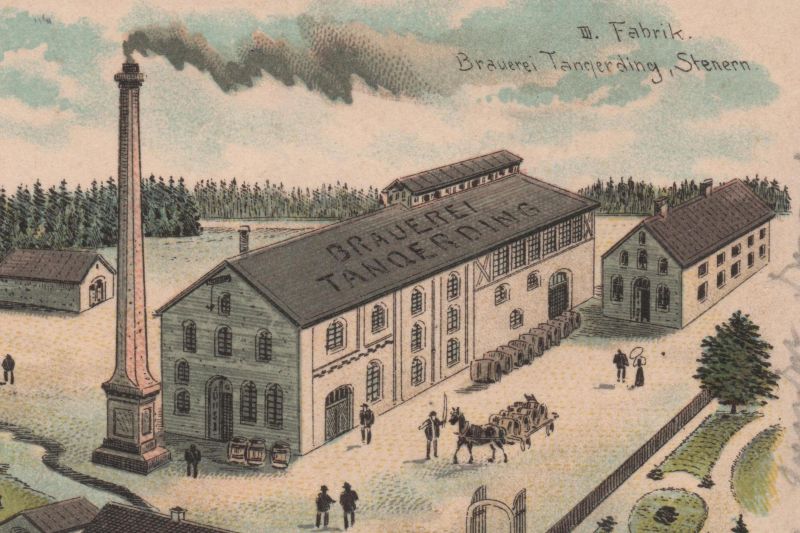
    Brauerei Tangerding

    Steam beer brewery

    The Hirsch-Brauerei of Franz Tangerding in Bocholt-Stenern produced various types of beer, soft drinks, and fruit lemonades. The ruins of the original brewhouse from 1896 are still present on the former brewery site.

    🔗 marius-lange-geschichte.de & tus-stenern.de

    Gebr. Weyl

    Steam weaving mill

    “At the entrance of the current Karolingerstraße stood the factory of Cosman Cohen, and further south were the factories of Gebr. Weyl and Braunschweig.”

    🔗 st-josef-bocholt.de

    J. Beckmann

    Weaving mill

    In 1859, Josef Philipp Beckmann started a steam weaving mill on Kreuzstraße with his sons. In 1891, the company split into J. Beckmann Nachfolger and Heinrich Beckmann Söhne. Both companies later merged again into IBENA.

    🔗 ibena.de

    Cosman Cohen & Comp.

    Weaving mill

    Founded in 1862 on Kaiser-Wilhelm-Straße. In 1897, the factory burned down. A new factory was built at Industriestraße 7. In 1929, the weaving mill was sold to the neighboring company H. Beckmann Söhne and is now owned by IBENA.

    🔗 ibena.de

    Gebr. Felix

    Steam-powered sawmill

    No further information available.

    Frentrop & Co.

    Steam weaving mill

    No further information available.

    Rothe Erde

    Cotton mill

    In 1898, the Aktiengesellschaft Baumwollspinnerei Rothe Erde had a factory built between Werther Straße and the Aa. The spinning mill with the adjacent weaving mill was one of the largest companies in the city.

    🔗 industriewerk.eu

    Ludwig Schwartz

    Textile factory

    From 1857, Ludwig Schwartz had several steam weaving and spinning mills built on his estate Haus Woord. After his death, the company was continued by his widow Theodora Schwartz and later by their sons. The firm ended its activities in 1971. The current Schwartzstraße in Bocholt serves as a reminder of this textile enterprise.

    🔗 wikipedia.org

    Vagedes

    Weaving mill

    The firm Vagedes was located in the Biemenhorst district. In 1990, the company was on the verge of liquidation. Two former employees then founded Setex-Textil and continued Vagedes’ activities.

    🔗 wikipedia.org

    August Vallée

    Construction company

    No further information available.

    🔗 presse-service.de

    Von Velsen & Cie.

    Cotton mill

    In 1889, Max Hugo von Velsen, former director of Ludwig Schwartz’s spinning mill, founded his own cotton spinning mill. The factory, located between the Westend and the river Aa, included a spinning mill, twisting mill, and finishing department. The company closed in 1934.

    🔗 explore.gnd.network & bocholt.de

    Factory locations

    Below you will find a map showing the (presumed) locations of the aforementioned factories in Bocholt.

    Interesting facts

    • Commuters from Aalten crossed the border six days a week, mostly on foot, by bicycle, or by horse and carriage. In 1910, relief came with the construction of a tram line between Aalten and Bocholt, which significantly shortened travel time. Working days were long: 12 to 14 hours was no exception.
    • Border workers from Aalten received their wages in German Marks. This money was circulated in the local Aalten economy. Around 1900, German money was therefore the daily currency in Aalten. However, this was formally prohibited in 1914.
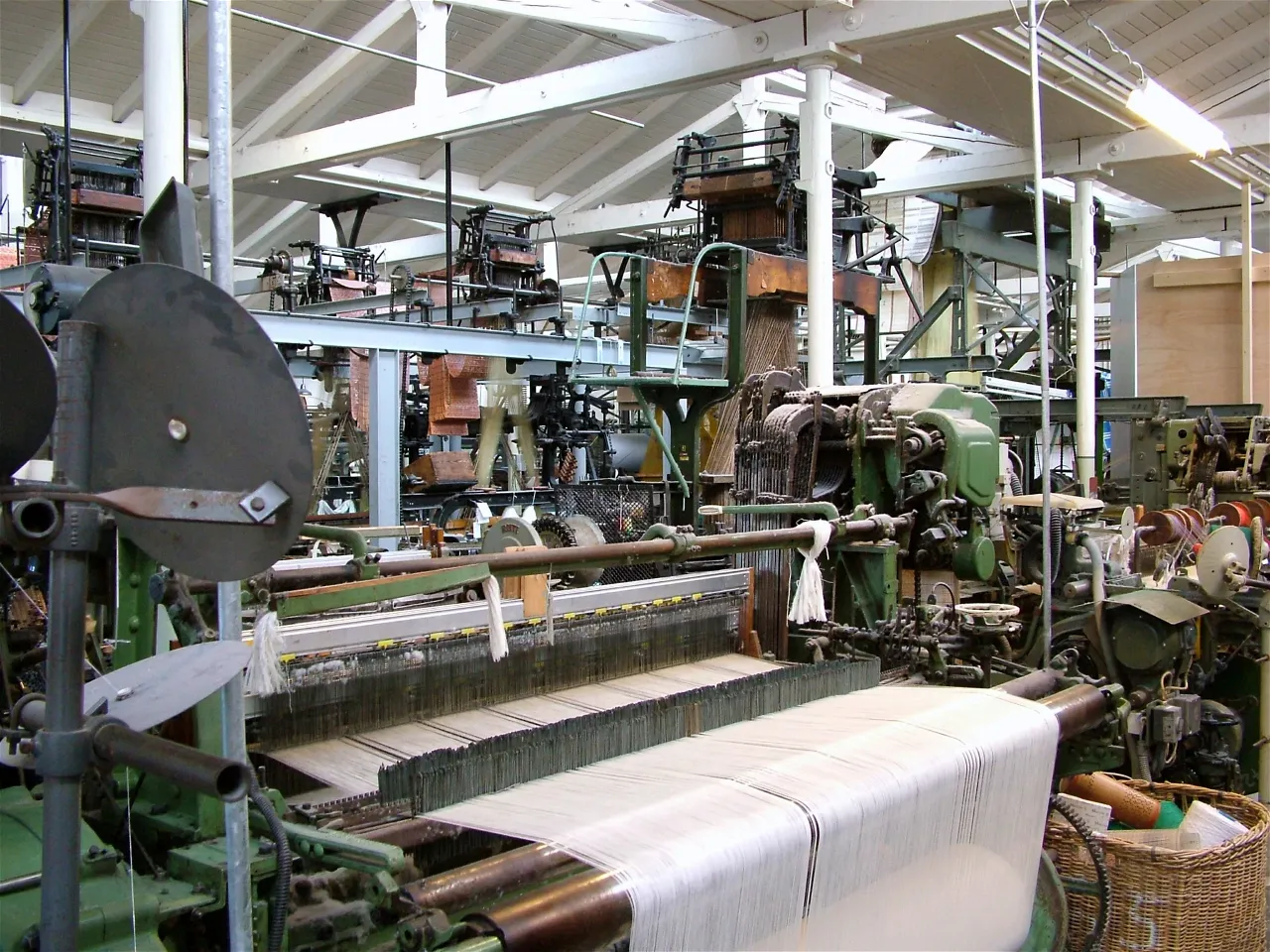
    • Those who wish to learn more about the history of the textile industry in Bocholt can visit the LWL-Museum Textilwerk. Here, the city’s rich textile past is brought to life with original machinery and various exhibitions.
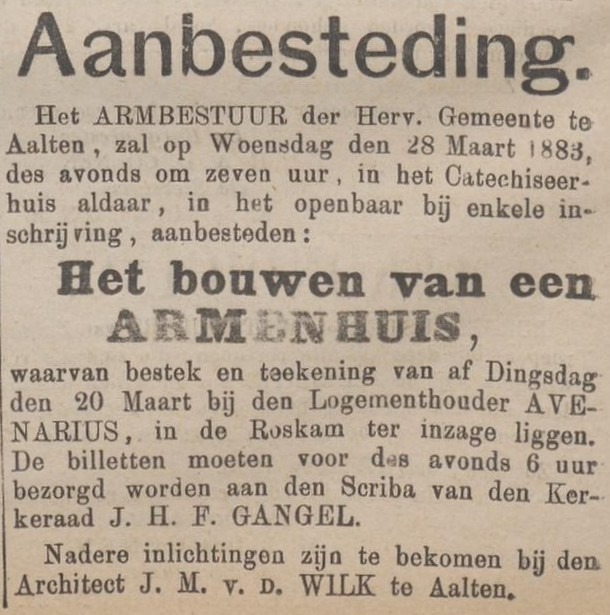
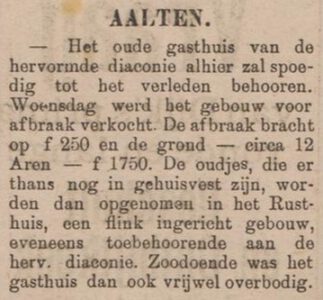
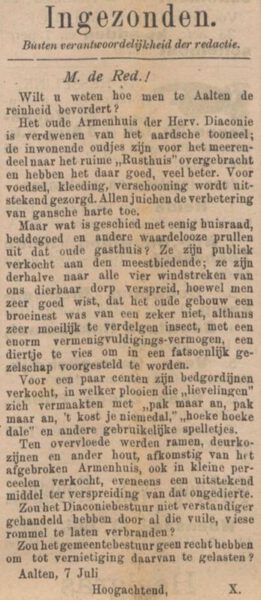
  • Reformed Almshouse

    Reformed Almshouse

    Haartsestraat 14-18, Aalten

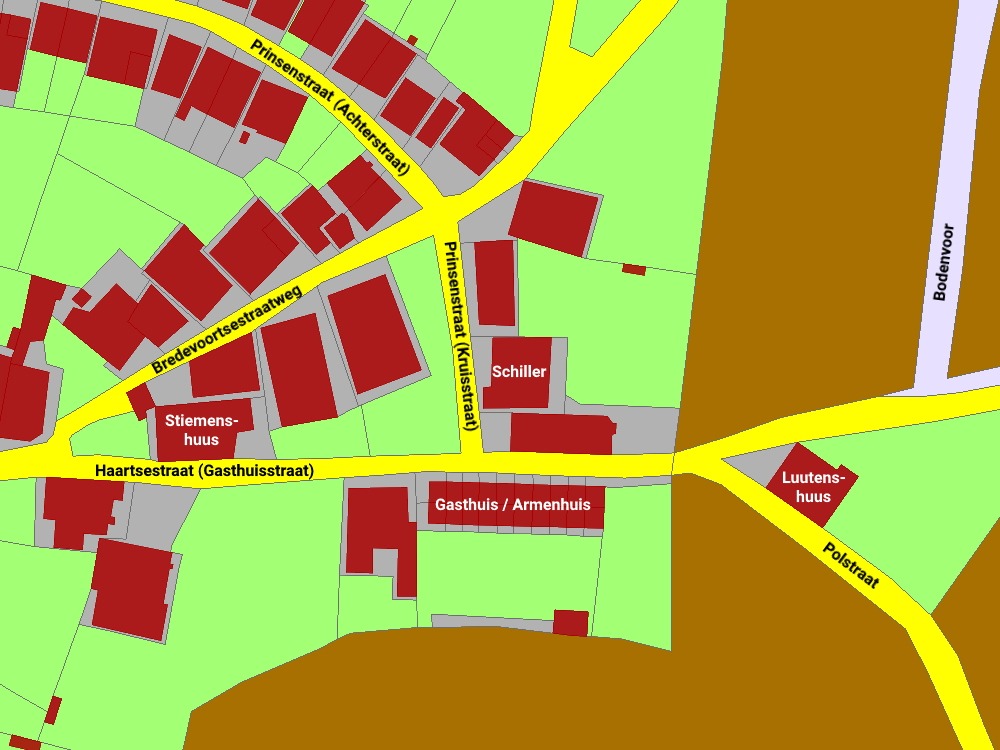
    The Almshouse (‘Gasthuis’) was an institution run by the Reformed diaconate (charitable board) located on what was then Gasthuisstraat, now known as Haartsestraat, in Aalten.

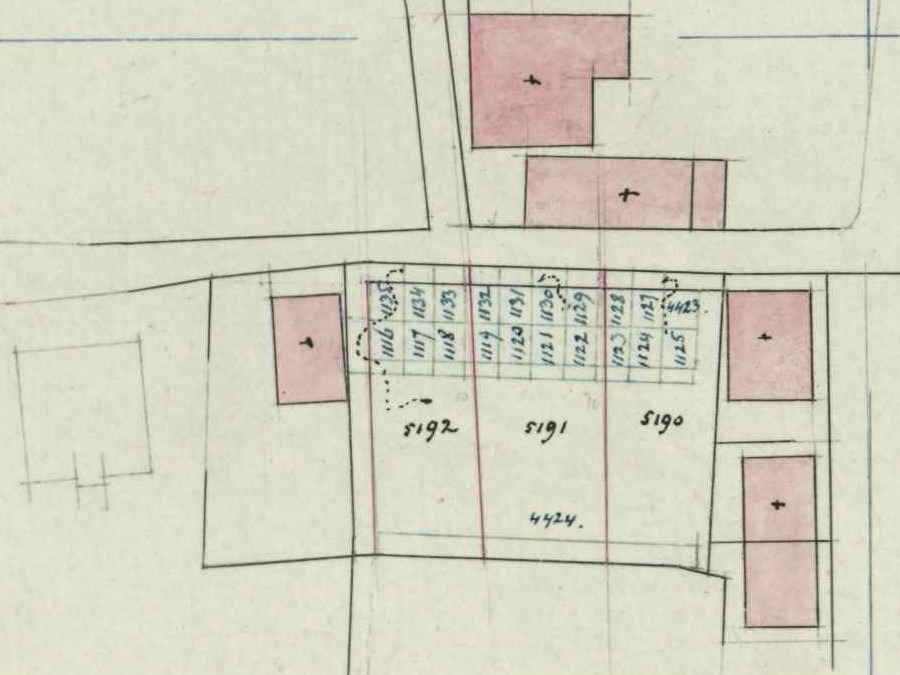
    On the 1832 land registry map (cadastre) shown on the right, the exact location is visible, situated approximately where Haartsestraat 14 to 18 stands today.

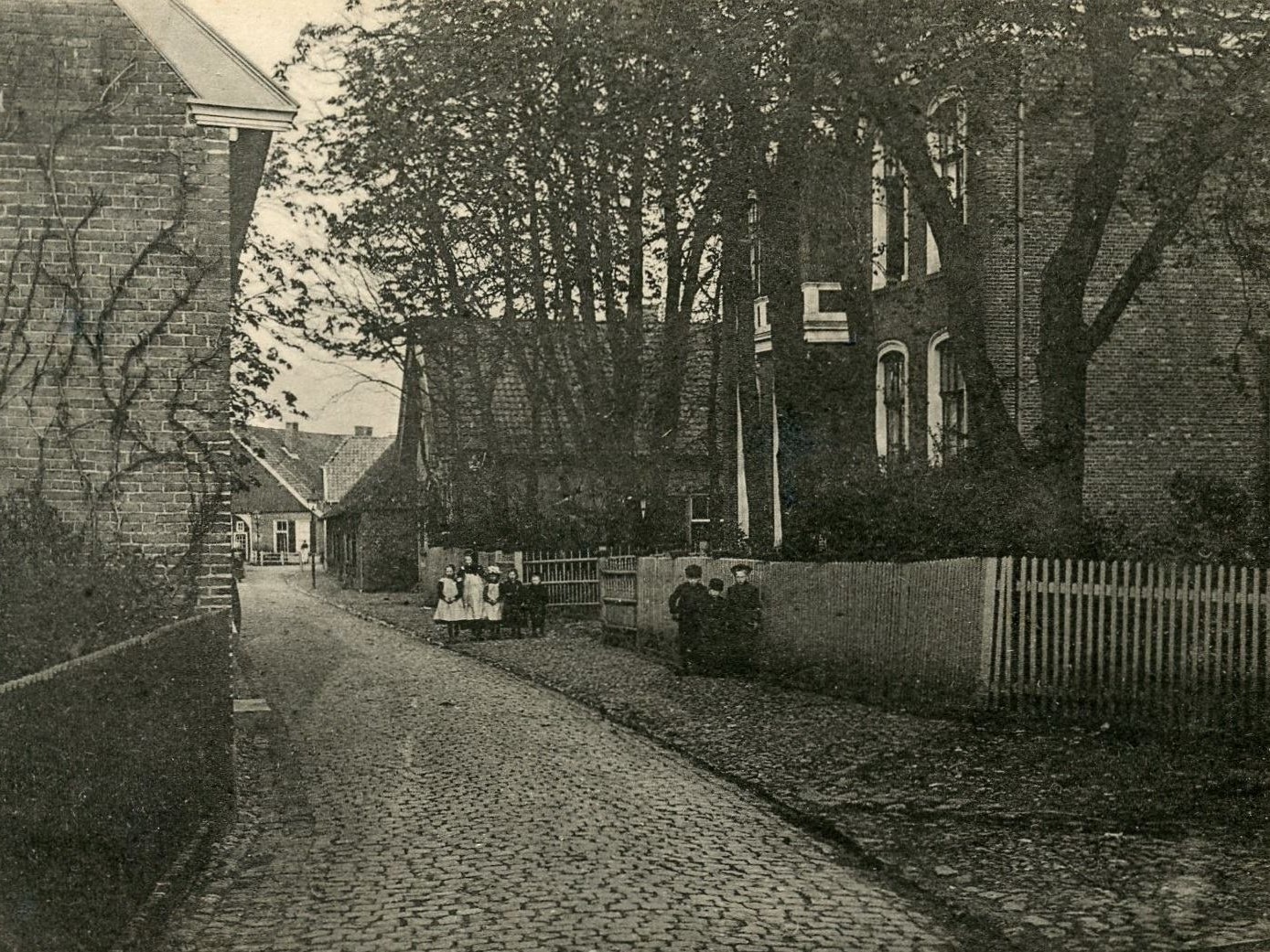
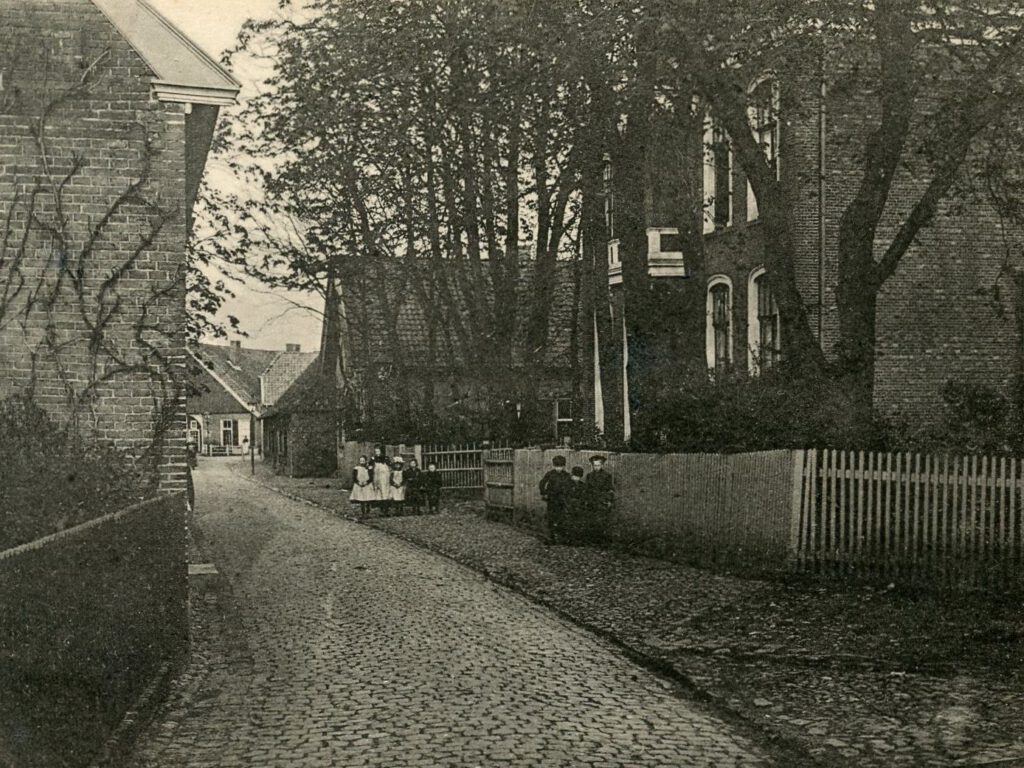
    Bovenstaande foto toont de Gasthuisstraat rond 1900. Rechts, voorbij de burgemeesterswoning – het latere postkantoor – zien we nog net een gedeelte van het Gasthuis. Helemaal achteraan zien we ook nog net het Luutenshuus.

    The Almshouse contained ten rooms on the street side and ten on the garden side, each with a floor area of 17 to 22 m². Each room was equipped with two box-beds (bedsteden). Occupants shared a privaat (toilet) between several rooms. In the garden, many residents also kept a ‘sikkestal’ (a small shed for a goat).

    The residents were not only among the poorest members of the population but were also generally the least educated. Consequently, the Almshouse and its surroundings were frequently the scene of shouting matches and petty quarrels. The residents were often the targets of harassment by the local youth of Aalten.

    One of the residents would deliver wheelbarrows of fine white sand door-to-door for a penny, which people used to strew across their stone floors. Once he had earned a few pence, he would quickly spend it on a borrel (a small glass of gin) before starting to ‘save up’ for the next one.

    In 1904 werd het Gasthuis afgebroken. De oudjes er op dat moment nog woonden verhuisden naar het Rusthuis aan de Hogestraat.


    Owners

    This overview is incomplete.

    YearPlotOwnerDescription
    1832I1116 – I1135the Reformed Poor of Aalten

    House Numbering

    In the population register, every room or household is listed on a separate family card. The overview below provides links to the first family card in the population register for each period that corresponds to the almshouse on Haartsestraat. From there, one can browse further to find all residents for that specific timeframe.

    An extensive table listing all residents is planned for the future to assist genealogists in identifying former occupants. Please note: records may contain errors.

    18231838185018601870188018901900
    235263263263290333329395

    Catholic Almshouse

    Aalten had vroeger ook nog een katholiek gasthuis. Het Armenpad tussen de Hogestraat en de Stationsstraat, één van de typisch Aaltense Gängeskes, herinnert hier nog aan.

    Features


    Cadastral no.I-8761/8762/
    13144/13140
    FunctionAlmshouse
    Year of constructionunknown
    Demolition1904

    Sources


    • Aaltensche Courant, 9 July 1904 (Delpher)
    • ‘Aalten in oude ansichten’ – part 2, E.M. Smilda
    • ECAL
    • Cadastral map
    • Nieuwe Winterswijksche courant, 25 May 1904 (Delpher)
    • ‘From Aalten’s past’, G.H. Rots, Aaltensche Courant, 19 November 1937 (Delpher)
  • Plans for a steam tram line

    Plans for a steam tram line

    Aaltensche Courant, 29 September 1900

    On Friday evening, approximately 40 interested parties gathered at the Sociëteit to learn more about the tram, while most also appeared to have come to contribute to its realization by purchasing shares.

    In response to a question from one of those present as to whether the Prussian government would also provide a subsidy for the section on German territory, the answer was believed to be in the negative. The desirability of a connection to the station in Bocholt was also discussed, but it was thought that the residents of Bocholt would see to this themselves once the line was established. Another expressed doubt about this, as much expense is currently being spent on the Aa and it is not being counted upon, so that many costs would arise from it later.

    These and several other points were discussed following the reading of the report, of which we provide some excerpts here:

    On February 19 last, a route map with description was sent to His Excellency the Minister of Water Management, Trade and Industry, and in an accompanying address, support was requested for one-third of the construction costs, including rolling stock. The plans, budget, description, etc., of the Dutch-Prussian border–Bocholt steam tram section were prepared by Mr. Regierungsbaumeister G. Küchler, and these documents have been sent to the Mr. Regierungsrath-Präsident in Munster; we have already received word that these documents were submitted to the Mr. Landrath in Borken and to the Mayor of Bocholt for assessment, etc. The “landespolizeiliche Vorprüfung” (state police preliminary examination) of the plans by the relevant authorities took place on Monday, August 27 last.

    The choice of the direction for the Lichtenvoorde–Dutch-Prussian border line gave rise to some difficulties. In the first place, we considered it important to include Bredevoort in the plan; to satisfy this, the purchase of a house in the center of the village was necessary. Before marking out the line through Bredevoort, we secured possession of a portion of the house.

    Secondly, whether to go around or through Aalten. After various leveling surveys were conducted near and in Aalten, we became convinced that, in view of the steep slopes which would later present many difficulties during the operation of the steam tramway, the route to the east of Aalten should be preferred over the one through the center of the municipality. There was much opposition to that direction from the Municipal Executive of Aalten and private individuals. After discussions with a Committee from the Council, it was again investigated how the objections could be met.

    The result was that two new directions were submitted to the Council for judgment. These directions could likewise not obtain the approval of that Council; it maintained its desire that the steam tramway should, if possible, be constructed through the Kerkstraat. After we had the requested route through the Kerkstraat surveyed again, and although it has once more become apparent to us that the consequences of more expensive operation with this route will be inevitable, we felt that, in view of the success of the undertaking, we had to yield to the wish of the Municipal Executive of Aalten.

    As a result of these considerations, the Lichtenvoorde–Bocholt route will be as follows: The line begins at the junction formed by the Lichtenvoorde–Groenlo gravel road and the Lichtenvoorde–Aalten gravel road, so that a connection is obtained both in the direction of Lichtenvoorde N.W.S. station and in the direction of Zeddam. From the aforementioned junction, the tram line follows the right shoulder of the gravel road to Aalten as far as the “de Domme Aanleg” inn, from there the right shoulder of the gravel road to Bredevoort until approximately 100 meters before the “het Nieuwe Bouwhuis” farm, where it crosses the road and leaves it to continue on its own track in a nearly easterly direction. Then, turning southwards, the Kloosterdijk is crossed and the tramway returns to the left shoulder approximately 300 meters before the center of Bredevoort. The line runs through Bredevoort and leaves the town via the southern shoulder of the gravel road to Aalten. Thereafter across the Markt through the Kerkstraat, subsequently following the east side of the Bocholterweg. Near the border, the road is crossed and the west side of the road is followed on German territory until Bocholt.

    A customs station will be established on both Dutch and German territory. At the western end of the village of Lichtenvoorde, a shed for locomotives and carriages will be built, with a workshop and residence (also an office), furthermore a station and goods shed along with a residence for the station master; near Zeddam, an auxiliary shed for locomotives and carriages has been designed. In Aalten and Bocholt, sheds for locomotives and carriages will also be built. In addition to the aforementioned locations, passing places have been designed near Harreveld, in the Heelweg, Varsseveld, Westendorp, and Etten. Furthermore in Bredevoort and at the Dutch-Prussian border. In Lichtenvoorde, Varsseveld, Zeddam, Aalten, and Bocholt, simple facilities will be made for the water supply of the locomotives, as well as halt buildings, etc., where these shall later prove necessary.

    A telephone line will be installed along the designed tram lines (of which, however, the public may not make use for the time being).

    It is proposed to acquire: 8 locomotives, 10 passenger carriages, and 45 goods wagons. Negotiations have been opened with the Geldersche Stoomtram-Maatschappij in Doetinchem regarding the shared use of the section of that Company’s steam tramway and of the Gendringen tramway company near Terborg, while negotiations are also being conducted with the “Ouden IJssel” Water Board and with the managers of the Terborg–Etten road regarding the conditions for the steam tram crossing the Ouden IJssel bridge.

    We have contacted the Hollandsche IJzeren Spoorweg-Maatschappij in Amsterdam regarding the crossing of the G.-O. local railway at Aalten and at Terborg and regarding the laying of rails on the station yard at Lichtenvoorde.

    The construction costs for the Lichtenvoorde–Zeddam line are estimated at ƒ453,000, from which interest-free advances from the state and province amounting to ƒ196,300 are deducted, so that a share capital of ƒ260,000 in round figures must be found. Those for the Lichtenvoorde–Bocholt line are estimated at ƒ360,000. It is expected that the state and province will grant an interest-free advance totaling ƒ104,000, so that for this line too, a capital of ƒ260,000 in round figures must be found. During the first twenty years, an interest of 3¼% per annum is guaranteed on the corporate capital of ƒ520,000 through the already promised and the yet to be requested interest guarantee of ƒ16,900.

    Since very early times, many commercial relations have existed between the municipalities of Lichtenvoorde, Aalten, and Bocholt, and that these have not yet disappeared but continue to exist is evident from the substantial receipts (± M. 80,000) of the German border office. At this moment, a large number of workers from Bredevoort and Aalten go to the factories in Bocholt, either on foot, by bicycle, or by wagon. These workers will undoubtedly make use of the tram if worker trains run, because they will then not need to set out before dawn and can be home again in good time in the evening. Daily transport of at least 200 workers to Bocholt can be confidently counted upon, in addition to a significant transport of foodstuffs to Prussia. The city of Bocholt is a very flourishing manufacturing town with an ever-growing population. Significant traffic between Aalten and Bocholt is to be expected.

    The designed steam tram lines can, as far as location etc. is concerned, be considered approximately equal to the Gendringen Tramway. According to the report of the Director of the Geldersche Stoomtram-Maatschappij (operator of the Terborg–Gendringen steam tramway), the receipts of the said tramway for the 1899/00 financial year per day-kilometer were: passengers ƒ2.76, goods ƒ3.49, totaling ƒ6.25.

    Although we can find no reason to expect lower revenue for the designed lines, we wish, for the sake of caution, to reduce the revenue per day-kilometer of Terborg–Gendringen of ƒ6.25 by 25%, thus taking ƒ4.69 as the standard for the new lines, making for 49.2 kilometers x ƒ4.69 x 365 days (rounded) ƒ84,300; the operating costs, generously estimated, will amount to ƒ50,200, and depreciation of 1% of construction ƒ8,100, totaling ƒ58,300, so that a credit balance of ƒ26,000 remains, i.e., 5% of the share capital.

    From the foregoing it may therefore appear that, even if the outcome in the first years should not be as favorable as can be deduced from the fairly accurate calculations, the undertaking will prove to be a fairly solid investment for the shareholders, and for the region a pleasant and fast means of transport, which will certainly give a powerful boost to the development of local and tourist traffic and cause trade and industry to increase.
    The name shall be: Geldersch-Westfaalsche Stoomtramweg-Maatschappij.

    After some discussion among themselves, several lists placed on the various tables were taken up and filled in, but the request was made to see the list on which the members of the committee had signed, and a number of persons then placed their signatures on it with the number of shares to be taken. The list was read out upon request, and it then appeared that an amount of ƒ24,500 had been subscribed.

    When the members of the committee, in response to the question from Mr. W.H. Lammers, declared that they did not intend to go around to the residents with the lists in order to place even more shares, the latter thought that not much would come of the matter. He and a few other gentlemen, however, declared themselves willing to take lists with them to attempt to further increase the number of shares placed, after which the meeting was closed.

    N.B. The photos on this page have been added for illustration purposes and were not part of the original article.

    Source


  • Roman Catholic Almshouse

    Roman Catholic Almshouse

    Armenpad / Hogestraat, Aalten

    Het Armenpad, dat de Hogestraat en de Stationsstraat met elkaar verbindt, is één van de typisch Aaltense Gängeskes. De naam herinnert aan het rooms-katholieke gasthuis (armenhuis) dat hier ooit stond.

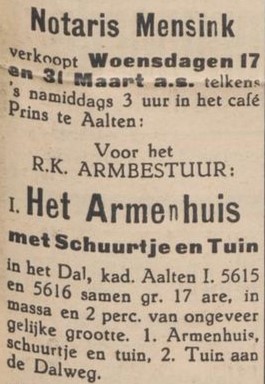
    Dit armenhuis bestond uit acht kamers van elk 4 bij 4 meter en stond op grond van Dr. Hartman. De bewoners ontvingen steun van de Rooms-Katholieke Kerk, die hen voorzag van kleding en voedsel. Daarnaast hadden ze een klein tuintje, waarin ze bijvoorbeeld een geit konden houden. In 1937 kwam er een einde aan het gasthuis, toen de familie Hartman besloot de bewoners niet langer op hun grond te laten wonen.1

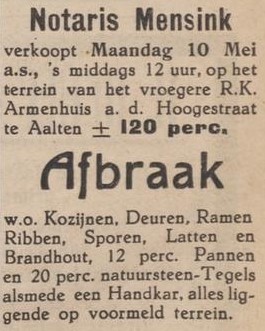
    Around 1912, the eight dwellings were reconfigured into four dwellings.

    Behalve het katholieke gasthuis had Aalten vroeger ook een hervormd gasthuis aan de huidige Haartsestraat.


    Newspaper reports 2

    Features


    Cadastral No.3I-11345
    FunctionAlmshouse
    Year of construction1860
    Demolition1937

    Owners

    Overview is incomplete.

    YearPlotOwnerDescription
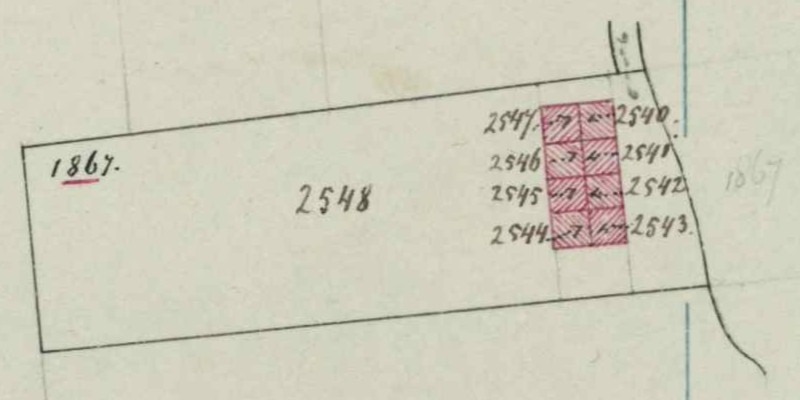
    1860I-2540-2547the Roman Cath.
    poor of Aalten
    14 m² house-yard (8x)
    1883I-2540 (87)
    I-2541 (87a)
    I-2542 (87b)
    I-2543 (87c)
    I-2544 (87d)
    I-2545 (87e)
    I-2546 (87f)
    I-2547 (87g)
    the Roman Cath.
    poor of Aalten
    14 m² house & yard (8x)
    including house numbers,
    between brackets after
    plot number)
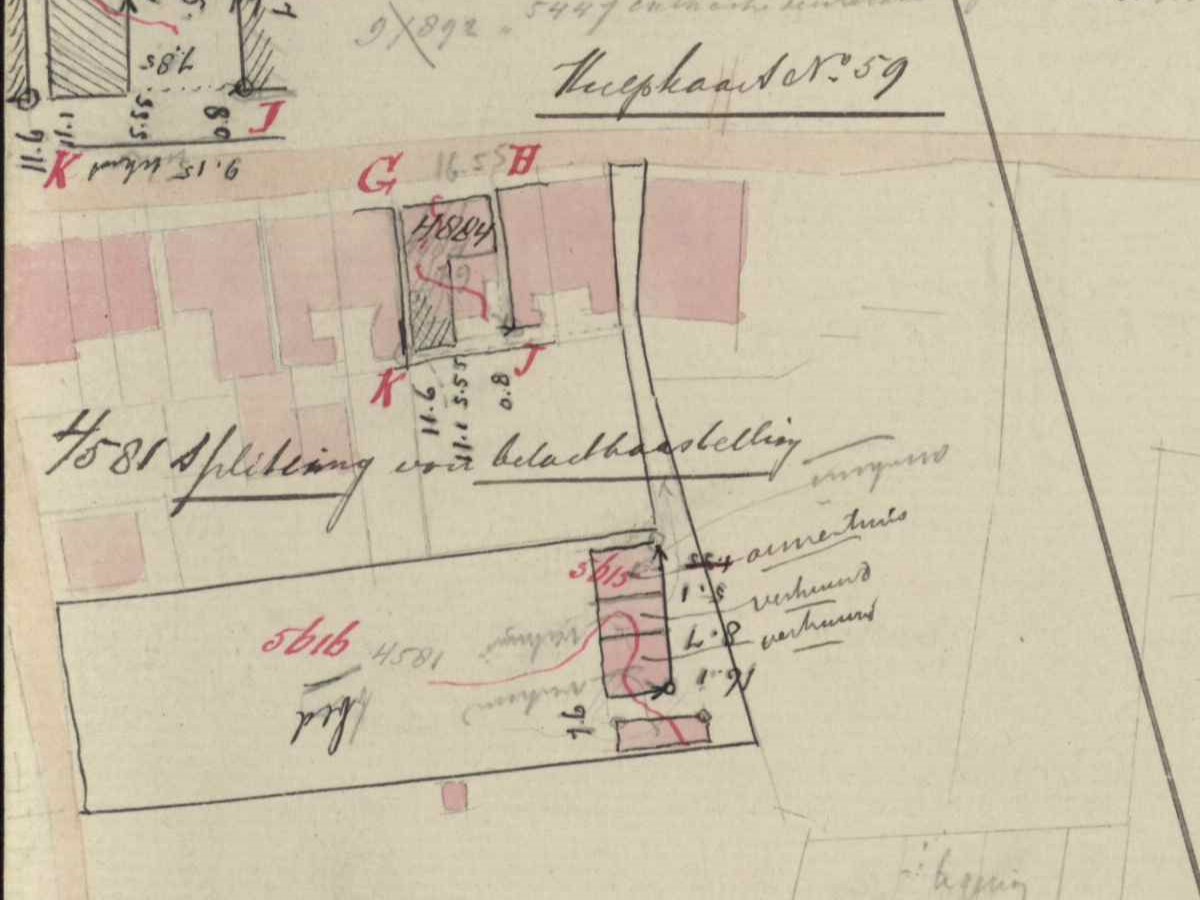
    1894I-4581the Roman Cath.
    poor of Aalten
    1.600 m² almshouse, barn & yard
    1913I-4581the Roman Cath.
    poor of Aalten
    1,700 m² house, almshouse, barn and yard
    1914I-5615
    I-5616
    the Roman Cath.
    poor of Aalten
    40 m² almshouse
    1.660 m² house, barn and farmland

    Residents

    The overview below contains a link to the corresponding family card in the population register for each period and room/household from 1860 to 1910.5 6 What we noticed: it appears that residents occasionally changed rooms; the residents were mostly single women (widows); and many had Bocholt as their place of birth. Our research is still ongoing, errors excepted!

    1860Resident(s)1870Resident(s)1880Resident(s)1890Resident(s)1900Resident(s)1910Resident(s)1934Resident(s)
    88M. Kalb,
    A. Huls
    87/1A. Huls97/1A. Bekink,
    J.A.H. Bloemers
    90/1J.A.H. Bloemer,
    J.G. Stritholt,
    B.J.M. Berendsen
    & 5 kinderen
    112/1J.A.H. BloemerA142/1A143a
    87/2A.H. Huitink97/2A.H. Huitink90/2J.A.H. Bloemer112/2E. GeuringA142/2A.J. HubersA143bA.J. Hubers
    88H. Buiel,
    G. Veenhuis
    87/3G. Veenhuis,
    J.A.H. Bloemers
    97/3W. Jansen90/3J. Stöckert,
    J.C. Antink
    112/3J.G. StritholtA142/3M.M. BoekwinkelA143cWed. A.H. Sauer
    89H. Unland87/4H. Unland97/4H. Unland90/4P. Lorijn,
    J.G. Stritholt
    112/4T. HulsA142/4A143dWed. J.G. Albers
    89L. ten Haken87/5L. ten Haken,
    A. Bekink
    97/5Harmina Bennink90/5H. Bennink,
    T. Huls
    112/5No mention
    (found).
    A142/5
    89J.E. Benning87/6J.E. Benning,
    J.E. Bokkers
    97/6J.A.H. Bloemer90/6C. Bartholomeus,
    E. Geuring
    112/6A.E. Doinck,
    A.J. Hubers
    & W.G. Hubers
    A142/6
    97/7J.E. Bokkers90/7No mention
    (found).
    112/7Harm Bakker
    87/6A.H.E. Gintherr97/8A.H.E. Gintherr90/8A.E. Doinck112/8No mention
    (found).
  • Aalten gets electricity

    Aalten gets electricity

    Aaltensche Courant, 18 February 1899

    All sorts of true and false rumors regarding the establishment of an electric factory in the municipality of Aalten are going around; for which reason it may be well to bring the following to the public’s attention. The Company “De Laval” in Amsterdam does indeed have the plan to establish an installation for light and power transmission in the municipality of Aalten.

    Last week, it already sent its engineers for preliminary discussions and investigations, for which purpose those gentlemen also had a lengthy interview with our honorable Mayor.

    Is such an installation of importance to the municipality of Aalten? It is well known enough that electric lighting is not only beautiful and convenient, but also greatly reduces the fire hazard.

    “Yes, but the costs! Electric lighting will cost the municipality money!”

    Mr. Rittershaussen, engineer of the “De Laval” Company, declared to the undersigned that his Company will provide electric lighting for the municipality for the same price that petroleum lighting currently costs. Thus, better lighting without additional costs.

    “But, for private individuals, that new light will be too expensive!”

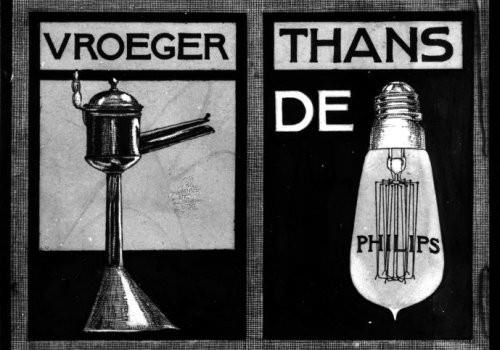
    Philips light bulb advert
    Philips light bulb advert

    The engineer assured that for ƒ 12.00 per year, which is just over three cents per day, one can burn a lamp of sufficient intensity to one’s heart’s content; if desired, the Company will also install a lamp in the bedroom, which can be used alternately with the lamp in the living room without a price increase. With such an arrangement, the costs of a meter are saved.

    “But that business will not be able to exist here!”

    Mr. Rittershaussen answers that if it encounters no opposition, his Company will have the installation ready within six months, and he is certain that within two years it will have placed enough lamps in Aalten and Bredevoort to run its business successfully. He considers it entirely unnecessary to request applications for connections beforehand. However, of even greater importance to our municipality is that the “De Laval” Company, alongside electric lighting, also provides the opportunity for anyone who so desires to rent power to set machines in motion.

    In this way, small-scale industry, which is slowly perishing due to competition with the steam factories in our municipality as elsewhere, will be able to flourish vigorously once again. Wood, pipe, and button turners, millers and flour manufacturers, tobacco carvers, wood sawyers, printers, shoemakers, laundries—in a word, all who need driving power for their business—can be enabled by the electrical installation to withstand the competition without great difficulties.

    The aforementioned engineer declared that his Company is also inclined to establish the long-desired Lievelde–Bocholt tram connection through the construction and operation of an electric tram. That the Company, in its application for concessions, is not seeking to make money from such concessions but to actually carry out the plans, is evident from the fact that it already has over 1,500 Laval Turbines with approximately 33,000 effective horsepower in operation.

    From all this, it is clear of what importance an electrical installation for light and power transmission is for our municipality.

    With polite thanks for the publication, I have the honor to be, Mr. Editor,

    your humble servant
    B.S. MULDER, Pastor.
    Bredevoort, Feb 15. 1899.

    Aaltensche Courant, 9 September 1899

    Letter to the Editor – A contribution and explanation regarding the electric lighting of Aalten and Bredevoort.

    The editorial team accepts no responsibility.

    It is now several months ago that the Company “de Laval” in Amsterdam made the plan to provide our municipality with electric light and electric power transmission to give the residents the opportunity to light their houses beautifully, cheaply, and conveniently, but above all to expand or facilitate their industry by means of electricity. After all, this saves a lot of labor and allows one to work much more cheaply than by means of steam engines or motors, which are relatively expensive and involve a lot of labor.

    Our esteemed Municipal Council has devoted several sessions to whether or not to grant permission for the establishment of this institution, which is so useful for our municipality. However, nothing has been decided so far and, in my opinion, matters are worse than a few months ago, for delay so easily becomes cancellation, and thus we would cause ourselves harm. The main reason for this standstill, however, is that some Council members are under the misconception that electric light would be dangerous; even Council member Mr. Th. Driessen is of this opinion, although his factory is lit by electricity.

    The opposite is true, however; let the following serve as proof:

    1°. Electric light can be provided by means of cables which are insulated, i.e., by cables which are so wound or covered that they do not present the slightest danger upon contact with humans or animals. Therefore, there is no danger from this side in laying cables from Bredevoort to Aalten and vice versa, or in making conduits along the houses in Aalten and Bredevoort.

    2°. When connecting the buildings to be lit with the main cable, the greatest precaution is observed by placing a piece of lead wire or other soft metal at the point where the current enters the house, through which the current enters the house. If the current becomes too strong, the inserted soft metal melts and all danger (which, incidentally, is not great or dangerous) has vanished. By means of another piece of soft metal, one can easily bring the meanwhile tempered current into contact with the lamps.

    3°. Electric light is actually only a current passing through very thin wire, which wire is located in a vacuum glass bulb or pear. Should this bulb or pear break, that thin wire immediately comes into contact with the air; it carbonizes in a minimum of time, whereby the current is broken and no more danger is present.

    I believe I have sufficiently proven herewith that electric light does not present the slightest danger, but does bring a very great advantage; for the sometimes very high prices of petroleum remain without influence on our municipality and, moreover, one can have beautiful light for the very low price of ƒ 12 for the entire year, and everything works very easily, namely by simply pulling a lever, and everything is ready.

    The greatest advantage, however, lies in the fact that one can drive all kinds of machinery by means of electric power, not to mention a tram. It can serve to set in motion looms, lathes, mills, etc. etc., as is already widely done in Germany. Only by means of electricity can one nickel-plate and gild cheaply and beautifully, and light various apparatus such as large microscopes etc. by means of carbon rods.

    Proof enough that electric light and power transmission is not only advantageous but highly desirable for our municipality. Everywhere in Germany one finds electric trams, which even run along cables that are not insulated, as for example in Duisburg, Oberhausen and surroundings and from Krefeld to Dusseldorf etc.; furthermore, one also has electric light and electric labor everywhere there.

    I hope and expect that Mr. Driessen, as well as the entire Council, has come to other views and that after the next council meeting an affirmative answer be sent to the Company “de Laval,” so that delay here does not become a refusal. Should the Council, however, not be convinced or not believe these proofs, then I hope they will go and take a look at the specified German places.

    Bredevoort, Sept 4, 1899.
    a QUERCU.

    Arnhemsche Courant, 19 February 1900

    Aalten, Feb 17. – A concession has been granted to the firm Hofstede Crull, in Borne, by the Council of Aalten for the installation of electric lighting there.

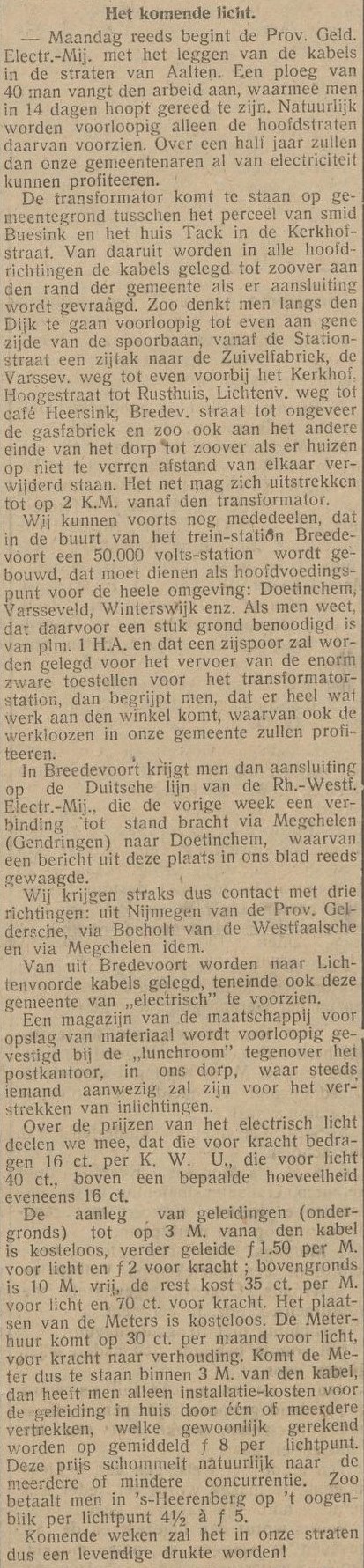
    Electricity – Nieuwe Aaltensche Courant - 29 June 1923
    ‘The coming light’ – De Nieuwe Aaltensche Courant, June 29, 1923 (click to enlarge)

    Sources


    • Aaltensche Courant, 18 February 1899 (Delpher)
    • Aaltensche Courant, 9 September 1899 (Delpher)
    • Arnhemsche Courant, 19 February 1900 (Delpher)
    • De Nieuwe Aaltensche Courant, 29 June 1923 (Delpher)
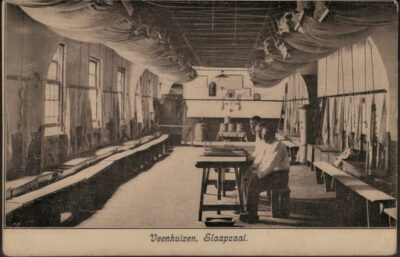
  • Vagrant from Bredevoort sent to Veenhuizen as punishment

    Vagrant from Bredevoort sent to Veenhuizen as punishment

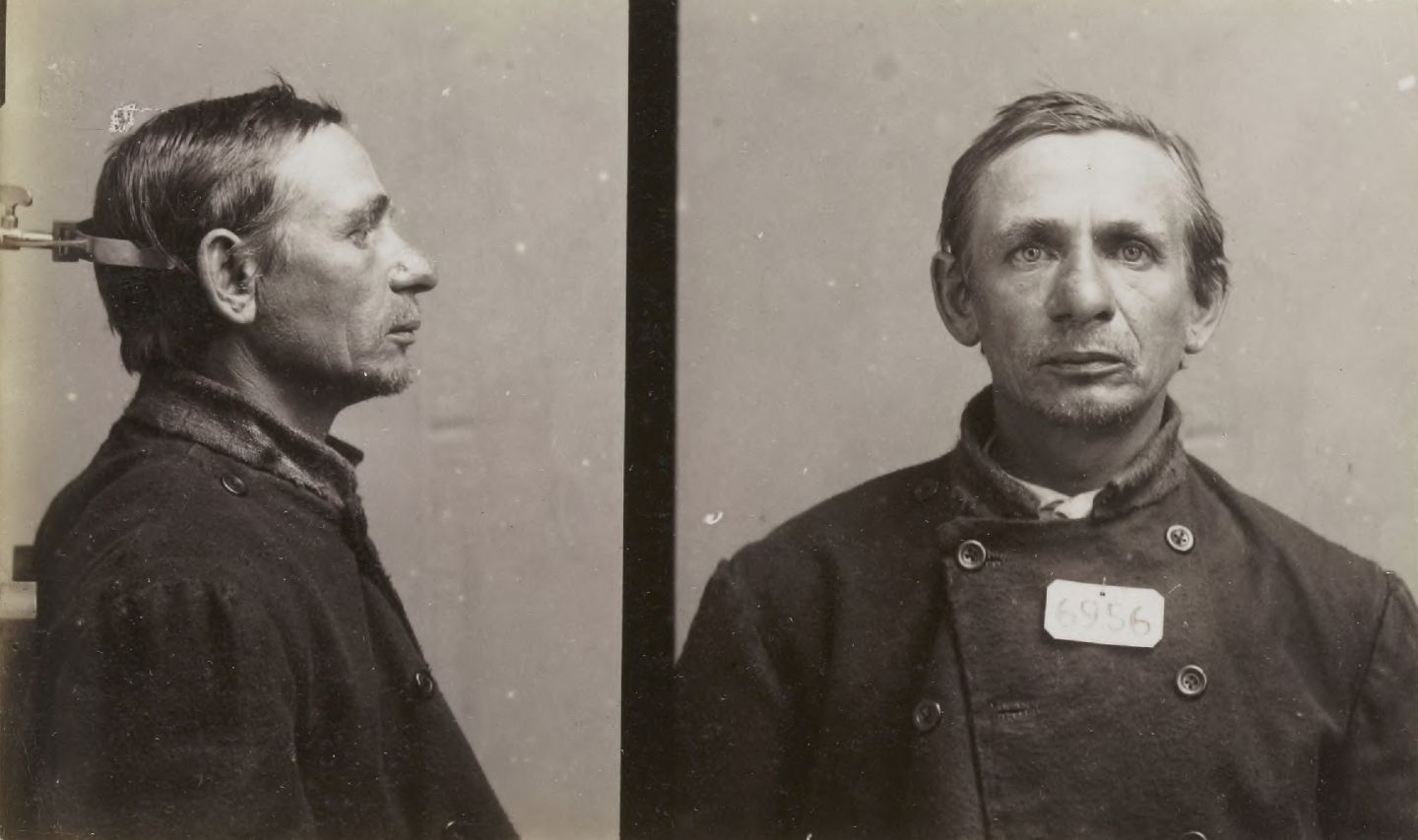
    Bernardus Hendrikus Bloemers, opname Veenhuizen I, 22-06-1896

    Bernardus Hendrikus Bloemers was born on March 12, 1845, in Bredevoort, house number 7a, in the vicinity of the Misterstraat and Bekendijk. He was a son of Johannes Arnoldus Hendrikus Bloemers and Theodora Sessink. The family lived briefly on the Ambthuiswal, but departed for Terborg in December 1847.

    Bernard’s life was no bed of roses. In 1896, he was arrested for vagrancy and, as punishment, admitted to the State Workhouse Veenhuizen I in Drenthe.

    A wandering existence

    The population register shows that Bernard certainly did not lead a settled life. From the age of sixteen, he stayed in numerous places, interspersed in his younger years with temporary returns to the parental home in Terborg:

    • 1861–1862: ‘Esheren in Prussia’ (Esserden near Rees?)
    • 1862–1864: Vethuizen, municipality of Bergh, as a farmhand on a farm
    • 1867: Tegelen, Limburg
    • 1867–1868: Beek near Sterkrade in Prussia (now Duisburg-Beeck)
    • 1869: to Sterkrade again
    • 1870: working as an iron molder near Ulft, after which he left for Isselburg
    • 1872: Liège, Belgium.

    Around 1873, Bernard married Johanna Francina Kok, born on January 21, 1848, in Oer near Ulft, presumably in Dinslaken. In 1877, he was recorded as “Bernardus Hendrikus Blummer” in the population register of Oosterhout near Tilburg, where he lived with his family, with the profession of sand molder. A few years later, they lived in Nijmegen, on the Steenstraat.

    As far as is known, the couple had four sons:

    1. Johannes Hermanus (Dinslaken, 1874 – 1876)
    2. Johannes Arnoldus (Dinslaken, 1875)
    3. Johannes Hermanus (Oosterhout, 1877 – Rotterdam, 1962)
    4. Bernardus (Nijmegen, 1880 – Rotterdam, 1949).

    In December 1883, the family left for Breda, and only a month later for ‘s-Hertogenbosch. In the population register, there is a difficult-to-read note behind Bernard’s name, possibly: “tried on October 9, 1884, in Utrecht”. Later, the family appeared in Rotterdam, where they seemed to settle permanently. Johanna passed away there in 1909.

    It is striking that Bernard reappeared in Nijmegen in 1895 — without his family, coming from Zwolle. Why he left his family remains a matter of speculation. Poverty likely played a significant role. The frequent moves possibly point to an uncertain existence, in which one constantly sought better prospects — or fled from debts and problems.

    In any case, Bernard’s life was no bed of roses, and the fact that he had fallen on hard times was confirmed shortly thereafter.

    Admission to Veenhuizen

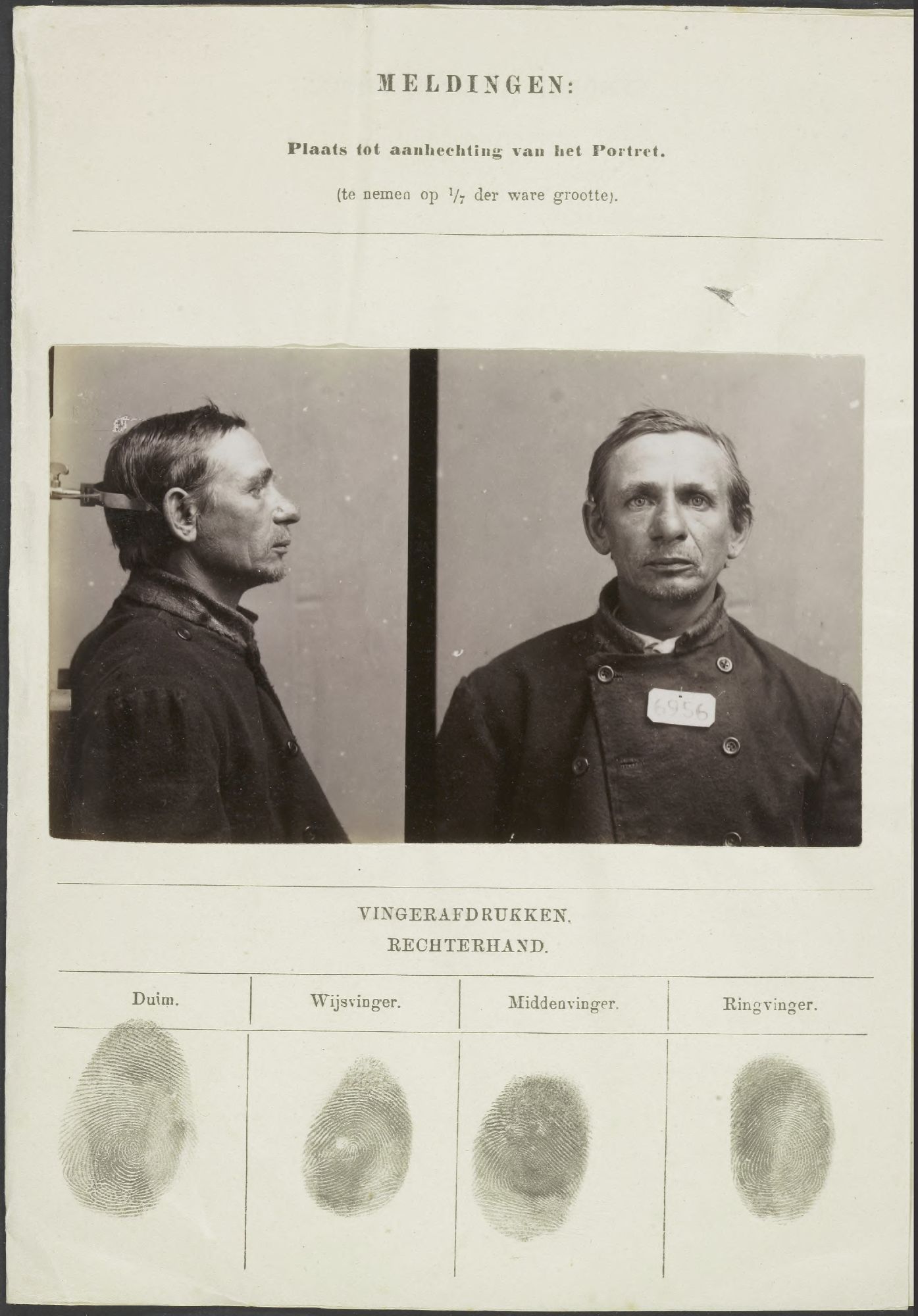
    On June 22, 1896, Bernard was admitted to the Veenhuizen I State Workhouse for vagrancy. Upon entry, a description card was drawn up, featuring photographs, fingerprints, and a precise description of his appearance.

    It is also mentioned that at that time he had no fixed place of residence (Nijmegen was noted as his last place of residence). His profession was ‘iron molder’, he had no identity papers, and was unmarried (!). He had been convicted of vagrancy in ‘s-Hertogenbosch. He had already been convicted twice before for the same offense.

    The description card contains a detailed account of his physical characteristics, including his height (1 meter 51.9). His nose was broad, protruding, ‘with much blood showing through from below’ and with a scar on the right nostril.

    What happened to Bernard after that remains unknown. We do not know if he ever left Veenhuizen, nor where or when he died.

    Stay in the State Workhouse in Veenhuizen

    State Workhouse Veenhuizen 1 (the First Asylum) was a closed penal institution for men who had been convicted of begging or vagrancy. In this large-scale complex, discipline and labor were central.

    The purpose of the institution was not only retribution, but also to effectively “combat vagrancy and begging” by purging society of individuals considered a nuisance and instilling discipline in them through forced labor.

    Daily life was strict and sober under a military regime. Violations of the internal rules were punished with a stay in the punishment cell or a reduction in rations. The residents, referred to as wards, wore mandatory asylum clothing, slept in large communal wards, and were put to work six days a week. The labor consisted of heavy land reclamation on the heath or indoor work in workshops, such as weaving mats and repairing mailbags.

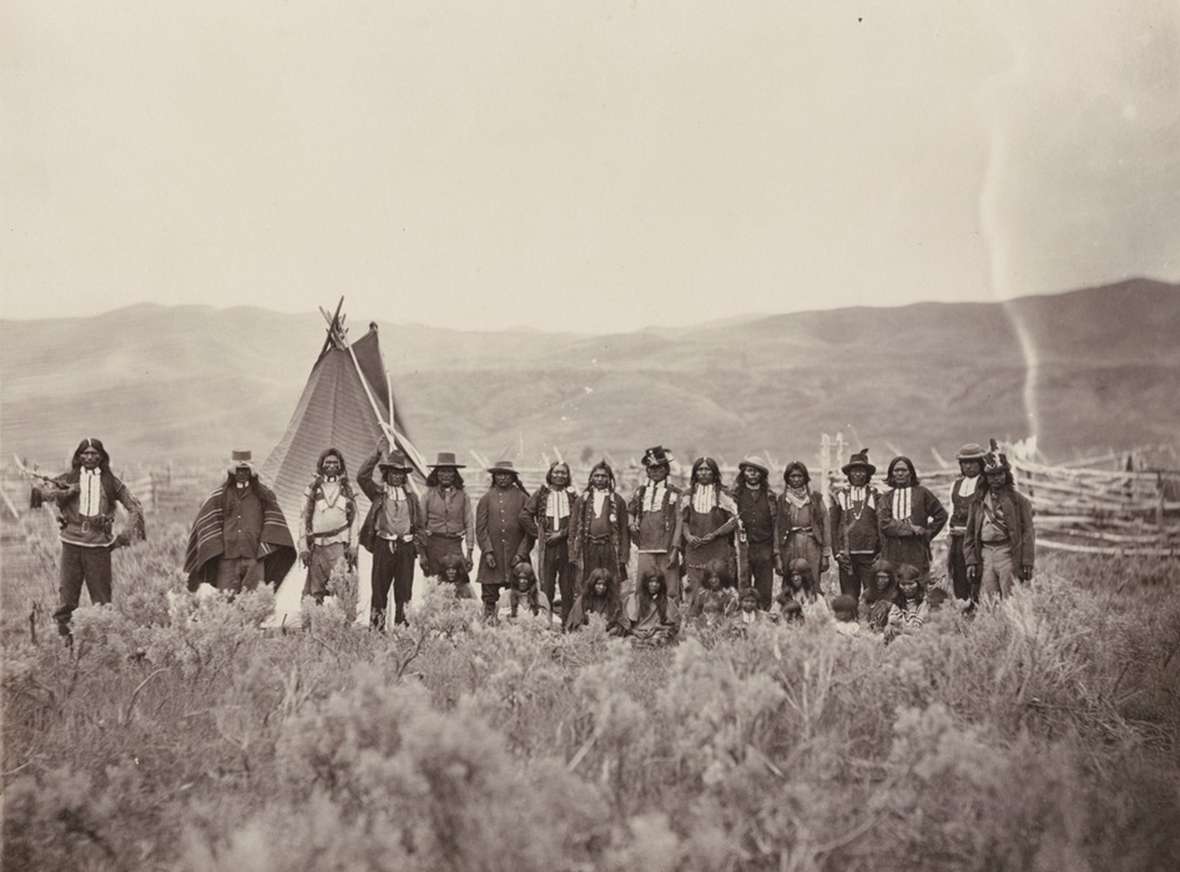
  • Indian stories

    Indian stories

    In the course of the 19th century , more than 1500 people from Aalten emigrated to the United States. Many of them settled in Sheboygan County in the state of Wisconsin. Some later moved further west, to states such as Iowa, Minnesota, Nebraska and Wyoming. These areas had been inhabited for centuries by indigenous peoples, then called “Indians”. This sometimes led to tensions, as is evident from a story of the Somsen family, whose ancestors came from Aalten.

    Immigrants and indigenous inhabitants regularly lived close to each other and also traded. Indigenous inhabitants exchanged fur for blankets, tobacco or other goods. Sometimes there were also conflicts between the original and the new inhabitants, especially over land, cattle or other possessions. In that context, the following family story from the descendants of an emigrant family in Aalten takes place.

    The disputed horse of Henry Somsen

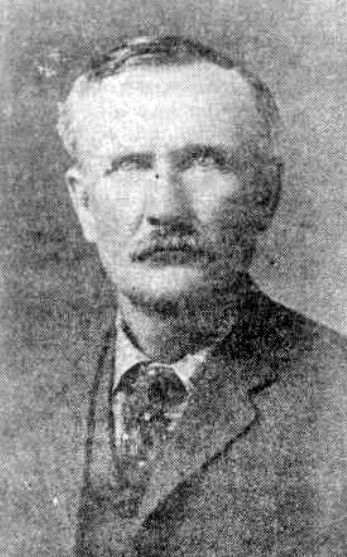
    Henry John Somsen (1852–1936)
    Henry John Somsen (1852–1936)

    Hendrik Jan Somsen and Johanna Berendina Rensink, from the Japikshuis in IJzerlo, emigrated to America in 1851 with their four children and settled in Sheboygan. Their fifth child was born there in 1852: Henry John.

    Around 1890, Henry lived with his family on a farm about ten miles north of Cokeville in the state of Wyoming. During that period, an incident took place with a group of indigenous inhabitants. His daughter Olive Somsen later described this in a biography of her father:

    One day, Henry and his wife were away from home, while their three eldest children – Henry of twelve, Olive of ten and Frank of eight – had to look after the house.

    A group of Indians stopped near the house. One of them came to the house and declared that a certain horse in the meadow belonged to him, and when they left he wanted to take the horse with him. The children knew that their father had bought the animal from a Native American trader a few days earlier, and they were determined not to let the horse be taken.

    Frank, the youngest, climbed on the horse and rode it to the river, where he hid among the willow bushes. His little sister Olive hid in the cellar, while the eldest son, Henry, mounted another horse and rushed to Cokeville, where his parents were; about ten miles south.

    The main group of Indians took the road to Cokeville, while two went along the river in search of Frank with the horse. They found him and, while holding bows and arrows at the ready, forced him to ride in front of them.

    Eldest son Henry arrived in Cokeville after a quick drive and warned his father. Shortly afterwards they drove back to the farm with a number of armed men. On the way they met the group of Indians, with Frank on the horse in front.

    They urged the Indians to stop and listened to their story. It is possible that the Indian, who had sold the horse to Somsen, had stolen it from the Indian who now claimed it. Anyway, they arrested the entire group and took them to Cokeville. The next day, their case went to court. He decided that Somsen would keep his horse and the Indian was assigned another horse.

    Do you also know a story of an emigrant family from Aalten? Let us know!

  • The Ecclesiastical Situation in Aalten

    The Ecclesiastical Situation in Aalten

    De Graafschapbode, 19 March 1887

    Every now and then, the newspapers report fragments about the withdrawal of Gangel with his consistory, of suspension, dismissal, the keeping of church doors closed, riot, soldiers, hussars, etc., etc., and with all that, the matter continues at a snail’s pace. When will this change? One says it will remain so, another that the church may well remain closed for another 6 weeks, a third speaks of compromising, but despite all that: no progress is made. What can be done about this?

    A clear explanation of the matters, decisive action, indeed taking possession of the church. All well and good, but show us the way to achieve this. Well, through this writing, we wish to attempt to set you on the right track and point out the path the congregation must take.

    Mr. Gangel, former minister of the Dutch Reformed Congregation in Aalten, has seceded with his consistory, in other words, shaken off the Synodal yoke, as His Honor is pleased to call it. Previously, a part of the consistory, namely 3 persons who also functioned as churchwardens, resigned as members of the consistory, but retained their positions as churchwardens until the classical board, acting in the capacity of the consistory, suspended and later dismissed said gentlemen from their membership as members of the Dutch Reformed Church in Aalten.

    It goes without saying that when someone has been dismissed as a member of the church, there can no longer be any question of being allowed or able to retain the management of the church, etc. After all, churchwardens are not owners of the church and its assets, but are merely elected by the notables as managers; see: General Regulations on the management of ecclesiastical assets and funds of the Reformed congregations in the Netherlands and the supervision thereof: 1 Oct. 1870.

    These churchwardens are currently preventing the ministry of lawful ministers who must appear before the congregation, thereby withholding gifts from the poor and effectively preventing the collection of offerings for the maintenance of public worship.

    For two Sundays now, the congregation has come to a closed church door, and twice lawful ministers have been prevented from performing their duties. We admire the calmness of the congregation in this matter, but we cannot guarantee that this will remain so for much longer. The parties are becoming increasingly sharp and hostile toward one another; it causes strife between members of the same household, and there is no longer any talk of brotherhood.

    Who is the cause of this? None other than these churchwardens and the grieving consistory with their leader, Gangel.

    But does the congregation have no rights? Certainly. The right rests with the members of the congregation, in the following manner: The lawful voting members elect the notables, the notables elect the churchwardens, and these take upon themselves the management. Where the churchwardens have now resigned of their own accord, or have been dismissed or removed from office, the election of new churchwardens must proceed without delay.

    In the case of Aalten, the congregation will first have to supplement or completely renew the list of notables, and these new notables will appoint the Messrs. churchwardens. These new churchwardens take over the management from the old ones, and matters are settled. In the event of resistance to this lawful order, one can turn to the classical board and further to the provincial board.

    If all this is of no avail, as seems to be the case in Aalten, and the dismissed churchwardens keep the doors of the communal property closed, then the members simply act as the rightful claimants and take possession of the church. By this, we do not mean to conquer the church by force, for there is no question of conquest when one is the rightful owner, but one should then call upon the judicial (civil) power. A church must not remain closed to the people on regular days of worship as long as there are churchgoers and lawful ministers to attend. See further on this the Church Regulations of 1 October 1870.

    Sources


    • De Graafschapbode, 19 March 1887 (Delpher)
  • Fight in the Prison

    Fight in the Prison

    On 27 February 1880, a man who had served his prison sentence in Bocholt was escorted by a gendarme to the Dutch border near Aalten. Thanks to the excellent cooperation between the Dutch and Prussian border police, he was duly received at the border crossing by rijksveldwachter (national constable) Schaars Prins from Aalten, to be handed over to the Dutch justice system, which also had a bone to pick with him.

    The transport to Aalten took place by carriage. Upon arrival there, the man was taken to the house of detention. Everything proceeded quietly and orderly, until an individual who – as it later turned out – had followed the carriage at a trot, entered the prison.

    When asked what he was doing there, a life-and-death struggle suddenly ensued between the prisoner and his friend on one side, and Schaars Prins, municipal constable Heersink, and the coincidentally present municipal messenger Gerhard Rots on the other.

    After a few truncheons had been shattered across the bodies of the attacking rogues, Rots dealt out several blows with a type of frying pan, which was bent completely out of shape as a result. In this fight, the constables sustained only a few scratches and bruises, but the stout-hearted Rots was actually bitten on his nose, his hand, and in a certain hind part of his body.

    Schaars Prins, who a few years earlier had been decorated by the German Emperor following an encounter with criminals in Aalten – who, having escaped from the prison in Bocholt, were nabbed by that moustachioed officer – held his ground firmly once again, yet would have been cut down with his own sabre had it not been for Rots.

    In the end, all turned out well – the audacious rescue attempt failed, and the friends were put under lock and key. They were transported to Zutphen to have their case heard there and, undoubtedly, to receive their just deserts.

    Sources


    • Zutphense Courant, 1 March 1880 (Delpher)
    • Zutphense Courant, 2 March 1880 (Delpher)
  • Administration of Justice in Aalten (1810-1877)

    Administration of Justice in Aalten (1810-1877)

    During the French occupation of our country (1795-1813), a significant change occurred in the existing legal order. After the Netherlands was annexed to France by Napoleon Bonaparte in 1810, French legislation was also introduced here.

    Justice of the Peace Court

    By Imperial Decree of July 9, 1810, the Netherlands was divided into departments, districts, cantons, and municipalities. A justice of the peace court was established in every main town of a canton, including Aalten. The canton of Aalten consisted of the municipalities of Aalten and Dinxperlo.

    The task of the justice of the peace was to resolve conflicts peacefully before they were brought before a ‘real’ judge, in order to save a great deal of expense. In addition, the justice of the peace had the authority to handle small, low-cost cases. Other powers of the justice of the peace lay primarily in personal and family law.

    Cantonal Court

    In 1838, the legal system was reorganized again, and the justice of the peace was replaced by the cantonal judge. The justice of the peace courts of Aalten and Winterswijk were then merged into the Aalten cantonal court. This court covered the fourth canton of the third district (Zutphen) of the Gelderland Court of Appeal and was classified as a fifth-class subdistrict court based on the Act of July 1, 1830.

    The Aalten cantonal court held its sessions in the town hall on the Markt. In 1861, a cantonal house of detention was built in Prinsenstraat, with six cells and a jailer’s residence.

    The Aalten cantonal court was abolished in 1877. From that moment on, the municipalities of Aalten and Winterswijk belonged to the canton of Groenlo. The municipality of Dinxperlo was transferred to the canton of Terborg.

    Archive

    In 1968, the archive of the former Aalten cantonal court was transferred to the State Archives in Gelderland, along with the oldest part of the Groenlo archive. In 1961, the transfer of the Public Prosecution Service archive, which was still located in the Aalten town hall, took place.

    Judges and clerks of the justice of the peace and cantonal court in Aalten 1811-1877 (still incomplete)

    Additions are welcome!

    Term of officeJustice of the PeaceDetails
    ?Jan Izak Huinink (1739-1822)
    ?Abraham Casper Salomon ten Bokkel (1761-1831)lawyer, notary, land clerk, justice of the peace, temporary mayor of Aalten, and deputy bailiff
    ??
    Term of officeCantonal JudgeDetails
    1838-1855Joseph Gerard van der Schaaff (1798-1877)formerly justice of the peace in Aalten, honorably discharged
    1855-1877Frederik Willem Jacob Immink (1822-1893)formerly clerk of the Aalten cantonal court, subsequently subdistrict judge in Groenlo
    Term of officeClerkDetails
    1811Campegius Lambertus Vitringa (1786-1864)formerly a lawyer in Arnhem, subsequently clerk in Harderwijk
    Jan Willem te Gussinklo (1787-1829)
    1838-1839Jan Derk Schepers (1800-1848)formerly clerk of the justice of the peace court in Aalten, subsequently municipal tax collector in Dinxperlo
    1839-1843Jillis van Beuil (1803-1843)formerly a letter collector in Aalten, died in office
    1843-1852Bernard Andries Roelvink (1818-1882)formerly substitute prosecutor at the district court in Zutphen, subsequently notary in Aalten
    1852-1855Frederik Willem Jacob Immink (1822-1893)formerly a lawyer in Borculo, subsequently cantonal judge in Aalten
    1855-1877Cornelis Philippus Jacobus Penning (1817-1888)former position unknown, placed on redundancy pay in 1877 due to the abolition of the Aalten cantonal court
  • Pioneers in Wisconsin – Huinink

    Pioneers in Wisconsin – Huinink

    Emigrants from Aalten to the US

    In the 19th century, thousands of Achterhoekers emigrated to the United States in search of land, freedom and new opportunities. Among them was the Huinink family from Dale.

    Derk Willem Huinink was born on March 9, 1827, at the (Oude) Maas farm in the Aalten rural district of Dale. He was a son of Jan Berend Huinink and Berendina Heesen. His father initially worked as a teacher but later switched to farming. The couple had five sons and two daughters. Mother Berendina died on August 1, 1848.

    Derk Willem attended primary school and helped on the parental property. At the age of seventeen he learned the weaver’s trade, which he combined with work on the farm for ten years.

    On 28 May 1858 he married Catharina Jentink, daughter of Hendrik Jan Jentink and Dora Hendrika Lammers. She was also born in Dale, on November 20, 1834. She was one of ten children, four sons and six daughters, six of whom emigrated with their parents to the New World. The Jentink family settled in Lima, Wisconsin.

    Derk Willem’s sister, Janna Willemina Huinink, married Jan Berend Schepers on the same day.

    Emigration to America

    In the summer of 1869, Derk Willem, his father, wife and children left via Liverpool on the steamship Nestorian to North America. After eleven days, they arrived in Quebec and traveled on to Sheboygan County. On July 25, they reached Amsterdam (Sheboygan County). In the spring of 1870, Huinink bought 72 acres (29 hectares) of land in section 19 for $2,000. Later he added another 5 acres (2 hectares).

    Family life and work

    Derk Willem and his wife built up a thriving farm with hard work. They had nine children:

    • Jan Berend (born 20 May 1859), businessman in Cedar Grove
    • Dora Hendrika (Aalten, 22 June 1861), married to farmer John Lohuis
    • Hendrik Jan (born 15 October 1863), cheesemaker in Cedar Grove
    • Christiaan (born 22 April 1866), veterinarian
    • Berendina Gesiena (born 22 April 1868), married Harry Scott
    • John William (born June 3, 1871), first child born in America
    • Garret John (Cedar Grove, 25 May 1875)
    • Catherina Wilhelmina (Cedar Grove, 6 December 1876)
    • Derk William Jr. (Holland, 30 July 1880)

    Community and death

    The Huinink family (also spelled Huenink in America) was a member of the Presbyterian Church. Derk Willem played an active role in this and was an elder for more than nineteen years. Both he and his sons voted politically for the Republican Party, which was common among Protestant immigrants in the Midwest at the time.

    Derk Willem Huinink died in Cedar Grove in 1911 and Catharine four years later. They are both buried at Presbyterian Cemetery in Holland, Sheboygan.

  • The steamship ‘Nestorian’ (1869)

    The steamship ‘Nestorian’ (1869)

    Emigrants from Aalten to the US

    In the summer of 1869, a life-changing adventure began for more than a hundred Aalten residents. On board the steamship Nestorian, bound for Quebec, were hundreds of emigrants, including families from Aalten and the surrounding area. For them, this was the beginning of a new life in America, far away from the agricultural crisis and the limited future opportunities in the Achterhoek.

    The Nestorian was an iron steamship of the Allan Line (officially the Montreal Ocean Steamship Company), built in 1866 in Glasgow. The ship was about 97 meters long and 12 meters wide. For extra safety, the ship had three masts with sails, in case the steam engine failed. There was room for 115 passengers in first class and 600 in third class (the tween deck).

    The choice for the Allan Line and Québec

    Steamship Nestorian (1867)
    Steamship Nestorian (1867)

    Around 1869, the Allan Line advertised intensively in Dutch regional newspapers. Local intermediaries, such as in Arnhem, acted as sub-agents for the main agency in Antwerp. The shipping company convinced Achterhoekers with two strong arguments:

    • The shortest sea route
      By sailing to Quebec instead of New York, emigrants spent less time on the open ocean. Once the ship reached the Straits of Belle Isle, they sailed the rest of the way on the sheltered Saint Lawrence River.
    • The cheapest option
      Between 1860 and 1890, Liverpool was a popular port of departure for European emigrants due to its lower rates. Poorer emigrants were willing to tolerate the inconveniences of shipping through England in order to save on the transatlantic ticket. A ticket for the crossing (tween deck/steerage) cost about 60 to 80 guilders around 1869.

    The journey and the route

    Including the journey from the Achterhoek and the transfer in England, an emigrant was on the road for about 2.5 to 3 weeks. Here’s what their trip must have looked like:

    To Antwerp

    Achterhoek emigrants first traveled by horse and cart to a suitable pick-up point, such as Zevenaar or Arnhem. From 1855 it was possible to travel from there to Antwerp. In Antwerp, the emigrants were received by the agent of the Allan Line.

    The crossing to England

    In Antwerp they changed to a boat to Hull (England), a crossing of 12-24 hours. From Hull they took the train to Liverpool (4-6 hours). At that time, Liverpool was the heart of the flow of emigrants to America, with offices of shipping companies, agents and emigrant houses where travelers could wait for their departure.

    Where to stay in Liverpool

    Representatives of the Allan Line picked them up on arrival in Liverpool and took them to guest houses, often owned by the shipping company. Emigrants spent one to ten days there, waiting for their ship to the US or Canada.

    Departure from Liverpool

    The Nestorian departed from the Prince’s Landing Stage in Liverpool. The crossing from Liverpool to Quebec took an average of 10 to 12 days.

    Stay on board the Nestorian

    Although the Nestorian was known as a solid and fast steamship, luxury was hard to find. Most emigrants from the Achterhoek traveled in the ‘tween deck (steerage), where families slept in large, stuffy rooms in wooden cages with straw mattresses.

    The ticket price included the legally required rations (soup, potatoes, bread and salty meat). Passengers had to bring their own tin plate, cup and cutlery.

    The days were filled with card games, singing, praying, and talking about the future in America. There was a ship’s doctor on board, but resources were limited. Seasickness was universal, and infectious diseases spread quickly in the poorly ventilated dormitories. In outbreaks, the sick were isolated.

    Arrival and onward to Wisconsin

    On July 19, 1869 , the Nestorian reached the port of Quebec. The passenger list included well-known names from Aalten such as Eppink, Huinink, Jentink, Neerhof and Wassink. However, the journey was not over yet.

    From Quebec, the emigrants traveled west to Sarnia (Ontario) by Grand Trunk Railway . There they transferred to a steamer that transported them across the Great Lakes (Lake Huron and Lake Michigan). This trip took 1 to 2 days, depending on the weather and connections.

    Eventually, they set foot in the harbor of Sheboygan, Wisconsin. Most emigrants from Aalten settled in this region. In later years, some of these families moved further west to the fertile lands of Iowa and Minnesota, among others.

    Sources