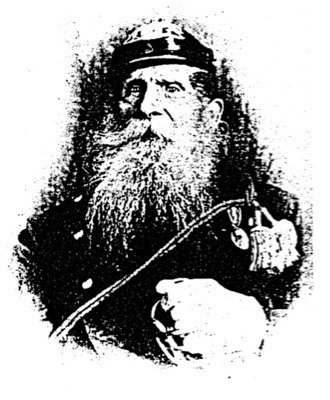
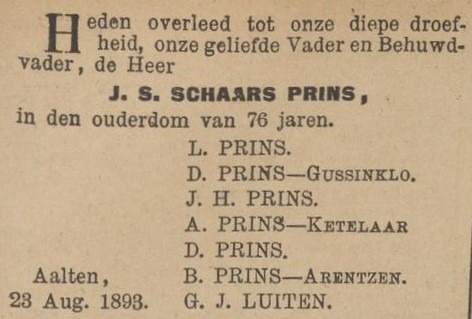
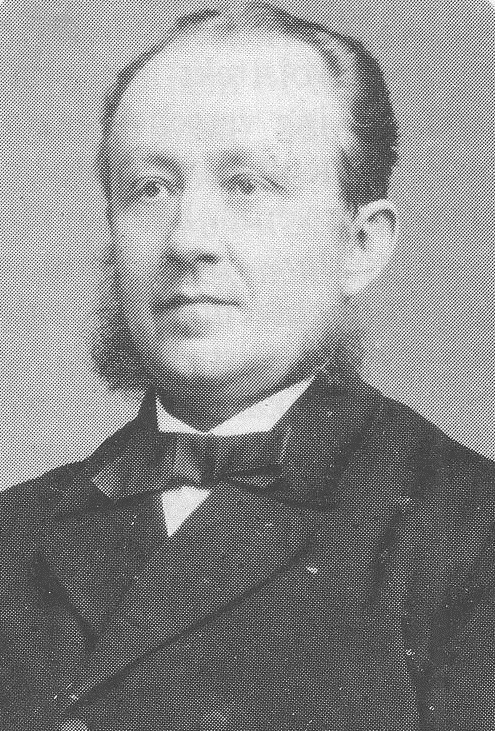
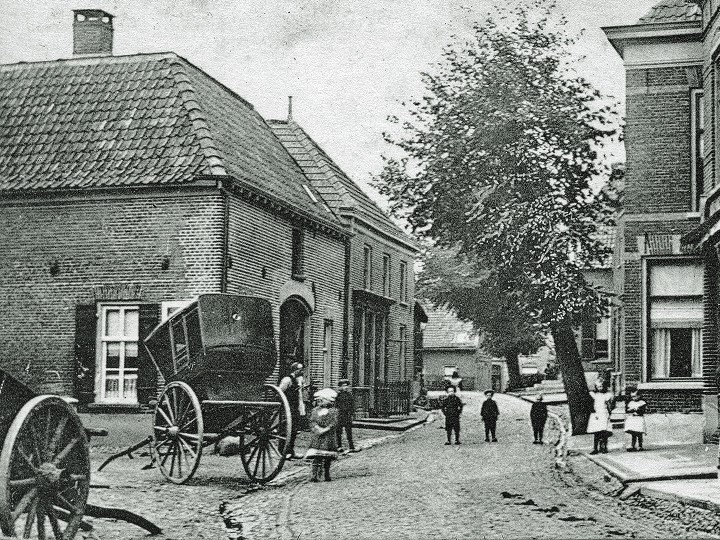
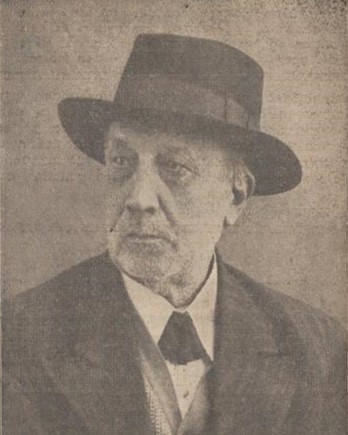
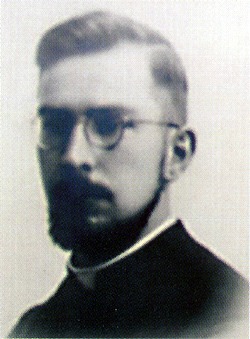
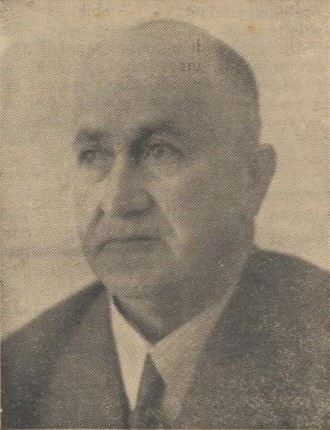
Jan Steven Schaars Prins was born in Aalten on February 23, 1817, the son of farmer Laurens Prins and Anna Elisabeth Hiebink. In 1823, the family lived at the address Aalten 3, currently Kerkstraat 5, and his father was listed with the profession of innkeeper.
On April 20, 1843, Jan Steven Schaars Prins married Johanna Walvoort. Together they had three children. After Johanna passed away in 1851, he remarried Berendeken Walvoort in 1853. They had six children together.
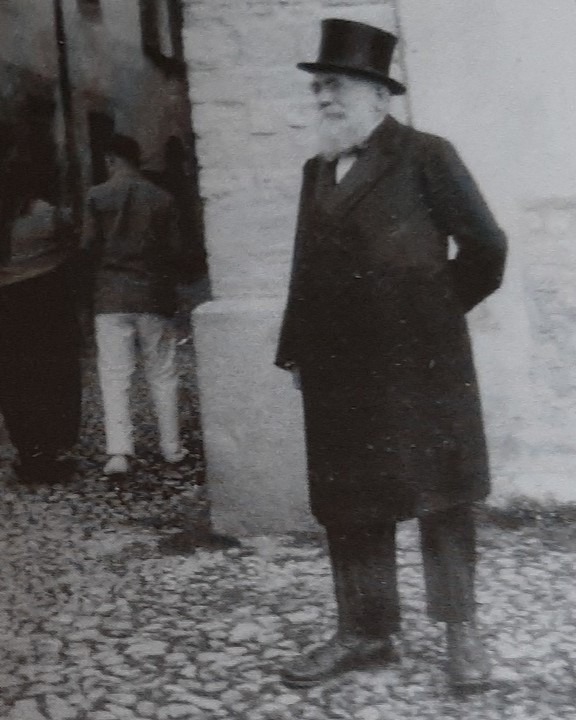
From 1858 to 1885, Jan Steven Schaars Prins was a state constable in Aalten. The mere mention of his name was enough to strike fear into people’s hearts. The youth would retreat into their shells when his name was mentioned, and it was used to get naughty rascals to go to bed.
But adults also held him in awe. He was an imposing figure, which in itself helped to restore order. And when he took action, order was restored immediately.
Schaars Prins was, so to speak, a powerhouse who had faced many a challenge. He often went out alone to cite dangerous poachers, but he also demonstrated his strength against criminals. Reportedly, he was once overpowered by poachers in the Aaltense Goor and tied to a tree. He was freed by a passerby several hours later.
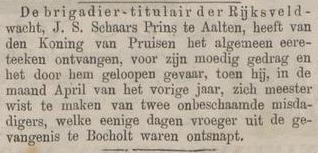
In 1876, Schaars Prins received an honorable distinction from King Wilhelm I of Prussia for courageous behavior shown the previous year during the arrest of two German murderers who had escaped from the prison in Bocholt.
Jan Steven Schaars Prins passed away on August 23, 1893, in Aalten.
Newspaper reports
Het Vaderland, March 7, 1876
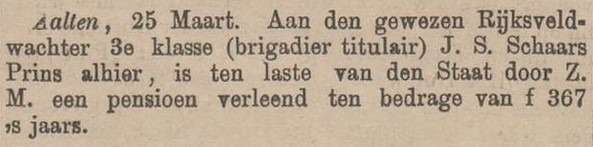
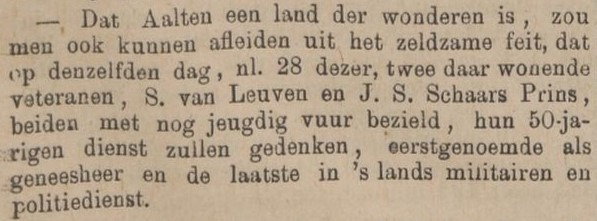
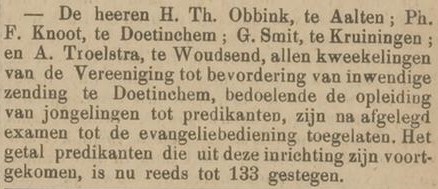
Zutphensche Courant, March 26, 1886Zutphensche Courant, April 17, 1886
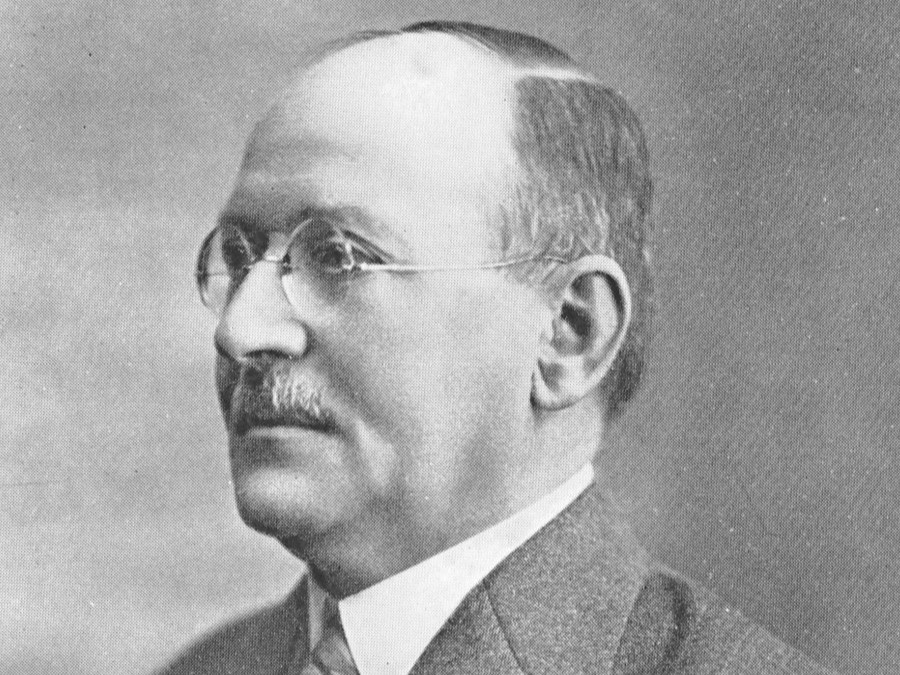
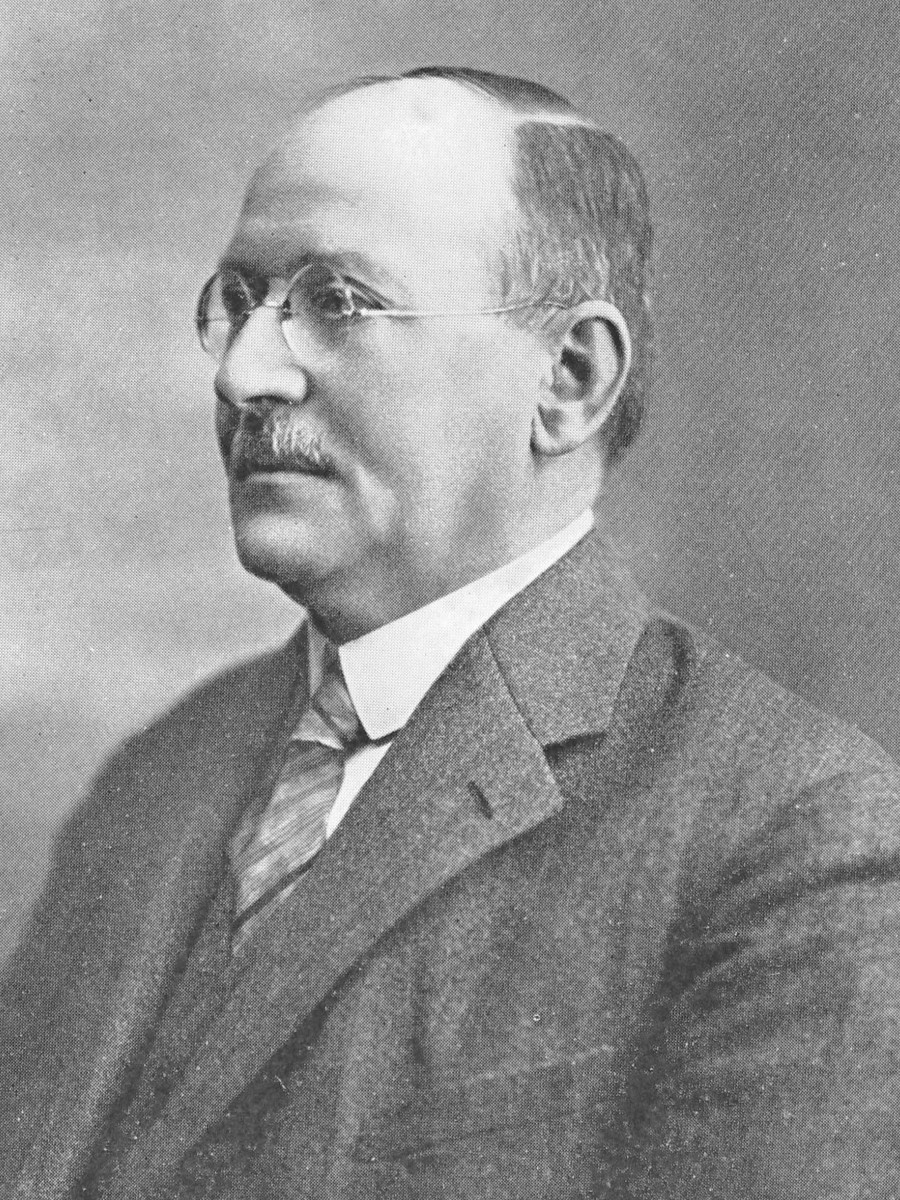
Johannes Hendrik Frederik Gangel was born on 7 December 1839 in Appeltern, the son of Bernardus Gangel, a schoolteacher by profession, and Christina Leemhorst. He studied theology at Utrecht University. In 1879, Gangel was called as minister to the Dutch Reformed Church (Nederlands Hervormde Kerk) in Aalten.
He succeeded the liberal minister, the Reverend Klinkenberg. Relations between the two ministers of Aalten—the Reverend Gangel and his liberal colleague, the Reverend C.F.S. Pape—soon deteriorated. Because he was ill, Pape had appointed a substitute to conduct his catechism classes. However, church regulations granted that authority strictly to the church council (kerkenraad). The Reverend Gangel and the council would undoubtedly have preferred to appoint an orthodox substitute.
In Aalten, Gangel quickly became a beloved figure. He was deeply committed to his congregation and was known for preaching in a clear and inspiring manner. For his time, Gangel was a progressive minister who strove for renewal within the church. He was a proponent of modern biblical criticism and wanted the church to focus more on the daily lives of its believers. He was also a strong advocate for using standard Dutch in church services, rather than Latin or the regional dialects that were still being used in some congregations.
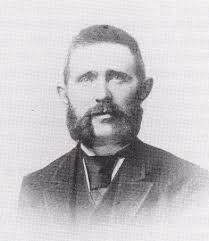
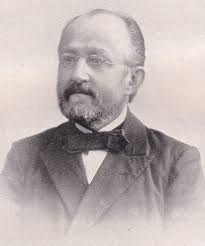
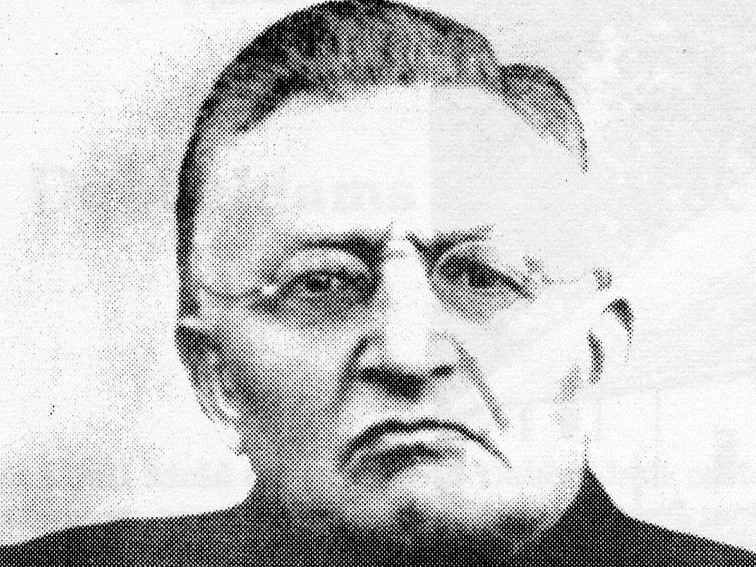
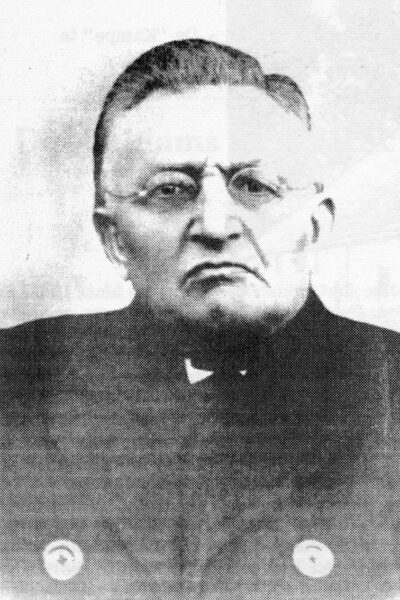
Rev. J.H.F. Gangel (1839–1908)
In Aalten, Gangel was highly active in community life. For instance, he founded both a choral society and an amateur dramatics society. He was also involved in education and worked hard towards the establishment of a Christian school.
Gangel’s activity extended well beyond the confines of the church community. He was involved in setting up a local health insurance fund (ziekenfonds) and establishing a local branch of the Society for Public Welfare (Maatschappij tot Nut van het Algemeen). Furthermore, he served as a member of the municipal council and held various other civic and public roles.
Although Gangel was a well-loved minister in Aalten, he faced several conflicts over the years. Initially, he found it difficult to adapt to the conservative and orthodox congregation of Aalten. Consequently, it took some time before he truly found his feet there.
The school dispute
A subsequent conflict arose when the Reverend Gangel (who, it must be said, was not always the most tactful of men) wished to allow a representative from the Unie School en Evangelie (School and Gospel Union) to give a lecture on the importance of Christian education in the Reformed church building. However, the church trustees (kerkvoogden) refused to grant permission. Over sixty members of the congregation, including the Reverend Pape, completely agreed with the trustees and made their views plain in writing. They stated they had heard of the Reverend Gangel’s plan “with indignation”, expressed their “full sympathy” for the trustees’ decision, and “highly condemned the conduct of the aforementioned minister”. Conversely, the Christian Reformed (or Seceded) Congregation (Christelijke Gereformeerde Gemeente) did grant permission to hold the lecture in their own church building. Notably, Gangel’s stance on Christian education ultimately led to a significant increase in pupil numbers at the local School met den Bijbel (School with the Bible) in Aalten.
However, the school board did not invite the Reformed members whenever board elections were held. The board wished to “keep its principles pure” and prevent too much Reformed influence from taking root. Naturally, the Reverend Gangel disagreed with this policy and protested with some passion. When they were barred from a second meeting as well, a fierce conflict erupted, both with the Reverend Breukelaar (the chairman of the school board) and with the Christian ‘Seceded’ Congregation, as the Christian Reformed members still called themselves. Headteacher Siebel also left his post to join the newly established Reformed primary school.
The Secession
Meanwhile, the struggle against theological liberalism and the power of central church hierarchies had come to a head in Reformed Amsterdam. The majority of the Amsterdam church council had been suspended by the denominational authorities, leading them to establish the Nederduitsche Gereformeerde Kerk on 16 December 1886. This movement was led primarily by figures including Dr A. Kuyper (1837–1920), who was himself one of the suspended elders.
In the Reformed congregation of Aalten, the atmosphere between the Reverend Gangel and his liberal colleague, the Reverend Van Oostrom-Soede, had also become toxic. Van Oostrom-Soede had stopped attending church council meetings for some time, and his wife refused to retract an accusation she had levelled at the Reverend Gangel (whom she had called “the vilest scoundrel in the world”). As a result, she was barred from taking Holy Communion. A succession of disputes between the two ministers only worsened the atmosphere. Naturally, the congregation noticed this rift, splitting into two opposing camps of supporters: the ‘Ganglians‘ and the ‘Soedians‘. The liberal newspapers reported on the ecclesiastical unrest in Aalten with great relish.
On 15 February 1887, the Aalten church council resolved to enter into Doleantie (secession) by withdrawing from the central Reformed church authorities. At that meeting, three council members stated that they felt “with grief compelled to step down from office”. The council then took the decisive step, formalising the resolution in an official council deed. Unlike the Reverend Gangel, the Reverend Van Oostrom-Soede informed the council that he would not be joining the Doleantie. The first Sunday following the secession passed quietly, and the Seceders (Dolerenden) were able to use the Reformed church building as usual.
A turbulent Sunday…
On Sunday 6 March 1887, however, events did not unfold so smoothly. The regional church classis had instructed a Reverend Bergsma to preach in the Reformed church of Aalten; however, the Reverend Gangel also intended to lead the service in that very same building. As soon as churchwarden G.J. Lammers opened the church doors, followers of both ministers rushed inside to capture the pulpit. “A burly Soedian [who, according to the Seceding church council, had been bribed by close friends of the Reverend Van Oostrom-Soede] occupied the elevated ministerial seat, while crowds positioned themselves on or near the stairs—shoving, thumping and scratching much like on the Amsterdam Stock Exchange,” one newspaper reported.
The Seceding church council recorded in its minutes: “Deplorable in this regard was the attitude of Mayor Hora Adema, who happened to pass by the church during the scuffle and did nothing to prevent it. Nor did he act when, called upon five minutes later by the churchwardens, he witnessed and heard the shouting and swearing near the pulpit, refusing to bring the crowd to reason, whereupon the churchwardens requested him to clear the church.”
The council decided not to hold a service the following Sunday because E. van Eerden, a supporter of the Reverend Van Oostrom-Soede, had threatened to shoot the Reverend Gangel dead the moment he stood in the pulpit.
Churchwarden G.J. Lammers (Photo: ‘Een kerk in de lens’)
The Reverend Gangel appeals to the authorities
While opponents of the Reverend Gangel gathered at the railway station with pockets full of stones—having caught wind that he would return that evening from a train journey to see the King’s Commissioner—the minister instead travelled on to The Hague, accompanied by Elder W. te Gussinklo. There, he sought an audience with the Minister of Justice, Baron Du Tour van Bellinchave.
When the Reverend Gangel failed to arrive on the evening train in Aalten, the disappointed prospective stone-throwers marched to the rectory in Hoekstraat, chanting: “Hop, hop, hop, hang Gangel and the Ganglians.” Eventually, the Reverend Gangel had to return home, but the Reverend Van Dorsen of Varsseveld warned him beforehand of the looming danger as a precaution.
The minister arrived in Aalten at half past one in the morning. Since no one was willing to drive him, he walked to the rectory, escorted by some seventy like-minded farmers from the Aalten hamlet of Lintelo, who were armed with sticks.
The following Sunday, the church remained closed. It was guarded by soldiers, as was the Reformed rectory. On the Saturday, fifteen hussars and forty infantrymen had arrived in Aalten to maintain public order. This, however, did not entirely prevent further disturbances. As a safety measure, the mayor ordered all pubs to close.
A temporary church
In the meantime, the church council had set to work building a wooden temporary church on Varsseveldsestraatweg (the ‘Plankenkerk‘ or Board Church). Architect Van de Wilk drew up the designs for what was described as a ‘lead-blue painted shack with an undeniably austere, seceding appearance’. A communion set and a baptismal font were purchased, and the building was opened for use on 1 May 1887. The sermon was based on 1 Kings 18 verse 21: “And Elijah came unto all the people, and said, How long halt ye between two opinions? if the Lord be God, follow him: but if Baal, then follow him. And the people answered him not a word.” Twenty-four young people made their confession of faith, and six children were baptised that afternoon.
To safeguard the congregation’s records, the Reverend Gangel transcribed the membership registers from 1816 up to the Doleantie, and also copied the council minutes starting from the meeting at which the secession was decided. This was done out of fear that a court might eventually order these books to be returned. This order was indeed issued in the summer of 1888. The court also ordered the Reformed rectory to be handed back. Consequently, a new rectory was built on Hogestraat in 1888 at a cost of 5,100 guilders.
Disagreement over church construction and more
A variety of disagreements and conflicts made life within the Seceded church less than pleasant during its early years. For instance, the Reverend Gangel was eager to replace the wooden Plankenkerk with a brick church. He proposed that this could be financed by renting out the pews in the new church, a common practice in many other parishes. In his view, this revenue would cover the interest and loan repayments. However, the churchwardens believed it would be better to hold “a voluntary annual subscription to meet the costs of public worship”. The Reverend Gangel feared this would take far too long, while the Plankenkerk remained highly uncomfortable: stiflingly hot in the summer and freezing cold in the winter. Friction persisted.
The Reverend Gangel also deemed it necessary for the elders to take on pastoral home visits. The elders, however, felt that spiritually caring for a congregation that had grown to 1,700 members would demand far too much of their time. The parish had been divided into four districts: Dale and Barlo, IJzerlo and Heurne, Aalten and Haart, and a district for Lintelo, each overseen by two elders.
The classis intervenes
Meanwhile, relations within the Seceded church council continued to sour. During a mid-week evening service on a Wednesday, Elder De Wijn caused an uproar by launching an “unprecedented public vilification”, presumably targeted at the minister. The Nieuwe Rotterdamsche Courant reported on the incident, and the regional classis was naturally made aware of the infighting. It dispatched a committee to Aalten, led by the Reverend J.C. van Schelven (1854–1904) of Dieren, to conduct an inquiry. It emerged that Elder Lammers was also on poor terms with the minister: “The unpleasantness that has arisen owes its origin to the Reverend Gangel’s driving desire to build a brick church in place of the wooden temporary church.” Elder Wijn further brought up the allegation that the Reverend Gangel had knowingly failed to visit a gravely ill member of the congregation.
Naturally, the Reverend Gangel did not remain silent, pointing out the vast amount of extra work he had been forced to undertake. He had been responsible for all the correspondence relating to the lawsuits following the Doleantie. Moreover, he was heavily burdened with work for the school, the Supplementary Fund (which paid the school fees for children of impoverished congregation members), the Young Men’s Association, and the Sunday schools, which had left him severely sleep-deprived.
The Reverend Van Schelven urged reconciliation. In the end, Gangel and Lammers made peace, but De Wijn wished to put the entire matter before the male voting members, though peace was eventually brokered with him too through the mediation of the Reverend P.C. Koster (1857–1929) of Velp. The Reverend Gangel began to find his working environment unbearable and wished to relocate to Velp, stating, “because quite apart from any reconciliation, my work here has been rendered impossible.” Nonetheless, he rescinded this decision in February 1889, noting that “after a heavy personal struggle, he had yielded to the pressure exerted upon him by so many members of the congregation.” Two council members visited him to express their delight at his decision. The others remained resolutely silent.
Sermon reading and minuting disputes
Another source of friction between the council and the minister concerned the practice of ‘sermon reading’ by elders when the minister was away. One day, Elder Lammers was on duty and was given a choice of several sermons handed to him by the Reverend Gangel. Refusing to comply, Lammers chose instead to “just speak a few words of his own”, adding in passing that he was entirely opposed to the practice of ‘sermon reading’. The minister had no choice but to state that if no sermon readers could be found, he would have to ensure that Sunday services were cancelled in his absence.
The drafting of council minutes also proved a divisive issue. Up to this point, the Reverend Gangel had always written the minutes himself, using them to record detailed accounts of all the arguments that took place within the council. This caused resentment among other council members. Consequently, Elder W. te Gussinklo was appointed as secretary (scriba). However, he eventually had to hand the role back to the minister, admitting that he had “deliberately omitted” certain matters from the record.
The Reverend J.H.F. Gangel (1839–1908) in his later years
The construction of the Westerkerk (1891)
In March 1891, during a meeting of the male voting members, the question was raised regarding the desire to build a brick church and thereby close the Plankenkerk. The vote revealed ninety-four in favour, thirty against, and twelve blank votes. The construction project went ahead. The site chosen was next to the new rectory on Hogestraat. As the full sum could not be raised immediately, a loan of 15,000 guilders was taken out. Construction progressed very rapidly, and the church was completed that same year. Congregation members went door-to-door to raise funds for a church bell. A memorial stone valued at 40 guilders was also commissioned; this was partly funded by the remaining balance from the bell collection (15 guilders), while the Reverend Gangel personally paid the remaining 25 guilders.
The church was dedicated on ‘a Wednesday in February 1892’. The church council of the Christian Reformed Congregation was also invited and attended. Meanwhile, the rental prices for the pews in the new church had been fixed. The most expensive seats cost 5 guilders, the ‘middle class’ seats were 3.50 guilders, and the cheapest cost 2 guilders. “To the poor and those of modest means, a 5-guilder seat was offered right in the middle of the church!”
The church featured a hexagonal pulpit resting on a central pillar. Initially, there was no gallery; this was added in later years. There was, however, an organ situated at the front of the church, which by 1898 had deteriorated to such an extent that a committee met to consider purchasing a new instrument. Although the church council—upon seeing the plans—did not deem it strictly necessary, they ultimately gave permission to raise 1,500 guilders, on the condition that impoverished members of the congregation would be spared during the collection.
A year of saving yielded the required funds. The church council decided that the organ would be installed ‘in a position where it blocks the least light’, which was directly above the pulpit—requiring the pulpit’s central pillar to be slightly shortened.
Church A and Church B (17 June 1892 to 1 January 1909)
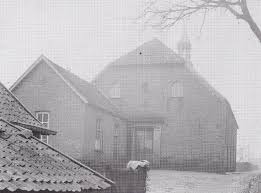
The church building of Church A, viewed from the rear with the vestry
As previously indicated, the national ‘Union’ between the Christian Reformed Church and the Nederduitsche Reformed Churches—originating from the 1834 Secession and the 1886 Doleantie respectively—was finalised in 1892. From 17 June 1892, the two denominations merged to form The Reformed Churches in the Netherlands (De Gereformeerde Kerken in Nederland).
The synods had agreed that in towns where a local merger between the two churches could not be achieved immediately, both congregations would nonetheless take the name ‘Reformed Church‘. The older of the two—usually the Christian Reformed Congregation—would append an ‘A’ to its name, while the younger—usually the Nederduitsche Reformed Church—would append a ‘B’. Consequently, from 17 June 1892, two entirely independent Reformed churches existed in Aalten: the Reformed Church of Aalten A (the former Christian Reformed Congregation) and the Reformed Church of Aalten B (the Seceded/Dolerende church).
Merger talks put on ice
In Aalten, too, both churches were expected to enter into talks to achieve local unity. Joint council meetings were held from time to time. However, there was considerable opposition, particularly within Church A, to a full merger of the two congregations. The majority of Church A’s members were opposed to it, as well as to the holding of joint council meetings. Furthermore, Church A did not want elders from both churches conducting pastoral home visits together. It was decided to let the matter of the merger rest for the time being.
For the council of Church A, a key reason to proceed cautiously with the merger was the fear of a schism within their own ranks. What would the opponents of the merger do if both councils decided to unite? Examples of this could be seen elsewhere in the country. For instance, two Christian Reformed ministers had submitted a formal objection to the ‘Union’ at their synod and—when the merger went ahead regardless—had broke away to found the ‘Continued’ Christian Reformed Church.
Similarly, in the Frisian village of Suawoude, the church council and the congregation, led by their minister, the Reverend J.W. Draijer (1851–1894), had severed ties with the Reformed Churches in 1893 “to remain what we were, namely Christian Reformed”. A similar outcome was feared in Aalten, which undoubtedly slowed down the unification of the two churches
Eighteen months after the council of Church A had put the talks on ice, the council of Church B sent a letter asking whether Church A actually desired a merger of the two congregations at all. If so, what steps was the council taking to bring about unification? Or was the council perhaps afraid of a split within its own ranks? The council of Church A replied that while a majority of its council members were now in favour of a merger, this did not mean it could be implemented immediately. The council of Church A made no mention of the hostile attitude of many of its own congregation members…
The council of Church B found this disappointing. It decided to cancel the joint mid-week services—effectively the only activity they did together. In turn, the council of Church A found this disappointing.
The Reverend Gangel departs
The Reverend Gangel departed in 1895 to take up a position at the Reformed Church in Rijswijk (South Holland), having preached his farewell sermon to the congregation in Aalten on 28 April. The following year, he became a Reformed minister in Voorst, but in 1900 he left the Reformed Churches to return to the Dutch Reformed Church. He passed away on 27 July 1908 in Arnhem.
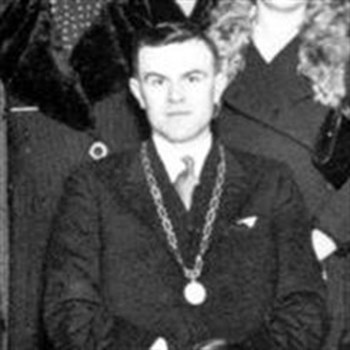
Gerrit Jan Lammers was born on 23 October 1903 in Aalten, the son of miller Johannes Christiaan Lammers and Maria Scheurer. They lived at number 3 Molenstraat. On 25 July 1928, Gerrit Jan married Maria Evertje van Dreven (born in Wageningen, 28 December 1900) in Arnhem.
He had been working in journalism since 1921, and until 1940 he was a parliamentary editor for De Standaard, a newspaper affiliated with the Anti-Revolutionary Party (ARP).
Lammers was known as a rigid and principled Calvinist. Following the outbreak of the Second World War, he became a contributor in 1940 to Vrij Nederland, a publication declared illegal by the Germans. In June 1941, the German Sicherheitsdienst (SD) arrested him for his underground activities, after which he was imprisoned in Braunschweig, Germany, until late 1943.
After the war
After the war, he was a member of the Commissie voor de Perszuivering (Press Purge Commission), which focused on removing journalists and newspaper directors who had been pro-German during the war.
Lammers studied law both before and during the war. In 1945, he passed his Master’s examination (doctoraal examen) at the Vrije Universiteit Amsterdam, and in 1952 he obtained his doctorate with a dissertation that later became famous, titled: “The Crown and the Cabinet Formation”.
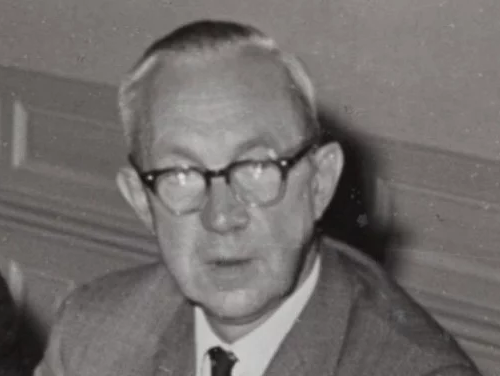
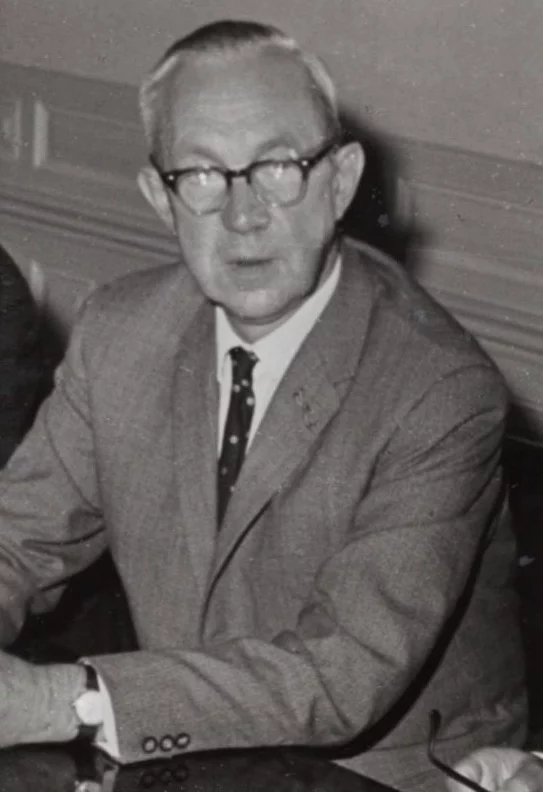
Gerrit Jan Lammers. This photograph dates from 1968, when he was director of the Rijksvoorlichtingsdienst. (Nationaal Archief, RVD – CC0)
Before joining the Rijksvoorlichtingsdienst (RVD – Netherlands Government Information Service) in 1952, Lammers was head of the information department at the Ministry of Social Affairs (1946–1947) and subsequently head of the general affairs department at that same ministry. In 1952, he was appointed director-general of the Rijksvoorlichtingsdienst, a position he held until 1968.
Gerrit Jan Lammers was a Knight in the Order of the Netherlands Lion and a Commander in the House Order of Orange. He also held numerous foreign decorations. Lammers authored a great number of publications in the field of constitutional law.
Dr Gerrit Jan Lammers passed away on 7 November 1976, at the age of 72. He was buried at the public cemetery on Rodelaan in Voorburg.
Son
In 1931, Gerrit Jan and Maria Evertje had a son: Johannes Christiaan Jan (Han) Lammers. When his father Gerrit Jan was imprisoned by the Germans in 1941, Han’s mother moved with him to her in-laws in Aalten. Here, the boy attended the MULO (advanced elementary school), where he took organ lessons from 1942 onwards. Playing the organ would later become his greatest hobby.
Towards the end of the occupation, Han, who was only fourteen years old, set off alone on his bicycle to The Hague, where both his parents were staying at the time. Like his father, Han Lammers would later forge an impressive career. Among other roles, he was a journalist, a local councillor and alderman in Amsterdam, the mayor of Almere, and the Queen’s Commissioner for the province of Flevoland. Han Lammers passed away in 2000.
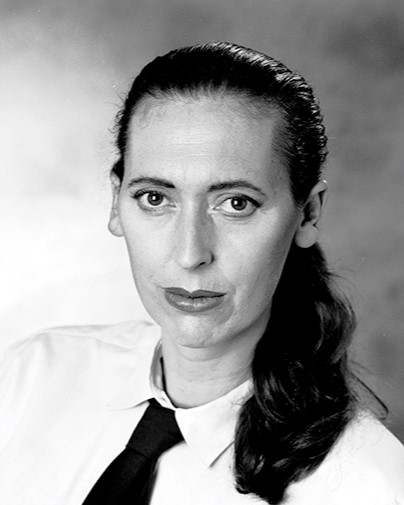
Dela Maria (Marja) Vaags was born on 29 December 1956 in Aalten. As a child, she lived at Bredevoortsestraatweg 105. She later achieved national fame as an actress, primarily for her role as Regina Jongschaap in the drama series Vrouwenvleugel. In 1994, the series won the Gouden Televizier-Ring (Golden Televizier Ring) for best television programme.
Vaags graduated from the Academy for Expression through Word and Gesture (Academie voor Expressie door Woord en Gebaar) in 1981. Following these studies, she took private lessons with tutors including Ton Lutz, Shireen Strooker, Hans Hoes, Rudolf Lucieer, Warren Robertson, and Ad van Kempen. After her training, she co-founded the theatre group Dames & Heren alongside Martine van Os and others.
Furthermore, she had guest roles in Goede tijden, slechte tijden and Medisch Centrum West, and appeared, among other projects, in several of the Sinterklaas films by Martijn van Nellestijn. In addition, she performed for a season with John Lanting’s Theater van de Lach. Her other stage credits included Edward Albee’s The Zoo Story with Stichting de Verwarring, and the play De Overgang with Stichting de Nel.
In 2007, Vaags was diagnosed with cervical cancer. Four years later, on 29 July 2011, she passed away at the age of 54 in her hometown of Amsterdam due to the complications of this illness. She was survived by a son.
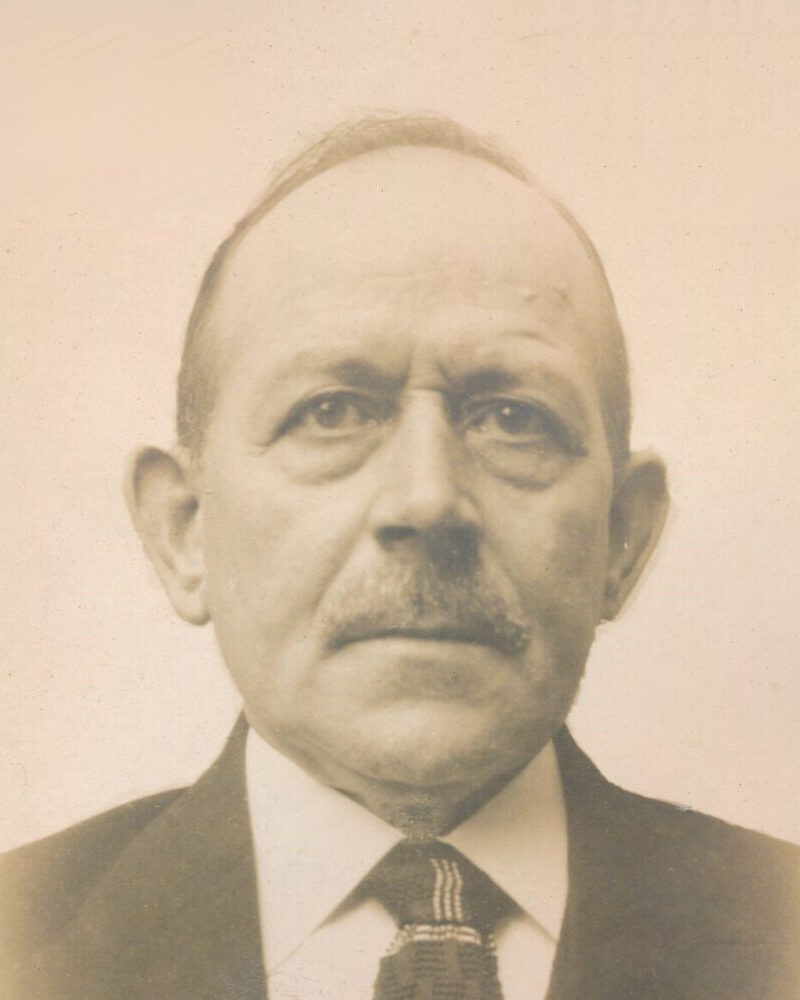
Johan Obbink was born on January 23, 1869, at the Rikkert farm in the Aalten rural district of Heurne. He was a twin brother of the theologian and court chaplain Herman Theodorus Obbink. On June 25, 1891, he married Berendina Hendrika Sondern from Groot Heinen in Lintelo. Together they had three sons and two daughters.
In 1919, he purchased the Nieuw Slaa farm together with his son Hendrik Willem and went to live there.
Social contributions
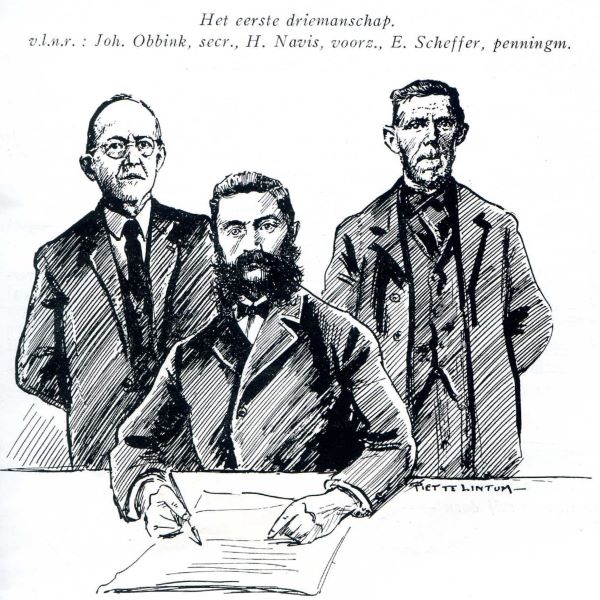
Johan Obbink held a prominent position in public life in Aalten for many years. For instance, in 1896 he was one of the founders of the Coop. Dairy Factory and in 1898 of the Coop. Agricultural Association, institutions which he served as a board member for many years. On his initiative, the Coöp. Farmers’ Credit Bank was founded in 1903, where he served as cashier for more than a quarter of a century.
Furthermore, Obbink was chairman of the ‘De Graafschap’ Ring of Farmers’ Credit Banks, a member of the Provincial Council of Gelderland, a commissioner for the P.G.E.M., and a member of the local committee of the Gelderland Agricultural Crisis Support Foundation, a council member and later alderman for the municipality of Aalten, a board member of the Mutual Farmers’ Insurance Fund, polder master of the “De Baakse Beek” water board, co-founder of the Association of Purchasing Societies in Gelderland, a member of the Supervisory Board of the State Agricultural Winter School in Winterswijk, and president-churchwarden of the Dutch Reformed Church in Aalten.
The interests of the agricultural population in particular were always at the forefront for him, which led to Obbink being not only honored but also feared for the fierce tenacity with which he fearlessly defended his opinions. It was precisely this trait that certainly made him a pioneer for the ideals he set, and in his struggle for them, Obbink achieved a great deal.
For his exceptional services, Obbink was appointed Knight of the Order of Orange-Nassau by H.M. the Queen.
Johan Obbink passed away on May 9, 1957, at the age of 88, at home in the Aalten Heurne. He was buried at the Old Cemetery on the Varsseveldsestraatweg in Aalten.
Funeral
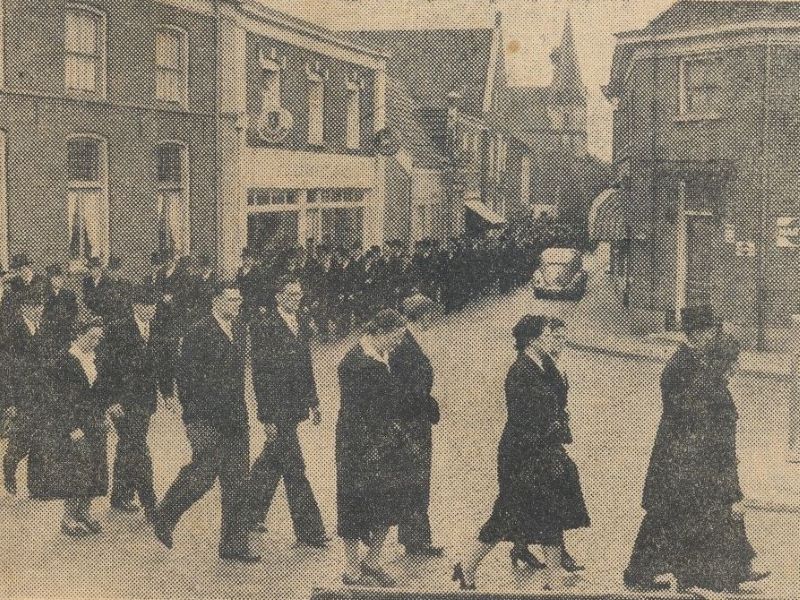
His funeral took place with a very large attendance. The funeral service was held in Old St Helen’s Church, led by Rev. D. Groeneboer. On behalf of the municipal government, the service was attended by Mayor E.S. van Veen and Alderman J. te Roele; furthermore, the attendees included many directors of the organizations in which Mr. Obbink had played an active role, from local, regional, and national circles.
After the funeral service, a long procession, in which numerous floral arrangements were carried, departed for the cemetery at half past two. Upon arrival, the coffin containing the remains was carried to the final resting place by neighbors of the Obbink family.
Here, Mayor E.S. van Veen spoke on behalf of the municipality. The mayor described Mr. Obbink as a community man in the broadest sense of the word.
‘The first triumvirate’ of the Coop. Agricultural Association, drawing by Piet te LintumFuneral procession for the burial of Johan Obbink (De Graafschapbode, May 15, 1957)
Mr. T.G. Elkink from Ruurlo, chairman of the De Graafschap Ring of Farmers’ Credit Banks and Obbink’s successor, spoke in a similar vein. Elkink outlined the great influence Johan Obbink had among farmers; even outside Aalten, Mr. Obbink’s voice often had a predominant and decisive influence.
On behalf of the national association of farmers’ credit banks, Mr. H.J. Hendriksen, deputy director of the Raiffeisenbank in Utrecht, spoke: “The name of Johan Obbink is recorded in the annals of this bank, for it is with gratitude that we commemorate the blessed work performed by three, at most four, pioneers for hundreds of thousands of farmers, and of these pioneers, Mr. Obbink from Aalten was not the least.”
Anthonius Julius Hendrikus (Ton) Kötter was born on November 9, 1906, in Aalten, at number 184a (Hogestraat). Two years after his birth, the family moved to Groesbeek. On May 23, 1929, Kötter married Tobina Anna Maria van Spreeken (Rotterdam, October 11, 1896) in Ubbergen.
When he was twelve years old, he received private trumpet lessons. At the age of 14, he took violin and trumpet lessons at the music school in Nijmegen. He subsequently studied music theory and composition privately. He became a member of the Marinierskapel der Koninklijke Marine as a trumpeter. At the Hochschule für Musik in Berlin, he studied composition and orchestral conducting under Professor Freidenberg and Wilhelm Furtwängler.
After World War II, Kotter became the conductor of various concert and fanfare bands, including the Police Band in Nijmegen. In 1948, he became the conductor for several orchestras in the Tilburg area, including the well-known Koninklijke Harmonie “Sophia’s Vereeniging” in Loon op Zand, and from 1950 to 1965, the Andels Fanfare Corps, Andel. He later conducted Soli Deo Gloria in Enschede. In 1965, he became a lecturer at the Conservatorium Enschede. From 1967 to 1977, he served as the conductor of Excelsior Eibergen.
Herman Theodorus Obbink was born on 23 January 1869, at the Rikkert farm in the Aalten rural district of Heurne. He was a twin brother of Johan Obbink, who was, among other things, co-founder of the Dairy Factory and ‘de Landbouw’ in Aalten.
On 16 September 1889, Herman, aged 20, left for Doetinchem, and lived there on the Burg. van Nispenstraat (link). The Latin school (later State Gymnasium / Municipal Lyceum) was located there.
On 20 September 1892, he left Doetinchem for Utrecht, where he studied at Utrecht University. Subsequently, he served as a minister in Hoogersmilde, Kamperveen, Middelburg, and The Hague. On 2 December 1901, he obtained his doctorate in Utrecht with the thesis “The Holy War according to the Quran”.
On 20 April 1897, he married Jantine Gérardine ten Cate (1874–1949). The couple had three sons.
Professor
In 1910, he was appointed professor at the University of Amsterdam with the teaching assignment “General History of Religion and the History of the Israelite Religion”. His inaugural lecture was titled “The Significance of Egypt and Babylonia in the Ancient Religious World”.
In 1913, he was appointed Professor of Theology and History of Religion at Utrecht University. His inaugural lecture was titled “On Ancient Egyptian Conceptions regarding Death and Life”. The subjects of both lectures reflect his interest in the Egyptian and Babylonian-Assyrian world, which he always studied in connection with the Old Testament. At Utrecht University, he also gave language lectures in Assyrian and Ancient Egyptian.
Bible translator and court chaplain
In 1924, Obbink’s translation of the Old Testament was published. This was supplemented in 1927 with a translation of the New Testament by his colleague Annéus Marinus Brouwer (1875–1948). The translation, the “Utrecht translation“, is usually referred to as “Obbink and Brouwer”. He was rector of Utrecht University in 1928/1929. In 1939, he retired; his son Hendrik Willem Obbink succeeded him.
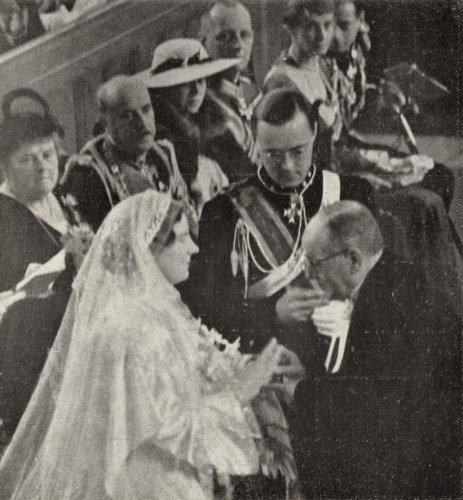
From 1929 to 1947, Obbink was a court chaplain. In that capacity, he officiated at the wedding of Queen Juliana and Prince Bernhard in 1937. He also baptized Princess Beatrix and led the funerals of Queen Emma and Prince Hendrik, the husband of Queen Wilhelmina (source).
Nieuwe Vlaardingsche Courant, 18 November 1896Obbink officiates at the wedding of Juliana and Bernhard (1937)
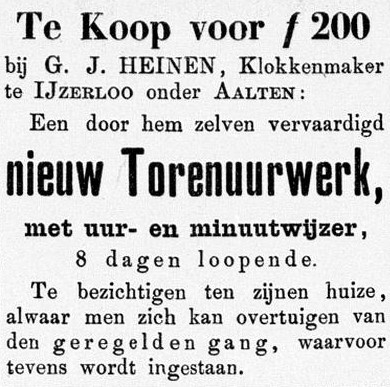
Gerrit Jan Heinen was a clock and turret clock maker who lived at ’t Kampe in IJzerlo, on the road that was later named after him: Klokkemakersweg.
Gerrit Jan Heinen was born on 11 April 1858 in IJzerlo. On 12 June 1885, he married Aleida Johanna Lohuis in Aalten. Together they had five children. Heinen passed away on 4 December 1929 and is buried at the Old Cemetery on Varsseveldsestraatweg.
On 1 June 1873, De Maasbode wrote:
AALTEN, 22 May. While one frequently encounters a dismissive judgement regarding the intellectual development of the so-called “Achterhoek farmer” — a sentiment which is admittedly shared by many in this region as well — the following case certainly serves to cultivate an opposing view.
The clockwork in the tower of the Dutch Reformed Church, manufactured in 1861 by a certain Mr Bartstra, an expert in that trade, soon proved to be of too light a construction. Consequently, deliberations were held on how to remedy its inherent flaws. Years passed, however, without any improvement in the situation, until a couple of years ago, a certain Mr Heinen, an amateur clockmaker residing at the smallholding of Kampe in IJzerlo, within this municipality, approached the gentlemen of the churchwardens. He assured them that he was fully capable of manufacturing an entirely new clockwork that would meet all requirements. He was subsequently granted permission, after a prior agreement was reached regarding the price and terms of payment, which would not take place until unconditional approval of the delivered work had been granted.
Astonishment at the short-sightedness of the churchwardens for entrusting such a matter to an untrained layman was not in short supply. Now, however, after many have convinced themselves — both during manufacturing and after completion — of the truly beautiful construction designed and executed by Heinen himself, and now that this clockwork enjoys universal satisfaction regarding both its striking and timekeeping mechanisms, that astonishment has given way to a rightful admiration of Heinen’s skill in this craft, in which he never received any formal instruction whatsoever. We heartily wish that his further endeavours may meet with the same favourable outcome as he has experienced in this matter.
Gooswijn van der Lawick or Goosen van der Lauwick (Diepenheim, ca. 1547 – Bredevoort, June 23, 1629) was a captain, Lord of Geldermalsen, vassal of ter Hegge and ten Velde, bailiff of Bredevoort, and a member of the knighthood of Zutphen and Nijmegen.
Van der Lawick coat of arms
Gooswijn was a son of Goossen van der Lawick, Lord of Geldermalsen and bailiff of Buren, and Anna van Asperen van Vueren. He married the widow of Floris van Buckhorst, Joanna Bentinck, and was consequently enfeoffed with the castle and lordship of Buckhorst near Zalk in Overijssel. Two of his sons, Christoffel and Georg Nicolaas, would later also become bailiffs of Bredevoort.
Service to the States
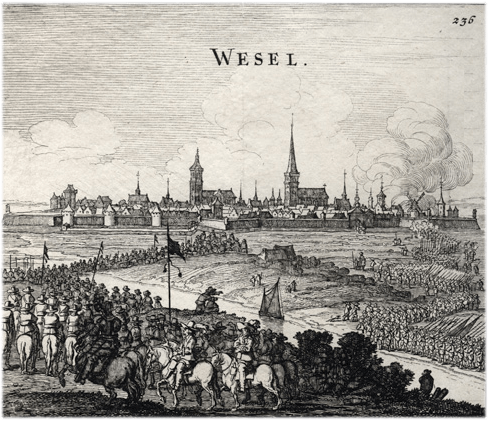
Gooswijn van der Lawick became famous during the siege and relief of Bredevoort in 1606. After the Spaniards managed to overrun Bredevoort, the citizens and garrison were able to flee to Bredevoort Castle to continue the defense of the city while awaiting relief from surrounding States’ armies. However, the Spaniards had no powder and shot. These had coincidentally been brought into the castle by Gooswijn van der Lawick the day before. As a result, the Spaniards failed to take the town; they ran out of ammunition. In 1629, as commander, Van der Lawick also participated in the Capture of Wesel, together with Wolf Mislich.
Captain Wolf Misslich was the commander of the States’ garrison in Bredevoort during the early 17th century. In 1629, he participated in the capture of Wesel, for which he was rewarded by the States-General. Later that same year, he was appointed governor of the Lordship of Bredevoort. His substantial legacy to the poor established him as one of the greatest benefactors in the history of the town.
Misslich and his troops captured two Spanish redoubts on the Lippe. For his services, he received a gold medal valued at one hundred rijksdaalders from the States-General.1
Following these military successes, Misslich was appointed governor of Bredevoort, a strategically located fortified town in the east of Gelderland.
Family, legacy, and charity
In a deed dated June 27, 1629, Misslich is referred to as “van Paterborn” (Paderborn), indicating his place of origin.2 He was initially married to Catharina van Jeveren; from this marriage, a daughter, Anna Margaretha, was born. Anna Margaretha married Captain Robert van Giffen; they had a daughter named Catharina. Both Anna Margaretha and her daughter passed away in the summer of 1639, shortly before Misslich himself. After the death of his first wife, Misslich remarried his maidservant, Nelleke Servaes.3
In a will dated December 26, 1628, Misslich already demonstrated his philanthropic nature. In it, he bequeathed, among other things, 500 Carolus guilders to the poor of Emmerich; he named his daughter Anna Margaretha as the heir to the rest of his estate and also left five hundred guilders to his nephew (his namesake, Sergeant Wolf Misslich), three hundred guilders to his—then—maidservant Nelleken, and twenty rijksdaalders and a cloak to his servant Jurrien.4
His charitable work took further shape in the following years. In 1637, he purchased a house with a barn, garden, and appurtenances within the town of Bredevoort from the Deputies of the County of Zutphen, with the provision that the property would pass to the poor after his death.5 On July 13, 1639, he bequeathed 6,000 Carolus guilders to the New Orphanage in Zutphen and 100 rijksdaalders to the poor of Lochem.6
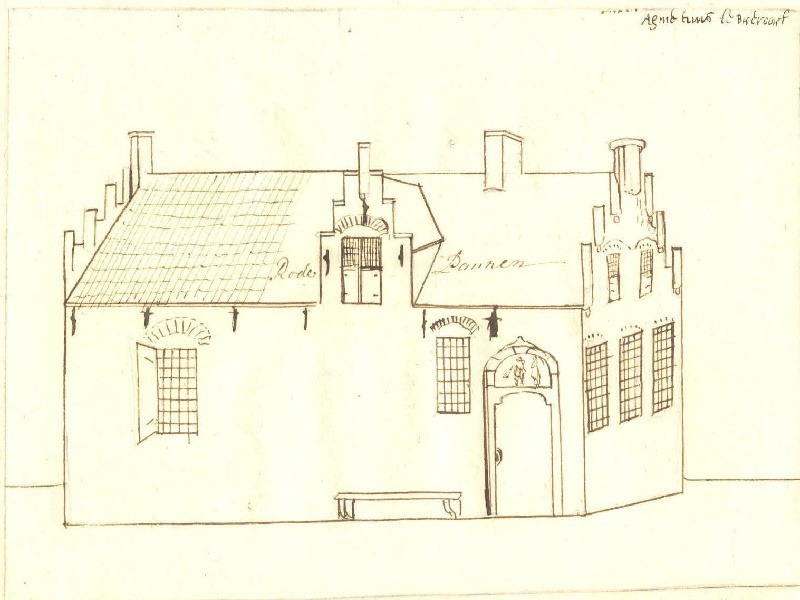
The house of Misslich (Agnietenhuis)
However, the most well-known part of his legacy went to the poor of Bredevoort. According to his will, he left his house, garden, and associated lands to the city’s poor relief—a donation later estimated at 15,000 guilders, an exceptionally large sum for that time. This gift gave rise to the local saying: “The poor of Bredevoort are rich.”7
Misslich’s house was likely located near the Ambthuis. The rental income from the property was entirely dedicated to poor relief. Until the nineteenth century, the fund resulting from his legacy was still managed by the church’s deacons and provisors. In 1808, the fund still represented a value of over 6,000 guilders.
One of the properties that passed to the poor of Bredevoort was the Erff und Guedt Lenckhoff in Aalten, which Misslich had purchased in 1638 from Count Georg Ernst van Limburg Stirum.8 This estate was situated in the area between the current Bodenvoor, Bredevoortsestraat, and Haartsestraat (later known as Lankhaverstegge) and extended to the Smees. The Lankhofstraat is named after it.
Death
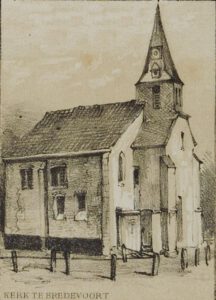
Saint George’s Church in the 19th century (illustrative image)
On August 1, 1639, Misslich transferred part of his assets to his son-in-law Robert van Giffen, including an estate in Nieuw Vossemeer near Steenbergen and significant annuities in the Veluwe and Emmerich.9
Shortly thereafter, Misslich passed away; on August 17, 1639, his will was opened.10 He was buried in Saint George’s Church in Bredevoort.11
In 1661, he is still mentioned in the archives as “the stern and valiant governor” in connection with the sale of a house “for the benefit of the poor”.12
Wolf Misslich was not only a capable military officer and administrator but also a man with a profound social conscience. His generous donations ensured that the poor of Bredevoort received support for generations. Nearly four centuries after his death, his name lives on in the history of the town he served.
Evert Maarten Smilda was born on 10 June 1928 in Utrecht. He passed away on 11 November 2020. Smilda played a major role of significant social importance in Aalten. Among other achievements, he made a vital contribution to putting Aalten’s history firmly on the map.
The Dutch East Indies
He was working in a laboratory as an instrument maker when he was deployed as a soldier to the Dutch East Indies (modern-day Indonesia). He completed his military training in Arnhem and trained as an armourer (geweermaker) in Zaandam. This was to be his role in Indonesia. Evert was just twenty years old when he departed for the East. The voyage by boat lasted a month.
Smilda served in Indonesia for two years. Following the departure of the Japanese, the task of the Dutch military was to attempt to restore peace and order. They moved from village to village. Once “ordinary” daily life resumed in a place, the young men moved on.
Upon returning to the Netherlands, matters were poorly arranged for many veterans of the Indies conflict. Evert had lost his job. However, he picked up the pieces and trained as an amanuensis (science laboratory technician). He later earned a degree to teach mathematics, physics and chemistry, and taught for many years at the technical secondary school (LTS) in Aalten.
Shortly after leaving the military, Evert met his future wife, Itte. In 1959, he and his wife moved to Aalten so he could take up a position as a laboratory technician at the Christian Comprehensive School (Christelijke Scholengemeenschap). Through evening study, he worked his way up to become a teacher at the evening secondary school (avondmavo) and the LTS.
Local history
Smilda had a profound interest in history. Early in the 1916s, he already recognised the importance of Aalten’s beautiful historic village scene. He lobbied the province of Gelderland to get various characteristic properties listed as heritage sites (monumentenlijst) that would otherwise have been demolished. Thanks in part to these efforts, the centre of Aalten became the very first Protected Village Conservation Area (Beschermd Dorpsgezicht) in Gelderland.
In 1962, he was involved in the founding of the historical working group ADW. Around the same time, he joined the board of the Aalten Museum (Oudheidkamer). He served on the board for forty years, nineteen of which as chairman. Together with others, he laid the foundations for what is now the Nationaal Onderduikmuseum.
In 1964, he wrote Twee eeuwen tussen Es en Slinge (Two Centuries Between Es and Slinge), which chronicled the coppersmiths of Peperstraat. Later, he oversaw the publication of Aalten in oude ansichten (Aalten in Old Postcards) and two volumes of Aalten, zoals het was zoals het is (Aalten, As It Was, As It Is) in collaboration with G.J. Timmer.
When the local Jewish community could no longer afford the maintenance of the Aalten synagogue, Evert—at that time chairman of the Vereniging Oudheidkamer Aalten—took the initiative to have the synagogue declared a Municipal Monument. In 1983, along with several others, he established the ‘Friends of the Aalten Synagogue’ foundation.
Smilda also provided Dutch language lessons at the former Groot Deunk asylum seekers’ centre in Barlo. Furthermore, he was a member of the Municipal Monuments Committee in Aalten for 22 years. In cooperation with German historians, he worked on the publication of bilingual historical works.
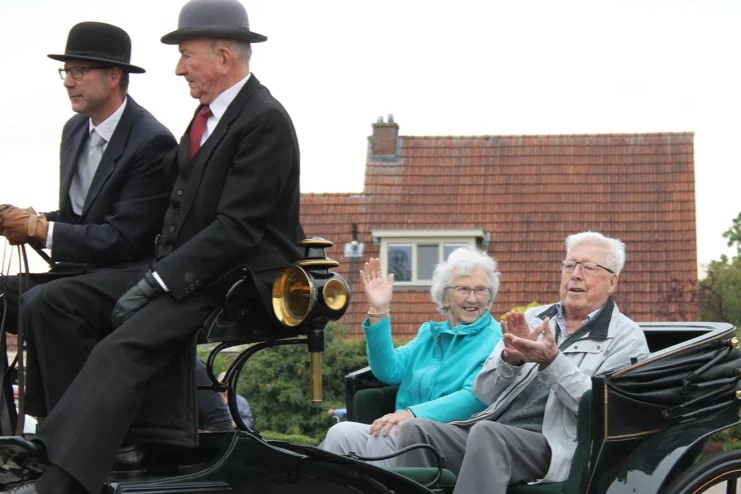
In 2005, Smilda became a member of the Aalten Evergreen Choir. On his 92nd birthday, the choir surprised Evert with an outdoor musical tribute (aubade) at the Zuiderkerk. This was also intended as a farewell gift for Smilda, who had indicated earlier that year that he wished to step down as a choir member. Seated in an open landau carriage pulled by two beautiful horses, Evert and his wife took a tour through the village. The presence of his family made the surprise complete.
Evert Smilda and his wife in the carriage. Photo: Leo van der Linde
Smildapad
On the site of the former Technical School, 56 residential homes are being built. A street will be constructed between the southern and northern sections of the development plan on Ludgerstraat. Historical circles and supporters of the synagogue requested that this street be named after Evert Smilda, in recognition of his extensive public service. In October 2022, the municipality responded favourably and decided that the street will bear the name Smildapad.
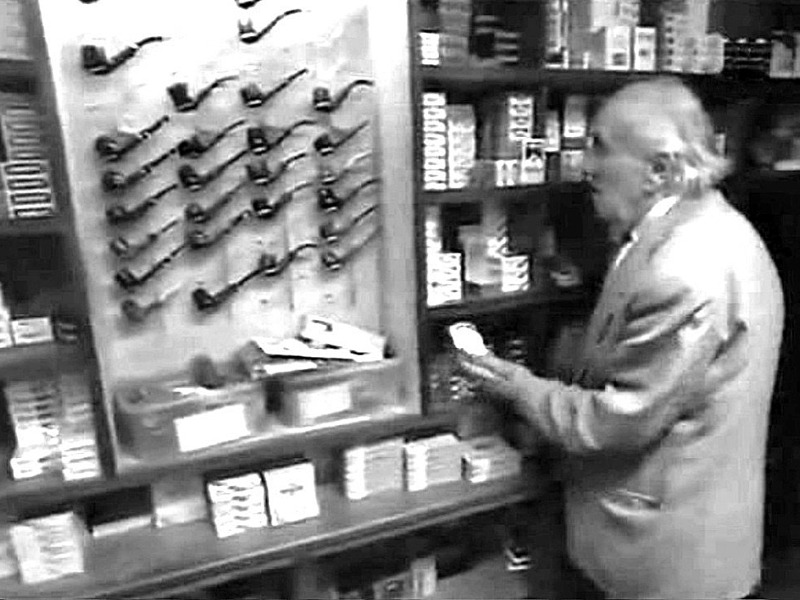
Dirk (Dick) Fries (1924-03-30 – 2002-10-08), son of Georg Fries and Jansje Meijerman, was a household name in Aalten. Everyone knew him from his tobacco shop, Sigarenmagazijn Dick Fries. He was also a well-known figure on the streets, accompanied by his guide dog.
Fries had become blind during World War II. In 1949, he opened his shop on Landstraat in Aalten. Despite his disability, he was able to find his way around his shop flawlessly. Handling payments with customers also presented no problem for him.
Every cigar enthusiast knew how to find Dick Fries’s little shop in Aalten. Dick Fries was even a Purveyor to the Royal Household. Two years after his passing, the interior of this shop was moved to the Netherlands Open Air Museum in Arnhem.
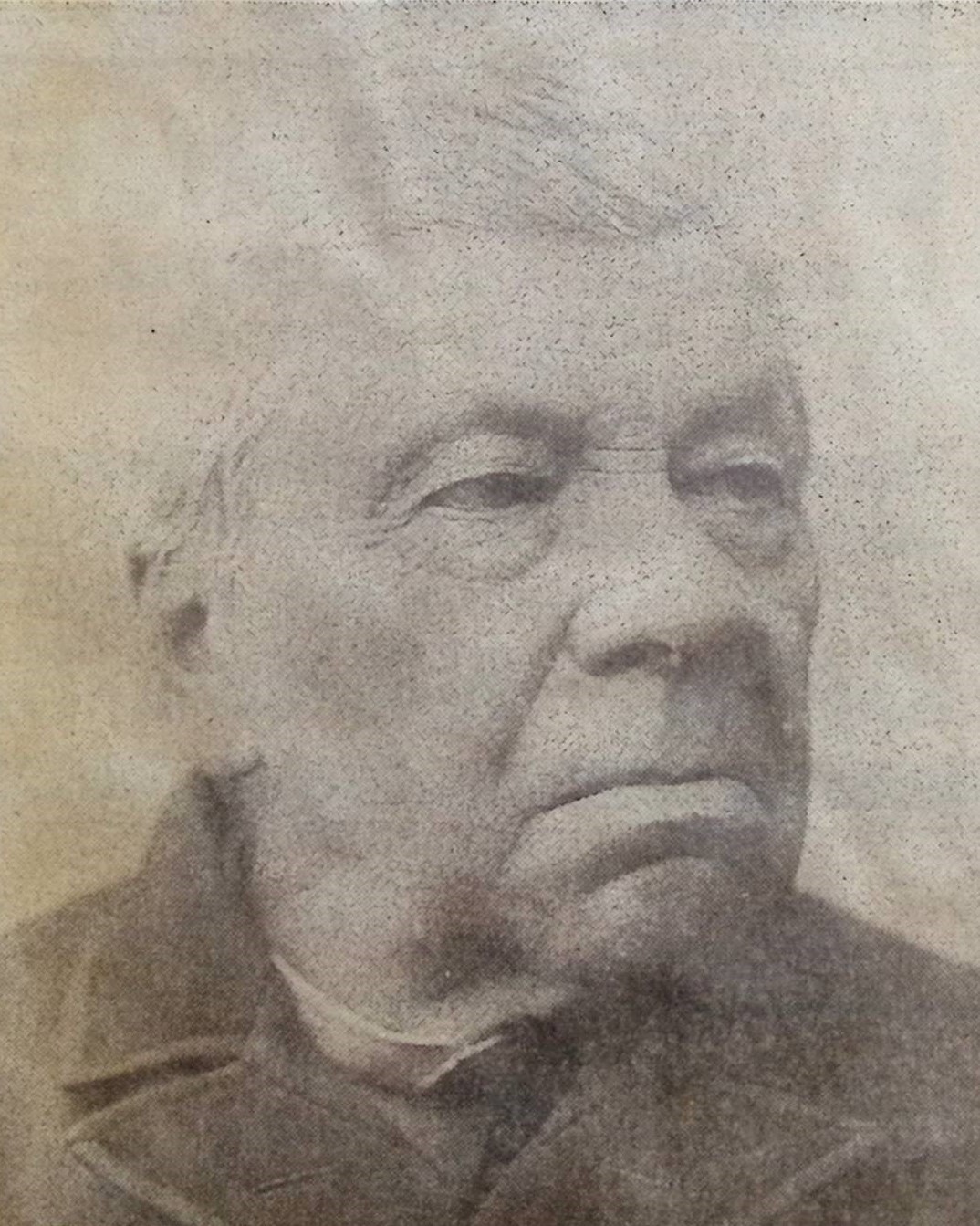
Gerrit Hendrik Heinen (Aalten, 01-08-1851 – Aalten, 26-09-1930) was born on Varsseveldsestraat in Aalten. His parents were Jan Willem Heinen and Antonetta Piepers.
At the age of nineteen, Gerrit Hendrik left for Warnsveld, returning to Aalten a year later in 1871. In 1877, he left once again—this time for Rotterdam, to learn the trade of house painting and decorating. Two years later, he ended up in Amsterdam. There, he started a painting business and, within a few years, employed more than a hundred journeymen.
Heinen received commissions for wall and ceiling murals, including for the Doelen Hotel and Central Station in Amsterdam, and the railway stations in Enschede and Antwerp.
Schiller
Heinen “made it”, so to speak, and invested in real estate. Hotel-Café Schiller on Rembrandtplein was the go-to meeting place for the property trade, and Heinen was consequently a frequent face there.
At the time, Gerrit Jan Prins from Aalten—who would later own the café on Prinsenstraat—also worked there. Through Heinen’s mediation, the official opening of ‘Sociëteit Schiller Prins’ was celebrated on 1 April 1901, attended by Mr Schiller from Amsterdam. In 1902, Heinen gifted four murals, which together depicted the four seasons, for Schiller’s newly built conservatory.
Heinen continued to visit Aalten often. He was a bon vivant, a city dweller, and naturally an artist in the decorative arts. He dreamed of turning Aalten into an art destination and donated several works to the local museum (Oudheidkamer). However, the crowds of people failed to materialise.
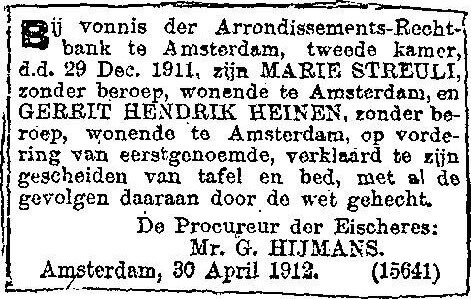
On one of his travels abroad, Heinen met the Swiss Marie Streuli. He married her in 1880, and together they had nine children. They lived on Keizersgracht. Gerrit Hendrik Heinen was the father of, among others, Marie Heinen, who became the director of the Nationaal Bureau voor Vrouwenarbeid (National Bureau for Women’s Labour). Gerrit Heinen and Marie Streuli divorced in 1911.
Photography
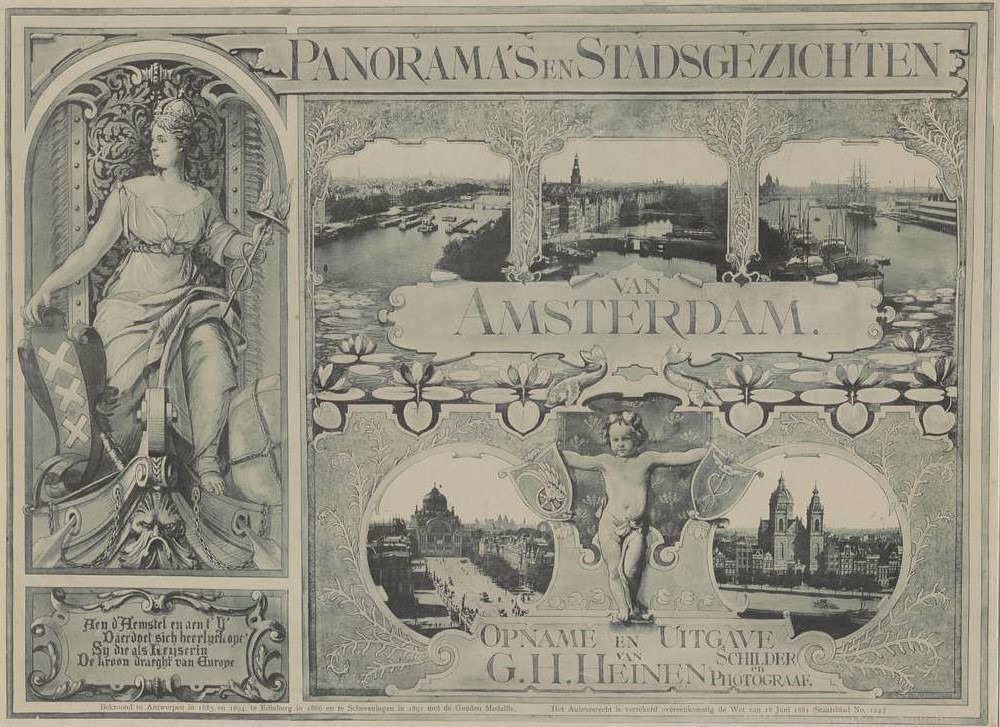
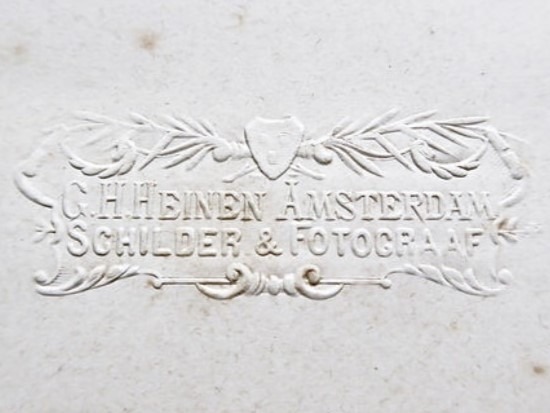
In 1894, Heinen took a series of photographs of Amsterdam, which he published independently under the title ‘Panoramas and Cityscapes of Amsterdam’, featuring 26 prints. For his photography, he chose high vantage points, such as the Rijksmuseum, Central Station, the Paleis voor Volksvlijt (Palace of Popular Industry), and the Doelen Hotel, as well as the Nieuweramstel water tower and the attics of ordinary residential houses. Murals painted by Heinen can still be seen inside Amsterdam Central Station today.
Heinen earned so much money as an entrepreneur that he was able to retire in 1913. He did, however, continue to paint bas-reliefs. He spent the final years of his life in Italy, where he met Pietro Armati, an Italian painter whom he brought to Aalten and helped secure commissions.
Servaas van Leuven was a medical doctor in Aalten from 1836 to 1896. He was born on 12 March 1811 in Kampen, the son of Jan Adrianus van Leuven, a tailor, and Johanna Maria Huijzer. Van Leuven passed away in 1898 at the age of 87.
On 1 May 1836, Van Leuven arrived in Aalten to succeed the surgeon Adolph Wechgelaar, who had died shortly before. Initially, he established himself at Wechgelaar’s residential address on Dijkstraat.
On 18 May 1838, he married Henriette Wilhelmina Christina Theodora Rost in Aalten, the daughter of the retired captain Johann Christian Rost. In 1839, the couple moved to Peperstraat. Not long after, they settled permanently on Bredevoortsestraatweg. Opposite their home, on the corner with Peperstraat, was the livery stable where Doctor Van Leuven’s horse and carriage were kept.
The couple had no fewer than ten children. Two of them passed away at a very young age and were buried in the burial mound at ’t Smees.
Work as a doctor
Servaas van Leuven was a valued and respected doctor who for decades played a vital role in local healthcare.
For sixty years, he carried out his often demanding and exhausting work with great dedication. He particularly excelled in the field of obstetrics through his diligence and devotion to duty. At all hours of the night, in winter cold and storms, his assistance was never sought in vain, even in his advanced years.
In an era when medical assistance in the Achterhoek was scarce, he was regarded by many as a saving grace. He delivered thousands of babies and offered pro bono care and advice to many of the less fortunate.
Final years and passing
After more than sixty years in practice, Van Leuven ended his medical work in 1896 at the age of 85.
Servaas van Leuven passed away on 24 November 1898 in Aalten and was buried at the Old Cemetery on Varsseveldsestraatweg.
On the left, the building that formerly stood on the corner of Bredevoortsestraatweg and Peperstraat (where Pepper 8 is located today). This was the livery stable where Doctor Servaas van Leuven kept his horse and carriage in the late 19th century. Zutphensche Courant, April 17, 1886
Warnar Willem Marinus Moll was born on August 17, 1857, in Bredevoort. He passed away on November 18, 1937, in Winterswijk.
The Aaltensche Courant wrote the day after his death:
A well-known figure from our municipality passed away on Wednesday at the age of over 80. Mr. W.W.M. Moll, a former teacher—the always cheerful and vigorous elderly gentleman—passed away at the hospital in Winterswijk after a few days of illness.
Since time immemorial, ‘Master Moll’ served education in Bredevoort, and he saw the majority of Bredevoort’s residents in the school benches. Outside of school, Mr. Moll participated intensely in social life, serving public life in many capacities.
His greatest passion was undoubtedly the Tuberculosis Association, which was based in Aalten. For many years, he was the driving force behind this association. Furthermore, he served for years as the chairman of the Butter Factory and Bredevoorts Belang, and held board positions in the livestock fund, the association for hospital nursing, the Zwanenbroek commission, etc. From its founding until 1922, he was a director of the Geld.-Westf. Tramweg Mij. Mr. Moll was one of those who gave the initial impetus for the founding of this company. Additionally, the deceased held the chairmanship of the committee for the prevention of truancy, a position he had already filled for a great many years.
Bredevoort in the first place, and the municipality of Aalten, lose in Mr. Moll a fellow citizen who did a great deal for the interests of his place of residence. On Monday afternoon, the remains will be interred at the general cemetery in Bredevoort. Undoubtedly, many will feel compelled to pay their last respects to the deceased.
Jan de Vries (Bredevoort, March 21, 1911 – Bafwasende, December 19, 1964) was the son of Johan de Vries, station master of the tram station in Bredevoort, and his wife Aleida Wensink. He served for many years as a Roman Catholic missionary in the Belgian Congo (present-day Zaire), where he was murdered in 1964.
At the age of 12, he left for Bergen op Zoom to attend the Juvenate of the Priests of the Sacred Heart of Jesus; after completing this education, he took his vows on September 8, 1930. He subsequently studied philosophy in Liesbosch and theology in Hees (Nijmegen). On July 14, 1935, Jan was ordained as a priest.
Missionary in the Belgian Congo
On August 27, 1937, he left for the Belgian Congo, where he became a traveling missionary in the Archdiocese of Stanleyville. There, he traveled through the jungle from village to village, a period he described in the children’s book Waar het oerwoud ruist (Where the Jungle Rustles, 1938). Later, he became the director of several schools in Avakubi, where he conducted a choir, and served as novice master in Bafwasende, where he trained brothers from the Belgian Congo. In his final years, he was a mission superior and parish priest of Lubutu and Batama. In 1960, De Vries returned to Bredevoort to celebrate the silver jubilee of his priesthood.
These film recordings were likely made at that time:
Bafwasende Massacre 1964
In that same year, the Congo gained independence, and a civil war broke out when the Simbas rebelled against the new government. De Vries was on a retreat in Stanleyville but immediately returned to his mission in Batama. There, on October 31, 1964, he was captured and mistreated by the rebels along with four brothers and two sisters. They were among twenty-seven people transported by truck to Bafwasende.
On November 25, the priests were sentenced to death by a kind of military tribunal. On November 27, they were taken to the banks of the Lindi River near the village of Bafwasende. The women who remained behind heard machine-gun fire. The women were eventually liberated by mercenaries on December 19.
The death of Jan de Vries made a profound impact on Bredevoort. That same year, a memorial stone was placed in the local RC church. When his house was demolished a few years later to create access to a newly planned street, the municipality of Aalten decided (presumably in 1969) to name this street Pater Jan de Vriesstraat.
Sources
Nazareth, Bredevoort en zijn katholieken – Jos Wessels, Uitgeverij Fagus, 1997 (ISBN 90-70017 16-4)
Pater Jan de Vries, een man met een missie – Hans de Graaf 2014, Uitgeverij Lammers Dtp
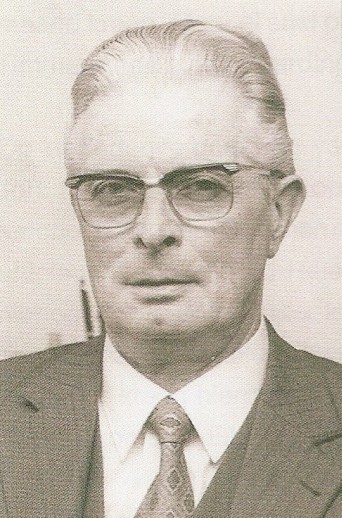
Gerrit Jan Prinsen was born on 14 August 1888 at house number 242 in Aalten (Lichtenvoordsestraatweg 16), the son of night watchman Gerrit Jan Prinsen and Dela ter Maat. He passed away on 7 June 1941 in Aalten. Gerrit Jan Prinsen was buried at Berkenhove Cemetery.
At the time, the Aaltensche Courant wrote the following about him:
At the age of 52, Mr G.J. Prinsen, sworn estate agent and valuer, has passed away. A severe illness, which he battled for over eight months whilst being lovingly nursed by his wife, brought an end to his earthly life on Saturday 7 June.
A few weeks ago, we sat by his sickbed, hoping along with him that the spring sun might soon arrive and bring a restoration of his strength. God has ordained it otherwise, and may the knowledge that it was His will now bring comfort to his widow and family.
Our municipality has lost a good citizen in Mr Prinsen. Not as one who sought to make a name for himself, but as one to whom people listened. This was clearly expressed in the words of the chairman of the Aalten’s Belang association at the most recent annual general meeting: “…though in the future we shall sorely miss him, who was one of our most active members, and to whose advice at our meetings everyone listened with close attention.”
As chief churchwarden (president-kerkvoogd) of the Dutch Reformed congregation and chairman of the Organ Committee, Mr Prinsen played a major part in the complete restoration of the church organ. Furthermore, the deceased was a member of the Board of Directors of the Middenstandsbank, to which ever-growing institution he gladly devoted his time.
In his professional capacity, Mr Prinsen handled several major transactions and, as a structural designer and builder, gave various properties a new lease of life over the years. For instance, acting on instructions from the company, he purchased the land for the water tower near the Lindeboom (the lime tree in the coat of arms of Aalten). He was also ever willing to assist the common man, consistently winning their trust through his helpfulness and fairness. May the certainty that his memory will live on gratefully in many hearts serve as a consolation to his bereaved family.
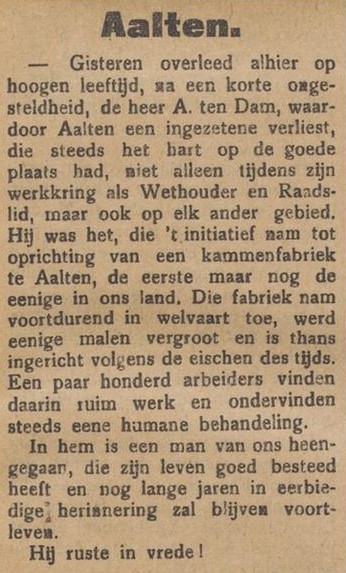
Abraham (Bram) ten Dam was born on 14 July 1834 in Kerkstraat in Aalten, the son of silversmith Harmen Jan ten Dam and Petronella Johanna Gerber. On 6 June 1861, he married Elisabeth Manschot.
In 1871, Abraham and his brother-in-law Bernard Manschot founded a comb factory on Damstraat in Aalten: Ten Dam & Manschot. They lived opposite each other on Bredevoortsestraatweg; Bram in the house that now characterises the Van Panhuis physiotherapy clinic, and Bernard in the white villa across the road. Bram’s son (and successor), Herman, commissioned the construction of the house at Bredevoortsestraatweg 52.
Ten Dam also served as a local councillor and alderman in the municipality of Aalten.
Abraham ten Dam passed away on 1 February 1915, at the age of 80, and was buried at the Old Cemetery in Aalten.
Izaak Antonie de Moor, born on May 31, 1905, in Goedereede, was appointed mayor of Breskens in 1939. In 1941, he joined the N.S.B. there. After ‘Dolle Dinsdag‘ (Mad Tuesday), he fled to Aalten, where he took over the mayoral duties from September 18, 1944, during the period when Mayor Monnik was in hiding. When things became too difficult for him a few days before the liberation, he fled to Grijpskerk, where he was arrested upon liberation. After 1½ years of internment, he was provisionally released.
On March 10, 1947, De Moor stood trial before the war tribunal in Groenlo. The charges were as follows: group leader and sub-district leader of the N.S.B., neighborhood head of the N.V.D., member of the N.A.F. during his term in Breskens; taking the oath of allegiance to Mussert; organizing N.V.D. training afternoons; threatening the municipal messenger J.J. Bliek; applying for a weapons permit from the Representative of the Reich Commissioner; stating, when returning Dutch soldiers to Germany as prisoners of war: “They deserve no better; they have done nothing but sabotage”; distributing the publications Volk en Vaderland and De Zeeuwsche Stroom; cooperating with the labor deployment for coastal defense works; and providing a training course for mayors in Goes.
The term of office in Aalten
The summons regarding his term of office in Aalten included the following charges: cooperating with the O.T. labor deployment in Zevenaar and Bocholt; calling in the assistance of the Landwacht to check for people in hiding, for the requisitioning of bicycles, and for the arrest of a person in hiding at Te Giffel. Furthermore, the accused dismissed all municipal officials who were in hiding and informed the Sicherheitspolizei in Doetinchem of the arrest of three individuals, including B.H. Wikkerink, for engaging in illegal activities. Finally, he called in the assistance of the Grüne Polizei stationed in Aalten in connection with the arrest of the Baruch family, a Jewish family in hiding.
The accused explained that by accepting the office of mayor in Aalten, he had intended to be of as much service as possible to the population. The president: “You have given all your strength to the German, and thus enemy, cause for the destruction of both the Dutch material and spiritual resistance. When you saw in Breskens who and what the Germans were, you should no longer have acted as mayor in Aalten.” The accused: “I had to choose between being a member of the Landwacht or a mayor. I had no desire for the Landwacht.” The president: “You could also have chosen another path: neither.”
The discussion then turned to why the accused had been present on October 10, 1944, when the S.S. had conducted a raid in Aalten and the detained persons were brought to the community center. The accused: “The S.S. intended to cordone off the churches. I knew this would cause much unrest in Aalten, so I tried to make amends where possible. In some cases, I was able to do something in favor of those detained.” The accused denied having ordered the arrest of the six hostages. “In the report to Doetinchem,” the accused stated, “I did declare it. The late Mr. v.d. Glas, the Landwacht commander, gave the order to arrest the hostages. As mayor, I was required to report it.”
The president: “Why did you attempt to compile a new population register, when you knew that the old one had been deliberately disappeared? You were in every respect a mindless tool in the hands of the Germans.” Furthermore, the speaker pointed out how dangerous it was to inform Vossers that the municipal secretary, Bijlsma, had made off with the municipal papers and documents, and to tell the aforementioned Vossers where B. was likely located. President: “You were a convinced and fierce member of the N.S.B.” The accused: “Not fierce, I was an idealist. I considered it my calling and task to do something for the Dutch people.”
After the various points of the indictment during his term in Breskens were addressed, the arrest of the Baruch family, who were in hiding in Aalten, was finally discussed. The accused admitted to having acted incautiously. He had mentioned it in a conversation with the Grüne Polizei. The president: “You knew yourself what kind of beasts the G.P. were.” The accused: “It did not sink in at that moment. I was able to prevent the Oberleutnant from having the three Jews in question shot. At my insistence, they were to be transported to Doetinchem. As the liberation approached, they were able to remain in Aalten. And upon my departure, I told Tilbusscher that the Jews could be released immediately, which is what happened.”
Verdict
The accused, who had no defense counsel, said in his closing statement that he is now back in the workforce. He appealed for the clemency of the Tribunal. “I have had a lesson for life. Moreover, my house in Breskens was bombed, and my 17 years of pension are gone. I was a civil servant heart and soul; I admit to having been completely wrong. Give me the opportunity now to care for my family again,” he exclaimed.
After deliberation, the president stated that it would be fair to impose an internment longer than the pre-trial detention. However, the Tribunal wished to take into account the circumstances in which the accused currently finds himself. The following measures were imposed upon him: internment equal to the pre-trial detention; disqualification from holding any public or semi-public office; deprivation of both voting rights; and confiscation of his radio.
De Moor passed away on February 17, 1984, at the age of 78, in Warnsveld.
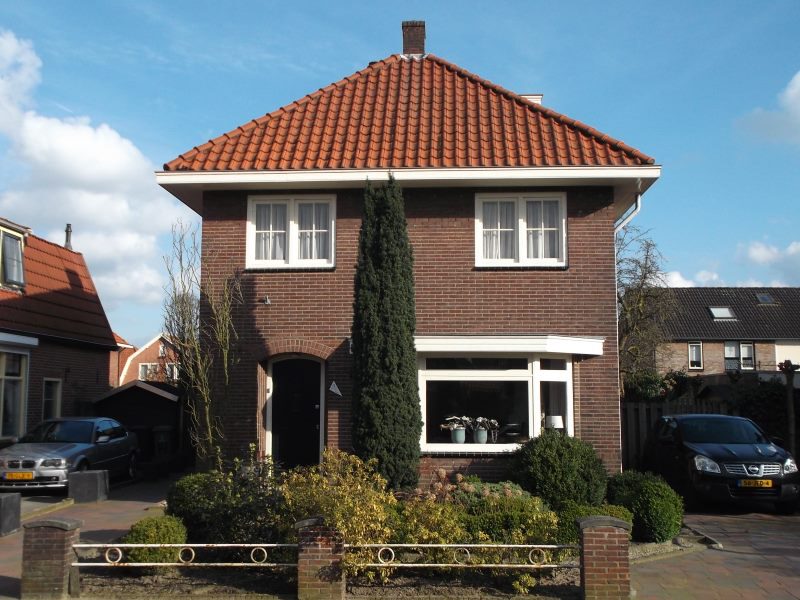
In the early morning of 21 September 1943, Piet Hoogenkamp, the assistant of the Aalten general practitioner and resistance fighter Joop der Weduwen, placed a package in front of the house with address Patrimoniumstraat 12 in Aalten. Resistance leader Hendrik Jan Wikkerink alias Uncle Jan lives at that address with his family. The doorbell rings.
The package turns out to be a newborn baby. He is the son of Lena Jedwab-Kropveld and Yitzack Jedwab, rabbi (pastor) of the Jewish community in Aalten. From mid-1942 the couple was in hiding on the De Ronde farm of the Veldboom family in Lintelo. Resistance leader Uncle Jan and doctor Der Weduwen have agreed in advance to lay the foundling.
Foundling
Daughter Jo Wikkerink later told about this:
“We knew that the delivery was coming and the baby would be brought to us. Father and mother only told the oldest three. The youngest knew nothing. They could not talk past their mouths. Father and mother waited in the dark room in the evening. It seemed to the neighborhood as if they had gone to bed. When the doorbell rang, they knew the baby was there. They got the youngest out of bed and shouted in surprise: “Come and see what is there now!”
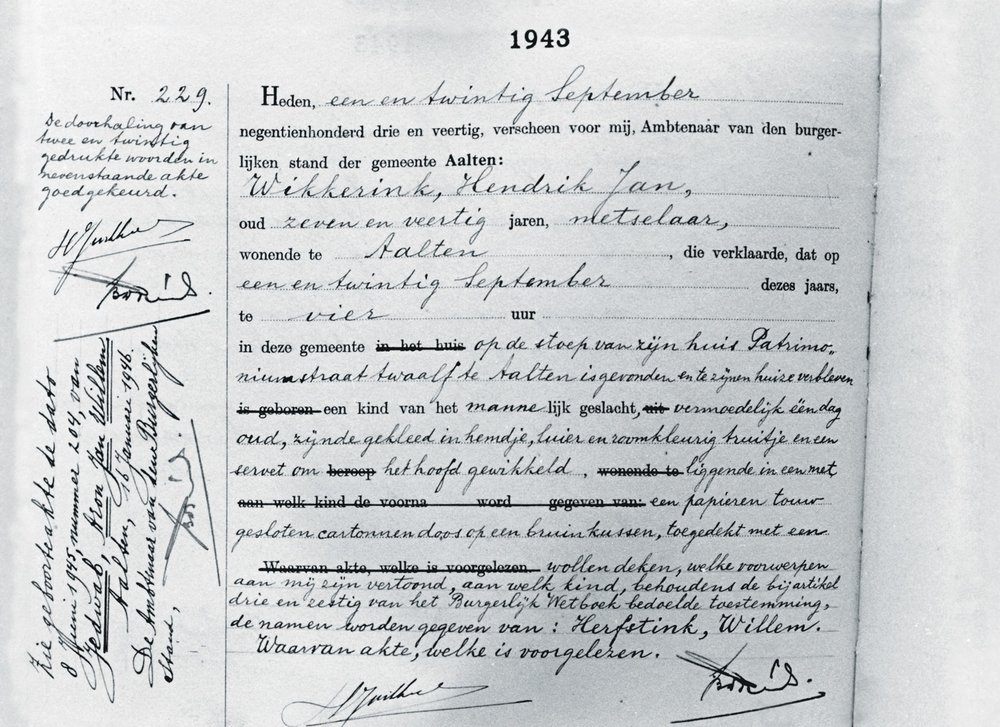
The Jewish child was therefore born in hiding and was registered three days later by Mrs. Dela Wikkerink-Eppink with the name ‘Willem Herfstink’ and registered as such in the birth register of the municipality of Aalten. The name was chosen symbolically. Willem refers to Queen Wilhelmina, Herfstink to the first day of autumn (21 September) and the Saxon suffix ‘ink’ means ‘belonging to the yard or family of’.
Because only a few people – such as doctors – were allowed to be on the street at one o’clock in the morning, four o’clock in the morning was given as the time when the baby was found. This made the investigation into the origin of the child considerably more difficult. “I sometimes came home late at night with a big belly by train. Then I had ‘contraband’ with me as if I was heavily pregnant. When Wimke was put on the sidewalk, they said: “That’s what they say, but it must be one of the girls.”
Declared Aryan
The next day, the municipal doctor on duty, Dr. Knol, had to examine the foundling. The baby was not circumcised and therefore he issued the declaration that the child was 100% Aryan. “The next day father immediately went to Schepers, who lived diagonally across from us (he worked at Paske). Father knew: if I tell it there, everyone in Aalten will know it immediately. Behind us, next to Vossers, lived an NSB woman. She was on her knees in front of Wimke’s crib to see if he had any Aryan features.”
Lennie and Yitzchak had meanwhile moved to another hiding place in Lintelo. In June 1944, the resistance moved them in a hay-covered wagon to the house of Bernard and Gesina Wevers in the hamlet of Dale, behind the Ringweg, just outside the village of Aalten.
Initially, they did not want to take the Jedwab couple into their home because they were already sheltering evacuees. A minister of the Reformed Church changed the pious Calvinists’ minds: he preached that the persecuted should be helped.
Bernard, a carpenter, built them a room behind the closet where they spent all their time. Mrs. Wevers cooked for her Jewish guests as much as possible according to kosher rules.
In the meantime, Willem had been lovingly taken into the family of the Wikkerink family. Especially mother Dela and eldest daughter Lien Wikkerink took care of ‘Wimke’ as they called him. Dela Wikkerink regularly walked with the baby in the pram to the hiding place of the Jewish parents in Dale. She often took some fruit from the vegetable garden with her in her bag. There were people in Aalten who said: “What does Mrs. Wikker always have to do with Wevers?”
Towards the end of the war, two German soldiers were billeted in the Wevers house. While the soldiers were in the house, Lena and Yitzack sat in chairs in their hidden room and were not allowed to move or make a sound, sometimes for days.
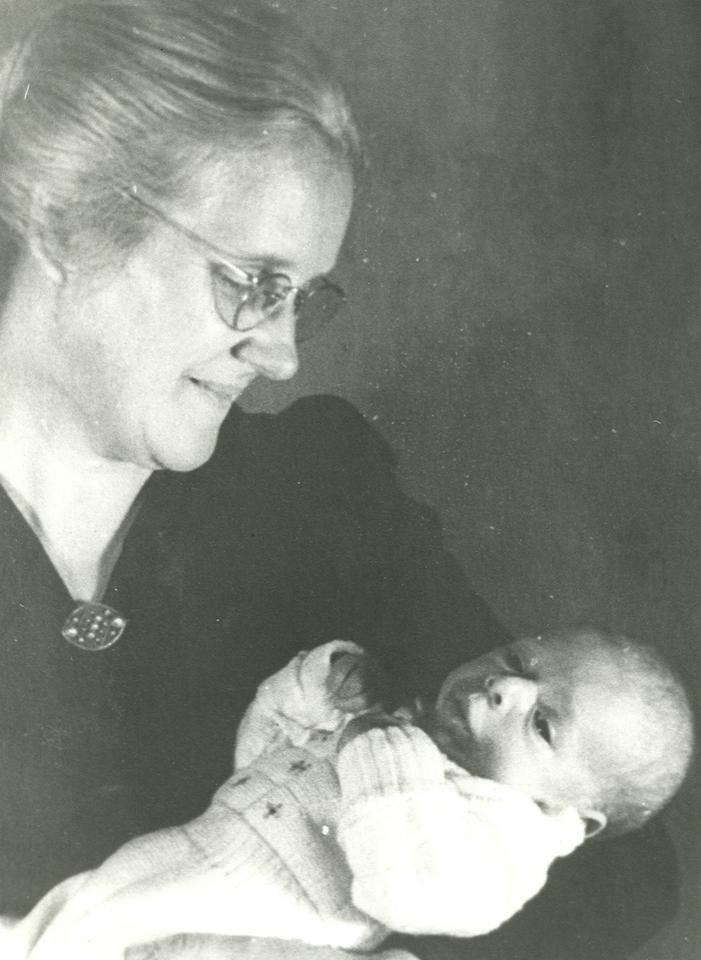
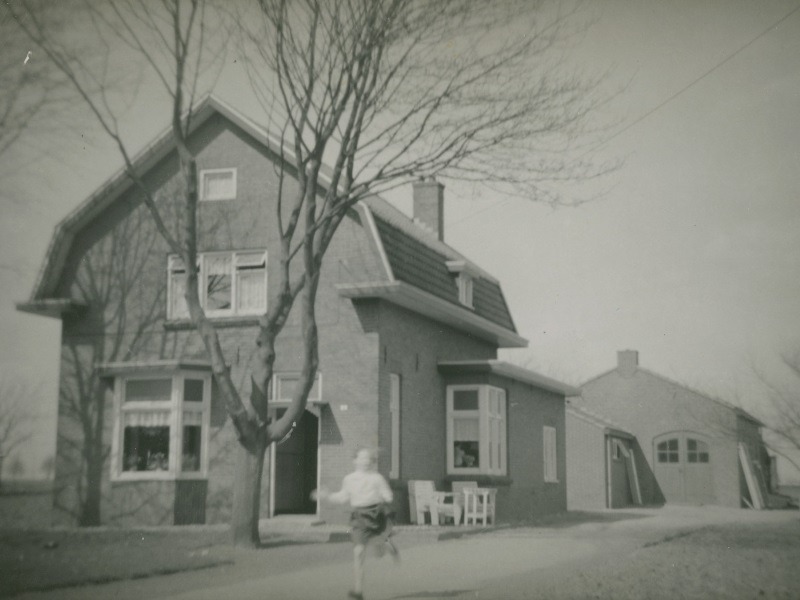
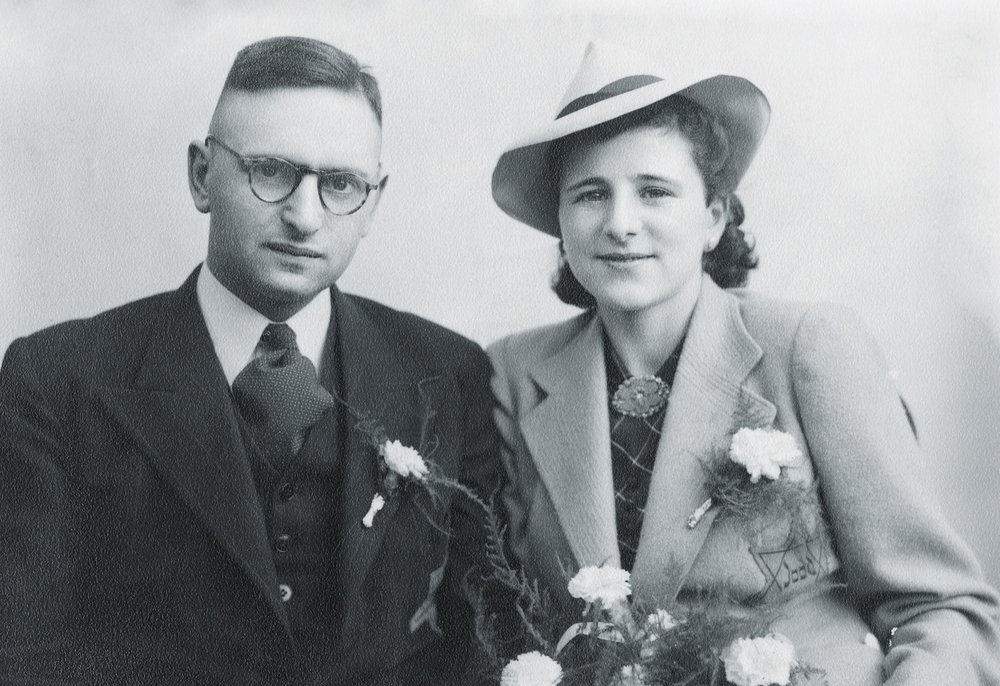
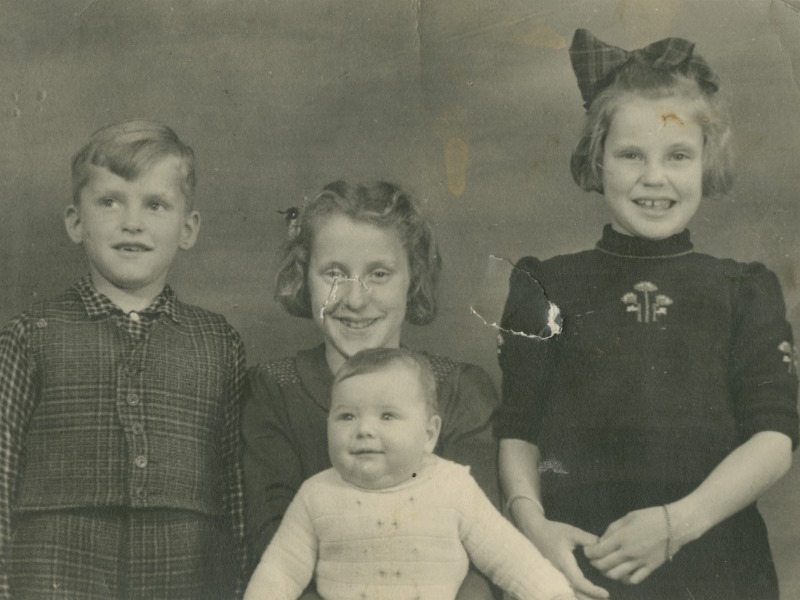
Dela Wikkerink-Eppink with Aron Jedwab alias Willem HerfstinkPatrimoniumstraat 12, AaltenKoningsweg 2, Dale (source)Yitzchak Jedwab and Lena Kropveld – wedding photo, March 1942Aron Jedwab with Dick, Jannie and Ina Wikkerink, 1943 (source)Birth certificate ‘Willem Herfstink’, 21 September 1943
After the war
After the liberation in March 1945, the family was reunited and the little one was given his real name: Aron Jan Willem Jedwab. The name Willem remained and the second first name Jan refers to his rescuer Jan Wikkerink. Queen Wilhelmina came to Aalten soon after the war and visited the Wikkerink family to honour them for their actions in the resistance. Jo Bulsink-Wikkerink: “I can still see Wilhelmina. She slapped my grandfather on the shoulder and said: Wikkerink, you have a brave son.”
The young child Willem hardly knew his own parents. Jo Wikkerink – the second daughter in the family – then moved in with the Jedwab family for a year, so that Willem could get used to his own parents and new environment a little easier. The Jedwab family emigrated to the US in 1947 and there they changed their surname to Jade.
Deze website gebruikt cookies voor een optimale ervaring en analyse van bezoekgegevens. Ga je hiermee akkoord? Zonder toestemming werken sommige onderdelen van de site mogelijk minder goed.
Functioneel
Always active
De technische opslag of toegang is strikt noodzakelijk voor het legitieme doel het gebruik mogelijk te maken van een specifieke dienst waarom de abonnee of gebruiker uitdrukkelijk heeft gevraagd, of met als enig doel de uitvoering van de transmissie van een communicatie over een elektronisch communicatienetwerk.
Voorkeuren
De technische opslag of toegang is noodzakelijk voor het legitieme doel voorkeuren op te slaan die niet door de abonnee of gebruiker zijn aangevraagd.
Statistieken
De technische opslag of toegang die uitsluitend voor statistische doeleinden wordt gebruikt.De technische opslag of toegang die uitsluitend wordt gebruikt voor anonieme statistische doeleinden. Zonder dagvaarding, vrijwillige naleving door je Internet Service Provider, of aanvullende gegevens van een derde partij, kan informatie die alleen voor dit doel wordt opgeslagen of opgehaald gewoonlijk niet worden gebruikt om je te identificeren.
Marketing
De technische opslag of toegang is nodig om gebruikersprofielen op te stellen voor het verzenden van reclame, of om de gebruiker op een site of over verschillende sites te volgen voor soortgelijke marketingdoeleinden.