Category: Emigration

  • Playing into death

    Playing into death

    Piepersweg, Aalten

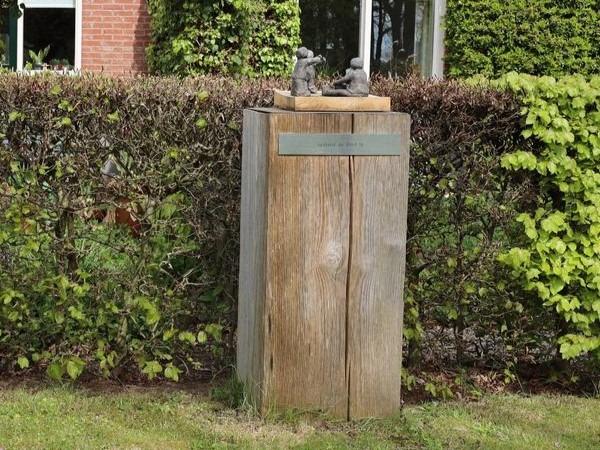
    On the Piepersweg in the Aaltense Heurne there is a memorial in memory of a tragic accident that took place shortly after the liberation of Aalten. The monument was erected in memory of three young boys who died in the accident.

    On the afternoon of 4 April 1945, just a few days after the liberation, the boys Wim Schenk (8 years old), his brother Henk Schenk (6 years old) and their friend Wim Wisselink (5 years old) were playing outside.

    In a dry ditch along the Bocholtsestraatweg they found a projectile. Unaware of the danger, they threw it at each other. At one point, one of the boys threw the projectile against the wall of a nearby house, after which it exploded.

    The consequences were horrible. Wim Schenk died on the spot. His brother Henk and Wim Wisselink were seriously injured and were taken to a military emergency hospital in Barlo, where they died shortly after each other.

    Booklet and monument

    In 2011 a booklet about this dramatic event was published entitled ‘Spelend de dood in’, written by Louis Veldhuis.

    Seventy years after the accident, in 2015, relatives of the Schenk family unveiled a monument at the site of the tragedy. It consists of a pedestal with images of the three boys and was designed by artist Ans Braamskamp.

  • The Liberation of Aalten

    The Liberation of Aalten

    March 30th, 1945

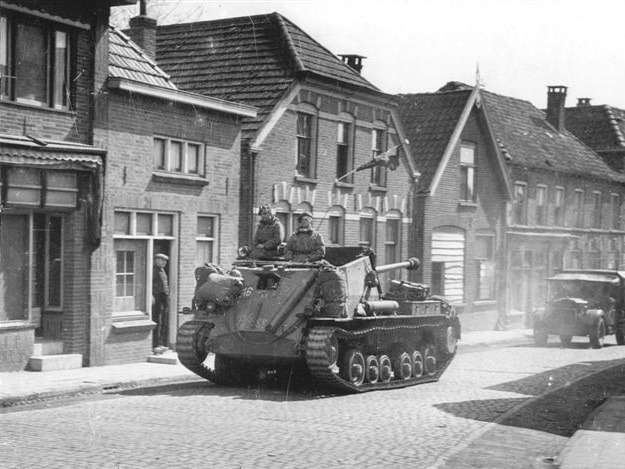
    At the end of the Second World War, on Good Friday, March 30, 1945 , Aalten was liberated by British troops. This liberation was part of the large-scale Allied advance through the eastern Netherlands, immediately after crossing the Rhine during Operation Plunder. The liberators belonged to the 1st Battalion Grenadier Guards and the 3rd Battalion Irish Guards, both part of the 32nd Guards Brigade within the Guards Armoured Division of the British Army. 1

    Advance to Aalten

    At the end of March 1945, the Guards entered the Achterhoek from Germany. The Grenadier Guards formed the vanguard and advanced along the Bocholtsestraatweg towards Aalten and then on to Enschede, with the Irish Guards as mechanized infantry in their wake. 2 The advance was hampered by destroyed bridges, minefields and fierce resistance from retreating German units.

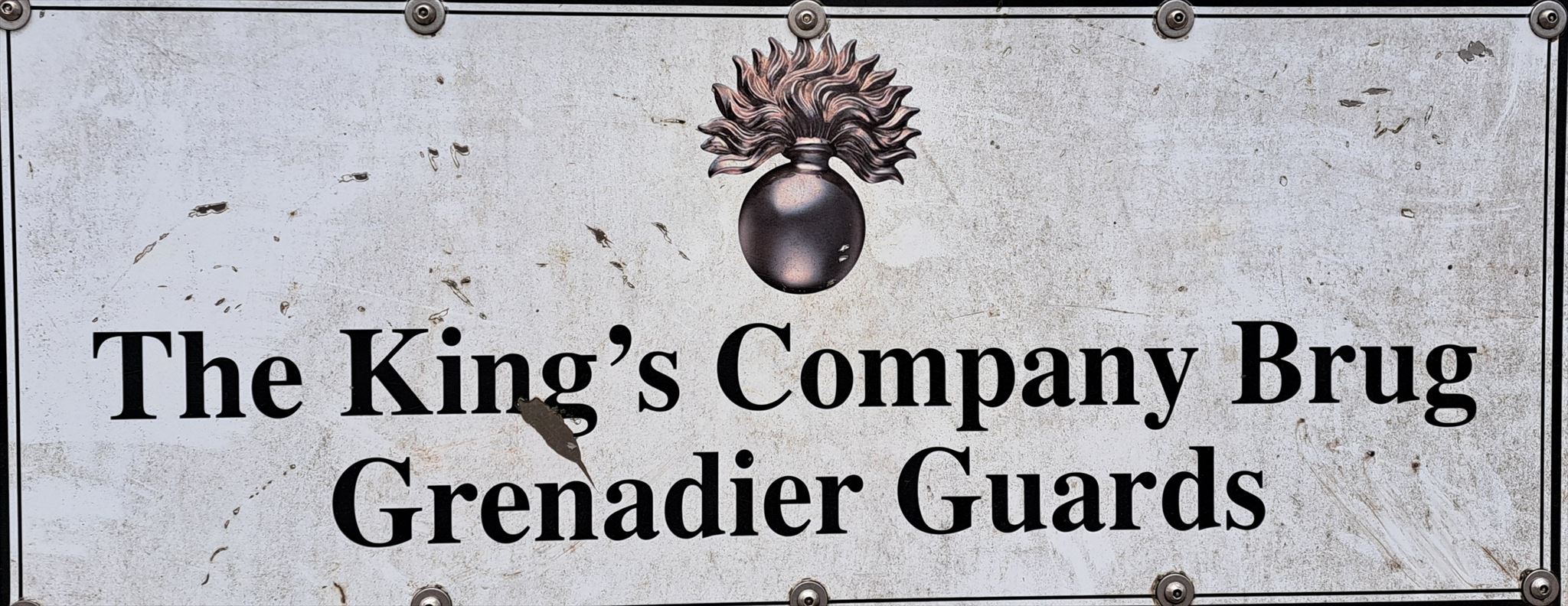
    The King’s Company of the Grenadier Guards was ordered to advance towards the centre of Aalten via the so-called ‘centre line’. However, important bridges turned out to have been blown up by the Germans. The bridge on the Bodendijk was partly still intact and Major Baker, commander of the King’s Company, led his men over it. 3

    When they arrived at the railway, the men encountered fierce resistance and were bombarded with mortar fire and grenades. The fight with the enemy had disastrous consequences for the liberators: several soldiers were killed, including platoon commander Andrew Duncan. 4

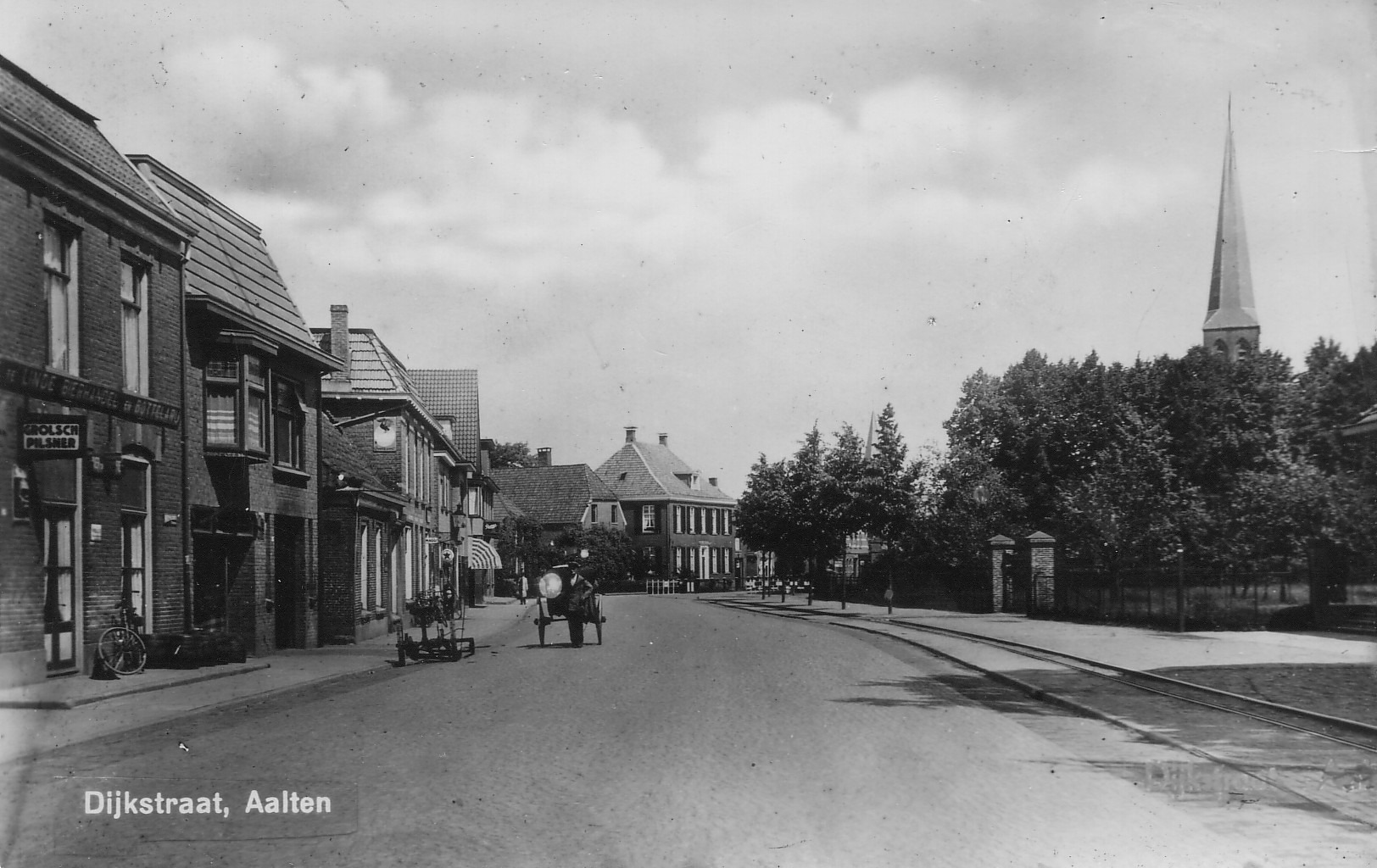
    Around midnight, another two soldiers of the Irish Guards were killed because their vehicle hit a mine in the then Dijkstraat (now Plein Zuid). The explosion led to a fierce fire in which the old café Vultink burned down completely. The next day, March 31, 1945, two engineers of the Royal Engineers were killed while clearing mines. 5

    Losses and cemetery

    Of the total of 13 British soldiers who died, 12 are buried in the Berkenhove general cemetery in Aalten. Platoon commander Andrew Duncan is buried in the Reichswald Forest War Cemetery near Kleve. Thanks to historical research, photos of twelve of these soldiers have now also been found. This literally gave the liberators a face. 6

    After the liberation

    Immediately after the liberation, the Aaltensche Courant appeared again. Shortly after the liberation on April 4, three boys, eight-year-old Wim Schenk, his six-year-old brother Henk and five-year-old Wim Wisselink found a projectile in a dry ditch on the Bocholtsestraatweg. They decided to test the projectile and threw it against the wall of a house. The three children were killed. 7

    In honour of the efforts of the King’s Company, the bridge over the Keizersbeek was named the King’s Company Bridge. The ceremony took place on May 5, 2008 and was attended by, among others, veteran Walter Price, who actually served in this unit in 1945. 8

  • Bombardment of Dijkstraat

    Bombardment of Dijkstraat

    Aalten, 24 March 1945

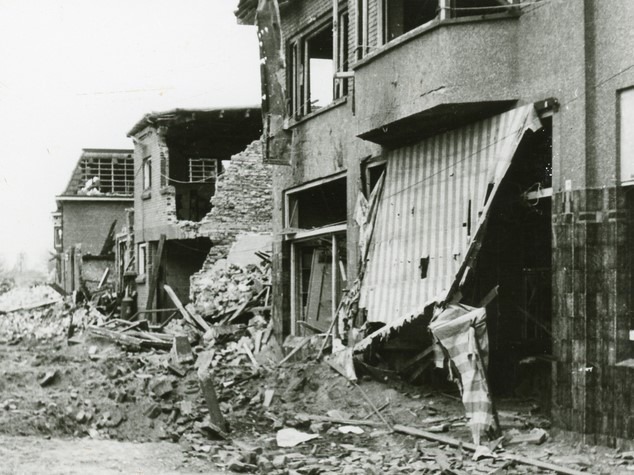
    On 24 March 1945, a bombing raid took place in the Dijkstraat in Aalten. The factories on the Dijkstraat were the target. There were at least 18 to 19 fatalities. However, the exact number is not known to date.

    Shortly before the end of the Second World War, on Saturday 24 March 1945, planes suddenly screeched down over Aalten. Almost immediately the whistling sound of the falling bombs was heard. Part of the textile factory and Driessen’s office was bombed flat. The factory of the Aalten Tricotage Factory (ATF) also turned into a mess. From the bridge on the Dijkstraat to the railway, houses were completely destroyed, others had suffered very serious damage. The consequences were terrible.

    Victims

    At blacksmith Umbach’s, the cellar, where father Umbach (43 yrs.) and three of his children (13 yrs. 10 yrs and 5 yrs.) were hiding, was hit by a direct hit. All perished. The mother of the family and another son barely survived by crawling under a table in the kitchen. A little further on, the Te Linde-Wechelaar couple (both 68 years old) and their 40-year-old son were killed. At Koelman’s house, father Henricus Wilhelmus (55 yrs.) and daughter (20 yrs.) were killed. Johannes Henricus Antonius Tepe (50 yrs.), Maria Johanna Christina Leemhorst (34 yrs.), Anton Lamers (73 yrs.), Annie Kamphuis (15 yrs.), Henk van Mechelen (15 yrs.) are also among the victims. Furthermore, three evacuees, namely Catharina van Ingen (79 yrs.), Catharina Hendrika Stokking (25 yrs.) and an unknown 15-year-old girl from Haarlem.

    In the Aaltensche Courant of May 4, 1945 and in the book “Er op of er onder” (by W.P. Nederkoorn and G.J.B. Stork) two more victims are mentioned: M.J. Praster-Polman (28 yrs.) and a certain G.A. van der Meulen (44 yrs.).

    There were also many wounded. The emergency services of the Red Cross and the Air Protection had their hands full recovering the dead and getting survivors out from under the rubble. Bombs have also fallen in the Stationsstraat, De Wheme, Kerkstraat, Hofstraat, Hogestraat and Boomkampstraat. Buildings on the Parallelweg and Koopmanstraat, south of the railway line, were damaged. Bombs also fell in the Molenstraat and Varsseveldsestraatweg.

    Sources


    • Aaltensche Courant, 04-05-1945
    • ‘Er op of er onder’, W.P. Nederkoorn and G.J.B. Stork
  • Bombardment of Barlo

    Bombardment of Barlo

    Nijhofsweg 4, Barlo

    On March 30, 1945, the Aalten rural district of Barlo was liberated by the Allies. During the relief of Barlo and the surrounding area, an air-raid shelter at the Nijhof farm was hit by an Allied bomb aimed at the retreating Germans.

    During the skirmishes between the warring parties, the seven children of the Weenink family, the Elfers couple who had fled from The Hague and the Nijhof couple and daughter Wanda hid in the shelter of the Nijhof farm, which was considered a reliable hiding place.

    Headmaster Weenink, who had fourteen children, lived next door to the school that had been taken over by German soldiers. When the alarm went off, he sent his children to the shelters outside the center of Barlo, because he thought it was too dangerous there. Seven children fled to the shelter at the Nijhof farm on the Nijhofsweg. The other children went to the shelter of farm ‘t Markerink. The shelter at Nijhof was not under, but next to the house. The house remained unscathed.

    The last bomb dropped from an Allied plane fell on the shelter. The people in it were buried under earth and tree trunks. The Nijhof family was just at the entrance of the cellar to see if the bombing had ended and was spared by this. But five of the seven children and the couple from The Hague died. The liberation of Barlo would become a day of mourning because of this tragedy.

    The seven victims were Thomas Elfers (74 yrs.), Helen Elfers-Reisenleitner (74 yrs.), André Weenink (6 yrs.), Co Weenink (17 yrs.), Jan Weenink (3 yrs.), Mien Weenink (20 yrs.) and Rudolf Weenink (6 yrs.).

    Listed

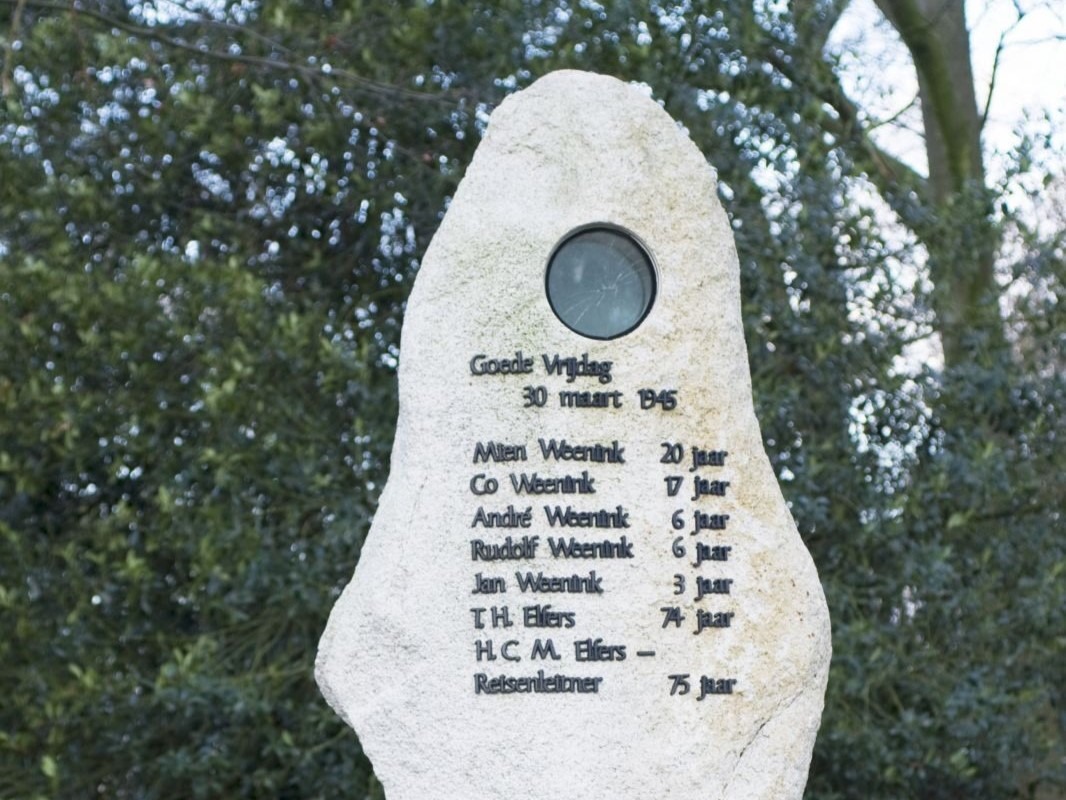
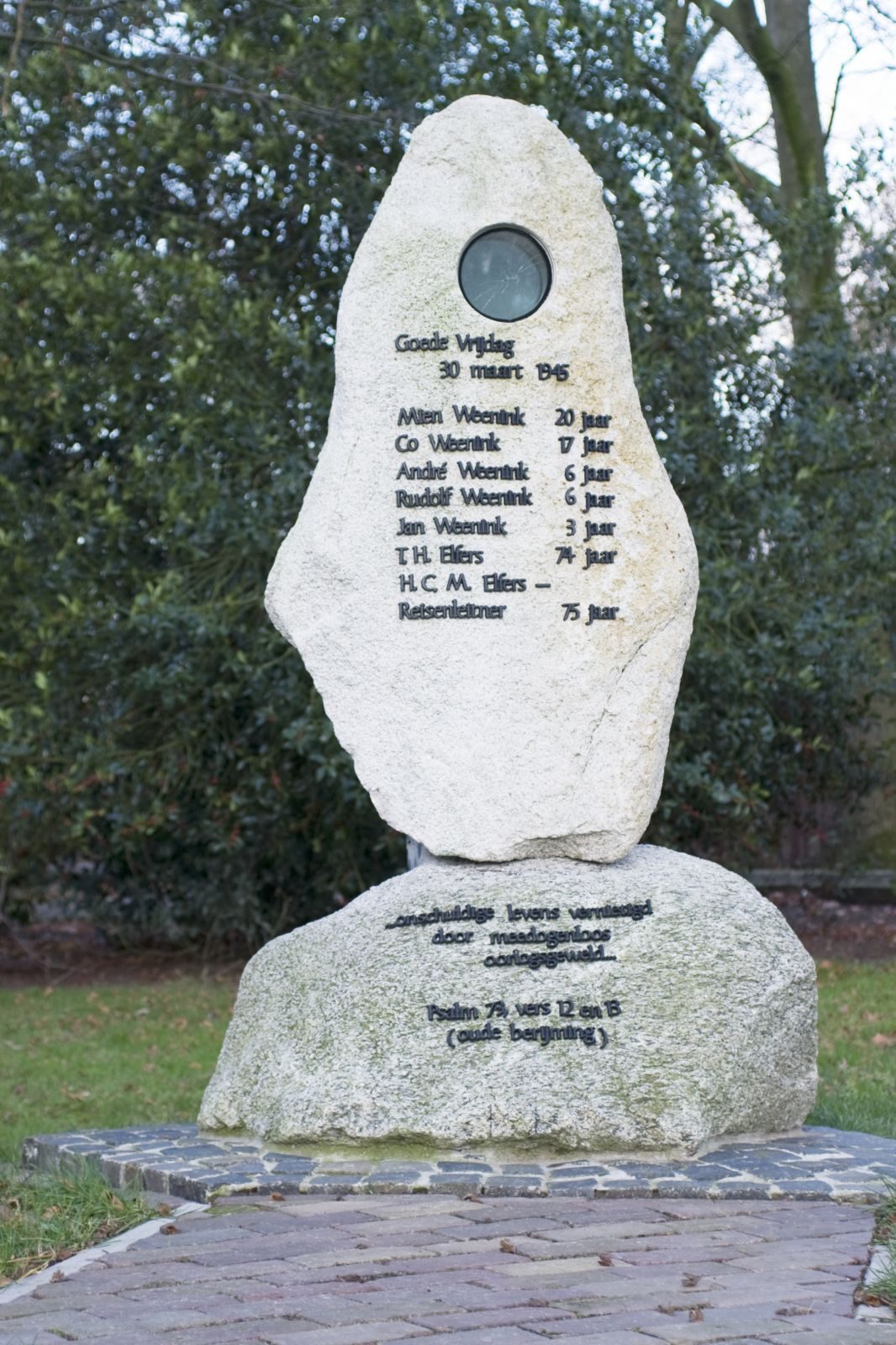
    On the initiative of the Dwars door Barlo Foundation and the relatives of the victims, a monument has been erected in memory. The monument was placed at the Nijhof farm and was unveiled on March 30, 2009. The monument consists of two boulders, one standing upright on top of the other. In the top stone is a round hole with a piece of broken glass in it, as a symbol of the irreparable damage. Below are the names and ages of the victims. On the bottom stone, which serves as a pedestal, is a quote from the Bible. An information board has also been placed at the monument.

    The text on the monument reads:

    ‘GOOD FRIDAY
    MARCH 30TH, 1945

    MIEN WEENINK 20 YEARS
    CO WEENINK 17 YEARS
    ANDRÉ WEENINK 6 YEARS
    RUDOLF WEENINK 6 YEARS
    JAN WEENINK 3 YEARS OLD
    T.H. ELFERS 74 YEARS
    H.C.M. ELFERS-REISENLEITNER 75 YEARS’.

    On the pedestal is the quote:

    ‘INNOCENT LIVES DESTROYED
    BY RELENTLESS
    WAR VIOLENCE

    PSALM 73, VERSES 12 AND 14
    (OLD RHYMING)’.

    The text on the information board reads:

    ‘MONUMENT IN MEMORY

    ON GOOD FRIDAY, MARCH 30, 1945, THE LAST BOMB FELL
    THIS PLACE WHERE AN AIR-RAID SHELTER ONCE STOOD. THIS WAS
    THE END OF THE SECOND WORLD WAR IN THE
    HAMLET OF BARLO. THE STRONG HIDING PLACE OF THE
    NIJHOF FAMILY TURNED OUT NOT TO BE ABLE TO WITHSTAND SUCH NOTHING
    RUTHLESS VIOLENCE OF WAR.

    THE NIJHOF COUPLE AND THEIR DAUGHTER SURVIVED THE
    WOOF; THE ELFERS COUPLE AND FIVE WEENINK CHILDREN
    DIED.

    THE FIELD BOULDERS SYMBOLIZE THE LEADEN AND MASSIVE
    SADNESS. THE HOLE WITH THE – BROKEN – GLASS IN ONE OF THE
    ERRATIC STONES SHOWS US A GLIMPSE OF A NEW
    FUTURE, ALTHOUGH IT WILL NEVER BE UNSCATHED.

    WE HOPE THAT THIS PLACE OF REMEMBRANCE WILL MAKE YOU QUIET
    STAND BY THE GREAT GIFT OF FREEDOM THAT WE
    NOW WE CAN LIVE. LET US BE CAREFUL WITH THAT
    AND TO WORK TO HELP OTHERS IN THIS WAY AS WELL.
    TO GIVE THE WORLD THAT FREEDOM.

    FOUNDATION DWARS DOOR BARLO.’

  • The Bark

    The Bark

    Gelkinkweg, De Heurne

    In the summer of 1944, De Bark, an uninhabited farm between Aalten and Dinxperlo, became a hiding place for a growing number of mostly young people in hiding, who wanted to avoid the Arbeitseinsatz, as well as a few Allied pilots who had been shot down.

    On Sunday morning, February 25, 1945, the guard sounded the alarm when three German soldiers from a surveying unit made an unexpected visit to the front house, where they had found no fighters but possibly suspicious objects.

    After leaving the house, the Germans were arrested, disarmed and imprisoned by the ‘Lange Henk’ and comrades, armed with a sten gun. The same happened to their colleague who was waiting for them in an army truck. The command was then faced with a complex problem: how to keep it out of the knowledge of the German occupier and what to do with the four prisoners?

    Death penalty

    An improvised court-martial of De Bark pronounced the death penalty. Shooting them and then burying them was too cumbersome and risky. The final conclusion was: hang up. And so it happened.

    The four corpses were driven into a tree by Jan Ket in a car, undermined with two explosive charges, in a recent bomb crater near Varsseveld. They were placed in the vehicle in the best possible position, after which the explosives were ignited. Only one went off, but the explosion was heavy. Ket and his men, who had to get away, were sure of their case.

    That same evening, a German patrol found the partially burned-out car with the corpses of two Wehrmacht soldiers next to it with cords around their legs and welts around their necks. The two other bodies were unrecognizable. Later research showed that the rear explosive charge did not go off due to the force of the front one.

    Reprisal

    The reprisal measure of the German occupying forces was merciless. Forty-six political prisoners were taken from the camp De Kruisberg (Doetinchem) and executed on the border of Aalten and Wisch, near the Aalten toll.

    In the meantime, the resistance group had left De Bark according to plan and moved to an old agricultural shed on the Dinxperlosestraatweg between Aalten and Dinxperlo. The news that the ruse with the staged ‘car accident’ had failed and the German reprisal by liquidating 46 Dutch political prisoners did not reach them until many days later. It first aroused disbelief in them and then a deep impression.

    They were not given much time for reflection and processing, because in the meantime four Allied divisions had crossed the Rhine and were approaching the Achterhoek. On March 30, they made contact for the first time with two Canadian combat vehicles, which turned up at the ‘Somsenhuus‘. The liberation was a fact.

  • Bombardment of Kruisstraat

    Bombardment of Kruisstraat

    Aalten, 24 February 1945

    On Saturday , February 24, 1945, bombs fell on and around the intersection of Kruisstraat (now Prinsenstraat) and Bredevoortsestraatweg, in the center of Aalten. The consequences of the bombing were disastrous: eight people died, including three children, some were injured and the devastation was enormous.

    Addie Steenbergen, daughter of baker Steenbergen, lived almost on the corner of Kruisstraat and Prinsenstraat. A couple had just left the store when the air raid siren went off. The couple did not want to go into the shelter, but continued to take shelter in the porch. Addie had to go to the other side of the street from her mother to pick up her sister Netty, who was playing there. Mother Helmink was still outside and shouted that Netty was already in the shelter at her home. Addie went back home into the bomb shelter. Mother, grandma Meijnen and sister Bea, were already there.

    Father and Toon Lammers, the servant, were still outside at the entrance to the shelter when the bomb hit. The bomb landed on the Steenbergen bakery. When they see a huge blowtorch, Addie’s mother tells them to sit close to her: “If we burn, at least they will see that we were sitting together.”

    There was a huge cloud of dust and then a total silence…

    Victims and havoc

    When Addie, her mother and sister came out again, there was nothing left of the house, only rubble. Toon Lammers, the 18-year-old baker’s assistant, got a ladder on his neck and died instantly. Father Steenbergen had fallen headfirst into the cellar of the bakery due to the air pressure displacement. He had a skull base fracture and was in a coma. The couple (van den Berg-Jacobs) who took shelter in the porch also died. Netty died in the shelter of the Helmink family, as did Hansje Houwers and a daughter of Helmink, her playmates. These three children died due to overpressure on the lungs. Two Germans were also killed. Addie later found a piece of leg from one of them among the rubble.

    Gerrit and Bernard Buesink were busy outside that Saturday afternoon, just after noon. They lived on the corner of the intersection Prinsenstraat/Kruisstraat. Father Beusink had a forge there. The house received a direct hit, but miraculously they survived.

    Eyewitness report

    Eyewitness account of Cindy Weeber’s father about the tragedy on February 24, 1945, written down in 2006:

    “My brother had to get bread from the Wikkerink bakery, on Bredevoortsestraat, and I wanted to get a toll from the Cooperative. We went with my father’s bicycle, my brother Henk cycled and I sat on the back of the ‘pakkiesdrager’, and so we went to Aalten. First we went to get bread from Albert Wikkerink and then we cycled on to the Cooperative to get a toll for me.

    Suddenly the siren sounded, a warning for air raid sirens. My brother Henk threw the bicycle with bread against the façade of the Buesink forge and hid from the bombs there and I went to shelter at bakery Steenbergen. What followed was a deafening noise of bombs whizzing down. All this took about 10 minutes. After about fifteen minutes I dared to get up. My hands, arms and head were full of wounds but I had nothing else. Afterwards I realized that I could have been dead, but when you lie there like that, you don’t think about it. When I got up and went outside, everything was one big mess and I was full of dust from top to bottom.

    As I was scurrying over the rubble, I heard my brother shouting, “Jan, Jan, here I am.” I recognized his voice and shouted, “Where are you?” “Here”, it sounded and I saw a gray figure coming towards me. It was my brother Henk who was also covered in small wounds, but otherwise he was fine. The bike and the bag of bread were totally crushed.

    My brother said to me , “Go home quickly, and tell them that everything is all right,” and I ran home and told father and mother what had happened. They both panicked and thought the worst, but I said that Henk was also fine. Father then went with me to pick up the bicycle and the bread, but everything was covered in rubble.

    Later I heard that there were seven deaths. We did have a guardian angel then because we were both practically unharmed.

    What I have noticed now, after all these years, is that my brother never talked to me about this incident again. This is becoming more and more apparent in me. I don’t know why, but every now and then I wake up at night, wet with sweat, and I see the weather in front of me. Maybe it can be explained as you get older, but it comes back more and more often.

    Unfortunately, my brother passed away. How I would have liked to have talked to him about it, but alas. After a good 60 years, there comes a time when you start thinking about why we were spared and those seven others were not.”

  • Bombardment Dale

    Bombardment Dale

    Elshoek/Grevink area, Dale

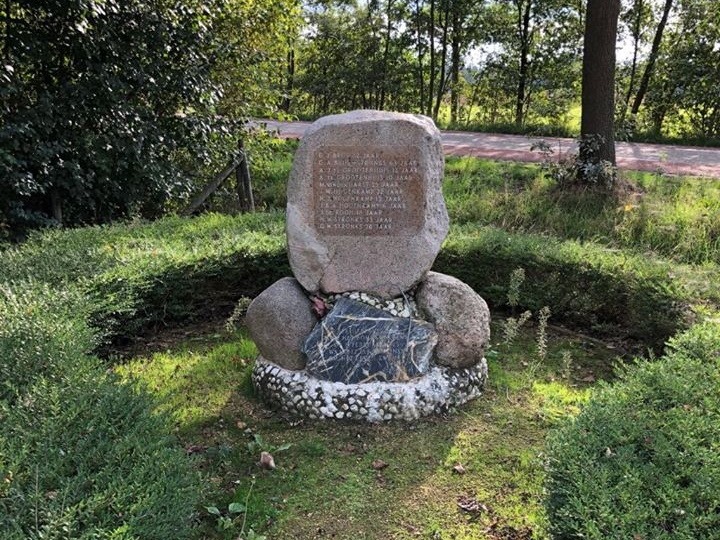
    On 8 February 1945, a mistake bombing took place in the Aalten rural district of Dale, in which eleven people were killed. In memory of these victims, a monument was unveiled in 1988 on the corner of Aladnaweg and Grevinkweg.

    Less than three months before the end of the war, on February 8, 1945, American B-26 Marauder bombers took off from their base in Cambrai in northern France. Their primary target was the area around Kleve, and if that was not possible, they had an alternative target at Groenlo. At Kleve it was too cloudy and so they flew on, but also in the Achterhoek the visibility was poor. Just after 11:00 a.m., they dropped 528 fragmentation bombs.

    Two hours later, the aircraft returned safely to Cambrai. Their mission report stated: “Impossible to determine further damage or to locate pattern accurately due to 80% cloud cover”.

    Death and destruction

    The deadly cargo ended up in the vicinity of the Elshoek and the Grevink in Dale, with terrible consequences. The hundreds of splinter bombs caused death and destruction. The shards flew horizontally across the ground and affected both people and animals. Everywhere lay dismembered horses, cows, sheep, chickens and geese. Some farms suffered direct hits.

    All doctors, nurses and emergency services were sent to the crash site. In the mud and among the rubble, they provided first aid to the wounded. These were transported on stretchers and ladders to Huize Avondvrede on the Hogestraat. From there, the seriously injured were transferred to the emergency hospital in Harreveld.

    The bombing eventually claimed eleven lives and left several people permanently disabled.

    Thes laughter offerings

    In the kitchen of the Neerhof family’s farm ‘t Olde Nooitgedacht , Joop de Roon from Rotterdam was found dead. At the Glieuwe farm, where the Hogenkamp family lived, daughter Anna and sons Herman and Jozef were killed. The Bekerhuis farm of the Te Grotenhuis family was completely destroyed. There were four victims here: the children Arie and Teun te Grotenhuis and the brothers Hendrik and Gerrit Stronks, who were in hiding there.

    Mink van der Harst, from Scheveningen and in hiding with the Eppink family of farm ‘t Nooitgedacht, was fatally hit by shrapnel outside. Brus’ farm was also hit. Gerrit Brus died on the spot, and his wife Sientje Brus-Stronks died a few days later in the emergency hospital in Harreveld.

    In addition, bombs also fell in the Haartsestraat. Clarel Smit, who had just left Van Lente’s house, was so injured in his feet and legs that he died four months later in the emergency hospital in Harreveld.

    The monument

    The monument in memory of the victims consists of four stones, from the remains of the house of the Te Grotenhuis family. Mr. Te Grotenhuis piled up these stones at the place in question after the bombing. For years, the stones functioned as an unofficial memorial. In 1988, at the insistence of the local population, they were recognized as an official monument.

    The names of the victims are inscribed on the memorial stone:

    • G.J. BRUS 62 YEARS OLD
    • G.A. BRUS-STRONKS 63 YEARS OLD
    • A.J. TE GROOTENHUIS 12 YEARS OLD
    • A. TE GROOTENHUIS 10 YEARS
    • M. VAN DER HARST 25 YEARS OLD
    • J.M. HOGENKAMP 22 YEARS OLD
    • H.J. HOGENKAMP 15 YEARS OLD
    • J.B.A. HOGENKAMP 6 YEARS OLD
    • J. DE ROON 18 YEARS OLD
    • H.W. STRONKS 33 YEARS OLD
    • G.W. STRONKS 26 YEARS OLD

    Sources


    • Aalten in wartime, J.G. ter Horst
    • If only I could see them again, the bombing of Dale 8 February 1945, H. de Beukelaer
    • On or under, Aalten, the land of the people in hiding and of illegality, G.W. Vaags
    • Interview with Karel Aversteeg (Louis Veldhuis and Gerrit Nijman)
    • National Committee 4 and 5 May
    • Nationaal Onderduikmuseum, Aalten
    • Speech by Mayor Stapelkamp, 8 February 2020
  • Pastor Van Rooijen

    Pastor Van Rooijen

    Parish Priest (1916-1945)

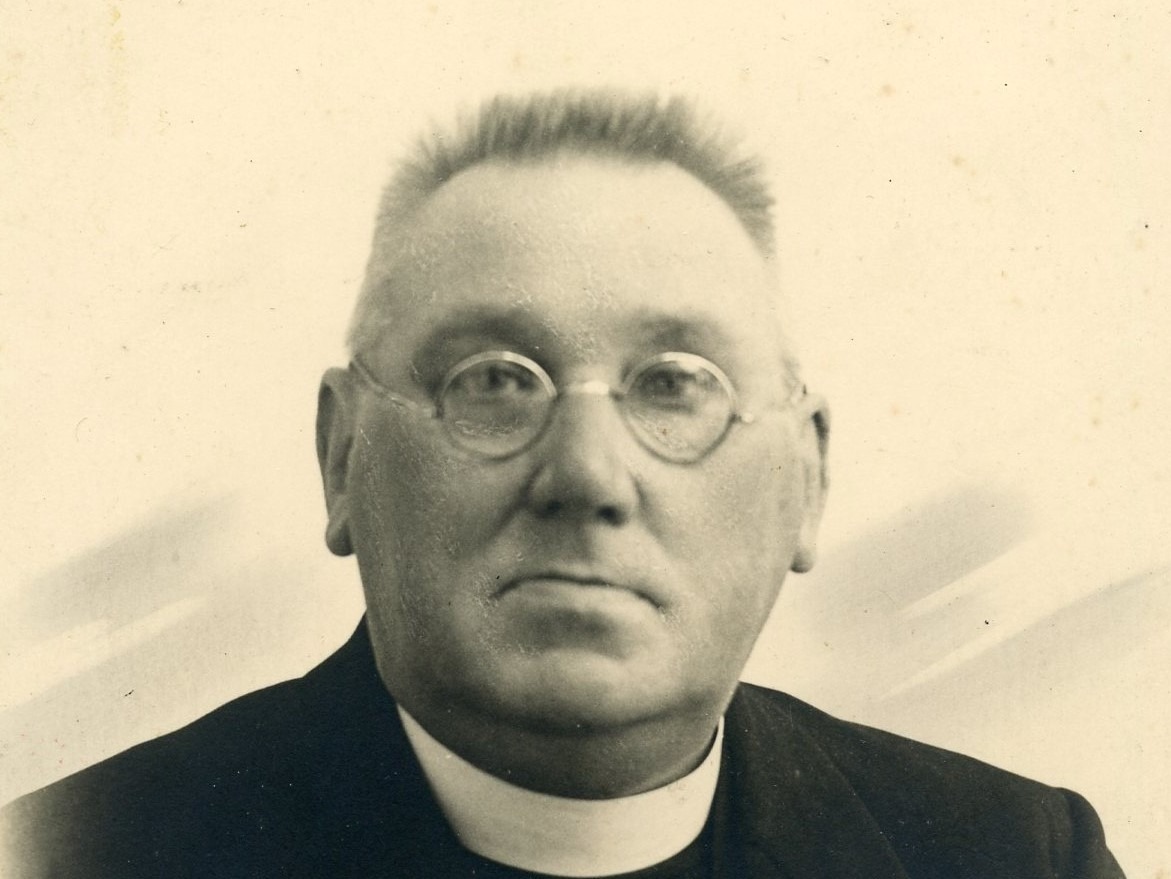
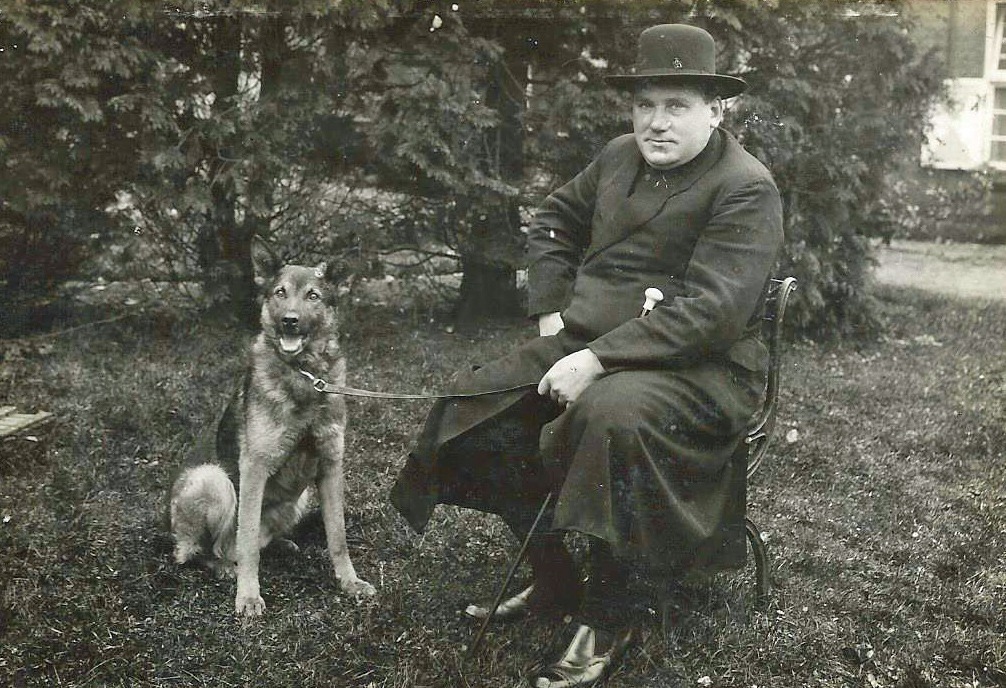
    Pastor Christianus Franciscus Bonifatius van Rooijen (1876–1945) was a well-loved figure. He commanded great respect not only among his parishioners but also among the Jewish residents of Aalten. During his walks with his loyal German Shepherd, Frits, he would tip his hat and greet Jewish fellow citizens with a slight bow.

    Bombing Raid

    On the afternoon of Sunday, 28 January 1945, many people were gathered in the Roman Catholic Church for the Benediction (Lof). Suddenly, a number of ‘Jabos’ (Allied fighter-bombers) broke through the cloud cover and dropped their bomb load. On the Kemena, Admiraal de Ruijterstraat, and Stationsstraat, the damage was limited to property.

    At the Roman Catholic Church, however, the consequences were more severe. One bomb fell in front of the church, and another struck the rectory. Panic ensued, and the blast pressure caused statues to fall from their niches and walls to collapse.

    The churchgoers escaped unharmed, though they were covered in dust and many suffered bruises and abrasions. There was a massive bomb crater in front of the main entrance to the church. However, the bomb that had struck the rectory had more tragic consequences.

    The pastor’s housekeeper, 57-year-old Johanna Maria Klein Rouweler, was severely injured and passed away a few days later in the emergency hospital in Harreveld. Pastor Van Rooijen also lost his life and was not discovered until hours later that night. His death touched the hearts of residents of all denominations, and his funeral at the Roman Catholic cemetery on Piet Heinstraat was attended by a great many people.

    20th Anniversary of Priesthood

    In 1936, Pastor Van Rooijen celebrated 20 years in the priesthood, and De Graafschapbode newspaper devoted an article to this anniversary:

    “Tuesday, 8 December, will mark 20 years since the Reverend Pastor Van Rooijen was installed here as successor to Pastor Wubbels, who departed for Dalfsen. On this milestone in the pastoral life of Pastor Van Rooijen, we requested him to tell us a little about the past two decades. Although His Reverence did not consider 20 years an official milestone usually celebrated, he was kindly prepared to provide us with some information and to pose for our illustrator.

    Pastor Van Rooijen was born on 13 February 1876 in Utrecht. After attending school there, he completed his studies at the Seminaries in Culemborg and Rijssenburg. His first post as curate was Oosterhout (Gelderland), a position he later exchanged for the Twente industrial centre of Enschede. From there, Curate Van Rooijen was installed as Parish Priest here on 8 December 1916.

    Over the past 20 years, the jubilarian has experienced all the ups and downs—in recent years, especially many ‘downs’. He worked here alone until 23 August 1935. On that date, he received the assistance of Curate J. Snoeren.

    When we speak of the ‘downs’, we know we have touched upon a subject very dear to His Reverence’s heart. It is well known, even among those of other faiths, that Pastor Van Rooijen personally does a great deal to alleviate the suffering of his parishioners, but also how indignant he often is when young people, who earn a decent wage, show so little willingness to contribute.

    A well-known example is the daily provision of a free glass of milk to children at the Roman Catholic school who are in need. This milk distribution has been running for two years now and is undoubtedly of great benefit to the general health of the younger generation. The ‘Hulp in Nood’ (Help in Need) fund of the Roman Catholic Workers’ Association, to which members contribute a small weekly amount to assist one another in emergencies (childbirth, illness, etc.), is also an initiative of the jubilarian. In the previous financial year, 385 guilders were raised in this manner.

    Pastor Van Rooijen was particularly satisfied with the house visits he and the curate have made over the past 14 days, with the twofold purpose of assessing the situation in various households and collecting donations for the provision of clothing, blankets, and, if possible, a Christmas gift for needy families. To date, these visits have already raised over 800 guilders—more than His Reverence had dared to hope. That this should be so successful precisely in this 20th year will undoubtedly bring the jubilarian great satisfaction.

    We shall suffice by mentioning that in these 20 years, the Roman Catholic Church has received a hot-air heating system, and during this time, the fashion vocational school and various sports associations have flourished.”

    Sources


    • Graafschapbode, 4 December 1936 (Delpher)
  • Johannes der Weduwen

    Johannes der Weduwen

    ‘Doctor of the resistance’

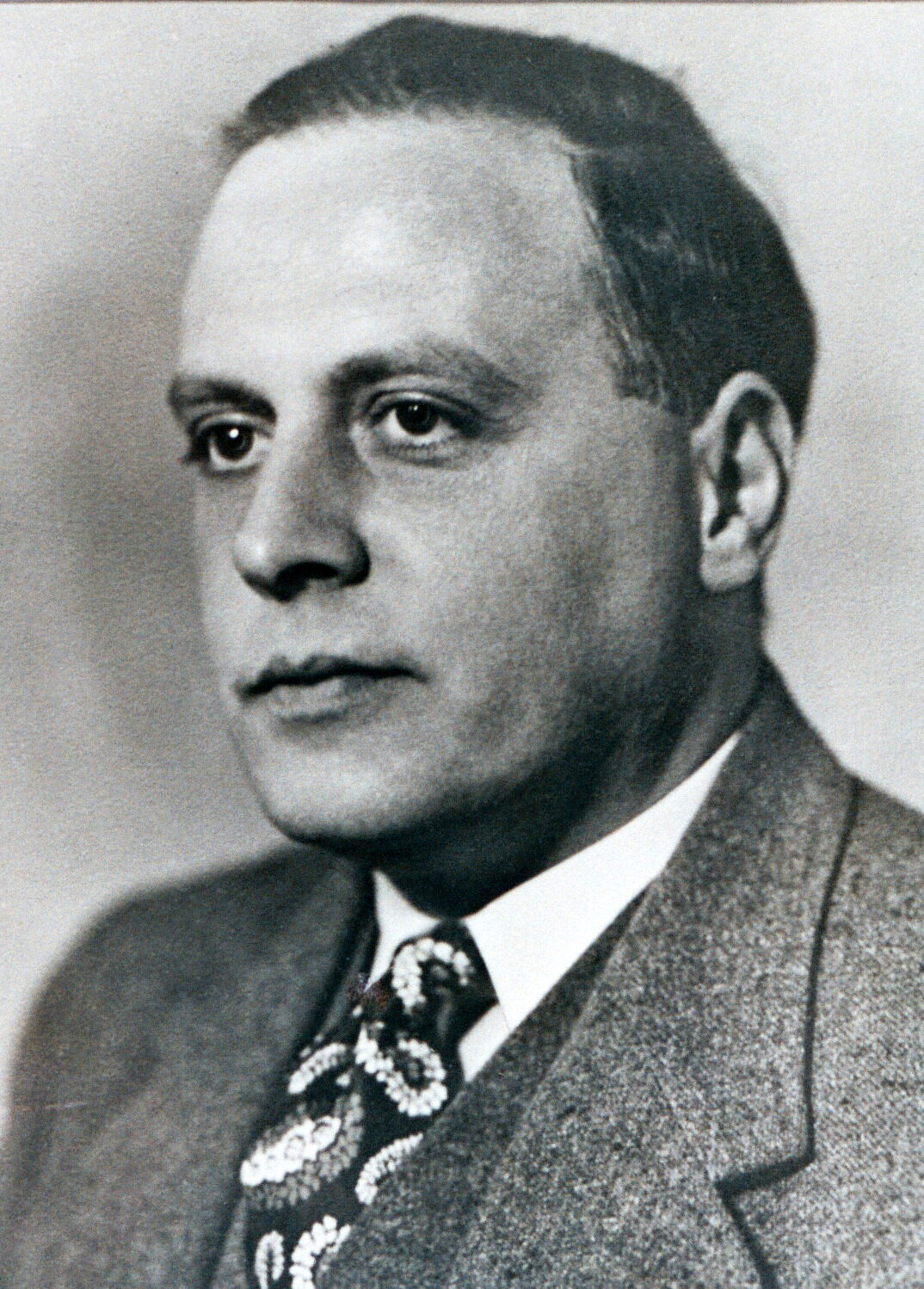
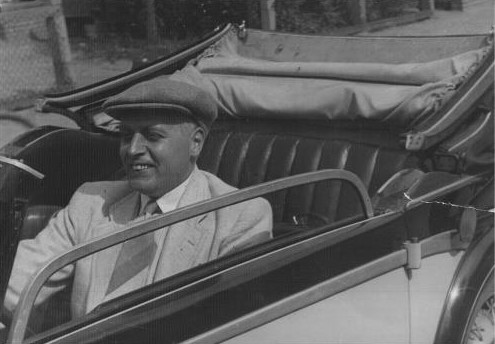
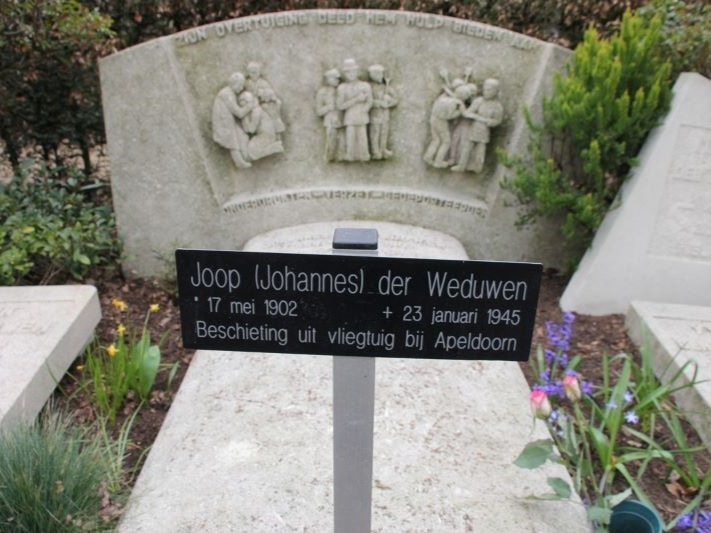
    Johannes (Joop) der Weduwen was a popular general practitioner in Aalten. On January 23, 1945, he came near Apeldoorn to die after being shot at by an Allied plane, at least according to the German authorities.

    Joop der Weduwen was born on May 17, 1902 in Aalten. He studied at the Gymnasium in Doetinchem, later at the University of Utrecht, where he took his medical exam and then obtained his doctorate in medicine. He showed himself to be a worthy successor to his father and established himself here as a doctor.

    From the beginning of the war, Joop der Weduwen became involved in the resistance in the Achterhoek. He actively offered help to people who were wanted by the Germans. His family included two young men who refused to do labor service. If English planes were shot down and the crew was injured, he offered them medical assistance. For a robbery at the distribution office in Borculo , his car was ‘stolen’. He helped Jewish people in hiding on various farms in the area. He also played a role in the abandonment of the Jewish baby ‘Wíllem Herfstink’ at the house of resistance leader ‘Uncle Jan’ Wikkerink.

    Assistance to forced labourers

    In the last winter of the war, Joop der Weduwen felt closely involved with the forced labourers who had to do their slave work under inhumane conditions, especially in Camp Rees . That camp was just across the border in Germany. As a representative of the Dutch Red Cross, he negotiated with Peter Röhrig, the commander known as the executioner of Rees to remove the sick and wounded.

    He tried to transfer as many people as possible to Aalten, where ‘Huize Avondvrede‘ on the Hogestraat had been set up as an emergency hospital. Many were also transported by car from the GP to the Emergency Hospital in Harreveld. Some sick people stayed at his home temporarily and then went into hiding.

    On 19 January 1945, Doctor Der Weduwen, accompanied by two SS men from the Rees camp, left for The Hague for an official meeting with high-ranking German officers and the mayor there. On behalf of the Red Cross, he pleaded for better conditions for the forced labourers, many of whom came from The Hague and Rotterdam. The men had to spend the nights on the bare floors in draughty and damp wooden sheds, had meager clothes and hardly got anything to eat. To improve their inhuman existence somewhat, he asked for straw bags, among other things.

    Fateful return journey

    During the return trip to Aalten, on January 23, 1945, the car he was in was fired upon by an Allied fighter plane near Apeldoorn around five o’clock in the afternoon, at least according to the German authorities.

    His lifeless body was found badly mutilated in a dry ditch, where he had tried to take cover. He had lost a lot of blood and had died on the spot. The car was undamaged. There were strong rumors that the Germans deliberately attacked him because he had become too troublesome. Joop der Weduwen was 43 years old.

    Willem van Houtum, Apeldoorn’s war chronicler, wrote about it in his diary on 23 January:

    “A doctor from Aalten, who interfered a lot with the condition of the deportees in Rees, died of German indifference. The doctor left for The Hague last Friday with two Germans in a car. He wanted to plead with high authorities for the improvement of the treatment of our compatriots in Rees and so on. It was to no avail. As a result, they returned on Tuesday. They were shot at by an English plane on the concrete road near Hoog Soeren. The doctor got out of the car in a hurry to take cover but collapsed badly injured. The two Germans took away the wallet, wallet and so on and drove on to the Ortskommandant in Apeldoorn. He refused to transport the doctor because it was a civilian. So the two Krauts drove on to Aalten and handed over the wallet and so on to the doctor’s wife. This in turn could not provide transport either. She called in the help of a family member in Apeldoorn. With the help of the police, he succeeded in having the body (the doctor had died of excessive blood loss) transferred to Aalten. Due to the many shelling, the concrete section of the Amersfoortseweg near Hoog Soeren is already popularly called ‘Dodenweg’.”

    Police report

    Tuesday 23 January 1945, 17.00 hours, report no. 23.
    Informs Zegers in Nieuw Millingen that a man has just been shot dead by guns. A car is also on fire. Criminal Investigation Department, Feldgendarmerie, Pol. Officer and L.B.D. notified. The body is picked up by the L.B.D. (= Air Protection Service) and transferred to the hospital on the Sprengenweg.

    Wednesday 24 January 1945, 5.45 p.m., report no. 24.
    With regard to the mutation of the report of the order police of 23-01-1945 at 17.00 hours, detective Adema reports that the body of the said person was picked up by the L.B.D. and laid out in the morgue of the hospital on the Sprengenweg. It has been identified as Dr. Johan der Weduwen, living at Landstraat 4, in Aalten. His brother-in-law Wissink, living at Stationsstraat 25 here, has been informed of this, who takes care of warning the family and the funeral.

    Funeral

    On Saturday, January 27, Joop der Weduwen was buried with great interest to Berkenhove cemetery in Aalten. The procession counted at least 1000 people. Previously, a funeral service had been held in the Old Helena Church under the leadership of Rev. J.D. Stegeman, emeritus pastor in Aalten. On behalf of the forced labourers, Mr Dijkgraaf from The Hague spoke a word of thanks and farewell.

    Friends, patients and villagers had a special memorial stone made in front of his grave in gratitude and to honor him. The text on the monument reads: “His conviction made him offer help to the oppressed – resistance – deportees.”

    His name is also mentioned on the memorial stone for the fallen in the organized resistance on the Markt in Aalten, next to the Old Helena Church.

    On March 31, 2023, a Stolperstein was laid in front of the house where Joop der Weduwen lived, Landstraat 41 in Aalten.

    Sources


  • ‘Uncle Jan’ Wikkerink

    ‘Uncle Jan’ Wikkerink

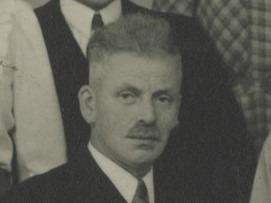
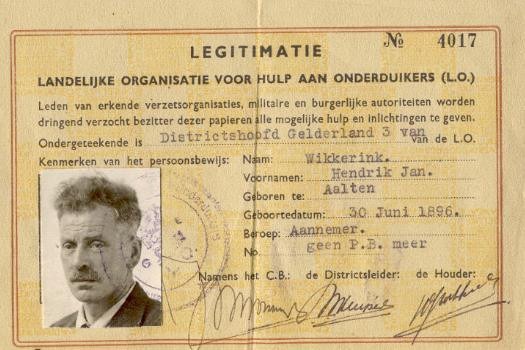
    Hendrik Jan Wikkerink (30 June 1896 – 18 January 1981), known by his alias ‘Uncle Jan’ (‘Ome Jan’), was a key resistance leader in Aalten during World War II. In 1942, in his home on the Patrimoniumstraat in Aalten, he helped found the Landelijke Organisatie voor Hulp aan Onderduikers (LO – National Organisation for Aid to People in Hiding), working alongside figures such as ‘Aunt Riek’ (‘Tante Riek’) from Winterswijk.

    Resistance Work

    Throughout the war, ‘Uncle Jan’ was actively involved in the resistance. He helped escaped prisoners of war and downed Allied airmen flee via Belgium to England. He also arranged hiding places for Jewish citizens and Dutch nationals who refused to work for the German occupying forces.

    With the courage and support of many farmers, he provided shelter for those in hiding. The LO coordinated safe houses and the distribution of food ration coupons. A well-known story is that of the Jewish baby, Willem Herfstink. The newborn was the son of the Aalten rabbi, Jedwab. The couple was in hiding in Lintelo, but the baby could not remain at that location. With ‘Uncle Jan’s’ knowledge, the child was left on his doorstep as a ‘foundling’. This staged discovery meant that the child—subsequently named Willem—was given shelter with the Wikkerink family.

    ‘Uncle Jan’ narrowly survived the war. On 15 October 1944, he and two people in hiding were arrested by the Germans at his own home and imprisoned in the marechaussee (military police) barracks on the Ringweg. That same afternoon, he was liberated by resistance ‘action squads’ (knokploegen) and went into hiding on a farm in Vragender. Two days later, the occupiers took out their anger on the ‘terrorist’s’ home. They threw hand grenades inside, which set the house on fire. However, the local fire brigade managed to limit the damage.

    Awards and Recognition

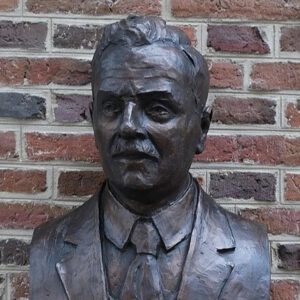
    Because of his respectful demeanour and deep-rooted values, he remained an undisputed leading figure even after the war. Following the liberation, Queen Wilhelmina visited the Wikkerink couple to personally thank them for their brave courage and loyalty. He was knighted in the Netherlands and also received medals of honour from both French President De Gaulle and American President Eisenhower. In 1978, Hendrik Jan Wikkerink and his wife, Dela Gesina, were recognised by Yad Vashem as ‘Righteous Among the Nations’. It is fitting that his bust stands in the hall of the Nationaal Onderduikmuseum in Aalten.

    ‘Uncle Jan’ Wikkerink is buried at Berkenhove Cemetery.

  • Fallschirm-Armee Waffenschule

    Fallschirm-Armee Waffenschule

    Herenstraat 4, Aalten (Oct 1944 – Feb 1945)

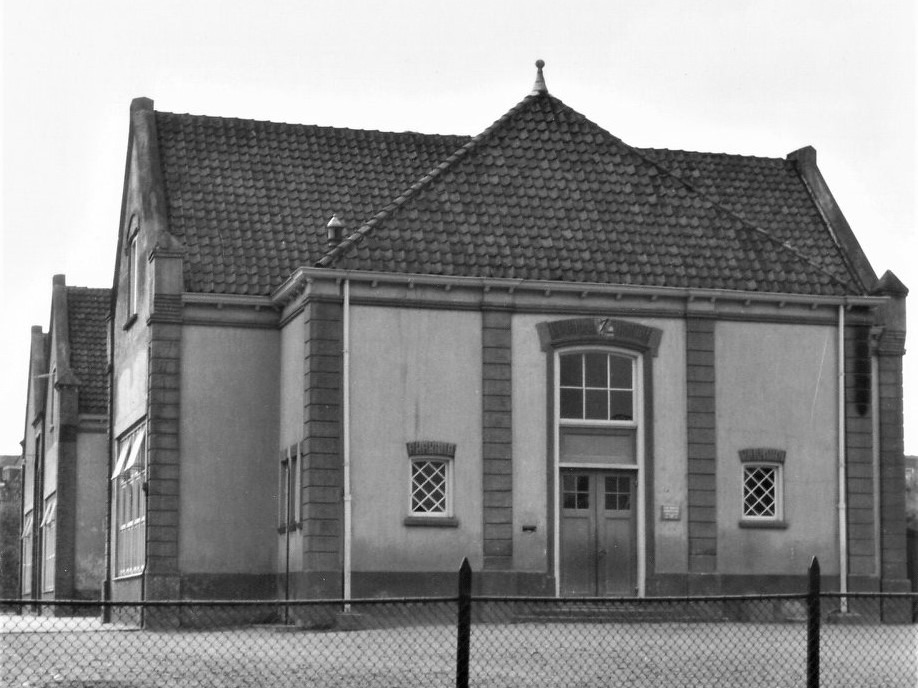
    Tijdens de bezettingsjaren was er korte tijd een ‘Fallschirm-Armee Waffenschule’ gevestigd in de Openbare Lagere School aan de Herenstraat in Aalten.

    After the Normandy landings, Hitler wanted to launch a large-scale counterattack on the Western Front as soon as possible. With this he wanted to bring the Allies to a standstill. This should give Germany time to complete their “secret project,” which is the development of weapons of mass destruction.

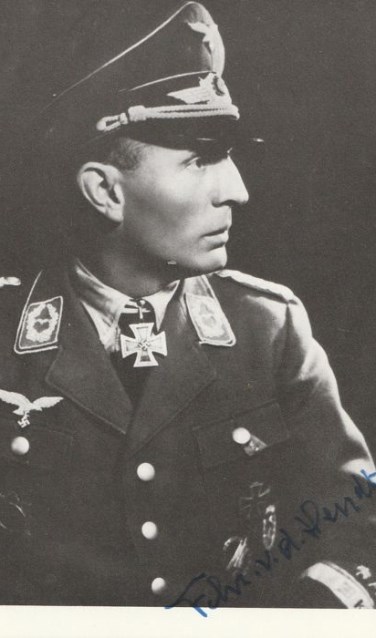
    The Germans made preparations in a very tactical manner and the necessary combat units were assembled. This is also the case in Aalten. Here, Freiherr Von der Heydte had to put together a Kampfgruppe in preparation for a special deployment in this new offensive. In these months, Aalten was overrun by German troops. They requisitioned almost all school buildings for the quartering of these troops.

    School for paratroopers

    The so-called ‘Fallschirm-Armee Waffenschule’ (October 1944 – February 1945) was established in the public school on the Herenstraat. The majority of the Germans were also billeted here. Non-commissioned officers and officers were billeted with civilians in Aalten.

    The school was intended to train aspiring officers of the German paratroopers in practice and prepare them for work at the front. In addition, experienced instructors gave courses on how to disable the enemy’s armored vehicles with the resources and weapons that the Germans had at the time. And finally, a special Kampfgruppe (combat unit) was formed. He was going to receive a special assignment, namely an in-force parachute jump behind Allied lines during the Ardennes Offensive. At its peak, about 1200 German paratroopers were gathered in Aalten. They formed the so-called ‘Kampfgruppe Von der Heydte’.

    German paratroopers were billeted everywhere in Aalten and surrounding villages. Not only in large school buildings but also privately in people’s homes. The soldiers had to go to the district office that was located in the town hall. Here they received a certificate of quartering, as they called it at the time, and continued their way to the address where they were allowed to stay. In addition, almost all cafes in Aalten were used by the German troops and converted into so-called kasinos. Not to watch films here, but to entertain the soldiers in their spare time with fun and trinkets.

    Strict regime

    There was a strict regime among the German troops. Valuable time was efficiently used to turn this mixed group into a real Kampfgruppe as soon as possible. Every morning the troops were expected to complete a march of about 10 km on an empty stomach. Furthermore, shooting exercises were held on some training grounds around Aalten and the battle groups were trained in fighting in wooded areas.

    Een ooggetuige heeft Duitse parachutisten in sporttenue gezien, op weg naar zwembad ‘t Walfort. Hier sprongen de parachutisten van een verhoging in het mulle zand. Bij het in contact komen met het zand maakten zij een zogenaamde para-rol om de val te breken. Ze moesten deze manoeuvre beheersen voordat ze een parachutesprong gingen maken om zo blessures te voorkomen.

    After Von der Heydte had left the so-called Kampfgruppe, Hauptmann Von Hütz took over command of the Waffenschule in Aalten. During the remaining period, this new battle group deployed a number of operations. These were described as very harsh by both the Allies and the Germans themselves.

  • The Rye Bread Train

    The Rye Bread Train

    During the Second World War, food became increasingly scarce. Although the severity of the situation differed per region, people everywhere had to deal with ration cards and family cards. These were wanted, but at the same time objects of irony. In a clandestine paper, which was distributed in Aalten, there was a curious recipe:

    “Take the meat card, roll it in the flour card, put it in the fat card and fry it with the coal card until deliciously brown. The potato card is placed in the butter card and slowly braised in the petroleum card. Then you heat up the coffee card, add the milk card and the sugar card and dip the bread card into it. Take two bread coupons, put one meat coupon in between and you have a sandwich. After dinner, one wipes one’s mouth with the pedigree. Enjoy your meal.”

    Food shipments to the west

    Ondanks de oorlogsomstandigheden hadden de Achterhoekers het over het algemeen niet slecht. Zelfs met 2500 onderduikers op een bevolking van 11.000 inwoners, kon men in Aalten redelijk goed eten. Er was zelfs genoeg voedsel beschikbaar om grote hoeveelheden naar het hongerende westen te sturen.

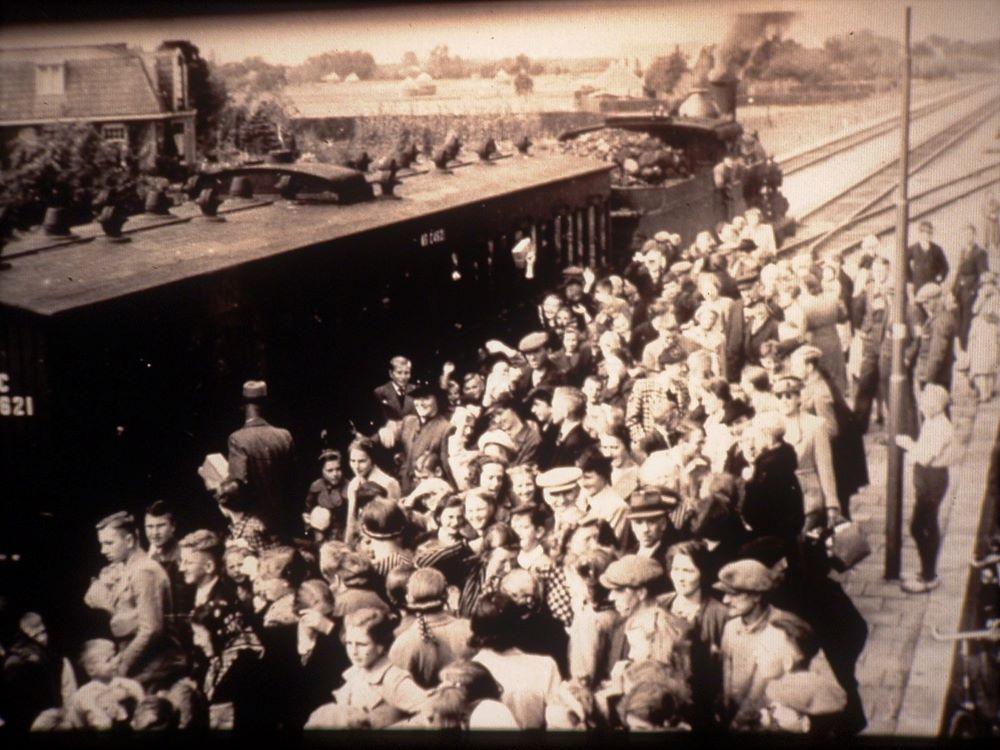
    De Aaltense bakkers stonden elke dag urenlang voor de oven. Massa’s roggebrood en andere levensmiddelen gingen dagelijks met de trein van ‘s middags half vijf naar het westen. Niet alleen in Aalten, maar ook op andere haltes op de lijn Winterswijk-Arnhem werd voedsel meegegeven voor de hongerige bevolking in het westen van Nederland.

    De eerste zendingen van roggebrood naar het westen begonnen in 1942. In 1944 reed er in Aalten dagelijks een paard-en-wagen met zestig à zeventig zakken roggebrood van het postkantoor naar het station. De trein van half vijf werd al snel bekend als de ‘Roggebroodtrein‘ en groeide uit tot een begrip. In het eerste jaarverslag van de P.T.T., dat na de oorlog verscheen, werd zelfs een foto opgenomen van het inladen van de vele roggebroden.

    In September 1944, the Roggebrood train came to an end due to the national railway strike.

    The Rye Bread Train would run one more time

    On the occasion of the 25th anniversary of the liberation, the Orange Committee and the local branch of the 1940-1945 Foundation organized liberation celebrations in Aalten from 4 to 6 May 1970. One of the highlights of these festivities would be a reunion of people in hiding and veterans. The intention was that the people in hiding would stay at their old hiding place as much as possible. On Liberation Day, 5 May, a memorial meeting with the pastors and the chaplain from the war years, and an allegorical parade were on the program. The NCRV paid attention to this Aalten initiative on Nederland 2.

    The NS would use a special train for the transport of the reunionists: the old Rye Bread Train. With the same equipment with which rye breads were transported during the war, the veterans and people in hiding would return to Aalten to celebrate the 25th anniversary of the liberation. This time, however, the Rye Bread Train would run in the opposite direction, from the west to the east, to bring the reunionists to Aalten. For this special occasion, a special train ticket would even be designed.

    Unfortunately, shortly before the commemoration celebrations, the organization decided to cancel the reunion, the most important part of the program. The reason for this was that there seemed to be insufficient interest among the people in hiding. Afterwards, however, there were signs that something might have gone wrong with the sending of the invitations. Anyway, the Rye Bread Train definitely remained a memory of the past

    Sources


    • Zutphensch Dagblad, 7 July 1949 (via Delpher)
    • Nieuwe Winterswijksche Courant, 5 December 1969 (via Delpher)
    • Dagblad Tubantia, 15 January 1970 (via Delpher)
    • Trouw, 14 March 1970 (via Delpher)
  • Monument to Leslie Pulfrey

    Monument to Leslie Pulfrey

    Gandvoortweg, Barlo

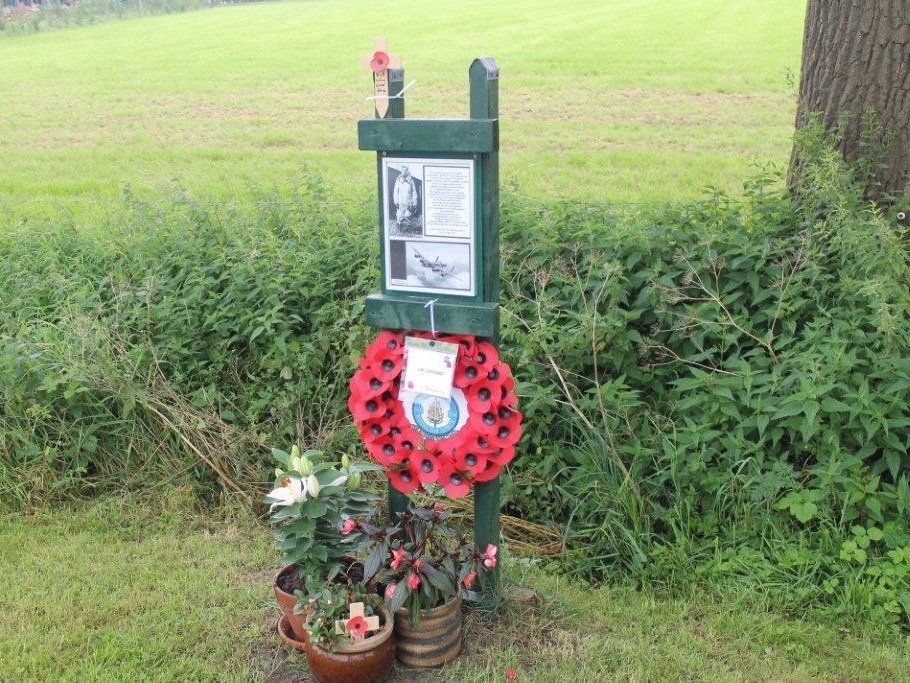
    On the Gandvoortweg in the rural district of Barlo in Aalten, there is a modest memorial, erected in memory of the British Flying Officer Leslie Pulfrey of the Royal Air Force (RAF). The memorial marks the meadow where Pulfrey was found dead in the early morning of June 17, 1944, after a failed jump from his burning Lancaster bomber.

    The mission

    On the evening of 16 June 1944, the four-engined Avro Lancaster bomber ME840, with Pulfrey as a crew member, took off from North Killingholme airfield in Lincolnshire, England. The mission was an attack on factories in Sterkrade, Germany, where, among other things, synthetic oil was produced for the German war industry.

    The plane, with seven crew members on board, completed its bombing raid and returned to England. On the way back, however, it was intercepted and attacked by the German night fighter pilot Joseph Nabrich. One of the fuel tanks in the wing caught fire almost immediately, leaving the aircraft irretrievably lost.

    The fatal leap

    On the pilot’s orders, the crew was ordered to abandon the aircraft. Leslie Pulfrey was the first to jump into the airspace above Barlo. But something went terribly wrong. Although the exact cause remains unclear, he was found dead in a meadow in the early morning of 17 June 1944 by farmer Johan van Eerden of the nearby farm Nieuw Kolstee (Smol).

    It is possible that Leslie came into contact with the plane during his jump or that his parachute did not open properly. From a distance, the place where he had landed was clearly visible; His body was still connected to his parachute, which was bulged by the wind. There was a large tear in the parachute and his head had become entangled in the cords. Leslie also missed one of his aviator boots, which he apparently lost after his jump. His name was mentioned on his identification plate.

    The crash

    The burning Lancaster eventually crashed in a meadow behind the ‘Oude Lieftinck’ farm on the Heelweg (now Twenteroute 5). All but one of the crew were killed. Flight engineer Roy Kay was thrown out of the plane by an explosion just before the crash. Miraculously, he was the only survivor to reach the ground in one piece. He escaped arrest and finally managed to return to England on 22 September 1944, with the help of pilot helpers.

    Leslie Pulfrey and his killed colleagues were transferred to Varsseveld, where they were buried.

    Tribute

    In June 2014, Leslie Pulfrey was honored with a ceremony, during which a so-called Fly-past took place. Four F-16s flew over the vicinity of the Gandvoortweg, and one of the aircraft took off straight up on the spot as a tribute. Thea Onnink has recorded her memories of this moment in this story, read by Herman Onnink.

  • The church raid in Aalten

    The church raid in Aalten

    January 30th, 1944

    On Sunday, January 30, 1944, 48 young men were arrested during a raid by the German occupiers on two churches in Aalten. The men were taken away and five of them would not return alive. The event made a deep impression, both at home and abroad.

    The occupiers knew that many young men between the ages of 19 and 23 avoided the compulsory Arbeitseinsatz or had not returned after leave. They also knew that the churches in Aalten were full of churchgoers on Sundays. The Germans seized this moment to make their move.

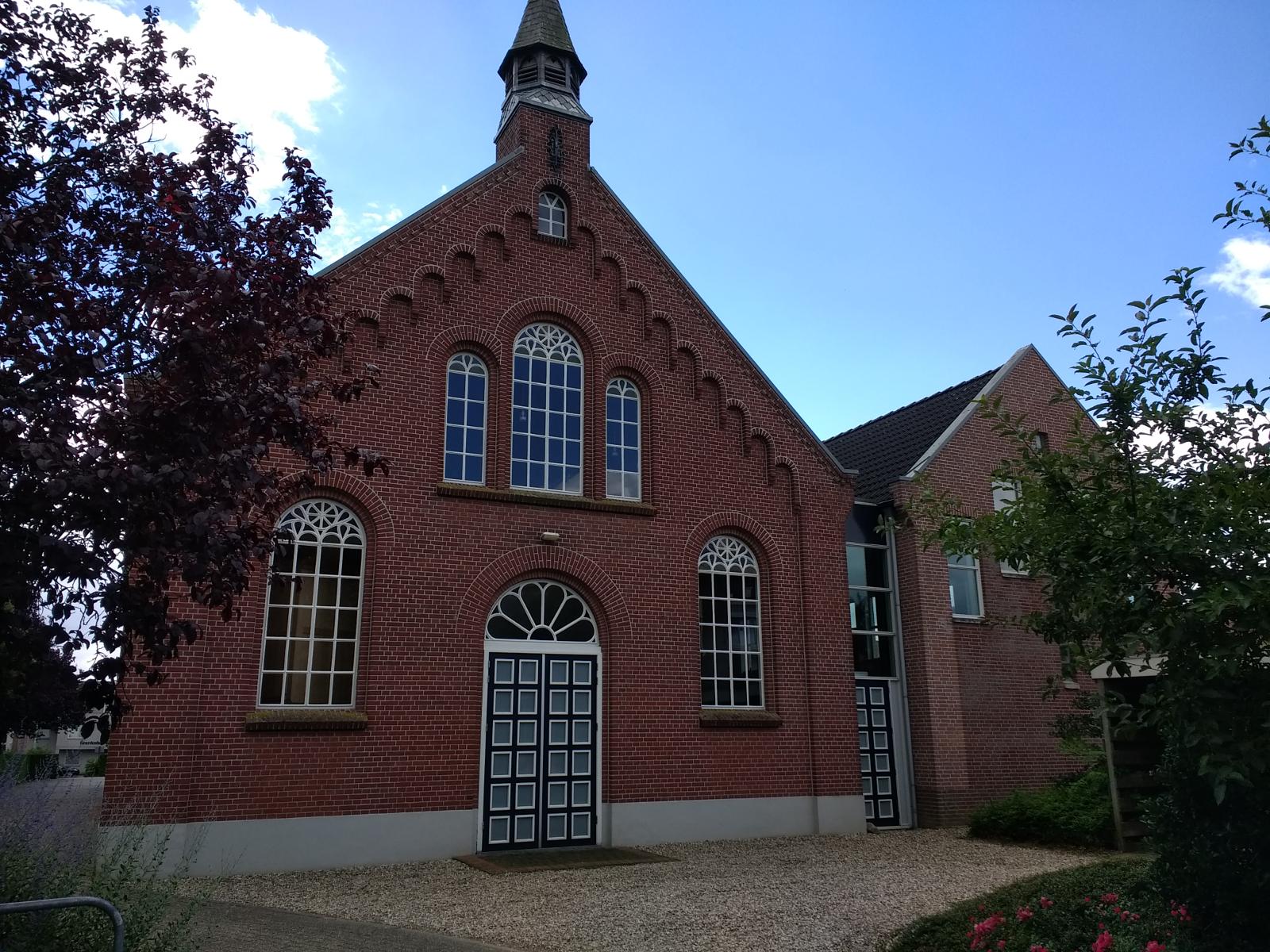
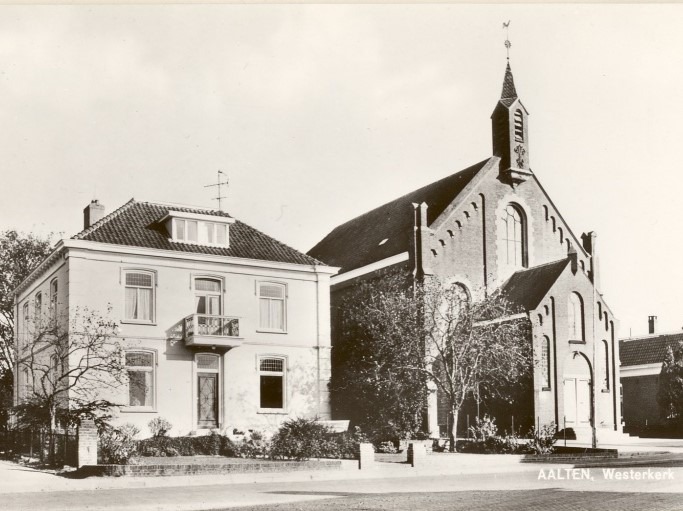
    Die zondag omsingelden Duitse SS’ers de Christelijk Gereformeerde Kerk aan de Berkenhovestraat en de Gereformeerde Westerkerk aan de Hogestraat. De mannelijke kerkgangers werden gedwongen hun persoonsbewijs te tonen. Jongemannen in de leeftijd van 19 tot en met 23 jaar werden aangehouden en afgevoerd naar de koepelgevangenis in Arnhem. Ook enkele oudere mannen werden opgepakt.

    From Arnhem, the 48 arrested men were sent on to Camp Amersfoort or the Oranjehotel in Scheveningen. Some were put to work on farms in Germany or in factories in the Ruhr area. Others ended up in German concentration camps.

    Escapes

    During the war, Aalten offered shelter to 500 evacuees from Scheveningen, many of whom wore traditional costumes. Some men managed to avoid arrest by disguising themselves with a white Scheveningen hood or by hiding under a wide cloak.

    In the Westerkerk, Mrs. Visser-Taal, an evacuee from Scheveningen, helped the 19-year-old Gerrit Hoopman, who had not reported for the Arbeitseinsatz, to a disguise. She gave him her overskirt, shoulder scarf and traditional hood with head iron. Disguised as a woman, Gerrit, arm in arm with other women, left the church and managed to escape.

    There was also a young man who was hidden under the floor by churchgoers, on top of the heating pipes, where he stayed until the coast was clear.

    Reformed Church

    The plan of the Germans was to raid the Oosterkerk and the Westerkerk. When someone was asked the way to the Oosterkerk, this person got a frightening suspicion of what the occupier was planning. The Germans were misled and sent to the smaller Christian Reformed church on Berkenhovestraat. Jaap Papiermole (11 years old at the time) witnessed the robbery on the street. He says:

    “On the morning of January 30, 1944, I was just coming out of a house of an acquaintance on Berkenhovestraat, when a German raid car drove up, which stopped in front of the Christian Reformed Church. The street was closed off and the Germans surrounded the church building. I have seen that they arrested men, but I don’t think the loot was that big. Mr. Bennink took pictures of what happened. The robbery car with the arrestees then drove towards the Ring Road. At that moment the air raid siren went off and I ran home, because my father was strict and had instilled in us to come home immediately in case of an air raid siren.

    When I walked out of the Oosterkerkstraat, the same robbery car drove from the Damstraat towards the village. At the same time, my father came running and stopped the car. My father wore a kind of uniform jacket that belonged to the Air Protection Service. The car door opened and with a commanding voice that brooked no contradiction, father roared: ‘Ausweise sofort!’ The Germans were impressed by his harsh voice and handed over the pile of identity cards. Father walked through it, picked one out and said: ‘Dieser Mann suche ich. Er arbeitet bei mir.’ *

    He walked to the back of the car and gave the order to let the person in question get out immediately. The bewildered young man got out of the car and walked with father to our house. The truck drove on to the Bredevoortsestraat. When father was in the backyard with that young guy, he said: ‘Here you have your identity card back. Get out of here.’”

    * Jaap’s father H.J. Papiermole was an authorised representative at the firm of Driessen

    The impact of the raid

    The raid in Aalten made a big impression, both in his own country and abroad. It was the first time that such an action took place during a church service in the Netherlands. The London News wrote on February 14, 1944:

    “AALTEN – When leaving the church, a raid was held. 50 people in hiding walked in! So going to church is no longer safe either. People stay at home, although that will be difficult for many.”

    From that moment on, people in hiding no longer went to church. From then on, church services were held in secret on remote farms, with someone always on the lookout.

    Five of the arrested men did not survive. Four died of the hardships in a German concentration camp or during a death march, the fifth in a bombing. The men who did survive bore the consequences of this for the rest of their lives. The raid left deep scars in Aalten and remains a tragic and unforgettable chapter in local history.

    Documentary

    Also watch the documentary made by Omroep Gelderland “Saved by the iron“, about the special escape of Gerrit Hoopman:

  • Where are Frits and Amalia Landau?

    Where are Frits and Amalia Landau?

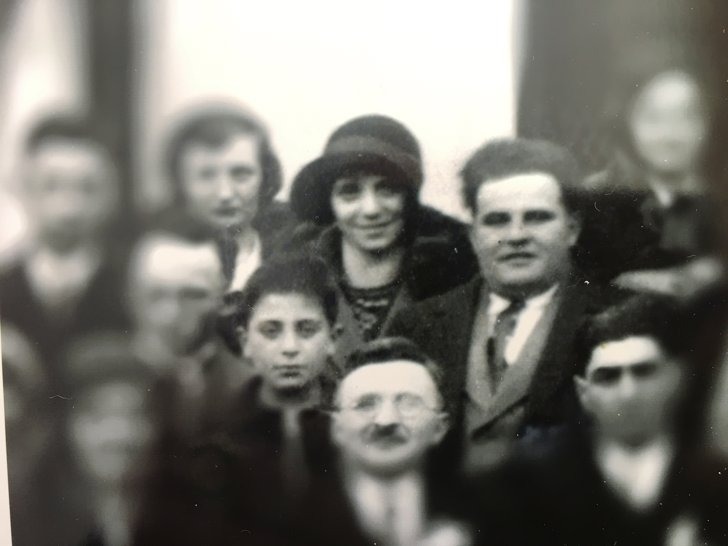
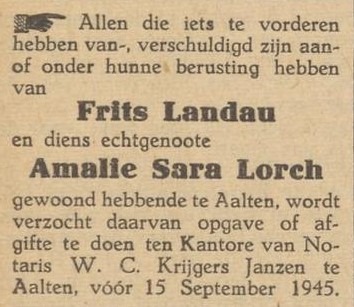
    During World War II, the Jewish couple Frits and Amalia Landau lived in Aalten. Their lives ended tragically when they were executed by the resistance due to Frits’ dangerous behaviour. Their bodies were presumably buried in the countryside surrounding Aalten, but the exact location remains unknown to this day.

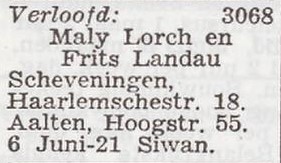
    Frits Landau was born on 28 November 1905 in Aalten. He became a travelling salesman and remained unmarried for a long time. On 6 June 1942, he became engaged to Amalia Lorch, known as Maly, born on 20 December 1902 in Bocholt. They married in August of that same year and moved in with the Schaap family at ‘t Dal 1 in Aalten.

    Soon, they were forced into hiding. From 1 April 1943, Gelderland was officially to be Juden-frei, Juden-rein (free of Jews). The Aalten population register states that Frits & Amalia departed on 17 March 1943, with no destination recorded. They subsequently stayed at two different hiding addresses, most recently with the Van Eerden family at the farm De Maote in the rural district of Dale.

    Unpredictable and dangerous behaviour

    It is said that Frits Landau was an alcoholic with a short temper, which led to unpredictable and dangerous behaviour. Reportedly, he did not make things easy for his hosts; he harassed young ladies and demanded his drinks every evening. He was accustomed to a luxurious lifestyle, yet in 1943, alcohol was barely available on the farms.

    On several occasions, Frits threatened to betray his hiding places in order to buy his own freedom from the Nazis—at least, he assumed this would succeed. Twice, such attempts were thwarted at the very last minute.

    Liquidation by the resistance

    Because he was considered a safety risk to other people in hiding by the local resistance, the decision was made to execute him to protect other fugitives and their helpers.
    The Council of Resistance and even local clergy discussed how to deal with him. Ome Jan Wikkerink proposed keeping Frits under permanent guard by other hiders and pilots. This did not happen, however, as several young resistance members took the initiative to eliminate him themselves.

    They told the Landau couple that they would be taken to another hiding address in Vragender—a suitable excuse to get Amalia to come along with Frits. Incidentally, the intention was to separate Frits and Maly, as they wanted to spare her this fate. However, Frits refused to cooperate with being separated, and thus Maly was drawn into his fate.

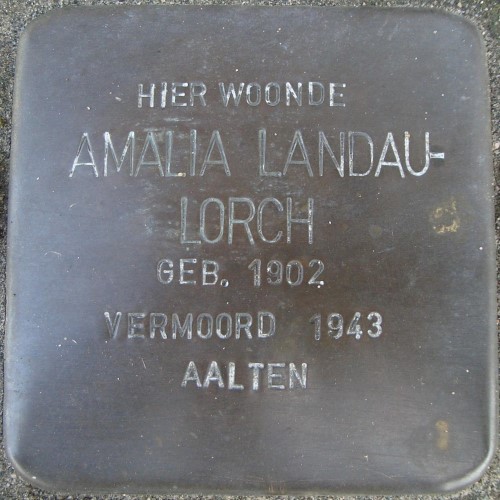
    Frits and Amalia Landau-Lorch were liquidated and buried in the countryside of Aalten by the local resistance in late 1943 or early 1944.

    Location unknown

    Opinions differ regarding the exact place and date of the liquidation. According to one theory, Frits and Amalia were killed on the Schaarsheide, close to the Nazarethdijk. Another theory points to the Daalse Goor.

    The burial site of the Landau couple has been searched for several times, with the aim of giving them a reburial in the Jewish cemetery, but so far without result.

    During a search on the Schaarsheide, a lady’s shoe and three rusted shovels were found. Investigation indicated that the shoe likely dates from the 1930s. It is plausible that the first burial site was discovered there. According to those involved, the bodies were later reburied. At the time, everything had to be done quickly, and apparently, it was later decided that the original burial site was unsuitable. During the clearing of the first grave, the lady’s shoe was supposedly left behind. Afterward, the mortal remains were reburied elsewhere, but where is unknown.

    The most recent search took place in 2023. In a small patch of forest between Aalten and Lichtenvoorde, twelve experienced amateurs searched for the bodies of Frits and Amalia. Using detectors, they searched at various frequencies for different materials, but no human remains were found.

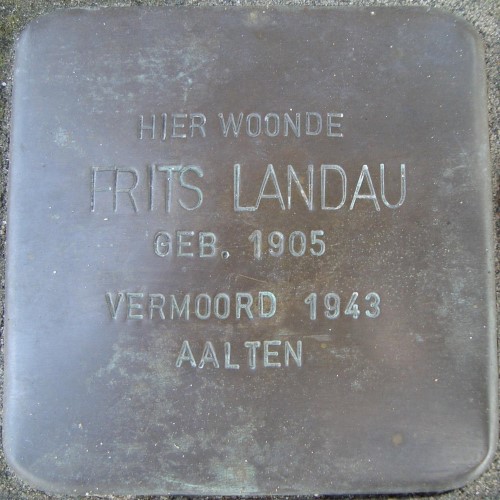
    On 13 April 2016, two Stolpersteine (stumbling stones) for Frits and Amalia Landau-Lorch were laid at their last official residential address at ‘t Dal.

  • Freya Radar Station

    Freya Radar Station

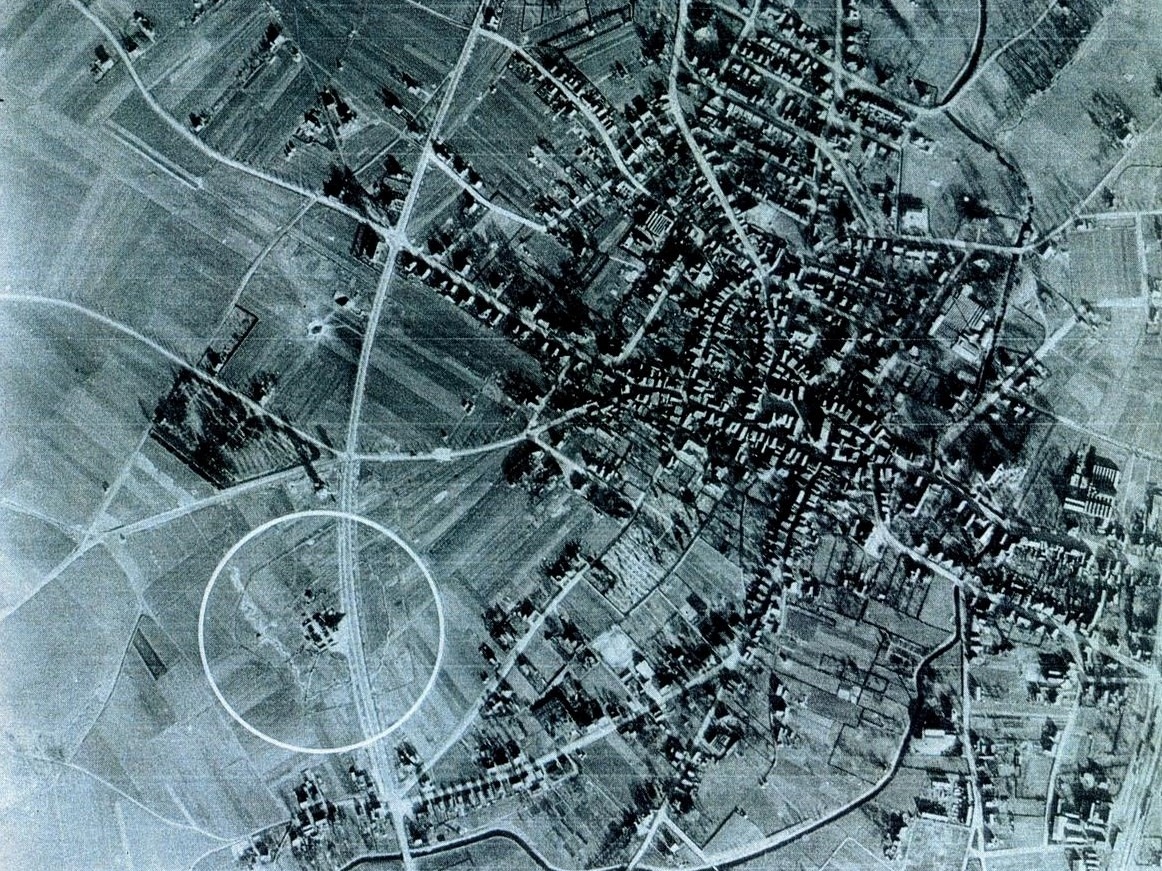
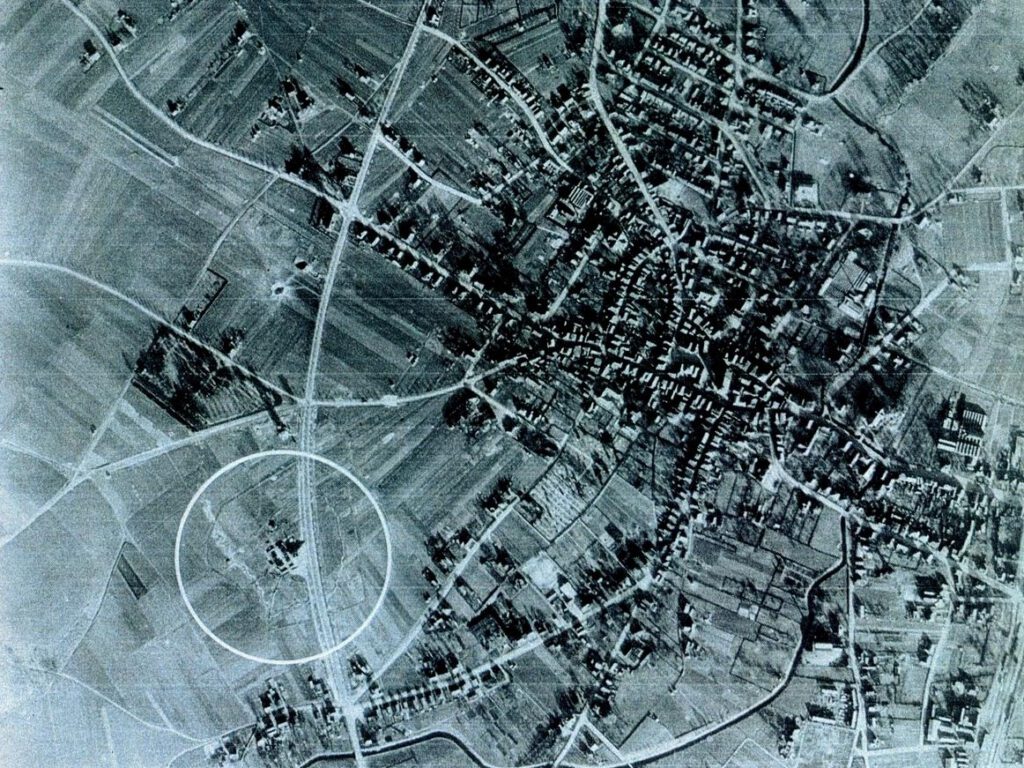
    During World War II, the Germans constructed a Freya-type radar station on the outskirts of the village of Aalten. The location was situated north of the Ringweg, approximately halfway between the Tolhuis (tollhouse) and the water tower. This radar site was part of an extensive air defence system operated by the Luftwaffe.

    The radar system, named after the Germanic goddess Freya, had been developed by the Germans in the late 1930s. It was capable of detecting enemy aircraft at a distance of approximately 150 kilometres.

    The radar installation was situated on a site with a circumference of about 800 metres, surrounded by a system of trenches and barbed-wire fencing. Additionally, anti-aircraft artillery was present on the site.

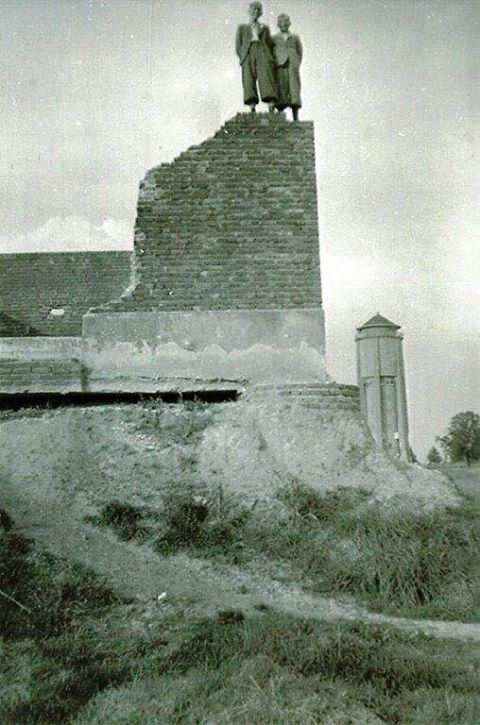
    There was a large radar unit, consisting of a red brick base, approximately seven by seven metres and three metres high. Mounted on top was the antenna, a metal framework measuring six by six metres. The large, square antenna screen could be rotated manually to the desired direction.

    There was also a smaller radar unit, which lacked a brick base. Furthermore, there were approximately ten wooden barracks on the site, measuring four by six metres and painted green, used to house the personnel.

    The immediate surroundings of the radar site were declared a Sperrgebiet (restricted area). The Ringweg was closed to pedestrians from the Tolhuis to the water tower. Signs marked “Militäre Werke” were placed in these areas. Cars and cyclists were permitted to drive through, but stopping or dismounting was strictly forbidden.

    The Freya radar site in Aalten was constructed at the end of the summer of 1942. The site was abandoned in the autumn of 1944. Traces of the radar site, such as the concrete and brick housing for the antenna screen, remained visible until the early 1950s.

    Features


    Cadastral no.L-583
    FunctionRadarstation
    Year of construction1942
    Demolition1950s

    Sources


    • Britse littekens in Aaltense bodem, feiten en achtergronden over de bevrijding op 30 maart 1945, Wim Rhebergen
    • Cadastral map
    • Oorlogsbronnen
  • Never seen a traffic light!

    Never seen a traffic light!

    In 1941, a young lady from Aalten had to answer to the cantonal court in Apeldoorn for ignoring a red traffic light… Huh, a what…?

    “The next defendant to appear before the bar proved to be a true ‘Unschuld vom Lande’ (an innocent from the countryside). It was a young lady, G.H.H., of no occupation, from Aalten, who had been staying with her aunt in Apeldoorn for about ten days. And then it happened: she had cycled down the Hoofdstraat and had not given a thought to stopping for the red traffic light. After all, such automatic traffic controllers are unknown in rural Aalten!

    Still, it seemed somewhat unbelievable that, in the year 1941, a young girl would never have seen a traffic light, and so it was asked from behind the green table whether the defendant had truly never been to a city. “Yes, in Winterswijk,” the girl said, “but they don’t have them there either.” It turned out she had never made any further journeys, not even to Arnhem or Bocholt. In view of this, she got away with a fine of f 3.”

    Source


    • Nieuwe Apeldoornsche Courant, 6 November 1941 (Delpher)
  • ‘Rotterdammertjes’ in Aalten

    ‘Rotterdammertjes’ in Aalten

    During World War II, host families in Aalten provided shelter to approximately 800 children from heavily bombed Rotterdam. The initiative was spearheaded by Rev. Th. Delleman, a minister in Kralingen who had recently served in Aalten. Thanks to his dedication and the networks of both church communities, Rotterdam children were able to find temporary respite in the Achterhoek – far removed from the violence of war.

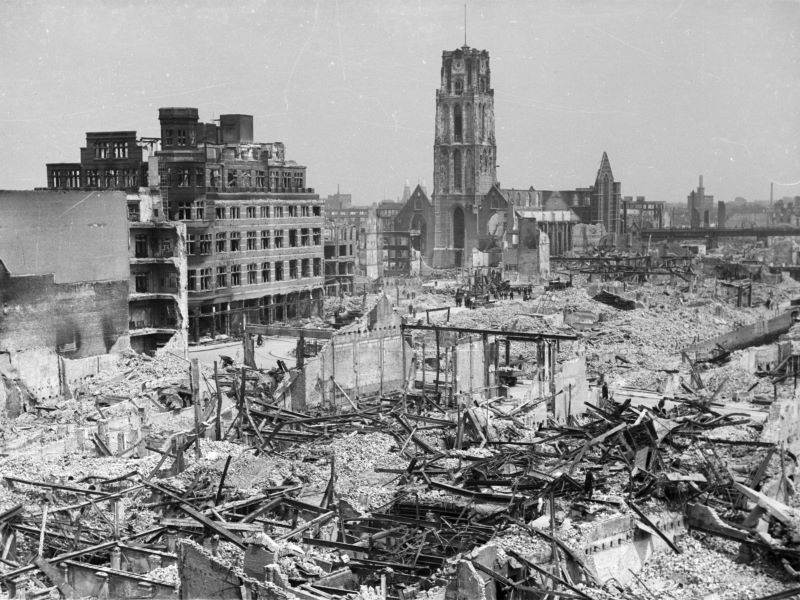
    Rotterdam after the German bombardment of 14 May 1940
    Rotterdam after the German bombardment of 14 May 1940

    In May 1940, Rotterdam was struck by a devastating German bombardment. Almost the entire historical city centre was destroyed. In the Kralingen district, Reverend Thomas Delleman witnessed the consequences first-hand. He saw how, above all, the children were scarred by fear and grief.

    Amidst this chaos, Delleman decided to take action. He knew the Achterhoek well: from 1930 to 1938, he had been a minister in Aalten, where he had experienced the hospitality of the local people. He believed that a temporary stay in the peaceful surroundings of Aalten would benefit the children – a place where silence and care could help them forget the war for a moment.

    A committee was soon formed with the support of deacons and congregation members from both Rotterdam and Aalten. In July 1940, the first groups of children departed for the Achterhoek, where they were placed with host families.

    Over the course of the war, an estimated 800 children from Rotterdam were cared for in Aalten and the surrounding area. Upon their departure for home, they often took gifts with them: eggs, bacon, rye bread, and sometimes even live animals. Later, the visits were supported by local diaconates. The last group of children travelled back to Rotterdam in February 1945. However, the connection remained: many children continued to return to their Achterhoek host families annually long after the war had ended.

    A Wartime Letter

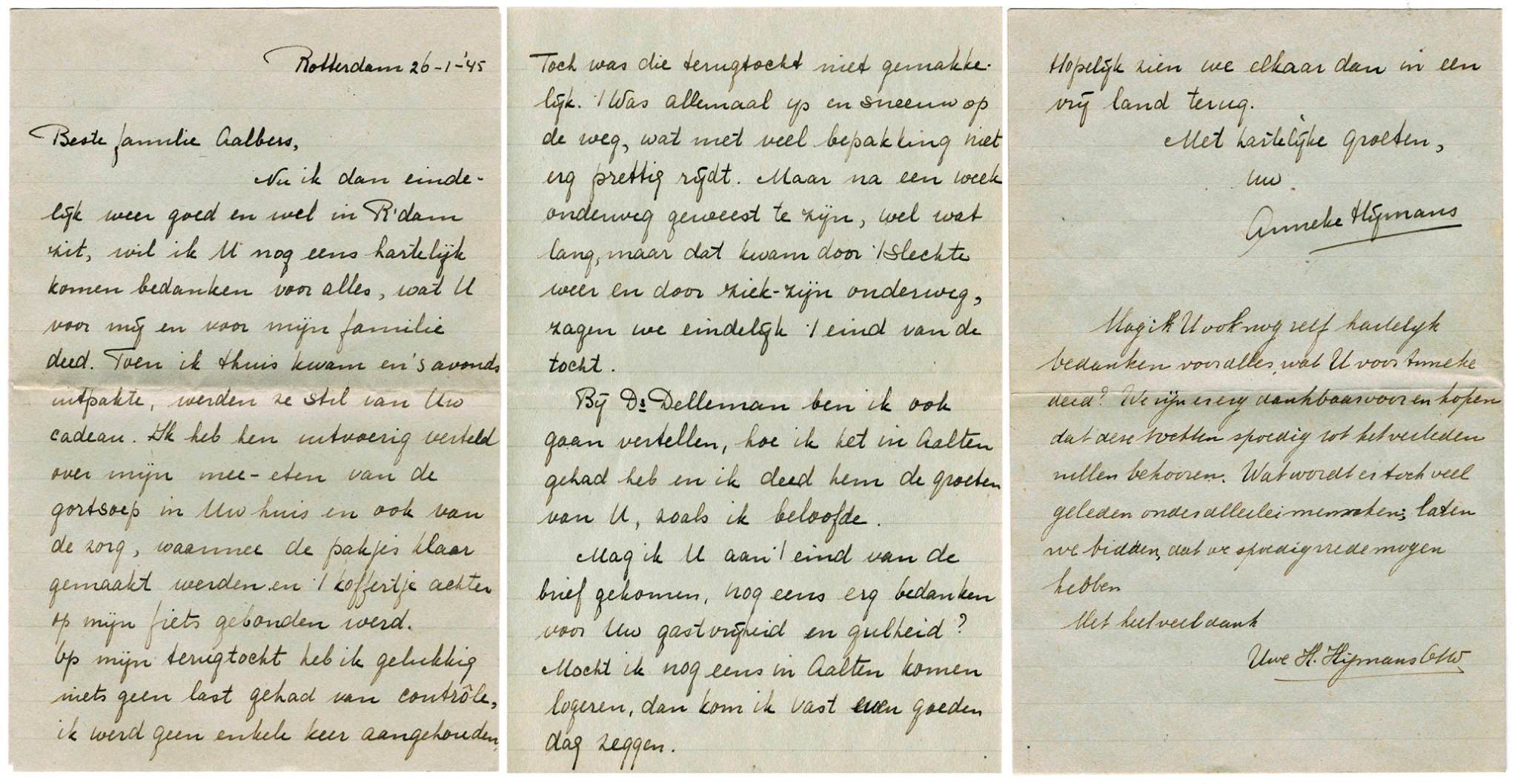
    One of the children who came to Aalten thanks to Rev. Delleman was Anneke Hijmans. She stayed with the Aalbers family at ‘t Slat farm in IJzerlo. After her stay, she cycled back to Rotterdam in a single week. Shortly thereafter, on 26 January 1945, she wrote a letter to her host family — a personal document filled with memory and gratitude.

    Letter from Anneke Hijmans to the Aalbers family in IJzerlo:

    Commemorative Window as Thanks

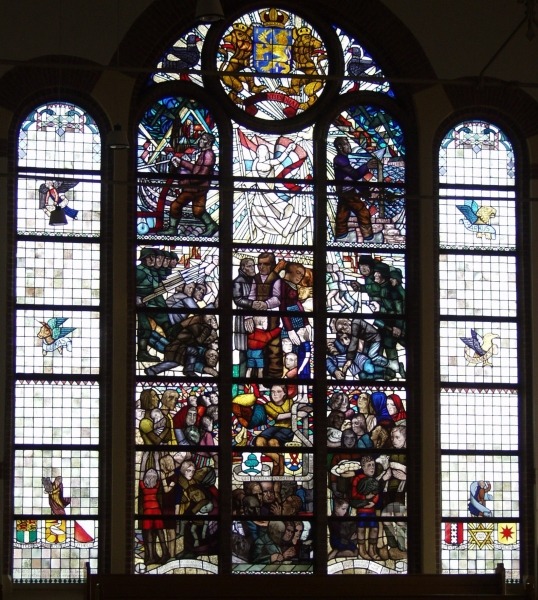
    After the war, a committee was formed in the Reformed Church of Kralingen to present a commemorative window to the citizenry of Aalten on behalf of the collective churches and the Jewish community. It was a lasting gift in gratitude for the hospitality offered during the war years.

    The window, designed by artist Marius Richters, depicts among other scenes how Aalten farmers and families welcomed children from Rotterdam. It was installed in the Oosterkerk in Aalten and officially unveiled on 13 July 1946 by Rev. Delleman himself.

    Newspaper reports

    ‘Rotterdammertjes’ in Aalten

    “Thanks to the benevolent hospitality of the Aalten Community, we were enabled to send approximately 100 children, largely from afflicted Rotterdam, to Aalten,” stated Mr B. Hoving in the Rotterdamsche Kerkbode. These children are now enjoying the peaceful rest and excellent care that Aalten offers them, far away from their devastated city.

    Rotterdamsch Nieuwsblad, 17 August 1940

    The ‘Rotterdammertjes’ Depart

    Six weeks ago, we published a photograph of the arrival of the first ‘Rotterdammertjes’. This morning, the departure took place. At ‘Elim‘, the Reformed children bid their farewells. Each child was presented with a lovely souvenir of this holiday: a fountain pen and pencil in a case, kindly provided by Mr F. Buesink, ‘Febea’.

    It was a scene of cheerful bustle. The children appeared in ‘full regalia’—which, in this context, meant with an average of three times as much luggage as they had arrived with. Naturally, there were all sorts of boxes, parcels, and bags filled with apples and pears (how fortunate that they are all ripe just now), as well as bouquets of various flowers, which, together with bunches of heather, are intended to provide a hearty welcome home. One child was so fortunate as to have stayed with a friendly baker, with the result that the little one was sent home with a currant loaf almost as large as the ‘Rotterdammertje’ itself!

    There was an unprecedented crowd at the station; it was estimated that over 500 people were present. Rev. Th. Delleman spoke a brief word of thanks on behalf of all groups. He had not dared to hope that Aalten would have been so hospitable. “Rotterdam has been impoverished in many things, but your love has made us rich. Never shall Rotterdam forget the benevolence shown to her children.”

    De Graafschapper, 30 August 1940

    ‘Rotterdammertjes’ return after a four-week holiday in Aalten

    Loud cheering erupted from the special train that brought 128 children from afflicted Rotterdam families back to the ‘Maas City’ on Friday afternoon around four o’clock. The waving and shouting children would have liked nothing more than to jump straight out of the train windows to greet their mothers, brothers, and sisters, and to tell them all about their time in the Gelderland Achterhoek, in the friendly village of Aalten.

    No sooner had they spotted one another than the children began to show what they had received from their foster parents. Almost all of them carried a box of flowers and gifts; one had received a rabbit, another a chicken, and one ‘Rotterdammertje’ had even been treated to a currant loaf… a metre long! Furthermore, everyone had received a fountain pen and a propelling pencil as a memento of their stay in Aalten.

    The citizenry of Aalten has certainly spoilt the ‘Rotterdammertjes’. People had spontaneously approached the Diaconate of the Dutch Reformed Church with the request to send children from affected families, to provide them with a carefree month-long holiday. During this long holiday, thanks to the minister, Rev. Klijn, and the headteacher, Mr Hopman, the children visited numerous beautiful spots in the Achterhoek, while film afternoons also provided the necessary variety.

    It goes without saying that the children thoroughly enjoyed themselves in Aalten. The acquaintance seems to have been mutually appreciated, as many Aalten foster parents invited the children to spend their holiday with them again next year upon their departure.

    Rotterdamsch Nieuwsblad, 31 August 1940

    Sources


    • Rotterdamsch Nieuwsblad, 17 August 1940 (Delpher)
    • De Graafschapper, 30 August 1940 (Delpher)
    • Rotterdamsch Nieuwsblad, 31 August 1940 (Delpher)
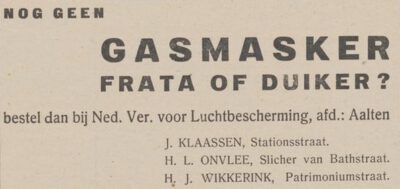
  • Netherlands Association for Air Raid Protection

    Netherlands Association for Air Raid Protection

    De Graafschapbode, 29 January 1940

    In the local Sociëteit (Social Club) last Saturday afternoon, an exhibition was opened by the Netherlands Association for Air Raid Protection (Nederl. Vereen. voor Luchtbescherming), to which the municipal executive, military officers, heads of various departments, and the boards of several associations had been invited.

    The chairman of the Aalten branch, Mr Klaassen, extended a warm welcome to those present and expressed his sincere gratitude to the Mayor and Aldermen, the head of the Air Raid Protection Service, the board of the Sociëteit, and others for their cooperation in making this exhibition a success. The speaker announced that the Mayor was prevented from opening the exhibition due to a minor indisposition, and that Alderman Te Gussinklo had kindly agreed to deliver the opening address.

    Mr Te Gussinklo began by apologising for the fact that he actually knew very little about air raid protection. He regretted that no better term had been found in the Netherlands, for “we do not protect the air, but rather protect the people from the dangers that come from the sky during a war via aircraft with their destructive bombs that bring death and ruin.” He questioned whether the population of Aalten, and of the Netherlands, was sufficiently aware of its duty in this regard. The answer, he stated, must be: no, the majority certainly are not. Therefore, it is very useful and very necessary that the Aalten branch has organised this exhibition.

    It is often said that the army must be brought to the people, but the speaker also wished to posit that air raid protection must be brought to the people. It is highly necessary that the Dutch public knows more about this. For this reason, the Aalten municipal executive has strongly applauded this visual instruction. The speaker expressed his hope that this free exhibition would attract many visitors. Now that the war has continued for some time, interest has somewhat waned and might otherwise slumber further. However, when we consider that between 1,000 and 2,000 bombs are being dropped daily on a country in Northern Europe, we must wholeheartedly agree that this information is not unnecessary. To be forewarned is to be forearmed.

    The speaker congratulated the board on the magnificent way this exhibition was arranged and therewith declared the exhibition open. After tea was served, a tour was conducted under the guidance of one of the gentlemen from the board of the Netherlands Association for Air Raid Protection.

    Everything was clearly explained, and the numerous visual representations—both in pictures and in reality—of air hazards, their effects, and the measures taken against them, will certainly clarify much for all visitors that might not have been fully understood simply by reading booklets. Posters show us the varying population densities of different countries, the effects of high-explosive, incendiary, and gas bombs, the measures taken by the authorities and those that can be taken by citizens, etc. etc.

    We see various gas masks, lanterns, a model of a cluttered attic compared to an attic as it ought to be, a model air-raid shelter, etc. etc. The clear explanations were listened to with great interest. It is to be hoped that this exhibition, which remains open until Tuesday and is entirely free to the public, will be well attended.

    Sources


  • Witchcraft

    Witchcraft

    In 1937, G.H. Rots described in a series of articles in the Aaltensche Courant how life used to be in Aalten in former times. Regarding the historical belief in witches, he wrote:

    “According to popular belief, witches held gatherings at night, and in the Aalter Esch there was a specific spot where these nocturnal assemblies took place. That piece of land, located approximately halfway between the Linde and the Lichtenvoordsche road, was called the ‘heksenbeddestêe’. It was a piece of no man’s land to which no one laid claim.”

    Anyone reading about what transpired in this field is stunned by the stories of witches and ghosts that circulated in earlier times. It reached such an extent that even educated people believed in witchcraft, and the authorities of those days intervened in this ‘evil,’ punishing those found guilty of sorcery.

    To determine whether an accused person was innocent or guilty, the so-called water trial was applied: the victim was thrown into the water. If they floated, they were deemed a witch; if they sank, then what? Then they were not a witch, but they usually drowned. It was believed that those who could perform witchcraft could transform themselves into animals. Illnesses among livestock or even among people were often attributed to witches. If the milk had a blue tint, or if a clump of hair was found in a calf’s or cow’s stomach, it was all blamed on the witches.

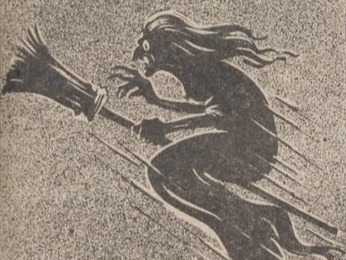
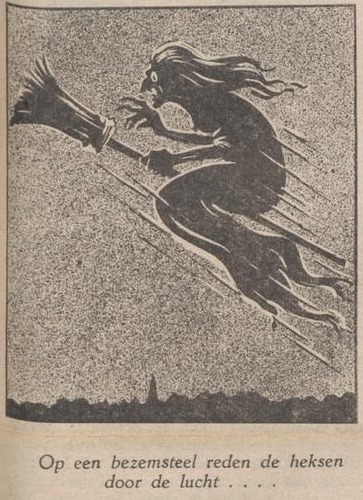
    Witch – Aaltensche Courant, 18 March 1938
    Illustration: Piet te Lintum

    There were even people who believed themselves capable of witchcraft, claiming they had regular audiences with the devil. Witches were said to ride through the air on broomsticks and gather at the ‘beddestae’ in the Aaltenschen Esch to celebrate their nightly festivals. It should be said to the credit of the spiritual leaders of those days that they, at least, did not believe in it and repeatedly pointed out the absurdity of witchcraft to the population.

    However, what is once deeply rooted is not easily dislodged, and so it took years, even centuries, before the superstition vanished. The authorities, primarily at the urging of the clergy, engaged in the suppression of witchcraft. They employed methods that were terrifying. If it was believed that someone could perform witchcraft or claimed to do so, the most severe measures were taken. Often the victims paid with their lives; even stakes were erected for burning.

    Shivers down the spine

    The old night watchmen could tell eerie stories of what they had experienced at night. The listener of these tales would feel ‘the shivers down their spine.’ For instance, it was told that ‘behind the hedges in the Heuksken,’ a woman dressed in white wandered every night. And then there was that mysterious light in the charnel house at the cemetery. Occasionally, mysterious animals were encountered that made the streets of Aalten unsafe. Furthermore, there were the ‘omens’ of fire. If a fire broke out in the village, one of the night watchmen had sometimes seen a ‘red glow’ above the site of the fire weeks in advance.

    Berent Sweenen

    Around 1600, a certain Berent Sweenen lived in Barlo. His neighbor, Geerdt Luiten, accused him of witchcraft. Luiten’s cows, pigs, and horses had regularly died of ‘unnatural sickness’ or sorcery. In the stomach of one of the cows he had cut open, ‘toads and snakes’ were found. Furthermore, Berent Sweenen’s sister ‘was also a witch.’ The whole place was hexed, and Luiten had already gone to Lichtenvoorde to complain. Berent Sweenen was summoned before the authorities and had to listen to all these accusations.

    Luiten brought forward a new accusation. It was no longer possible to churn butter in his house. The cause: a hex by Sweenen. Another neighbor, Bernt Tolkamp, recounted that he had drunk buttermilk at Sweenen’s and had become ‘dreadfully ill’ from it. Tolkamp’s daughter had also fallen ill, likewise hexed by Sweenen.

    More witnesses were called, namely Geerdt Winkelhorstink and Johan Merkerdink. They could only state that Sweenen had long been regarded as a sorcerer. Personally, however, they had not been troubled by him. A certain Herman Olthuys provided further incriminating testimony. Other neighbors recounted that they had hosted Berent Sweenen, who was a tailor, in their homes and that he had told them he could perform witchcraft. Eleven witnesses then took the oath and declared, invoking ‘God and His Holy Gospel,’ that what they had asserted was the truth.

    Berent Sweenen, the simple tailor, maintained his innocence, but he stood alone. Eventually, under the weight of all those accusations, he gave in and said that he had understood the art of witchcraft for some 18 to 20 years. His fate was sealed, and given the punishments of those days, his head likely fell under the executioner’s axe. One case among many.

    People pondered much. During the long winter evenings by primitive lighting, they saw all sorts of strange things. They heard wondrous tales, and when the old man sat in the corner by the hearth, he was asked to tell stories; then the tales of ghosts and witches would emerge, and at night in their sleep, people heard all kinds of sounds. The mystery of the unknown. That unknown, that mysteriousness, unsettled the people, and the case of Sweenen in Barlo is not unique.

    Fourteen years earlier, the Bailiff of Bredevoort had already written to the Lady of the Pledge that witchcraft in Aalten was taking on ever greater proportions. One can conclude from this that the governing officials—the intellectuals of those days—also believed that witches existed. The fight against the ‘evil’ was therefore not conducted by convincing people that ‘witches’ cannot exist, but by the extermination of the individuals who carried out the evil.”

    Aleida Voesters

    “We wish to share one more case to provide an accurate picture of the dismal conditions in those days. It concerns a woman named Aleida Voesters. She was accused of witchcraft and thrown into prison, but was released when she promised to reform and paid a monetary fine. However, once the population views someone in a negative light, their reputation is ruined.

    So it was for this woman. The population would not leave her in peace. The cup overflowed when a certain Wessel Wassink, a tailor by trade, claimed that he had fled from Mrs. Voesters’ house because he had heard devils quarreling there. The rumor reached the authorities again, and they deliberated on how to deal with this woman. The ‘executioner’ told the Bailiff that he knew a way to intervene with forceful measures. The woman was imprisoned again and transported to Bredevoort. She was thrown into the water and… she floated; she did not sink. Proof that she could perform witchcraft. They pushed her down with a long pole, but it seems that the excessive women’s clothing of those days prevented her from sinking.

    The woman was then tortured with extreme cruelty. She was to be made an example. She was tied to a ladder and flogged, but the woman maintained that she could not perform witchcraft. Two days later, she was stretched on the rack again. But she did not confess. They tied a rope to her hands and hung her from a beam. At that moment, the pitiable woman let out a sound as if three men’s voices had called out. Immediately thereafter, her neck was broken. Her body was burned on a stake, made of wood that the farmers were expressly required to supply for that purpose. Such were the witch trials.”

    Milk Witch

    In a legal document from the Court of Bredevoort dating from 1533, we find the following story: The couple Gert and Lise Stapelkamp have a church pew in the Saint Helen’s Church in Aalten, which they claim was originally purchased by Gert’s mother, Sine Stapelkamp. However, the couple Koep and Nale Heinen claim it is their pew. During the service, Nale called Lise a ‘molkentoversche‘ (a witch who hexes cows) three times, after which Lise struck back. A significant disturbance in the church!

    Sources


    • ‘From Aalten’s Past’, by G.H. Rots, Aaltensche Courant, 26 November 1937 (Delpher)
    • ‘From Aalten’s Past’, by G.H. Rots, Aaltensche Courant, 11 March 1938 (Delpher)
    • “Wortels in de Achterhoek’, by Henk Harmsen, 1996 [p.17]